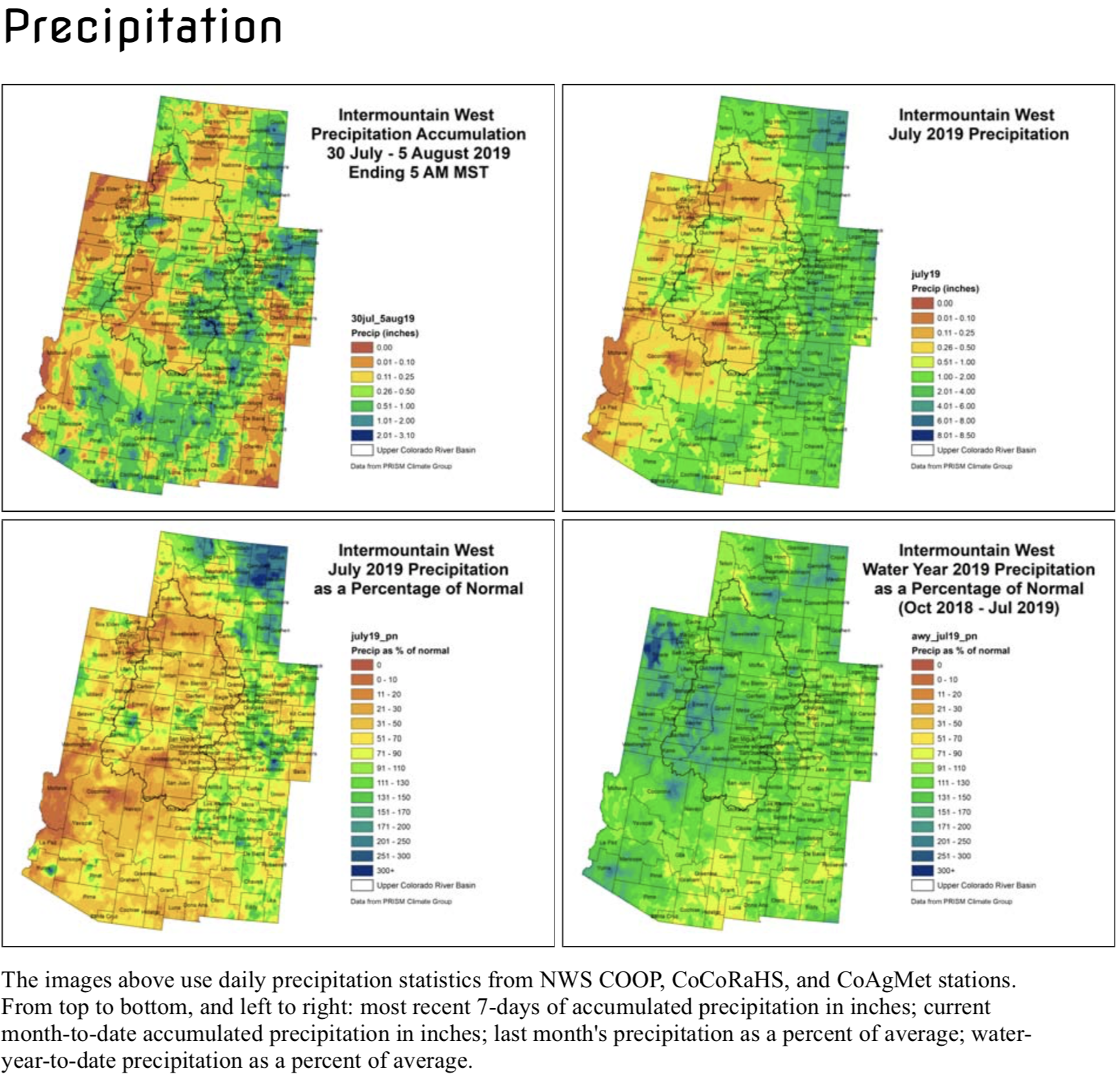
Click here to read the discussion. Here’s an excerpt:
EL NIÑO/SOUTHERN OSCILLATION (ENSO) DIAGNOSTIC DISCUSSION
issued by
CLIMATE PREDICTION CENTER/NCEP/NWS
and the International Research Institute for Climate and Society 8 August 2019
ENSO Alert System Status: Final El Niño Advisory
Synopsis: El Niño has transitioned to ENSO-neutral, which is most likely to continue through Northern Hemisphere winter 2019-20 (50-55% chance).
During July, ENSO-neutral conditions were reflected by the combination of below-average sea surface temperatures (SSTs) in the eastern equatorial Pacific Ocean and above-average SSTs in the central Pacific. The latest weekly ENSO indices were +1.0°C, +0.5°C, -0.2°C and -0.5°C in the Niño-4, Niño-3.4, Niño-3 and Niño-1+2 regions, respectively. Upper-ocean subsurface temperatures (averaged across 180°-100°W) were near average throughout the month, as anomalously cool waters prevailed in the eastern Pacific and anomalously warm waters continued in the central Pacific. Suppressed tropical convection continued over Indonesia, while near-average convection was observed near the Date Line. Low-level wind anomalies were near average over the tropical Pacific Ocean, and upper-level winds were easterly over the east-central Pacific. The traditional and equatorial Southern Oscillation Indices remained slightly negative. Overall, oceanic and atmospheric conditions were consistent with a transition to ENSO-neutral.
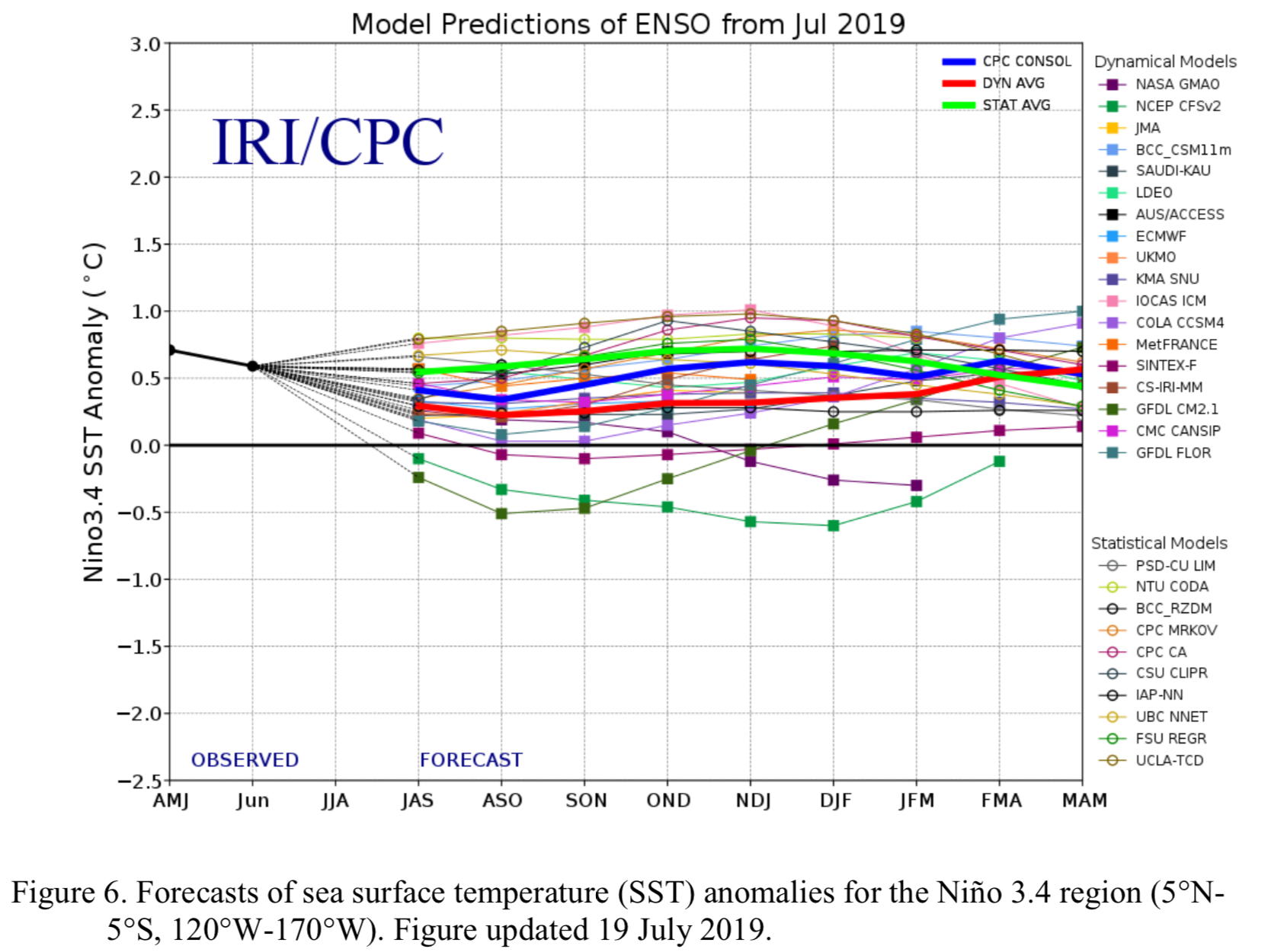
The latest IRI/CPC plume of forecasts of the Niño-3.4 index favors ENSO-neutral (Niño- 3.4 index between -0.5°C and +0.5°C), with index values greater than zero from late Northern Hemisphere summer into fall, warming closer to the El Niño threshold (+0.5°C) by winter. Atypically, dynamical models forecast weaker positive SST anomalies than statistical models throughout most of the forecast period. As a result, while forecasters favor ENSO-neutral conditions, the odds of El Niño (~30%) are roughly twice that of La Niña for next winter. In summary, El Niño has transitioned to ENSO- neutral, which is most likely to continue through Northern Hemisphere winter 2019-20 (50-55% chance; click CPC/IRI consensus forecast for the chance of each outcome for each 3-month period).
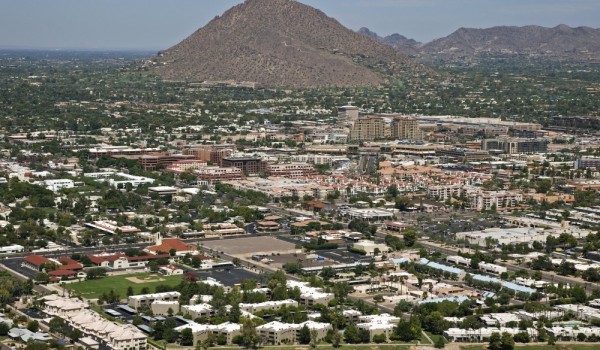
Imagine yourself in Scottsdale in September, gaining diverse perspectives on Tribal Water Law and connecting with your colleagues from around the country in luxurious surroundings.
The AAA 4-diamond Hilton Resort & Villas is set on 20 scenic acres, with breathtaking views of Camelback Mountain and a complimentary shuttle within a two-mile radius, including Old Town. Take advantage of specially discounted room rates, exclusively for Conference participants.
In Old Town Scottsdale, you’ll find cultural influences of the area’s first Native American residents along with hip new venues. Beyond Old Town, escape to the stirring beauty and serenity of the Sonoran Desert for exploration and adventure.
Expand your knowledge, broaden your network, and enjoy Scottsdale!
Click on a thumbnail graphic below to view a gallery of drought data from the US Drought Monitor.
US Drought Monitor August 8, 2019.
West Drought Monitor August 8, 2019.
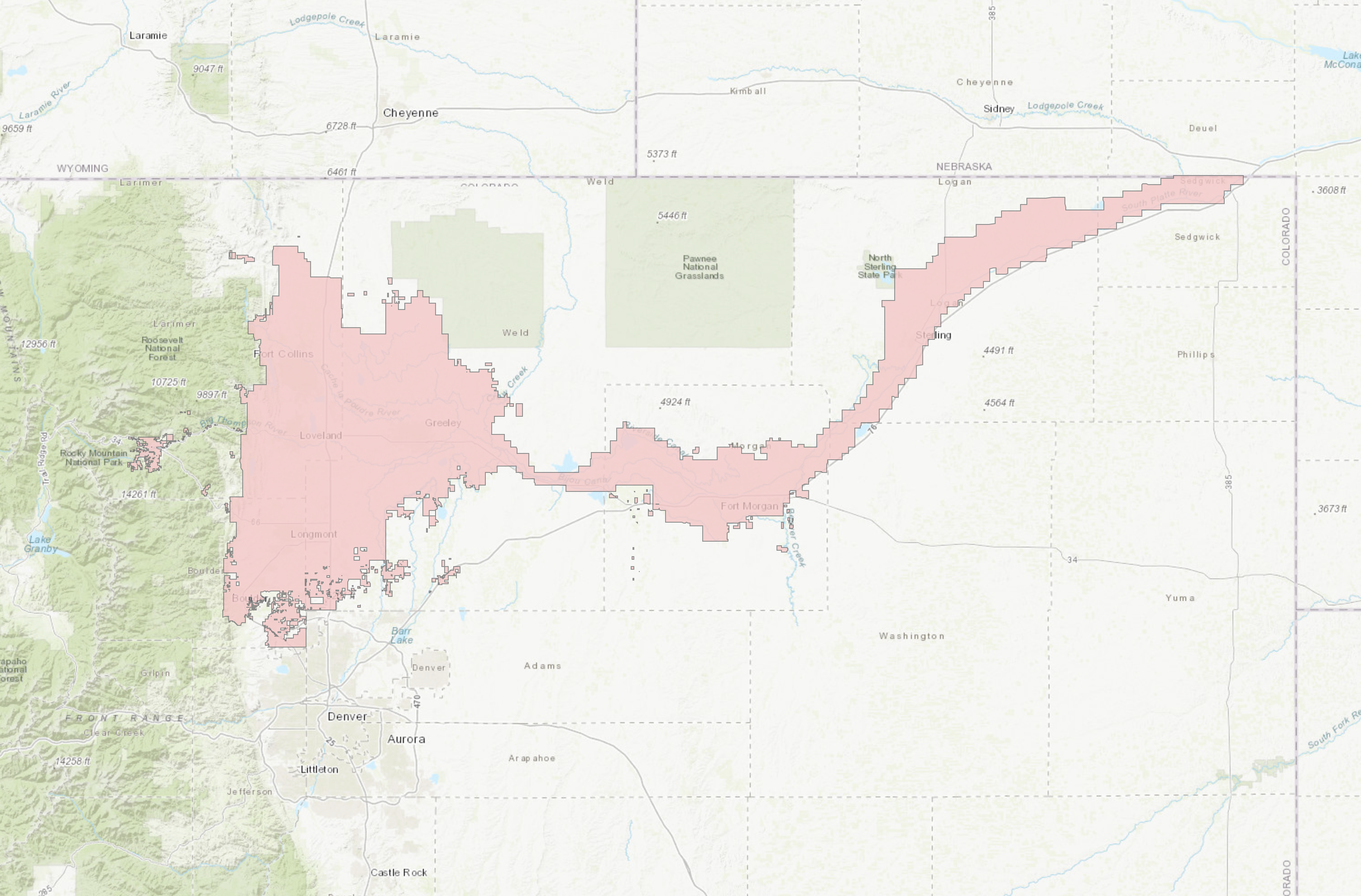
Colorado Drought Monitor August 8, 2019.
Click here to go to the US Drought Monitor website. Here’s an excerpt:
This Week’s Drought Summary
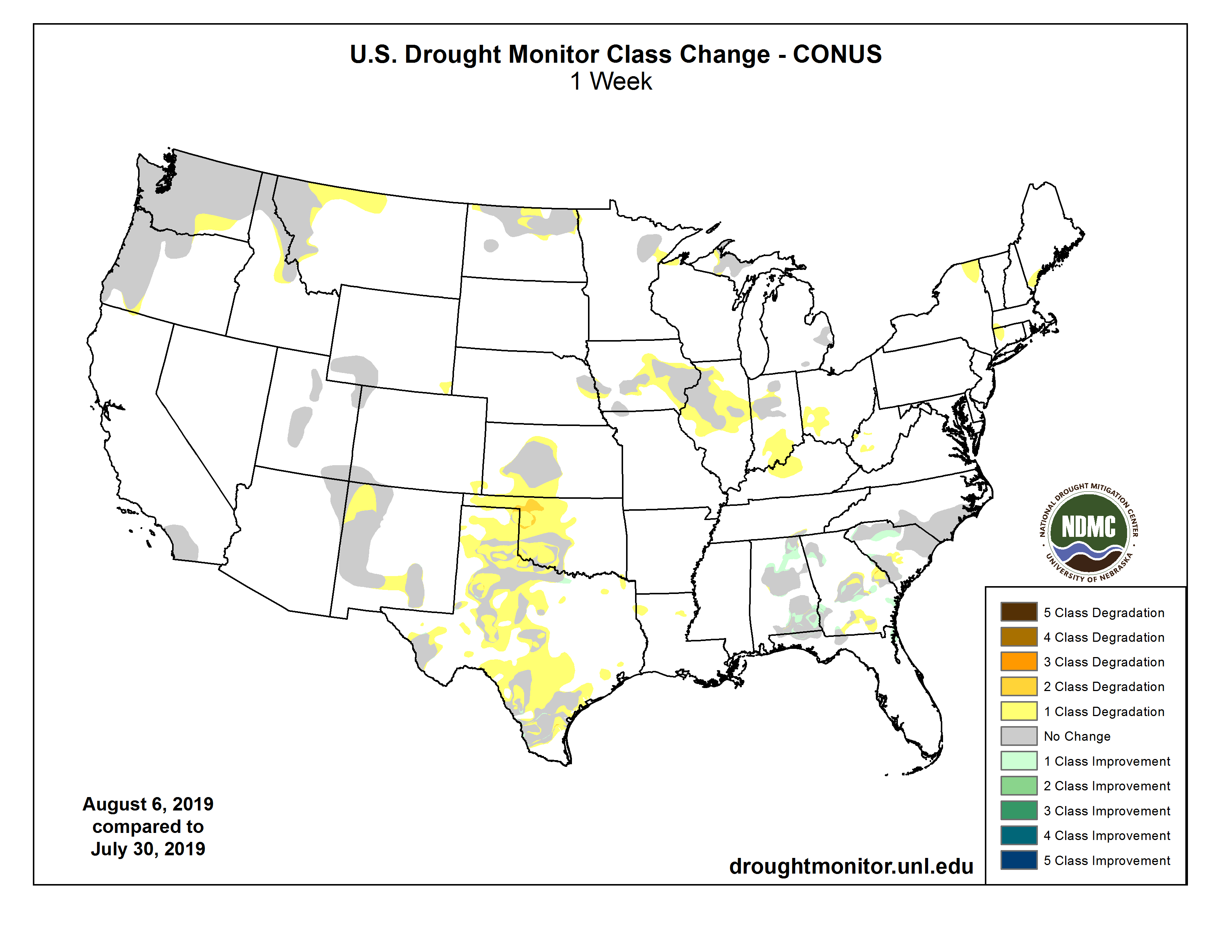
Heavy rain fell on large parts of Alaska this past week, bringing significant short-term relief, including an end to large fire development and expansion, at least for the time being. In contrast, dryness and drought expanded across broad sections of the contiguous 48 states, with relief restricted to parts of the Southeast. Most notably, hot and dry weather brought significant D0 expansion in the southern half of the Great Plains and across the Midwest and lower Ohio Valley. In the Northeast Climate Region, a few abnormally dry areas were introduced; this is only the fourth week since mid-January that dryness existed in any part of the Region. Meanwhile, heavy rain in eastern Puerto Rico improved conditions over eastern parts of the Commonwealth…
It was a dry week in and near existing areas of dryness and drought. Broad expansion of abnormal dryness occurred across central and southern Kansas, where conditions have deteriorated quickly as in Oklahoma and Texas. Much of central and south-central Kansas received 0.5 inch or less of rainfall over the last 30 days. In the rest of the region, D0 and D1 conditions generally persisted, with very limited expansion brought into parts of northern North Dakota, east-central Nebraska, and southeastern Colorado…
Severe drought persisted in portions of northwestern Washington where only 40 to 75 percent of normal precipitation fell during the past six months. Light to locally moderate rain fell this week from central Arizona through central New Mexico, and across portions of southern and eastern Montana. Other areas recorded very little or none. Increasing moisture deficits induced moderate drought expansion into northwestern New Mexico while D0 expanded in southeastern Washington and across northern Montana. Conditions were unchanged in other areas. The past 60 days brought only 25 to 50 percent of normal rainfall to the new moderate drought area in northwestern New Mexico…
Another drier-than-normal week affected central and eastern sections of Texas and Oklahoma as well as the northern tier of Louisiana, where little or no rain was reported. Recent hot and dry weather there has spawned broad development of D0 and D1 conditions in the south-central Plains, with severe drought introduced in southwestern Oklahoma and adjacent Texas. Broad swaths of central and western Oklahoma, the Texas Panhandle, and southwestern Texas recorded only a few tenths of an inch of rain at best over the last 30 days, and about 25 to 60 percent of normal since early June…
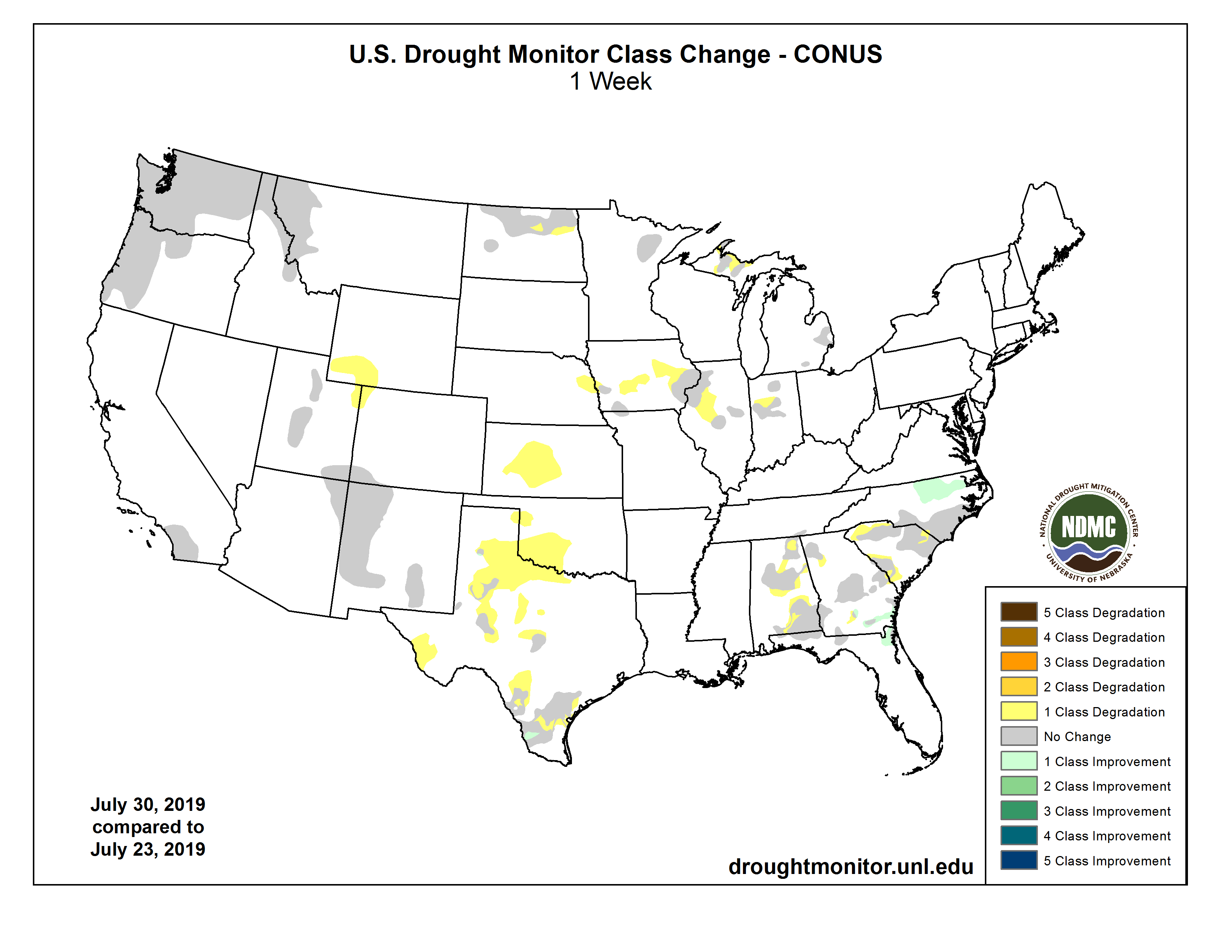
US Drought Monitor one week change map ending August 8, 2019.
Looking Ahead
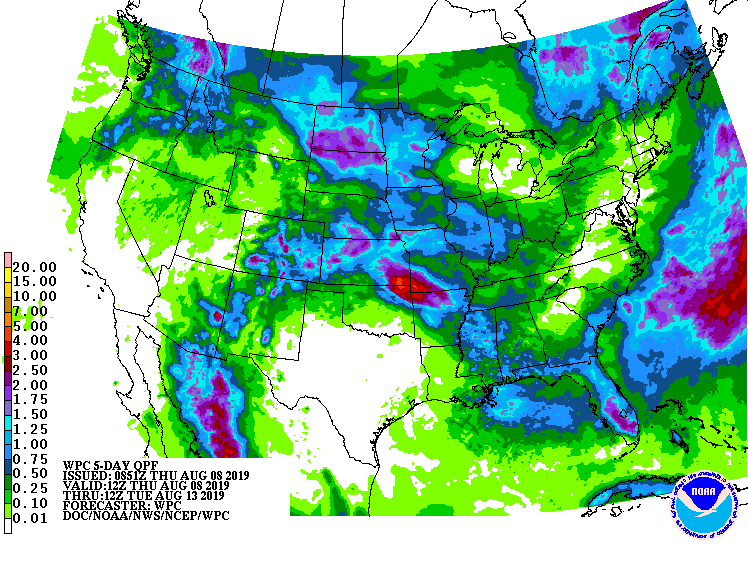
During the next 5 days (August 8 – 13, 2019) should bring heavy rains of 1 to locally 4 inches to portions of western New Mexico, a swath through the central Plains, and many locations across upstate New York and southern Maine. Most of the area from northern Idaho eastward through northern Montana are expecting 1 to 2 inches, as are most of the Dakotas and scattered patches across the Pacific Northwest. Other areas of dryness across the contiguous 48 states should get lesser amounts. Locally up to an inch is expected in the Southeast and southern New England, and little or none is anticipated in most of the new D0 area in the southern Plains from central Kansas through Oklahoma and Texas. Temperatures are forecast to be a few degrees above normal in the southern Plains and the Southeast while subnormal temperatures should extend from the northern half of the Plains to the Pacific Ocean.
The CPC 6-10 day outlook (August 14 -18, 2019) favors above-normal precipitation in east-central Alaska, the Pacific Northwest, the central and northern Plains, the lower Mississippi Valley, and the Southeast. Meanwhile, subnormal precipitation is expected in southern and southeast Alaska, the eastern Great Basin, the Four Corners States, most of Texas, and the Northeast. Temperatures should average below normal from the Intermountain West eastward through the Midwest and Northeast, and across east-central Alaska. Farther south, southern and southeastern Alaska have enhanced chances of warmer than normal weather, along with the Pacific Coast and a large swath from the Great Basin through the Four Corners States, central and southern High Plains, lower Mississippi Valley, and Southeast. The highest likelihood for hotter than normal weather are across most of Texas and the lower Southeast.
Rebecca Mitchell was named to the Colorado Water Conservation Board on July 5, 2017. Photo credit the Colorado Independent.
Detailed Colorado River Basin map via the U.S. Bureau of Reclamation.
Here’s the release from the Colorado Department of Natural Resources (Chris Arendt):
Governor Jared Polis appointed Rebecca Mitchell as the Colorado Commissioner to the Upper Colorado River Commission today. The Upper Colorado River Commission is an interstate water agency consisting of the Upper Colorado River Basin States of Wyoming, Colorado, Utah and New Mexico.
“The Colorado River is the lifeblood of the American West and is critically important for Colorado’s economy, agriculture, outdoor recreation and our way of life,” said Governor Polis. “Rebecca Mitchell will bring experience, leadership and a thorough knowledge of Colorado River issues and will enhance the shared mission of the Upper basin states of comity and collaboration as the Colorado River Commissioner.”
The Upper Colorado River Commission’s function is to ensure compact compliance with the 1922 Colorado River Compact. The Commission was established so states work together and in partnership to meet their obligations to the lower basin states while safeguarding the Upper basin states’ Colorado River water rights and allocations. The Commission is comprised of one representative appointed by the Governor of each Upper basin state and one member appointed by the President to represent the United States.
“The Colorado River faces unique future challenges with increased population, persistent drought, and impacts of climate change,” said Dan Gibbs, Executive Director, Colorado Department of Natural Resources. “We appreciate the service of outgoing Commissioner James Eklund, and Becky is ready to take the reins. She has been an incredible leader at the Colorado Water Conservation Board and her experience is needed now more than ever as the Upper basin states’ enact their provisions of the Colorado River drought contingency plans signed earlier this year.”
“It’s an honor to serve as the Colorado Commissioner for the Upper Colorado River Commission,” said Rebecca Mitchell, Director, Colorado Water Conservation Board. “There is no more important river than the Colorado both here and across the American West. In Colorado we have built a strong culture of collaboration, innovation, and smart policy to drive future water planning and I plan on bringing the same cooperative spirit and leadership to the Upper Colorado River Commission.”
“I am so proud to have represented Colorado in achieving interstate and international solutions for the Colorado River,” said outgoing Commissioner James Eklund. “The innovative tools we created and put in place are ready for implementation to the benefit of the entire basin. Colorado is now well-positioned to continue its legacy of leadership under the Polis Administration collaboratively and inclusively.”
Rebecca Mitchell (Becky) serves as the Director of the Colorado Water Conservation Board (CWCB). She is an accomplished water leader with over 17 years experience in the Colorado water sector and highly knowledgeable in the water laws of the State. Mitchell played a significant part in working with the State’s Basin Roundtables, the Interbasin Compact Committee, the public at large and CWCB staff in producing Colorado’s Water Plan. Becky has worked in the public and private sector as a consulting engineer; she received both her B.S. and M.S. from the Colorado School of Mines.
Governor Polis also appointed John McClow, General Counsel for the Upper Gunnison River Water Conservancy District and David Robbins, Hill & Robbins, P.C. to serve as alternate commissioners.
David Robbins photo via Hill and Robbins P.C.
Sean Cronin and John McClow at the 2014 CFWE President’s Award Reception
FromThe Grand Junction Daily Sentinel (Dennis Webb):
Gov. Jared Polis on Wednesday named Rebecca Mitchell as Colorado’s representative to the Upper Colorado River Commission, replacing Mesa County native James Eklund.
Mitchell also is director of the Colorado Water Conservation Board.
The Upper Colorado River Commission works to ensure compact compliance with the 1922 Colorado River Compact, the Colorado Department of Natural Resources said in a new release. Wyoming, Colorado, Utah and New Mexico are represented on the commission, with the goal of partnering to meet obligations to Lower Basin states while safeguarding Colorado River water rights and allocations in Upper Basin states.
Eklund, who has deep family roots in the Plateau Valley, is a former CWCB director who in that position led the effort to create Colorado’s first water plan.
He stepped down as director in 2017 to take a job as an attorney at a law firm, but remained as Colorado’s representative on the Upper Colorado River Commission, serving without compensation.
Both Eklund and Mitchell played roles in Colorado reaching agreements with other basin states for drought contingency planning…
Mitchell got her bachelor’s and master’s degrees from the Colorado School of Mines, has worked as a consulting engineer, and has more than 17 years of experience in Colorado’s water sector. She also played a significant part in the development of Colorado’s water plan.
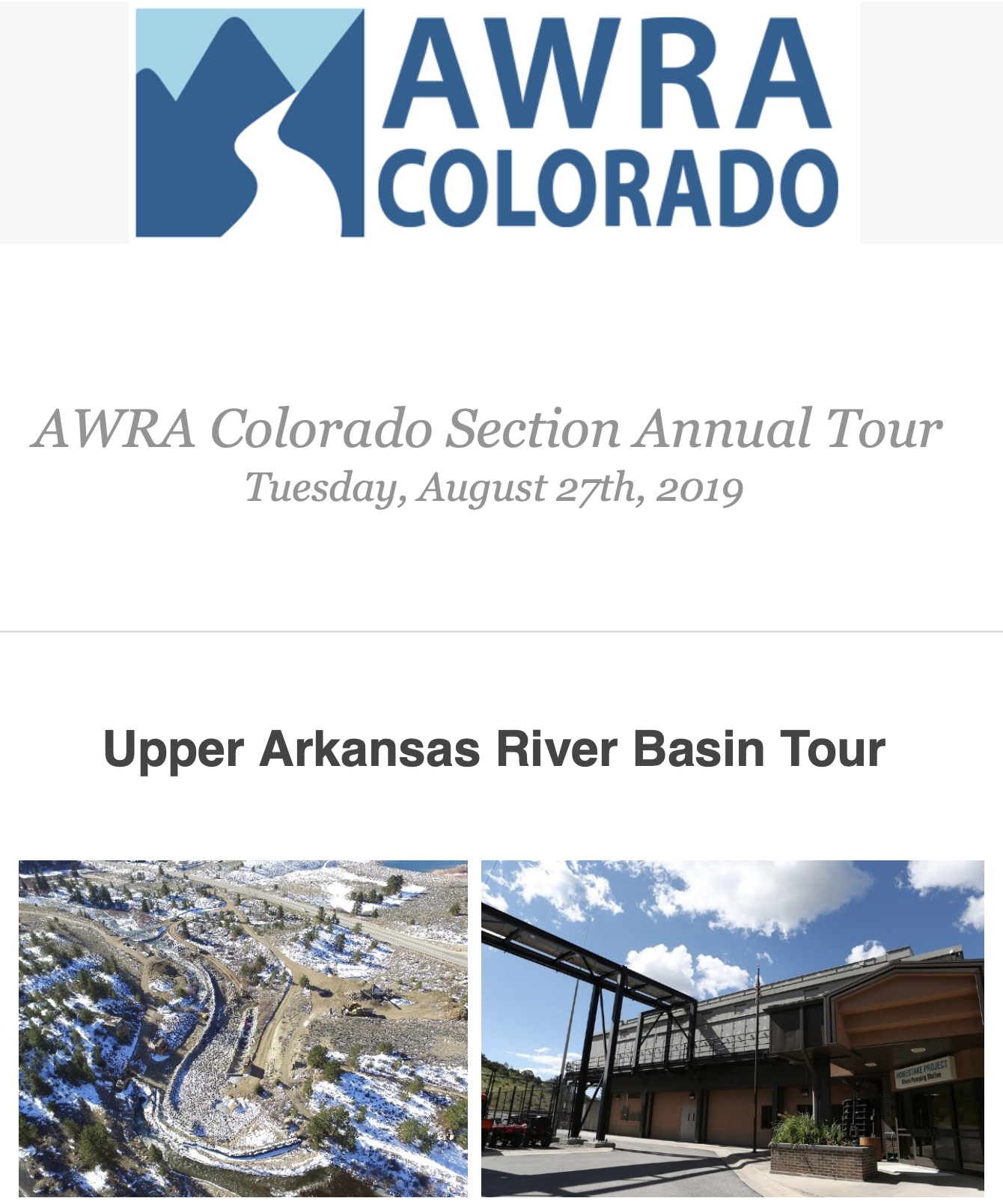
Join AWRA Colorado for its annual tour on August 27th! This year’s program will focus on the Upper Arkansas River basin, where we will be learning about water use, creative partnerships, and other unique aspects of the Upper Arkansas Basin. The day will include an overview of the Homestake Project and Aurora Waters’ system along with tours of the Otero Pump Station, Homestake Arkansas River Diversion project, Rocky Mountain Fen Research Project, and the Leadville Fish Hatchery.
Cost is $65 and includes transportation and lunch. All tour proceeds benefit AWRA Colorado’s Richard Herbert Memorial Scholarship fund.
7:30 am — Meet at Wooly Mammoth Park & Ride, Golden
9:00 am — Alternative meeting location at Hayden Meadows Reservoir, Leadville
10:00 am — Morning Presentations and Tour of Otero Pump Station
11:00 am — Tour of the Arkansas River Diversion Project
12:00 pm –Lunch at Twin Lakes Reservoir
1:00 pm — Tour of the Rocky Mountain Fen Research Project
2:00 pm — Tour of the Leadville Fish Hatchery
3:30 pm — Drop off at Hayden Meadows Reservoir
5:15 pm — Return to Wooly Mammoth Park & Ride
Due to site access restrictions, please plan to ride with AWRA to/from the tour. Two group meeting locations are available:
Wooly Mammoth Park & Ride, Golden (7:30 am)
Hayden Meadows Reservoir, Leadville (9:00 am)
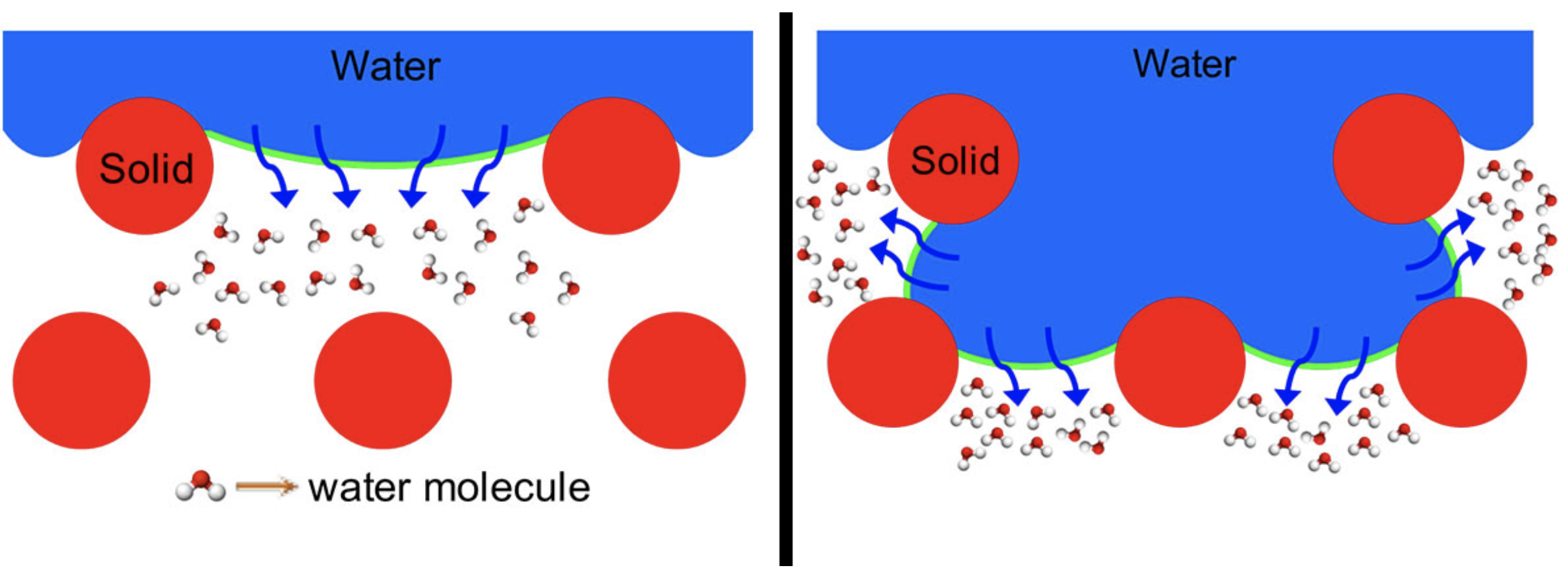
Left represents an omniphobic membrane, and right represents a conventional hydrophobic membrane with increased water-air interfacial areas (green lines). Credit: Kota lab
Here’s the release from Colorado State University (Anne Manning):
With water scarcity a critical challenge across the globe, scientists and engineers are pursuing new ways to harvest purified water from unconventional sources, like seawater or even wastewater.
One of those researchers is Tiezheng Tong, an assistant professor in the Department of Civil and Environmental Engineering, whose lab is studying an emerging technology called membrane distillation.
Membrane distillation involves a thin, water-repellant membrane that exploits vapor pressure differences between hotter impure liquid, called “feedwater,” and colder purified water, called “permeate.” During the process, water vapor passes through the membrane and is separated from the salty or dirty feedwater. According to Tong, membrane distillation works better than other technologies like reverse osmosis, which can’t treat extremely salty water such as desalination brines or produced water from hydraulic fracturing.
While it holds promise, membrane distillation doesn’t work perfectly. A key challenge is designing membranes to purify water efficiently while ensuring zero contamination of the clean water.
Tong and materials scientist Arun Kota in the Department of Mechanical Engineering joined forces to get at the fundamental science behind designing that perfect membrane. In new experiments they describe in Nature Communications, the CSU engineers offer new information into why certain membrane designs used in membrane distillation work better than others.
“The fundamental knowledge from our paper improves mechanistic understanding on the water-vapor transport within microporous substrates and has the potential to guide the future design of membranes used in membrane distillation,” Tong said.
How it works
In membrane distillation, the feedwater is heated, separating the pure and impure components by differences in volatility. The micro-porous membrane is a key component to the setup because it allows water vapor through, but not the entire impure liquid. Typically, the membrane is made of a “hydrophobic,” or water-repellant, material in order to let only the water vapor pass through but maintain a barrier for the feedwater.
However, these hydrophobic membranes can fail, because the feedwater, such as shale oil-produced water, can have low surface tension. This low surface tension allows the feedwater to leak through the membrane pores, contaminating the pure water on the other side – a phenomenon called membrane wetting.
Previous research had unveiled that using “omniphobic” membranes – membranes that repel all liquids, including water and low surface tension liquids – keep the vapor/water separation intact. But, omniphobic membranes typically slow down the rate and amount of water vapor passing through the membrane, dramatically reducing the efficiency of the entire process.
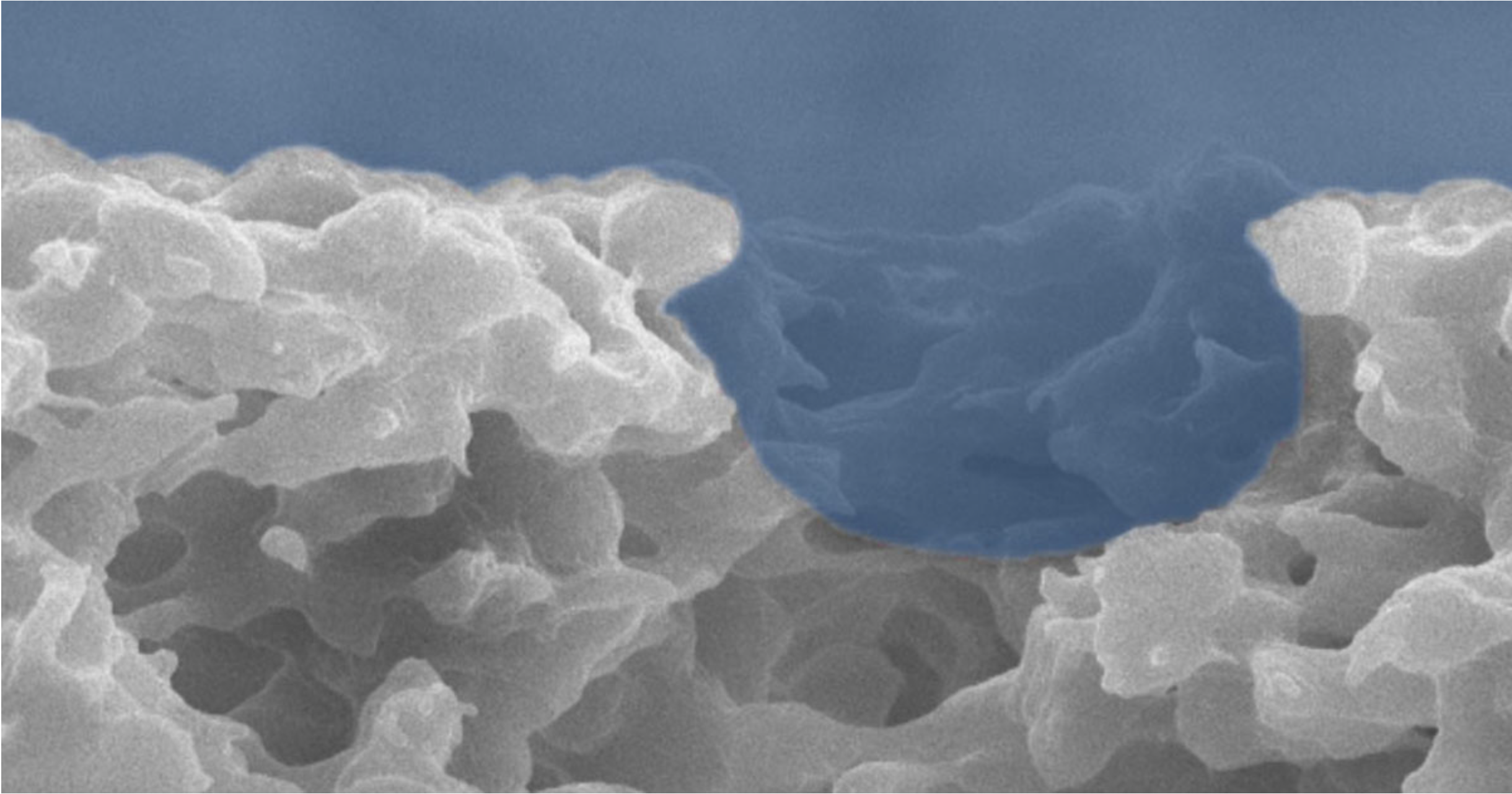
The CSU researchers set out to discover why this tradeoff between hydrophobic vs. omniphobic membranes exists. Through systematic experiments in the lab led by postdoctoral researchers Wei Wang in Kota’s lab, and Tong’s graduate student Xuewei Du, they found that conventional hydrophobic membranes create a larger liquid-vapor interfacial area. This increases the amount of evaporation taking place. With the omniphobic membranes, they saw a much smaller liquid-vapor interface. This explains the difference between the membranes’ performances.
The omniphobic membranes used in the experiments were made without depositing extra particles. Thus the researchers were able to determine that their observations weren’t the result of structural changes to the membranes.
Cross-sectional view of a conventional hydrophobic membrane used in membrane distillation. The blue represents water. Credit: Tong and Kota labs
Solving the tradeoff problem
While they didn’t offer a solution to the tradeoff, their insights reveal the core challenge around making membrane distillation a successful technology. “If you understand the problem thoroughly, then there is scope for solving it,” Kota said. “We have identified the mechanism; now we have to solve the tradeoff problem.”
For example, smart membranes with exceptional omniphobicity and simultaneously large liquid-vapor interfacial area can render membrane distillation a robust and cost-effective process for water purification. More collaborative research has been initiated by the team to design such smart membranes, with the goal of increasing efficiency of membrane distillation.
Tong added that the research happened at the interface of two disciplines: surface science and membrane technology.
“Arun and I utilized our complementary expertise to systematically conduct this work,” Tong said. “It is an example of good interdisciplinary collaboration across campus.”
Graduate students Hamed Vahabi in mechanical engineering and Yiming Yin in civil and environmental engineering also contributed to this work.
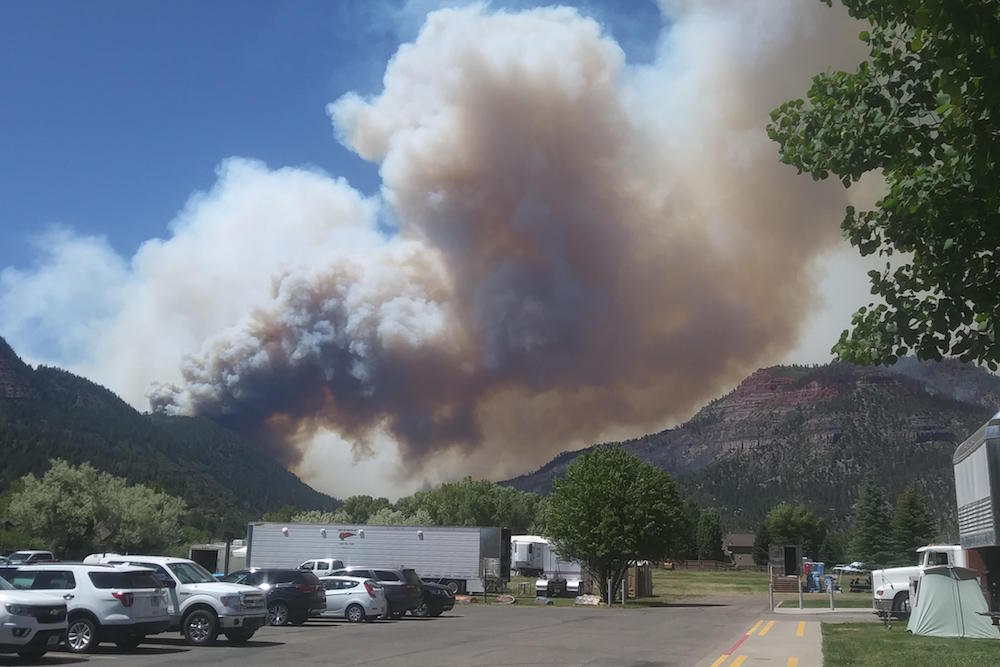
The 416 Fire near Durango, Colorado, ignited on June 1, 2018. By June 21, the wildfire covered more than 34,000 acres and was 37 percent contained. Photo credit USFS via The High Country News
Here’s a report about the lawsuit against the Durango & Silverton Narrow Gauge Railroad from David Kelly that’s running in The Los Angeles Times. Click through and read the whole thing. Here’s an excerpt:
…the federal government and others are pointing the finger at a local icon — the Durango & Silverton Narrow Gauge Railroad, which carries hundreds of thousands of passengers a year through the San Juan Mountains.
Claiming cinders from the coal-fired, steam locomotive ignited brush along the tracks during a time of heightened fire restrictions, the U.S. attorney’s office filed a suit against the train’s owners last month seeking $25 million to cover the cost of putting out the fire. Another two dozen or so citizens and businesses are also suing for damage to their properties.
Nobody wants the train to go out of business, but many fear the suits could eventually drive the railroad into bankruptcy, destroying a historic landmark and badly damaging the local economy…
“The responsible decision of train management would have been to not run the train in those super-dry conditions,” said Thomas Henderson, a Denver lawyer whose firm is representing individuals and businesses suing the train. “The train has started fires for years that the feds have had to put out. They should not get a free pass simply because they are big player in town. That’s not how democracy works.”
[…]
Few businesses are as tied to the railroad as the historic Strater Hotel, built in 1887. Roderick Barker’s family has owned it for 93 years, and he figures at least 50 to 60% of his guests ride the train.
“The train is the lifeblood of this whole town,” he said. “If it were to fail it would certainly be one of the most significant things to happen in the history of Durango.”
He believes the train caused the fire and needs to change its operations. But given its contribution to the economy, he questions why any local business would sue the railroad…
Bobby Duthie, an attorney, grew up on 33rd Street in Durango. The train whistle woke him each morning. He’s ridden it more than 50 times. Now he’s working with Henderson in representing those suing the train.
“I was initially reluctant to get involved because I love the train. But I also know that their decision to run it that day was reckless,” he said, sitting in his downtown office. “They had started fires on the tracks the month before and it was just a matter of time until it got out of control.”
According to the federal lawsuit, the wildfire, dubbed the 416 fire, began on Shalona Hill where the grade is steep. As the train climbed, it cast off sparks and cinders. A metal screen on the smokestack caught many but not all.
“I talked to eyewitnesses,” Duthie said. “I know the train started the fire. I’m sad they chose to run it on June 1, 2018.”
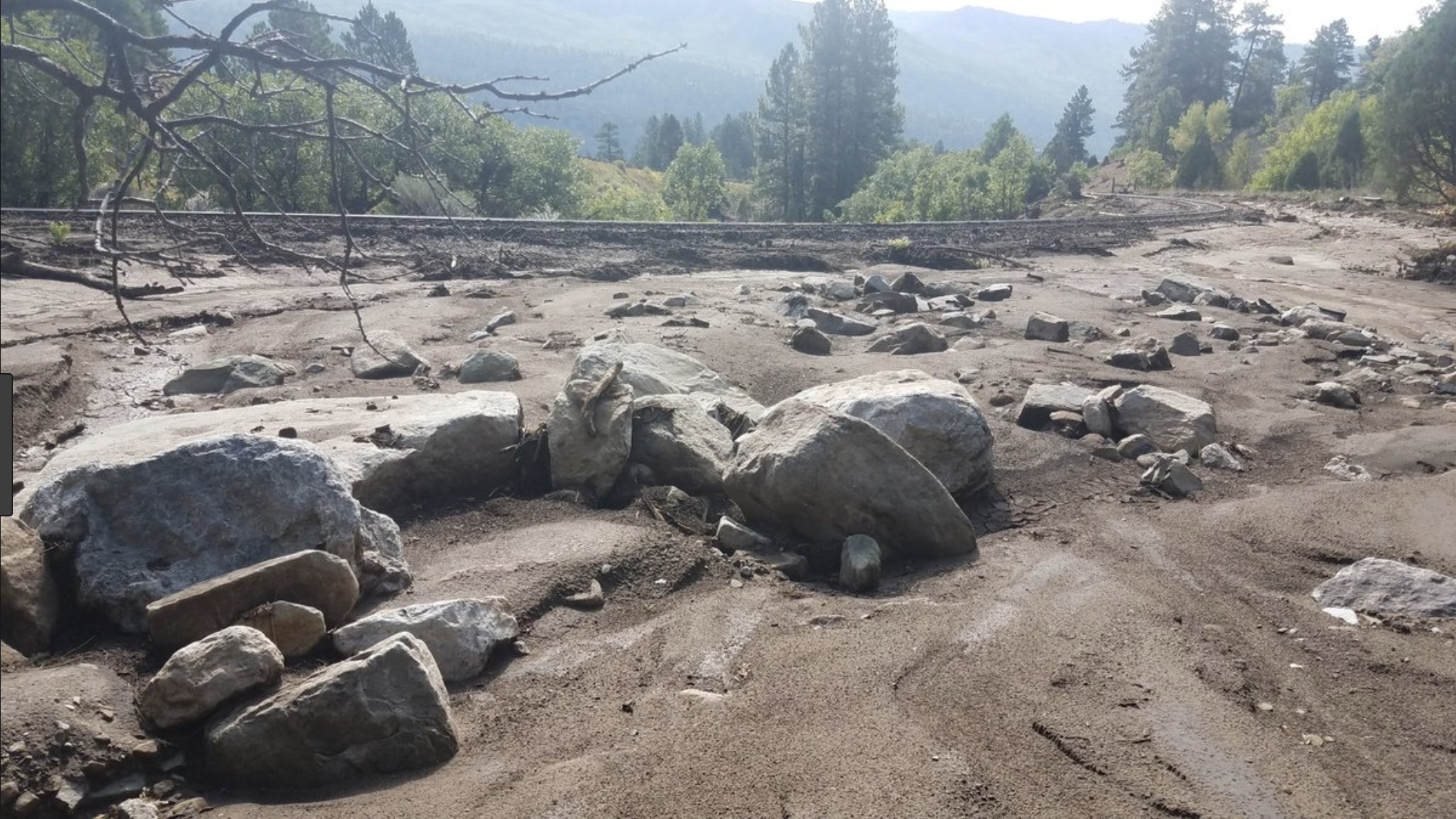
Debris flow from 416 Fire. Photo credit: Twitter #416Fire hash tag
Kristi Nelson’s home escaped the fire but suffered major damage in the mudslides.
“They took 23 dump-truck loads of mud from my property,” she said. “It was devastating. I still have a mortgage on top of $116,000 worth of damages. Let’s say I don’t want to do this work. Can I sell it?”
She said people have urged her not to ruin the train. That stings for the former vice president of sales and marketing for the railroad.
“It is with a heavy heart that I entered into this lawsuit because I love the train,” she said. “But if I crashed my car into the train depot they would expect my insurance to pay. The train’s insurance should do the same.”
On Monday, the city announced that it is the recipient of $186,356, which will go toward establishing “alternative transfer methods” with area farmers. ATMs allow water-right holders to share a portion of their claims without giving them up entirely. The state has a goal to assist in 50,000 acre feet of water transfers through the use of ATMs by 2030.
The program allows creative solutions to water sharing in a way that was not previously accessible, according to Margaret Medellin, city of Aspen’s utilities portfolio manager.
“Traditionally in Colorado water law, if you don’t use your water right you’ll eventually lose it,” Medellin said, “so before this ATM concept came about you would want to use your water rights as much as you can at all times.”
This tactic is counterintuitive to what the state needs from its water holders, though. Colorado’s population growth projections show that the demand for water will increasingly outmatch the supply. By 2050, the state’s population is estimated to reach 10 million — double 2008’s figure — creating a water shortage for about 2.5 million families.
In attempting to preserve its own water rights on Castle and Maroon Creeks, the city found itself headed to state water court with 10 separate opponents last year. It was during those pretrial negotiations that the city decided to partner with two plaintiffs to explore the ATM solution locally.
“This project is one of a few good things that came out of that effort,” Medellin said. “It really is just us as different advocates for different parts of the community coming together to try and get creative.”
Wilderness Workshop and Western Resource Advocates have assisted the city in seeking out partners who would be willing to forfeit claims on diversions at different times. Over the last year, the city has held stakeholder meetings and consulted with experts, but they realized they would need assistance in identifying good partnerships.
“The thing we realized is that there was no clear project up here,” Medellin said.
The state grant allows the city to hire outside consultants who can continue the work of finding water-rights holders who would be willing to temporarily divert their claims to the city in exchange for fees.
Todd Doherty is the president of Western Water Partnership, the consultant who helped the city with the grant application and will continue to work on securing ATM agreements. He has identified 2,800 irrigated acres that use water diverted at or above the city. His team will be reaching out to farmers to explain the program and gauge interest.
Wattenberg Oil and Gas Field via Free Range Longmont
Wattenburg Field via The Denver Post
Here’s an in-depth report Mark Jaffe that’s running in The Colorado Sun. Click through and read the whole thing. Here’s an excerpt:
Colorado is quickly becoming a patchwork of oil and gas rules after a major law change — The #Colorado Sun: Boulder County wants to enact tougher regulations. Weld County wants to make it easier to drill. And the state is scrambling to keep up.
[Senate Bill 19-181: Protect Public Welfare Oil And Gas Operations] requires a host of new rules at the state level for things such as air emissions and assessing cumulative impacts of oil and gas projects, and at the same time local governments are moving ahead with their own rules…
The Colorado Oil and Gas Conservation Commission on July 31 adopted the first of these new rules, putting limits on the use of “forced pooling,” the ability of drillers to consolidate mineral rights even if the owners object. It did not come, however, without noisy demands from protesters to halt all permitting until the new rules are made.
On the local level, Boulder and Weld counties may be at the extremes. Boulder is looking to tighten already tough regulations while Weld is setting up its own oil and gas department to expedite permitting. But other counties and municipalities in the middle are also wrestling with the issue.
“Home rule is defined in law and case law,” said Kevin Bommer, executive director of the Colorado Municipal League. “Local control is an amorphous thing and wildly inconsistent.”
Until passage of the new law, the state, through the COGCC, held primacy in all key areas of oil and gas regulation, including siting.
The new law emphasizes that local government has the land use authority to regulate and site oil and gas locations to minimize adverse impacts to public safety, health, welfare and the environment.
Local governments also gain the ability to regulate impacts, including the ability to inspect facilities, issue fines for leaks, spills and emissions and impose fees to fund oversight.
It remains to be seen how these powers will be used, but the fact that two counties and six municipalities have enacted moratoriums on oil and gas permits while they review local controls has spawned worst-case-scenario fears among critics and the industry…
The COGCC is, however, at the beginning of developing new rules that could impact local decisionmaking, including a cumulative impact assessment, which could account for environmental impacts, and alternative site analysis, calling for operators to consider sites away from urban areas, for any drilling application…
Jeff Robbins, the COGGC executive director, said that the state working with local governments is the way to resolve these issues as they emerge.
“I want to be partners with local government,” Robbins said. “There are a lot of jurisdictions; we are all trying to make rulemakings.”
Robbins said he has met with Weld County staff and with Boulder County, as well with Adams County and other local governments.
A storm that unleashed its power over the Lake Christine burn area beginning late Sunday afternoon triggered multiple debris flows and water on Frying Pan Road that temporarily trapped 20 different vehicles, but resulted in no known injuries, according to Scott Thompson, chief of Roaring Fork Fire Rescue…
A Pitkin Alert evacuation notice went out at 5:31 p.m. aimed at those who lived in the area of Pinon Road and Cedar Drive imploring them to “please take all necessary precautions,”which included seeking higher ground. “Do not enter flowing water or debris,” was among the initial warnings.
Frying Pan Road was closed intermittently Sunday from Riverside Drive to about 2 1/2 miles up the road, according to deputy chief Cleve Williams. The intersection of Cedar Drive and Two Rivers Road was reopened by 10 p.m. on Sunday…
According to the National Weather Service in Grand Junction, an inch of rain fell over the first hour, beginning at 5 p.m. There were reports of heavy rain after the first 30 minutes and flooding started on the south end of the Lake Christine burn scar. By 8:30 p.m. the rain had subsided and, according to Chief Thompson, was expected to let up before midnight.
FromThe Aspen Times (Rick Carroll) via The Glenwood Springs Post Independent (Click through to view the photo gallery):
One of the trigger points for the floods was at Pinon Drive and Cedar Drive, an area above Basalt from where the initial 911 calls were placed at approximately 5:30 p.m. Sunday…
All of the roads, including Frying Pan Road — where 10 vehicles had been stuck Sunday and later removed — had re-opened to traffic by Monday. Pinon and Cedar drives, as well as Two Rivers Road, also had been closed. Two Rivers Road opened late Sunday; Pinon and Cedar opened Monday morning.
Crews also on Monday determined the floods had not damaged the integrity of roads and bridges, said Birch Barron, Eagle County emergency manager.
Structural damage to the residences in the affected area appeared to be limited, according to Barron.
“We believe there were less than 10 private residences with debris in or around structures, and for the majority of those structures, the debris was in nonresidential spaces — garages and basement and property surrounding that,” he said.
The county had not received any reports of residences being uninhabitable, Barron noted.
The evacuation zone impacted about 30 residences; however, a number of individuals couldn’t evacuate because of dangerous road conditions, Barron said.
Sunday’s response was a collaborative effort among Eagle and Pitkin counties, the town of Basalt, area law enforcement and emergency response teams, as well as state and federal agencies, Barron said.
The flow out of Ruedi Reservoir was increased Monday by 50 cubic feet per second to help clear up the Fryingpan River, which had taken on a muddy hue from the flood’s debris and sediment.
“This should be a big help toward protecting fish and river health,” said Kris Widlak, Eagle County’s director of communications.
Screenshot from the Glenwood Springs Post Independent. Photo credit: Anna Stonehouse via The Aspen times
FromThe Albuquerque Journal (Therasa Davis) via The Farmington Daily Times:
[After the August 5, 2015 spill]…The EPA paid state and tribal governments for emergency water tests, but initially denied 79 economic damage claims.
In August 2017, EPA administrator Scott Pruitt – who resigned in July 2018 – visited the spill site and said the agency would reconsider the claims. The New Mexico Environment Department said Friday that it was unaware whether any of those payments have been made.
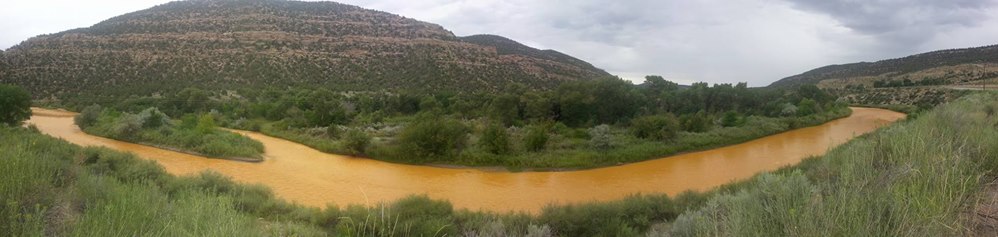
Animas River at the New Mexico/Colorado State line August, 2015.
NMED chief scientist Dennis McQuillan said there is ongoing monitoring to determine long-term effects of the spill.
“Dozens of mines are leaking acid mine water into the watershed,” McQuillan said. “Gold King was just one of those.”
Under new administrator Andrew Wheeler, the federal agency, its contractors and mining companies asked for dismissal of the lawsuits, arguing the EPA had immunity and was already working on cleanup.
Environment Department general counsel Jennifer Howard said a federal judge in Albuquerque rejected that argument in March, so the lawsuits “should definitely start proceeding at a faster pace.”
A November 2018 EPA report showed fish had elevated metal levels in the weeks after the spill, but returned to pre-spill levels by spring 2016.
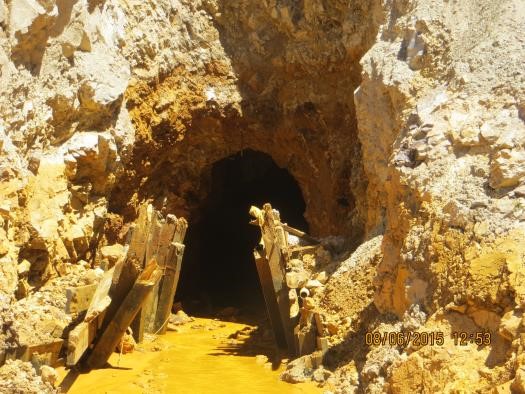
Gold King Mine Entrance after blow out on August 5, 2015. Photo via EPA.
Research by the New Mexico Bureau of Geology and Mineral Resources, New Mexico Game and Fish, Mountain Studies Institute, San Juan Basin Public Health and Colorado Parks and Wildlife echo that claim.
“The farming industry is still hurting,” McQuillan said. “I’ve talked to farmers who said their sales are down 25% from before the spill because people say they won’t buy food grown on the San Juan. But our agriculture products are safe. The fish are safe to eat. The river is safe for irrigation.”
McQuillan said the federal WIIN Act (Water Infrastructure Improvements for the Nation) will provide money for the Navajo Nation to test fish in the spill area and start outreach to address the misconception that the river water is unsafe.
In 2016, the EPA designated the area around the spill site as the Bonita Peak Mining District Superfund site, which opens up money for cleanup and places the site on a priority action list. Howard and McQuillan agreed that was a positive development, but Superfund cleanup is a slow process.
“It was a significant issue four years ago and remains a significant issue,” Howard said. “The motivation for our lawsuit is to have EPA step up to the plate and address the economic impact this (spill) had on agriculture and tourism for our state.”
The “Bonita Peak Mining District” superfund site. Map via the Environmental Protection Agency
Gering-Ft. Laramie-Goshen canal. Photo credit: Wyoming Farm Bureau Federation
From The University of Nebraska Lincoln< (Jessica Groskopf/Cory Walters):
As repairs continue on the tunnel that collapsed on the Goshen/Gering-Fort Laramie Canal, unanswered questions remain about whether crop insurance will cover crop losses stemming from the loss of irrigation water.
Crop Insurance provides protection against “unavoidable, naturally occurring events.” Due to the complexity of the Goshen/Gering-Fort Laramie situation, it is unknown if crop insurance will cover crop loss.
Three tunnels are used to deliver water from the Whalen Dam on the North Platte River to the Goshen/Gering-Fort Laramie Canal. The second tunnel, south of Fort Laramie, Wyo., collapsed on July 17. Water has been shut off at the Whalen Dam since the incident occurred in order to inspect and repair the tunnel. This has left 107,000 acres of cropland in Nebraska and Wyoming without irrigation water during a critical time in the growing season.
Several factors may have contributed to the tunnel collapse. According to a report by the National Weather Service in Cheyenne “precipitation has been upwards of 200-300% above normal for the past water year (1 Oct. 2018 to present).” However, the tunnel in question was built in 1917 by the Bureau of Reclamation, which owns the structure. The Goshen Irrigation District and Gering-Fort Laramie Irrigation District were responsible for operating and maintenance of the tunnel.
Crop insurance is a federal program administered by the USDA Risk Management Agency. All crop insurance policies, regardless of the crop insurance agent, are subject to the same provisions. Thus if it is determined that the tunnel collapse was not from an “unavoidable, naturally occurring event,” all crop insurance policy holders on the Goshen/Gering-Fort Laramie Canal would not receive an indemnity payment for their crop loss.
Farmers in the affected area need to continue to manage their crop as if water will return to the canal and they will covered by their crop insurance policy. Failure to do so may negate individual crop insurance coverage. Producers must receive written permission from the insurance company to replant, abandon or destroy a crop.
This information is designed to support and help clarify existing crop insurance policy provisions and procedures. For more detailed information and options you may have, please consult a crop insurance agent.
FromThe High Country News (Tay Wiles, September 27, 2017):
Since the election of President Donald Trump, a steady stream of right-wing street rallies have brought together an array of extremist groups — from white supremacists to self-styled militias that espouse anti-government ideologies.
Meanwhile, investigations continue into the Trump team’s potential collusion with Russia during his presidential campaign, raising the prospect of impeachment or indictments. Roger Stone, a former adviser and longtime confidant to Trump, recently told a reporter with TMZ that an impeachment of the president would cause “a spasm of violence in this country, an insurrection like you’ve never seen.” Stone also supported Trump’s recent pardon of former Arizona sheriff Joe Arpaio, who was convicted in federal court for criminal contempt. Stone is now urging a pardon for Nevada rancher Cliven Bundy, who is about to go on trial for leading an armed confrontation with federal employees. Given Stone’s insurrection statement, the push for presidential pardons in spite of federal court orders, and a spike in hate or bias incidents following the election, it’s worth understanding some of the key players of anti-federal ideology, hate and extremism in the West today.
Oath Keepers
The Oath Keepers are one of two of the most well known of the country’s 165 or so militia groups. They are named for the oath that members of the military or police take to defend the Constitution from enemies foreign and domestic. You might see the oft-armed Oath Keepers in camouflage battle dress uniforms posturing as peacekeepers or security at “free speech” rallies.
Oath Keepers were among the militia groups that showed up to support Nevada rancher Cliven Bundy during the 2014 armed standoff with the Bureau of Land Management and National Park Service. They also spent weeks in the fray in Burns, Oregon, during the 2016 armed occupation of the Malheur National Wildlife Refuge.
You might also see them doing community service, running security for your local Republican, Libertarian or Tea Party events, or in the mix at a variety of emergency situations from the 2015 riots in Ferguson, Missouri, following the killing of Michael Brown, or the aftermath of hurricanes Harvey and Irma.
The Oath Keepers are fixated on apocalyptic scenarios. The Southern Poverty Law Center, a progressive organization that tracks extremist groups, calls the Oath Keepers’ core tenets “a set of baseless conspiracy theories about the federal government working to destroy the liberties of Americans.” For instance, they are committed to “NOT obey any order to blockade American cities, thus turning them into giant concentration camps.”
Yale Law School graduate Stewart Rhodes founded the Oath Keepers in 2009. The group now claims 30,000 members and specifically recruits current and former members of the military and law enforcement.
In recent months they have tried to distance themselves from the white supremacist and nationalist movements emboldened since Trump’s election. For instance, Oath Keepers nixed their plans to attend a right-wing rally in San Francisco in August because the organizing group, Patriot Prayer, couldn’t promise white nationalists wouldn’t show up. Similarly, the Three Percent leadership told its members to “stand down” after anti-racist activist Heather Heyer was killed during protests organized by white supremacists in Charlottesville, Virginia, in August.
Danny Vanderschelden, the grounds keeper for the Sugar Pine Mine group. He says he makes a living mining up in the mountains. Oath Keepers, a group of current and formerly serving military, police, and first responders, who pledge to fulfill the oath all military and police take to “defend the Constitution against all enemies, foreign and domestic” in Josephine County, Oregon stood up at the Sugar Pine Mines in April to defend miners’ rights to due process.
Three Percent
Like the Oath Keepers, the Three Percent are Second Amendment activists and one of the most well known militia groups today. Their network is less centralized than the Oath Keepers’, with individuals using the name to create loosely affiliated local groups across the country.
In 2008 Michael Vanderboegh of Alabama, who died last year, founded the Three Percent. The group takes its name from the unsubstantiated claim that only three percent of American colonists took up arms against the British. Vanderboegh was a fierce critic of gun control laws, the SPLC reports: “In the wake of the 2012 Newtown, Connecticut, school massacre, he warned in emails sent to more than 1,000 employees of the Connecticut State Police that they risked ‘initiating hostilities’ if they tried to enforce the state’s tough new gun control law.”
Three Percent members participated in the 2014 Bunkerville standoff, in support of the Bundys. Vanderboegh said after the incident: “It is impossible to overstate the importance of the victory won in the desert today. The feds were routed.” Eric Parker, a defendant who will appear alongside Cliven Bundy in court for the standoff in October, is a former vice president for the Three Percent of Idaho. “The militia were shopping for a cause,” when the Bunkerville standoff happened, says J.J. MacNab, an anti-government extremism expert.
A Three Percenter spokesman Chris McIntire distanced the group from the Malheur occupation, at the time saying, “We didn’t make any calls to arms nor plan or advocate any form of armed uprising.” But like the Oath Keepers, they lingered in the nearby town of Burns, Oregon, during the occupation, posturing as peace-keepers or even mediators between law enforcement and the occupiers.
Three Percent and Oath Keepers are just two of the most well-known of 623 far-right anti-government groups operating nationwide today. That number is down from 1,360 in 2012, according to the SPLC. Yet as of last year, multiple armed groups were active in every Western state, from the Washington Light Foot Militia to the Arizona State Militia.
Constitutional Sheriffs and Peace Officers Association
In 2011 former Arizona sheriff Richard Mack created CSPOA, which asserts that county sheriffs represent the supreme law of the land, superseding federal law enforcement. As of last year, the group claimed 4,500 members, including 200 sheriffs. The constitutional sheriffs movement has been particularly strong in Western states, where local and county officers can have tense relationships with federal land agencies.
Two prominent CSPOA sheriffs recently made national headlines for their ties to Trump. Last month Trump used his presidential authority to pardon former sheriff Joe Arpaio, who helped found the CSPOA. “Trump does seem to buy into the idea that sheriffs are the highest law enforcement of the land,” MacNab says, “which signals to the anti-government extremist movement that he’s one of them, though I don’t know if he’s one or not.”
Another CSPOA member, former sheriff David Clarke, of Milwaukee County, Wisconsin, was rumored to be in the running for a position at the White House last month. Clarke was a vocal supporter of Trump during the campaign last year. He has since taken a position with the pro-Trump America First Action PAC.
According to Politico, Michael Barkun, an expert on political extremism, calls the CSPOA philosophy “radical localism” because “it valorizes and exploits subnational sources of power. In theory, that kind of localism could be a vehicle for many kinds of politics, but in practice constitutional sheriffs and their followers tend to occupy the edges of anti-government conservatism.”
Border militias
Independent militia groups have sporadically patrolled the U.S.-Mexico border for many years, aiming to stop drug smugglers, human traffickers and undocumented immigrants from entering the country, where they say federal border patrol agents aren’t doing their job. The movement dwindled in the late-2000s. One of the most well-known groups, the Minutemen, which once claimed 12,000 members, is now defunct. But other groups around the country still operate in the area, as Mother Jones chronicled through undercover reporting with the Three Percent United Patriots last year. Another organization, Arizona Border Recon, founded in 2011, may now be “the only vigilante group with a continuous presence on the Arizona-Mexico border,” Arizona Republic reports.
While militia members describe positive relationships with the federal government and see themselves as the eyes and ears of U.S. border patrol, there have been many reports of paramilitary groups getting in the way of the feds and local officers. According to the Arizona Republic, Santa Cruz County Sheriff Tony Estrada “is a vocal critic of Arizona Border Recon, saying such groups can do more harm than good to local law enforcement’s efforts ability to police their jurisdictions.”
Sovereign citizens
This movement emerged in the 1980s, based on a mix of anti-Semitic and anti-government beliefs. Sovereign citizens see government institutions as illegitimate and are known for evading taxes and resisting judicial authority by filing unnecessary court motions with fringe legal theories, or putting liens on judges to ruin their credit ratings as a form of protest. (A sovereign citizen appears to have recently filed a lien for $1.5 million against U.S. District Court of Nevada judge Gloria Navarro, for her dealings with the federal case against the Bundys.) In 2011, experts estimated about 100,000 hard-core sovereign citizens existed nationwide. “In the late 2000s and early 2010s, most new recruits to the sovereign citizens’ movement are people who have found themselves in a desperate situation, often due to the economy or foreclosures, and are searching for a quick fix,” the SPLC reports. “Others are intrigued by the notions of easy money and living a lawless life, free from unpleasant consequences.” While sovereign citizens represent a distinct movement, there is some overlap with other so-called “Patriot” groups, which include militias and a variety of other far-right organizations.
Hate groups
Aside from these typical Patriot groups, the West is home to a large number and wide variety of hate groups. According to the SPLC, the number of hate groups grew from 784 to 917 between 2014 and 2016; within that, anti-Muslim groups rose sharply, from 34 to 101. Hate groups can be found in every Western state, ranging from the white nationalist American Vanguard in Utah, Arizona, California and Washington, to the anti-Muslim Treasure Valley Refugee Watch in Meridian, Idaho, and the anti-LGBT Family Watch International in Gilbert, Arizona.
Many of these groups have existed in the West for a long time, and it remains unclear how they will grow or change now that a candidate many of them supported is in the White House.
Here’s the release from the Bureau of Reclamation (Tyler Johnson):
Great Plains Regional Director Mike Black announced today that Jeff Rieker will succeed Signe Snortland as Eastern Colorado Area Office manager September 15, 2019. Rieker will serve as the Eastern Colorado Area Manager after serving as the Operations Manager for the Central Valley Operations Office where he oversaw the day-to-day water and power operations of Reclamation’s Central Valley Project (CVP), one of the largest water storage and transport systems in the world. The CVP is comprised of 20 dams and reservoirs, 11 power plants and more than 500 miles of canals and aqueducts within California’s Central Valley.
“Jeff brings a history of technical ability and collaboration with regional, local and international parties on a variety of issues that will benefit Reclamation and the numerous stakeholders,” said Black. “Jeff is a great asset to our leadership team and I am confident he will serve the people of Colorado well.”
Rieker joined Reclamation in 1999 as a student hydraulic engineer in Reclamation’s Technical Service Center. Over his Reclamation career, he has served in a variety of positions including Special Studies Division Manager for the Lahontan Basin Area Office, Special Assistant for the Mid-Pacific’s Office of the Regional Director, and the Mid-Pacific Region’s Liaison Officer in Washington, D.C.
Rieker holds a bachelor’s degree in civil engineering from the Missouri University of Science and Technology, a master’s degree in civil engineering with an emphasis in water resources planning and management from Colorado State University, and a Ph.D. in the same subject from Colorado State University.
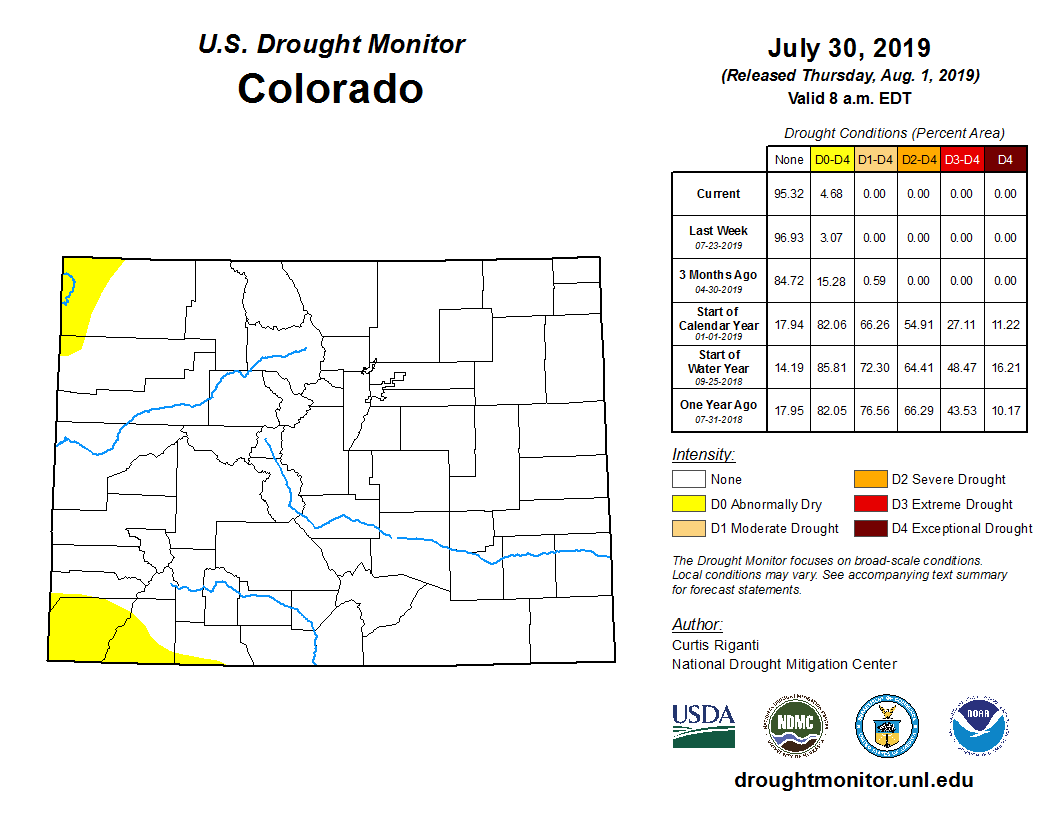
Colorado was free from drought and abnormally dry conditions for eight consecutive weeks – something that hasn’t happened for even a single week in records going back to January 2000 – however dry conditions have been making their way back into the state over the past two reports.
Two weeks ago, abnormally dry conditions returned to Dolores, Montezuma, La Plata and Archuleta counties. In the latest report from the National Drought Mitigation Center, western portions of Moffat and Rio Blanco counties are also seeing a return of abnormally dry areas.
Colorado Drought Monitor July 30, 3019.
More than 95 percent of the state remains drought-free, thanks to heavy, late-season snow storms, particularly in the southern mountains and Colorado’s western slope. A cool spring also helped slow snowmelt in the mountains.
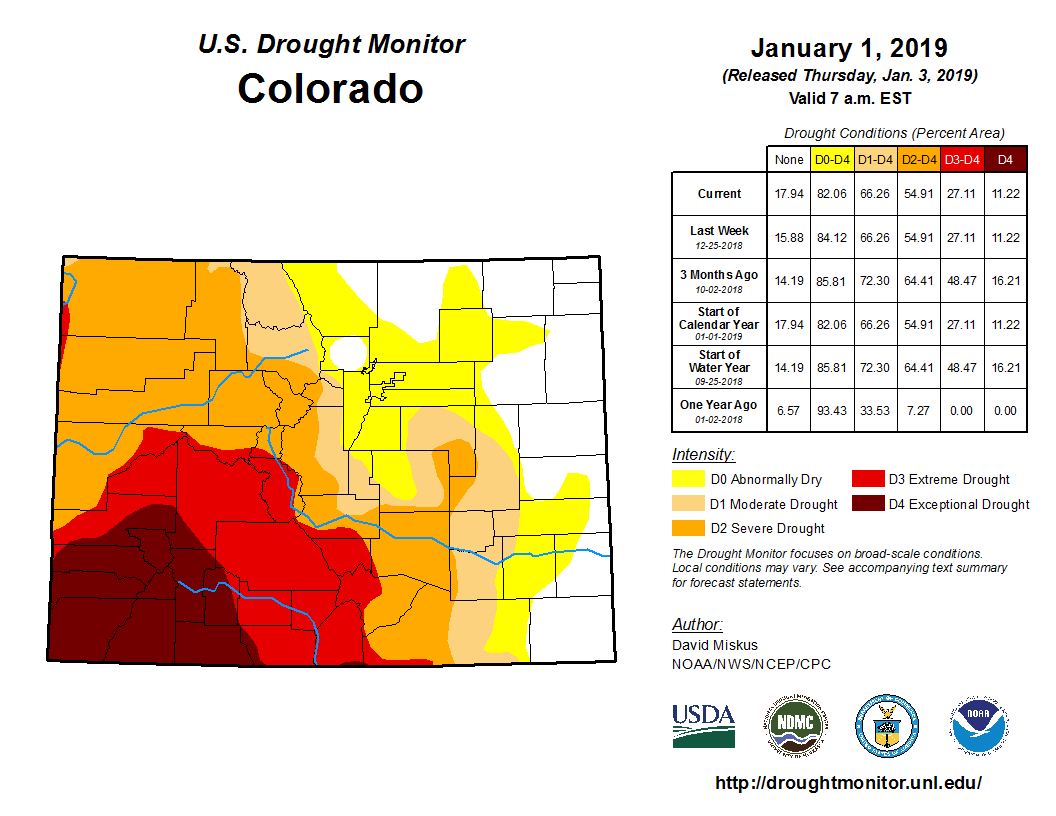
On January 1, less than 18 percent of the state was free from drought, and 27 percent – mainly in the southwest – was in extreme and exceptional drought, the two worst categories. In late September last year, half the state was in extreme and exceptional drought.
Colorado Drought Monitor January 1, 2019.
As recently as June, the United States Department of Agriculture and Small Business Administration were designating more than half of Colorado’s counties as disaster areas, making producers and businesses eligible for federal assistance and loans.
While northeast Colorado benefitted from rain over the past week, much of the state has been dry, with warmer than normal temperatures – occasionally reaching the low 100s.
This year, the U.S. Bureau of Reclamation decided to take advantage of high water levels from a strong spring runoff and create more habitat for the fish on the Middle Rio Grande.
Doris Rhodes owns 629 acres near San Antonio in Socorro County, and for years she has been advocating for her property to host a Reclamation silvery minnow project. Earlier this year, her work paid off.
Rhodes’ land is nestled on the Rio Grande near Bosque del Apache National Wildlife Refuge, making it an ideal location for restoration and conservation, according to Reclamation project manager Ashlee Rudolph.
Reclamation crews worked from January to March of this year to lower and widen the riverbank on the southern end of the property. They excavated 46,000 cubic yards of dirt to create water channels where minnows could escape the fast-moving river.
“What makes this project great is that it is a partnership between a private landowner who wanted to create habitat on her land and the federal and state agencies,” Rudolph said. “It is so rare to have that partnership.”
Slowing the river flow
Reclamation worked with the private non-profit Save Our Bosque Task Force, the U.S. Department of Agriculture’s New Mexico Natural Resources Conservation Service and the U.S. Bureau of Land Management to excavate zigzag patterns on nearly a mile of the river.
The Rhodes property is one of few remaining historic wetlands in the San Acacia Reach of the Rio Grande, a primary habitat for silvery minnow.
The property has no levees on the east side of the river, which has helped in the restoration of the area’s natural floodplain, according to Reclamation Albuquerque Area public affairs specialist Mary Carlson.
Chris Torres, who oversees river maintenance operations on the Middle Rio Grande for the Reclamation Albuquerque Area Office, said the slow-moving side channels are critical for minnow-spawning.
“Minnows like that edge habitat. It’s worked perfectly,” Torres said. “The water is backing the way it’s supposed to, and we can see fish moving down through there. As the water drops, everything returns back to the main river like it’s supposed to.”
Rudolph said that since 2016, there have been at least eight silvery minnow habitats constructed in the San Acacia Reach of the river. Reclamation is joined by the Interstate Stream Commission to create these sites and monitor the fish populations.
The new channels don’t just provide habitat for the small fish, which was listed on the federal endangered species list in 1994. Birds, deer and other wildlife are also drawn to the lowered riverbank…
Torres said the crews left native cottonwoods intact and planted New Mexico olive trees. Crews also completed the project quickly so as not to disturb the federally-endangered Southwestern willow flycatcher.
Side channels were excavated by the Bureau of Reclamation along the Rio Grande where it passes through the Rhodes’ property to provide habitat for the endangered silvery minnow. (Dustin Armstrong/U.S. Bureau Of Reclamation)
“Normally we would go through and just clear-cut everything for excavation purposes, but for this project we elected to leave the islands and leave as much of the native vegetation as we could,” Torres said…
The property has flooded at least four times since 2006 – which Rhodes says is a good thing.
“The Rhodes Property is a release valve,” she said. “When the river’s running high, water will come on to the property. It protects farmers to the north and south and also protects Bosque del Apache.”
She said that, after the minnow project is complete, her next step will likely be more removal of the invasive salt cedar and planting of native plant species.
“The more conservation that happens down here,” Rhodes said, “the more I’m convinced that this property is on the right path.”
One hundred and fifty years ago, a group of explorers led by Civil War veteran John Wesley Powell set out to document the canyons of the Green and Colorado Rivers. It was the first trip of its kind. To commemorate the journey, a group of scientists, artists and graduate students from the University of Wyoming called the Sesquicentennial Colorado River Exploring Expedition has been retracing his steps this summer.
Minckley’s group launched in late May in the same spot and on the same day John Wesley Powell and his crew of nine men launched in 1869. Along the way, more than 60 people — including fellow scientists, environmentalists, tribal leaders and water managers — joined Minckley’s crew.
“We’ve been rowing and most recently motoring down the same route he took looking at the conditions of the river, talking to people about the future of the West, water supplies, natural resources,” Minckley said, in between the sounds of passing motorboats on Lake Powell. “(We’re) trying to examine the system in a similar way that John Wesley Powell did through a systematic look at how it’s being used.”
In the time since Powell’s journey, vast infrastructure projects fundamentally changed how the Green and Colorado Rivers function, and what they look like. Unlike Powell, Minckley’s group had to portage around large dams, like Flaming Gorge in Utah and Glen Canyon Dam in Arizona. Part of Powell’s legacy, he says, is that he warned lawmakers in Washington D.C. not to overuse the river, and to plan for scarcity.
But, Minckley says, even as Powell remains as an oracle-like figure in the West’s mythology, much of what’s been built in the basin is well within his vision for the region…
On John Wesley Powell
“Powell was the first European to row down the Green and Colorado Rivers and through the Grand Canyon. He coined the term The Great Unknown as parts of that system were known from mountain man days, but there were parts that had never been seen by European eyes. He connected the upper river to what was known down in the area that is now Lake Mead… He was a Civil War hero who lost his arm in battle and he went on to become one of the United States’ great explorer heroes. One of the last great explorations of the lower 48 states was Powell’s trip down the Green and Colorado rivers. He was instrumental in developing the West and opening up the West to settlement and largely also envisioning some of the infrastructure we depend on for our water supplies and power supplies.”
Explorer John Wesley Powell and Paiute Chief Tau-Gu looking over the Virgin River in 1873. Photo credit: NPS
A stopover during Powell’s second expedition down the Colorado River. Note Powell’s chair at top center boat. Image: USGS
The camp and cooking setup for the second expedition (pictured) was likely very similar to the first expedition and consisted of a few pots and pans to cook over a fire. May 4, 1871. (Credit: E.O. Beaman. Public domain.)
Austin Alvarado cracks eggs into a sizzling pan for breakfast sandwiches. (Public domain.)
Powell 150 Expedition – sandwich Lunch was usually a sandwich packed in the morning, but with great scenery. Photo credit: USGS
Yampa/White/Green/North Platte river basins via the Colorado Geological Survey
Green River Basin
Lower Green River Lake
Will Stauffer-Norris and Zak Podmor at the headwaters of the Green River October 2011.
Green River below Flaming Gorge Dam. Photo credit: Brent Gardner-Smith/Aspen Journalism
Split Mountain Gorge Green River June 2015 via Ana Ruiz
A small beach on the Green River in Whirlpool Canyon on a rainy day in April, 2018.
The Green River below Split Mountain in April 2018. Photo: Brent Gardner-Smith/Aspen Journalism
The Green River, above Cataract Canyon, during a downpour. Photo: Brent Gardner-Smith/Aspen Journalism.
A sprinkler delivering water from the Green River to a field in Utah. Photo: Brent Gardner-Smith/Aspen Journalism
Shadows taking over a beach along the Green River in Utah. Photo: Brent Gardner-Smith/Aspen Journalism
Clarity on a bend along the Green River: Photo: Brent Gardner-Smith/Aspen Journalism
A view from Fort Bottom, on the Green River in Utah. Photo: Brent Gardner-Smith/Aspen Journalism
The Green River. Photo: Brent Gardner-Smith/Aspen Journalism
Near the bottom of the Green River, just above its confluence with the Colorado River. Photo: Brent Gardner-Smith/Aspen Journalism
Waterfalls on the Green River. Photo: Brent Gardner-Smith/Aspen Journalism
The bottom of a pour over on the Green River. Photo: Brent Gardner-Smith/Aspen Journalism
The blues. On the Green River. Photo: Brent Gardner-Smith/Aspen Journalism
Morning on the upper Colorado River. Photo: Brent Gardner-Smith/Aspen Journalism
In Deso-Gray, on the Green River. Photo: Brent Gardner-Smith/Aspen Journalism
Reflecting, in a side canyon off of the Green River. Photo: Brent Gardner-Smith/Aspen Journalism
A big beach on the lower Green River in late September is indicative of the low flows in 2018, which have caused water levels in Lake Powell to continue to drop. Plans to bolster flows in the reservoir by sending water down the Green and Colorado rivers is raising hard questions for Western Slope irrigators.
Clay flakes in a side canyon of the Green River. Photo: Brent Gardner-Smith/Aspen Journalism
The confluence of the Green and Colorado rivers, in September 2018. Most of the water that flows into Lake Powell each year flows past this remote spot in Canyonlands National Park.
Looking upriver at the confluence of the Green and Colorado rivers in late September, one of the driest years on record for the Colorado River system. Water managers in both the upper and lower basins are working to get more water to this point in order to bolster the low level of Lake Powell, which is not far downstream.
Recreation, in progress, on the Green River. Photo: Brent Gardner-Smith/Aspen Journalism
A big beach on the banks of the Green River in September 2018, one of the lowest months on record for inflow into Lake Powell. Runoff is 2019 is expected to be better than 2018, but still below average due to dry soil conditions in the area drained by the Green and Colorado river systems. Photo: Brent Gardner-Smith/Aspen Journalism
Pride of Tex’s fleet, on the Green River. Photo: Brent Gardner-Smith/Aspen Journalism
Sunlight, over sandbars, on the Green River September 2018. Photo credit: Brent Gardner-Smith/Aspen Journalism
A September morning along the Green River this year was scenic, but the river was low, and has been for several Septembers in a row. Water managers in Utah, Wyoming and Colorado and working to put more water into both the Green and Colorado rivers in an effort to bolster water levels in Lake Powell. Photo credit: Aspen Journalism/Brent Gardner-Smith
No photos were taken during John Wesley Powell’s pioneering 1869 expedition of the Colorado River. This photo, taken along the Green River in northern Colorado, dates from Powell’s 1871 expedition, which retraced the 1869 journey. Credit: National Park Service
Looking down on camp at Big Pine, Red Canyon. The photo shows the SCREE Powell 150 expdition camp at Big Pine Campground in Red Canyon of the Green River, Utah. The large green tarp was set up to keep the kitchen area and campers dry. Two very large ponderosa pines are in the center of camp, and surely were witness to the 1869 Powell expedition. Photo credit SCREE via the USGS.
Yampa and Green rivers confluence. Photo credit: Ken Neubecker/American Rivers
The Yampa River flows through the Carpenter Ranch. Photo courtesy of John Fielder from his new book, “Colorado’s Yampa River: Free Flowing & Wild from the Flat Tops to the Green.”
The confluence of the Green and Yampa rivers in 2016. How much water reaches this point, bound for Lake Powell, has implications across the west and Colorado, and an ongoing water study might suggest how to manage water in a severe drought. Photo credit Brent Gardner-Smith.
At the confluence of the Yampa and Green rivers. Photo: Brent Gardner-Smith/Aspen Journalism
A fleet of rafts makes its way down the Green River toward its confluence with the Yampa River. Future potential releases of water out of Flaming Gorge Reservoir to boost levels in Lake Powell shape the flows on the Green River, although it’s not clear how the releases may change flow levels. Photo credit: Aspen Journalism/Brent Gardner-Smity
County to consider 1,000-foot standard for all new oil and gas wells
Adams County could become the first community in Colorado to require a larger separation between new wells and occupied buildings than the state mandates, as leaders at both the state and local level wrestle with how to implement a historic oil and gas reform law passed this year.
The Denver Post got an early look at a draft of the county’s oil and gas regulations, which the commissioners will likely vote on at the end of the month. They call for a 1,000-foot buffer between wells and homes, schools and day care centers — doubling the distance the state presently requires.
The issue of well setbacks became the topic de jour during the 2018 election, when voters were asked to increase the distance between new wells and homes and schools to 2,500 feet statewide. The ballot issue, Proposition 112, was soundly defeated.
But after the passage of Senate Bill 181 in April, which ended state preemption over energy extraction matters and tasked state regulators with putting health and safety ahead of industry expansion, local governments now have the opportunity to increase setbacks on their own.
Adams County in March put a six-month moratorium on any new drilling so that it could rewrite its rules for the industry. There are hundreds of pending permits for wells in the county…
It’s likely communities that have taken an even firmer stance against oil and gas activity in the past, such as Boulder and Larimer counties, may put in place even larger setbacks than what Adams County is proposing…
Just two years ago, when the state did have total authority over setbacks, Thornton was successfully sued by oil and gas industry groups when the city attempted to enlarge setbacks by 250 feet over the state’s minimum.
The judge, in casting aside Thornton’s rules, found that municipalities “cannot authorize what state law forbids or forbid what state law allows.” That has all changed in the wake of SB 181 becoming law.
The state is just embarking on what is expected to be a months-long process to write rules to implement the new oil and gas law. The Colorado Oil and Gas Conservation Commission held two days of public hearings last week, which were marked with repeated disruptions from fracking opponents in the audience.
Meanwhile, communities continue crafting or revamping their own rules.
“A fundamental obligation of local governments is to mitigate incompatible land uses,” Adams County Commissioner Steve O’Dorisio said. “Large-scale oil and gas facilities are often intense industrial uses, which can be incompatible with residential neighborhoods.”
But O’Dorisio said the 1,000-foot buffer being considered is not a “hardline” threshold, as there is language in the proposed rules that would allow oil and gas operators to apply on a case-by-case basis for a waiver to drill closer.
Matt Samelson, an attorney with Western Environmental Law Partners, said Adams County’s proposed setback shouldn’t come as a shock to many of the energy companies that operate in the congested and mineral-rich north suburban corridor.
Many communities, like Commerce City, Brighton and Broomfield, have already gotten drillers to agree to setbacks greater than 500 feet as part of voluntary operator agreements that the municipalities have hammered out with the industry over the past few years.
Lex Collins purchased the Pearce Ranch, now known as the E Lazy S Ranch, with the help of a conservation easement. The easement permanently protects the ranch’s unique habitat and wildlife. Courtesy photo via the Rio Blanco Herald Times.
From Great Outdoors Colorado via The Rio Blanco Herald-Times:
Anyone who has talked to Lex Collins knows how much the E Lazy S Ranch means to him. For years Collins stewarded its landscape with former landowners, Tom and Ruth Pearce, and their daughter Denise. The ranch’s productive hayfields combined with spectacular scenery and a mile of White River frontage make it easy to see why Collins cares so deeply about this landscape. As of July 25, 2019, with leadership from Collins and in partnership with Hal and Christine Pearce and multiple conservation organizations, the E Lazy S Ranch was permanently conserved, ensuring that it will remain undeveloped forever.
Sandwiched among three existing conserved ranches, the E Lazy S Ranch was one of the largest remaining unprotected properties along the White River in an area known as Agency Park. Conservation of the ranch conserved 562 additional acres and tied together a 4,492-acre block of conserved land in the heart of the valley. The landscape is highly visible from County Road 8, also known as the Flat Tops Trail Scenic Byway, and makes up a portion of the view shed for travelers on State Highway 13.
The ranch’s meadows and forests provide crucial habitat for local elk and mule deer herds for which northwest Colorado is renowned, as well as coyote, bald eagle, greater sandhill crane and numerous small mammals. The riparian areas along the property contain a box elder-narrowleaf cottonwood/red osier dogwood forest—a forest type unique to the Yampa and White River basins of northwest Colorado.
While the E Lazy S boasts spectacular conservation values, its story of ownership and generational transfer make it unique. Formerly known as the Pearce Ranch, the E Lazy S Ranch was owned by Tom and Ruth Pearce who purchased the ranch in 1961. Tom and Ruth ran a successful agricultural operation and were honored as the commercial breeders of the year by the Colorado Hereford Association in 1987. For many years, Lex Collins managed the ranch with Tom, Ruth and their daughter Denise. In 2014, after both Tom and Ruth had passed, the ranch was left to their three children: Denise, Hal, and Christine. Tragically, Denise passed away in 2015, but not before leaving her share of the ranch to Collins. It was the goal of Hal and Christine to honor the legacy of their family by keeping the ranch intact as an agricultural entity, and they were able to work together with Collins to develop a plan to allow him to become the sole owner of the ranch, using a conservation easement as the primary mechanism to generate revenue.
“I’m trying to carry on what Denise Pearce invested her life in: the Pearce Ranch. The conservation easement is the only way that is possible. I thank everyone involved for enabling this ranch to continue forward with its true heritage,” Collins said when asked about the conservation project. Now that the E Lazy S ranch is conserved, he plans to continue to raise cattle and hay on the property, and eventually his daughter, Macy, plans to take over the agricultural operation.
“GOCO is proud to partner in this project, helping to conserve forever a ranch that contributes to a large block of conserved ranchland in the area, which is important wildlife habitat, and which also protects amazing, wide open views for those traveling along the Flat Tops Trail Scenic Byway, and State Highway 13,” said GOCO Executive Director Chris Castilian. “Our sincere thanks to all who made it possible, especially Lex Collins and the Pearce family.”
Conservation of the ranch was also supported by the Natural Resource Conservation Service (NRCS). “Conserving working agricultural lands is one of the NRCS’s highest priorities,” said Clint Evans, NRCS Colorado State Conservationist. “The Agency’s Agricultural Conservation Easement Program provides the much needed opportunities to forge and maintain valuable partnerships between organizations and landowners that make it easier for NRCS to help people help the land.” The Nature Conservancy and Trout Unlimited were also important partners for the project, providing funding to help offset the transaction costs.
“Few people have the opportunity to leave a perpetual legacy,” said CCALT’s Molly Fales, “but that is what Mr. Collins has done here. By conserving the E Lazy S Ranch, he has ensured that the Pearce family’s ranching legacy will remain, and he has cemented his own conservation legacy in the valley.”
Hal Pearce echoed these sentiments saying: “It may no longer have the Pearce name attached to it, but it’s still home. In the end it’s about the land and is really bigger than any of us.”
Pearce Ranch Conservation Legacy, $420,000 grant to Colorado Cattlemen’s Agricultural Land Trust
GOCO will help CCALT acquire a conservation easement on the two parcels making up the Pearce Ranch, totaling 620 acres. Proceeds from the easement will enable the ranch’s long-time manager to purchase the property. Conserving the property will continue its ranching legacy, in addition to protecting wildlife habitat and water rights benefiting all of the properties in the Highland Ditch system.
Picture taken 6/25/18 from the Miller Creek bridge. Algae bloom. Photo credit: White River AlgaeTechnical Advisory Group
A view of the White River foreground, and the Wolf Creek gulch, across the river. The Rio Blanco Water Conservancy District and the State of Colorado have reached a settlement for a reservoir and dam project at this site. Photo credit: Aspen Journalism/Brent Gardner-Smith
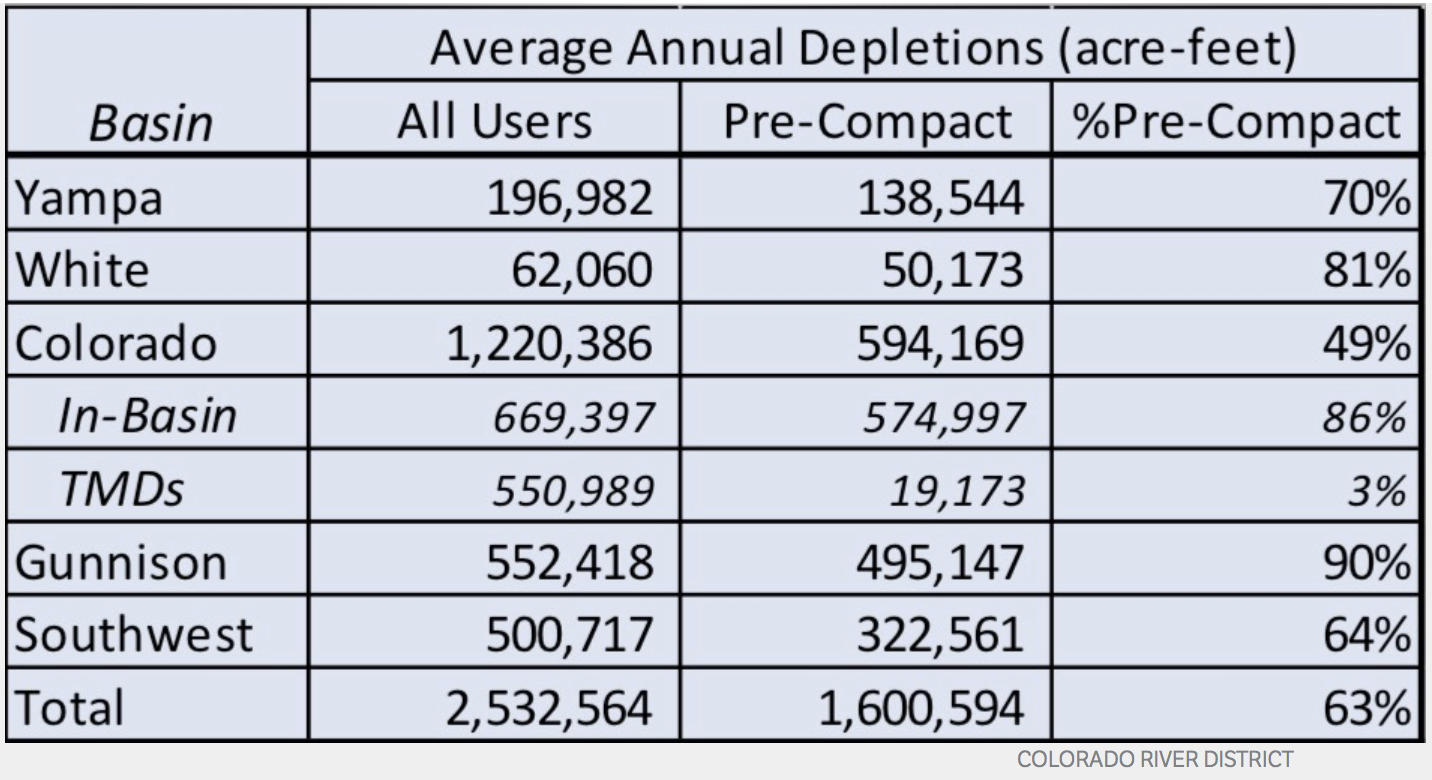
A chart from the Colorado River District’s Phase III risk study, showing average annual depletions from the Western Slope, including transmountain diversions, tied to both pre and post compact rights. Graphic credit: Colorado River District via Aspen Journalism
Click here to read the newsletter. Here’s an excerpt:
RISK STUDY RESULTS
Phase III of the Colorado River Risk Study spearheaded by Colorado’s Colorado River District and Southwestern Water Conservation District has yielded some modeling results on the risks of Lake Powell dropping to critical levels, as well as how various curtailment scenarios could impact Colorado River uses from different sub-basins in Colorado. The final report won’t be out until the end of the summer, but a slide show was presented at the Four West Slope Basin Roundtable meeting on June 20 in Grand Junction, and it is posted here.
The objective of this years Grass Tour is to learn about the Five Dimensions of Ranching: Landscape, Animals, Forage Resource, Time and The Unexpected. We will cover topics ranging from the effects of Co2 on biodiversity, differences in plant phtosynthetic cycles (C3 vs C4 vs CAM), the effects of Mycorrhizal fungi, soil health, reclamation and much more! We have invited several panelists to discuss these subjects, we will get out in the field for some hands on learning, we will have workshops, food and drink, hiking, and for those interested in spending more time with the land we invite you to our camp out/ pow-wow which we will be hosting in Grover.
he U.S. Congress Climate Crisis Committee came to Colorado this week seeking guidance for a new national push to reduce the heat-trapping air pollution that worsens global warming — boosting the state’s position as a center for innovative action.
Members of this select committee and staffers explored energy research labs for two days. They quizzed scientists at work on accelerating a shift off fossil fuels to lower-cost wind and solar electricity.
And on Thursday the lawmakers held their first formal field hearing in a jam-packed courtroom at the University of Colorado law school, repeatedly asking state and city leaders how best the federal government could weigh in…
Gov. Jared Polis testified first, telling the lawmakers climate change poses “the existential threat” that in Colorado is affecting water supply, food production and a recreation industry that needs healthy forests. State agencies are girding for “a hotter, drier, more erratic future,” Polis said, and summarized work “to accelerate the retirement of costly coal assets” that pump out heat-trapping carbon dioxide.
Bold federal action “is more than just a moral imperative,” Polis said. “We also have an economic imperative to lead the global clean energy revolution.”
Colorado still relies on coal as the source for 52% of the electricity people use. However, gradual phasing out of coal-fired power plants, initiated by voters 15 years ago, has begun to reduce carbon dioxide…
Persuading the rest of Congress, under a Trump administration that frowns on utterances of the words “climate change,” looms as a political challenge.
From the Summit County Open Spack & Trails Department (Jason Lederer):
And all of a sudden it’s mid-summer! If you spent much time in Summit County this spring, you are well aware of the wet, cool spring we had with accumulating snow until the end of June. All of this weather resulted in a slow start to many constructions projects around the County and, hence, a delay in gravel removal activities from the Reach B site. However, with the winter of 2019 behind us, things are back in full swing. There is even some new signage at the site explaining the work that is happening.
Summit County’s gravel removal contractor, Schofield Excavation, has removed gravel nearly to the Reach B eastern property boundary. Once they reach the property limit, they will begin working their way out of the site, establishing final rough grades along the way.
With the Reach B gravel removal “light at the end of the tunnel” coming into focus, we are gearing up to complete the final restoration work as soon as possible once the removal work is complete. This summer, in coordination with the County’s ecological engineering consultant, Ecological Resource Consultants (ERC), we are working to optimize the conceptual restoration design by taking into account new groundwater information, post-gravel removal surface grades, opportunities for onsite wetlands creation, and other factors.
This year’s historic snow pack and runoff cycle really tested the integrity of the constructed channel and floodplain in Reach A. Two and half years following the completion of major construction, we are happy to report that the new stream fared quite well with riffles, pools, banks, and other features functioning as intended. In fact, we are even starting to see new habitat features, such as sandy point bars, form naturally.
Swan River restoration Reach A gravel removal. Photo credit: Summit County
The Reach A site did experience some erosion at the temporary overflow channel where seasonal runoff passes beneath Rock Island Road. However, in coordination with Schofield Excavation, we were able to quickly stabilize the location utilizing large boulders and gravels from the Reach B site. This temporary overflow channel was designed solely to convey spring runoff and will be abandoned when the future upstream Reach B channel is permanently connected with Reach A.
This year’s moisture has also helped riparian and upland vegetation flourish, with natural recruitment of several native plant species including rushes, grasses, sage, and others species native to the valley.
Stay tuned for more exciting announcements about the Swan River Restoration Project site later this year.
Additional information about Swan River Restoration Project is available at http://RestoreTheSwanRiver.com as well as on the Open Space and Trails Special Projects web page. If you have additional questions about the restoration project, you can contact Summit County Open Space and Trails Director Brian Lorch, or Open Space and Trails Resource Specialist Jason Lederer, or call 970.668.4060.
More ice melted from the ice sheet on 1 August 2019 than any other day on record.
The Greenland ice sheet broke records on 1 August 2019 by losing more water volume in 1 day than on than any other day since records began in 1950, shedding 12.5 billion tons of water into the sea.
The record-breaking day came during a weeklong extreme melt event hitting Greenland due to soaring temperatures and low snow accumulation over the winter. The warmer temperatures are part of a heat wave that scorched Europe in late July, setting records in several countries including Germany, France, and the Netherlands.
Air temperatures rose to 10°C above average in places in Greenland this week and peaked above the freezing point for hours at a time at the ice sheet’s summit more than 3,200 meters above sea level. The months of April, May, June, and July also had higher than average temperatures in Greenland.
The volume of water melted per day on the ice sheet this week has increased as temperatures have climbed. The extreme melting on 1 August liquified enough ice to fill 5 million Olympic-sized swimming pools with water, accounting for 12.5 gigatons of water. The latest findings come from observations and model calculations from the National Snow and Ice Data Center (NSIDC) at the University of Colorado.
“Any ice that we’re losing from the ice sheet is being put into the ocean and adding to sea level,” research scientist Twila Moon of NSIDC told Eos.
Greenland is a major contributor to global sea level rise and is projected to contribute 5–33 centimeters of sea level rise globally by 2100, according to a June 2019 study in Science Advances. The University of Colorado estimated that this week’s melt will contribute 0.11 millimeter of sea level rise to global oceans.
The last extreme ice melt event in Greenland occurred in 2012, when 98% of the ice sheet’s area experienced melting. The 2019 event is smaller by area, with an estimate of about 60% on 31 July. Scientists do not believe that the melt extent will surpass that of 2012 but speculate that the surface mass balance lost, which includes both melting and snow accumulation, could rival it. “There’s no doubt that this is a direct consequence of human-caused climate change,” Moon said, noting that humans are “active players” in determining how much ice melts around the globe.
However, “the beautiful thing is that there are many things that any individual can do,” Moon said. Reaching out to elected representatives, business leaders, and utility companies about lowering greenhouse gas emissions are three ways to get involved, she said.
The semi-autonomous Danish territory, which has 82% of its surface covered in ice, lost 197 billion metric tons of ice in July, Ruth Mottram, a climate scientist with the Danish Meteorological Institute (DMI), tweeted Friday.
That’s about four times the 60-70 billion metric tons the DMI would normally expect to lose in July, Mottram added.
The melt comes as the record-setting heat wave in Europe moved over the Arctic island, forming a dome of warmth over the world’s second-largest ice sheet.
Martin Stendel, another DMI researcher, noted that the melt from just the last two days of July amounts to the equivalent of nearly 5 inches of water covering the entire state of Florida.
Mark Serreze, the director of the Snow and Ice Data Center in Boulder, Colorado, told The Associated Press that this year marks the island’s second-biggest melt area since 1981, when researchers started keeping such records. 2012 still has the record with nearly 90% of the island’s ice affected, but there’s still a month left in Greenland’s 2019 melt season.
Petteri Taalas, the secretary-general of the World Meteorological Organization issued a firm statement about this melt’s significance.
“This is not science fiction,” he said. “It is the reality of climate change. It is happening now and it will worsen in the future without urgent climate action.”
The terrible truth of climate change: The latest science is alarming, even for climate scientists
As one of the dozen or so Australian lead authors on the United Nations Intergovernmental Panel on Climate Change’s (IPCC) sixth assessment report, currently underway, I have a deep appreciation of the speed and severity of climate change unfolding across the planet. Last year I was also appointed as one of the scientific advisers to the Climate Council, Australia’s leading independent body providing expert advice to the public on climate science and policy. In short, I am in the confronting position of being one of the few Australians who sees the terrifying reality of the climate crisis.
Preparing for this talk I experienced something gut-wrenching. It was the realisation that there is now nowhere to hide from the terrible truth…
The results coming out of the climate science community at the moment are, even for experts, similarly alarming.
One common metric used to investigate the effects of global warming is known as “equilibrium climate sensitivity”, defined as the full amount of global surface warming that will eventually occur in response to a doubling of atmospheric CO2 concentrations compared to pre-industrial times. It’s sometimes referred to as the holy grail of climate science because it helps quantify the specific risks posed to human society as the planet continues to warm.
We know that CO2 concentrations have risen from pre-industrial levels of 280 parts per million (ppm) to approximately 410 ppm today, the highest recorded in at least three million years. Without major mitigation efforts, we are likely to reach 560 ppm by around 2060.
When the IPCC’s fifth assessment report was published in 2013, it estimated that such a doubling of CO2 was likely to produce warming within the range of 1.5 to 4.5°C as the Earth reaches a new equilibrium. However, preliminary estimates calculated from the latest global climate models (being used in the current IPCC assessment, due out in 2021) are far higher than with the previous generation of models. Early reports are predicting that a doubling of CO2 may in fact produce between 2.8 and 5.8°C of warming. Incredibly, at least eight of the latest models produced by leading research centres in the United States, the United Kingdom, Canada and France are showing climate sensitivity of 5°C or warmer.
When these results were first released at a climate modelling workshop in March this year, a flurry of panicked emails from my IPCC colleagues flooded my inbox. What if the models are right? Has the Earth already crossed some kind of tipping point? Are we experiencing abrupt climate change right now?
The model runs aren’t all available yet, but when many of the most advanced models in the world are independently reproducing the same disturbing results, it’s hard not to worry.
When the UN’s Paris Agreement was adopted in December 2015, it defined a specific goal: to keep global warming to well below 2°C and as close as possible to 1.5°C above pre-industrial levels (defined as the climate conditions experienced during the 1850–1900 period). While admirable in intent, the agreement did not impose legally binding limits on signatory nations and contained no enforcement mechanisms. Instead, each country committed to publicly disclosed Nationally Determined Contributions (NDCs) to reduce emissions. In essence, it is up to each nation to act in the public interest.
Even achieving the most ambitious goal of 1.5°C will see the further destruction of between 70 and 90 per cent of reef-building corals compared to today, according to the IPCC’s “Special Report on Global Warming of 1.5°C”, released last October. With 2°C of warming, a staggering 99 per cent of tropical coral reefs disappear. An entire component of the Earth’s biosphere – our planetary life support system – would be eliminated. The knock-on effects on the 25 per cent of all marine life that depends on coral reefs would be profound and immeasurable.
So how is the Paris Agreement actually panning out?
In 2017, we reached 1°C of warming above global pre-industrial conditions. According to the UN Environment Programme’s “Emissions Gap Report”, released in November 2018, current unconditional NDCs will see global average temperature rise by 2.9 to 3.4°C above pre-industrial levels by the end of this century.
To restrict warming to 2°C above pre-industrial levels, the world needs to triple its current emission reduction pledges. If that’s not bad enough, to restrict global warming to 1.5°C, global ambition needs to increase fivefold.
The City of Greeley said algae is to blame for bad-tasting drinking water in the city.
Recent hot weather caused algae blooms in two lakes where Greeley gets its water.
Lake Loveland and Boyd Lake provide more than 20 million gallons of drinking water to the City of Greeley every day. The algae bloom left that water tasting like dirt and metal.
“People don’t like water that tastes dirty,” said Ed Hall, Assistant Professor Department of Ecosystem Science and Sustainability at Colorado State University.
The blooms happen when there are nutrients in the water, hot days and not much wind…
Algae releases byproducts that cause the water to taste and smell strange. Right now, Greeley’s water department said the byproducts released from the algae are 250 times stronger than usual.
“This is an example of climate change in our own backyard. The reasons there are more algal blooms is because the temperatures are slightly warmer every year,” said Hall. “This isn’t going to go away. We really need to start thinking about how to protect ourselves and live with these as the earth becomes warmer every year.”
[…]
The city said they are now treating the water to try and get all the taste and smell from the algae out of the water. They said it should be almost back to normal by the time it gets to your sink.
When the roughly 40 million gallons per day of potable — or drinkable — water consumed by Greeley residents started tasting and smelling noticeably different last week, the Water Department didn’t wait long to react. The department believes its swift response last weekend has effectively solved the problem, and Greeley water should now taste better.
The problem: Concurrent algae blooms in both Boyd Lake and Lake Loveland, the major peak-months water sources from which the department draws and treats the water delivered to Greeley…
That meant, Chambers said, that the option of turning off sourcing from one of Boyd Lake or Lake Loveland — from which much of the area’s water is drawn during the “peak” summer months — was not sufficient. While the department did end up turning off its delivery from Lake Loveland, where Chambers said it was determined the algae situation was “about four times” as bad as it was in Boyd Lake, the water coming from Boyd Lake was still affected with an unappealing taste and smell…
The solution, then: Increase the activated carbon used to treat the water at the Boyd Lake treatment plant.
“Activated carbon is a good way to remove (the poor taste and smell),” Chambers said. “It’s also very expensive, and it’s hard to get the dosage exactly right for the amount that we’re measuring, which is in parts per billion. Tiny, tiny molecules that have a fair amount of influence on taste and odor…
Normally, activated carbon is used to treat the water in the 25 to 27 milligrams per liter range, Chambers said. But this dual algae bloom required more.
“Last Friday, we turned off our Lake Loveland supply, which allowed our activated carbon dosage to do a better job pulling those odor-causing molecules out,” Chambers said. “Then we upped the dosage, as well.”
Chambers said they began treating the water with about 35 milligrams per liter, up about 40% from the normal dosage. The department is continuing to use that increased dosage for the time being.
“Our internal sampling has led us to believe that’s perfectly adequate for removing what’s needed,” Chambers said.
The more southerly lakes become critical sources of water in the high-usage summer months, but the “workhorse” treatment plant is actually at the Poudre River Basin in Bellvue.
“We treat our water at those two locations near the foothills where you can grab higher-quality source water than you can find in Greeley and deliver the water to Greeley,” Chambers said. “Visionary system that was developed in the early 1900s up at Bellvue.”
Chambers emphasized the fact that even before treatment, while the water may have tasted differently, it was at no time unsafe to drink.
Celebration of Denver Water’s past helps develop the future through two $5,000 scholarships. The post Paying it forward to the next generation of water leaders appeared first on News on TAP.
Inspecting your sprinkler system is key to helping your landscape beat the heat. The post Grass looking stressed? Call in the auditor! appeared first on News on TAP.
The executive summary is available online and the community is encouraged to weigh in by Aug. 7. The post Seeking public comment on draft Lead Reduction Program appeared first on News on TAP.
During my time living in southern Colorado, the names Charlie Fowler and Christine Boskoff loomed large. The climbers died in an avalanche in Tibet in 2006, but not before leaving an indelible mark on the climbing community in Norwood, Colorado and beyond. Now, more than a decade after their death, their lives have been memorialized […]
Here’s the release from the Bureau of Reclamation and Environmental Protection Agency (Theresa Eisenman and the EPA Press Office):
Today, senior administration officials participated in the Second National Drought Forum where they announced Priority Actions Supporting Long-Term Drought Resilience. This document outlines key ways in which federal agencies support state, tribal and local efforts to protect the security of our food supply, the integrity of critical infrastructure, the resilience of our economy, and the health and safety of our people and ecosystems.
The document was developed by the National Drought Resilience Partnership (NDRP), a federal collaborative formed to promote long-term drought resilience nationwide. While authority lies with the states to manage water resources, federal agencies play a key role in supporting states, tribes, communities, agriculture, industry, and the private sector owners and operators of critical national infrastructure to prepare for, mitigate against, respond to, and recover from drought.
The following statements were released after today’s panel:
“Under the leadership of President Trump, we are taking unprecedented steps at the federal level to coordinate and empower states, tribes, local communities, and water users to promote drought preparedness and resiliency and ensure reliable water supply throughout the West. The U.S. Geological Survey and Bureau of Reclamation play integral parts in this, whether it’s the science or infrastructure piece of this equation,” said U.S. Department of the Interior Assistant Secretary for Water and Science Dr. Tim Petty.
“The Western states have experienced intense drought with the potential to severely impact agriculture, municipal water supplies and hydropower production. We’ve demonstrated that infrastructure investments, innovative approaches to conservation, and collaboration build drought resiliency and reduces risks,” said Bureau of Reclamation Commissioner Brenda Burman.
“We know we can accomplish more when we work together, and the National Drought Resilience Partnership facilitates collaboration among federal partners to help the country respond to drought and to prepare for the future” said U.S. Department of Agriculture Under Secretary for Farm Production and Conservation Bill Northey. “These priorities are a large part of our game plan to how we can protect our food and water supply, and to build resilience on our farms and ranches and in our communities and businesses”
“The impact of drought on public health and the environment is far reaching because it reduces both water quantity and water quality,” said U.S. Environmental Protection Agency Assistant Administrator for Water David Ross. “Through EPA initiatives, such as the National Water Reuse Action Plan, we are working to ensure a sufficient supply of clean water for the American people.”
“Water quality and availability is a national issue and it is one that affects every American. Through this partnership, the data produced by the U.S. Geological Survey will be integrated into a comprehensive framework of information sharing that is flexible and responsive to the nation’s decision-makers, ensuring every community understands drought preparedness, mitigation, and resiliency,” said U.S. Geological Survey Director James Reilly.
“The National Drought Resilience Partnership is essential to the continued collaboration amongst federal agencies regarding the nation’s water resources. I am committed to this partnership and will ensure the Corps’ support to other agencies as they work drought-related issues and coordinate to reduce duplicative and redundant efforts,” said U.S. Department of Army Assistant Secretary of the Army for Civil Works Ricky “R.D.” James.
“The National Drought Resilience Partnership is inspiring action across the federal government. DOE is pleased to collaborate with other agencies to stimulate American innovation and technology solutions that address drought resilience through the Water Security Grand Challenge and other activities,” said U.S. Department of Energy Assistant Secretary for Energy Efficiency and Renewable Energy Daniel Simmons.
The NDRP and the document released today focus on fostering a national dialogue about how federal agencies can support these entities in building a more drought-resilient nation for sufficient water quality and quantity and a vibrant economy at the local level. NDRP categorizes its drought resilience efforts along six goal areas, which provide a framework to systematically address how the federal government supports building long-term drought resilience:
Data Collection and Integration
Communicating Drought Risk to Critical Infrastructure
Drought Planning and Capacity Building
Coordination of Drought Activity
Market-based Approaches for Infrastructure and Efficiency
Innovative Water Use, Efficiency, and Technology
Background
Established in 2016, the NDRP is comprised of federal agencies that work together to leverage technical and financial federal resources, strengthen communication, and foster collaboration among its members to productively support state, tribal, and local efforts to build, protect, and sustain drought resilience capacity at regional and basin scales.
The NDRP co-chairs are the Department of Agriculture and Environmental Protection Agency. The additional interagency NDRP Member Agencies and offices include the Department of Defense; the Department of the Interior (DOI); the Department of Commerce; the Department of Energy; the Department of Homeland Security (DHS); the Office of the Assistant Secretary of the Army for Civil Works; the Office of Management and Budget; the Office of Science and Technology Policy; the National Economic Council; the Council on Environmental Quality; the National Security Council staff; and such other agencies or offices as the agencies set forth above, by consensus, deem appropriate. Currently, other offices include: the Office of Water Prediction, the National Weather Service, the National Oceanic and Atmospheric Administration, the National Integrated Drought Information System, which all are within the Department of Commerce; the Bureau of Reclamation and the United States Geological Survey, within the DOI; National Aeronautics and Space Administration; DHS Cybersecurity and Infrastructure Security Agency – National Risk Management Center; the Centers for Disease Control; and the Federal Emergency Management Agency. Member agencies collaborate to ensure successful outcomes with maximum efficiency and minimal duplication.
Hydro-Illogical Cycle graphic via the University of Nebraska Lincoln.
FromThe Fort Collins Coloradoan (Miles Blumhardt):
Windsor Lake Reservoir reopened Thursday, nine days after being closed because of high levels of bacteria.
Recent water samples tested by the Colorado Department of Public Health and Environment were well below harmful levels of cyanobacteria, also known as blue-green algae, which is common in lakes throughout Colorado.
Windsor Lake Reservoir. Photo credit: The Town of Windsor
Governor Jared Polis has declared August “Colorado Proud Month” in honor of the Colorado Department of Agriculture local-product program’s twentieth anniversary. Colorado Proud got its start in 1999, long before the local food movement caught fire (and some time after the Always Buy Colorado campaign disappeared into history). Initially, Colorado Proud’s membership consisted of 65 companies selling state-grown and -made products; today it has more than 2,700 members, including growers, food manufacturers, restaurants, ranchers and retailers.
Wendy White, marketing specialist for the ag department, has been with Colorado Proud from the beginning. “I don’t know where the time went,” she says. “We’ve seen such a shift. When Colorado Proud started, I was knocking on doors and encouraging them to participate…we were local before it was hip to be local.” Now, though, it’s not only hip, but consumers are increasingly interested in knowing more about the products they’re buying and the practices of the ranches and farms that produce them.
New businesses are jumping in all the time, too. “We’ve seen a lot of growth in microgreens,” says White. “Lavender we’re really starting to see blossom — pun intended. Hops and hemp, too. Even manufactured food products such as salsas and sauces.”
“Colorado Proud is a national leader in championing the diverse agricultural products grown, raised or processed in our state,” says new Commissioner of Agriculture Kate Greenberg, who lists three major goals for her department: supporting the next generation of farmers and ranchers; scaling up investment in high-value agriculture and diversifying market opportunities; and promising and incentivizing soil, water and climate stewardship.
To mark its anniversary, Colorado Proud not only got that Polis proclamation, but replaced its purple-and-gold sunrise logo with one that more closely resembles the Colorado flag (not to mention Polis’s new state logo). It’s also adopted a new outreach theme, “The Next Generation of Ag,” and will be hosting an agricultural community tour around the state this month, including stops at the Union Station Farmers’ Market on Saturday, August 3; the South Pearl Street Farmers’ Market on Sunday, August 4; and the Broomfield Farmers’ Market on Tuesday, August 6.
The committee held a hearing at the University of Colorado. Earlier this week, committee members toured three federal laboratories in Boulder that address climate issues: The National Oceanic and Atmospheric Administration, the National Center for Atmospheric Research and the National Renewable Energy Laboratory.
Polis said climate change is hurting Colorado’s water supply and environment and its agricultural and recreation industries.
He told the committee Colorado will help retrain workers at coal-fired power plants who lose their jobs as the state pushes utilities to switch to renewable power.
The House Select Committee on the Climate Crisis held its first field hearing in Boulder today, August 1, inviting state and local leaders from across Colorado to testify about the state’s efforts to reduce climate-altering greenhouse gas emissions. Representative Joe Neguse, a Democrat who represents Boulder in Congress, was among the members selected for the committee when it was established by House Democrats earlier this year.
“I can think of no better place than Boulder, Colorado, and Colorado as a state, to host this first field hearing,” said Neguse. “It’s the epicenter of climate research in the United States.”
[…]
“As the committee works [on a] national climate action plan, we need to build on what is working in states and communities across this great country,” said committee chair Representative Kathy Castor, a Democrat from Florida, in opening remarks at the August 1 hearing, which was held in the Wittemyer Courtroom at the University of Colorado School of Law.
Governor Jared Polis, who made a plan to achieve a 100 percent renewable electric grid by 2040 a centerpiece of his 2018 campaign, spoke to the committee about Colorado’s efforts to fight climate change, which he called “an existential threat to our security, our health, our economy, our public lands and ecosystems, and our very way of life.”
Under Polis, Colorado has enshrined into law a series of ambitious greenhouse gas emissions goals, including a 50 percent cut by 2030, and enacted a slate of new legislative and regulatory measures to help achieve them. In contrast to sweeping progressive proposals like the Green New Deal and the actions taken by other governments around the world, Colorado’s approach has emphasized private-sector innovation and a market-based transition to clean energy rather than new mandates or substantial increases in public investment.
“We’ve taken significant strides during my first seven months in office to put us on the path to achieving this bold goal,” said Polis. “But the truth is that through price reductions and technological advances, the shift to renewable energy is already happening.”
For some, the shift isn’t happening fast enough. Climate activists rallied outside CU’s Wolf Law Building before the hearing began, urging policymakers at both the state and federal levels to adopt a more aggressive stance. Members of environmental groups like Extinction Rebellion, Food & Water Watch and 350 Colorado demonstrated in support of measures like a national declaration of “climate emergency,” restrictions on new fossil fuel development and a more aggressive timeline for reducing emissions…
In addition to Polis, the committee heard from a panel of local elected officials and energy experts that included Boulder Mayor Suzanne Jones, Fort Collins Mayor Wade Troxell and Chris Wright, the CEO of Denver-based Liberty Oilfield Services. Wright, who was the only witness invited by the committee’s Republican members, dismissed the notion that Colorado’s oil and gas industry is responsible for declining air quality along the Front Range…
“I would implore you to read the data, to talk to people in the communities that are being impacted here in Boulder County and elsewhere across the state,” Neguse said. “It is a very real, visceral issue for them.”
The Climate Crisis committee will continue to hold hearings through the end of next year, and is tasked with making recommendations to permanent House committees on potential new legislation to more effectively mitigate and adapt to climate change…
Neguse, a co-sponsor of the Green New Deal resolution, spoke to some of the activists before the hearing began, and told them he agrees that action to stop climate change should include restrictions on new fossil-fuel development.
“That is part of the conversation around the transition,” Neguse said. “You get there by doing both, by transitioning off of fossil fuels and by increasing investments in renewables.”
As the hearing wrapped up, Castor emphasized the need for strong federal climate policy to support the work being done in Colorado and other states.
Spring Creek Coal Mine. Photo credit: Cloud Peak Energy
…the game of selling farm property has changed — particularly the auction game — as information technology makes offerings much more attractive for sellers and widens the opportunities for buyers and investors.
“Today’s farm auction is structured to create better potential for the buyer,” says Scott Shuman, partner in Hall and Hall, brokers and auctioneers who have been selling western real estate since the 1940s. In 2010, Hall and Hall made a move into auctioning — and have been pioneers in structuring auctions to get better returns for farm sellers.
When the Fred Sekich Farm, east of I-25, north of Firestone, is auctioned at The Ranch/Larimer County Event Complex on Aug. 28, its 546 acres will be cut into 58 offerings — one as small as 4 acres, one as large as 141 acres, with the parceled surface water rights (176 Colorado-Big Thompson Units and 18.75 ditch shares) auctioned separately.
Those water rights may be as valuable as the land, maybe more.
“Water is gold,” says Rick Sekich, who along with his mom and two brothers are the sellers…
Grandpa Nick Sekich would have had little idea the value that surface water would hold as Colorado grows.
“It’s really gone up,” says Sherri Rasmussen, contract manager for Northern Water, administering the CB-T’s vast distribution all the way east to Sedgwick County. When the project began in the 1930s, an acre-foot sold for $1.50; by 2013, it was 10,000 times that…
All of this could stay agricultural — selling to an owner with holdings nearby. But either way, Shuman adds, sellers make out better in these auction sales, where buyers have an opportunity to customize a purchase…
Hall and Hall, with 15 offices across the West, is in Eaton, Colo., 800-829-8747. The complete sale catalog is at HallandHall.com.
Click on a thumbnail graphic below to view a gallery of drought data from the US Drought Monitor.
US Drought Monitor July 30, 3019.
West Drought Monitor July 30, 3019.
Colorado Drought Monitor July 30, 3019.
Click here to go to the US Drought Monitor Website. Here’s an excerpt:
This Week’s Drought Summary
The far western United States was dry this week while monsoonal thunderstorms were scattered about parts of Arizona, Utah, Colorado, and New Mexico. Widespread precipitation fell from northeast Colorado to southwest South Dakota to northeast Minnesota, and in Missouri and southwest Iowa. Widespread rainfall took place in Florida, southeast Georgia, and North Carolina and Virginia. Meanwhile, dry weather encompassed much of Alabama, Kentucky, Ohio, and the central and southern Great Plains. Generally, below-normal temperatures occurred from the southern Plains to the mid-South to the Southeast, while warmer than normal temperatures were common in the Southwest, particularly in California, Arizona, and New Mexico…
High Plains
During the past week, rain fell in a band roughly from northeast Colorado through the Nebraska Panhandle and across central and southeast South Dakota. Otherwise, dry weather prevailed in the High Plains during the last week of July. Temperatures were warmer than normal in the Colorado high plains, southeast Wyoming, and northeast North Dakota, while cooler than normal temperatures occurred in southwest North Dakota, western South Dakota, eastern Nebraska, and southeast and south-central Kansas. Warmer than normal temperatures in northern North Dakota were putting stress on soil moisture conditions, resulting in a slight expansion of short-term moderate drought to the southeast. Otherwise, the region remained free of drought. Abnormal dryness developed in parts of central Kansas and northeast Nebraska, where short-term precipitation deficits were developing…
West
During the last week of July, above-normal temperatures were widespread in California, Arizona, New Mexico, and parts of Colorado. Below-normal temperatures occurred in eastern Montana and eastern Washington. Precipitation was widespread in New Mexico, but was generally spotty or nonexistent elsewhere. No changes were made to the ongoing drought areas across the West, though an area of abnormal dryness was introduced in northwest Colorado, southwest Wyoming, and far northeast Utah, where short-term precipitation deficits combined with above-normal evaporative demand over the past few months…
South
With the exception of the northwest Texas Panhandle and southwest Texas, below-normal temperatures occurred during the last week of July across the South, particularly in Arkansas, Oklahoma, Louisiana, and eastern and central Texas. Widespread moderate to heavy precipitation fell across the southern half of Louisiana and northwest Mississippi. Meanwhile, Texas and Oklahoma were quite dry again, continuing a recent drying trend here. In response to the dry weather and growing short-term precipitation deficits and associated surface water and soil moisture concerns, widespread degradations occurred in Texas and Oklahoma. Moderate drought was introduced from the southern Texas Panhandle into southwest Oklahoma and in west Texas. Short-term moderate drought expanded northward through parts of southern Texas. In response to recent rainfall, a small area of severe drought was reduced in southern Texas. Elsewhere across the South, no changes were made in this week’s map…
Looking Ahead
Temperatures will be variable across much of the country next week, but generally, expect warmer than normal temperatures in the Intermountain West, near to below normal temperatures in the south-central United States, and variable conditions elsewhere. Over the next week, the NWS forecast calls for scattered rain to continue over Colorado, Utah, Arizona, and New Mexico, and for heavier rain from eastern Nebraska southward to Louisiana. Rain is also forecast for much of the Southeast and Mid-Atlantic region.
US Drought Monitor one week change map ending July 30, 2019.
Every March, thousands of Sandhill cranes stop in #GreatSandDunes National Park & Preserve on their way to their northern breeding grounds. The fields and wetlands of #Colorado’s San Luis Valley provide excellent habitat for these majestic #birds. With the dunes and mountains nearby, they dance and call to each other. It’s one of nature’s great spectacles. Photo @greatsanddunesnps by #NationalPark Service.
The Colorado Court of Appeals ruled companies must reclaim uranium mines that sit idle for more than 10 years
Recent images of the Van 4 uranium mine show a dark rig towering above a sagebrush and juniper mesa. Beside the scaffolding sit piles of loose white rocks and two metal buildings, one of which drips insulation from its ruptured ceiling. The site is one of western Colorado’s active uranium mines. But it looks deserted.
The operator, Piñon Ridge Mining, LLC, a subsidiary of Western Uranium & Vanadium Corp., is waiting for the price of uranium to rebound before firing up the mine again. The last time that happened was 30 years ago.
Just how long mines like the Van 4 should be allowed to remain open — but idle — has long been a point of contention in Colorado between environmentalists and mine owners.
Environmentalists argue the site should have been cleaned up and restored to sagebrush scrub decades ago.
But the Colorado Mined Land Reclamation Board, an eight-member panel appointed by the governor that enforces the state’s mining laws, has allowed mining companies to delay tearing down their operations by granting mine owners reclamation exemptions, known as “temporary cessation” permits.
This delay has frustrated environmental advocates. They see the unremediated sites as threatening wildlife habitat, water quality and a new West End economy based on recreational opportunities. They believe companies have relied on temporary cessation permits to sidestep environmental regulations requiring them to close and clean their all-but-shuttered mining operations.
And last week, the Colorado Court of Appeals agreed with them.
The court ruled state regulatory board “abused its discretion” by granting two five-year temporary cessation permits to Piñon Ridge Mining, which owns the Van 4 site. After 10 years of sitting idle, the court said, the Van 4 operation must be terminated and the owner must fully comply with reclamation requirements, restoring the site closer to its natural condition.
Phone messages left for the operator of the Van 4 mine seeking a response to the ruling were not returned Wednesday. But the president of the Colorado Mining Association argued it’s important to consider national security risks when deciding whether to close mines.
The court’s opinion could have far-reaching consequences. Owners of the state’s 29 active uranium mines — 16 of which have been granted temporary cessation permits, according to state data — may have to begin tearing down rigs and buildings and testing for radiation. The state does not yet know how many mines are past due for reclamation, according to the court’s interpretation. But it knows there are several.
“Those sites will very likely need to be reclaimed in accordance with this order,” said Ginny Brannon, director of the Division of Reclamation, Mining and Safety.
The state estimates the federal Department of Energy holds about $14.5 million in bonds that companies front to ensure resources are available to restore closed mining operations.
View of Durango, CO, Remediated Processing Site (1991) via US Department of Energy.
Radioactive material used for roads, foundations, landscaping in mid-1900s
It turns out more than 100 properties in Durango were missed during a massive, multi-million dollar cleanup in the 1980s of radioactive waste that was once used for the construction of homes, buildings and roads.
Now, more than three decades later, the state of Colorado’s health department says these hot spots that slipped through the cracks need to be cleaned up.
“We’re now looking to raise the awareness of this potential issue in Durango,” said Tracie White, a remediation program manager for the Colorado Department of Public Health and Environment. “It’s been on our radar for a while, and we’ve been laying the groundwork. Now, it’s coming into place.”
A cheap and easy material
Durango is no stranger to the issues left behind from the town’s legacy with uranium mining.
In the 1940s, the U.S. government built a mill on the northeast side of Smelter Mountain, now the Durango Dog Park, to reprocess uranium tailings for sale to the Manhattan Project, which produced the world’s first atomic bomb.
After extracting uranium, though, what’s left behind is a gray, sand-like waste product that can be filled with radioactive components, like radium and radon. In Durango, this pile grew to 1.2 million cubic yards, enough to fill nearly 400 Olympic-size swimming pools.
Over the years, people freely used the uranium mill tailings in construction around town, said Duane Smith, a local historian and former Fort Lewis College professor. It was as easy as driving your truck up to the waste pile and taking a load…
The uranium tailings were a cheap, easy material to work with and were used for the foundation of buildings and homes, driveways and roads, including sections of Camino del Rio. The radioactive waste was even used as a substitute for sand in gardens and sandboxes.
The practice went unchecked until the tailings became a major public health concern in the 1970s, which prompted Congress to pass the “Uranium Mill Tailings Radiation Control Act” in 1978 to tackle the 24 worst uranium sites around the country.
Durango ranked in the top four.
In the 1980s, the U.S. Department of Energy estimated 122,000 cubic yards of radioactive waste had been used in and around Durango homes, businesses, public buildings, roads and parks, and that it would take years and millions of dollars to remove it all.
Greg Hoch, the city of Durango’s longtime planning director, now retired, said federal government officials went up and down Durango streets surveying for hot spots. In the end, most of the high-risk sites were removed and cleaned up, he said…
But properties were missed, not just evidenced by this recent announcement from the state health department. In 1997, it was discovered that even more hot spots beneath Durango homes and streets remained contaminated by tailings, a discovery that “unsettled” the city at the time, according to The Durango Herald archives.
Records identify 115 properties at risk
This time around, the Colorado Department of Public Health and Environment is trying to spread the word that uranium mill tailings contamination potentially still exists on about 115 properties in and around Durango, but at this point, it’s still a bit of a guessing game.
White, with the state health department, said surveys in the 1980s estimated approximately 915 properties in Durango were believed to have the uranium waste byproduct. While most were cleaned up, there has always been an understanding that some likely escaped the effort, she said.
Recently, however, CDPHE was able to home in on which properties may still pose a risk after records from the 1990s were digitized.
“Now that the records are more easily accessible and searchable, we are able to identify properties that may still have tailings remaining,” White said.
Health officials suspect properties have been passed over for a number of reasons: tailings could have been relocated, properties could have been partially but not fully cleaned or, in some cases, the homeowner at the time refused to take part in the project.
Home buyers and sellers are not required to test for radon or uranium issues. However, if a seller is aware of an issue, he or she would legally have to share that information, said John Wells with the Wells Group.
But ultimately, state health officials can’t say for sure whether there’s a contamination problem until crews can conduct gamma radiation surveys. And in yet another wrinkle, that cannot happen until a disposal site is secured to take the waste – and there’s no telling when that will happen.
Big Thompson Flood, Colorado. Cabin lodged on a private bridge just below Drake, looking upstream. Photo by W. R. Hansen, August 13, 1976. Photo via the USGS.
Click here to view the poster from the United States Geological Survey:
In the early evening of July 31, 1976 a large stationary thunderstorm released as much as 7.5 inches of rainfall in about an hour (about 12 inches in a few hours) in the upper reaches of the Big Thompson River drainage. This large amount of rainfall in such a short period of time produced a flash flood that caught residents and tourists by surprise. The immense volume of water that churned down the narrow Big Thompson Canyon scoured the river channel and destroyed everything in its path, including 418 homes, 52 businesses, numerous bridges, paved and unpaved roads, power and telephone lines, and many other structures. The tragedy claimed the lives of 144 people. Scores of other people narrowly escaped with their lives.
The Big Thompson flood ranks among the deadliest of Colorado’s recorded floods. It is one of several destructive floods in the United States that has shown the necessity of conducting research to determine the causes and effects of floods. The U.S. Geological Survey (USGS) conducts research and operates a Nationwide streamgage network to help understand and predict the magnitude and likelihood of large streamflow events such as the Big Thompson Flood. Such research and streamgage information are part of an ongoing USGS effort to reduce flood hazards and to increase public awareness.
After the September 2013 floods Allen Best wrote about being part of the disaster response in The Denver Post. It’s a good read. Here’s one passage:
I was at the Big Thompson disaster. I was living in Fort Collins then and was among scores of young men (sorry, women, those were different times) with strong backs who could be summoned in case of forest fires. My only fire was at an old sawmill site in the foothills. The joke was that one of us had set the fire because we were so desperate for minimum-wage work.
Then came July 31. It was hot that night in Fort Collins. It hadn’t rained a drop.
I was living above Gene’s Tavern, just two blocks from the Larimer County Courthouse. When the call came, I was at the sheriff’s office almost immediately. It was 9 p.m.
Being among the first at the command center at the Dam Store west of Loveland, near the mouth of Big Thompson Canyon, I was assigned to a pickup dispatched to look for people in the water near the turnoff to Masonville. Already, the river was out of its banks. From the darkness emerged a figure, dripping and confused. “I went fishing at Horsetooth (Reservoir) and was driving home and then there was all this water,” he sputtered. He was befuddled. So were we.
Our leader decided we’d best get out of there. From what I saw the next morning, that was an excellent decision. Water later covered the road there, too. I spent the night at the Dam Store as the water rose. Helicopters were dispatched, but there was little that could be done. Our lights revealed picnic baskets, beach balls and propane bottles bobbing in the dark, roiling water that raced past us, but never any hands summoning help.
In the morning, we found those hands. The bodies were stripped of clothing and covered with mud. The first I saw was of a woman who we guessed was 18, not much younger than I was then. This thin margin between life and death was startling in my young eyes.
Eventually, 144 people were declared victims of the flooding that night (although one turned up alive in 2008 in Oklahoma).
Estes Park got some rain, but not all that much. The larger story was partway down the canyon, in the Glen Haven and Glen Comfort areas, where the thunderstorm hovered. In just a few hours, it dropped 10 to 14 inches of water.
Downstream in the canyon, just above the Narrows, some people were unaware that anything was amiss until they went outside their houses and saw the water rising in their yards. It hadn’t even rained there. One cabin I saw a few days later was stripped of doors and windows but stood on its foundations, a mound of mud 5 or 6 feet high in the interior. I seem to recall a dog barking as we approached, protecting that small part of the familiar in a world gone mad.
At the old hydroelectric plant where my family had once enjoyed Sunday picnics, the brick building had vanished. Only the turbines and concrete foundation remained. In a nearby tree, amid the branches maybe 10 or 15 feet off the ground, hung a lifeless body.
The river that night carried 32,000 cubic feet per second of water at the mouth of the canyon, near where I was stationed. It happened almost instantaneously — and then it was gone. It was a flash flood.