
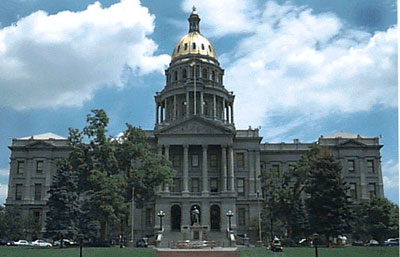
From The Durango Herald (Joe Hanel):
Technically, the bill is still alive, but all it does now is ask the Colorado Water Congress to study the issue by Oct. 1. The Water Congress is a private group made up of people interested in water. It is the most prominent water lobbying group in Colorado. Seven Democratic senators, including Bruce Whitehead of Hesperus, voted for a plan by Sen. Al White, R-Hayden, to turn the bill into a study Friday morning in the Senate…
[State Senator Mary Hodge] opposed White’s move to do a study. A previous study led by the Department of Natural Resources began in 2000. It took three years and left the issue unresolved. “A study gets us nowhere,” Hodge said.
Only one Republican, Sen. Greg Brophy of Wray, sided with Hodge. Brophy argued against “another blue-ribbon study instead of solving real problems for people in Colorado.” Brophy said the Water Congress should not handle this issue because anyone who pays for a membership can join. “It’s pay to play,” he said.
Whitehead defended the Water Congress as an established group with a good reputation. “I think they would be open to anybody sitting at the table trying to sort out the mess that this bill has created,” he said…
Doug Kemper, executive director of the Colorado Water Congress, was in Washington, D.C., on Friday and did not know the Senate handed responsibility for the study to his group. “It’s one of those things – if you don’t attend a meeting, you get put in charge,” Kemper said in a phone interview…
Rep. Kathleen Curry, U-Gunnison, introduced HB 1188 after a developer in her district closed a stretch of the Taylor River to rafting companies. She said Friday if the study passes the Senate, she will risk killing the bill by sticking to her original position.
More coverage from Charles Ashby writing for The Grand Junction Daily Sentinel. From the article:
House Bill 1188, introduced by unaffiliated Rep. Kathleen Curry of Gunnison, instead was converted into a study that is to be done by a non-governmental group that primarily focuses on agriculture and municipal water use, not recreation or tourism. The Senate still must formally vote on the bill, which could happen as early as Monday, giving Curry and its Senate sponsor, Sen. Mary Hodge, D-Brighton, the weekend to get the votes they need to change it back into its original form…
“There are problems with the bill … in regards to water rights development in the future,” Whitehead said. “The way the bill is currently drafted, it could prohibit future appropriations on these rivers that will be our future supplies in this state.”
More coverage from The Pulse- of Colorado Farm Bureau (Garin Vorthmann):
The CWC is directed to study the issue, taking into account the “legal, economic, environmental and law enforcement issues related to boating through private property.” The amended version of the bill has one more vote to go through in the Senate then it will be sent back to the House. At that time, the House must decide whether to accept the Senate version of the bill. If they do, the bill will be sent to the Governor. If the House does not accept the updated version, the bill may be sent to a conference committee for additional debate.
More coverage from The Mountain Mail (Audrey Gilpin):
Terry Scanga, general manager of the Upper Arkansas Water Conservancy District, said, “These 11th hour amendments [added last Monday in committee] could directly impact water rights.” He referenced an amended landowner liability section of the bill in which a waterway obstruction doesn’t include “in the least restrictive manner necessary” the following structures: diversions, storage, any fence reasonably necessary for livestock, any existing bridge or any fish habitat. Scanga said “necessary” waterway obstruction is unclear. “This could have an impact on water rights if a landowner can’t divert water to get the full decree. “Sometimes a landowner needs to dam an entire stream to get his full decree.”
Before the amendments Monday, the bill stated, “Nothing in this article shall be construed to create a water right or affect any existing water right in any way.” Scanga said because the bill didn’t involve water rights, the district didn’t take a position. He said he’s asking the district water attorney to draft a memo for the board, and members will determine if the district should become involved. “They snuck amendments into the bill that have nothing to do with its purpose,” he said.
Tim Canterbury, president of the Colorado Cattlemen’s Association, echoed Scanga. “A paramount concern to the association is that the bill, as amended Monday, doesn’t protect senior water rights,” he said. Worried about the minimum obstruction to waterway language of the bill, Canterbury said, “Often, during low water, we have to extend our fence into the river to keep livestock contained. If fences are cut, that’s bad for our business.” He said, “The bill’s never been about a right to navigate or float. Frankly, it’s about the right to trespass.”[…]
Greg Felt, co-owner of ArkAnglers and also a water district board member, said the bill could be less controversial if historically run rivers were listed. “Most commercially run rivers are permitted by state and federal agencies. The master list should consist of about 17 or so rivers. Rivers we’ve all heard of.” Small, rarely run creeks, non-commercially run rivers or future floatable rivers, Felt said, aren’t included in the bill. “Boaters aren’t going to be cutting fences or destroying diversion structures. Boaters are about forward progress. We’re about floating.” Felt mentioned local diversions boaters sometimes portage including a dam near Clear Creek, an area below the Royal Gorge during low flow and a diversion dam at the Division of Wildlife Mount Shavano fish hatchery. “We’re talking about the same rivers and diversions we’ve dealt with before,” he said.
Additional major amendments include omitting reference to English Common Law in connection with navigation rights. Other changes omitted “portage,” replacing it with “incidental contact;” clarifying waterway as a “segment of river on which one or more regulated trips have been run in any year from 2000 through 2009” and extending the bill to private boaters.
More 2010 Colorado legislation coverage here.