Click the link to read the article on the Big Pivots website (Allen Best):
November 1, 2024
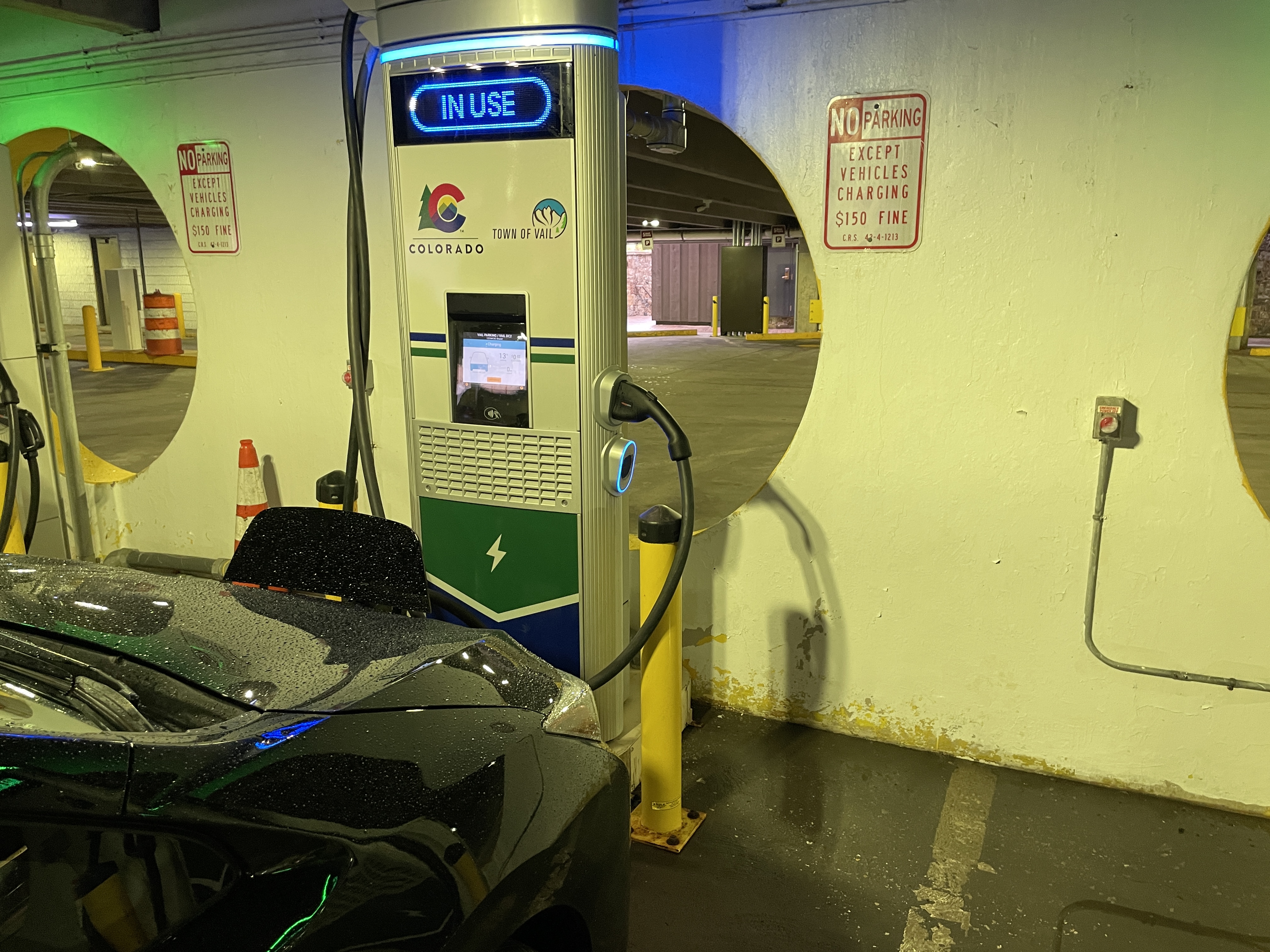
Electric vehicles and plug-in hybrids constituted 27.8% of all new car sales in Colorado during this year’s third quarter, according to sales figures compiled by the Colorado Automobile Dealers Association.
That puts Colorado second in the nation in proportion of sales, behind only California.
It also puts Colorado slightly ahead of the trajectory it identified as being necessary to have 940,000 EVs or hybrids on its roads by 2030. It had 151,000 as of October. It needs 157,000 by year’s end to stay on its pace, and Mike Salisbury, the Colorado Energy Office’s director of transportation, said the state will likely exceed that target by several thousand.
Clearly, the combination of tax credits offered by Colorado and the federal government have put wind into the sales of EVs and hybrids. New incentives that went into effect in January were particularly important in understanding Colorado’s climbing sales.
This latest milestone can be viewed against the backdrop of stories earlier this year by various national media about sluggish EV sales.
The flip side of that story of slowing sales is that lower-priced models are just now starting to arrive in significant numbers. Tesla, still the dominant brand, is getting more competition.
Notable is the expansion of General Motors in the market. As the New York Times noted this week, GM long had the Bolt compact, but it now has nine electric models that appeal to a wide range of consumers. And more are on the way, including a battery-powered version of its popular Cadillac Escalade SUV.
Bonnie Trowbridge, the executive director of Drive Clean Colorado, has been assisting in electrification of fleets. It’s easier, she explains, to make the argument for one fleet operator of 100 vehicles than 100 individual car owners. As such, electrifying fleets will have a much larger carbon impact.
Amazon has been electrifying its delivery vehicles. And Drive Clean Colorado has received an EPA grant to support the replacement of 21 old diesel trucks used for food delivery to restaurants with electric delivery vehicles. Of those, 15 will be the longer trucks and the remaining six the shorter snub-nosed trucks at the back doors of restaurants.
Colorado, the state government, also has been pushing ahead with EVs in its fleets, and some municipalities are doing the same.
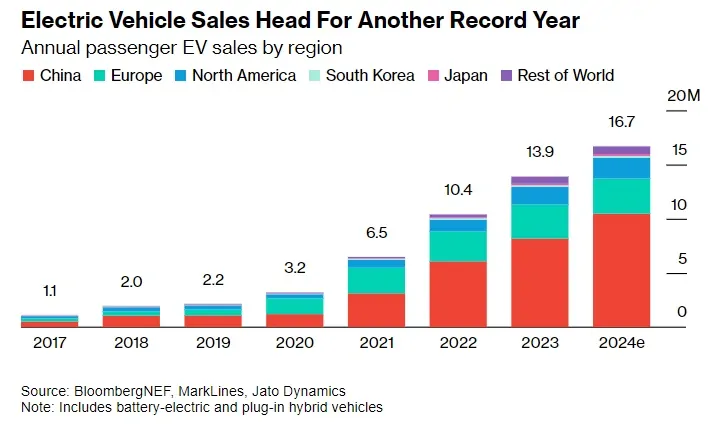
What may be more surprising is how laggard even California and Colorado are in comparison with the EV adoption in China and other countries.
EVs in the United States altogether constitute about 11% of all new-car sales. The world average is about 25%. In China, EVs are on track to be 45% of all new car sales this year, according to Marc Peterson, a retired executive with General Electric who spoke recently at a Monday Zoom session organized by Phil Nelson.
That same point was made by Bloomberg Finance in a chart reproduced here.
“The Chinese market is driving the world automotive market,” said Peterson, who is the co-coordinator in Utah for Citizens Climate Lobby.
Peterson reported that EVs now cost less in every U.S. state except West Virginia and Maine. In Utah, where he lives, the average cost of ownership of an EV across five years saves its owner $7,113.
Trowbridge, at Drive Clean Colorado, points out that China and some European countries have reached an inflection point in their adoption of EVs. Instead of driving the adoption with incentives, some places are using regulation to preclude use of internal-combustion engine vehicles in highly polluted places such as cities.
Could she imagine that happening in Colorado?
Trowbridge paused before answering.

“We haven’t reached any of our attainment goals for NOX (nitrous oxide) and other pollutants, so we are going to have to contend with the federal government pretty soon. It’s really unhealthy for Coloradans, and a lot of that centers on transportation,” she said.
“I don’t know that it would be necessary for passenger vehicles, but perhaps for trucks and other fleet-type vehicles,” she added, referring to potential regulations in the near future.