
$40 Million in state water grants flow to drought-stressed #Colorado communities — Jerd Smith (Fresh Water News)

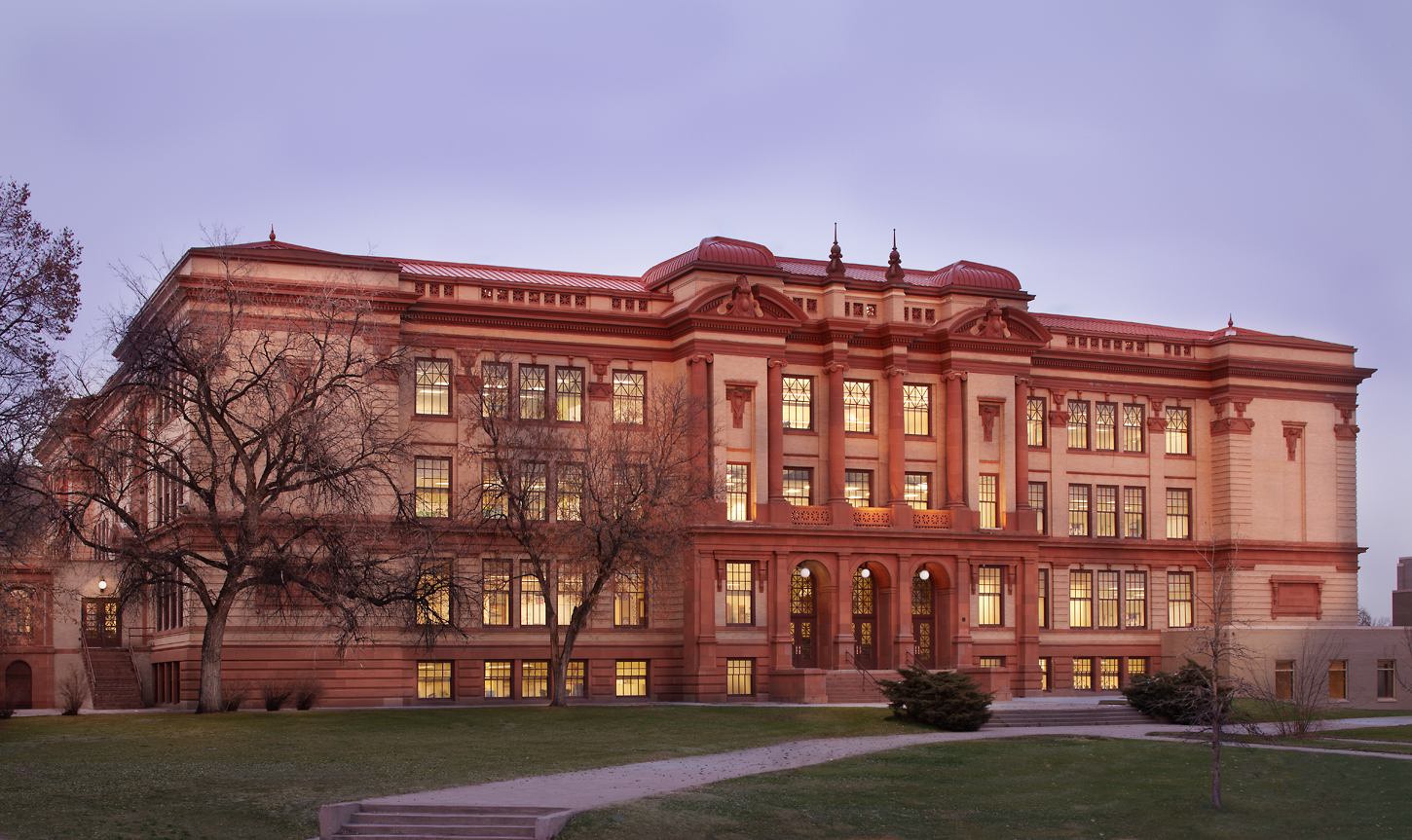
Denver North High School at dusk. Photo credit: Humphries Poli Architects

Click the link to read the article on the Water Education Colorado website (Jerd Smith):

April 30, 2026

The Colorado Water Conservation Board is funneling $40 million to dozens of water projects statewide as communities grapple with a drought emergency that is making saving water more important than ever before.

Among the 136 projects receiving state support this fiscal year, which ends June 30, is a $2.3 million grant that will pay nearly half the cost to install new, automated irrigation control systems across 105 Denver Public School system sites. Another grant, for $227,225, will help the city of Trinidad with early studies on repairing and potentially enlarging Monument Lake Reservoir. 
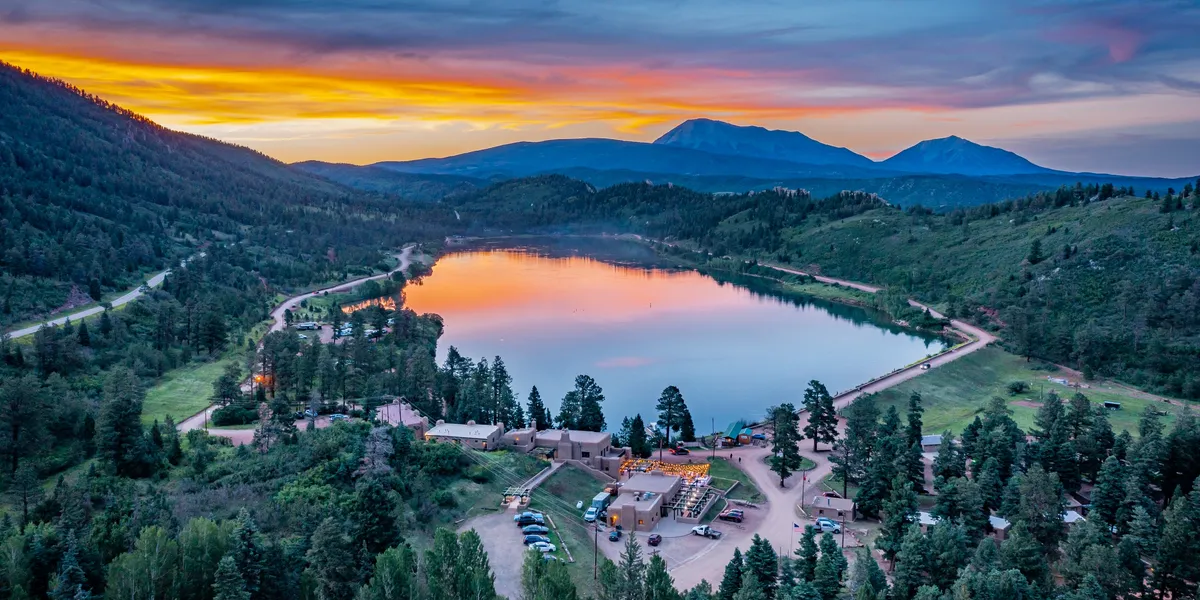
Photo credit: Monument Lake Resort

Still another grant, for $111,855, will help pay to train and certify metro area teens in becoming turf replacement specialists. Operated by the Neighborhood Resilience Corps, the initiative will replace 23,000 acres of grass at sites that include the Governor’s Mansion and other state facilities.

The grant awards come as Colorado faces a stunning drought year in which winter mountain snows were historically low and a spring heat wave melted those snows early, slashing water available for cities, industries and farms to use.

Aurora, for instance, is expecting just 10% of its normal water supplies this year, according to Tim York, manager of water conservation for Aurora Water, and its reservoirs stand at 57% full.

As cities broadcast the need to cut back water use to preserve water stored in reservoirs, homeowners and businesses have flooded cities like Aurora with requests for help to design drought-proof landscapes and replace thirsty bluegrasses with lawns that need much less water.

“Our approved applications have doubled over what they were last year, so that is pretty good,” York said, referring to applications for Aurora’s landscape conversion program. “Our free design program is similar. We have a waitlist.”

He said the CWCB grants, coupled with Aurora’s aggressive water conservation initiatives, are critical to helping the state cope with the drought emergency and create more sustainable water systems.

Aurora is a supporter of the Neighborhood Resilience Corps’ youth training effort. York said the opportunity to train young people is important.

“Anytime we can do that with young adults who are interested, it’s always a great idea,” he said. “We might do the conversions, but if we can get that benefit and inspire and teach young adults, why not.” York was referring to the city’s programs that remove thirsty lawns and replace them with drought tolerant landscapes.” 

Boulder-based Resource Central, another agency that has partnered with the CWCB on statewide conservation efforts, said it is seeing an unprecedented number of requests for its services.

“Demand for conservation programs is off the charts,” said Neal Lurie, president of the nonprofit agency. “We’ve seen more interest in the first three weeks of this spring season than we did all of last year.

“To me that says the message is resonating with people that they have an important role to play,” he said. “That’s good news.”

More by Jerd Smith

Colorado Rivers. Credit: Geology.com

Flowering plants evolved ~130 Ma (recent in Earth’s history!). They appeared suddenly in the Cretaceous and diversified quickly — #Colorado Geological Survey

Colorado River Board of #California: Lower Basin States Advance Plan to Deliver up to 3.2 Million AF Through 2028 to Protect #ColoradoRiver — Doug MacEachern, Bronson Mack, and Fernando Castro-Alvarez #COriver #aridification

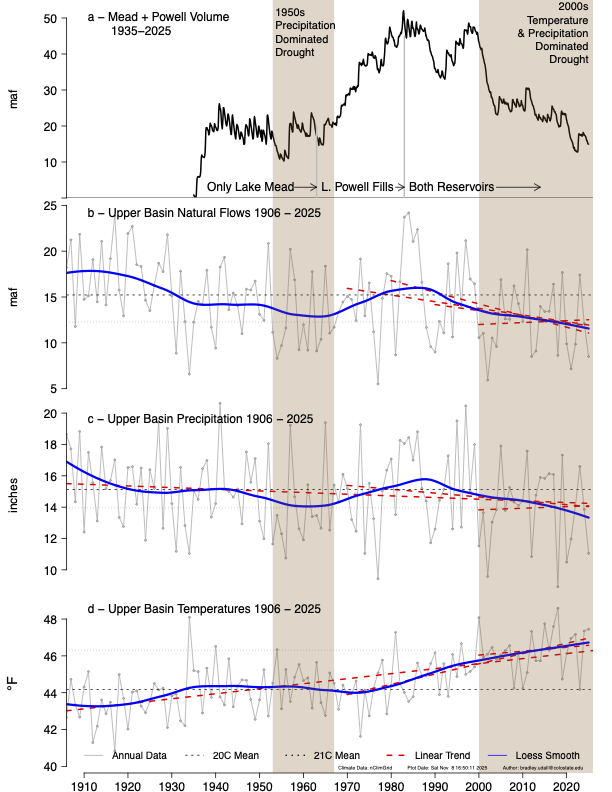
Udall/Overpeck 4-panel Figure Colorado River temperature/precipitation/natural flows with trend. Lake Mead and Lake Powell storage. Updated through Water Year 2025. Note the tiny points on the annual data so that you can flyspeck the individual years. Credit: Brad Udall

Click the link to read the release on the Colorado River Board of California website:

May 1, 2026

The Lower Basin States of Arizona, California, and Nevada today advanced a plan to stabilize the Colorado River through 2028, responding to declining reservoir levels, record low inflows to Lake Powell, and increasing risk of reaching critical elevations at both Lake Powell and Lake Mead.

Earlier in the post-2026 process, the Lower Basin took a significant step by proposing 1.25 million acre-feet in annual reductions, with an additional 250,000 acre-feet from Mexico, totaling approximately 1.5 million acre-feet per year.

This proposal builds on that foundation with an expanded system conservation program across the Lower Basin with an estimated contribution of at least 700,000 acre-feet. In total, the plan identifies up to 3.2 million acre-feet of water savings to the system through 2028.

The proposal is an integrated package addressing Lake Powell releases, Upper Initial Unit operations, Lower Basin reductions, additional conservation, use of Intentionally Created Surplus, and system infrastructure improvements. Lower Basin contributions are contingent on these coordinated operations to ensure system stability as well as appropriate funding.

“With this proposal, the Lower Basin is putting forth real action to stabilize water supply along the Colorado River. We’re putting forward additional measurable water contributions for the system. Without that, the system will continue to decline,” said JB Hamby

“This proposal is about moving from ideas to implementation,” said John Entsminger. “It pairs real measurable water contributions with sensible dry-condition operations at Lake Powell and across the Upper Initial Units. Now is the time for every water user in the Basin to double down on water conservation as we face historically dry hydrology.”

“This proposal reflects the creativity and commitment of water users across the Lower Basin who continue to step forward with solutions that support the river,” said Tom Buschatzke. “We have shown that collaborative, voluntary efforts and reductions that are certain can produce meaningful water savings.”

The Lower Basin states recognize the Upper Basin’s call for mediation and are open to that process. However, current conditions require immediate, measurable water reductions from every state. The Lower Basin states stand ready to engage in a meaningful process for long-term solutions while encouraging the Upper Basin to step forward now with verifiable water contributions to help stabilize the system and support a near-term, seven-state bridge.

The Lower Basin states confirmed that the proposal preserves legal accountability under the Colorado River Compact, including Upper Basin delivery obligations, while maintaining a clear path toward a broader agreement among all seven Basin States.

The plan has been advanced to the federal government for consideration as part of the ongoing post-2026 planning process and is intended to provide a near-term bridge through 2028 while long-term operating guidelines are finalized.

Implementation of key elements of the proposal, including expanded system conservation, will require federal partnership. The proposal remains subject to approval by the Arizona Legislature and relevant California and Nevada water agency governing boards.

Press Contacts: 

Arizona: Doug MacEachern, dmaceachern@azwater.gov

Nevada: Bronson Mack, bronson.mack@snwa.com

California: Fernando Castro-Alvarez, fscastro@iid.com

Colorado River “Beginnings”. Photo: Brent Gardner-Smith/Aspen Journalism