Federal Water Tap February 2, 2026 — Brett Walton (circleofblue.org)

Click the link to read the article on the Circle of Blue website (Brett Walton):

February 2, 2026

Federal Water Tap is a weekly digest spotting trends in U.S. government water policy. To get more water news, follow Circle of Blue on Twitter and sign up for our newsletter.

The Rundown

  • South Dakota representatives introduce three bills to authorize feasibility studies for regional water supply projects, including two Missouri River diversions.
  • BLM revises its publication date for a final environmental assessment of a proposed groundwater pipeline in southwest Utah.
  • White House advisory group recommends changes to FEMA’s disaster response.
  • USGS researchers assess a less-toxic means of controlling a non-native, ecologically-damaging reed in the Great Lakes.

And lastly, a federal financial oversight board’s annual report notes that the Trump administration removed climate-risk guidance for large financial institutions.

“The associated mission drift can also lend itself to political ends, such as excessive focus on climate risk and the effective debanking of certain industries. Collectively, this increases distraction and compliance costs while impeding responsible lending and risk-taking.” – Excerpt from the Financial Stability Oversight Council’s 2025 annual report. The council, established after the 2007-09 financial crisis, oversees the nation’s banking system. The report argues that the council should focus on “material financial risks” instead of things like climate risk. Last year, the Trump administration retracted federal climate-risk guidance that applied to financial institutions with more than $100 billion in assets, saying it was “distracting.”

By the Numbers

11: Features that the departments of Agriculture, Commerce, and Interior should incorporate into their agreements with tribes that would strengthen tribal co-management of land and waters, according to a Government Accountability Office report. The features include clear definition of roles and goals, dispute resolution, and accountability. The three agencies signed a joint order in 2022 to collaborate with tribes on natural resources management.

News Briefs

Water Bills in Congress
Representatives in the western states introduced several water-supply bills in the last week.

  • South Dakota’s delegation introduced a trio of bills in the House and Senate that would require the Interior Department to study the feasibility of new or expanded rural water supply projects in that state and its neighbors. One study, authorized at $10 million, regards a potential diversion of Missouri River water to the growing Rapid City area. This bill failed in the previous Congress. Another bill is to study a potential Missouri River diversion to a separate regional water system in eastern South Dakota, Iowa, and Minnesota. Still another bill is to study an expansion of the Lewis and Clark rural water system, which extends into Iowa and Minnesota and has been under construction for more than two decades.
  • Rep. David Schweikert (R-AZ) is seeking to protect his state in the tussle over the Colorado River. His bill would require proportional cutbacks among Arizona, California, and Nevada, instead of relying on the Supreme Court’s decreed rights, which do not favor Arizona.
  • Sen. Ruben Gallego (D-AZ) introduced a bill to establish a $15 million per year grant program for “natural water retention and release” projects that hold water in aquifers and floodplains.

Studies and Reports

Proposed FEMA Changes
A White House advisory group is preparing to recommend an overhaul in how FEMA distributes post-disaster aid, according to Politico’s E&E News.

A draft of the plan would shift post-disaster funding to a “parametric” model – paying out based on thresholds like river height and wind speed – rather than the current one that is derived from estimated loss and damage.

The change would prioritize speed over precision, disaster aid experts told the news site.

Great Lakes Phragmites Fight
Phragmites is a reedy, non-native wetland plant that has grown into dense, ecologically-damaging clusters along Great Lakes shorelines.

Weedkillers are a common management strategy, but U.S. Geological Survey researchers contributed to a study that assessed a less toxic alternative.

They found that “cut-to-drown” – cutting phragmites stems below water – was an effective way of “drowning the plant and depleting its stored resources.”

On the Radar

Senate Cybersecurity Hearing
On February 4, the Senate Committee on Environment and Public Works will hold a hearing on cybersecurity for America’s water infrastructure systems. Witnesses include a researcher and water utility representatives.

Southwest Utah Groundwater Pipeline
The Bureau of Land Management now expects to publish a final environmental impact statement for the Pine Valley Water Supply Project on February 27, 2026.

The initial publication date of November 2025 was delayed due to the government shutdown.

The project is a 70-mile pipeline to pump 15,000 acre-feet of water per year from wells in Beaver County to customers in neighboring Iron County.
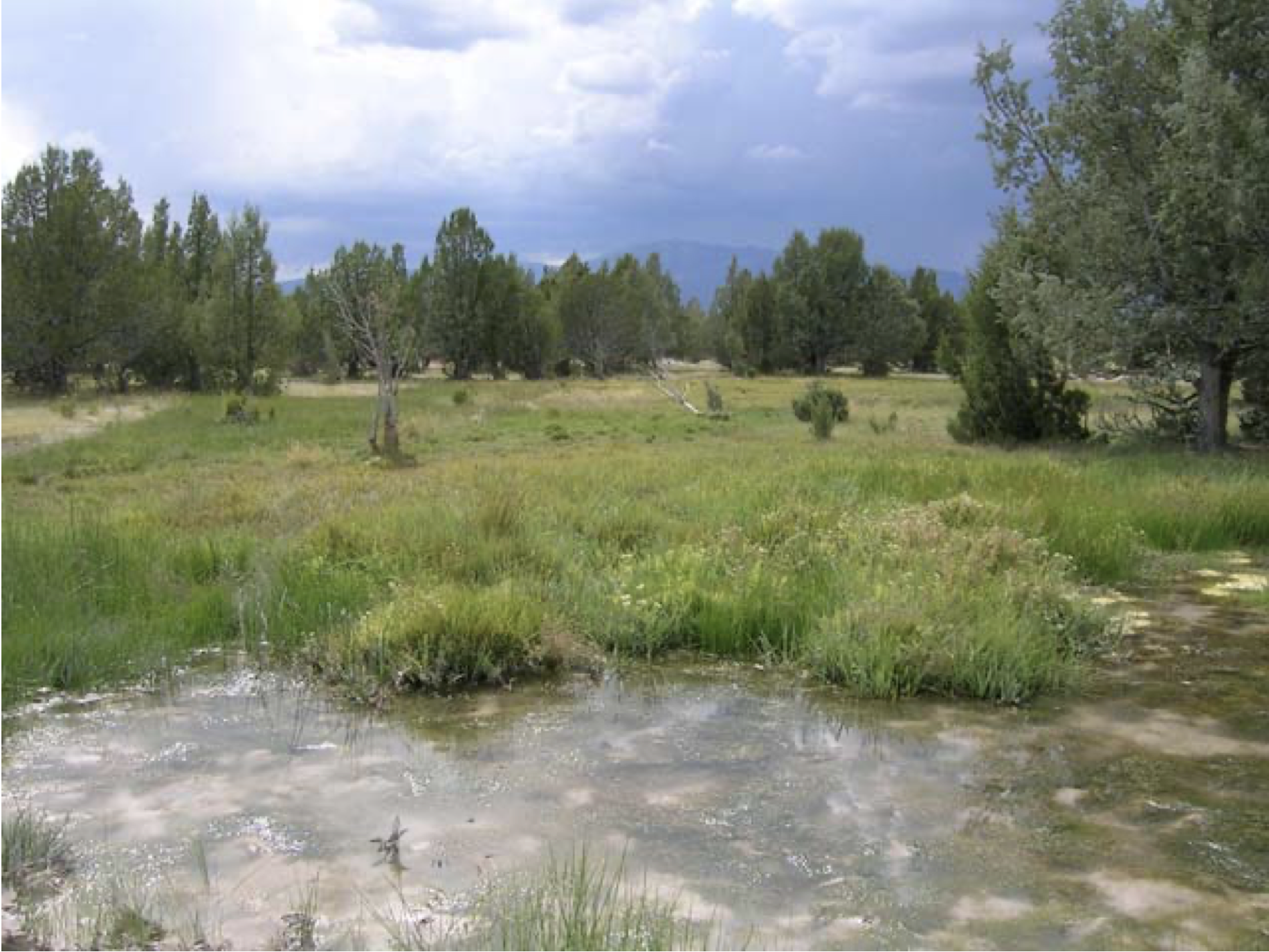
“Swamp Cedars” (Juniperus scopulorum) and associated pond, wetland and meadow in Spring Valley, White Pine County, Nevada. Photograph by Dennis Ghiglieri from http://images.water.nv.gov/images/Hearing%20Exhibit%20Archives/spring%20valley/WELC/Exhibit%203030.pdf

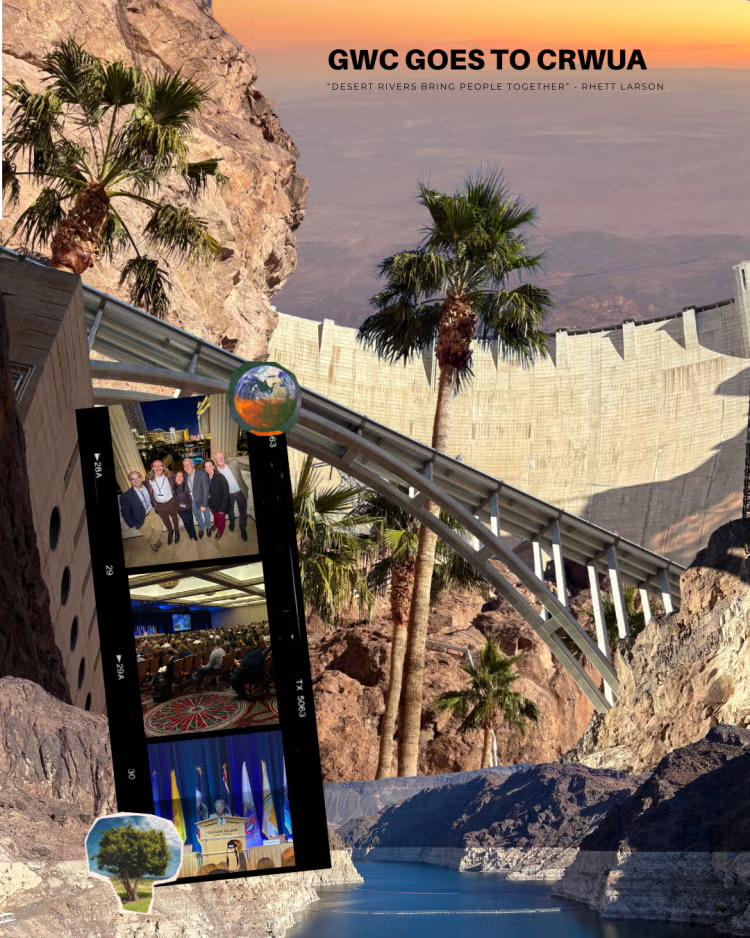
#ColoradoRiver Continues to Bring Unlikely Parties Together at the Colorado River Water Users Association — Daniel Anderson (Getches-Wilkinson Center) #CRWUA2025 #COriver #aridifcation

Image by Lex Padilla

Click the link to read the article on the Getches-Wilkinson Center website (Daniel Anderson):

December 29, 2025

The Colorado River Water Users Association annual conference met in Las Vegas [December 16-18, 2025]. Each year, over a thousand government officials, members of the press, municipal water district leaders, water engineers, ranchers, and tribal members meet to discuss the management of the mighty Colorado River. Hanging over the three-day conference was a stalemate between the upper and lower basin states over how to manage the Colorado River after current operational guidelines expire at the end of 2026.

Throughout the conference, the states’ inability to reach a consensus deal produced ripple effects. The stalemate held back progress on both near term shortage concerns (experts predict that Lake Powell will be only 28% full at the end of the ’25-’26 water year) and long-range planning, such as the development of the next “Minute” agreement between the United States and Mexico.

The closing act of CRWUA 2025 was an orderly (and familiar) report from each of the basin states’ principal negotiators that their state is stretched thin but remains committed to finding a consensus agreement. This final session had no discussion or Q&A. The basin states now have until February 14th to provide the Bureau of Reclamation with their consensus deal, which would presumably be added to an Environmental Impact Statement (EIS) draft that is expected to be released in early January. With time running short, many worry that public participation in the EIS process – vital to informed decision-making – will be greatly reduced.

Still, as Rhett Larson of Arizona State University said on the first day of the conference, “Desert rivers bring people together.” Tribal governments continue to innovate in the areas of conservation and storage, even in spite of ongoing challenges to meaningful access of federally reserved tribal water rights. For instance, the Colorado River Indian Tribes, or CRIT, shared news of a Resolution and Water Code recently passed by their Tribal Council which work together to recognize the Colorado River’s personhood under Tribal law. This provides CRIT with a holistic framework for on-reservation use and requires the consideration of the living nature of the Colorado River in off-reservation water leasing decisions. John Bezdek, who represented CRIT at the conference, put it this way: “If laws are an expression of values, then this tribal council is expressing to the world the importance of protecting and preserving the lifeblood of the Colorado River.” Among others, Celene Hawkins of The Nature Conservancy and Kate Ryan of the Colorado Water Trust also shared about the unique, and often unlikely, partnerships formed to protect stream flows and the riparian environment across the Colorado River basin.

Notwithstanding the basin states’ current deadlock, one theme rang true at CRWUA 2025: Despite the dire hydrologic and administrative realities facing decision-makers today, the Colorado River continues to bring unlikely parties together.

Map credit: AGU

#Colorado governor visits Dillon Reservoir to sign package of bills meant to bolster state’s water security: Legislation focuses on improved #snowpack data collection, increased funding for water projects — #Aspen Times 

Colorado Governor Jared Polis

Click the link to read the article on the Aspen Times website (Robert Tann). Here’s an excerpt:

Perched above the Dillon Reservoir on the side of a mountain road in Summit County, Gov. Jared Polis on Thursday signed into law three bills aimed at bolstering the state’s water infrastructure.  The measures come amid the backdrop of chronic drought and increased water demand in the West which have made finding a path towards water sustainability more urgent. Speaking amid on-and-off snow flurries and bouts of sunshine, Polis said the bills signed on Thursday will help “build a sustainable, livable future” by “securing our water for the state of Colorado.”

Here’s what the new laws do: 

Better snowpack mapping 

To better measure Colorado’s primary source of water supply, House Bill 1115 establishes a new statewide program for tracking snowpack…HB 1115 charges the Colorado Water Conservation Board with deploying newer methods such as light detection and ranging technology, also known as LiDAR…The technology has already been used by entities like Denver Water, Northern Water and the Colorado River Water Conservation District in recent years…The law directs roughly $250,000 from an existing cash fund over the next two years to help the program establish initial staffing and data systems. Lawmakers have acknowledged there will likely need to be additional rounds of funding in future years…

More money for water projects 

State voters’ decision to approve a tax on sports betting in 2019 has provided a critical funding source for water projects, delivering as much as $30 million a year for infrastructure and conservation efforts.  House Bill 1311 takes that a step further by eliminating a tax exemption for revenue generated from free sports bets…

A view of the popular Pumphouse campground, boat put-in and the upper Colorado River. Photo credit: Brent Gardner-Smith/Aspen Journalism

Finding solutions to funding woes

While taxes on sports betting have helped shore up state spending on water projects, its other key funding stream risks running dry…Under Senate Bill 40, the state will commission a nine-member task force within the Department of Natural Resources to study the future of severance tax revenue and come up with solutions to better fund the state’s water needs. The task force will be required to submit a final report to the legislature in July 2026, with lawmakers hoping to turn those ideas into policy. 

Grays and Torreys, Dillon Reservoir May 2017. Photo credit Greg Hobbs.

With future funding of #Colorado’s water projects uncertain, lawmakers begin to hunt for solutions — The #GlenwoodSprings Post Independent

A view of the popular Pumphouse campground, boat put-in and the upper Colorado River. Photo credit: Brent Gardner-Smith/Aspen Journalism

Click the link to read the article on the Glenwood Springs Post Independent website (Robert Tann). Here’s an excerpt:

April 21, 2025

With a critical source of funding for Colorado’s water projects facing an uncertain future, lawmakers want to task a group of experts with providing recommendations for solutions.  Severance taxes, which are imposed on nonrenewable energy extraction like oil drilling and coal mining, have long served as a key source of revenue for water-related initiatives. The funding stream, however, is also one of the state’s most volatile due to extreme swings in the energy market. Over the past two decades, tax revenue has gone from skyrocketing one year to plummeting the next. The issue has compounded in recent years due to state budget writers siphoning some of the money to help balance the state’s spending plan. In response, a bipartisan group of lawmakers is advancing legislation that would commission a study on the future of severance tax revenue and ways the state can better fund its water needs. Senate Bill 40 [SB25-040] would create a nine-member task force within the Department of Natural Resources to find answers to the question. The measure is sponsored by Sens. Dylan Roberts, D-Frisco, and Cleave Simpson, R-Alamosa, as well as Reps. Karen McCormick, D-Longmont, and Matthew Martinez, D-Monte Vista. Roberts said the group will consider any and all ideas, not just around severance taxes, for how to make Colorado’s water funding more stable. The task force would then submit a final report in July 2026 to help create potential bills or recommendations for the Joint Budget Committee in future legislative sessions. 

Small #Colorado towns cry foul as state seeks to clean up their #wastewater to protect rivers — Jerd Smith (Fresh Water News)

Wastewater Treatment Process

April 10, 2025

Dozens of small towns in Colorado have banded together to protest new wastewater treatment permits that are designed to protect state rivers and streams, saying they  contain new rules that are too costly to implement and they haven’t had time to make the necessary changes to comply.

The controversy comes as climate change and drought reduce stream flows and cause water temperatures to rise, and as population growth increases the amount of wastewater being discharged to Colorado’s rivers.

In response to the towns’ concerns, the water quality control division of the Colorado Department of Public Health and Environment has taken the unusual step of holding off on taking enforcement action against at least some of the towns that say they can’t comply with the new regulations. It issued notice of its decision March 24.

“Some smaller communities have faced real technical and financial challenges meeting these new requirements,” CDPHE spokesman John Michael said in an email. “In response, we issued a temporary enforcement discretion memo to give systems time to work through compliance barriers without immediate penalties.”

Now Colorado lawmakers who represent the Eastern Plains have drafted a bill designed to help small communities cope with the new regulatory requirements by extending the time they have to build or upgrade new plants and raise the money to pay for them.

The issue came to a head last month. Akron Town Manager Gillian Laycock, whose town is trying to comply with its new permit, invited dozens of communities facing the same issues to attend a special meeting. Representatives from 64 towns attended along with lawmakers, Laycock said.

But problems have been brewing for years. The water quality control division has been battling a large backlog in wastewater discharge permits, meaning small towns have been allowed to operate their plants under old rules as they waited for their new permits to arrive. Laycock said Akron had been waiting for its new permit for at least eight years.

“We knew something was coming,” she said, “but this has been a shock.”

In recent years, lawmakers have given the division more money to hire additional people so that the backlog can be reduced and more towns can come into compliance with the new standards.

But Sen. Barbara Kirkmeyer, a Republican from Brighton, and Sen. Byron Pelton, a Republican from Sterling, said they are frustrated that the more than $2 million spent to address the problem isn’t helping.

“I told the CDPHE if they continue down this road, the folks out in the rural areas are about ready to tell them to pound sand,” Pelton said. “That’s how stressful it’s been for these small municipalities. The regulations just keep coming at them.”

Under the federal Clean Water Act, entities that discharge fluids into streams, including wastewater treatment plants and factories, must get approval from state water quality regulators to ensure what they’re putting into the waterways does not harm them.

Towns and water districts can receive either a general permit, which has standard terms and conditions, or individual permits, which take much longer to process, are typically more expensive and are often used by large systems in cities such as Denver.

The general permits were finalized in 2022 to help small towns comply with the stricter regulations quickly and at less cost, said Michael, the CDPHE spokesperson. But many haven’t been issued because of the backlog.

Akron finally received its new permit last October, Laycock said. But the town was unprepared for the strict new limits on what and how much can be discharged, the tight timelines to comply and the costs.

Once the new permit was issued, Laycock said, its old permit expired almost immediately, leaving the town out of compliance with the new regulations, exposing them to potential legal issues and fines.

The regulatory shock is understandable, but could have been avoided, according to Meg Parish, an attorney for the Environmental Integrity Project, a nonprofit focused on enforcing air and water pollution regulations. She previously worked for the state’s water quality control division and helped develop the new general permit that is causing current concerns.

“Some of these towns have really old permits,” Parish said. They’ve been allowed to continue discharging under a special administrative permit. In the interim, strict new standards have taken effect.

But she said the new rules shouldn’t have come as a surprise to anyone.

She said the new general permit was finalized after months of public work sessions and outreach meetings.

“We invited every small discharger in the state to participate. All the terms are on the state’s website….it literally says ‘if your (wastewater discharge) flow is this much, this is what your limit is going to be. There is no mystery.”

But Adam Sommers, an environmental engineer who has several clients trying to obtain new permits, said the process is cumbersome and expensive.

“Each permitting activity has a 180-day review period and if changes are needed, the clock starts over,” he said in an email.

“This frequently adds years to the schedule,” Sommers said. “The estimates engineers create are time sensitive. If years have passed between when they prepare the budget and when the project is constructed, they face affordability issues.”

Sens. Kirkmeyer and Pelton are working on a bill that will be introduced shortly forcing the CDPHE to give the towns more time to comply and help them address the financial challenges of the new regulations. It will also set strict deadlines on the permitting process, according to the latest draft of the bill. Kirkmeyer said the CDPHE has been helping with the new legislation.

Kirkmeyer said she was taking the unusual step of running the bill through the Joint Budget Committee because it approves the budget for the water quality control division and she wanted to send a strong message to the regulators.

“I want them to know we are serious about this,” she said.

Looking ahead, as water quality continues to deteriorate, treatment standards will continue to tighten, Parish said.

“One of the key realities is that wastewater treatment plants need to upgrade their plants and do better, and pollute less,” Parish said.

Laycock, the Akron town manager, said she understands the urgency of the problem but she said the state’s approach needs work.

“We are agricultural people and we love our land, but how do we as a town afford to meet these requirements? I understand what they are trying to do. But this is not the way to do it.”

More by Jerd Smith

#Colorado lawmakers eye new task force to boost water funding — Jerd Smith (Fresh Water News)

Republican House members recite the Pledge of Allegiance as Colorado lawmakers returned to the Capitol January 8, 23025, for opening day at the General Assembly. Photo credit: Fresh Water News

Click the link to read the article on the Fresh Water News website (Jerd Smith):

March 13, 2025

Colorado lawmakers, worried that a key source of money for water projects is too easily tapped for other programs, want to create a special task force to examine ways to stabilize and boost funding for things like new water pipelines and conservation programs.

Under Senate Bill 40, a nine-member panel would examine new options to replace severance tax money that is collected on nonrenewable resources, such as oil and gas and some minerals, and is highly variable. A portion of the revenue is used to help Colorado address looming water shortages.

According to state forecasts, by 2050 those shortages could be as high as 740,000 acre-feet of water, under a worst-case planning scenario, or much lower if growth slows and climate change impacts are less than expected. One acre-foot of water equals nearly 326,000 gallons, enough water to serve at least two urban homes for one year.

Like other Western states, Colorado is racing to shore up aging water systems and make existing supplies stretch further as drought and rising temperatures shrink water supplies.

The bill comes as lawmakers wrestle with how to cut $1.2 billion from a state purse hurt by slowing growth and revenue caps. 

The measure, sponsored by Sen. Dylan Roberts, D-Frisco, Sen. Cleave Simpson, R-Alamosa, Rep. Karen McCormick, D-Longmont, and Rep. Matthew Martinez, D-Monte Vista, is stalled in the Senate appropriations committee until the legislature completes its budget work, Roberts said.

Roberts said the current budget crisis and previous fiscal storms have resulted in severance tax revenue being tapped to help resolve budget shortfalls in nonwater programs, a situation that hits hard at the state’s ongoing efforts to ensure there is enough water to go around.

“The joint budget committee has swept severance taxes in the past. Not too often, but I worry that it will become a common practice. I and my cosponsors want to get the best minds together on how we better plan for the future,” he said.

Lawmakers plan a new tax force to find ways to replace the state’s reliance on severance taxes. Credit: Colorado Legislative Council

The Colorado Water Conservation Board is the state’s primary water planning agency, and helps fund an array of water projects and planning initiatives. Its revenues come from interest on loans, money from the state’s general operating fund, sports betting tax revenues, and severance tax revenues, among other sources.

Late last year, Gov. Jared Polis proposed a budget that largely shielded water programs from major cuts, but it is lawmakers who will make the final decision on how the state’s budget will be balanced this year.

The severance tax has generated $412 million for the CWCB over the past 10 years, according to Kirk Russell, the CWCB’s finance section chief. Most of that goes into a revolving loan fund that helps finance such things as irrigation ditch repairs and pipelines. It isn’t typically used to finance the water agency’s operating budget.

But he said the severance tax fund experiences “a great deal of variability” from year to year.

A bright spot in the funding picture, according to Roberts, is the growth in revenue collected from gambling on sports. According to the Colorado Division of Gaming, sports betting has generated $98 million in revenue since May 2020, when sports betting became legal in Colorado. The majority of that money is now used to help fund the Colorado Water Plan.

Roberts said lawmakers are open to considering a range of options to stabilize water funding, and he said there may be potential to expand the revenue generated by sports betting. In January, the program hit a new high, generating $4.4 million. The previous high occurred in January 2024, when $4.1 million was generated, according to the Division of Gaming.

If the bipartisan task force measure is approved, members would be selected this summer and a final report would be due back to lawmakers by July 15, 2026.

2025 #COleg: Can planes and laser beams help Colorado better understand its water supply?: Western Slope lawmakers want to make the state a leader in new #snowpack mapping technology — Steamboat Pilot & Today

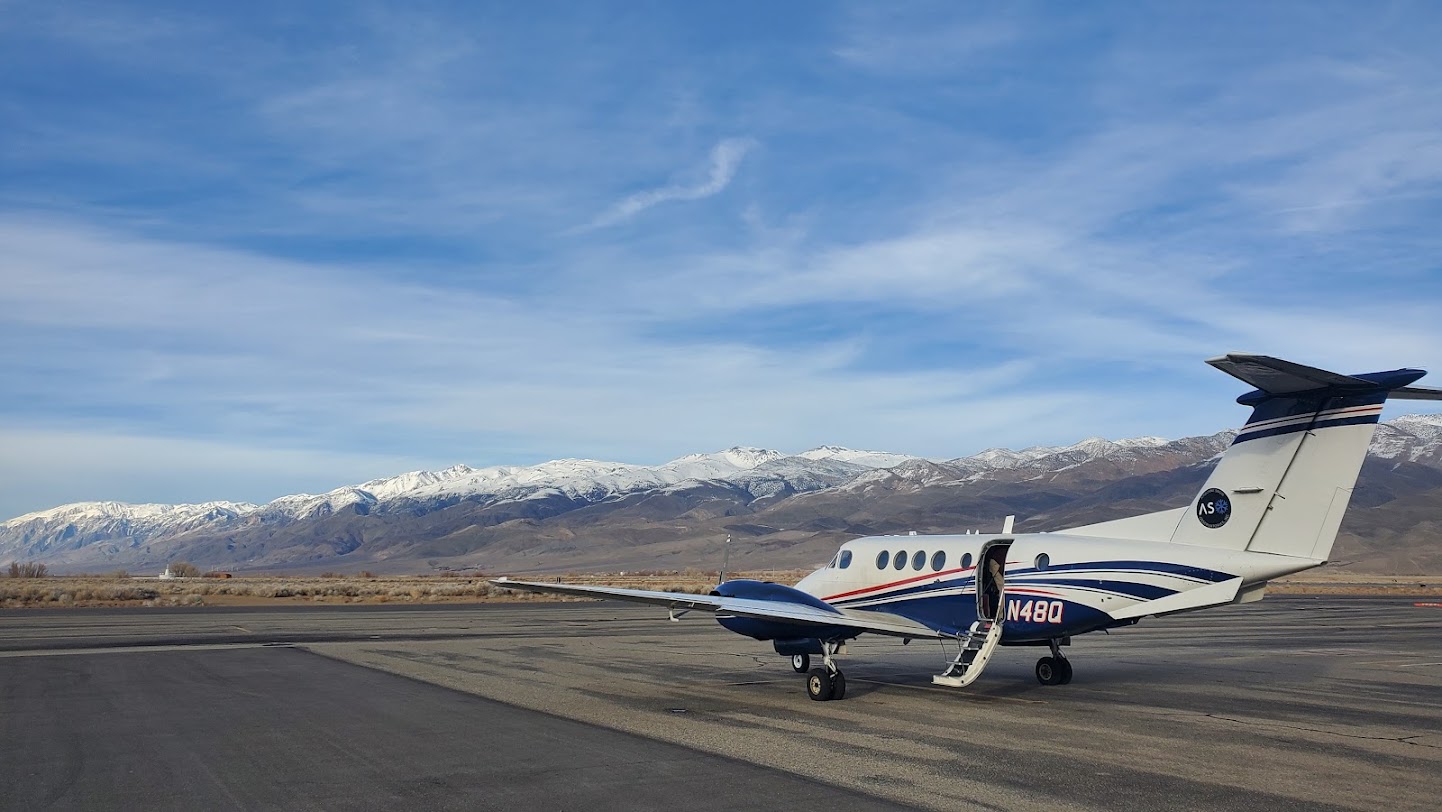
An Airborne Snow Observatories plane prepares for a flight to survey a watershed using lidar technology. Data from the flight will be used to produce snow depth, snow water equivalent and snow albedo maps all to enhance the accuracy of summer runoff forecasts. Airborne Snow Observatories/Courtesy illustration

Click the link to read the article on the Steamboat Pilot & Today website (Robert Tann). Here’s an excerpt:

February 7, 2025

 House Bill25-1115, a bipartisan proposal from a group of Western Slope lawmakers that would create a new statewide snowpack measurement program using emerging tools like light detection and ranging technology, also known as lidar.

“This is a way for us to plan better in our storage facilities, in our reservoirs,” said House Speaker Julie McCluskie, a Dillon Democrat and a prime sponsor of the bill. 

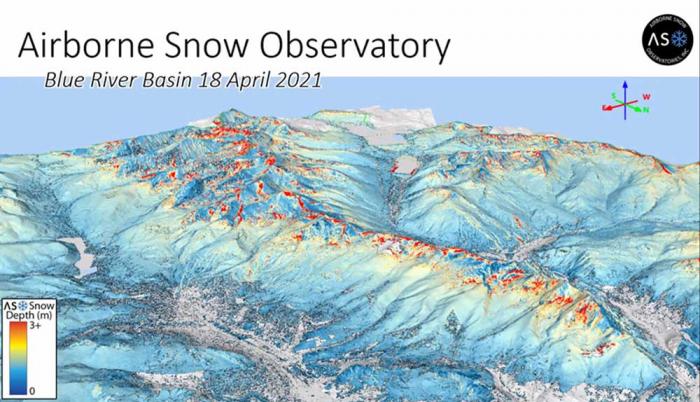
The mountain ranges above Dillon Reservoir, seen through the lens of the data collected by sophisticated equipment onboard a plane that flew over the Blue River Basin to measure the amount of water frozen in the snow above Denver Water’s largest reservoir. Image credit: Airborne Snow Observatory Inc.

Like radar, but using light, lidar sends beams from a plane or satellite towards the ground. By measuring the time it takes for the light to be reflected, scientists can calculate the depth of an area and create a 3-D model of the landscape. The flights also use a spectrometer to capture infrared images that show where snow is melting fastest.  Glenwood Springs-based scientist Jeff Deems and his team pioneered the technology for snowpack mapping with the National Aeronautics and Space Administration in 2013. From those efforts, Deems co-founded Airborne Snow Observatories, a public benefit corporation that contracts with local and regional governments and water providers. Using a fleet of twin-engine planes equipped with lidar, the group runs flights to map river basins across the West. Deems said lidar isn’t replacing SNOTEL, which remains the backbone for snow monitoring by providing a decades-long record of changes in snowpack. Instead, lidar is helping fill in the gaps.  While SNOTEL sites pinpoint data at specific locations, lidar provides a full picture of the entire watershed. 

“The combination of the two gives us this really powerful 4D picture of a basin-wide snowpack,” Deems said. “We get the three dimensions from airborne surveys and the ‘time’ dimension from the SNOTELs, and that really gives us the best knowledge from which to anticipate and forecast our summer runoff.” 

2025 #COleg: Colorado lawmakers take aim at turf — again: HB25-1113 would add apartment and condo complexes to list of properties where bluegrass is restricted — Heather Sackett (AspenJournalism.org)

Glenwood Springs homeowners Ginny and Jim Minch replaced their lawn with drought-tolerant plants and decorative rocks using a rebate program through the city of Glenwood. Colorado lawmakers have introduced another bill this session taking aim at thirsty turf as a way of conserving water. Credit: Heather Sackett/Aspen Journalism

Click the link to read the article on the Aspen Journalism website (Heather Sackett):

February 7, 2025

Colorado lawmakers want to add more restrictions on thirsty grass in new residential developments in an effort to conserve water.

House Bill 1113 would limit planting non-functional turf, artificial turf or invasive plant species in new and redeveloped apartment or condominium housing. This year’s bill is an extension of last year’s Senate Bill 5, which requires local governments by Jan. 1, 2026, to establish policies prohibiting the planting of nonfunctional turf as part of any new development or redevelopment alongside roads and streets or in medians, as well as in areas surrounding offices or other commercial buildings, in front of government buildings, and in entryways and common areas managed by homeowners associations.

Under HB 1113, local governments would also have to enact their own policies about how to limit new turf on properties not covered by either of the two state bills by 2028.

The bill represents a continuing effort across the Colorado River basin to wring savings from municipal water use in the face of a warming and drying climate. State Sen. Dylan Roberts, who represents District 8, is a sponsor of the bill, along with representatives Karen McCormick and Lesley Smith, all Democrats. Roberts, whose district includes Garfield, Routt, Summit and Eagle counties, said the bill was born out of a general desire to conserve water. 

“Whether it’s ongoing drought that is putting a strain on our water supply, negotiations over interstate compacts like the Colorado River or population growth, there’s just a lot of demands on Colorado’s water,” Roberts said. “Water that’s being used for non-functional turf is a pretty obvious place to look for water savings.”

The prohibition on new grass is not aimed at lawns for single-family homes, parks, playgrounds or sports fields. Non-functional turf is defined as grass that is not used for civic, community or recreation purposes. Often planted alongside roads or sidewalks, medians or around offices, commercial or government buildings, it is purely ornamental and the only person who ever walks on it is pushing a lawnmower. 

In recent years, municipalities and urban water providers have focused on thirsty Kentucky bluegrass as low-hanging fruit in reducing outdoor water use. Outdoor water use can be the biggest factor in a development’s water use overall. Voluntary turf removal incentives have grown in popularity, with lawmakers creating a state funding source in 2022 for property owners to replace lawns with less water-intensive landscaping. A 2023 statewide drought task force also recommended to the legislature that they continue to fund turf removal programs.

Rep. Karen McCormick, whose district includes Boulder County, said the second part of the bill that requires local entities to enact their own regulations on turf is a nod to local control. Those regulations could include limiting new turf planted around single-family homes, as a handful of municipalities, including Aurora and Castle Rock, have done.

“We’re not telling the local entities how to do that or what to do, but to do this your way that works for your community and your county, your city,” McCormick said. “We’re just saying, please look at how you are allowing high-water-use turf and please sit down and address how you can be part of the solution.”

Real estate developers in Aurora typically created lavish areas devoted to turf along streets, including this one, but a 2022 law dramatically reduced what is permitted in future developments. CREDIT: ALLEN BEST/BIG PIVOTS

Environmental groups like Conservation Colorado, Western Resource Advocates, the Sierra Club and 350 Colorado are supporting the measure. 

Chelsea Benjamin, a policy advisor at WRA, said the organization is supporting HB 1113 to build on the statewide progress over the past few years toward more water-wise landscaping. 

“Especially in the context of Colorado becoming a hotter and drier place, our resources are getting stretched thin,” Benjamin said. “There have been a lot of efforts to date to focus on water conservation because we know that it’s the cheapest, fastest and most reliable way to help our communities thrive in this new reality.”

The place where HB 1113 may be most effective is in fast-growing Front Range cities. Several large municipal water providers on the east side of the Continental Divide are monitoring the legislation as it makes its way through the state House and Senate, including Denver Water, Colorado Springs Utilities and Aurora Water, which together serve about 2.4 million residents. 

Colorado Springs, like some other communities around the state, is already addressing turf in its land use code. According to Julia Gallucci, water conservation supervisor for CSU, the city of Colorado Springs, which is a separate entity, would need to make only minor tweaks to its land use code to be in compliance with state rules. In Colorado Springs’ 2023 land use code update, new construction projects are limited to 25% turf in any irrigated areas. 

For cities, reducing outdoor water use is key to meeting conservation goals and stretching existing water supplies. Gallucci said that outdoor watering accounts for 40% of Colorado Springs’ total use system wide. 

“Water is a limited resource,” Gallucci said. “We are a water-depleted state and we are a growing city so we have to do our part.” 

The lone group opposing the bill as of Wednesday was Colorado Counties, Inc., which represents all of the state’s 64 counties. Reagan Shane, CCI’s legislative and policy advocate, said that while many county representatives, especially those on the Western Slope, supported the idea of water conservation, more than 65% of the state’s counties voted to oppose the bill.

“We just don’t even know that it’s something we can police,” Shane said. “How do we pass regulations that we can’t functionally police and what are the implications of that and is that good governance?” 

The National Association of Landscape Professionals, GreenCO and the Synthetic Turf Council are looking to amend the bill. 

John McMahon is CEO of Associated Landscape Contractors of Colorado, which is one of the seven organizations under the umbrella of GreenCO. He said his group is hoping to amend the bill so that certain species of less-thirsty grass are excluded from the definition of “turf.” 

“We are looking for exemptions for new species of hybridized turf available out there,” McMahon said. “Our overall view is the right turf for the right climate and certainly the right part of the yard. We don’t agree with having Kentucky bluegrass everywhere either.”

HB 1113 is scheduled for a hearing before the House Agriculture, Water & Natural Resources Committee on Feb. 20.

This story ran in the Feb. 10 edition of The Aspen Times and the Vail Daily.

Mrs. Gulch’s landscape May 15, 2024.