Romancing the River: The Era of Conquest 3 — George Sibley (SibleysRivers.com) #ColoradoRiver #COriver #aridification

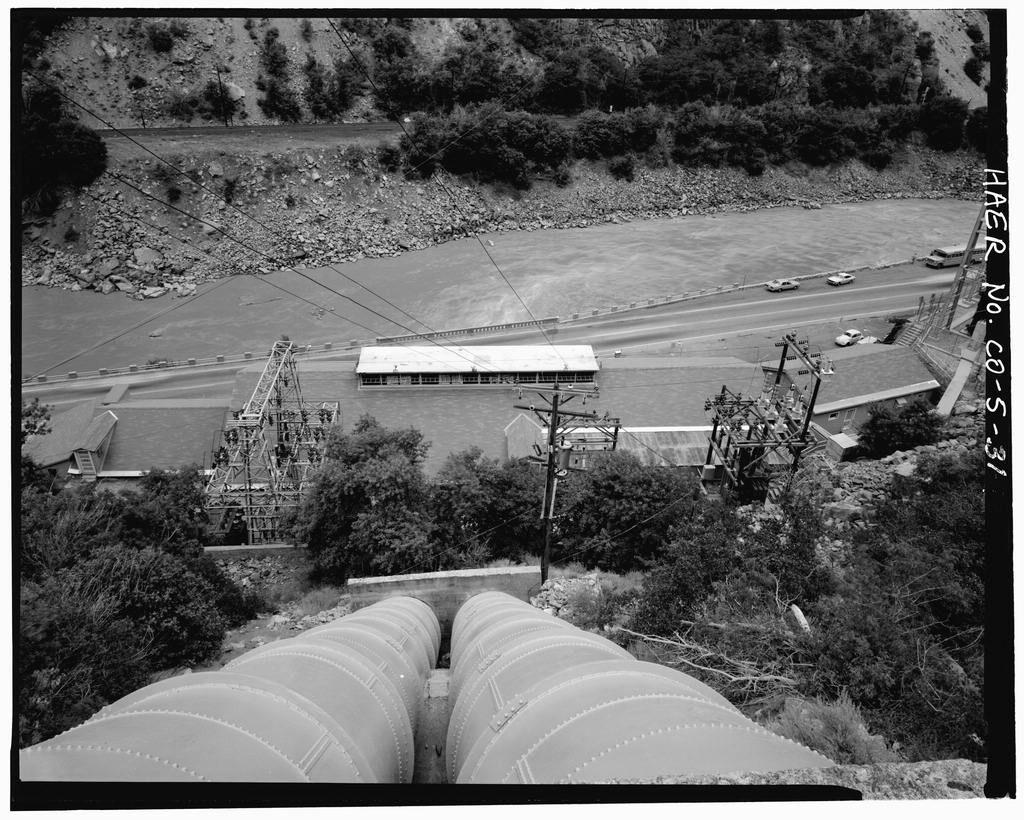
The back of Glen Canyon Dam circa 1964, not long after the reservoir had begun filling up. Here the water level is above dead pool, meaning water can be released via the river outlets, but it is below minimum power pool, so water cannot yet enter the penstocks to generate electricity. Bureau of Reclamation photo. Annotations: Jonathan P. Thompson

Click the link to read the article on the Sibley’s Rivers website (George Sibley):

April 21, 2026

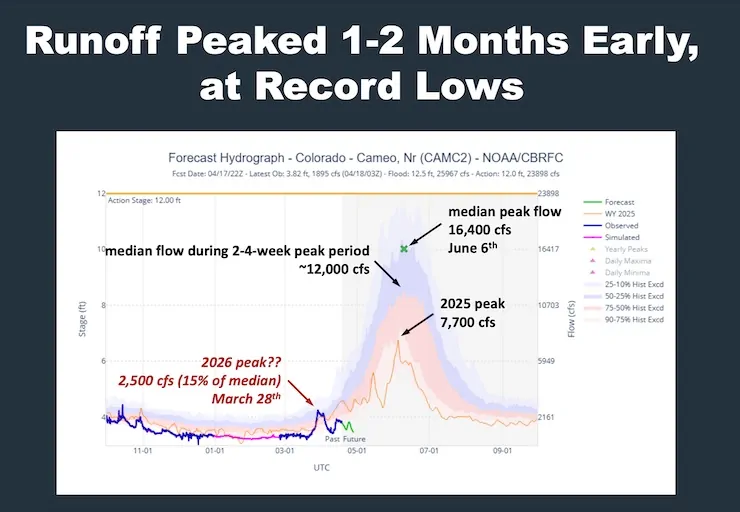
A bad year in the Colorado River Basin โ€“ barring a truly miraculous spring, probably the worst in recorded history. It is bad enough so the Bureau may have to stop creating power from the Glen Canyon powerplant by this coming fall. At that point, the only way to get water downriver from Glen Canyon Dam will be dribbling it through four outlet tubes that the Bureau is now wishing it had built differently (better) 65 years ago. And praying for enough precip to push the level back above the danger point for the turbines.

Meanwhile the negotiations between the seven basin states about the future distribution of the water remained at an impasse. One might think that a really bad year might generate some new thinking, but the two Basins are still debating Compact numbers like 7.5 million acre-feet for the Lower Basin with a river that might produce less than 5 maf this year, and maybe not much more than that more frequently in the future.

It should be obvious by now that any further negotiation between the states needs to have an independent facilitator guiding the discussion, pushing both factions to disassemble their own non-negotiables. A hard-ass facilitator speaking on behalf of river reality. [ed. emphasis mine]
It seems likely that we will go into the 2027 water year this fall with some new โ€˜interim planโ€™ for operating the river system for the water year that begins in October โ€“ probably some mix-and-match from the Bureauโ€™s five alternatives proposed last year and โ€˜EISedโ€™ while the seven states fiddled. The real purpose of the new interim plan will be to keep the infrastructure of the river system viable โ€“ dancing with the dead pool. This will probably impose serious delivery shortages on those below the Powell and Mead Reservoirs (meaning the Lower Basin), and also drop the Upper Basinโ€™s rolling 10-year total closer to the 75 million acre-feet (maf) that will cause the โ€˜compact callโ€™ threat to rear its ugly head.

Year-to-year might be the most honest approach now, anyway, getting a habit of feeling our way forward carefully, with our eyes wide open โ€“ woke, one might say.  The managerial โ€˜need for certaintyโ€™ in projections may not be part of the future weโ€™ve imposed on ourselves.

But thatโ€™s a good place to let the present sit and settle, and go back to the unfolding saga of the โ€˜Era of Conquestโ€™ in this update of Fred Dellenbaughโ€™s Romance of the Colorado River. You may remember that in the last post here, I related that the Bureau of Reclamation, feeling much loved for the Boulder Canyon Project that watered, fed and powered a massive regional development in Southern California, came out of World War II ready to do the same for the Compactโ€™s Upper Basin, in response to a mandate in the Boulder Canyon Project Act that a plan be developed for the development of the rest of the river.
There was, however, already quite a lot of development going on in the Upper Basin โ€“ at least in the state of Colorado, beginning in the 1930s, simultaneous with the Boulder Canyon Project.

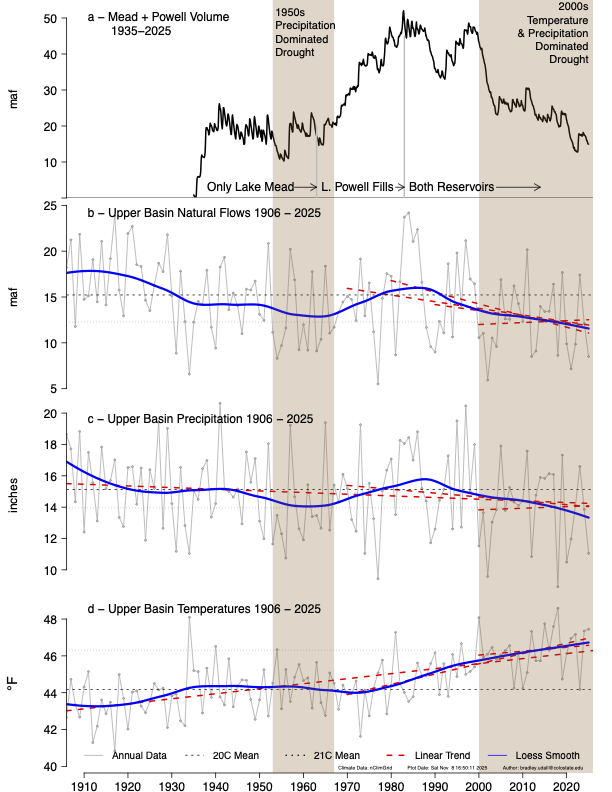
Udall/Overpeck 4-panel Figure Colorado River temperature/precipitation/natural flows with trend. Lake Mead and Lake Powell storage. Updated through Water Year 2025. Note the tiny points on the annual data so that you can flyspeck the individual years. Credit: Brad Udall

To establish context โ€“ the whole Colorado River Basin was experiencing its first serious modern-times drought, even as the Great Depression was settling over the whole nation. After the โ€˜pluvialโ€™ of water abundance in the first three decades of the 20th century, which convinced the water mavens that the river would deliver a dependable-enough flow of nearly 18 maf, the basin experienced its first 5 maf flow in 1933; by the end of the 1930s, there was reason to doubt that the river would ever again average 18 maf.

But Colorado had a special problem to resolve about Colorado River water distribution: the transdivide situation. I will not bore you again with my opinion of the imperial arrogance in randomly laying down straight line state boundaries in a region of great geographic and geological diversity. But what this created in the irrelevant rectangle called Colorado was like a blanket laid over a fence โ€“ the fence being the Continental Divide. West of the Divide, precipitation that fell (mostly snow in the winter) all ran off toward the Pacific Ocean in the Colorado River tributaries. East of the Divide, it all ran off toward the Atlantic in the Platte, Arkansas and Rio Grande Rivers. Because the weather mostly rode in on the prevailing westerlies, considerably more precipitation fell on the West Slope than fell on the East Slope. But the vagaries of cultural and economic development put most of the population and economic growth on the East Slope โ€“ โ€˜80 percent-20 percentโ€™ is the rough ratio frequently used to describe the imbalance between water and population in the blanket dropped over the fence.

The distribution of water on both sides of the โ€˜blanketโ€™ was governed by the appropriation doctrine as stated in the Colorado Constitution: all the water in the state belongs to the people of the state, subject to appropriation for individual use, and the right to divert โ€˜shall never be deniedโ€™ โ€“ with seniority among users determining the right to use the water in times of shortage. And by the turn of the century, challenges in water court had established the right to divert water from one basin to another.

As the drought of the 1930s settled in, farmers on the East Slope began to experience serious pressures on the water supply. And consistent with the optimism and technological advances of the early 20th century, this was not regarded as a fact of life to be acknowledged and adapted to, but as a problem to be addressed โ€“ in this situation, by moving water from the West Slope. A major task โ€“ but Franklin Rooseveltโ€™s โ€˜New Dealโ€™ efforts to alleviate the Great Depression offered the possibility of some help, through new agencies like the Reconstruction Finance Corporation and the Public Works Administration.

So when the Colorado General Assembly gathered early in 1933, two water project bills were in the hopper: one to divert an unspecified quantity from the Upper Colorado River in the Grand Lake area to the South Platte River basin, and one to divert an unspecified quantity from the Gunnison River to the Arkansas River basin.

Inhabitants of the West Slope, however, knew nothing about this until they read about it in the newspapers. And they were even more surprised that summer when construction actually began on two transdivide projects: the Denver Water Board began constructing a system of small canals high in the Fraser River headwaters (Upper Colorado tributary) to bring water to the Moffat railroad tunnel pilot bore, which the Water Board had leased from the railroad โ€“ an unused but already dug โ€˜pipeโ€™ to the northern Denver area. And the sugar-beet industry led by Great Western Sugar was doing the same collection system in the headwaters of the Roaring Fork River above Aspen for diversion into a small tunnel to the Arkansas River basin. Both of those enterprises were self-funded.

All of this precipitated a regional West Slope meeting in Grand Junction of โ€˜water peopleโ€™ โ€“ county commissioners and attorneys who were also all ranchers or farmers โ€“ at which a โ€˜Western Colorado Protective Associationโ€™ (WCPA) was formed, and a letter was drafted to the state engineer expressing concern that the proposed and in-process projects threatened the future development of the West Slope, and requesting inclusion in all future discussion of them.

The situation as the West Slope people saw it was not a โ€˜water grab.โ€™ The leadership in the WCPA knew that the East Slope irrigators and city-builders were exercising a constitutional right in appropriating โ€˜the peopleโ€™s waterโ€™ on the West Slope. They also knew that most of the Colorado River water left the stateโ€™s West Slope in an unmanageable snowmelt flood anyway, and it might as well go through a tunnel to the Front Range as through Grand Junction and on to โ€“ well, soon, on to enviable storage behind the great dam being built far downstream rather than its historical destiny of flowing on into the salty sea unused.

Storage! That was the key to the West Slopeโ€™s chief water problem, which was water available throughout the growing season for finishing as well as starting crops. West Slope engineers had been drafting up a number of reservoir-and-irrigation projects to present to the Bureau of Reclamation, but dams are expensive, and all of the proposed reservoirs served mountain-valley populations too small to pass the Bureauโ€™s cost-benefit analyses.

So the concept of โ€˜compensatory storageโ€™ for water lost through transdivide diversions became the WCPAโ€™s central focus. And despite their small population, the WCPA had two good cards to play. One was the fact that New Deal federal funding distributed to the states had to be for projects approved by the entire state; the transdivide diversions that needed federal assistance needed for the basin of origin to be as happy as the basin of destination.

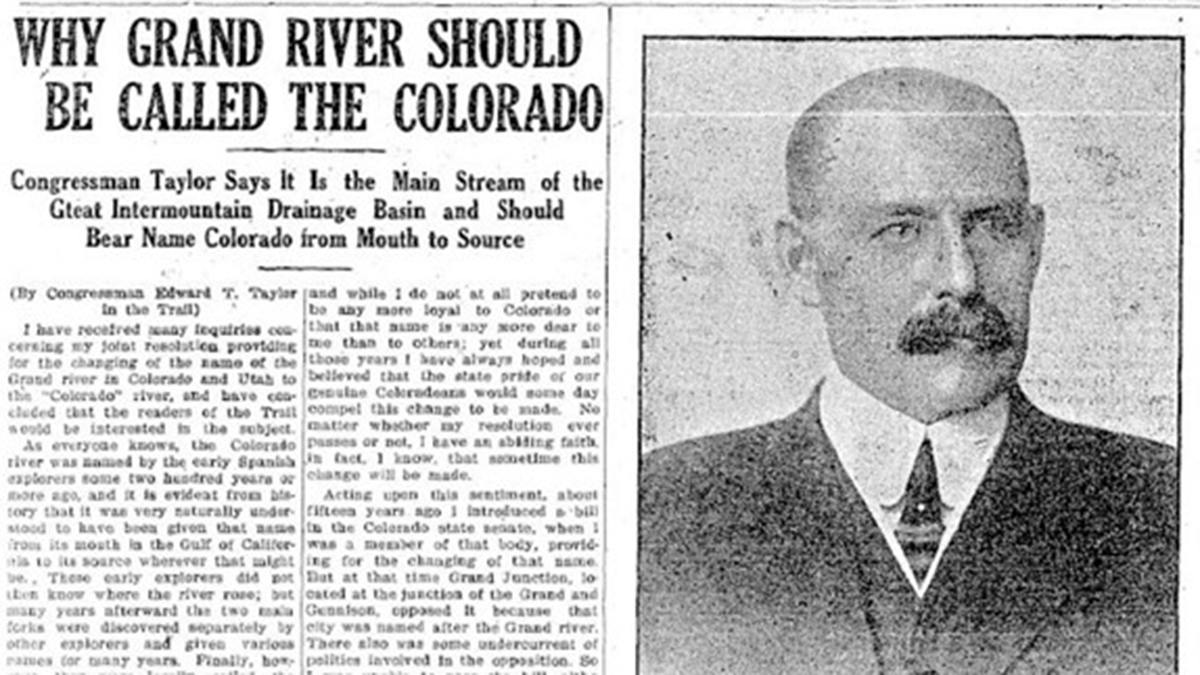
A image shows a guest column by Rep. Edward Taylor that appeared from the Steamboat Pilot in 1921. Graphic credit: Northern Water

The other card was a congressional representative, Edward Taylor, whom they had returned to Congress for 12 terms by 1933, and who had over that quarter-century ascended to chairmanship of the subcommittee that controlled the Interior Department budget in the powerful House Appropriation Committee. Congressman Taylor launched the WCPAโ€™s โ€˜defensive offensiveโ€™ by saying that any project seeking federal assistance for a transdivide diversion would have to provide, as part of their project, an acre-foot of compensatory storage for the West Slope for every acre-foot to be diverted.

That was a large and very expensive demand. Taylor exempted Denver and its Moffat project from the mandate โ€“ because, he said, we all want to see โ€˜our capital cityโ€™ grow unrestricted. More likely, he knew that Denver could fund its own project and would at best just ignore him; he was not their congressman, and the Denver Water Board at that point was coming under the domination by their attorney, Glenn Saunders, a city-builder who envisioned a water supply for a โ€˜thousand-year city,โ€™ most of which he thought would have to come from the West Slope. He just wanted the hicks to stay out of his way. (Not an exaggeration at all.)

Taylor could, however, impose his acre-foot-for-every-acre-foot demand on those seeking federal Public Works Administration funds or Bureau of Reclamation assistance. And that set up what is really an interesting story of people working out difficult problems theyโ€™ve imposed on themselves in draping a blanket over a fence and calling it a state, then adopting a wide-open appropriations doctrine for the distribution of a limited resource statewide. Itโ€™s a story with many moving parts that we donโ€™t really have time for here in depth; I will note, however, that the whole story is told in myย Water Wranglersย book, the story of the development of Coloradoโ€™s share of the Colorado River. (Out of print, but copies supposedly in all Colorado libraries.)

The principal players in the story were the Western Colorado Protective Association (WCPA), led by Frank Delaney, a lawyer-rancher, and D.W. Aupperle, a Grand Junction lawyer and fruit grower; the South Platte Water Users Association (SPWUA), led by Charles Hansen, a newspaper editor in farm country and a couple lawyer-farmers; and of course the Bureau which wanted to do a big transdivide diversion to the South Platte River. And what turned out to be the โ€˜wild card,โ€™ Congressman Taylor.

A seemingly endless series of meetings began between the WCPA and the SPWUA with the Bureau in attendance. There was fundamental agreement that, first, the East Slope had legal right to appropriate West Slope water, and second, that the East Slope owed the West Slope some compensation for diverting part of the West Slopeโ€™s base for future development. The challenge was arriving at the amount of compensation. The SPWUA wanted to divert more than 300,000 acre-feet from the Colorado River, for what became the Colorado-Big Thompson Project, but they did not see how (even if they could get some New Deal PWA financing) they could afford to also create that much West Slope storage. But the WCPA felt bound to support their congressman โ€“ without whom they really had no card to keep them in the game. Frustration and ire grew on both sides โ€“ compounded by having to travel back and forth either on the slow trains or drive on roads that were really โ€˜countryโ€™ (a major West Slope chronic complaint).

Finally, in the spring of 1936, Frank Delaney of the WCPA suggested a compromise. If the Bureau and SPWUA wanted to rush into construction, it would have to be Taylorโ€™s acre-foot-for-an-acre-foot mandate. But if they could delay their project until the Bureau did a thorough study of what the loss of 300,000 af of free-flowing water (most of it annually leaving the state unused anyway) would be to the West Slope, and how much storage would actually compensate the West Slope users for that loss of spring runoff, the West Slope would accept that number (and work on getting Cong. Taylor to accept it).

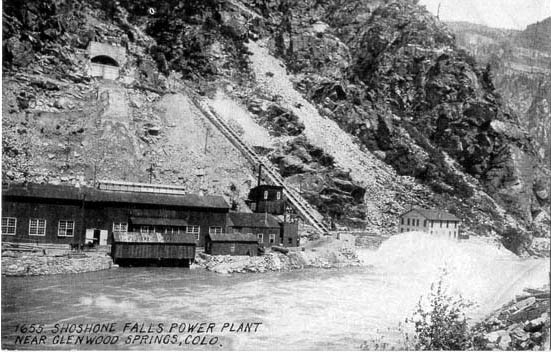
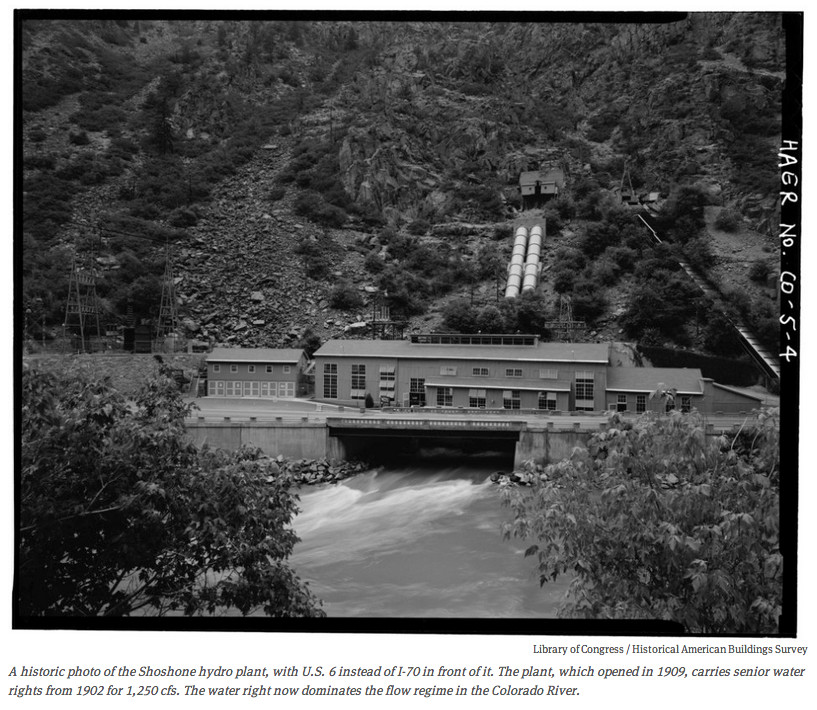
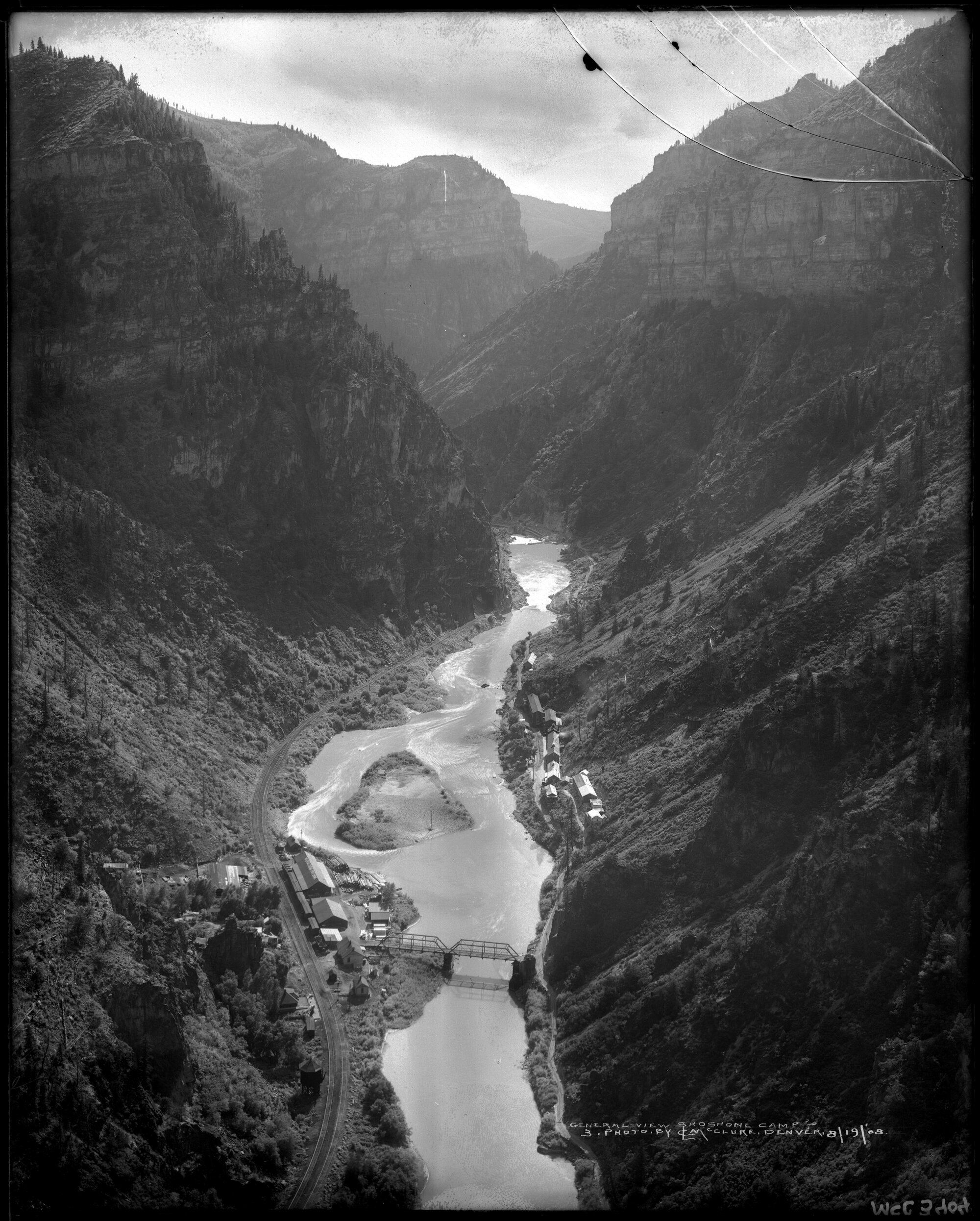
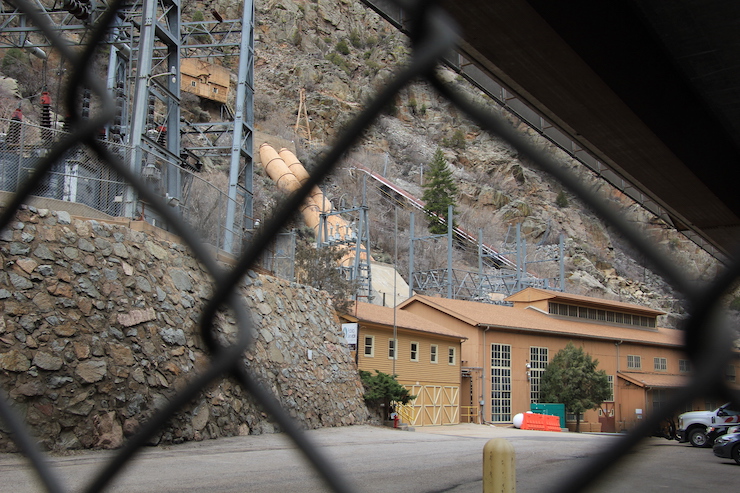
The โ€˜Delaney Resolutionโ€™ broke the stalemate. The Bureau men spent months poring over existing rights and land maps (long before computers and spreadsheets), and came up with a need for 152,000 acre-feet of compensatory storage: 52,000 af to make sure that the Shoshone power plant water right above Glenwood Springs could be met year round (which would also ensure enough late season water for the Grand Valley farms and orchards), and 100,000 af for future irrigation and domestic water development.

That cut Taylorโ€™s demand in two โ€“ and the Bureau planned to add a powerplant to the dam that would significantly reduce what the SPWUA would have to pay back. During this period, Taylor โ€“ an old man โ€“ was actually too sick to participate, and the Delaney Resolution was adopted for the Colorado-Big Thompson Project. (Taylor would die in office in 1941 โ€“ still believing that an acre-foot-for-every-acre-foot was what should be adhered to.)

Graphic credit: RogerWendell.com

The compromise process was codified as โ€˜Senate Document 80,โ€™ part of the Colorado-Big Thompson Project Act passed in 1937. Senate Doc. 80 became part of all subsequent transdivide project planning โ€“ except where Denver was concerned; it wasnโ€™t until the veto of Denver Waterโ€™s Two Forks Project half a century later that Denver Water finally conceded to take West Slope needs into account in its transdivide projects.

That process of working through a significant challenge to mutual benefit stands, in at least my mind, as one of the highlights of the Era of Conquest in the Colorado River region โ€“ a period not without occasional efforts measuring up to the often naive but high-minded vision driving the developersโ€™ โ€˜romancing of the riverโ€™ โ€“ to bring deserts into bloom, to reshape unfriendly environments to accommodate individuals and their families willing to work at it. It is too easy to condemn that from this side where we reap the harvest of all the mistakes involved that they didnโ€™t know about until they had made them.

Next post, weโ€™ll look at what happened to that carefully forged intrastate resolution when serious Colorado River planning came to the Compactโ€™s Upper Basin. Meanwhile โ€“ pray for monsoons, or just a good rainy spell.

Colorado transmountain diversions via the University of Colorado

Critics question fedsโ€™ plans for future of #ColoradoRiver: In years of severe #drought, โ€˜the system is failingโ€™, #ClimateChange is sapping river flows as #LakePowell, #LakeMead water levels continue to fall — The #Denver Post #COriver #aridification

Udall/Overpeck 4-panel Figure Colorado River temperature/precipitation/natural flows with trend. Lake Mead and Lake Powell storage. Updated through Water Year 2025. Note the tiny points on the annual data so that you can flyspeck the individual years. Credit: Brad Udall

Click the link to read the article on The Denver Post website (Elise Schmelzer). Here’s an excerpt:

April 19. 2026

The multitude of water managers tasked with overseeingย the drying Colorado River systemstand at a dire crossroads. As a years long stalemate in negotiations persists between the seven states that share the river, itโ€™s become increasingly likely that the federal government will impose its own long-term plan, choosing from a range of proposals officials have outlined in recent months. But experts and water managers across the 250,000-square-mile Colorado River basin are raising the alarm about the five plans, questioning if any of them hold up under the new climate reality. They say the federal plans wonโ€™t keep the system from crashing in critically dry years โ€” which are becoming more frequent โ€” and could wreak chaos on the pivotal lifeline for 40 million people in the American Southwest.

โ€œIn every one of those alternatives, under what they call critically dry hydrology, the system is failing,โ€ said Andy Mueller, the general manager of the Colorado River District, a taxpayer-funded agency based in Glenwood Springs that works to protect Western Slope water. โ€œAnd critically dry hydrology is what we have continued to see consistently in the basin in the last 25 years and what we should expect going forward.โ€

[…]

In extremely dry years, the longer-term plans under consideration by Reclamation would allow the water levels of the systemโ€™s two main reservoirs to repeatedly fall below minimum power pool. Federal officials then would be forced to make recurring emergency cuts to the water supplies of the three states downstream of the reservoirs, creating uncertainty for millions of people and a massive agricultural industry…Letters from a number of Colorado entities โ€” including theย Northwest Colorado Council of Governments,ย irrigation districts, the Western Slopeโ€™sย Club 20ย and county commissions from a vast swath of the state โ€” urged federal officials to present at least one plan that would hold up in extremely dry years.

โ€œSound science dictates that Colorado River management must evolve to handle a permanently drier future,โ€ Tina Bergonzini, the general manager of the Grand Valley Water Users Association,ย wrote in her comments to the bureau. โ€œThe current federal preference for predictability is an atmospheric impossibility given that studies indicate rising temperatures have already slashed river flows by a fifth.โ€

[…]

The conflict on the Colorado is likely one of the worldโ€™s first major water policy overhauls to grapple with the reality of climate change, saidย Brad Udall, a senior water and climate research scholar at Colorado State Universityโ€™sย Colorado Water Center. In the past, Colorado River managers made operational tweaks and short-term deals to address drought. This time, itโ€™s different.

โ€œWeโ€™re not looking at an incremental step here,โ€ Udall said. โ€œWeโ€™re looking at a complete redo of how we operate this resource that affects 40 million people.โ€

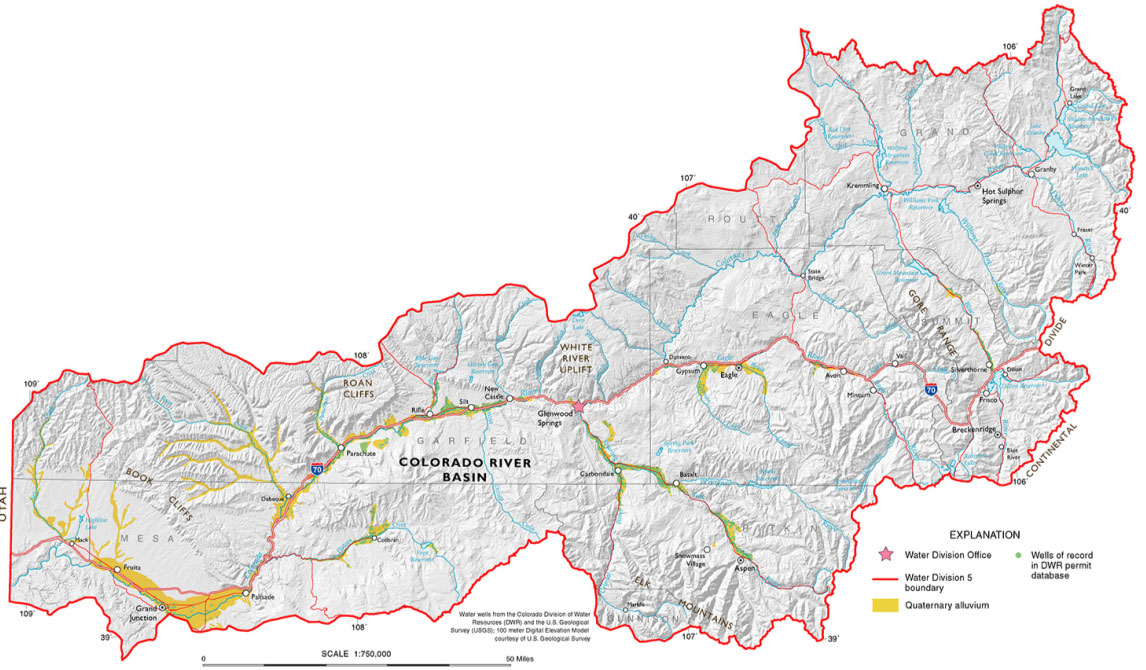
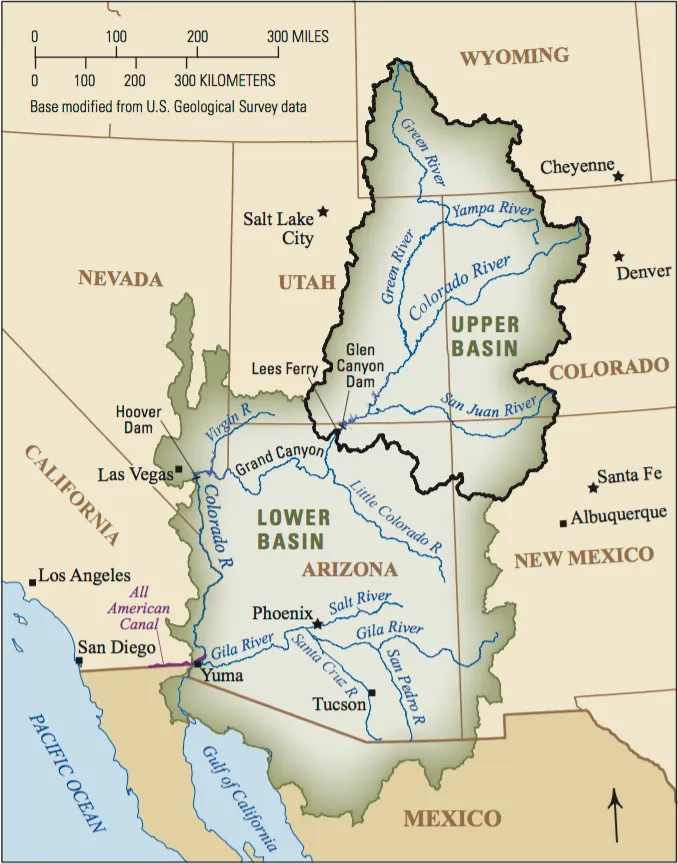
Map of the Colorado River drainage basin, created using USGS data. By Shannon1 Creative Commons Attribution-Share Alike 4.0

Fedsโ€™ $140 million promised to #ColoradoRiver drought mitigation projects remains stuck for โ€˜bureaucraticโ€™ reasons — The Summit Daily #COriver #aridification

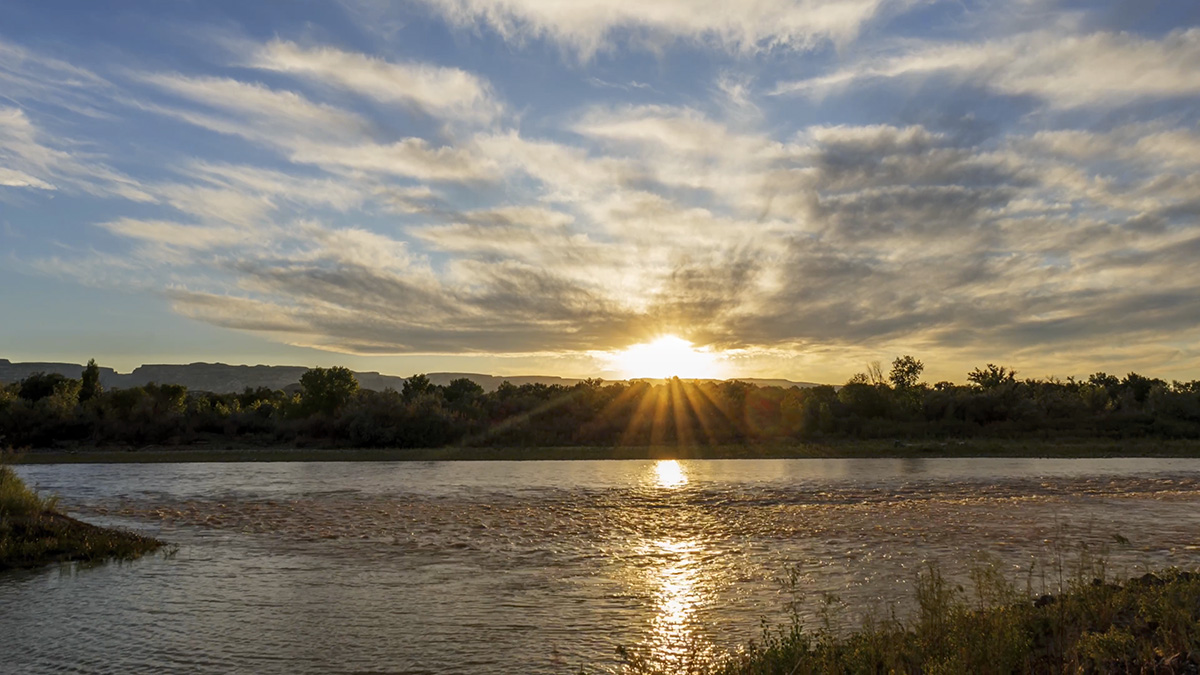
The Colorado River passing Grand Junction, Colorado. Photo by Robert Marcos.

Click the link to read the article on the Summit Daily website (Ali Longwell). Here’s an excerpt:

April 13, 2026

Despite pressure from Coloradoโ€™s congressional delegation, around $140 million in federal fundingย previously grantedย to Western Slope water projects has lingered in limbo for nearly 16 months. The funds, awarded to 17 Western Slope projects in the final days of President Joe Bidenโ€™s administration, were part of the Inflation Reduction Actโ€™s drought mitigation grant opportunity for the Upper Colorado River Basin. This included $40 million granted to the Colorado River District to aid in its purchase of the Shoshone water rights, the oldest and largest non-consumptive right on the Colorado River tied to the hydropower plant in Glenwood Canyon.ย  Three days after the awards were announced, President Donald Trump took office, and his Day 1 order, โ€œUnleashing American Energy,โ€ called for all federal agencies to โ€œimmediately pause the disbursement of funds appropriated through the Inflation Reduction Act.โ€ In June, the U.S. Bureau of Reclamationย released funds for two of the projectsย in the Orchard Mesa Irrigation District in Palisade, but the rest remain frozen.ย 

โ€œThe funding has not yet been released, and thatโ€™s a real concern given current conditions across all of Colorado, but particularly western Colorado,โ€ said Rep. Jeff Hurd, a Republican representing Coloradoโ€™s third district spanning the Western Slope, in an interview on Thursday, April 9. โ€œI am continuing to press hard for clarity on timing and next steps because those projects were awarded for a reason and the need has not gone away.โ€

The Inflation Reduction Act set aside $4 billion toward drought mitigation, including funds for the Bureau of Reclamationโ€™s Upper Colorado River Basin System Conservation and Efficiency program, also known as the Bucket 2E funding. In January, the Bureau under Bidenโ€™s administration allocated a total of $388.3 million to 42 projects on tribal land and in states in the Upper Basin.ย 

Shoshone Falls hydroelectric generation station via USGenWeb

This included $152 million for 17 projects in Colorado, including those for wildlife habitat, watershed and stream restoration, water infrastructure improvements and more. Only $12 million of this funding for two Orchard Mesa Irrigation District projectsย  โ€” meant to improve water delivery to the 15-mile reach of the Colorado River, which extends from Grand Junction and the confluence of the Gunnison River and serves as critical habitat for several endangered fish species, as well as install new metering technology in the Grand Valley โ€” has been released to the awardees.ย  The largest Colorado award was the $40 million promised to the River District, which represents 15 Western Slope counties. This funding represented a large chunk of the $98.5 million that the River District needs to purchase the Shoshone water rights from Excel Energy. Outside of the frozen federal dollars, the River District has raised $57.2 million fromย the state Legislature, its board and the various Western Slope municipalities and utilities it serves.ย  Matt Aboussie, Colorado River Districtโ€™s communications director, said the district continues to work closely with the Bureau of Reclamation to secure this promised funding and remains committed to securing the rights.ย 

โ€œFunding will not be the obstacle that stops this effort,โ€ Aboussie said. โ€œIf needed, River District leadership is prepared with alternative funding options and continues to rely on all our communities to get this project across the finish line.โ€

โ€˜It could be pretty direโ€™: Water managers at Elkhead Reservoir face hard decisions following a year of historically low snowfall — #Craig Press

Elkhead Reservoir is taking center stage following a winter of historically low snowfall, leaving water managers with hard decisions and water users with a high degree of uncertainty. Courtesy Photo/Colorado Parks & Wildlife

Click the link to read the article on the Craig Press website (John Camponeschi). Here’s an excerpt:

April 14, 2026

A historically dry winter is setting up what water officials describe as one of the most challenging runoff seasons in recent memory, with operations and allocations at Elkhead Reservoir expected to play a critical role in stretching limited supplies across Northwest Colorado….That challenging outlook [ed. snowpack and streamflow in 2025] and lessons learned from past years with low snowfall are key focal points in early planning and coordination among water managers, particularly for reservoirs like Elkhead, which serves irrigators, municipalities and environmental needs in the Yampa River Basin…Calahan said warm, dry conditions have dramatically accelerated snowmelt, raising the likelihood of a runoff season that arrives early, fades quickly and leaves water managers facing difficult decisions for a wide range of stakeholders…In a more typical year, gradual warming allows the snowpack to melt slowly, sustaining river flows well into summer. This year, however, that prolonged runoff is not materializing, which is already increasing pressure on stored water supplies. While late spring storms or summer monsoons could provide some relief, officials do not expect conditions to return anywhere near an average water year. That uncertainty leaves reservoir managers balancing how much water to store versus how much to release to meet downstream demand.

Yampa River Basin via Wikimedia.

#Utah Senator Mike Lee and Representative Celeste Maloy look to Congressional Review Act to crush Grand Staircase Escalante National Monument, plan: Plus: Another #ColoradoRiver wonkfest; more public lands and #aridification news — Jonathan P. Thompson (LandDesk.org) #COriver

Glen Canyon Dam, January 2022. Jonathan P. Thompson photo.

Click the link to read the article on The Land Desk website (Jonathan P. Thompson):

March 6, 2026

๐ŸŒต Public Lands ๐ŸŒฒ

Sen. Mike Lee and Rep. Celeste Maloy, both MAGA Republicans from Utah, have formally introduced legislation to use the Congressional Review Act to revoke the Biden-era management plan for Grand Staircase-Escalante National Monument. If successful, the move would also bar the feds from developing a new management plan that resembles the current one.

The current management plan is not draconian by any means. It was fashioned over years, with oodles of input and compromise, and is far less restrictive than the preservation-oriented alternatives It allowed for motorized vehicle use on designated routes and added almost no new restrictions for livestock grazing. Revoking it is not the same as rescinding the national monument or shrinking its boundaries, and will not open up any of the monument to new mining claims or oil and gas leases.

So itโ€™s not clear what Lee and Maloy hope to achieve, except to strike a blow to a national monument that they donโ€™t like and to throw oversight of 1.9 million acres of public land into disarray. Or maybe theyโ€™re just trying to build up their anti-public-land credentials to head off challenges from even more extreme candidates such as, say, Phil Lyman, who just challenged Maloy for her 3rd District congressional seat.

You still have time to let your representatives in Congress know how you feel.


Ugggg.

While well-intentioned greens are parsing BLM director nominee Steve Pearceโ€™s words for indications he might be inclined to sell off public land, the Trump administration is orchestrating a massive de facto transfer of public lands to oil and gas companies.

Iโ€™m talking about oil and gas leasing. And no, itโ€™s not an actual transfer of public land; the lessee does not take title to the land, nor can they block public access, but they do get the rights to drill that land and preclude other uses on it. And, once it is drilled, the land is scraped of all vegetation, covered with heavy equipment, poked with a massive drill, hydraulically fractured, and becomes an industrial-scale, methane-, hydrogen sulfide-, and VOC-oozing hydrocarbon factory for many decades to come.

On the auction block this June is a good chunk of slickrock-studded landscape northwest of Moab, between Hwy. 191 and the Green River, along with some parcels in the Lisbon Valley. All in all, the BLM proposes selling off 39 parcels covering some 71,600 acres. You have until March 30 to give your two cents. https://eplanning.blm.gov/Project-Home/?id=6fad61fa-a7f2-f011-8407-001dd80bcf93

***

Of course, sometimes the BLM holds an oil and gas auction and no one comes. That was the case with the Big Beautiful Cook Inlet Oil and Gas Lease Sale (yes, that is the official name) held March 4 in Alaska, in which more than 1 million acres of offshore leases were put on the block. There were zero bids. Zilch. Nada. Someday, maybe every oil and gas lease sale will be like that.

***

A federal judge has halted construction of the Northern Corridor Highway through the Red Cliffs National Conservation Area near St. George, Utah, while an advocatesโ€™ lawsuit proceeds.

The BLM approved the contested project earlier this year. The Utah Department of Transportation, apparently wanting to get started before a legal challenge could take hold, began erecting fencing along the project, even though their development plan hadnโ€™t been approved. This activity would have disturbed desert tortoise habitat.

The court did not approve, blocking further work until the lawsuit is resolved.

***

In other Utah road news, Garfield County began chip-sealing the first ten miles of the Hole-in-the-Rock Road in Grand Staircase-Escalante National Monument, drawing protest and a lawsuit from environmental groups.

The county has been aching to pave the gravel road, which often becomes riddled with potholes and washboards, for years, but failed to gain BLM approval. Environmental groups have resisted, saying that improving the road could lead to more paving or widening of primitive byways in the area, and would increase the number of people and their impacts on the fragile landscape.

The county has also wielded RS-2477 โ€” an 1866 statute โ€” in an attempt to wrest control over the byway, which leads to the famed Colorado River crossing of the 1879 Latter Day Saint expedition to Bluff. Last July, a federal court granted Garfield County quiet title to the section of the road within the county.

Garfield County interpreted that as a green light to chip seal the road.

That triggered a lawsuit from the Southern Utah Wilderness Alliance, pointing out that because the road crosses BLM land, the county must still get the agencyโ€™s go-ahead for major improvements. It didnโ€™t, but the BLM has done nothing to stop the action, which SUWA says violates federal environmental laws.


๐Ÿฅต Aridification Watch ๐Ÿซ

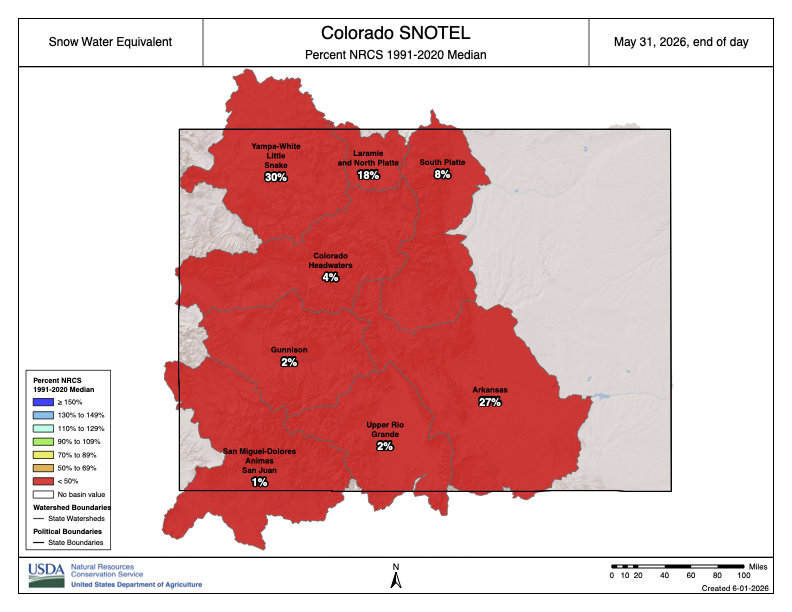
I was accused recently of being all โ€œdoom and gloomโ€ when it comes to this yearโ€™s snow levels, so I set out to find some good news to report. It didnโ€™t go so well, but I did uncover a few tiny nuggets, including:

  1. After the February storms, the Center for Snow and Avalanche Studies reported: โ€œThis is rare, but currently we do not have any dust on the snowpack.โ€ Thatโ€™s good news because dust on the snow decreases albedo (reflectivity), leading to faster snowmelt. We need what little we have to stick around as long as possible. Buzzkill: The really big dust events tend to come in the springtime.
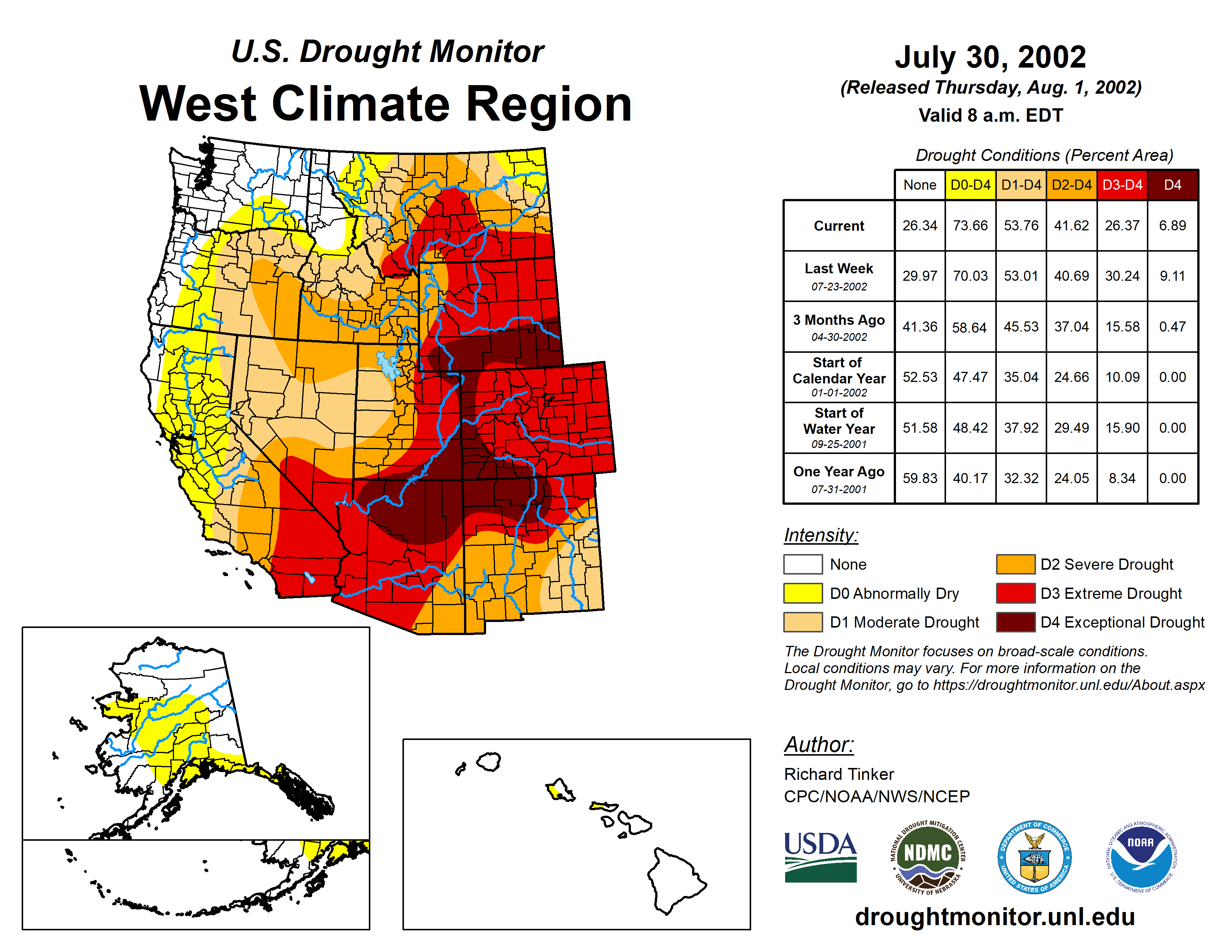
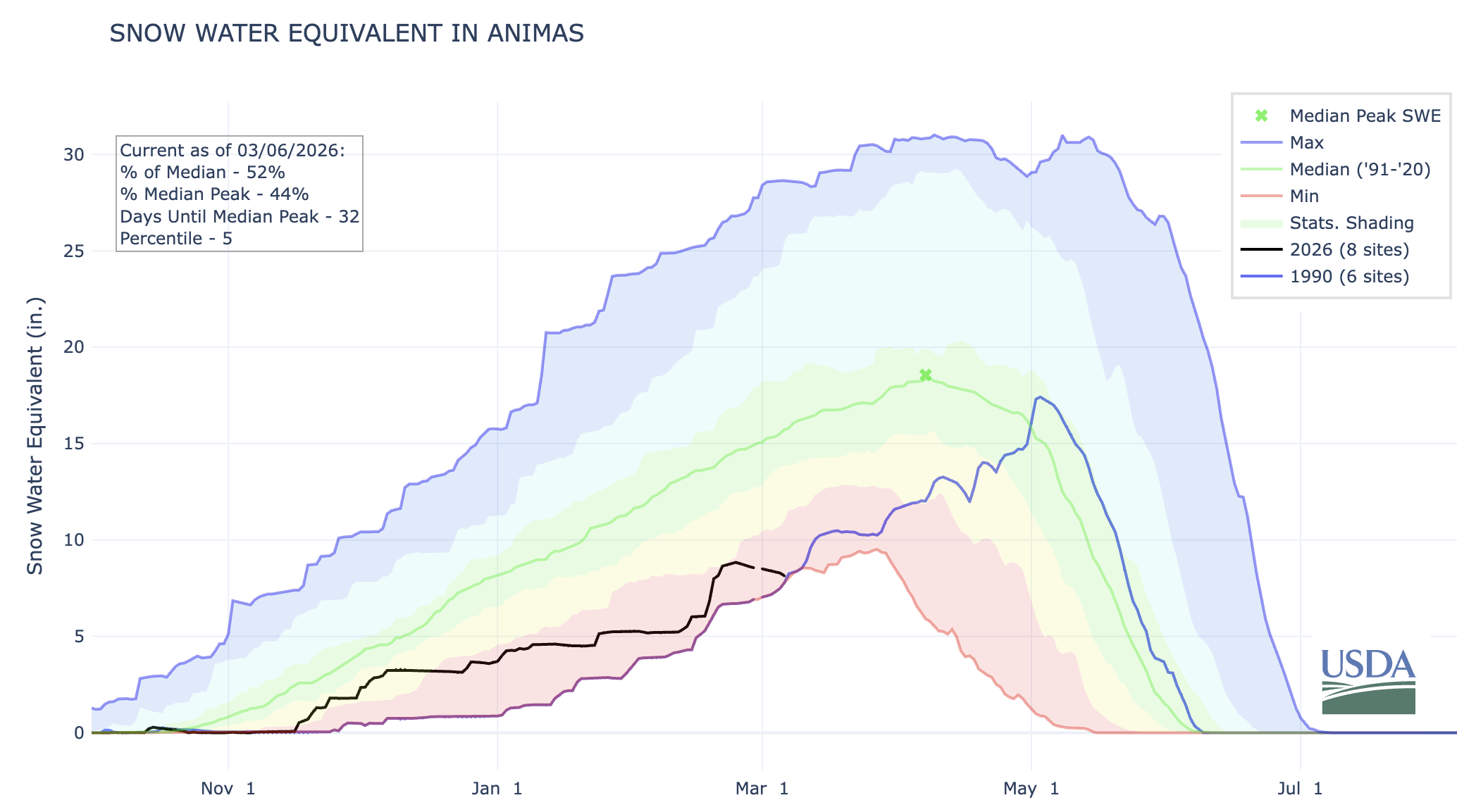
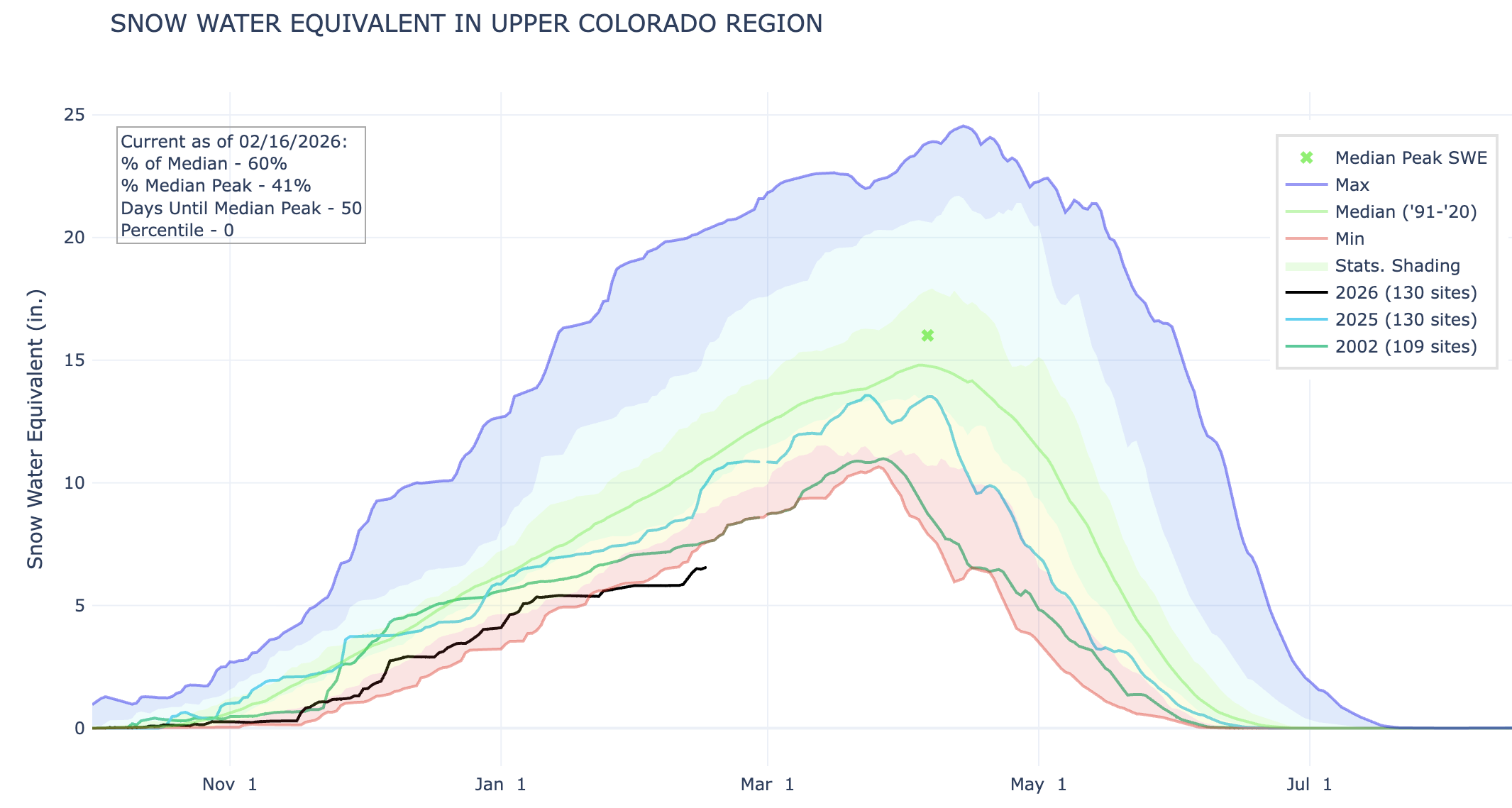
  2. I tend to rely on a handful of high-elevation SNOTEL sites as indicators of how the mountain snowpack is doing. One of them is in Columbus Basin in the La Plata Mountains. Like everywhere else, the snow water equivalent there is way below normal. However, itโ€™s still above 2002 levels for early March, so thatโ€™s kind of heartening. I guess?
  3. Hope lies in 1990: That year, snowpack levels in the Animas River watershed were lower on March 6 than they are today. But beginning in mid-March, storms pummeled the region, resulting in a May 3, 1990, snowpack peak that was 94% of normal and bringing runoff up to decent levels. We could see a repeat of that March-April-May miracle!
  4. And โ€ฆ oh. Iโ€™ve just been informed that there is no more good news.
As grim as this may be, it also offers a glimmer of hope: The snowpack could still recover like it did in 1990. Source: NRCS.

Now back to our regularly scheduled doom and gloom, bullet style.

  • The late February-early March heat wave across most of the West shattered thousands of daily high temperature records and dozens of monthly ones, topping off the Westโ€™s warmest winter on record. Monthly records (121 tied or broken nationwide during the last week of Feb.) include:
    • Dinosaur National Monument in Utah hit 68ยฐ F on 2/26;
    • Imperial County, Californiaโ€™s airport reached 97ยฐ on 2/28;
    • Albuquerque airport, 77ยฐ on 2/25;
    • Hovenweep National Monument in Utah, 70ยฐ on 2/28;
    • Havasu, Arizona, and Malibu Hills, California, were both 93ยฐ on 2/27;
  • Sampling of daily records (845 broken or tied during the last week of Feb) include:
    • Mancos, Colorado, hit 50ยฐ F on 2/28; the aforementioned Columbus Basin (elev. 10,784 feet) reached 48ยฐ and Mineral Creek, Colorado, hit 51ยฐ that same day;
    • McClure Pass, Colorado, reached 49ยฐ on 2/28;
    • Needles, California, and Phoenix both hit 92ยฐ on 2/28;
    • South Lake Tahoe airport, 60ยฐ on 2/28.

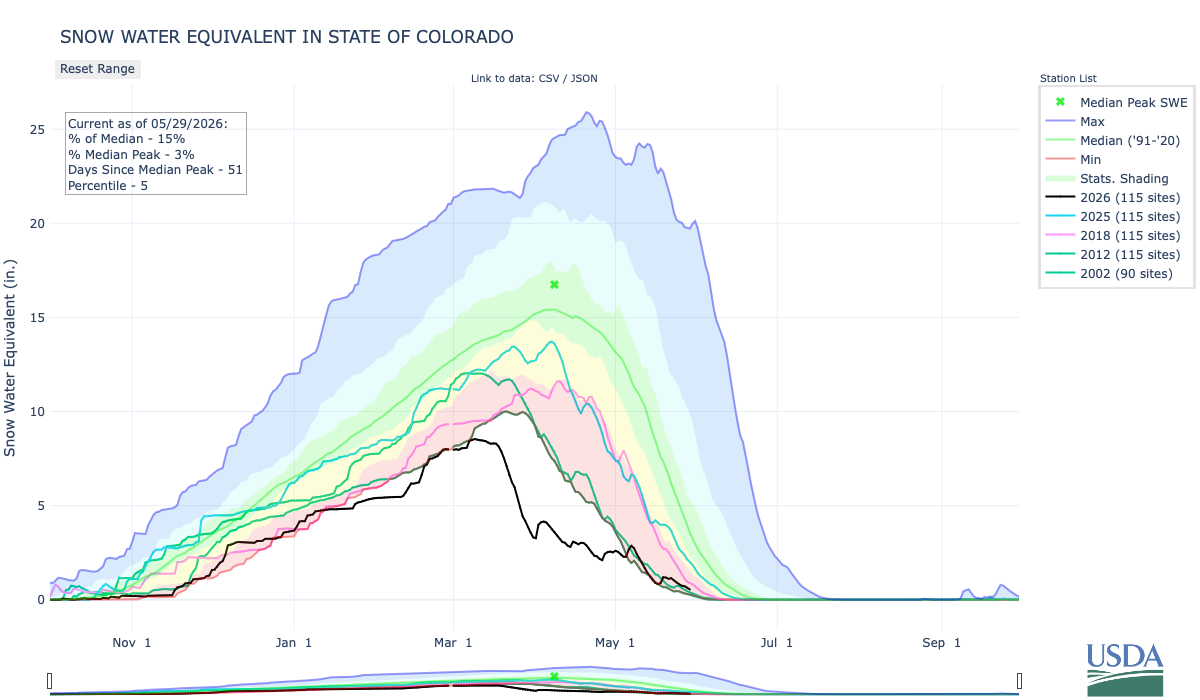
Those kinds of temperatures melt the snow, even on north faces, causing this yearโ€™s snow water equivalent graph lines to uncharacteristically dip during a time of year when they normally would be shooting upward. They also heighten risk of wildfires in the low country. On the last day of February,ย a blaze broke outย in Chautauqua Park in Boulder, forcing some evacuations before it was contained. Another one was sparked west of Boulder on March 4.

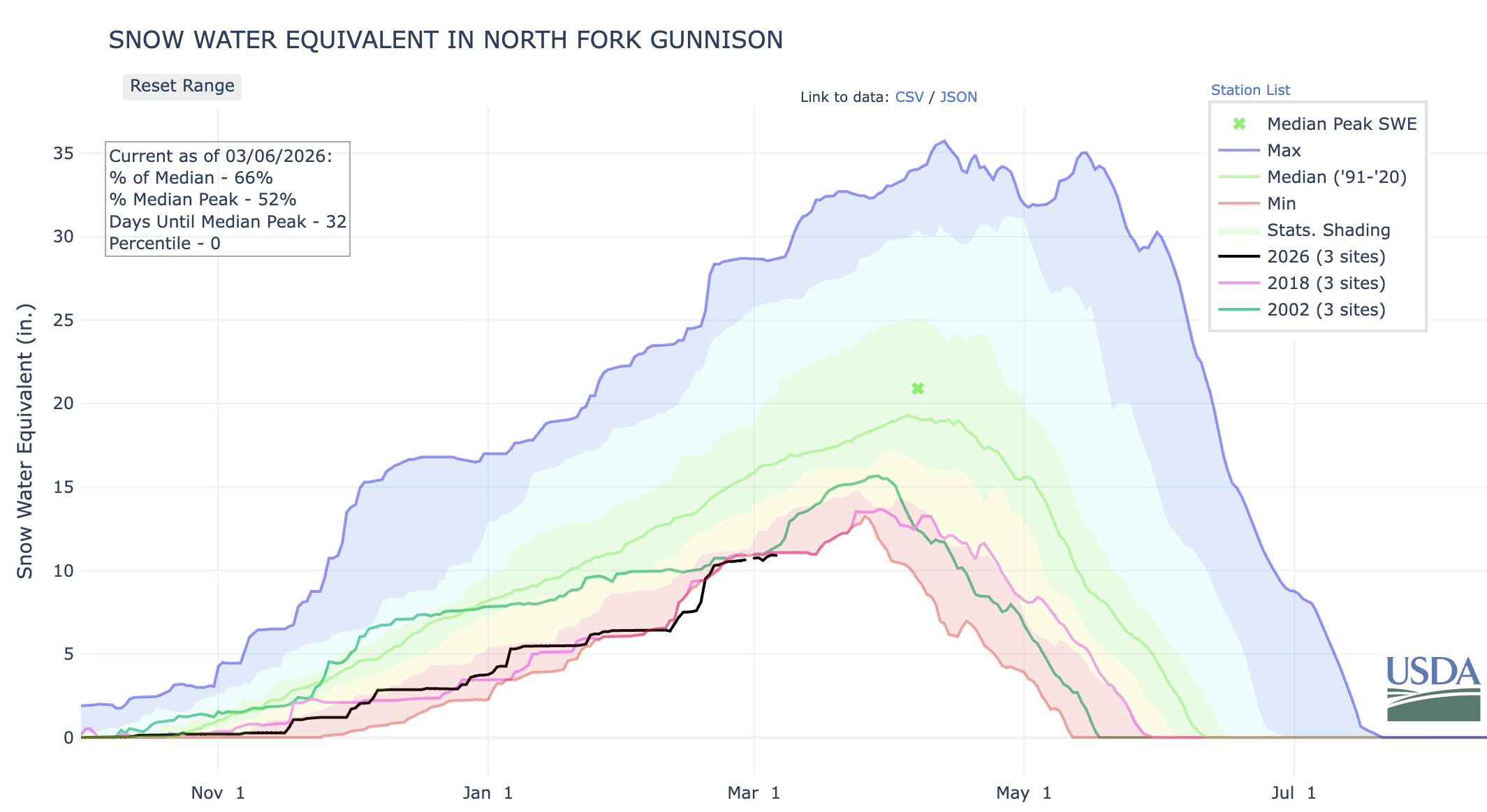
The North Fork of the Gunnison, which feeds the ditches in and around Paonia and Hotchkiss and the orchards, vineyards, and farms there, is in trouble. This yearโ€™s snowpack so far is in the same boat as it was on this date in 2002 and 2018, two very dry years when irrigation ditches were shut off early in the growing season.

Aside from the entire Upper Colorado River watershed, Iโ€™m also especially concerned about the North Fork of the Gunnison. Snowpack levels are at a record low for this date, or about the same as they were in 2018, and Paonia Reservoir is currently utilizing just 22% of its storage capacity (note the record high temp on McClure Pass above, at the headwaters of Muddy Creek, which feeds the reservoir). This does not bode well for the many small farmers who rely on the river for irrigation. In 2018, downstream senior rights holders made a call on the river in June, forcing junior irrigators in the North Fork to lose water perilously early in the season.

This bad situation could be exacerbated if the feds were to decide to release water from Paonia Reservoir in an attempt to buoy Lake Powell water levels. While this is hypothetical, it is not beyond the realm of possibility by any means.

And, saving for some sort of April-May miracle, the Colorado River runoff will be extraordinarily scant this spring and summer, almost certainly pushing Lake Powell to critically low levels.

***

That demands a plan, and the Bureau of Reclamation came up with several alternatives last month. Most of the major players have commented on the alternatives, and itโ€™s safe to say that almost no one is satisfied with any of them โ€” albeit for different reasons.

One of the more universal critiques is that none of the alternatives adequately address dry and critically dry scenarios on the river, like the one that is likely to occur this summer. The draft environmental impact statement itself states, โ€œIn critically dry periods, all alternatives have unacceptable performance.โ€ That leaves many wondering what, exactly, the Bureau of Reclamation plans to do to keep the system from collapsing over the next nine months.

There is a lot here, and it gets pretty darned deep in the wonk weeds. Still, what Iโ€™ve included is a mere sampling of some of the comments from just a few of the commenters in the hope that it will give readers a better idea of where different stakeholders stand, and how complicated and difficult this situation really is.

For those who donโ€™t like weeds, hereโ€™s the short version: Itโ€™s a tangled mess with a bunch of moving pieces and stakeholders who are digging in their heels to ensure that their constituents get the water they need to drink, irrigate crops, run industries, or whatever. And theyโ€™re all butting up against the reality that there simply isnโ€™t enough water in the river to go around.

Ian James has a slightly less crunchy version for the Los Angeles Times.

Here are the comments and commenters:

Fourย Democratic members ofย Arizonaโ€™s congressional delegationย feel that the Lower Basin is getting the dry end of the stick (their comments are similar to those of theย Arizona Department of Water Resources):

  • Arizona is understandably displeased because they would take the greatest hit under any alternative. This is not because they are somehow inferior, but because the water rights to the Central Arizona Project, which delivers Colorado River water to Phoenix and Tucson, are junior to most other big users in the Lower Basin.ย โ€œโ€ฆ each alternative, though broad in scope, will translate in practice specifically as drastic reductions to Arizonaโ€™s water supply.โ€
  • โ€œWe are deeply troubled that Reclamation all but abandons its increasingly critical role in ensuring the Upper Basin States fulfill their delivery obligations under the Colorado River Compact of 1922 (Compact).โ€ย This refers to the non-depletion or minimum-delivery obligation that Iโ€™ve written about before.
  • โ€œThe DEIS itself acknowledges that โ€˜widespread impacts on social and economic conditions may also be possible,โ€™ including circumstances in which municipalities may need to pursue alternative or even hauled water sources to maintain basic services. Drastic cuts could have cascading consequences for human health and safety and destabilize the lives and livelihoods of Arizonans, tribal communities, and critical industries that rely on Colorado River supplies.โ€
  • They say the cuts will damage the stateโ€™s agriculture, manufacturing, and aerospace industries and that it will put at risk: โ€œโ€ฆ the largest concentration of advanced semiconductor manufacturing investment in the country, representing roughly $200 billion in announced projects since 2020.โ€ Semiconductor production is extremely water-intensive, with the average factory consuming up to 10 million gallons of ultra-pure water daily.
  • They call on any plans toย โ€œinclude verifiable Upper Basin conservation measures commensurate with Lower Basin conservation measures, including identifying tangible metrics that demonstrate Upper Basin water conservation.โ€

The Colorado River District, which represents water users on Coloradoโ€™s Western Slope, wasnโ€™t so psyched about the alternatives, either:

  • โ€œWe believe that Reclamation must institute bold and meaningful changes but that those changes must be implemented in a manner that is consistent with the 1922 Colorado River Compact, the 1944 binational treaty with Mexico, the 1948 Upper Basin Compact, and the other foundational elements of the Law of the River.โ€
  • โ€œReclamation must prioritize hydrologic reality over predictability for Lower Basin users. The Draft EIS places undue emphasis on predictability1 for water users, a goal that is unattainable under future climate conditions unless system storage is replenished and overall demands are permanently reduced to match the supply.โ€
  • โ€œโ€ฆ several alternatives include Upper Basin water conservation ranging from zero to 500,000 acre-feet annually โ€ฆ <but> โ€ฆ fails to analyze the environmental or socioeconomic impacts associated with these conservation volumes.โ€ย It adds that a 200,000 acre-feet reduction in the Upper Basin would require fallowing 52,000 acres on the Western Slope.
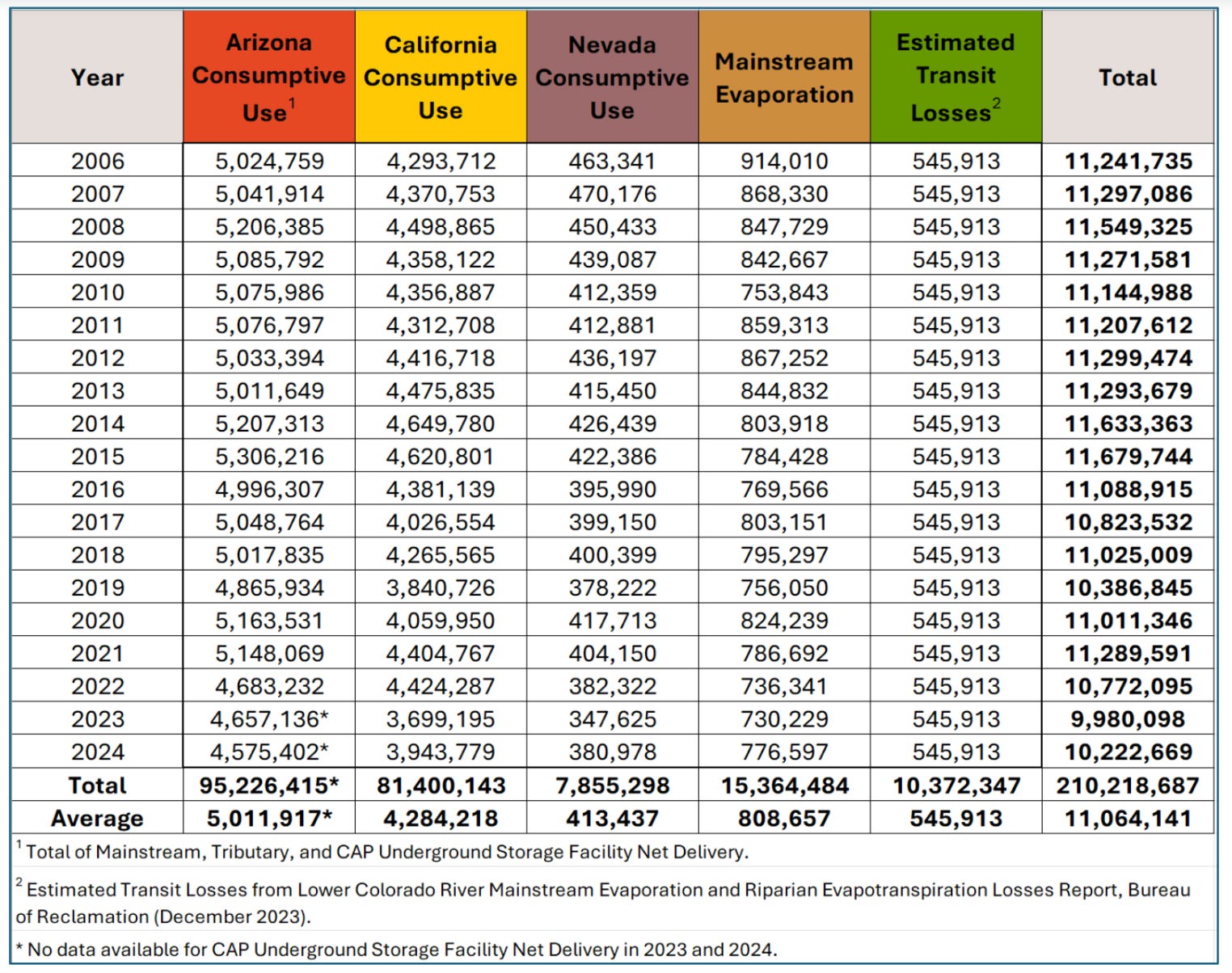
  • โ€œLower Basin water use must be reduced by 1.5 million acre-feet at all times, regardless of the alternative. This amount represents system losses (i.e., transit losses and reservoir evaporation) and should not be classified as shortage.โ€ย This is a longstanding issue. Reservoir evaporation and other such losses are counted against the Upper Basinโ€™s consumptive use, in part because of the non-depletion obligation. The same is not true for the Lower Basin; when they say they use 7.5 million acre-feet, that does not include evaporation or seepage or other system losses, only what they pull out of the river.
  • โ€œThe range of alternatives must include option(s) that perform under critically dry hydrology. Currently, none of the alternatives in the Draft EIS perform under critically dry hydrology. At least one alternative must protect critical infrastructure and respond effectively to significantly lower river flows than historically observed.โ€ย We are approaching a critically dry situation this summer, when the feds will have to decide whether and how to keep Lake Powell from dropping below minimum power pool. So far there is no plan for this.
  • โ€œHydrology must drive Post-2026 operations. Operating guidelines based upon comparative reservoir elevations which do not factor in real time hydrology have been disastrous for protecting storage in Lake Powell and thus, have failed to provide the water supply certainty for the Upper Basin intended by the Law of the River โ€ฆโ€
  • โ€œInterbasin transactions must not be allowed in the proposed action.โ€ย That is, Upper Basin users with senior rights should not be able to sell their water to Lower Basin users.

Theย team of Anne Castle, John Fleck, Eric Kuhn, Jack Schmidt, Katherine Tara, and Kathryn Soren,ย river experts and academics who arenโ€™t representing any specific water user, state, or basin, alsoย weighed in. Their comments, as Fleck put it in hisย Inkstain blog, could be summed up as: โ€œTell us what youโ€™re going to do.โ€ย And, also:

  • The group calls on Interior toย โ€œprimarily focus on the Dry and Critically Dry scenarios. โ€ฆ We think it important to be mindful of the underlying year-to-year hydrology of the 21st century as we look to the future. โ€ฆ we are struck by the fact that 50% of the individual years of the 21st century have been Dry or Critically Dry, and only 27% of the years (including 2017, 2019, 2023) have been Moderately Wet or Wet.โ€
  • โ€œWe suggest that the DEIS include a description of an alternative that performs sufficiently well during Dry scenarios and an alternative that performs sufficiently well during Critically Dry scenarios.โ€
  • โ€œ โ€ฆ it is imperative that Reclamation provide a clear picture of what actions will be implemented in the near term (i.e., next year, next 3 years, next 5 years) to protect critical infrastructure, and to protect public health and safety.โ€
  • Noting that lawsuits are inevitable regardless of which alternative the feds choose, they urge them to avoid โ€œsafeโ€ options and go with a plan with โ€œโ€ฆ the broadest possible interpretation of Reclamationโ€™s and Interiorโ€™s authority to provide a predictable and resilient Colorado River so that the system can continue to operate in a reasonable manner while the lawsuits proceed.โ€
  • Call on the feds to โ€œโ€ฆ explore these areas for possible inclusion in the preferred alternative:
    • Reduction of deliveries in the Lower Basin in excess of 1.48 MAF when insufficient water is available for release.
    • Provision for releases of water from the Colorado River Storage Project initial units as necessary to protect critical elevations in Lake Powell and ensure continued Upper Basin Compact compliance.
    • Operation of federal projects in the Upper Basin to store or use less water during critical periods.
    • Continuation, expansion, and modification of Assigned Water programs (such as Intentionally Created Surplus and Mexican Water Reserve) with improvements to ensure operational neutrality and minimize adverse impact to priority water.
    • Establishing a conservation pool in Lake Powell for storing Upper Basin conserved water to be utilized for Compact compliance purposes. For more on conservation pools, check out the Shannon Mulaneโ€™sย explainerย in theย Colorado Sun.
  • The group finds fault with the plan for not addressingย โ€œthe need for enforceable reductions in the Upper Basin.โ€ย They go with the Lower Basinโ€™s interpretation of theย non-depletion/minimum-deliveryย obligation, saying that the Colorado River Compact does not guarantee that the Upper Basin gets half of the water in the river. Plus, they point out that the planโ€™s demand forecasts for the Upper Basin are unrealistically high, putting more of the burden for cuts on the Lower Basin.

Theย Southern Nevada Water Authorityย andย Colorado River Commission of Nevadaare especially critical, writing:

  • โ€œSince the onset of drought in 2002, <Nevada water users> have reduced their overall Colorado River water consumption by more than 40 percent even as our population grew by more than 875,000 people. And they, unlike so many others, have not ignored the reality facing the basin by making the flimsy argument that our economy cannot prosper while water consumption decreases.โ€
  • Like Arizona, they bring up the minimum-delivery/non-depletion clause of the Colorado River Compact and call on the Upper Basin to comply with it.
  • Interiorโ€™s โ€œโ€ฆ approach to protecting the Glen Canyon Dam river outlet works by reducing releases from Lake Powellโ€”rather than making infrastructure repairs and improvementsโ€”is shortsighted and harms Nevada and the Lower Basin States.โ€

Theย Upper Colorado River Commissionย emphasizesย the Lower Basinโ€™s history of exceeding its Colorado River Compact allocation and failing to account for evaporation and other system losses. Coloradoโ€™sย Upper Colorado River CommissionerBecky Mitchell submitted similar, very detailedย commentsย that emphasized the Colorado River Compactโ€™s equitable division of the river between the Upper Basin and Lower Basin. She points out that the Lower Basinโ€™s interpretation of the minimum-delivery/non-depletion clause contradicts and even negates that division.

๐Ÿ“– Reading (and watching) Room ๐Ÿง

Must read: Teal Lehtoโ€™s and Len Neceferโ€™s speculative fiction take on what might happen on the Colorado River, and to the people who rely on it, in 2030 if current climatic trends continue. Itโ€™s dramatic and sensational and catastrophic, but itโ€™s also very well informed, smart, and not at all far-fetched, in my humble opinion.

#ColoradoRiver district head: Deal between states still possible, necessary — The #GrandJunction Daily Sentinel #COriver #aridification

General Manager of the Colorado River Water Conservation District Andy Mueller speaks at the districtโ€™s annual seminar in 2018. Photo credit: Brent Gardner-Smith/Aspen Journalism

Click the link to read the article on the Grand Junction Daily Sentinel website (Dennis Webb). Here’s an excerpt:

The general manager of the Colorado River District says that despite blown deadlines, a deal between states is still possible and needed to deal with the crisis regarding the riverโ€™s management. But Andy Mueller says time is running short to do so with an existing agreement due to expire later this year and drought and Lower Basin overuse of the river putting water levels in Lake Powell at perilously low levels.

โ€œThe best alternative from our perspective is still to have the seven states find an agreement that provides certainty. Itโ€™s really hard to do that in the middle of a really terrible drought. Itโ€™s a multi-decadal drought,โ€ Mueller said…

Udall/Overpeck 4-panel Figure Colorado River temperature/precipitation/natural flows with trend. Lake Mead and Lake Powell storage. Updated through Water Year 2025. Note the tiny points on the annual data so that you can flyspeck the individual years. Credit: Brad Udall

Mueller said everyone has been good at pushing off the crises in the Colorado River. But the buffer at Powell and Mead in terms of stored water has disappeared due to the Lower Basinโ€™s overuse and failure to account for system loss, and a changing river hydrology coming amidst warming temperatures, and as a result โ€œwe donโ€™t have that buffer anymore, so it truly is hitting a crisis,โ€ he said. The river has been beset by long-term drought for much of this century, reflecting what some refer to as aridification resulting from a warming climate…While Mueller remains hopeful that the states will continue to talk and keep the federal government from having to act on its own, the government needs to be prepared to move forward, he said. He said the next-worst alternative it is analyzing, which is called the basic coordination alternative but he considers to be the federal authoritiesโ€™ alternative, imposes cuts first on Arizona, and specifically its Central Arizona Project as a junior water right in the Lower Basin. Mueller said that alternative also says the goal will be to deliver at least 7.5 million acre feet a year from Powell. He said that under most reasonably foreseeable hydrologies, that will put Powellโ€™s infrastructure at risk. The water level would be in danger of falling below the intake tubes used to make power, which would leave the damโ€™s bypass tubes as the only way of getting water out of Powell and down into Grand Canyon. Those tubes have proven structurally problematic, subject to what is known as cavitation when a lot of water is moving through them, which has resulted in damage to them. Mueller said Reclamation has done a lot of work to try to repair them but no one he has talked to wants to rely on those tubes to get water below the dam..,Mueller said the federal alternative says that, to keep levels in Powell high enough to keep producing power and delivering water to the Lower Basin, it might have to take unspecified actions in the Upper Basin.

โ€œEverybody in the Upper Basin, everybody in western Colorado should be very concerned about that statement because the question is, what do they mean by that?โ€ he said.

He said that if the environmental impact statement is going to refer to contemplated actions, by law it needs to identify them and analyze their environmental and socioeconomic impacts. Because it doesnโ€™t, the entire EIS process is legally flawed when it comes to the alternative most likely to be adopted by the federal government, and if it goes that route it could get sued not just by Arizona, which is facing the biggest cuts, but by the Upper Basin, Mueller said. He said the unspecified actions probably would start with massive releases of water from primarily Flaming Gorge Reservoir but also Blue Mesa and Navajo reservoirs.

Map of the Colorado River drainage basin, created using USGS data. By Shannon1 Creative Commons Attribution-Share Alike 4.0

#Colorado, upper basin entities call for โ€˜durable,โ€™ supply-driven management of #ColoradoRiver in federal comment period — Sky-Hi News #COriver #aridification

Coyote Gulch’s Leaf in Byers Canyon, cut by the Colorado River, on the way to Steamboat Springs August 21, 2017.

Click the link to read the article on the Sky-Hi News website (Ali Longwell). Here’s an excerpt:

March 8, 2026

The state of Colorado, Upper Colorado River Commission, the Colorado River Water Conservation District, the Southwestern Water Conservation District and several Front Range water providers were among those that submitted comments, asking for the Bureau to finalize an agreement that legally fulfills all water rights while making bold and sustainable changes that align with the hydrologic reality of the river.ย 

โ€œThe Colorado River has changed dramatically over the last two decades, and our operating rules need to change with it,โ€ said Becky Mitchell, Coloradoโ€™s water commissioner and lead negotiator in the post-2026 operations, in a statement. โ€œThe current rules have not done enough to protect Lake Powell and Lake Mead, and itโ€™s clear that a future management framework must better respond to todayโ€™s reality. Coloradoโ€™s comments provide constructive, legally grounded recommendations to bring the system into balance.โ€ย 

[…]

Since the reservoirsโ€™ current operational guidelines were set in 2007, the Colorado River Basin has experienced deepening drought conditions, declining inflows to the reservoirs and shrinking storage in Powell and Mead. As ofย March 1, Lake Powell and Lake Mead were 25% and 34% full, respectively.ย  As the upper and lower basin states sought to reach a consensus on the post-2026 guidelines for the reservoirs, disagreements were rooted in where cuts needed to be made to deal with these worsening conditions. Through the deadline for consensus, the Lower Basin states offered up some cuts and pushed for basin-wide water use reductions. The Upper Basin states, however, have pushed back, claiming they already face natural water shortages driven primarily by the ups and downs of snowpack. In February, the upper division said thisย winterโ€™s critically low snowpackย will result in natural reductions โ€œgreater than 40% of the proven water rightsโ€ across the four states.ย  In the draft, the Bureau recognizes that with โ€œcritically low storage in Lake Powell and Lake Mead, significant hydrologic variability and the anticipation of drier future conditions,โ€ an agreement must strike a balance between โ€œpotentially profound impacts of water-delivery reductionsโ€ and โ€œthe need to maintain reservoir storage.โ€

The latest Upper Colorado River Commission and Colorado comments to the Bureau of Reclamation called on the federal agency to root the post-2026 guidelines on what the river actually supplies.ย  In itsย comment, the state of Colorado said that the โ€œfailures of the current set of guidelines developed in 2007 have driven the current crisis on the Colorado River.โ€

โ€œWe can no longer rely on the management strategies of the past to solve the challenges of the present and future,โ€ said Lauren Ris, director of Coloradoโ€™s Water Conservation Board. 

Udall/Overpeck 4-panel Figure Colorado River temperature/precipitation/natural flows with trend. Lake Mead and Lake Powell storage. Updated through Water Year 2025. Note the tiny points on the annual data so that you can flyspeck the individual years. Credit: Brad Udall

Could Colorado River โ€œconservation poolsโ€ provide a path out of deadlock? — Shannon Mullane (Fresh Water News) #COriver #aridification

A high desert thunderstorm lights up the sky behind Glen Canyon Dam — Photo USBR

Click the link to read the article on the Water Education Colorado website (Shannon Mullane):

March 5, 2026

With little progress in the Colorado River negotiations, some water experts are looking to a conservation program โ€” featuring pools of invisible water and some accounting magic โ€” as a possible path forward.

The seven Colorado River states, including Colorado, remain deeply divided over how to manage the nationโ€™s largest reservoirs, lakes Mead and Powell, after the current management rules expire this fall. But other water users have put forward several innovative ideas for how to manage the water supply for 40 million people after 2026 as the basinโ€™s two-decade drought continues.

One idea, known as a conservation pool, is generating a lot of conversation. Some water experts say itโ€™s the wave of the future. A path toward, finally, some agreement among basin states.

Others say itโ€™s a flawed concept that could hurt economies, especially in rural, agricultural areas.

โ€œThey hold great promise. They do incentivize conservation. They do create tremendous operational flexibility,โ€ said Kathryn Sorensen, director of research at Arizona State Universityโ€™s Kyl Center for Water Policy. โ€œI think people want to see them go forward. They just also know that thereโ€™s some things that need to be fixed.โ€

Under a conservation pool program, water users in Colorado River states would cut back on water use, track the saved water, store it in Lake Powell on the Utah-Arizona border and/or Lake Mead on the Arizona-Nevada border, and use it to help create a more secure water supply in the river basin.

Colorado River officials are worried about the state of the basin. The riverโ€™s average flow has declined, and scientists have attributed 10 trillion gallons in water loss to higher temperatures and climate change. Lakes Mead and Powell, which together make up about 92% of the reservoir storage capacity for the entire basin, are each around one-third full.

A pool of conserved water in Lake Mead and Lake Powell could help maintain higher water levels in the reservoirs and defer drastic cuts, Stephen Roe Lewis, governor of the Gila River Indian Community in Arizona, said during an early February meeting.

It could help bring the two subbasins โ€” the Upper Basin and the Lower Basin โ€” closer together in their negotiations, he said.

โ€œIn our view, it offers really the only path forward that we can see that addresses the core challenge of risk each basin is facing, and provides a shared tool to manage uncertainty โ€ฆ in the years ahead,โ€ Lewis said.

So how would it work?

There are lingering questions around who can participate in such a program, who would control the pool, how (and whether) people would be paid to conserve, and how the water would be used.

In Colorado, the conservation pool idea would likely start with a water user, say, for example, a farmer who grows hay near Kremmling on the Western Slope.

Colorado River water users, like farmers and ranchers, have legal rights to use water for specific purposes, at certain times and from certain places. The legal water-sharing system, called prior appropriation, gives older, more senior, rights priority. In dry years, these senior rights get water first, while more recent, or junior, rights holders might get cut off earlier than usual.

This system, however, doesnโ€™t incentivize conservation, Sorensen said. But conservation pools would change that.

The Kremmling farmer might normally divert 5 acre-feet of water each summer, sending it through rotating sprinklers to saturate soils and grow crops.

One acre-foot is enough to cover an acre of cropland a foot deep, or roughly the annual water use of two to three urban households.

Colorado River Basin. Credit: USGS

When that farmer joins a conservation program, he or she might decide to cut their use down to 3 acre-feet one summer by not growing crops on certain fields.

The difference, 2 acre-feet, would be โ€œconservedโ€ water, but where does it go? Under the current water-sharing system, it would simply flow downstream, and any downstream farmer could use it on their fields.

This was one of the inherent problems in the Upper Basinโ€™s recent pilot conservation program. In 2023, Colorado farmers and ranchers received almost $1 million to cut their use by about 2,000 acre-feet. In 2024, the estimated cuts totaled about 14,200 acre-feet and the cost was about $7 million.

Under a conservation pool program, Colorado farmers could rest assured that their conserved water would actually end up in Lake Powell.

The problem is that Upper Basin states donโ€™t actually have ways to track that water โ€” yet.

To reach Lake Powell, Colorado and its sister states would need to be able to shepherd conserved water past headgate after headgate, through different water districts and divisions โ€” each with their own systems for managing water โ€” and across state lines before it would reach Lake Powell.

โ€œThere are challenges for sure,โ€ said John Berggren, regional policy manager for the healthy rivers department at Western Resource Advocates. โ€œBut you can overcome those challenges, and thereโ€™s a broader need to, which is to actually stay out of the courts and have an agreement.โ€

Once water reaches Powell, different groups want it to be used for different purposes. The Colorado River District, for example, says they will only support the idea if the water protects Upper Basin states from forced water cuts that could happen under water law if the basinโ€™s supply falls to extreme lows.

โ€œWe do think a conservation program in the Upper Basin could be part of the solution and part of our future, but these programs should be designed and implemented in a thoughtful manner that minimizes and mitigates negative impacts,โ€ said Raquel Flinker, the districtโ€™s director of interstate and regional water resources.

Berggren and other environmental groups are pushing for conservation pool water to be used to help Colorado River ecosystems in the Grand Canyon. The dam impacts sediment flow and water temperatures downstream from Lake Powell, which helps non-native fish species thrive and outcompete native fish.

The Bureau of Reclamation could take to their computers and โ€œmoveโ€ conserved water between Lake Mead and Lake Powell in the accounting books to make more of those releases, he said.

The art of invisible water

Many of the conservation pool ideas aim to keep the water โ€œinvisibleโ€ when the Bureau of Reclamation decides how much water to release from each massive reservoir.

The conserved water would physically be in a reservoir to keep the water levels from falling too low. At certain elevations, the dams canโ€™t generate electricity or release water for millions of people across the West.

But when Reclamation officials look at the water accounting records, they would ignore the conserved water when calculating how much water to release and what kind of water shortages the basin states could face in dry years.

This approach would address one of the critical flaws in a similar program that has been happening in the Lower Basin since 2007, experts said.

That Intentionally Created Surplus program allows water users in Arizona, California and Nevada to cut their use and keep the water in Lake Mead to be used at a later date. In some cases, they can even divert water from other watersheds and import it into the reservoir, Sorensen said.

One of the biggest flaws of the Lower Basin program was that it artificially kept the physical water levels at Lake Mead higher than they would have otherwise been. Water levels have dictated Lower Basin shortages for the past 20 years, and the higher levels insulated the states from deeper water cutbacks, which delayed steps to adapt to the overstressed water supply in the basin.

The new conservation pools would try to correct this and expand the effort. Upper Basin, Lower Basin and tribal water users could also conserve water and use that water to help flows in rivers, protect infrastructure, and many other uses, Berggren said.

โ€œThatโ€™s new. We didnโ€™t have that ability before. Thatโ€™s why itโ€™s innovative,โ€ he said.

The wave of the future?

The Department of the Interior in January laid out five options for managing the river. Three included some form of a conservation pool.

โ€œConservation pools are the way of the future for the Colorado River Basin,โ€ Berggren said. โ€œThey allow for so much more flexibility in managing our reservoirs, managing our water. Youโ€™re able to respond to changing conditions quicker.โ€

Not everyone agrees. The Colorado River District said conserving up to 500,000 acre-feet of water in Colorado and other Upper Basin states, which is proposed in the federal options, would shrink agricultural land use and require water cuts in cities and towns.

โ€œConservation at this scale would have significant and potentially permanent adverse consequences, including economic impacts to communities,โ€ Flinker of the Colorado River District said.

But โ€” and this is a big caveat โ€” the conservation pool concept cannot move forward without support from all of the basin states.

To set up a conservation pool program, states would need to launch new water-tracking systems. Someone would have to compensate the people conserving water. The way federal officials track, store and release water in the immense reservoirs would change.

And under its current legal authority, the federal government cannot move forward with conservation pools without risking expensive lawsuits that would tie up water management for years. But with a seven-state agreement, the feds could take action.

Arizona and Colorado, which often find themselves on opposite sides of Colorado River discussions, are open to the conservation pool idea.

The concept has merit, Tom Buschatzke, Arizonaโ€™s top water negotiator, said during an Arizona Reconsultation Committee meeting Feb. 2.

It is โ€œsomething we should continue to pursue because I do believe that just formulaic attempts to deal with how you split up the water have been failing us so far,โ€ he said.

Colorado and its sister states in the Upper Basin โ€” New Mexico, Utah and Wyoming โ€” have been consistently willing to do a conservation program that involves saving water in a pool within Lake Powell and potentially other upstream reservoirs, Becky Mitchell, Coloradoโ€™s top negotiator said.

โ€œThe particulars of the program and potential pool would depend upon the operational framework and/or other components of a seven-state consensus,โ€ she said.

More by Shannon Mullane

Colorado River District Responds to the Bureau of Reclamationโ€™s Proposals for Post-2026 #LakePowell and #LakeMead Operations #ColoradoRiver #COriver #aridification

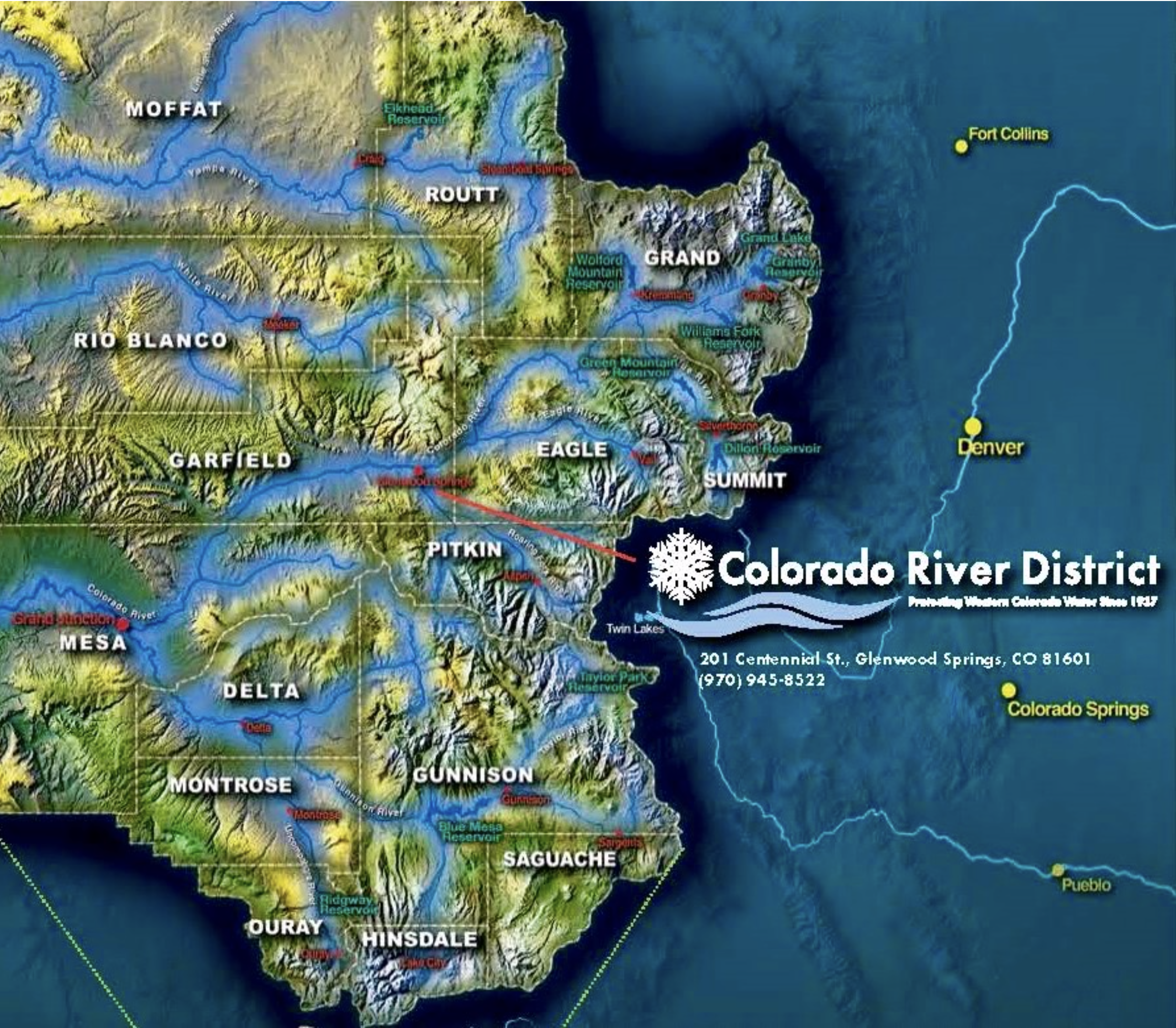
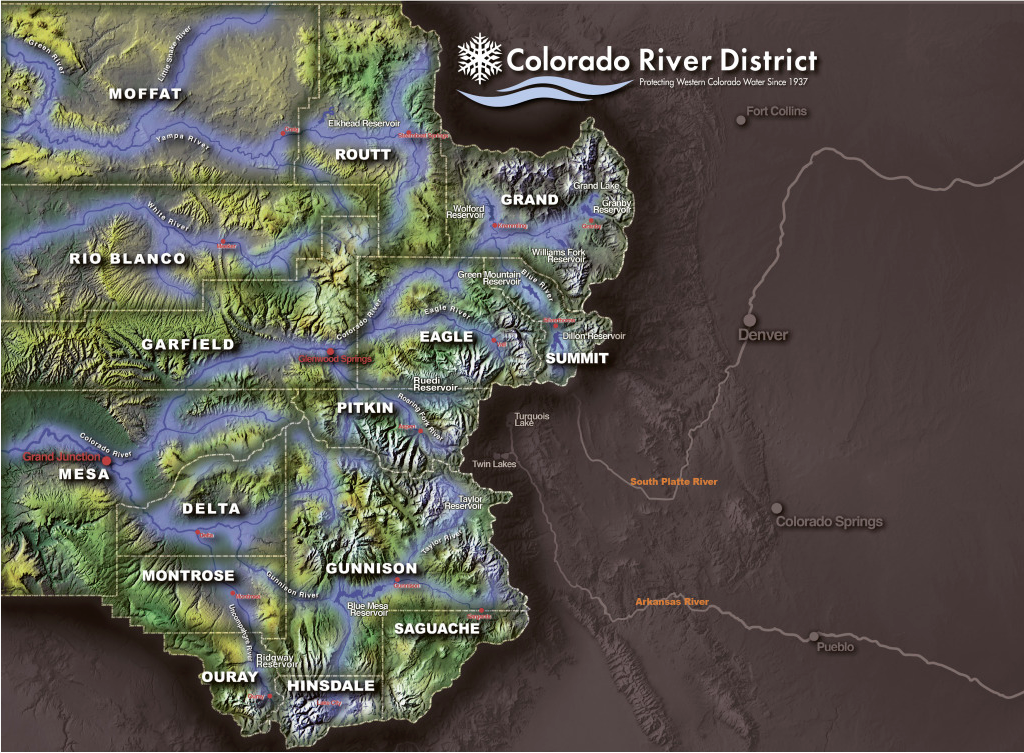
Colorado River District land area.

Click the link to read the release on the Colorado River District website (Lindsay DeFrates):

March 2, 2026

Last week, the Colorado River District submitted comments and specific recommendations to the Bureau of Reclamation on the recently releasedย Post-2026 Operational Guidelines and Strategies for Lake Powell and Lake Meadย Draft Environmental Impact Statement (DEIS). In its comments, the River District calls for future operational decisions that reflect hydrologic realities, address Lower Basin overuse, and move the Colorado River System beyond constant crisis management.

โ€œA core part of our mission is safeguarding, for all Coloradans, the waters of the Colorado River to which our state is entitled under the various laws, agreements and compacts that govern the river,โ€ said Raquel Flinker, Director of Interstate and Regional Water Resources at the Colorado River District. โ€œOur water users have adapted to the reality of variable hydrology. We are living with a river that has 20% less water and this trend is expected to continue. It is past time that our neighbors in the Lower Basin learn how to live within the means provided by the river.โ€

โ€œWhat is very clear in these proposals is that we still have a basic math problem,โ€ said Colorado River District General Manager Andy Mueller. โ€œEvery year, around 1.5 million acre feet of Colorado River water disappears due to evaporation and transit loss in the Lower Basin, yet this amount is unaccounted for in the Bureauโ€™s water deliveries. If we want to move out of crisis response mode, every proposal must begin by reducing consumptive use in the Lower Basin by this amount every single year before discussing shortages. If we had fixed the math to align with the laws of nature twenty-five years ago, we would have almost 30-million-acre feet of storage still available in the system today.โ€

The River Districtโ€™s letter includes 13 specific recommendations organized around several key themes. First, it calls for post-2026 operations that align demand with available supply and put hydrologic reality, not predictability for the Lower Basin, at the center of decision-making. The River District urges Reclamation to evaluate alternatives that perform under critically dry hydrology, provide a fair, transparent analysis of actions and impacts, and clearly disclose Upper Basin shortage risks in the main body of the analysis.

The letter also stresses that Lower Basin use must be reduced by roughly 1.5 million acre-feet at all times, defined as system losses rather than โ€œshortage,โ€ and that Upper Basin conservation assumptions and scale must be re-evaluated. In addition, the River District calls for clear, durable guidelines and definitions, including fully defining and analyzing โ€œgap waterโ€ and โ€œadditional Upper Basin actions,โ€ and for CRSP initial unit water to remain in Lake Powell. Finally, it raises Law of the River concerns, including that inter-basin transactions must not be allowed.

The River Districtโ€™s full comment letter is available here:

Reclamation formally published the DEIS on January 16, 2026, opening a 45-day public comment period. The Bureau of Reclamation must consider public feedback when developing a preferred alternative for management of the system, and the basin states will continue their negotiations alongside this process with the hope of reaching a seven-state consensus. The current guidelines expire at the end of September 2026.

#ColoradoRiver states fail to meet another federal deadline for a deal as disastrous reservoir levels loom: #LakePowell could fall beneath level needed for hydropower as soon as July, new projections show — The #Denver Post #COriver #aridification

The Government Highline Canal, near Grand Junction, delivers water from the Colorado River, and is managed by the Grand Valley Water Users Association. Prompted by concerns about outside investors speculating on Grand Valley water, the state convened a work group to study the issue. CREDIT: BRENT GARDNER-SMITH/ASPEN JOURNALISM

Click the link to read the article on The Denver Post website (Elise Schmelzer). Here’s an excerpt:

February 17, 2026

Negotiators from the seven states along the Colorado River blew pastย yet another federal deadlineย over the weekend without reaching a compromise on how to share its water โ€” even as this winterโ€™sย dismal snowpackย could spell immediate disaster for the river system.

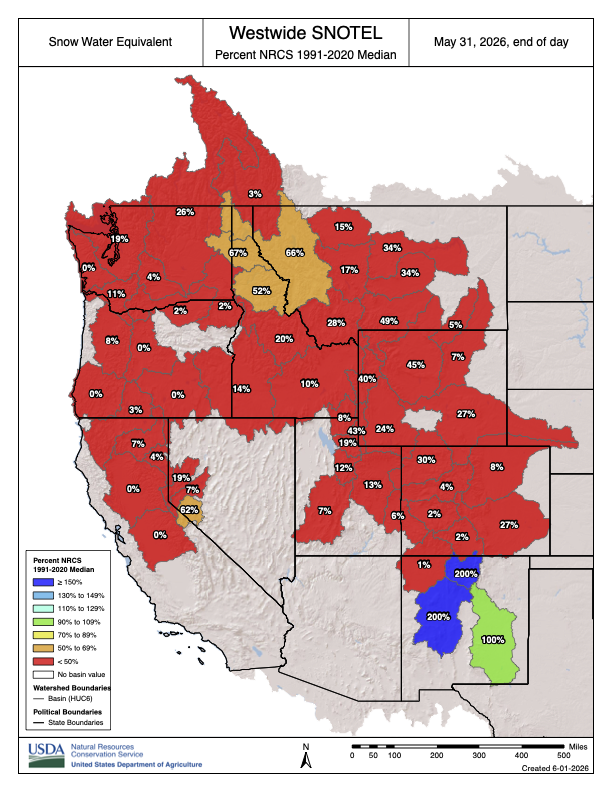
Westwide SNOTEL basin-filled map February 18, 2026.

Years-long discussions about how to split the riverโ€™s shrinking water supply, which is relied upon by 40 million people, remained deadlocked as the Saturday deadline for a final deal came and went. It was a deadline set by the U.S. Department of the Interior. The seven basin states are split into two factions that have not agreed on how to divvy up cuts to water supplies in dry years. The Lower Basin states of Arizona, California and Nevada lie downstream of Lakes Powell and Mead and rely on releases from those reservoirs for water. The Upper Basin states โ€” Colorado, Wyoming, Utah and New Mexico โ€” are upstream of the reservoirs and primarily depend on mountain snowpack for their water supplies. Leaders from each basin pointed fingers at the other as the deadline passed. Lower Basin negotiators have repeatedly said that Upper Basin states must โ€œshare the painโ€ and take mandatory cuts in dry years, which have become increasingly common in recent decades. But the Upper Basin states say their water users already take cuts every year because their supplies depend on the amount of water available and are not propped up by supplies in Lakes Powell and Mead. Repeated overuse in the Lower Basin has drained the two reservoirs, theyโ€™ve argued.

โ€œWeโ€™re being asked to solve a problem we didnโ€™t create with water we donโ€™t have,โ€ Coloradoโ€™s negotiator, Becky Mitchell, said in a statement Friday. โ€œThe Upper Divisionโ€™s approach is aligned with hydrologic reality and weโ€™re ready to move forward.โ€

The Bureau of Reclamationโ€™s latest forecast for the Colorado River predicts Lake Powell will โ€œmost probablyโ€ drop below the critical minimum power pool level before the end of this year, jeopardizing Glen Canyon Damโ€™s structural integrity. In the worst-case scenario, it would do so before summerโ€™s end. This could force the feds to operate the dam as a โ€œrun-of-the-riverโ€ operation to preserve the damโ€™s infrastructure and hydropower output, which would significantly diminish downstream flows and threaten Lower Basin water supplies.

As political leaders unleashed a series of pointed statements Friday, the Bureau of Reclamationย released new projectionsย that show one of the river systemโ€™s major reservoirs could be in peril as soon as this summer. The bureauโ€™s new projections show that, if drought conditions remain dire, Lake Powell could fall so low by the end of July that water would no longer flow through Glen Canyon Damโ€™s hydropower system โ€”ย a level called โ€œdead pool.โ€ย Even if snow conditions improve, the reservoir could still reach dead pool in November โ€” a scenario the bureau dubbed its most probable outcome. Theย Colorado River District, an agency created by the Colorado legislature thatโ€™s based in Glenwood Springs and advocates for Western Slope water needs, said it was disappointing that Lower Basin negotiators walked away from discussions on the day the projections were released.

โ€œWith Lake Powell now quickly approaching dead pool, that decision reflects a continued disconnect from hydrologic reality and a clear refusal to confront the core problem: longstanding Lower Basin overuse,โ€ the district said Monday in a statement.

Snowpack across the mountains that feed the Colorado River remained dismal in early February. Above Lake Powell, snowpack on Feb. 1 sat at 47% of the median recorded for that time of year between 1991 and 2020. The water year โ€” which began Oct. 1 โ€” has so far featured record-setting warmth and limited precipitation,ย according to the National Weather Serviceโ€™sColorado Basin River Forecast Center. That could translate to water supplies at 38% of normal, according to the center. Current projections show inflow into Lake Powell will total a meager 2.4 million acre-feet โ€” far less than the 7.5 million acre-feet allocated to the Lower Basin in theย 1922 Colorado River Compact.

Map of the Colorado River drainage basin, created using USGS data. By Shannon1 Creative Commons Attribution-Share Alike 4.0

#ColoradoRiver Districtโ€™s annual State of the River address is coming to a watershed near you: The district will host 12 meetings on river forecasts, system updates, local water projects and moreย — The #GlenwoodSprings Post-Independent

The Colorado River Water Conservation District spans 15 Western Slope counties. Colorado River District/Courtesy image

Click the link to read the article on the Glenwood Springs Post-Independent website (Ali Longwell). Here’s an excerpt:

February 3, 2026

As part of its spring tradition, the Colorado River District will give its State of the River address to a dozen Western Slope communities starting in March. Each State of the River will provide information on river forecasts, local water projects and key challenges impacting Western Slope water users. The events will take place everywhere from the Upper Yampa, Roaring Fork and the Middle Colorado river basins down to the Lower Gunnison and Uncompahgre river basins. While each programโ€™s agenda will vary slightly and is tailored to reflect local water priorities, key topics at all events will include:

  • River flow forecasts, snowpack, and drought summaries
  • Updates on the Colorado River system and interstate negotiations
  • Shoshone Water Rights Preservation Project updates
  • Local water projects and priorities

Each event will also include a complimentary light dinner and an opportunity for residents to ask questions of water experts. While it is free to attend, the River District requests that all attendees register in advance atย ColoradoRIverDistrict.org/2026-State-of-the-River-Meetings.

Driving a system to crisis — Andy Mueller (#Colorado River District) #ColoradoRiver #COriver #aridification

The structural deficit refers to the consumption by Lower Basin states of more water than enters Lake Mead each year. The deficit, which includes losses from evaporation, is estimated at 1.2 million acre-feet a year. (Image: Central Arizona Project circa 2019)

From email from the Colorado River Water Conservation District (Andy Mueller):

January 17. 2026

The Colorado River system is on the brink of collapse, drained by decades of overuse in the lower basin states and accelerated by the impacts of climate change. While this is not the first time that we have stared down a crisis at Lake Powell, in the past, we have gotten lucky, saved by big snows and cold winters.

This year, however, it does not appear that Mother Nature is going to bail us out.

On the Western Slope, we spent our holidays staring at snowless, brown hillsides and dry, rocky riverbeds as water year 2026 began setting records โ€” all in the wrong direction. At the Colorado River District, our job is to protect the water security of the Western Slope, regardless of the condition of the snowpack. We canโ€™t make it snow, but we can hold decision-makers accountable for their choices, and as we near the deadline of the post-2026 river operation guideline negotiations, we can demand that they do not continue to make the same mistakes which have driven us to this crisis.

In recent months, as pressure and public scrutiny have grown around the negotiations between the seven Colorado River Basin states, it has become clear that the Lower Basin states of Arizona, California, and Nevada are looking for a scapegoat. They have begun loudly accusing the Upper Basin states of Colorado, Utah, Wyoming, and New Mexico of being inflexible and unwilling to compromise on a solution to balance the system. They believe that their political might and economic clout entitles them to continue to use more than their share and absolves them of responsibility for their part in the collapse of the system.

But that is not reality.

Over 100 years ago, the Colorado River Compact was designed with exactly this moment in mind. It was created to allow Upper and Lower Basin states to develop their water separately, to meet the needs of their unique communities on their own timeline, and to steward their resources responsibly.

In eight pages, the Compact makes it clear that the communities of suburban Phoenix are not more important than those of western Colorado.

Think about it like this: in 1922, the Upper and the Lower Basin each bought a brand-new truck. Both came with contracts and manuals explaining proper use and maintenance, limits and legal obligations.

For years, their engines hummed.

During this time, the Lower Basin chose to modify their purchase contract to upgrade. They signed on the dotted line to accept the feds as their water master when they wanted to build Hoover Dam, and Arizona agreed to take junior water rights on the system to develop the Central Arizona Project.

But as things heated up in the early 2000s, the warning lights began to come on.

The Upper Basin quickly adapted to changing conditions, slowing down, or driving carefully around uncertain terrain. Without large reservoirs upstream and guaranteed water deliveries, water managers and agricultural producers in these states had to make tough decisions every month based on how much water was actually in the river.

Udall/Overpeck 4-panel Figure Colorado River temperature/precipitation/natural flows with trend. Lake Mead and Lake Powell storage. Updated through Water Year 2025. Note the tiny points on the annual data so that you can flyspeck the individual years. Credit: Brad Udall

The Lower Basin, however, chose to ignore the warning lights on their dashboard. Despite being told by multiple mechanics that they couldnโ€™t continue to drive full speed anymore, they kept their foot on the gas.

Regardless of worsening hydrology, they overused their allotment by as much as 2.5 million acre-feet per year by not accounting for evaporative and transit loss or their full tributary use. In addition to this, Arizona hoarded over 300,000 acre-feet annually of Colorado River water by dumping it into the ground.

Left unaddressed, the problems compounded. Now their truck is seizing up, and the driver is trying to explain to everyone onboard why their broken vehicle is someone elseโ€™s fault.

In western Colorado, we have never had the luxury of looking away from the wear and tear caused by prolonged drought. Every year, we adjust our use to meet our obligations downstream and protect the health of our communities.

The 1922 Compact is not being renegotiated, but the interim rules governing water apportionment on the river are.

Any new agreements must recognize the hydrologic reality that water is a finite and shrinking resource and be consistent with our existing legal framework. New agreements must end the fiction that growth can continue without considering hydrology and reject any deal that forces western Colorado to subsidize decades of overuse elsewhere.


Andy Mueller is the general manager of the Colorado River Water Conservation District based in Glenwood Springs.

Originally published by The Grand Junction Daily Sentinel January 17, 2026.

Westwide SNOTEL basin-filled map January 22, 2026.

#ColoradoRiver experts say some management options in the draft EIS donโ€™t go far enough to address scarcity, #ClimateChange — Heather Sackett (AspenJournalism.org) #COriver #aridification

Lake Powell is seen from the air in October 2022. Three of the management options released by the feds have the option for an Upper Basin conservation pool in Lake Powell.ย CREDIT:ย ALEXANDER HEILNER/THE WATER DESK

Click the link to read the article on the Aspen Journalism website (Heather Sackett):

January 15, 2026

Federal officials have released detailed options for how the Colorado River could be managed in the future, pushing forward the planning process in the absence of a seven-state deal. But some Colorado River experts and water managers say cuts donโ€™t go deep enough under some scenarios and flow estimates donโ€™t accommodate future water scarcity driven by climate change.

On Jan. 9, the U.S. Bureau of Reclamation released a draft of its environmental impact statement, a document required by the National Environmental Policy Act, which lays out five alternatives for how to manage the river after the current guidelines expire at the end of the year. This move by the feds pushes the process forward even as the seven states that share the river continue negotiating how cuts would be shared and reservoirs operated in the future. If the states do make a deal, it would become the โ€œpreferred alternativeโ€ and plugged into the NEPA process.

โ€œGiven the importance of a consensus-based approach to operations for the stability of the system, Reclamation has not yet identified a preferred alternative,โ€ Scott Cameron, the acting Reclamation commissioner, said in a press release. โ€œHowever, Reclamation anticipates that when an agreement is reached, it will incorporate elements or variations of these five alternatives and will be fully analyzed in the final EIS, enabling the sustainable and effective management of the Colorado River.โ€ 

For more than two years, the Upper Basin (Colorado, New Mexico, Utah and Wyoming) and the Lower Basin (California, Arizona and Nevada) have been negotiating,ย with little progress, how to manage a dwindling resource in the face of an increasingly dry future. The 2007 guidelines that set annual Lake Powell and Lake Mead releases based on reservoir levels do not go far enough to prevent them from being drawn down during consecutive dry years, putting the water supply for 40 million people in the Southwest at risk.

The crisis has deepened in recent years, and in 2022, Lake Powell flirted with falling below a critical elevation to make hydropower. Recent projections from the U.S. Bureau of Reclamation show that it could be headed there again this year and in 2027.

John Berggren, regional policy manager with Western Resource Advocates, helped craft elements of one of the alternatives, Maximum Operational Flexibility, formerly called Cooperative Conservation.

โ€œMy initial takeaway is thereโ€™s a lot of good stuff in there,โ€ Berggren said of the 1,600-page document, which includes 33 supporting and technical appendices. โ€œTheir goal was to have a wide range of alternatives to make sure they had EIS coverage for whatever decision they ended up with, and I think that there are a lot of innovative tools and policies and programs in some of them.โ€

The infamous bathtub ring could be seen near the Hoover Dam in December 2021. The U.S. Bureau of Reclamation has released a draft Environmental Impact Statement for post-2026 management of the river.ย CREDIT:ย HEATHER SACKETT/ASPEN JOURNALISM

Alternatives

The first alternative is โ€œno action,โ€ meaning river operations would revert to pre-2007 guidance; officials have said this option must be included as a requirement of NEPA, but doesnโ€™t meet the current needs. 

The second alternative, Basic Coordination, can be implemented without an agreement from the states and represents what the feds can do under their existing authority. It would include Lower Basin cuts of up to 1.48 million acre-feet based on Lake Mead elevations; Lake Powell releases would be primarily 8.23 million acre-feet and could go as low as 7 million acre-feet. It would also include releases from upstream reservoirs Flaming Gorge, Blue Mesa and Navajo to feed Powell. But experts say this alternative does not go far enough to keep the system from crashing. 

โ€œIt was pretty well known that the existing authorities that Reclamation has are probably not enough to protect the system,โ€ Berggren said. โ€œEspecially given some of the hydrologies we expect to see, the Basic Coordination does not go far enough.โ€

Theย Enhanced Coordination Alternativeย would impose Lower Basin cuts of between 1.3 million and 3 million acre-feet that would be distributed pro-rata, based on each stateโ€™s existing water allocation. It would also include an Upper Basin conservation pool in Lake Powell that starts at up to 200,000 acre-feet a year and could increase up to 350,000 acre-feet after the first decade.

Under the Maximum Operational Flexibility Alternative, Lake Powell releases range from 5 million acre-feet to 11 million acre-feet, based on total system storage and recent hydrology, with Lower Basin cuts of up to 4 million acre-feet. It would also include an Upper Basin conservation pool of an average of 200,000 acre-feet a year. 

These two alternatives perform the best at keeping Lake Powell above critical elevations in dry years, according to an analysis contained in the draft EIS. 

โ€œThere are really only two of these scenarios that I think meet the definition of dealing with a very dry future: Enhanced Coordination and the Max Flexibility,โ€ said Brad Udall, a senior water and climate research scientist at Colorado State University. โ€œThose two kind of jump out at me as being different than the other ones in that they actually seem to have the least harmful outcomes, but the price for that are these really big shortages.โ€

The final scenario is the Supply Driven Alternative, which calls for maximum shortages of 2.1 million acre-feet and Lake Powell releases based on 65% of three-year natural flows at Lees Ferry. It also includes an Upper Basin conservation pool of up to 200,000 acre-feet a year. This option offers two different approaches to Lower Basin cuts: one based on priority where the oldest water rights get first use of the river, putting Arizonaโ€™s junior users on the chopping block, and one where cuts are distributed proportionally according to existing water allocations, meaning California could take the biggest hit. 

This alternative is based on proposals submitted by each basin and discussions among the states and federal officials last spring. Udall said the cuts are not deep enough in this option.

โ€œYou can take the supply-driven one and change the max shortages from 2.1 million acre-feet up to 3 or 4 and itโ€™s going to perform a lot like those other two,โ€ he said. โ€œI think what hinders it is just the fact that the shortages are not big enough to keep the basin in balance when push comes to shove.โ€

Reclamationโ€™s Acting Commissioner Scott Cameron speaks at the Colorado River Water Users conference in Las Vegas in December 2025. The agency has released a draft Environmental Impact Statement, which outlines options for managing the river after this year. CREDIT: HEATHER SACKETT/ASPEN JOURNALISM

Pivotal moment

In a prepared statement, Glenwood Springs-based Colorado River Water Conservation District officials expressed concern that the projected future river flows are too optimistic.  

โ€œWe are concerned that the proposed alternatives do not accommodate the probable hydrological future identified by reliable climate science, which anticipates a river flowing at an average of 9-10 [million acre feet] a year,โ€ the statement reads. โ€œThe Colorado River Basin has a history of ignoring likely hydrology, our policymakers should not carry this mistake forward in the next set of guidelines.โ€

The River District was also skeptical of the Upper Basin conservation pool in Lake Powell, which is included in three of the alternatives. Despite dabbling in experimental programs that pay farmers and ranchers to voluntarily cut back on their water use in recent years, conservation remains a contentious issue in the Upper Basin. Upper Basin water managers have said their states canโ€™t conserve large volumes of water and that any program must be voluntary. 

Over the course of 2023 and 2024, the System Conservation Pilot Program, which paid water users in the Upper Basin to cut back, saved about 101,000 acre-feet at a cost of $45 million.

The likeliest place to find water savings in Colorado is the 15-county Western Slope area represented by the River District. But if conservation programs are focused solely on this region, they could have negative impacts on rural agricultural communities, River District officials have said.

โ€œAdditionally, several alternatives include annual conservation contributions from the Upper Basin between [200,000 acre-feet] and [350,000 acre feet],โ€ the River Districtโ€™s statement reads. โ€œWe do not see how that is a realistic alternative given the natural availability of water in the Upper Basin, especially in dry years.โ€

In a prepared statement, Colorado officials said they were looking forward to reviewing the draft EIS.

โ€œColorado is committed to protecting our stateโ€™s significant rights and interests in the Colorado River and continues to work towards a consensus-based, supply-driven solution for the post-2026 operations of Lake Powell and Mead,โ€ Coloradoโ€™s commissioner, Becky Mitchell, said in the statement.

The release of the draft EIS comes at a pivotal moment for the Colorado River Basin. The seven state representatives are under the gun to come up with a deal and have less than a month to present details of a plan by the fedsโ€™ Feb. 14 deadline. Federal officials have said they need a new plan in place by Oct. 1, the start of the next water year. This winterโ€™s dismal snowpack and dire projections about spring runoff underscore the urgency for the states to come up with an agreement for a new management paradigm. 

Over a string of recent dry years, periodic wet winters in 2019 and 2023 have bailed out the basin and offered a last-minute reprieve from the worst consequences of drought and climate change. But this year is different, Udall said.

โ€œWeโ€™re now at the point where weโ€™ve removed basically all resiliency from the system,โ€ he said. โ€œBetween the EIS and this awful winter, some really tough decisions are going to be made. โ€ฆ Once we finally get to a consensus agreement, the river is going to look very, very different than it ever has.โ€

The draft EIS will be published in the Federal Register on Jan.16, initiating a 45-day comment period that will end March 2. 

Udall/Overpeck 4-panel Figure Colorado River temperature/precipitation/natural flows with trend. Lake Mead and Lake Powell storage. Updated through Water Year 2025. Note the tiny points on the annual data so that you can flyspeck the individual years. Credit: Brad Udall

#Breckenridge and #Gypsum Join Effort to Secure Shoshone Water Rights — Lindsay DeFrates (#ColoradoRiver District) #COriver #aridification

Colorado River “Beginnings”. Photo: Brent Gardner-Smith/Aspen Journalism

December 15, 2025

The effort to permanently protect the historic Shoshone water rights gained additional momentum as two more west slope communities committed funding in their 2026 budgets toward the Colorado River Districtโ€™s $99 million purchase agreement with Xcel Energy. The Town of Breckenridge has pledged $100,000, and the Town of Gypsum has committed $15,000, underscoring the importance of reliable Colorado River flows for communities from the headwaters to the state line and beyond.

By committing financial support for the Shoshone Water Rights Preservation Project, Breckenridge and Gypsum join a large and growing coalition of Western Slope partners working to safeguard flows that support local economies, healthy rivers, and long-term water security for Colorado.

Breckenridge circa 1913 via Breckenridge Resort

โ€œThe Shoshone water rights are a cornerstone of the Colorado River system and a critical part of protecting our quality of life in the high country,โ€ said Breckenridge Mayor Kelly Owens. โ€œBreckenridge is proud to stand with partners across the West Slope and headwaters region to keep water in the river, support our outdoor recreation economy, and protect this vital resource for generations to come.โ€

Town of Gypsum via Vail.net

โ€œLook, in Gypsum we see it every single day, our local ranches, our jobs, our families all depend on the Eagle and the Colorado running strong and flowing,โ€ said Gypsum Mayor Steve Carver.  โ€œBacking Shoshone just makes sense. It gives us some certainty when water gets tight. Weโ€™re happy to jump in with everybody else and keep that water right here on the Western Slope.โ€

The Shoshone Water Rights Preservation Coalition, led by the Colorado River District, now includes 35 local governments, water entities, and regional partners across the Western Slope, as well as support from across the state. Together, these partners have committed over $37.3 million toward the $99 million purchase price, in addition to state and federal investments to protect a critical piece of Coloradoโ€™s water security.

โ€œCommunities across the West Slope continue to step up together in a powerful way,โ€ said Andy Mueller, general manager of the Colorado River District. โ€œSupport from Breckenridge and Gypsum reflects a shared understanding that Shoshone is about more than one community or region. Itโ€™s about working together to keep the Colorado River and its tributaries flowing for the environment, agriculture, recreation and local communities across Colorado that rely on this water.โ€

Shoshone Hydroelectric Plant back in the days before I-70 via Aspen Journalism

The Shoshone hydroelectric plant, located in Glenwood Canyon, holds nonconsumptive senior water rights that date back to 1902. These rights are essential for supporting flows in the Colorado River, benefiting agriculture, recreation, rural economies, and water users across the West Slope and beyond.

In December 2023, the Colorado River District entered a purchase and sale agreement with Xcel Energy to acquire and permanently protect the water rights, with plans to negotiate an instream flow agreement with the Colorado Water Conservation Board. This agreement would safeguard future flows, regardless of the Shoshone plantโ€™s operational status.

In January 2025, the Bureau of Reclamation awarded $40 million in federal funding through a program authorized by the Inflation Reduction Act. The River District continues to work with the Bureau and remains optimistic that the projectโ€™s broad support and clear public benefit will secure the necessary federal funds to complete this once-in-a-generation investment.

Learn more about the Shoshone Water Rights Preservation Project & Coalition at KeepShoshoneFlowing.org.

The Colorado River Water Conservation District spans 15 Western Slope counties. Colorado River District/Courtesy image

Historic Step Forward to Secure Environmental Flows in the #ColoradoRiver — Hannah Holm (AmericanRivers.com) #COriver #aridification

Colorado River, Colorado | Sinjin Eberle

Click the link to read the article on the American Rivers website (Hannah Holm):

December 11, 2025

On the evening of November 19, a packed conference room in the Denver West Marriott erupted in cheers when theย Colorado Water Conservation Board approvedย one of the largest ever dedications of water for the environment in Coloradoโ€™s history. This new deal, if completed, will ensure that water currently running through the aging Shoshone Hydropower Plant on the Colorado River, deep in the heart of Glenwood Canyon, will keep flowing through the canyon when the plant eventually goes off-line. Itโ€™s not a sure thing yet โ€“ water court wrangling over the details and financial hurdles remain. But the Boardโ€™s action was a crucial step forward.ย 

Currently, when the plant is running full steam, 1,400 cubic feet/ second (think 1,400 basketballs full of water passing by every second) is diverted out of the river into a tunnel and then into massive pipes visible against the canyon walls, where the power of falling water spins turbines to generate electricity. The water is then returned back to the river. Under the new deal, when the plant stops operating (it is over 100 years old and vulnerable to rockfall), the water would instead stay in the river, vastly improving conditions for fish and the bugs they eat in the 2.4-mile reach between the diversion and the powerplantโ€™s return flows. The dedication of the plantโ€™s water rights to that stretch of river would bring benefits that ripple hundreds of miles up and downstream because of the crucial role these water rights play in controlling the riverโ€™s flow through Western Colorado.ย ย 

Shoshone Power Plant, Colorado | Hannah Holm

In Colorado, as in most of the West, older water rights take priority over newer ones when thereโ€™s not enough water to satisfy everyoneโ€™s claims.ย  On the Colorado River, the Shoshone Hydropower rights limit the amount of water that can be taken out of the river upstream by junior rights that divert water from the riverโ€™s headwaters through tunnels under the Continental Divide to cities and farms on the eastern side of the Rocky Mountains. The new deal to enable the Shoshone rights to be used for environmental flows would preserve those limitations on transmountain diversions in perpetuity.

Upstream from the power plant, near the ranching town of Kremmling, Colorado, the river carries less than half the water it would without the existing transmountain diversions. This stresses fish populations and the iconic cottonwood groves that line the river. The Shoshone rights downstream prevent these diversions from being even larger. Because the power plant returns all the water it uses to the river without consuming it, the water continues to provide benefits downstream from the plant to rafters, farms, cities and four species of endangered fish that exist only in the Colorado River Basin. Securing these flows for the future is particularly important as climate change continues to reduce the riverโ€™s flow, which has already declined by roughly 20% over the past two decades.  

The people cheering in the hearing room represented cities, towns, counties and irrigation districts from up and down the Colorado River. Their entities had pledged ratepayer and taxpayer dollars to help secure the rights in the complex transaction spearheaded by the Colorado River Water Conservation District. Environmental organizations, including American Rivers, Audubon, Trout Unlimited and Western Resource Advocates, were also parties to the hearing and supportive of the deal, but were vastly outnumbered.  

The Coloradans cheering in that room were there because their constituentsโ€™ livelihoods, clean drinking water and quality of life depend on a living Colorado River. American Rivers is proud to stand with them and will continue advocating for the completion of this historic water transaction.

Colorado River Basin, USBR May 2015

The #Colorado Water Conservation Board Approves Historic Agreement to Safeguard #ColoradoRiver Water Rights — Lindsay DeFrates (Colorado River District) #COriver #aridification

This historical photo shows the penstocks of the Shoshone power plant above the Colorado River. A coalition led by the Colorado River District is seeking to purchase the water rights associated with the plant. Credit: Library of Congress photo

Click the link to read the release on the Colorado River District website (Lindsay DeFrates):

The acceptance of the Shoshone water rights marks a landmark partnership between the State of Colorado and the western slope.

Today, Wednesday, November 19, the Colorado Water Conservation Board (CWCB) voted unanimously to accept the joint offer by the Colorado River District and Public Service Company of Colorado (PSCo) of a perpetual interest in the use of the Shoshone Water Rights for instream flow purposes.

Once confirmed by water court, this acquisition will create the largest environmental water right in the stateโ€™s history and permanently protect the historic flow of the Colorado River.

โ€œThe importance of todayโ€™s vote cannot be overstated as a legacy decision for Colorado water and the western slope. It secures an essential foundation for the health of the Colorado River and the communities it sustains,โ€ said Andy Mueller, General Manager of the Colorado River District. โ€œWe continue to be impressed by, and thankful for, the broad coalition of voices that have come together in support of protecting the Shoshone Water Rights. Without them, we would not have been able to meet this historic milestone.โ€

โ€œToday, the CWCB demonstrated its deep commitment to Coloradoโ€™s water security by taking bold, permanent action to protect our namesake river. We are proud to stand with the State and with our many partners across the West Slope in securing these flows for the benefit of all Coloradans,โ€ said Sen. Marc Catlin, president of the Colorado River District Board of Directors. โ€œThis agreement strengthens water security for hundreds of communities within our state and represents a proactive, durable solution for the 40 million people who rely on the Colorado River downstream. The Shoshone Water Rights Preservation Project keeps the river as whole as possible, keeping water in its natural basin and safeguarding this lifeline for generations to come.โ€

The boardโ€™s decision today was the final step in the instream flow acquisition process that began with the formal offer in May 2025. Following a contested hearing in September โ€“ requested by four Front Range water entities โ€“ the Colorado River District and PSCo granted the CWCB additional time to continue deliberations and fully consider the historic proposal and partnership at their November meeting.

35 entities filed for party status in support of the Shoshone Water Rights ISF proposal. These include West Slope towns and counties, water districts, as well as local and regional non-profits. Over 400 positive public comments were also submitted over the summer.

โ€œTodayโ€™s decision by the CWCB is a tremendous step forward for the health of the Colorado River and the communities that rely on it,โ€ said Senator Dylan Roberts. โ€œThe Shoshone Permanency effort reflects years of collaboration and a shared commitment to protecting our headwaters, and Iโ€™m grateful to all the partners who brought us to this point. There is still important work ahead, but this vote positions Colorado to take advantage of the years of effort and protects these flows for generations to come.โ€

โ€œThe Shoshone water rights are a lifeline for western Colorado,โ€ said Mesa County Commissioner Bobbie Daniel. โ€œOur farmers, ranchers, recreation enthusiasts, and energy producers depend on this water, and we are proud to see the CWCB support this project. These flows are the future of our families and communities, and now, more than ever, it is critical that we are doing everything we can to protect them.โ€

Xcel Energy provided the following statement: โ€œXcel Energy recognizes the significant collaboration and effort that brought us to todayโ€™s decision by the Colorado Water Conservation Board. We appreciate the engagement from all parties throughout this process and look forward to continuing the work ahead. This agreement represents an important step in ensuring reliable, clean energy for the communities we serve while supporting responsible stewardship of Coloradoโ€™s water resources.โ€

The CWCB also issued their own press release, which is available on their website here: https://cwcb.colorado.gov/category/news-articles

In December 2023, the Colorado River District and Public Service Company of Colorado (PSCo), a subsidiary of Xcel Energy, entered into a $99 million Purchase and Sale Agreement (PSA) to acquire the historic Shoshone Water Rights, senior (1902) and junior (1929) non-consumptive rights that stabilize flows on the upper Colorado River. The PSA is the product of decades of work by the statewide Shoshone Water Right Preservation Coalition.

To close the transaction, the PSA requires four conditions: execution of an Instream Flow Agreement with the CWCB (approved today), receipt of a water court decree approving the change of water rights, securing commitment of full project funding ($99 million), and approval from the Colorado Public Utilities Commission. So far, the Shoshone Water Rights Coalition has secured commitments of over $57 million from West Slope entities, the State of Colorado, and the Colorado River Districtโ€™s Community Funding Partnership. The Bureau of Reclamation awarded the project $40 million through the Inflation Reduction Act Funds in January 2025 โ€“ those funds remain under review by the current administration.

Todayโ€™s CWCB decision fulfills that critical Instream Flow Agreement requirement, moving the project significantly closer to final completion and the permanent protection of the Shoshone flows.  The River District, PSCo, and the CWCB will be initiating the water court process to add instream flow use to the Shoshone water rights. The River District and its full coalition of supporters will also be turning their focus on fully securing the previously awarded federal funds.

Colorado River Basin in Colorado via the Colorado Geological Survey

The #Colorado Water Conservation Board votes yes on Shoshone: The #ColoradoRiver District will retain some control over management of powerful water rights — Heather Sackett (AspenJournalism.org) #COriver #arification

River District General Manager Andy Mueller speaks to the Colorado Water Conservation Board in front of a packed house Wednesday. The board voted unanimously to accept water rights tied to the Shoshone hydropower plant to benefit the environment. CREDIT: HEATHER SACKETT/ASPEN JOURNALISM

Click the link to read the article on the Aspen Journalism website (Heather Sackett):

November 20, 2025

In a historic move Wednesday evening, the state water board voted unanimously to accept water rights tied to the Shoshone hydropower plant, a major step toward securing those flows in perpetuity for the Western Slope.

The Colorado Water Conservation Board said the Shoshone water rights, which are some of the oldest and most powerful on the mainstem of the Colorado River, can be used to benefit the environment. 

โ€œThe Shoshone acquisition makes a lot of sense to me, and Iโ€™m very proud to be a part of the work that everybodyโ€™s put into it,โ€ said Mike Camblin, who represents the Yampa, White and Green river basins on the CWCB. โ€œI hope that our children and our grandchildren look back and realize we made the right decision on this.โ€

The Glenwood Springs-based Colorado River Water Conservation District plans to purchase the Shoshone water rights for $99 million from Xcel Energy, but the district first needed the approval of the CWCB, which is the only entity in the state allowed to hold instream-flow water rights to benefit the environment. Because the water is returned to the river after it runs through the hydroplantโ€™s turbines, downstream cities, irrigators, recreators and the environment all benefit.

River District General Manager Andy Mueller called it a fantastic day in Colorado history. 

โ€œI think that was the right decision for the Colorado River and the right decision for our whole state,โ€ Mueller said. โ€œI think the state for generations to come, centuries in the future will benefit from having that water in the Colorado River.โ€

Importantly, the instream-flow agreement approved by the board says that the Western Slope, along with the CWCB, will retain some control over exercising the rights. The River District and its constituents drew a hard line in the sand regarding this point and said they would walk away from the deal if they had to cede control solely to the CWCB.

Though not totally unprecedented, co-management is a departure from the norm, as the CWCB has never shared management of an instream-flow water right this large or this powerful with another entity. 

In attendance at Wednesdayโ€™s CWCB meeting in Golden were representatives of ditch companies, elected officials and water managers from across the River Districtโ€™s 15-county area. Some of the attendees said during their public comments that if the River District didnโ€™t retain some control over the water rights, they would pull their funding and withdraw their support from the Shoshone campaign. 

Mesa County Commissioner Bobbie Daniel said the joint-management proposal is a safeguard that ensures that Western Slope interests are not pushed aside. Mesa County has committed $1 million toward the purchase of the water rights.

โ€œThe Shoshone call is one of the great stabilizing forces on the river, a heartbeat that has kept our valley farms alive, our communities whole and our economy steady, even in lean years,โ€ Daniel said. โ€œIf a joint management is not adopted, Mesa County will withdraw its support for this acquisition. Itโ€™s not out of anger or politics, but because anything less would fail the people that we serve.โ€

The Shoshone hydropower plant in Glenwood Canyon has some of the oldest and most powerful nonconsumptive water rights on the Colorado River. A broad coalition of Western Slope entities support the River District purchasing the rights. CREDIT: HEATHER SACKETT/ASPEN JOURNALISM

Blow to the Front Range

The CWCBโ€™s decision was a blow to Front Range water providers, who objected to the River Districtโ€™s having a say over how to manage the water rights, even though they supported the overall goal of protecting flows for the environment. Denver Water, Northern Water, Aurora Water and Colorado Springs Utilities argued that the CWCB has exclusive authority over the rights, according to state statute. 

Critically, because the Shoshone plantโ€™s water rights โ€” one that dates to 1902 for 1,250 cubic feet per second and another that dates to 1929 for 158 cfs โ€” are senior to many other water users, they have the ability to command the flows of the Colorado River and its tributaries upstream all the way to the headwaters. This means that the owners of the rights can โ€œcall outโ€ junior Front Range water providers with younger water rights that take water across the Continental Divide via transmountain diversions and force them to cut back. 

The fact that Front Range water providers take about 500,000 acre-feet annually from the headwaters of the Colorado River is a sore spot for many on the Western Slope, who feel the growth of Front Range cities has come at their expense. These transmountain diversions can leave Western Slope streams depleted. 

The Shoshone call pulls water west much of the time. But the Front Range parties wanted assurances that during extreme droughts or emergency situations, the call would be โ€œrelaxed,โ€ allowing them to take more water to their citiesโ€™ millions of customers. 

Alex Davis, assistant general manager with Aurora Water, said the CWCB should retain the ability to relax the call as a โ€œbackstopโ€ under extremely rare circumstances. 

โ€œIt is asking that in those emergency situations, the board has the ability to step in and say: Weโ€™re going to do what we think is best for the state of Colorado,โ€ Davis said.

The agreement approved by the board lays out a collaborative process to consider a call relaxation, with a stakeholder panel of water managers from both sides of the divide. The specific wording of this agreement was hashed out during Wednesdayโ€™s meeting, with lawyers representing the CWCB and River District conferencing to tweak language and make edits.

Colorado Water Conservation Board member representing the Arkansas River basin Greg Felt, left, talks with River District General Manager Andy Mueller Wednesday after the board voted to accept the Shoshone water rights for instream flow purposes. The move represents a major step toward securing those rights in perpetuity for the Western Slope. CREDIT: HEATHER SACKETT/ASPEN JOURNALISM

The CWCB had been set to decide on the Shoshone rights at its meeting in September, but the River District granted an eleventh-hour 60-day extension so they could address issues raised by the board and try to negotiate a consensus with the Front Range parties. 

Despite all the detailed arguments laid out by the parties, thousands of pages of technical and legal documents, and hours of testimony and public comment over the September and November CWCB meetings, the boardโ€™s scope of decisionmaking remained narrow: Should the CWCB accept a perpetual interest in the Shoshone water rights and will these rights preserve the natural environment to a reasonable degree? 

In the end, the board decided yes, and also determined that it did, in fact, have the authority to allow the River District to co-manage the Shoshone water rights alongside it.

โ€œI really think itโ€™s pretty incredible that thereโ€™s no objection to the environmental aspects of this flow and the purpose of this water right for environmental purposes,โ€ said CWCB Director Taylor Hawes, who represents the mainstem of the Colorado River where the Shoshone plant is located. โ€œ(The River District is) donating that water right. It seems like they should have a say. And while I realize this case is unique, I donโ€™t see anything in the statute or the rules that prohibits us from doing this.โ€

But the fight to keep Shoshone flowing west is not over for the River District. The CWCB, River District and the water rightsโ€™ current owner, Xcel, now plan to file a joint application in water court to make the deal official by adding the instream-flow use to the water rights. 

The water court process will decide another contentious issue that is sure to again highlight disagreement between the Western Slope and Front Range as they compete for the stateโ€™s dwindling water resources: precisely how much water is associated with the water rights, a number based on the plantโ€™s past use.

โ€œI also very much understand the concerns of both sides of the divide in not wanting the other side to have a windfall,โ€ Hawes said. โ€œThat has been kind of the heart of all of this. And I hope we can all trust that the water courtโ€™s process will give us a result where we donโ€™t have to worry about that. Everyoneโ€™s concerns will be addressed in that process.โ€

View of Shoshone Hydroelectric Plant construction in Glenwood Canyon (Garfield County) Colorado; shows the Colorado River, the dam, sheds, a footbridge, and the workmen’s camp. Creator: McClure, Louis Charles, 1867-1957. Credit: Denver Public Library Digital Collections

The #Colorado Water Conservation Board says โ€œyesโ€ to $99M Western Slope plan for Shoshone Power Plantโ€™s water rights — Shannon Mullane (Fresh Water News) #ColoradoRiver #COriver #aridification

Shoshone Falls hydroelectric generation station via USGenWeb

Click the link to read the article on the Water Education Colorado website (Shannon Mullane):

November 20, 2025

 In a momentous decision for the Western Slope, state water officials unanimously approved a controversial proposal to use two coveted Colorado River water rights to help the river itself.

Members of the Colorado Water Conservation Board voted to accept water rights tied to Shoshone Power Plant into its Instream Flow Program, which aims to keep water in streams to help the environment.

The decision Wednesday is a historic step forward in western Coloradoโ€™s yearslong effort to secure the $99 million rights permanently. But some Front Range water providers pushed back during the hearings, worried that the deal could hamper their ability to manage the water supply for millions of Colorado customers.

For the state, the two water rights will be a crown jewel in its five-decade environmental effort to help river ecosystems. Itโ€™s one of several steps in the agreement process, and it could take years before the river feels that environmental benefit.

โ€œThe Shoshone acquisition makes a lot of sense to me, and Iโ€™m very proud of the work that everybodyโ€™s put into it,โ€ said Mike Camblin, who represents the Yampa and White river basins on the Colorado Water Conservation Board. โ€œI hope that our children and our grandchildren look back at this and realize we made the right decision.โ€

Over 100 Colorado water professionals and community members gathered in Golden for a six-hour hearing about the environmental proposal, brought forward by the Colorado River District, which represents 15 counties on the Western Slope.

The small hydropower plant off Interstate 70 near Glenwood Springs has used Colorado River water to generate electricity for over a century. But the aging facility has a history of maintenance issues, and Western Slope water watchers have long worried about what happens to the rights if it were to shut down for good.

The Colorado River District wants to add the environmental use as part of a larger plan to maintain the โ€œstatus quoโ€ flow of water past the power plant, regardless of how long it remains in operation.

Western Slope communities, farms, ranches, endangered species programs and recreational industries have become dependent on those flows over the decades and broadly supported the districtโ€™s proposal.

From left, Hollie Velasquez Horvath, Kathy Chandler-Henry, and Andy Mueller, general manager of the River District, at the kickoff event Tuesday [December 19, 2023] for the Shoshone Water Right Preservation Campaign in Glenwood Springs. CREDIT: HEATHER SACKETT/ASPEN JOURNALISM

โ€œIโ€™m good. Iโ€™m much more relaxed now,โ€ Andy Mueller, the districtโ€™s general manager, said after the vote Wednesday. โ€œThe reality is, we have set up our state, through this instream flow agreement, for success for centuries on the Colorado River.โ€

Some powerhouses in Colorado water support the general permanency effort but oppose parts of the agreement. Northern Water, Colorado Springs Utilities, Denver Water and Aurora Water said the proposal would give the Colorado River District too much sway in decisions that would impact them.

These water managers and providers are responsible for delivering reliable water to millions of people, businesses, farms and ranches across the Front Range. Any change to Shoshoneโ€™s water rights could have ripple effects that would affect over 10,000 upstream water rights, including some held by Front Range water groups.

The negotiations over the agreement continued throughout the meeting. Board members had about 24 hours to review a stack of documents marked with tweaked phrasing and proposed edits.

Both sides are concerned that the other could get a water windfall through the agreement, said Taylor Hawes, who represents the Colorado River on the board. Those concerns can be addressed in the next step of the process: Water Court.

โ€œThat has been the heart of all of this,โ€ Hawes said. โ€œI hope we can all trust that the water courtโ€™s process will give us a result where we donโ€™t have to worry about that.โ€

Who will control the flow of water?

The Colorado Water Conservation Board was supposed to make its final ruling on the environmental use proposal in September. Then Public Service Company of Colorado, the Xcel subsidiary that owns the rights, and the Colorado River District filed an 11th-hour extension to delay until the meeting Wednesday.

Thatโ€™s, in part, because they needed more time to address a central conflict in the agreement: Who makes the final decisions when managing the powerful rights?

Shoshone uses two rights to access the Colorado River: one for 1,250 cubic feet per second that dates back to 1905, and a right to 158 cubic feet per second that dates back to 1940.

They amount to a big chunk of water. Plus, these rights can be used year-round, and they supersede more recent, junior rights like several held by Front Range water providers.

Under the agreement, the water rights will be co-managed by the Colorado River District and the Colorado Water Conservation Board.

Western Slope parties were adamant about this. Several speakers said they would pull their funding, and there would be no agreement if the River District did not have a say in how the water rights would be used.

โ€œIf joint management is not adopted, Mesa County will withdraw its support for this acquisition,โ€ Bobbie Daniel, Mesa County Commissioner, said. โ€œItโ€™s not out of anger or politics, but because anything less would fail the people that we serve.โ€

The Front Range groups said the state should make the final decision if Colorado River District staff and CWCB staff disagreed over how to manage the water rights. They argued the board has exclusive authority under state law.

Alex Davis with Aurora Water said her team was pushing for a โ€œhammerโ€ โ€” an entity, preferably the state, that could force water providers on either side of the Continental Divide to come to the negotiating table or that could make the final decision, especially in times of crisis.

Aurora pulls about 25,000 acre-feet of water from the Western Slope, through mountain tunnels and into its water system each year, she said. (An acre-foot of water is about what two to three  households use in a year.) But when Shoshone is using its 1905 water right to its fullest, nearly all of Auroraโ€™s transmountain diversions are turned down or turned off.

The city might want to ask Shoshone to use less water to provide some relief in an emergency. The agreement seems to give the Colorado River District a veto, Davis said.

โ€œBy the River District having that decision-making power, it may lead to less incentive on the West Slope side in those emergency situations,โ€ Davis said in an interview with The Sun. โ€œThatโ€™s what we were worried about.โ€

Colorado Water Conservation Board members decided to continue with the co-management approach, saying they were not giving up authority or working outside of state statute by doing so.

Mueller said the agreement is a win for the river and the entire state. It will protect endangered fish and a critical 15-mile stretch of habitat near Grand Junction. It includes exceptions that will protect cities during multi-year droughts and emergency situations, he said.

โ€œThe CWCB and the River District can act together for the best interest of the state,โ€ Mueller said in an interview. โ€œWeโ€™ll have to earn some trust in that realm over the years, but Iโ€™m quite convinced we can do it.โ€

About that $99 million billโ€ฆ

The Colorado River District has entered into a $99 million agreement with Xcel Energy to buy the Shoshone water rights.

The stateโ€™s decision to accept Shoshoneโ€™s water rights into its environmental program met one of four key closing conditions of that purchase agreement, Amy Moyer, chief of strategy for the Colorado River District, said.

The deal still needs approval by Coloradoโ€™s Public Utilities Commission. Itโ€™ll be weighed in Water Court, where Western Slope and Front Range representatives will wade through another thorny issue: What has Shoshoneโ€™s โ€œstatus quoโ€ water use been over the last century?

The Colorado River District and its Western Slope supporters need to pay up. Although theyโ€™ve pulled together over half the asking price, theyโ€™re still waiting to hear about whether a request for federal funding will be approved.

If the deal passes those hurdles, then the resulting purchase and instream flow agreement will go on indefinitely. It will provide more predictability for water users across the state, and it will continue to factor into how Colorado communities grow, officials said Wednesday. โ€œWeโ€™re making some very far-reaching decisions here,โ€ Nathan Coombs, the boardโ€™s Rio Grande Basin representative, said. โ€œI still think this is the right choice right now with the information we have.โ€

More by Shannon Mullane

Photo: 1950 โ€œPublic Service Damโ€ (Shoshone Dam) in Colorado River near Glenwood Springs Colorado.

The #Colorado Water Conservation Board Votes to Advance Shoshone Water Rights #ColoradoRiver #COriver #aridification

Shoshone Hydroelectric Plant back in the days before I-70 Library of Congress

Click the link to read the release on the Colorado Water Conservation Board website:

November 19, 2025, Golden, CO โ€“ This evening, the Colorado Water Conservation Board (CWCB) voted to approve the long-anticipated Shoshone water rights acquisition, to secure two water rights associated with the Shoshone Power Plant, including one of the stateโ€™s most significant Colorado River water rights, for permanent instream flow protection. The vote launches the next phase of the process, including water court, and begins the work of preserving and improving the 2.4-mile reach of the Colorado River between the Shoshone Power Plant Diversion Dam and Tunnel and the Shoshone Power Plant Discharge Outlets.

โ€œSecuring one of the stateโ€™s most significant Colorado River water rights for permanent instream flow protection is a momentous achievement,โ€ said Lauren Ris, CWCB Director. โ€œThis outcome reflects a tremendous amount of work, from extensive technical analysis and stakeholder engagement to thorough regulatory review and legal preparation. This careful evaluation ensures our investment delivers long-term benefits for the river and for Coloradans.โ€

The agreement passed on a unanimous vote, with two directors recused. The decision follows the Colorado River Districtโ€™s authorization of an extension from the September hearing to the November Board meeting, allowing additional time for review of the information presented and continued efforts to achieve a negotiated resolution of contested issues. 

โ€œI want to thank all the people who have worked so hard to inform this decision for the Board and the diverse range of stakeholders who earnestly engaged,โ€ said Dan Gibbs, Executive Director, Colorado Department of Natural Resources. “Acquiring the Shoshone water rights for instream flow use is a once-in-a-lifetime opportunity to preserve and improve the natural environment of the Colorado River. But I also want to stress that the state is committed to ensuring that the historical use of the water rights is maintained at the status quo and we are committed to participating in any process to settle and resolve these issues for all water users. I am confident in our ability as a state and as a water community to come together in a way that is beneficial to all.โ€

Over the last two months, the CWCB and the Colorado River District met with Front Range entities and other interested parties to work toward resolving the issues raised at the September hearing. The next step in the process is the filing of an application in water court, for approval of the change of water rights to include instream flow use in a way that will not cause injury to decreed water rights.

This milestone follows significant commitments from the Colorado River District, local partners, and the CWCB, including the Stateโ€™s $20 million Projects Bill contribution, to secure the long-term future of the Shoshone water rights.

This map shows the 15-mile reach of the Colorado River near Grand Junction, home to four species of endangered fish. Map credit: CWCB

Muddied waters in Glenwood Canyon: Purchase of Shoshone hydroelectric water rights might get snagged by messy realities of state water law — Oliver Skelly (BigPivots.com) #ColoradoRiver #COriver #aridification

Shoshone Hydroelectric Plant. Photo/Allen Best

Click the link to read the article on the Big Pivots website (Oliver Skelly):

November 18, 2025

Colorado water transfers rarely come easily. State water law ensures that every last drop of water is accounted for, litigated, and litigated some more.

It is no surprise then that the attempted Shoshone purchase by the Colorado River Water Conservation District has snagged on a couple of thorny legal and policy issues. Whether those issues will prove fatal to the purchase will be taken up at a meeting tomorrow afternoon, Nov. 19, in Golden.

The Shoshone rights

The transferred water rights from Xcel Energy to the Glenwood Springs-based River District have huge implications. Xcel uses the water rights for hydroelectric production at the Shoshone plant in Glenwood Canyon. The hydro plant produces relatively little power. As in real estate, though, location matters entirely.

Xcelโ€™s water rights of 1902 and 1929 are senior to most other water rights upstream of Glenwood Canyon. They are also high-volume water rights, at 1,250 and 158 cubic feet per second, respectively. Additionally, they are entirely non-consumptive, meaning that all water taken out of the river (to spin the turbines) soon returns to the river for downstream use. As such, they have tremendous power to influence flows along the entirety of the Colorado River through Colorado.

If Xcel were to cease making electricity there, junior users upstream could divert more water. Many of those users would be the stateโ€™s transmountain diversions, which extend from Rocky Mountain National Park to Independence Pass. They benefit farmers and now mostly cities from Fort Collins to Colorado Springs. Any water that is diverted to the Front Range, however, is water that does not flow westward.

Because of this, both the River District and the Front Range diverters have had their eyes on those water rights for decades. What happens at Shoshone matters greatly both on the Western Slope, where the river naturally flows, and on the Front Range, where some of the river is now diverted.

Will the River District get that water right? It plans to keep the senior, high-volume hydropower water rights but also add an environmental instream flow right to the original decree, a class of water right approved by state legislators in 1973.

The district has already inked a purchase-and-sale agreement with Xcel and has raised $57 million of the $99 million price. It has been promised an additional $40 million from the Bureau of Reclamation, although the Trump administration has now frozen that money.

The Colorado Water Conservation Board (CWCB), a state agency responsible for water policy and funding, plays several major roles. In addition to agreeing to contribute $20 million, the CWCB has the sole authority under state law to own instream flow rights. For this deal to work, the River District also needs the agencyโ€™s board approval. That approval would seem to be a given because of the boardโ€™s commitment of $20 million to the purchase. But there are complications.ย 

Not so simple

You are likely not shocked that Front Range water providers have not been thrilled with this pending transfer. In June, they asked the CWCB to hold a hearing to express their concerns.

At a September 19th meeting held on the campus of Fort Lewis College in Durango, the two primary parties testifying fell along predictable geographical lines: the Front Range (water providers) and the Western Slope (River District). CWCB staff also presented findings.

The question before the CWCB was a simple one: Does the acquisition โ€œpreserve the natural environment to a reasonable degree?โ€ If the answer is yes, the water right is suitable as an instream flow right. By law, the board must consider 11 factors when making this determination. These factors are found in the instream flow lawโ€™s implementing regulations and range from whether this transfer will cause injury to other water users, the impact on interstate water compacts, and the cost of the transaction.

At the hearing, a host of messy realities surfaced. The first came after the CWCB staff presentation on the environmental importance of the 2.4-mile instream flow segment (i.e., whether the acquisition would in fact โ€œpreserve the natural environment to a reasonable degreeโ€) in Glenwood Canyon.

The Front Range and Western Slope parties then trumpeted the many but competing public benefits afforded by the Shoshone rights: rafting in Glenwood Canyon, orchard irrigation at Palisade, hospitals in Aurora.

Public interestโ€ฆin Colorado?

Nearly all other Western states have incorporated some form of public interest requirement during water transfers. Although a difficult term to pin down, public interest reviews involve the consideration of public goods, such as healthy rivers or recreational amenities. The presiding bodies, when evaluating transactions, must weigh the private interests against the broader public benefits (or lack thereof).

Colorado has no requirement. In 1995, the Colorado Supreme Court found the public interest theory conflicts with the prior appropriation doctrine. Without any legislative developments or a judicial about-face, that is that.

So, if we donโ€™t have a public interest review, why the parade of testimony?

The most obvious answer is politics. When seeking approval (or denial) from an administrative body, itโ€™s not a bad bet to show pretty pictures and tell compelling stories. But โ€œpoliticsโ€ in this context can also be seen as a sub-in for those public interest principles.

The eighth factor governing the CWCBโ€™s deliberations requires consideration of the โ€œeffect of the proposed acquisition on the maximum utilization of the waters of the state.โ€ Maximum utilization and the public interest, although not direct parallels, both share a principle of the โ€œgreatest good.โ€

This backdoor introduction of the public interest gave listeners a glimpse of what the judicially disapproved principle might look like in Colorado water transfers.

Whose right is it, anyway?

That introduction at the hearing spurred perhaps the trickiest legal and policy issue of the day: Who has authority to enforce the instream flow agreement? That is, who can make the legal call instructing other water users to forgo their diversion so that the instream flow right gets its full water allocation. Is that a Western Slope political entity, the River District, or the statewide agency, the CWCB?

And if it is the CWCB, does it have authority to grant its enforcement power to the River District? While the law appears to say yes, the River District can be granted authority, there is enough ambiguity in the 1973 law to perhaps send this to Colorado Supreme Court.

The policy question, however, quickly returned parties to the realm of the public interest.

The Front Range parties, arguably the most averse to any sniff of public interest requirements, ironically now found themselves supporting the idea that the broader public benefits should be under consideration.

They contended that the CWCB should preserve its discretion to use and operate the instream-flow right. That, they said, would be sound public policy. Or if you will, โ€œin the public interest.โ€

Meanwhile, the River District, as the purchasing party and longstanding practitioners of Colorado water law, understandably wants to get what they are paying for: full control over exercising their water rights. Retaining enforcement powers under the agreement was, in fact, โ€œthe one sword that the West Slopeโ€ was prepared to fall on.

Filings from both parties on Monday suggest that there is ongoing disagreement on this issue, meaning the CWCB will have a big decision to make.

The Colorado River flows through Glenwood Springs, paralleled by Interstate 70 and the Union Pacific tracks, at sunset in March 2024. Photo credit: Allen Best

Canโ€™t you just compromise?

The next display of messiness came when it was time for the Board to apply the 11 factors.

To those listening, it was quickly apparent that such a contested hearing had not been before these board members before. Few of the directors seemed to understand how each factor was to be applied to the proposal in front of them. Although no fault of the board members, the misalignment between their understanding of their roles and the consequences of the decision to be made felt almost incommensurate.

That unpreparedness may have resulted in the Boardโ€™s parting directive to the parties to โ€œcompromiseโ€: surely a favorable idea aimed at inspiring creative strategies and good faith negotiating.

But in the adversarial world of Colorado water law, what might result from this directive?

Such directives are common enough in water disputes. Recently, in the case of the Gross Reservoir expansion, a federal court, the 10th Circuit, told Denver Water and Save the Colorado to do the same.

In matters of purely Colorado domain, however, such directives are normally reserved as an outcome of the water court process. Ordering it before litigation seemed premature, perhaps even subversive.

The partiesโ€™ reactions were revealing here. The Front Range interests will certainly see it as a tally in their favor because it suggests the River District needs to move away from its hardline position. Perhaps their aversion to the public interest doctrine is not so set in stone, after all.

For the River District, it is hard not to imagine some frustration. This was a contracted-for acquisition under Coloradoโ€™s longstanding, private property water rights regime. But here, too, the water is muddy. Recall that the CWCB is providing 20% of the purchase price. What kind of leverage, tacit or otherwise, does that commitment provide?

Nov. 19th hearing

These are all difficult questions, and they are being asked amidst a backdrop of high stakes, interstate Colorado River negotiations. Answering them will be no easy feat, and as the filings on Monday indicate, those questions remain unanswered. Whether it is indeed a โ€œcompromiseโ€ at the CWCB meeting on Wednesday, Nov. 19, or back to the drawing board for the River District is anyoneโ€™s guess. But the uncomfortable positions and contortions on display at the contested hearing gave an insightful glimpse into the messy realities of today and stress tests of the future for Colorado water law.

Oliver Skelly is a 2025 graduate of the University of Colorado Law School, a former river guide, and follower of Western water happenings. He has worked at various law practices around Colorado and is now clerking for a judge on the Western Slope.

Colorado transmountain diversions via the State Engineer’s office

#ColoradoRiver users are at a crossroads as two looming decisions hang over the Westโ€™s future: — The #Aspen Times #COriver #aridification #CRD2025

Colorado River “Beginnings”. Photo: Brent Gardner-Smith/Aspen Journalism

Click the link to read the article on The Aspen Times website (Ali Longwell). Here’s an excerpt:

October 8, 2025

The Shoshone water rights acquisition and negotiations on post-2026 Lake Powell and Mead operations dominate conversations at the Colorado River Districtโ€™s annual water seminar

Western Slope elected officials, water managers, engineers, and conservationists met in Grand Junction on Friday, Oct. 3, all focused on one thing: the uncertain future of the Colorado River.

โ€œWater users, as a lot, tend to crave certainty, and that certainty seems more and more elusive these days,โ€ said Peter Fleming, general counsel for the Colorado River District, at this yearโ€™s annual seminar hosted by the River District.

While the seminar broached many of the challenges and opportunities facing those who rely on the Colorado River, most discussions came back to two looming decisions that will dictate how the future looks for the 40 million people, seven states, two counties, and 30 tribal nations that rely on the waterway.ย  This includes the River Districtโ€™sย proposed $99 million acquisition of the Shoshone water rightsย and the interstateย negotiationsย over the post-2026 operations of Lake Powell and Lake Mead. Both decisions will have ramifications for all Colorado River users โ€” including agriculture, recreation, and municipal water โ€” but are stalled by competing interests, be it political, geographic, or otherwise…The River District is currently working through a multi-year process to purchase the Shoshone water rights from Xcel Energy for $99 million. The rights โ€” established in the early 1900s โ€” are the oldest, non-consumptive water rights on the Colorado River…The Shoshone water right is currently tied to the hydroelectric power plant in Glenwood Canyon, which returns 100% of the water used to produce electricity to the river. However, he said that uncertainty surrounding the plantโ€™s longevity, given its age and location โ€” which he called an โ€œarea of great geohazardโ€ โ€” led the River District to seek acquisition of the rights. Under the proposed acquisition, Xcel would continue to operate the plant…The district intends to purchase the right and reach an instream flow agreement with the Colorado Water Conservation Board โ€” theย only entity that can hold an instream flow water rightย in Colorado.ย Doing so would maintain the status quo of the river, the River District claims. Defining what the status quo looks like, though, has led to disagreements between the West Slope entity and East Slope water providers…

Water allocation on the Colorado River dates back to the 1922 compact agreement, which divided the river between the upper and lower basins. Right now, itโ€™s not the compact, but the 2007 operational guidelines for Lake Powell and Lake Mead that are being renegotiated. While the four Upper Basin states โ€” Colorado, New Mexico, Utah, and Wyoming โ€” rely predominantly on snowpack for water supply, the Lower Basin states โ€” Arizona, Wyoming, and Nevada โ€” rely on releases from Lake Powell and Lake Mead. The 2007 guidelines for the two reservoirs, which govern how they store and release water, are set to expire in 2026. The seven states have until Nov. 11 to try and reach a consensus on the reservoirsโ€™ post-2026 operations; otherwise, the federal government will step in and impose its own plan.ย 

Becky Mitchell, who has been negotiating on Coloradoโ€™s behalf, said on Friday that she is โ€œhopefulโ€ for this seven-state consensus โ€œbecause the alternative is not great.โ€ย  โ€œI think weโ€™ve kicked the can and weโ€™re at the end of the road,โ€ Mitchell said…Throughout the negotiations, the Lower Basin states have advocated for basin-wide water use reductions. The Upper Basin states, however, have pushed back on the idea, claiming they already face natural water shortages.ย 

โ€œIn Western Colorado, it happens every year,โ€ [Andy] Mueller said.ย 

Click here for Coyote Gulch’s Bluesky posts from the seminar (Click on the “Latest” tab.)

Fig. 1. The Colorado River Basin covers parts of seven U.S. states as well as part of Mexico. Credit: U.S. Geological Survey

The #ColoradoRiver District hosts annual Water Seminar — The #GrandJunction Daily Sentinel #COriver #aridification #CRD2025

The Colorado National Monument and the Colorado River from the Colorado Riverfront trail October 3, 2025.

Click the link to read the article on the Grand Junction Daily Sentinel website (Nathan Deal). Here’s an excerpt:

October 4, 2025

The Colorado River District (CRD) hosted its annual Water Seminar on Friday [October 3, 2025], bringing together water leaders, politicians and city officials for a variety of discussions and activities. The seminar, titled โ€œAcross Dividesโ€, was held at Colorado Mesa University, focusing on candid conversations and solution-focused dialogue to address water issues. The audience included agricultural producers, water providers, local and state government leaders, non-profit representatives, community members and CMU students.

โ€œOver the course of today, weโ€™ve leaned into the conference theme of โ€˜Across Divides.โ€™ Weโ€™ve explored spaces where perspectives donโ€™t always align, where there are divides in language, where there are divides in theory, where there are divides in practice,โ€ said CRD Chief of Strategy Amy Moyer during her closing remarks…

The keynote address was given by CRD General Manager Andy Mueller, who discussed the challenges facing the Western Slope and Colorado River Basin as well as the work being done by the district and its local partners and the Shoshone water rights situation. He also discussed the impact of shrinking supplies and interstate pressures on Colorado…The โ€œLost in Translation: Interstate Divideโ€ panel represented agriculture, drinking water, tribal nations and environmental interests from the Upper and Lower Basins, examining how the new supply-driven model proposal could shape the future of the Colorado River…

Moyer encouraged attendees to implement three actions in their lives to make sure the seminar leads to positive results.

โ€œFirst, follow up with the contacts that you made with the people at your table, with the presenters here today…. Find somebody you havenโ€™t had the chance to talk to,โ€ she said. โ€œThe second thing is to apply one new idea that you learned from today, whether itโ€™s in your personal life or your professional life…. Lastly, stay engaged with us at the Colorado River District. Look for the events and conversations that we hold throughout the year.โ€

A simple #ColoradRiver story: use less water — Allen Best (BigPivots.com) #COriver #aridification #CRD2025

A child amid the splish-splashes of water at Denverโ€™s Union Station on June 21, 2025. Photo credit: Allen Best/Big Pivots

Click the link to read the article on the Big Pivots website (Allen Best):

October 2, 2025

New report says the story is not near as complicated as some would have you believe. It identifies nine areas of focus for using less water.

A few hours before I read a new Colorado River Basin report this week, I was at a neighborhood meeting in the metropolitan Denver municipality where I live. A sustainability plan is being worked up. The water component will encourage conservation.

I said that the messaging on this, unlike some other components of sustainability, should be relatively easy. After all, 75% of this municipalityโ€™s water arrives from the headwaters of the Colorado River through the Moffat Tunnel.

Udall/Overpeck 4-panel Figure Colorado River temperature/precipitation/natural flows with trend. Lake Mead and Lake Powell storage. Updated through Water Year 2024. Credit: Brad Udall

And most everybody at this point understands that the Colorado River is in trouble. For more than 20 years we have seen the photos of the bathtub rings of the reservoirs and the water levels far below. So many years have yielded below-average runoffs, a 20% reduction altogether in the 21st century. The number of broken hottest-ever temperature records have vastly dwarfed the coldest-ever records.

Understanding the intricate efforts to better align the political governance of the river with the physical reality is a far more difficult story to tell, but it has not been for absence of effort in Big Pivots and hundreds of other outlets. Scores of stories have been written in just the last month or more about the seeming inability of negotiators from the seven basin states to come to agreements in advance of a November deadline set by the federal government.

Now comes a new report, โ€œThereโ€™s No Water Available,โ€ from Great Basin Water Network and partners.  It offers nine recommendations under the subtitle of โ€œCommonsense Recommendations to Limit Colorado River Conflict.โ€

If longer-term drought is one component of the declined flows, the science is now firm that the warming climate is a reality that will remain and with it more erratic precipitation, surprising shifts in temperature, dry soils and many other factors. โ€œIt is clear that the future will be about adapting to hydrologic extremes. It is also clear that the water laws and hydraulic engineering developed in the 20th century did not foresee the realities we face today,โ€ says the report.

Then there is this arresting statement:

โ€œThe supply-focused approaches during the last 120 years โ€” i.e. encouraging use โ€” has landed us in crisis. Itโ€™s time for a fresh, modernized approach. Nevertheless, we believe that the necessary change isnโ€™t as complicated as people in power want us to believe.โ€

Simply put, say the authors from the Glen Canyon Institute, Sierra Club and other organizations, we must use less water. โ€œWe can do so in an equitable way that does not involve foot-dragging and finger-pointing.โ€

Who needs to budge? Well, almost everybody โ€” the historically shorted Native Americans being the exception. โ€œAll parties currently using water must commit to using less water than they have in the past,โ€ says the report.

The area around Yuma, Ariz., and Californiaโ€™s Imperial Valley provide roughly 95% of the vegetables available at grocery stores in the United States during winter months, February 2017, The report calls for more resilience built into agriculture. Photo credit: Allen Best/Big Pivots

Upper basin states โ€” Colorado, New Mexico, Utah and Wyoming โ€” come in for special mention. Perhaps itโ€™s a negotiating tactic, but they have continued to maintain detailed estimates of how much more water they want to use. โ€œRather than planning on using more, we need states to plan on cutting,โ€ says the report.

They call for all states to have curtailment plans. โ€œHaving a clear-cut understanding of what entities have to cut during shortages is something thatโ€™s already in place in the lower Basin. The upper basin must develop a similar system of cuts predicated on water availability and delivery obligations that consider downstream use and upper basin water availability.โ€

Andy Mueller, general manager of the Colorado River Water Conservation District, the lead water agency for much of Coloradoโ€™s Western Slope, made that call at the districtโ€™s annual meeting in 2024. Some agreed. See: โ€œHeading for the Colorado River cliff.โ€ Big Pivots, Oct. 20, 2024.  However, Jim Lochhead, a former Western Slope resident and then Denver Water CEO, said he believed that the process of preparing for a compact curtailment was too difficult, too messy, until the clear need arrives. See: โ€œBone-dry winter in the San Juans,โ€ Big Pivots, Jan. 28, 2025.

The upper basin states have argued that they never used the water allocated under the Colorado River Compact of 1922, while the lower-basin states did โ€” and then some. Only lately have the lower-basin state tightened their belt. The upper basin states donโ€™t want to be restricted โ€” not, at least, to the same degree.

This position was explained in a forum during May by Becky Mitchell, Coloradoโ€™s representative in the negotiations. She talked about how the upper-basin had developed more slowly and still has not used its full allocation. See: โ€œSharing risk on the Colorado River,โ€ Big Pivots, May 29, 2025.

โ€œThe main thing that we got from the compact was the principle of equity and the ability to develop at our own pace,โ€ said Mitchell. โ€œWe shouldnโ€™t be punished because we didnโ€™t develop to a certain number.โ€ The conversation, she added, is โ€œwhat does equity look like right now?โ€

Upper-basin states want a willingness in this settlement for agreement that focuses on the water supply, not the demand, she said. โ€œCommon sense would tell you, maybe Mother Nature should drive how we operate the system.โ€ That, she said, is the bedrock principle of the proposal from the upper division.

The Colorado River at Silt looked healthy in early June, and indeed runoff from the riverโ€™s headwaters in northern Colorado was near normal. The overall runoff, though, was far, far below average โ€” what is becoming a new norm. Photo/ Allen Best

This new report rejects this โ€œnatural flowโ€ plan. โ€œAgencies do not yet have the means to quickly and accurately measure natural flow data, a measurement metric that tracks water as if there were no human usage and infrastructure. Thatโ€™s because the basin at-large is missing key data points.โ€

The report also argues that any new dams and diversions need to be off the shelf, cities can do a better job of conservation, and Glen Canyon Dam needs work to allow it to be functional at lower water levels. The report also recommends making farms resilient to new realities.

Some elements of the Colorado River conversations have shifted dramatically. One of them is the new insistence of the last 10 years that the water rights of tribes be honored. Representatives of tribal nations now are almost always on the agenda at water conferences in Colorado. Twenty years ago? No, they were not. Lorelei Cloud, the chair of the Colorado Water Conservation Board since May, is a member of the Southern Ute Reservation.

Of the basinโ€™s 30 tribes, 22 have recognized rights to 3.2 million acre-feet of Colorado River system water annually. Thatโ€™s approximately 25% of the basinโ€™s average annual water supply. Twelve tribes have still-unresolved claims. It is estimated that 65% of tribal water is unused by tribal communities (but in many cases consigned to other users). Junior users would be curtailed in order to honor those tribal rights, says the report.

The connection between declines in groundwater and surface flows is also part of a broader shift in the conversation. A May 2025 study that groundwater supplies in the Colorado River Basin are shrinking by nearly 1.3 million acre-feet per year. Excessive groundwater depletion had surfaced as a surrogate water supply to satisfy surface water deficits.

In the upper basin, half the water we see at the surface comes from groundwater, according to research from the U.S. Geological Survey.  โ€œThis seminal USGS analysis underscores that as temperatures rise and evapotranspiration rates increase, there will be less groundwater entering surface water systems.โ€

There are obvious limitations to a short report, and I found the agriculture and municipal sections too shallow. The bibliography of sources, though, was quite valuable.

Will we see other reports of a similar nature in coming weeks and months? Quite likely. This conversation is far from over. In some ways, itโ€™s just beginning.

Map credit: AGU

New idea for the #ColoradoRiver hits old roadblocks — The #Aspen Daily News #COriver #aridification #CRD2025

The Colorado National Monument and the Colorado River from the Colorado Riverfront trail October 3, 2025.

Click the link to read the article on the Aspen Daily News website (Austin Corona). Here’s an excerpt:

October 6, 2025

Three months after officials introduced a concept to revive stalled negotiations over the Colorado River, that concept has run into the same pitfalls that sank previous ideas, leaving the river on a course for federal intervention as reservoir levels plunge. Speakers at the Colorado River Water Conservation Districtโ€™s annual water seminar in Grand Junction on Friday [October 3, 2025] said the new concept still falters because it would require Colorado and other upper basin states โ€” New Mexico, Utah and Wyoming โ€” to commit to some restrictions on their water use during dry years.

โ€œ(Lower Basin leaders) are insisting that the Upper Basin is the problem in getting to an agreement because weโ€™re refusing to take mandatory cuts,โ€ said Andy Mueller, general manager of the river district…Upper Basin states argue that their geography and infrastructure already require them to cut their use when the rivers run dry, while downstream states can rely on water stored in large reservoirs to keep themselves wet during droughts. The new conceptโ€™s failure to gain traction means negotiators are still wrangling as the riverโ€™s levels drop further…Becky Mitchell, Coloradoโ€™s negotiator on the river, said the states are still meeting once every other week, but she and other state officials remain mired in many of the same issues that have stalled negotiations for two years.

โ€œWeโ€™re meeting. It is not enjoyable. I want to be perfectly honest,โ€ Mitchell said.

The Upper Basin argues it should not have to take cuts because it relies on the natural flow of the river, not stored water in large reservoirs like Lake Mead and Lake Powell. That means the Upper Basin canโ€™t use more than what is naturally available in the river and cuts back its use during dry times already. It also means the Upper Basin already feels โ€œpainโ€ during dry years…

โ€œEvery year, someone in western Colorado โ€ฆ has not had adequate water,โ€ Mueller said…

…Mitchell said she was โ€œhopefulโ€ for the negotiations. She said the Upper Basin agrees with the general idea of a supply-driven concept, like the one the Lower Basin has proposed, even if the basins are struggling to work out central issues like cuts in the Upper Basin.

โ€œWe canโ€™t give up โ€ฆ A supply-based proposal is the only way to move forward. We all have to be responding to supply,โ€ Mitchell said. 

Coyote Gulch’s Bluesky posts from the conference are here (click on the “Latest” tab): https://bsky.app/search?q=%23crd2025

Aspen trees were showing off on the east side of Wolf Creek Pass on October 5, 2025.

Negotiations to continue beyond 14-hour hearing over one of the #ColoradoRiverโ€™s oldest water rights — The #Aspen Times #COriver #aridification

View of Shoshone Hydroelectric Plant construction in Glenwood Canyon (Garfield County) Colorado; shows the Colorado River, the dam, sheds, a footbridge, and the workmen’s camp. Creator: McClure, Louis Charles, 1867-1957. Credit: Denver Public Library Digital Collections

Click the link to read the article on the Aspen Times website (Ali Longwell). Here’s an excerpt:

September 20, 2025

The battle over one of the Colorado Riverโ€™s oldest, non-consumptive water rights continued this week during a 14-hour Colorado Water Conservation Board hearing over whether the rights could be used for the environment. The Colorado River District isย seeking to acquire the Shoshone water rightsย โ€” tied to a hydropower plant on the Colorado River in Glenwood Canyon โ€” from Xcel Energy for $99 million. The River District, a governmental entity representing 15 Western Slope counties, is proposing to add an instream flow agreement to the acquisition, which would allow a certain amount of water to remain in the river for environmental benefits. While the stateโ€™s water board โ€” theย only entity that can hold an instream flow water rightย in Colorado โ€” was set to decide on the proposal this week, this was pushed to November after the parties agreed to take more time to reach a consensus on the proposal.

โ€œThe exercise of the Shoshone water rights impacts almost every Coloradan,โ€ said Davis Wert, an attorney speaking on behalf of Northern Water.

Northern Water is contesting the instream flow agreement alongside Denver Water, Aurora Water, and Colorado Springsย Utilities. These providers rely on transmountain diversions from the Colorado River basin to supply water to their customers…While the hearing did include some back and forth, the entities west and east of the Continental Divide agreed on a few things during the hearing. First, adding an instream flow agreement to the Shoshone right will preserve and improve the natural environment. Second, they want to maintain the status quo on the Colorado River…Michael Gustafson, in-house counsel for Colorado Springs Utilities, said the provider did not oppose the change of the senior Shoshone water right for instream flow purposes โ€œto provide for permanency of the historic Shoshone call and maintenance of the historical Colorado River flow regime…

With that, however, there were a few sticking points during the hearing: who should manage the instream flow agreement โ€” and have the authority to make decisions on Shoshone callsย โ€”ย and how much water has historically been granted as part of the right.ย The historic flow regime has been highly contested between the parties but will ultimately be determined in the Colorado Water Court proceedings that will conclude the River Districtโ€™s acquisition. Wert acknowledged this as the Front Range entities presented a historic use analysis that contrasted the preliminary analysis obtained by the River District…The Colorado River Districtโ€™s proposed instream flow agreement includes a โ€œco-management strategy,โ€ while the contesting Front Range providers want the sole management authority to reside with the Colorado Water Conservation Board.

Front Range and Western Slope debate who should control Shoshone water rights: The #Colorado Water Conservation Board decision postponed until November — Heather Sackett #COriver #aridification

From left, Hollie Velasquez Horvath, regional vice president for state affairs and community relations for Xcel, Kathy Chandler-Henry, president of the Colorado River Water Conservation District and Eagle County commissioner and Andy Mueller, general manager of the River District, at the kickoff event Tuesday [December 19, 2023] for the Shoshone Water Right Preservation Campaign in Glenwood Springs. The River District has inked a nearly-$100-million deal to acquire the water rights tied to the Shoshone hydropower plant in Glenwood Canyon. CREDIT: HEATHER SACKETT/ASPEN JOURNALISM

Click the link to read the article on the Aspen Journalism website (Heather Sackett):

September 19, 2025

Over two days of hearings, Colorado water managers laid out their arguments related to one of the most powerful water rights on the Colorado River and who should have the authority to control it.

The Colorado River Water Conservation District plans to buy the water rights associated with the Shoshone hydropower plant in Glenwood Canyon from Xcel Energy and use the water for environmental purposes. To do so, it must secure the support of the Colorado Water Conservation Board. The CWCB is the only entity allowed to own instream-flow water rights, which are designed to keep a minimum amount of water in rivers to benefit the environment.

The CWCB heard more than 14 hours of testimony Wednesday and Thursday from the River District and its supporters, as well as the four big Front Range water providers โ€” Northern Water, Denver Water, Aurora Water and Colorado Springs Utilities. All the parties agree that the water rights would benefit the environment. 

But the Front Range parties object to certain aspects of the River Districtโ€™s proposal that they say could harm their interests. They said this is not a water grab for more; their goal is to protect what they already have.

โ€œColorado Springs Utilities is not looking to gain additional water by the conversion of the Shoshone water rights for use as an instream flow,โ€ said Tyler Benton, a senior water resource engineer with CSU. โ€œQuite simply, Colorado Springs Utilities cannot afford to lose existing water supplies as our city continues to grow.โ€

The CWCB was supposed to have voted Thursday on whether to accept the senior water rights, which are for 1,408 cubic feet per second and date to 1902, for instream-flow purposes, but the River District on Tuesday granted a last-minute 60-day extension. The board is now scheduled to decide at its regular meeting in November. 

Adding this instream-flow right would ensure that water keeps flowing west even when the 116-year-old plant โ€” which is often down for repairs and is vulnerable to wildfire and mudslides in the steep canyon โ€” is not operating, an occurrence that has become more frequent in recent years. 

Critically, because the plantโ€™s water rights are senior to many other water users, Shoshone has the ability to command the flows of the Colorado River and its tributaries upstream all the way to the headwaters. This means it can โ€œcall outโ€ junior Front Range water providers with younger water rights who take water across the Continental Divide via transmountain diversions and force them to cut back. And because the water is returned to the river after it runs through the plantโ€™s turbines, downstream cities, irrigators, recreators and the environment on the Western Slope all benefit.

Over two days of debate in a meeting room on the campus of Fort Lewis College, the parties went deep into the weeds of complicated technical aspects of the River Districtโ€™s proposal, including the historic use of the water rights, the interplay of upstream reservoirs, detailed external agreements among the parties, state Senate documents and hydrologic modeling. 

But these were all proxy arguments for the underlying implicit questions posed to the state water board: Who is most deserving of the stateโ€™s dwindling water supply and who should control it: the Western Slope or the Front Range? 

The River District is pushing for co-management of the water rights with the CWCB. It would be a departure from the norm, as the CWCB has never shared management of an instream-flow water right this large or this important with another entity. 

โ€œChoosing not to accept these rights now or choosing to impose a condition that involves the lack of co-management of these rights with us means that you have chosen the opposers over the West Slope,โ€ River District General Manager Andy Mueller told board members Wednesday. โ€œIt actually is a decision to side with one side of the divide.โ€

That Front Range water providers take about 500,000 acre-feet annually from the headwaters of the Colorado River is a sore spot for many on the Western Slope, who feel the growth of Front Range cities has come at their expense. These transmountain diversions can leave Western Slope streams depleted.

The board heard from a wide coalition of Western Slope supporters, including irrigators, water providers, elected officials, environmental advocates and recreation groups about how the Shoshone flows are critical to their rural communities, economies and culture. They also heard from Front Range water providers who reminded the board that their cities are an economic engine and home to some of the stateโ€™s best hospitals, institutions of higher education, biggest employers and important industries. 

The Shoshone hydropower plant in Glenwood Canyon has one of the biggest and oldest nonconsumptive water rights on the Colorado River. The River District plans to buy it from Xcel Energy and add an instream flow water right, but it needs the cooperation of the state water board. CREDIT: HEATHER SACKETT/ASPEN JOURNALISM

Call authority

One of the most contentious issues that remains unresolved between the Western Slope and Front Range is who gets to control the Shoshone call and when the call is โ€œrelaxed.โ€ Under existing but rarely used agreements, the Shoshone call can be reduced during times of severe drought, allowing the Front Range to continue taking water. According to the River Districtโ€™s proposed draft instream flow agreement, the CWCB and River District would have to jointly agree in writing to reduce the call. 

The River District and members of the coalition drew a line in the sand on this issue: The Western Slope must have some authority over the exercise of the Shoshone water rights. If control rests solely with the CWCB โ€” meaning the Denver-based staff could control the call without input from the Western Slope which would be purchasing the rights at great expense โ€” it would be a deal-breaker.

โ€œThat is the one sword that the West Slope is prepared to fall on,โ€ Mueller said. โ€œIt would be a clearly undesirable outcome, from our perspective, not to have that partnership with the CWCB. I think we would be forced to walk away from the instream-flow process.โ€ 

Mueller added that if the deal falls apart, the River District would find another way to secure the Shoshone water rights for the Western Slope.

โ€œDo I have other ideas? Do we have other mechanisms that we would then pursue to guarantee the perpetual Shoshone rights?โ€ he said. โ€œYes, we do. None of them are as collaborative. None of them are as beneficial to the state as a whole.โ€

The parties also disagree on another major point: precisely how much water is associated with the water rights. But the issue is outside the purview of the CWCB and will be hashed out in a later water court process if the state agrees to move forward with the proposal. 

The Front Range parties believe the River Districtโ€™s preliminary estimate of the hydro plantโ€™s historic water use is inflated and would be an expansion of the water right. Past use of the water right is important because it helps set a limit for future use. The amount pulled from and returned to the river must stay the same as it historically has been because that is what downstream water users have come to rely on. 

Kyle Whitaker, water rights manager for Northern Water, said that if the River District insists on co-management of the call, it could make for an ugly water court process that has a chilling effect on cooperation among the parties.

โ€œThe most important issue for Northern Water is for the CWCB to retain the full discretion of the exercise of the Shoshone water rights for instream-flow purposes,โ€ Whitaker said. โ€œI can assure you that if any level of discretion on the exercise of the rights is not retained by the CWCB, it will force all the entities involved to drive towards a significantly lower historic-use quantification. We have to protect our systems.โ€

Board members implored the River District and Front Range parties to use the 60-day extension to come to an agreement over the call authority issue. CWCB Chair Lorelei Cloud asked Mueller if he could bring everybody from both sides together for a win-win agreement that protects the entire state.

โ€œWe canโ€™t have another divide within the state of Colorado,โ€ Cloud said. โ€œAnd so Iโ€™m asking: Are you capable and willing to do that by November?โ€

Mueller promised the River District and Western Slope coalition would do everything in their power to reach an agreement. The River District granted the two-month extension, in part, so that the parties could attempt to negotiate a resolution. But ultimately, Mueller said, itโ€™s not up to him.

โ€œWe have been engaged in very good faith efforts, and we have been putting offers on the table and listening to the needs of the Front Range and trying to create solutions for them,โ€ he said. โ€œBut can I guarantee you that we will be responsible for getting all of those parties to agree? I canโ€™t say that because I have no actual control or ability over the Front Range to make that happen.โ€

Competing interests debate sale of historic #ColoradoRiver rights during marathon hearing — Shannon Mullane (Fresh Water News) #COriver #aridification

This historical photo shows the penstocks of the Shoshone power plant above the Colorado River. A coalition led by the Colorado River District is seeking to purchase the water rights associated with the plant. Credit: Library of Congress photo

Click the link to read the article on the Water Education Colorado website (Shannon Mullane):

September 18, 2025

State water officials debated a controversial proposal to use two powerful Colorado River water rights to help the environment, weighing competing interests from Front Range and Western Slope water managers.

Almost 100 water professionals gathered in Durango this week for a 14-hour hearing focused on the water rights tied to the Shoshone Power Plant, owned by an Xcel Energy subsidiary. Members of the Colorado Water Conservation Board were originally set to make their final decision on the proposal this week, but an eleventh-hour extension pushed their deadline to November. 

Board members peppered presenters with questions during the hearing, weighing thorny issues like who has final authority to manage the environmental water right and how much water is involved.

Their decision could make a historic contribution to the stateโ€™s environmental water rights program and impact how Colorado River water will flow around the state long into the future. 

โ€œItโ€™s pretty hard to anticipate all of the ways that โ€˜in perpetuityโ€™ may play out,โ€ said Greg Felt, who represents the Arkansas River on the board. โ€œBuilding in representation for flexibility โ€ฆ is not a bad idea for an acquisition like this.โ€

The Shoshone Power Plant, next to Interstate 70 east of Glenwood Springs, has used Colorado River water to generate electricity for over a century. 

Graphic credit: Laurine Lassalle/Aspen Journalism

In May, the Colorado River District, representing 15 counties on the Western Slope, shared a proposal to add another use to the water rights: keeping water in the Colorado River channel to help the aquatic environment.

The change requires approval from the Colorado Water Conservation Board, which runs the stateโ€™s environmental water rights program, and other entities like water court and the stateโ€™s Public Utilities Commission.

The Colorado River District wants to add the environmental use as part of a larger plan to maintain the โ€œstatus quoโ€ flow of water past the power plant, regardless of how long the power plant remains in operation.

Western Slope communities, farms, ranches, endangered species programs and recreational industries have become dependent on those flows over the decades. 

โ€œWhat weโ€™re presenting here today is an offer of a historic partnership,โ€ Andy Mueller, Colorado River District general manager, said. โ€œWe believe that this sets the state up for a truly collaborative future on the Colorado River.โ€

But any change to Shoshoneโ€™s water rights could have ripple effects that would affect over 10,000 upstream water rights, including those held by Front Range water groups, like Denver Water, Northern Water, Colorado Springs Utilities and Aurora Water. 

These water managers and providers are responsible for delivering reliable water to millions of people, businesses, farms and ranches across the Front Range. 

They raised concerns in the hearings about how their water supply could be impacted by the Western Slopeโ€™s proposal. 

For board member John McClow, who represents the Gunnison-Uncompahgre River, one key question came down to authority.

โ€œI just want to make sure we have adequate legal justification for doing what you suggest we should do,โ€ McClow told CWCB staff during the hearing. 

When the Colorado River is too low to meet Shoshoneโ€™s needs, its owner, Public Service of Colorado, a subsidiary of Xcel Energy, can call on upstream water users with lower priority water rights to cut back on using their water so that Shoshone has enough. 

Whoever manages this โ€œcallโ€ impacts thousands of upstream users, including Front Range providers. 

Under the proposal, the Colorado River District will own the water rights. The district has an agreement with Xcel to buy the rights for about $99 million. 

Generally, the Colorado Water Conservation Board is supposed to be the sole manager of environmental water rights under state law. 

The Colorado River District says it should have a say, giving examples of other agreements with similar arrangements between the water board and water rights owners. 

Northern Water said the state should have exclusive authority. This is the most important issue for the conservation district, Kyle Whitaker, water rights manager for Northern Water, said Thursday. 

If the state agency hands over any amount of control, then the district would push for the water court to approve a smaller amount of water available to Shoshone. That would send less water to Western Slope communities.

If the River District controlled the environmental right, they could conceivably max out the amount of water passing by the power plant year-round, which would impact upstream water rights.

โ€œWe have to protect our systems under all future potentialities,โ€ Whitaker said. โ€œThis will have a chilling effect on collaboration and cooperation amongst all involved and is likely to result in an outcome that is not only less desirable but also less beneficial to the Colorado River.โ€

The River District has said it plans to maintain these flows without changing how other water users are impacted.

For board members, this question of authority is just one of many sticky legal and management issues they have to weigh as they make a decision about the Shoshone water rights while tasked with representing the interests of the entire state. 

โ€œAs far as Iโ€™ve been able to understand it, I agree with you about what the statute and the rules say we may do,โ€ Felt told CWCB staff. โ€œI believe weโ€™re here to determine what we should do.โ€

This is a developing story and may be updated.

More by Shannon Mullane

Colorado River “Beginnings”. Photo: Brent Gardner-Smith/Aspen Journalism

Denver Water supports push by state delegation in Congress for Shoshone, other water funds — The #GrandJunction Daily Sentinel #ColoradoRiver #COriver #aridification

The Colorado River District is working to buy the water rights to the Shoshone hydroelectric power plant for $99 million from Xcel Energy to ensure they exist in perpetuity, due to their importance in helping assure a sizable amount of Colorado River water continues flowing downstream at times of low water levels rather than being diverted. It is pursuing an instream flow right to protect the flows associated with the rights at times when the plant isnโ€™t operating, and so the flows will continue should the plant ever close.Heather Sackett/Aspen Journalism

Click the link to read the article on the Grand Junction Daily Sentinel website (Dennis Webb). Here’s an excerpt:

September 10, 2025

Front Range utility giant Denver Water has thrown its support behind the effort by Coloradoโ€™s entire congressional delegation to get the Bureau of Reclamation to release previously announced drought-mitigation funding for 15 Colorado water projects, including $40 million to help acquire the Shoshone hydroelectric plant water rights on the Colorado River. In a Sept. 5 letter to the bureauโ€™s acting commissioner, David Palumbo, and Scott Cameron, acting assistant Interior secretary for water and science, Denver Water CEO/Manager Alan Salazar voiced the utilityโ€™s support for the funding for 15 Colorado projects selected for the bureauโ€™s Upper Colorado River Basin Environmental Drought Mitigation funding opportunity. The money is part of a category of funding also known as โ€œBucket 2โ€ or โ€œB2E.โ€

[…]

In the waning days of the Biden administration, the Bureau of Reclamation announced the Shoshone funding and tens of millions of dollars of funding for other water projects in the state. Among the other projects are about $25.6 million for drought mitigation in southwest Colorado, about $24.3 million for the Grand Mesa and Upper Gunnison watershed resiliency and aquatic connectivity project, $4.6 million for the Mesa Conservation District and Colorado West Land Trust to work on drought resiliency on local conserved lands, and $2.8 million for the Fruita Reservoir Dam removal project on Piรฑon Mesa. Most of that funding has been frozen under the Trump administration, although it did eventually agree to release nearly $12 million to the Orchard Mesa Irrigation District for water projects that were among the projects previously announced for funding…

Of particular interest particularly for West Slope water interests is the Shoshone funding. The Colorado River District is trying to close a $99 million deal with Xcel Energy to buy what are large and senior water rights associated with the plant in Glenwood Canyon. Those rights, due to their seniority, have helped protect flows into the canyon and downstream, and the river district wants to protect those water rights and their associated flows in cases when the plant isnโ€™t operating, and should it eventually shut down. The federal funding is key to the fundraising effort to buy the water rights. The river district has proposed dedicating the Shoshone water rights to the Colorado Water Conservation Board for instream flow use, Salazar noted in his letter.

#Colorado River District Board Adopts New Strategic Plan to Guide West Slope Water Future

The Colorado River Water Conservation District spans 15 Western Slope counties. Voters across the district are considering a mill-levy increase that would raise the River Districtโ€™s budget by $5 million, funding a variety of water-related projects. Colorado River District/Courtesy image

Click the link to read the release on the Colorado River District website (Lindsey DeFrates):

August 19, 2025

The Colorado River District Board of Directors unanimously approved and adopted a new five-year strategic plan at its quarterly meeting on July 15โ€“16, 2025. The new Strategic Plan outlines a clear vision and action-oriented roadmap for advancing the Districtโ€™s mission to lead in the protection, conservation, use, and development of the water resources of the Colorado River Basin for the benefit of West Slope water users. 

The newly adopted plan is the product of a year-long collaborative effort between the Board, staff, and strategic consultants. Through surveys, interviews, retreats, and intensive staff workgroup sessions, the plan identifies focused priorities and initiatives aligned with the evolving water challenges facing the West Slope. 

โ€œThis plan is the result of close collaboration between our Board, staff, and consulting team, and it charts a strong course for the next five years,โ€ said Marc Catlin, Board President of the Colorado River District. โ€œIt positions the River District to act as a leader, respond quickly to change, and deliver real, lasting benefits to West Slope communities.โ€ 

The new Strategic Plan is built around three key focus areas: Community Protection, Trusted Resource, and Recognized Leader on Colorado River Matters. It outlines goals and actionable steps to address the water needs of western Colorado in a hotter, drier future, protect water resources for agriculture and local communities that rely on them, and reinforce the River Districtโ€™s role as a trusted, data-informed voice in water policy across the district and the basin. The plan also includes efforts to support core organizational services and retain staff, ensuring that essential day-to-day work continues alongside new strategic priorities. 

โ€œThe Strategic Plan is a collaborative, working strategy that affirms our commitment to our constituents and communities,โ€ said Amy Moyer, the Districtโ€™s Chief of Strategy. โ€œImplementation is already underway, and weโ€™re building internal structures to ensure that the initiatives are aligned with the realities of Coloradoโ€™s water future.โ€ 

To support implementation, the River District plans to develop internal workgroups for each focus area and track progress through regular updates to the Board each July, with quarterly updates embedded into staff reports throughout the year. The River District extends its gratitude to the Board and all who contributed to the planning process. The complete 2025-2030 Strategic Plan is available at ColoradoRiverDistrict.org

Middle #Colorado Watershed council: #RoanCreek fish barrier project groundbreaking: A milestone for native fish #conservation and water infrastructure #ColoradoRiver #COriver

Folks attending the groundbreaking ceremony for the Roan Creek fish barrier project. Photo credit: Middle Colorado Watershed Council

Click the link to read the release on the Middle Colorado River Watershed Council website:

August 6, 2025

The Middle Colorado Watershed Council (MCWC), in partnership with Garfield County and state and federal funders, broke ground on the Roan Creek Fish Barrier Project on Tuesday, August 5. This long-anticipated conservation infrastructure project has been five years in the making and aligns directly with MCWCโ€™s Integrated Water Management Plan (IWMP), a framework that dovetails with the larger Colorado Water Plan.

Located in a remote stretch of Roan Creek in western Garfield County, the project will construct a permanent fish barrier to protect one of Coloradoโ€™s most unique native fish assemblagesโ€”including a rare genetic strain of Colorado River cutthroat trout, as well as bluehead sucker, Paiute sculpin and speckled dace. These species are increasingly rare across the Colorado River Basin, with cutthroat trout occupying just one percent of their historic range.

The project is primarily funded through the Bureau of Reclamationโ€™s WaterSMART Program, under the Infrastructure Investment and Jobs Act (IIJA). Additional support comes from the Colorado Water Conservation Board (CWCB), Colorado Parks and Wildlife (CPW) , the Colorado River Districtโ€™s Community Funding Partnership and the Trout and Salmon Foundation. In total, the project represents a $1,034,995 investment in watershed health and habitat.

โ€œThis is a win-win for both water users and native fish,โ€ said Garfield County Commissioner Perry Will, who served more than 40 years with CPW, including as a state wildlife officer and supervisor. โ€œGarfield County is proud to support this project as a Category A partner, helping leverage the funding and collaboration it took to get here. The cutthroat trout in Roan Creek represent an incredibly unique genetic lineageโ€”adapted to survive even in 80-degree waters. Keeping nonnative species like brook and rainbow trout out of this system is essential to preserving that rare genetic makeup and ensuring these fish continue to thrive.โ€

The project will also replace outdated irrigation infrastructure, eliminate push-up dams and install a modern concrete diversion with a headgate, fish screen and flow-measuring device โ€”improving efficiency for water users while benefiting stream function and aquatic habitat.

Early funding from the Bureau of Land Management (BLM) supported the 90-percent design phase, completed in 2021 by Wright Water Engineers with guidance from BLM liaison and fisheries biologist Thomas Fresques.

โ€œThe construction of the fish passage barrier on Roan Creek marks a major step toward protecting and sustaining its unique native fishery,โ€ said Assistant Area Wildlife Manager Albert Romero. โ€œFor more than 15 years, CPW and partnersโ€”including the BLM, local landowners and many othersโ€”have worked extensively throughout the drainage to conserve this vital resource.โ€

The Roan Creek Fish Barrier is the result of strong collaboration across local, state and federal partners. Garfield County played a key role as the Category A partner for Bureau of Reclamation funding, helping to secure vital federal support. The Middle Colorado Watershed Council continues to lead grant administration and stakeholder coordination. Wright Water Engineers serves in the project management role, and Kissner General Contractors, Inc. is constructing the structure.

โ€œThe Roan Creek Fish Barrier project is a great example of how targeted, local investments and partnerships can complete projects that support multiple benefits,โ€ said Melissa Wills, Community Funding Partnership Program Manager at the Colorado River District. โ€œUpgrading this infrastructure brings lasting benefits to both native ecosystems and the agricultural community. Through our Accelerator Grant Program, the River District is proud to have helped secure significant state and federal funding and to be part of the collaborative effort that made this project possible.โ€

Cutthroat trout historic range via Western Trout

Judge sides with #ColoradoRiver district in Grand County dam case — Heather Sackett (AspenJournalism.org)

A truck drives out to Ritschard Dam, which forms Wolford Mountain Reservoir, on July 13, 2016. A court sided with the River District in a dispute with Denver Water over repairs to the dam.

Click the link to read the article on the Aspen Journalism website (Heather Sackett):

July 16, 2025

A judge has sided with a Western Slope water district in a dispute with Denver Water over a problem dam in Grand County.

In its 2021 complaint, Denver Water accused the Colorado River Water Conservation District of breach of contract by slow walking required repairs to Ritschard Dam until Denver Water became part owner of the dam in 2020, at which time the Front Range water provider would share financial responsibility for repairs. 

But in a June 19 judgment, District Court Judge Mary C. Hoak found in favor of the River District, writing that the River District made thoughtful, prudent and reasonable decisions with respect to repairs to Ritschard Dam, and did not act dishonestly or outside of accepted practices.

โ€œOur partner in that reservoir turned around and sued us, in my mind, because they wanted a different contract over how the dam is managed and they wanted to weasel out of their obligation to pay for the repair and rehabilitation, should it ever be required,โ€ said River District General Manager Andy Mueller at the River District boardโ€™s regular meeting Tuesday. โ€œThe judge saw through their smokescreen and really rewarded the district for doing the right thing.โ€

The River District is now asking that Denver Water pay nearly $773,000 in costs associated with the lawsuit. 

In an emailed statement, Denver Water spokesperson Todd Hartman said the water provider โ€œcontinue(s) to assess the ruling and consider potential next steps.โ€

Wolford Mountain Reservoir. An aerial view of Wolford Reservoir, formed by Ritschard Dam. An aerial view of Wolford Reservoir, formed by Ritschard Dam. The reservoir is managed by the River District and Denver Water owns 40% of the reservoir capacity.

The complaint stemmed from structural issues at Ritschard Dam, which forms Wolford Mountain Reservoir on the Muddy Creek upstream of the town of Kremmling. Built in 1995, the reservoir has a capacity of 66,000 acre-feet, and Denver Water releases water from it downstream to offset its upstream diversions at Dillon Reservoir and the Roberts Tunnel. Denver Water, which is Coloradoโ€™s oldest and largest water provider serving about 1.5 million people, helped finance construction of the dam and reservoir, paying about $43 million.

The River District owns and operates the 122-foot-tall dam and reservoir, and according to agreements between the two entities, Denver Water would lease 40% of the reservoir capacity from when the reservoir was completed in 1995 until 2020. At the end of 2020, Denver Water would take 40% ownership of the reservoir capacity along with 40% ownership of the water right. 

Denver Water would also become responsible for 45.33% of the costs of operation, maintenance and rehabilitation of the dam, which had been solely the River Districtโ€™s financial responsibility up until that point. 

Because of the disagreement, the two entities extended the lease agreement until summer 2021. At that point, according to Mueller, the River District conveyed a deed to Denver Water, which then became part owner, and the water provider has been paying for its share of the operation, maintenance and repair costs during the litigation.

Settling and cracking

In 2009, the River District became aware of settling and deformation of the dam, meaning the structure is moving more than expected, and has been intensely monitoring the situation since then. From 2012 to 2015, the River District began moving toward structural rehabilitation, but a 2015 expert review panel found there was not a need for immediate remediation. 

In 2019 and 2020, cracks appeared in the dam, prompting further study and dam safety evaluations. From 2013 to 2022, the River District spent $3.7 million on dam-related maintenance and dam-deformation expenses. 

Denver Water argued the River District led Denver Water to believe that the River District would make repairs to the dam, but then changed its mind just prior to the expiration of the lease agreement, after which Denver Water would be on the hook for its share of the cost of repairs. Denver Water argued that instead of repairing the dam as required, the River District hired new experts and reversed course.  

Jim Lochhead, who was Denver Water CEO from 2010 to 2023, testified at a 12-day trial in May 2024 that Denver Water didnโ€™t know until an August 2019 meeting that the River District wasnโ€™t going to repair the dam. But the court disagreed, citing evidence Denver Water knew of the River Districtโ€™s plans as of February 2017 at the latest.

โ€œโ€ฆthe Court does not find Mr. Lochheadโ€™s testimony on this point credible,โ€ the judgment reads. โ€œMr. Lochhead was the only witness that testified at trial regarding this meeting, there are no documents supporting the occurrence or substance of this meeting, and Denver Waterโ€™s Complaint, Denver Waterโ€™s Notice of Breach and discovery responses do not reference this meeting.โ€

In addition to expert testimony and documents, the courtโ€™s judgement relied on the annual inspection reports for Ritschard Dam from the Colorado Division of Water Resources State Engineerโ€™s Office, which have rated the dam โ€œconditionally satisfactoryโ€ since 2012 and never ordered a storage restriction. 

โ€œThe SEO annual inspection reports were uniformly positive as to the maintenance of the dam,โ€ the ruling reads. 

โ€œ(Denver Water) had an elaborate scheme cooked up in their heads that this board and staff management, as well as the past management, concocted some way to delay things and did it in bad faith,โ€ Mueller told the River District board. โ€œThey told a story to the court that they completely failed to support with any facts at the court level, and we won on all claims.โ€

Wolford Mountain Reservoir, on Muddy Creek in Grand County, is managed by the River District. Denver Water owns 40% of the reservoir capacity. CREDIT: HEATHER SACKETT/ASPEN JOURNALISM

The River District win comes at a pivotal time for Colorado water managers that underscores the simmering tension that remains between the West Slope and Front Range. Denver Water, along with other Front Range water providers, has been granted a special hearing in September to air their concerns about the River Districtโ€™s plan to purchase water rights tied to the Shoshone hydropower plant in Glenwood Canyon. 

Although this chapter of litigation is over โ€” Denver Water has a right to appeal โ€” the problems with the Ritschard Dam remain. The dam is classified as high hazard, which means dam failure is expected to result in loss of human life. The River District board allocated more money to address the structural issues at its regular meeting Wednesday, approving a $294,185 contract with HDR Engineering, Inc. for an alternatives analysis to evaluate potential modifications to the dam. The alternatives analysis was recommended in a 2024 Comprehensive Dam Safety Evaluation. 

โ€œWeโ€™re not out of the woods on that dam, so we just have to continue to put public safety as the number one priority of the district, and use that as our guiding principle,โ€ Mueller said.

#Colorado Basin Roundtable takeaways: Less snowmelt, less water, and zebra mussels — KJCT

Colorado River May 2023 swelled from low elevation snow runoff.

Click the link to read the article on the KJCT website. Here’s an excerpt:

July 28, 2025

On Monday, the Colorado Basin Roundtable had a meeting to discuss the state of the Colorado River. The Roundtable discussed the potential Shoshone stream flow acquisition. The area of interest is the 2.4 miles in Glenwood Canyon. It is important for Western Colorado because of its stream flow rate that mimics the current water rates used for hydropower. Wildlife organizations did habitat studies on it, and they show it improves the natural environment.

Another topic of discussion was the basin hydrology. With a limited snowpack this year, there is less water. The biggest concerns people had in the meeting related to that was the stress of many systems struggling from prolonged drought and aging infrastructure. Lindsay DeFrates, Deputy Director of Communications for the Colorado River District, said, โ€œThe Colorado Basin Roundtable is a great example of a room where a bunch of different stakeholders from agriculture, recreation, environment, municipal, industrial, water users all come together to talk about those solutions. Itโ€™s never an easy conversation. And we canโ€™t forget about zebra mussels. Zebra mussel veligers were found at the Silt Boat Ramp and near New Castle.

#ColoradoRiver District offers proposal on Western Slope water deal — Heather Sackett (AspenJournalism.org) #CORiver #aridification

The Shoshone hydro plant in Glenwood Canyon. The Shoshone hydropower plant in Glenwood Canyon. The CWCB will hold a hearing on the water rights associated with the plant in September. Credit: Heather Sackett/Aspen Journalism

Click the link to read the article on the Aspen Journalism website (Heather Sackett):

July 25, 2025

Front Range asked for Colorado Water Conservation Board neutrality on historic use of Shoshone water rights

In an effort to head off concerns about the stateโ€™s role in a major Western Slope water deal, a Western Slope water district has offered up a compromise proposal to Front Range water providers. 

In order to defuse what Colorado River Water Conservation District General Manager Andy Mueller called โ€œan ugly contested hearing before the CWCB,โ€ the River District is proposing that the state water board take a neutral position on the exact amount of water tied to the Shoshone hydropower plant water rights and let a water court determine a final number. 

โ€œAlthough we believe this would be an unusual process, the River District believes it would address the primary concern (i.e., avoiding the state agencyโ€™s formal endorsement of the River Districtโ€™s preliminary historical use analysis) that we heard expressed by your representatives at the May 21, 2025 CWCB meeting regarding the Shoshone instream flow proposal,โ€ Mueller wrote in an email to officials from the Front Range Water Council.

The River District worked with CWCB staff to draft the proposal, but it may not go far enough to address Front Range concerns.

The River District, which represents 15 counties on the Western Slope, is planning to purchase some of the oldest and largest non-consumptive water rights on the Colorado River from Xcel Energy for nearly $100 million. The water rights, which are tied to the Shoshone hydropower plant in Glenwood Canyon, are essential for downstream ecosystems, cities, endangered fish, and agricultural and recreational water users. As part of the deal, the River District is seeking to add an instream flow water right to benefit the environment to the hydropower water rights.

The effort has seen broad support across the Western Slope. The River District has raised $57 million toward the purchase from at least 26 local and regional partners. The project was awarded a $40 million Inflation Reduction Act grant in the waning days of the Biden administration, but those funds have been frozen by the Trump administration. 

โ€œThese water rights are foundational to the Colorado River,โ€ said Amy Moyer, chief of strategy at the River District. โ€œItโ€™s the number one project for the Western Slope. Itโ€™s the top priority to move forward.โ€

Critically, because its water rights are senior to many other water users โ€” they date to 1902 โ€” Shoshone can force upstream water users to cut back. The Shoshone call has the ability to command the flows of the Colorado River and its tributaries upstream all the way to the headwaters.

The twin turbines of Xcel Energyโ€™s Shoshone hydroelectric power plant in Glenwood Canyon can generate 15 megawatts. The River District is proposing that the CWCB remain neutral on the issue of the plantโ€™s historic water use. Credit: Heather Sackett/Aspen Journalism

Putting a precise amount on how much water the plant has historically used is a main point of contention between the River District and the Front Range Water Council, a group that includes some of Coloradoโ€™s biggest municipal water providers: Denver Water, Colorado Springs Utilities, Aurora Water and Northern Water. These entities take water that would normally flow west, and bring it to farms and cities on the east side of the Continental Divide through what are called transmountain diversions. About 500,000 acre-feet of water annually is taken from the headwaters of the Colorado River and its tributaries to the Front Range.

Estimates by the River District put the Shoshone hydro plantโ€™s average annual use at 844,644 acre-feet using the period between 1975 and 2003 โ€” before natural hazards in the narrow canyon began knocking the plant offline regularly in recent years.

But Front Range Water Council members say this estimate is flawed and could be an expansion of the historical use of the water right. They have requested a hearing at the September CWCB meeting to hash out their concerns.

โ€œThe preliminary analysis that has been presented appears to expand historic use and creates potential injury,โ€ Abby Ortega, general manager of infrastructure and resource planning at Colorado Springs Utilities told the CWCB at its May meeting.

Determining past use of the Shoshone water rights is important because it will help set a limit for future use. While changing the use of a water right is allowed by going through the water court process, enlarging it is not. The amount pulled from and returned to the river must stay the same as it historically has been.

As part of the River Districtโ€™s deal to buy the water rights, the CWCB โ€” which is the only entity in the state allowed to hold an instream flow water right โ€” must officially accept the water right and then sign on as a co-applicant in the water court change case. 

But Front Range water providers said that doing so would amount to an endorsement of the River Districtโ€™s historical use estimate, which would mean taking a side in the Front Range versus Western Slope disagreement.

โ€œIf you agree to accept the right and as I understand it, the instream flow agreement, youโ€™re agreeing to be a co-applicant, which risks you accepting their analysis,โ€ said Alexandra Davis, an assistant general manager with Aurora Water, at the CWCBโ€™s May meeting.

Some members of the Front Range Water Council have asked that the CWCB remain neutral during the water court change case. In May 9 and June 9 letters to the CWCB from Marshall Brown, general manager of Aurora Water, he said the CWCB shouldrefrain from endorsing any specific methodology or volume of water.

โ€œโ€ฆ [T]he CWCB should remain neutral in the water court proceedings and defer to the courtโ€™s determination of the appropriate methodology and volumetric quantification,โ€ the May 9 letter reads. 

The River Districtโ€™s offer does just that: It proposes that the CWCB should not take a position regarding the determination of historical use of the Shoshone water rights. 

โ€œWe heard the issues that are most front and center from these entities,โ€ Moyer said. โ€œAnd so we are trying to find a path forward that works for everyone.โ€

But even if Front Range Water Council members are in favor of the proposal, it is unlikely to result in a cancellation of the hearing. CWCB Executive Director Lauren Ris said in an email that under the boardโ€™s rules, they are required to hold a hearing. And Jeff Stahla, public information officer at Northern Water, said they will still be asking for the hearing to proceed. 

Spokespeople from Colorado Springs Utilities, Aurora Water and Denver Water all declined to comment on the River Districtโ€™s proposal because it was marked as confidential. 

Some members of the Front Range Water Council have concerns beyond CWCB neutrality that could be addressed at the September hearing. 

In a May 14 letter to the CWCB, Denver Waterโ€™s CEO Alan Salazar said the water provider also wants to carry over some provisions from existing agreements like the Shoshone Outage Protocol. This agreement has an exception in cases of extreme drought that allows Denver Water to keep taking water if its reservoirs fall below certain levels and streamflows are low. Denver Water added that by omitting the last two decades of Shoshone water use, the River Districtโ€™s study period is skewed, and that using an upstream stream gauge to measure historical use is improper.  

The hearing is scheduled for the next CWCB board meeting Sept. 16-18. The board can approve or disapprove the acquisition of the water rights, or make changes to the proposal and adopt the amended proposal. The board is required to take action at the September hearing unless the River District approves an extension. Pre-hearing statements are due by Aug. 4.

CWCB board members Brad Wind, who is general manager of Northern Water, and Greg Johnson, manager of resource planning at Denver Water, recused themselves from the July 17 CWCB board meeting discussion of the Shoshone water rights and plan to recuse themselves from future Shoshone discussions and decisions.ย 

Map of the Colorado River drainage basin, created using USGS data. By Shannon1 Creative Commons Attribution-Share Alike 4.0

Front Range concerns over purchase of Colorado River rights on Western Slope to get hearing: #ColoradoRiver District wants to buy Shoshone Power Plant rights to protect water flows — The #Denver Post #COriver #aridification

Shoshone Falls hydroelectric generation station via USGenWeb

Click the link to read the article on The Denver Post website. (Elise Schmelzer). Here’s an excerpt:

July 2, 2025

Four major Front Range water providers โ€” Denver Water, Aurora Water, Colorado Springs Utilities and Northern Water โ€” will presentย their concerns about the purchaseย of theย Shoshone Power Plantย water rights by the Colorado River District during a hearing in September before the Colorado Water Conservation Board. The board during a special meeting Tuesday decided to hold the hearing to hash out the urban utilitiesโ€™ concerns about how much water should be allocated to the right. The board must decide by September whether to approve the new use of the water right proposed by the district…The Colorado River District, a taxpayer-funded agency that works to protect Western Slope water,ย in 2023 announced a $99 million dealย to buy the water rights from Xcel Energy, which owns the power plant. The purchase โ€” a decades-long effort by the district โ€” will ensure that water will continue to flow west past the plant tucked into Glenwood Canyon and downstream to the towns, farms and others who rely on the Colorado River even if the century-old power plant were decommissioned.

Each of the Front Range utilities have said they do not oppose the purchase itself. They do, however, question the river districtโ€™s calculations of how much water has been used historically under the rights. Under Colorado water law, that number will determine how much water must flow through the plant in the future. The districtโ€™s calculations are too high, the four utilities argue, and would leave them with less water from the Colorado River for their own uses. The river district has repeatedly said it plans to maintain the status quo and will not use more water than has been used in the past. Disputes about the amount of water historically used under a water right should be settled in water court, the districtโ€™s general manager Andy Mueller said Tuesday in a statement.

โ€œWe are deeply concerned that the Front Range entities requesting this contested hearing are asking the CWCB to encroach on the jurisdiction of water court,โ€ Mueller said. โ€œโ€ฆ We believe maintaining public trust relies on following the right path and avoiding political intrusion.โ€

Colorado transmountain diversions via the State Engineer’s office

More Coyote Gulch coverage of the Shoshone plant.

Front Range water providers request state hearing to air concerns about Western Slope water rights deal — Shannon Mullane (Fresh Water News) #ColoradoRiver #COriver #aridification

Shoshone Hydroelectric Plant back in the days before I-70 via Aspen Journalism

Click the link to read the article on the Water Education website (Shannon Mullane):

July 26, 2025

Four major Front Range water agencies have requested a state hearing to fully air their objections to a Western Slope plan to purchase historic, coveted Colorado River water rights.

The Colorado River Water Conservation District, which represents 15 Western Slope counties, is leading the effort to purchase the $99 million water rights tied to the century-old Shoshone Power Plant, owned by a subsidiary of Xcel Energy. The district wants to buy the rights to protect historical water resources for Western Slope communities long into the future.

Aurora Water, Denver Water, Colorado Springs Utilities and Northern Waterย  also want to maintain the historical flows past Shoshone which provides stability for their water supplies. They just disagree over the numbers, namely how much water is included in the deal. If the number is too high, it could throw a wrench in their water systems.

The stateโ€™s water board, the Colorado Water Conservation Board, will decide duringย a special meeting Tuesdayย whether to grant the hearing requests.

โ€œIf, as the River District asserts, the status quo will be maintained, this acquisition can be a win-win for both the Front Range and the West Slope,โ€ wrote Marshall Brown, general manager of Aurora Water in a letter on June 9. โ€œHowever โ€ฆ we have significant concerns.โ€

The Colorado River District already has passed a few hurdles in its years long effort to purchase the powerful water rights for Shoshone, located just east of Glenwood Springs.

It has a purchase agreement with Xcel Energy. A diverse array of Western Slope cities, agricultural groups, the Colorado legislature and others have promised millions of dollars toward the asking price.

The federal government awarded $40 million, but that funding remains tied up in President Donald Trumpโ€™s policy to cut spending from big Biden-era funding packages.

Democratic and Republican Congressional representatives from Colorado have spoken in support of the purchase. U.S. Rep. Jeff Hurd, a Republican from Grand Junction, asked Secretary of the Interior Doug Burgum to release the funds in a committee meeting this month.

120 days to decide

The district is moving on with its next step: working with the state to use the water rights to help protect the environment. This is where the concerns over historical flows come in.

The River District wants Shoshoneโ€™s rights to be used to keep water in the Colorado River near the power plant in Glenwood Canyon to benefit aquatic ecosystems when the power plant isnโ€™t generating electricity.

The additional environmental use would secure the flow of water past the power plant, even if the plant goes out of commission โ€” maintaining the status quo flows permanently. That water could otherwise be used further upstream.

The Colorado Water Conservation Board, faces a September deadline to decide whether to approve this new environmental use, called an instream flow right.

If approved, the instream flow right would be one of the largest, most influential environmental water rights in state history in large part because of their seniority in the stateโ€™s water system.

The board launched its 120-day decision-making process May 21, triggering a 20-day window for people to submit notices that they planned to contest the proceedings and request a hearing.

Front Range outlines concerns

The four Front Range water managers were the only entities to submit notices within that 20-day window.

They want to recalculate how much water has been used at Shoshone in past decades before the matter goes to water court, where opposing parties will have another opportunity to voice their concerns and make sure their water supplies arenโ€™t negatively impacted.

Collectively, the four agencies help deliver water to over 3 million people along the Front Range cities and northeastern plains.

In its letter, Aurora Water said the river districtโ€™s estimate could overstate historic use by up to 300,000 acre-feet. One acre-foot roughly equals the annual water use of two to three households. The utility did not respond in time for publication.

Northern Water is concerned about its ability to fill Green Mountain Reservoir in Summit County, which depends in part on downstream water rights, like Shoshoneโ€™s. The reservoir delivers water to the Western Slope, including to a 15-mile stretch of the Colorado River that provides vital habitat for endangered and threatened fish.

Colorado Springs Utilitiesโ€™ letter said a too-high estimate could cut into the amount of water the provider can divert from the Blue River and the Homestake Water Project, which directs water from the Western Slope to the Eastern Slope.

Denver Water cited similar concerns, saying the proposal, as is, will change the โ€œstatus quoโ€ in ways that would harm the utilityโ€™s ability to provide water to over 1.5 million people during severe or prolonged drought.

Colorado Springs and Denver Water declined to comment further, referring to their written letters.

If the Colorado Water Conservation Board approves the hearing request, people will have until July 9 to ask to join the hearing process, said Rob Viehl, chief of the Stream and Lake Protection Section at the Colorado Water Conservation Board. The board will share updates with the public on its website and decide the date of the hearing during its meeting Tuesday.

More by Shannon Mullane

Front Range cities step up opposition to $99M #ColoradoRiver water rights purchase — (Shannon Mullane) #COriver #aridification

This historical photo shows the penstocks of the Shoshone power plant above the Colorado River. A coalition led by the Colorado River District is seeking to purchase the water rights associated with the plant. Credit: Library of Congress photo

Click the link to read the article on the Water Education Colorado website (Shannon Mullane):

May 22, 2025

Denver, Aurora, Colorado Springs and Northern Water voiced opposition Wednesday to the Western Slopeโ€™s proposal to spend $99 million to buy historic water rights on the Colorado River.

The Colorado River Water Conservation District has been working for years to buy the water rights tied to Shoshone Power Plant, a small, easy-to-miss hydropower plant off Interstate 70 east of Glenwood Springs. The highly coveted water rights are some of the  largest and oldest on the Colorado River in Colorado.

The Front Range providers are concerned that any change to the water rights could impact water supplies for millions of people in cities, farmers, industrial users and more. The Front Range providers publicly voiced their concerns, some for the first time,ย at a meeting of the Colorado Water Conservation Board, a state water policy agency.

The proposed purchase taps into a decades-old water conflict in Colorado: Most of the stateโ€™s water flows west of the Continental Divide; most of the population lives to the east; and water users are left to battle over how to share it.

โ€œIf this proposal were to go forward as presented in the application, it could harm our ability to provide water for essential use during severe or prolonged drought. I think itโ€™s important for the board to understand that,โ€ Jessica Brody, an attorney for Denver Water, told the 15-member board Wednesday. 

Denver Water, the oldest and largest water provider in Colorado, delivers water to 1.5 million residents in the Denver area.

The Colorado River District, which represents 15 Colorado counties west of the Continental Divide, wants to keep the status quo permanently to support river-dependent Western Slope economies without harming other water users, district officials said.

The overstressed and drought-plagued river is a vital water source for about 40 million people across the West and northern Mexico.

โ€œThat right is so important to keeping the Colorado River alive,โ€ Andy Mueller, Colorado River District general manager, said during the meetingโ€™s public comment period. โ€œThis is a right that will save this river from now into eternity โ€ฆ and thatโ€™s why this is so important.โ€

Over 70 people, nearly twice the usual audience, attended the four-hour Shoshone discussion Wednesday, which involved 561 pages of documents, over 20 speakers and a public comment period.

The Western Slope aims to make history

The water rights in question, owned by Public Service Company of Colorado, a subsidiary of Xcel, are some of the most powerful on the Colorado River in Colorado. 

Using the rights, the utility can take water out of the river, send it through hydropower turbines, and spit it back into the river about 2.4 miles downstream.

One right is old, dating back to 1905, which means it can cut off water to younger โ€” or junior โ€” upstream water users to ensure it gets its share of the river in times of shortage. Some of those junior water rights are owned by Denver Water, Aurora, Colorado Springs Utilities and Northern Water.

The rights are also tied to numerous, carefully negotiated agreements that dictate how water flows across both western and eastern Colorado. 

Bicycling the Colorado National Monument, Grand Valley in the distance via Colorado.com

Over time, Western Slope communities have come to rely on Shoshoneโ€™s rights to pull water to their area to benefit farmers, ranchers, river companies, communities and more. 

The Colorado River District wants to buy the rights to ensure that westward flow of water will continue even if Xcel shuts down Shoshone (which the utility has said, repeatedly, it has no plans to do). 

Theyโ€™ve gathered millions of dollars from a broad coalition of communities, irrigators and other water users. The state of Colorado plans to give $20 million to help fund the effort. 

The federal government might give $40 million, but that funding was tied up in President Donald Trumpโ€™s policy to cut spending from big Biden-era spending packages. It was unclear Thursday if the awarded funds will come through, the district said.

Supporters sent over 50 letters to the Colorado Water Conservation Board before Wednesdayโ€™s meeting. 

โ€œI wanted to just convey the excitement that the river district and our 30 partners have, here on the West Slope, to really do something that is available once in a generation,โ€ Mueller said. 

The Front Range water providers all said they, too, wanted to maintain those status quo flows. They just donโ€™t want to see any changes to the timing, amount or location of where they get their supplies.

Under the districtโ€™s proposal, the state would be able to use Shoshoneโ€™s senior water rights to keep water in the Colorado River for ecosystem health when the power plant isnโ€™t in use. 

The Colorado Water Conservation Board is tasked with deciding whether it will accept the districtโ€™s proposal for an environmental use. The meeting Wednesday triggered a 120-day decision making process.

โ€œAny change to the rights will have impacts both intended and unintended, and it is important for the board to understand those impacts to avoid harm to existing water users,โ€ Brody said. 

The water provider plans to contest the Colorado River Districtโ€™s plan within that 120-day period.

How much water is at stake?

The Front Range providers voiced another concern: The River Districtโ€™s proposal could be inflating Shoshoneโ€™s past water use.

Water rights come with upper limits on how much water can be used. Itโ€™s a key part of how water is managed in Colorado: Setting a limit ensures one person isnโ€™t using too much water to the detriment of other users.

For those who have a stake in Shoshoneโ€™s water rights โ€” which includes much of Colorado โ€” itโ€™s a number to fight over.

The River District did an initial historical analysis, which calculated that Shoshone used 844,644 acre-feet on average per year between 1975 and 2003. One acre-foot of water supplies two to three households for a year.

Denver Water said the analysis ignored the last 20 years of Shoshone operations. Colorado Springs, Northern Water and Aurora questioned the districtโ€™s math. Northern was the first provider to do so publicly in August.

โ€œWe think the instream flow is expanded from its original historic use by up to 36%,โ€ said Alex Davis, Aurora Waterโ€™s assistant general manager of water supply and demand.

She requested the board do its own study of Shoshoneโ€™s historical water use instead of accepting the River Districtโ€™s analysis โ€” which would mean the state agency would side with one side of the state, the Western Slope, against the other, Davis said.

The River District emphasized that its analysis was preliminary. The final analysis will be decided during a multiyear water court process, which is the next step if the state decides to accept the instream flow application.

Water court can be contentious and costly, Davis said. 

โ€œThis could be incredibly divisive if we have to battle it out in water court, and we donโ€™t want to do that,โ€ Davis said.

More by Shannon Mullane

Colorado transmountain diversions via the State Engineer’s office

#ColoradoRiver District to host โ€˜State of the Riverโ€™ presentation in #Silverthorne: The event will cover several topics including updates on the #BlueRiver in Summit County and regional water conservation efforts — Summit Daily #COriver #aridification

Map of the Blue River drainage basin in Colorado, USA. Made using USGS data. By Shannon1 – Own work, CC BY-SA 4.0, https://commons.wikimedia.org/w/index.php?curid=69327693

Click the link to read the article on the Summit Daily website. Here’s an excerpt:

May 15, 2025

The Colorado River District will hold one of its 11 โ€œState of the Riverโ€ events in Silverthorne on Thursday, May 22. The event, held in partnership with the Blue River Watershed Group, will be held at the Silverthorne Pavilion from 6 p.m. to 8 p.m., according to theย Colorado River Districtโ€™s website

Presentations will cover topics including current river conditions and seasonal forecasts, updates on the Colorado River system,ย local water projectsย affecting the Blue River in Summit County, updates on theย Shoshone River water rightsย efforts, conservation efforts in the region and updates on recent legislative efforts. Registration is required. To register for the โ€œState of the Riverโ€ event visitย ColoradoRiverDistrict.org/state-of-the-river-meetings-2025

Local Motion: Protecting and Conserving West Slope Water — KVNF #GunnisonRiver #UncompahgreRiver #ColoradoRiver #COriver #aridification

Map of the Gunnison River drainage basin in Colorado, USA. Made using public domain USGS data. By Shannon1 – Own work, CC BY-SA 4.0, https://commons.wikimedia.org/w/index.php?curid=69257550

Click the link to read the article on the KVNF website (Brody Wilson):

April 29, 2025

The Colorado River is the lifeblood of the American Southwest. Forty million people depend on it โ€” not just here in Colorado, but in cities like Phoenix, Las Vegas, and Los Angeles.

Here on the Western Slope, we donโ€™t always feel directly connected to the Colorado River. After all, we live in the Gunnison Basin โ€” a different watershed, right?

Not quite. The Gunnison River contributes about 17% of the Colorado Riverโ€™s total annual flow. So any decision made about the Colorado Riverโ€™s future directly affects us โ€” how much water we can use, when, and for what purpose. For decades, the river has been in a slow-moving crisis. Climate change, explosive population growth, and overallocation have pushed the system to the brink. In 2022, the riverโ€™s two main reservoirs โ€” Lake Powell and Lake Mead โ€” reached such low levels that hydropower turbines at Glen Canyon Dam were nearly shut down and dam operators were near “dead-pool” where water would no longer be able to pass through the dam. But today, nearly three years later, the system isnโ€™t bouncing back. Andy Mueller, General Manager of the Colorado River District, has a blunt message: the Colorado River is carrying less water than it used to, and if we donโ€™t change course, the future of agriculture, recreation, and the our way of life across the Western Slope could be at risk.

โ€œThe average temperature in March has gone up 4.2 degrees Fahrenheit,โ€ Mueller told the crowd in Ridgway. โ€œAnd for every 1 degree of warming, streamflow drops by 3 to 5 percent. Weโ€™re looking at a 20% decline right here in the Uncompahgre Valley over the last 125 years.โ€

These trends are part of a long-term warming and drying pattern. Less snow is falling, and what does fall melts earlier. That means less water reaches our rivers โ€” and more of it is lost to evaporation or absorbed by plants growing in longer, hotter seasons.

In 1922, Federal and State representatives met for the Colorado River Compact Commission in Santa Fe, New Mexico. Among the attendees were Arthur P. Davis, Director of Reclamation Service, and Herbert Hoover, who at the time, was the Secretary of Commerce. Photo taken November 24, 1922. USBR photo.

To understand whatโ€™s happening now, you have to go back to 1922. Thatโ€™s when the seven states in the Colorado River Basin signed a compact to divide the riverโ€™s water. Colorado, New Mexico, Utah, and Wyoming became the โ€œUpper Basin.โ€ California, Arizona, and Nevada formed the โ€œLower Basin.โ€ Each side was promised 7.5 million acre-feet of water per year. But there was a problem: the river wasnโ€™t carrying that much water โ€” and certainly doesnโ€™t now. For decades, this over-allocation was masked by big reservoirs like Lake Powell and Lake Mead. But as the drought continues, those buffers have disappeared. In 2007, the states and federal government adopted a temporary fix: interim guidelines to manage the system during dry years. Those guidelines are set to expire in 2026. New rules must be negotiated now โ€” and the clock is ticking.

โ€œThereโ€™s a lot of confusion out there,โ€ Mueller said. โ€œPeople talk about renegotiating the Compact โ€” but thatโ€™s not whatโ€™s happening. The Compact isnโ€™t being touched. Whatโ€™s being negotiated are the guidelines for how Powell and Mead are operated โ€” especially in times of shortage.โ€

#NewCastle, #Parachute, #DeBeque pitch in on effort to buy Shoshone water rights — The #GrandJunction Daily Sentinel

View of Shoshone Hydroelectric Plant construction in Glenwood Canyon (Garfield County) Colorado; shows the Colorado River, the dam, sheds, a footbridge, and the workmen’s camp. Creator: McClure, Louis Charles, 1867-1957. Credit: Denver Public Library Digital Collections

Click the link to read the article on the Grand Junction Daily Sentinel website (Dennis Webb). Here’s an excerpt:

April 27, 2025

The town of New Castle has agreed to contribute $100,000 to the Western Slopeโ€™s efforts to buy the historic Shoshone hydroelectric power plant water rights, while the towns of Parachute and De Beque also have agreed to kick in smaller amounts…Parachute will be contributing $25,000 and De Beque, $5,000. The De Beque Plateau Valley Soil Conservation District also is kicking in $5,000…Combined, more than 30 Western Slope local governments, water entities and regional partners have committed over $17 million toward the $99 million purchase. The river district and state of Colorado also have committed $20 million apiece, and the federal Bureau of Reclamation committed $40 million in the final days of the Biden administration. That funding has been frozen by the Trump administration but the river district remains hopeful of eventually receiving it.

โ€˜State of the River:โ€™ Could be better, but โ€ฆ — Gunnison Country Times #GunnisonRiver

Click the link to read the article on the Gunnison Country Times website (George Sibley). Here’s an excerpt:

April 23, 2025

The fickle โ€œchildren of the Pacific Ocean,โ€ El Niรฑo and La Niรฑa, have again dealt the Gunnison River Basin a bad hand. A weak La Niรฑa winter sent the storm-bearing jet streams over the northwestern United States and southern Canada, leaving the Southwest, and southern half of Colorado, relatively dry for 2025, according to Bob Hurford, Coloradoโ€™s Division 4 (Gunnison Basin) Engineer. Hurford visited Gunnison on April 17 for an annual โ€œState of the Riverโ€ program, along with Andy Mueller, general manager of the Colorado River Water Conservation District, known as the โ€œRiver District,โ€ the programโ€™s sponsor. Sonja Chavez, manager of the Upper Gunnison River Water Conservancy District, and Jesse Kruthaupt, Gunnison agent for Trout Unlimitedโ€™s Colorado Restoration Program spoke on the state of the Upper Gunnison River.

Hurford led with a discussion of what is unfolding locally in water year 2025 (Oct. 1, 2024 through Sept. 30, 2025). The Upper Gunnison Basinโ€™s April 1 snowpack (usually at or near the maximum depth for the winter) contains only 59% of the 30-year average water content. It is projected at this point to yield through July about 540,000 acre-feet of runoff or less for the river โ€” probably not enough to fill Blue Mesa Reservoir after downstream water rights are filled. An acre-foot of water is the amount it would take to cover the playing area of a football field to the depth of one foot. As the changing climate warms the planet, March is becoming the โ€œnew April.โ€ This yearโ€™s snowpack peaked in mid-March. With the big melt usually beginning sooner nowadays, spring-like weather is causing trees and other plants to also begin โ€œdrinkingโ€ sooner…Increasing evaporation and plant transpiration also come with the changing climate. According to Mueller, for every additional degree Fahrenheit in the ambient temperatures, another 3-5% of water on the surface and in plants disappears as water vapor. These are changes to be anticipated for as long as we continue to warm the planetโ€™s climate. Hurford concluded his presentation with a chart indicating that the decade beginning with 2020 is on track at this point to be the driest decade on record, including the droughts of the 1930s and 2000s.

Map of the Gunnison River drainage basin in Colorado, USA. Made using public domain USGS data. By Shannon1 – Own work, CC BY-SA 4.0, https://commons.wikimedia.org/w/index.php?curid=69257550

Pitkin County pledges $1 million to Shoshone water rights purchase: County may still oppose #Colorado River District in water court case — Heather Sackett (AspenJournalism.org) #COriver #aridification

The Shoshone hydro plant in Glenwood Canyon. The River District has made a deal with Xcel Energy to buy the water rights associated with the plant to keep water flowing on the Western Slope. Credit: Heather Sackett/Aspen Journalism

Click the link to read the article on the Aspen Journalism website (Heather Sackett):

April 23, 2025

Pitkin County on Wednesday joined 29 other Western Slope counties, cities and towns, irrigation districts and water providers in financially backing a plan to buy a critical Colorado River water right.

Pitkin County commissioners unanimously approved a resolution supporting the Shoshone Permanency Project and pledging $1 million toward the campaign to keep the water rights associated with the Shoshone hydropower plant in Glenwood Canyon on the Western Slope. Pitkin Countyโ€™s Healthy Rivers Board recommended the $1 million contribution from its fund at its regular meeting April 17. 

The Colorado River Water Conservation District plans to purchase the water rights from Xcel Energy for nearly $100 million. The water rights are some of the biggest and oldest non-consumptive water rights on the mainstem of the Colorado River, and ensure water keeps flowing west to the benefit of downstream cities, farms, recreation and the environment. 

โ€œFrom our perspective we view this as an opportunity to really create and enhance a partnership that should be incredibly functional in the future,โ€ River District General Manager Andy Mueller told commissioners on Wednesday. โ€œWeโ€™re committed to working with you to keep the upper Roaring Fork healthy and figuring out creating solutions to bring water into the watershed at the right times of year.โ€

About 40% of the headwaters of the Roaring Fork River is diverted across the Continental Divide for use in the Arkansas River basin. Itโ€™s long been Pitkin Countyโ€™s goal to mitigate the effects this has on the health of the Roaring Fork.

In exchange for support of the Shoshone project, Pitkin County will be able to use some water from Grizzly Reservoir, owned by the city of Aspen and the River District, to boost flows in the upper Roaring Fork River. 

โ€œOne of the most productive things to come out of this, in addition to the benefits youโ€™ve already discussed with the Shoshone project itself โ€ฆ is going to be that the River District has agreed that Pitkin County can now have a voice in working with Aspen and the River District on that Grizzly water,โ€ said Jennifer DiLalla, an attorney with Moses, Wittemyer, Harrison and Woodruff. DiLalla is the countyโ€™s outside counsel who works on water issues. โ€œThat is one of the only sources of water available upstream of you. Itโ€™s not going to be there all that often, but when it is, itโ€™s a really great benefit for the upper Fork.โ€

The $1 million pledge may help the county and the River District repair their rocky relationship after years of being at odds over certain water issues. Pitkin County didnโ€™t initially support the Shoshone campaign because of the complex interaction of the water rights with another big set of downstream irrigation water rights in the Grand Valley known as the Cameo call. 

โ€œWeโ€™ve come a long way because it used to be not too long ago that we were just going to oppose this, period,โ€ said Pitkin County Commissioner and River District representative Francie Jacober. โ€œI would say that we are on the road to a new era of cooperation with the River District.โ€

Pitkin Countyโ€™s concern was that with Shoshone under new ownership โ€” and the proposed addition of an instream flow use for the water along with hydropower โ€” the call for the water through Glenwood Canyon might delay or reduce the need for the Cameo call. Aspenites like to see the Cameo call come on because it forces the Twin Lakes diversion to shut off, which means more water flowing down the Roaring Fork, typically during a time of year in late summer and early fall when streamflows are running low and river health is suffering.

North Star Nature Preserve on the Roaring Fork River just upstream of Aspen experienced high water in June of 2023. Pitkin County is supporting the River Districtโ€™s campaign to buy the Shoshone water rights in exchange for help boosting flows in the upper Roaring Fork. Credit: Heather Sackett/Aspen Journalism

Some of the mistrust between the two local governments can be traced to water rights owned by the River District that would have kept alive huge reservoirs on the Crystal River near Redstone. The district eventually abandoned those rights, but not without first being challenged in water court by Pitkin County. Pitkin County also opposed the widely supported River District 2020 tax increase โ€” ballot measure 7a โ€” which funds water projects across the districtโ€™s 15-county area.

To secure the Shoshone water rights โ€” which comprise a 1902 right for 1,250 cubic feet per second and another from 1929 for 158 cfs โ€” the River District must add an instream flow use to the water rights in addition to their current use for hydropower. That requires working with the Colorado Water Conservation Board, which is the only entity in the state allowed to hold instream flow rights which preserve the environment, as well as getting a new water court decree to allow the change in use.

Despite the support and $1 million pledge, Pitkin County still may oppose the change case in water court. The county hired Golden-based engineering firm Martin and Wood Water Consultants to do an analysis of the Shoshone and Cameo call interaction to see if the Roaring Fork could be harmed. According to Tara Meininger, an engineer with Martin and Wood, there could potentially be an annual impact of 26 acre-feet on average to the upper Roaring Fork.

But a final report is still not complete, said Pitkin County Attorney Richard Neiley, which is why the county reserved the right to oppose the River District in water court.

โ€œItโ€™s an important goal to make sure that change does not result in injury to the Roaring Fork forever,โ€ Neiley said. โ€œWe havenโ€™t given anything away with respect to being able to argue or oppose the change case on that basis.โ€

With Pitkin Countyโ€™s $1 million contribution, the River District has now raised $57 million from local and regional partners. In addition, the project was awarded $40 million in the final days of the Biden administration, but that funding has since been frozen, though River District officials are hopeful that the federal funding will still be realized.

The River District plans to present an agreement on the instream flow water rights to the Colorado Water Conservation Board at its regular meeting in May.

โ€œWeโ€™re about to enter into a process with the Colorado Water Conservation Board where your support will be essential to a successful experience there and then on into water court,โ€ Mueller told commissioners. โ€œSo we just want to say thank you very much.โ€

Colorado transmountain diversions via the State Engineer’s office

Dwindling water supply, legal questions push #ColoradoRiver into โ€˜wildly uncharted territoryโ€™: Threat of compact call hangs over seven-state talks — Heather Sackett (AspenJournalism.org) #COriver #aridification

Lake Powell at Wahweap Marina as seen in December 2021. Dwindling streamflows and falling reservoir levels have made it more likely that what some experts call a Colorado River Compact โ€œtripwireโ€ will be hit in 2027. Credit: Heather Sackett/Aspen Journalism

Click the link to read the article on the Aspen Journalism website (Heather Sackett):

April 1, 2025

Time is ticking for states that share the shrinking Colorado River to negotiate a new set of governing rules. One major sticking point, which has the potential to thrust the parties into a protracted legal battle, hinges on differing interpretations of a few sentences in a century-old agreement. 

In a recent letter, the riverโ€™s Lower Basin states โ€“ California, Nevada and Arizona โ€“ asked federal officials to analyze the effects of a hypothetical legal concept known as a โ€œcompact call.โ€ 

The problem? The 1922 Colorado River Compact says nothing about a compact call. And although the phrase often looms like a threat over Colorado River discussions, there is no agreed-upon definition of the term, what would trigger a compact call nor how one would play out. In fact, the Upper Basin states โ€“ Colorado, New Mexico, Utah and Wyoming โ€“ donโ€™t believe the laws governing the river even contemplate it.

The February letter comes as water managers from all seven Colorado River Basin states are in the midst of deciding how Lake Powell and Lake Mead will be operated and cuts will be shared after 2026 when the current guidelines expire. In March 2024, each basin submitted competing proposals to the U.S. Bureau of Reclamation. In January, federal officials with the outgoing Biden administration released their analysis of five different potential ways forward and did not include either basinโ€™s proposal, but a โ€œbasin hybridโ€ that incorporated elements from both. 

In essence, the Lower Basin states have identified a potential opening with the Trump administration, and asked new leaders at the Interior Department to adopt the Lower Basinโ€™s view on some of the most contentious and disagreed-about parts of Colorado River management.

โ€œI believe that under the law, the compact requires delivery of 7.5 million acre-feet of water on a 10-year rolling average, plus one-half of the Mexico Treaty obligation to the Lower Basin,โ€ said Tom Buschatzke, director of Arizonaโ€™s Department of Water Resources. โ€œSo we want to see Reclamation, as our request indicated, incorporate that outcome into the modeling for any alternative to look at. That includes how reductions in the Upper Basin states might have to occur.โ€

Members of the Colorado River Commission, in Santa Fe in 1922, after signing the Colorado River Compact. From left, W. S. Norviel (Arizona), Delph E. Carpenter (Colorado), Herbert Hoover (Secretary of Commerce and Chairman of Commission), R. E. Caldwell (Utah), Clarence C. Stetson (Executive Secretary of Commission), Stephen B. Davis, Jr. (New Mexico), Frank C. Emerson (Wyoming), W. F. McClure (California), and James G. Scrugham (Nevada) CREDIT: COLORADO STATE UNIVERSITY WATER RESOURCES ARCHIVE via Aspen Journalism

Over a century ago, the compact split the riverโ€™s water evenly, with half (7.5 million acre-feet a year) going to the Upper Basin and half to the Lower Basin. Another 1.5 million acre-feet a year was later allocated to Mexico.  

The crux of the dispute comes from how the Upper Basin states and the Lower Basin states each interpret a key phrase in the compact: โ€œThe States of the Upper Division will not cause the flow of the river at Lee Ferry to be depleted below an aggregate of 75,000,000 acre-feet for any period of ten consecutive yearsโ€ฆโ€

To the Upper Basin states, โ€œwill not causeโ€ means that their use wonโ€™t be the reason the Lower Basin doesnโ€™t get its allocation. They see it as a โ€œnon-depletionโ€ obligation. 

According to Colorado officials, theyโ€™re not delivering water downstream, but rather  theyโ€™re not causing the flows to be depleted. 

โ€œWhat this means is that if the flows were to drop below 75 million acre-feet over a ten-year period, there would be an inquiry into what caused that to occur,โ€ Michael Elizabeth Sakas, Colorado River communications specialist with the Colorado Water Conservation Board said in a written response to questions from Aspen Journalism.  

On the other hand, the Lower Basin states say theyโ€™re owed the water, with the Upper Basin states required to send the 75 million acre-feet over 10 years, plus half of the Mexico Treaty obligation (which works out to 82.5 million acre-feet every 10 years) downstream to the Lower Basin. 

Compact โ€œtripwireโ€ threatens to complicate

Colorado River expert Eric Kuhn says that the latest report from the U.S. Bureau of Reclamation is a major caution sign for the basin. An anemic snowpack this past winter could be setting the basin on the road to a compact call (as defined by the Lower Basin). The most recent federal forecast predicts that in 2027, the 10-year cumulative flow at Lee Ferry could drop below 82.5 million acre-feet, a threshold Kuhn calls the first โ€œtripwireโ€ for a compact call. 

โ€œIf flows were to go below 82.5 million, then thatโ€™s the first time, in theory, the lower division states could point to the Upper Basin and say, โ€˜Youโ€™re not complying with your compact obligations,โ€™โ€ Kuhn said. โ€œThis is not going to sneak up on us. I think most of the modeling shows that itโ€™s almost inevitable we will drop below 82.5 in the next three or four years.โ€ 

But Upper Basin officials disagree. In their interpretation, this tripwire doesnโ€™t exist. A compact call is a concept recognized only by the Lower Basin. 

They also point out that calls for water apply to situations where there is a senior rights holder and a junior rights holder. Under the prior appropriation system, the oldest water rights get first use of the river, and senior rights can force junior rights to stop using water so seniors can get the full amount they are entitled to. But Upper Basin officials say there is no priority between the two basins; they are on equal standing. [ed. emphasis mine]

That may be true, but the three Lower Basin states are also home to the basinโ€™s biggest water users and cities, with more political power than the sparsely populated Upper Basin states.

Navajo Bridge spans the Colorado River downstream from Lake Powell near Lee Ferry, the dividing line between the upper and lower basin. Some federal forecasts predict that in 2027, the flow at Lee Ferry could drop below a critical threshold that some experts call a โ€œcompact tripwire.โ€

River headed for โ€œwildly uncharted territoryโ€

So what would happen if and when the river shrinks enough to trigger the first compact tripwire?

In practice, a compact call could mean the Lower Basin states would sue the federal government to get them to send more water downstream from Lake Powell. (The U.S. Bureau of Reclamation is responsible for making releases from Lake Powell and Lake Mead.) The Lower Basin states could also demand that the Upper Basin states implement cuts to get more water into Lake Powell. But the Upper Basin states will almost certainly argue they are in compliance with the compact and donโ€™t need to make cuts. The Supreme Court could then decide whether the Upper Basin states are in compliance with the compact.

โ€œItโ€™s wildly uncharted territory,โ€ said Chuck Cullom, the executive director of the Upper Colorado River Commision. โ€œItโ€™s not a straightforward path to say: โ€˜We need you to release more water out of Glen Canyon Dam and curtail uses.โ€™โ€

Udall/Overpeck 4-panel Figure Colorado River temperature/precipitation/natural flows with trend. Lake Mead and Lake Powell storage. Updated through Water Year 2024. Credit: Brad Udall

The Upper Basinโ€™s argument hinges on what is causing the flows at Lee Ferry to drop. The four states say itโ€™s not their fault, because they only use between 3.5 and 4.5 million acre-feet a year, far less than their allocation of 7.5 million acre-feet. The culprit, they say, is climate change, which according to scientists has contributed to a 20% decline in flows from the 20th century average. They have also shown that every 1 degree Celsius of warming results in a 9% reduction in flows. 

With a fixed number for how the river is shared, and a slowly dwindling amount of water available, the Upper Basin has been bearing the brunt of the effects of climate change, a phenomenon that Kuhn calls the โ€œUpper Basin squeeze.โ€ But the climate change argument could open a can of worms.

โ€œThere are numerous other water compacts between states,โ€ Kuhn said. โ€œAre we reopening every one of those? It could mean that other states do not have to comply with their compact obligations.That would be a precedent decision that would affect every compact in the western United States.โ€

How would cuts work?

Water users on Coloradoโ€™s Western Slope are eager to know how cuts could play out and over the past few years they have asked state officials repeatedly for more clarity on this issue. One reason is because most of the big transmountain diversions that take water from the mountainous headwaters of the Colorado to Front Range cities date to after the 1922 compact, meaning they would likely be cut first. But as the population centers and economic engines of the state, itโ€™s unlikely a plan to cut water use would include turning off the taps to Denver.  

In a crisis situation where cuts are mandatory, the strict prior appropriation system would probably not hold.

โ€œTheyโ€™re going to have to make hard decisions, and they are going to primarily meet the human health and safety needs of people first,โ€ Kuhn said. โ€œItโ€™s an open secret that the priority system works under normal conditions; it doesnโ€™t work in emergencies.โ€

Western Slope water users also want to know the stateโ€™s plan for cuts, because some areas may be more at risk of forced cutbacks than others. The Yampa/White/Green River basin in the northwest corner of the state, for example, developed later than other places, with lots of more junior water rights. Would they be first on the chopping block? 

โ€œWe believe that regardless of where things stand on the river, clarity canโ€™t hurt water users,โ€ said Peter Fleming, general counsel with the Colorado River Water Conservation District. โ€œIn the long run, clarity will help people to plan better.โ€

But state officials have been reluctant to provide clarity about how cuts could be implemented, saying now is not the time to plan for it and that the Upper Basin states have always been in compliance with the compact.

โ€œColorado is not at risk of any compact curtailment scenario in the near future,โ€ Sakas said in a written response to Aspen Journalism. โ€œFor the last 20 years, the Upper Basin has been using half of what we are allowed to use under the 1922 Compact while our downstream neighbors use significantly more than their apportionment.โ€

Figuring out who would be the first to take cuts and tracking that water to the state line would not be an easy task, said Colorado River expert Jennifer Gimbel. Gimbel is the senior water policy scholar at the Colorado State University Water Center and is the former director of the Colorado Water Conservation Board. 

โ€œIt would be a tremendous headache and a huge undertaking,โ€ she said. โ€œBut I donโ€™t know if that means we shouldnโ€™t be doing it.โ€

The Colorado Division of Water Resources, in a first step, has been developing measurement rules and requiring measurement devices for water users across the Western Slope. According to state officials, the goal of this effort is to accurately measure diversions so that if necessary, Colorado sends downstream only the water that is required to maintain compact compliance and not a drop more. 

From left, J.B. Hamby, chair of the Colorado River Board of California, Tom Buschatzke, Arizona Department of Water Resources; Becky Mitchell, Colorado representative to the Upper Colorado River Commission at the Colorado River Water Users Association Conference in 2023. Water managers from all seven Colorado River Basin states are in the midst of deciding how Lake Powell and Lake Mead will be operated and cuts will be shared after 2026Credit:ย Tom Yulsman/Water Desk, University of Colorado, Boulder

Trying to stay out of court

One thing most water managers agree on is that finding a seven-state consensus is better than the potentially protracted litigation possible under some kind of compact call scenario. Some are hoping for the best but preparing for the worst. The Arizona Department of Water Resources requested about $1 million last year for Colorado River litigation from the state budget. Buschatzke said the Upper Basin states might fare worse under a compact call than they would by adopting the Lower Basin proposal.

โ€œBecause there are a lot of moving parts, litigation โ€” a compact call โ€” is a possibility,โ€ he said. โ€œItโ€™s not a possibility I want to see occur. But Iโ€™ll have to do what I have to do to protect the state of Arizona.โ€

If the states can come up with new guidelines that fairly share the river, the threat of a compact call, which has long hung over Colorado River management discussions, could evaporate like water from the surface of Lake Mead. Cullom said that in 2007 when the seven states implemented the soon-to-expire guidelines that are currently in place, they agreed that if the two basins made good on their commitments outlined in those guidelines, they would set aside the issue of compact compliance โ€” at least until after 2026.

โ€œIf they can figure out a way to live within the means of the river in such a manner that both the Upper Basin and Lower Basin agree, hopefully addressing a compact call again wonโ€™t be needed because itโ€™s been addressed,โ€ Gimbel said. 

This story was produced by Aspen Journalism, in partnership with The Water Desk at the University of Coloradoโ€™s Center for Environmental Journalism. 

Map of the Colorado River drainage basin, created using USGS data. By Shannon1 Creative Commons Attribution-Share Alike 4.0

U.S. Representative Jeff Hurd working โ€˜behind the scenesโ€™ to unfreeze funds for critical water rights purchase — #Colorado Public Radio #ColoradoRiver #COriver #aridification

This historical photo shows the penstocks of the Shoshone power plant above the Colorado River. A coalition led by the Colorado River District is seeking to purchase the water rights associated with the plant. Credit: Library of Congress photo

Click the link to read the article on the Colorado Public Radio website (Tom Hesse). Here’s an excerpt:

March 16, 2025

Western Slope water leaders hope bipartisan support can thaw $40 million in frozen federal money aimed at securing some of the Colorado Riverโ€™s oldest water rights. The Colorado River District is spearheading anย effortย to purchase senior rights from Xcel Energy used at the Shoshone hydroelectric plant in Glenwood Canyon. Theย waterย allocated by the rights passes through the facility and back into the river, making them โ€œnonconsumptiveโ€ rights, but by purchasing them for $99 million Western Slope leaders hope to ensure that water can continue to flow downstream and avoid the possibility it could be rerouted to Front Range users. The effort to buy the rights raised more than $50 million between the state of Colorado, the River District and more than two dozen entities on the Western Slope. In January, the federal governmentย announcedย $40 million worth of support to the project. Just days later, the Trump administration took over, and that money was put on hold.ย 

โ€œI think that has been frozen,โ€ Republican Congressman Jeff Hurd, who represents Coloradoโ€™s 3rd Congressional District, said in response to a question about the grant during a tele-town hall event on March 11. โ€œJust know that we are working hard behind the scenes to see what we can do to make sure that that funding is allocated and completed.โ€

Andy Mueller, general manager for the Colorado River District, said the group anticipated delays in the funding from the start on account of the changing administrations. But, because the group has been working on pooling the money in advance, theyโ€™re not being left high-and-dry by the funding freeze just yet. 

โ€œWe’re one of the fortunate grantees, if you will, in that situation. I know there are a lot of grantees who were actually engaged in digging dirt and had hired staff in anticipation of grants,โ€ Mueller said. He noted the deal is still pending a water court change case, giving the Shoshone purchase deal extra runway to haggle over the federal contribution.

Dam at Wolford Mountain Reservoir no longer considered to be at risk of failing — The Sky-Hi Daily News

The outlook works at Ritschard Dam, which forms Wolford Reservoir. Photo: Brent Gardner-Smith/Aspen Journalism

Click the link to read the article on the Sky-Hi Daily News website (Meg Soyars Van Hauen). Here’s an excerpt:

March 19, 2025

At the March 4 Grand County Board of Commissioners meeting, the Colorado River District shared good news: the damโ€™s settling was no longer cause for alarm. At the meeting, river district staff presented its 2024 Comprehensive Dam Safety Evaluation, which showed the likelihood of Ritschard Damโ€™s failure is โ€œwithin industry-accepted tolerable risk guidelines.โ€ This means that although thereโ€™s always a risk of failure for any dam, there is no need to rehabilitate or repair the dam. Andy Mueller, the river districtโ€™s general manager, told commissioners that the district has partnered with โ€œexperts from around the worldโ€ to complete the evaluation and is confident in its results…

A view of the upstream side of the dam that forms Wolford Reservoir, on Muddy Creek, a tributary of the Colorado River, above Kremmling. A recent dam safety evaluation found that the dam is at greater risk of cracking and internal erosion than previously thought. CREDIT: BRENT GARDNER-SMITH / ASPEN JOURNALISM

The Ritschard Dam is owned and operated by theย Colorado River District. D.H. Blattner and Sons of Minnesota constructed the 122-foot-tall dam between 1993 and 1995. It is composed of a clay core, covered by rockfill with a sand filter. According to the river district, the clay core provides a barrier that prevents water from passing through the dam. If the settling were to cause cracks in the core, water could enter and eventually lead to the damโ€™s failure if nothing was done. Since construction, the dam has shifted down 2.6 feet. The top of the dam has also moved sideways about 8 inches. This is possibly due to poor rockfill compaction. However, the district hasnโ€™t pinned down an exact reason for the settling. Hunter Causey, the districtโ€™s director of asset management and chief engineer, told commissioners that he and other staff members โ€œhave been keeping a really close eyeโ€ on the dam. Contractors have added additional feet to the top of the dam because of the settling. After using monitoring devices to study the dam every day, the river district conducted comprehensive safety evaluations in 2016 and 2020. The 2020 evaluation found that risk had increased…the settling has abated in recent years, although it is expected to continue at a slower pace.

Federal funding pause includes 17 water projects on Western Slope: Projects aimed at drought, environment funded with IRA money — Heather Sackett (AspenJournalism.org)

Palisade Town Manager Janet Hawkinson points out the aerators in the townโ€™s wastewater lagoons. The Town plans to pipe its wastewater to Cliftonโ€™s treatment plant and reclaim the nine-acre area as wetlands using a $3 million federal grant โ€” funding which has now been paused by the Trump administration. Credit: HEATHER SACKETT/Aspen Journalism

Click the link to read the article on the Aspen Journalism website (Heather Sackett):

March 2, 2025

In the Grand Valley south of Highway 50, Orchard Mesa Canal No. 1 winds through 18 miles of rural agricultural farmland and residential backyards. 

In January, the Orchard Mesa Irrigation District was promised $10.5 million from the U.S. Bureau of Reclamation to pipe the open canal โ€” which has crumbling chunks of concrete and rebar poking out along its sides โ€” and install more-efficient valves instead of headgates. In addition to delivering water more easily to the 6,700 users in the district, a goal of the project is to improve the irrigation systemโ€™s efficiency so more water could be left for endangered fish in a critical 15-mile stretch of the Colorado River. 

But the future of the project is uncertain because about $151 million in funding for projects aimed at conservation and drought resilience on the Western Slope has been frozen by the Trump administration.

โ€œWe are on hold ourselves because we donโ€™t have the revenue to move forward,โ€ said Jackie Fisher, manager of the Orchard Mesa Irrigation District. 

On Jan. 17, during the final days of the Biden administration, the U.S. Bureau of Reclamation announced it had awarded $388 million in funding through the Inflation Reduction Act for projects throughout the Colorado Riverโ€™s Upper Basin (Colorado, New Mexico, Utah and Wyoming). The money was allocated through what the bureau called โ€œBucket 2, Environmental Drought Mitigation,โ€ or B2E, which is earmarked for projects that provide environmental benefits and address issues caused by drought.

But just three days later, the Trump administration issued an executive order, โ€œUnleashing American Energy,โ€ which said โ€œall agencies shall immediately pause the disbursement of funds appropriated through the Inflation Reduction Act of 2022.โ€

Water managers say they are waiting on information from the bureau and have not heard anything about the status of funding since the Jan. 17 announcement. Most are operating under the assumption funding is still paused and, with it, their projects. The Trump administration has yet to appoint a new Bureau of Reclamation commissioner. 

โ€œOfficially, from Reclamation we have not heard a thing,โ€ said Steve Wolff, general manager of the Durango-based Southwestern Water Conservation District, which was awarded $26 million for drought mitigation. โ€œWeโ€™re very happy we were successful, but now we are in a no-manโ€™s land.โ€

Officials from the bureau did not respond to questions from Aspen Journalism about the status of the funding.

Seventeen of the 42 Upper Basin projects are in western Colorado and include things such as almost $3 million for dam removal and wetlands restoration at Fruita Reservoir; $1.9 million for studying the effectiveness of beaver dam analogs in the headwaters of the Roaring Fork River; and $4.6 million for drought resiliency on conserved lands. The funding pause also affects six tribal water projects in the Upper Basin, including $16 million for the Southern Ute Indian Tribe for drought mitigation on the Pine River.

Abby Burk, a senior manager with Audubon Rockiesโ€™ Western Rivers Program, said everyone awarded the funding is in limbo now. Burk is involved with two of the projects awarded B2E money in the Grand Valley: the Fruita Reservoir dam removal and restoration, and a project in Palisade that would convert wastewater lagoons into wetlands.

โ€œWeโ€™ve got some great projects that are just hanging in the air waiting for a decision,โ€ Burk said. โ€œWe in the environmental community are trying to support our project partners; we are just at a momentary loss. Thereโ€™s just quite a bit of uncertainty.โ€

Manager of the Orchard Mesa Irrigation District Jackie Fisher points out the crumbling concrete in the lining of the districtโ€™s canal No. 1. OMID was awarded a $10.5 million federal grant for infrastructure upgrades, but that funding has been paused by the Trump administration. Credit: HEATHER SACKETT/Aspen Journalism

The uncertainty surrounding B2E funding comes at a crucial time for the Colorado River basin, which has been plagued by drought and dwindling streamflows due to climate change for more than the past two decades. Representatives from the seven Colorado River basin states (California, Arizona and Nevada, which comprise the Lower Basin) are in the midst of tense negotiations about how the nationโ€™s two largest reservoirs โ€” Lake Powell and Lake Mead โ€” will be operated and how water-supply shortages will be shared in the future. 

Some water managers said that without this once-in-a-lifetime federal funding they were promised, many of these projects probably wonโ€™t happen. Southwestern Water Conservation District was awarded the grant, but the district plans to distribute the money to smaller local entities for a variety of projects, including invasive plant control through the Mancos Conservation District; to the Ute Mountain Ute Tribe for erosion control and restoration; and to Mountain Studies Institute for restoration of fens.

โ€œFor these projects to happen, we absolutely need this funding,โ€ Wolff said. โ€œI certainly hope it does shake loose.โ€

The $10.5 million awarded to the Orchard Mesa Irrigation District would cover the entire cost of the canal piping project, and without federal money, the district would struggle to pay for it, Fisher said. 

โ€œWe already run on a shoestring budget, so a $10.5 million project is nearly impossible,โ€ Fisher said. โ€œWeโ€™re pinching pennies all the way around.โ€

The Glenwood Springs-based Colorado River Water Conservation District is the recipient of the biggest B2E award in Colorado: $40 million toward the purchase of the Shoshone water rights. The River District is in the midst of a campaign to buy the water rights associated with Xcel Energyโ€™s hydropower plant in Glenwood Canyon for $99 million. These water rights are some of the oldest nonconsumptive rights on the Western Slope and help keep water flowing to downstream ecosystems, cities, agricultural and recreational water users. 

In a prepared statement, the River Districtโ€™s general manager, Andy Mueller, struck a slightly more optimistic tone.

โ€œWhile the timing of federal funding to secure the Shoshone water rights remains uncertain, the River District is encouraged by key appointments within the Department of the Interior,โ€ Mueller said. โ€œWe are prepared to work closely with the next Bureau of Reclamation commissioner to advance this critical effort and other essential water projects that protect agriculture and the communities that rely on it โ€” both in Colorado and across the basin.โ€

#ColoradoRiver District: 2025 State Of The River Meetings #COriver #aridification

Click the link to go to the Colorado River District website for all the inside skinny:

Join the conversation at your local meeting!

The Colorado River Districtโ€™s State of the River meetings are a spring tradition in Western Colorado, bringing communities together to discuss the most pressing water issues facing our region. These free public events provide valuable insights into river forecasts, local water projects, and key challenges impacting West Slope water users.

Eleven meetings are planned across the Western Slope; see the list below. These events offer an opportunity to hear directly from water experts and better understand the factors shaping the future of our rivers. A complimentary light dinner will be provided, and all events include a Q&A session to address your questions and concerns.

While each program is tailored to reflect local water priorities, key topics at all events will include:

  • River flow forecasts
  • Updates on the Colorado River system
  • Local water projects and priorities
  • Current challenges facing Western Colorado water users
  • Shoshone Water Rights Preservation Project updates

If there are specific local issues or projects you would like to see highlighted, please include that information in your registration.

Registration is required, but attendance and dinner are free. We encourage all community membersโ€”whether deeply involved in water issues or just beginning to engageโ€”to join us and participate in this important conversation.

Secure your spot today and be part of shaping the future of water in Western Colorado.

Click each event below to register!

Agendas will be posted for each meeting once they are finalized.

Lower Gunnison River: March 17th

Uncompahgre River: March 18th

Upper Yampa River: March 25th

Lower Yampa River: March 26th

White River: April 2nd

Roaring Fork and Crystal Rivers: April 3rd

Upper Gunnison River: April 17th

Grand Valley State of the River: April 22nd

Upper Colorado River: May 13th

Eagle River Valley: May 21st

Blue River: May 22nd

The Colorado River Water Conservation District spans 15 Western Slope counties.
Colorado River District/Courtesy image

Water experts: Crisis on #ColoradoRiver affects all Coloradans — The #Sterling Journal Advocate #COriver #aridification

Colorado transmountain diversions via the State Engineer’s office

Click the link to read the article on The Sterling Journal Advocate website (Jeff Rice). Here’s an excerpt:

February 11, 2025

Three of Coloradoโ€™s top water experts hammered home the idea that Coloradoโ€™s water situation id precarious, at best, and almost always on the brink of crisis. The day-long Voices of Rural Colorado symposium in Denver was the setting for an hour-long discussion of Colorado water. Attendees heard from, and interacted with, Rebecca Mitchell, former executive director of the Colorado Water Conservation Board and now Coloradoโ€™s representative on the Upper Colorado River Commission; Zane Kessler, director of government relations for the Colorado River District; and Jim Yahn, Logan County Commissioner and manager of the North Sterling Irrigation District. One of the points that was repeatedly made during the discussion was that the Colorado River is Coloradoโ€™s River. Besides watering most of the Western Slope of Colorado, the river is tapped for more than a half-million acre feet of water to the Front Range and eastern plains. Nearly half of that, about 200,000 acre feet per year, is fed directly into the Big Thompson River at Estes Park, primarily for irrigation in the South Platte River Basin. The remaining 330,000 acre feet is diverted to cities on the Front Range like Denver, Colorado Springs and Pueblo. That water ends up in the South Platte and Arkansas River basins…

Yahn told the attendees that continued drought in the Colorado River Basin will have an impact on the South Platte Valley, which is why projects like the Chimney Hollow Reservoir, nearing completion next to Carter Lake west of Berthoud, are important…Mitchell said that the crisis on the Colorado is easily seen in the water levels of the two largest reservoirs on the river, Lake Mead on the Nevada-Arizona state line near Las Vegas, and Lake Powell, halfway between Salt Lake City and Phoenix on the Utah-Arizona state line.

Colorado River District Board Approves $300,000 Grant to #Colorado Mesa University Water Center #ColoradoRiver #COriver #aridification

The Colorado River Water Conservation District spans 15 Western Slope counties. Colorado River District/Courtesy image

Click the link to read the release on the Colorado River District website (Lindsay DeFrates):

February 10, 2025

GLENWOOD SPRINGS, Colorado โ€” The Colorado River Districtโ€™s Board of Directors held its first quarterly meeting of the year on Jan. 21-22 and approved $480,000 in Community Funding Partnership grants to support water projects across the Western Slope. A highlight in this round of funding is a $300,000 grant to the Colorado Mesa Universityโ€™s Ruth Powell Hutchins Water Center to support the Centerโ€™s growth over the next three years, including hiring an executive director and establishing a long-term growth strategy for the organization. The River District funding award will be matched by $ 300,000 from Colorado Mesa University.

The grant and partnership with CMU will strengthen the Water Centerโ€™s ability to serve as a West Slope hub for water policy and academic education, fostering leadership and innovation in water resource management. The funding will also support strategic planning and program expansion, positioning the West Slope as a central source of research, collaboration, and leadership in Coloradoโ€™s River.

โ€œSupporting the CMU Water Center is an investment in the expertise and leadership needed to secure Western Coloradoโ€™s water future,โ€ said Colorado River District General Manager Andy Mueller. โ€œCMU has long been a trusted leader in West Slope education and data-informed research. This partnership empowers local knowledge and innovation and will create future generations of water leaders in the Colorado River.โ€

โ€œAt CMU, we take pride in being a voice for Western Colorado, and we see the Water Center as central to that mission,โ€ said Colorado Mesa University President John Marshall. โ€œWith this investment from the Colorado River Districtโ€”matched by CMUโ€”we are establishing a strong, foundational hub for water research and policy rooted in Western Slope expertise, helping students and professionals drive solutions for our regionโ€™s water future.โ€

In addition to the CMU Water Center grant, the Board approved $180,000 in Community Funding Partnership grants for critical water projects across the Western Slope. An $80,000 grant will support the Terror Ditch Pipeline Project in Delta County, piping just over a mile of ditches to reduce water loss and mitigate infrastructure collapse risks, benefiting over 500 acres of agricultural land in the Gunnison Basin. Another $100,000 grant will fund the Upper Yampa Watershed and Stagecoach Reservoir Water Quality Model Project in Routt County, which will develop decision-making tools to address harmful algal blooms and improve water quality in the Upper Yampa River Basin.

The Community Funding Partnership, launched in 2021, is designed to support the development of multi-benefit water projects across Western Colorado. To date, the program has funded over 130 projects and leveraged nearly $100 million in funding for projects that benefit agriculture, infrastructure, healthy rivers, watershed health and water quality, and conservation and efficiency.

For more information on the Colorado River Districtโ€™s Community Funding Partnership and how to apply for future funding opportunities, visit www.ColoradoRiverDistrict.org.

Bone-dry winter in the San Juans — Allen Best (BigPivots.com) #SanJuanRiver #DoloresRiver #ColoradoRiver #COriver #aridification

Lee Ferry, the dividing line between the upper and lower basin states of the Colorado River Basin. Photo credit: Allen Best

Click the link to read the article on the Big Pivots website (Allen Best):

January 28, 2025

Itโ€™s part of a theme. Does Colorado need to start planning for potential Colorado River curtailments?

Snow in southwestern Colorado has been scarce this winter. Archuleta County recently had a grass fire. A store manager at Terryโ€™s Ace Hardware in Pagosa Springs tells me half as many snowblowers have been sold this winter despite new state rebates knocking 30% off the price of electric models.

Near Durango, snowplows normally used at a subdivision located at 8,000 feet remain unused. At Chapman Hill, the in-town ski area, all snow remains artificial, and itโ€™s not enough to cover all the slopes. A little natural snow would help, but none is in the forecast.

Snow may yet arrive. Examining data collected on Wolf Creek Pass since 1936, the Pagosa Sunโ€™s Josh Kurz found several winters that procrastinated until February. Even when snow arrived, though, the winter-end totals were far below average.

All this suggests another subpar runoff in the San Juan and Animas rivers. They contribute to Lake Powell, one of two big water bank accounts on the Colorado River. When I visited the reservoir in May 2022, water levels were dropping rapidly. The manager of Glen Canyon Dam pointed to a ledge below us that had been underwater since the mid-1960s. It had emerged only a few weeks before my visit.

That ledge at Powell was covered again after an above-average runoff in 2023. The reservoir has recovered to 35% of capacity.

A ledge that had been used in the construction of Glen Canyon Dam emerged in spring 2022 after about 50 years of being underwater.  Photo May 2022/Allen Best

Will reservoir levels stay that high? Probably not, and that is a significant problem. Delegates who wrangled the Colorado River Compact in a lodge near Santa Fe in 1922 understood drought, at least somewhat. They did not contemplate the global warming now underway.

In apportioning the river flows, they also assumed an average 17.5 million acre-feet at Lee Ferry, the dividing line between the upper and lower basins. Itโ€™s a few miles downstream from Glen Canyon Dam and upstream from the Grand Canyon. Even during the 20th century the river was rarely that generous. This century it has become stingy, with average annual flows of 12.5 million acre-feet. Some worry that continued warming during coming decades may further cause declines to 9.5 million acre-feet.

Udall/Overpeck 4-panel Figure Colorado River temperature/precipitation/natural flows with trend. Lake Mead and Lake Powell storage. Updated through Water Year 2024. Credit: Brad Udall

Colorado State Universityโ€™s Brad Udall and other scientists contend half of declining flows should be understood as resulting from warming temperatures. A 2024 study predicts droughts with the severity that formerly occurred once in 1,000 years will by mid-century become 1-in-60 year events.

How will the seven basin states share this diminished river? Viewpoints differ so dramatically that delegates from the upper- and lower-basin states loathed sharing space during an annual meeting in Las Vegas as had been their custom. Legal saber-rattling abounds. A critical issue is an ambiguous clause in the compact about releases of water downstream to Arizona and hence Nevada and California.

Colorado transmountain diversions via the State Engineer’s office

Might Colorado need to curtail its diversions from the Colorado River? That would be painful. Roughly half the water for cities along the Front Range, where 88% of Coloradans live, comes from the Colorado River and its tributaries. Transmountain diversions augment agriculture water in the South Platte and Arkansas River valleys. The vast majority of those water rights were adjudicated after the compact of 1922 and hence would be vulnerable to curtailment. Many water districts on the Western Slope also have water rights junior to the compact.

In Grand Junction last September, Andy Mueller, the general manager of the Colorado River Water Conservation District, the primary water policy agency for 15 of Western Slope counties, made the case that Colorado should plan for compact curtailments โ€” just in case. The district had earlier sent a letter to Jason Ullmann, the state water engineer, asking him to please get moving with compact curtailment rules.

Eric Kuhn, Muellerโ€™s predecessor at the district, who is now semi-retired, made the case for compact curtailment planning in the Spring 2024 issue of Colorado Environmental Law Review. Kuhnโ€™s piece runs 15,000 words, all of them necessary to sort through the tangled complexities. Central is the compact clause that specifies the upper basin states must not cause the flow at Lee Ferry, just below todayโ€™s Glen Canyon Dam, to be depleted below an aggregate of 75 million acre-feet on a rolling 10-years basis.

That threshold has not yet been met โ€” yet. Kuhn describes a โ€œrecipe for disasterโ€ if it is. He foresees those with agriculture rights on the Western Slope being called upon to surrender rights. He and Mueller argue for precautionary planning. That planning โ€œcould be contentious,โ€ Kuhn concedes, but the โ€œadvantages of being prepared for the consequences of a compact curtailment outweigh the concern.โ€

Last October, after Muellerโ€™s remarks in Grand Junction, I solicited statements from Colorado state government. The Polis administration said it would be premature to plan compact curtailment. The two largest single transmountain diverters of Colorado River Water, Denver Water and Northern Water, concurred.

Front Range cities, including Berthoud, above, are highly reliant upon water imported from the Colorado River and its tributaries. December 2023 photo/Allen Best

Recently, I talked with Jim Lochhead. For 25 years he represented Colorado and its water users in interstate Colorado River matters. He ran the stateโ€™s Department of Natural Resources for four years in the 1990s and, ending in 2023, wrapped up 13 years as chief executive of Denver Water. Lochhead, who stressed that he spoke only for himself, similarly sees compact curtailment planning as premature.

โ€œIt just doesnโ€™t make sense to go through that political brain damage until we really have to,โ€ he said. โ€œHopefully we wonโ€™t have to, because (the upper and lower basins) will come up with a solution.โ€

Lochhead does believe that a negotiated solution remains possible, despite the surly words of recent years…

โ€œWe need to figure out ways to negotiate an essentially shared sacrifice for how weโ€™re going to manage the system, so it can be sustainable into the future,โ€ he said. This, he says, will take cooperation that so far has been absent, at least in public, and it will also take money.

Instead, weโ€™ll have to slog along. The runoff in the Colorado River currently is predicted to be 81% of average. It fits with a theme. Unlike the children of Lake Wobegone, most runoffs in the 21st century have been below average.

Map of the Colorado River drainage basin, created using USGS data. By Shannon1 Creative Commons Attribution-Share Alike 4.0

Video: “Shoshone: The River’s Sentinel” — The #ColoradoRiver District #COriver #aridification

The Shoshone hydro plant in Glenwood Canyon. The River District has made a deal with Xcel Energy to buy the water rights associated with the plant to keep water flowing on the Western Slope. Credit: Heather Sackett/Aspen Journalism

The century-old water rights of the Shoshone Power Plant are essential to maintaining the flow and vitality of Colorado’s namesake river. The Colorado River District, alongside a diverse coalition of supporters, is working tirelessly to safeguard this critical resource, ensuring its benefits endure for ecosystems, communities, and future generations across Coloradoโ€™s Western Slope. Learn more at keepshoshoneflowing.org Learn more about the Colorado River District at ColoradoRiverDistrict.org