Antero Reservoir will close to recreation in 2026 for #drought response: Water from the Park County reservoir will be moved to maximize efficiency during ongoing drought — News on Tap (DenverWater.org)

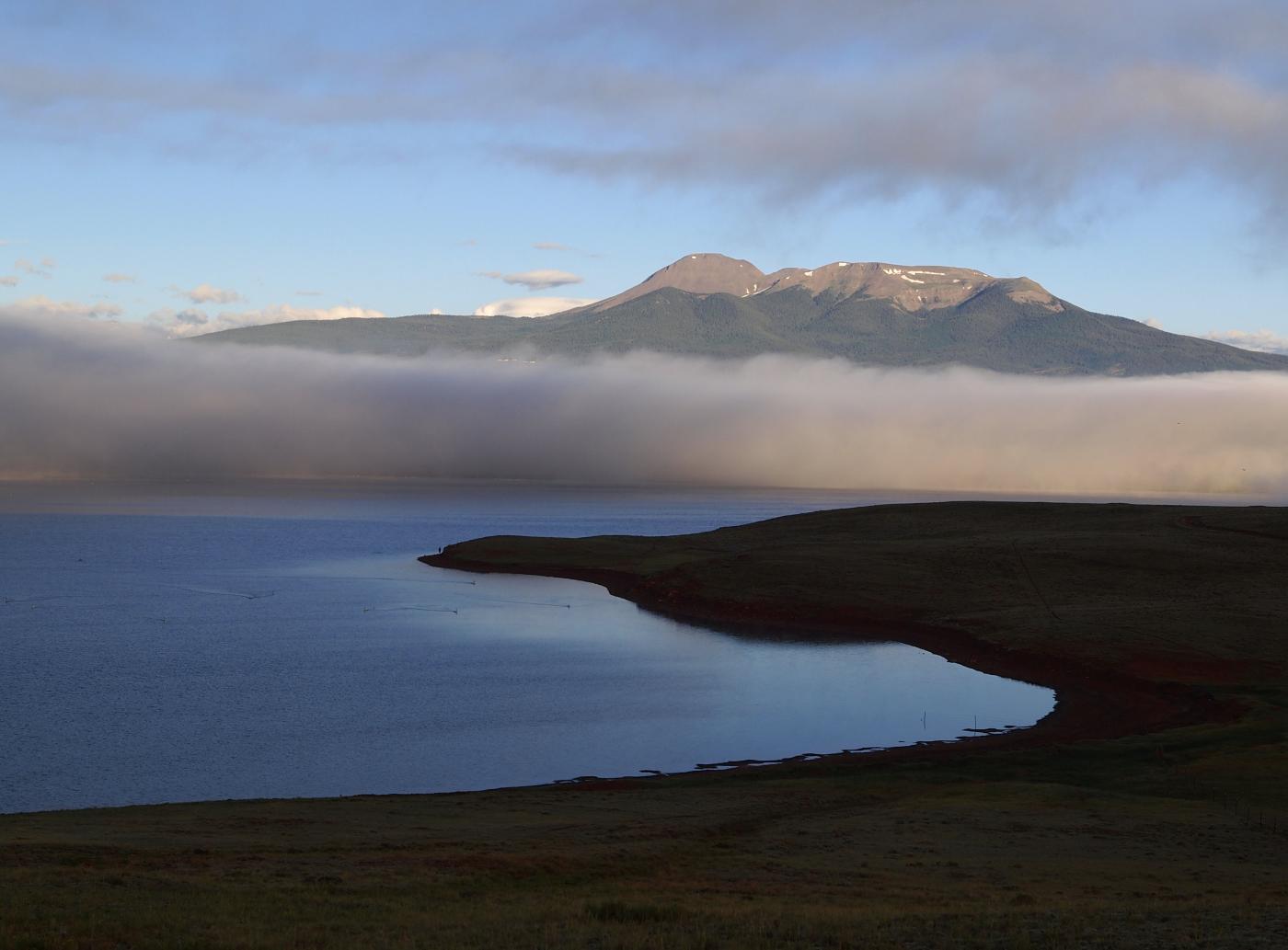
Water from Antero Reservoir (pictured) will be moved to Cheesman Reservoir in 2026 to help with drought response. This measure was last taken in 2002. Photo credit: Denver Water.

Click the link to read the article on the Denver Water website:

April 20, 2026

In the coming weeks, Denver Water will begin moving water from Antero Reservoir to Cheesman Reservoir, as part of the utility’s drought response.

Antero Reservoir has the highest ratio of evaporation to storage of any of Denver Water’s reservoirs, and moving the water to Cheesman Reservoir will prevent about 5,000 acre-feet of water (about 25% of the reservoir’s storage capacity) from evaporating. One acre-foot of water equals the annual water use of about three to four single-family households a year.

“A lot of forethought and planning went into our collection system and reservoirs,” said Nathan Elder, manager of water supply for Denver Water. “Antero is a drought reservoir, designed to provide water to our customers during a severe drought. Consolidating this water into Cheesman will help us make the most of the water we have.”

Denver Water is working closely with Colorado Parks and Wildlife to minimize the loss of fish during this process and to allow the public to use the reservoir for a brief period before it eventually closes. Following the fish relocation process, there will be no recreation, including camping, allowed at Antero Reservoir in 2026. More details about this plan will be announced when it is finalized.

The decision also allows Denver Water to use more water from its South Platte River Basin supplies, reducing the need to pull as much water from sources west of the Continental Divide, which are also below normal levels following an abysmal snowpack and runoff season.

In a standard year, the water lost to evaporation is recovered by the next runoff season. Because of the historically low snowpack levels in 2026, the water lost this year would not have been recovered.

Drought conditions will determine when the reservoir can be refilled. The reservoir was also drained to assist with water management during the 2002 drought. There were plans to drain the reservoir as a drought response in 2013, though a series of late-season snowstorms allowed Denver Water to continue storing water in the reservoir. The last time Antero Reservoir was emptied was in 2015 for a dam rehabilitation project.

The South Platte River Basin is shaded in yellow. Source: Tom Cech, One World One Water Center, Metropolitan State University of Denver.

Replacing coal with wind and solar energy has provided critical relief to water-stressed regions

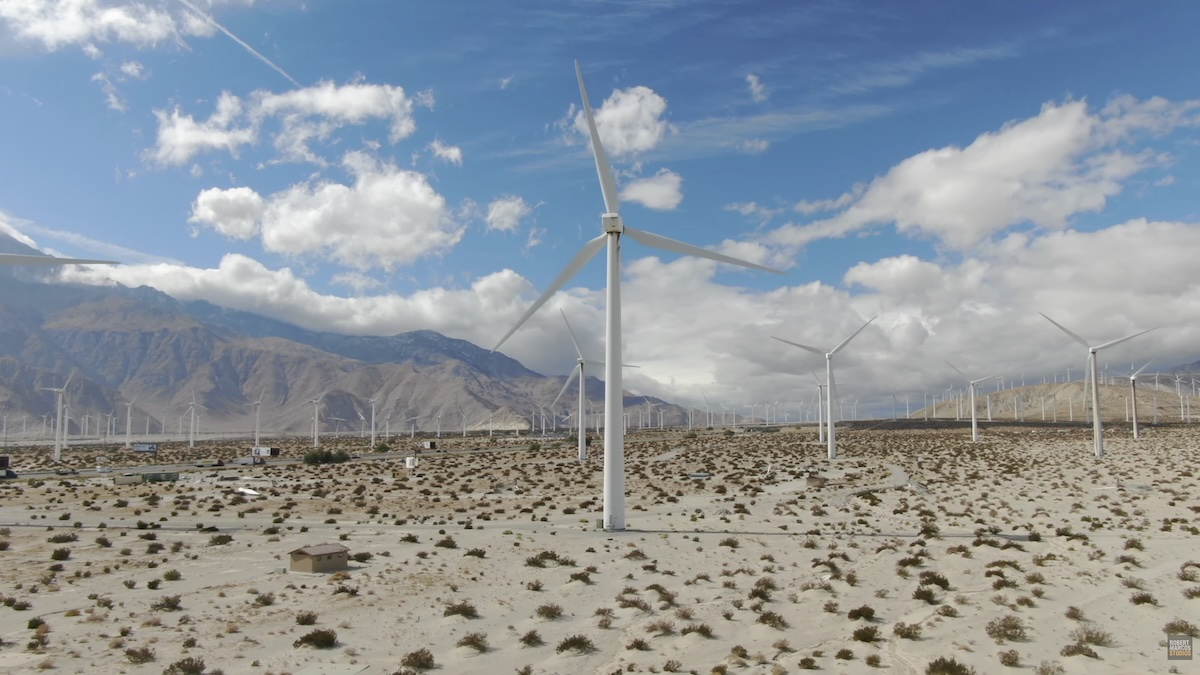
A landscape featuring multiple wind turbines standing in a desert area against a backdrop of mountains and cloudy blue sky.
Wind turbines producing electrical energy in North Palm Springs, California. Photo by Robert Marcos

by Robert Marcos, photojournalist

They say that bad news will travel around the world three times while good news is still putting its shoes on, which is exactly how I feel about this news about our water use: Our transition from coal-fired power generation to wind and solar has turned out to be one of the most effective ways to conserve our nation’s fresh water.

Transitioning from coal-fired power generation to renewable wind and solar has significantly reduced water consumption, and has provided critical relief to water-stressed regions. While coal plants once competed directly with agriculture and municipalities for freshwater, the shift to renewables allows billions of gallons of water to remain in local ecosystems and aquifers.1

The electric power sector uses a large amount of water, mostly for cooling. Thermoelectric power plants (including natural gas, nuclear, and coal plants) boil water to create steam, which spins a turbine to generate electricity. The steam leaving the turbine must be cooled back into water to be used to generate more electricity. Plants withdraw water from nearby rivers, lakes, or oceans and pass that water through the steam leaving the turbine. That process cools and condenses the steam back into water. In 2021, 73% of the utility-scale electricity generated in the United States came from thermoelectric power plants.2

Traditional coal-fired power plants are incredibly water-intensive – requiring approximately 19,185 gallons of water per megawatt-hour, (primarily for cooling), while wind and photovoltaic solar power generation requires no water – except for periodic washing to remove dust and bird droppings. Nationally, replacing the remaining coal fleet with wind and solar could decrease electricity-related water consumption by over 99%, potentially making 2.6 billion cubic meters of water available for other uses each year.3

Environmental benefits

Protecting Local Ecosystems: Retiring fossil fuel plants directly restores local river health. For instance, some subbasins are projected to see a 57% increase in annual streamflow by 2050 as plant withdrawals cease, benefiting local agriculture and wildlife.

Efficiency Gains: The U.S. Energy Information Administration reports that the changing energy mix—led by the rise of renewables—is responsible for roughly 80% of the downward trend in water withdrawals by the electric power sector.

Climate Resilience: This is a critical shaft for drought-prone regions. In the American West, moving to low-water energy sources leaves much-needed freshwater in its natural environment.

Regional Shifts in Water Stress

The impact of this transition has been most visible in arid regions where coal production and cooling previously dominated local water use. Coal plants in states like Arizona, Colorado, and New Mexico have historically consumed enormous volumes of surface water from the Colorado River and other critical basins. Retiring these plants is projected to significantly curtail annual water withdrawals, with some rivers seeing a net increase in streamflow of up to 57% by 2050.4

In Texas and California replacing fossil fuel generation with wind and solar PV can decrease water consumption by over 98%. This shift is particularly impactful in Texas, which has seen the largest absolute reduction in coal generation in the U.S. over recent years.5

In China a transition toward renewables in northwestern regions (like Inner Mongolia and Xinjiang) has been essential for alleviating “extremely high” water stress. Research shows that closing coal mines in these areas leads to a rapid restoration of Terrestrial Water Storage, increasing water availability by an average of 18.8 mm per year through groundwater recovery.6

Elephant Butte Reservoir could go as low as 2% capacity this summer — Martha Pskowski (@psskow) #RioGrande

The #Colorado Energy and Carbon Management Commission narrowly approves 24 oil and gas wells near #Aurora Reservoir that faced vocal opposition: Crestone Peak Resources had slimmed down plan for pad after state issued a stay on project — The #Denver Post

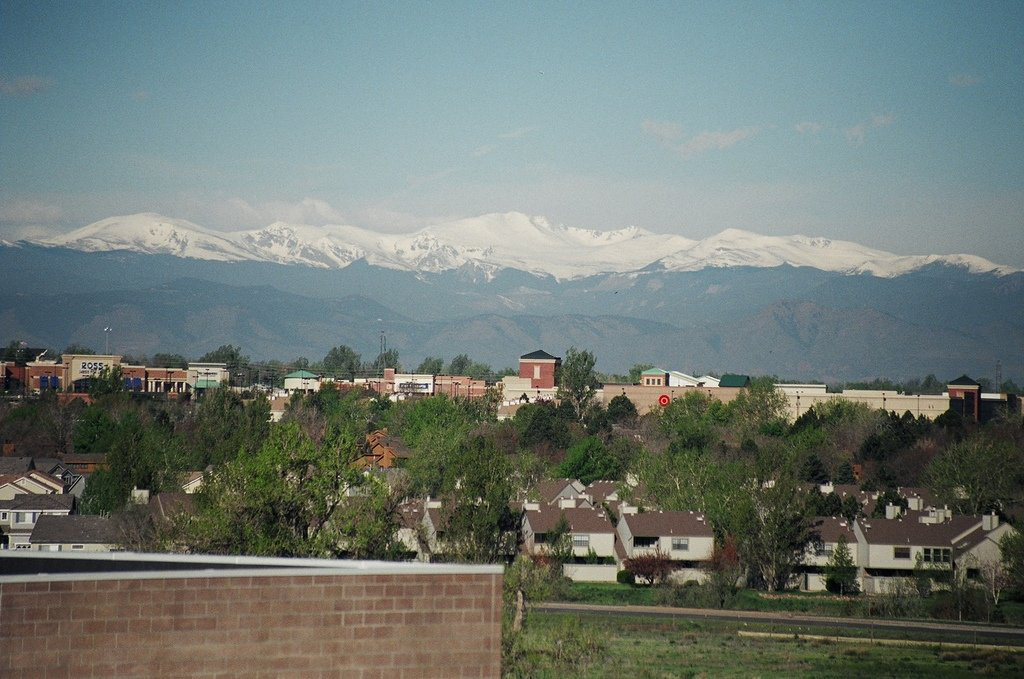
Aurora looking west towards Mount Blue Sky

Click the link to read the article on The Denver Post website (John Aguilar). Here’s an excerpt:

April 21, 2026

Colorado oil and gas regulators on Tuesday approved a controversial 24-well drilling operation that will sit just over a half-mile from hundreds of Aurora homes and a reservoir that serves as the city’s primary water supply. The 3-2 vote by the state’s Energy and Carbon Management Commission, in favor of the State Sunlight/Long well pad proposed by Crestone Peak Resources, came after about five hours of testimony and deliberation. The decision ends what had become one of the more contentious battles over energy extraction in Colorado. Board Chair Jeff Robbins acknowledged that the application from Crestone had evoked a strong reaction from homeowners living nearby. But in the end, the company complied with rigorous state oil and gas regulations enshrined in a law known as Senate Bill 181, which was passed by state lawmakers seven years ago.

“At the end of the day, State Sunlight/Long achieves the balance we were told to look for,” Robbins said.

[…]

The two commissioners who voted no were Trisha Oeth and John Messner. The approvals process for the Sunlight/Long well pad encompassed seven hearings before the commission, stretching over several months. Nearby homeowners rose up in opposition, claiming that the project would pose health hazards to those living nearby — in particular, to school-age children. They also worried about the drilling’s potential environmental impacts on the Aurora Reservoir, which is a water source for the 400,000 residents of Colorado’s third-largest city.

“I cannot believe that the state came down on the side of the industry yet again,” Randy Willard, the president of opposition group Save the Aurora Reservoir, said in an interview minutes after the vote came down Tuesday afternoon. “The group as a whole is severely disappointed.”

The group had pushed back on the proposed project using the 2019 oil and gas reform law as a guide, Willard said. The 2019 law prioritized public health, safety and the environment when regulators consider oil and gas development — a profound change from the industry-focused approach Colorado had taken for decades.

A super #ElNiño is in the forecast. Here’s what that means for #Colorado — Shannon Mullane (Fresh Water News)

Last night’s monsoon storm (July 30, 2021) was epic — Ranger Tiffany (@RangerTMcCauley) via her Twitter feed.

Click the link to read the article on the Water Education Colorado website (Shannon Mullane):

April 16, 2026

As Coloradans grapple with a record low snowpack heading into summer, the super El Niño and strong monsoon season in the forecast could provide some late summer relief.

Colorado’s weather is impacted by everything from temperature changes in the Pacific Ocean to pressure patterns over Texas — not to mention rising temperatures around the globe. This year’s La Niña conditions, created by cooler water temperatures in the Pacific, should have brought snow to Colorado’s northern mountains. Instead, the state ended the winter a month early with record hot days and a rapid snowmelt, prompting drought restrictions and water cutbacks around Colorado.

As of last week, the La Niña is over and the odds are increasingly good for a super El Niño later in 2026 — a climate pattern that has historically brought wetter winter conditions to Colorado, according to the National Weather Service.

It’s a tentative dose of hope for residents looking for a reprieve from record-breaking dry conditions, said Russ Schumacher, Colorado state climatologist and a professor at Colorado State University.

“Things are probably going to get worse before they get better,” Schumacher said. “I don’t think we’re going to be stuck in just dry, dry, dry for many, many more months to come. I think there is some reason for optimism.”

A lot of Colorado’s bad drought years have come during La Niña conditions, and Colorado has had multiple La Niña years in a row. Colorado should be rooting for La Niña to go away at this point, he said.

“It doesn’t guarantee that things are going to improve in the near term,” Schumacher added, “but we have a better chance of it if La Niña is in the rearview mirror.”

Here are the typical outcomes from both El Niño and La Niña for the US. Note each El Niño and La Niña can present differently, these are just the average impacts. Graphic credit: NWS Salt Lake City office

What are El Niño and La Niña?

El Niño and La Niña are opposing climate patterns in the Pacific Ocean that can affect weather worldwide. Together, they’re called the El Niño-Southern Oscillation cycle, ENSO for short.

The patterns vary based on water temperatures in the central and eastern Pacific Ocean that are influenced by winds circling the Earth near the equator, called trade winds because of their use in early sail-dependent commerce.

Meteorologists watch a specific region in the Pacific near the equator to determine whether the water temperature is warmer or cooler than normal, said Erin Walter, a service hydrologist for the National Weather Service in Grand Junction.

If the region’s water temperature is more than 0.5 degrees Celsius warmer than usual, then scientists call it an El Niño.

If the temperature is more than 0.5 degrees Celsius cooler than usual, it is a La Niña.

“They’re basically like opposite waves,” Walter said. “They ebb and flow together. And they’re more irregular than one would think.”

The warmer or cooler temperatures need to last for months before scientists will shift the classification from neutral into El Niño or La Niño territory. The climate patterns typically last nine to 12 months, but can sometimes last for years.

El Niño and La Niña events occur every two to seven years, on average, but they don’t occur on a regular schedule. Generally, El Niño occurs more frequently than La Niña, according to the National Oceanic and Atmospheric Administration.

Fun fact: The names for the two climate patterns can be traced back to observant South American fishermen in the 1600s, NOAA says.

The fishermen first noticed periods of unusually warm weather in the Pacific Ocean and called the resulting patterns El Niño de Navidad, the Christmas Child or the Christ Child in English, because El Niño typically peaks around December.

La Niña means Little Girl in Spanish. La Niña is also sometimes called El Viejo, anti-El Niño, or simply “a cold event,” according to NOAA.

How do ENSO cycles impact Colorado and the world?

The temperature fluctuations in the Pacific Ocean impact how and where jet streams, narrow bands of strong wind, flow in the atmosphere. Those jet streams impact which regions of the world have a dry spell, and which ones are hit with storms.

The ENSO events can lead to flooding, heavy rains, landslides and drought. They change where fish can find nutrients in the ocean. La Niña can lead to a more severe hurricane season, according to NOAA.

In the United States during El Niño conditions, a subtropical jet stream moves across southern states, like California, Texas and Florida, making them cooler and wetter than usual. Northern states tend to be warmer and drier than average, Schumacher said.

During La Niña, the jet stream comes out of the Northwest across the western United States. The Pacific Northwest and Midwest are cooler and wetter than average, while the Southwest is warmer and drier than average.

Colorado sits in the middle, which makes it harder to define clear impacts of ENSO events and to separate them from other common climate variations around the Rocky Mountains, Schumacher said.

Typically, El Niño tends to bring wetter-than-average conditions, particularly to southern Colorado and in the fall and spring. (This year, that would mean fall 2026 and spring 2027.)

During La Niña, the conditions flip. Colorado’s northern mountains often receive more snow while southern portions of the state are warmer and drier.

That doesn’t always happen: This winter is an example of La Niña conditions that did not drop very much snow on the northern part of the state — or anywhere.

Which team should Coloradans be on? Definitely El Niño, Schumacher said.

“It tilts the odds towards things being wetter,” he said.

A “super” El Niño in the forecast

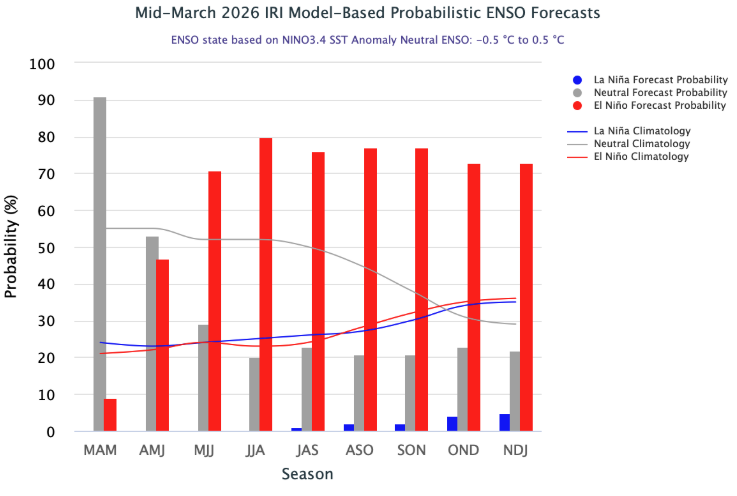
This year, the region’s water temperature is more than 2 degrees Celsius warmer than usual for multiple months — prompting climate scientists to dub it a super El Niño.

They expect neutral conditions between April and June. After that, conditions could stay neutral or transition into a strong El Niño, according to the National Weather Service’s Climate Prediction Center. Seeing El Niño conditions is likely, but whether they appear will depend on wind patterns over the Pacific Ocean.

For anyone looking for rain and snow in Colorado, this is a reason for optimism later in the summer and for the coming winter, Schumacher said.

In 1997, the last really strong El Niño brought moisture to most of Colorado in the summer and fall. There were floods along the Front Range and Eastern Plains.

But just because that’s what happened one other time doesn’t mean Colorado will see the same conditions again.

“It would be speculation to read too much into that,” Schumacher said.

So what exactly would a super El Niño mean for Colorado?

“The short answer is, we don’t really know,” he said.

Climate and weather researchers only have a few similar years in history to analyze, and that’s not enough data to identify clear trends with high certainty. There have been only five strong El Niños since 1950, with the last taking place from 2015 to 2016.

“In terms of what that’s going to mean for how the jet stream responds to that, and then in turn, what kind of precipitation we get in Colorado?” Schumacher said. “I think it’s too early to say.”

The non-Niño weather event you should be watching

There is one other weather phenomenon that will come into play this summer: monsoons.

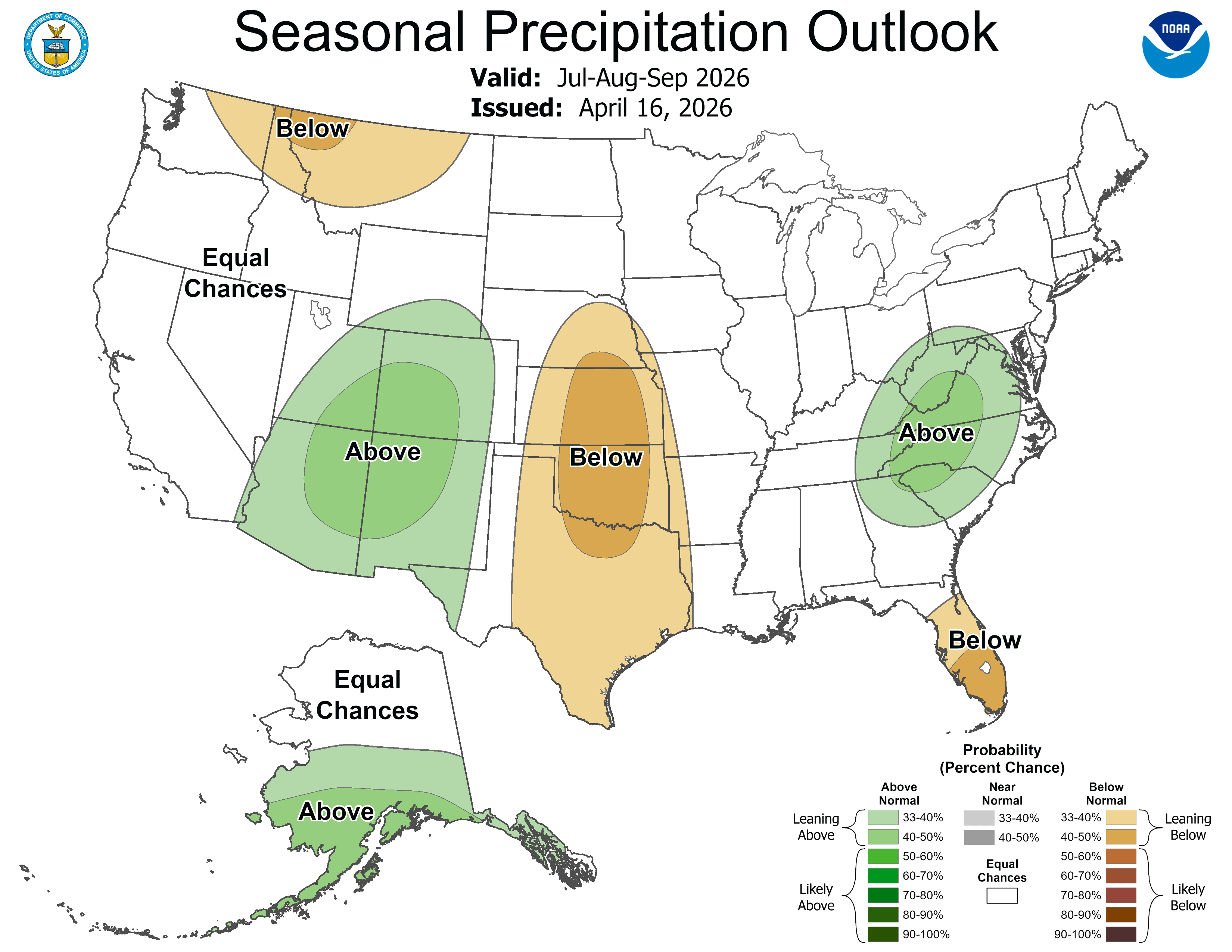
“The outlooks are pointing towards the active monsoon season this summer, and so that’s probably the thing to keep a closer eye on in the near term,” he said.

Monsoons are different from ENSO patterns. El Niño conditions are stronger in the winter and weaker in the summer and have global impacts.

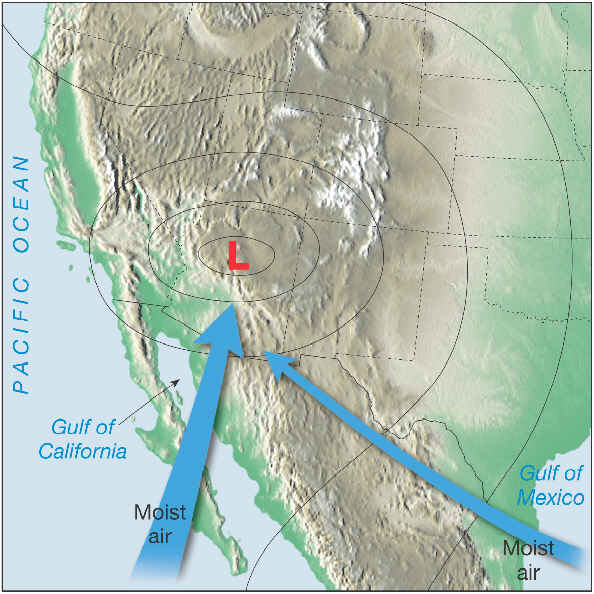
Monsoons are local seasonal circulations that develop every summer in the Southwest. They arise when shifting wind patterns bring moisture from the eastern Pacific and the Gulf of California into the Southwest.

Active monsoon seasons can provide a large fraction of the annual precipitation to lower elevations in parts of the state, like western and southeastern Colorado. This year’s forecast indicates monsoons are likely for July, August and September, Schumacher said.

These active seasons bring afternoon thunderstorms every day and flash floods in Colorado’s canyons. They can help reduce some of the risks of a historic drought year, like wildfire risks later in the summer.

“As with any seasonal forecasting, it’s uncertain,” Schumacher said. “Four months out it’s hard to put really high probabilities on anything.”

What do monsoons mean for Colorado’s water supply?

An active monsoon season will offer some relief, but it will not refill Colorado’s reservoirs.

The monsoon storms might bring intense rain over a short amount of time, but in the big picture, they do not provide very much water. The amount of water that normally comes from a big winter snowstorm is much higher than the amount of water in an afternoon storm. The cloudy and cool weather with rain showers would help reduce the demand for outdoor irrigation for gardens and crops while providing a small boost in the supply, Schumacher said. [ed. emphasis mine]

“Monsoon rains just aren’t nearly enough to fill up reservoirs or even bring them back up from really low levels,” he said.

More by Shannon Mullane

North American Monsoon graphic via Hunter College.