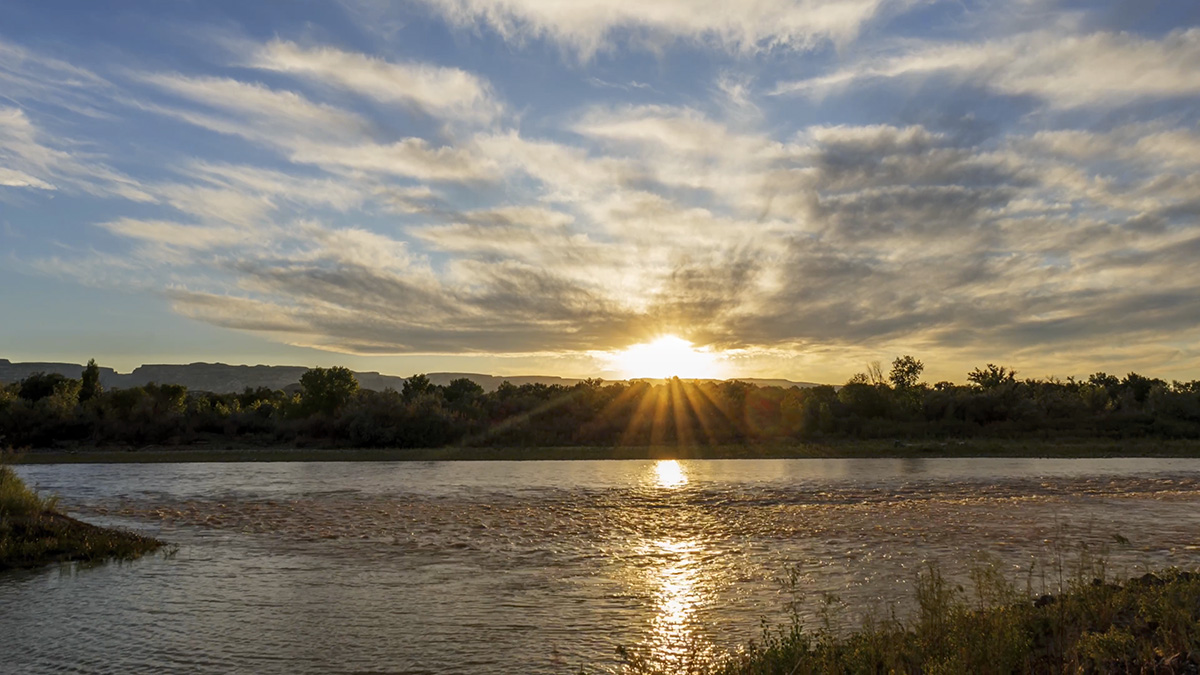
The Colorado River passing Grand Junction, Colorado. Photo by Robert Marcos.
Click the link to read the article on the Summit Daily website (Ali Longwell). Here’s an excerpt:
April 13, 2026
Despite pressure from Colorado’s congressional delegation, around $140 million in federal funding previously granted to Western Slope water projects has lingered in limbo for nearly 16 months. The funds, awarded to 17 Western Slope projects in the final days of President Joe Biden’s administration, were part of the Inflation Reduction Act’s drought mitigation grant opportunity for the Upper Colorado River Basin. This included $40 million granted to the Colorado River District to aid in its purchase of the Shoshone water rights, the oldest and largest non-consumptive right on the Colorado River tied to the hydropower plant in Glenwood Canyon. Three days after the awards were announced, President Donald Trump took office, and his Day 1 order, “Unleashing American Energy,” called for all federal agencies to “immediately pause the disbursement of funds appropriated through the Inflation Reduction Act.” In June, the U.S. Bureau of Reclamation released funds for two of the projects in the Orchard Mesa Irrigation District in Palisade, but the rest remain frozen.
“The funding has not yet been released, and that’s a real concern given current conditions across all of Colorado, but particularly western Colorado,” said Rep. Jeff Hurd, a Republican representing Colorado’s third district spanning the Western Slope, in an interview on Thursday, April 9. “I am continuing to press hard for clarity on timing and next steps because those projects were awarded for a reason and the need has not gone away.”
The Inflation Reduction Act set aside $4 billion toward drought mitigation, including funds for the Bureau of Reclamation’s Upper Colorado River Basin System Conservation and Efficiency program, also known as the Bucket 2E funding. In January, the Bureau under Biden’s administration allocated a total of $388.3 million to 42 projects on tribal land and in states in the Upper Basin.
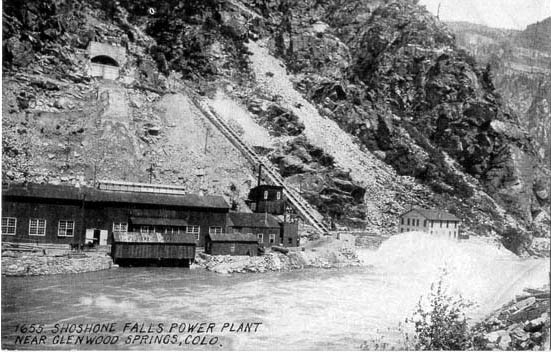
Shoshone Falls hydroelectric generation station via USGenWeb
This included $152 million for 17 projects in Colorado, including those for wildlife habitat, watershed and stream restoration, water infrastructure improvements and more. Only $12 million of this funding for two Orchard Mesa Irrigation District projects — meant to improve water delivery to the 15-mile reach of the Colorado River, which extends from Grand Junction and the confluence of the Gunnison River and serves as critical habitat for several endangered fish species, as well as install new metering technology in the Grand Valley — has been released to the awardees. The largest Colorado award was the $40 million promised to the River District, which represents 15 Western Slope counties. This funding represented a large chunk of the $98.5 million that the River District needs to purchase the Shoshone water rights from Excel Energy. Outside of the frozen federal dollars, the River District has raised $57.2 million from the state Legislature, its board and the various Western Slope municipalities and utilities it serves. Matt Aboussie, Colorado River District’s communications director, said the district continues to work closely with the Bureau of Reclamation to secure this promised funding and remains committed to securing the rights.
“Funding will not be the obstacle that stops this effort,” Aboussie said. “If needed, River District leadership is prepared with alternative funding options and continues to rely on all our communities to get this project across the finish line.”
Colorado State University Extension experts are working with partners statewide to host drought planning workshops for farmers, ranchers and land managers seeking advice and support responding to the state’s abnormally dry conditions.
“Our goal at these workshops is to leverage what farmers and ranchers already know,” said Retta Bruegger, a CSU Extension range management specialist who co-founded Drought Advisors in 2020. “We offer support and a flexible framework to help producers create a formalized plan that they can use to make more strategic decisions when coping with drought.”
Responding to Drought Impacts in 2026: A Workshop for Livestock Producers Routt County 5:30-8:15 p.m. Monday, April 13 STARS Ranch, 35465 U.S. Highway 40, Steamboat Springs
When in Drought: Smart Irrigation and Soil Management Larimer County 8 a.m. to noon Tuesday, April 21 McKee Building at The Ranch, 5280 Arena Circle, Loveland (The program will continue with a drip irrigation demonstration from noon to 2 p.m. at Flores Del Sol Natural Area, 8101 S. Timberline Road, Fort Collins.)
Agriculture Drought Management Workshop Montezuma County 5:30-7:30 p.m. Thursday, April 23 Lewis Arriola Community Center, 21176 County Road S, Cortez
Old snow crunched underfoot in mid-January as a dozen people snowshoed near Molas Pass in Colorado’s San Juan Mountains. The interpretive hike, hosted by local environmental organizations, covered ecology, climate change and snow. It was the perfect classroom: below an azure sky, bare ground beneath trailside spruces and pines was a local example of what turned out to be a devastating lack of snow across the West.
Mountain snowpack is the West’s largest reservoir, providing water for 100 million people and diverse ecosystems. The amount of water stored in the snowpack historically peaks around April 1. But this year, the snowpack in many places was absent, or nearly so, by then — the lowest level in the 45 years since automated measurements began.
A stubborn high-pressure ridge contributed to the snow drought by shunting winter storms north to Canada in January. But the main culprit, according to the nonprofit Climate Central, was exceptional heat from climate change, which also caused a spring heat wave that decimated what snow there was at a time when other dry winters have seen “miracle March” snowstorms.
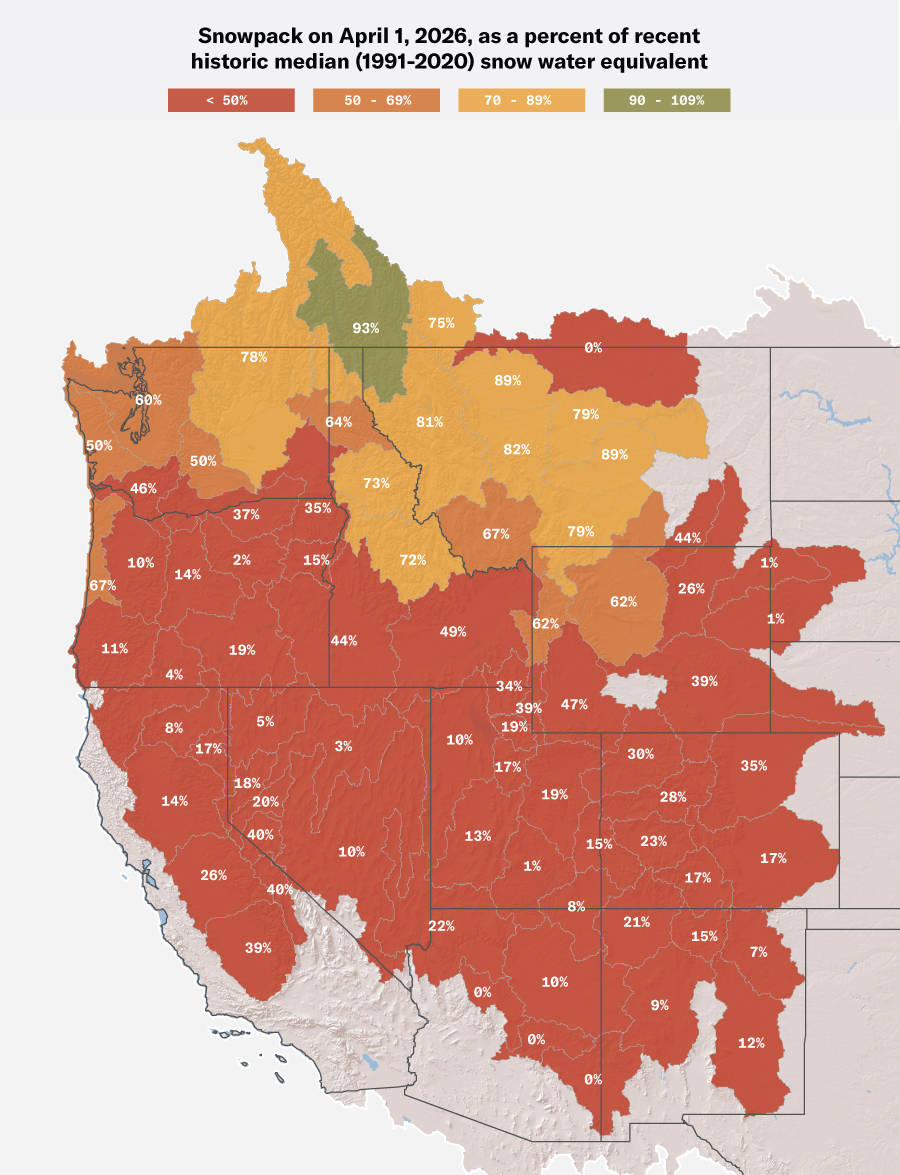
This map from the USDA’s Natural Resources Conservation Services shows snow-water equivalent (SWE) as of April 1 (near the typical peak of snowpack in the Western U.S.). The current SWE is shown as a percentage of the recent historical median SWE. United States Department of Agriculture
The lack of snow was unusually widespread across the Western U.S. But considering it as a whole makes it easier to miss the regional manifestations and implications of a winter that also brought record flooding and record dryness in addition to record heat. Here’s how the snow drought played out in a few regions that exemplify this winter’s variability:
Whiplash in Washington’s Cascades
Winter in Washington’s Cascade Range started and ended in “wet” snow drought — with precipitation falling as rain instead of snow. In December, over 2 feet of rain fell in two weeks in some places, melting much of the nascent snowpack and causing catastrophic flooding west of the Cascades. But it also replenished reservoirs in the Yakima Basin, on the drier eastern side of the range, which were only 8% full in October, a quarter of their normal volume.
Dry snow drought hit in January, when little precipitation fell. While pockets of Washington’s Cascades saw near-normal precipitation in February, most of the mountains stayed dry, and the range’s snowpack remained well below average. Then, despite several feet of snow landing in March, rain followed and washed it away.
That’s a problem for the Yakima Basin, which lacks the reservoir capacity to store enough runoff to meet the region’s needs. The snowpack typically serves as an additional reservoir, storing water as snow into summer, said hydrogeologist and geochemist Carey Gazis of Central Washington University in Ellensburg.
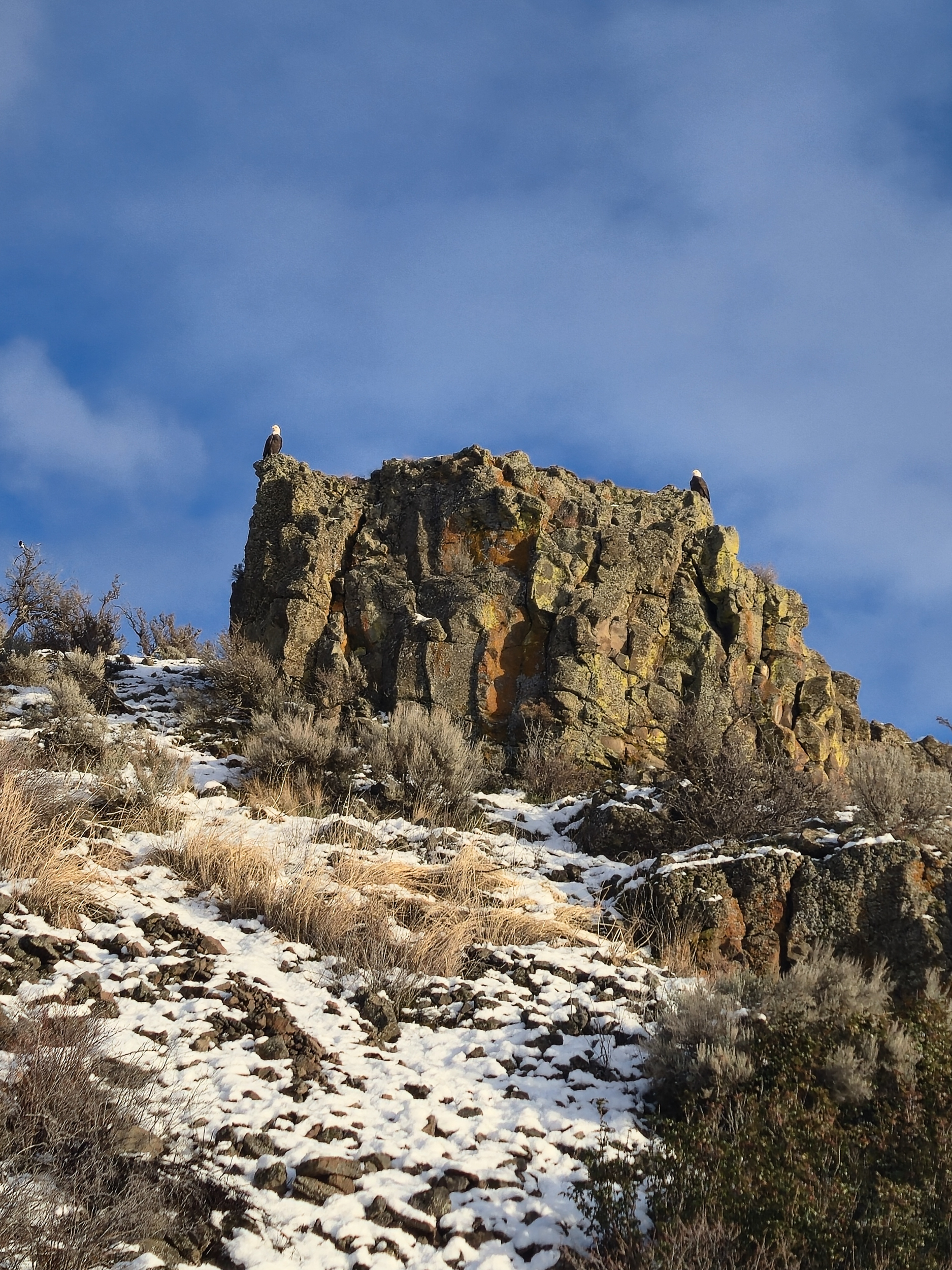
Little snow covers the ground where two bald eagles perch atop a rock near Cooke Canyon about 10 miles northeast of Ellensberg, Washington, last December. Courtesy of Megan Walsh/Central Washington University
South of Ellensburg lies the Yakima Valley — the “fruit bowl of the nation” — where snowmelt is essential for irrigating crops, including cherries, apples, grapes, hops and mint. It also supports the Yakama Nation’s efforts to restore populations of culturally important migratory fish. As of March, the Bureau of Reclamation forecasted that many farmers in the Yakima Valley would receive just 44% of their usual water supply this growing season due to the snow drought.
One long-term solution is to create more water storage by augmenting aquifers. “There’s all this space under the surface that can hold more water,” said Gazis, who studies such processes. Projects pumping runoff or enhancing passive water infiltration into the ground are already happening in parts of the basin, including on the Yakama Nation reservation.
Northern Rocky Mountain high
As in Washington’s Cascades, winter in the Rocky Mountains of Idaho, Montana and western Wyoming was bookended by wet snow droughts, with a dry January in between. However, colder temperatures at higher elevations allowed for a near- to above-average snowpack in some areas that persisted into mid-March, leaving them in better shape than most of the West in early April.
That helped places dependent on winter tourism, such as Idaho’s Wood River Valley. “It’s as busy as ever, if not a little busier, because we have snow,” unlike many other winter destinations, such as those in Colorado, said the director of the valley’s Environmental Resource Center, Ashton Wilson, in February.
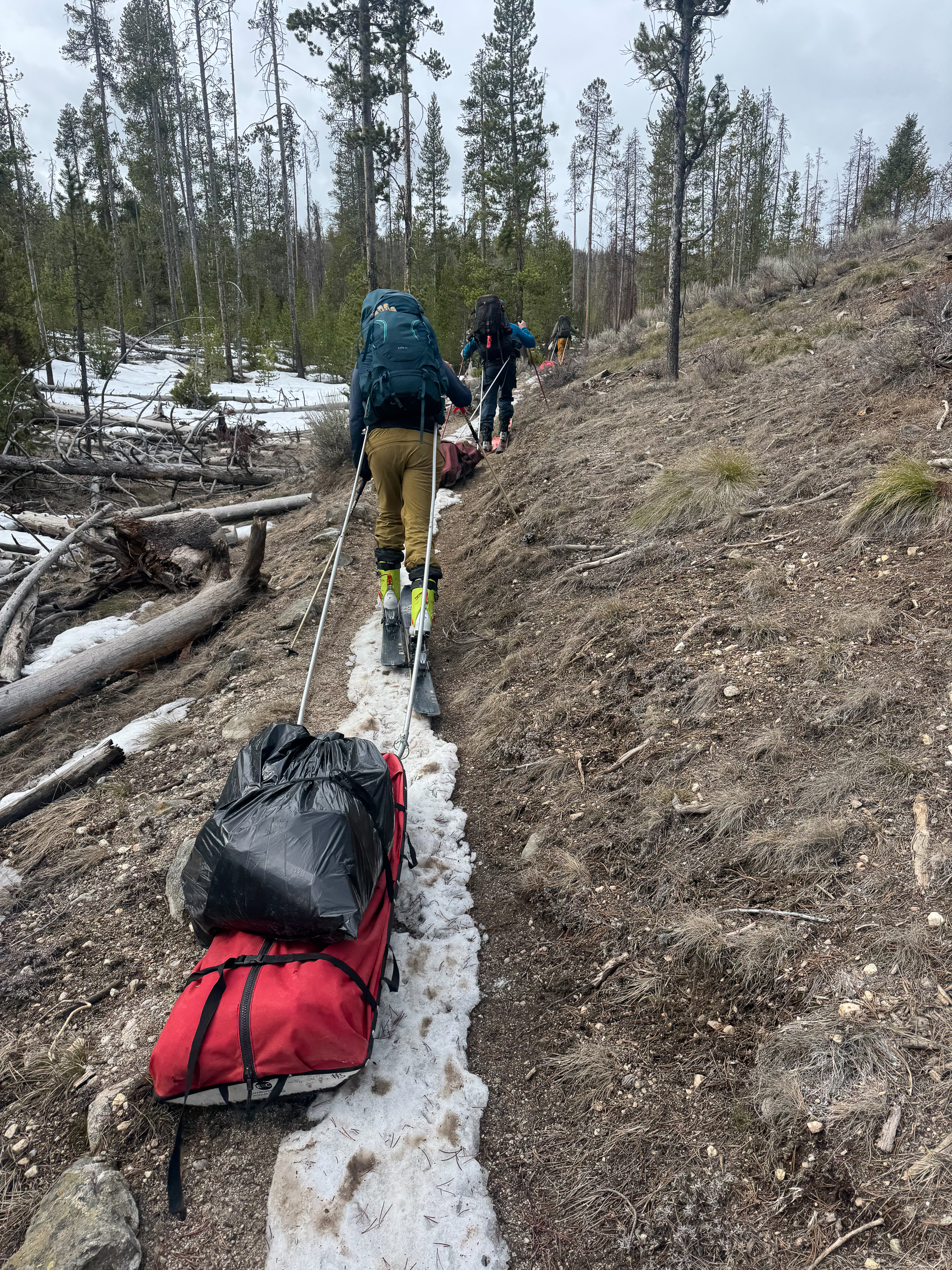
An intrepid group of hut renters heads up the final hill into the Pioneer Yurt, at almost 8200 feet in elevation in Montana’s Pioneer Mountains. Courtesy of Ashton Wilson/Environmental Resource Center
Environmental Resource Center (ERC) employees haul loads of gear and supplies into Bench Hut in late March in Idaho’s Sawtooth Mountains for their annual woodcut over a mix of dirt, rocks and snow. Courtesy of Ashton Wilson/Environmental Resource Center
Additionally, Russell Qualls, Idaho’s state climatologist, speculated that the Wood River Basin and others nearby may do “fairly well” this summer in terms of providing water for the towns and agriculture that depend on them.
But little to no snow at middle and lower elevations in Idaho, Wyoming and Montana — and ongoing unseasonable heat — might mean a long fire season unless sufficient rain arrives in spring and summer. Indeed, while fire season usually starts in May or June in Montana and Wyoming, both states experienced wildfires over 1,000 acres in March.
But high and dry in Colorado
Colorado also experienced such medium-sized wildfires, but they started much earlier — in December. Both December and January were abnormally dry, and one of the few storms that did arrive dropped rain at up to 11,000 feet — unusually high for winter, and unprecedented in much of Colorado.
This was evident at the January snowshoe hike near Molas Pass, led by the San Juan Mountains Association and Mountain Studies Institute. Outdoor educator Colin Courtney guided attendees wielding avalanche shovels in digging a snow pit to measure the snowpack’s depth and water content. With a dull thunk, shovel blades hit dirt just 2 feet down. As he melted snow samples over a camp stove, Courtney noted that the snowpack at the pass held 23% as much water as in an average year — the snow water equivalent, a more meaningful measurement than depth alone when planning for annual water needs and wildfire risk. “It’s a very real thing to be concerned this year,” said Courtney.
There are ecological threats, too. Research in New Hampshire and Finland has shown complicated effects on tree health when root systems lack an insulating layer of snow during winter. The impact on trees here — already stressed from the worst megadrought in 1,200 years —isn’t known.
“This is our worst snowpack on record,” wrote climatologist Allie Mazurek of the Colorado Climate Center in an early April email. She blamed the West’s record-breaking March heat wave for tipping the state beyond its prior historic low, in 1981.
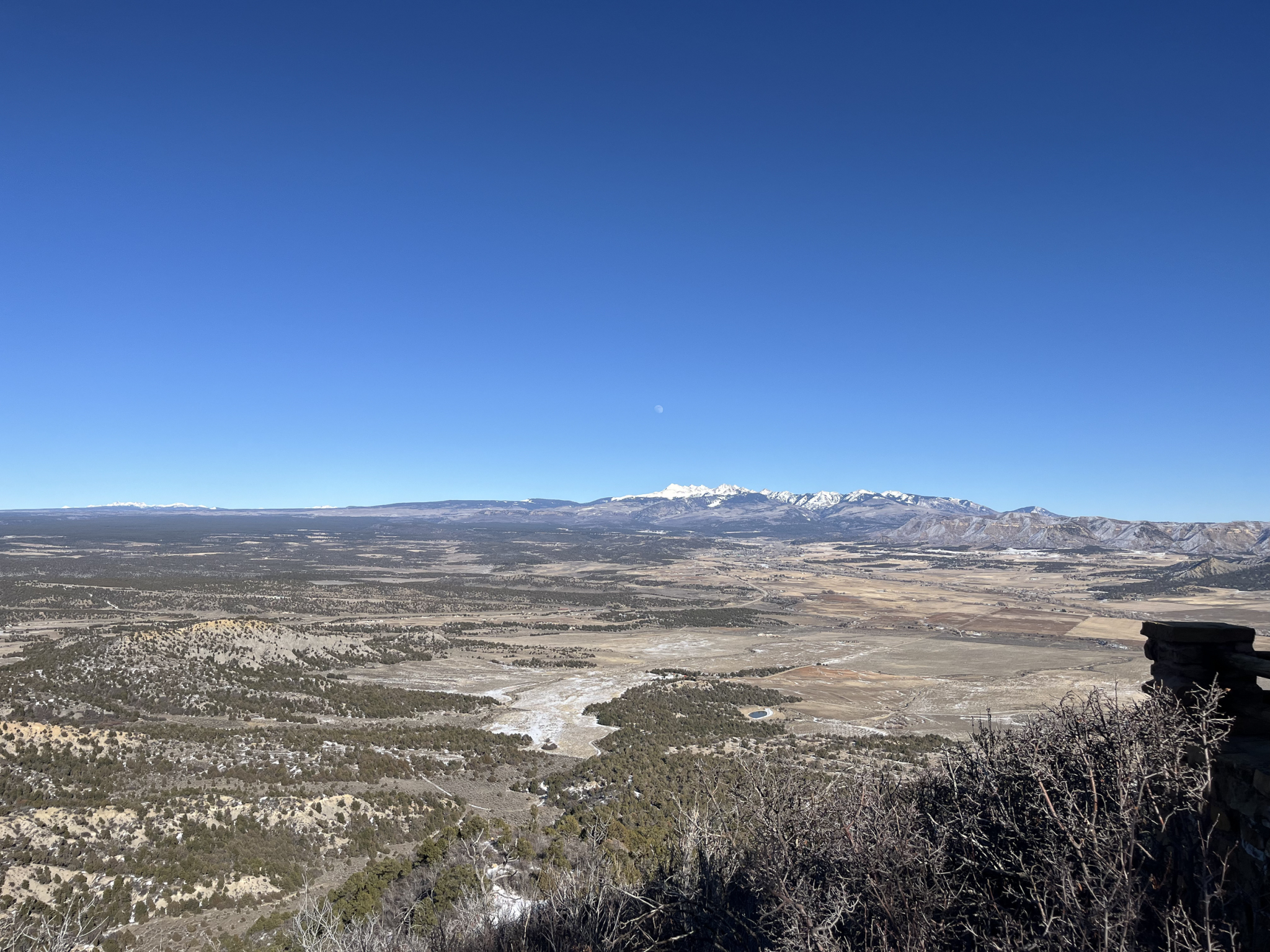
Looking out towards the La Plata and San Juan mountains in Colorado’s Mesa Verde National Park in January. Courtesy of Allie Mazurek/Colorado Climate Center, Colorado State University
Denver has already initiated water restrictions. But the implications go beyond state lines: Colorado’s snowpack also provides water to 18 other states, dozens of tribal nations and parts of Mexico. The Colorado River Basin provides drinking water for one in 10 people in the U.S., irrigates over 5 million acres of cropland and generates substantial hydroelectric power. This year’s snow drought is exacerbating an already fraught fight among the seven states in the Colorado Basin over how to manage the dwindling river.
“One caveat to some of this is El Niño,” wrote Mazurek. The climate pattern may bring lots of rain to Colorado, and forecasters expect it to develop in early fall. “Still, rain tends to do much less for our water supply than snow,” she added.
And snow is a resource that will likely be in shorter and shorter supply in the years to come in the West, where researchers expect climate change to shrink snow-supplied water by about a quarter by mid-century. Mazurek summed up the region’s predicament succinctly: “We should probably be preparing for less water to be coming down from the mountain snowpack than usual.”
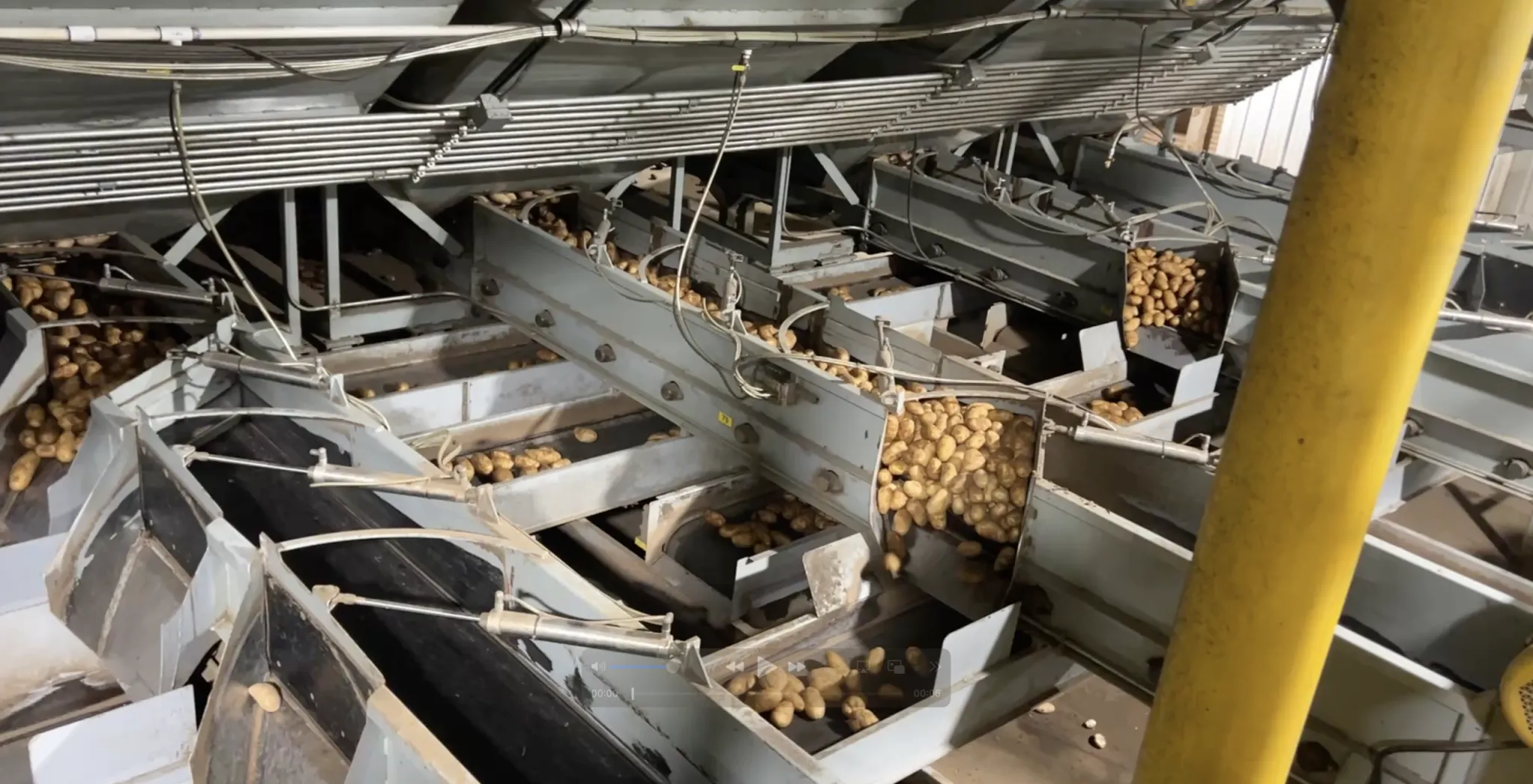
The San Luis Valley has an overabundance of potatoes in storage here in mid-April that, because of the warm winter, is leading to concerns about what happens as a new growing season begins.
An historically hot March that punctuated a warm winter overall is creating quality standard problems in the potato bins of the Valley. If a potato bin doesn’t meet the quality standard, it doesn’t ship. [ed. emphasis mine]
“When we start to lose a bin, a bin can be 5,000 sacks, 10,000 sacks, up to 100,000 sacks … then we look at a really gigantic pile of potatoes that has to be managed,” explains Jeff McCullough, who operates Spud Seller farms and potato packaging and distribution in Rio Grande County.
Fourth-generation farmer Jeff McCullough. Credit: The Citizen
McCullough does the math on the amount of potatoes estimated to be in storage that may not find a market or their way to processing facility and comes up with a mind-boggling figure on how big a problem this is.
Based on conversations with other operators in the Valley, he is estimating a million hundredweight worth of potatoes, or about a hundred million pounds of potatoes that may not be sold or processed this year and would have to be dumped.
Others say the figure may be an underestimate. And they say the problem isn’t just in the San Luis Valley but everywhere potatoes are grown as an oversupply and weak market keep potatoes in storage.
How a warm winter hurts the quality of potatoes in storage: “A potato is a living organism. It generates its own heat. And so throughout the wintertime, we still have to push cold air and cool those potatoes down. Otherwise, those potatoes will generate heat and once they generate enough heat, they’ll sprout, then they won’t meet a quality standard at all … There’s a lot of instances where you lose an entire bin because the bin generates too much heat before you can get it sold.” — Jeff McCullough, Spud Seller
It’s the responsibility of each grower to figure out how to dispose of what’s left over from their fields, but with such a large amount, McCullough and others see it as a communitywide problem that is going to require input at the public level on what to do.
To that end, McCullough has been meeting with county officials and has a joint meeting set up to address the situation with county commissioners representing Alamosa and Rio Grande counties.
“We’re going to need to find a good way to dispose of these potatoes,” McCullough says.
Adding to the problem is the loss of the Colorado Gourmet processing plant in Center that burned down two years ago and isn’t coming back, leaving the Valley with only one processing facility. It handled about 40 percent of the potatoes that got processed each year.
Potato production in the Valley remained steady in 2025. Total potato acreage went to 51,474 acres from 50,188 acres in 2024, according to the 2025 USDA acreage report. A tight potato market, though, is keeping potatoes in storage as local growers work with distributors over the next three months to move potatoes and clear storage for the 2026 crop.
Credit: The Citizen
“The next harvest will start roughly, the first of September, and so the ideal situation is we are out of this crop the day that we start harvesting the new crop,” says McCullough.
The Spud Seller needs to move about 550,000 sacks of potatoes – each sack 100 pounds – by around July to keep pace and to keep the backlog of potatoes from growing at his operation, McCullough figures.
Others are in similar boats.
“There’s still a shit-ton of potatoes out there,” said Mark Lounsbury, general manager of Grower Shipper Potato Company.
Lounsbury and McCullough’s packaging and shipping operations are two of the biggest in the Valley.
2025 top six certified varieties of SLV spuds were:
The variety of potato in storage matters, too. Some varieties have a longer dormancy period and will store longer, while a less dormant variety like a Russet Norkotah that wants to sprout has to be gone by a calendar date, McCullough said.
Newer varieties of potatoes are creating efficiencies on the growing side, using less water and creating more yield even as less acreage is planted.
Potato growers have to follow rules for cull piles outlined in the Colorado Seed Potato Act, which will make the dumping of the amount of potatoes McCullough and others are talking about all the more challenging to figure out.
Hence the outreach to county officials.
Credit: The Citizen
The process involves smashing or crushing each individual potato, spreading them out in a very thin layer and then running them over with something. “For example, we have a manure spreader that we run our potatoes through and it chops them up and it kind of disintegrates them. And then it spreads them out into a thin layer, and then once you break the skin of that potato, it dries out really well,” McCullough says.
“We’ve been in situations in years past where we’ve had to dump a lot of potatoes, and it’s because of those years that we’ve come up with these new laws.”
But Valley potato growers rarely see a year where a hundred million pounds of potatoes may have to be dumped. Then again, the Valley has never seen a March where the temperatures reached into the 80s and caused potatoes in storage to want to sprout.
An oversupply of potatoes, coupled with a burned-down processing plant and a much too warm winter, is creating the conditions for a biggest cull pile of potatoes the Valley has ever seen. Proper disposal is essential.
“It is not one person that can swoop in and solve this,” said Tara Artho, executive director of the Colorado Potato Administrative Committee in Monte Vista. “It’s going to take the community.”
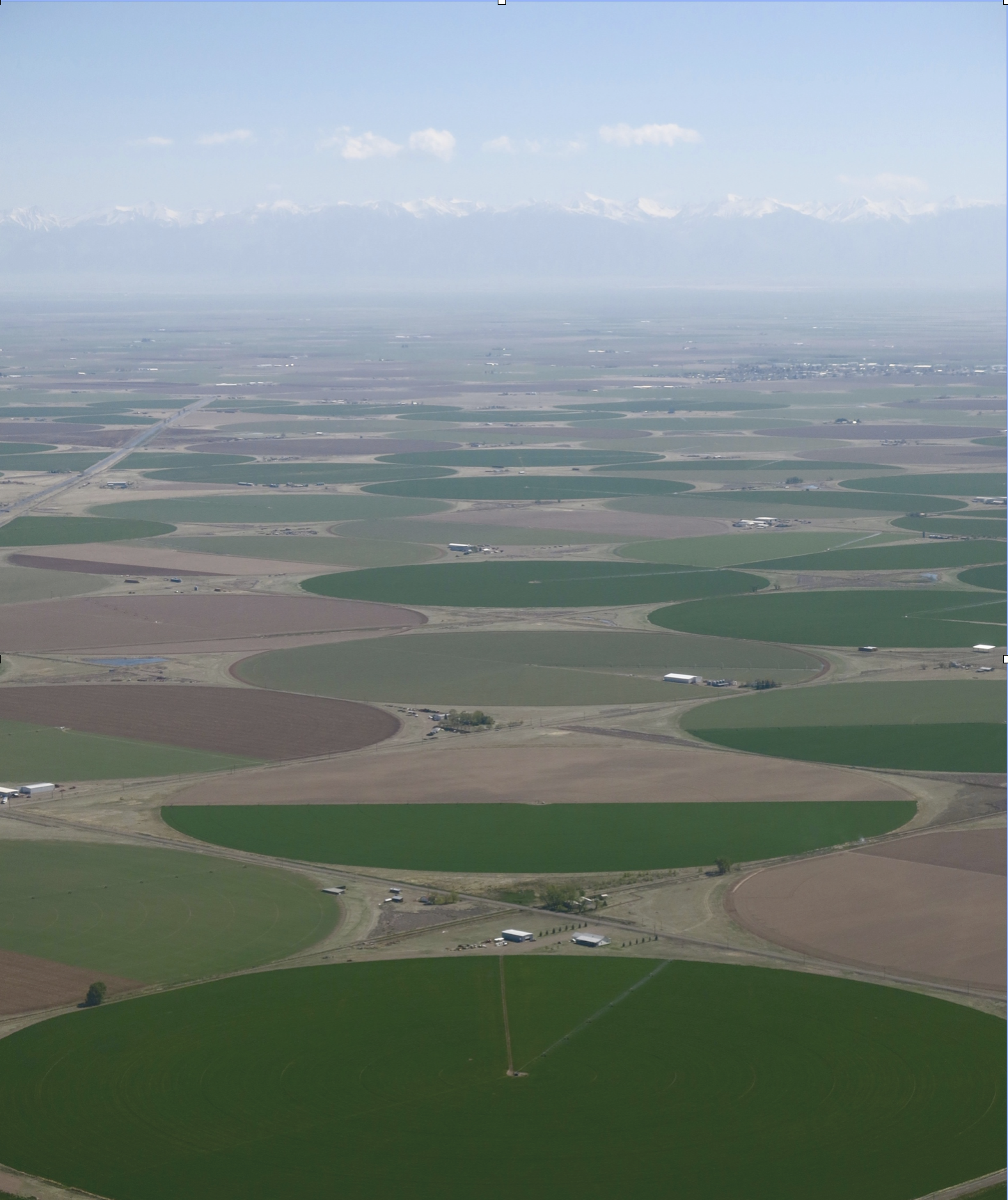
Aerial view of the San Luis Valley’s irrigated agriculture. Photo by Rio de la Vista.
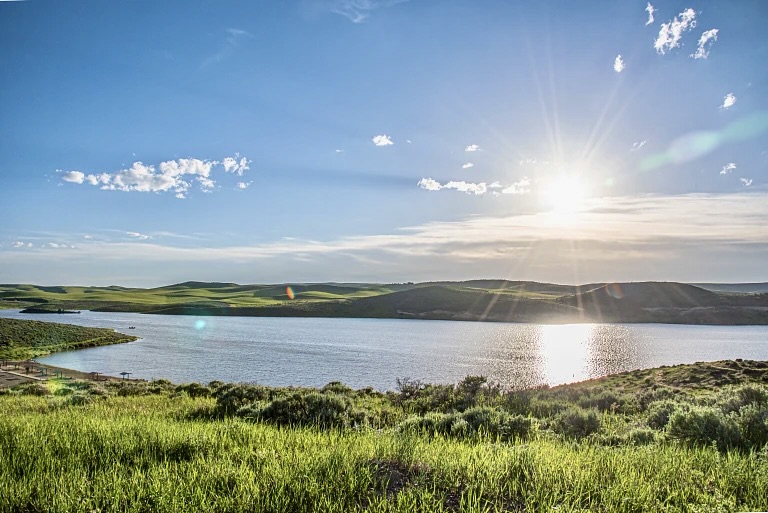
Elkhead Reservoir is taking center stage following a winter of historically low snowfall, leaving water managers with hard decisions and water users with a high degree of uncertainty. Courtesy Photo/Colorado Parks & Wildlife
A historically dry winter is setting up what water officials describe as one of the most challenging runoff seasons in recent memory, with operations and allocations at Elkhead Reservoir expected to play a critical role in stretching limited supplies across Northwest Colorado….That challenging outlook [ed. snowpack and streamflow in 2025] and lessons learned from past years with low snowfall are key focal points in early planning and coordination among water managers, particularly for reservoirs like Elkhead, which serves irrigators, municipalities and environmental needs in the Yampa River Basin…Calahan said warm, dry conditions have dramatically accelerated snowmelt, raising the likelihood of a runoff season that arrives early, fades quickly and leaves water managers facing difficult decisions for a wide range of stakeholders…In a more typical year, gradual warming allows the snowpack to melt slowly, sustaining river flows well into summer. This year, however, that prolonged runoff is not materializing, which is already increasing pressure on stored water supplies. While late spring storms or summer monsoons could provide some relief, officials do not expect conditions to return anywhere near an average water year. That uncertainty leaves reservoir managers balancing how much water to store versus how much to release to meet downstream demand.