
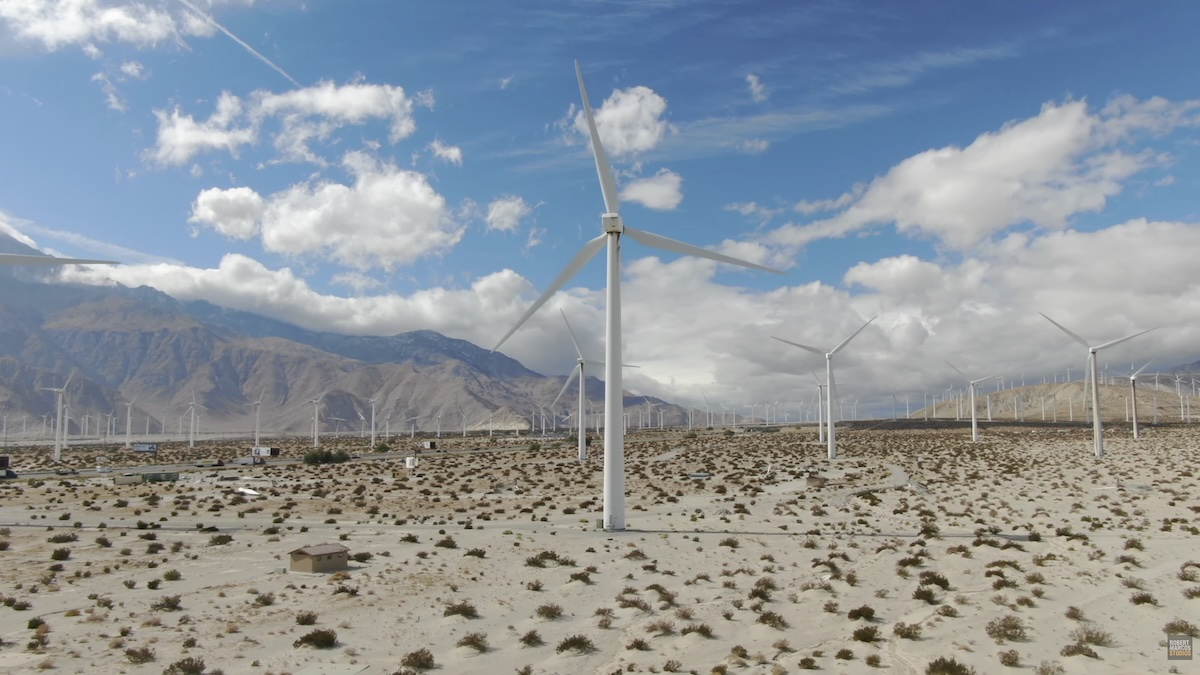
by Robert Marcos, photojournalist
They say that bad news will travel around the world three times while good news is still putting its shoes on, which is exactly how I feel about this news about our water use: Our transition from coal-fired power generation to wind and solar has turned out to be one of the most effective ways to conserve our nation’s fresh water.
Transitioning from coal-fired power generation to renewable wind and solar has significantly reduced water consumption, and has provided critical relief to water-stressed regions. While coal plants once competed directly with agriculture and municipalities for freshwater, the shift to renewables allows billions of gallons of water to remain in local ecosystems and aquifers.1
The electric power sector uses a large amount of water, mostly for cooling. Thermoelectric power plants (including natural gas, nuclear, and coal plants) boil water to create steam, which spins a turbine to generate electricity. The steam leaving the turbine must be cooled back into water to be used to generate more electricity. Plants withdraw water from nearby rivers, lakes, or oceans and pass that water through the steam leaving the turbine. That process cools and condenses the steam back into water. In 2021, 73% of the utility-scale electricity generated in the United States came from thermoelectric power plants.2
Traditional coal-fired power plants are incredibly water-intensive – requiring approximately 19,185 gallons of water per megawatt-hour, (primarily for cooling), while wind and photovoltaic solar power generation requires no water – except for periodic washing to remove dust and bird droppings. Nationally, replacing the remaining coal fleet with wind and solar could decrease electricity-related water consumption by over 99%, potentially making 2.6 billion cubic meters of water available for other uses each year.3
Environmental benefits
Protecting Local Ecosystems: Retiring fossil fuel plants directly restores local river health. For instance, some subbasins are projected to see a 57% increase in annual streamflow by 2050 as plant withdrawals cease, benefiting local agriculture and wildlife.
Efficiency Gains: The U.S. Energy Information Administration reports that the changing energy mix—led by the rise of renewables—is responsible for roughly 80% of the downward trend in water withdrawals by the electric power sector.
Climate Resilience: This is a critical shaft for drought-prone regions. In the American West, moving to low-water energy sources leaves much-needed freshwater in its natural environment.
Regional Shifts in Water Stress
The impact of this transition has been most visible in arid regions where coal production and cooling previously dominated local water use. Coal plants in states like Arizona, Colorado, and New Mexico have historically consumed enormous volumes of surface water from the Colorado River and other critical basins. Retiring these plants is projected to significantly curtail annual water withdrawals, with some rivers seeing a net increase in streamflow of up to 57% by 2050.4
In Texas and California replacing fossil fuel generation with wind and solar PV can decrease water consumption by over 98%. This shift is particularly impactful in Texas, which has seen the largest absolute reduction in coal generation in the U.S. over recent years.5
In China a transition toward renewables in northwestern regions (like Inner Mongolia and Xinjiang) has been essential for alleviating “extremely high” water stress. Research shows that closing coal mines in these areas leads to a rapid restoration of Terrestrial Water Storage, increasing water availability by an average of 18.8 mm per year through groundwater recovery.6