
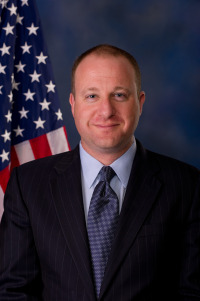
Click the link to read the article on the Aspen Times website (Robert Tann). Here’s an excerpt:
Perched above the Dillon Reservoir on the side of a mountain road in Summit County, Gov. Jared Polis on Thursday signed into law three bills aimed at bolstering the state’s water infrastructure. The measures come amid the backdrop of chronic drought and increased water demand in the West which have made finding a path towards water sustainability more urgent. Speaking amid on-and-off snow flurries and bouts of sunshine, Polis said the bills signed on Thursday will help “build a sustainable, livable future” by “securing our water for the state of Colorado.”
Here’s what the new laws do:
Better snowpack mapping
To better measure Colorado’s primary source of water supply, House Bill 1115 establishes a new statewide program for tracking snowpack…HB 1115 charges the Colorado Water Conservation Board with deploying newer methods such as light detection and ranging technology, also known as LiDAR…The technology has already been used by entities like Denver Water, Northern Water and the Colorado River Water Conservation District in recent years…The law directs roughly $250,000 from an existing cash fund over the next two years to help the program establish initial staffing and data systems. Lawmakers have acknowledged there will likely need to be additional rounds of funding in future years…
More money for water projects
State voters’ decision to approve a tax on sports betting in 2019 has provided a critical funding source for water projects, delivering as much as $30 million a year for infrastructure and conservation efforts. House Bill 1311 takes that a step further by eliminating a tax exemption for revenue generated from free sports bets…
Finding solutions to funding woes
While taxes on sports betting have helped shore up state spending on water projects, its other key funding stream risks running dry…Under Senate Bill 40, the state will commission a nine-member task force within the Department of Natural Resources to study the future of severance tax revenue and come up with solutions to better fund the state’s water needs. The task force will be required to submit a final report to the legislature in July 2026, with lawmakers hoping to turn those ideas into policy.
