Here’s Six Ways President Trump’s Budget Will Hurt Rural Americans — Michael Chameides (ColoradoTimesRecorder.com)

Vegetable harvest at an agravoltaic operation. Photo credit: Colorado Farm & Food Alliance

Click the link to read the article on the Colorado Times Recorder website (Michael Chameides):

May 23, 2025

Right now, Congress is working on a giant, fast-track bill that would make historic cuts to basic needs programs to finance another round of tax breaks for the wealthy and big corporations.

As the Communications and Policy Director for the Rural Democracy Initiative, I’ve been hearing from rural leaders across the country about the devastating impacts this bill would have.

The good news is it’s not too late. But there’s little time to spare.

This dangerous, unpopular bill would increase costs for rural working families by thousands of dollars per year, leaving millions hungry and without health care — all to provide tax breaks and handouts to the wealthy and special interests.

Here are just six of the worst provisions.

1. It guts rural healthcare.

The bill would drastically cut Medicaid and impose new barriers to care. It would take healthcare away from 13.8 million Americans and increase the cost for millions more. In some states, 50 percent of rural children get healthcare from Medicaid. Millions more rely on access to clinics and hospitals that would likely close because of these cuts.

2. It takes food off the tables of rural people.

The plan includes approximately $290-$319 billion in cuts to SNAP (the Supplemental Nutrition Assistance Program, formerly known as food stamps) even as the cost of groceries continues to escalate. More than 15 percent of families in small towns and rural areas rely on this support to feed their families.

3. It shifts costs to states and local governments.

State and local governments in rural areas depend more on federal funding from programs like SNAP and Medicaid than other states. Slashing federal funding to states would create new burdens for rural states that are already struggling to provide critical public services like health care, transportation, and emergency response services to local communities.

4. It takes away local control.

Landowners have fought to stop the use of eminent domain for carbon pipelines by passing bans and moratoria, as well as enacting county setbacks and safety requirements to protect their communities.

But this bill would overrule state and local laws and ordinances, override local voices, and deprive residents of a fair opportunity to evaluate the adverse impacts of pipelines. It also sets up a “pay to play” system under which companies can simply pay for pipeline, mining, and drilling permits — and avoid public comment and legal challenges.

5. It ends clean energy and infrastructure funding.

The bill would phase out existing tax credits for wind, solar, batteries, geothermal, clean energy, and advanced manufacturing. It would also take away $262 million in funding for energy efficiency and conservation grants as well as transportation infrastructure.

Ending these tax credits will increase household energy costs, which are already higher in many rural communities. These changes would also reduce new clean energy projects — and jeopardize billions in rural investments in clean energy manufacturing.

6. It gives handouts to agribusiness and mega farms.

Leaders in Congress are using the budget reconciliation process to give big farms a $50 billion windfall. Add the heightened pressures and instability caused by the Trump administration’s erratic trade policy and more family farmers would lose their farms — while Big Ag consolidates more of the market.

In short, this bill would make it harder for rural people to meet their basic needs — all so the wealthy and corporations can avoid paying their fair share of taxes like the rest of us do.

Lawmakers have already heard from the giant corporations who helped write the bill. Now, they need to hear from the rest of us. It’s up to us to alert our communities and tell our lawmakers: Don’t sell rural America out to big corporations and the wealthy.
#Utah creeps deeper into #drought as long-term forecasts point to a hot summer — Kyle Dunphey (UtahNewsDispatch.com)

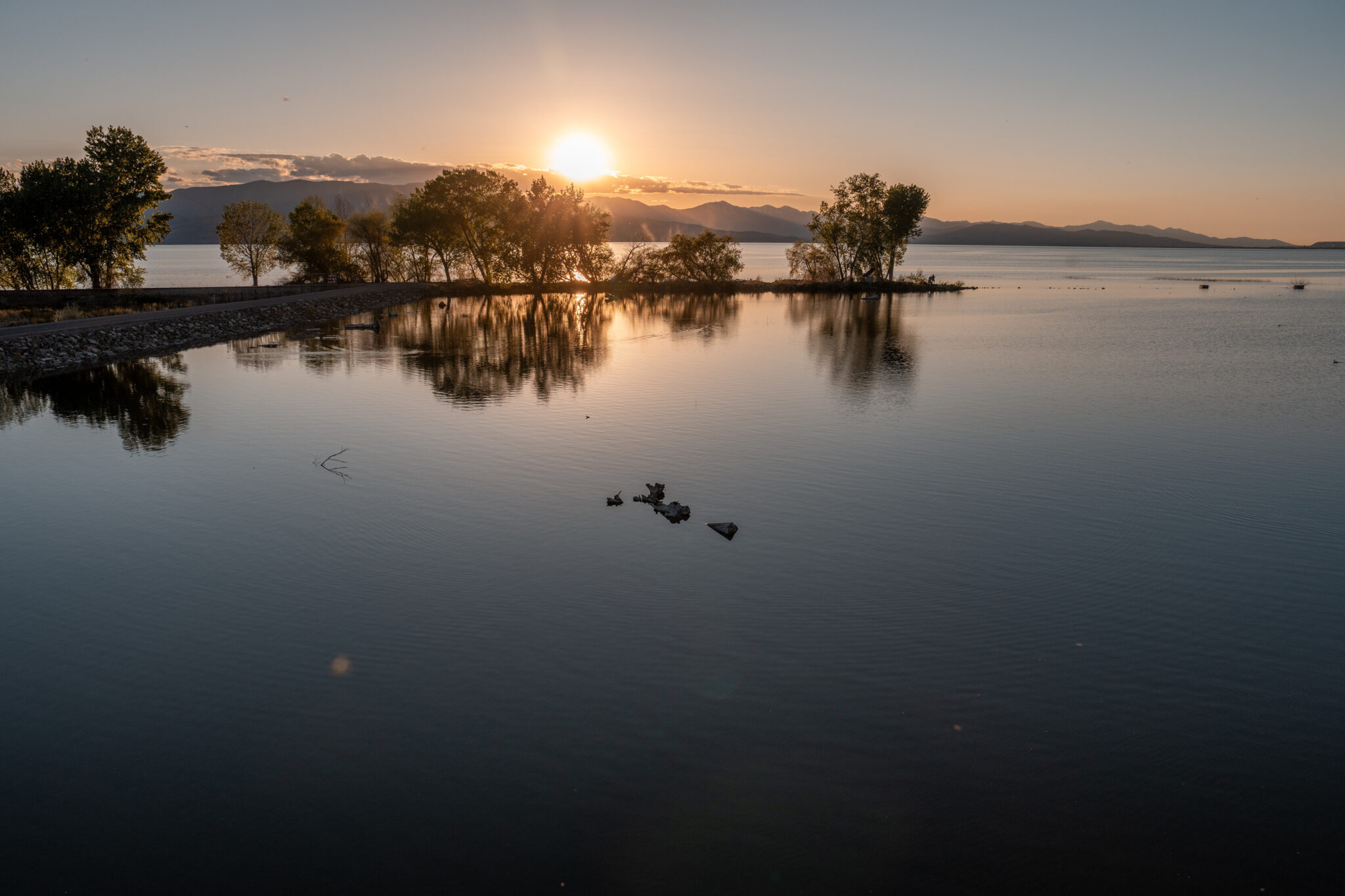
Trees line the banks where the Provo River Delta flows into Utah Lake on Wednesday, May 7, 2025. (Photo by Spenser Heaps for Utah News Dispatch)

Click the link to read the article on the Utah News Dispatch website (Kyle Dunphey):

May 23, 2025

Drought is starting to creep back into Utah on the heels of an average winter, with long-term forecasts pointing to an abnormally hot summer. 

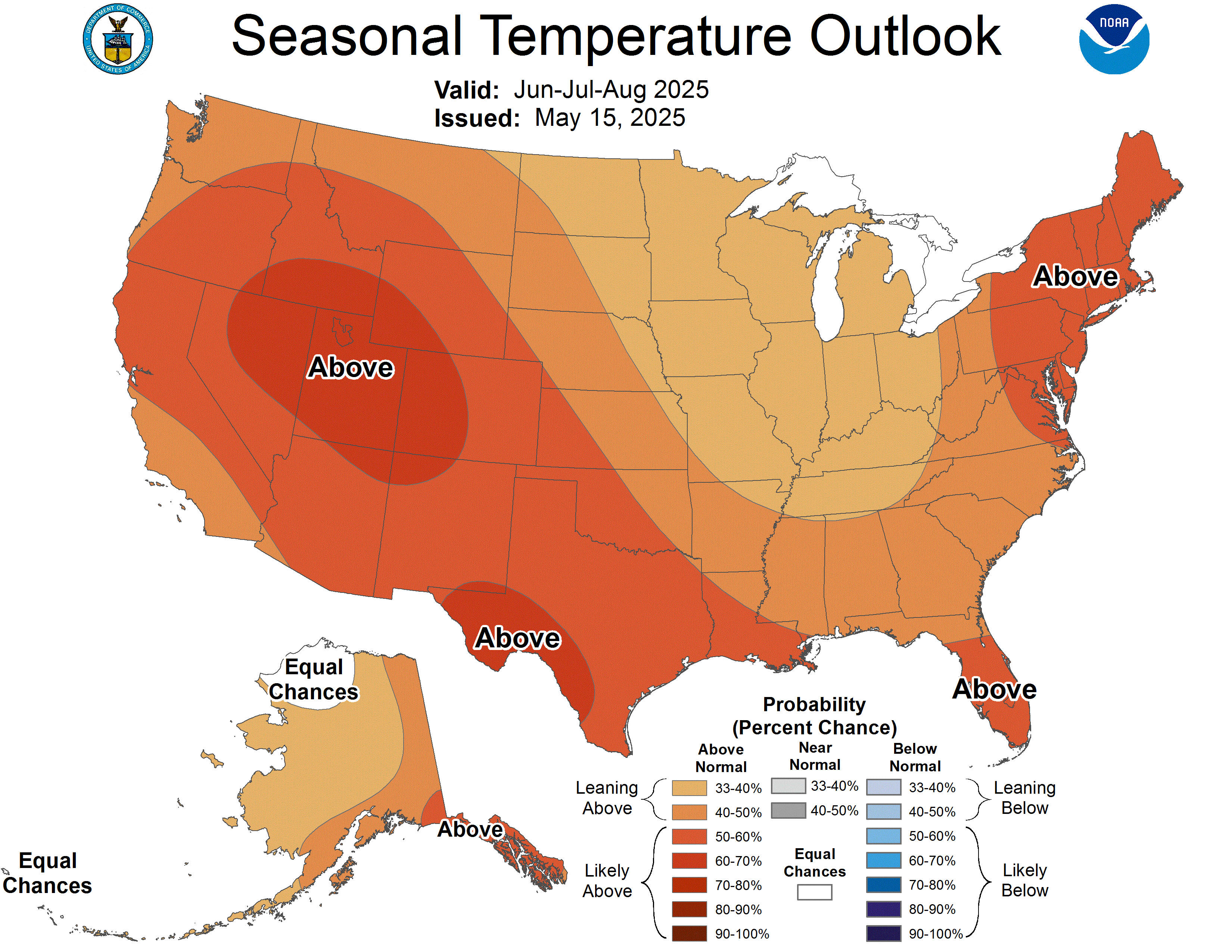
According to the three month seasonal outlook from the National Weather Service, the Beehive State is expected to have above average temperatures through August. Meanwhile, the service says it’s unclear whether there will be above or below average precipitation this summer — according to its models, there’s an equal chance of both. 

“Hotter doesn’t always mean drier. We are right now showing for most of the state at about equal chances of average precipitation,” said Joel Williams, deputy director of the Utah Division of Water Resources, speaking to lawmakers earlier this week. 

Those three month outlooks are not an exact science — but they do come amid increasingly bleak water conditions for much of the state. Despite an average snow year for northern Utah, the southern regions had a “dismal” winter, Williams said. 

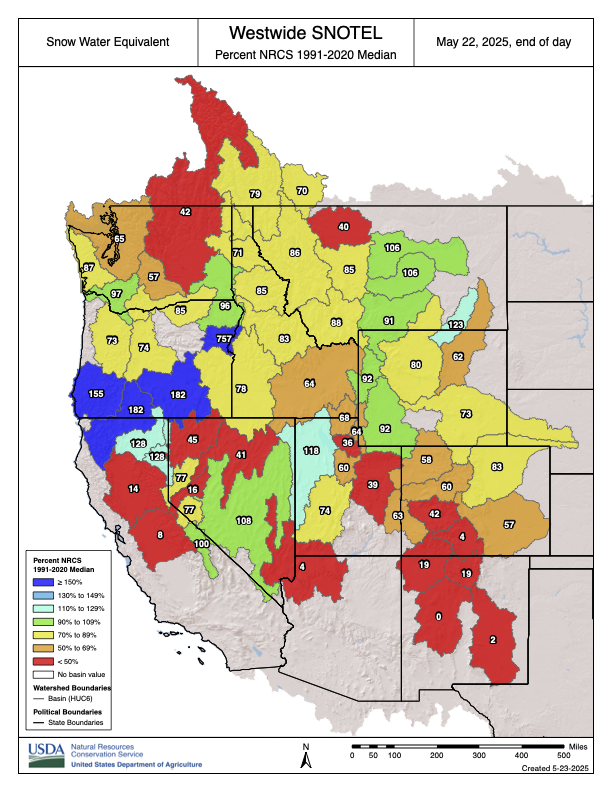
Westwide SNOTEL basin-filled map May 22, 2025 via the NRCS.

The snowpack for some basins in the southwest veered into unprecedented territory this winter and according to the Natural Resource Conservation Service, much of southern Utah remained below 45% of normal moisture. 

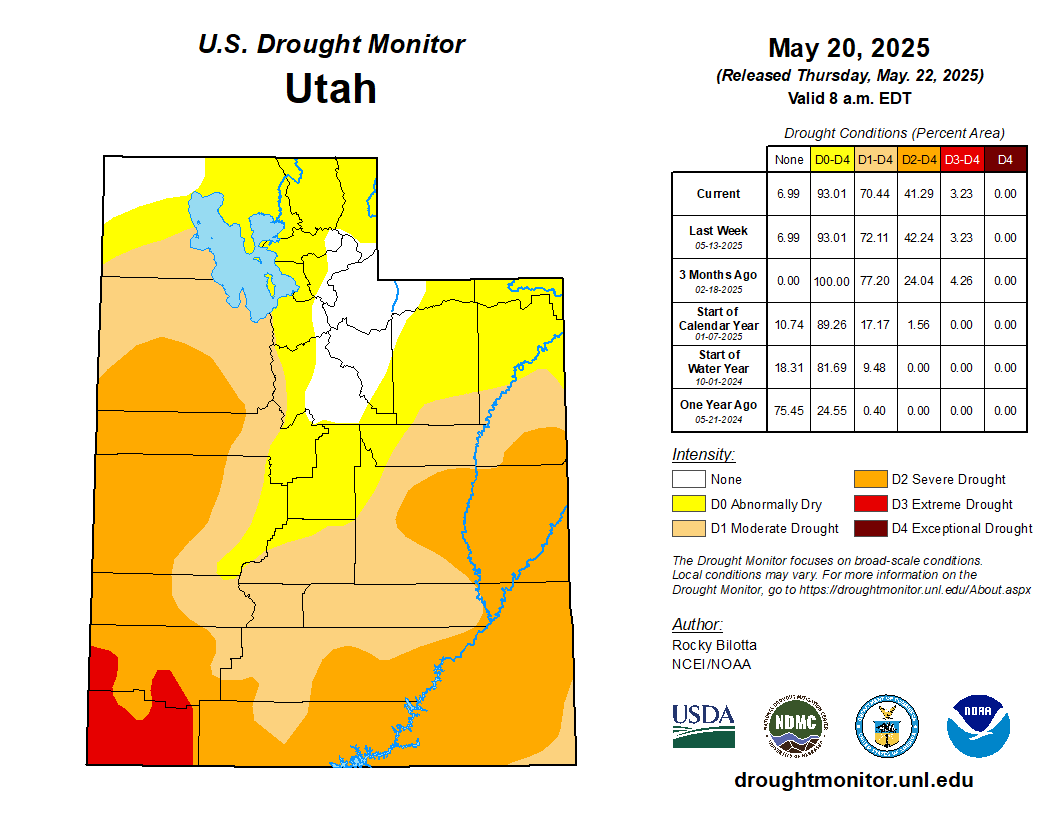
Utah Drought Monitor May 20, 2025.

And across the state, drought is starting to rear its head again after two good years. This time last year, about 25% of the state was considered abnormally dry, while just 0.2% was in moderate drought — now, 39% of Utah is in severe drought, with 3% in extreme drought, according to data from the U.S. Drought Monitor. 

Just the high elevation areas of Utah, Salt Lake, Wasatch, Summit and Morgan counties, and a sliver of Box Elder County, are in the clear. The rest of the state is facing at least abnormally dry conditions. 

Most of Washington County is in extreme drought, extending into parts of Iron County. And Tooele, Juab, Millard, Beaver, Iron, Kane, Garfield, San Juan, Grand and Uintah counties all have areas in severe drought. 

“The last two years of above average snowpack helped us but now we’re starting to see the drought creep back in. And as we say in Utah, we’re either in drought or preparing for the next one,” Williams said. 

Those conditions led Utah Gov. Spencer Cox to issue a drought-related emergency declaration, giving farmers in the state access to low-interest loans to help weather the dry conditions. 

Eligible farmers can apply for seven-year loans of up to $100,000 each, with two years of no interest and 2.75% interest thereafter, according to the department. Applications for the loans will be accepted until Oct. 23. 

The good news, Williams said, is Utah’s reservoirs are in healthy shape. Across the state, reservoir levels are about 20% higher than normal, with nearly every reservoir in northern Utah above 80% capacity. Utah Lake, Strawberry, Jordanelle, Deer Creek, Rockport, Smith and Morehouse, Pineview and Starvation reservoirs are all around 95% or higher. 

“Those full reservoirs that we have, those could really help us if we’re heading into another drought,” said Williams. 

Feds won’t flood the #GrandCanyon this spring. What that will mean for the #ColoradoRiver — AZCentral.com #COriver #aridification

Glen Canyon Dam during high flow experimental release about a decade ago. These occasional releases are just about the only time the river outlet works (where water is gushing out above) operate. Photo credit: Jonathan P. Thompson/The Land Desk

Click the link to read the article on the AZCentral webiste (Brandon Loomis). Here’s an excerpt:

May 23, 2025

Story Summary

  • Federal officials have confirmed that they will not flood the Grand Canyon this spring, citing ongoing work on Glen Canyon Dam and in the Colorado River downstream.
  • Colorado River advocates say failing to flood the Canyon will hurt efforts to restore beaches and preserve the environment below Glen Canyon Dam.
  • Some river advocates say the government’s decision may run afoul of the Grand Canyon Protection Act, which requires the feds to preserve ecological and recreational aspects of the Canyon.

Federal officials have rejected a plan to release floodwaters from Lake Powell to restore Grand Canyon beaches this spring, frustrating river advocates who question the government’s commitment to protecting the canyon’s environment…With repeated decisions not to open the floodgates even when the sand is available, some are questioning whether the Glen Canyon Dam Adaptive Management Program is preserving Grand Canyon’s ecology and recreation as required under the Grand Canyon Protection Act of 1992…

“We are failing,” said Ben Reeder, a Utah-based river guide who represents the Grand Canyon River Guides on a technical work group that considers management options for the Reclamation Bureau.

Reclamation officials said in April that they would recommend that new Interior Secretary Doug Burgum not authorize the flood because a National Park Service contractor was excavating in a slough downstream of the dam to disrupt its use as a spawning bed by non-native fish, including smallmouth bass. Work on relining the bypass tubes to protect their steel pipes also interfered…The floods cost perhaps $1 million or $2 million in lost hydroelectric production, according to Leslie James, who represents mostly rural and tribal power consumers in the program as executive director of the Colorado River Energy Distributors Association. Last year, when there was no major flood but the dam managers regularly pulsed cold water through the bypass tubes to keep the river inhospitable to bass spawning, the agency said the cost in lost power production was $19 million. The losses deplete a fund that pays for dam maintenance and environmental programs, James noted, and drawing more from that fund this year could cause delays in maintenance.