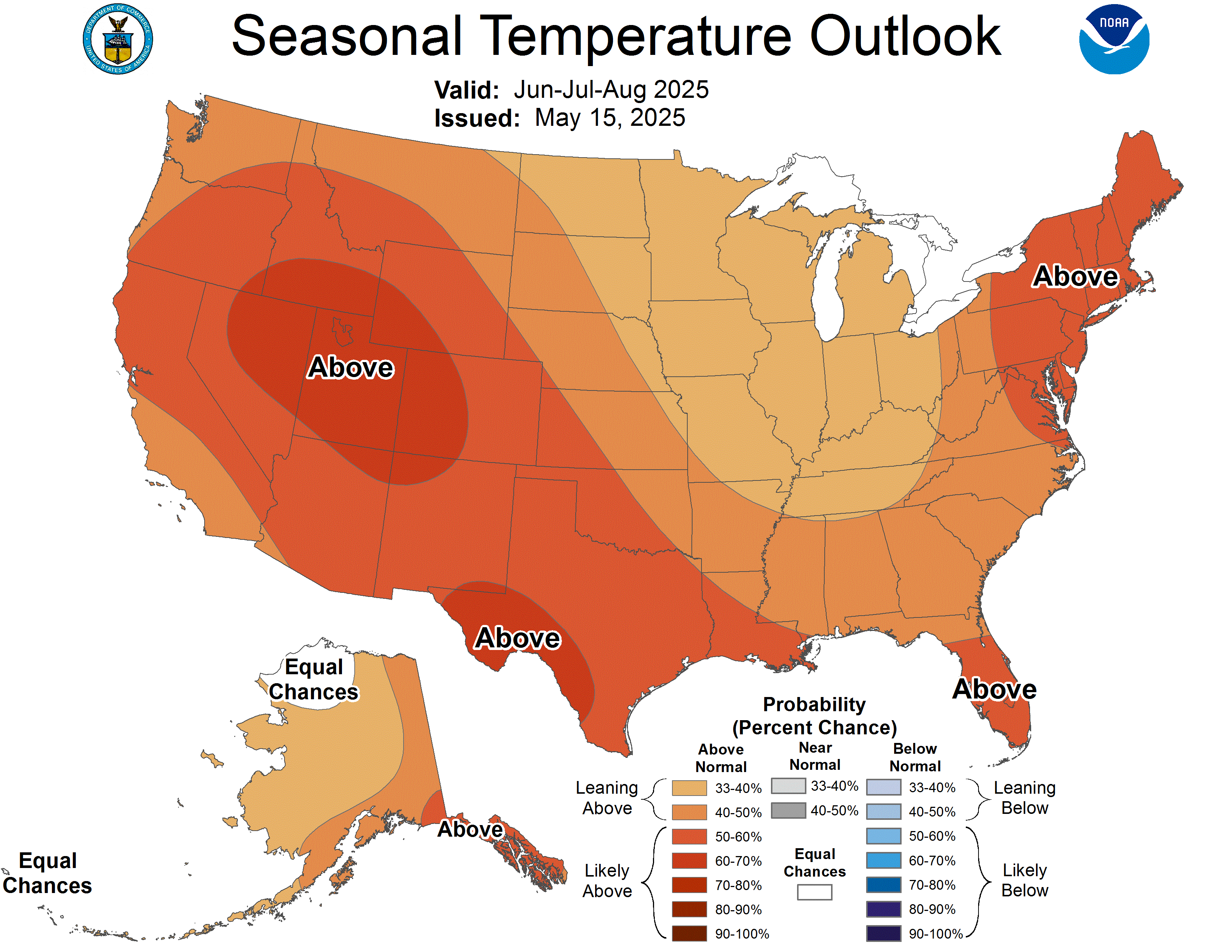
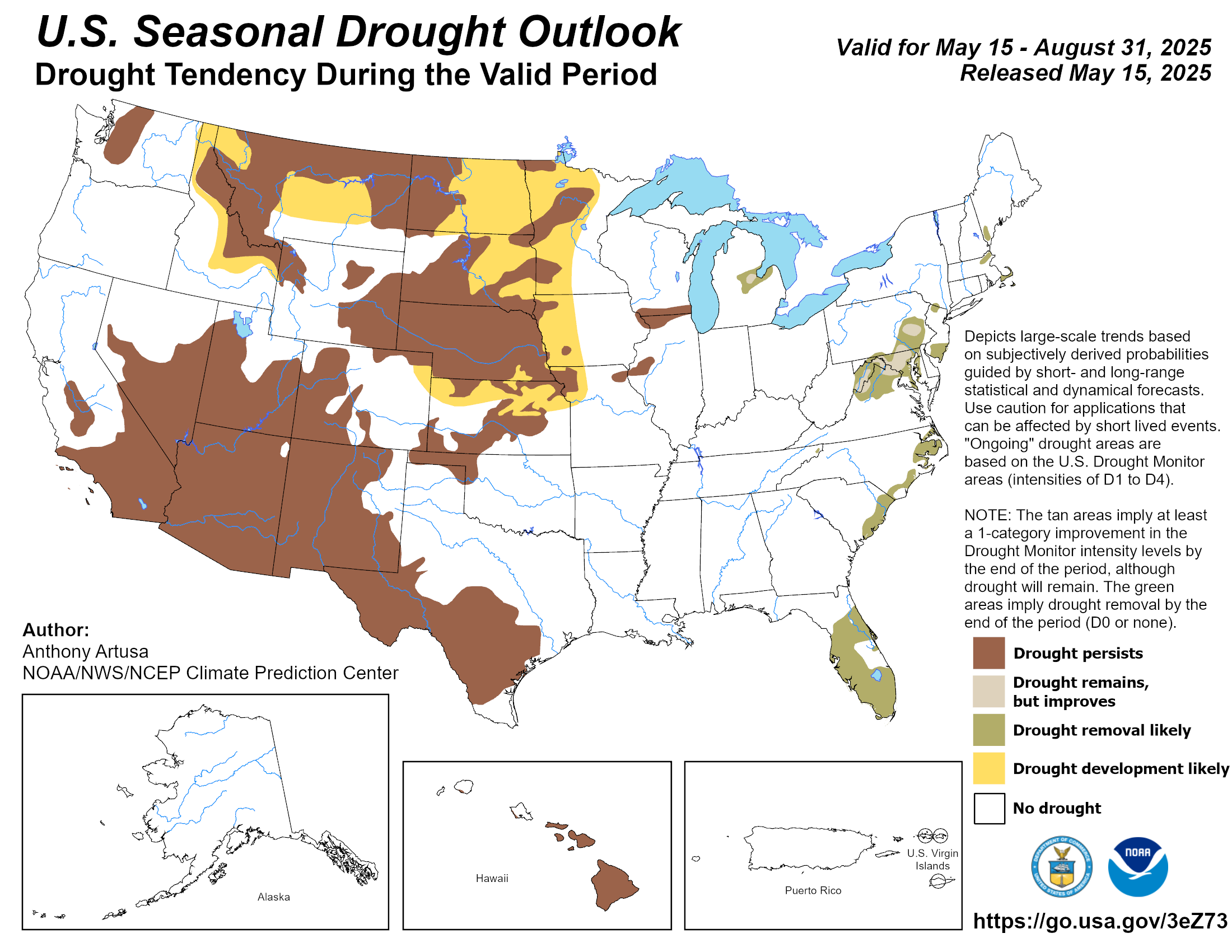

Click on a thumbnail graphic to view a gallery of drought data from the US Drought Monitor websiite.
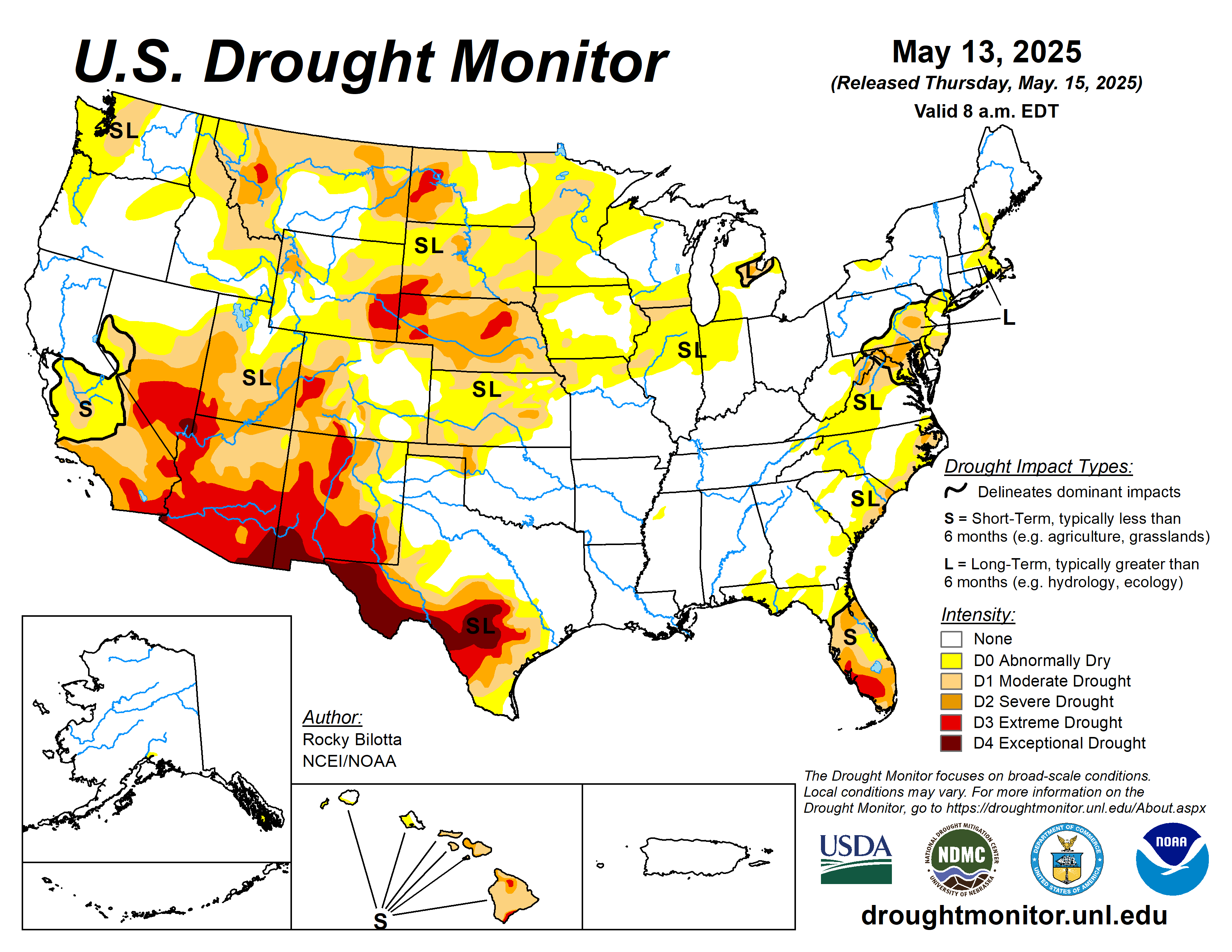
Click the link to go to the US Drought Monitor website. Here’s an excerpt:
This Week’s Drought Summary
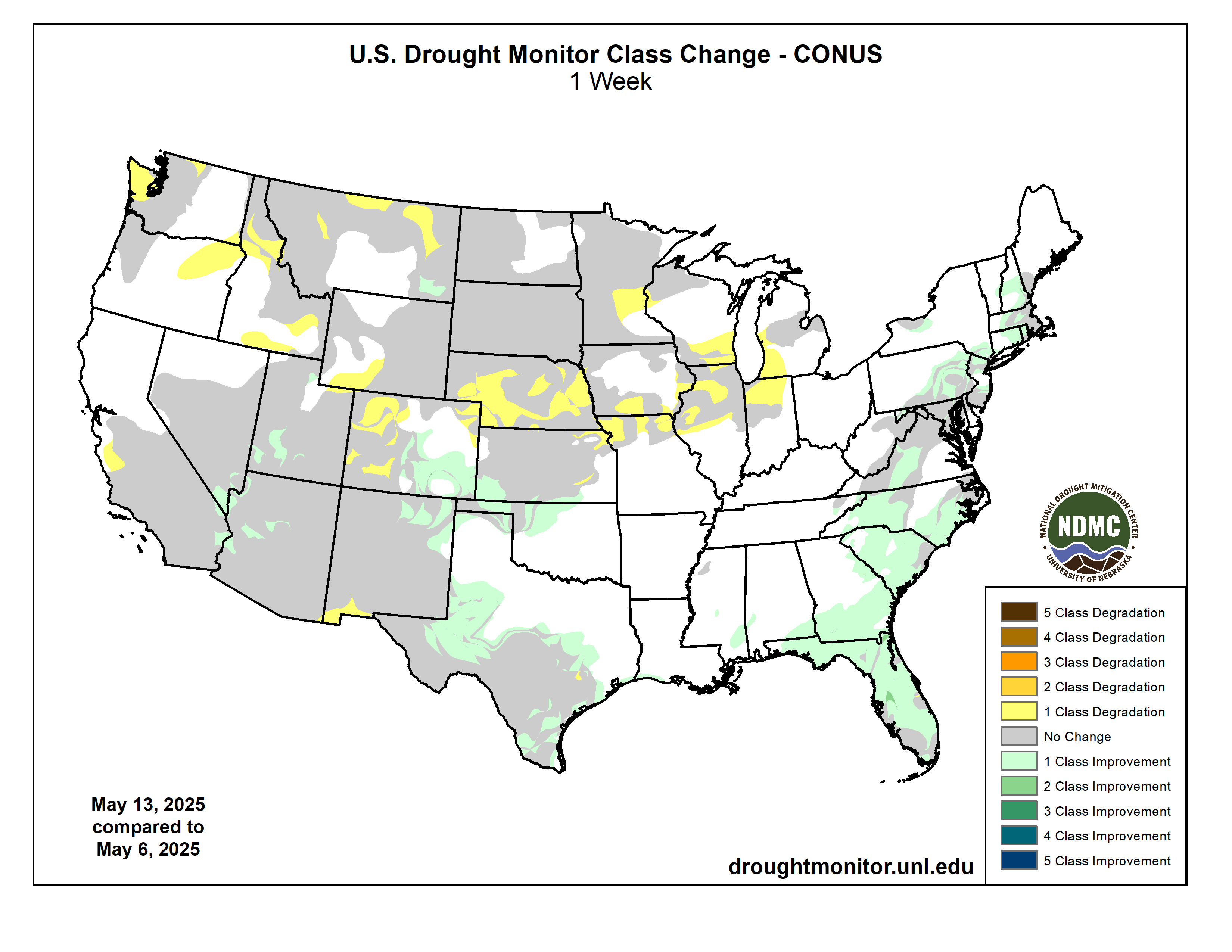
Precipitation fell across much of the U.S. this week, with heavier amounts (> 1 inch) falling from portions of the central and southern Plains eastward to the East Coast, and also in parts of the West, Hawaii, and southern Alaska. Much of the Southeastern U.S., from eastern Texas to North Carolina, reported weekly rainfall totals between 2 to 10 inches, while similar amounts (2 to 6 inches) were reported in parts of the Northeast. Above-normal precipitation supported drought improvements across large portions of the South, Southeast and Northeast, and in parts of the Southwest and High Plains. Conversely, weekly precipitation totals were below normal across much of the West to the Midwest. Drought and abnormal dryness were expanded or intensified in northern portions of the West and Midwest, as well as parts of the Southwest and High Plains. Temperatures were above normal across much of the U.S. this week, with areas of the north-central U.S., from central Montana to Minnesota, reported temperatures 9 to 20 degrees above normal. Below-normal temperatures were observed from the southern Plains to parts of the eastern Midwest, where departures were up to 10 degrees F below normal, with the largest departures being reported in parts of Texas…
High Plains
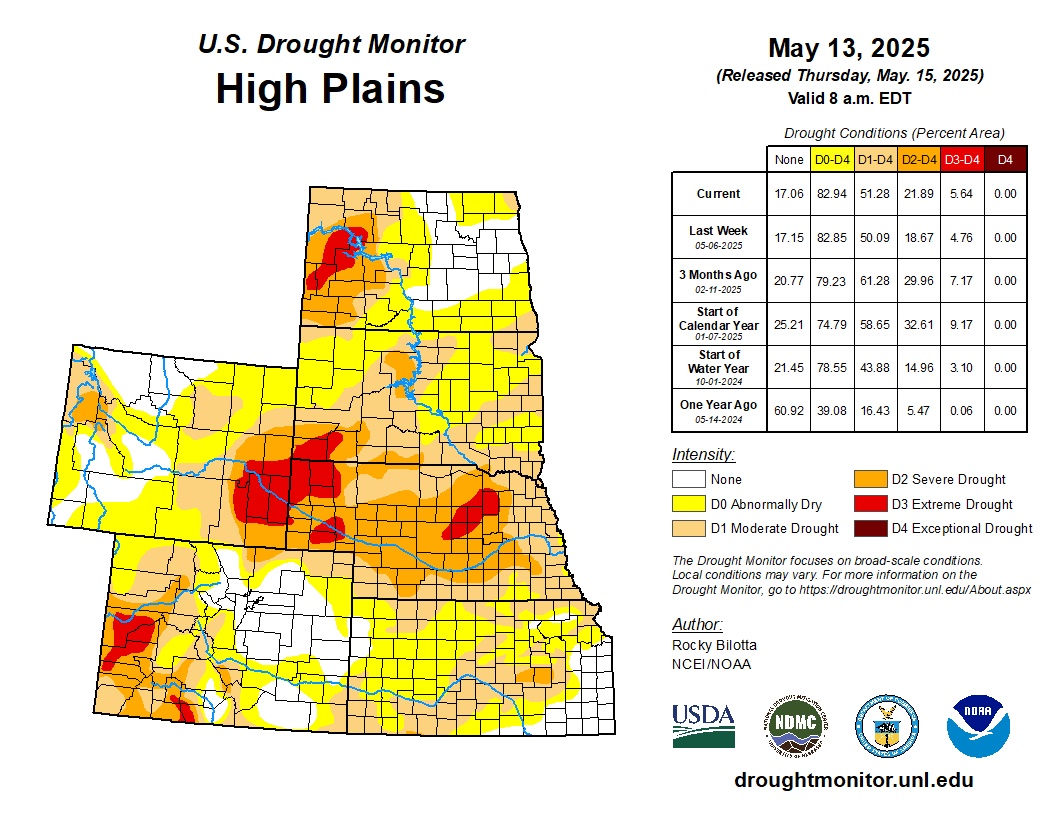
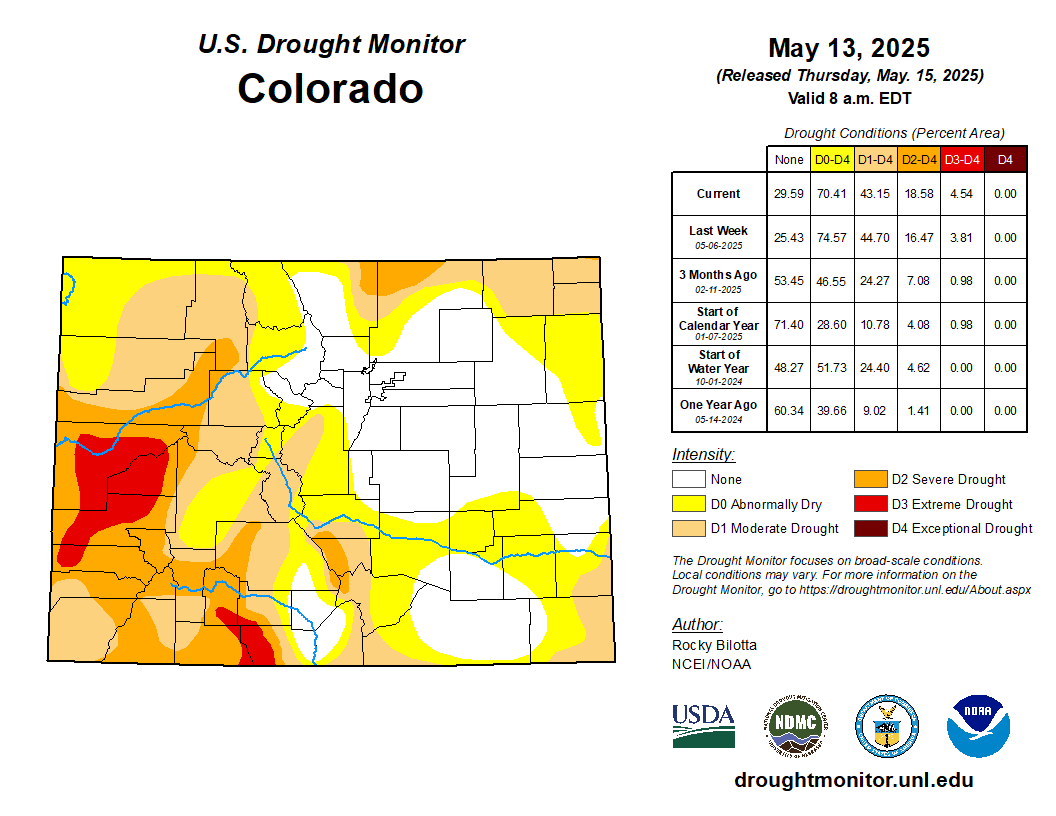
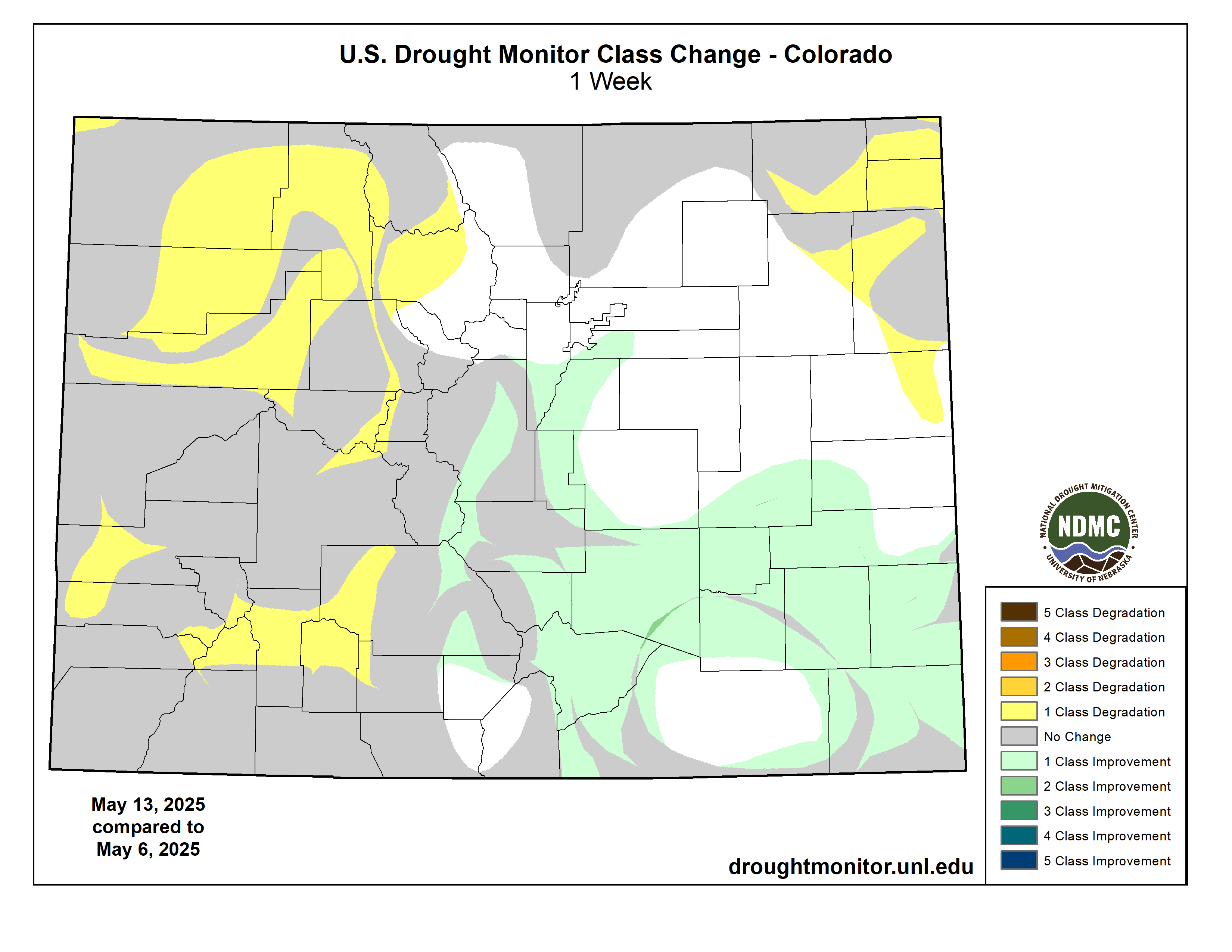
Warm temperature dominated the High Plains this week, with departures ranging up to 20 degrees F above normal, especially along the northern portions of the region, while cooler-than-normal temperatures were observed along the southern border. Precipitation fell across the western and southern portions of the region this week; however, in most areas, amounts were insufficient for significant improvement. Beneficial heavy precipitation (1 to 3 inches) in eastern Colorado and Kansas led to improvements in moderate to severe drought (D1-D2) and abnormal dryness (D0) in these areas. Conversely, dry conditions resulted in the introduction and expansion of drought. Extreme drought (D3) was introduced in western Nebraska, and moderate to extreme drought (D1-D3) expanded in western Colorado and eastern Nebraska. Abnormal dryness was also expanded in southern Wyoming this week…
West
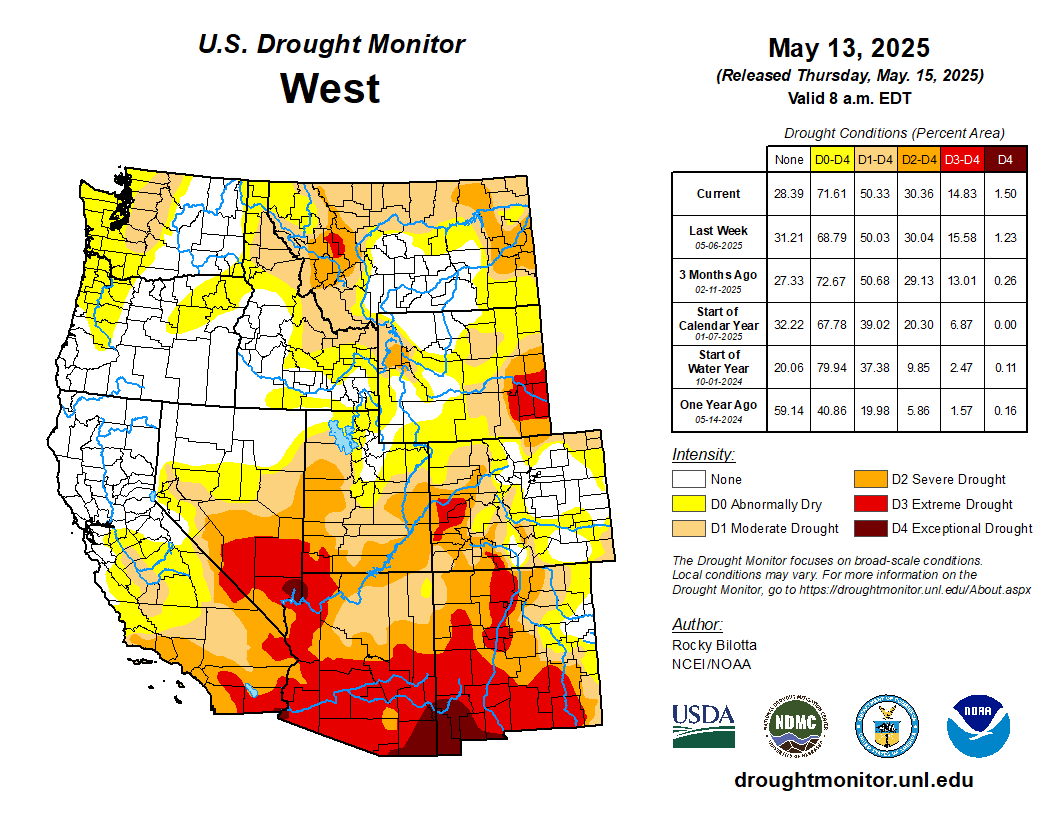
Average temperatures were above normal across nearly the entire region this week, while below-normal temperatures were observed across much of New Mexico, and in parts of Arizona and along the coast of Washington, Oregon, and California, where temperatures were between 1 to 6 degrees F below normal. Conversely, Montana observed temperatures ranging between 3 to 15 degrees F above normal this week. Precipitation varied across the region this week, with beneficial amounts falling in parts of the Southwest and southern Montana. Exceptional drought (D4) was improved along the Nevada-Arizona border, while extreme drought (D3) was trimmed back in southern Utah, southern Nevada, eastern California, and western Arizona. Severe drought (D2) was improved in parts of Utah, Arizona, while moderate drought (D1) was reduced in Montana. Conversely, above-normal temperatures and below-normal precipitation resulted in the expansion of exceptional drought in southern New Mexico, severe drought in Montana, and moderate drought in northern portions of Washington, Idaho and Montana. Abnormal dryness (D0) was also expanded in western Washington, northeast Oregon, northern and southern Idaho, and in southern California this week…
South
Cooler temperatures dominated the South this week, with departures ranging up to 9 degrees F below normal. However, small areas of Texas, Oklahoma, Mississippi, and Tennessee observed temperatures slightly above normal this week, with temperatures between 1 to 3 degrees F above normal. Precipitation varied across the region this week, with heavier amounts (1 to 8 inches) falling across much of Louisiana and Mississippi, and in parts of Oklahoma, Texas, and southern Arkansas. Moderate to exceptional drought (D1-D4) was improved in parts of western, central, and southern Texas, while moderate to severe drought (D1-D2) was improved in western Oklahoma. Improvements to abnormal dryness (D0) were made in Oklahoma and Texas, and abnormal dryness was removed from southern Mississippi and southern Louisiana. Drought reduction and improvements were based on precipitation totals, short-term SPI/SPEI, NDMC short-term blends, and improvements to streamflow and soil moisture data…
Looking Ahead
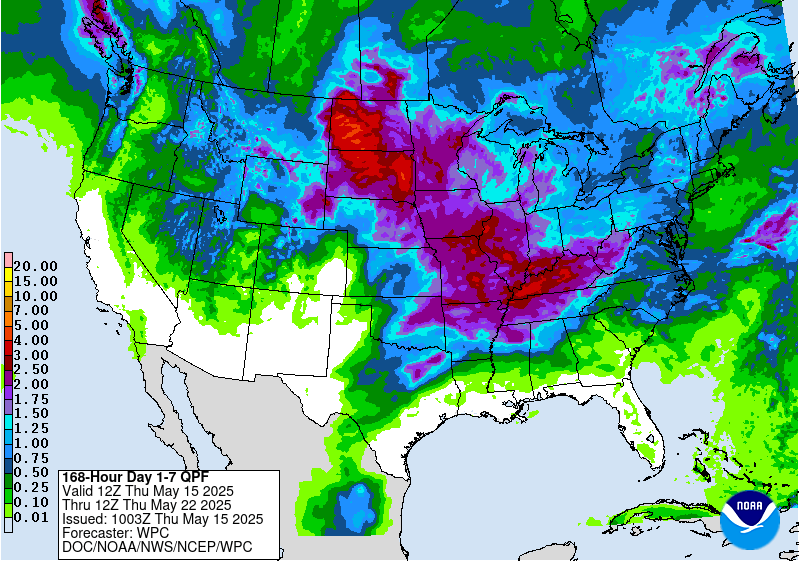
During the next five days (May 13–17, 2025), the slow moving upper low across the Southeast U.S. will be weakening and evolving into an open trough by Thursday as it exits the East Coast. Another upper trough and closed low across the Northern Rockies mid-week will sustain a surface low crossing the Northern Plains and then into south-central Canada by the end of the week, with heavy rain for the Dakotas/Minnesota and late season mountain snow for the northern Rockies. Going into Thursday, the heavier rainfall reaches eastern North Dakota into northern Minnesota, with some of the guidance indicating the potential for 1-2 inch rainfall totals with some embedded convection. Very warm weather will continue across the Upper Midwest for the middle of the week, with highs reaching 85-90 degrees on Wednesday across the eastern Dakotas and much of Minnesota. The anomalous warmth then shifts eastward to the Great Lakes and Ohio Valley regions to close out the week, and much of the East Coast Friday into Saturday ahead of the cold front. Very hot conditions are expected across southern Texas for the entire forecast period with highs exceeding 100 degrees near the Rio Grande, and HeatRisk reaching the major category for these areas. In contrast, chilly conditions are likely for the Intermountain West and Northern Rockies with highs running 5-15 degrees below average with the upper level trough and increased cloud cover.
The Climate Prediction Center’s 6-10 day outlook (valid May 18–22, 2025) favors above-normal precipitation across most of the U.S., with below-normal precipitation favored in portions of the West Coast states and the Florida Peninsula. Increased probabilities for above-normal temperatures are forecast for Hawaii, from the southern Plains to the Southeast, and in parts of California, Nevada, and southern Alaska.

Click the link to read the article on the AZCentral.com website (Branson Loomis). Here’s an excerpt:
May 13, 2025
Key Points
- Arizona has “real skin in the game” as negotiations continue over shares of a smaller Colorado River, Gov. Katie Hobbs said. Now she wants other states to step up.
- The seven Colorado River states are trying to reach a shortage-sharing agreement this year, but are also looking to the new Trump administration to see if there are alternatives.
- Arizona officials say other parts of the state, such as Yuma, may have to take cuts. Tribes say they expect the state to honor settlements.
Arizona is doing its part and taking its hits to conserve the Colorado River, Gov. Katie Hobbs said, and it’s time for upstream states to do the same. The governor assembled a roundtable of water users and officials on May 13 to present what she called a unified front among the state’s interests in defending Arizona’s share of the Colorado River as time runs short for reaching a deal with other states that use the water. So far, states upstream from Arizona have not offered cutbacks beyond the limits that a paltry snowpack naturally extracts from their farmers.
“It’s been more than a little frustrating,” Hobbs said. “We’ve come to the table with real solutions, with real proposals. We have real skin in the game,” she said, including billions of dollars in water infrastructure upgrades and in conservation agreements that keep water in the river’s reservoirs. “The upper states need to be willing to take their share as well.”
[…]
So far, the Rocky Mountain states known collectively as the Upper Basin have declined to specify new cuts they might take, because they say they already suffer the consequences of a reduced snowpack that shortchanges their farmers every year. The federal government has paid some Lower Basin farmers and others to cut back on their demands from Lake Mead’s storage bank, and the four Upper Basin states of Colorado, New Mexico, Utah and Wyoming argue that their year-in, year-out hardship is unrewarded and largely invisible to water users in the Southwest.


Click the link to read the release on the Denver Water website:
May 8, 2025
Following a day of testimony on May 6, Denver Water has been asked by U.S. District Court Judge Christine Arguello to provide the court with the utility’s final summary highlighting its position following the witness testimony and exhibits. There isn’t a specific timetable set for this yet.
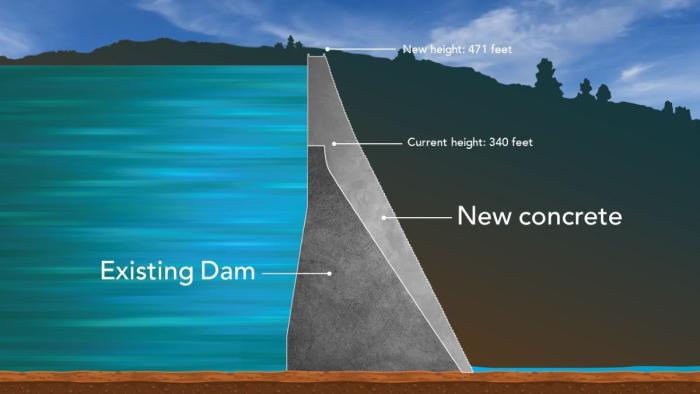
The focus of the hearing was for the judge to determine if construction can safely stop while Denver Water moves forward on an additional permitting review as the court ruled on April 3. Here is Denver Water’s statement on the risk presented by delaying construction:

Denver Water has already started the appeal process with the 10th Circuit Court of Appeals. As part of this, the project has been allowed to continue (under a temporary stay) while legal proceedings are underway.