President Trump asks Congress to cut at the heart of the West: The White House wants to alter life for U.S. hunters, anglers, RVers, off-road-vehicle drivers, backpackers, birdwatchers and hikers — Christine Peterson (High Country News)

Click the link to read the article on the High Country News website (Christine Peterson):

May 12, 2025

The Ash Meadows National Wildlife Refuge in southwest Nevada harbors four endangered species, including the Amargosa pupfish, a tough little fish that has been around since the Pleistocene. The Wyoming toad, which makes its home in southeast Wyoming’s Mortenson Lake National Wildlife Refuge, is one of North America’s most endangered amphibians. And the Arctic National Wildlife Refuge protects one of the world’s largest onshore denning sites for polar bears.

All these bumpy, feathery, furry and increasingly rare species are part of the astonishing biodiversity in the United States that helps keep our planet alive and healthy. Now, every bit of that biodiversity — the fish and wildlife and the land and water that they all need to survive — face what conservation advocates call an existential crisis owing to draconian budget cuts proposed in the name of improving government efficiency. 
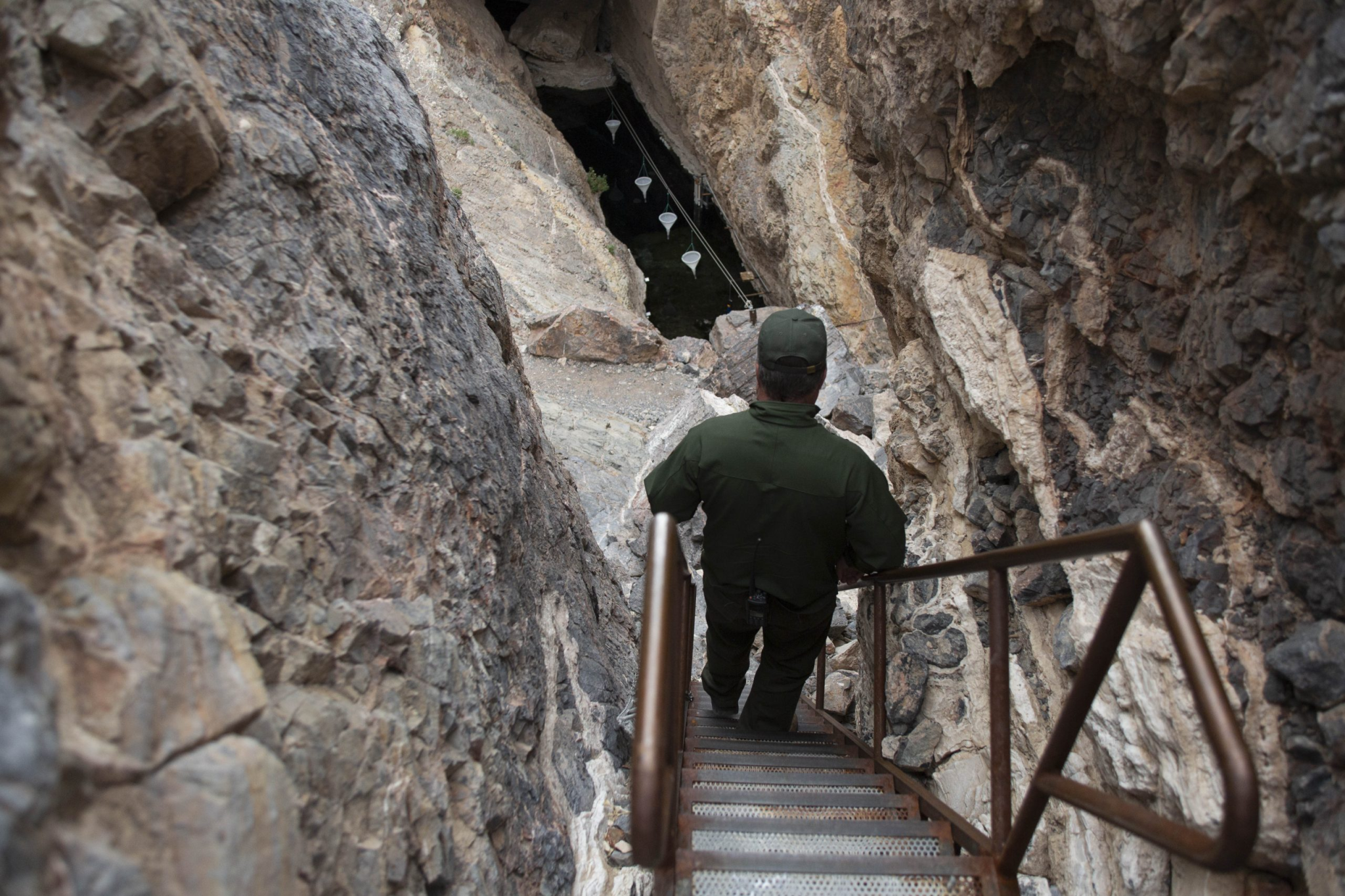
An employee descends stairs to Devils Hole, home of Devils Hole pupfish, in a remote unit of Death Valley National Park near Ash Meadows National Wildlife Refuge, Nevada. Luna Anna Archey/High Country News

President Donald Trump’s recently released federal budget asks Congress to slash more than $900 million from the National Park System, $564 million from the U.S. Geological Survey’s science and research programs and almost $200 million from the Bureau of Land Management, along with $170 million in U.S. Fish and Wildlife Service conservation grants. And while the president’s budget is far from final — Congress ultimately controls the power of the purse — advocates say the past 100 days of Trump’s presidency have shown that the current Republican-led Congress is either unable or unwilling to stand up for public lands and wildlife protections. In fact, a House committee voted shortly before midnight Tuesday to begin selling off hundreds of thousands of acres of public land in Utah and Nevada

If Trump’s current proposals become reality, advocates warn that the West as we know it will be permanently changed, home to neglected and shrinking public land with fewer national parks, diminished fish and wildlife, and increasingly out-of-control wildfires.

“This is short-term thinking at its absolute worst,” said Walt Gasson, a fourth-generation Wyoming hunter and outdoorsman. “We are standing by letting people make decisions for us that don’t reflect our own legacy, what we want to leave for our grandkids.”

“No more hiking, no more biking, no more grazing”

The proposed cuts to the National Park Service are some of the most alarming so far, and a shocking omen for anyone that goes outdoors.

Slashing $900 million from the agency budget is the equivalent of closing 350 national park sites, said Kristen Brengel, with the National Parks Conservation Association. And, in fact, Trump’s budget calls for “transferring smaller, lesser visited parks to state and tribal governments.”

The White House cannot unilaterally sell off parks, but it can cut staffing, and that is something that has Brengel seriously worried. This year alone, the Park Service has already lost at least 2,700 employees through buyouts and deferred resignations, and she expects more layoffs soon. 

“They will make it impossible to open the parks to the public,” she said. 

Interior Secretary Doug Burgum signed an executive order in early April saying that parks and historic sites would remain fully open, but Brengel noted that this contradicts the White House’s priorities, which include shuttering those sites and transferring control of them to the states. And while Burgum promised to fully staff parks for the coming summer, many remain critically short, some still lacking superintendents and maintenance chiefs.

The White House’s proposed cuts will hit more than the parks, though: They will impact all federally owned public lands, including wildlife refuges, said Christian Hunt of Defenders of Wildlife. A leaked Department of Interior strategic plan called for national monuments to be “correctly sized” and “heritage lands and sites returned to states.”

A ranger-led sunset walk at White Sands National Park, New Mexico, in 2019. This year, the Park Service has already lost at least 2,700 employees through buyouts and deferred resignations. Luna Anna Archey/High Country News

Meanwhile, the House Natural Resources Committee voted late Tuesday night to sell public land in Nevada and Utah, at the same time requiring massive increases in timber production and coal, oil and gas extraction while deeply cutting the royalty rates companies pay to lease public lands. Estimates vary but the total acreage includes several hundred thousand acres across the two states.

“In the dead of night, 26 members of Congress, with no debate or explanation, voted to sell off public land that belongs to all Americans,” wrote Aaron Weiss with the Center for Western Priorities. “Once these lands are gone, they’re gone forever — that means no more hiking, no more biking, no more grazing, no more habitat for wildlife.”

All the changes to public lands and public-land agencies come on top of deep cuts to scientific research. The president’s proposed budget would also likely cancel out all cooperative fish and wildlife units and focus instead on “achieving dominance” in energy and critical minerals. And some worry those cuts will come even before Congress considers the president’s recommendations; sources tell High Country News that 1,000 employees in the USGS Ecosystem Services will be laid off soon.

The scientists whose jobs are on the chopping block identify and map big game migrations and figure out the best locations for constructing the wildlife over- and underpasses that save countless human and animal lives. They monitor grizzly bear numbers and perform annual migratory bird counts to set hunting limits, said Ed Arnett, CEO of The Wildlife Society. They are critical to maintaining healthy fish and wildlife populations.

Part of a plan

To Land Tawney, all this is part of a plan to “dismantle, defund and divest” federal public lands. It’s why the president’s budget calls for consolidating all wildland firefighting operations under the Interior Department, he said, which is currently being managed by DOGE operative Tyler Hassen. 

“Chaotic is one word for this,” said Tawney, co-founder of American Hunters and Anglers, “but crisis is another.”

Regardless of political party, the general public does not, as a rule, support transferring national parks, historic sites or wildlife refuges to states or reducing permit oversight on oil, gas and mining development. But if public lands are mismanaged badly enough for long enough, Tawney said, selling them off may become inevitable.  And selling places like national wildlife refuges will mean no more homes for fragile — and not so fragile — fish and wildlife populations, including the Wyoming toad and Nevada pupfish.

While Tawney said this is one of the darker periods in U.S. history, he hopes that all the federal staff firings, cuts to scientific research and other efforts to devalue and sell public lands will finally galvanize anyone who cares about the outdoors and conservation. 

“I think we’re starting to coalesce around pushing back on these ill-fated ideas,” he said. “And collectively, not just the hunting and fishing community, but the entire outdoors community.”
Public water systems and wildfires: The fires in LA put a spotlight on fire hydrants; where does #Denver stand? — Jimmy Luthye (News on Tap)

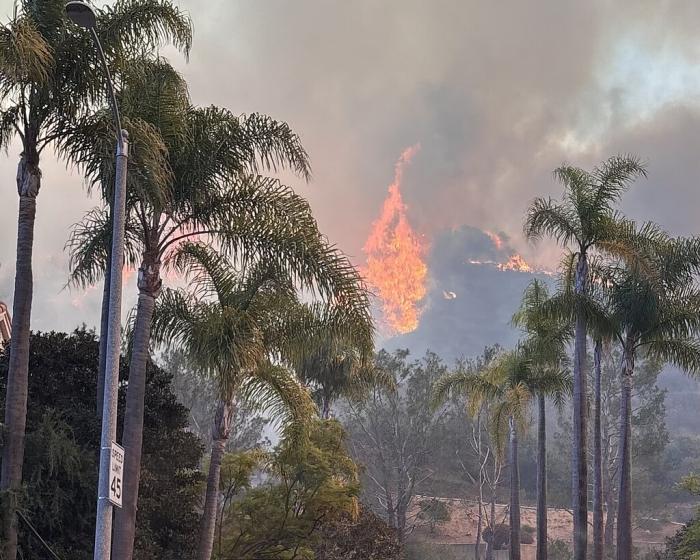
The Palisades Fire, photographed here from Palisades Drive, ignited Jan. 7, 2025, in the Santa Monica Mountains of Los Angeles County. It spread rapidly because of hurricane-force Santa Ana winds, burning for 24 days, consuming more than 23,000 acres and destroying 6,837 structures. Photo credit: Ariam23, Wikimedia Commons, CC BY 4.0

Click the link to read the article on the Denver Water website (Jimmy Luthye):

April 2, 2025

One of the initial concerns during the series of tragic Los Angeles wildfires that burned in January 2025 was whether fire hydrants were ready to combat the inferno that left so much destruction in its wake.

The reality is that public water systems aren’t designed to fight wildfires, as High Country News noted in this January 2025 article.

To be clear, and as Denver7 highlighted in January, public water systems are designed to help firefighters battle urban fires.

For instance, Denver Water’s system includes built-in redundancies to ensure it can meet water demand, and the utility continually invests in the system to keep it that way.

Denver Water’s distribution system includes 31 treated water storage tanks across the metro area (many of which have been upgraded in recent years), more than 3,000 miles of pipe and 22,000 fire hydrants, along with dedicated mechanics who focus on maintaining those hydrants and keeping them in top condition.

During a fire in the Denver Water service area, its operators can analyze and adjust the operation of the distribution system so that firefighters have the water pressure they need to fight the blaze. The utility also will send experts to the scene to help maintain pressure.

The system of hydrants is not designed, however, to provide sufficient flows for a long enough period to effectively battle long-lasting, wind-driven, large-scale wildfires. Hydrants are pressurized and are crucial to fighting structure fires, but they can only do so much. And when many hydrants are in use in the same area at the same time, water pressure is going to weaken.

While Denver Water can store millions of gallons of drinking water in dozens of large water storage tanks around town to accommodate increases in demand, there are limits — like being able to provide enough water to fight a wildfire.

Fortunately, much of Denver Water’s service area is in a different environment compared to Los Angeles. But that doesn’t mean the area is immune, as there are portions that blend wildland environments with urban communities.

In fact, just last summer a string of wildfires ignited during the same week in the foothills along the Front Range. The fires required aggressive coordination from fire departments up and down the corridor, alongside state and federal agencies, to extinguish, with a focus on wildland firefighting. Wildland fire responders cleared fire lines and fought the fires from the air.

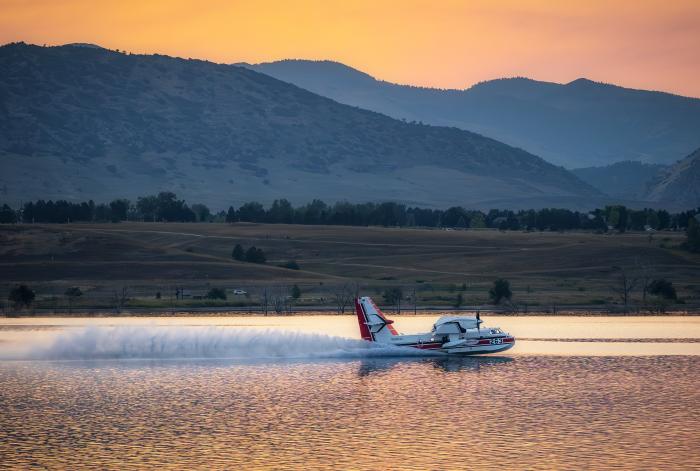
A plane pulls in water from Chatfield Reservoir to help fight the Quarry Fire, a wildfire that ignited in summer 2024 in Jefferson County, Colorado. The fire required a multi-jurisdictional effort to extinguish. Photo credit: Colorado Parks and Wildlife.

Urban fire hydrants were not the focus.

Ultimately, when a fire like the tragic blazes in Los Angeles occurs, it is always going to require a coordinated, multijurisdictional effort, often across city, state and even international lines. 

So, what can be done?

Colorado Public Radio in January spoke with Colorado State Forest Service wildfire mitigation program specialist Chad Julian, who discussed the importance of focusing on the right topics when analyzing any fire.

“If we focus on increasing budgets, more water storage, more fire trucks, it’s not going to change the outcome of the next event. It would take the engagement of homeowners to really work on the resistance to ignition and hardening those buildings, the vegetation and the yards,” he said.

“Ninety-five percent of it was likely still caused by land use patterns, how we build, how we interact with the ecosystem, whether we adapt to it or not. And unfortunately, that’s not the focus at the moment,” he said. 

But this was the focus in Colorado after the devastating Marshall Fire of 2021, leading to new legislation: 

  • In Louisville, an  ordinance took effect in December 2024 requiring implementation of wildfire-resistant measures in buildings. (Boulder is considering something similar.) 
  • Many new construction sites in Denver include 5-foot vegetation barriers around new structures in their landscape planning. 
  • The Wildfire Resilient Homes Grant Program, created by Colorado’s state legislature, encourages homeowners to make their properties more resistant to wildfire.

Julian says these are the types of changes that can make a real difference. 

And, as the column published in The Denver Post in January from Denver Water CEO Alan Salazar said, now is the time for everyone to come together and to act.

Denver Water has long focused on investing in the resiliency of its watersheds and system, and plans to invest about $1.8 billion over the next 10 years.

When customers pay their water bill, the money goes to building a reliable system, which includes regular infrastructure inspection and maintenance programs to ensure pipes, hydrants and storage tanks are ready to protect communities during urban fires.

Water bills also fund watershed resiliency projects that protect the lands and facilities that collect and store Denver’s drinking water.

The From Forests to Faucets partnership alone has committed more than $96 million to reduce wildfire risk in critical areas, from 2010 through planned work into 2027. Half of that money has come from Denver Water. The risk of wildfire in Denver Water’s watersheds remains the greatest risk to Denver’s water supply, making this investment crucial to the resilience of the system.

A Ponsse tree harvester works to thin a 40-acre section of forest in Breckenridge in August 2020, as part of the From Forests to Faucets partnership. Photo credit: Denver Water.

Denver Water’s 10-year investment plan also includes expanding Gross Reservoir in western Boulder County, which will improve water supplies on the north side of the metro area and make the system more balanced and resilient in the face of increasing impacts from climate change, drought and wildfire.

This improvement on the north side of the metro area will prove pivotal should wildfire inhibit resources that deliver water on the south side of the region, via the South Platte River, where wildfires have struck consistently over the past 20 years.

These are just a few examples of investments and partnerships already underway, but challenges lie ahead.

As Salazar noted in his column published in The Denver Post (which can also be found on Denver Water’s TAP news site), climate change continues to impact the environment and, as the wildland-urban interface continues to merge, even more investment and collaboration will be crucial.

Why protecting wildland is crucial to American freedom and identity

The Wet Beaver Wilderness in Coconino National Forest in Arizona is one of many designated wilderness areas in the U.S. Deborah Lee Soltesz

Leisl Carr Childers, Colorado State University and Michael Childers, Colorado State University

As summer approaches, millions of Americans begin planning or taking trips to state and national parks, seeking to explore the wide range of outdoor recreational opportunities across the nation. A lot of them will head toward the nation’s wilderness areas – 110 million acres, mostly in the West, that are protected by the strictest federal conservation rules.

When Congress passed the Wilderness Act in 1964, it described wilderness areas as places that evoked mystery and wonder, “where the earth and its community of life are untrammeled by man, where man himself is a visitor who does not remain.” These are wild landscapes that present nature in its rawest form.

The law requires the federal government to protect these areas “for the permanent good of the whole people.” Wilderness areas are found in national parks, conservation land overseen by the U.S. Bureau of Land Management, national forests and U.S. Fish and Wildlife refuges.

In early May 2025, the U.S. House of Representatives began to consider allowing the sale of federal lands in six counties in Nevada and Utah, five of which contain wilderness areas. Ostensibly, these sales are to promote affordable housing, but the reality is that the proposal, introduced by U.S. Rep. Mark Amodei, a Nevada Republican, is a departure from the standard process of federal land exchanges that accommodate development in some places but protect wilderness in others.

Regardless of whether Americans visit their public lands or know when they have crossed a wilderness boundary, as environmental historians we believe that everyone still benefits from the existence and protection of these precious places.

This belief is an idea eloquently articulated and popularized 65 years ago by the noted Western writer Wallace Stegner. His eloquence helped launch the modern environmental movement and gave power to the idea that the nation’s public lands are a fundamental part of the United States’ national identity and a cornerstone of American freedom. https://public.tableau.com/views/Wilderness_17462162884870/CombinedMap?:language=en-US&:sid=&:redirect=auth&:display_count=n&:origin=viz_share_link&:showVizHome=no&:embed=true

Humble origins

In 1958, Congress established the Outdoor Recreation Resources Review Commission to examine outdoor recreation in the U.S. in order to determine not only what Americans wanted from the outdoors, but to consider how those needs and desires might change decades into the future.

One of the commission’s members was David E. Pesonen, who worked at the Wildland Research Center at the University of California at Berkeley. He was asked to examine wilderness and its relationship to outdoor recreation. Pesonen later became a notable environmental lawyer and leader of the Sierra Club. But at the time, Pesonen had no idea what to say about wilderness.

However, he knew someone who did. Pesonen had been impressed by the wild landscapes of the American West in Stegner’s 1954 history “Beyond the Hundredth Meridian: John Wesley Powell and the Second Opening of the West.” So he wrote to Stegner, who at the time was at Stanford University, asking for help in articulating the wilderness idea.

Stegner’s response, which he said later was written in a single afternoon, was an off-the-cuff riff on why he cared about preserving wildlands. This letter became known as the Wilderness Letter and marked a turning point in American political and conservation history.

Pesonen shared the letter with the rest of the commission, which also shared it with newly installed Secretary of the Interior Stewart Udall. Udall found its prose to be so profound, he read it at the seventh Wilderness Conference in 1961 in San Francisco, a speech broadcast by KCBS, the local FM radio station. The Sierra Club published the letter in the record of the conference’s proceedings later that year.

But it was not until its publication in The Washington Post on June 17, 1962, that the letter reached a national audience and captured the imagination of generations of Americans.

A child, a woman and a man sit on rocks in front of a rugged rocky landscape.
Wallace Stegner, right, knew the power of American wilderness landscapes. In this photo, probably from the 1950s, he pauses with his son Page and wife, Mary, on a Yosemite National Park hiking trail. Multimedia Archives, Special Collections, J. Willard Marriott Library, University of Utah

An eloquent appeal

In the letter, Stegner connected the idea of wilderness to a fundamental part of American identity. He called wilderness “something that has helped form our character and that has certainly shaped our history as a people … the challenge against which our character as a people was formed … (and) the thing that has helped to make an American different from and, until we forget it in the roar of our industrial cities, more fortunate than other men.”

Without wild places, he argued, the U.S. would be just like every other overindustrialized place in the world.

In the letter, Stegner expressed little concern with how wilderness might support outdoor recreation on public lands. He didn’t care whether wilderness areas had once featured roads, trails, homesteads or even natural resource extraction. What he cared about was Americans’ freedom to protect and enjoy these places. Stegner recognized that the freedom to protect, to restrain ourselves from consuming, was just as important as the freedom to consume.

Perhaps most importantly, he wrote, wilderness was “an intangible and spiritual resource,” a place that gave the nation “our hope and our excitement,” landscapes that were “good for our spiritual health even if we never once in ten years set foot in it.”

Without it, Stegner lamented, “never again will Americans be free in their own country from the noise, the exhausts, the stinks of human and automotive waste.” To him, the nation’s natural cathedrals and the vaulted ceiling of the pure blue sky are Americans’ sacred spaces as much as the structures in which they worship on the weekends.

Stegner penned the letter during a national debate about the value of preserving wild places in the face of future development. “Something will have gone out of us as a people,” he wrote, “if we ever let the remaining wilderness be destroyed.” If not protected, Stegner believed these wildlands that had helped shape American identity would fall to what he viewed as the same exploitative forces of unrestrained capitalism that had industrialized the nation for the past century. Every generation since has an obligation to protect these wild places.

Stegner’s Wilderness Letter became a rallying cry to pass the Wilderness Act. The closing sentences of the letter are Stegner’s best: “We simply need that wild country available to us, even if we never do more than drive to its edge and look in. For it can be a means of reassuring ourselves of our sanity as creatures, a part of the geography of hope.”

This phrase, “the geography of hope,” is Stegner’s most famous line. It has become shorthand for what wilderness means: the wildlands that defined American character on the Western frontier, the wild spaces that Americans have had the freedom to protect, and the natural places that give Americans hope for the future of this planet.

A person with a backpack and hiking poles walks through an open landscape with mountains in the distance.
Death Valley National Park in California contains one of the largest protected wilderness areas in the United States. National Park Service/E. Letterman

America’s ‘best idea’

Stegner returned to themes outlined in the Wilderness Letter again two decades later in his essay “The Best Idea We Ever Had: An Overview,” published in Wilderness magazine in spring 1983.

Writing in response to the Reagan administration’s efforts to reduce protection of the National Park System, Stegner declared that the parks were “Absolutely American, absolutely democratic.” He said they reflect us as a nation, at our best rather than our worst, and without them, millions of Americans’ lives, his included, would have been poorer.

Public lands are more than just wilderness or national parks. They are places for work and play. They provide natural resources, wildlife habitat, clean air, clean water and recreational opportunities to small towns and sprawling metro areas alike. They are, as Stegner said, cures for cynicism and places of shared hope.

Stegner’s words still resonate as Americans head for their public lands and enjoy the beauty of the wild places protected by wilderness legislation this summer. With visitor numbers increasing annually and agency budgets at historic lows, we believe it is useful to remember how precious these places are for all Americans. And we agree with Stegner that wilderness, public lands writ large, are more valuable to Americans’ collective identity and expression of freedom than they are as real estate that can be sold or commodities that can be extracted.

Leisl Carr Childers, Associate Professor of History, Colorado State University and Michael Childers, Associate Professor of History, Colorado State University

This article is republished from The Conversation under a Creative Commons license. Read the original article.