Click the link to read the article on the Alamosa Citizen website (Heather Dutton and Daniel Boyes):
May 2, 2025
San Luis Valley water managers have reviewed streamflow forecasts, available water stored in reservoirs, and anticipated reservoir operations for the 2025 spring, summer, and fall seasons, and determined that 2025 will likely be a year with early runoff, low flows in streams and rivers, and a short boating season.
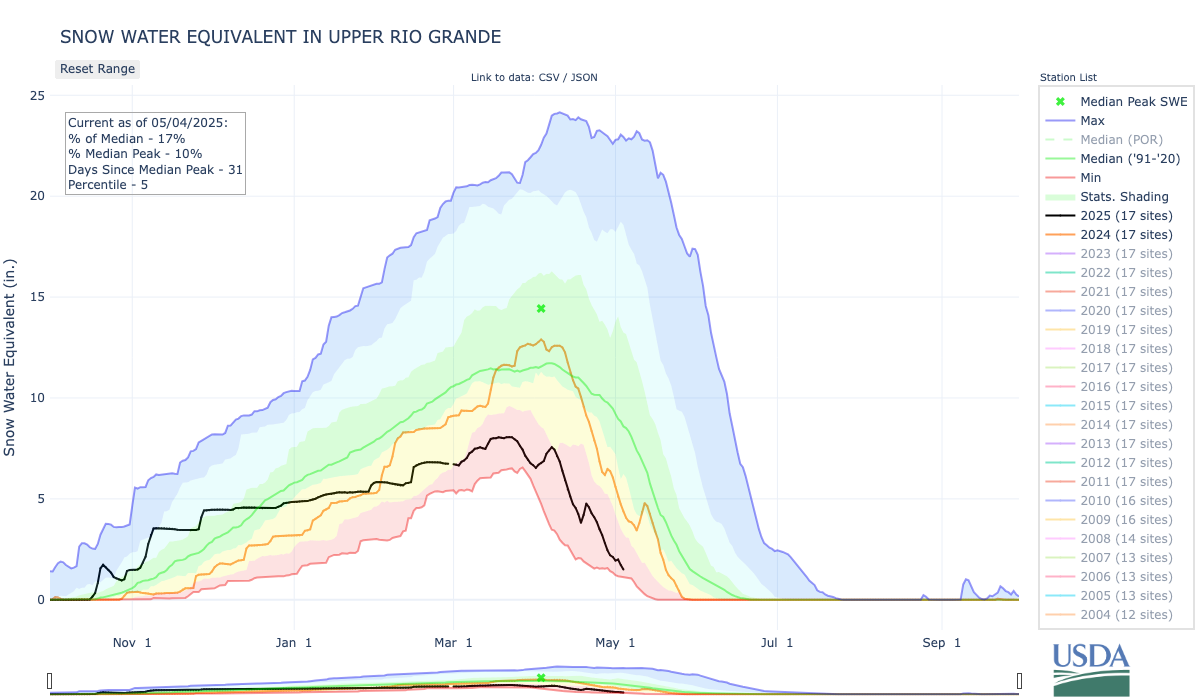
The Colorado Division of Water Resources Division 3 Engineer’s March 31 10-day report forecasted the total annual flow at the Del Norte gage will be 390,000 acre-feet. For reference, the flows in 2020 totaled 377,000 acre-feet. The National Weather Service is forecasting hot and dry conditions into July, with chances of a normal monsoon season in late summer. The snow water equivalent for the Upper Rio Grande Basin was 25 percent of the median for the 1991-2020 time period on April 28, 2025. The irrigation season began on April 1 on the Rio Grande. As such, on-stream reservoirs are required to pass all inflows to satisfy the needs of downstream senior water rights holders.
Given the low amount of snow remaining in the mountains and the anticipated summer drought conditions, it is likely that local rivers and streams will reach their peak runoff in May. The reservoir operators at Rio Grande, Santa Maria, and Continental Reservoirs will begin releasing stored irrigation water to downstream farmers after the river peaks. The San Luis Valley Irrigation District (SLVID) will release water from Rio Grande Reservoir to the Farmers Union Canal as soon as their first direct flow priorities come into priority on the Rio Grande at anticipated rates of 150-400 cubic feet per second for up to 15 days.
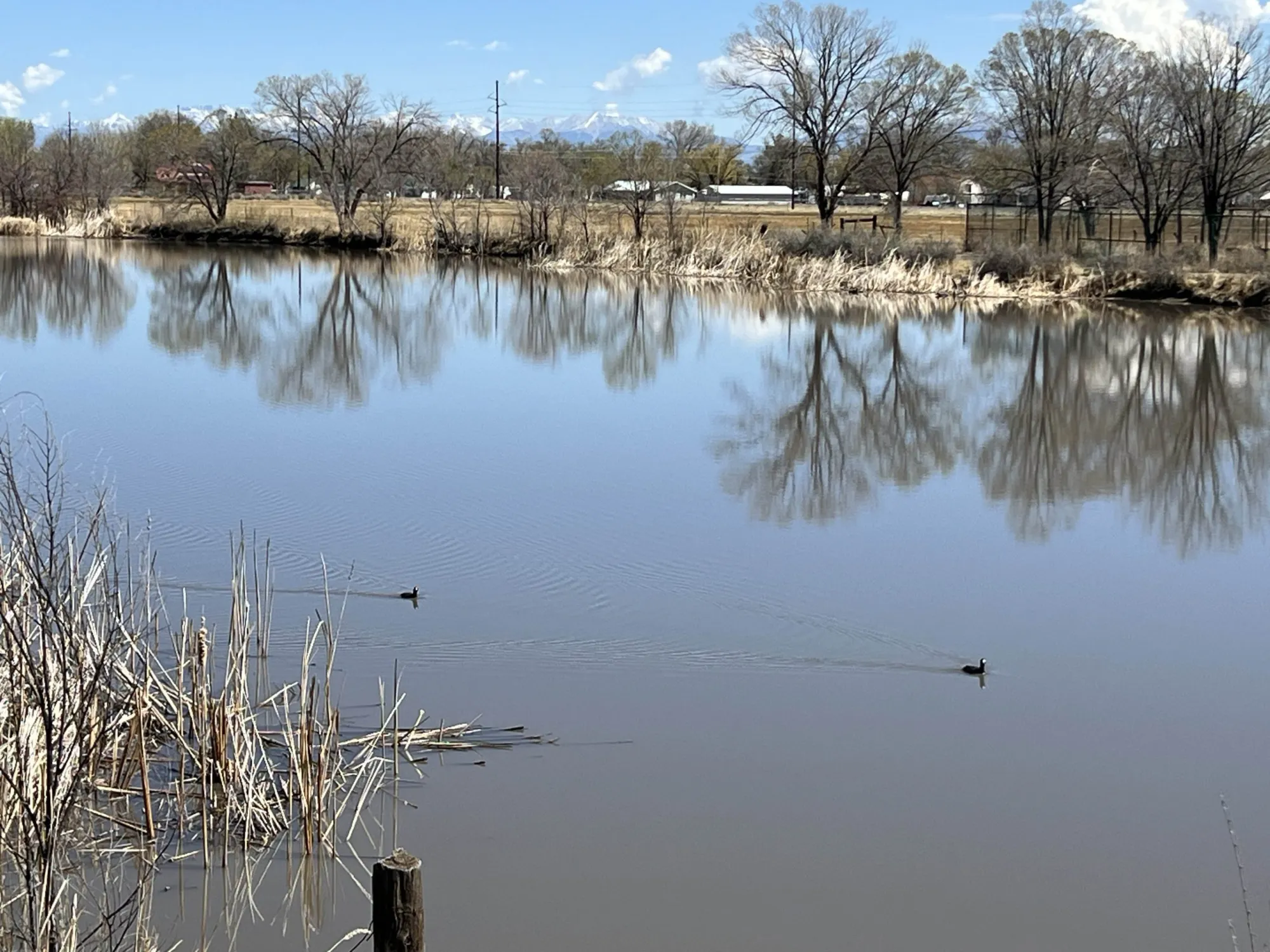
Rio Grande. Photo Credit: The Citizen
This schedule will be updated through May as river conditions change.
The Santa Maria Reservoir Company anticipates beginning releases from Santa Maria and Continental Reservoirs to the Rio Grande Canal and Monte Vista Canal in late May or early June. The timing of the releases of water will depend on flow rates in the canals and when farmers order water. The natural river flows and releases of irrigation water will provide the highest rates of flow during the summer season. As such, boatable flows on the Rio Grande may diminish as early as mid to late June.
Entities including Colorado Parks and Wildlife (CPW), the San Luis Valley Water Conservancy District (SLVWCD), and the Rio Grande Water Conservation District (RGWCD) store water in reservoirs in the Upper Rio Grande Basin and call for releases for their operations in accordance with their water rights decrees. Where possible, releases by these organizations will be prioritized during hot periods to supplement the natural flow of the Rio Grande helping to reduce high water temperatures and low river flows, thereby protecting the health of fish. Generally, when water temperatures reach 68 degrees, fish become very stressed and voluntary fishing restrictions are enacted at 72 degrees. Stakeholders will watch temperatures on the Rio Grande and the South Fork of the Rio Grande carefully and take action to release water where possible.
The water managers and reservoir operators in the Rio Grande Basin are working in partnership to manage water in order to meet multiple needs. These efforts build off of many years of collaboration amongst water users on the Rio Grande. In order to better inform the local communities of water management operations, additional information will be compiled and shared via news outlets, social media, and email as reservoir releases are planned and executed.
Click the link to read the article on the Grist website (Chris D’Angelo):
April 29, 2025
This story is part of a Grist package examining how President Trump’s first 100 days in office have reshaped climate and environmental policy in the U.S.
America’s federal public lands are truly unique, part of our birthright as citizens. No other country in the world has such a system.
More than 640 million acres, including national parks, forests, and wildlife refuges, as well as lands open to drilling, mining, logging, and a variety of other uses, are managed by the federal government — but owned collectively by all American citizens. Together, these parcels make up more than a quarter of all land in the nation.
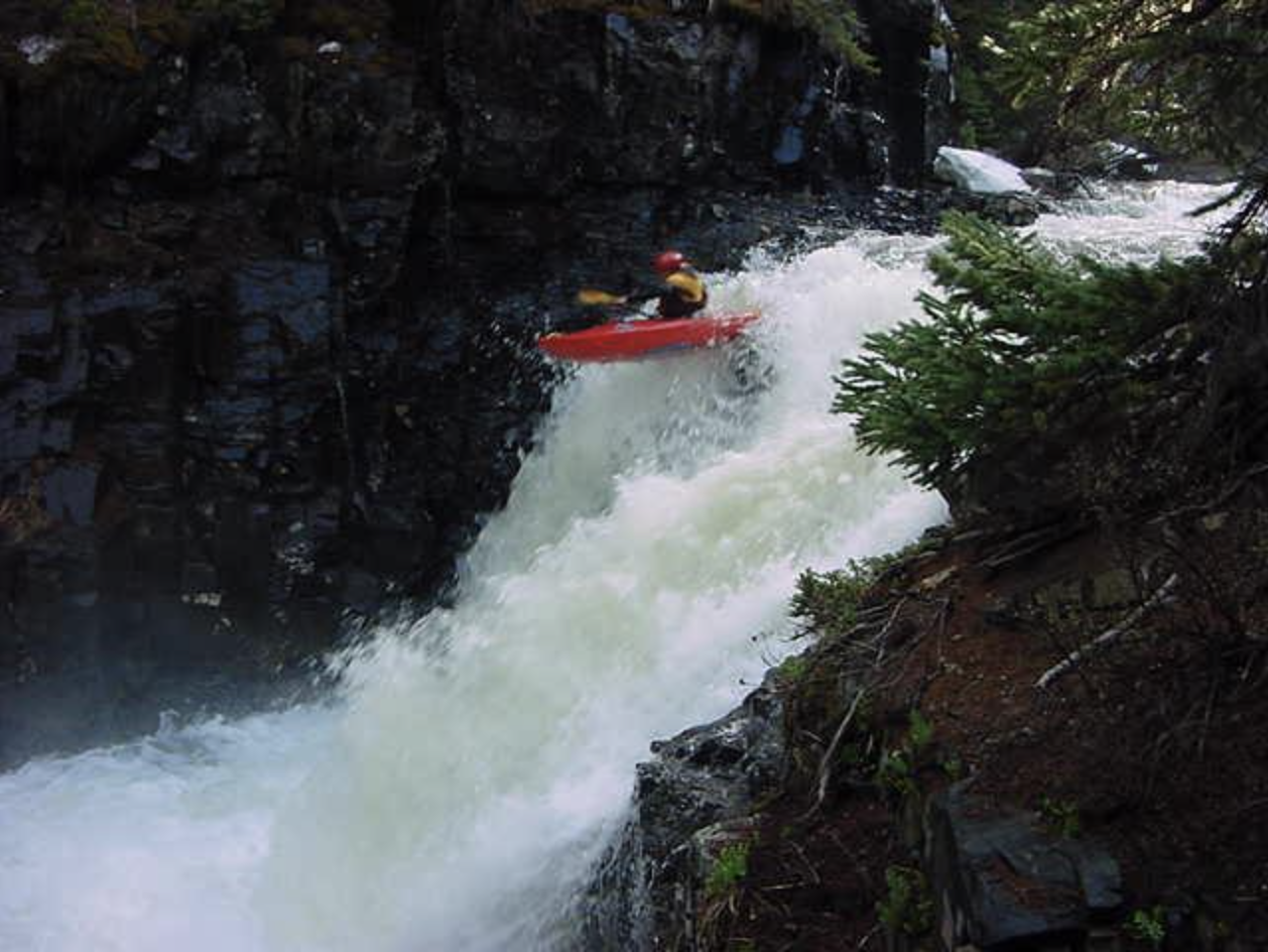
Heart Attack on Oh Be Joyful Creek. The creek has become the most popular Class V creek run in all of Colorado. The sickening gradient slides down generally smooth flat slate resulting in surprisingly easy lines. Don’t take it too lightly though, the swims are few but there is potential for epic carnage. The creek has taken on the nickname “Oh Be Careful”. This run gets dramatically easier the more times you’ve run it. After the 2nd or 3rd time down most competent Class V boaters can bomb it in less than 10 minutes without breaking a sweat. Photo credit: American Whitewater
“Even if you don’t own a house or the latest computer on the market, you own Yosemite, Yellowstone, the Grand Canyon, Golden Gate National Recreation Area, and many other natural treasures,” he wrote in 2011.
Despite broad, bipartisan public support for protecting public lands, these shared landscapes have come under relentless attack during the first 100 days of President Donald Trump’s second term. The administration and its allies in Congress are working feverishly to tilt the scale away from natural resource protection and toward extraction, threatening a pillar of the nation’s identity and tradition of democratic governance.
“There’s no larger concentration of unappropriated wealth on this globe than exists in this country on our public lands,” said Jesse Deubel, executive director of the New Mexico Wildlife Federation, a conservation nonprofit. “The fact that there are interests that would like to monetize that, they’d like to liquidate it and turn it into cash money, is no surprise.”
Landscape protections and bedrock conservation laws are on the chopping block, as Trump and his team look to boost and fast-track drilling, mining, and logging across the federal estate. The administration and the GOP-controlled Congress are eyeing selling off federal lands, both for housing development and to help offset Trump’s tax and spending cuts. And the newly formed Department of Government Efficiency, or DOGE, led by billionaire Elon Musk, is wreaking havoc within federal land management agencies, pushing out thousands of civil servants. That purge will leave America’s natural heritage more vulnerable to the myriad threats these lands already face, including growing visitor numbers, climate change, wildfires, and invasive species.
The Republican campaign to undermine land management agencies and wrest control of public lands from the federal government is nothing new, dating back to the Sagebrush Rebellion movement of the 1970s and ’80s, when support for privatizing or transferring federal lands to state control exploded across the West. But the speed and scope of the current attack, along with its disregard for the public’s support for safeguarding public lands, makes it more worrisome than previous iterations, several public land advocates and legal experts told Grist.
This is “probably the most significant moment since the Reagan administration in terms of privatization,” said Steven Davis, a political science professor at Edgewood College and the author of the 2018 book In Defense of Public Lands: The Case Against Privatization and Transfer. President Ronald Reagan was a self-proclaimed sagebrush rebel.
A ranger in Grand Teton National Park. (NPS/Bonney)
Deubel said the conservation community knew Trump’s return would trigger another drawn out fight for the future of public lands, but nothing could have prepared him for this level of chaos, particularly the effort to rid agencies of thousands of staffers.
The country is “in a much more pro-public lands position than we’ve been before,” Deubel said. “But I think we’re at greater risk than we’ve ever been before — not because the time is right in the eyes of the American people, but because we have an administration who could give two shits about what the American people want. That’s what’s got me scared.”
The Interior Department and the White House did not respond to Grist’s requests for comment.
In an article posted to the White House website on Earth Day, the Trump administration touted several “key actions” it has taken on the environment, including “protecting public lands” by opening more acres to energy development, “protecting wildlife” by pausing wind energy projects, and safeguarding forests by expanding logging. The accomplishments list received widespread condemnation from environmental, climate, and public land advocacy groups.
That same day, a leaked draft strategic plan revealed the Interior Department’s four-year vision for opening new federal lands to drilling and other extractive development, reducing the amount of federal land it manages by selling some for housing development and transferring other acres to state control, rolling back the boundaries of protected national monuments, and weakening bedrock environmental laws like the Endangered Species Act.
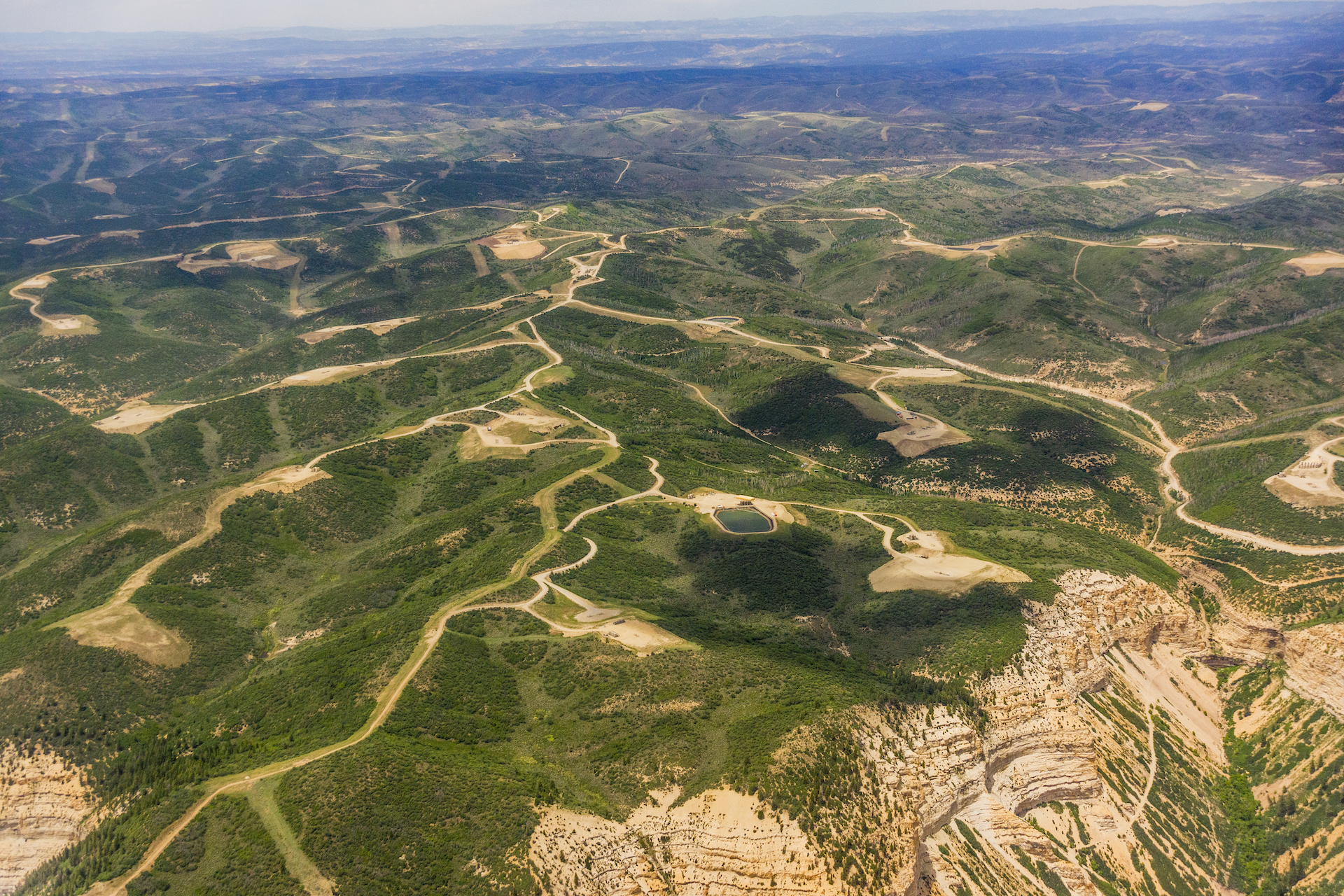
Oil and gas infrastructure is seen on the Roan Plateau in far western Colorado. (Courtesy of EcoFlight)
Meanwhile, Trump’s DOGE is in the process of cutting thousands of scientists and other staff from the various agencies that manage and protect public lands, including the National Park Service and the Bureau of Land Management, or BLM. Nearly every Republican senator went on the record this month in support of selling off federal lands to reduce the federal deficit, voting down a measure that would have blocked such sales. And Utah has promised to continue its legal fight aimed at stripping more than 18 million acres of BLM lands within the state’s border from the federal government. Utah’s lawsuit, which the Supreme Court declined to hear in January, had the support of numerous Republican-led states, including North Dakota while current Interior Secretary Doug Burgum was still governor.
To advance its agenda, the Trump administration is citing a series of “emergencies” that close observers say are at best exaggerated, and at worst manufactured. [ed. emphasis mine]
A purported “energy emergency,” which Trump declared in an executive order just hours after being inaugurated, has been the impetus for the administration attempting to throw long-standing federal permitting processes, public comment periods, and environmental safeguards to the wind. The action aims to boost fossil fuel extraction across federal lands and waters — despite domestic oil and gas production being at record highs — while simultaneously working to thwart renewable energy projects. Trump relied on that same “emergency” earlier this month when he ordered federal agencies to prop up America’s dwindling, polluting coal industry, which the president and his cabinet have insisted is “beautiful” and “clean.”In reality, coal is among the most polluting forms of energy.
“This whole idea of an emergency is ridiculous,” said Mark Squillace, a professor of natural resources law at the University of Colorado, Boulder. “And now this push to reinvigorate the coal industry seems absolutely crazy to me. Why would you try to reinvigorate a moribund industry that has been declining for the last decade or more? Makes no sense, it’s not going to happen.”
Coal consumption in the U.S. has declined more than 50 percent since peaking in 2005, according to the U.S. Energy Information Administration, largely due to market forces, including the availability of cheaper natural gas and America’s growing renewable energy sector. Meanwhile, Trump’s tariff war threatens to undermine his own push to expand mining and fossil fuel drilling.
Okay, it isn’t the Powder River Basin, but it is a coal mine: The West Elk near Somerset, Colorado. Jonathan P. Thompson photo.
The threat of extreme wildfire — an actual crisis driven by a complex set of factors, including climate change, its role in intensifying droughts and pest outbreaks, and decades of fire suppression — is being cited to justify slashing environmental reviews to ramp up logging on public lands. Following up on a Trump executive order to increase domestic timber production, Secretary of Agriculture Brooke Rollins signed a memo declaring a forest health “emergency” that would open nearly 60 percent of national forest lands, more than 110 million acres, to aggressive logging.
Then there’s America’s “housing affordability crisis,” which the Trump administration, dozens of Republicans, and even a handful of Democrats are pointing to in a growing push to open federal lands to housing development, either by selling land to private interests or transferring control to states. The Trump administration recently established a task force to identify what it calls “underutilized lands.” In an op-ed announcing that effort, Burgum and Scott Turner, secretary of Housing and Urban Development, wrote that “much of” the 500 million acres Interior oversees is “suitable for residential use.” Some of the most high-profile members of the anti-public lands movement, including William Perry Pendley, who served as acting director of the Bureau of Land Management during Trump’s first term, are championing the idea.
Without guardrails, critics argue the sale of public lands to build housing will lead to sprawl in remote, sensitive landscapes and do little, if anything, to address home affordability, as the issue is driven by several factors, including migration trends, stagnant wages, and higher construction costs. Notably, Trump’s tariff policies are expected to raise the average price of a new home by nearly $11,000.
Chris Hill, CEO of the Conservation Lands Foundation, a Colorado-based nonprofit working to protect BLM-managed lands, said the lack of affordable housing is a serious issue, but “we shouldn’t be fooled that the idea to sell off public lands is a solution.”
“The vast majority of public lands are just not suitable for any sort of housing development due to their remote locations, lack of access, and necessary infrastructure,” she said.
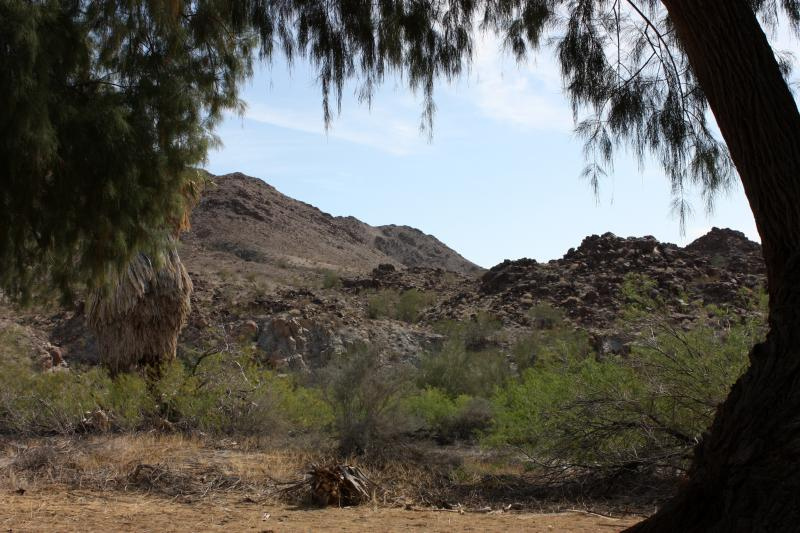
Corn Springs, Chuckwalla Mountains, California. President Trump rescinded the area’s monument status on March 15, 2025. By Michael Dorausch from Venice, USA – Corn Springs CA, CC BY-SA 2.0, https://commons.wikimedia.org/w/index.php?curid=41004589
David Hayes, who served as deputy Interior secretary during the administrations of Barack Obama and Bill Clinton and as a senior climate adviser to President Joe Biden, told Grist that Trump’s broad use of executive power sets the current privatization push apart from previous efforts.
“Not only do you have the rhetoric and the intentionality around managing public lands in an aggressive way, but you have to couple that with what you’re seeing,” he said. “This administration is going farther than any other ever has to push the limits of executive power.”
Aaron Weiss, deputy director of the Center for Western Priorities, a Colorado-based conservation group, said Trump and his team are doing everything they can to circumvent normal environmental rules and safeguards in order to advance their agenda, with no regard for the law or public opinion.
“Everything is an imagined crisis,” Weiss said.
Oil, gas, and coal jobs. Mining jobs. Timber jobs. Farming and ranching. Gas-powered cars and kitchen appliances. Even the water pressure in your shower. Ask the White House and the Republican Party and they’ll tell you Biden waged a war against all of it, and that voters gave Trump a mandate to reverse course.
During Trump’s first term in office, Interior Secretary Ryan Zinke repeatedly boasted that the administration’s conservation legacy would rival that of his personal hero and America’s conservationist president, Theodore Roosevelt — only to have the late president’s great-grandson, Theodore Roosevelt IV, and the conservation community bemoan his record at the helm of the massive federal agency.
Like Zinke, Burgum invoked Roosevelt in pitching himself for the job.
Interior Secretary Doug Burgum tours a fracking site in Washington County, Pennsylvania on April 3, where he discussed President Trump’s recent executive orders to boost domestic fossil fuel production. Department of the Interior
“In our time, President Trump’s energy dominance can be America’s big stick that will be leveraged to achieve historic prosperity and world peace,” Burgum said during his confirmation hearing in January, referencing a 1900 letter in which the 26th president said to “speak softly and carry a big stick.”
The Senate confirmed him to the post in January on a bipartisan 79-18 vote. Some public land advocates initially viewed Burgum, now the chief steward of the federal lands, waters, and wildlife we all own, as a palatable nominee in a sea of problematic potential picks. A billionaire software entrepreneur and former North Dakota governor, Burgum has talked at length about his fondness for Roosevelt’s conservation legacy and the outdoors.
Whatever honeymoon there was didn’t last long. One hundred days in, Burgum and the rest of Trump’s team have taken not a stick, but a wrecking ball to America’s public lands, waters, and wildlife. Earlier this month, the new CEO of REI said the outdoor retailer made “a mistake” in endorsing Burgum for the job and that the administration’s actions on public lands “are completely at odds with the longstanding values of REI.”
At an April 9 all-hands meeting of Interior employees, Burgum showed off pictures of himself touring oil and gas facilities, celebrated “clean coal,” and condemned burdensome government regulation. Burgum has repeatedly described federal lands as “America’s balance sheet” — “assets” that he estimates could be worth $100 trillion but that he argues Americans are getting a “low return” on.
“On the world’s largest balance sheet last year, the revenue that we pulled in was about $18 billion,” he said at the staffwide meeting, referring to money the government brings from lease fees and royalties from grazing, drilling, and logging on federal lands, as well as national park entrance fees. “Eighteen billion might seem like a big number. It’s not a big number if we’re managing $100 trillion in assets.”
In May 2022, a couple paused at once had been the bottom of the boat put-in ramp in Antelope Canyon to look down on the receding waters of Lake Powell. The reservoir at that point was 22% full. Public lands are the foundation of a $1 trillion outdoor recreation economy in the U.S. Photo/Allen Best
In focusing solely on revenues generated from energy and other resource extraction, Burgum disregards that public lands are the foundation of a $1 trillion outdoor recreation economy, nevermind the numerous climate, environmental, cultural, and public health benefits.
Davis, the author of In Defense of Public Lands: The Case Against Privatization and Transfer, dismissed Burgum’s “balance sheet” argument as “shriveled” and “wrong.”
“You have to willfully be ignorant and ignore everything of value about those lands except their marketable commodity value to come up with that conclusion,” he said. When you add all their myriad values together, public lands “are the biggest bargain you can possibly imagine.”
Davis likes to compare public lands to libraries, schools, or the Department of Defense.
“There are certain things we as a society decide are important and we pay for it,” he said. “We call that public goods.”
The last time conservatives ventured down the public land privatization path, it didn’t go well.
Shortly after Trump’s first inauguration in 2017, then-Congressman Jason Chaffetz, a Republican representing Utah, introduced legislation to sell off 3.3 million acres of public land in 10 Western states that he said had “been deemed to serve no purpose for taxpayers.”
Public backlash was fierce. Chaffetz pulled the bill just two weeks later, citing concerns from his constituents. The episode, while brief, largely forced the anti-federal land movement back into the shadows. The first Trump administration continued to weaken safeguards for 35 million acres of federal lands — more than any other administration in history — and offered up millions more for oil and gas development, but stopped short of trying sell off or transfer large areas of the public domain.
Theodore Roosevelt and John Muir at Glacier Point. By Underwood & Underwood – This image is available from the United States Library of Congress’s Prints and Photographs division under the digital ID cph.3g04698. See Commons:Licensing for more information., Public Domain, https://commons.wikimedia.org/w/index.php?curid=3517191
Yet as the last few months have shown, the anti-public lands movement is alive and well.
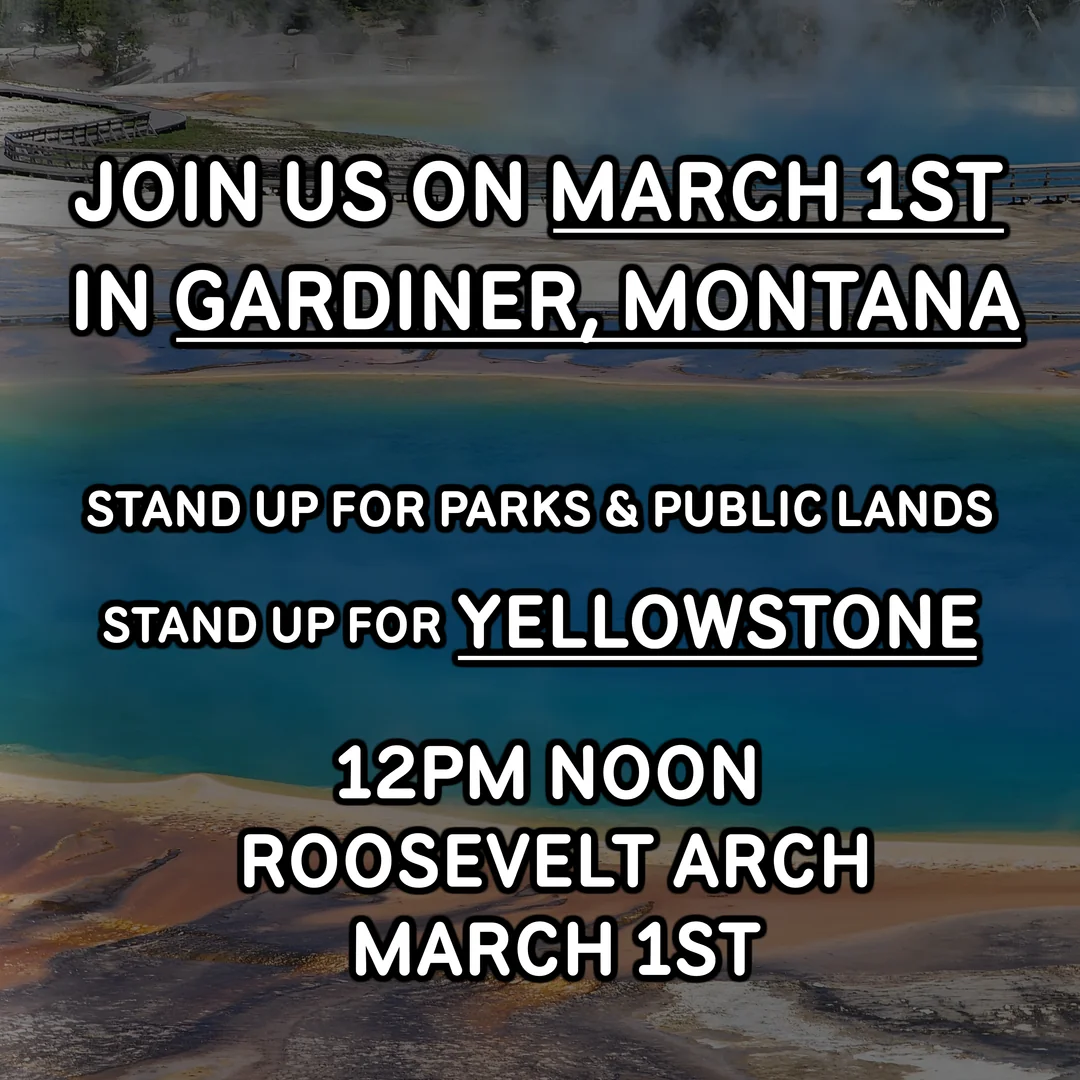
Public land advocates are hopeful that the current push will flounder. They expect courts to strike down many of Trump’s environmental rollbacks, as they did during his first term. In recent weeks, crowds have rallied at numerous national parks and state capitol buildings to support keeping public lands in public hands. Democratic Senator Martin Heinrich of New Mexico, who voted to confirm Burgum to his post and serves as the ranking Democrat on the Senate Energy and Natural Resources Committee, has taken to social media to warn about the growing Republican effort to undermine, transfer, and sell off public lands.
“I continue to be encouraged that people are going to be loud. They already are,” said Deubel, the executive director of the New Mexico Wildlife Federation. “We’re mobilizing. We’ve got business and industries. We’ve got Republicans, we’ve got Democrats. We’ve got hunters and we’ve got non-hunters. We’ve got everybody speaking out about this.”
In a time of extreme polarization on seemingly every issue, public lands enjoy broad bipartisan support. The 15th annual “Conservation in the West” poll found that 72 percent of voters in eight Western states support public lands conservation over increased energy development — the highest level of support in the poll’s history; 65 percent oppose giving states control over federal public lands, up from 56 percent in 2017; and 89 percent oppose shrinking or removing protections for national monuments, up from 80 percent in 2017. Even in Utah, where leaders have spent millions of taxpayer dollars promoting the state’s anti-federal lands lawsuit, support for protecting public lands remains high.
“Even in all these made up crises, the American public doesn’t want this,” Hill said. “The American people want and love their public lands.”
At his recent staffwide meeting, Burgum said Roosevelt’s legacy should guide Interior staff in the mission to manage and protect federal public lands. Those two things, management and protection, “must be held in balance,” Burgum stressed.
Dusk falls on Lake Powell near Bullfrog Marina on July 15, 2024. A new letter from water policy experts gives negotiators some recommendations on how to sustainably manage the Colorado River in the future. Alex Hager/KUNC
Click the link to read the article on the KUNC website (Alex Hager):
May 3, 2025
This story is part of ongoing coverage of the Colorado River, produced by KUNC in Colorado and supported by the Walton Family Foundation. KUNC is solely responsible for its editorial coverage.
The seven states that use the Colorado River are deadlocked about how to share it in the future. The current rules for dividing its shrinking supplies expire in 2026. State leaders are under pressure to propose a new sharing agreement urgently, so they can finish environmental paperwork before that deadline.
Right now, they don’t appear close to an agreement, so a group of prominent Colorado River experts co-signed a letter outlining seven things they want to see in the next set of rules.
The letter gives a clear, concise list of recommendations for ways to keep taps flowing while protecting tribes and the environment. Whether the states will listen is another matter entirely.
‘Shared pain’
The letter, written by a group of academics and retired policymakers, makes no bones about it: states need to find a collective solution to their collective problem. And some of them might not be happy.
State leaders have been reluctant to volunteer cutbacks, and have largely stayed divided along a decades-old fault line. On one side, the Upper Basin – which consists of Colorado, Utah, Wyoming and New Mexico. The other side, the Lower Basin, is made up of California, Arizona and Nevada.
The recent letter is interesting in part because it’s co-authored by people from both sides of the Colorado River debate. Eric Kuhn led an agency that defends Western Colorado’s water. Kathryn Sorensen led Phoenix’s water department.
The letter was also written by Anne Castle, who has worked in federal water policy positions, and Jack Schmidt, a water researcher at Utah State University. Co-authors John Fleck and Katherine Tara research water policy at the University of New Mexico.
The authors write that states need to engage in some level of “shared pain,” meaning cutbacks to the amount of water that flows to farms, homes, and businesses.
“‘Shared’,” the letter writes, “Does not mean equal, either in amount, triggers, or duration.”
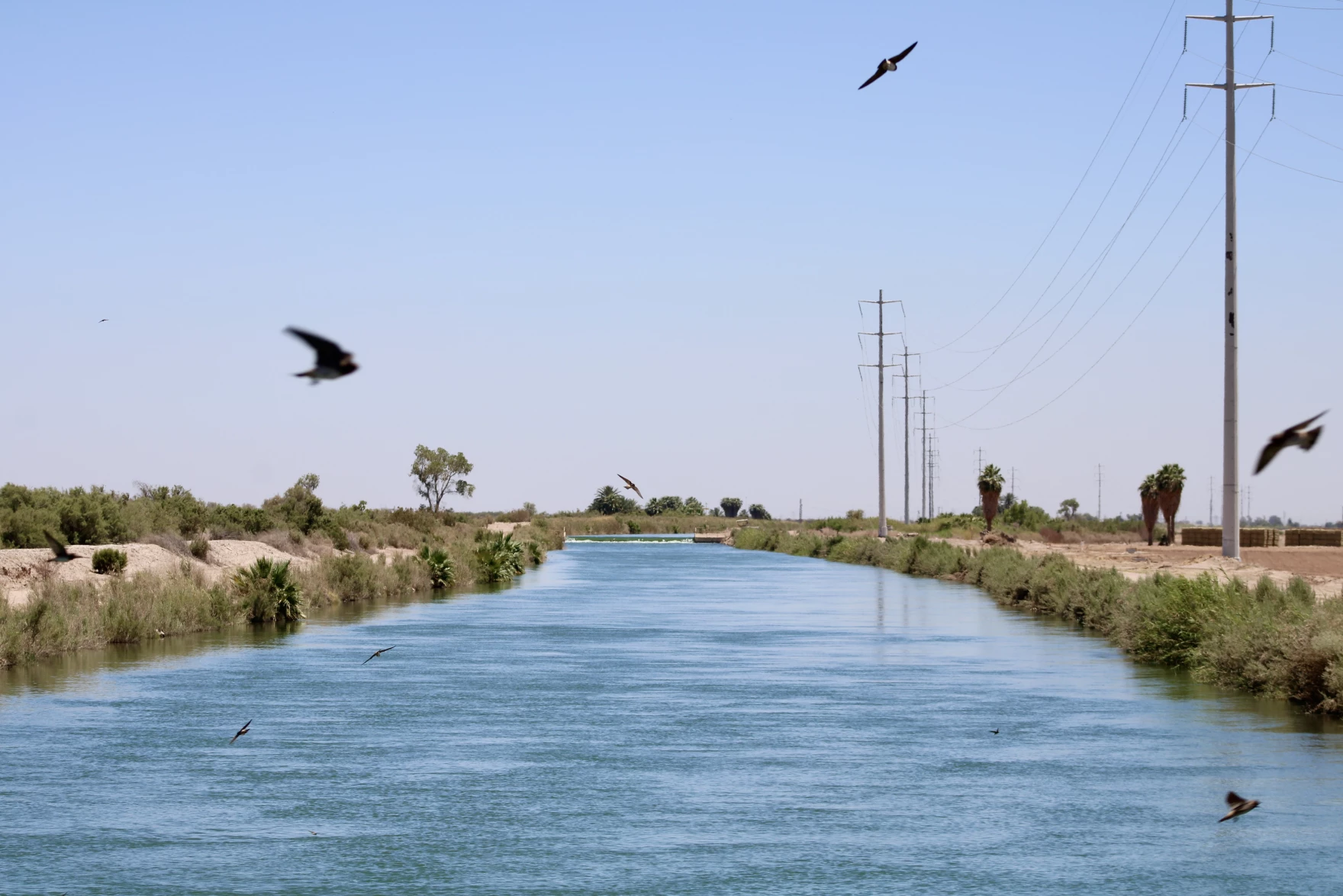
Water from the Colorado River flows through the East Highline Canal on its way to farms in the Imperial Valley on June 20, 2023. The Colorado River’s single largest user has taken federal money through incentive programs to cut back on water use. Alex Hager/KUNC
The Lower Basin states have already proposed relatively modest cutbacks, and the Upper Basin seems to be digging in its heels on the idea that they should not have to give up any water at all.
This letter pushes back on that stance.
“There’s lots of wonderful legal arguments about why it shouldn’t be me that needs to use less water,” Anne Castle, one of the letter’s authors, told KUNC. “But in order to have a viable and politically viable agreement, everybody has to do a share.”
Other recommendations
In addition to calling for states to put their heads together, the authors also warned against leaning too hard on federal checks as a way to conserve water. Money from the federal government has been a key part of avoiding catastrophe on the Colorado River in recent years. Hundreds of millions of dollars have gone to big water users, often farmers, as an incentive to use less water.
Those funds have come under threat during President Donald Trump’s second term. The letter says new rules for the Colorado River “cannot assume that federal taxpayers will reimburse Western water users over the long term to forgo the use of water that does not exist.”
The letter goes on to advocate for groups that can sometimes be an afterthought in Western water policy. It essentially re-ups an earlier call from a group of tribes in the Colorado River basin, which are asking for a bigger seat at the table after more than a century of exclusion. It also pushes for new rules to be more flexible, which would make it easier to protect river ecosystems. That mirrors similar comments from a group of nonprofits.
The shortest and final recommendation in the letter says that any new Colorado River rules have to make sure there’s enough water to keep people safe and healthy.
“There must be absolute protection of domestic water deliveries for public health and safety,” it reads.
In short, it’s asking to make sure that a worst-case-scenario doesn’t see drinking water reserves go dry, while agriculture and other industries keep their faucets flowing.
“I don’t think that would happen,” Castle said. “I think the market would intervene and take care of this situation.”
The reaction
KUNC reached out to top water negotiators in Arizona and Colorado for this story. Their answers fell in line with oft-repeated talking points from each basin.
A spokesman for the Arizona Department of Water Resources wrote that its director, Tom Buschatzke, “agreed with the authors that ‘every state and sector of the economy must contribute to the solution to this imbalance.’”
Water policymakers from (left to right) Utah, New Mexico, Colorado and Wyoming speak on a panel at the Colorado River Water Users Association conference in Las Vegas on December 5, 2024. The Upper Basin states have been reluctant to volunteer cutbacks ahead of the next set of river-sharing rules. Alex Hager/KUNC
Colorado’s top water official, Becky Mitchell, wrote that the recommendations overlooked climate change’s impact on Upper Basin water supplies, and that states already take “mandatory and uncompensated” cuts.
“Colorado water users do not enjoy a guaranteed delivery of the full amount of their water rights each year,” she wrote.
Jennifer Gimbel, Colorado’s former top water official, did not contribute to the letter and also took issue with the suggestion that both basins could afford to make cutbacks.
“Are the authors of the paper thinking that federal law should be enacted to override state law?” Gimbel wrote to KUNC in an email. “Are they thinking that users in the Upper Basin, who they say should not rely on federal compensation, should just give up their livelihoods voluntarily or be compensated by the state legislatures? I don’t know because they don’t say.”