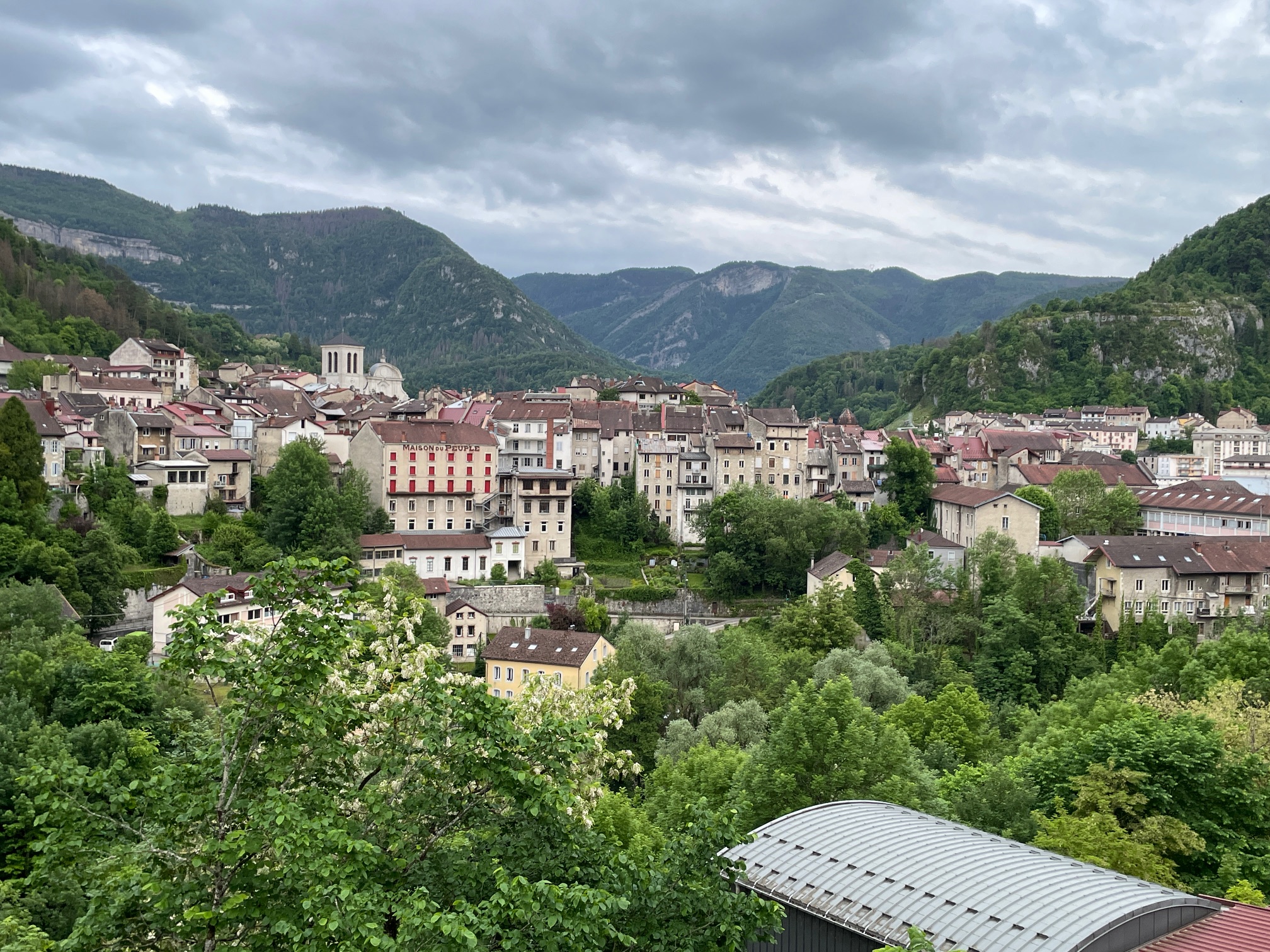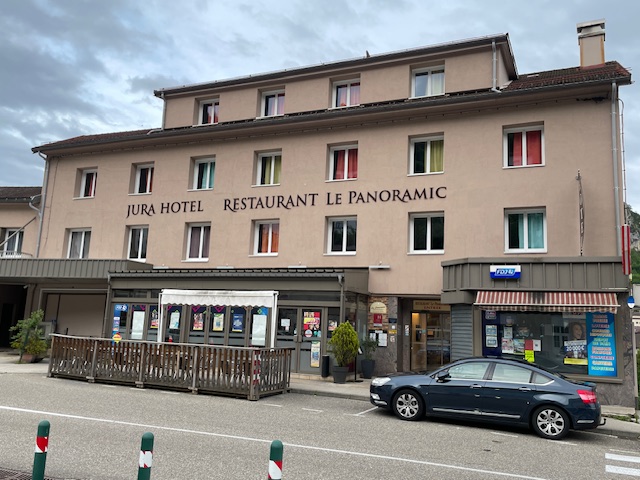
We’re in Saint-Claude, Bourgonne-Franche-comté, France after the drive from Avignon.
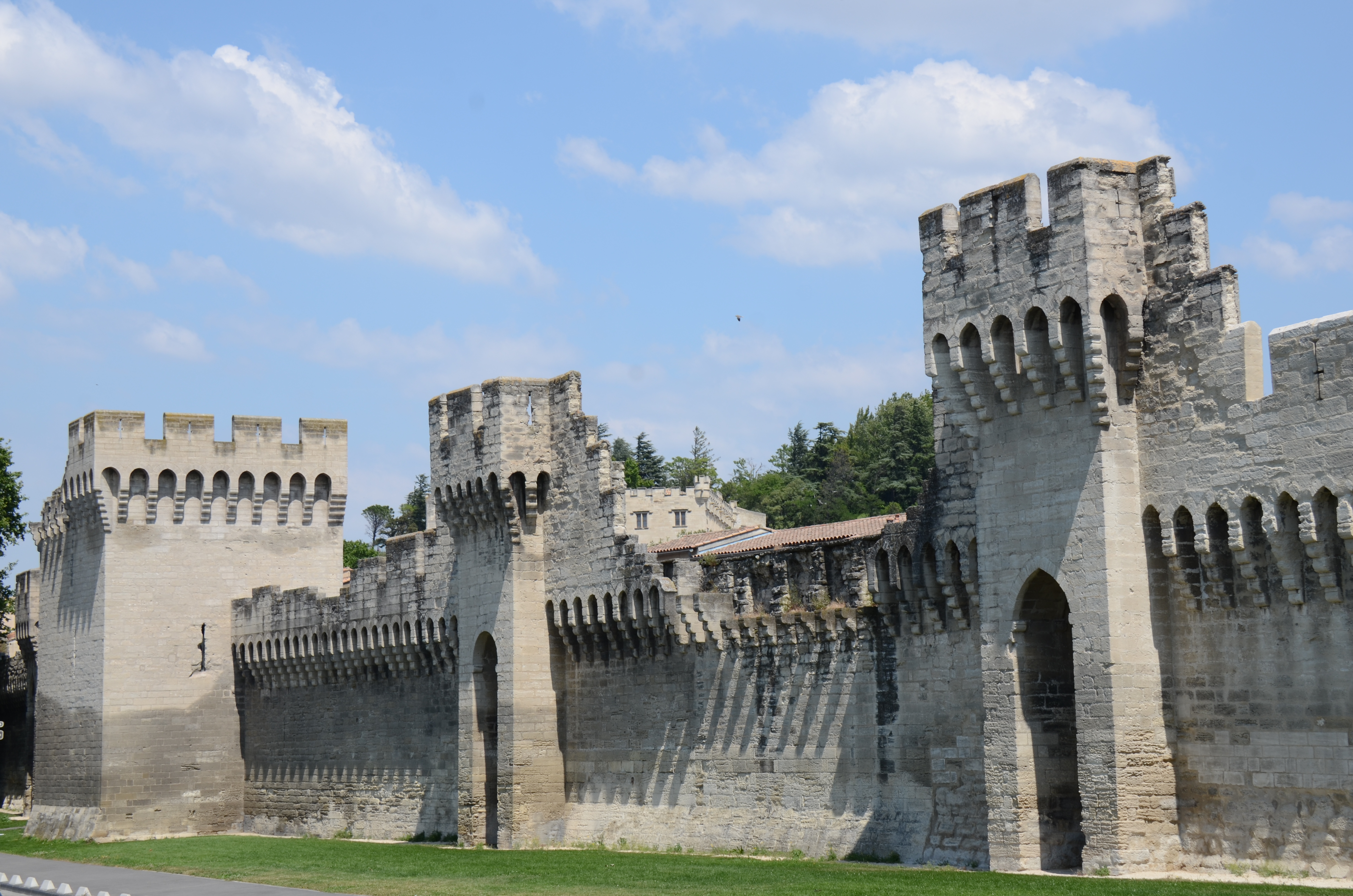
We drove around Avignon this morning checking out the walls of the Palais des Papes (Palace of the Popes). From Wikipedia: “The walls of Avignon (French: Les Remparts d’Avignon) are a series of defensive stone walls that surround the city of Avignon in the south of France. They were built in the 14th century during the Avignon papacy and have been continually rebuilt and repaired throughout their subsequent history…From the 1350s during the Hundred Years’ War the town became vulnerable to pillage by marauding bands of mercenaries and in 1357 under Innocent VI, the fifth Avignon pope, work began on the construction of a new set of city walls to enclose the expanded town. The walls took nearly 20 years to complete. The walls stretch for 4.3 km (2.7 mi) and enclose an area of 150 ha (370 acres). There were originally twelve gates controlling access to the city but this number was reduced to seven when the fortifications were modified between 1481 and 1487 during the French Wars of Religion. There are now 15 vehicular entrances and 11 pedestrian entrances…The town had always been subject to flooding by the Rhône. In November 1840 the river reached a height of 8.32 metres (27.3 ft), the highest that has ever been recorded. It caused severe flooding in the town with most streets under water. In some areas the water reached the first floor level of the houses. The flooding lasted for over three weeks and deposited large quantities of mud in the streets. Following this event the town decided to make better use of the town walls as a flood barrier and to install sluice gates on all the canals and drains. Each of the city gates was modified to facilitate the construction of a temporary cofferdam to prevent the river water entering the town. A pair of vertical slots were cut into the limestone blocks on either side of the opening. The slots were separated by a distance of between 0.5 m to 1 m and were designed to accommodate wooden planks which could be placed across the gate entrance. The gap between the sets of planks was filled with a mixture of earth and straw to create a dam.
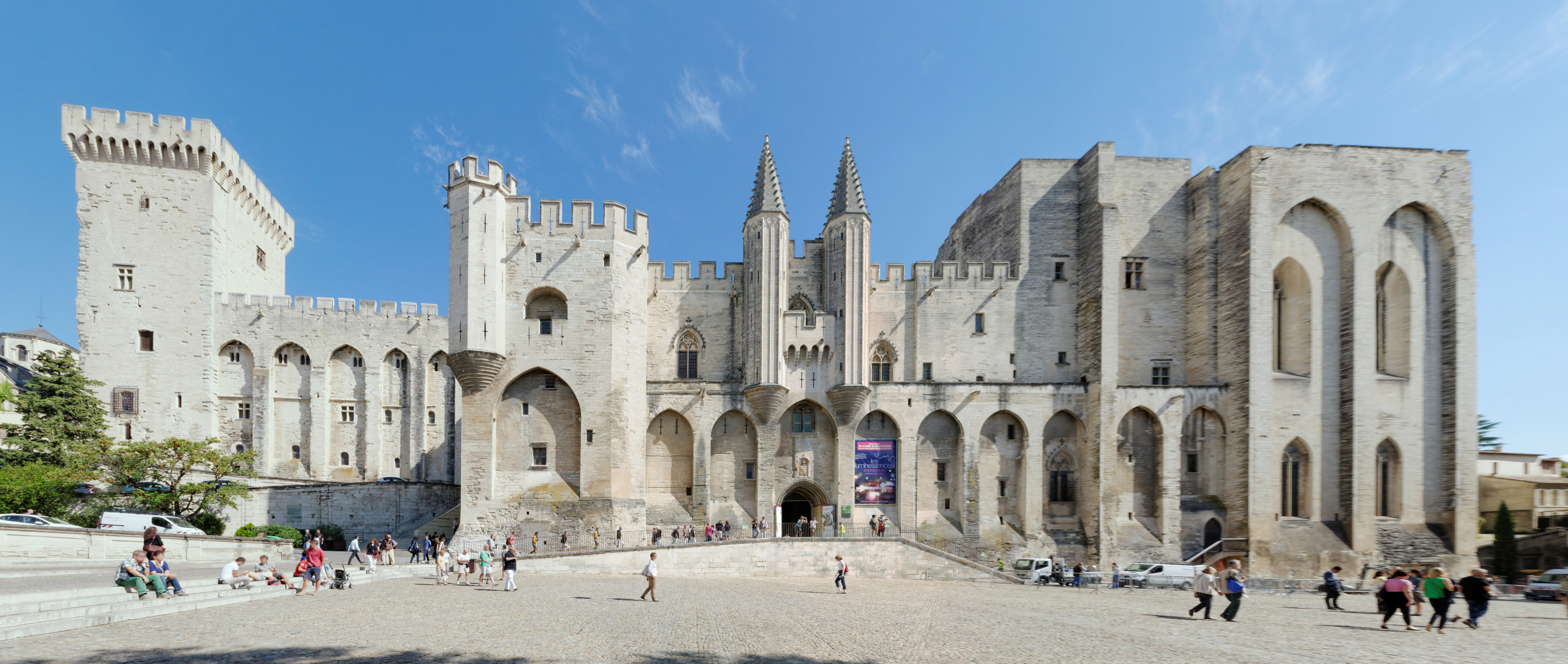
From Wikipedia: “The Palais des Papes (English: Palace of the Popes; lo Palais dei Papas in Occitan) in Avignon, Southern France, is one of the largest and most important medieval Gothic buildings in Europe. Once a fortress and palace, the papal residence was a seat of Western Christianity during the 14th century. Six papal conclaves were held in the Palais, leading to the elections of Benedict XII in 1334, Clement VI in 1342, Innocent VI in 1352, Urban V in 1362, Gregory XI in 1370 and Benedict XIII in 1394. The older area of Avignon is inside the walls and our hotel was located there.
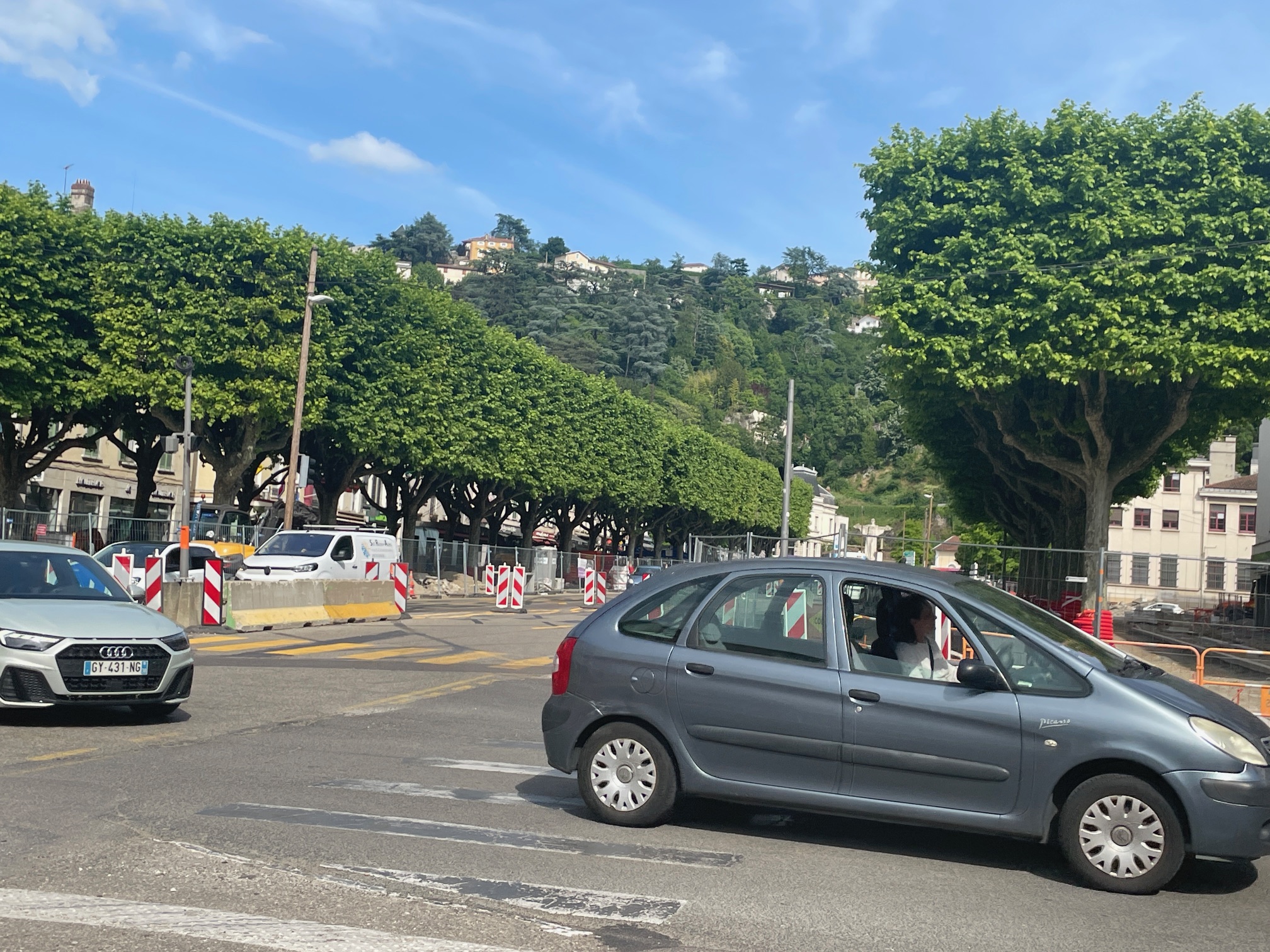
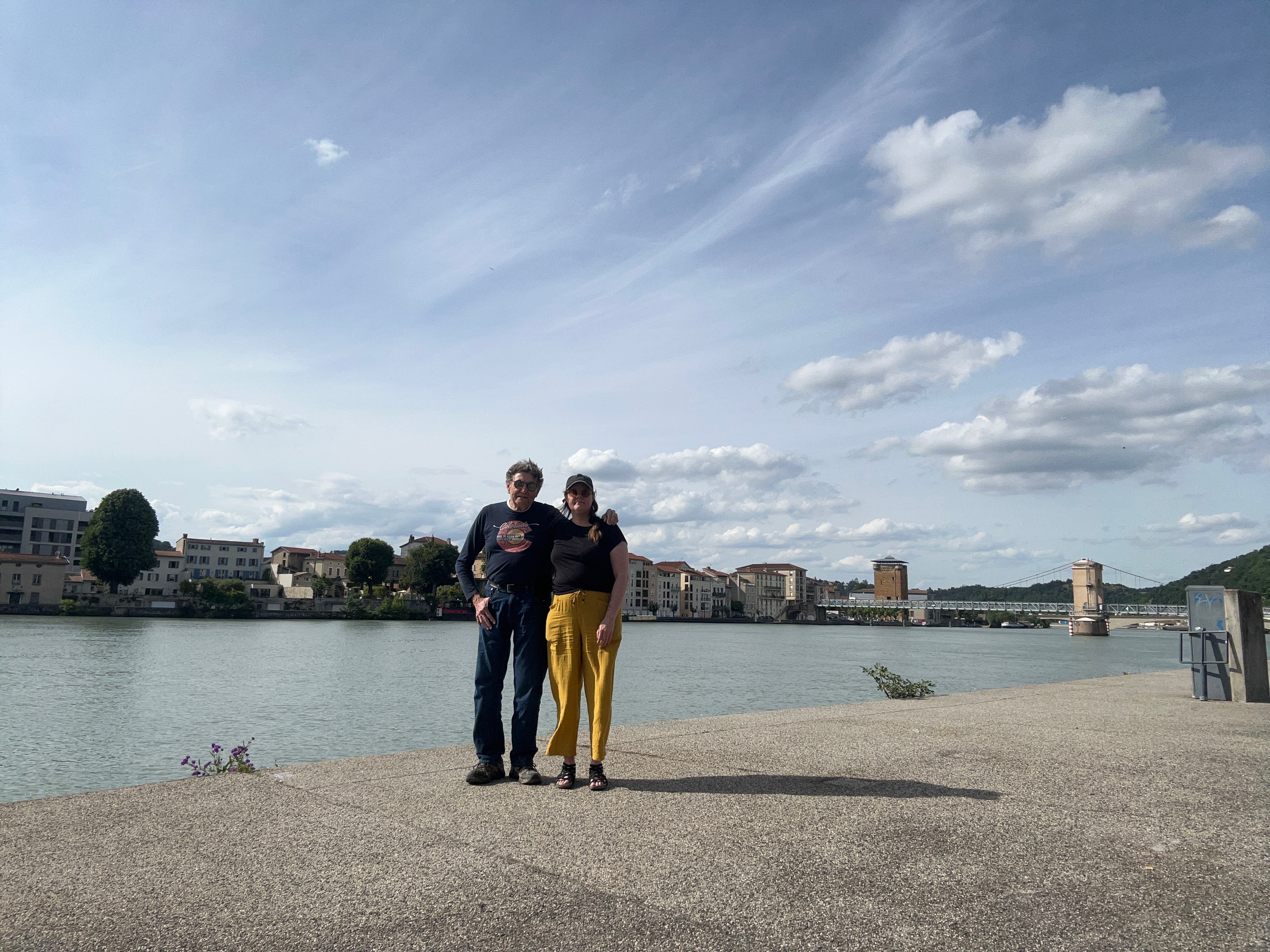
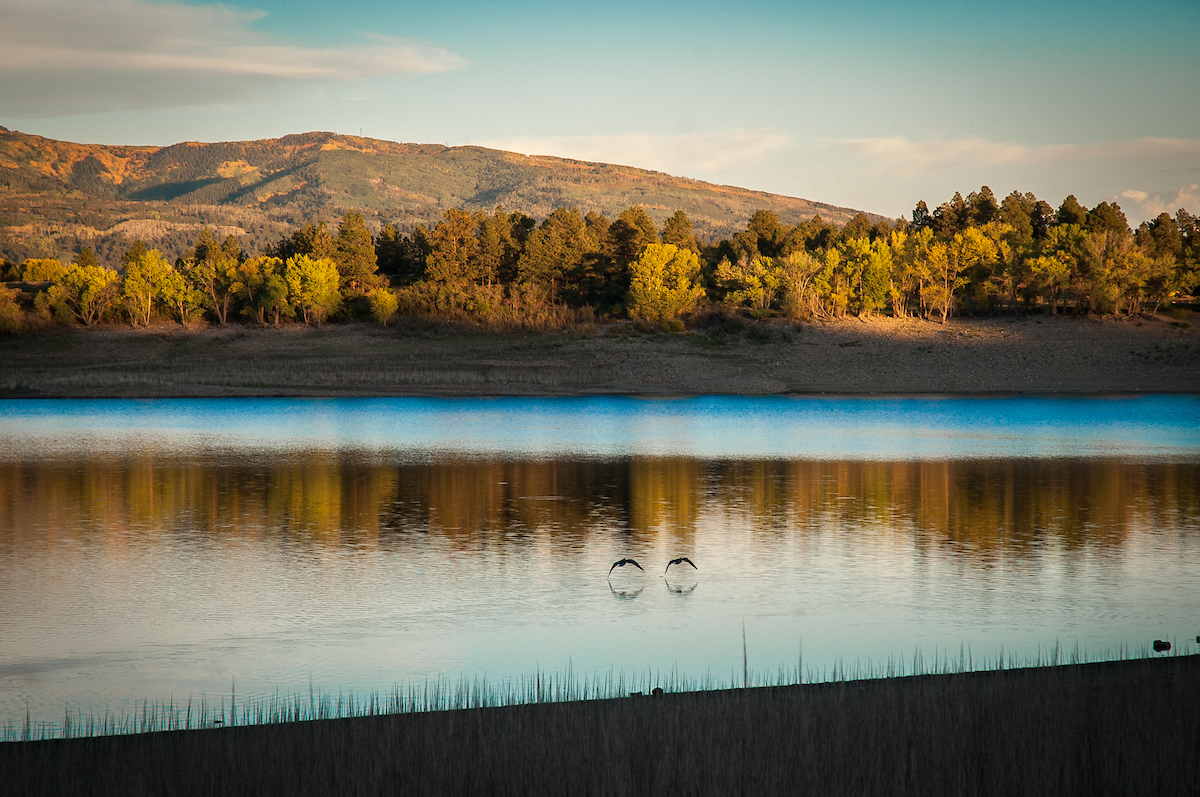
The drive to Saint-Claude is up the Rhone Valley most of the way. Farms are everywhere, mountains in the distance most of the time. We stopped for lunch Vienne. From Wikipedia: “Vienne (French: [vjɛn]; Arpitan: Vièna) is a town in southeastern France, located 35 kilometres (22 mi) south of Lyon, at the confluence of the Gère and the Rhône. It is the fourth-largest commune in the Isère department, of which it is a subprefecture alongside La Tour-du-Pin. Vienne was a major centre of the Roman Empire under the Latin name Vienna. Vienne was the capital of the Allobroges, a Gallic people, before its conquest by the Romans. Transformed into a Roman colony in 47 BC under Julius Caesar, it became a major urban centre, ideally located along the Rhône, then a major axis of communication. Emperor Augustus banished Herod the Great‘s son, the ethnarch Herod Archelaus to Vienne in 6 AD.
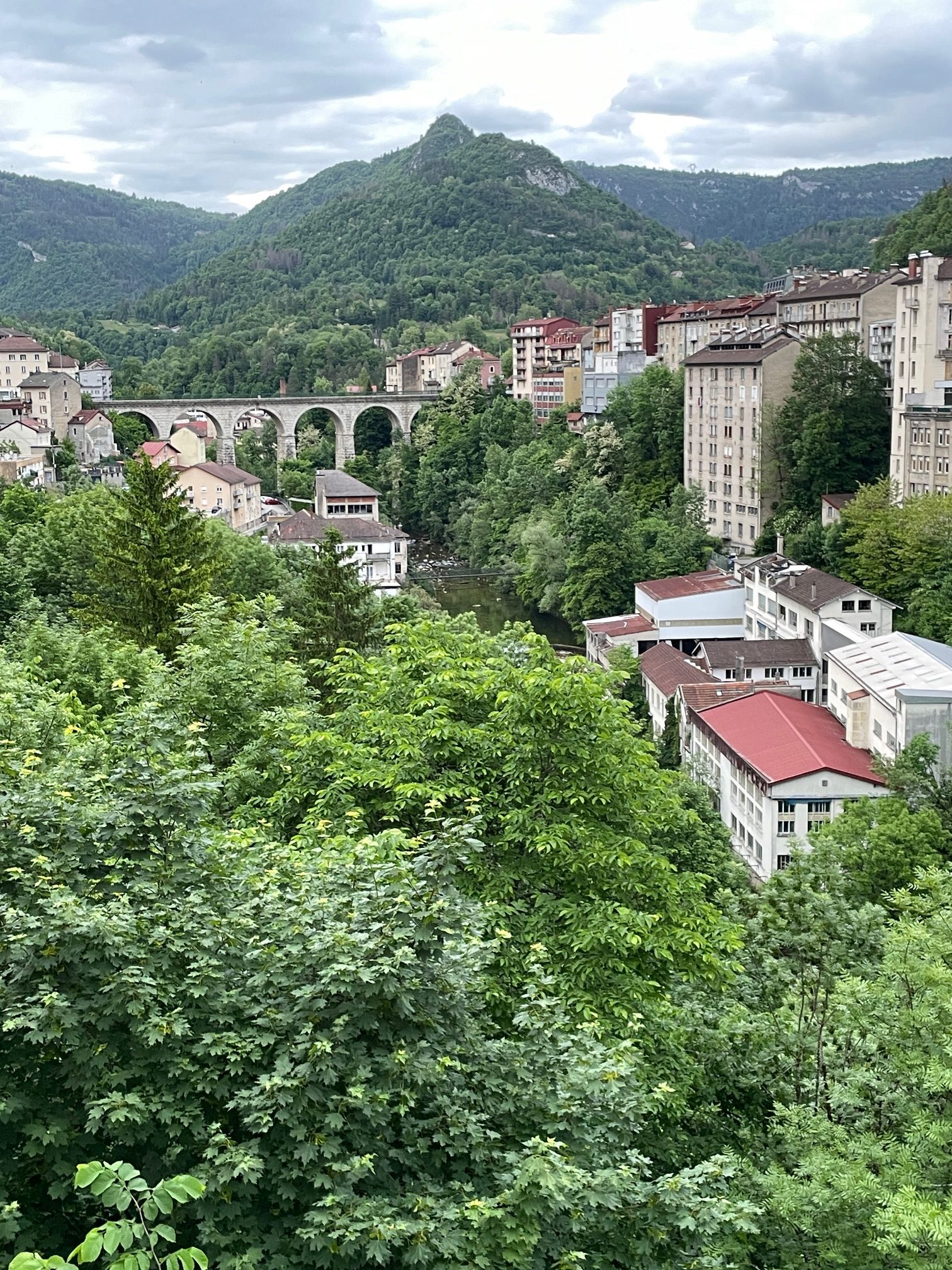
From Wikipedia: “Saint-Claude (French pronunciation: [sɛ̃ klod]) is a commune and a sous-préfecture of the Jura department in the Bourgogne-Franche-Comté region in eastern France. It lies on the river Bienne…The town was originally named Saint-Oyand after Saint Eugendus. However, when St. Claudius had, in 690, resigned his Diocese of Besançon and died in 696 as twelfth abbot, the number of pilgrims who visited his grave was so great that, since the 13th century, the name “Saint-Claude” came more and more into use and has today superseded the other. It was the world capital of wooden smoking pipes crafted by hand from the mid 19th century to the mid 20th century. During WWII the town came under German occupation, yet still remained a haven for Jews escaping to Switzerland due to its proximity to it (about 8 km away, as the crow flies). As a punishment to the locals for consistently assisting and harbouring the fleeing Jews, the Nazis executed all of the town’s males of service age in the town centre.”