‘No good news’: #ColoradoRiver forecast gets historically bad — Scott Franz (KUNC.org) #COriver #aridification

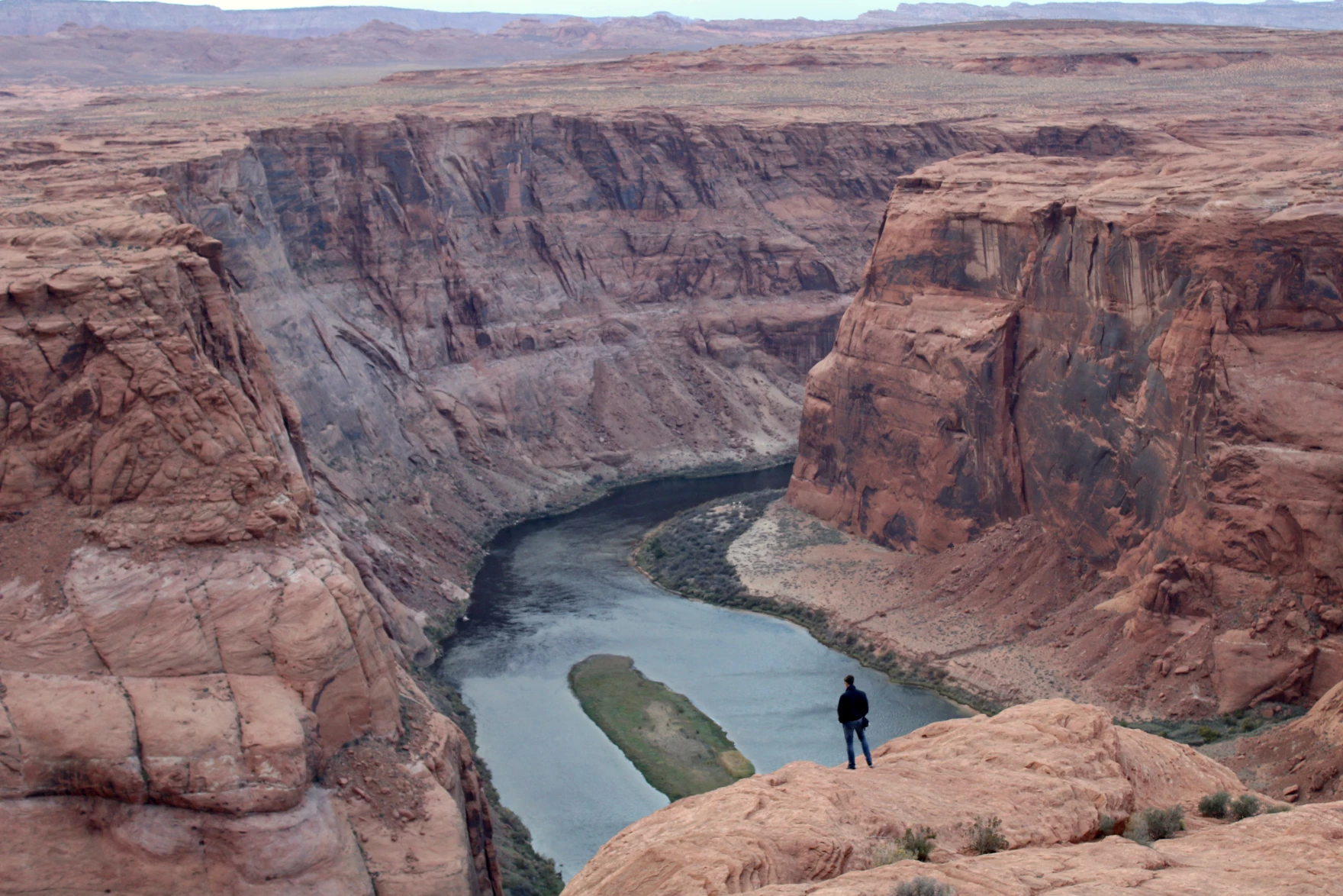
A person looks out over the Colorado River near Page, Arizona on November 2, 2022. The seven states that use its water are caught in a standoff about how to share the shrinking supply. They say they want to avoid a court battle, but some states are quietly preparing for that outcome. Alex Hager/KUNC

Click the link to read the article on the KUNC website (Scott Franz):

May 8, 2026

This story is part of ongoing coverage of the Colorado River, produced by KUNC in Colorado and supported by the Walton Family Foundation. KUNC is solely responsible for its editorial coverage.

A federal hydrologist appeared to be momentarily at a loss for words Thursday as he described how dire the latest forecast has gotten for how much water will flow through the Colorado River Basin this summer.

“Really no good news this winter,” Cody Moser with the Colorado Basin River Forecast Center said before taking a long pause on a webinar. 

Moser went on to describe how just 800,000 acre-feet of water is projected to flow into Lake Powell, the upper basin’s largest reservoir, through July. That’s 13% of its average supply. It would also be the lowest summer inflow in the reservoir’s history. The projected flows into Powell have dramatically decreased over the last two months.

The worsening outlook is driven by record-low snowpack around the west and a March heat wave.

“We did see a cool down and a wetter April, but it pales in comparison to this five, six month stretch of just record warm and dry weather that we’ve seen,” he said.

Falling water levels at Lake Powell recently prompted the Interior Department to take emergency measures to prop it up. The goal is to stop it from getting so low that it can no longer produce hydroelectricity for several states in the west. Some forecasts have it reaching that level as soon as this summer.

The rescue plan involves taking a massive amount of water from the Flaming Gorge reservoir on the Wyoming-Utah border upstream and sending it down to Powell.

Meanwhile, there’s been some recent activity in the stalled negotiations involving how the water should be shared and conserved among the seven states depending on it.

The upper basin states have been at an impasse with the lower basin states over how much each basin should have to cut back its use.

Last week, Nevada, California and Arizona made a new short-term pitch for how to avert an ongoing crisis in water shortages.

The states said they would conserve as much as an additional one-million acre feet of water per year through 2028.

Colorado’s water negotiator gave the new pitch a tepid response Monday.

Becky Mitchell said in a statement that the proposal is a “good first step,” but it would be “unsustainable.”

“While the lower division states have made progress, more is needed to protect the Colorado River system now and into the future,” she said. “These differences highlight the urgent need to come back together with the help of a mediator.”

Map of the Colorado River drainage basin, created using USGS data. By Shannon1 Creative Commons Attribution-Share Alike 4.0

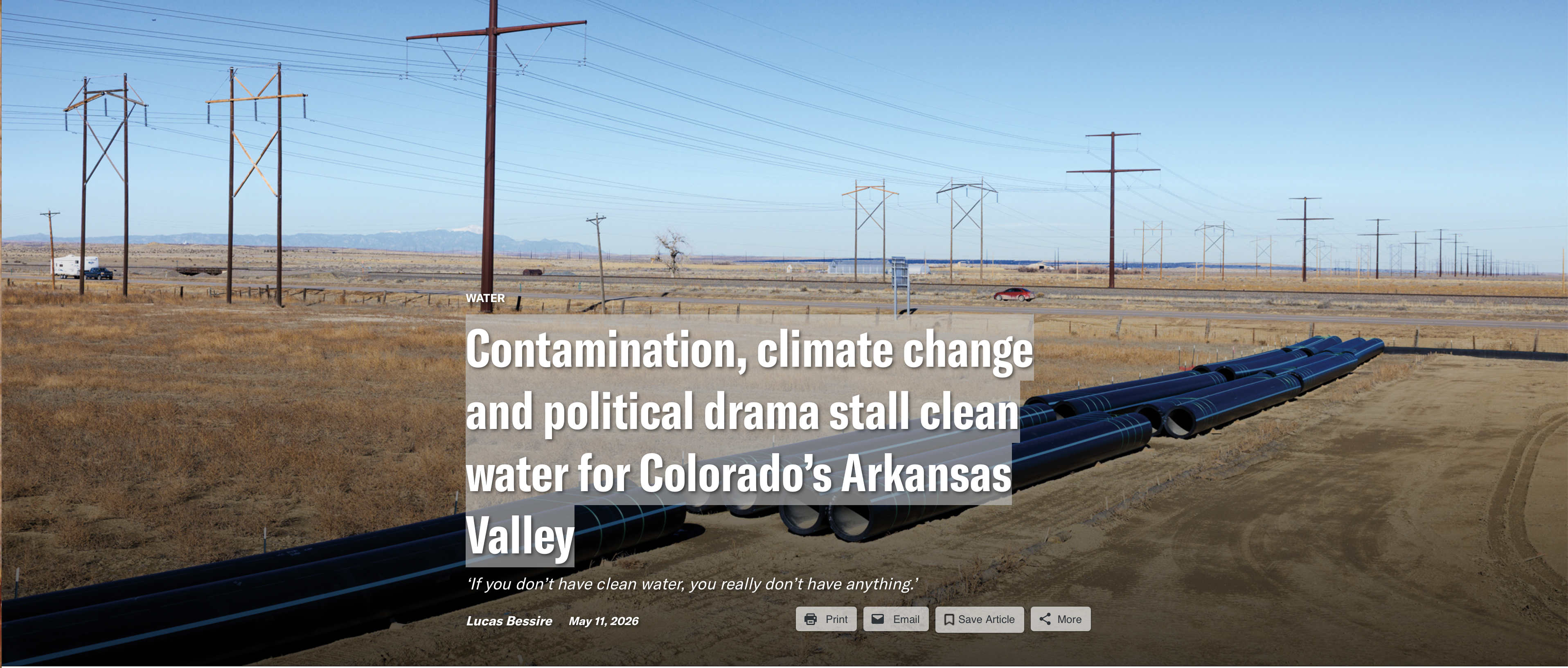
Contamination, climate change and political drama stall clean water for Colorado’s Arkansas Valley: ‘If you don’t have clean water, you really don’t have anything.’ — Lucas Bessire (High Country News) #ArkansasRiver

Unburied sections of the Arkansas Valley Conduit in Pueblo, Colorado. Photo credit: Michael Ciaglo

Click the link to read the article on the High Country News website (Lucas Bessire):

May 11, 2026

The western stretch of the Arkansas River, which flows from its headwaters in the Rocky Mountains across the plains of southeastern Colorado, is in trouble. That trouble is compounded by uncertainty about what, exactly, is polluting and drying the river, and how such problems can be fixed. 

Overshadowed by the ongoing political brawl over the Colorado River, the Arkansas River Valley rarely appears in national news. But since Dec. 30, when President Donald Trump vetoed a bipartisan bill that would have secured favorable terms for funding to complete a $1.39 billion, 130-mile water pipeline, the region has become the stage for yet more drama about water in the Western U.S.

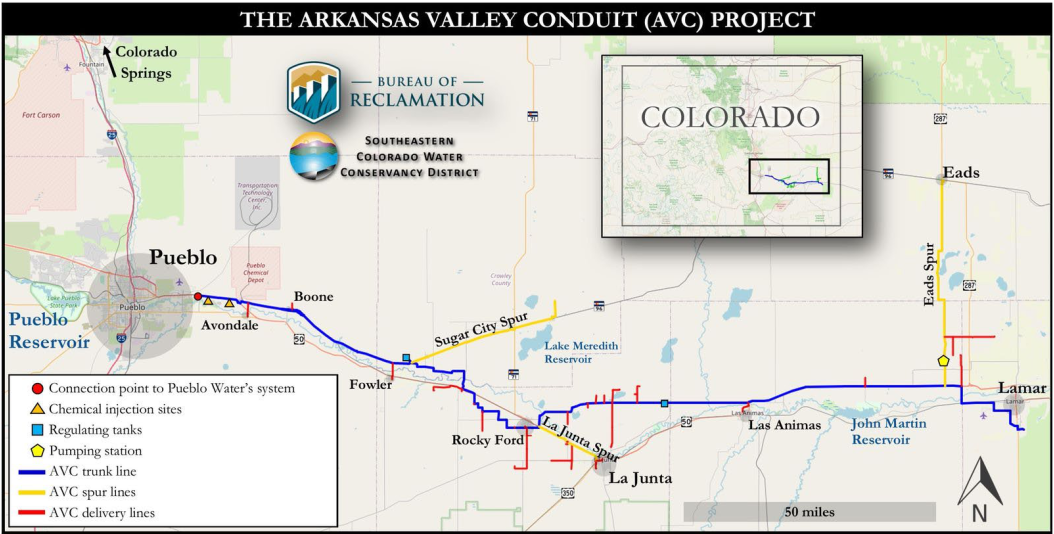
Arkansas Valley Conduit map via the Southeastern Colorado Water Conservancy District (Chris Woodka) June 2021.

The Arkansas Valley Conduit is part of a decades-long effort to replace the dwindling, contaminated water in this stretch of the Arkansas Valley with clean water from Colorado’s Western Slope and the Pueblo Reservoir. If completed, it will supply water to roughly 50,000 valley residents, many of whom can no longer count on municipal supplies for safe drinking water.

Pundits portrayed Trump’s veto as retaliation against Colorado politicians: Republican Rep. Lauren Boebert, who helped force the November vote for the release of the Epstein files, and Democratic Gov. Jared Polis, who has resisted pressure to pardon Tina Peters, a county clerk in western Colorado convicted of tampering with voting machines during the 2020 election. Sens. Michael Bennet and John Hickenlooper, both Democrats, condemned the administration for “putting personal and political grievances ahead of Americans.” The Salida-based Ark Valley Voice declared a “Reign of Retribution Punishing Deep Red Southeastern Colorado.” The New York Times, emphasizing the same irony, observed that “A Trump Veto Leaves Republicans in Colorado Parched and Bewildered.” 

For those managing the project, the veto is a setback but not a showstopper. The first dozen miles of the conduit have already been completed, and enough capital is on hand for at least three more years of construction. “Some (coverage) has been saying it’s the end of the project, which is totally false,” said Chris Woodka, senior policy and issues manager of the Southeastern Colorado Water Conservancy District. “It’s still being built; the veto was not for any reason that had anything to do with the project, and we’re working in every way we can to make this affordable.” 

For valley residents, the issue is personal. This rural region is more culturally aligned with western Kansas than with Front Range cities. Like people throughout the Great Plains, the local residents are grappling with eroding social services and the rising cost of living. The scarcity of safe water magnifies uncertainty. “If you don’t have clean water,” said Jack Goble, general manager of the Lower Arkansas Valley Water Conservancy District and a sixth-generation rancher, “you really don’t have anything.”

“HOW EASY IT IS,” wrote William Mills in his 1988 book The Arkansas, “to take a river for granted.” 

The Arkansas Valley of Colorado is the ancestral homelands of the Plains Apache, Comanche, Kiowa, Cheyenne and Arapaho peoples. A geographical corridor across the Southern Plains, it was a route for incursions and ethnic cleansing by non-Native fur trappers, traders, military expeditions, hide hunters, railroad developers and settlers. Those settlers include my ancestors; I grew up in southwest Kansas, where generations of my family farmed and ranched along the dry Cimarron River. The Arkansas Valley, with its dwindling water and flatlands, feels like home.

Straight line diagram of the Lower Arkansas Valley ditches via Headwaters Magazine

By 1900, settlers had diverted the Arkansas into a maze of ditches. Irrigation and migrant labor supported sugar beet factories, vegetable cultivation and Rocky Ford’s famous melons. Such practices remade the riverbed, increased salinity, and reduced flow. As with the Colorado River, water rights were assigned partly on wishful thinking. Today, the Arkansas Valley is one of the region’s most over-appropriated basins, and the river’s annual flow has dramatically declined. A short distance past the Kansas line, the river is entirely dry.

The Arkansas is being drained in new ways. Climate change and a record-breaking snow drought are intensifying the scarcity. Over the last half-century, growing Front Range cities have purchased water rights from farmers in the valley. Exchange agreements allow cities to swap these rights for ones farther upstream, leaving the downstream flow diminished and dirtier. Between 1978 and 2022, nearly 44% of the irrigated farmland in the Lower Arkansas Valley Water Conservancy District was taken out of production.

Rocky Ford Melon Day 1893 via the Colorado Historical Society

Critics call it “buy-and-dry.” They say the removal of water has disastrous consequences for an agricultural region. “If you take all of that water out of an economy that completely depends on it,” Goble said, “it just breaks a community.” Faced with the prospect of litigation from local water districts, cities like Aurora claim to be developing more sustainable arrangements.

THE ARKANSAS’ WATER is changing, too. The river is diverted into dozens of canals and fields. What doesn’t evaporate or get absorbed returns as runoff or sinks through the alluvial gravels that connect to the riverbed. Each time a drop of water returns, it carries more dissolved minerals. As the river’s volume lessens, the concentration increases in what is left. By the time the river reaches the Kansas border, the water regularly contains 4,000 milligrams or more per liter — making it about eight times saltier than a typical sports drink and unsuitable for growing many crops.

Minerals are not the only problem. The river basin and alluvial gravels are also contaminated with radium and uranium. Last year, a study by the Colorado Geological Survey found that the levels of radioactivity in more than 60% of the private wells sampled in the valley exceeded federal standards. 

The radionuclides are called “naturally occurring.” But natural uranium usually stays locked in rock. In the valley, irrigated agriculture sets it into motion. Uranium is mobilized by complex interactions between oxygen, sediments, water, microbes and nitrate. Nitrate is a common fertilizer. One study found that valley farmers had over-applied it for decades. This pulls out radionuclides, turns them loose, and flushes them into the river’s shallow aquifer. Levels rise as the river moves east through agricultural lands.

Contamination is not news in the valley. People have worked on cooperative solutions for decades. To meet safe water standards while the conduit is under construction, the towns of La Junta and Las Animas installed filtration systems. But cleaning the water creates hyper-contaminated wastewater, which is currently diluted and poured back into the river. “The only true solution,” said Bill Long, president of the Southeastern Colorado Water Conservancy District board, “is a new source.”

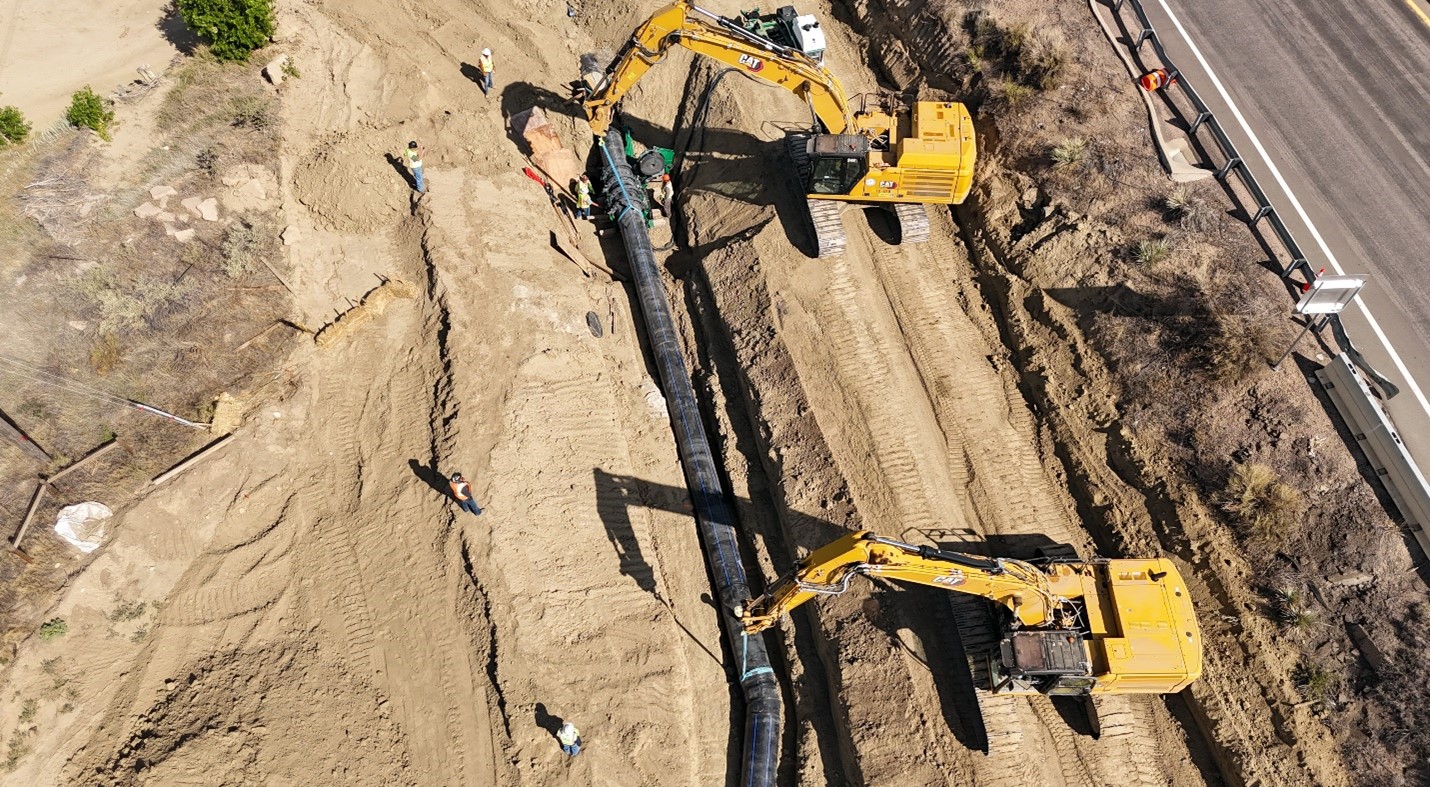
Aerial Photo of AVC Construction. Credit: Southeastern Colorado Water Conservancy District

THE CONDUIT WOULD PROVIDE safe water to a region too often disregarded. But the project also raises questions about what can truly be bypassed and what cannot, and about the fate of the river itself.

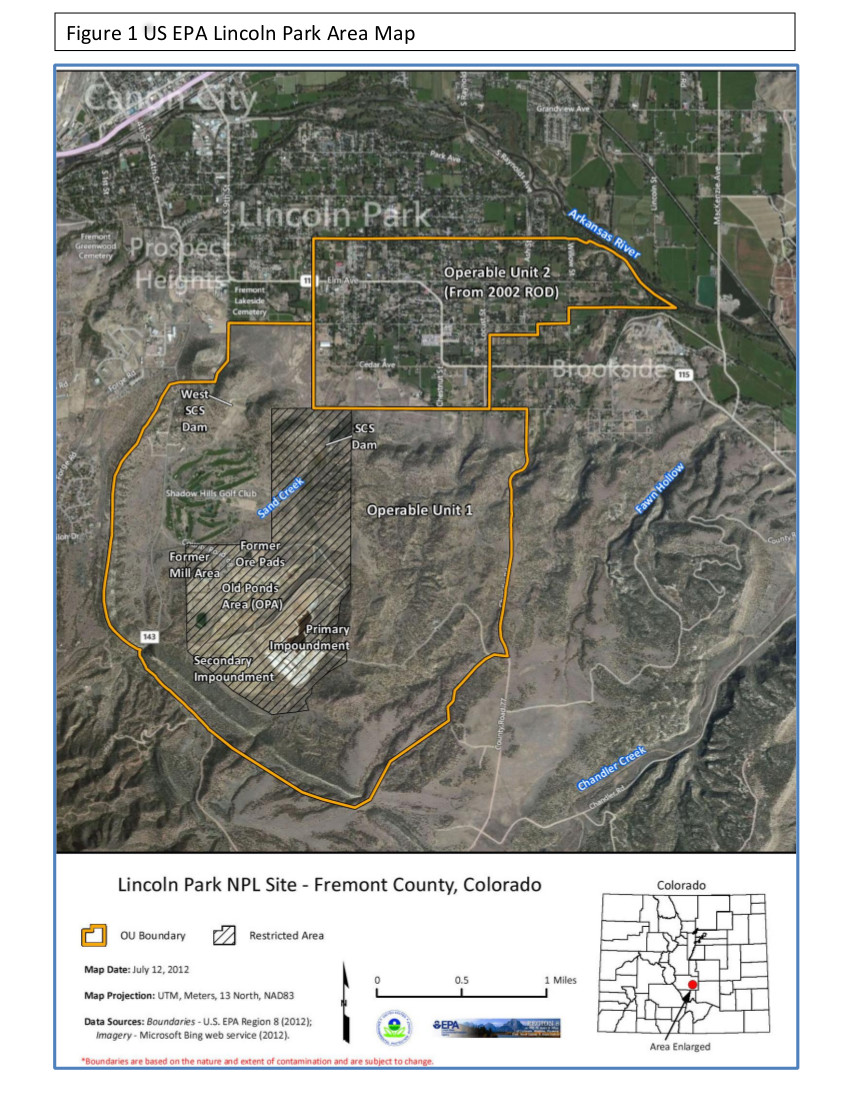
Lincoln Park/Cotter Mill superfund site via the Environmental Protection Agency

Near Cañon City, upstream from the conduit, the Lincoln Park/Cotter Superfund site contains a former uranium mill, millions of tons of radioactive waste, coal mineworks and tailing ponds. The site sits less than two miles from the Arkansas River. It is known to be contaminated with the same compounds — radionuclides, selenium, sulfates — that affect communities downstream.  

Local residents have worked for decades to raise awareness and hold a revolving cast of agencies, regulators and owners accountable for the pollution. “It has taken us a lifetime,” said Jeri Fry, co-chair of Colorado Citizens Against Toxic Waste. “As the years have gone by, we have been the ones holding the memory.” 

Without memory, they say, contamination is normalized as background, treated as an isolated issue, or denied. “We’ve been stonewalled on many of our legitimate concerns,” said Carol Dunn, vice-chairperson of the Lincoln Park/Cotter Community Advisory Group. She believes state regulators avoid testing for fear of uncovering inconvenient facts.

The most inconvenient would suggest connections between contamination in the valley and industrial pollution upstream, which affects not only Cañon City but the communities of Leadville, Pueblo and Fountain Creek. For Fry, all of the known and unknown pressures on the river point to the same fundamental problem. “We are not treating our water as though it is a sacred thing,” she said. “And it is. It’s got to be.” 

Map of the Arkansas River drainage basin. Created using USGS National Map and NASA SRTM data. By Shannon1 – Own work, CC BY-SA 4.0, https://commons.wikimedia.org/w/index.php?curid=79039596

Saguache County places moratorium on data center projects: County Commissioners want time to determine land use regulations for any rural data center projects — Owen Woods (AlamosaCitizen.com) #RioGrande #SanLuisValley

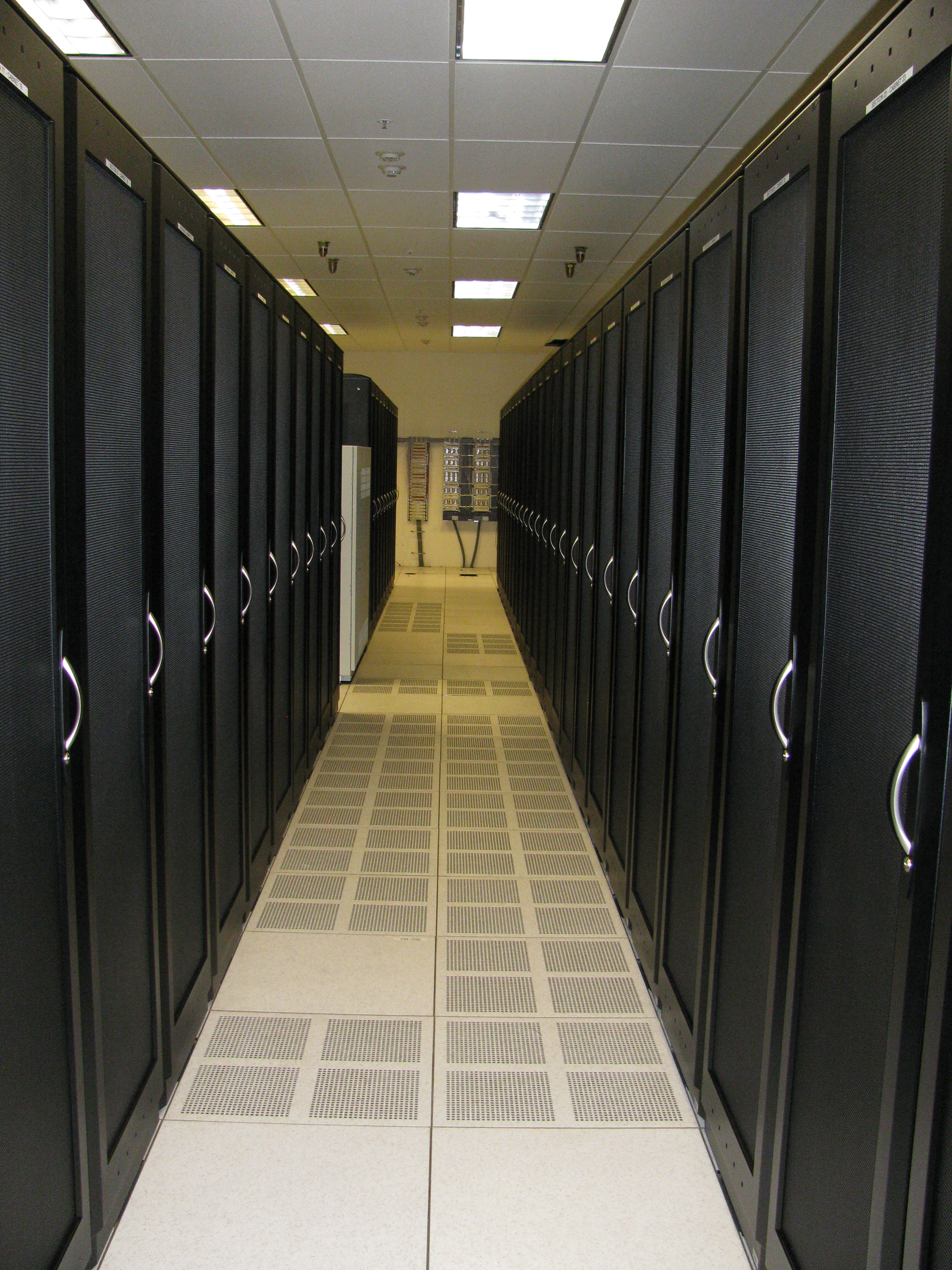
Typical cold aisle configuration with server rack fronts facing each other and cold air distributed through the raised floor. By Robert.Harker – Own work, CC BY-SA 3.0, https://commons.wikimedia.org/w/index.php?curid=29153430

Click the link to read the article on the Alamosa Citizen website (Owen Woods):

May 8, 2026

Saguache County adopted a resolution on Tuesday, May 5, 2026 that placed an emergency temporary moratorium on any data center projects within the county for six months. 

Some language was changed in the draft resolution during the meeting, but the commissioners said the resolution was drafted following their April 21 meeting where San Luis Valley Rural Electric Cooperative CEO Eric Eriksen said that the power company had received three inquiries for “rural data center” projects in the Valley. 

A representative with SLVREC said Eriksen was out of the office this week, so a voicemail was left with him on Tuesday morning. 

Alamosa County Administrator Roni Wisdom sent the Citizen a copy of SLVREC’s informational newsletter that breaks down what a “rural data center” is. In that letter given to the Alamosa County Commissioners, Eriksen said that over the past year, SLVREC “have been in discussion with three rural data center developers exploring opportunities.” 

The Saguache County moratorium is necessary “for the immediate preservation and protection of the public health, safety, and welfare of the citizens of Saguache County.” 

“Everybody in our county is upset about data centers,” said Saguache County Commissioner Liza Marron.  

The primary purpose for enacting an emergency temporary moratorium on the acceptance, processing, or approval of data center projects is “to provide the County sufficient time” to develop and amend the Saguache County Land Use Code, Standards, other sections of the Land Use Code, and Saguache County 1041 Regulations.

Any changes to the land use code requires a review and recommendation by the County Planning Commission and a public hearing. 

“The intent of the new Land Use Code and 1041 provisions prepared and implemented during the moratorium period is to establish an improved process and standards regarding requests for Data Center projects,” the resolution reads. 

“County Land Use Department has informed the BOCC that it has received inquiries regarding data center projects and the current regulations in the Land Use Code,” the original draft read. This turned out not to be the case. 

Saguache Land Use Administrator Amber Wilson said her office has not had any official inquiries for data centers. “No one has come to us,” she said. 

The language in the paragraph of the moratorium had been changed on May 5 to reflect the information stemming from SLVREC. 

The Saguache County commissioners can put the moratorium in place for the purposes of “prohibiting or regulating in any part of or all of the unincorporated territory of the county used or to be used for any business, residential, industrial or commercial purpose….” 

Meanwhile in Alamosa County, Land Use and Building Director Richard Hubler told the Citizen, “we have not received any applications for data centers, although I’ve had a couple questions about them, including a call from someone related to this small scalecontainer based project”

Hubler said that Alamosa County doesn’t currently have anything specific codes to address data centers, but he said the county is currently “talking about updates that would likely end up with some new language about stand-alone data centers as a primary use, and something related to size.” 

“Certainly the Hyperscale centers like the Front Range are seeing could have a huge impact on housing and energy needs,” Hubler said, “in addition to water. But the smaller ones like that container may be a good fit for existing capacity on the SLVREC system.”

He noted there are some small data centers that assist agriculture operations and also the local hospital system. 

“We even have server rooms at the county buildings, but these are all ancillary to the principal use, not developed for commercial sale/rental applications, and are not as much part of the current ‘data center’ conversation which focuses heavily on AI.” 

This map shows the current data centers, their power usage and location. Though it has yet to be built yet, the BlueSky AI project in Huerfano County is already on the map. 

“Our high altitude cool sunshine air, your SLV Rural Electric Cooperative and Ciello broadband are perhaps the most ideal conditions in the nation for a rural data center,” Eriksen wrote. “That gives us a competitive advantage.” 

Eriksen wrote mainly about the economic and technological benefits of a data center in rural areas. 

“Not all data centers are the same,” he wrote. “Not every data center is a giant, power-hungry, watering-guzzling complex like the ones you see in national news.” 

He compared the different types of data centers: Hyperscale data centers, regional data centers, and edge or rural data centers. Hyperscale data centers require 100 megawatts of power or more and thousands of square feet. Regional data centers are described as mid-sized facilities that require strong infrastructure, but are often operating on less than 100 megawatts. 

The rural data centers, Eriksen said, “are the most relevant for us… Rural data centers are small, efficient facilities — often the size of a modular 20’ or 40’ metal container, a home or a small commercial building.” 

He wrote that SLVREC’s largest “electric member” is about 1.5 megawatts. 

These data centers, Eriksen wrote, require far less power than hyperscale data centers, operating at 50 kilowatts up to 50 megawatts. These centers are said to commonly use air-cooling or closed-loop refrigeration instead of consuming water. 

In SLVREC’s position, the agriculture industry’s energy demand “has been declining.” The company sees the “underutilized capacity” as an opportunity “to serve five, 10, 20, 50 megawatts or more of rural data centers.” 

According to SLVREC, there are seven long-haul fiber routes into and out of the Valley, “with terabytes of unused capacity that is ideal for data centers.”

Eriksen said that reducing the “digital distance” between the San Luis Valley “and the rest of the world is transformational. When data is processed closer to home, everything works better and faster. Rural data centers can help lower rates.” 

Those three developers that SLVREC has been in communication with “haven’t pulled the trigger yet, but if one does, then you’ll know it’ll be beneficial for all of us,” wrote Eriksen.

As drought worsens, Western states brace for wildfires, water shortages — Alex Brown (UtahNewsDispatch.com) #ColoradoRiver #COriver #aridification

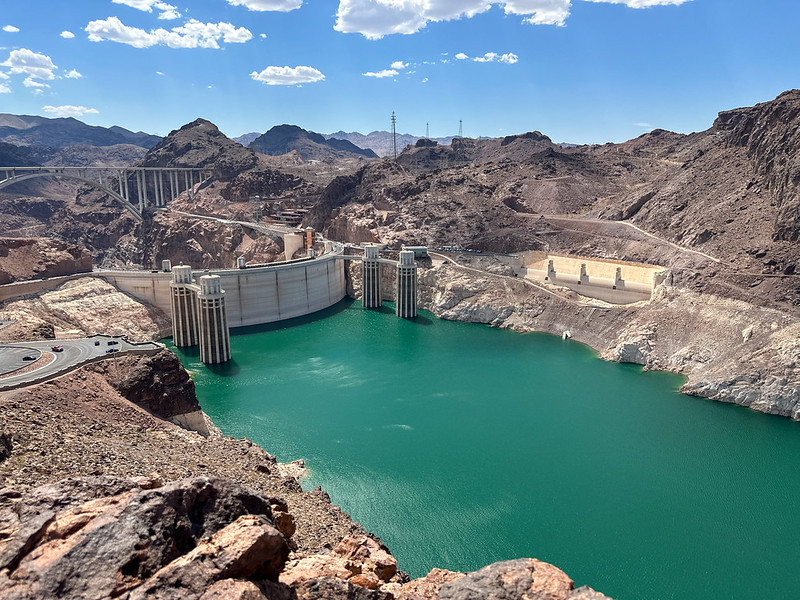
Hoover Dam. Photo credit: USBR

Click the link to read the article on the Utah News Dispatch website (Alex Brown):

May 9, 2026

From the Rockies to the Cascades to the Sierra Nevada, mountainsides across the West are sparsely covered by the snow that usually blankets the high country well into the summer.

That snowpack is like a savings account that the West draws on when the hot, dry months arrive. It moistens the landscape as it melts, lessening the risk of severe wildfire. The runoff feeds into river basins, and the swelling waterways provide power to hydroelectric dams, irrigation to farmers and drinking water to cities.

This year, Western states are heading into the summer with a desperately low balance — threatening wildfires, drinking water, crops, electricity and more.

“This has been an extremely poor year,” said Sharon Megdal, director of the Water Resources Research Center, a research unit at the University of Arizona. “This has gotten a lot of people concerned and alarmed.”

While a late-season storm brought heavy snow to parts of the Rockies this month, the region remains in a deep snowpack deficit.

As warmer weather arrives, states are preparing for a dangerous wildfire season across the drought-stricken West. Farmers and cities are bracing for potential cutbacks in their water allocations from rivers that have less to give. Fisheries managers are watching for low river flows that could threaten vital salmon runs. And worsening conditions could threaten the supply of hydropower that provides cheap, clean electricity to many Western states.

A hot, dry winter

Across nearly the entire West, states spent the winter waiting for snow that rarely arrived. Ski resorts lost millions of visitors as they struggled to stay open. Then in March, a record-breaking heat wave settled across the region, shrinking the already paltry snowpack.

“It’s unheard of,” Megdal said. “Things were already looking bad in January, but if you follow the projections, they had to keep revising the numbers downward because the snow just never came and we had this hugely hot period in March.”

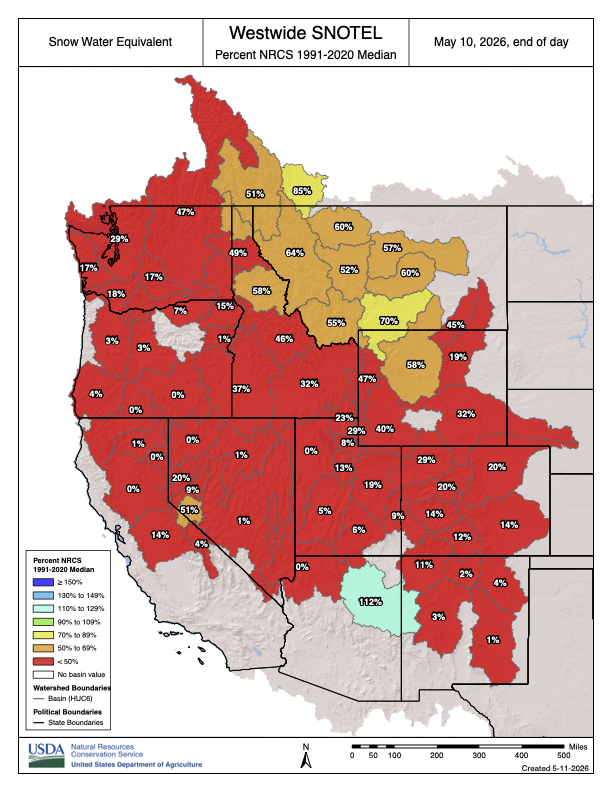
Westwide SNOTEL basin-filled map May 10, 2026.

The federal National Water and Climate Center produces a real-time map showing the snow water equivalent in river basins across the country — a measurement of how much moisture is being held in those mountaintop savings accounts.

The majority of the West is bright red, indicating that snowpack is at less than 50% of the median level for this time of year. Yellow and orange cover most of the remaining areas, showing regions that are still well below the median.

The most recent U.S. Drought Monitor map shows most of the country in abnormally dry or drought conditions, aside from the Great Lakes region and some other parts of the Midwest.

West Fork Fire June 20, 2013 photo the Pike Hot Shots Wildfire Today

Wildfire

For many Western states, the most imminent threat from the dry winter is the prospect of a dangerous wildfire season.

Already, wildfires in Nebraska have burned hundreds of thousands of acres, shattering records and setting the stage for a record wildfire year.

The wildland fire outlook maps produced by the National Interagency Fire Center show above-normal fire risk spreading across much of the West by June and July.

“There’s a lot of red on the map,” said Matthew Dehr, wildland fire meteorologist with the Washington state Department of Natural Resources.

Dave Upthegrove, Washington’s public lands commissioner, said his agency is preparing for fire season as normal but with a heightened awareness that this summer could be demanding. He’s focused on educating residents about the risks, noting that 90% of wildfires in Washington are caused by humans.

“What we’re likely to see are wildfires moving more quickly through forests,” he said. “When we do have a large fire event, it’s likely to move faster, be more significant.”

He also noted that this year is Washington’s fourth consecutive year of drought conditions, making trees more susceptible to diseases and pests and compounding wildfire risk.

Dehr said spring rains could provide a bit of a buffer before the heat of July and August, but a recent stretch of sunny weeks has yet to provide relief.

Upthegrove noted that the challenging conditions across much of the West could make it more difficult for states to send wildfire crews to each other’s aid, if many states are battling big blazes simultaneously.

“As the climate crisis pushes a forest health crisis pushes a wildfire crisis, it’s going to stress the whole system, not just in our state,” he said.

Low water supplies

Many Western states also rely on snowpack to feed rivers that provide irrigation for farming and the water supply for cities. In particular, the Colorado River provides water for tens of millions of people across seven states, a region that has grown even as the river’s supply has dwindled in recent decades. Reservoirs that were full at the turn of the century are now nearing critically low levels.

“There hasn’t been enough flow in the river to meet all these expected demands, even in the good years,” said Megdal, the water researcher. “We’ve used up our savings and storage, so now what do we do?”

Water allocations for states, tribes and farmers in the region are governed by a complicated and fiercely contested system known as the Colorado River Compact. In recent years, cutbacks due to the low supply reduced the water allocation for central Arizona, including all of the water for agricultural users.

Now, states are fighting over even less water and struggling to negotiate who should bear the cost. Last week, Arizona, California and Nevada submitted a proposal to federal officials that would impose further cutbacks over the next two years in order to buy time for a longer-term deal.

“It’s turning out to be very hard to get the states to agree on how to slice up a much smaller pie,” Megdal said. “There are scenarios that are not zero probability that are catastrophic to the region.”

If the states are unable to reach an agreement, allocation for the river’s diminished water will be determined by federal regulators under the “law of the river.” Cutbacks imposed by the feds could fall heavily on central Arizona, Megdal said, cutting the supply for Phoenix, Tucson and some tribal nations.

Such uncertainty in the Colorado River basin and elsewhere “leaves farmers making planting decisions now without knowing whether sufficient water will be available to carry crops through harvest,” the American Farm Bureau Federation wrote in an April report.

The lack of water could force farmers to remove trees or vineyards, the Farm Bureau noted, or reduce cattle herds if the parched landscape does not supply enough forage.

Meanwhile, rivers running at a slow trickle could reduce the hydroelectric power produced by dams across the West. Across 13 Western states, hydropower accounts for nearly a quarter of electrical generation.

The Glen Canyon Dam in Arizona, which forms Lake Powell, produces about 5 billion kilowatt-hours of electricity each year, enough to power nearly half a million homes. But the lake level may soon fall below a threshold from which the dam can no longer generate power.

“Hydropower is so incredibly important because it has been the lowest-cost power for many in the West,” Megdal said. “There are big implications for the energy grid and the cost of electricity.”

Stateline reporter Alex Brown can be reached at abrown@stateline.org.

This story was originally produced by Stateline, which is part of States Newsroom, a nonprofit news network which includes Utah News Dispatch, and is supported by grants and a coalition of donors as a 501c(3) public charity.

Created by Imgur user Fejetlenfej , a geographer and GIS analyst with a ‘lifelong passion for beautiful maps.’ It highlights the massive expanse of river basins across the country – in particular, those which feed the Mississippi River, in pink.

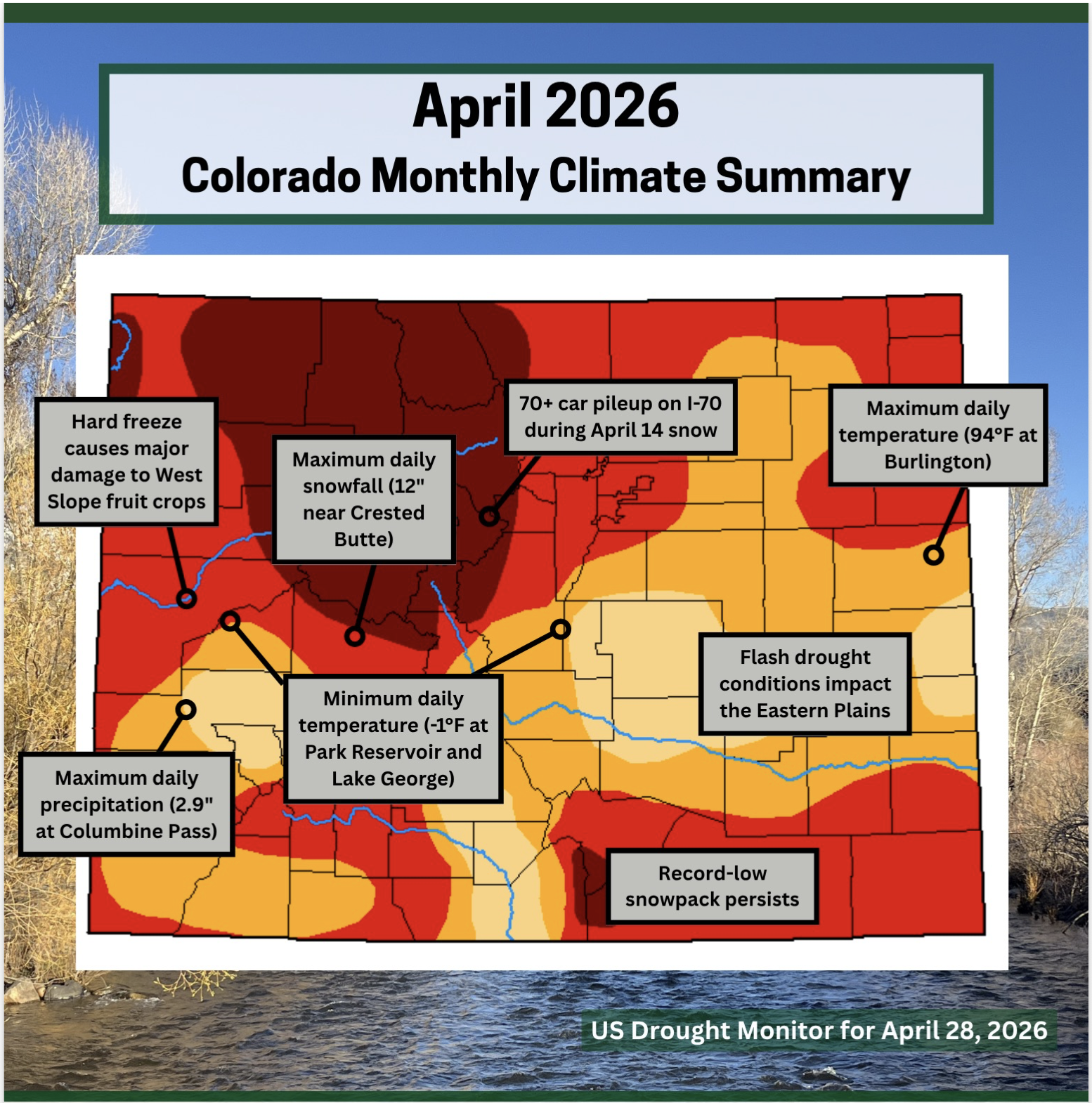
Colorado April 2026 Climate Summary — #Colorado Climate Center

Graphic credit: Colorado Climate Center

Click the link to read the summary on the Colorado State University website. Here’s an excerpt:

After a record-shattering March, April 2026 seemed at least a little more normal in Colorado. April was actually cooler than March, which doesn’t happen very often. But it was yet another warmer-than-average month, and it was very dry in eastern Colorado. Flash drought set in across the eastern Plains. The mountains had near- to above-average precipitation in April, which slowed the melting of mountain snowpack. But statewide snowpack was still at record-low levels as of the end of April. Water Year 2026 thus far remains the warmest on record by a large margin.