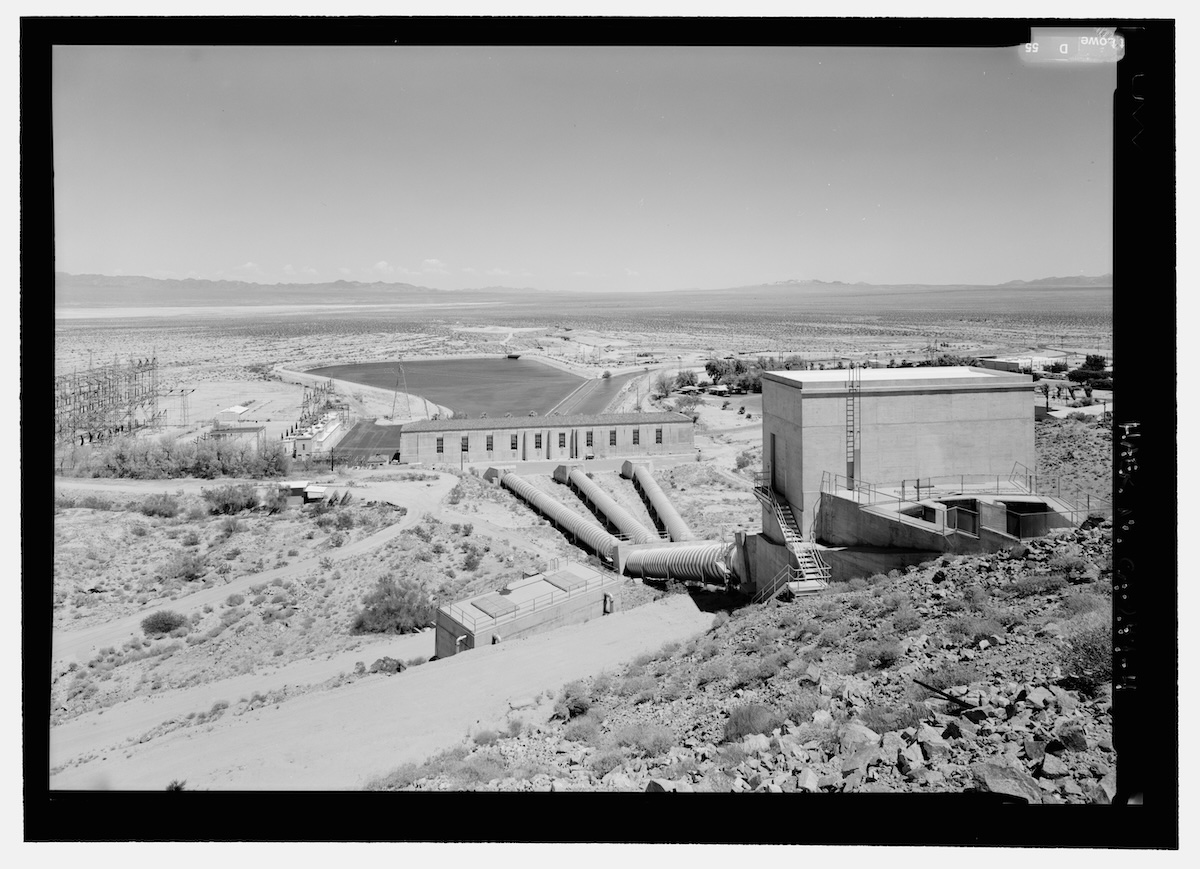
Photograph of Iron Mountain Pumping Plant by Jet Lowe. Provided by the U.S. Library of Congress
The 85-year old Colorado River Aqueduct – which was constructed over a 8-year period beginning in 1933, is a major water conveyance system that brings 1.2 billion gallons of Colorado River water to Southern California every day. The aqueduct was paid for by voters in 13 Southern California cities who overwhelmingly approved a $220 million municipal bond in order to finance the monumental construction project. Managed by the Metropolitan Water District of Southern California, the aqueduct stretches 242 miles across the Colorado and Mojave deserts, tunnels under two mountain ranges, and rises a total of 1,617 feet in elevation from its starting point downstream of Parker Dam near Lake Havasu.1
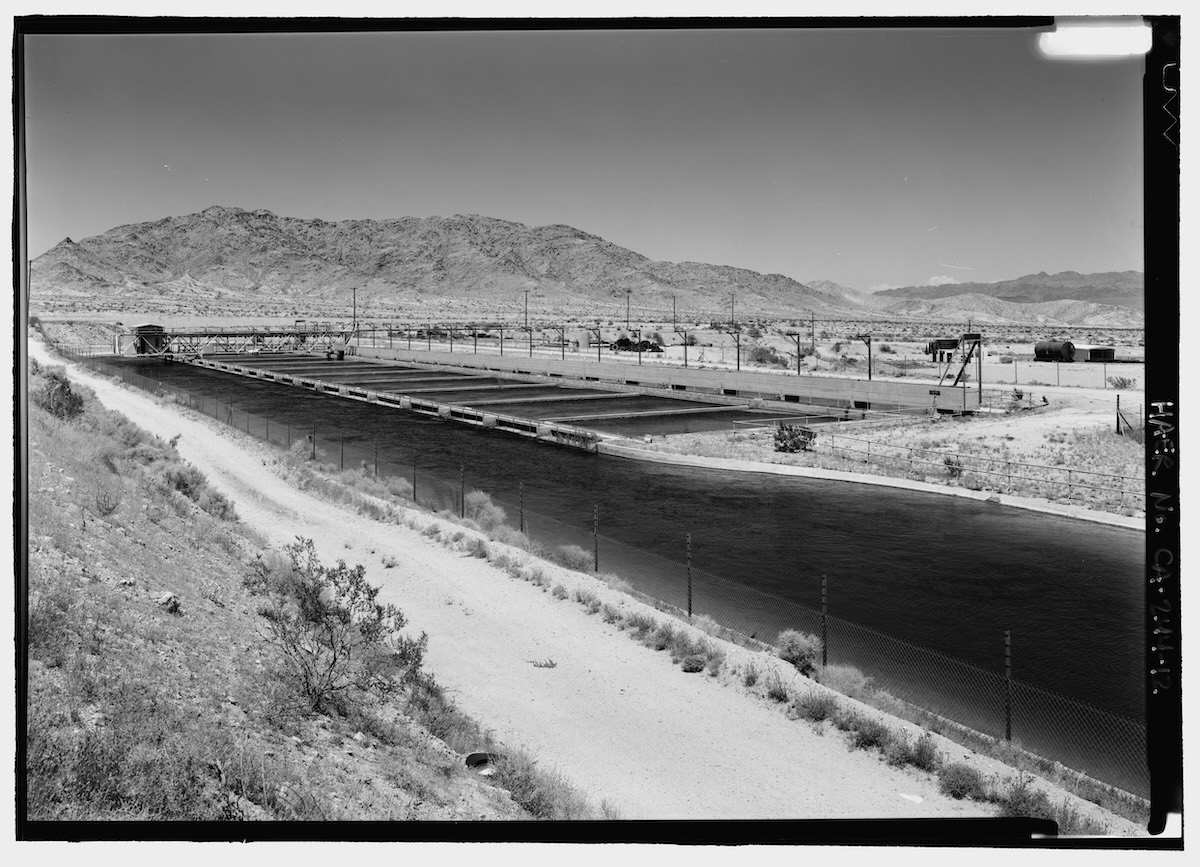
Photograph of canal and adjacent sand filters at Iron Mountain. Photograph by Jet Lowe. Picture provided by the U.S. Library of Congress
Numerous engineering features mark the aqueduct, including dams, reservoirs, pumping plants, tunnels, canals, conduits, inverted siphons, and transmission lines. Each of these parts works together to provide what was determined to be the most efficient, cost-etfectlve, and safe combination of transporting water from the Colorado River to the southern California coastal basin. The aqueduct has always been much more than just a canal. Its engineering coincided with American during the Depression-era, when the appearance and promotion of technological “progress” provided the American public with a sense of accomplishment and pride. During its construction the aqueduct provided jobs for 35,000 people for over eight years.
Headgate house at the Iron Mountain Pumping Plant, photographed by Jet Lowe. Provided by the Library of Congress.
The combination of the total height that water is lifted (1,617′) and the aqueduct’s 242-mile length was unprecedented, as was the aqueduct’s carrying capacity of 1,605 c.f.s. The vertical synchronous motors driving the pumps were the largest of these types of motors then constructed. The difficulties encountered during the construction of the Mt. San Jacinto tunnel received national attention, and engineers argued that it was one of the most difficult tunnel construction jobs undertaken in the history of world engineering. Some of the equipment introduced and engineering techniques employed during the aqueduct’s construction overall were celebrated for their ingenuity and ability to set standards for future projects of similar magnitude. The Parker diversion dam had to be erected upon bedrock 233′ deep, which at the time made it the world’s deepest. The Colorado River Aqueduct overall was the world’s most technologically-advanced water conveyance system, and it has proven its reliability by serving the needs of 19 million Southern California residents for the last 85 years.
Click the link to read the article on the KSL website (Shelby Lofton). Here’s an excerpt:
May 27, 2026
KEY TAKEAWAYS
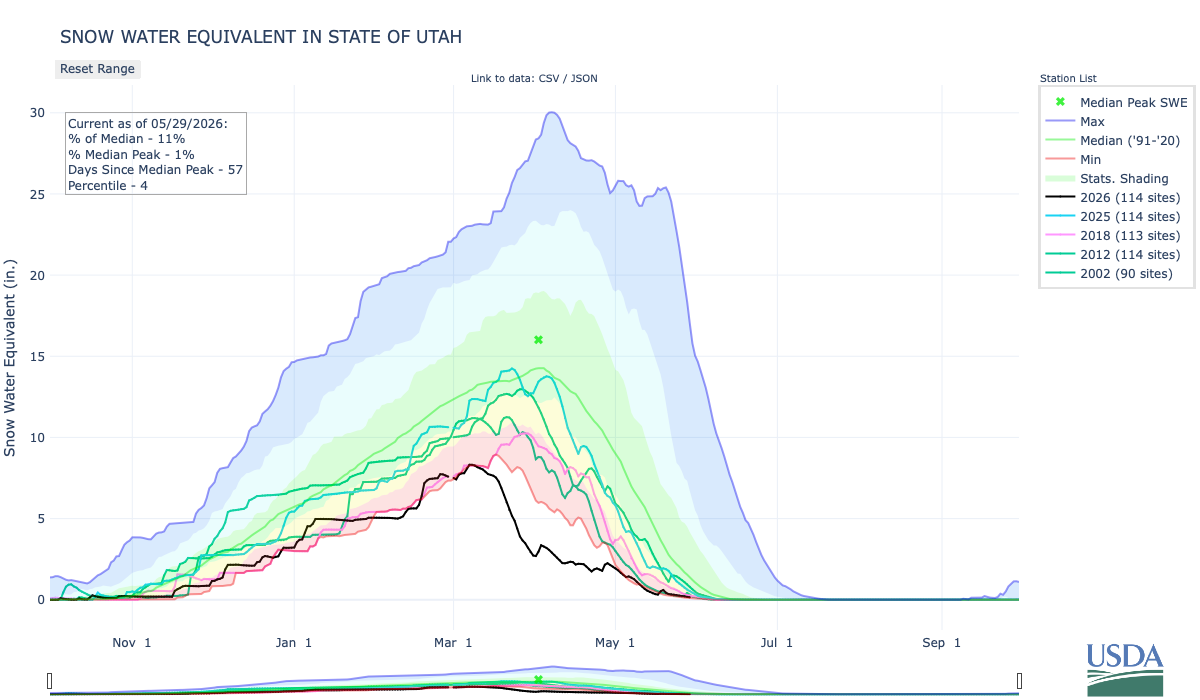
Central Utah farmers said severe drought, frost and strong winds have led to the worst conditions they’ve seen.
Farmer Neil Sorensen said his alfalfa crop is far below where it should be.
Scott Sunderland is struggling with irrigation, raising concerns about his long-term crop viability.
Central Utah farmers said a combination of drought, frost and strong winds has created some of the worst conditions they have ever seen. Farmer Neil Sorensen said normally, fields across the Sanpete Valley would be lush and green this time of year. Instead, he said conditions look more like late summer.
“The frost, the wind and the drought, it’s just took a toll on all our crops,” Sorensen said.
He primarily grows alfalfa but also grows grass and barley, grass mix and potatoes. Sorensen said his alfalfa crop is far below where it should be.
“Right now, you can see it’s below my knees,” he said, adding that even his best fields are struggling.
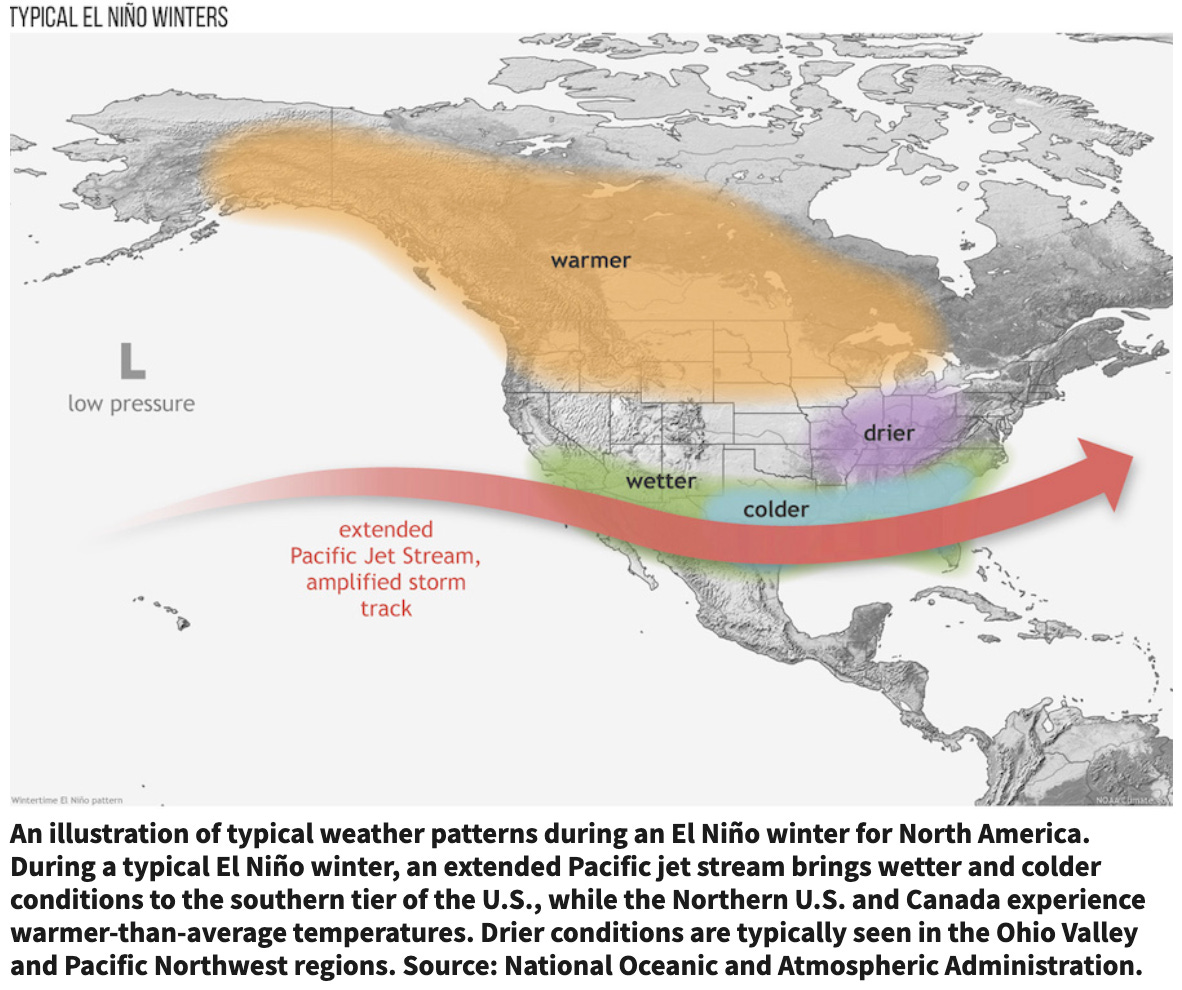
The National Weather Service’s Central Region Climate Outlook issued Sunday [May 24, 2026] said there is an 82% chance that an El Niño weather pattern will develop between May and July, which could bring a higher chance of above-average precipitation this summer…
Additionally, the U.S. Drought Monitor said drought conditions, which have been persistent across the Western United States for the past several months, are expected improve in Colorado over the next three months. But, even with such a hopeful outlook, NWS Meteorologist Kate Abbot said a slightly rainier pattern should start to appear the first week of June in Southwest Colorado.
“As we move into next week, we start to set up into more of a southwesterly flow pattern,” Abbot said. “We start to see some chances for afternoon showers in the San Juan Mountains, with probabilities increasing as the week progresses.”
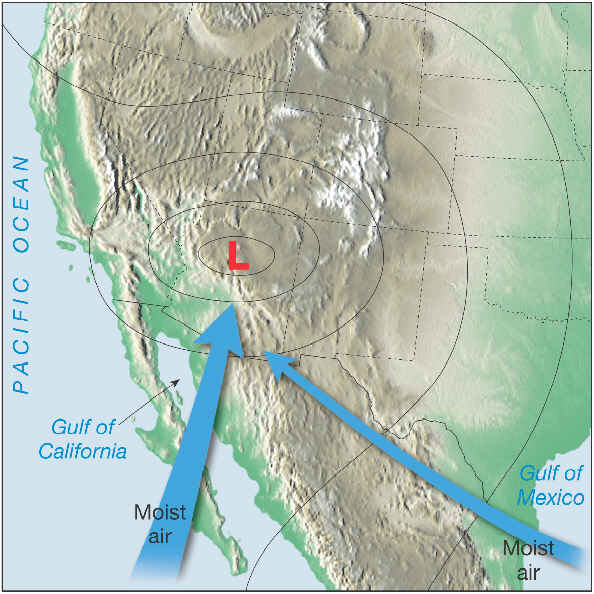
Colorado is headed toward a potentially wetter-than-normal summer, with promises of an active monsoon season and growing confidence in developing El Nino conditions. However, with hotter temperatures likely, this summer could look different from the mountains’ last El Nino visit. The Climate Prediction Center’s seasonal precipitation outlook shows above-normal chances for rainfall in Colorado from June through September, with the Western Slope and Utah border seeing the highest likelihood of above-average rainfall. Forecasts also show a strong possibility that Colorado will see an active monsoon season, according to Peter Goble, assistant state climatologist at the Colorado Climate Center…
A super El Niño appears to be forming, but the effects in the Upper Colorado River Basin are especially hard to predict because it sits right in between the “warmer, drier” and the “wetter, colder” zones, meaning it could go either way. Source: NOAA.
The forecasts for summer showers coincide with those predicting the fast arrival of El Nino conditions, though Goble said he doesn’t currently see a strong tie between El Nino and stronger summer precipitation…A release published by the center on May 14 predicted that El Nino is likely to emerge during what’s left of spring, with an 82% chance that it will materialize between May and July and continue through the Northern Hemisphere for the upcoming winter. The center predicts a 96% chance that El Nino will remain from December through February 2027…Historically, El Nino conditions have brought wetter summers and falls , but drier than normal winters to the Northern Rockies. The last time Colorado saw El Nino conditions in the summer was in 2023, which created “a really wet late spring and summer east of the Continental Divide,” Goble said.
The energy-efficient desalination system produces fresh water without chemical additives and transforms leftover salts into useful materials.
Big takeaways
A new desalination method produces drinking water from seawater without chemical additives.
The solar-powered system uses specially engineered black metal to absorb sunlight.
Its self-cleaning surface separates and collects salts, instead of dumping them as harmful brine waste.
From the salts, the system can extract lithium, a key material for rechargeable batteries.
The approach could help address global water shortages and growing mineral demand.
The United Nations estimates that 2.2 billion people lack safely managed drinking water, and communities from California to the Middle East rely on desalination plants to convert ocean water to fresh water. Common desalination techniques, such as reverse osmosis and thermal distillation, are energy-intensive, require pre- and post-water treatment, and leave behind a concentrated saltwater byproduct called brine. The brine byproduct wreaks havoc on sea life when it’s deposited back into the ocean by raising the salt level and lowering oxygen in the water.
But a novel approach developed at the University of Rochester offers a way to overcome these drawbacks. Researchers at URochester’s Institute of Optics developed a new solar-thermal desalination process to produce fresh water in an energy-efficient way that does not leave behind brine and requires no chemical additives to pre-treat the water. A team led by Chunlei Guo, a professor of optics and of physics and a senior scientist at URochester’s Laboratory for Laser Energetics, describes their method in a paper published in Light: Science & Applications.
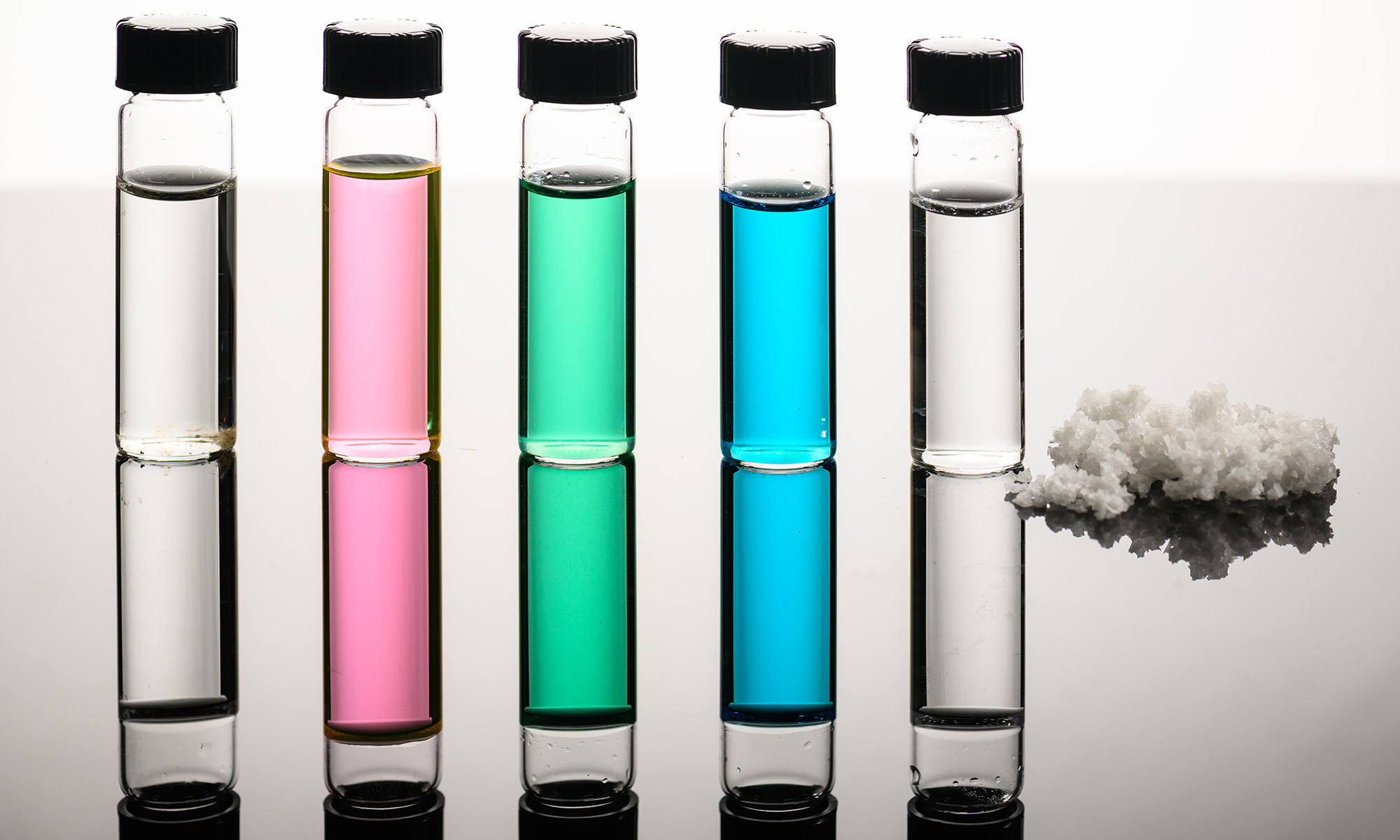
Vials of l-r: seawater, Great Salt Lake water, nickel and phosphorus waste, and desalinated water along with evaporated salt are pictured in the lab of University of Rochester professor Chunlei Guo April 8, 2026. Guo and his team have a paper coming out in Light: Science and Applications that describes new solar-powered ocean water desalination devices he engineered that feature his superwicking laser-etched black metal. The devices are highly efficient compared to current desalination methods and the new process doesn’t produce the brine waste that current methods do. The process takes ocean water (they collected smaples from three continents) and breaks it down into fresh water and salts. // photo by J. Adam Fenster / University of Rochester
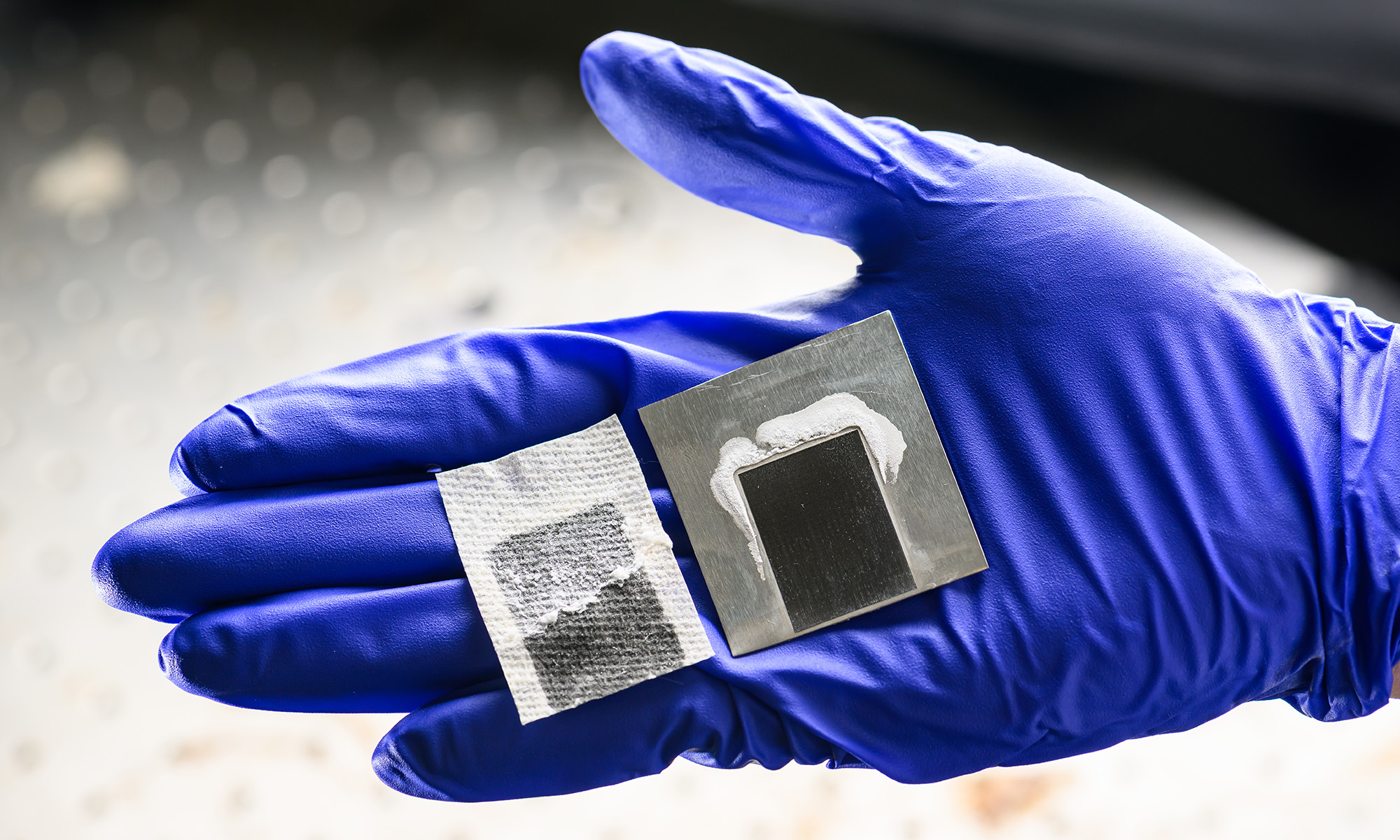
The technology uses solar panels made of black metal etched with femtosecond lasers to make the surface super light-absorbing and superwicking—or extremely attractive to water. The panels have a laser-treated active region that pulls a thin layer of water across the surface, absorbs nearly all solar radiation, distills the water, and deposits the leftover salts and minerals into the panel’s untreated sides or “passive” region so that the salt does not clog the active region and disrupt continuous desalination.
Leveraging the ‘coffee ring’ effect
Guo says other researchers have developed solar-thermal desalination techniques that work well in lab experiments using simulated seawater made of only water and sodium chloride. As the water evaporates, the sodium chloride crystallizes in a grainy and porous fashion allowing water to pass through to dissolve the salt. The solar panels, meanwhile, can be easily cleaned.
But real ocean has a much more complex composition, and these systems tend to encounter issues when tested in the field. Unlike sodium chloride, many other components in seawater, such as magnesium- and calcium-based materials, crystallize in a crusty and non-porous fashion on the solar panel’s surface, clogging it. Eventually, water can no longer seep through. This is the same phenomenon as your shower head clogging over time or your teapot lined with scales, except that seawater contains hundreds of times more salts than your tap water.
To keep their solar panel surface from gumming up similarly, Guo’s team precisely etched the black metal’s grooves so the various salts and minerals in ocean water would simply slough off. They also leveraged a physical phenomenon that has plagued clumsy javaphiles for centuries: the coffee ring effect.
“If you drop coffee on a surface, eventually the water evaporates, and there’s a ring left at the outer edge that is the concentrated coffee particles,” says Guo. “We use that same principle to advance the salts to the passive region.”
Testing their solar-thermal desalination technique using samples of water from the Pacific, Atlantic, and Indian Oceans, Guo and his team were able to make the surface self-cleaning. In other words, it extracted freshwater and directed the remaining salts to the passive region where they could be later collected without reducing the panel’s efficiency.
Vials of l-r: seawater, Great Salt Lake water, Nickel(II) sulfate (NiSO4) and Copper(II) chloride wastewater, and desalinated water along with evaporated salt are pictured in the lab of University of Rochester professor Chunlei Guo April 8, 2026. Guo and his team have a paper coming out in Light: Science and Applications that describes new solar-powered ocean water desalination devices he engineered that feature his superwicking laser-etched black metal. The devices are highly efficient compared to current desalination methods and the new process doesn’t produce the brine waste that current methods do. The process takes ocean water (they collected smaples from three continents) and breaks it down into fresh water and salts. // photo by J. Adam Fenster / University of Rochester
Turning waste into resources
One of the new desalination method’s distinct advantages is that instead of leaving behind brine that must be disposed of or processed, it extracts nearly 100 percent of the salts in solid form. This could not only produce an abundant supply of table salt, but it could also be used to extract more precious minerals, including lithium, which is used in the lithium-ion batteries that power electric vehicles and other electronics.
In a related paper in the Journal of Materials Chemistry A, Guo and his colleagues show how they can use the same superwicking solar panels to separate lithium from the rest of other salts in desalination. Embedding nanoparticles made of hydrogen titanate in the tiny grooves of the black metal surface isolates the lithium from other salts and minerals.
“Mining lithium from the earth has proven to be very taxing from an energy and environmental standpoint, so pulling lithium directly from saltwater could be a very important future route,” says Guo.
Using water samples from Great Salt Lake, the researchers extracted about 50 percent of the lithium from the salts left behind by the desalination process.
Guo says now that the superwicking desalination technology has been demonstrated in proofs of concept on small-scale devices, he sees the technology inherently scalable, capable of improving global access to drinking water and building more sustainable supply chains for precious minerals.
The National Science Foundation, the Bill & Melinda Gates Foundation, and Worldwide Universities Network supported this research. Guo’s colleagues from the Institute of Optics who contributed to the research include Senior Scientist Subash Singh, alumnus Ran Wei ’24 (PhD), PhD students Luheng Tang and Tainshu Xu, and Mingjiang Ma.