
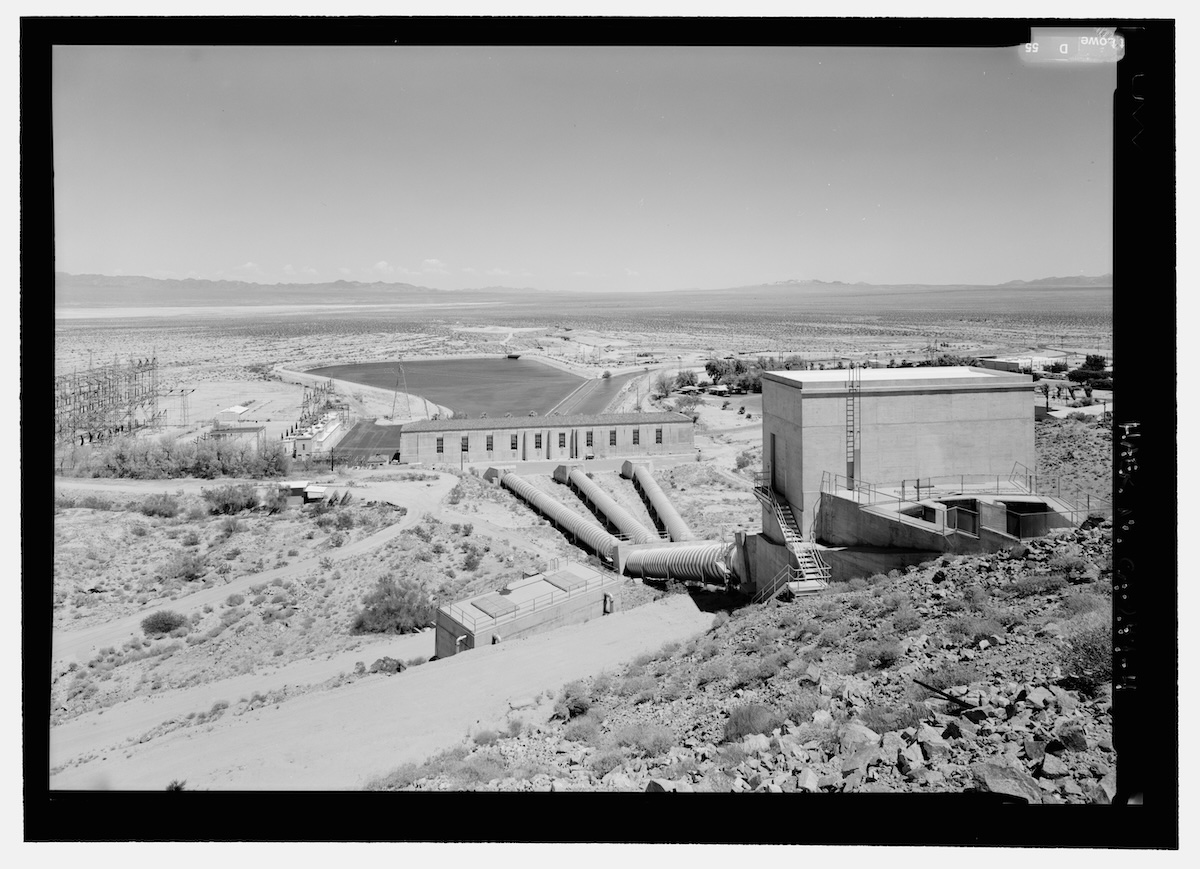
The 85-year old Colorado River Aqueduct – which was constructed over a 8-year period beginning in 1933, is a major water conveyance system that brings 1.2 billion gallons of Colorado River water to Southern California every day. The aqueduct was paid for by voters in 13 Southern California cities who overwhelmingly approved a $220 million municipal bond in order to finance the monumental construction project. Managed by the Metropolitan Water District of Southern California, the aqueduct stretches 242 miles across the Colorado and Mojave deserts, tunnels under two mountain ranges, and rises a total of 1,617 feet in elevation from its starting point downstream of Parker Dam near Lake Havasu.1
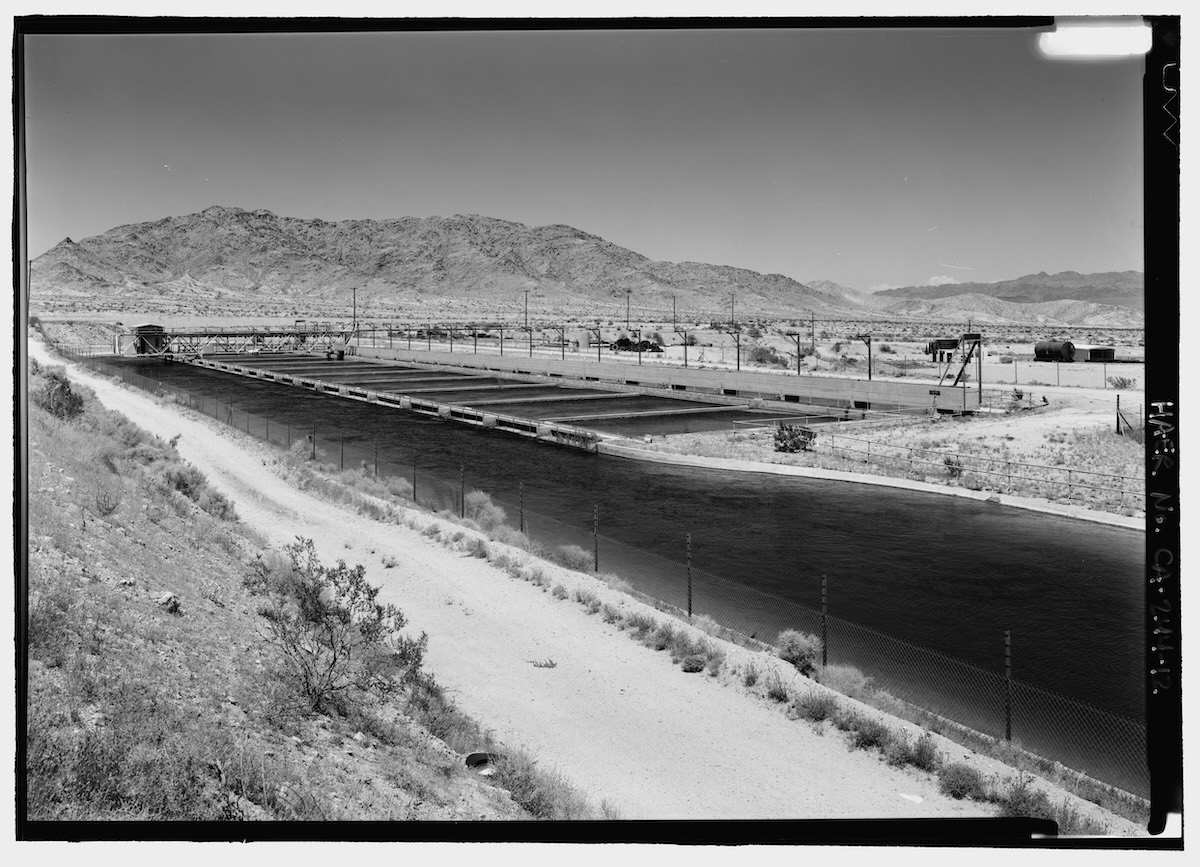
Numerous engineering features mark the aqueduct, including dams, reservoirs, pumping plants, tunnels, canals, conduits, inverted siphons, and transmission lines. Each of these parts works together to provide what was determined to be the most efficient, cost-etfectlve, and safe combination of transporting water from the Colorado River to the southern California coastal basin. The aqueduct has always been much more than just a canal. Its engineering coincided with American during the Depression-era, when the appearance and promotion of technological “progress” provided the American public with a sense of accomplishment and pride. During its construction the aqueduct provided jobs for 35,000 people for over eight years.

The combination of the total height that water is lifted (1,617′) and the aqueduct’s 242-mile length was unprecedented, as was the aqueduct’s carrying capacity of 1,605 c.f.s. The vertical synchronous motors driving the pumps were the largest of these types of motors then constructed. The difficulties encountered during the construction of the Mt. San Jacinto tunnel received national attention, and engineers argued that it was one of the most difficult tunnel construction jobs undertaken in the history of world engineering. Some of the equipment introduced and engineering techniques employed during the aqueduct’s construction overall were celebrated for their ingenuity and ability to set standards for future projects of similar magnitude. The Parker diversion dam had to be erected upon bedrock 233′ deep, which at the time made it the world’s deepest. The Colorado River Aqueduct overall was the world’s most technologically-advanced water conveyance system, and it has proven its reliability by serving the needs of 19 million Southern California residents for the last 85 years.