Research Article — Dust storms: Hidden drivers of extreme rainfall and global precipitation shifts — Yuzhi Liu, Weiqi Tang, Tianbin Shao, Run Luo, Ziyuan Tan, Dan Li, and Jianping Huang (Science Advances)

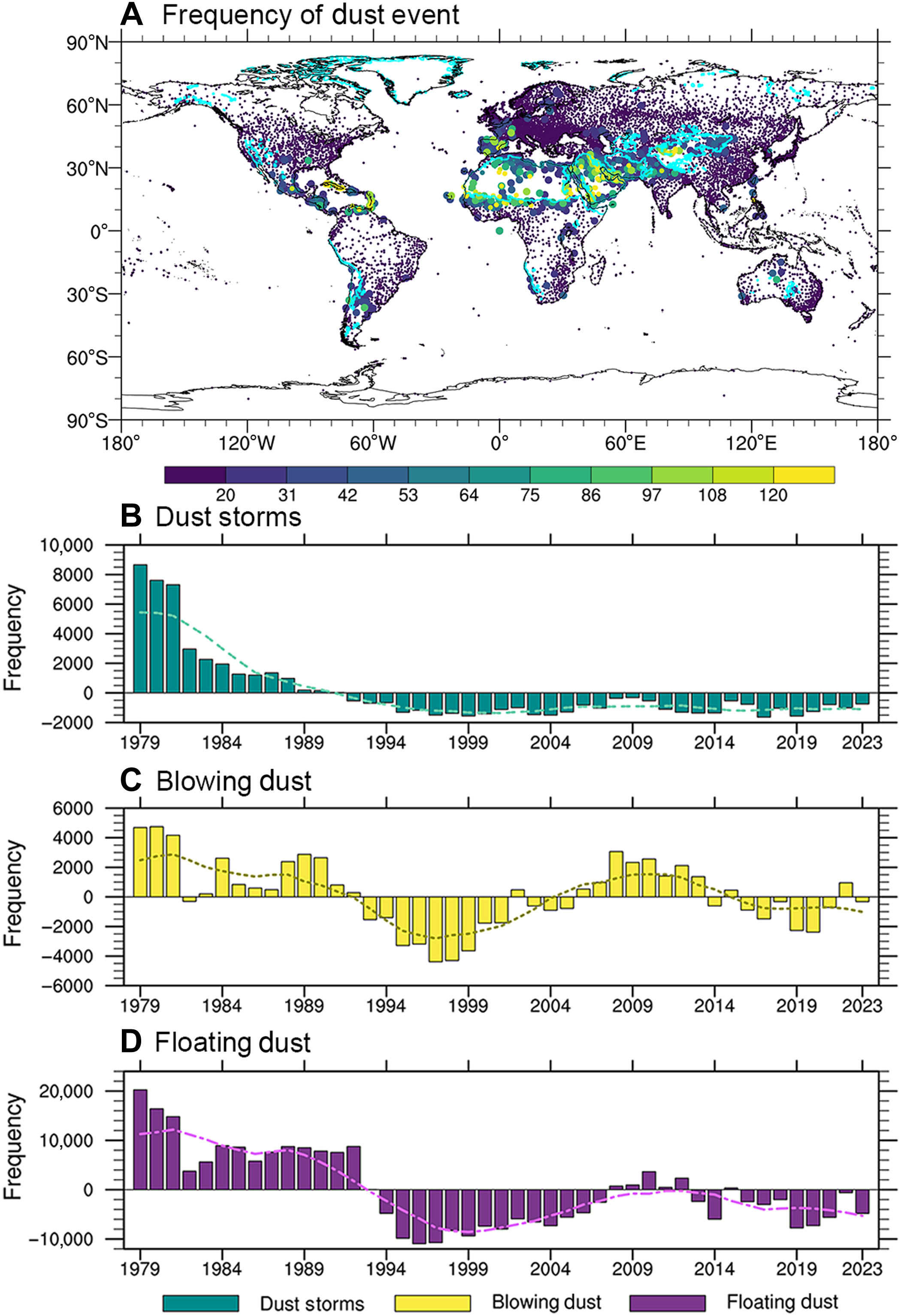
Fig. 1. Spatial and temporal patterns of global dust events. (A) Global average frequency of dust events (including dust storms, blowing dust, and floating dust) from 1979 to 2023. The cyan lines in (A) delineate the boundaries between dust source regions and transport regions. The largest markers indicate stations where dust storms are the dominant type of dust events, medium-sized markers represent blowing dust, and the smallest markers denote floating dust. (B), (C), and (D) present the global frequency anomaly time series for dust storms, blowing dust, and floating dust, respectively, over the same period. The curves in [(B), (C), and (D)] are smoothed using a nine-point moving average.

Click the link to access the research article on the Science Advances website (Yuzhi Liu, Weiqi Tang, Tianbin Shao, Run Luo, Ziyuan Tan, Dan Li, and Jianping Huang). Here’s the abstract:

April 29, 2026

Dust storms, while often seen as harmful, can play an unexpected role in enhancing rainfall. Global observations show that 7-day accumulated precipitation after dust storms exceeds dust-free conditions by up to 9.6 millimeters. Numerical simulations further confirm that dust particles act as ice nuclei, thereby promoting cloud formation and increasing rainfall through the ice crystal effect. Moreover, in regions with rising anthropogenic aerosols, dusts determine precipitation patterns. While elevated levels of anthropogenic aerosols alone tend to boost weak rainfall, the presence of dust aerosols reduces light precipitation and enhances heavier precipitation. Collectively, these findings reveal a dual role of dust storms in shaping global precipitation patterns while adversely affecting the human living environment. This research establishes a mechanistic framework for understanding how dust affects extreme precipitation at the global scale, advancing predictive capabilities for heavy precipitation.

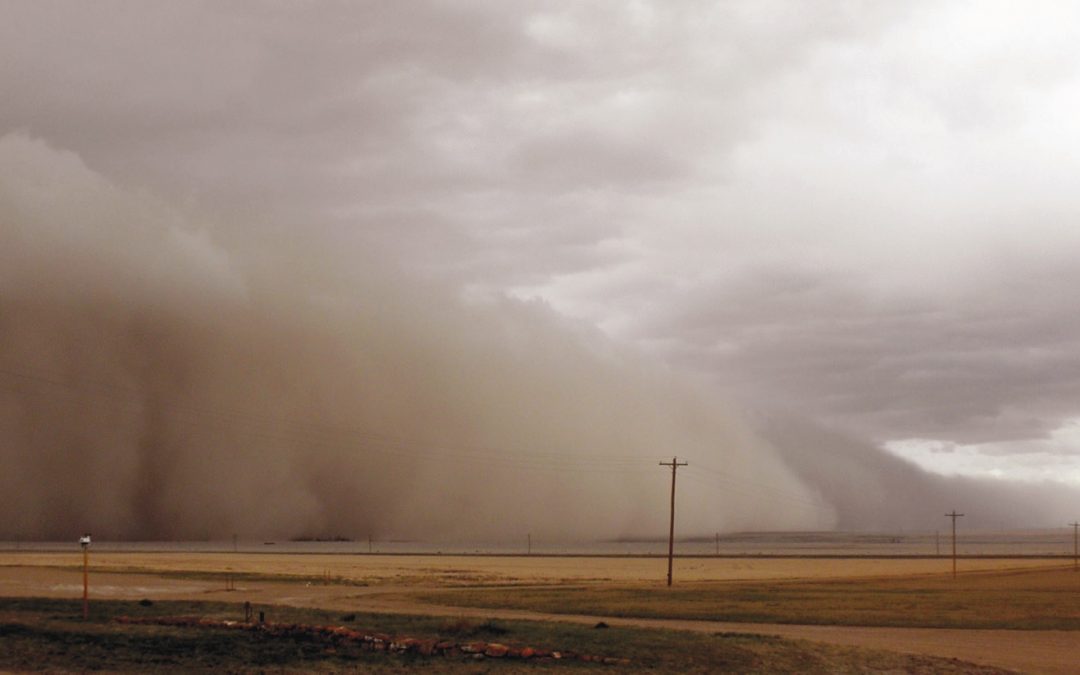
Dust clouds roll across drought-ridden fields near eastern Colorado’s Lamar in spring 2013. Credit: Jane Stulp via Water Education Colorado

#FortCollins Utilities, ELCO ask for voluntary watering cuts, for now — The Fort Collins Coloradoan #drought

Click the link to read the article on The Fort Collins Coloradoan website (Rebecca Powell), Here’s an excerpt:

April 30, 2026

Two of Fort Collins’ water providers are calling on residents to voluntarily reduce their water use rather than imposing outdoor water restrictions with penalties, for now. Fort Collins City Manager Kelly DiMartino has declared a “water shortage watch,” according to a news release from Fort Collins Utilities, which is asking residential and business customers to limit outdoor water use starting May 1.

“By taking voluntary measures now to reduce water use, Utilities customers can actively help lower the chance of mandatory water restrictions if conditions worsen,” the news release stated.

Fort Collins Utilities and East Larimer County Water District, or ELCO, which are two of the city’s three major water providers, are asking customers to:

  • Limit lawn watering to no more than two days per week.
  • Avoid watering between 10 a.m. and 6 p.m.

The West Fort Collins Water District is required to follow city-issued water rationing and restrictions, according to its website. Sunset Water District is managed by ELCO.

Colorado River District Board Approves Immediate #Drought Action #ColoradoRiver #COriver #aridifcation

Colorado Drought Monitor map April 28, 2026.

Click the link to read the release on the Colorado River District website (Lindsay DeFrates):

April 24, 2026

On Tuesday, April 21, the Colorado River District board of directors unanimously supported initial actions in response to extreme drought conditions on the western slope. The board’s actions allocated $450,000 from the District’s Community Funding Partnership for strategic water releases from District-owned, District Enterprise, or other storage pools across the western slope. The board also acted to suspend a previous water marketing policy that allowed contracts on a first-come, first-serve basis, instead taking staff recommendation to develop a cooperative approach that best uses available supplies to meet critical needs. The board delegated authority to its Water Supply Projects Committee to consider and approve subsequent contract water leases and funding allocations.

“This action alone won’t solve the drought, but it will help meet critical water needs in the short term,” said Hunter Causey, director of asset management and chief engineer for the Colorado River District. “Our reservoirs were built to help communities on the western slope weather exactly this kind of year. Maximizing the use of our available storage now is the responsible thing to do.”

“We were already bracing for a dry summer, but the low snowpack was absolutely flattened by extreme heat in March, leaving statewide water supplies facing unprecedented gaps,” said Colorado River District Board Vice President and Grand County rancher Mike Ritschard. “Irrigators and agriculture producers in Colorado are familiar with working within uncertainty, but when supplies are this limited, we know we have to be especially conscious of balancing our use with the health of the system as a whole.”

The Board also prioritized its contract water supplies to first support critical domestic and municipal needs, while striving to then address agricultural and industrial needs. Prioritizing these uses will also boost stream flows and reduce water temperatures through strategic releases. For domestic and municipal uses, the board directed staff to work with water suppliers and land use authorities to provide clear guidance that outdoor water use for lawns and ornamental applications be strictly limited.

“The reality is that in a year like this, any water that you put on your lawn is water that will not show up in the river,” said Andy Mueller, Colorado River District general manager. “This drives up water temperatures and negatively impacts the health of the river for everyone downstream, including our local farms and regional food production. We are asking all residential water users and municipalities to consider limiting outdoor water use to one or two days a week. This year, we all need to be asking if we value healthy rivers and local food production over green lawns.”

Over the next few weeks, Colorado River District staff will work with constituents and other partners to determine the best use of available supplies in a manner that meets critical needs of the residents of the River District and brings benefits to as many communities as possible.

Please refer to the staff memo, linked HERE, for more details on the initiative.

#Breckenridge imposes outdoor watering restrictions as town engineer declares town-wide water shortage — The Summit Daily #drought #BlueRiver

Click the link to read the article on the Summit Daily website (Allison Moore). Here’s an excerpt:

April 29, 2026

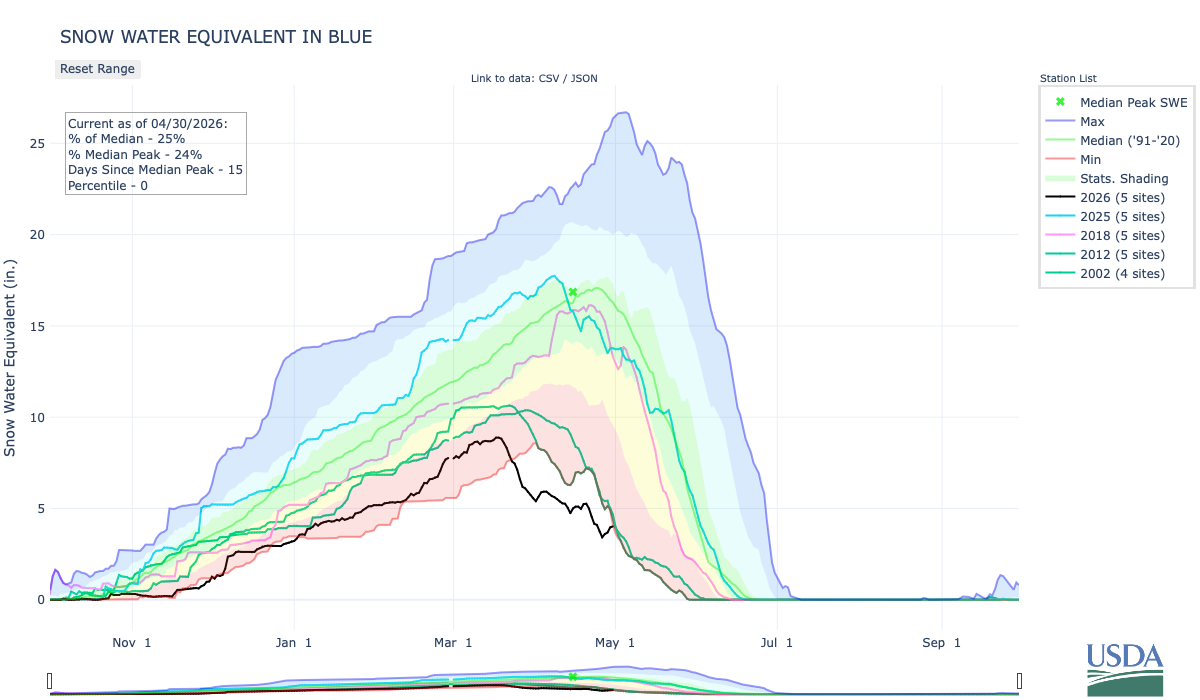
Breckenridge Town Council approved more stringent water restrictions, limiting outdoor watering to two days per week, as town officials respond to drought conditions and declining streamflows in the Blue River. The new Stage 2 restrictions come as the town faces a water shortage tied to this year’s historically low snowpack and reduced runoff into Goose Pasture Tarn, according to Shannon Cahill, town engineer. The restrictions officially take effect on Friday, May 1.

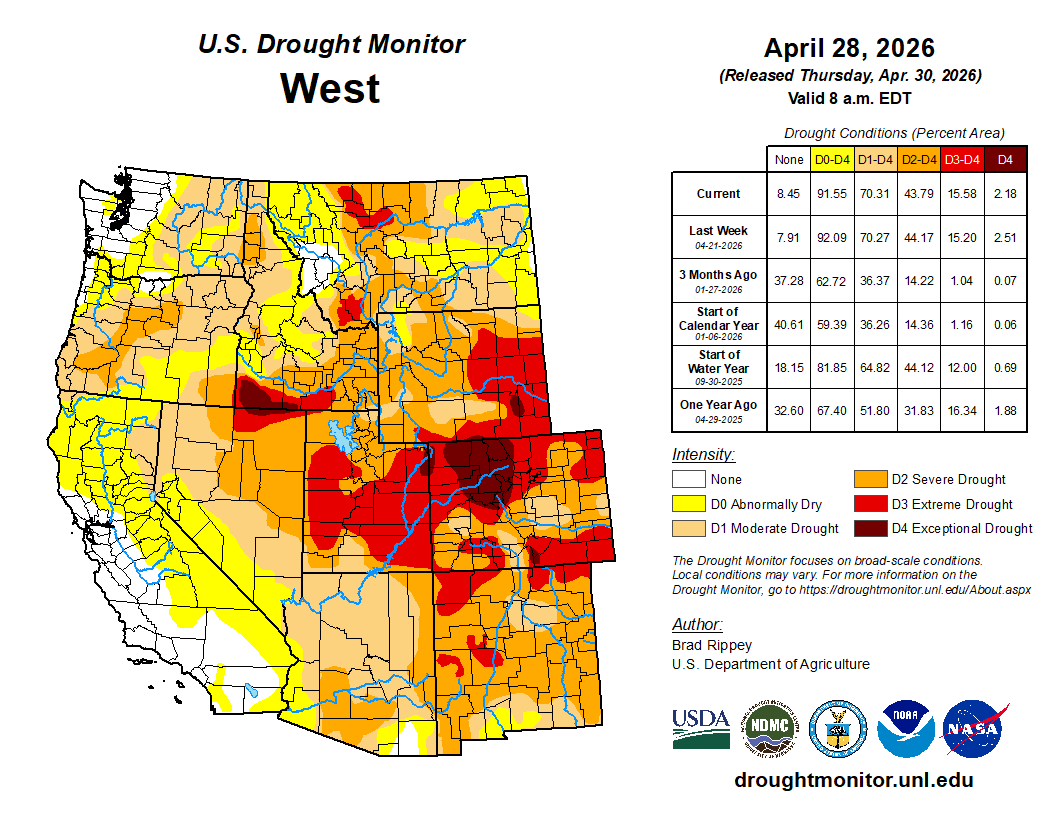
West Drought Monitor map April 28, 2026.

“We remain in a sphere of drought here in Summit County, throughout the state and the greater Western U.S.,” Cahill told council members at a meeting Tuesday, April 29. “The historically low snowpack has already directly impacted streamflow in the Blue River, and this subsequently affects the town’s ability to supply treated water to our customers.”

Until this week, Breckenridge allowed outdoor watering three days per week. The new temporary restrictions reduce that to two days in hopes of cutting outdoor water usage by roughly 30%. The town largely sources its drinking water from snowmelt (and other high-altitude surface water) collected in the Blue River Basin…The new restrictions exempt any newly installed landscaping, along with hand watering and drip irrigation for flowers and plants. Council member Dick Carleton clarified whether downtown businesses could continue watering flower baskets and using microsprayers.

Map of the Blue River drainage basin in Colorado, USA. Made using USGS data. By Shannon1 – Own work, CC BY-SA 4.0, https://commons.wikimedia.org/w/index.php?curid=69327693

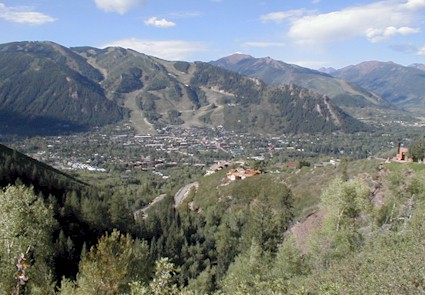
City ramps up enforcement of water use restrictions — #Aspen Daily News #drought

Aspen

Click the link to read the article on the Aspen Daily News website (Lucy Peterson). Here’s an excerpt:

April 30, 2026

…as the city gears up for an unprecedentedly dry summer, it will begin ramping up enforcement on water users who violate the stage 2 water restrictions. That will include issuing formal notices of violation and collecting fines for repeat violations.

“We are taking this year more seriously, given that it’s conditions we haven’t quite seen before,” Loughlin Molliconi said. “We want to make sure we can prioritize the most important uses of municipal water without having to degrade any environmental protections or streamflow.”

The city water department has issued 11 formal notices of water use violations in 2026, Loughlin Molliconi said. One notice was issued last week. Ten were issued on Wednesday. They were all first-time violations, which don’t come with fines…Aspen City Council declared a stage 2 water shortage last August after declaring a stage 1 water shortage in June. The declaration came after a lackluster monsoon season, and has remained in place because of unusually high winter temperatures that impacted snowfall accumulations and the snow water equivalent in the Roaring Fork watershed. Stage 2 water restrictions are mandatory. Watering of any lawn, garden, landscaped area, tree, shrub or other plant is prohibited from 9 a.m. to 6 p.m. Household watering schedules are also mandatory.

Map of the Roaring Fork River drainage basin in western Colorado, USA. Made using USGS data. By Shannon1 – Own work, CC BY-SA 4.0, https://commons.wikimedia.org/w/index.php?curid=69290878