Click the link to access the research article on the Science Advances website (Yuzhi Liu, Weiqi Tang, Tianbin Shao, Run Luo, Ziyuan Tan, Dan Li, and Jianping Huang). Here’s the abstract:
April 29, 2026
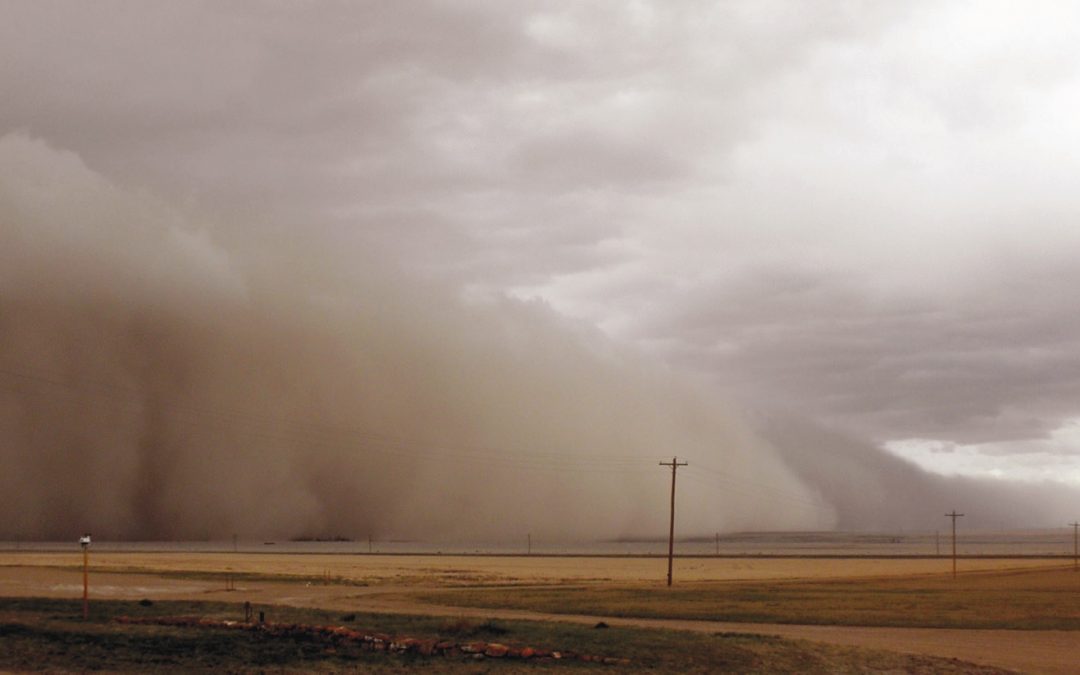
Dust storms, while often seen as harmful, can play an unexpected role in enhancing rainfall. Global observations show that 7-day accumulated precipitation after dust storms exceeds dust-free conditions by up to 9.6 millimeters. Numerical simulations further confirm that dust particles act as ice nuclei, thereby promoting cloud formation and increasing rainfall through the ice crystal effect. Moreover, in regions with rising anthropogenic aerosols, dusts determine precipitation patterns. While elevated levels of anthropogenic aerosols alone tend to boost weak rainfall, the presence of dust aerosols reduces light precipitation and enhances heavier precipitation. Collectively, these findings reveal a dual role of dust storms in shaping global precipitation patterns while adversely affecting the human living environment. This research establishes a mechanistic framework for understanding how dust affects extreme precipitation at the global scale, advancing predictive capabilities for heavy precipitation.