Farmers, ranchers cut back #ColoradoRiver water use while enduring one of the driest seasons on record — Shannon Mullane (Fresh Water News) #COriver #aridification

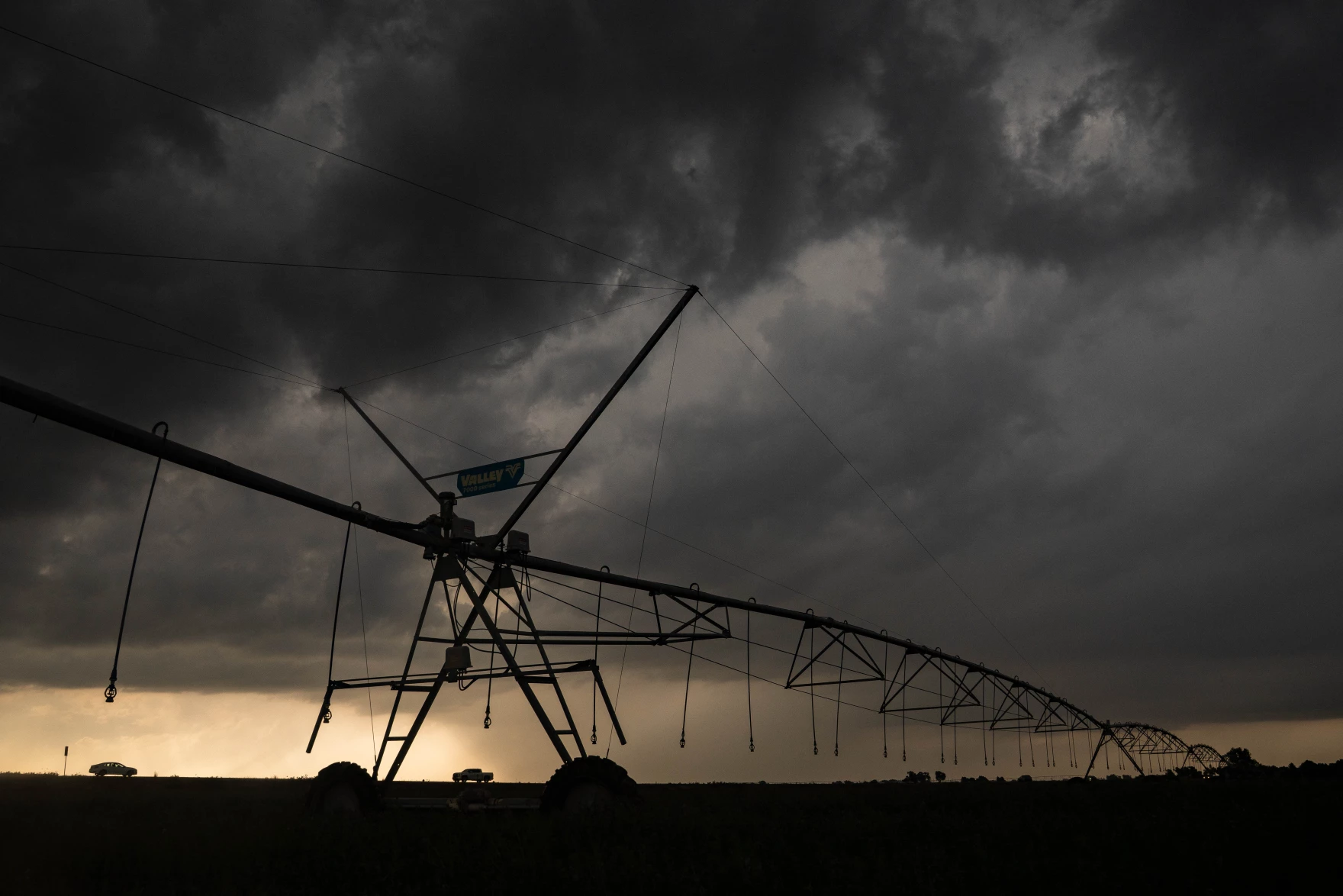
On a day in late May [2022] when wildfire smoke obscured the throat of an ancient volcano called Shiprock in the distance, I visited the Ute Mountain Ute farming and ranching operation in the southwestern corner of Colorado. Photo credit: Allen Best/Big Pivots

Click the link to read the article on the Water Education Colorado website (Shannon Mullane):

October 9, 2025

Farmers, ranchers and other water users in four Western states, including Colorado, are cutting back on water use because of low flows through the Colorado River Basin. 

Less than half the normal amount of water flowed into Lake Powell from the Upper Basin states — Colorado, New Mexico, Utah and Wyoming — this summer. Farmers in the four-state region fallowed fields and changed their crop plans to adapt to a smaller water supply. The dry summer conditions coincided with high-stakes negotiations over how the water supply for 40 million people will be managed starting in August 2026. 

In the Upper Basin, officials are trying to emphasize the existing shortages that happen each year as natural water supplies are strained by a changing climate.

“The Upper Basin’s sacrifices aren’t abstract; they carry real human and economic consequences,” the Upper Colorado River Commission said in a news release Wednesday.

About 2.6 million acre-feet of water flowed into Lake Powell from the Upper Colorado River in April through July. That’s 41% of the average from 1991-2020, according to the Colorado Basin River Forecast Center.

One acre-foot roughly equals the annual water use of two to three households. It’s enough to cover a 1-acre field in 1 foot of water.

For the entire water year — from Oct. 1, 2024, through Sept. 30 — about 4.69 million acre-feet ran into Lake Powell from the Upper Colorado River. That’s 49% of the 30-year average, according to the center. It was the seventh driest year since 1963, when the center started making forecasts.

Wyoming shut off water to more than 163,000 acres of irrigated land in the state’s portion of the Green River Basin, according to the river commission news release.

“This is an extraordinary reduction with serious impacts on producers and rural communities across southwest Wyoming,” said Kevin Payne, Division IV superintendent of the Wyoming State Engineer’s Office.

Severe water shortages in Utah’s Uintah Basin, driven by Colorado River cuts, forced ranchers to reduce the size of cattle herds, raised production costs, and strained the local economy.

The San Juan Chama project in New Mexico, which provides water for Albuquerque, Santa Fe and agriculture, received 31% of its normal Colorado River supply, a 69% reduction.

In southwestern Colorado, farmers that use Dolores Water Conservancy District’s water have dealt with shortages in five out of the last eight years. In early June, water users were set to receive 30% of their usual water supply. That increased to 56% in part because of a better-than-expected June runoff, Ken Curtis, general manager of the Dolores Water Conservancy District, said.

Because of the shortages, farmers in Dolores County, Montezuma County and the Ute Mountain Ute Farm and Ranch have stopped growing crops on thousands of acres of land and struggled to bring fallowed land back into production as dry conditions continue.

“Our farmers are left with year-by-year gambles with last-second planning going late into May and limiting farmers’ abilities to make long-term, successful crop rotation planning,” Curtis said in the news release. “The Dolores snowpack is disappearing, and the historic runoff has dropped by even greater magnitudes. Water is no longer reliably available.”

The Ute Mountain Ute Tribe’s Farm and Ranch Enterprise, one of Colorado’s largest farming operations, stopped irrigating 60% of their land and laid off farm workers. The crop plan for 2025 only included the existing, high-value alfalfa needed to sustain the farm and ranch.

“We are merely surviving, not adapting,” Michael Vicente, the enterprise’s irrigation manager, said about the historic drought.

These shortages are uncompensated and involuntary, the Upper Colorado River Commission pointed out. That’s a sticking point for the Upper Basin states in the interstate discussions over how to manage the river.

The Lower Basin states proposed a plan that includes mandatory water cuts in every basin state in the river’s driest years.

Upper Basin officials say they should not have to make mandatory cuts. Each year, farmers and ranchers receive less than their legal allocation of water because of natural fluctuations in precipitation, temperature and other environmental factors.

For decades, Upper Basin water users have handled these fluctuating water supplies without getting paid for the losses, officials say. 

“As Colorado River negotiations continue, Upper Basin leaders are clear,” the Upper Colorado River Commission news release said. “River operations must adapt to the actual supply and prioritize rebuilding storage to restore resiliency.”

More by Shannon Mullane

Map of the Colorado River drainage basin, created using USGS data. By Shannon1 Creative Commons Attribution-Share Alike 4.0

Commentary — Rural lessons for resisting authoritarianism: The Ditch Principle holds that neighbors build from their common interests — Pete Kolbenschlag (#Colorado Newsline)

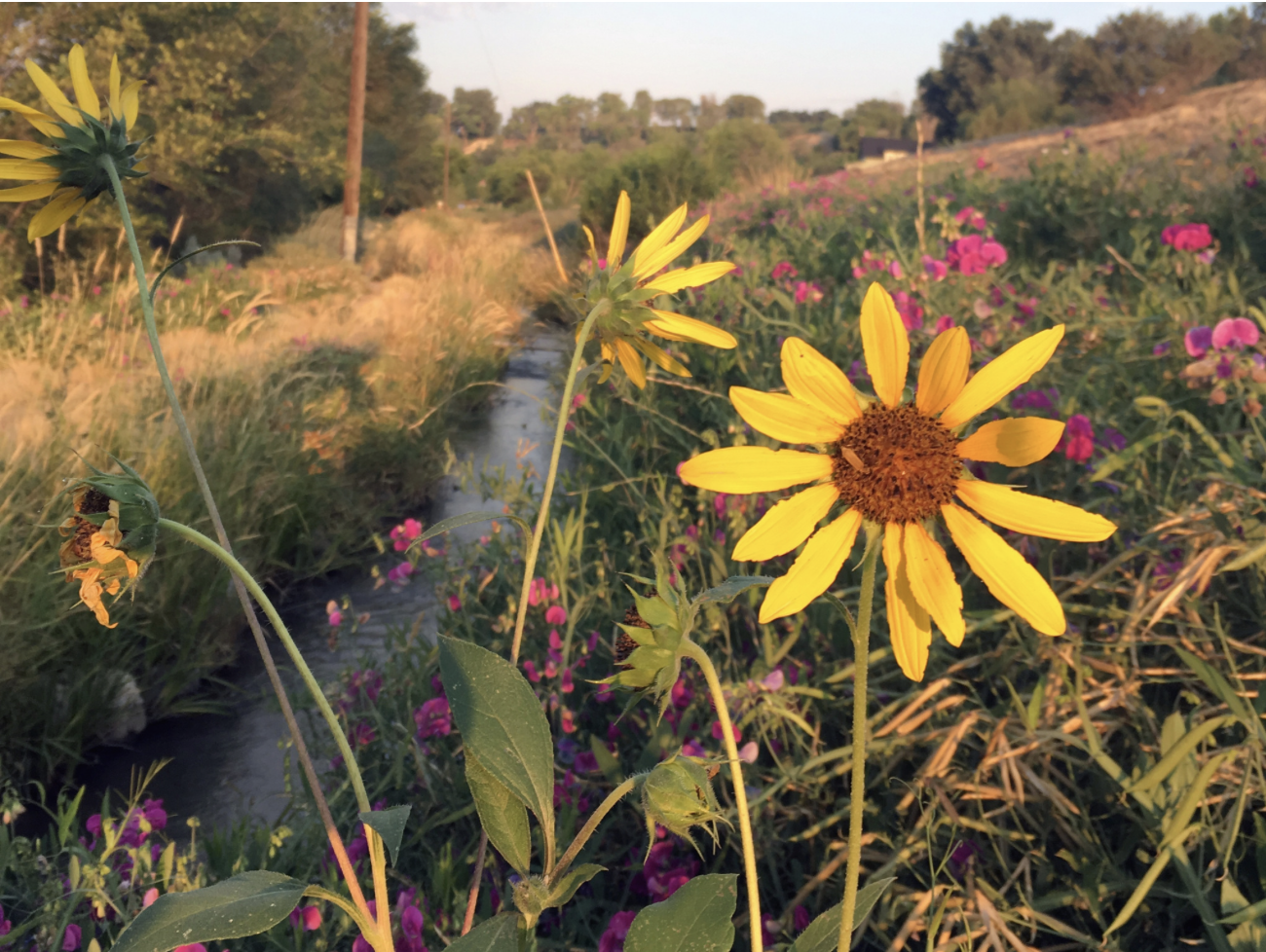
Photo credit: Jonathan P. Thompson

Click the link to read the commentary on the Colorado Newsline website (Pete Kolbenschlag):

October 10, 2025

“Whoever fights monsters should see to it that in the process he does not become a monster himself. And if you gaze long into an abyss, the abyss will gaze back into you.” 

After 20 years of organizing in rural Colorado, I’ve learned that lasting results come from supporting rather than opposing, from building bridges not tearing them down, from identifying shared solutions, not only pointing at problems. 

This is the Ditch Principle: Your ditch neighbor may disagree with you about everything except keeping the water running —  so you start there. The neighbor who might pull you out of a snowbank doesn’t stop being your neighbor when you disagree about politics. Rural communities practice interdependence because isolation kills.

Friedrich Nietzsche’s warning about monsters isn’t just stale philosophy — it’s practical advice that seems freshly relevant. As authoritarianism rises in America, we face a choice: resist by becoming what we oppose, or demonstrate something better. 

As a longtime climate activist, the current anti-science stance is infuriating and deeply disappointing. But wildfire preparedness is critical right now, and community-wide planning helps everyone regardless of how they understand climate science. 

Instead of doom-scrolling at the edge of the abyss, we should respond by restoring what matters most in the spaces and relationships we maintain, leading forward from the ground up. 

This is a necessity, not idealism. When fire ignites or search and rescue is called, people put down their projects and differences to pull together. We have to get along or nothing gets done. People who honor these expectations are accepted, our contrary politics notwithstanding. 

The damage to both our planet and our institutions is real, extreme and unabated. Two-thirds of Americans recognize we’ve become too polarized and no longer believe partisan politics is capable of solving our problems, according to a recent New York Times poll. Here in western Colorado, the largest voting bloc isn’t Republican or Democratic — it’s unaffiliated voters who want problem-solvers, not partisans. 

Anti-science is a hallmark of authoritarian regimes. The erasure of climate data and the dismissal of inconvenient facts to protect powerful interests is a current case in point. But rural communities include practical people. Farmers experience drought, higher temperatures, and climate weirding. Homeowners fear wildfire and feel the risk.

History shows proven strategies to oppose authoritarianism. And rural communities are naturally situated to lead these approaches and reclaim our democratic foundations. 

  • Build alternatives, don’t just oppose. No one asks who voted for whom when the irrigation ditch needs cleaning. They show up with shovels. This is constructive organizing — demonstrating how things work when people focus on shared needs rather than manufactured divisions. Cooperation is a bulwark against authoritarianism. 
  • Include everyone, abandon no one. We don’t start with politics when defending vulnerable community assets. Everyone depends on reliable water supply and safe evacuation routes, regardless of where they land on climate policy. We protect those needs notwithstanding the connections between climate, wildfire and drought. Navigating diverse perspectives, complicated relationships, and competing interests are not only challenges but tactics in resistance. Authoritarianism wins when we sacrifice groups one by one, including those we find disagreeable. Democracy wins when we expand the circle of concern. 
  • Practice the democracy you want to see. It’s not only about fighting monsters, it’s about listening and working authentically even when it challenges us. Fair decisions, transparent communication, everyone gets heard — unlike cable politics, we don’t need leaders playing gotcha for narrow advantage. We change minds by creating shared experiences of things working better, solving problems that help everyone prosper. 

The power of rural communities lies in quietly building resilience through relationships spanning decades. With steady focus on what we can control, these relationships outlast any political cycle. The infrastructure that serves everyone endures. 

Authoritarianism requires division to survive and cannot withstand this approach. It needs us to see neighbors as threats, demands we choose ideology over community, that we abandon democratic norms in the name of winning. 

When we refuse that bargain — when we bridge differences rather than divide, include rather than exclude, practice democracy and not just preach it — we make authoritarianism irrelevant. 

The work to restore will outlive us. The best way not to become monsters is to stay neighbors. The ditch still needs clearing. A wildfire needs containing. When someone falls or is lost, it takes teamwork and a broad set of skills to get people out of rugged backcountry and back home to their families. So start there. Build from there. 

E pluribus unum. In shared purpose we remember: The strongest defense against those who would divide us is simply refusing to be divided. 

This tech will make it rain, literally, above #Colorado — Alex Hager (KUNC.org)

A rainstorm moves across Weld County on July 16, 2025. Cloud seeding technology could add more rain to farm fields in the area. Colorado officials said it will be the first time warm-weather cloud seeding is deployed in the state. Lucas Boland/KUNC

Click the link to read the article on the KUNC website (Alex Hager):

October 10, 2025

This story is part of ongoing coverage of water in the West, produced by KUNC in Colorado and supported by the Walton Family Foundation. KUNC is solely responsible for its editorial coverage.

A technology to increase rainfall is coming to Colorado for the first time.

A Florida-based company is setting up cloud seeding equipment to add water to some fields in Weld County. The company behind the project — and the state agency that permits it — hope that this rollout of what’s known as warm-weather cloud seeding is the beginning of a larger trend.

Andrew Rickert, weather modification program manager with the Colorado Water Conservation Board, called this cloud seeding project a “trial run.”

“We’ll see how the locals like it,” he said. “If they’re getting more rainfall and getting more crops, I can see this definitely catching on and spreading around the state, especially in these times of drought.”

Rickert said the technology can increase annual rainfall by 15 percent to 17 percent.

While the work to boost rainfall is new, according to Rickert, Colorado has run cold-weather cloud seeding technology for years. By adding snow in the state’s mountains, that work is aimed at increasing the amount of water in rivers during the spring melt. It is funded by the state and is only possible when temperatures are below freezing.

Warm-weather cloud seeding uses technology that originated in the 1950s and has been deployed in countries such as China, Jordan and Oman, as well as the state of Texas. It does not use chemicals or aircraft, like some forms of cold-weather cloud seeding. Instead, it sends out an electrical charge from the ground that can cause small, naturally-occuring particles to ascend into clouds and make water condense and fall as rain.

Rain falls in Summit County, Colorado on August 26, 2025. Colorado officials and the Florida-based company installing the cloud seeding equipment hope this Weld County trial run will be the beginning of more rain enhancement around the state. Alex Hager/KUNC

Some programs to add more snow have received backlash related to their use of silver iodide, which experts say has been proven safe through decades of testing. Randy Seidl, CEO of Rain Enhancement Technologies, said warm-weather cloud seeding does not use any chemicals and may be quicker to catch on.

“We’re hoping to show some success and then expand,” Seidl said.

The demo program run by Seidl’s company would be different from snow cloud seeding programs in Colorado, which are generally funded and operated by a branch of the state government.

“We’ve never had anything like this where a company comes in fully funded, just to demonstrate their technology and hope it catches on in the future,” Rickert said.

These new rain enhancement operations will target an area below Colo. Highway 14 and above County Road 16 ½ , and between Weld County Road 55 and Weld County Road 63.

Despite the fact that the cloud seeding will be run by a private company, operations will still be strictly regulated by the state, which is in the process of issuing permits for Rain Enhancement Technologies.

That includes a provision meant to prevent cloud seeding from making flooding worse if there’s a big storm on the way.

“We automatically turn down, turn off our device right away,” Seidl said. “So if there’s going to be excessive rain, we can’t make it worse.”

1. Ionization emits negative ions with electrical charge to create cloud condensation nuclei, which stimulates growth of water droplets 2. The system is powered by a solar panel array, which uses minimal energy to operate 3. Ionization is an existing technology with proven significant rainfall generation results over lengthy trial periods 4. It serves many with minimal costs and minimal environmental impact

#Climate monitoring station added above #Colorado Mountain College — Yampa Valley Sustainability Council

A seventh climate monitoring station in the Yampa Basin Atmosphere and Soil Moisture Integrated Network was dedicated on Oct. 6, 2025, near the Colorado Mountain College campus in Steamboat Springs. Colorado Mountain College/Courtesy photo

Click the link to read the release on the Steamboat Pilot & Today website:

October 12, 2025

Land above the Colorado Mountain College campus buildings in Steamboat Springs is now home to the latest climate monitoring station in the Yampa Valley.

The new station site, valued at $115,000 including all equipment and installation costs, was dedicated during a ribbon-cutting ceremony on Monday. The new site represents a growing network of hydro-meteorological stations in the Yampa River basin that are beneficial for the study of and tracking climate resiliency factors.

The station is the seventh installation in the YBASIN network, or the Yampa Basin Atmosphere and Soil Moisture Integrated Network. The goal of organizers is to eventually complete 30 stations spanning the Yampa River watershed from the headwaters of the Bear River in the Flattop Mountains to Fortification Creek west of Craig. Site investigations for two additional stations targeted for 2026 are underway.

YBASIN is a project of nonprofit Yampa Valley Sustainability Council and the Center for Western Weather and Water Extremes, or CW3E, which is part of the Scripps Institution of Oceanography at the University of California in San Diego. The center is a key partner in managing the network and analyzing the data collected.

“We are working hard to steadily grow YBASIN in order to monitor changing conditions in our region connected to our changing climate,” said Jayla Poppleton, YVSC resilient water and watersheds director. “It’s critically important that we understand how aridification and dry soils are impacting runoff and water availability for our communities, agricultural producers and ecosystems.”

The new station is the first in the network to be placed within Steamboat city limits. The new location fills a data gap for a portion of the watershed that lacked existing measurement and provides hands-on learning opportunities for CMC students.

“The goal of YBASIN is to establish long-term soil moisture data to better understand how dry soil conditions impact snowmelt runoff across the watershed,” CW3E Director Marty Ralph said. “As extremes continue to impact precipitation – and correspondingly spring runoff and water availability – a continuous record will support more accurate water supply forecasting and help inform critical management decisions.”

The first station was installed near Stagecoach Reservoir in 2022. During 2023 and 2024, the network grew by five additional stations including in the Trout Creek basin, lower Elk River watershed, along the Yampa River at Carpenter Ranch near Hayden and the Elkhead Creek drainage. A sixth station, known as Red Creek, was installed south of Steamboat Lake in August.

Funding for the network was provided by the Upper Yampa Water Conservancy District, Colorado River District and Colorado Water Conservation Board.

“The YBASIN network is a critical investment in the effective management of local water resources,” said Andy Rossi, general manager of the conservancy district. “By enabling direct data collection in the Yampa Valley, it will enhance forecasting capabilities for water managers. These improved forecasts will benefit agricultural producers, municipalities and the ecosystems that rely on dependable water supplies.” 

Learn more about YBASIN online at YVSC.org/soil-moisture-monitoring-network.

Yampa River Basin via Wikimedia.

Planet’s first catastrophic #climate tipping point reached, report says, with coral reefs facing ‘widespread dieback’ — The Guardian

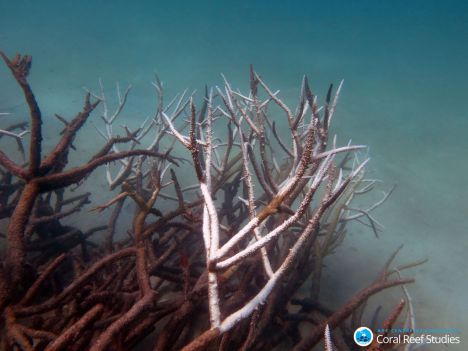
Dead and dying staghorn co ral , central Great Barrier Reef in May 2016. Credit: Johanna Leonhardt

Click the link to read the article on The Guardian website (Graham Readfearn). Here’s an excerpt:

October 12, 2025

Unless global heating is reduced to 1.2C ‘as fast as possible’, warm water coral reefs will not remain ‘at any meaningful scale’, a report by 160 scientists from 23 countries warns

The earth has reached its first catastrophic tipping point linked to greenhouse gas emissions, with warm water coral reefs now facing a long-term decline and risking the livelihoods of hundreds of millions of people, according to a new report. The report from scientists and conservationists warns the world is also “on the brink” of reaching other tipping points, including the dieback of the Amazon, the collapse of major ocean currents and the loss of ice sheets…Tipping points are recognised by scientists as moments when a major ecosystem reaches a point where severe degradation is inevitable…The world’s coral reefs are home to about a quarter of all marine species but are considered one of the most vulnerable systems to global heating…

Coral reefs have been in the midst of a global bleaching event since January 2023 – the fourth and worst on record – with more than 80% of reefs in more than 80 countries affected by extreme ocean temperatures. Scientists say the event has pushed reefs into “uncharted territory”. The Global Tipping Points report, led by the University of Exeter and financed by the fund of the Amazon owner, Jeff Bezos, includes contributions from 160 scientists from 87 institutions in 23 countries. It estimates that coral reefs hit a tipping point when global temperatures reach between 1C and 1.5C above where they were in the latter half of the 19th century, with a central estimate of 1.2C. Global heating is now at about 1.4C. Without rapid and unlikely cuts to greenhouse gases, the upper threshold of 1.5C would be hit in the next 10 years, the report says.