
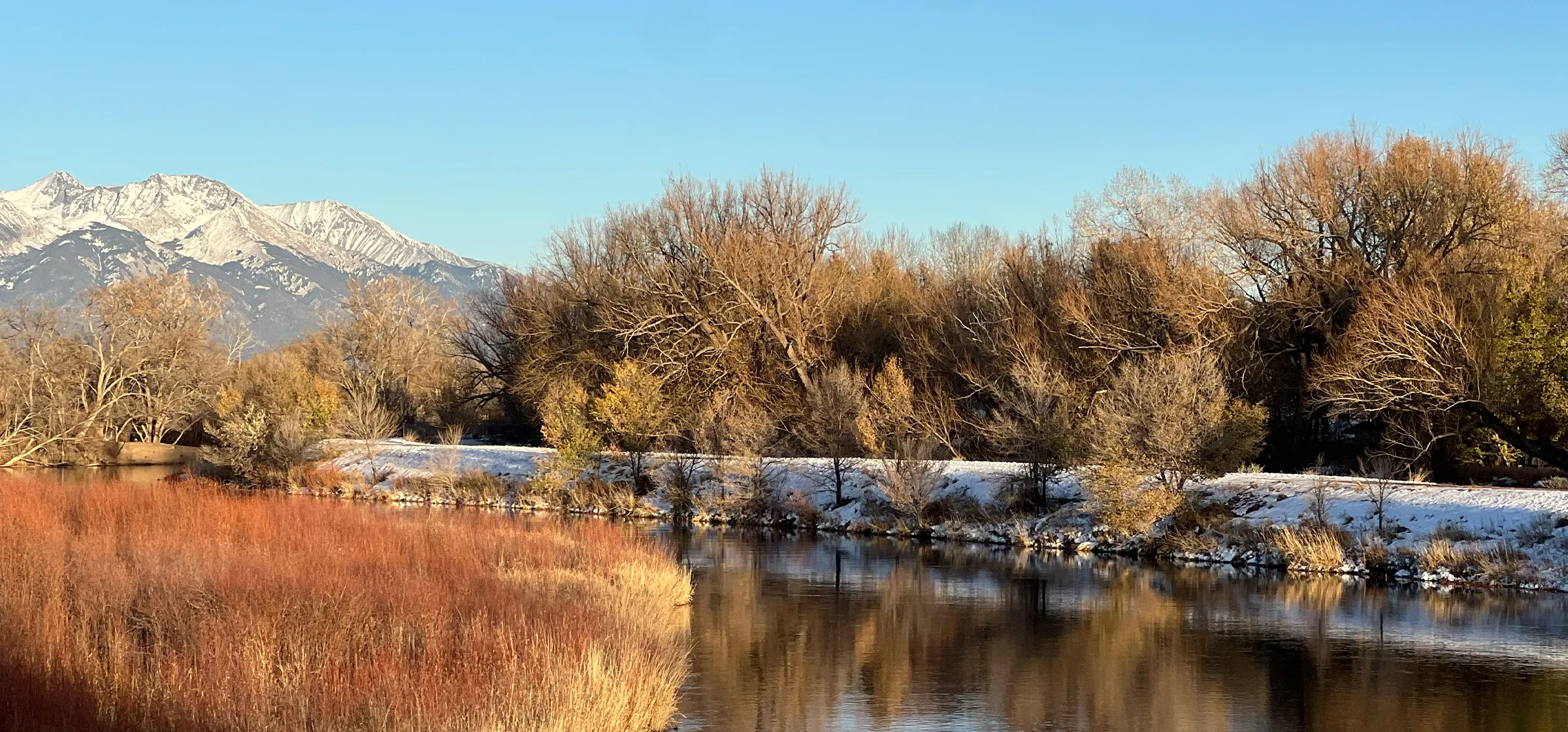
The theme this year was “Where Water Connects Us: Past Meets Present in the San Luis Valley”. Paul Formisano and the staff and volunteers from the Salazar Rio Grande del Norte Center delivered a varied, timely and interesting agenda!
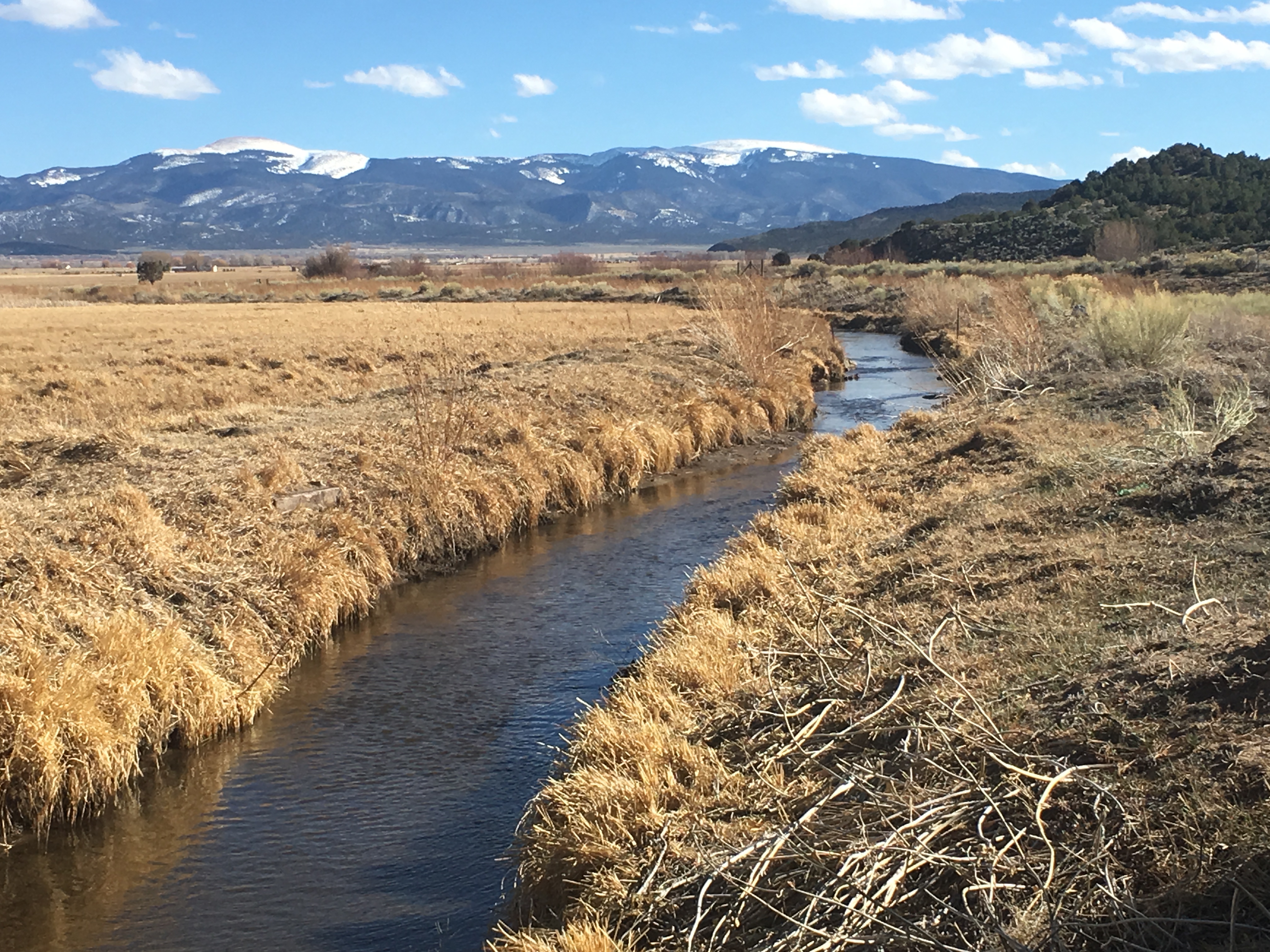
Ken Salazar set the stage for the sessions, reminding attendees that, “Early settlers knew the only way to bring prosperity to the valley was to do it collectively as the early acequias did.”
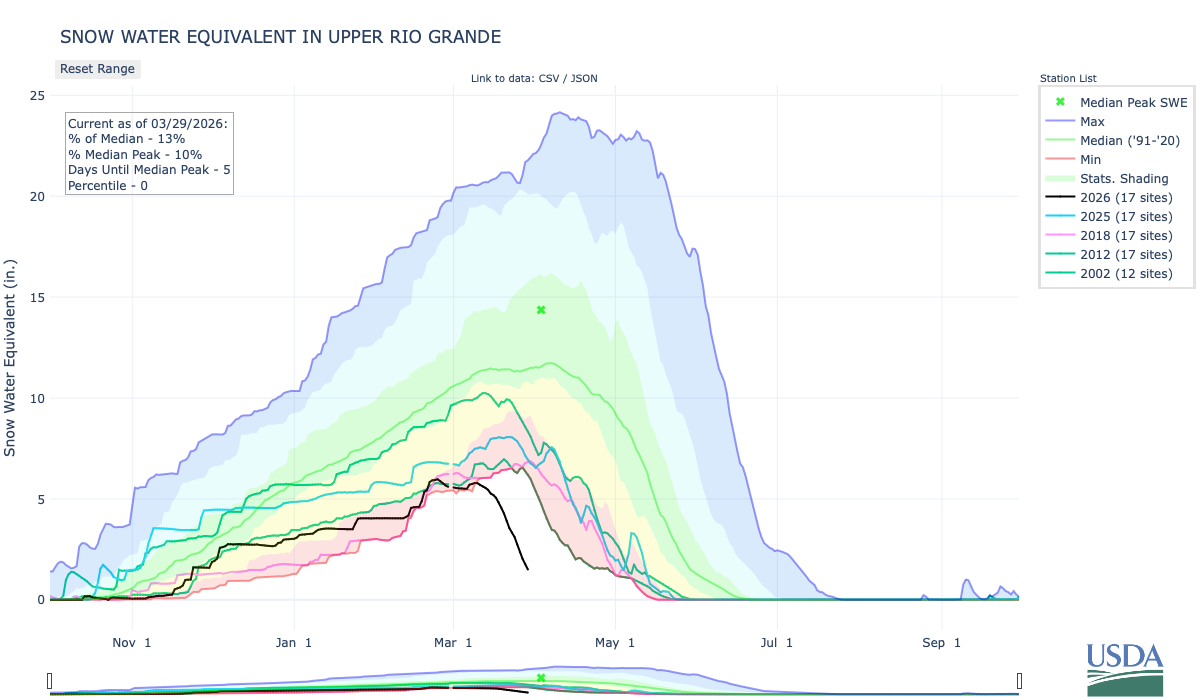
The first session was titled, “State of the Rio: The 2026 river outlook general basin and compact projections” and the general consensus from the speakers was, as Brad Udall recently said about the Upper Colorado River Basin, “There is no historical analog,” for these conditions. Snow drought is front and center in the San Luis Valley these days.

Precipitation in the basin started out the water year in great shape due to a big rain event in early October. Since then there have been modest accumulations but has flattened out since late February to date.
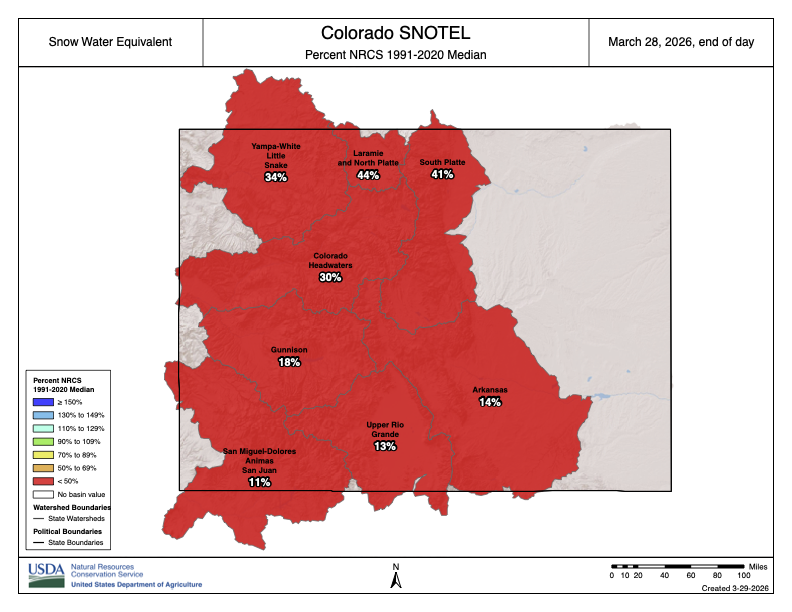
Division Engineer Craig Cotten started off his presentation with the basin-filled snowpack map for Colorado. He joked that, “The good news is, the Rio Grande is not the worst in the state.” It is not a good year as far as #snowpack and many SNOTEL locations are already melted-out.
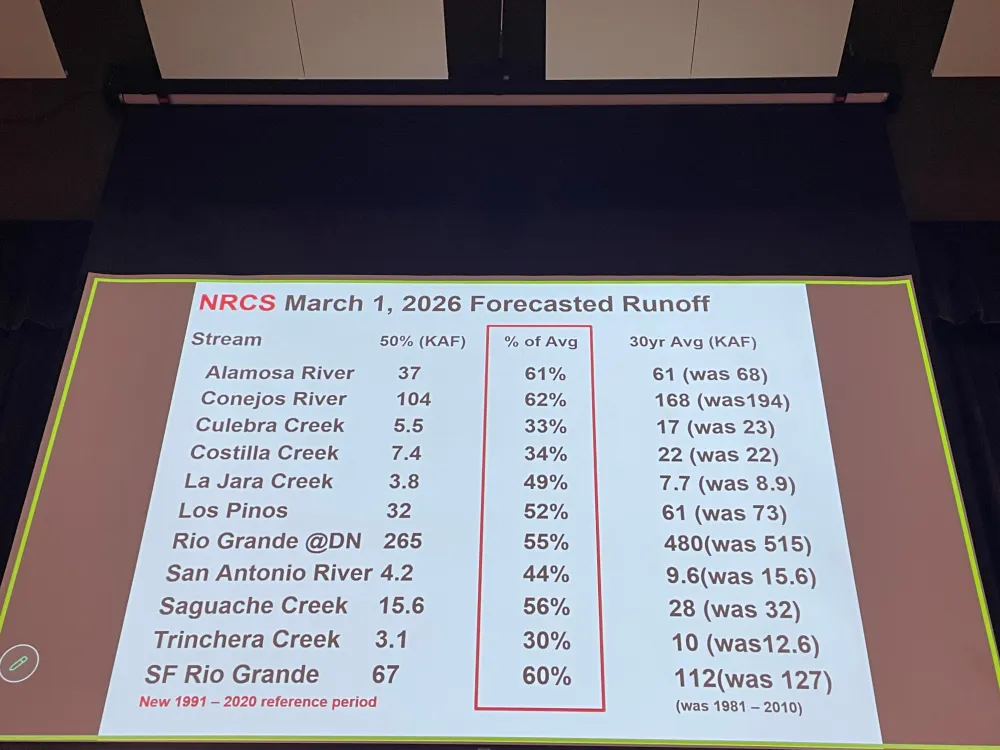
Projected streamflow is not looking good and the forecast will likely be worse when the April 1, 2026 numbers are released by the NRCS. However, streamflow right now is looking okay, there is a lot of water in the #RioGrande at this time for example. That means that the little snowpack in the basin is already coming off.
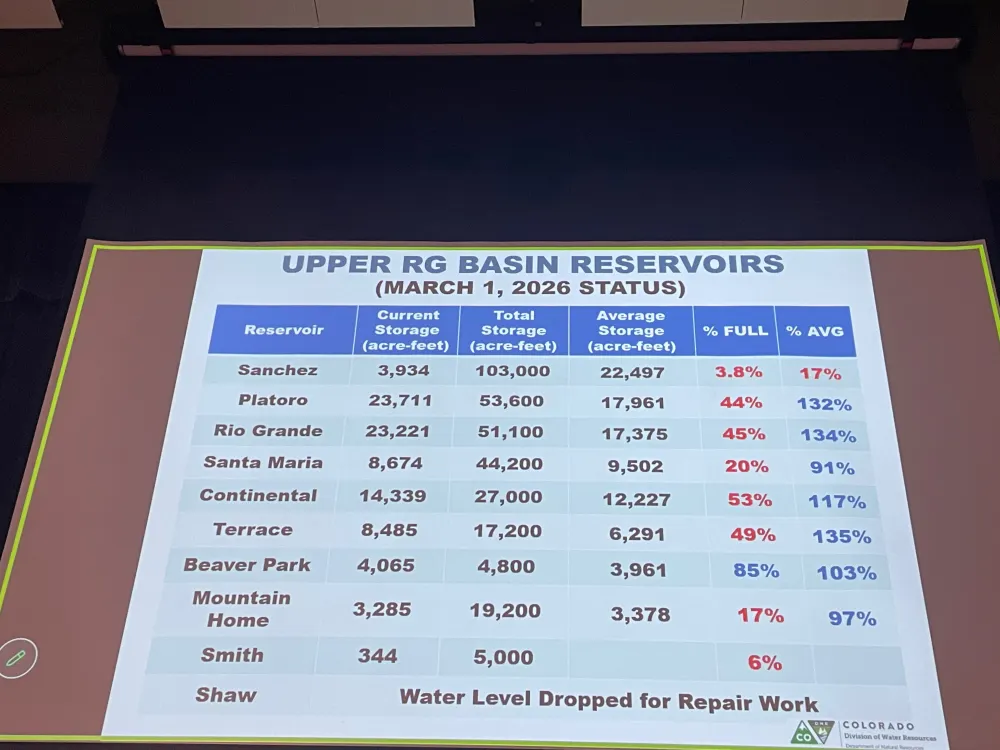
Reservoir storage is in good shape (as a percent of average) except Sanchez Reservoir which has been drawn down for maintenance and repairs.
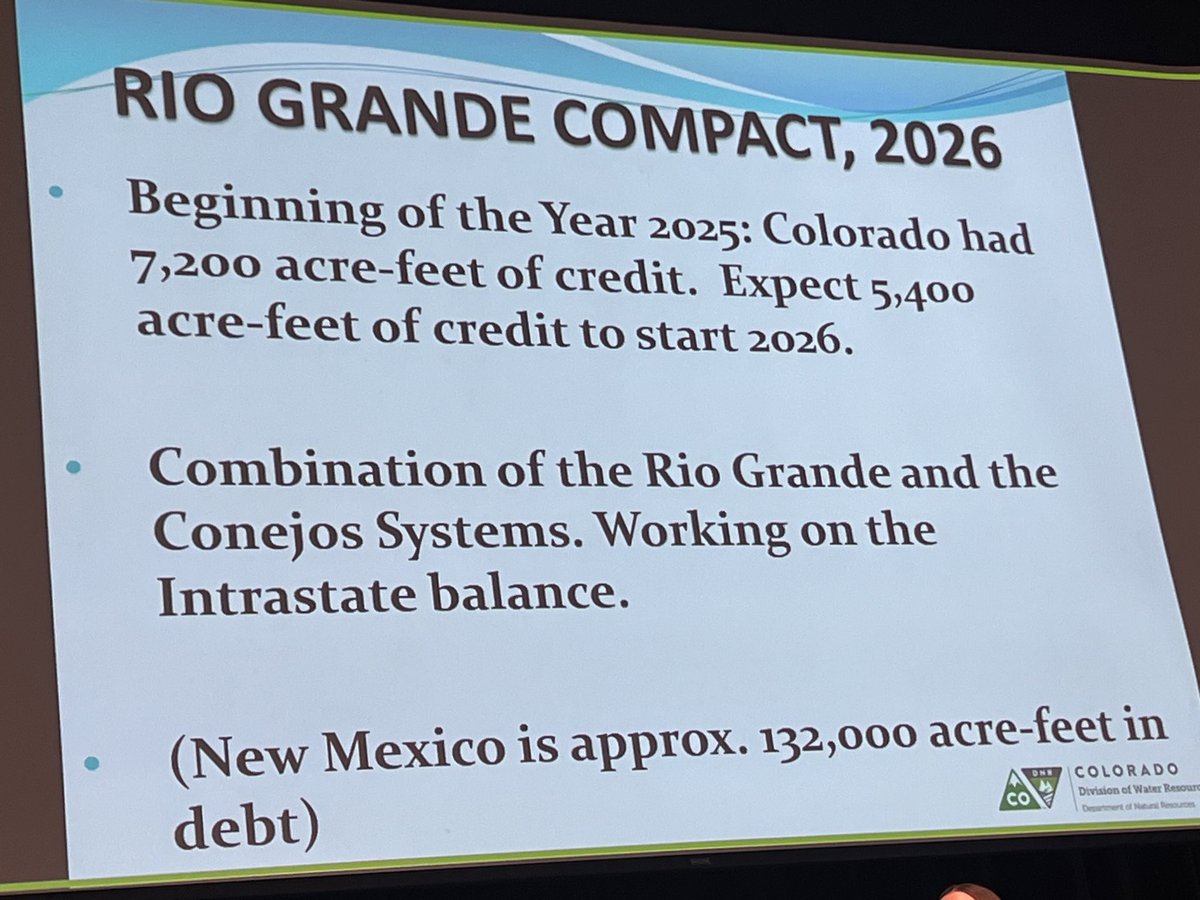
Colorado’s Rio Grande Compact compliance numbers heading into the scary diversion season are a positive. There is no debt owed to New Mexico and Texas. With the early onset to runoff season the State Engineer allowed irrigation to start on March 23, 2026. Current estimated streamflow for the Rio Grande at Del Norte (the compact USGS gage used for the river) is 305,000 acre-feet which carries a compact obligation of 76,000 acre-feet to New Mexico and Texas. For the Conejos River the estimated upper index annual flow is 165,000 acre-feet and the downstream obligation is 27,500 acre-feet. However, water levels are going to drop in the unconfined aquifer significantly this year due to low flows in the river. The situation in the aquifer is bad and it is going to get worse.
Cotten updated the attendees about the Rio Grande Compact lawsuit status. It is mostly a fight between Texas and New Mexico and the latest stipulated agreement has been approved by the Special Master. The U.S. Supreme Court is expected to approve the agreement.
Nathan Coombs, in keepting with the symposium theme said, “I believe we’re going to be alright this season we’re going to survive. People in the San Luis Valley are working together and we’re going to get through it.”
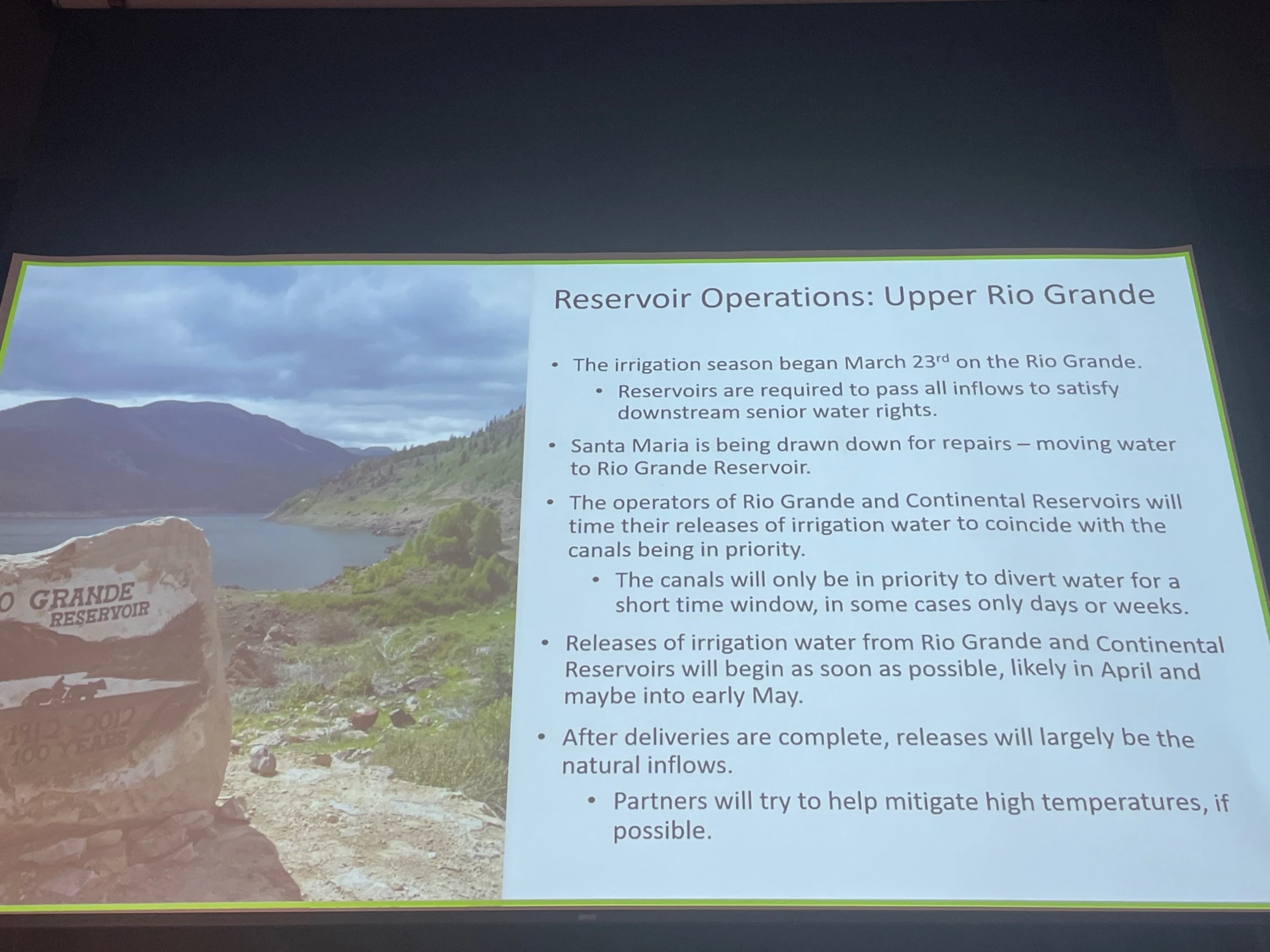
Heather Dutton gave an overview of reservoir operations for 2026. It is possible that all irrigation water will be released in April and May. She added, “If you’re going to fish the streams emphasize fishing in the morning and visit one of our valley breweries in the afternoon. It’s going to be tough year for all of us. Please keep the farmers in mind.”
Reclamation informed attendees about the current status of the Closed Basin Project. Project priorities are:
- Colorado’s compact deliveries
- Mitigation for construction and pumping
- Eliminate Colorado’s Rio Grande Compact deficit
- Other beneficial uses/irrigation
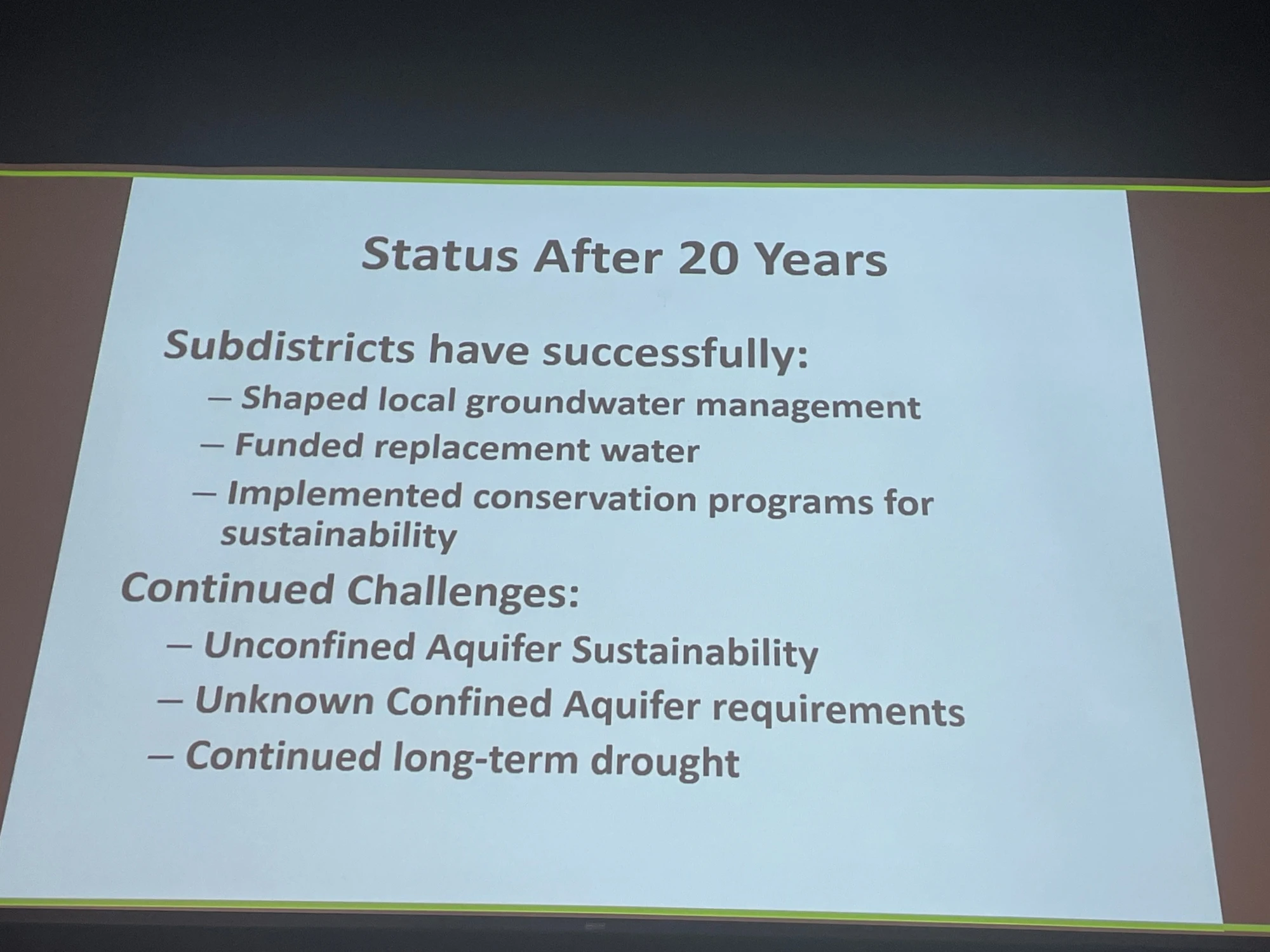
The session “Twenty years of subdistricts” illustrated how the well owners have been working together over the years to determine a solution to the declining unconfined aquifer. Because groundwater is not separate from surface water the lowered levels in the aquifer affect surface streamflow in the Rio Grande. Valley pumpers have formed several sub-districts fashioned around the different hydrology in areas of the aquifer and are retiring some wells and taking land out of production. Another strategy used has been o develop augmentation plans to offset pumping. All of the strategies involve fees to sub-district members. There is extensive coverage of the issue on Coyote Gulch if you are interested in taking a trip down memory lane.
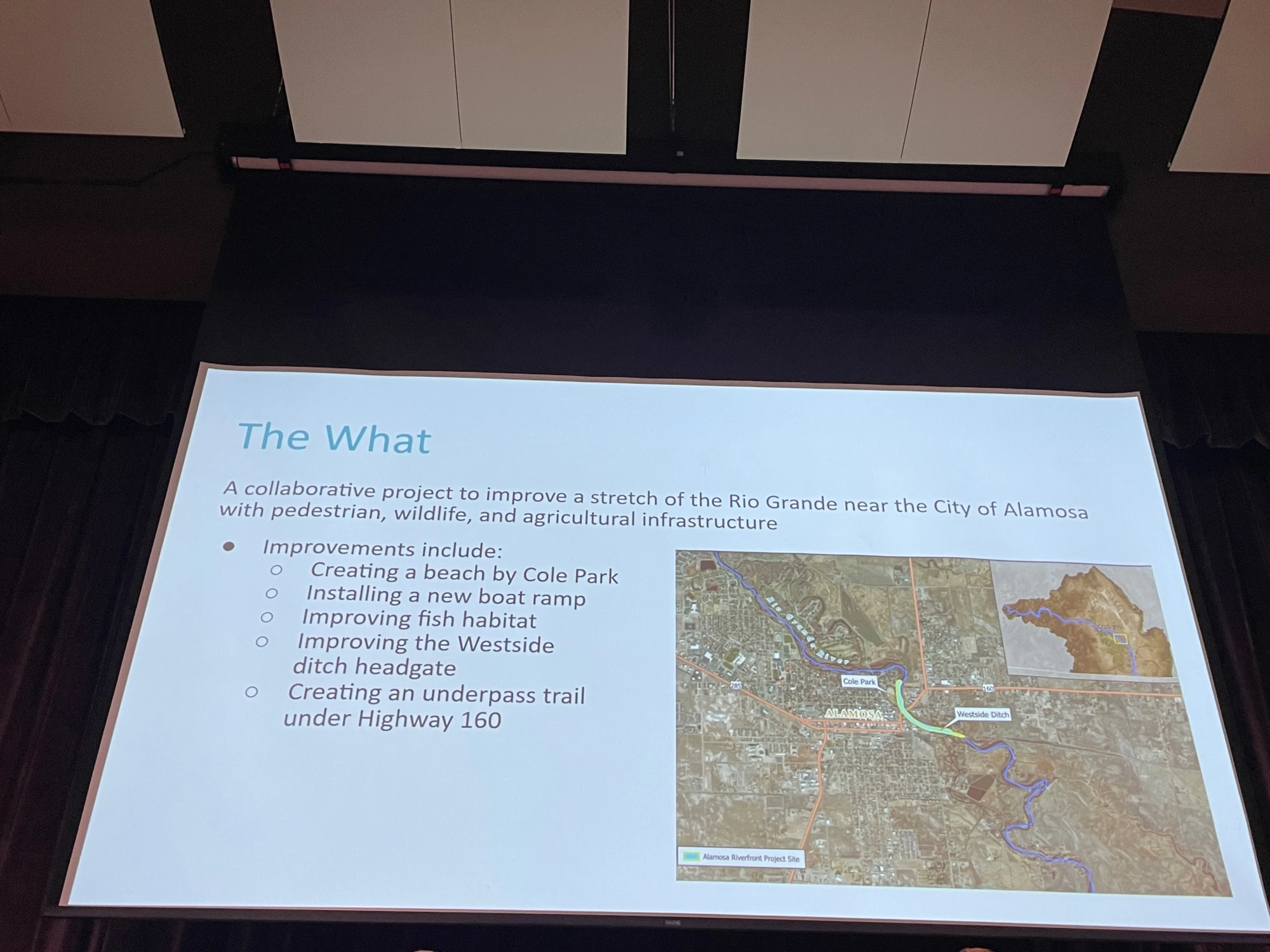
The session “Flowing together: Agriculture, rivers, and communities in partnership” was an overview of collaboration between the City of Alamosa, the West Side Ditch, and Rio Grande Headwaters Restoration Project on the river at the east side of Alamosa. It included a new headgate for the ditch company and will include a new levy orientation and access to the river from Cole Park. The speakers emphasized that it would not have happened without collaboration and the emphasis on creating a win for all stakeholders. For example, Bill Schoen credited the Rio Grande Headwaters Restoration Project for finding funding for the new headgate which is often a problem for mutual ditch companies. Daniel Boyes of the Restoration Project said that the new headgate helps fish and safety for boaters.

The final session before the keynote was “Perspectives on valley recreation” where access to public lands and the value of building a recreation economy to bolster valley opportunities were discussed. While 39% of Colorado’s agricultural output is from the valley economic activity is seasonal. The discussion centered around bringing tourism to the valley to improve the outlook for employment and economic growth.

The keynote speaker was Ben Golfarb and it was a real treat. I never tire of learning about “Nature’s Engineers” and the amazing effect this keystone species has on hydrology and habitat. Trapped extensively by fur traders to enable the fashion industry in the 19th century the species was nearly extirpated from the North American West. Along with a torrent of information and photographs, Goldfarb informed attendees that the native tribes did not participate in trapping because of their understanding of beaver’s role in the arid lands.

Thanks, John, for attending the symposium and providing this great synopsis!