HB 10-1188 (Clarify River Outfitter Navigation Right): State Senate morphs bill into a study

A picture named southplattecanoe.jpg

From Steamboat Today (Joel Reichenberger):

Colorado House Bill 1188, which sought to settle the state’s “right to float” laws, was put on hold rather than voted into law in the state Senate. A study was commissioned and isn’t due to be reported until the end of October, ending for now what some view as a perilous threat to landholders’ rights…

“I support it because it clarifies the rules,” he said Friday. “It has always been a contentious issue. For me, this would allow me to float knowing if I do everything I’ve always been doing, respecting landowners and acting in good behavior, that I’m OK, and I’m not doing anything wrong. It could give me some peace of mind that I’m doing everyone OK.”

The status quo is full of gray area, but oftentimes rafters think they are fine crossing through private property as long as they don’t touch the river bottom or the shore. The bill would have hammered that right into stone and would have made allowance for touching the bottom of the river and the bank…

The bill read as a disaster to [Steamboat-based lawyer Michael Holloran] and those who stood against it. “It is like the state saying, ‘We’ve decided we want people to walk through your house,’ like it would open our doors and let them come through,” Holloran said. “It would have a very serious impact on owners, and it is what I consider an egregious taking of private property.”[…]

The long-term effects of such a bill, he said, could be far more devastating than those short-term changes, removing fishing leases as a potential revenue source for farmers and ranchers who make up the fabric of Steamboat.

More HB 10-1188 coverage here.

Energy policy — nuclear: HB 10-1348 (Increase Oversight Radioactive Materials) passes out of House Transportation and Energy Committee

A picture named cottercontamination.jpg

From the Cañon City Daily Record (Rachel Alexander):

“We had amazing bipartisan support,” said Matt Garrington, of Environment Colorado, one of the groups that developed the bill. The bill also was developed by Colorado Citizens Against ToxicWaste. It is sponsored by Rep. Buffie McFadyen and Sen. Ken Kester.

Among those who testified for the bill were Fremont County Commissioner Mike Stiehl, CCAT co-founder Sharyn Cunningham and Gloria Stultz.

The bill now will go to the full House for debate and a vote. If it passes there it will go to the Senate committee.

More 2010 Colorado legislation coverage here. More nuclear coverage here and here.

HB 10-1188 (Clarify River Outfitter Navigation Right): State Senate changes bill to a study

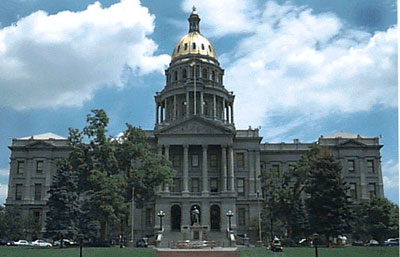
A picture named coloradocapitolfront.jpg

From The Durango Herald (Joe Hanel):

Technically, the bill is still alive, but all it does now is ask the Colorado Water Congress to study the issue by Oct. 1. The Water Congress is a private group made up of people interested in water. It is the most prominent water lobbying group in Colorado. Seven Democratic senators, including Bruce Whitehead of Hesperus, voted for a plan by Sen. Al White, R-Hayden, to turn the bill into a study Friday morning in the Senate…

[State Senator Mary Hodge] opposed White’s move to do a study. A previous study led by the Department of Natural Resources began in 2000. It took three years and left the issue unresolved. “A study gets us nowhere,” Hodge said.

Only one Republican, Sen. Greg Brophy of Wray, sided with Hodge. Brophy argued against “another blue-ribbon study instead of solving real problems for people in Colorado.” Brophy said the Water Congress should not handle this issue because anyone who pays for a membership can join. “It’s pay to play,” he said.

Whitehead defended the Water Congress as an established group with a good reputation. “I think they would be open to anybody sitting at the table trying to sort out the mess that this bill has created,” he said…

Doug Kemper, executive director of the Colorado Water Congress, was in Washington, D.C., on Friday and did not know the Senate handed responsibility for the study to his group. “It’s one of those things – if you don’t attend a meeting, you get put in charge,” Kemper said in a phone interview…

Rep. Kathleen Curry, U-Gunnison, introduced HB 1188 after a developer in her district closed a stretch of the Taylor River to rafting companies. She said Friday if the study passes the Senate, she will risk killing the bill by sticking to her original position.

More coverage from Charles Ashby writing for The Grand Junction Daily Sentinel. From the article:

House Bill 1188, introduced by unaffiliated Rep. Kathleen Curry of Gunnison, instead was converted into a study that is to be done by a non-governmental group that primarily focuses on agriculture and municipal water use, not recreation or tourism. The Senate still must formally vote on the bill, which could happen as early as Monday, giving Curry and its Senate sponsor, Sen. Mary Hodge, D-Brighton, the weekend to get the votes they need to change it back into its original form…

“There are problems with the bill … in regards to water rights development in the future,” Whitehead said. “The way the bill is currently drafted, it could prohibit future appropriations on these rivers that will be our future supplies in this state.”

More coverage from The Pulse- of Colorado Farm Bureau (Garin Vorthmann):

The CWC is directed to study the issue, taking into account the “legal, economic, environmental and law enforcement issues related to boating through private property.” The amended version of the bill has one more vote to go through in the Senate then it will be sent back to the House. At that time, the House must decide whether to accept the Senate version of the bill. If they do, the bill will be sent to the Governor. If the House does not accept the updated version, the bill may be sent to a conference committee for additional debate.

More coverage from The Mountain Mail (Audrey Gilpin):

Terry Scanga, general manager of the Upper Arkansas Water Conservancy District, said, “These 11th hour amendments [added last Monday in committee] could directly impact water rights.” He referenced an amended landowner liability section of the bill in which a waterway obstruction doesn’t include “in the least restrictive manner necessary” the following structures: diversions, storage, any fence reasonably necessary for livestock, any existing bridge or any fish habitat. Scanga said “necessary” waterway obstruction is unclear. “This could have an impact on water rights if a landowner can’t divert water to get the full decree. “Sometimes a landowner needs to dam an entire stream to get his full decree.”

Before the amendments Monday, the bill stated, “Nothing in this article shall be construed to create a water right or affect any existing water right in any way.” Scanga said because the bill didn’t involve water rights, the district didn’t take a position. He said he’s asking the district water attorney to draft a memo for the board, and members will determine if the district should become involved. “They snuck amendments into the bill that have nothing to do with its purpose,” he said.

Tim Canterbury, president of the Colorado Cattlemen’s Association, echoed Scanga. “A paramount concern to the association is that the bill, as amended Monday, doesn’t protect senior water rights,” he said. Worried about the minimum obstruction to waterway language of the bill, Canterbury said, “Often, during low water, we have to extend our fence into the river to keep livestock contained. If fences are cut, that’s bad for our business.” He said, “The bill’s never been about a right to navigate or float. Frankly, it’s about the right to trespass.”[…]

Greg Felt, co-owner of ArkAnglers and also a water district board member, said the bill could be less controversial if historically run rivers were listed. “Most commercially run rivers are permitted by state and federal agencies. The master list should consist of about 17 or so rivers. Rivers we’ve all heard of.” Small, rarely run creeks, non-commercially run rivers or future floatable rivers, Felt said, aren’t included in the bill. “Boaters aren’t going to be cutting fences or destroying diversion structures. Boaters are about forward progress. We’re about floating.” Felt mentioned local diversions boaters sometimes portage including a dam near Clear Creek, an area below the Royal Gorge during low flow and a diversion dam at the Division of Wildlife Mount Shavano fish hatchery. “We’re talking about the same rivers and diversions we’ve dealt with before,” he said.

Additional major amendments include omitting reference to English Common Law in connection with navigation rights. Other changes omitted “portage,” replacing it with “incidental contact;” clarifying waterway as a “segment of river on which one or more regulated trips have been run in any year from 2000 through 2009” and extending the bill to private boaters.

More 2010 Colorado legislation coverage here.

Energy policy — nuclear: Supporters of HB 10-1348 (Increase Oversight Radioactive Materials) rally in Denver

A picture named cottercontamination.jpg

From the Colorado Independent (David O. Williams):

Proponents of the comparatively carbon-free nuclear power industry, including Colorado Sen. Mark Udall, maintain the state’s toxic past was born of ignorance about the dangers and new technology makes mining and processing much safer. State lawmakers clearly want more concrete assurances. “Our number one goal as a legislature should be public safety,” Rep. McFadyen said in a release. “This no nonsense legislation ensures toxic waste cleanup and the health of our citizens.”

HB 1348 would require uranium operators to clean up existing problems before applying for expansion permits; allow local governments, the public and other stakeholders to provide input during the Colorado Department of Putlic Health and Environment’s annual reviews of cleanup financing; require uranium companies to notify residents with water wells near groundwater contamination; and require state licensing when companies accept “alternate feed,” or toxic waste from industrial or medical operations.

“Actions have consequences, and uranium companies need to clean up their mess,” said Sen. Ken Kester, R-Las Animas, another sponsor of the bill.

More coverage from The Grand Junction Daily Sentinel (Charles Ashby):

Though the measure could affect one operating near Canon City, the planned Piñon Ridge mill 12 miles west of Naturita already would be required under existing laws to do much of what House Bill 1348 calls for, said George Glasier, president and CEO of Energy Fuels Inc., which is hoping to open the first uranium mill in the nation in 25 years.

Glasier said the measure, introduced by several southern Colorado lawmakers, is aimed at the Cotter Uranium Mill in Fremont County, which has been plagued with contamination problems since the late 1950s. The lawmakers said they introduced the measure to deal with long-standing concerns over cleanup of that mill, parts of which already are a federal Superfund cleanup site. The bill is aimed at existing mills that release radioactive material into the groundwater, requiring them not only to report how it is being cleaned up, but also ensuring they have set aside enough cash to pay for it, said Rep. Buffie McFadyen, D-Pueblo West, and the bill’s sponsor. It would bar mills from expanding operations until the contamination is removed, she said…

The bill would make it harder for Cotter to get the site cleaned and make it impossible for other sites, including ones not yet opened, to stay in business, [John Hamrick, Cotter’s vice president of milling] said. “The bill as written essentially will prevent uranium milling within the state because of language concerning release of materials,” Hamrick said. “If you have a shovel full of uranium ore and you dump it on the ground, at that point you have a release that would exceed standards. That’s a poison pill for uranium mills.”

More 2010 Colorado legislation coverage here. More nuclear coverage here and here.

SB 10-027 (Fine Illegal Surface Water Diversions): Bill passes the state house 63-1

A picture named submersiblepump1

From the Cortez Journal (Joe Hanel):

Senate Bill 27 allows the attorney general to slap a $500 per day fine on people who illegally use surface water. The fine matches the penalty for illegal use of groundwater that is already in place. The House passed it 63-1. In testimony on the bill last week, Assistant Attorney General Chad Wallace said his office usually negotiates a much lower fine and only uses the threat of fines when a water user has flaunted water rules laid down by the state engineer.

The state senate repassed the bill and now it moves on to Governor Ritter for his signature.

More 2010 Colorado legislation coverage here.

HB 10-1188: Rafting bill scheduled for second reading tomorrow

A picture named raftingarkriver.jpg

The rafting bill is scheduled for the second reading tomorrow (March 19) according to a legislative aide I spoke to this morning. Meanwhile, heres an update from Julie Sutor writing for the Summit Daily News. From the article:

The state Senate Judiciary Committee gave its approval on Monday to a bill that would guarantee rafters’ right to continue using Colorado rivers after supporters and opponents packed a hearing at the state Capitol. Proponents had worried about the bill’s fate in the committee, but it passed on a vote of 4-3. The bill was amended to include all rafters, not just commercial outfitters. Lawmakers also removed a provision that would allow portages on private land. The bill now goes to the full Senate for debate…

Greg Felt, a whitewater guide and fishing guide, told the committee both sports can coexist.

“We’re not here to undermine agriculture, we’re not here to undermine private property rights, and we’re not here to upset what has been, by and large, a pretty positive working relationship between agriculture and recreation. What we’re here to do is to try and preserve the status quo in face of attacks from various quarters throughout the state,” he told lawmakers.

Christian “Campy” Campton, owner of Frisco-based Kodi Rafting, said relations between the agriculture and rafting communities have historically been very positive for the most part. “We’ve always been able to work it out and be responsive to each other’s needs, Campton said. “It’s when they sell the ranches to developers that it becomes a problem.”[…]

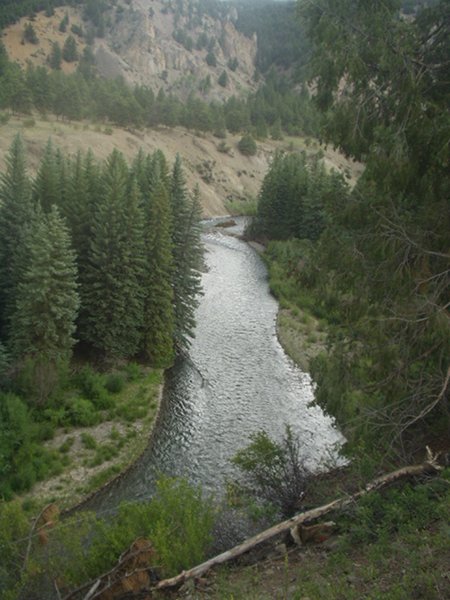
The dispute escalated in December, when Shaw’s company sent commercial rafters a letter saying “there is no credible interpretation of legal statute, case or authorization permitting rafting, floating or any transit through or over private property.” Shaw threatened legal action if rafters or their customers touched the riverbanks or river bottom while on their property. The property has been developed as a fishing resort on the banks of the Taylor River near Gunnison, and the company contends rafters interfere with fishing. Shaw said he gave rafters permission to use his property last year based on guarantees they would not interfere with fishermen. He said he was disappointed when hundreds of them took advantage of his offer, disrupting the fishermen, and he notified them he would not renew his offer this year…

Club 20 opposes the expansion of the bill to include private boaters in addition to commercial rafters. “It’s effectively impossible to regulate individual behavior,” Brown said. “If you own a piece of property, and a commercial rafting party goes through, and they stop on the bank, throw out a bunch of trash, defecate on your property and take off, you know who they are. Their vessel is marked. That scenario never happens, because commercial rafters have something at stake — their license. “By contrast, if you allow every individual to float, you have no clue who that is. You have no recourse,” Brown added.

More coverage from The Pueblo Chieftain (Patrick Malone).

More 2010 Colorado legislation coverage here.

HB 10-1188 (Clarify River Outfitter Navigation Right) makes it out of the Senate Judiciary committee 4-3

A picture named raftingarkriver.jpg

From The Durango Herald (Joe Hanel):

Only a last-second decision by Sen. Evie Hudak, D-Westminster, kept the bill alive. “I was undecided until the very last second. I’m not kidding you,” Hudak told reporters moments after the vote on House Bill 1188. The bill has pitted rafting companies against private property owners in a legal entanglement that is more than three decades old. The Senate Judiciary Committee voted 4-3 for HB 1188. It now goes to the full Senate…

Hudak said she remains very concerned that the bill could hurt private property rights. She voted yes only because she thinks the public believes people have a right to float. “This bill is a bad bill, but to kill it is probably bad as well,” Hudak said.

Testimony stretched for more than seven hours, much of it from ranchers and other landowners who argued the bill took away their property rights. Opposition also came from lawyers for a Gunnison developer who is blocking rafting companies from floating a river through his property. Mike Feeley, who represented the developer, said there is no such thing as a “right to float.”[…]

Colorado’s boating law is clear as mud. The constitution specifies that the waters of the state belong to the people. A state Supreme Court case in 1979 found a man guilty of trespassing for treading on the riverbed. In the same decision, the court encouraged the Legislature to clarify the law – something it has not done. The House already has passed HB 1188 in a much different form. Originally, it extended rights only to commercial rafting companies.

Major changes to the bill Monday night were:

– Removing references to English Common Law on the right to navigate rivers.

– Removing the right to portage around obstacles.

– Expanding the scope of the bill to any river that has been floated by a commercial company at any time since 2000.

– Including private boaters among the people with a right to float.

A University of Colorado law professor and several of his students spoke for the rights of private boaters. But the professor, Mark Squillace, wasn’t satisfied with Monday’s changes because the bill does not fully recognize a constitutional right to use the rivers. Colorado has one of the country’s most restrictive floating laws, Squillace said. “Private property rights are alive and well in many other states that recognize broad rights of access – Utah, Wyoming, Montana, New Mexico,” he said.

More coverage from The Grand Junction Daily Sentinel (Charles Ashby):

The measure cleared the Colorado House last month almost entirely on a 40-25 party-line vote, with Democrats arguing that rafters have a right to float, while Republicans said it violated the property rights of local landowners. On a similar party-line vote, the Senate Judiciary Committee sided 4-3 with the floaters’ argument, saying the bill struck a good balance between the two. As a result, some long-establish rafting companies along the Taylor River in Gunnison County said the bill could help keep them from being forced out of business…

Lori Potter, an attorney for the Colorado River Outfitters’ Association, said 42 other states have right-to-float laws, all broader than this bill. “Many (other states) allow fishing, many allow stream access for fishing, some allow hunting,” Potter said. “(HB) 1188 is much more limited … and still ensures that these two rights, the rights of the boater and the rights of the landowner, could still exist.”

More coverage from The Pulse- of Colorado Farm Bureau (Garin Vorthmann):

Amendment language was added to the bill that broadened the bill to include all boaters, not just commercial outfitters. The amendment also expanded the bill to affect more waterways – those that have been commercially ran at least once between the years 2000-2009. Controversial language regarding portaging was removed from the bill but boaters will now be able to get away with incidental touch in order to continue to have forward progress on the river. The right-to-float was also codified in the bill with the new amendment language. The bill was passed 4-3 with Senators Renfroe, King and Lundberg voting in opposition. Colorado Farm Bureau continues to OPPOSE HB 1188 as amended…

Testimony that was given by CFB members was extremely helpful in highlighting the problems with the proposal. Without your help, the bill would have likely passed by a much greater margin.

More coverage from The Denver Post (Jessica Fender):

Kayakers, anglers and all variety of private and commercial boaters could gain the right to float through private land after a state Senate committee on Monday overhauled a bill that has pitted property owners against outdoor enthusiasts. The last-minute amendment addressed a concern of Front Range Democrats, whose constituents’ biggest complaints have been that the original version of House Bill 1188 unfairly applied to commercial outfitters only. But the sweeping changes may have lost the legislation some Republican support in the House. In the Senate Judiciary Committee on Monday, the revised proposal passed on a 4-3 party-line vote after more than seven hours of debate.

Landowners argued it will be too easy for a stretch of river to be open to public traffic and predicted a deluge of new boaters damaging their property, their river improvements and the businesses they run along Colorado’s waterways. Rafters and other users said that without the legislation, property owners could close off a stretch of river by buying both banks. That could jeopardize the industry and enjoyment of boaters elsewhere, said Jack Bombardier, a landowner and river guide. “This says you can’t be sued and eliminated,” Bombardier said. “That’s all that we’re hoping. The bill will stop the lawsuits, stop the controversy.”

Under the amended HB 1188, river users would not be able to touch the bottom or banks, except to free themselves from snags or to bypass bridges and other obstacles spanning the water. And as amended, any stretch of river that was commercially rafted at least once between 2000 and 2009 would be affected. Bill backers were unclear on whether a state agency or courts through civil lawsuits would ultimately decide which sections qualify…

At one point, Democratic Sen. Linda Newell of Littleton seemed to agree that the complex legal matter deserved a more in-depth look. “What’s working now is fine. It’s my understanding we’re here because of one landowner,” she said during committee. “Why are we creating a law (because of) one landowner?”

More HB 10-1188 coverage here. More 2010 Colorado legislation coverage here.

SB 10-052 (Alter Designated Groundwater Basin Area) is on its way to Governor Ritter’s desk

A picture named groundwater.jpg

From the Sterling Journal Advocate (Marianne Goodland):

This was a bill that little more than a month ago passed quietly and uneventfully through the Senate with no drama and no strong debate. The bill’s sponsor, Sen. Greg Brophy, R-Wray, joked during its final Senate vote that there were very few water lawyers in the room when the bill was reviewed by the Senate Agriculture and Natural Resources Committee. That prompted Sen. Shawn Mitchell, R-Broomfield, a lawyer, to joke he couldn’t vote for it because not enough lawyers were involved. But even at that time, at the end of January, storm clouds were gathering.

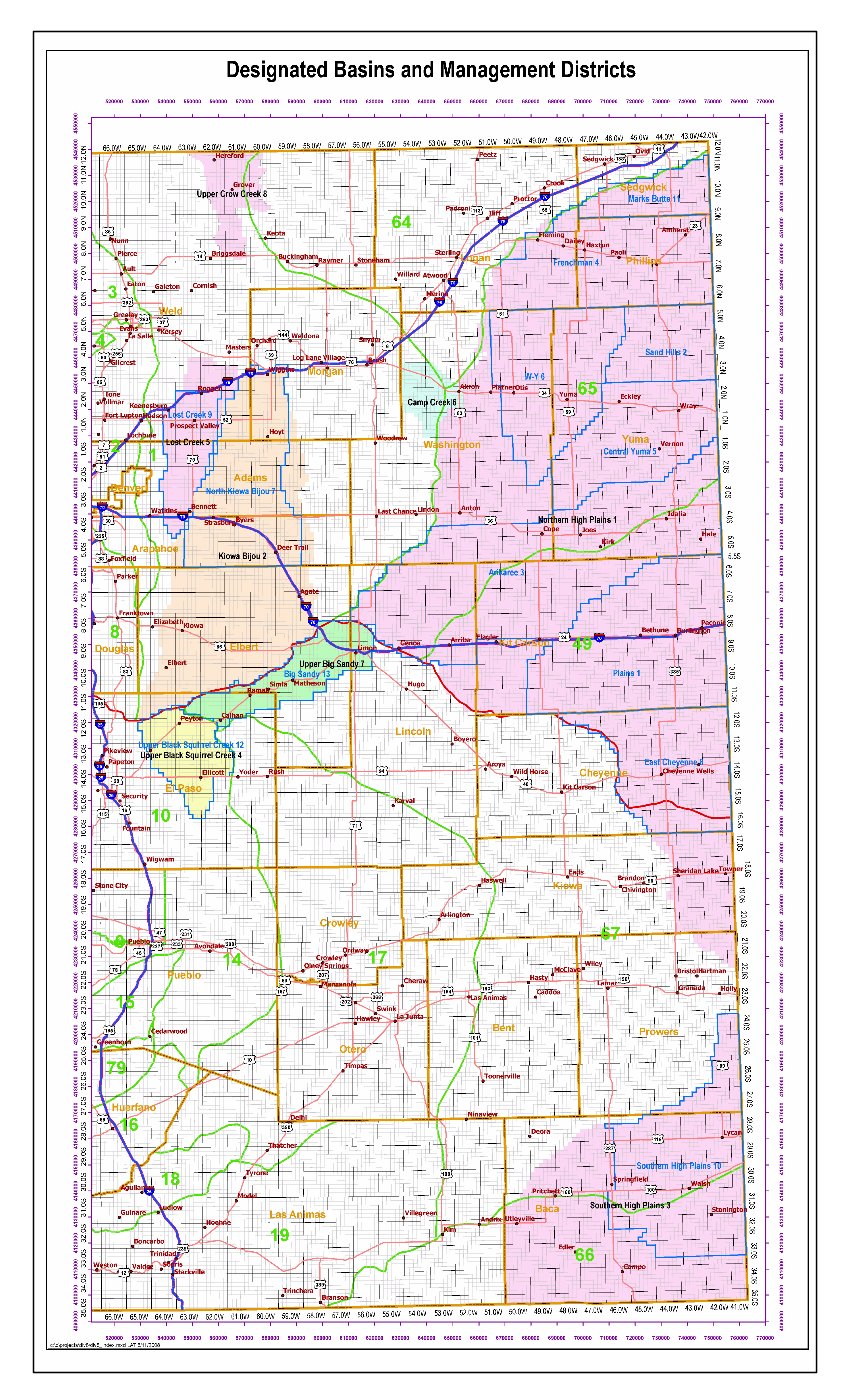
[SB 10-052] (pdf) would make it clear that a final permit for ground water wells in a designated basin is final. Ground water permit holders need to have certainty, said Rep. Jerry Sonnenberg, R-Sterling, who told House members during second reading debate on March 9 that the certainty was lost in 2006. That’s when the Colorado Supreme Court ruled in Gallegos v. Colorado Ground Water Commission that a surface water rights holder who has senior water rights can challenge the permit of a ground water well in a designated ground water basin if the senior water rights holder can prove their surface water rights are being affected. Under SB 52, the Ground Water Commission, which manages the eight designated basins along the Eastern Plains and the Front Range, could revise a basin’s boundaries to remove previously-included areas only if the area does not include wells that have had final permits issued. The bill includes an exception for current legal cases winding through the courts, so the Gallegos case, which is still not resolved, would not be affected.

The only person to testify against it in the Senate committee, Mark Lengel of Burlington, said he planned to marshal forces to oppose SB52 when it got to the House. Lengel was true to his word, and in the past two weeks, the bill has had a rocky ride…

Leading off [opposition in the house ag committee] was water lawyer Ray Petros, who represents three ranchers who have senior surface water rights on the south fork of the Republican River that date back to the late 1800s. He told the Ag Committee that “this will take away one of the most important water rights, the ability to curtail junior users who affect the [stream].” Petros also pointed out that the state constitution establishes the “first in time, first in line” doctrine of prior appropriation, and while ground water users have relied on permits since 1965, he said, the surface users have relied on their surface decrees for more than 100 years. The legislation insulates designated wells from surface water rights calls, he said; and it also removes the remedy for surface users, because it would say that the wells don’t impact surface water flow.

Petros’ clients also testified on the bill: Lengel, Dan Patten of the Hutton Trust of Hale, and Mike Bohnen of Bethune. Bohnen said new wells being drilled near the Republican River are affecting stream flow. “My private property rights are being legislated away from me,” he said. “A senior surface right is a vested property right.”[…]

Robin Wiley of Idalia, chair of the Yuma County Water Authority and a fourth-generation farmer on the south fork of the Republican River, recounted how the water authority was created to purchase surface water rights. Several years ago, surface water owners petitioned the Ground Water Commission to redraw the boundaries of the basin, which would have stopped pumping from more than 1,300 wells that serve farmers and municipalities such as Yuma and Wray. Voters approved that purchase, halting pending litigation. SB 52 is needed to ensure that the threat of litigation doesn’t come back, he said.

Mark Kokes of Fort Morgan, general manager of Fort Morgan Quality Water, said that in 1970, farmers started seeking a higher quality source of water. They found it in the Lost Creek Basin and formed the water district, buying the wells and infrastructure. “It changed the economy of Morgan County,” Kokes said, bringing in businesses, new residents and housing. Today, 60 percent of the county water comes from Lost Creek. If the wells were redesignated, it would cost $15 million just to purchase augmentation water and that would create an economic crisis in Morgan County.

The bill even got competing petitions: one supporting SB 52 with more than 300 signatures from Washington and Yuma County residents, and one opposed to SB 52 with about 30 signatures from people in the Burlington area. SB 52 had an even tougher time when it reached the floor of the House for debate on March 9.

Opposition to the bill was led by Rep. Marsha Looper, R-Calhan, who raised concerns during the committee hearing and in the House debate that surface water users with senior water rights would have no remedy if the bill passed. There have been impacts to surface users, she said, pointing to the 2002 and 2003 drought. Rep. Sal Pace, D-Pueblo, submitted an amendment to ensure the bill wouldn’t injure senior water rights owners and take apart the doctrine of prior appropriations. Curry objected, stating such an amendment would gut the bill and the amendment failed. Sonnenberg also said that ground water basins have very little surface water, pointing to the Republican River, which he said has seven tributaries. Only three run water above ground part of the time, he said, and none run water above ground all of the time. There have been thousands of wells drilled in the basins since 1965, he said — and not one has been challenged.

More 2010 Colorado legislation coverage here.

Energy policy — nuclear: HB 10-1348 (Increase Oversight Radioactive Materials) update

A picture named conventionaluraniummill.jpg

From the Telluride Daily Planet (Reilly Capps):

A new piece of legislation seeks to tighten up the application process and ensure that old mills are cleaned up before new ones are opened, and the Telluride Town Council came out in support of it yesterday. The Uranium Processing Accountability Act [HB 10-1348] (pdf) would apply most directly to the Cotter-owned mill near Cañon City, which first opened in 1958. It is still in the process of cleaning up contamination. The company applied to reopen the mill in 2001. If this bill passes, the Cotter Corp. couldn’t re-open the mill until all the clean-up has been completed…

The bill would also apply to the bonds that companies put up to pay for cleanup. When a mill starts operation, the company has to post a public bond that will pay for the cleanup. The proposed bill seeks to make sure that the public has a say in the size of the bond.

But Dianna Orf, a lobbyist for the Colorado Mining Association, said the legislation doesn’t make sense. “The implication I see is that if you can’t accept new material for processing, you can’t produce the revenue stream you need” to clean up the old site, Orf said. The Colorado Mining Association is not necessarily opposed to the legislation, said director Stuart Sanderson. But he said the state, and the country, would do well to support uranium production in general.

Here’s the fact sheet from the Colorado Environmental Coalition and an excerpt:

Uranium milling has a radioactive and toxic legacy in Colorado. Operations have polluted our air and water, devastated communities and public health, killed wildlife, and ruined our lands. In March 2009, Cotter announced plans to reopen its Canon City mill, even though it’s still an E.P.A. superfund site and has other outstanding violations. The first new uranium mill in the U.S. in 25 years is being considered in the Paradox Valley of Western Colorado to mill ore pulled from the public lands in Colorado’s red rock canyon country surrounding the Dolores River. We must learn from our past mistakes and update state law to match modern standards. The Uranium Processing Accountability Act would require any uranium processing facility to clean up its toxic mess before applying for new or expanding operations. This ensures scarce state resources will be allocated for the clean-up of existing problems.

More 2010 Colorado legislation coverage here. More nuclear coverage here.

SB 10-027 (Fine Illegal Surface Water Diversions) passes State House Agriculture, Livestock and Natural Resources Committee now awaits vote of full house

A picture named submersiblepump1

From The Durango Herald (Joe Hanel):

[State Representative Ellen Roberts], is carrying Senate Bill 27 on behalf of Attorney General John Suthers. The bill puts a $500 per day fine on people who illegally divert surface water. It matches the fine that is already in place for people illegally using groundwater. “The basic point is to get compliance so senior water rights are not injured,” Roberts said.

The $500 fine would be the maximum. In most cases, the attorney general resolves the case in less than a month for fines that are much less than $500, said Assistant Attorney General Chad Wallace.

More 2010 Colorado legislation coverage here.

HB 10-1188: Rafting bill faces uncertain future in the State Senate

A picture named coloradocapitolfront.jpg

From The Durango Herald (Joe Hanel):

“It’s in trouble,” said Sen. Mary Hodge, D-Brighton, the sponsor of House Bill 1188. The bill coasted through the House on a 40-25 vote, but it faces a tough first hearing in the Senate on Monday. A confluence of three very different opponents does not like the bill.

The first and most powerful force is an alliance of farmers, ranchers and developers who want to protect their property rights.

Second, water experts are worried about the bill’s reliance on English Common Law to grant the right to raft on Colorado streams.

Finally, private boaters think the bill is too narrow, because it extends the rights of only professional rafting companies and leaves everyone else high and dry…

“It’s kind of unfortunate, because it [HB 10-1188] has driven a wedge between what we enjoy now, which are informal agreements between rafters and landowners,” said Sen. Bruce Whitehead, D-Hesperus. Whitehead said he has been bombarded by e-mails from both sides, including some from Southwest Colorado landowners who are rethinking their decisions to allow rafting through their land. Whitehead said he can see both sides of the argument, but he does not support the bill in its current form. He’s especially worried about the bill’s use of English Common Law to confer a “right of navigation” on commercial rafting companies.

The Colorado Water Congress opposes HB 1188 for the same reason, said Doug Kemper, executive director of the lobbying group. By introducing the Common Law concept of “navigable” rivers, Colorado could open itself to many consequences unrelated to rafting, such as impacts on federal water-quality standards, Kemper said. “That term ‘navigable’ is really an Eastern term,” Kemper said…

“We’re not trying to upset the balance here. We’re trying to maintain the balance,” said Greg Felt of the Colorado River Outfitters Association.

The bill is limited to registered commercial rafting companies, and that upsets people like Mark Squillace, a University of Colorado law professor who is arguing for the rights of private boaters, anglers and tubers. “What this bill would do is give a preference for individuals who are willing and able to pay a rafting company to go out on the river,” Squillace said…

The test for HB 1188 will come next week in the Senate Judiciary Committee. Hodge thinks that if she can get the bill through the committee, she will have enough support to get it through the full Senate…

…Squillace is hoping legislators will take the question straight to the state Supreme Court. It’s a seldom-used maneuver, but the law allows the Legislature to ask the court legal questions on a pending bill.

More 2010 Colorado legislation coverage here.

SB 10-052 (Alter Designated Groundwater Basin Area) passes State House

A picture named coloradodesignatedgroundwaterbasins.jpg

From The Pueblo Chieftain (Patrick Malone):

Sponsored in the House by Rep. Kathleen Curry, U-Gunnison, SB52 passed by a margin of 38-26. Opponents, including Rep. Sal Pace, D-Pueblo, said the bill undermines the standing of senior surface-water rights holders, while its supporters said it protects those with properly permitted wells. The bill’s specific aim is to honor already permitted wells in the event that the Colorado Ground Water Commission redraws boundaries of the state’s eight existing designated groundwater basins…

Having passed the Senate unanimously, the bill now will be presented to the governor for final approval to become law.

More 2010 Colorado legislation coverage here.

HB 10-1188: Opponents mount advertising campaign

A picture named taylorriver.jpg

From the Colorado Independent (David O. Williams):

Friends of Colorado’s Rivers is listed on the “paid for” line in the ads, which advocate for the property rights of landowners along Colorado rivers. The ad reaches out to landowners who may want to keep commercial rafting outfits from pulling out on their property in order to portage rough sections of water or deal with emergency situations.

The group caused some confusion for proponents of the legislation, who argue Colorado rivers should be kept open to the state’s $142-million-a-year rafting industry – even along private stretches. The problem was that Friends of Colorado’s Rivers isn’t listed with the Colorado Secretary of State as a political committee. It is, however, registered as a nonprofit corporation under the SOS business section.

More 2010 Colorado legislation coverage here.

SB 10-052 (Alter Designated Groundwater Basin Area) is moving through the State House

A picture named groundwater.jpg

From The Pueblo Chieftain (Patrick Malone):

Sponsored in the House by Rep. Kathleen Curry, U-Gunnison, [SB 10-052] (pdf) seeks to honor already permitted wells in the event that the Colorado Ground Water Commission redraws boundaries of the state’s eight existing designated groundwater basins.

Designated groundwater basins generally are considered nontributary, or at least not adjacent to major streams and rivers. They may include municipal, industrial and agricultural uses. At odds in the bill are the rights of senior surface water rights and the interests of permitted well users relying on groundwater…

Arguing in favor of the bill, Sonnenberg said the Legislature recognized in the 1960s that managing groundwater basins required a different set of rules than the set steering surface rights and therefore established the Colorado Ground Water Commission. Surface rights holders who have claims of injury would not be left without recourse because they could bring their challenges to the commission, he said…

Initially, the House rejected the bill by head count, called a division vote, Tuesday. But supporters called for a recorded vote of the full House, and it was revived by a margin of 33-30, with two representatives excused…

Having already been passed by the Senate with little saber-rattling, the bill next faces a final vote of the House.

More 2010 Colorado legislation coverage here.

HB 10-1188: Rafting bill faces uncertain outcome in State Senate

A picture named raftingarkriver.jpg

From The Denver Post (Jessica Fender):

Opponents of the bill have upped their lobbying firepower, started a full-court press on committee members scheduled to hear the legislation later this month and made the vote much tougher for some lawmakers who once favored the legislation. The turning tide has bill-backers threatening to put the question directly to voters with a 2010 ballot initiative if they fail in the legislature.

Sen. Evie Hudak, D-Westminster, said the bill has so stirred tensions among river users and property owners that she doubts a long-standing and sometimes uneasy truce — where local companies and residents work out private agreements — will ever return. “This reopens a wound that we had a couple of Band-Aids on. Now we’re scratching the heck out of it,” she said. “People are angry on both sides. There’s the threat of lawsuits and ballot initiatives.” Viewed by some as the swing vote on the Senate Judiciary Committee, slated to hear the bill March 17, Hudak has faced more pressure than many of her colleagues, including a robo-call to her constituents from bill supporters…

Meanwhile, scores of private rafters, kayakers and anglers have clamored to be covered by the bill. That outcry should give lawmakers pause, said Jim Idema, head of the Creekside Coalition formed in 1994 to fight off a ballot initiative to open private land to river users. “To bestow a navigation right on a single class of citizens is not going to sit well with the rest. They will be coming up behind and saying what about us?” Idema said. “Time has allowed the senators to say, ‘Now wait a minute. The implications here are very, very broad.’ ” Idema’s group opposes the bill, but he’s not counting on its slowed progress as a sign of sure defeat.

The legislation’s first blow in the Senate came with its committee appointment, said sponsor Sen. Mary Hodge, D-Brighton. HB 1188 landed in the judiciary committee, which focuses on the legal aspects of bills, instead of the business affairs committee, which may have been more sympathetic to arguments that the bill would save business owners and protect tourism…

The sudden turbulence surprised Bob Hamel, who heads a rafting industry group and saw a sportsman governor and a Democrat-controlled legislature as his industry’s chance to settle a long-standing dispute in their favor. He’s nonetheless confident of public support, though opponents argue Coloradans are just as eager to prevent the government from taking private property. “We didn’t think it would be an easy fight, and if we lose, there are huge potential risks,” Hamel said. “But if this goes to the open public, these people have no idea what’s coming their way.”

From The Pulse – Of Colorado Farm Bureau (Garin Vorthmann):

The controversial right-to-float bill has been scheduled to be heard in the Senate Judiciary Committee for March 17. Watch for more information. Keep up the good work and contact your Senators asking for a NO vote.

More 2010 Colorado legislation coverage here.

HB 10-1188: Rafting bill faces uncertain outcome in State Senate

A picture named raftingarkriver.jpg

From the Summit Daily News (Julie Sutor):

“I’m hearing many rumors coming from the Senate that they’re not going to get that bill out of committee,” said state Rep. Christine Scanlan, bill co-sponsor. “I know they have upwards of 19 lobbyists working against the bill, which is kind of unbelievable.”[…]

The bill’s author, Rep. Kathleen Curry of Gunnison, believes the controversy is unwarranted. She intends to simply clarify existing law, but the bill has sparked a debate over private property rights. She wants people — senators and anyone interested — to simply read the wording. The bill would explicitly allow commercial boats to make incidental contact on river banks and bottoms, even when a river is flanked by private property. Commercial boaters would also be allowed to conduct emergency portages when they encounter bridges, unnavigable rapids or other hazards…

Curry said she believes the bill’s foes are making a strategic mistake if they kill the bill. They know what they are getting with her bill, she said. Commercial outfitters will likely force a ballot initiative if the bill fails, and no one can be certain whether it would be as narrow as what Curry is seeking. Curry’s bill only applies to commercial outfitters, not to the average recreational boater with his or her own raft. And it only addresses stretches of rivers that have a history of commercial rafting — not to those that haven’t yet seen much commercial activity.

According to [Summit County resident Duke Bradford, owner of Arkansas Valley Adventures], river outfitters have already taken the steps necessary to go to the ballot, should the bill fail. “We’re going for the right to float on all rivers. If the legislators say they don’t believe the law gives us the right to do this, it’s time for us to change the law,” Bradford said.

More 2010 Colorado legislation coverage here.

HB 10-1188: Rafting bill faces uncertain outcome in State Senate

A picture named raftingarkriver.jpg

From The Aspen Times (Scott Condon):

“I think the opponents are gaining ground in the Senate,” said Curry, a Gunnison lawmaker who left the Democratic party this winter and is now unaffiliated. There are 17 lobbyists working to defeat the bill, according to Curry’s count earlier this week. “That’s one for almost every ‘no’ voted needed,” she said. Eighteen votes would kill the bill in the 35-member state Senate. The measure passed the House 40-25 in February. The bill was assigned to the Senate Judiciary Committee on Wednesday. Debate is expected to start in mid-March. Curry said there is really nothing she can do but let the debate play out. She has lobbied for it as best she can. “At this point I’m like a worried mother hen or something,” she said.

Curry believes the controversy is unnecessary. She intended to simply clarify existing law, but the bill has sparked a debate over private property rights. She wants people — senators and anyone interested — to simply read the wording. She feels they won’t feel threatened…

Curry said she believes foes are making a strategic mistake if they kill the bill. They know what they are getting with her bill, she said. Commercial outfitters will likely force a ballot initiative if the bill fails, she said, and foes cannot be certain if it will expand the power of floaters beyond what Curry is seeking. In other words, the foes might give up more if the issue goes to a statewide vote. “They may win the battle on this one but they’re going to lose the war,” Curry said. She believes Colorado voters would approve a ballot question in support of commercial rafting.

More 2010 Colorado legislation coverage here.

Energy policy — coalbed methane: La Plata County senior rights holders file lawsuit claiming the state engineer’s office is not protecting them with new produced water rules

A picture named nontributarycoalbedmethane.jpg

From The Durango Herald (Joe Hanel):

The state engineer adopted rules this year to exclude many gas wells from added regulation. In Southwest Colorado’s San Juan Basin, only wells close to the basin’s edge will need plans for replacing water they use. In most cases, the state engineer ruled that the gas wells are too deep to affect streams and springs that ranchers use. But opponents, led by the Vances’ and Fitzgeralds’ lawyers, fought the rules. They said the state engineer relied too heavily on a map developed by the gas industry. They sued the state engineer Monday, seeking to overturn both the statewide rule and the map specific to the San Juan Basin. “We wish they’d done it right, but they didn’t,” said Alan Curtis, a lawyer with the firm…

Jim Martin, director of the Department of Natural Resources, was not aware of the lawsuit Tuesday, but he has said the state engineer’s office is trying to be fair to everyone without bringing the gas industry to a halt…

Also Tuesday at the Legislature, a House committee unanimously passed a bill to extend deadlines for gas companies to apply for water permits. Right now, gas companies are under a March 31 deadline to apply for thousands of water permits, thanks to the Supreme Court’s Vance ruling and a bill the Legislature passed last year. [Senate Bill 10-165: Adjust Oil and Gas Regulation] (pdf) extends the deadline to Aug. 1. Anything less would overwhelm the engineer’s office, Martin said…

Curtis and other opponents say a section of the bill could mess up Colorado water law by granting gas companies the right to use the water their wells produce. A water well permit is different from a water right. Well permits allow limited pumping from aquifers under a person’s land. The state engineer grants them. Only judges can grant a water right, which can allow water to be used, bought, sold and perhaps moved around the state. The Denver Water Department and several members of the Colorado Water Congress are worried about the bill’s future effects, said Sara Duncan of Denver Water. She led a Water Congress group that tried to reach an agreement about the bill. The group agreed to extend the deadline to apply for permits, but it split on saying what gas companies can do with the water they produce. Gas and oil companies joined Martin’s Department of Natural Resources to support the bill. It allows companies to use water they produce through their gas wells for things like dust control or mixing cement. This will cut down on fresh water use and truck traffic in the gas patch, Martin said.

The Legislature has never directly tackled the question of who owns produced water or how it can be used. Several members of the House Agriculture Committee said Tuesday that the Legislature will have to make a decision in a future year. “At some point in the future, we’re going to have to recognize the value that is in produced water,” said Rep. Wes McKinley, D-Walsh.

More coalbed methane coverage here and here. More 2010 Colorado legislation coverage here.

Senate Joint Resolution 10-004 passes state house

A picture named coloradocapitolfront.jpg

From The Durango Herald (Joe Hanel):

The federal government puts up the money in low-interest loans as long as the state pays for a fifth of the costs and the state Legislature OKs the projects on the list. The list includes dozens of projects around the state, including sanitation systems in Cortez, Durango, Bayfield and Pagosa Springs, plus water delivery systems in Cortez, Mancos, Durango, western La Plata County and Pagosa.

This year’s resolution [Senate Joint Resolution 10-004: Water Projects Eligibility Lists] (pdf), though, turned into a partisan fight over wages. The Obama administration’s Environmental Protection Agency insisted that high wages, on par with union paychecks, be paid on the federally funded projects, even those already in progress. “We’re in pretty tough times here, and to add 5 to 20 percent cost increases to projects that are already under way, it’s unbearable,” said Rep. Cory Gardner, R-Yuma.

The sponsor of Senate Joint Resolution 4 called the EPA’s conditions “regrettable,” but he has heard from many cities that they can handle the extra cost with little trouble. Cortez, for example, faces a $43,000 cost increase, said Rep. Randy Fischer, D-Fort Collins…

In the end, SJR 4 passed the House 62-3. It was a different story earlier this month in the Senate, where the sponsor was Sen. Bruce Whitehead, D-Hesperus. The resolution passed the Senate, but only on a 20-14 party-line vote – rare for a resolution that usually gets near-unanimous support.

More 2010 Colorado legislation coverage here.

2010 Colorado legislation update

A picture named coloradocapitolfront.jpg

Lawmakers were busy trying to balance the budget this week. Here’s a report on the week’s happenings at the state capitol in Denver, from Marianne Goodland writing for the Sterling Journal Advocate. From the article:

The General Assembly this week is working on HB 1327, which initially planned to transfer the CWCB construction funds, $19.6 million that it gets from federal mineral lease revenues, into the general fund to help shore up the state’s 2009-10 budget. HB 1327 was amended by the House on second reading Wednesday to restore the funds for the construction fund. The vote to restore the funds drew strong support from legislators of every party: 24 of the House’s 27 Republicans voted in favor of restoring the dollars, as did 14 of the chamber’s 37 Democrats and Rep. Kathleen Curry, I-Gunnison…

SB 27, which would impose a $500-per-day fine for illegal diversions of surface water, sailed through the Senate in the past week. The bill got unanimous support from the Senate on Monday and is now awaiting action from the House Agriculture, Livestock and Natural Resources Committee. It is sponsored in the House by Rep. Ellen Roberts, R-Durango. SB 27 would impose the same fine for illegal diversions of surface water that is in place for illegal diversions of ground water. Supporters say that not having a fine for surface water diversions means those who divert water illegally are slow to stop when they are notified of the violations; the potential of a fine means resolving the problem in weeks versus months.

More coverage from The Pueblo Chieftain (Chris Woodka):

The state’s water construction funds have been a model of self-reliance, allowing the Colorado Water Conservation Board to operate without taking a dollar from the state’s general fund. But after $107 million of the funds were taken to balance the state budget last year, the agency’s ability to continue making loans was hamstrung, CWCB Executive Director Jennifer Gimbel told the Southeastern Colorado Water Conservancy District board Thursday.

More 2010 Colorado legislation coverage here.

HB 10-1188 passes the State House of Representatives 40-25 and moves on the State Senate

A picture named raftingarkriver.jpg

Bump and update: From The Durango Herald (Joe Hanel):

In a 40-25 vote, the House approved a bill that allows licensed river outfitters to briefly touch the riverbanks and portage around obstacles when streams flow through private land. Republicans Ellen Roberts of Durango and Scott Tipton of Cortez voted no because of concerns the bill could violate private property rights…

Two Durango-based rafting companies applauded the decision Tuesday. “I have had problems with landowners and various things they do like stringing fences across the river,” said Stephen Saltsman, who with Robin Fritch owns Flexible Flyers Rafting Co. Saltsman, who is also a landowner along the Animas River, said he understands the property-rights arguments, but he doesn’t have a problem if someone needs to portage around an obstacle in the river…

Rep. Jerry Sonnenberg, R-Sterling, spoke for many bill opponents. “We can’t have it both ways. Either we understand the value of property rights, or we don’t,” Sonnenberg said.

Agricultural groups oppose HB 1188, and some predicted grave harm to Colorado ranchers. But all other Western states have greater rights for public use of rivers than Curry’s bill would establish, and agriculture is alive and well in those states, Curry said. “In fact, in Montana you can get out of the boat and wade-fish on private land,” Curry said.

From the Aspen Daily News (Brent Gardner-Smith):

“Today’s vote shows that 1188 is a bipartisan solution,” said Ben Davis, spokesman for the Colorado River Outfitters Association, who noted that the House Minority Leader, Republican Mike May, voted for the bill. “Everyone wants to see Colorado’s rivers stay open for business.”

But certainly not everyone thinks HB 10-1188 is a good idea. The bill has attracted the attention and opposition of private-property advocates, including the Colorado Farm Bureau and the Colorado Cattleman’s Association because it gives commercial rafting companies the right to portage across private land to avoid hazards in the river, such as a low bridge or a tree across the river. “It’s not about floating the river, it is about trespassing outside of the river,” Rep. Jerry Sonnenberg, a Republican and a rancher, said on the House floor while urging a “no” vote on the bill.

The bill also gives commercial rafting companies the right to continue to run stretches of river that have been run the last two years on a commercial basis, and it prevents private landowners from blocking their passage down the river, as a landowner along the Taylor River near Gunnison has threatened to do this summer to two rafting companies. The bill requires that commercial rafting companies clearly number their boats so that property owners can identify individual boats if they feel there has been a problem. And it limits liability to landowners from boaters portaging over their land.

The bill is silent on the rights, or lack thereof, of private boaters passing private land…

But Rep. Christine Scanlan, a Democrat representing Eagle, Lake and Summit counties, said on the House floor Tuesday that “you do actually have a right to float in Colorado,” citing language in the state Constitution that “the water of every natural stream, not heretofore appropriated, within the state of Colorado, is hereby declared to be the property of the public …”

But Rep. Gardner said it was important to read the entire constitutional clause that Rep. Scanlan referred to, which is in a section on mining and irrigation rights. He said the Constitution deals with water rights and did not provide a right to float…

[State Representative Kathleen Curry] remarked on the House floor that she has heard from a lot of landowners “who’ve had bad experiences with commercial outfitters” and that she hoped “we can all be honorable and respectful of others.” She also said that there are broader rights to float, and wade, in other Western states such as Montana, Wyoming and Utah and that the agricultural industry in those states has not suffered because it gives boaters those rights. And Curry pointed out that the Supreme Court in People v. Emmert stated that “if the increasing demand for recreational space on the waters of this state is to be accommodated, the legislative process is the proper method to achieve this end.”

More coverage from The Crested Butte News (Seth Manning):

The bill, H.B.10-1188, passed through the subcommittee after three readings on a 7-3 vote and made it out of the House with 40 votes in favor and 25 votes against. Now it is up to the Senate, which hasn’t yet assigned the bill to a subcommittee, to turn Gunnison Rep. Kathleen Curry’s so called “Commercial Rafting Viability Act” into law…

The only stretches of river locally that have been used by outfitters historically and would be affected by the bill would be the Lake Fork from Lake City to Curecanti, the Taylor River from Lotus Creek to Almont and the Gunnison River from Gunnison to Blue Mesa Reservoir.

From The Pueblo Chieftain (Patrick Malone):

Sponsored by state Rep. Kathleen Curry, unaffiliated-Gunnison, HB1188 sparked debate over commercial rafters’ rights to travel public waterways and the rights of property owners. In the end, rafters won out, as the bill passed 40-25…

Opponents of the bill said it strips property owners to their right of exclusion. State Rep. Jerry Sonnenberg, R-Sterling, said allowing rafters portage is akin to setting aside circumstances that allow trespassing through one’s house, yard or car. “Once you allow government to start saying who can and cannot come on your property, that’s a very dangerous door,” Sonnenberg said…

The bill makes no provision for private rafters or others to float down the state’s rivers, and they are still subject to prosecution for trespassing.

More 2010 Colorado legislation coverage here.

HB 10-1197: Reduce Conservation Easement Cap Amount

A picture named saguachecreek.jpg

From The Pueblo Chieftain (Chris Woodka):

“This will give us the ability to mold easements in the future,” [Jay Winner, the general manager of the Lower Arkansas Valley Water Conservancy District] said Wednesday. “It should also give the landowners surety in an easement that was not there in the past.” The Lower Ark district has a big stake in making easements work as part of its mission to protect water in the Lower Ark Valley. The district has received about 50 conservation easements since it was formed by voters in five counties in 2002. Winner has been working with a state oversight commission through the Division of Real Estate to clean up a system that has been plagued by improper appraisals and tax credits which cannot be marketed because of the cloud of suspicion surrounding conservation easements statewide.

Last week, the state House passed the legislation, HB1197. It has moved to the state Senate. The legislation would cap tax credits at $135,000, rather than the $375,000 currently allowed, at 50 percent of the fair market value. It also would limit the impact to the state budget to $26 million. In 2008, $63 million in tax credits were claimed. To sort out conservation easement claims, the Division of Real Estate would be given the power to promulgate rules and issue certificates for easement claims. The Department of Revenue would make quarterly reports to the Legislature on the amount of net gain to state revenue, under the assumption that claims would have remained at 2008 levels. Tax credits would be based on a first-come, first-served basis of approved certificates.

More 2010 Colorado legislation coverage here. More conservation easement coverage here and here.

HB 10-1188 passes the State House of Representatives 40-25 and moves on the State Senate

A picture named raftingarkriver.jpg

Bump and update: From The Durango Herald (Joe Hanel):

In a 40-25 vote, the House approved a bill that allows licensed river outfitters to briefly touch the riverbanks and portage around obstacles when streams flow through private land. Republicans Ellen Roberts of Durango and Scott Tipton of Cortez voted no because of concerns the bill could violate private property rights…

Two Durango-based rafting companies applauded the decision Tuesday. “I have had problems with landowners and various things they do like stringing fences across the river,” said Stephen Saltsman, who with Robin Fritch owns Flexible Flyers Rafting Co. Saltsman, who is also a landowner along the Animas River, said he understands the property-rights arguments, but he doesn’t have a problem if someone needs to portage around an obstacle in the river…

Rep. Jerry Sonnenberg, R-Sterling, spoke for many bill opponents. “We can’t have it both ways. Either we understand the value of property rights, or we don’t,” Sonnenberg said.

Agricultural groups oppose HB 1188, and some predicted grave harm to Colorado ranchers. But all other Western states have greater rights for public use of rivers than Curry’s bill would establish, and agriculture is alive and well in those states, Curry said. “In fact, in Montana you can get out of the boat and wade-fish on private land,” Curry said.

From The Pueblo Chieftain (Patrick Malone):

Sponsored by state Rep. Kathleen Curry, unaffiliated-Gunnison, HB1188 sparked debate over commercial rafters’ rights to travel public waterways and the rights of property owners. In the end, rafters won out, as the bill passed 40-25…

Opponents of the bill said it strips property owners to their right of exclusion. State Rep. Jerry Sonnenberg, R-Sterling, said allowing rafters portage is akin to setting aside circumstances that allow trespassing through one’s house, yard or car. “Once you allow government to start saying who can and cannot come on your property, that’s a very dangerous door,” Sonnenberg said…

The bill makes no provision for private rafters or others to float down the state’s rivers, and they are still subject to prosecution for trespassing.

More 2010 Colorado legislation coverage here.

HB 10-1188 — Clarify River Outfitter Navigation Right moves on for final reading

A picture named raftingarkriver.jpg

From the Aspen Daily News (Brent Gardner-Smith):

The Colorado House approved House Bill 10-1188 on a voice vote Friday to clarify that commercial rafting companies have the right to float down a historically run stretch of river, even if they have incidental contact with rocks and the river banks, and that they have the right to portage across private property to avoid hazardous obstacles in the river. Third and final reading of the bill is expected to take place on Monday…

The House chamber was lively during the debate Friday on HB 10-1188, and several members made jokes, including a quip about people who portage frequently needing a “porta-potty” and a proposed amendment with a reference to the controversial abortion decision in the case of Roe v. Wade. The joke was relevant to the debate, however, as it begs the question of whether wading fishermen would have the same rights to a river as rowing boaters. The amendment, which was withdrawn when the laughter died down, said “if you have the opportunity to row, you have the opportunity to wade.”

More 2010 Colorado legislation coverage here.

SB 10-115: Facilities May Donate Unused Medications

A picture named genderbendingpollution.jpg

From The Denver Post (Monte Whaley):

Senate Bill 115, which would allow facilities such as nursing homes and hospitals to donate unused — but still good — medications to nonprofit organizations such as Project CURE or Doctors Without Borders or to redispense the drugs to needy patients in Colorado.

[SB 10-115] (pdf), co-sponsored by Rep. Dianne Primavera, D-Broomfield, and Sen. Lois Tochtrop, D-Thornton, passed unanimously in the Senate and is awaiting a hearing in the House. If approved, the bill would allow a licensed health care facility to redispense or donate unused medications without getting permission from a patient’s family member. The law would allow the unused medications to be given to another patient in the facility or to be donated to a nonprofit serving disaster victims. All donations to a nonprofit, say the lawmakers, are to be reviewed by a licensed pharmacist. However, some drugs could not be redistributed, such as narcotics, medications removed from their original packaging and dispensed in child-resistant “amber” bottles, and medications that need refrigeration.

More 2010 Colorado legislation coverage here.

HB 10-1006 killed in committee on Friday, HB 10-1327 marches on

A picture named coloradocapitolfront.jpg

From the Sterling Journal Advocate (Marianne Goodland):

The appropriations committee voted Friday morning to kill [HB 10-1006] (pdf), sponsored by Rep. Kathleen Curry, I-Gunnison. The bill would have moved funding from the Division of Wildlife, under the Department of Natural Resources, to fund four vacant water commissioner positions in the Division of Water Resources. HB 1006 came out of an interim committee last summer on water resources. It would have moved $409,000 from a severance tax fund in the Department of Natural Resources to fund 5.3 full-time equivalent employees in the Division of Water Resources. According to Curry, four of those positions would be field positions held by water commissioners who monitor water rights. The bill moved the Division of Wildlife into a different funding tier (Tier II), and moved the Division of Water Resources into Tier I, thereby freeing up the severance tax money. The House Agriculture, Livestock and Natural Resources committee, however, previously amended the bill to put the DOW back into Tier I…

[State Representative Kathleen Curry] argued that the bill would cash fund the water commissioners and that the interim water committee had found another way to do it.

[State Representative Jerry Sonnenberg] argued for funding the positions. “The state engineer is charged with administering state waters,” he said. “When it comes to setting priorities we’ve found money for this priority. It’s important to have people watching the head gates, to make sure Denver gets the water it needs and farmers on the East and West slope get the water they’re entitled to.”
Without the water commissioners who monitor the head gates, Sonnenberg said, people will change the head gates and there will be no one to watch it. “This is law enforcement as far as I’m concerned,” he said.

Meanwhile here’s the lowdown about HB 10-1327 from the same article:

Under [HB 10-1327] (pdf), which is sponsored by the Joint Budget Committee as part of its budget-balancing package, the CWCB would lose $19.6 million in its construction fund that gets money from federal mineral lease revenue. CWCB Director Jennifer Gimbel said this week anything that has already been approved and under contract would be okay. In 2009, the CWCB provided $1.494 million in loan funding for a pipeline project for the Fort Morgan Reservoir and Irrigation Company. The CWCB is scheduled in March and May to hear funding requests totaling $4 million for four projects, but that money is now gone, Gimbel said. The construction fund also covers other CWCB projects, such as maintaining a satellite monitoring system and funding a stream-gauging program to support more than 500 operated and maintained gauges through the state. According to a CWCB review of the projects, the gauges “are critical for administering thousands of water rights for municipal, industrial, agriculture, domestic, recreation and environmental uses,” as well as vital for state compact administration, dam safety, and flood monitoring and warning. Losing the funding for the gauges, about $250,000, would “cripple state and local efforts to utilize the state’s water resources,” and hamper collection of data used for assessment of climate change and to address future water shortage.

HB 1327 is scheduled to be heard Tuesday by the House Appropriations Committee.

I have to say that I have been enjoying Ms. Goodland’s legislative analyses since things got rolling on Capitol Hill.

More 2010 Colorado legislation coverage here.

HB 10-1188 — Clarify River Outfitter Navigation Right passes out of committee

A picture named lakeforkgunnisonriver.jpg

From The Grand Junction Daily Sentinel (Charles Ashby):

[Texas developer, Lewis Shaw], who plans to build ranch estates along the river, told the House Judiciary Committee he gave the rafters a year’s notice. “This is a case of, ‘Do good fences make good neighbors?’ ” he said. “We have enjoyed being very good neighbors, but I think I’d like a good fence, too.” But the committee said that proverbial fence is meant to keep people out of private property. Water flows in rivers owned by the public. It approved the bill 7-3…

A 1979 Colorado Supreme Court decision in People v. Emmert said rafters who touch the bank or riverbed are considered criminal trespassers, but subsequent laws changed that to a civil charge. The civil trespassing question has never been tested in court but came close when a Gunnison County landowner along the Lake Fork of the Gunnison River sued an outfitter that had been rafting a section of river for decades. The case, however, never made it to trial because the rafting company eventually sold its assets and went out of business, which sent ripple effects throughout the rafting community, said Lori Potter, an attorney for the Colorado River Outfitters Association.

“There is no taking of property,” she said. “There is no taking … because it (predates) the property rights.”

More 2010 Colorado legislation coverage here.

HB 10-1159 dies on the state house floor

A picture named coloradotransmountaindiversions.jpg

From The Greeley Tribune:

Rep. Jerry Sonnenberg, R-Sterling, right, said had the bill passed, it would have hurt farmers along the South Platte River. The bill, introduced by Rep. Sal Pace, D-Pueblo, was defeated by a 40-21 vote. “If this bill passes you just as well paint a big red target on the back of farmers in eastern Colorado,” Sonnenberg argued during the debate last Friday. “Anytime you add more hurdles when trying to move Colorado’s water, you make it more difficult and cities will take the path of least resistance to obtain their needs. That path is ag water,” Sonnenberg said in a press release.

More 2010 Colorado legislation coverage here.

HB 10-1188 — Clarify River Outfitter Navigation Right passes out of committee

A picture named taylorriver.jpg

From the Associated Press (Steven K. Paulson) via The Denver Post:

At a rally at the state Capitol, Duke Bradford, owner of Arkansas Valley Adventures, said his company guides about 23,000 tourists a year down five Colorado rivers. He is worried that a threat by Lewis Shaw II, president of Jackson-Shaw developers of Dallas, to file a civil suit would shut down a $142 million industry. Bradford said Colorado law reserves the use of Colorado rivers for the people, not for landowners. The state attorney general has ruled commercial rafters cannot be prosecuted for trespassing, but that didn’t settle the civil dispute. “He says we’re compromising his property rights. He’s coming to Colorado from another state and disputing our historical use of the river, threatening to shut us down,” Bradford said…

The bill would give commercial rafters the right to navigate rivers in Colorado and limited rights to use the river banks to avoid obstacles. The House Judiciary Committee approved it on a 7-3 vote after seven hours of testimony Monday and sent it to the full House for debate…

Rep. Kathleen Curry, an unaffiliated lawmaker from Gunnison, said North Dakota and Colorado are the only two states west of the Mississippi River that don’t have strict protection for commercial rafters. She said Utah clarified its rules four years ago, making it clear rafters have access. Curry acknowledged that rafters can interfere with fishermen and she said both sides need to respect each other’s rights. She said this issue has rippled throughout the West for decades, but states and the federal government have learned how to deal with it. “I’d say rafting and fishing can coexist. That’s been out there for years, even though they might not be the best of friends,” she said.

More coverage from the Aspen Daily News (Brent Gardner-Smith):

The six Democrats sitting on the judiciary committee last night voted for the bill, while three of the four Republicans voted against the bill. The committee members heard testimony for over five hours Monday night from advocates for private property rights, including complex examinations of ancient English law and what constitutes a “navigable” river.

And they heard from commercial rafting outfitters who said their livelihoods would be threatened without their right to float being clearly defined as it is in most other Western states, including Wyoming and Utah. Others testified that the bill did not go far enough because it did not give private boaters the same clear rights it was attempting to give to commercial outfitters.

For more than 30 years, both private and commercial rafters kayakers have generally understood that Colorado law gives boaters the right to float down any river or stream past private property as long as they don’t get out and touch the river bank…

But a bevy of experts testified that giving commercial rafters specific rights relating to private lands would constitute a taking that would require “just compensation.” “The right to exclude others is one of the most important sticks in the bundle that we know of as property rights,” said John Hill, an attorney with Bratton and Hill who represents Lewis Shaw and the Jackson-Shaw/Taylor River Ranch, LLC. “This bill is a taking of the right to exclude others.” Other groups that testified against the bill included the Colorado Cattleman’s Association, Club 20, and the Colorado Water Congress.

Update: More coverage from The Durango Herald (Joe Hanel). From the article:

Right now, Colorado law allows people to pass through private property on a river as long as they don’t touch the bottom or the banks. “Anybody who boats in this state knows that you can’t boat anywhere without touching something,” said the sponsor of HB 1188, Rep. Kathleen Curry, I-Gunnison.

Curry’s bill draws on the right of navigation in English common law, a body of law that lawyers imported to America during colonial times…

On the Animas River – one of the state’s four busiest for rafting – property owners usually don’t try to get in the way of rafting, said Bob Hamel, chairman of the Colorado River Outfitters Association. But outfitters on the less-traveled San Juan and Piedra rivers potentially could have trouble, Hamel said…

Opponents argued that the bill would take away their property rights. “It’s a piece of legislation that strikes at the very core of property ownership,” said Terry Fankhauser of the Colorado Cattlemen’s Association.

The bill would add rights only for licensed commercial outfitters. It says nothing about private boaters, tubers and kayakers. They still could be found guilty of trespassing even if the bill passes. The bill also applies only to stretches of river that commercial outfitters have used in the last two years.

More coverage from the Summit Daily News (Julie Sutor):

About two dozen Colorado rafters, many from Summit County, grabbed their boats, paddles and PFD’s Monday morning and gathered in the State Capitol in support of the measure, House Bill 1188. “We’ve already lost one river in Gunnison County,” said Mark Schumacher, owner of Three Rivers Outfitting. “We don’t want to lose another.”[…]

“I realized we had a statewide problem,” bill co-sponsor, state Rep. Kathleen Curry of Gunnison said Monday morning in front of the crowd of rafters. “We do need to tackle this issue in this building.” The bill is co-sponsored by state Rep. Christine Scanlan, who represents Summit County.

More 2010 Colorado legislation coverage here.

SB 10-025: Extend Funding Water Efficiency Grants

A picture named dripirrigation.jpg

From The Durango Herald (State Senator Bruce Whitehead):

I’m happy to report Senate bill 25…[SB 10-025: Concerning the Long-term Funding of the Water Efficiency Grant Program extends the long-term funding of the water efficiency grant program to 2020 (currently set to expire in 2012).

More 2010 Colorado legislation coverage here.

HB 10-1159 dies on the state house floor

A picture named coloradotransmountaindiversions.jpg

From The Pueblo Chieftain (Patrick Malone):

Rep. Sal Pace’s HB1159 was killed on second reading, with 23 members in support and 36 opposed. Two members were absent, and Pace said they may have voted on his side, but wouldn’t have affected the outcome…

Pace hurried the bill along this week. He wanted it to move quickly because he said he was losing votes with each passing day as metropolitan water interests lobbied lawmakers against it. “I think about 10 (representatives) understood the bill,” Pace said. “(Denver legislators) acted like they were deeply concerned for (what the bill would do to) their districts, but they couldn’t say why.”[…]

Pace said the bill would have extended the same consideration to mitigation statewide that presently exists only in transfers that come from the Western Slope to the Front Range and Eastern Plains under the 1937 Conservancy District Act. Opponents said sufficient mechanisms are in place to address mitigation through the roundtables established by legislation five years ago. Pace countered that the roundtables would continue, and only be enhanced by his proposal…

With overwhelming opposition from metro lawmakers in the Legislature, Pace said he believes a ballot initiative, though challenging from a standpoint of expense, might be the most likely way to affect change in the way water transfers impact communities in the state. He cited a poll that shows state residents are more receptive to such changes than the Legislature is.

More coverage from The Grand Junction Daily Sentinel (Charles Ashby):

…that was because Denver Water lobbied hard against the bill and managed to turn some lawmakers to its side, said Rep. Sal Pace, who introduced House Bill 1159…

The issue is not a new one for the Legislature, but each time it comes up, urban lawmakers along the Front Range and even rural ones on the South Platte River Basin manage to find ways to kill it, Western Slope lawmakers said. “We on the Western Slope have seen how the water’s been taken and used, so we’re just trying to get some mitigation things going here,” said Rep. Randy Baumgardner, R-Hot Sulphur Springs. “We’re really concerned about the amount of water that leaves our districts and goes to other areas, and we’re just trying to protect those interests.”

Opponents of the measure said that’s all they’re trying to do, too. Rep. Jerry Sonnenberg, R-Sterling, said the bill’s true intent was to end all transmountain water diversions in the state, which would put more pressure on smaller communities downstream of the Denver metropolitan area.

More coverage from The Durango Herald (Joe Hanel):

[State Representative Sal Pace] got help from the strangest coalition the Legislature has seen this year. Supporters included local Republicans Ellen Roberts of Durango and Scott Tipton of Cortez, the other Republicans and Democrats on the Western Slope, and environmentalist Democrats from Boulder and Denver.

But a larger coalition opposed the bill, including many Denver Democrats plus Republicans from the suburbs and Eastern Plains. Major metro utilities like Denver Water and Aurora Water lobbied against the bill. The bill failed 40-21. Pace decided to ask for a vote Friday, even though he didn’t have commitments from the 33 lawmakers needed to pass a bill. “Every day, I was losing votes to Denver Water. It was better to do it quicker,” Pace said.

More 2010 Colorado legislation coverage here.

HB 10-1188: Clarify River Outfitter Navigation Right

A picture named raftingarkriver.jpg

From the Grand Junction Daily Sentinel (Dave Buchanan):

“The bill would allow incidental contact with property when commercial rafters went through private property,” said Mark Schumacher, owner of Three Rivers Outfitters in Almont. “It would also allow commercial rafts to portage around obstacles in the river.”[…]

[State Representative Kathleen Curry’s] bill, called the “River Outfitters Viability Act,” has the support of the Colorado River Outfitters Association, which represents more than 50 licensed outfitters in Colorado. According to the CROA Web site, commercial rafting contributed $142 million to Colorado’s economy in 2008.

More coverage from Chris Woodka writing for The Pueblo Chieftain. From the article:

Along with the outfitters association, he is working hard to keep access to one stretch of the Taylor River where a landowner wants to block access to commercial float trips through the property. The outfitters are supporting HB1188, co-sponsored by Rep. Kathleen Curry, I-Gunnison, and Sen. Mary Hodge, R-Brighton, that would explicitly allow commercial rafters to conduct float trips across private and government lands.

Past court cases have removed the outfitters from criminal liability if they do not make contact with the banks or riverbed of a stream, but simply pass through. There is still the possibility of a civil case being filed, such as a 2000 case on Lake Fork in the Gunnison River basin that essentially shut down a rafting company, Schumacher said. “We raised money after the Lake Fork case in 2000 to protect the right to float,” Schumacher said. “Right now, people are buying up ranches on the middle Taylor and forming private fishing clubs.” The new law is needed to clarify existing decisions on the rights of rafters and property owners, he added. “There is no statute or law in Colorado in reference to civil trespassing,” Schumacher said. “This is a David vs. Goliath situation, where we have to defend ourselves from private developers who bought the land knowing we float through it.”

More 2010 Colorado legislation coverage here.

Energy policy — nuclear: Uranium Processing Accountability Act cleanup bill to be introduced in the Colorado legislature

A picture named cottercontamination.jpg

From the Cañon City Daily Record (Rachel Alexander):

The Uranium Processing Accountability Act would require uranium processors to comply with clean-up orders before new applications are processed, strengthen public oversight of bonding requirements; require processors to inform residents about threats to their water if they have registered wells in close proximity to known groundwater contamination; and require processors to amend their operating license before accepting new sources of “alternate feeds.”

The legislation would affect the Cotter uranium mill south of Cañon City…

“There’s one reason why we’re here, to protect the community, the environment of Colorado,” said Matt Garrington of Environment Colorado, which helped develop the legislation. The group hosted a press conference announcing the legislation at the Fremont County Administration Building. Commissioner Mike Stiehl spoke about contamination from leaking CCD tanks on the site. “Without the legislation we’re proposing, there is no reason to clean that up prior to decommissioning of the mill,” he said…

Also among Tuesday’s speakers was Bill Edrington, owner of Royal Gorge Anglers. “I’m not really here to protect my business, I’m here to protect this river, which I love,” he said. He said the Arkansas River is a “wonderful” wild fish producer, but that if the fish start to die from loss of food because of contamination, then the river is lost. “My mother always taught me if I made a mess, clean it up,” he said. “We want to keep (Cotter) around to clean up their mess.”

More 2010 Colorado legislation coverage here.

HB 10-1159: Mitigation for water exports

A picture named coloradotransmountaindiversions.jpg

From The Durango Herald (Joe Hanel):

Geography trumped party when the House Agriculture Committee voted 9-4 Wednesday to approve House Bill 1159 by Pace, D-Pueblo. Pace got support from most Democrats, plus Western Slope Republicans Scott Tipton of Cortez and Randy Baumgardner of Hot Sulphur Springs. Meanwhile, Eastern Plains Republicans and a Denver-area Democrat joined against it. Pace’s “little water bill” would place new requirements on anyone – namely Denver, its suburbs and other Front Range cities – who wants to import water from out of the basin. The bill would require importers to work with water conservancy districts in the basin of origin to figure out a way to compensate for the loss of water.

On the Western Slope, a conservancy district could require the Front Range cities to pay for a new reservoir in the originating basin. On the Eastern Plains, where cities have been buying up farm water rights for years, mitigation could mean payments to school districts for lost tax revenue from the dried-up farms, Pace said. But the bill would not block water transfers. “If I were running the perfect bill, we’d be stopping the transfer of water. This bill does not stop the transfer of water,” Pace said…

“Your ideal bill would be the bill from hell for the Lower South Platte,” said Rep. Jerry Sonnenberg, R-Sterling…

Pace’s bill would send the cities to local water districts to strike a deal, but if an agreement couldn’t be reached, a water court still could impose a solution. But that process could get in the way of longstanding Colorado water law, said Sara Duncan of Denver Water. “This is a very difficult bill to make consistent with the prior appropriation doctrine,” Duncan said.

Meanwhile, The Aspen Daily News’ Brent Gardner Smith caught up with Representative Kathleen Curry to talk about her switch from the Democratic party to unaffiliated late last year. From the article:

So now when the 27 Republicans and 37 Democrats in the House huddle behind closed doors, Curry is left behind, like a nerdy student alone in study hall while all the cool kids are at football practice. But the former Democrat and rancher from Gunnison County doesn’t sound like she minds all that much. “I just feel that voting as a bloc is not how I want to do the job,” she said. “I’m really happy with my decision. And I’m just kind of running my life the way I always have, which is hectic.”[…]

Curry’s legislative effectiveness will be put to the test on Monday when the Judiciary Committee hears her proposed “Commercial Rafting Viability Act,” [HB 10-1188] which seeks to clarify existing Colorado law on whether commercial raft companies can float down a river that happens to run through private land. “There are a lot of people who feel there are two sets of rights,” Curry said. “But I feel we ought to find a way to make it work for both. And I think the committee will give it a fair hearing.”[…]

“I will be voting the way I think is best for my district,” Curry said this week. “If it happens to be Republican, then so be it. I think these bills should be looked at their own merit and not based on how the party votes on them.”

More 2010 Colorado legislation coverage here.

HB 10-1159 clears the House Agriculture Committee

A picture named coloradotransmountaindiversions.jpg

From The Pueblo Chieftain (Patrick Malone):

Opponents said Rep. Sal Pace’s proposed law to mitigate economic and ecological impacts of originating communities in water transfers duplicates processes already in place, but the bill passed through committee by a 9-4 vote. Urban water interests and some agricultural voices offered the criticisms Wednesday during a House Agriculture Committee meeting of HB1159, offered by Pace, D-Pueblo…

“There are economic effects when water leaves a community, and there are ecological effects when water leaves a community. There are staggering effects on a community when water leaves it,” Pace said. The inspiration for the bill, Pace said, rests in Southern Colorado history. “The primary need for this bill is the dry-up that occurred in Crowley County in the 1970s,” Pace said, when agriculture was thriving, but the Twin Lakes Canal was sold. “Today, economically Crowley County has the highest poverty rate in the state and the lowest income per capita in the state,” Pace said.

Representatives of the Denver and Aurora water boards, the North Sterling Irrigation District, the South Platte Water Conservancy District and the Northern Colorado Water Conservancy District said the water roundtables created by the Legislature five years ago do an ample job of bringing stakeholders together to address economic and ecological impacts of water transfers. Combined with state and federal rules on ecology and laws that give recourse to water rights owners harmed by transfers, the groups said Pace’s concerns in the bill are already addressed. Water lawyer Peggy Montano called the portion of Pace’s bill that sends unresolved mitigation agreements to water court “planting a litigation garden for the future.”[…]

Jay Winner of the Lower Arkansas Conservancy District, said that group supports the bill. “I think it’s productive to start out with a cooperative relationship,” between originators or destinations of water that’s transferred, he said. Winner said the current water transfer checks and balances work well, and called Pace’s proposal “a parallel course” that in tandem with present protocols could improve them.

Chris Treese, representing the Colorado River District, said the bill would compel parties involved in negotiating water transfers to work out differences that otherwise might never be resolved.

More 2010 Colorado legislation coverage here.

HB 10-1188: Clarify River Outfitter Navigation Right

A picture named raftingarkriver.jpg

Here’s the background story that led to Representative Curry’s bill, from Jessica Fender writing for The Denver Post. From the article:

A band of lawmakers has waded into the long-standing debate on whether rafters have the right to float through private property in an attempt to change ambiguous laws to favor rafters. Without legislative action, any one of the state’s 160 rafting companies could be the next sued out of business as stretches of river they once traveled are blocked off, said Mark Schumacher, who has run the Three Rivers Resort rafting operation on the Taylor since 1983. “Our fear is if they filed a civil trespass charge against us and win, it will set the precedent and any landowner on any river who doesn’t want people to float through (will follow),” Schumacher said. “The well- to-do, elite landowners are like Goliath. We’re like David.”[…]

[HB 10-1188] It’s scheduled for its first hearing Feb. 15, according to its sponsor, unaffiliated Rep. Kathleen Curry of Gunnison…

Lawyer John Hill represents Jackson-Shaw and said if the state legislates in favor of the rafters, they’ll have to pay landowners’ compensation for lost land value and business. “The public has no right to float through private property without the consent of the landowner,” Hill said. “That’s the law. You can’t change that without paying just compensation.”

The courts and the legislature decades ago decided and re-decided the right-to-float issue on the criminal side, and it’s not a crime to pass through private property on a river. But in the past three decades, there has been no such definitive answer for whether floaters can be sued for civil trespass if they float through private land…

Steve Roberts’ voice quivers with frustration as he talks about the land his family has operated — Harmel’s Ranch Resort — for more than a half century. It’s home to a fishing resort where he’s dropped more than $100,000 on river improvements to build up his stock on the three-quarters of a mile of the Taylor next to the Jackson-Shaw development. Roberts worked out a compromise with Schumacher, but the other nearby rafting crew floats big groups through his land twice a day, sometimes disrupting fish and upsetting Roberts’ clients, he said. “They’re splashing the water, going ‘whee!’ over the dams I created when I improved the fishing. They’ve hit the bridge with paddles,” Roberts said “So here I am, getting overrun with trespassers because trespassing is popular.”

More 2010 Colorado legislation coverage here.

HB 10-1159, HB 10-1188, HB 10-1190 and SB 10-052

A picture named coloradotransmountaindiversions.jpg

Here’s an analysis of the 3 House bills, from Joe Hanel writing for the Cortez Journal. From the article:

Lawyers, rafts and money. Those are the debates in store for Colorado’s water community this year at the Legislature. A Pueblo Democrat wants to make sure that water imports from wet basins to dry ones don’t harm people in the original basin. And a Gunnison representative wants to make sure rafting guides can float the state’s rivers, no matter who owns the riverbank. Both bills, though, could be overshadowed by the money crunch, which could hit irrigators and water users just as hard as the rest of the state.

More coverage from the Yuma Pioneer (Marianne Goodland). From the article:

The first water bill of the 2010 session got its first hearing last Thursday, January 21. The Senate Agriculture and Natural Resources Committee voted 6-1 to approve SB 10-52, which would make it clear that a final permit for ground water wells in a designated basin is final. It is on the Senate calendar for further debate in the Senate this week. SB 52 is sponsored by Sen. Greg Brophy, R-Wray and Rep. Kathleen Curry, I-Gunnison. Brophy said this week that SB 52 is designed to provide assurance for people who own large capacity ground water wells that those wells cannot be pulled out of the designated basin area. Under SB 52, the Ground Water Commission, which manages the eight designated basins along the eastern plains and the Front Range, could revise the basin’s boundaries to remove previously-included areas only if the area does not include wells that have had final permits issued…

Michael Bohnen of Bethune testified that his family’s surface water rights on the Republican River date back to 1904 and likened the bill to eminent domain. “Well users can pump the river dry,” he said. “Every well in the basin affects the flow of the river.” However, when questioned by Sen. Bruce Whitehead, D-Hesperus, both said they or their families did not object when the original boundaries were drawn back in the 1960s and 1970s.

Steve Sims, former water counsel for the attorney general and now with Brownstein, Hyatt & Farber, testified that senior water rights in the basin are not based on flowing streams and there would be no quantifiable injury to those surface water rights holders. SB 52 also provides strong language on the intent of the legislature regarding challenges to ground water well permits. The bill says that after a certain amount of time has passed, any request to pull out a well for which a permit has been issued should be considered a “collateral attack” on the original designation of the basin. However, the bill does not specify how long that time should be.

More 2010 Colorado legislation coverage here.

HB 10-1159: Mitigation for water exports and HB 10-1188: Clarify River Outfitter Navigation Right

A picture named raftingarkriver.jpg

From The Durango Herald (Joe Hanel):

Pace’s House Bill 1159 would apply to water imports of more than 1,000 acre-feet – enough for a few thousand suburban families. Anyone who wanted to import water would have to strike a “mitigation agreement” with the water conservancy district in the wet basin. The idea would put the water importer at a disadvantage because the water district has no incentive to negotiate, said Rod Kuharich, head of the South Metro Water Supply Authority. Kuharich’s district serves Douglas County, and it is scouring the state for water supplies. “I think it’s just another hurdle – adding more cost to providing water service,” Kuharich said. The Southwestern Water Conservation District hasn’t taken a position on HB 1159, said vice president Steve Fearn. But the district – which serves the area from Pagosa Springs to the Dolores River – has opposed past bills. Water commonly is transferred among Southwest Colorado’s many river basins. That’s why the conservation district opposed a previous bill…

The Water Congress’ legislative committee voted overwhelmingly to oppose the bill earlier this year. The bill is scheduled for its first hearing Wednesday in the House Agriculture and Natural Resources Committee…

Rep. Kathleen Curry, I-Gunnison, has introduced [HB 10-1188] to allow river rafters to touch the riverbank or portage around hazards, even if the land is private property. Colorado courts have ruled that the rivers – which belong to the public – are open to boating, as long as boaters don’t touch the ground or the riverbed on private property. Curry’s bill would slightly expand the rights of boaters. She introduced it after a landowner near Gunnison moved to block rafting companies from the Taylor River, which flows through his land. The bill is scheduled for its first hearing Feb. 8 in the House Judiciary Committee.

More 2010 Colorado legislation coverage here.

SB 10-052: Alter Designated Groundwater Basin Area

A picture named coloradocapitolfront.jpg

From The Holyoke Enterprise (Marianne Goodland):

SB 52 is sponsored by Sen. Greg Brophy, R-Wray and Rep. Kathleen Curry, I-Gunnison. Brophy said this week SB 52 is designed to provide assurance for people who own large capacity ground water wells those wells cannot be pulled out of the designated basin area. Under SB 52, the Ground Water Commission, which manages the eight designated basins along the eastern plains and the Front Range, could revise the basin’s boundaries to remove previously included areas only if the area does not include wells that have had final permits issued.

Brophy said in 40 years since the boundaries were designated, no one has challenged either the maps or the engineering. Without changes in the law, “the risk is a [surface] water user would sue and pull your well out and shut it down.” If SB 52 is signed into law, “you will know the wells are safe, and the banks who lend you money for the wells will know they are safe,” Brophy said.

Michael Shimmin, a Boulder water rights attorney who represents water management districts within one of the basin areas and the ground water commission, testified Thursday there are more than 7,000 high capacity wells in the eight basins. They provide irrigation for agricultural uses and serve industrial or municipal uses. Ground water is the only water source available and there is no meaningful connection to surface water, Shimmin said…

The need for SB 52 is based on whether the decision to create these designated basins was ever final. Shimmin said in 2006 the Colorado Supreme Court interpreted state law to say they were never final—the commission could always come back and either add to or subtract from the boundaries. That case, Gallegos v. Colorado Ground Water Commission, is currently awaiting a final outcome in court. The bill exempts any lawsuit that was in place as of Jan. 1, 2010 and would exempt the Gallegos case, according to Shimmin. A second lawsuit on the issue, involving the Republican River in Yuma County, was brought by surface water users. That case was settled out of court last year when the Yuma County Water Authority spent $20 million to buy the surface water rights. Roben Wiley, a Yuma County farmer and chair of the Yuma County Water Authority, said a small group of surface water owners petitioned the commission to redraw the boundaries and curtail high capacity wells that were within 20 miles of the north fork of the Republican River. This would have affected more than 1,300 wells, Wiley said.

More 2010 Colorado legislation coverage here.

Conservation groups are laying the foundation for legislation that will protect streamflow

A picture named saguachecreek.jpg

From the Summit Daily News (Julie Sutor):

“People really understand the importance of conservation,” said Summit County native Becky Long, who works for Colorado Environmental Coalition, a statewide advocacy group. “Every drop of water you take out of a river is one you’ll never see again. Water is one of our most precious resources, and it needs to be part of the road map as we’re planning for the state’s future growth.”

Among a package of state water conservation bills is a measure to continue Colorado’s existing water-efficiency grant program, which was set to expire in 2012. The program provides financial assistance to communities, water providers and other agencies for water conservation activities and projects.

More conservation coverage here.

Colorado Water Congress 52nd Annual Convention: Governor Ritter lays out 3 pillars to solve Colorado’s ‘Gap’

A picture named coloradocapitolfront.jpg

From The Pueblo Chieftain (Chris Woodka):

“We face really serious challenges,” Ritter told the group at its 52nd annual convention. “Colorado has gone from an era of overabundance to where most of our streams are over- appropriated.” Cooperation, preservation of agriculture and stretching water supplies are the pillars on which future water policy must be built, Ritter said.

More coverage from The Durango Herald (Joe Hanel):

“One obvious question really shouts from the rooftops: How do we provide all the people in the state with clean water?” Ritter said at Thursday’s annual convention of the Colorado Water Congress. In the absence of a statewide plan, Front Range cities have been buying up water rights from Eastern Plains farmers. The “buy and dry” practice is the state’s default water plan, Ritter said. Conservative estimates predict Colorado will lose half a million acres of agricultural land by 2030. “I don’t believe that’s an acceptable future for the state of Colorado,” Ritter said…

Eric Wilkinson, an Interbasin Compact Committee member from the South Platte River Basin, said Ritter’s schedule [ed. 6 additional meetings this year] will mean a lot of work, but it will be worth it. The alternative is to keep drying up farms.

Colorado Water Congress 52nd Annual Convention

A picture named crystalcreekreservoir.jpg

Here’s a recap of yesterday’s legislative breakfast, from Chris Woodka writing for The Pueblo Chieftain. From the article:

The Water Congress board voted Wednesday to oppose Amendments 60 and 61, and Proposition 101, which already have collected enough signatures to be on November’s ballot, said Chris Treece, vice president. Amendment 60, formerly Initiative 12, would allow people to vote where they own property, allow for citizen petitions to lower taxes and remove the ability for special districts to levy fees or taxes. It would phase out future property tax increases in 10 years. Amendment 61, formerly Initiative 21, forbids state agencies from incurring debt and requires voter approval of all debt for local districts, enterprises and authorities. Proposition 101, formerly Initiative 11, rolls back specific ownership taxes, vehicle fees and income taxes…

Rep. Kathleen Curry, I-Gunnison, said lawmakers are seeking a long-term fiscal solution, not just quick fixes. The choices now are coming down to water funds vs. school or college funds vs. prison jobs, however. Some proposed revenue fixes, like a state sales tax on electricity for now-exempt industry or agricultural users, could increase costs for irrigated agriculture, she added. At least 15 water bills, including a water projects bill, have been introduced this year. Lawmakers at Thursday’s meeting didn’t spend too much time pounding their chests for support, however.

Pace backed into talking about his water transfer impacts mitigation bill with a touch of humor: “Emotions on the bill go from deeply hating it to just hating it,” Pace quipped. “I talked with many people last summer who said it wasn’t too bad, but then we got into group-think.” Pace defended the bill as a way to allow conservancy districts to work out the problems of water transfers outside a courtroom. It would not block water sales or leases, he said…

Treece also took liberties introducing Curry, whose switch to an independent from a Democrat cost her the chair of the agriculture committee. “She’s missing the caucus of the independent party to be with us this morning,” Treece joked…

“The state budget is a disaster,” Curry said. “We need a sustainable revenue stream for the Division of Water Resources for water commissioners and their other core functions.”

Energy policy — nuclear: Uranium Processing Accountability Act cleanup bill to be introduced in the Colorado legislature

A picture named cottercontamination.jpg

Update: More coverage from the Fox21.com (Christina Salvo):

This new legislation wants to make sure taxpayers are no longer the ones left on the hook for cleaning up toxic messes if a uranium facility goes belly up…the bill would also require operators to amend their operating license before accepting new sources of “alternate feed” such as radioactive, toxic waste from other industrial or medical operations with recoverable minerals…

Environment Colorado and CCAT with support from the nonprofit law firms Western Mining Action Project and Energy Minerals Law Center brought forward the legislative idea to Rep. Buffie McFadyen in response to Cotter’s announcement last year of plans to reopen in 2014 and the proposal by Energy Fuels for a uranium facility in Montrose County.

More than thirty organizations and businesses in Fremont County and more than fifty organizations and businesses across the state have endorsed the legislation.

Many are pressing for nuclear energy as one tool to help combat the effects of climate change. Here’s a report on legislation designed to make sure that Colorado’s mill operators clean up after operations wind down. It will be introduced in the coming days in the Colorado legislature. From the article:

Members of Environment Colorado, Colorado Citizens Against Toxic Waste, as well as elected officials and business community members, gathered here Tuesday to talk about the Uranium Processing Accountability Act bill, sponsored by Rep. Buffie McFadyen, D-Pueblo West; Sen. Ken Kester, R-Las Animas and Sen. Bob Bacon, D-Fort Collins…

The bill interests Fremont County Commissioner Mike Stiehl, who said he believes the state health department doesn’t have the tools to enforce cleanup measures that it should have…

The bill … would require companies like Cotter to send letters to people who own contaminated wells to notify them the wells are contaminated…

The bill also would address licensing of alternative feed use like the contaminated soils from Maywood, N.J. Superfund site, which Cotter Corp. tried to get permission to process in 2002. The bill also would put more scrutiny on the bonding process, which estimates costs of cleanup.

More nuclear coverage here and here.

HB 10-1006: Fund Water Resources Tier 1 Operational

A picture named grandvalleyirrigationditch.jpg

From The Durango Herald (Joe Hanel):

Gov. Bill Ritter has asked each state department for 10 percent cuts, and because the state engineer’s office is one of the only parts of the Department of Natural Resources that uses general tax dollars, it will suffer the brunt of the budget crisis. Ritter’s budget calls for 20 fewer positions in the 270-person division next year.

[HB 10-1006: Concerning Increased Funding for the Division of Water
Resources from the Operational Account of the Severance Tax Trust Fund], by Rep. Kathleen Curry, I-Gunnison, puts the engineer’s office in line for $413,000 from gas and oil taxes. Right now, the Colorado Division of Wildlife has the money to study how gas drilling affects wild animals. By moving the money, the engineer’s office can restore the equivalent of 5.3 jobs, including some water commissioners. The commissioners, more commonly known as ditch riders, police the use of water in the field and make sure senior water-rights owners get their water. “These are really good people doing really tough jobs for really very little pay,” said Jack Byers of the Colorado Water Congress, which supports the bill…

Her bill passed the House Agriculture and Natural Resources Committee 8-4 on Tuesday. Representatives who voted “no” were upset the engineer’s office didn’t send anyone to testify about how much money the office needs, and the Division of Wildlife did not answer questions about its use of gas and oil tax money. Several longtime critics of the DOW sit on the committee.

More 2010 Colorado Legislation here.

HB 10-1188

A picture named raftingarkriver.jpg

From the Aspen Daily News (Andrew Travers):

“Most of us are not currently threatened by this,” [Bob Harris — founder of Blazing Adventures] said. “But we could see conflicts maybe coming down the road. We know that if we don’t support those guys now, then it could be us one day.”[…]

[Colorado River Outfitters Association (CROA)] campaign for the so-called “River Outfitters Viability Act” pits Colorado’s homegrown river rats against well heeled developers from elsewhere: “The ability to provide commercial river running is under serious threat because out-of-state landowners using their wealth want to prohibit licensed outfitters from providing trips on historically rafted rivers,” their campaign fact sheet states.

Gunnison-based water attorney John Hill scoffed at CROA’s emphasis on out-of-state landowners. “What does it matter if they’re from out of state or not? They still have the same constitutional rights,” Hill said Monday, arguing that the proposed act represents a violation of the Fifth Amendment, which protects private landowners from having their property taken for public use.

Hill further argues that the right to navigate across rivers running through private property — commonly called the “right to float” — is a fallacy. He cites a 31-year-old criminal case decided by the Colorado Supreme Court in which a man was convicted of trespassing for tubing through private land on the Colorado River. The highest court in the state ruled “the public has no right to the use of waters overlying private lands for recreational purposes without the consent of the owner.” “There isn’t any right to float in Colorado,” Hill said. “That’s folklore.”

More 2010 Colorado legislation coverage here.

HB 10-1188

A picture named raftingarkriver.jpg

From The Mountain Mail (Audrey Gilpin):

Rep. Kathleen Curry of Gunnison and Sen. Mary Hodge of Brighton are sponsoring the bill as the Colorado Outfitters Viability Act [HB 10-1188: Ltd Liab Water Right Recreation Purposes] …

Bob Hamel, chairman of Colorado River Outfitters Association and owner of Arkansas River Tours in Salida, said the bill stems from an out-of-state land owner threatening legal action against commercial river outfitters using a stretch of the Taylor River near Gunnison. The landowner, Hamel said, told outfitters he would issue a 2009 permit to run the portion of river through his property if guides agreed not to run the stretch during the 2010 season. “He didn’t have authority to permit outfitters, and guides came to us (Colorado River Outfitters Association) about the issue,” Hamel said. Guides have run the Taylor River about 20-30 years and portaged (carried rafts on shore) around a low bridge on that part of the river, Hamel said…

The proposed bill would allow licensed outfitters to not only operate on historically run rivers crossing private property, but to make contact with the riverbank and portage around hazards which could put passengers at risk. Landowners would also be protected by the proposed bill, Hamel explained, because they wouldn’t be liable if a boater or angler is injured portaging or during incidental contact on their property while on a commercial river trip. Historically run rivers in Colorado are not identified in the bill. However, Hamel said there’s 20-30 years of documentation to identify the commercially run rivers.

More 2010 Colorado legislation coverage here.

SB 10-078: Facilitate reuse of municipal effluent

A picture named wastewatertreatmentwtext.jpg

From The Pueblo Chieftain (Chris Woodka):

“There’s no way to know what this might do and what mischief it could cause,” attorney Peter Nichols told the Lower Arkansas Valley Water Conservancy District. “It looks like they could avoid court. This has the potential to change the place of use or the timing of use.”

The bill [SB78: Concerning the Use of Reusable Effluent That Has Been
Discharged Bact to a Water Body From a Domestic Wastewater Facility After Being Put To Beneficial Use] is sponsored by Sen. Mary Hodge, D-Brighton, and would allow cities that can measure the return flows from transmountain or fully consumable native water to reuse them — either by exchange or other means — without a trip to water court. Cities already have the right to reuse water “to extinction” when it is brought into the basin or when the consumptive use of crops on agricultural land is removed for municipal use. The cities, however, have to gain water court approval for how that water is used. This gives other water right owners the opportunity to assess whether the plan to reuse the return flows would injure their own ability to take water. The bill, as it is now written, places the responsibility of monitoring the measurement of return flows on the state engineer and does not mention water quality.

More 2010 Colorado legislation coverage here.

State Senator Bruce Whitehead plans to introduce legislation to increase reporting requirements for conservation measures

A picture named dripirrigation.jpg

From the Telluride Daily Planet (Ben Fornell):

As a man whose resume over the past 25 years is almost exclusively focused on water issues, the state senator from Southwest Colorado has several conservation measures on his mind. One bill he has agreed to sponsor will increase reporting requirements for water conservation measures, creating a system that will make the data more accessible to the public. “Conservation is important to Colorado and the use of its water,” Whitehead said.

More conservation coverage here.

HB 10-1159: Mitigation for water exports

A picture named waterdivisionscolorado.jpg

From The Pueblo Chieftain (Chris Woodka):

In [HB 10-1159 Concerning the Water Court’s Authority to Consider Conditions in Decrees to Address the Effects of a Water Export Across Water Division Boundaries], Pace seeks to require mitigation agreements between communities giving up water (often rural) and those that are taking it through transport (generally urban). The agreements proposed by Pace would address both economic and ecological factors. If the water districts involved in a transfer could not reach an agreement, a judge in water court would set the terms. “It’s a carrot-and-stick approach that I’m proposing,” Pace said. “The carrot is the ability for urban and rural areas to work together collectively on mitigation agreements. The stick would be the provision for judges to apply mitigation when a compromise can’t be reached.”

Pace’s bill also calls for community meetings where citizens could express their positions on transfer agreements, something that doesn’t happen now. “The only individuals who have any standing in water court now are those with senior water rights who can show (economic) injury,” Pace said. “This bill would for the first time give communities a voice.”

More 2010 Colorado Legislation coverage here.

Grand Junction: Colorado Environmental Coalition open house January 20

A picture named wheelergeologicarea.jpg

From the Grand Junction Free Press (Sharon Sullivan):

The Colorado Environmental Coalition is holding an open house at its downtown Grand Junction office Wednesday, Jan. 20, from 6-7 p.m. to kick off its second season of CapWatch — a program for people to learn about western Colorado conservation issues. At the CEC open house staff will talk about its goals for a number of bills regarding issues such as conservation tax credits, renewable energy, and water conservation. CapWatch meetings are held monthly…

The group’s legislative agenda for 2010 includes increasing Colorado’s renewable energy standard from 20 to 30 percent by 2020. Environmental groups say the renewable energy standard has helped drive investment in renewable energy in the state. More than $150 million was invested in 2008, said Pam Kiely of Environment Colorado…

Other issues on the 2010 legislative agenda include water efficiency, and cleaning up toxic uranium processing sites. Colorado taxpayers are stuck with $1 billion in clean-up costs from past uranium activity. Environmental groups want to see uranium operators responsible for their own remediation…

The CEC Grand Junction office is located upstairs at 546 Main St., unit 404. Refreshments will be provided at the open house Wednesday. RSVP is requested at 243-0002 or jason@cecenviro.org.

More 2010 Colorado legislation coverage here.