
Mrs. Gulch’s landscape November 7, 2025


Click the link to read the article on the Eos website (Mariana Mastache-Maldonado). Here’s an excerpt:
October 5, 2025
The outlook for our planet’s water future is anything but reassuring. Across much of the world, communities are already confronting prolonged drought, shrinking reservoirs, and the growing struggle to secure reliable access. Now, a new study in Nature Communicationssuggests that so-called day zero droughts (DZDs)—moments when water levels in reservoirs fall so low that water may no longer reach homes—could become common as early as this decade and the 2030s. To find out where and when DZDs are most likely to occur, scientists at the Center for Climate Physics in Busan, South Korea, ran a series of large-scale climate simulations. They considered the imbalance between decreasing natural supply (such as years of below-average rainfall and depleted river flows) and increasing human demand (including surging economic and demographic growth)…
“Most studies tend to focus on supply alone, not on the interplay between supply and demand,” explained Christian L. E. Franzke, a climate scientist and coauthor of the study. “But even without global warming, if water demand continues to rise steadily, scarcity is inevitable.”
The team found that urban areas face the highest risk of DZDs. As cities expand, their thirst for water often exceeds what local systems can provide, leaving them exposed to shortages and instability. The near catastrophe in Cape Town in 2018, when water was rationed to avoid a complete shutdown, remains a stark warning for cities worldwide. “I remember the measures that had to be taken,” Franzke said. “There were severe restrictions—people had to limit their use to just a few liters a day.”
The human toll of DZDs goes beyond empty taps. It deepens existing inequalities, hitting low-income communities hardest because they are generally less able to endure rising costs of accessing clean water while also being more reliant on public utilities that are slower to secure alternate water sources. Urban DZDs also threaten public health by disrupting sanitation. Overall, a DZD weakens economies and undermines social stability—especially in developing regions where physical, economic, and institutional vulnerabilities overlap.


Click the link to read the article on the KVNF website (List Young). Here’s an excerpt:
October 6, 2025
Black eyed peas could replace water thirsty crops on the Western Slope. That’s the hope of Srinivassa Pinnamaneni, Ph. D, at Colorado State University’s College of Agricultural Sciences in Fruita, Colorado. Pinnamaneni, said the project was initiated in his brain after seeing the decrease in pinto beans in the state. He said in the last three decades the crop has decreased from almost 300,000 acres to currently 25,000 acres in Colorado. He said most farmers have replaced pinto beans with corn, in part due, to more pests and diseases plaguing the bean crops.
“We want to introduce a new crop that saves water at the same time increases on farm returns and also take care of soil health. So the crop that came into my mind is black eyed peas. They have same duration, like 85 to 95 duration like pinto beans. And you farmers need not change any machinery for growing black eyed peas,” said Pinnamaneni.
Prior to the pilot program on the Western Slope, Pinnamaneni reached out to Trinidad Benham in Nebraska for a contract on the black eyed peas raised by Mike Ahlberg of Delta, Colorado.
“I went there to Gering, Nebraska to get the seeds and this spring I gave them to Mike Ahlberg, who planted them on Memorial Day and harvested on 13th of September.”
The researcher said Ahlberg’s pinto beans yielded around 30 hundred weight while the black eyed peas, they gave 25 hundred weight. He also noted that the current price of pinto beans nationally is $28 dollars to anywhere between $24 to $28 dollars per hundredweight. Trinidad Benham Corporation has made a contract with Ahlberg to buy the black eyed peas at $49 nine dollars per hundredweight.
“Luckily, they are trying to send the semi this week to ship these beautiful peas back to their processing plant at Sterling, Colorado,” Pinnamaneni said.
He said next year the Colorado Department of Agriculture will once again fund the project that could improve both soil health and save water.
Click the link to read the release on Governor Polis’ website:
November 5, 2025
The Colorado State Board of Land Commissioners (State Land Board) has approved the acquisition of the approximately 800-acre Lake Fork Ranch, located just west of Leadville in Lake County. The purchase represents a strategic reinvestment of trust land proceeds into a high-quality property with strong natural and agricultural values, diverse income potential, and long-term value-appreciation prospects. Through this acquisition, continued agricultural use and carefully planned recreation access will ensure that the ranch remains an active and productive part of the local economy.
“With this acquisition, we are protecting a special and amazing outdoor space in Lake County, expanding recreational opportunities, investing in Colorado students, and supporting economic success in our rural communities. Today’s announcement highlights our work to bolster local communities, protect Colorado’s natural resources and lands, and ensure long-term funding and preservation for the next generation and in Lake County,” said Governor Polis.
“I’m proud of the work the State Land Board is continuing to do to preserve agricultural use and to thoughtfully plan recreation activities,” said Dan Gibbs, Executive Director of the Colorado Department of Natural Resources.
“Lake Fork Ranch exemplifies how we’re building a more resilient and forward-looking land portfolio for Colorado’s public schools,” said Dr. Nicole Rosmarino, Director of the State Land Board. “It’s an investment in both the economic and ecological future of our trust lands—balancing water, recreation, and natural-capital assets that will generate returns for generations to come.”
A Strategic Investment
The acquisition aligns with the agency’s current strategic plan—to grow recurring, diversified revenue through entrepreneurial, non-extractive ventures.
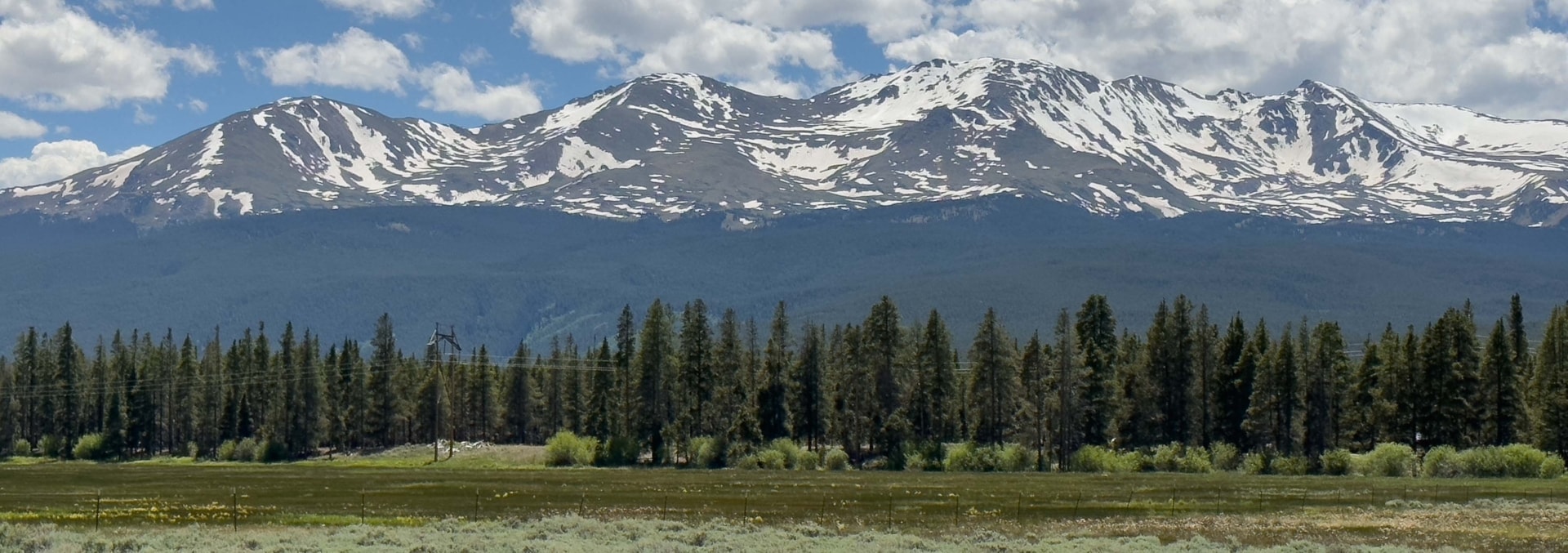
Located three miles west of Leadville and framed by dramatic views of Mt. Elbert and Mt. Massive, Lake Fork Ranch includes irrigated meadows, creek bottomland, and forested uplands served by numerous water rights. The property is one of the last large, intact, non-eased ranches near Leadville and offers year-round access via state and county roads.
The purchase was funded through Non-Simultaneous Exchange (NSE) proceeds—funds generated from prior trust-land dispositions that must be reinvested into new properties within two years. If NSE proceeds are not invested in real property within this timeframe, the funds are transferred to the Permanent Fund—an inviolate fund invested in financial instruments.
Building a Modern Land-Use Portfolio
The State Land Board will implement a phased business plan for Lake Fork Ranch through 2028, designed to engage multiple lines of business and with the goal of achieving recurring annual yields of 2 percent or greater, with the potential for outsized one-time returns through ecosystem-services projects. “This acquisition reflects the significant collaboration and analysis by our dedicated team working group that looked closely at how Lake Fork Ranch could strengthen our portfolio as a long-term asset,” said Matt LaFontaine, Acquisition and Disposition Manager for the State Land Board. “Our staff will continue to meet and develop the business plan for this property. I’m particularly proud to add a property that not only fits our investment strategy, but will also generate future opportunities for the schoolchildren of Colorado—the ultimate beneficiaries of every decision we make.”
Potential future initiatives on the property include:
Mitigation Banking: Lake Fork Ranch has strong potential for ecosystem services projects and associated revenue. In particular, the west side of the property contains significant riparian area and wetland soils.
Soil Carbon Sequestration: Staff believes that implementing a soil management carbon protocol can provide a reasonable income stream.
Biodiversity Voluntary Market Project: The property has the potential to generate biodiversity credits and soil carbon credits, due in part to the property’s two fens and several areas of high priority wildlife habitat.
Agritourism-Ecotourism and Short-term Rentals: Agritourism/ecotourism is an increasingly desirable recreation opportunity. The existing residential structures can provide a nucleus, and select development of a few small cabins and a two-unit bathhouse would ideally position the property for this use.
Traditional Recreation: One of the property’s greatest natural resources is Lake Fork Creek. A rod-fee based fishing lease on the creek to outfitters would be easy to implement in the Board’s first year of ownership. In addition, Staff believes that a small campground could be ideally located on the north side of the property.
Water Development: Lake Fork Ranch benefits from numerous water rights. There are potential leasing opportunities for the rights including for the irrigation of the property to produce hay.
Cultural Resource Preservation: The property’s historic ranch structures, including improvements dating to the 19th century, add cultural depth to its natural and financial value. Their restoration could support heritage tourism, interpretive programming, or similar offerings, complementing recreation and agritourism uses. Staff will assess the feasibility of these efforts.
Initial capital improvements—estimated at $2 to $3 million—could address infrastructure needs and position the property for these new revenue streams. Staff will return to the Board in the future to request expenditure authorization once project scopes are finalized.
A Smart Investment in Colorado’s Future
Through thoughtful management, Lake Fork Ranch will serve as an example of how working lands can produce income for Colorado’s public schools while simultaneously advancing the State’s broader goals for recreation, biodiversity, and water conservation.
“From wetland restoration to fishing access, Lake Fork Ranch gives us a living laboratory for nature-based enterprise,” said Eliot Hoyt, Assistant Director for Sustainability and Working Lands. “It’s part of our commitment to generate dependable revenue while protecting the landscapes that define Colorado.”
Future investments in habitat restoration and wetland protection will not only enhance the property’s long-term value, but also position the State Land Board for participation in emerging conservation markets that reward landowners for measurable ecological outcomes. Meanwhile, continued agricultural use and carefully planned recreation access will ensure that the ranch remains an active and productive part of the local economy.
