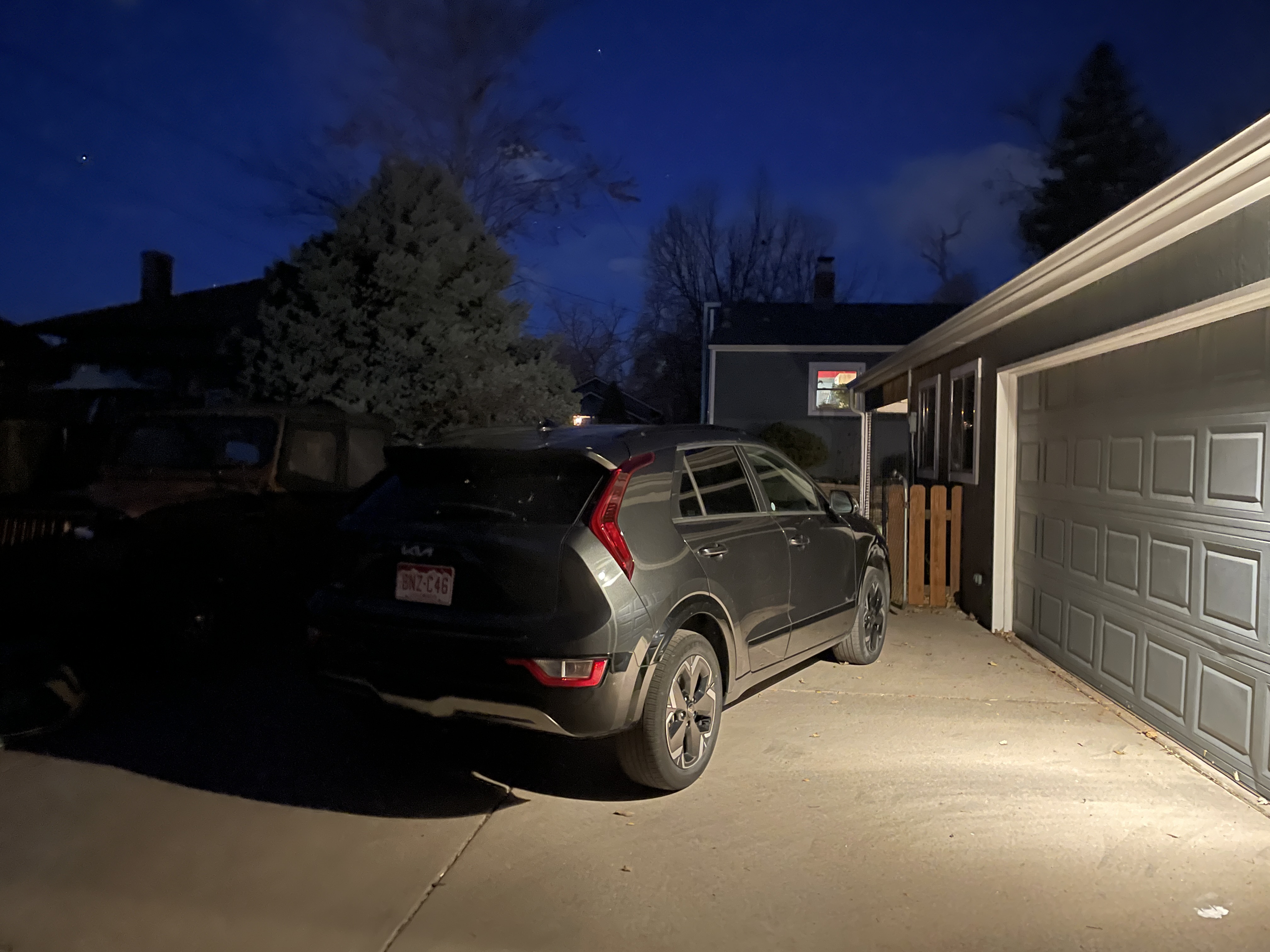
I’m heading out to celebrate Thanksgiving with Hellchild and her husband. The Kia Niro is a rental from Avis. I had a bit of time to drive it around yesterday and I approve. DC Fast Charging with a CCCS1 adapter.

I’m heading out to celebrate Thanksgiving with Hellchild and her husband. The Kia Niro is a rental from Avis. I had a bit of time to drive it around yesterday and I approve. DC Fast Charging with a CCCS1 adapter.
Click the link to read the briefing on the Western Water Assessment website:
November 10, 2025 – CO, UT, WY
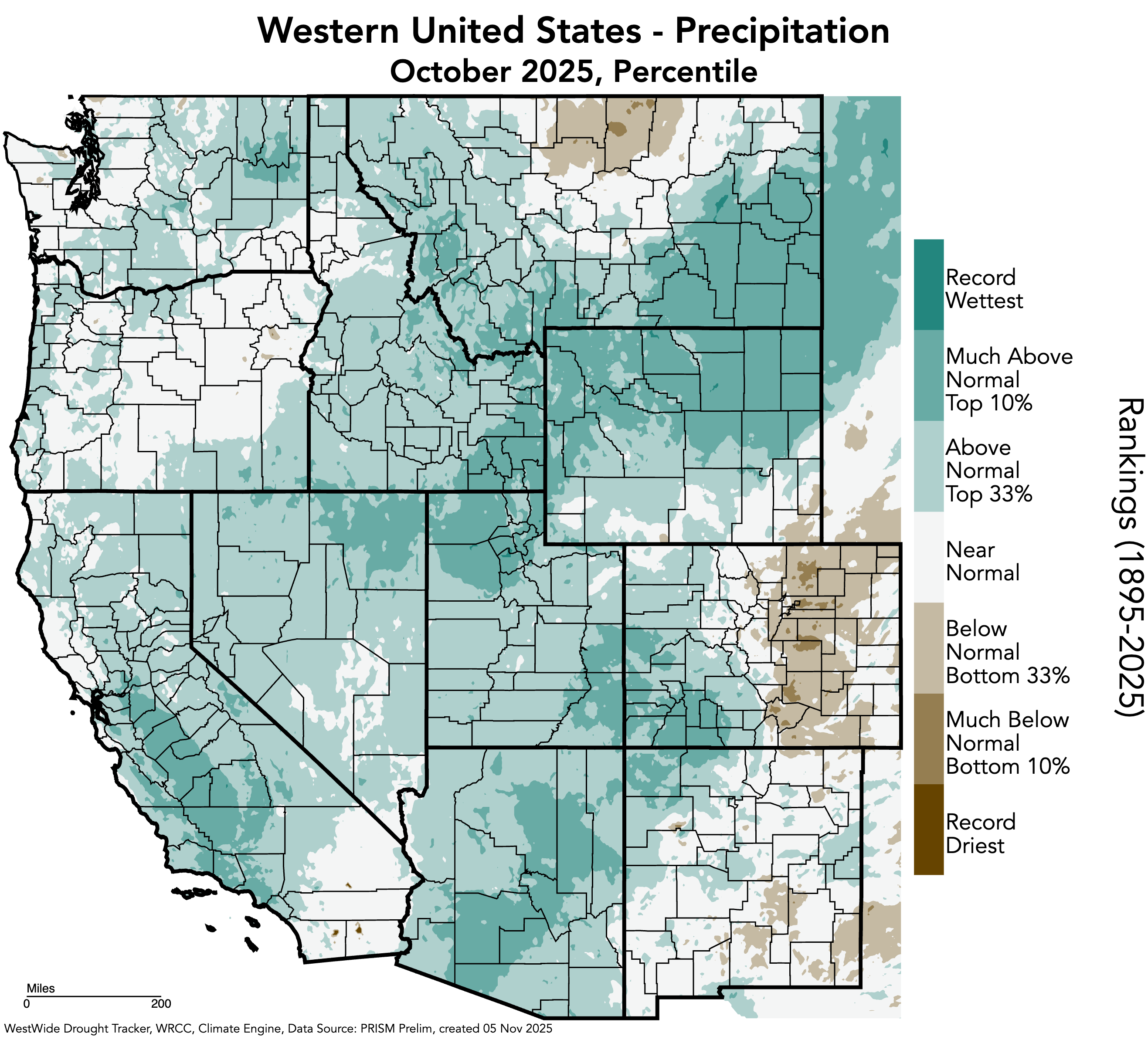
Much of the region received above average October precipitation, except for eastern Colorado and southeastern Wyoming where below average precipitation fell. October temperatures were near to above normal throughout the region. Regional snow-water equivalent (SWE) was variable, with statewide SWE levels at 0.3 inches in Colorado, 0.3 inches in Utah, and 0.9 inches in Wyoming as of November 1. By the end of October, regional drought coverage was 51%, a 10% improvement since the end of September. Streamflow conditions were generally near normal in Colorado and Wyoming, and below normal in Utah, with the highest streamflow conditions seen in southwestern Colorado. La Niña conditions continued during October and will likely shift to ENSO-neutral conditions by late winter. The NOAA seasonal outlook for November-January suggests an increased probability of above average precipitation for northern Wyoming, and above average temperatures in Colorado, Utah, and southern Wyoming.
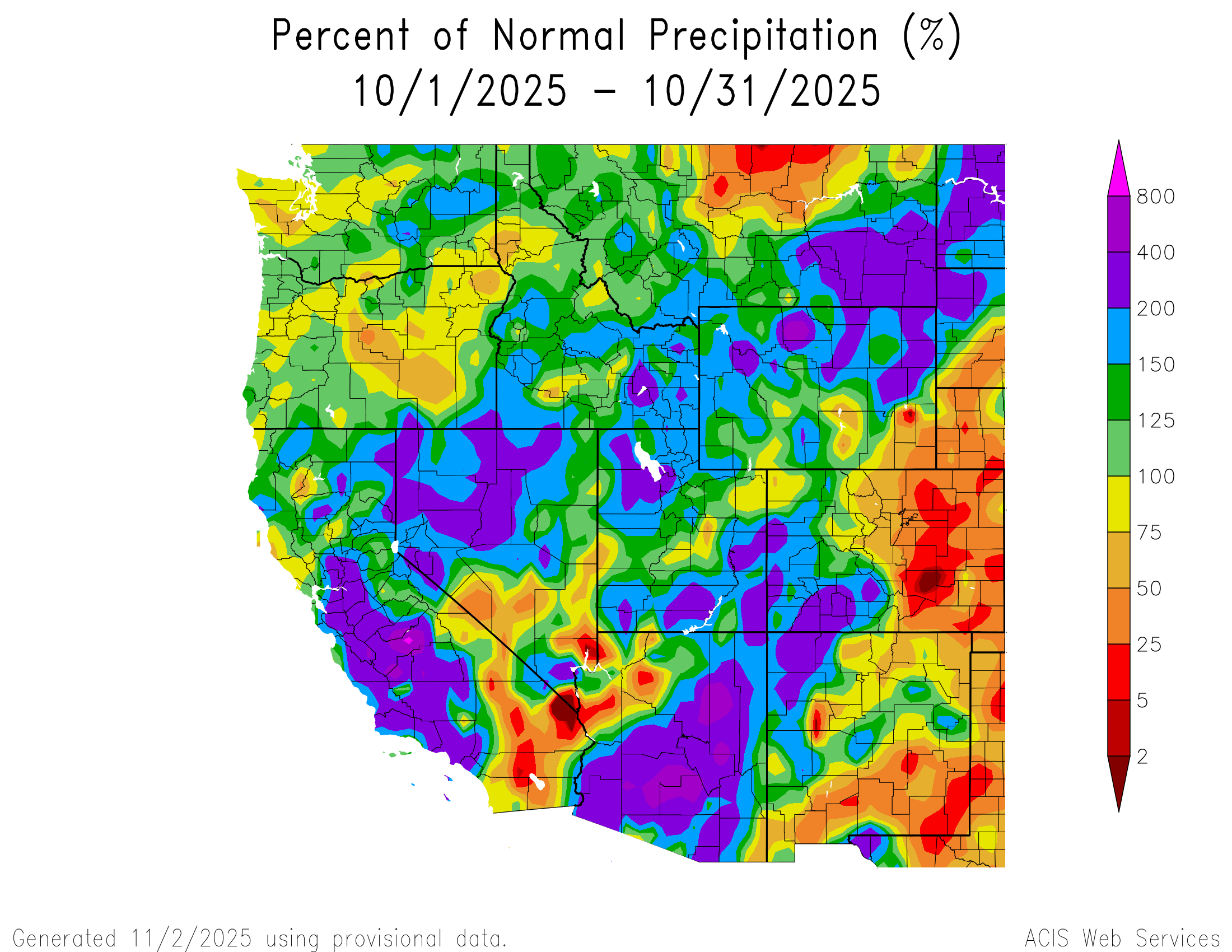
Utah, most of Wyoming, and western Colorado received above to much above average precipitation during October. Large areas of the region received 150-200% of normal precipitation, with some locations in northern Utah, southeastern Utah, northern Wyoming, and southwestern Colorado receiving 200-400% of normal precipitation. One pocket of 400-800% of normal precipitation was observed in Big Horn County in northern Wyoming. A rainfall event in Salt Lake City, UT on October 4 nearly broke the all-time daily rainfall record of 2.64” when 2.47” fell. In contrast, the majority of eastern Colorado experienced 25-50% of normal precipitation, with a swath of 5-25% of normal precipitation along the Front Range and eastern slope, from Weld County in the north to Las Animas County in the south. One pocket of 2% or less of normal precipitation occurred in Pueblo County in southern Colorado.
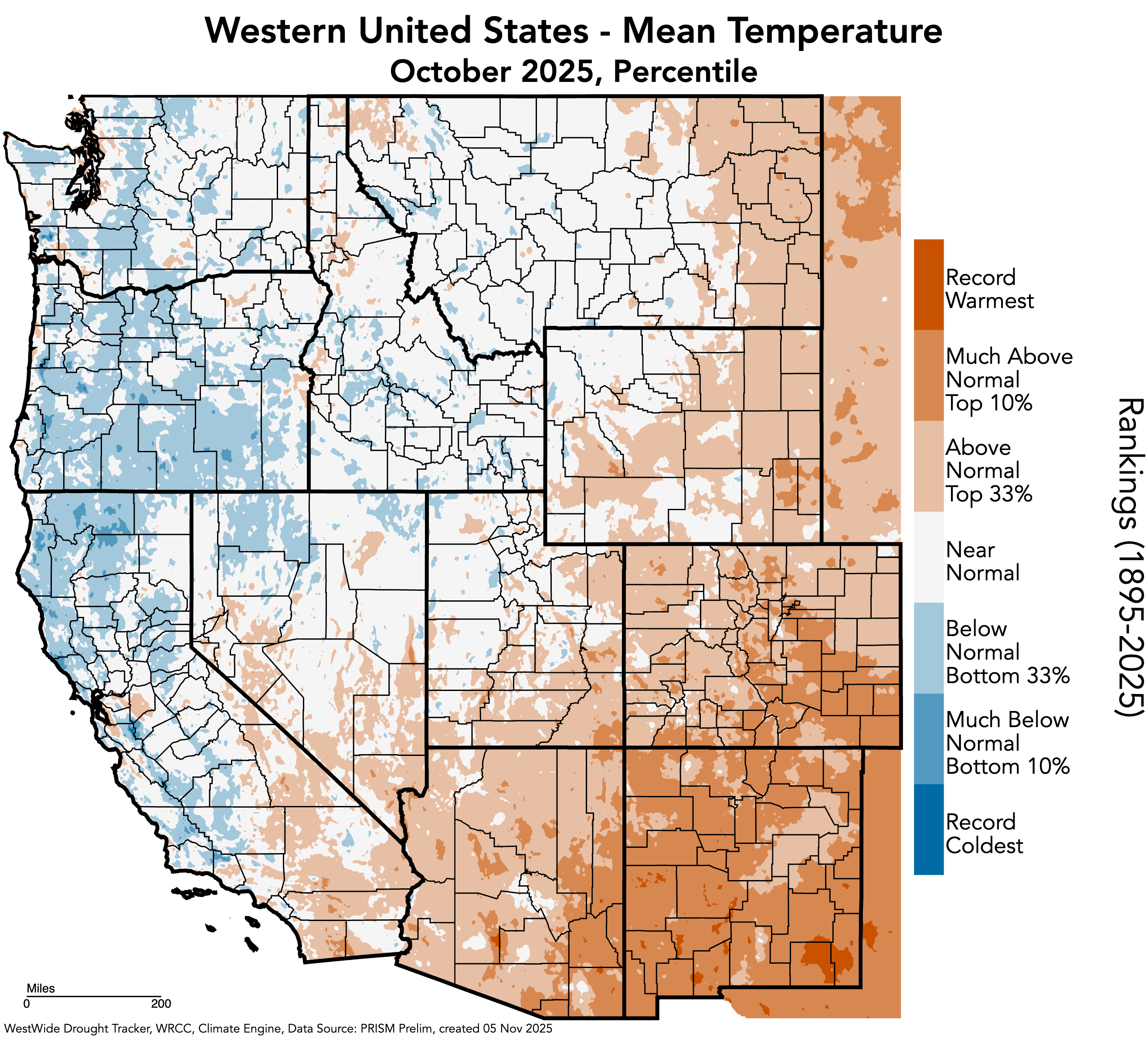
Regional temperatures were near to above normal in October. Temperatures were 2-4°F above normal throughout most of Colorado, Wyoming, and eastern Utah, with scattered pockets of 4-6°F above normal temperatures throughout. A swath of 4-6°F above normal temperatures occurred in southeastern Colorado, with a pocket of 6-8°F above normal temperatures in Cheyenne and Kiowa Counties. The majority of western Utah experienced near normal temperatures.

As of November 1, snow-water equivalent (SWE) was variable across the region. SWE was much below normal for Colorado, from 46% of normal SWE in the Upper Colorado-Dolores basin to as low as 24% of normal SWE in the Upper San Juan basin. SWE was much above normal in the Cheyenne (167%) and Belle Fourche (167%) basins in Wyoming. Basins with above normal SWE include the Powder (132%) in Wyoming, and the Lower Colorado-Lake Mead (127%) and Lower Bear (121%) in Utah. Basins with below normal SWE include the Tongue (63%) and North Platte (51%) in Wyoming, and the Escalante Desert-Sevier Lake (69%) and Upper Colorado-Dirty Devil (50%) in Utah. Statewide SWE levels are 0.3 inches in Colorado, 0.3 inches in Utah, and 0.9 inches in Wyoming.
Note: Current SWE as a percent of normal maps are often skewed at this time of year due to the very low average SWE this early in the season.
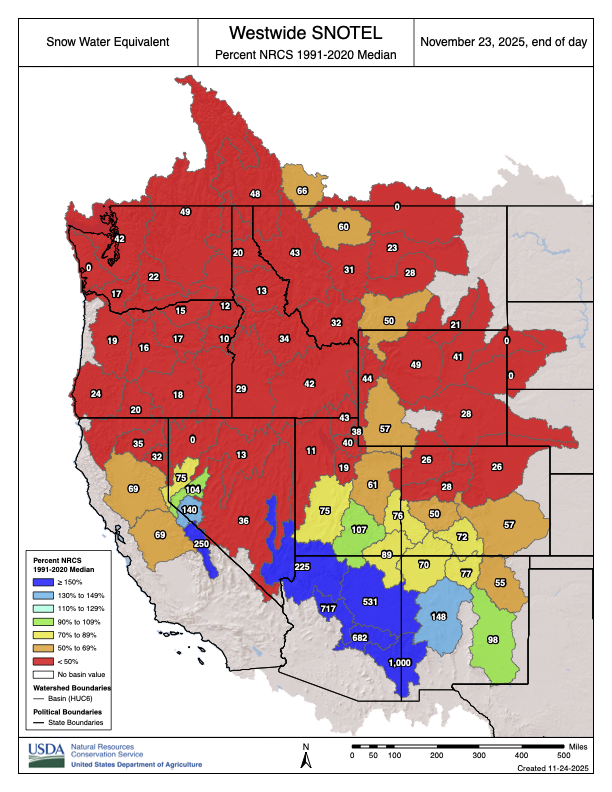
Regional drought conditions significantly improved during October. By October 28, regional drought coverage was 51%, a 10% improvement since the end of September. Moderate (D1) drought coverage decreased by 16% in Colorado, 6% in Utah, and 6% in Wyoming. Severe (D2) drought coverage decreased by 22% in Colorado, 32% in Utah, and 5% in Wyoming. Extreme (D3) drought coverage decreased by 13% in Colorado, 10% in Utah, and 8% in Wyoming. The most significant improvement in drought conditions occurred in southwestern Colorado, with a 2 to 3 class improvement.
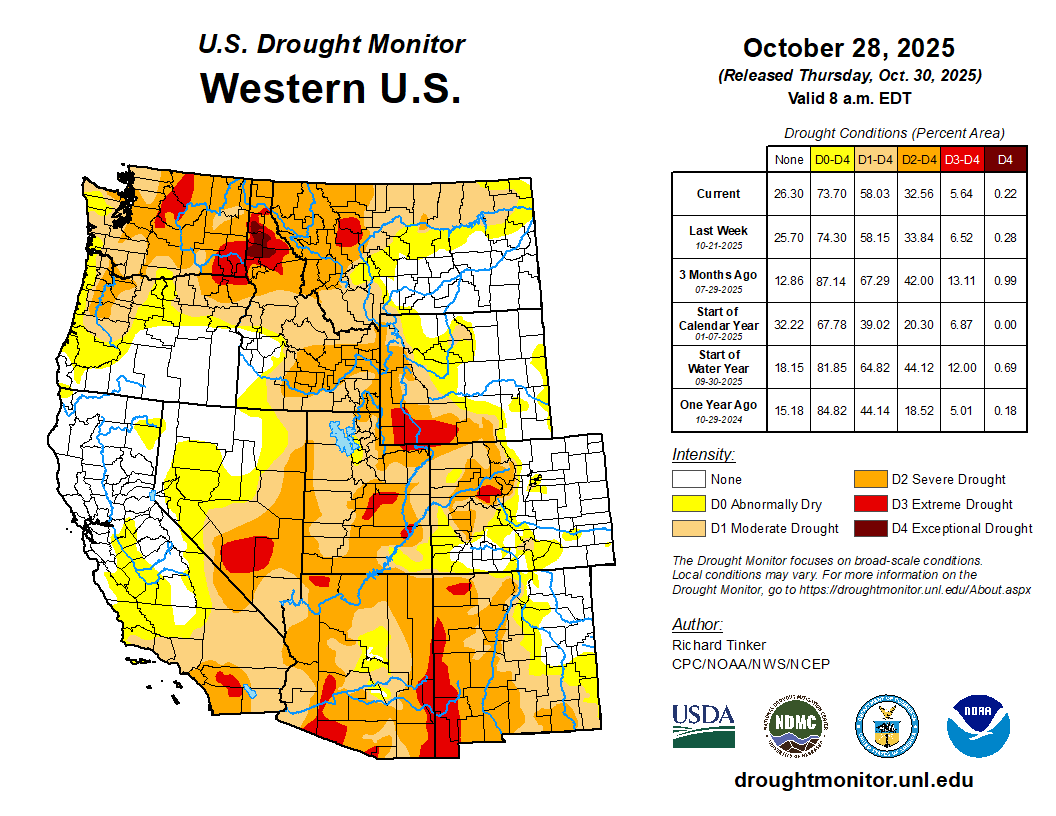

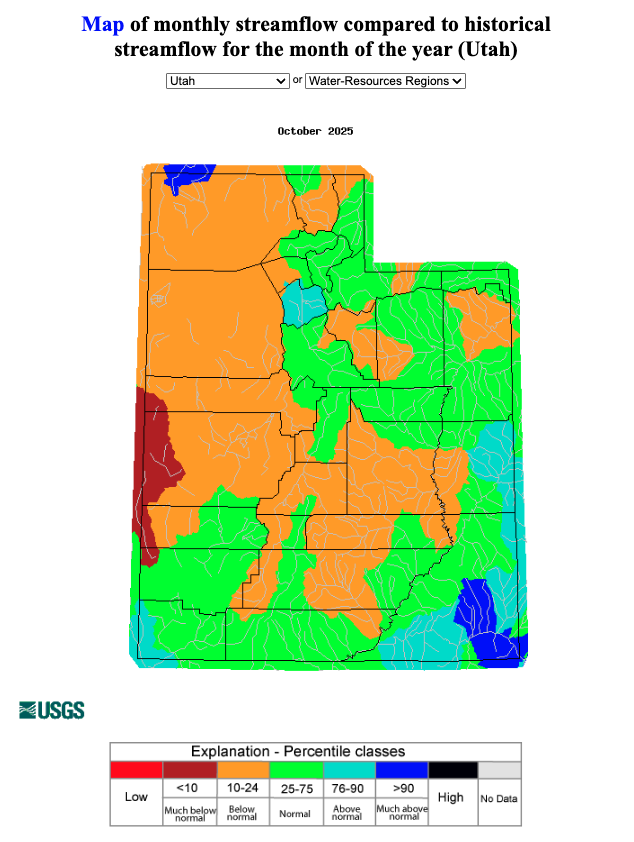
Regional streamflow conditions were generally near normal in Colorado and Wyoming, and below normal in Utah. Much below normal streamflow conditions occurred in the North Fork Gunnison River basin in western Colorado, the Hamlin-Snake Valleys River basin in western Utah, and the Madison River basin in northwestern Wyoming. However, some regional basins experienced above to much above normal streamflow conditions, particularly in southwestern Colorado and southeastern Utah. Much above normal streamflow conditions occurred in the San Miguel, Animas, and Upper San Juan River basins in southwestern Colorado, the Lower San Juan-Four Corners River basin in southeastern Utah and Raft River basin in northern Utah, and the Angostura Reservoir region of the Cheyenne River basin in eastern Wyoming. The Piedra River basin in southwestern Colorado experienced streamflow conditions in the highest percentile.


La Niña conditions continued in October and are expected to persist through early winter, followed by a 55% probability of returning to ENSO-neutral conditions by late winter. The NOAA Monthly Precipitation Outlook suggests an increased probability of below average precipitation for Colorado, Utah, and southern Wyoming in November. The NOAA Monthly Temperature Outlook suggests an increased probability of above average temperatures for the entire region in November. The NOAA Seasonal Precipitation Outlook for November-January suggests an increased probability of above average precipitation in northern Wyoming and part of northern Utah, and below average precipitation in southwestern Colorado and southeastern Utah. The NOAA Seasonal Temperature Outlook for November-January suggests an increased probability of above average temperatures in Colorado, Utah, and southern Wyoming.


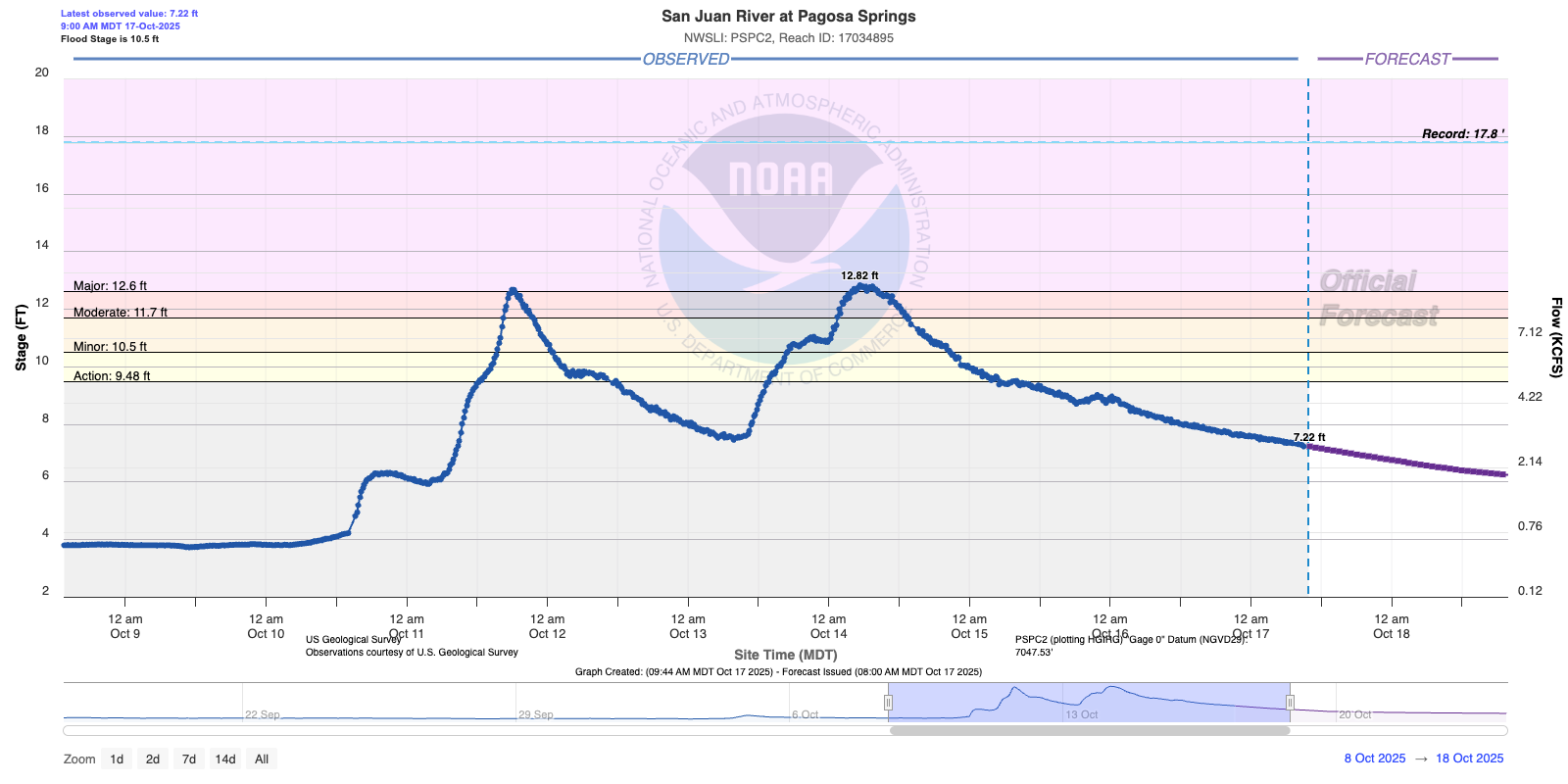
Significant weather event: Flooding in southwestern Colorado. WWA produced a rapid assessment of the flooding in southwestern Colorado from October 10th-14th to serve as a scientific resource for understanding the drivers and impacts of the flooding events. The report is designed to support local resilience-building efforts and hazard planning for communities in the region. It provides the long-term and recent historical context for the flooding, hydrologic characteristics of the flood event, and an assessment of the local probability of an event of this magnitude.
Key Findings:
- The October 10th-14th, 2025 floods were the 3rd largest on record for Pagosa Springs, CO, with river levels reaching a maximum gauge height of 12.82 feet and peak flow rates of 8,570 cubic feet per second.
- A total of 12.5 inches of precipitation fell at a high-elevation observation site in the watershed over 5 days, saturating the watershed and driving the river to reach Major Flood stage twice in that period.
- Flood frequency analysis based on historical observations of runoff in Pagosa Springs suggests this flood has a return period of 25 to 40 years, meaning that there is a 2.5-4% likelihood of a flood of similar magnitude occurring in any given year.
- Early reports following the flooding suggest that hundreds of residents and households were evacuated in Pagosa Springs and surrounding rural communities and many structures were damaged or destroyed by the floods including homes, bridges, and roadways.
- Nearly two decades of exposure to drought conditions, increasing wildfire activity, and now the recent flooding collectively highlight the geographically unique and increasingly frequent natural hazard risks that rural mountain communities face in southwest Colorado.
Learn more: https://wwa.colorado.edu/resources/hazard-assessments
Click the link to read the article on the Big Pivots website (Allen Best):
November 21, 2025
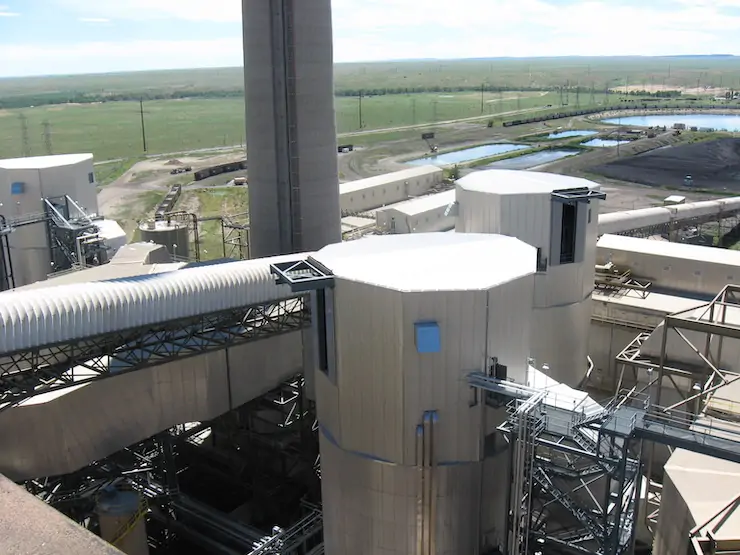
Comanche 3, the trouble-plagued coal-fired power plant in Pueblo, went down on Aug. 12. Xcel Energy, the unit’s operator and primary owner, says it can’t be restored to service until June 2026.
This will be the third extended outage since 2020 for the coal plant, Colorado’s largest and newest unit.
Might the best thing for Xcel’s customers be if the plant remained dormant? Don’t try to repair it, whatever is wrong this time. Instead, save the money and just continue operating the much older and more reliable — but soon to be retired — Comanche 2?
Several environmental groups have advanced that idea in response to a proposal by Xcel and three state agencies to keep Comanche 2 operating for a full year beyond its current planned retirement at the end of December.
That plan on the table would leave both coal-burning units operating in the second half of 2026, point out the Sierra Club and Natural Resources Defense Council. They would provide more power than needed and will also generate pollution at levels greater than acceptable.
Western Resource Advocates, the City of Boulder and others have similar things to say. They also embrace an alternative plan. That plan would have the state’s Public Utilities Commission give Comanche 3 a hard look in coming months instead of waiting until next summer.
“The question must be asked whether any further reliance on Comanche at this juncture is prudent,” says Boulder in its filing with the PUC yesterday. “Ratepayers continue to bear the consequences of (Xcel subsidiary) Public Service’s failings when it comes to Comanche 3. At some point, the bleeding must stop.”
In asking to keep the plant open, Xcel insists that it is vulnerable to having too little generating capacity. It is at risk of having resource inadequacy. The basics of any utility are to keep the lights on, with only rare outages. The environmental groups do not disagree, but they do question whether Xcel — in concert with a trio of state agencies — have over-stated the case.
Western Resource Advocates also questions what is causing the “resource adequacy” about which Xcel has been fretting.
“The proposed extension to the retirement of Comanche 2 and the unplanned, extended outage of Comanche 3 represent extreme circumstances that may result in tens of millions of dollars in unexpected cost and increased emissions above levels previously expected,” the Boulder-based WRA says in a filing with the PUC.
“Further, the proposed variance calls into question whether the company has strained its resource capacity position — at the expense of all existing customers — by soliciting and accepting new large-load interconnections.”
Large loads are commonly understood to consist mostly of data centers.
Pueblo County, along with the city and economic development group there, take a contrary point of view. They want to see the coal plants operating without question. They insist that the coal-fired power production from both units will be needed to power the steel mill in Pueblo. The plant is formally called Rocky Mountain Steel.
That’s partly accurate. However, the steel plant in 2023 went on-line with the Bighorn Solar Project, which has a capacity of 300 megawatts and can, on a net-basis, deliver almost all the electricity needed at the steel plant. The steel plant also operates when the sun does not shine, of course.
As part of their long-standing complaint, the Pueblo interests say that they badly need the coal jobs at Comanche. “Approximately one out of every four residents receive SNAP benefits compared to the state average of one in 10,” says Pueblo.
In 2018, Xcel and other parties at the negotiating table agreed that Comanche 2 would be retired by the end of 2025. The PUC commissioners stamped their approval on the agreement. That agreement assumed more or less steady operations of Comanche 3. The assumption was misguided.
Comanche 3 was down for an average 91 days each year during its first decade. Then came 2020, an outage that extended about a year and into 2021. Another outage soon followed. A 2021 PUC staff report found that the actual cost of energy from Comanche 3 had been nearly 50% higher than expected when the unit was proposed almost 20 years before.
The proposal has the backing of the Polis administration, including the Colorado Energy Office, the Office of the Utility Consumer Advocate, and the PUC trial staff. The petition with the PUC was filed Nov. 10 by Attorney General Phil Weiser.
The petitioners said that keeping Comanche 2 operating for a year was the “most cost-effective approach to providing needed electricity for the system” as identified by Xcel.
Given the outage of Comanche 3, say the environmental groups, they do not object to Comanche 2 remaining open for a year longer. They do, however, see problems with the proposal by Xcel.
First, the solution is “far broader than the problem it tries to solve,” says the Sierra Club and NRDC. If both Comanche 2 and 3 are operating, they will produce more power — and pollution — than had been planned.
They also point to a “glaring contraction” in the petition by Xcel and the state agencies. They see an imminent need to justify continued operation of Comanche 2 yet propose to delay starting a litigated proceeding at the PUC until next June to investigate all options for dealing with a near-term need.
This is getting the cart before the horse, they say. “Given the long history of forced outages at Comanche 3, its repeated cost overruns, and the fact that it is already slated to retire by 2031,” the PUC commissioners should weigh in before Xcel decides whether to repair Comanche 3.
The alternative plan advocated by the environmental community would keep Comanche 2 operating for a full year — but place limits on the operations of the unit coupled with that of Comanche 3, whenever it returns to service. “This allows the same total amount of generation from the two units as if Comanche 3 were available for all of 2026.”

Click the link to read the article on the Steamboat Pilot & Today website (Suzie Romig). Here’s an excerpt:
November 22, 2025
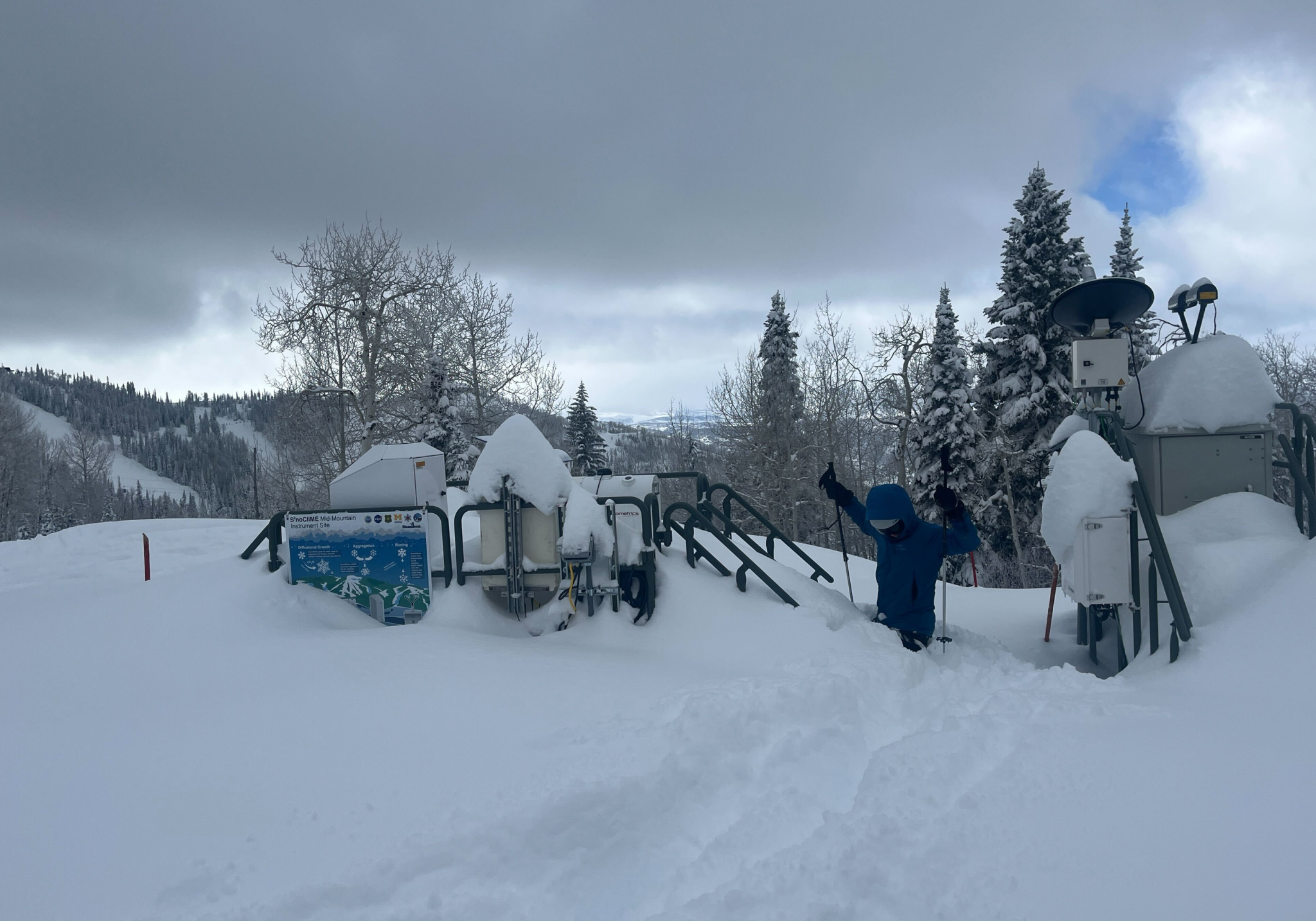
Changing snowpack trends in the West are bringing more variability to snow conditions and more moisture to the snowpack, threatening the future number of light and fluffy powder days. Increasing variability was the predominant message from a panel of snow experts during the presentation “Stories of a Changing Snowpack” hosted by nonprofit Yampatika on Nov. 13 in Steamboat. The panel, including representatives from the Storm Peak Laboratory and Airborne Snow Observatories, presented in-depth data and answered audience questions about how changing weather and climate conditions are affecting snowfall and snowpack impact to recreation and water supplies in northwest Colorado.
“We are seeing earlier snowmelts, heavier snow, more variability,” said Atmospheric Science Professor Gannet Hallar, Ph.D., who directs the Storm Peak Lab which sits atop the Steamboat Resort.
Hallar said across the Western states, scientists are confirming decreases in snow-water equivalent, according to measurements taken April 1, increasing spring temperatures and dust — factors that cause snow to melt. She explained the snowflake formation science behind how even small increases in winter temperatures can make a large difference in snow quality…Earlier spring runoff, hydrograph changes and increased variability of snowpack creates challenges for everything from sufficient river flows for endangered fish species to the timing of reservoir releases to agricultural irrigation, Burchenal said. Hallar said dust on snow measurements and understanding how dust on snow impacts melt timing is important because some scientists have documented that a large dust storm may lead to a 10- to 14-day earlier snow melt off…Allen and Hallar discussed the value of snowmaking additives such as Snomax, made from a protein derived from a naturally occurring microbe, used to provide nuclei for artificial snow making.
“This allows more significant volumes of snow to be produced at lower temperatures, with less water and energy.” according to the website for Snomax International. “This substantially increases the efficiency of the snow-making system, while at the same time delivering a consistent snow quality even during the most extreme temperature fluctuations.”