Dancing with Deadpool on #NewMexico’s Middle #RioGrande — John Fleck (InkStain.net)

Dancing with Deadpool.

Click the link to read the article on the InkStain website (John Fleck):

April 4, 2025

We are heading into a remarkable year on New Mexico’s Middle Rio Grande. Here are some critical factors:

  1. The preliminary April 1 forecast from the NRCS is for 27 percent of median April – July runoff at Otowi, the key measurement gage for New Mexico’s Middle Rio Grande.
  2. Current reservoir storage above us is basically nothing.
  3. Reclamation’s most recent forecast model runs suggest flow through Albuquerque peaked in February. It usually peaks in May.

We will learn a great deal this year.

What I’m Watching

New Mexico water projects map via Reclamation

City Water

At last night’s meeting of the Albuquerque Bernalillo County Water Utility Authority’s Technical Customer Advisory Committee, water rights manager Diane Agnew said the utility is planning to shut down its river diversions, shifting system operations to groundwater, by the end of April. Albuquerque invested ~half a billion dollars in its river diversion system, in order to make direct use of our San Juan-Chama Project water, to relieve pressure on the aquifer. This will be the fifth year in a row that Rio Grande flows have been so low that we can’t use the new system for a substantial part of the year.

(For the nerds, Diane’s incredibly useful slides from last night’s TCAC meeting are here, the 4/3/2025 agenda packet.)

We have groundwater. My taps will still run, and I’ll be able to water my yard. But we’ll once again be putting stress on the aquifer that we’ve been trying to rest, to set aside as a safety reserve for the future. Is that future already here?

Reclamation operates pumps to move water from the Low Flow Conveyance Channel into the Rio Grande. The LFCC acts as a drain for the lower part of the Middle Rio Grande.

Irrigation

Middle Rio Grande Conservancy District irrigators who depend on ditch water are going to have a tough year, with supplies running short very early. The impacts here are a little weird.

Most of the relatively small number of the non-Indian full-on commercial farmers have supplemental wells. Smaller operators, who farm as a second income, will have to rely on their first income, whatever that is, and hope for some monsoon rains to get more cuttings of hay. Lots of hobby farmers will just run their domestic wells, or buy hay for their horses from out of state.

Native American farming is a more complicated story that I don’t fully understand. State and federal law recognize the fact that they were here first – we really do kinda comply with the doctrine of prior appropriation here. Their priority rights – “prior and paramount” – were enshrined in federal law in the 1928 act of Congress that kicked in federal money through the predecessor of the Bureau of Indian Affairs – crucial money to get construction of the Middle Rio Grande Conservancy District started when no one else – neither the rest of the federal government, nor the bond market – was willing to pony up the money. (Buy our new book Ribbons of Green, as soon as UNM Press publishes it! It includes a deep dive into the critical role of the Pueblos in supporting the formation and early funding of the MRGCD, without which there likely would be no MRGCD.)

Is there a way to set aside some prior and paramount water for Pueblo farmers this year to keep their fields green?

Side channels were excavated by the Bureau of Reclamation along the Rio Grande where it passes through the Rhodes’ property to provide habitat for the endangered silvery minnow. (Dustin Armstrong/U.S. Bureau Of Reclamation)

River Drying

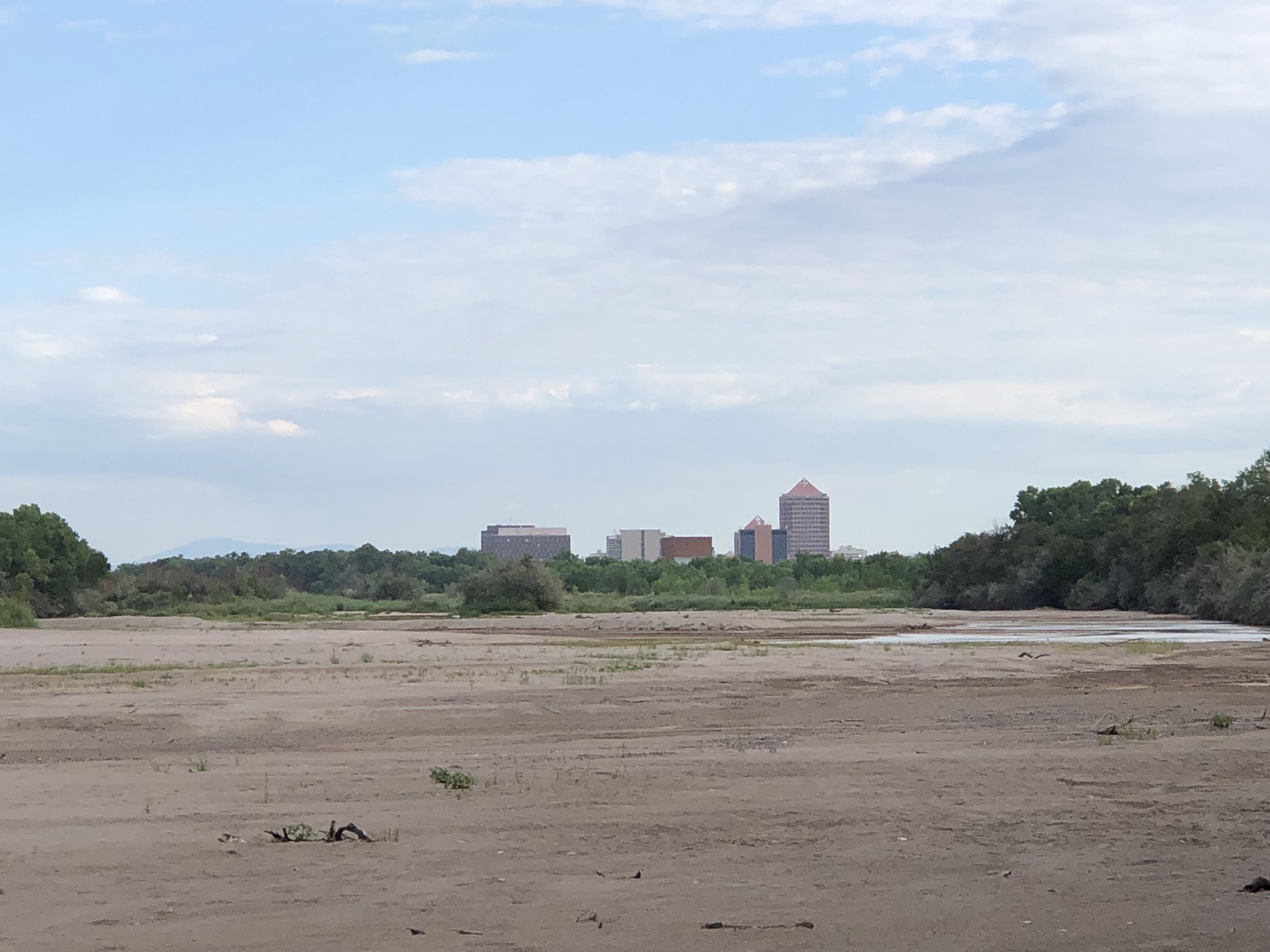
The Rio Grande through Albuquerque will go dry, or nearly so, in a way we haven’t seen since the early 1980s. That means a very tough year for the endangered Rio Grande silvery minnow. We’re testing the boundaries of the definition of “extinction”. (To understand the minnow story, I again commend you to my Utton Center colleague Rin Tara’s terrific look at the minnow past and future.)

Do people care, either about the minnow or the river itself? We’ll find out!
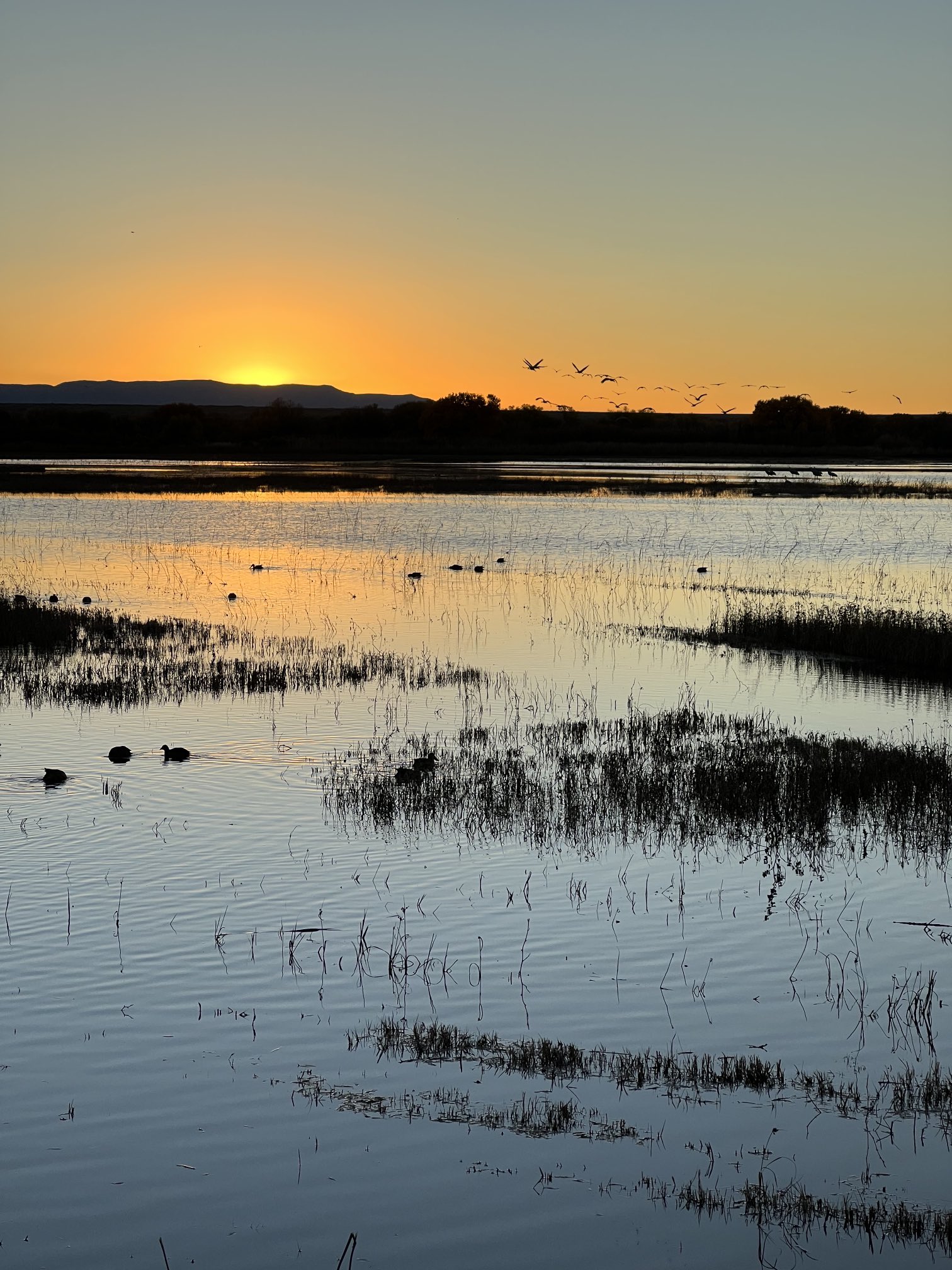
Birds and water at Bosque de Apache New Mexico November 9, 2022. Photo credit: Abby Burk

Bosque

Our riverside woods, a ribbon of cottonwood gallery forest that took root in the mid-20th century between the levees built by the Bureau of Reclamation, will likely stay relatively green. The trees dip their roots into the shallow aquifer. As we’ve seen with the more routine river drying that happens every year to the south, the bosque muddles through.
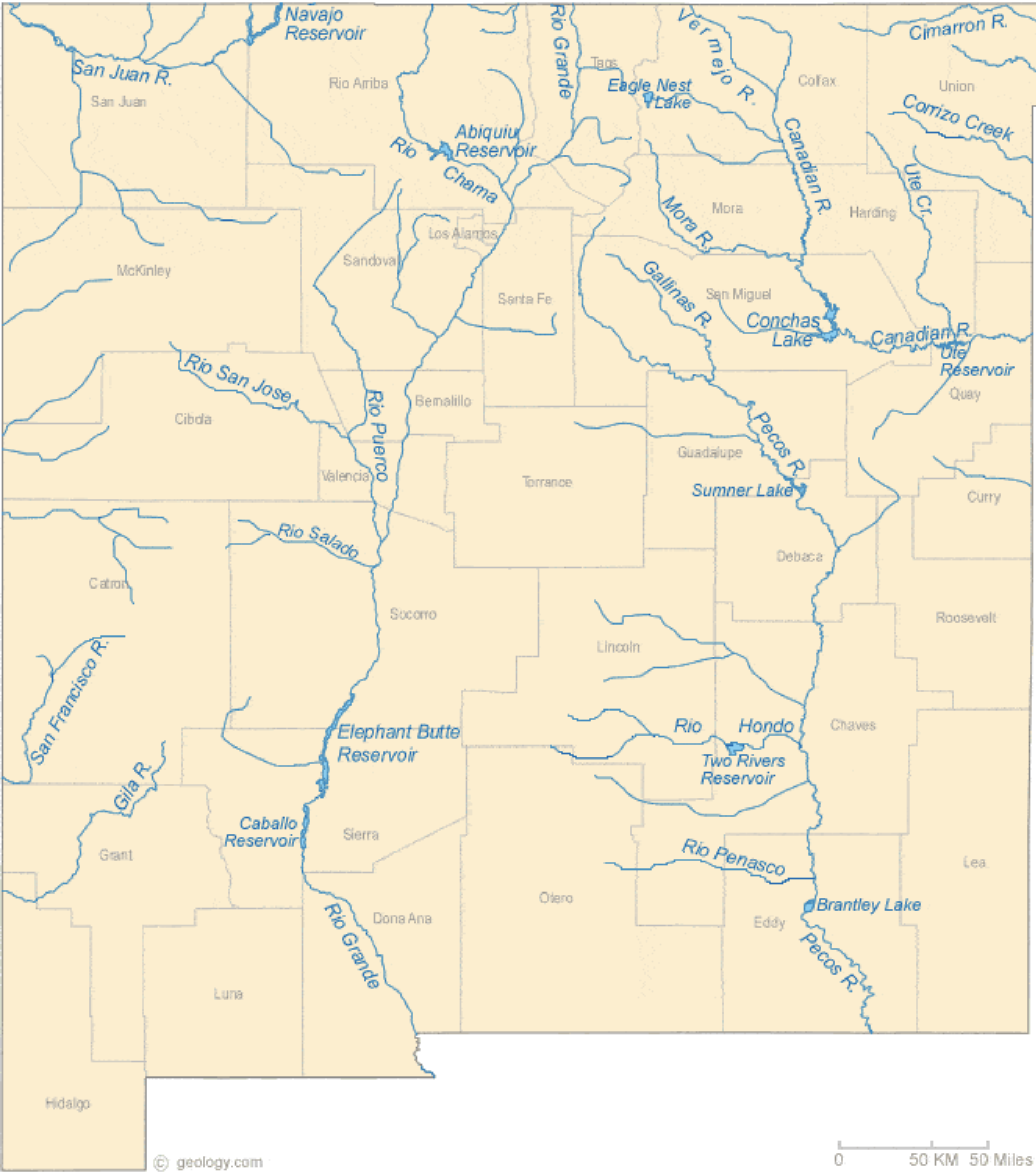
New Mexico Lakes, Rivers and Water Resources via Geology.com.

Messing w/ Maps: #ColoradoRiver Plumbing edition — Jonathan P. Thompson #COriver #aridification

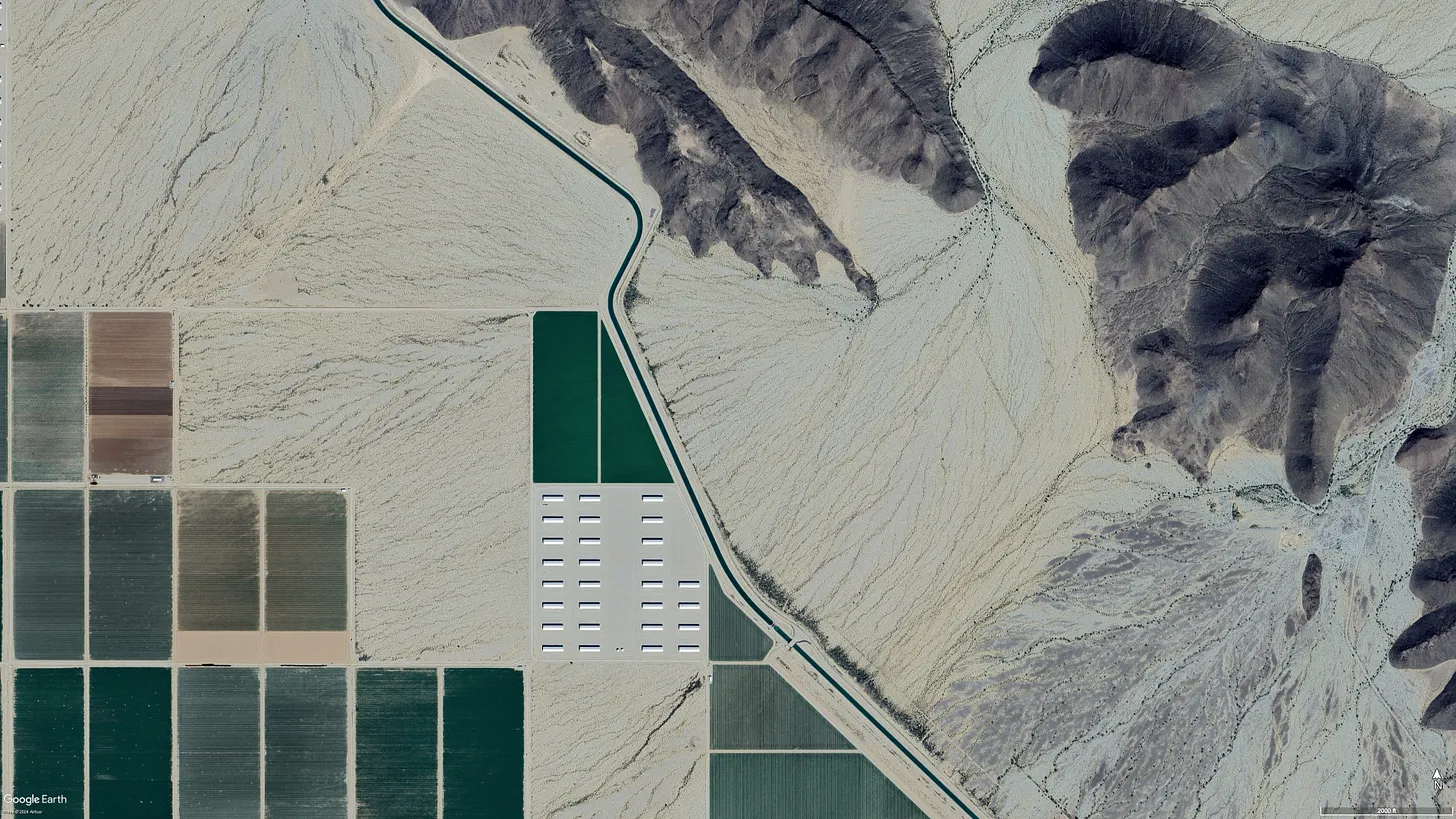
The Central Arizona Project canal passes alfalfa fields and feedlots in La Paz County, Arizona. The fields are irrigated with pumped groundwater, not CAP water. Source: Google Earth.

Click the link to read the article on The Land Desk website (Jonathan P. Thompson):

August 16, 2024

🗺️ Messing with Maps 🧭

Imagine that you’ve set off for a hike in the desert of western Arizona, hoping to get up high so you can get a view of the juxtaposition of alfalfa fields against the sere, rocky earth. But you somehow get disoriented, the sun reaches its apex and beats down on you, the temperature climbing into the triple digits. The ground temperature becomes so hot you can feel it through the soles of your Hoka running shoes. Your water bottle is empty. Feeling certain you are going to die you pick a direction and stagger in as straight a line as you can manage, rasping for help. And then, just when you’re about to curl up under a rock and surrender, you see, coming straight out of a hillside, a virtual river. It must be a mirage, you think, or a hallucination, you run toward it, climb the fence, and dive into the cool, deep water. 

This is not a fantasy scenario. There is, in fact, a place in the western Arizona desert where a lost traveler could stumble upon a giant canal emerging from the earth.

The Central Arizona Project’s Mark Wilmer pumping plant at Lake Havasu. The 14 plants on the CAP system push water across more than 300 miles with a vertical gain of 3,000 feet. Moving water requires enormous amounts of power, making the CAP the state’s largest single electricity user, with annual power bills totaling $60 million to $80 million. Source: Google Earth.
Central Arizona Project canal daylighting at the Buckskin Mountain Tunnel. Source: Google Earth
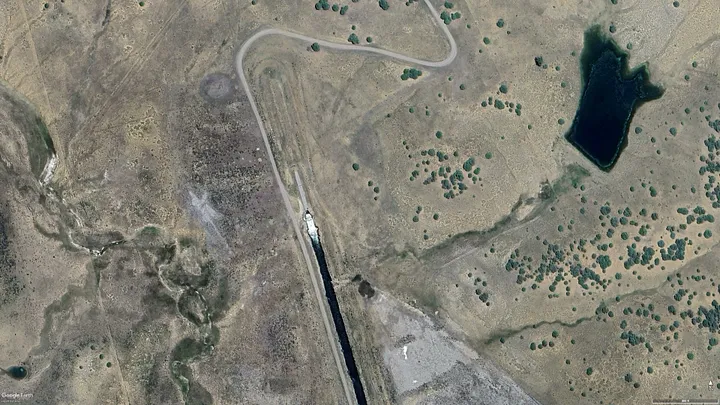
The outlet of the San Juan Chama Project runs into Willow Creek west of Los Ojos before running into Heron Lake. Source: Google Earth
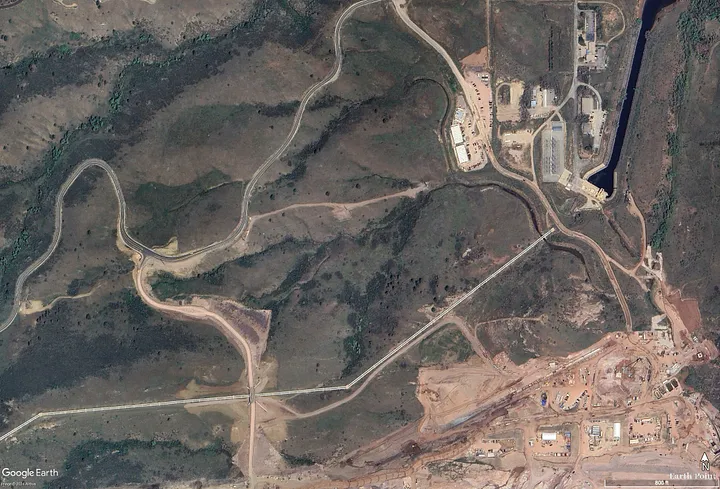
The Rio Blanco intake for the San Juan-Chama Project, which takes water from three upper San Juan River tributaries and ships it across the Continental Divide to the Chama River watershed and, ultimately, the Rio Grande. Source: Google Earth

It’s just one of the crazy plumbing projects along the Colorado River and its tributaries. And they can look pretty weird when you stumble upon them in remote places. That’s what happened to me the other day — virtually. I was using Google Earth to chart the 1776 Escalante-Dominguez expedition’s path when, near Chama, I came across a large volume of water emanating from an arid meadow. After some thought I realized it was the outlet for the San Juan-Chama Project that diverts about 90,000 acre-feet of water annually from three tributaries of the San Juan River, sends it through the Continental Divide via a tunnel, and delivers it to Willow Creek and Heron Reservoir. From there it can be released into the Chama River, which runs into the Rio Grande, which is used by Albuquerque and Santa Fe to supplement groundwater and the shrinking Rio Grande.

The Big Thompson Project sucks water out of the Colorado River near its headwaters and siphons it through the mountains via the Alva Adams Tunnel. The water feeds reservoirs that feed Front Range cities and is used to generate hydropower. Adams tunnel inlet at Grand Lake. Source: Google Earth
The Big Thompson Project sucks water out of the Colorado River near its headwaters and siphons it through the mountains via the Alva Adams Tunnel. The water feeds reservoirs that feed Front Range cities and is used to generate hydropower. Penstocks and powerplant at Flatiron reservoir on the right. Source: Google Earth

These things aren’t only unsettling in a visual way, but in a conceptual way as well. One would expect cities and agricultural zones to rise up around where the water is and to grow according to how much water is locally available. Instead, cities rise up in places of limited water and grow as if there were no limits, importing water (and power and other resources) from far away. 

The Julian Hinds pumping station, near Desert Center, California, lifts water from the Colorado River Aqueduct 441 feet as it makes its way toward Los Angeles. Source: Google Earth
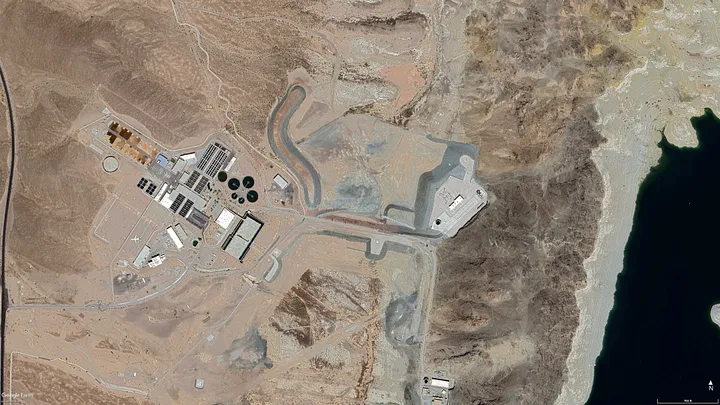
The Southern Nevada Water Authority was forced to build a third water intake from Lake Mead that was able to draw water as the reservoir continued to shrink. The pumping plant is pictured. Source: Google Earth

Six tribal water rights settlements for #NewMexico heard on Capitol Hill — Source NM

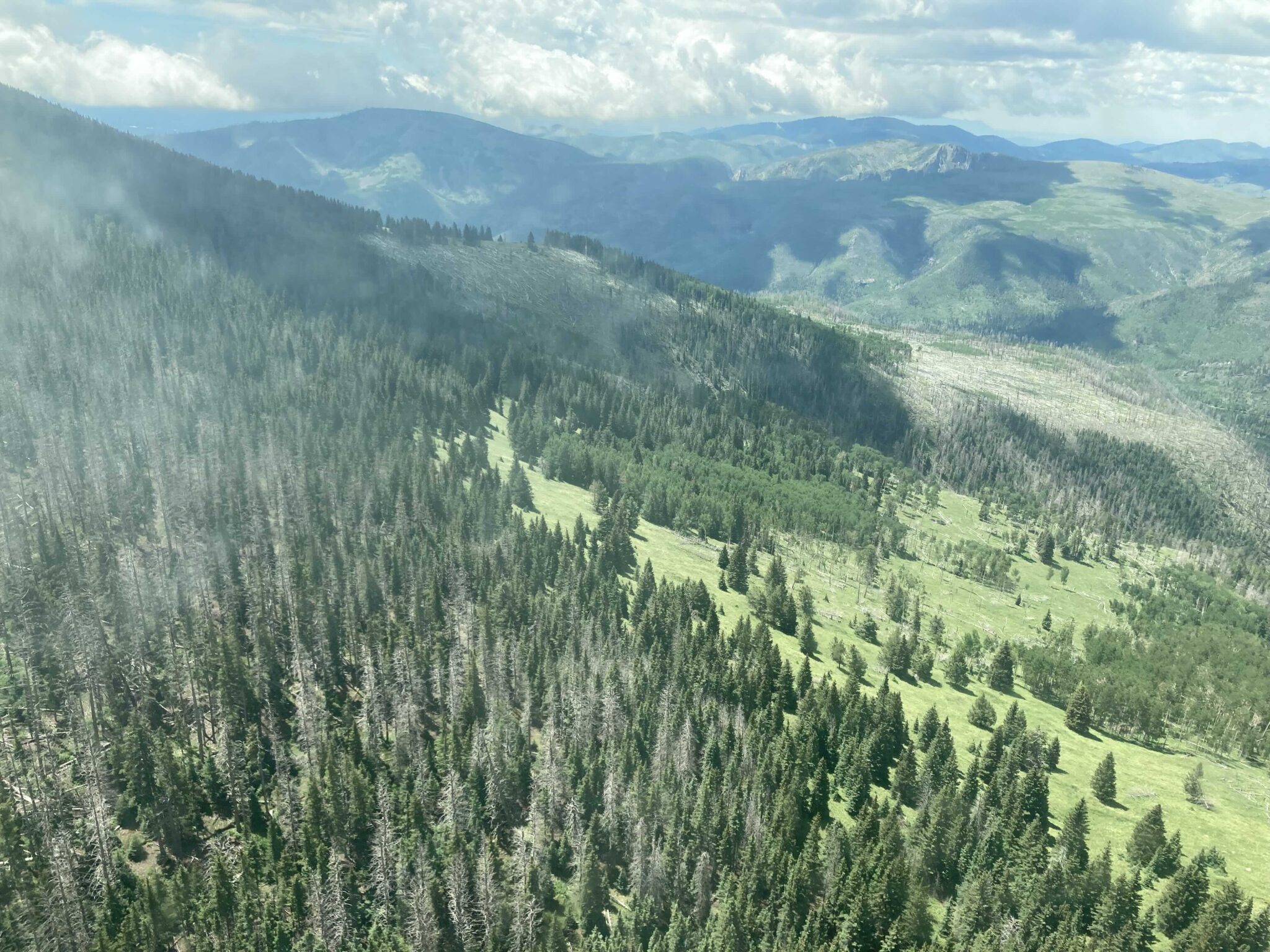
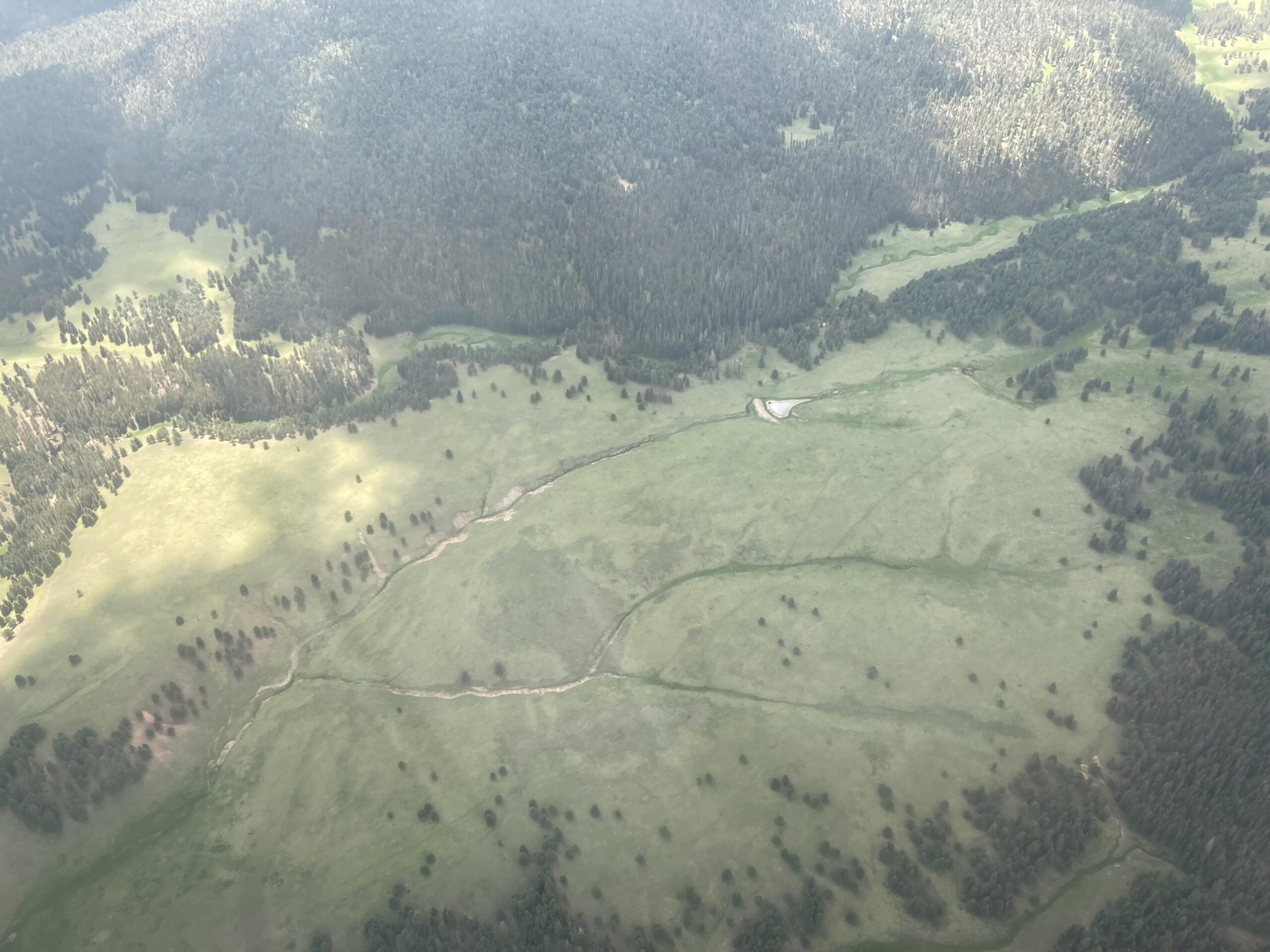
An aerial view of the Jemez Watershed on June 28, 2024. (Photo by Danielle Prokop / Source NM)

Click the link to read the article on the SourceNM.com website (Danielle Prokop):

July 29, 2024

If approved, the settlements would bring in more than $3.7 billion in federal funds and end decades of water rights litigation

The Navajo Nation president and leaders from Acoma, Ohkay Owingeh and Zuni Pueblos joined tribal leadership from across the nation on Capitol Hill, offering testimony about the benefits of $3.7 billion federal dollars in six proposed water rights settlements across New Mexico.

The deals would settle tribes and Pueblos’ water rights in four New Mexico rivers: the Rio San José, the Rio Jemez, Rio Chama and the Zuni River. 

Another bill would also correct technical errors in two previously ratified water rights settlements: Taos Pueblo and the Aamodt settlement Pueblos of Nambé, Pojoaque, Tesuque and San Ildefonso. Finally, a sixth bill would add time and money for the Navajo-Gallup water project to construct drinking water services.

New Mexico representatives presented a record six settlements for Pueblos and tribes at a subcommittee hearing Tuesday, the first step in getting needed Congressional approval to end decades of litigation. Companion proposals from the Senate were heard Friday in the Senate Indian Affairs Committee. Mescalero Apache Tribe President Thora Padilla was introduced to senators with support for the settlements. 

As climate change reshapes the Southwest into something hotter and drier, with more strain on its water resources, approaching water collaboratively means communities have a chance to stay, and tribes can exercise their sovereignty.

In front of House members on Tuesday, Ohkay Owingeh Gov. Larry Phillips Jr. said the settlement of the Ohkay Owingeh’s rights on the Rio Chama will offer a means of long-awaited restoration. 

“The U.S. bulldozed our river, it destroyed our rivers and bosque,” he said. “This needs to be fixed, the settlement gives us the tools to do that.”

Rep. Teresa Leger Fernández (D-N.M.) said tribes and Pueblos gave up certain acreage that they are entitled to, and worked out drought-sharing agreements to benefit everybody in the region.

Leger Fernández sponsored five of the bills, and Rep. Gabe Vazquez (D-N.M.) sponsored a sixth that was heard on Tuesday.

Additionally, she said the funds will enable more infrastructure, bosque restoration and ensuring water rights protections for neighboring acequias. 

Acoma Pueblo Gov. Randall Vicente told the committee that making concessions in the settlement was crucial to preserving water for future generations.

“It is better to have adequate wet water, than paper rights without a water supply,” he said.

Even if the Pueblo enforced having the oldest water right, Vicente said the Rio San José’s system is so damaged, it would take decades for water to reach Acoma.

The settlements can help redress the federal government’s injustices towards Ohkay Owingeh Pueblo, Phillips said. He pointed to the U.S. Army Corps of Engineers and U.S. Bureau of Reclamation’s channelizing of the Rio Chama and the building of Abiquiu Reservoir in the 1950s, which moved water away from the Pueblo. 

“Both of these actions resulted in depriving us of our bosque and waters necessary for a proper river,” he said. “We entered into the settlement in order to protect, preserve our water resources and the bosque.”

The loss of water not only impacts the health of Pueblo communities, Phillips said, but it splits people from their lands and means the loss of sacred bodies of water and ceremonies to celebrate them.

Water offers a lifeline to traditional ways and offers prosperity, said Zuni Pueblo Gov. Arden Kucate.

Zuni Pueblo will work to build new drinking water treatment systems and restore waffle garden irrigation practices, a technique used for generations until the turn of the 19th century, when settlers diverted water and clearcut the Zuni River watersheds.

“It will usher in, what I sincerely believe, will be a new chapter for our tribe, allowing us to protect and sustainably develop our limited water resources, to restore traditional agriculture and facilitate much-needed economic development,” Kucate said about the settlement.

Navajo Nation President Buu Nygren also spoke, celebrating water rights settlements with both New Mexico and Arizona.

Some of the settlement agreements are already two years old.The administration supports all of the New Mexico settlements, said Bryan Newland (Ojibwe), the assistant secretary for Indian Affairs at the U.S. Department of the Interior.

“Any delay in bringing clean, drinkable water to communities is going to harm the people who live in those communities,” Newland said. “We also know from our experience that these settlements only get more expensive, and implementation only gets more expensive the longer we wait.” 

Tribal water rights are not entirely settled in New Mexico, most notably on the Rio Grande, where a federal assessment team started addressing water claims issues in 2022. Leger Fernández said she hopes the six water rights settlements in other watersheds will provide a model for collaborative management of water rights on New Mexico’s largest river.

An aerial view of the Jemez Watershed on June 28, 2024. (Photo by Danielle Prokop / Source NM)

“These water rights settlements provide the framework for future water rights settlements, which include those involved in Rio Grande,” Leger Fernández said.

Leger Fernández said the moment was still momentous, even if it’s only the first step.

“There’s never been this many settlements at one time,” she said. “There has never been a hearing that was this big.”

What’s the process?

The House Committee on Natural Resources held a legislative hearing on 12 water rights settlements across the U.S. with a projected cost of $12 billion. 

The hearing consisted of testimony from federal agencies and heads of tribal governments. 

The settlements can now head into a process called mark-up and means they can be added to legislative packages moving forward. Both of New Mexico’s senators sponsored companionate bills.

It’s just the first step in the process, but Leger Fernández said she’s looking to face the biggest hurdle of cost head-on. She and members of the Department of the interior testified that continuing to fight court battles will cost the federal government more money, and that waiting isn’t an option.

“The longer we wait, the more expensive it will be,” she said.

New Mexico Lakes, Rivers and Water Resources via Geology.com.

Albuquerque made itself drought-proof. Then its dam started leaking — Grist #RioGrande

El Vado Dam and Reservoir back in the day. Photo credit: USBR

Click the link to read the article on the Grist website (Jake Bittle):

July 6, 2024

Mark Garcia can see that there’s no shortage of water in the Rio Grande this year. The river flows past his farm in central New Mexico, about 50 miles south of Albuquerque. The rush of springtime water is a welcome change after years of drought, but he knows the good times won’t last.

As the summer continues, the river will diminish, leaving Garcia with a strict ration. He’ll be allowed irrigation water for his 300 acres just once every 30 days, which is nowhere near enough to sustain his crop of oats and alfalfa.

For decades, Garcia and other farmers on the Rio Grande have relied on water released from a dam called El Vado, which collects billions of gallons of river water to store and eventually release to help farmers during times when the river runs dry. More significantly for most New Mexico residents, the dam system also allows the city of Albuquerque to import river water from long distances for household use.

New Mexico water projects map via Reclamation

But El Vado has been out of commission for the past three summers, its structure bulging and disfigured after decades in operation — and the government doesn’t have a plan to fix it. 

“We need some sort of storage,” said Garcia. “If we don’t get a big monsoon this summer, if you don’t have a well, you won’t be able to water.”

The failure of the dam has shaken up the water supply for the entire region surrounding Albuquerque, forcing the city and many of the farmers nearby to rely on finite groundwater and threatening an endangered fish species along the river. It’s a surprising twist of fate for a region that in recent years emerged as a model for sustainable water management in the West.

“Having El Vado out of the picture has been really tough,” said Paul Tashjian, the director of freshwater conservation at the Southwest regional office of the nonprofit National Audubon Society. “We’ve been really eking by every year the past few years.” 

Surface water imports from the El Vado system have generally allowed public officials in Albuquerque to limit groundwater shortages. This echoes the strategies of other large Western cities such as Phoenix and Los Angeles, which have enabled population growth by tapping diverse sources of water for metropolitan regions and the farms that sit outside of them. The Biden administration is seeking to replicate this strategy in water-stressed rural areas across the region, doling out more than $8 billion in grants to support pipelines and reservoirs. 

“New plot using the nClimGrid data, which is a better source than PRISM for long-term trends. Of course, the combined reservoir contents increase from last year, but the increase is less than 2011 and looks puny compared to the ‘hole’ in the reservoirs. The blue Loess lines subtly change. Last year those lines ended pointing downwards. This year they end flat-ish. 2023 temps were still above the 20th century average, although close. Another interesting aspect is that the 20C Mean and 21C Mean lines on the individual plots really don’t change much. Finally, the 2023 Natural Flows are almost exactly equal to 2019. (17.678 maf vs 17.672 maf). For all the hoopla about how this was record-setting year, the fact is that this year was significantly less than 2011 (20.159 maf) and no different than 2019” — Brad Udall

But the last decade has shown that this strategy isn’t foolproof — at least not while climate change fuels an ongoing megadrought across the West. Los Angeles has lost water from both the Colorado River and from a series of reservoirs in Northern California, and Phoenix has seen declines not only from the Colorado but also from the groundwater aquifers that fuel the state’s cotton and alfalfa farming. Now, as Albuquerque’s decrepit El Vado dam goes out of commission, the city is trying to balance multiple fragile resources.

El Vado is an odd dam: It’s one of only four in the United States that uses a steel faceplate to hold back water, rather than a mass of rock or concrete. The dam has been collecting irrigation water for Rio Grande farmers for close to a century, but decades of studies have shown that water is seeping through the faceplate and undermining the dam’s foundations. When engineers tried to use grout to fill in the cracks behind the faceplate, they accidentally caused the faceplate to bulge out of shape, threatening the stability of the entire structure. The Bureau of Reclamation, the federal agency that manages the dam, paused construction and is now back at the drawing board.

Without the ability to collect irrigation water for the farmers, the Bureau has had no choice but to let the Rio Grande’s natural flow move downstream to Albuquerque. There’s plenty of water in the spring, when snow melts off the mountains and rain rushes toward the ocean. But when the rains peter out by the start of the summer, the river’s flow reduces to a trickle. 

“We run really fast and happy in the spring, and then you’re off pretty precipitously,” said Casey Ish, the conservation program supervisor at the Middle Rio Grande Conservancy District, the irrigation district that supplies water to farmers like Garcia. “It just creates a lot of stress on the system late in the summer.” The uncertainty about water rationing causes many farmers to forego planting crops they aren’t sure they’ll be able to see to maturity, Ish added.

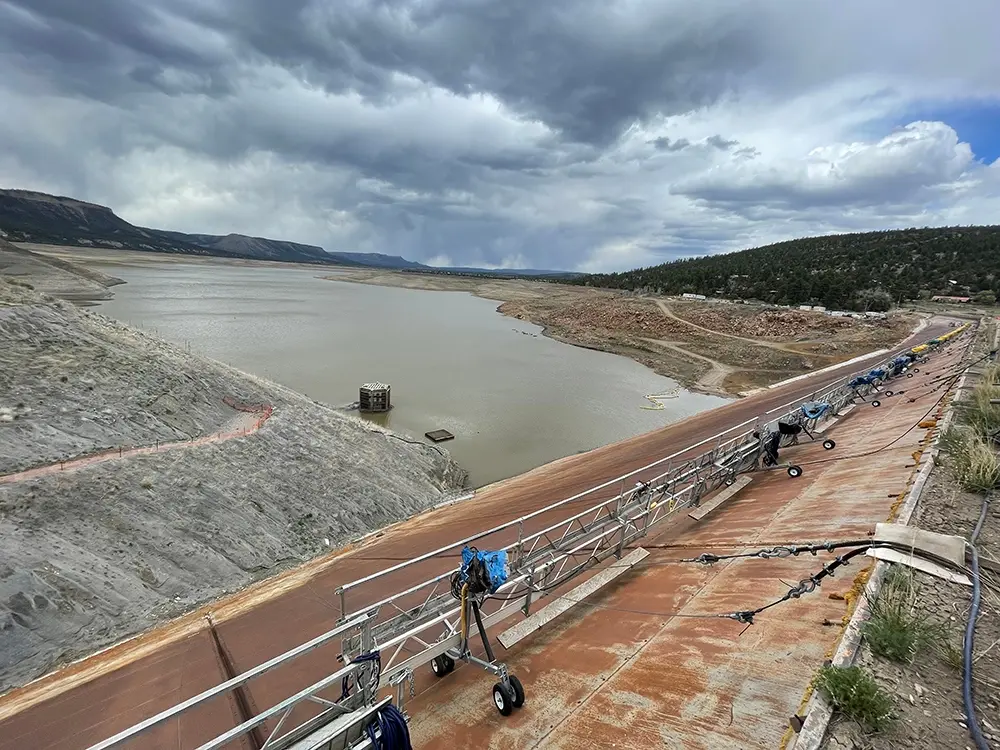
Construction crews attempt to repair the El Vado dam along the Rio Grande in New Mexico. The federal government has been unable to find a way to stop seepage behind the steel faceplate dam. U.S. Bureau of Reclamation

The beleaguered dam also plays a critical role in providing water to the fast-growing Albuquerque metropolitan area, which is home to almost a million people. As the city grew over the past 100 years, it drained local groundwater, lowering aquifer levels by dozens of feet until the city got a reputation as “one of the biggest water-wasters in the West.” Cities across the region were mining their groundwater in the same way, but Albuquerque managed to turn its bad habits around. In 2008, it built a $160 million water treatment plant that allowed it to clean water from the distant Colorado River, giving officials a new water source to reduce their groundwater reliance.

The loss of El Vado is jeopardizing this achievement. In order for Colorado River water to reach the Albuquerque treatment plant, it needs to travel through the same set of canals and pipelines that deliver Rio Grande water to the city and farmers, “riding” with the Rio Grande water through the pipes. Without a steady flow of Rio Grande water out of El Vado, the Colorado River water can’t make it to the city. This means that in the summer months, when the Rio Grande dries out, Albuquerque now has to turn back to groundwater to supply its thirsty residential subdivisions.

This renewed reliance on groundwater has halted the recovery of local aquifers. The water level in these aquifers was rising from 2008 through 2020, but it slumped out around 2020 and hasn’t budged since. 

“We have had to shut down our surface water plant the last three summers because of low flows in Albuquerque,” said Diane Agnew, a senior official at the Albuquerque Bernalillo County Water Utility Authority, which manages the region’s water. Agnew stresses that aquifer levels are only flattening out, not falling. Still, losing El Vado storage for the long run would be detrimental to the city’s overall water resilience.

“We have more than enough supply to meet demand, but it does change our equation,” she added.

The Bureau of Reclamation is looking for a way to fix the dam and restore Rio Grande water to Albuquerque, but right now its engineers are stumped. In a recent meeting with local farmers, a senior Reclamation official offered a frank assessment of the dam’s future. 

“We were not able to find technical solutions to the challenges that we were seeing,” said Jennifer Faler, the Bureau’s Albuquerque area manager, in remarks at the meeting. 

The next-best option is to find somewhere else to store water for farmers. There are other reservoirs along the Rio Grande, including one large dam owned by the Army Corps of Engineers, but repurposing them for irrigation water will involve a lengthy bureaucratic process. 

A spokesperson for the Bureau of Reclamation told Grist that the agency “is working diligently with our partners to develop a plan and finalize agreements to help alleviate the lost storage capacity” and that it “may have the ability to safely store some water” for farms and cities next year.

In the meantime, farmers like Garcia are getting impatient. When a senior Bureau official broke the bad news at an irrigation district meeting last month, more than a dozen farmers who grow crops in the district stood up to express their frustration with the delays in the repair process, calling Reclamation’s announcement “frustrating” and “a shock.”

“If we don’t have any water for the long term, I have to let my employees go, and I guess start looking for ramen noodles someplace,” Garcia told Grist.

Even though there are only a handful of other steel faceplate dams like El Vado in the United States, more communities across the West are likely to experience similar infrastructure issues that affect their water supply, according to John Fleck, a professor of water policy at the University of New Mexico.

“We’ve optimized entire human and natural communities around the way this aging infrastructure allows us to manipulate the flow of rivers, and we’re likely to see more and more examples where infrastructure we’ve come to depend on no longer functions the way we planned or intended,” he said.

As the West gets drier and its dams and canals continue to age, more communities may find themselves forced to strike a balance between groundwater, which is easy to access but finite, and surface water, which is renewable but challenging to obtain. The loss of El Vado shows that neither one of these resources can be relied upon solely and consistently — and in an era of higher temperatures and aging infrastructure, even having both may not be enough.

The headwaters of the Rio Grande River in Colorado. Photo: Brent Gardner-Smith/Aspen Journalism

To’Hajiilee water line groundbreaking: “an impossible project” — John Fleck (InkStain.net)

An impossibility. Photo credit: John Fleck/InkStain.net

Click the link to read the article on the InkStain.net website (John Fleck):

May 15, 2024

With the obligatory shovels in pre-softened dirt, a group of political leaders from the Navajo Nation, New Mexico state and local government, and water agencies this morning (Wed. 5/15/2024) formally inaugurated a new pipeline being built to connect the Navajo community of To’Hajiilee to the 3.5 million gallon reservoir in the picture – clean, piped water to a community that now has one working well and water so bad no one drinks it.

One of the oldtimers who’d been working on it for more than two decades walked up to me and said, “This is an impossible project.”

What he meant was that the project had overcome seemingly insurmountable hurdles in the interactions between a welter of government agencies with overlapping jurisdictions and sometimes incompatible responsibilities.

I went to the event wearing two hats – as a member of the Albuquerque Bernalillo County Water Utility Authority’s Technical Customer Advisory Committee, and on behalf of the Utton Center, which has a long history of working on Native American water stuff. (I was literally wearing my ABCWUA gimme cap, I don’t have an Utton one.)

To’Hajiilee, 35-ish miles west of Albuquerque, has six water wells. Five have already failed. The sixth is regularly off line. When it’s down, they have to shut down school and the clinic. When it’s working, the water is awful.

The vision statement from the Universal Access to Clean Water For Tribal Communities project is simple: “Every Native American has the right to clean, safe, affordable water in the home ensuring a minimum quality of life.”

In this 1999 book Development as Freedom, the Nobel laureate economist and moral philosopher Amartya Sen explains freedoms as “the capabilities that a person has, that is, the substantive freedoms he or she enjoys to lead the kind of life he or she has reason to value.”

“Rights” are tricky political terrain, because they’re often framed in negative terms – the absence of coercion or interference from others, particularly the state. But Sen’s making an affirmative argument here. It is not enough for the collective to simply get out of the individual’s way. The collective has an affirmative moral obligation to create the conditions under which the individual can flourish – to pursue that which they “have reason to value,” to repeat Sen. That’s sorta what my friends at the Universal Access project are saying with their vision statement.

At the urging of a colleague, I’ve been reading Sen lately in an effort to make sense of the moral underpinnings of the collective choices we face as we cope with the reality of less water. (For those familiar with Sen, know that I am not reading the mathy parts – they’re impenetrable!)

THE PLUMBING – PHYSICAL AND FINANCIAL

The Albuquerque Bernalillo County Water Utility’s 7W reservoir, the tan thing in the picture, sits on high ground midway between Albuquerque and To’Hajiilee, a perfect water source for the community. In eighteen months under the current construction schedule, we’ll have a 7 mile pipe from here to there.

If the tally in my notes is correct (don’t hold me to this, I’m not a real journalist any more), it’s a ~$20 million project, with a mix of federal, state, and Navajo Nation funding.

The actual water in the pipes is the result of a fascinating agreement between the Navajo Nation and the Jicarilla Apache Nation in norther New Mexico. The Navajo Nation will lease Jicarailla water, which will be wheeled down the San Juan River, into the Rio Grande, and then diverted by the Albuquerque Bernalillo County Water Utility Authority, treated, and pumped up to 7W.

THE STRUGGLES TO GET THIS DONE

Former Bernalillo County Commissioner Debbie O’Malley, speaking at the groundbreaking, told the story of the bare-knuckle politics it took to overcome the intransigence of a landowner that stood in the way of the project – Western Albuquerque Land Holdings. And for sure, O’Malley and the group she worked with deserve a ton of credit for the use of their knuckles at a critical point in the struggle to get the pipeline built.

But more important is the community of To’Hajiilee itself, people like Mark Begay, my colleague on the Albuquerque water utility’s Technical Customer Advisory Committee. For decades, Begay and the other leaders in To’Hajiilee acted on behalf of their community to pursue “that which they had reason to value” – water!

This is about the community’s own collective agency, “the result of collective processes and collective actions in which people’s interactions shape their common destiny.” (Oscar Garza-Vázquez)

It was a joy to share the celebration of their success. I’ll be back in 18 months when they open the taps.

#RioGrande flow at Otowi in decline, fancy graph edition — John Fleck (InkStain.net)

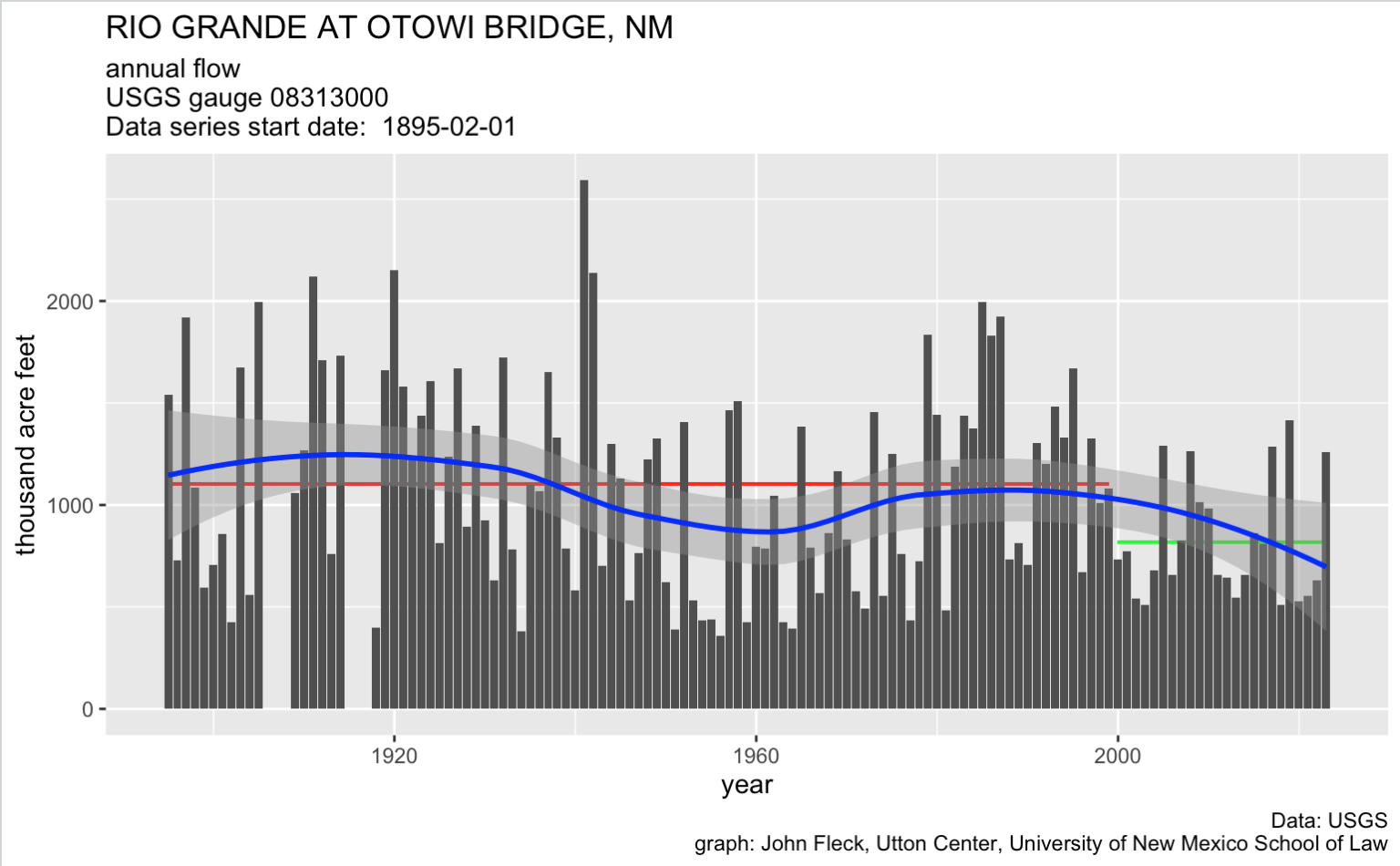
Changing Rio Grande flow at Otowi over time. Credit: John Fleck/InkStain

Click the link to read the article on the InkStain website (John Fleck):

February 2, 2024

I’ve been updating the crufty old code I use to generate graphs to help me (and colleagues) think about river flows.

This one’s a little busy, so maybe for specific nerd colleagues’ use, and not general consumption?

It’s based on a request from a friend who uses these, and asked for a visualization of the wet 1981-2000 period compared to the drier 21st century. This is an important comparison given that a whole bunch of New Mexicans (including me!) moved here in the wet 1980s and ’90s, which created a sense of what’s “normal.”

It’s important to note that this is not a measure of climate, at least not directly. This is a measure of how much actual water flows past the Otowi gage, which is a product of:

  • climate-driven hydrology adding water
  • trans-basin diversions adding water (“trans basin diversion” singular, I guess, the San-Juan Chama Project)
  • upstream water use subtracting water
  • reservoir management decisions moving water around in time (sometimes reducing the flow by storing, sometimes increasing it by releasing)

I get so much out of staring at these graphs. A few bits from this one, which I did a few evenings ago curled up with my laptop in my comfy chair:

  • Look at the curves around Nov. 1 – a drop as irrigation season ends, following by a rise as managers move compact compliance water down the river to Elephant Butte. Makes me curious about what they were doing back in the ’80s and ’90s in November.
  • This year’s winter base flow is low.

At some point soon I’ll get the updated code onto Github, but it’s not quite ready for sharing. (I’m rewriting it in Python, because learning is fun!)

#NewMexico’s Middle #RioGrande 2023 Review — John Fleck (InkStain.net)

Click the link to read the article on the InkStain website (John Fleck):

This was a big flow year on New Mexico’s Middle Rio Grande, but weird, in ways that highlight the challenges we face.

FLOW IN THE RIVER

Total flow into New Mexico’s Middle Rio Grande Valley (measured at Otowi) sits at 1.26 million acre feet with two more days’ flow to go, so round it off to 1.3maf.

Rio Grande flow at Otowi, with Brad Udall-style plots of 20th and 21st century means. Credit: John Fleck/InkStain

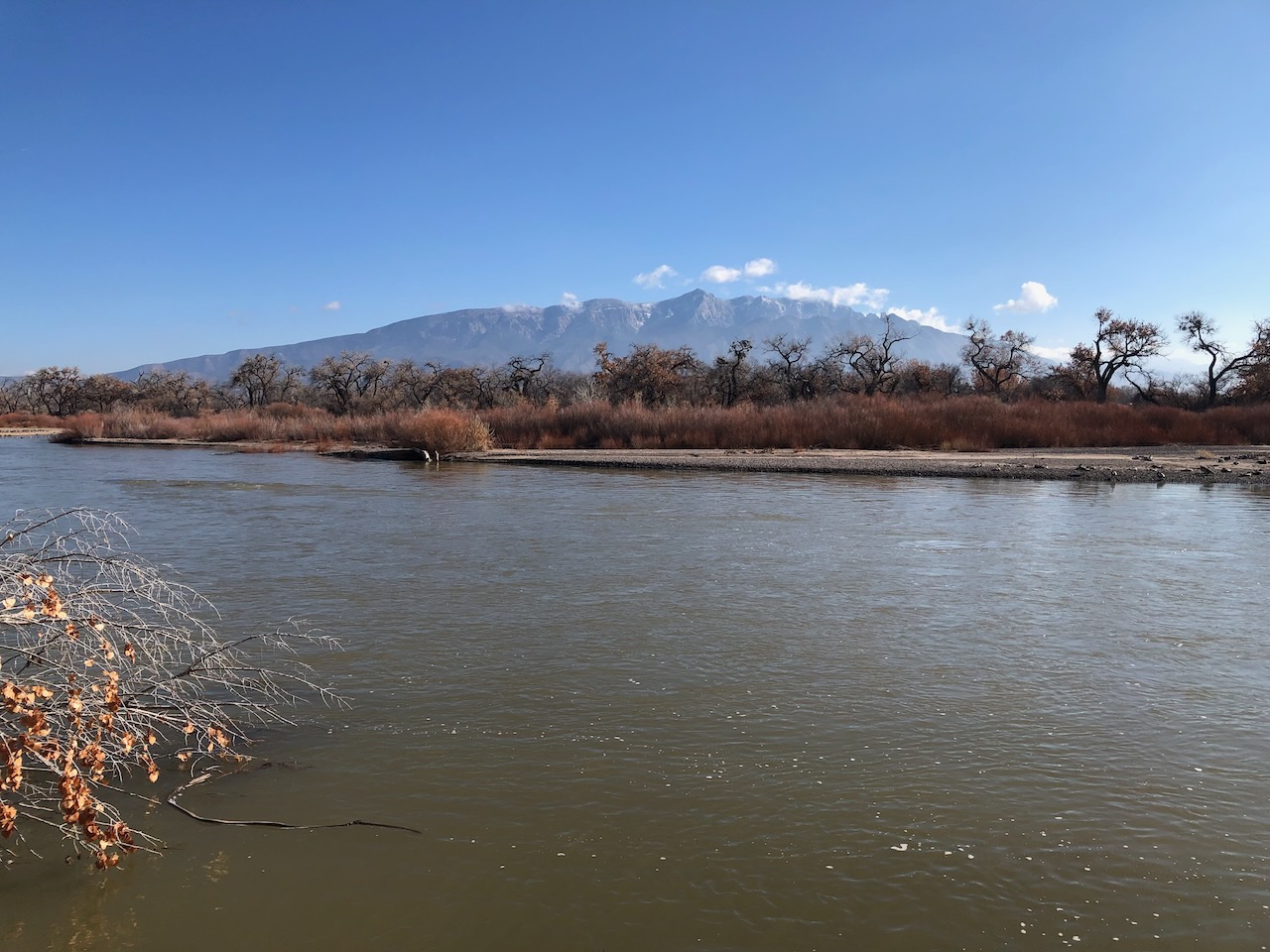
So a big year! Yay!  Look at all that water in the picture above, a bank-full Rio Grande flowing past Rio Rancho, New Mexico, in December. And yet there I was in August watching dogs gamboling on the sand bed of a nearly dry Rio Grande. What’s up with that?

The answer involves the interaction between a climate change-driven megadrought, the use of the river by human communities, and the tangle of rules that govern management of the 21st century Rio Grande.

The short term tangle involves El Vado Dam, currently being renovated and therefore unusable for storage. That meant that by August the declining inflow of late summer with a lousy monsoon left the river nearly dry, regardless of the winter snowpack.

This problem, which will go on for several more years, means that irrigators will depend on run-of-the-river operations for late summer irrigation for a while yet. Given that irrigation water also supports environmental flows on its way to the irrigation diversions, this is also bad for things like the endangered Rio Grande silvery minnow and the river flowing through my city.

The longer term tangle involves competing community values among the various ways we use water, combined with a lack of tools to reduce that use.

Because, with climate change there is less water.

Albuquerque’s Rio Grande, drying September 3, 2023. Photo credit: John Fleck/InkStain

INKSTAIN IS READER SUPPORTED

Inkstain has been a Nazi-free zone for more than 20 years, mostly because it’s just my blog and I’m not a Nazi. (If you don’t know what I’m talking about, bless you. Google “Substack” and “Nazis”, it’s the latest digerati kerfuffle.)

But, like all your favorite Substackers, it is reader supported! Thanks as always to our readers. (And if you don’t know what Substackers are, again, bless you.)

THE TANGLE: MOVING WATER IN TIME

First let’s pin some data to our bulletin board:

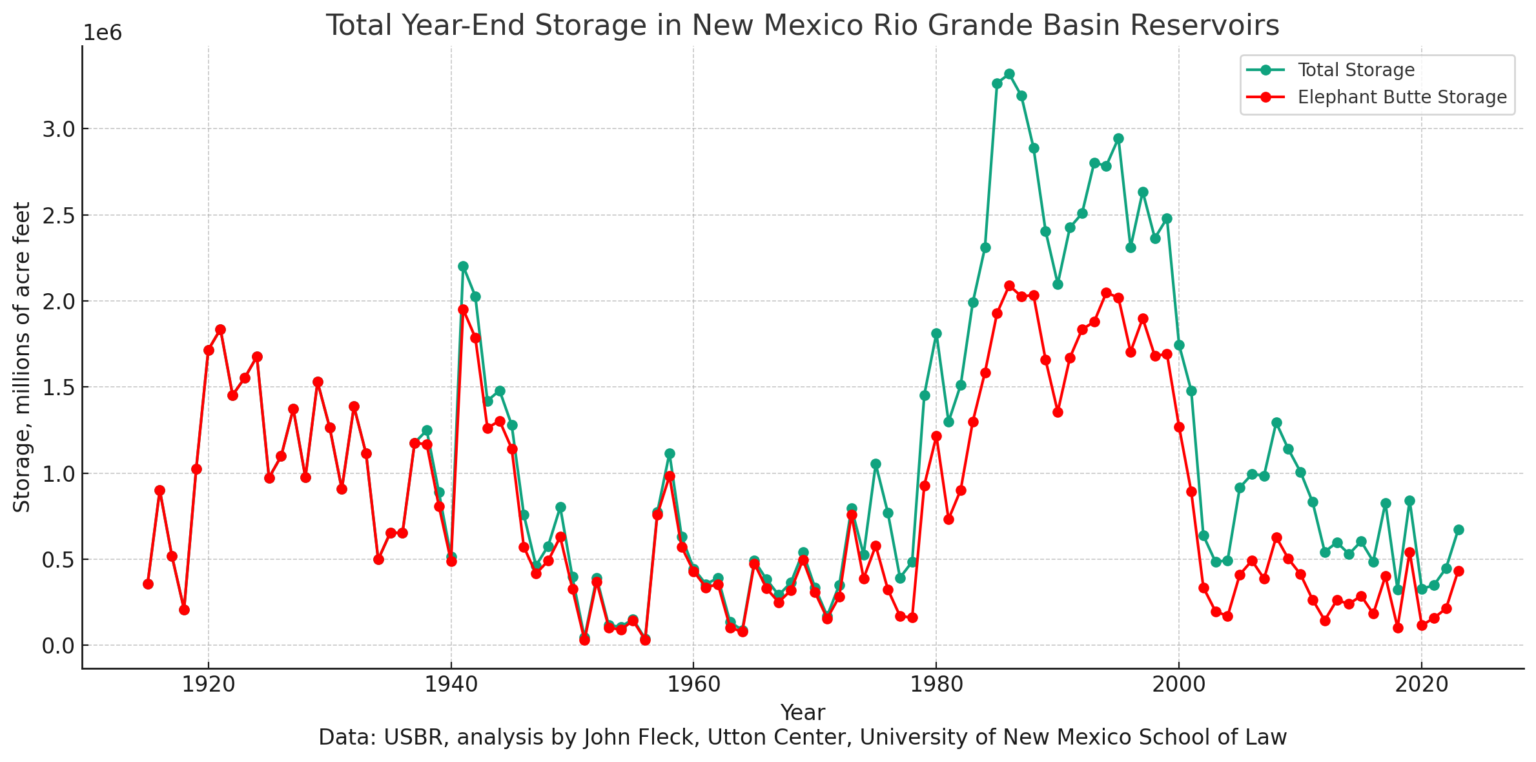
Total storage on New Mexico’s Rio Grande and the Rio Chama, its main tributary. Credit: John Fleck/InkStain

There’s an old water management adage: Canals move water in space, reservoirs move water in time. We built them to store water in wet years, effectively moving it in time to dry years. So how much did we so move this year?

Inspired by Jack Schmidt’s monthly Colorado River posts, I spent my Saturday coffee wakeup this morning totaling up sorta year-end storage in the reservoirs I care about (from top to bottom Heron, El Vado, Abiquiu, Cochiti, Elephant Butte, and Caballo). It took longer than I expected because I was so distracted by all the amazing history embedded in this graph. 1986-87, yowza, what’s up with that?

Flow this year was ~440k acre feet above the 21st century average. Total end of year storage is up ~220k acre feet. There’s so much mixing of apples, oranges, durian, and pawpaw here that it’s not a straight up comparison, but it should give you a feel for the challenge: we only saved a part of the bonus water. We used a lot of it.

The Management Levers

Let’s imagine for a moment that we wanted to pull some water management levers to change that balance by reducing consumptive use (by “use” I mean evapotransporation, human and non-human) in the Middle Rio Grande Valley. We’ve basically got four different categories of use:

  • The cities, especially Albuquerque
  • The Middle Rio Grande Conservancy District, which manages irrigation water for some commercial farms and a lot of custom and culture/lifestyle stuff
  • Domestic wells
  • The river – evaporation and riparian consumption by our beloved bosque

Let’s take these in order of smallest to largest water use.

THE CITIES

We’ve already cranked down pretty hard on this lever. With a combination of water use reductions and a shift from groundwater pumping to imported Colorado River water, we’ve already cranked down extremely hard on this lever. This is the one area of the system that is already aggressively regulated.

If you want to crank down harder on this lever, the two points of entry in the legal/political/policy system are the Office of State Engineer/Interstate Stream Commission, which do the regulating, and the Albuquerque Bernalillo County Water Utility Authority Board, which is made up of elected city councilors and county commissioners.

THE DISTRICT

Consumptive use by the Conservancy District’s irrigators is several times larger than the cities. The District took voluntary action this year to reduce use, delaying the start of irrigation season and cutting diversions once they started by 20 percent to try to get more water to Elephant Butte Reservoir.

With federal money, the District paid folks irrigating a relatively small portion of the valley’s acreage to fallow this year, and the acreage is going up in 2024. But the numbers remain small relative to the size of the problem.

If you want to crank down harder on this lever, it’s not clear to me what the state’s legal authority might be. There may be some, but it’s not been tested. But the District is governed by an elected board. That’s a lever, though it’s worth pointing out that the board got a lot of crap this year from irrigators about they steps they did take. Incentives in all of this are weird, it’s tricky to figure out how to work this lever.

DOMESTIC WELLS

We don’t regulate these at all. We have no idea how much water they use, but it sure looks to use like there’s a lot.  We don’t really even know how many there are, there seem to be a lot drilled illegally. (If you’re a UNM Water Resources Student, hit me up on this! We have some ideas for a really impactful masters degree research project.) We probably need to think about building a lever here, but we currently don’t have one. The state legislature might be a place to start? Maybe some un-exercised legal authority at the Office of State Engineer? (See NMAC 19.27.5.14, my day job, such as it is, is at a law school, though IANAL it sure looks like that could only apply to new wells, so horse out of barn etc.)

Birds and water at Bosque de Apache New Mexico November 9, 2022. Photo credit: Abby Burk

THE BOSQUE

The biggest water user, likely larger than irrigation, is the riparian corridor itself. It’s largely unnatural, vegetation exploiting a niche created when we built levees and constrained the river’s flow, but whatever. It feels like “nature”, and we love it. And even if we didn’t it’s not clear what a lever to reduce that use might look like.

VALUES

Each one of these uses is valued by some segment of our community, and we seem to lack the tools to reconcile these competing values, which is why I’m pretty excited about the 2023 Water Security Planning Act.

A NOTE ON SOURCES AND METHODS

The reservoir data is from the USBR’s reservoir data archive. The latest 2023 data is from Dec. 18, so I matched up this year’s with Dec. 18 in previous years. My quick sensitivity check led me to conclude “Meh, good enough for a blog post.” For the early years, the USBR just reports a single year-end number for El Vado. My quick sensitivity check led me to conclude “Meh, good enough for a blog post.”

Flow data is from the USGS Otowi gage.

It is, in fact, spelled “gage“, just ask Bob, he’ll tell you.

I currently have 26 browser tabs open, including one with an amazing list of obscure fruit, did you know that Mark Twain called cherimoya “the most delicious fruit known to men.”? I had a bunch more I wanted to say, but that’s enough, it’s time to hit “publish”. Thanks for reading.

Rio Grande and Pecos River basins. Map credit: By Kmusser – Own work, Elevation data from SRTM, drainage basin from GTOPO [1], U.S. stream from the National Atlas [2], all other features from Vector Map., CC BY-SA 3.0, https://commons.wikimedia.org/w/index.php?curid=11218868

#NewMexico seeks approval to store #RioGrande water at Abiquiú — The Albuquerque Journal

El Vado Dam and Reservoir. Photo credit: USBR

Click the link to read the article on the Albuquerque Journal website (Theresa Davis). Here’s an excerpt:

New Mexico water agencies are slowly piecing together a regulatory puzzle in order to store Rio Grande water in Abiquiú Reservoir for middle valley irrigation this summer as El Vado Dam is repaired. But an objection from Texas water managers could interfere with the reservoir’s use for non-pueblo irrigators. The U.S. Army Corps of Engineers operates the northern New Mexico reservoir on the Rio Chama. Nabil Shafike, the Army Corps Albuquerque District’s water management chief, said Abiquiu was once authorized only to store Colorado River Basin water that is diverted into the Rio Grande Basin with a series of tunnels and dams for the San Juan-Chama Project.

“All the Corps reservoirs – Abiquiú, Cochiti, Galisteo and Jemez Canyon – work as one unit to protect the middle valley from flood,” Shafike said. “Any storing of native (Rio Grande) water would require a deviation from the current operation.”

The agency is weighing two potential changes at Abiquiu:

• A request from the New Mexico Interstate Stream Commission to store up to 45,000 acre-feet, or 14.6 billion gallons, of Rio Grande water in Abiquiú each year for release later in the season to meet middle Rio Grande irrigation demand.

• A request from the U.S. Bureau of Reclamation to store up to 20,000 acre-feet, or 6.5 billion gallons, of Rio Grande water in Abiquiú each year to meet direct flow right for the six middle Rio Grande pueblos of Isleta, Sandia, Santa Ana, San Felipe, Santo Domingo and Cochiti.

The Army Corps could approve both storage plans or may choose only one.

Rio De Chama Acequia Association Seeks Fair Treatment, Opportunity To Store Water In Abiquiu Lake — The #LosAlamos Reporter #RioGrande #ColoradoRiver #COriver #aridification

From The Los Alamos Reporter (Maire O’Neill):

Members of the Rio de Chama Acequia Association (RCAA) are adamant about continuing the repartimento – the traditional way of sharing water in New Mexico. They want their acequia parciantes to be treated like all the other contractors in the San Juan-Chama River Project and they want to be able to store water in Abiquiu Lake.

New Mexico water projects map via Reclamation

The Los Alamos Reporter recently sat down with the officers of the association to discuss the issues they are facing and the solutions they propose. RCAA chair Darel Madrid explained how in the 1960s, water was diverted from the Little Navajo river in Colorado to build up water in the Rio Grande through the San Juan-Chama River Project. He said most of that water streamed through a tunnel under the mountains and into Heron Reservoir.

“Ours is the only river system in the area that has foreign water running through it. Our water rights are tied to the native water rights of the Rio Chama basin. With climate change, we’re getting less and less snowpack. We’re getting warmer springs and all the melt-off is running through our acequia system before we are ready to use it,” Madrid said. “In our climate down here, the growing season usually starts the latter part of May or in June and continues into October. This water is melting off earlier and it’s passing through our system in March and early April. It leaves us in a bind.”

Madrid explained that because the RCAA water rights are tied to the Rio Chama water, only a sliver of the water that you see running through their system is actually their water.

“When people see all this water flowing through the system, they don’t realize that only a portion of that water is our water. We have approximately 22 acequias from below the dam that run from the Trujillo-Abeyta ditch, which is the northern-most, to the Salazar Ditch, which is the last one to receive water,” he said.

The foreign water that’s running through the system is owned mostly by contractors of the original San Juan–Chama River Project including the Middle Rio Grande Conservancy District which takes care of everybody from Cochiti all the way down to Socorro, and the Albuquerque-Bernalillo County Water Utility Authority. There are also minor contractors like the County of Los Alamos, the City of Espanola, the Village of Taos, and the City of Santa Fe – all of whom bought into the project in the 60s…

For many years there was less of a drought situation in the region so there was plenty of water for everybody, he said…

“When the Rio Grande Compact was established in the late 20s or 30s, none of the RCAA acequias were invited to the table. They didn’t have a voice in those discussions at all. The parciantes were busy being farmers and were not organized. The same thing happened during the San Juan-Chama River Project. For all that we can tell, we weren’t invited to the table and all these decisions were made without our participation. When all was said and done we were left with all these rules and regulations that we have to abide by so it’s almost like taxation without representation,” Madrid said.

He noted that regulations for the acequias are all set through court orders with the State Engineer’s Office having the most authority…

The 22 RCAA ditches have the oldest priority dates for rights to the water with some of them going back to the 1600s. Madrid believes those are probably the oldest water rights in the entire nation, second only to Native Americans. The ditch behind his home has been in continual use for more than 400 years. Families of others on the board have been irrigating for hundreds of years in the area.

Abiquiu Dam, impounding Abiquiu Lake on the Rio Chama in Rio Arriba County, New Mexico, USA. The U.S. Army Corps of Engineers constructed the dam in 1963 for flood control, water storage, and recreation. By U.S. Army Corps of Engineers, photographer not specified or unknown – U.S. Army Corps of Engineers Digital Visual LibraryImage pageImage description pageDigital Visual Library home page, Public Domain, https://commons.wikimedia.org/w/index.php?curid=2044112

RCAA Treasurer Carlos Salazar said RCAA wants to find a way to store its water so that it doesn’t have to buy water and believes this would require federal legislation because the dams were constructed with federal funds. The Association hopes that the congressional delegation will help them to find a way to store their native water because it comes from their ancestral lands. Because the water can’t be stored, half of any water that flows past the Otowi Bridge near the Pueblo of San Ildefonso in the spring goes to Texas.

All the RCAA acequias are metered by the state engineer. Their diversion is measured, but one of the big debates RCAA has with the state engineer is that not all of it is consumed and the state charges them for all of the diversion and doesn’t credit them for any return flow. Another burden the RCAA has to bear is that its member acequias are saddled with all the costs for the operation and maintenance…

The RCAA believes all diversion levels should be increased by 30 percent but they would need to invest in return flow measurement to accomplish that and it would take $1,000 per ditch, a total of about $54,000 to accomplish that.

Seaman noted that the RCAA is simply trying to continue the tradition of the acequias.

“To me, the Treaty of Guadalupe Hidalgo guaranteed every citizen all these rights and we don’t see it happening now with this adjudication of water to the Rio Grande and the City of Albuquerque and our neighbors there on Heron Reservoir. All that imported water – where were the acequias?” Salazar said. “I think we should be treated fairly. Our rights pre-date all of them and we should be given an opportunity to store water even if we have to pay for the storage.”

The Rio Chama viewed from US highway 84 between Abiquiú, New Mexico, and Abiquiu Dam. By Dicklyon – Own work, CC BY-SA 4.0, https://commons.wikimedia.org/w/index.php?curid=110189310

San Juan #Water Conservancy District votes to oppose BLM water rights applications — The #PagosaSprings Sun #SanJuanRiver #ColoradoRiver #COriver #aridification

View to the south into the snaking West Fork of the San Juan River as seen from US 160, halfway up to the summit of Wolf Creek Pass. By User:Erikvoss, CC BY-SA 3.0, https://commons.wikimedia.org/w/index.php?curid=61976794

From The Pagosa Springs Sun (Jessica Hanson):

The San Juan Water Conservancy District (SJWCD) board met on Monday, Aug.16, to hear a report, among other business, from the board’s attorney, Jeff Kane, on the Bureau of Land Management’s (BLM) intent to file two applications for water rights.

According to agenda information posted on the SJWCD website, the two water rights applications are for transmountain diversions to the Rio Grande River basin from a tributary of Wolfe Creek. (Note: This spelling of Wolfe Creek is what is found in the BLM’s original application for water rights.) This is a tributary to the West Fork of the San Juan River.

These two applications could mean the diversion of up to 20 cubic feet per second (cfs) of water.

The BLM stated in its applications that the diversion of the water would be to support wildlife management and wetlands habitat at the BLM’s Blanca Wetlands Area and South San Luis Lakes Area.

According to the memorandum presented to the board by Kane, this means that any authorization of this type of diversion causes 100 percent depletion to the originating stream basin. The water that would be diverted under this water rights application would then not be available to support any uses or habitats in the San Juan River or its
tributaries.

The BLM is requesting a change in the places and types of use of the already existing 7 cfs of the Treasure Pass Ditch water right. This water right was purchased in 2019. This current agreement calls for a 1922 priority for the irrigation of 80 acres. The new water rights application by the BLM asks for 13 cfs for the Treasure Pass Ditch and for the right to authorize the BLM to store and deliver water from the Treasure Pass Ditch through several reservoirs in the Rio Grande Basin for support use to the wetlands in the San Luis Valley.

The BLM is also seeking flexibility in approval so it can use the water it wants to divert from the Treasure Pass Ditch in the Rio Grande Basin in a variety of ways, according to Kane.

Kane’s report to the board states, “the applications do not limit the ultimate use of diverted water to support wetlands and wildlife.”

The BLM has the burden of proof when making a request for water rights changes. In a request for a change of water rights, the applicant must prove that the request will not cause an increase in use of requested water as compared in amount, time and place to what has been historically used, according to the memorandum presented by Kane.

A request for an exchange of water rights is when proof is required of the applicant that the request will not harm or impede other water rights and can be applied, Kane’s memorandum explains. A request for a new water right requires the applicant to provide proof that the water to be used will only be beneficial and that there is actually water available to be diverted.

As Kane presented his report on the BLM applications to the board, he noted that both the board and its constituents could be adversely affected in many ways.

The ability of the district to divert and store water under existing water rights or future appropriations considering the diverting water from the Treasure Pass Ditch would not only reduce flows in the San Juan River, but also reduce the water available for Dry Gulch Reservoir, he suggested.

The report also states that the habitat in the tributaries of the San Juan River may also be impacted. The BLM’s applications could also affect the district’s constituents’ efforts to divert and use water if the event a Colorado Compact call were to arise.

The Colorado Compact call is the need to reduce the increasing risk of a compact-driven curtailment which could result in cutting of water to users across the upper basin states of Colorado, New Mexico, Arizona, Utah and Wyoming, Kane reported to the SJWCD board.

Heron Lake, part of the San Juan-Chama Project, in northern New Mexico, looking east from the Rio Chama. In the far distance is Brazos Peak (left) and the Brazos Cliffs (right), while at the bottom is the north wall of the Rio Chama Gorge. By G. Thomas at English Wikipedia – Transferred from en.wikipedia to Commons., Public Domain, https://commons.wikimedia.org/w/index.php?curid=1598784

Kane also noted that the San Juan-Chama Project is currently diverting an average of 110,000 acre feet a year from the San Juan River to the Rio Grande Basin and the BLM is proposing to divert more water from the Wolfe Creek tribu- tary than at any time in history.

Kane recommended that the board file statements of opposition to the BLM’s applications.

#NewMexico #water managers warn communities to prepare for low #RioGrande — The #Albuquerque Journal

From The Albuquerque Journal (Theresa Davis):

New Mexico water agencies are urging farmers to think twice about planting crops in what could be a tight water year. The state faces a big water debt to downstream users, and a multi-year drought is taking its toll.

The Office of the State Engineer recommends “that farmers along the Rio Chama and in the Middle Valley that don’t absolutely need to farm this year, do not farm,” according to a staff report that Interstate Stream Commission Director Rolf Schmidt-Petersen presented to the Commission earlier this month.

Irrigation supply along the river from Cochiti Dam to Elephant Butte Reservoir is governed by the Middle Rio Grande Conservancy District. The district cut its 2020 irrigation season a month short, because there wasn’t enough water to go around. A shorter season also helped deliver some river water to Elephant Butte as part of New Mexico’s Rio Grande Compact obligations.

In January, the district board voted to delay the start of the 2021 season until April 1, a month later than usual.

This year is on track to be a situation of water shortages and storage restrictions unlike any since the 1950s, said Mike Hamman, the district’s chief engineer and CEO and an Interstate Stream Commissioner. The district also anticipates receiving as little as half the usual allotment of San Juan-Chama water.

“The hydrology really started to shift in the early ’90s,” Hamman said. “We’ve got into this cycle of below-average, average, above-average years, and I’ve noticed that our climatic conditions (limit) the available snowpack. That exacerbates things a little bit more now, where we need to have well-above-average snowpacks to address the poor watershed conditions that may have resulted from a poor summer rain period or fall moisture.”

[…]

Regional farmers are advised to prepare for severe water shortages by exercising “extreme caution” in planting crops this spring and by using any available water only for the most essential uses…

The current Rio Grande Compact water debt of about 100,000 acre-feet, or 32 billion gallons, restricts how much the state can store in reservoirs.

By the end of January, the state will have released about 3,200 acre-feet, or about 1 billion gallons, of “debit water” from El Vado and Nichols Reservoir near Santa Fe to Elephant Butte.

Last year’s monsoon season from May to September was the driest on record for New Mexico.

The Rio Grande could go completely dry this summer all the way from Angostura Dam north of Bernalillo through Albuquerque, especially if this year brings another lackluster monsoon season…

‘Last page in our playbook’

The fail-safe options New Mexico relied on last year to stretch the Rio Grande water supply won’t be available this year. This summer on the river may look like what water managers and environmental groups worked to stave off during last year’s hot, dry summer months.

The Middle Rio Grande didn’t look good in July 2020. The MRCGD had just a few days of water supply left.

No water could have meant no irrigation for farmers, but also limited river habitat for endangered species, scarce drinking water supply for local communities, and meager flows for river recreation.

Then came word from the other Rio Grande Compact states of Colorado and Texas: New Mexico had permission to boost river flows by releasing a total of 12 billion gallons from El Vado Reservoir.

“That was the last page in our playbook, or pretty darn close to it,” Schmidt-Petersen told the Journal.

The release kept the Rio Grande from drying completely in the Albuquerque stretch and helped extend the irrigation season for central New Mexico farmers.

Colorado River water diverted via the San Juan-Chama Project also added to the trickling native Rio Grande flows.

Last summer’s massive release from El Vado was water that had been stored as assurance that the state’s Rio Grande Compact debt would be paid.

That water is gone. New Mexico still has to “pay back” the 12 billion gallons, plus any obligations accrued this year.

State Engineer John D’Antonio said the drought is shaping up to be as severe as the conditions the state experienced in the 1950s.

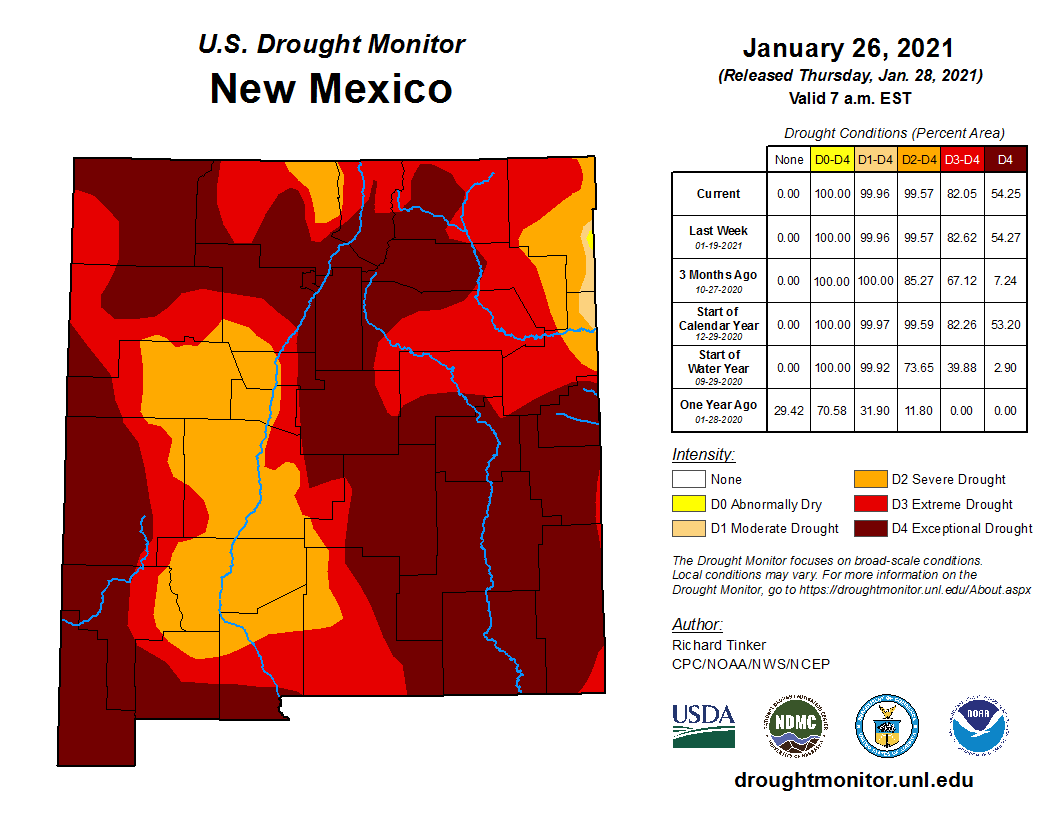
New Mexico Drought Monitor January 26, 2021.

Gov. Michelle Lujan Grisham’s December 2020 emergency drought declaration could provide some financial relief for communities affected by the record-setting dry conditions.

“There could be appropriated up to $750,000 for each eligible and qualified applicant that the governor may designate from the surplus unappropriated money in the general fund, if there is any,” D’Antonio said.

The state Drought Task Force would determine which organizations or local governments receive the money, which under the emergency declaration could be used for water conservation projects, to offset economic losses caused by the drought, or as a match for federal funding.

Dylan Wilson on the banks of the Rio Grande near Las Cruces, N.M. Photo credit: Allen Best

Gloomy forecast

New Mexico will endure another double whammy of limited water supply and growing Rio Grande Compact water debt if snowpack levels don’t improve dramatically by early spring.

Statewide snowmelt runoff forecasts published Jan. 1 showed most of New Mexico at less than 80% of normal levels.

Since then, some snowstorms have brought much-needed moisture to the northern half of the state.

But New Mexico needs several months of above-average snow and rain to dig out of a drought before the hot summer months.

Westwide SNOTEL basin-filled map February 1, 2021 via the NRCS.

Groundwater wells in the lower Rio Grande region of southern New Mexico supply water for municipal and agricultural uses when the river is low.

“That’s not the same in the middle valley for all the farmers there,” Schmidt-Petersen said. “There are limitations on wells that have been in place for long periods of time, so some places can pump and some cannot, and similarly all the way up the Chama.”

Navajo Dam operations update: Turning down to 300 CFS November 21, 2020 #ColoradoRiver #COriver #aridification

From email from Reclamation (Susan Novak Behery):

In response to decreasing tributary flows, the Bureau of Reclamation has scheduled an increase in the release from Navajo Dam from 300 cubic feet per second (cfs) to 350 cfs on Saturday, November 21st, starting at 4:00 AM. Releases are made for the authorized purposes of the Navajo Unit, and to attempt to maintain a target base flow through the endangered fish critical habitat reach of the San Juan River (Farmington to Lake Powell).

The San Juan River Basin Recovery Implementation Program recommends a target base flow of between 500 cfs and 1,000 cfs through the critical habitat area. The target base flow is calculated as the weekly average of gaged flows throughout the critical habitat area from Farmington to Lake Powell.

San Juan River Basin. Graphic credit Wikipedia.

Water agencies agree to $700K lease to protect #RioGrande Silvery minnow — The Albuquerque Journal #ColoradoRiver #COriver #aridification

Heron Lake, part of the San Juan-Chama Project, in northern New Mexico, looking east from the Rio Chama. In the far distance is Brazos Peak (left) and the Brazos Cliffs (right), while at the bottom is the north wall of the Rio Chama Gorge. By G. Thomas at English Wikipedia – Transferred from en.wikipedia to Commons., Public Domain, https://commons.wikimedia.org/w/index.php?curid=1598784

From The Albuquerque Journal (Theresa Davis):

Three agencies will use water from the Albuquerque Bernalillo County Water Utility Authority to protect Rio Grande silvery minnow habitat this fall.

On Wednesday, the water authority approved a lease of up to 7,000 acre-feet, or about 2.9 billion gallons, of its San Juan-Chama water to the U.S. Bureau of Reclamation at a cost not to exceed $700,000.

The San Juan-Chama project uses a series of tunnels and reservoirs to route Colorado River water into the Rio Grande Basin. Several cities, counties, pueblos and irrigation districts rely on the project for drinking water and agriculture.

The Bureau of Reclamation will pay $350,000 for the water. The Middle Rio Grande Conservancy District contributed $250,000 to the lease and the New Mexico Interstate Stream Commission contributed $100,000…

In 2016, the U.S. Fish and Wildlife Service released a new biological opinion regarding water management and endangered and threatened species such as the Rio Grande silvery minnow, southwestern willow flycatcher and the yellow-billed cuckoo.

Water agencies now manage the river to improve fish densities, but are not required to maintain certain river flow targets.

This year’s drought and minimal runoff have left water agencies scrambling to supply water to farmers and fish.

The MRGCD used 10,000 acre-feet from the water authority in June. The irrigation district had “repaid” that water to ABCWUA in late 2019 as a payment for a water loan from the early 2000s. But the district was forced to ask for the water payment back after running out of storage water.

Another release of stored water from El Vado Reservoir in July helped extend the irrigation season by nearly three months…

Under the lease, the water can be released from Abiquiu Reservoir through the end of 2022. Revenue from the lease will help fund the water authority’s program to plan for future water supply and demand.

The water authority has a contract with the U.S. Secretary of the Interior for about 15 billion gallons of San Juan-Chama water each year – making it the largest user of the project.

When the river dries, a struggle to stay afloat — The #Taos News #RioGrande #ColoradoRiver #COriver #aridification

Rio Grande and Pecos River basins. Map credit: By Kmusser – Own work, Elevation data from SRTM, drainage basin from GTOPO [1], U.S. stream from the National Atlas [2], all other features from Vector Map., CC BY-SA 3.0, https://commons.wikimedia.org/w/index.php?curid=11218868

From The Santa Fe New Mexican (Scott Wyland) via The Taos News:

A severe, prolonged drought is reducing the river’s flows to the lowest levels in decades, affecting cities’ drinking water supplies and compelling farmers to adjust how they water their fields.

[Glen] Duggins grows chile peppers, alfalfa and corn on his 400-acre farm in Lemitar, a tiny community north of Socorro. He already faces the prospect of restaurants buying fewer goods from him during the ongoing novel coronavirus pandemic, when their operations have been limited by the state’s public heath orders. Now he’s also seeing higher costs to produce his crops due to pumping.

But he is fortunate, he said, because many farmers in the Middle Río Grande Valley don’t have water pumps and must shut down when the river gets low…

A thin mountain snowpack, recent heat wave and light monsoon have depleted water levels from the Colorado River Basin to the Chama River to the Río Grande. It’s perhaps the most arid year in a two-decade dry period in New Mexico, making climate scientists and water managers wonder whether this is the start of an even drier time that will demand a new, long-term approach to urban planning and water use.

Locally, the prolonged drought can be seen in cottonwoods’ foliage turning yellow six weeks early along a parched stretch of the Santa Fe River and the likelihood of the Buckman Direct Diversion — which pulls Río Grande flows for city of Santa Fe and Santa Fe County water users — suspending operations for the first time in its 10-year history.

Everyone must prepare for how a warmer climate will diminish water supplies and put more stress on humans and the ecosystem, said Dave DuBois, a state climatologist at New Mexico State University.

“We need to address climate change and adapt to it,” DuBois said. “Not just in the here and now, but the next 20, 30 years.”

Albuquerque: New injection well installed for ASR

New Mexico water projects map via Reclamation

From The Albuquerque Journal (Theresa Davis):

A new injection well built by the Albuquerque Bernalillo County Water Utility Authority will pump treated river water back into the aquifer for future use in the metro area. The $2 million well, built at the San Juan-Chama Drinking Water Treatment Plant in north Albuquerque, is key to the city’s aquifer storage and recovery plan.

Project manager Diane Agnew said the well, which is the first of its kind in the city, is a “success for Albuquerque’s water sustainability.”

“This is like a ‘water savings account’ that builds up over time,” she said. “The injection well gives us an alternate source to meet our long-term water demand. It lets us take (treated) San Juan-Chama water and store it in the aquifer, where it won’t evaporate.”

[…]

To access the stored aquifer water, the new well pumps can be “flipped” from injection to extraction.

The project expands on the city’s efforts to recharge the aquifer and address long-term water demand.

Each winter, San Juan-Chama water is released into the Bear Canyon Arroyo. That water infiltrates the ground and eventually ends up in the aquifer.

Agnew said the Bear Canyon setup takes advantage of the arroyo’s natural recharge mechanism, but the water may evaporate before it seeps into the ground, and it can take as long as six weeks to reach the aquifer.

The new injection well can send 3,000 gallons of water a minute directly into the aquifer 1,200 feet below the well site, where it can be stored without risk of evaporation. Injected well water reaches groundwater in just a few days…

As with the arroyo project, water will be injected at the well site from October to March, when water demand is lower.

The water authority has worked with the state Bureau of Geology and Mineral Resources to identify other areas in the city which would be optimal for future aquifer injection wells.

Albuquerque’s shift away from pumping groundwater has spurred recovery of the aquifer underneath the city.

A report released last year by the U.S. Geological Survey showed city groundwater withdrawals had dropped by 67% from 2008 to 2016. Aquifer levels in some parts of Albuquerque rose as much as 40 feet during that time.

Work continues on the #ColoradoRiver Basin #Drought Contingency Plans #COriver #aridification #ActOnClimate

Heron Lake, part of the San Juan-Chama Project, in northern New Mexico, looking east from the Rio Chama. In the far distance is Brazos Peak (left) and the Brazos Cliffs (right), while at the bottom is the north wall of the Rio Chama Gorge. By G. Thomas at English Wikipedia – Transferred from en.wikipedia to Commons., Public Domain, https://commons.wikimedia.org/w/index.php?curid=1598784

From The Santa Fe New Mexican (Rebecca Moss):

It was snowing in Salt Lake City last week when water managers from seven Western states convened to address the pressing drought on the Colorado River.

The waterway winds 1,450 miles from Wyoming to Mexico, providing crucial water to more than 40 million people. New Mexico farmers rely on it to sustain alfalfa, corn, beans and numerous other crops.

Through the San Juan-Chama Project, a river diversion, the Colorado River Basin supplies drinking water to Albuquerque residents. Santa Fe, Taos, Española and other towns and villages in New Mexico also rely on the project’s water, which sends flows into the Rio Grande watershed.

But the massive waterway is experiencing its worst drought on record.

If conditions persist without fundamental changes to how states use flows from the Colorado River, the Southwest could see devastating consequences in the next five years, experts say. Reserves in Lake Powell and Lake Mead could continue to plummet, threatening hydropower, electricity and water supplies.

“If your choice is using less water or abandoning your city, it’s a no-brainer,” said John Fleck, director of the water resources program at the University of New Mexico. “You don’t see people abandoning their cities when they haven’t used all their conservation options.”

While none of these doom-and-gloom scenarios are in the near term for New Mexicans, water experts say, proper water use plans need to go into effect now to mitigate extreme drought conditions and ease the future strain on the Colorado River…

“This megadrought that we are in has continued to get worse,” said Rolf Schmidt-Petersen, bureau chief of the Colorado River Basin for the New Mexico Interstate Stream Commission.

While there have been interim guidelines for how to manage dropping water levels in Lake Mead and Lake Powell since 2007, states spent the last 2½ years developing drought contingency plans, with each working to establish concrete actions it can take to preserve water supplied by the Colorado River…

Last week, the Bureau of Reclamation agreed to give states a few more weeks to reach an agreement. If they are unable to agree on a drought plan to send to Congress within the next month, governors from the seven states will be asked to submit input on potential federal interventions into water planning for the lower-basin states.

Longworth and other water managers said states were not able to reach an agreement last week, with some new stopping blocks arising from California and Arizona; talks could continue into March.

Longworth’s office also will be working on a recommendation for Gov. Michelle Lujan Grisham on how New Mexico would approach any federal intervention.

“Nobody questions the growing risk and urgent need for action along the Colorado River,” Bureau of Reclamation Commissioner Brenda Burman said in a news release. “… Action is needed now. In the absence of consensus plans from the Basin states, the federal government must take action to protect the river and all who depend on it — farmers and cities across seven states.”

If plans are approved and legislation signed, states will then embark on a process to determine just how they will be implemented.

New Mexico released a draft of its plan in October.

It calls for reoperating three large reservoirs upstream of Lake Powell. They are Flaming Gorge Reservoir in Utah and Wyoming, Navajo Lake in New Mexico, and Blue Mesa Reservoir in Colorado.

Drawing water from these reservoir would not violate legal agreements, Schmidt-Petersen said.

The plan also would create a voluntary exchange program for farmers throughout the upper-basin states. In exchange for a payment, farmers would agree not to use their land to grow crops, thereby conserving water use. In New Mexico, the exchange would target farmers in the San Juan Basin.

As part of a pilot program in 2018, farmers were paid between $150 and $219 per acre-foot conserved, Schmidt-Petersen said.

“We have to walk and chew gum at the same time,” Fleck said. “On the one hand, climate change is reducing supply in the Colorado Basin, so there is cause for concern about that. On the other hand, communities have gotten really good at using less water when we have to.”