
Water trial of the century delayed — AlamosaCitizen.com #SanLuisValley #RioGrande

San Luis Valley Groundwater

Click the link to read the article on the Alamosa Citizen website:

December 3, 2025

January date scrapped in favor of June 29, 2026, after ‘key witness unavailability’ — four years after Fourth Amended Plan of Water Management was first approved by Subdistrict 1 and with the unconfined aquifer still in a historic decline

The San Luis Valley’s highly-anticipated district water court case — the water trial of this century if you will — originally scheduled to last five weeks beginning in January has been pushed back six months to the summer of 2026 due to the departure of a key witness in the fallout from a series of contentious October emails.

The Fourth Amended Plan of Water Management by Subdistrict 1 in the Rio Grande Water Conservation District has lived a precarious life without ever being implemented, going back to 2022 when it was originally crafted by subdistrict managers and January 2023 when it was adopted by Rio Grande Water Conservation District board.

Later came approval by the state engineer, and then after objections were filed against the new amended plan, Colorado Water Court Division 3 Judge Michael Gonzales set a trial date to commence on Jan. 5, 2026, and to last five weeks.

That is, until the week before Thanksgiving when Gonzales scrapped the January date in favor of June 29, 2026, some four years after the plan was first approved at the subdistrict level and the unconfined aquifer still in a historic decline. The judge did so after a series of emails sent by a key expert witness for the main objectors to the plan surfaced.

The effect is that a new plan to recover the Rio Grande’s unconfined aquifer, which has been approved at the local and state levels but still requires sign-off from district water court, remains  in limbo.

Following filings by the Northeast Water Users Association and Sustainable Water Augmentation Group requesting a six-month continuance to the start of the trial, and the Rio Grande Water Conservation District and state Division of Water Resources objecting to the request, Gonzales ruled the two main objectors challenging the new aquifer recovery plan had good reason to ask for a six-month continuance after Taylor Adams, an environmental and water resources engineer for Hydros Consulting in Boulder, resigned from the case due to “personal and family circumstances.” 

Adams was set to challenge the Subdistrict 1 water plan on a variety of engineering fronts until a series of emails he sent in October to State Engineer Jason Ullman and Senior Assistant Attorney General Preston Hartmann came to light. In one email, he tells Ullman, “Also, GFY.” In another, he emails that he is “no longer interested in anything other than publicly exploding the rampant corruption at DWR and the AG Office.” 

And in an email sent Sunday, Oct. 19, to Attorney General Phil Weiser, Adams writes, “We haven’t met, but I understand that you’re running for governor of Colorado. You should know that if you continue this pursuit without addressing the persistent and laughable perjury that has been carried out in your name by Preston Hatman (sic) and Jason Ullman, you will be the subject of my attention throughout your campaign…”

The Rio Grande Water Conservation District asked Gonzales not to delay the water court proceedings due to the urgency to recover the unconfined aquifer and the lack of “credible evidence that demonstrates that Mr. Adams is unavailable. Rather, they now assert that he ‘should not be pressured into returning to the case at the risk of further harm to his mental health.’”

“In any event,” district water attorneys argued in their objection to a trial delay, “none of this changes the fact that the unconfined aquifer is still over 1.3 million acre-feet below the water levels measured in 1976, and more than 830,000 acre-feet below the water levels previously determined by this Court and the Colorado Supreme Court to be sustainable.”

State Engineer Jason Ullman, consultant Taylor Adams, Colorado Water Court Division 3 Judge Michael Gonzales

Subdistrict 1 is home to the San Luis Valley’s richest crops of potatoes, barley and alfalfa. Without recovery of the shallow aquifer, the state is threatening mass shut down of groundwater pumping wells and requires both a master plan and annual replacement plans to show recovery efforts.

The subdistrict’s proposed Fourth Plan of Water Management is its most drastic effort yet to meet the state’s orders. The new plan, crafted in 2022 and adopted by the Rio Grande Water Conservation District in January 2023, is designed to “match the amount of groundwater pumping to the amount of water coming into the subdistrict.”

It does this through a 1-to-1 augmentation, meaning for every acre-foot of water used, an acre-foot has to be returned to the unconfined aquifer through recharging ponds. The amended plan relies on covering any groundwater withdrawals with natural surface water or the purchase of surface water credits.

Farmers in the subdistrict have expressed support for the plan, which includes a $500 per acre-foot overpumping fee that farmers would pay if they exceed the amount of natural surface water tied to the property in their farming operations. 

Objections are coming from farmers who do not have natural surface water coming into their property and around the steep fee for purchasing surface water credits from a neighboring operation to offset groundwater pumping irrigation. Both proponents and opponents of the plan say the $500 per acre-foot overpumping fee could put farmers who rely on groundwater pumping out of business.

The five-week water trial will sort through these issues in much more granular detail. With the trial date pushed back six months, any new strategy to recover the Valley’s ailing aquifer will shift into 2027 at the soonest.
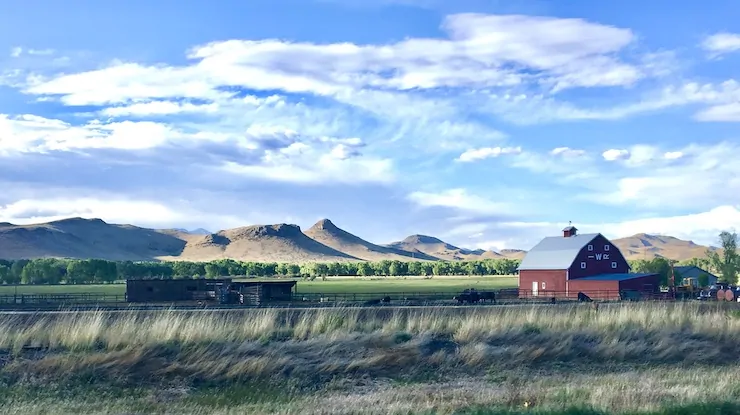
San Luis Valley farm. Photo credit: Allen Best/Big Pivots

Bureau of Land Management nominee draws criticism from #conservation groups over support for selling public land — Micah Drew (UtahNewsDispatch.com)

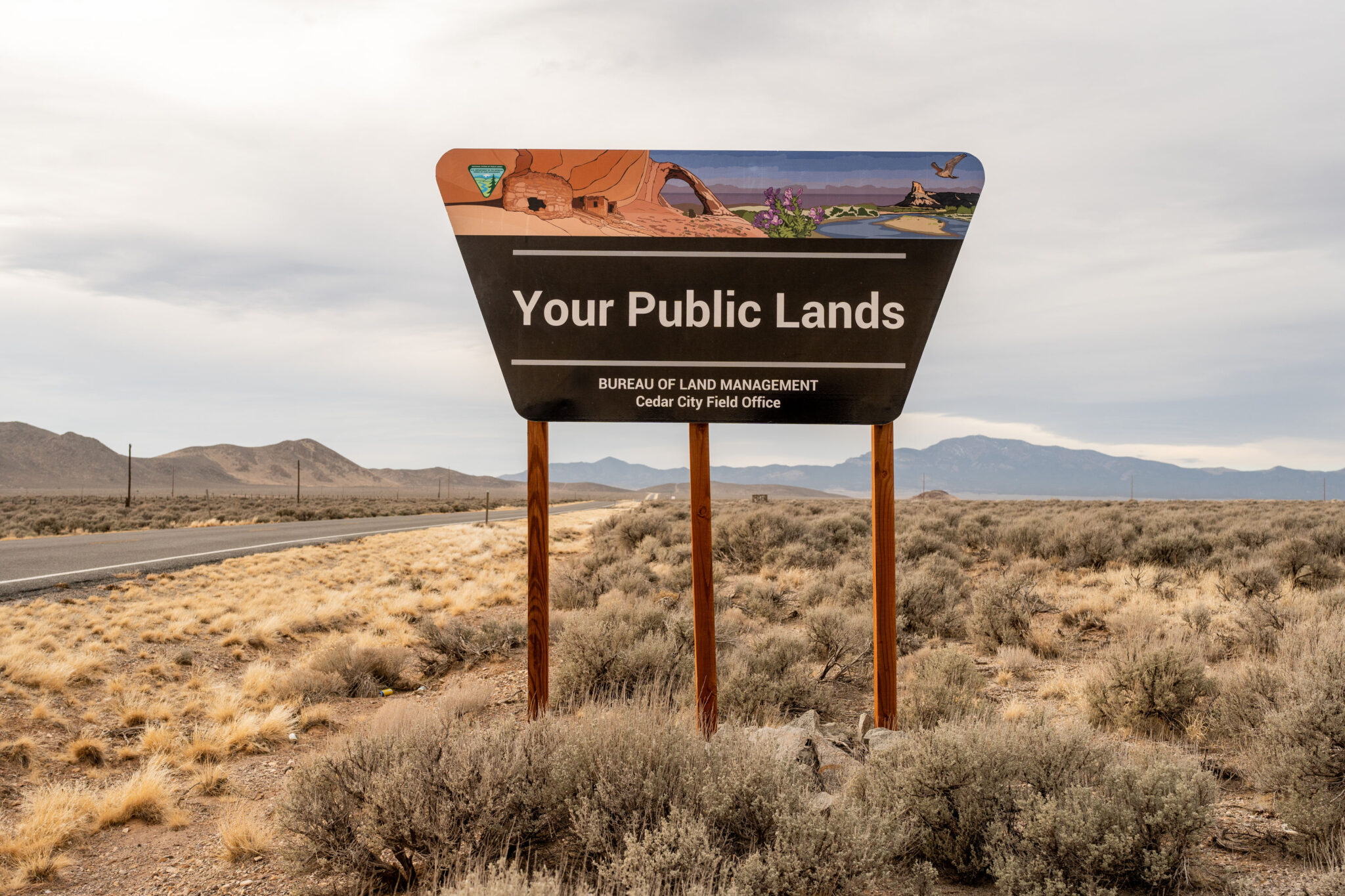
Signage welcomes visitors to Bureau of Land Management land near Cedar City on Sunday, Feb. 2, 2025. (Photo by Spenser Heaps for Utah News Dispatch)

Click the link to read the article on the Utah News Dispatch website (Micah Drew):

December 4, 2025

Republicans are rallying around former New Mexico Rep. Steve Pearce, Trump’s nominee to oversee the land management agency

Conservation groups in Montana and across the West are raising concerns about Steve Pearce, a former New Mexico representative who is President Donald Trump’s newest nominee to lead the Bureau of Land Management. 

The nomination has reignited a fight over the management of public lands which was highlighted during negotiations over Trump’s “One Big Beautiful Bill” due to proposed amendments to sell off federal land. The fight also spawned two new bipartisan caucuses in Congress, both co-chaired by Montanans, and predicated on public land access and management. 

In Montana and the two Dakotas, the BLM manages more than 8.3 million acres of federal land. Nationwide, the BLM oversees 245 million acres of federal land, along with 700 million acres of subsurface rights for extraction and energy development, putting the position directly in the crosshairs of energy developers and outdoor industry groups. 

According to the Center for Western Priorities, Pearce amassed a “lengthy anti-public lands record,” sponsoring bills to shrink national monuments and increase extraction on national forest land. 

Many conservation groups are specifically honing in on Pearce’s long record of advocating to sell off federal lands, including sponsoring legislation in Congress to authorize land sales or exchanges with local governments. 

In a letter to then-House Speaker John Boehner in 2012, Pearce wrote that of the federal lands located in the West, “most of it we do not even need.”

He proposed using land sales to reduce the deficit, similar to rhetoric heard earlier when Interior Secretary Doug Burgum equated federal lands to the nation’s “balance sheet.”

“We cannot afford to hand the keys to 245 million acres of our public lands over to someone who has spent his career trying to auction them off to the highest bidder,” Aubrey Bertram, staff attorney and federal policy director at Wild Montana, said. “Steve Pearce’s record is crystal clear: he believes public lands should be privatized for billionaires’ benefit, not protected for the people’s.”

But Pearce’s nomination has been greeted with enthusiasm by mining and energy companies that operate on federal land, as well as by many Republican officials, including Montana Sen. Steve Daines.

“I knew Steve in the House days, and Steve is a great pick. And I particularly like the fact that it’s a Westerner,” Daines said in an interview. “I think it’s helpful when we have leaders in those important positions that come from the West, when they understand uniquely the challenges we face as it relates to federal land, state land, private land. And Steve Pearce has lived it and breathed it.”

Daines is a member of the newly formed Senate Stewardship Caucus, which is co-chaired by Montana Sen. Tim Sheehy. 

The two Montanans also bucked their party earlier this year by joining Senate Democrats in a resolution that would have prevented the use of public land sales to reduce the deficit. 

Representatives for Daines and Sheehy did not respond to questions about Pearce’s nomination. 

Sheehy has not publicly stated whether he will support Pearce. 

But Montana’s federal delegation has been supportive of increasing coal and energy extraction in the state. 

In eastern Montana, Congress recently voted to overturn a Biden-era restriction on resource extraction on federal land, reopening nearly 1.7 million acres to future coal leasing.  

All members of the state’s delegation supported the move calling it vital to the state’s economy and the nation’s energy security.

Pearce has roots in the oil and gas industry that stretch beyond his political work. 

In the 1980s, Pearce founded an oilfield services company in New Mexico, which he later sold when he won his first election. 

Starting in 2003, he represented New Mexico in Congress for seven terms.

He lost races for the U.S. Senate in 2008 and governor in 2018. 

While conservation and public land advocates have pushed back against Pearce’s nomination, industry groups have applauded Trump’s pick. 

The National Cattleman’s Beef Association said Pearce’s experience makes him “thoroughly qualified to lead the BLM and tackle the issues federal lands ranchers are facing.”

The Western Energy Alliance, comprising oil and gas companies across nine western states, also put out a statement of support for Pearce. 

“As a westerner coming from a state that’s nearly 20 percent BLM land, he understands the bureau’s mission. As a former congressman and chair of the Congressional Western Caucus, his record shows he’s been a champion of multiple-uses of public lands. Steve has been a longtime friend who understands the value of energy development among other uses,” the Alliance said. 

This story was originally produced by Daily Montanan, which is part of States Newsroom, a nonprofit news network which includes Utah News Dispatch, and is supported by grants and a coalition of donors as a 501c(3) public charity.

This map shows land owned by different federal government agencies. By National Atlas of the United States – http://nationalatlas.gov/printable/fedlands.html, “All Federal and Indian Lands”, Public Domain, https://commons.wikimedia.org/w/index.php?curid=32180954