What other nations are doing to restore their rivers

by Robert Marcos

Nations around the world are restoring their over-taxed river systems by establishing basin‑wide flow targets, by reserving large quantities of water to maintain riverine environments, by making major cuts in consumptive use, and by removing man-made infrastructure that impeded the natural flow of water.

Australia’s response to the “Millennium Drought” is often cited as a blueprint for the recovery of America’s Colorado River. The Water Act 2007 was Australia’s primary federal legislation for managing the Murray–Darling Basin. Enacted during the Millennium Drought, it shifted water management from a state-by-state approach to a centralized federal framework to ensure long-term water security and environmental sustainability.

Australia’s Water Act 2007 included –

Water Buybacks: The government spent billions to “buy back” water entitlements from willing farmers to return them to the environment, thereby restoring river health.

Water Markets: Australia pioneered “unbundling” water from land, allowing it to be traded as a commodity. This incentivized a shift from low-value, water-heavy crops like rice to high-value ones like almonds.

Legal and remedial reforms: Basin‑wide laws or plans that set enforceable extraction limits and prioritize maintaining minimum environmental flows. Explicit recognition of ecological flow requirements in allocation agreements, sometimes including reserved environmental flow shares in international draft treaties.

Reducing consumptive use: Cutting irrigation diversions and changing crop patterns or technologies so that more water remains in the channel, as highlighted for the Baaka‑Darling. Using pricing, buy‑backs of water rights, and efficiency programs to retire or shrink high‑impact uses while compensating users.

Restoring environmental flows and re‑operating infrastructure. Dedicating a defined volume of water each year as environmental water and delivering it strategically to key river reaches and wetlands.

Re‑operating reservoir cascades to mimic aspects of natural flow regimes (e.g., Yellow River WSRS using coordinated reservoir releases and artificial flood waves for sediment and flow objectives).

Ecological and land‑use restoration: Large‑scale re‑vegetation and land‑use change in upper basins to reduce erosion, improve infiltration, and stabilize hydrology. Floodplain, marsh, and wetland restoration to increase “sponge” capacity, store water during high flows, and sustain baseflows, as in Rhine marsh and broader European river projects.

Infrastructure removal and nature‑based solutions: Removing or modifying barriers (small and large dams, weirs) to reconnect fragmented river sections, restore sediment and fish passage, and improve overall river health; the EU has set a goal to reconnect 25,000 km of rivers by 2030 through such measures.

Implementing local, low‑tech retention structures (e.g., “beaver dams”), to enhance groundwater recharge, moderate extremes, and empower community‑based management.
#Colorado’s dust-free snow is a bright spot in an otherwise poor winter — Shannon Mullane (Fresh Water News) #snowpack #runoff

Click the link to read the article on the Water Education Colorado website (Shannon Mullane):

March 12, 2026

An otherwise dismal snow year in Colorado has one clear upside: At least the snow that has fallen on the state isn’t dusty.

Each year, storms pick up dust from across the Southwest and drop it on Colorado’s mountain snowpack, where it can hasten melting. Earlier snowmelt has ripple effects on water supplies, forecasts, irrigators and ecosystems. But this year, the snow is white and clean all the way through, at least at the test locations observed by Jeff Derry’s team at the Center for Snow and Avalanche Studies.

What gives? Derry chuckled. It’s storms that bring dust — and snow, he said.

“We haven’t had the dust because we haven’t had the storms,” Derry said. “They kind of come hand in hand.”

Since mid-January, Colorado has experienced its lowest snowpack since 1987. The winter storms that have dumped snow on the mountains have been quickly followed by warm temperatures, leaving a relatively shallow layer of snow at higher elevations. The snowpack is scarce, if present at all, at lower elevations.

Derry, executive director of the center’s Dust-on-Snow Program, spent early March traveling around the state, digging pits in the snow, and looking for rusty, brownish layers of dust.

The program’s snow monitoring sites are close to other data collection sites that are part of the federal snow telemetry, or SNOTEL, network. These stations, basically sheds outfitted with antennae and an array of scientific instruments, help track precipitation, temperature and other climate information across the West.

“This tour so far, after doing three sites, has been easy on my back,” he said. “SNOTEL stations aren’t lying. It’s a skimpy snowpack.”

The dust that typically mars Colorado’s snowpack is dropped by winter storms, which carry it from arid regions in Arizona, New Mexico and Utah. Some of that dust was loosened by human actions, like overgrazing and developing land.

Dark dust layers on the snow’s surface absorb more solar radiation, which causes the snow to melt faster and earlier in the season. When that happens, it changes how plants use water. They send more moisture into the air, which reduces the amount of water entering streams and rivers, according to researchers.

In some years since 2003, these dust events, as scientists call them, have blown over Colorado as early as October or November. Scientists observed 12 dust events in 2009 and in 2012, the most per year since 2003

But what Derry saw on his tour this year — from Rabbit Ears Pass near Steamboat Springs to Red Mountain Pass in southwestern Colorado — was a layer of white, even after a storm Friday cast a new layer of snow over much of Colorado.

Derry hoped the recent storm will help keep the snowpack from melting too early. Or, this year could offer something new, he said: A dust-free, albeit “skimpy,” snowpack.

But after 20 years of tracking dust-on-snow events, researchers have found that there are no seasons without dust. Derry will be watching out in March, April and May when about 80% of dust events typically happen, he said.

“Even though things might be looking good now. It just takes one nasty storm to change everything. With the shallow snowpack, we’ll see early melt anyway,” he said. “Add some dust and it could make it even worse.”

An early spring melt

Derry’s team started checking their snow monitoring sites seven to 10 days earlier than usual. They’re expecting an early spring melt, Derry said.

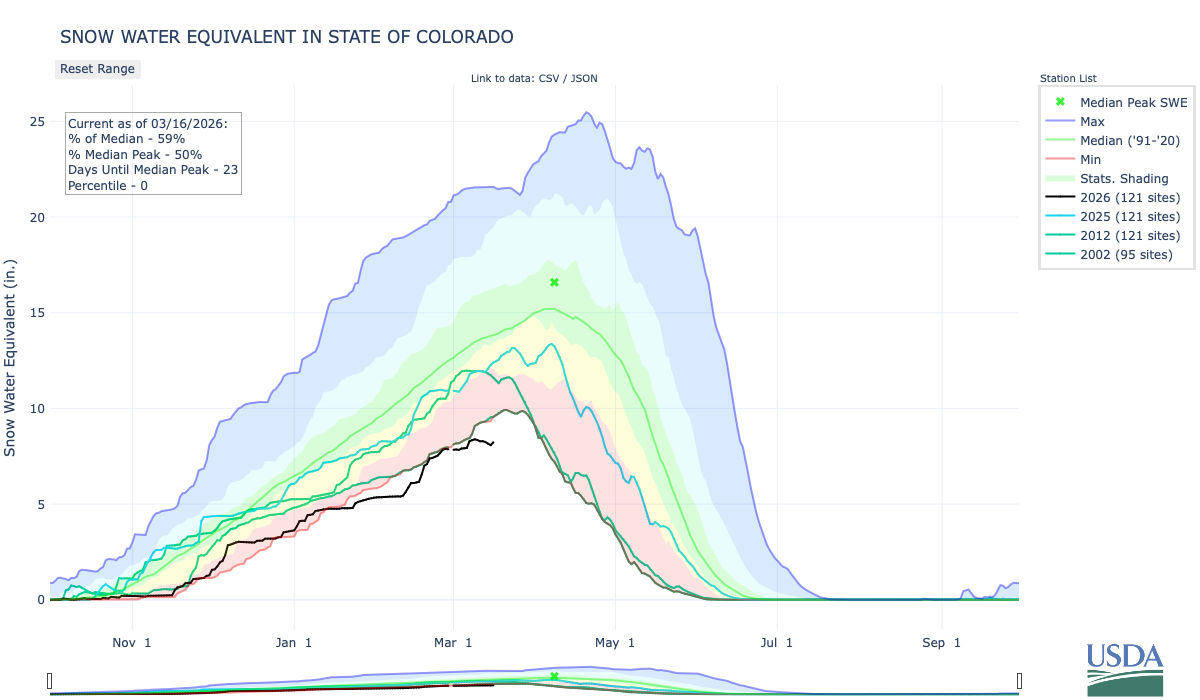
Colorado’s statewide snowpack typically reaches its peak around April 8, although the peaks typically occur earlier or later, depending on the watershed.

The melt starts soon after. Reservoirs help pace the flow of water as it rushes out of the mountains, storing water that becomes vital to farmers and ranchers later in the summer.

Colorado’s 2026 snowpack, depicted by the black line, continues to be the lowest on record since 1987, according to federal data. The snowpack normally peaks around April 8 as marked by the green “x.” It is measured as the snow-water equivalent, or the amount of liquid water in snow. (Natural Resources Conservation Service, Contributed)

Dust can accelerate that melt by two to four weeks or 50 days in more extreme years. (Scientists are still trying to understand what factors cause extreme years and whether dust events can be better predicted.)

So can warmer temperatures, like the exceptional heat wave in the forecast for Colorado starting March 16. Some areas are pushing 20 degrees above normal this week and next week, according to the National Weather Service in Grand Junction.

“This heatwave may be the final nail in the coffin for any hope of snowpack recovery this season in Colorado’s Rockies and elsewhere across the West,” Bouldercast Weather, a team of Denver and Boulder weather experts, said on social media Monday.

A weekend storm could bring up to 6 inches of snow to the northern Rockies in Colorado, said David Byers, a meteorologist for the weather service in Grand Junction.

The water that runs out of Colorado’s mountains serves communities in 19 states before it eventually reaches the Gulf of Mexico and the Pacific Ocean.

Not much snow translates into very little water, Derry said. That could affect fire season, forest health and water resources for everyone in all the basins that Colorado serves.

When there are too many low-snow years in a row, reservoirs can struggle to keep up their water storage. Between 2020 and 2025, Colorado has had three below-average winters, two average winters and one above-average winter, according to federal data from SNOTEL stations.

Colorado is heading into this year’s spring runoff with about 87% of its usual reservoir storage, according to federal data.

“It’s great not to see any dust of course,” Derry said. “But it’s pretty scary to see the skimpy snowpack around the state.”

More by Shannon Mullane

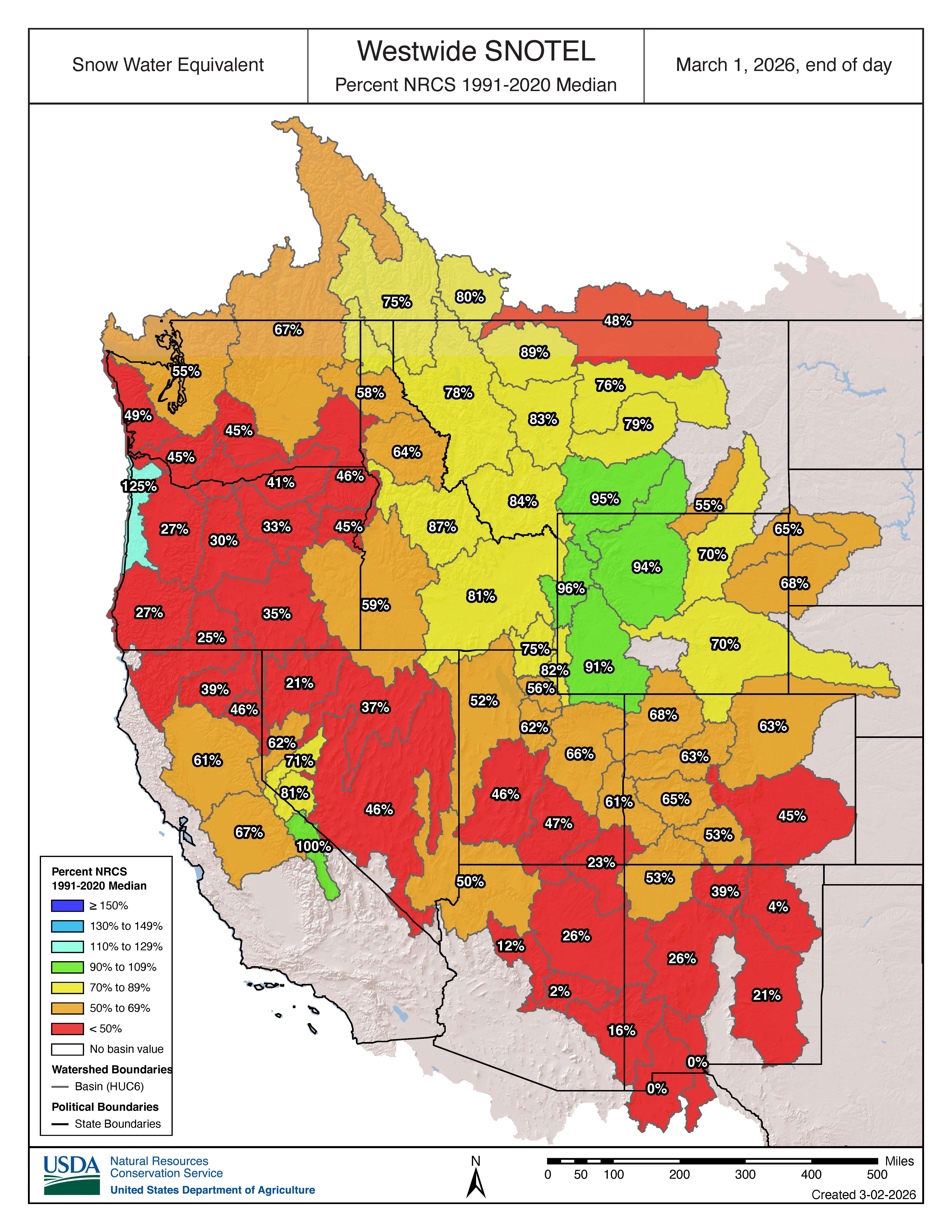
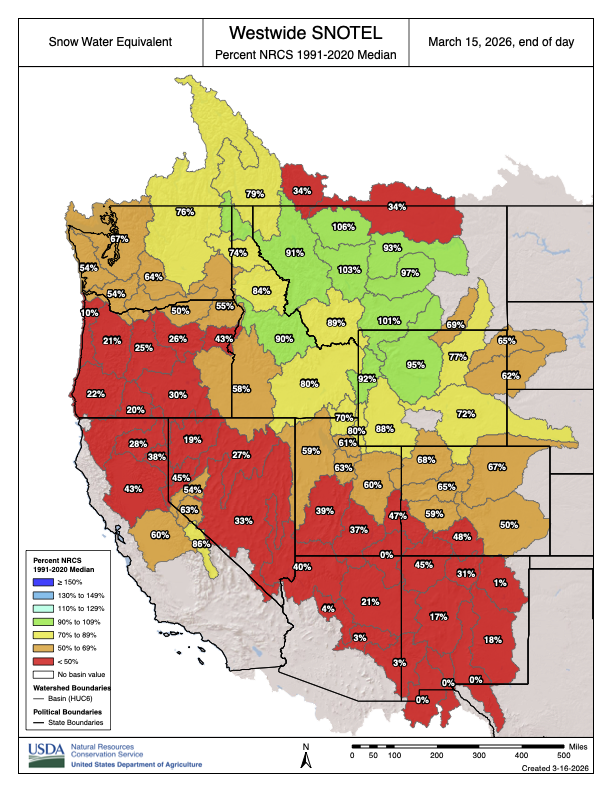
Westwide SNOTEL basin-filled map March 15, 2026.

The March 12, 2026 Intermountain West Climate briefing is hot off the presses from Western Water Assessment #snowpack #runoff

Click the link to read the briefing on the Western Water Assessment website:

March 12, 2025 – CO, UT, WY

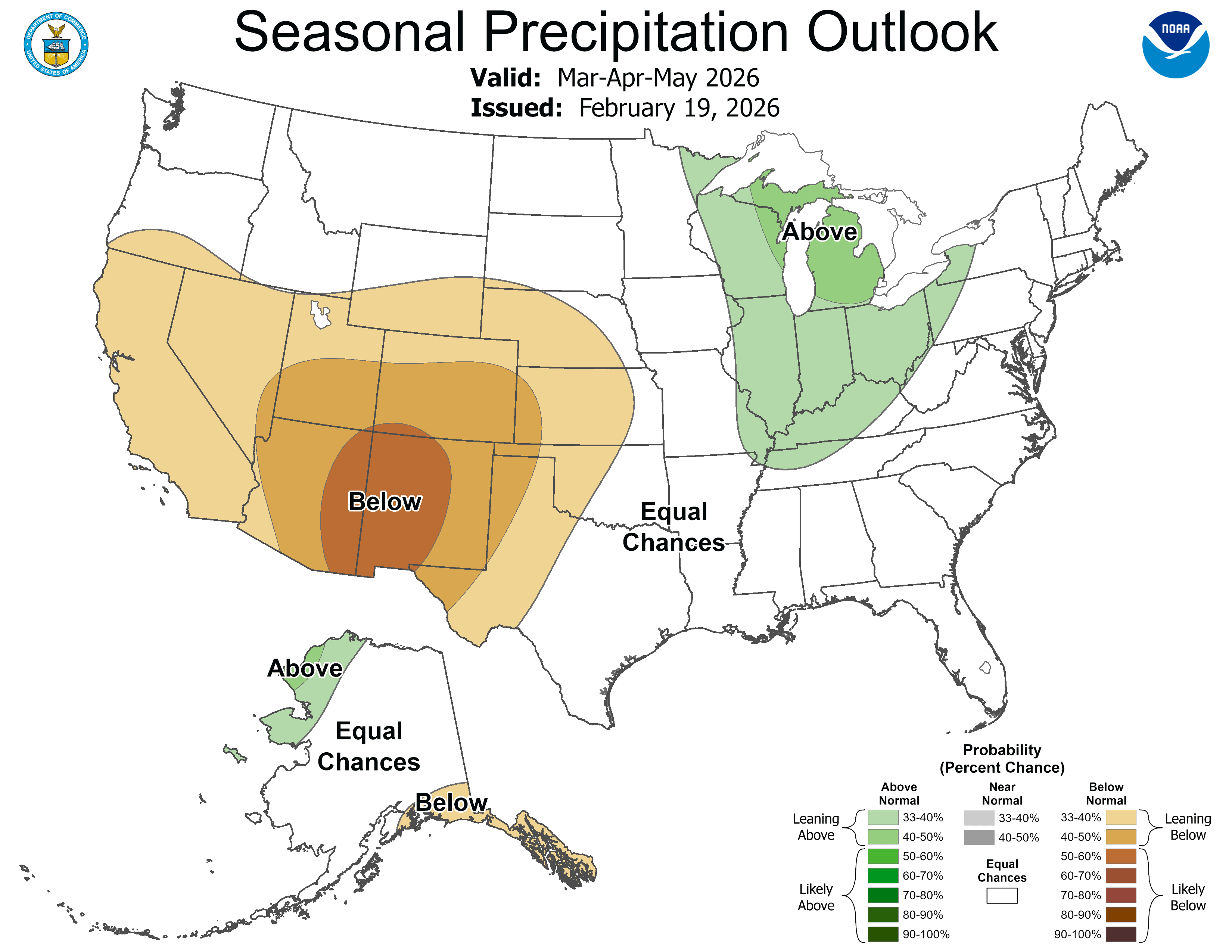
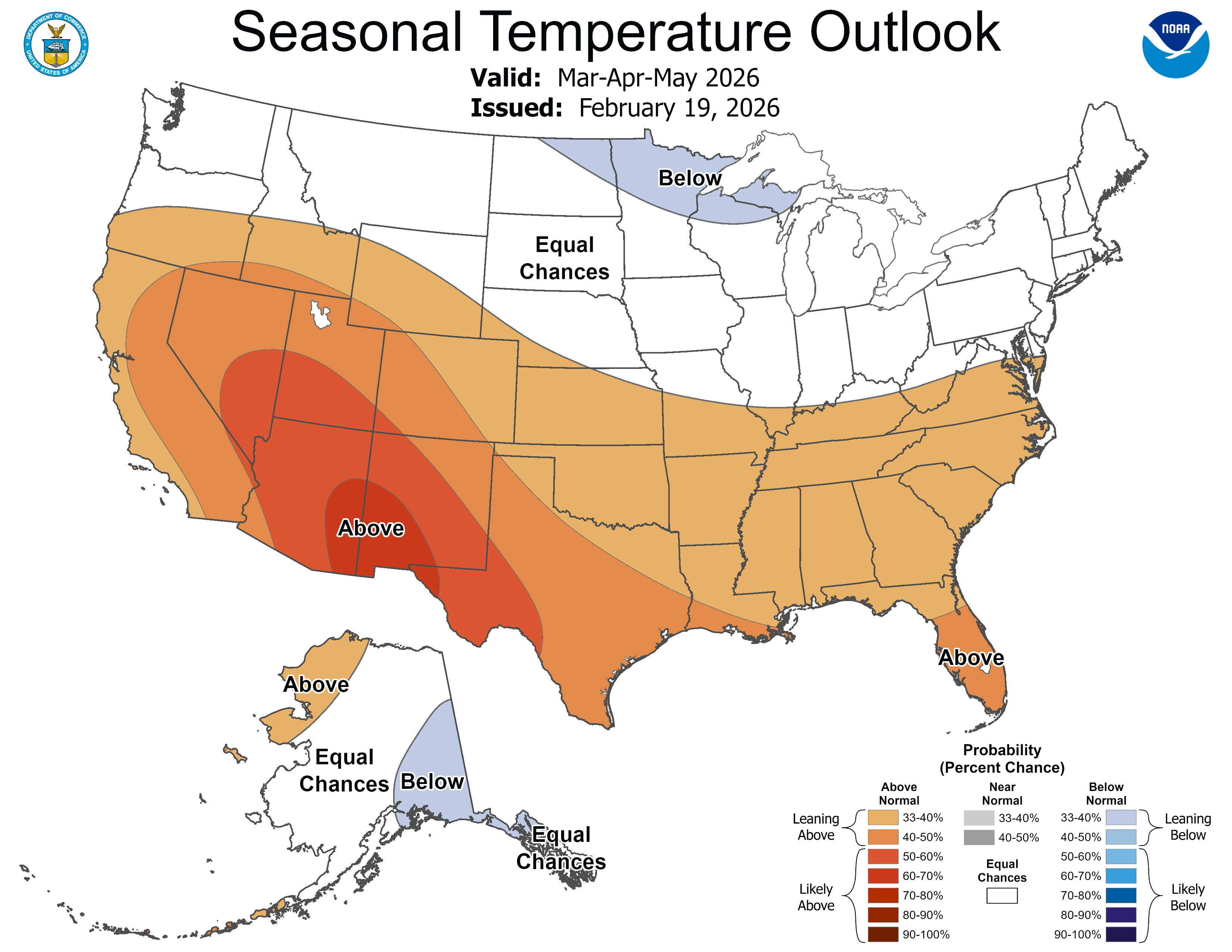
Much of the region experienced its warmest February on record, and Colorado, Utah, and Wyoming ended the season with the warmest December-February on record. As temperatures were much above average throughout the region, precipitation was below to much below average for much of the region, with record-dry conditions along the Front Range, as well as pockets in southeastern Colorado and southern Wyoming. As of March 1, snow drought continues to persist as below to much below normal snow-water equivalent (SWE) was observed for Colorado, Utah, and eastern Wyoming. Seasonal streamflow volume forecasts for regional river basins are below to much below average, except in northern Wyoming where there are near to above average forecasts. Regional drought coverage increased to 76% by early March. The NOAA Seasonal Outlooks for March-May suggest below average precipitation and above average temperatures. 

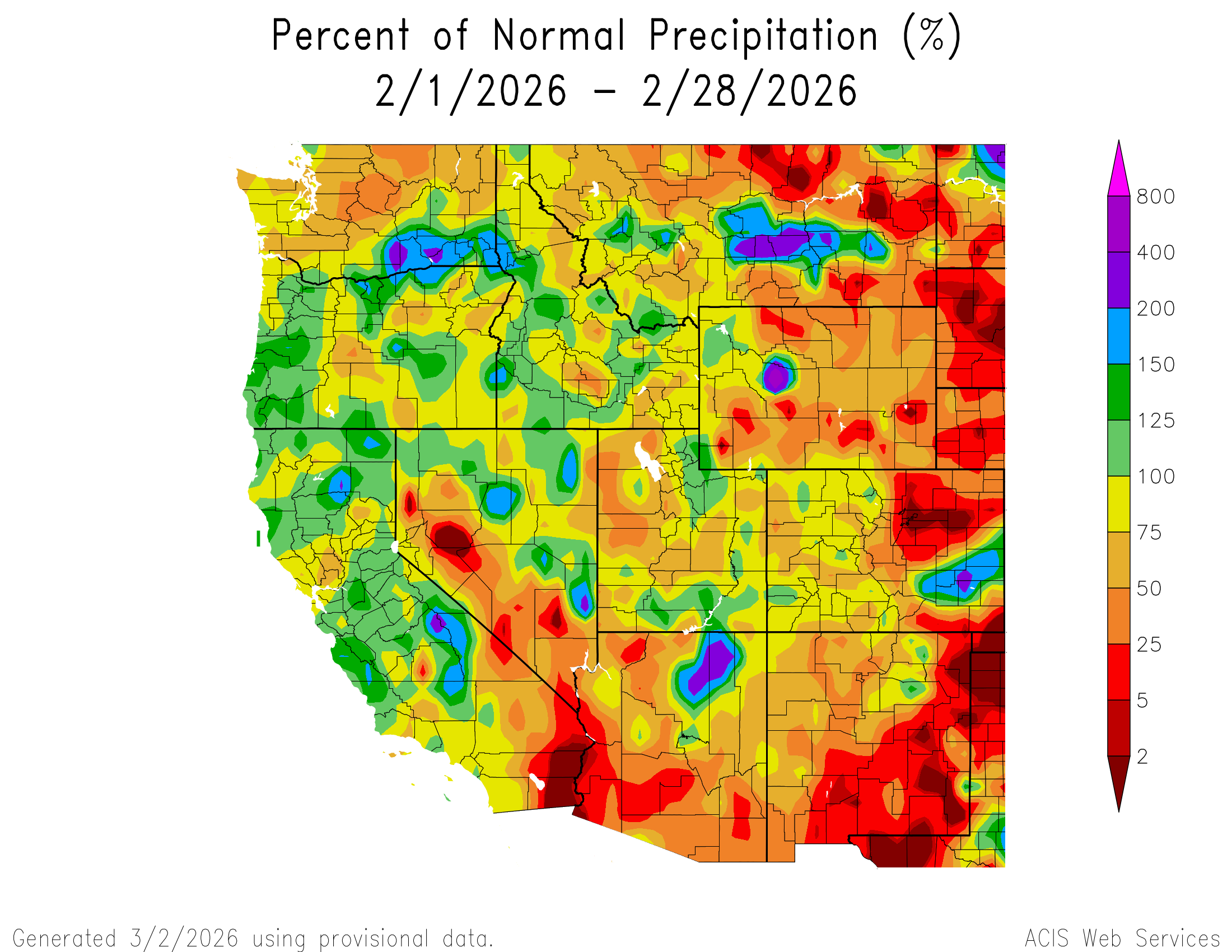
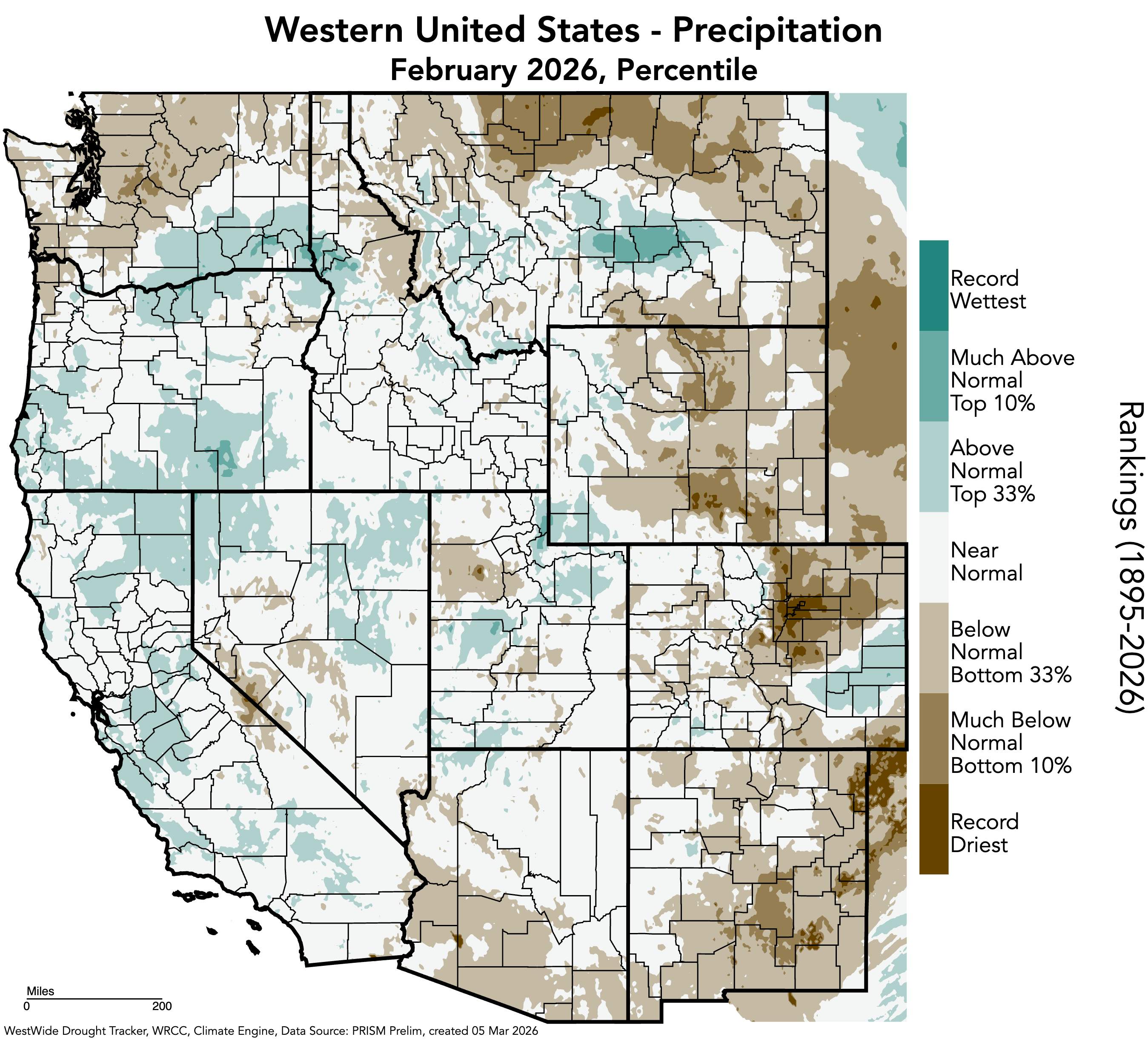
Regional precipitation was below to much below average in February, particularly in northeastern Colorado, with a large pocket of less than 2% of average conditions in Denver, Arapahoe, Adams, Washington, and Weld Counties. Another large pocket of less than 2% of average conditions occurred in southeastern Colorado in Baca County. In contrast, scattered pockets of above average precipitation occurred in each state, with two large pockets of 150-200% of average precipitation in southeastern Colorado and western Wyoming. One small pocket of 200-400% of average precipitation occurred in southeastern Colorado in Kiowa and Bent Counties, and a pocket of 400-800% of average precipitation occurred in western Wyoming in Fremont County. Record-dry February precipitation occurred in many counties along the Front Range in Colorado, including Denver, Boulder, Larimer, Jefferson, Douglas, Adams, Arapahoe, Broomfield, El Paso, Weld, and Park Counties, as well as Baca County in southeastern Colorado. Record-dry conditions also occurred in Carbon and Albany Counties in southern Wyoming, and Tooele County in western Utah.

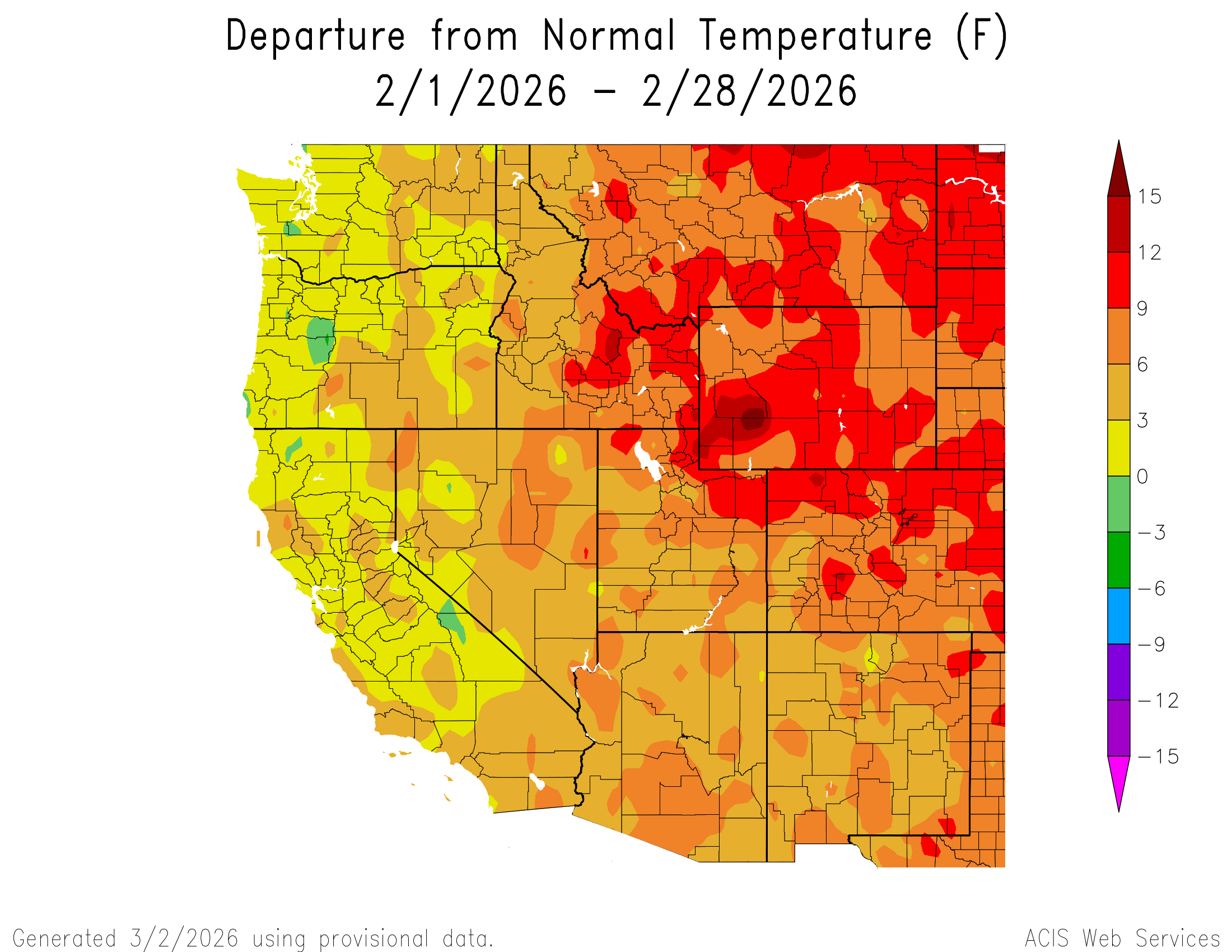
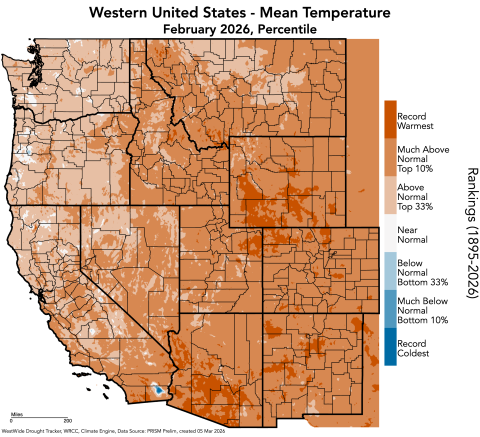
Regional temperatures were much above average to record-warm in February. Large swaths of 9 to 12°F above average temperatures occurred in each state, particularly in Wyoming and Colorado, and a large pocket of 12-15°F above average temperatures occurred in southwestern Wyoming. Colorado and Wyoming experienced the warmest February on record, and Utah experienced the third warmest February on record. All three states experienced the warmest meteorological winter (December-February) on record. These records are ranked by NOAA NCEI from 1895-2026.

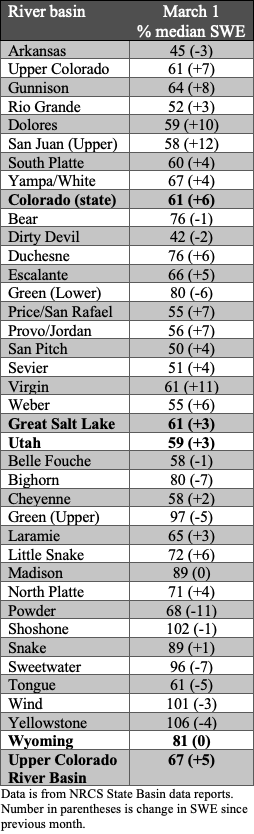
Below to much below normal snow-water equivalent (SWE) continues in Colorado, Utah, and eastern Wyoming as of March 1. River basins with 50% or less of normal SWE include the Upper Arkansas (45%) in Colorado, and the Lower Colorado-Lake Mead (50%), Upper Colorado-Dirty Devil (47%), Escalante Desert-Sevier Lake (46%), and Lower San Juan (23%) in Utah. In contrast, western Wyoming river basins have near normal SWE, including the Snake Headwaters (96%), Upper Yellowstone (95%), Big Horn (94%), and the Upper Green (91%). Due to record-warm temperatures and below average precipitation for most of the region this winter, snow drought continues to persist.

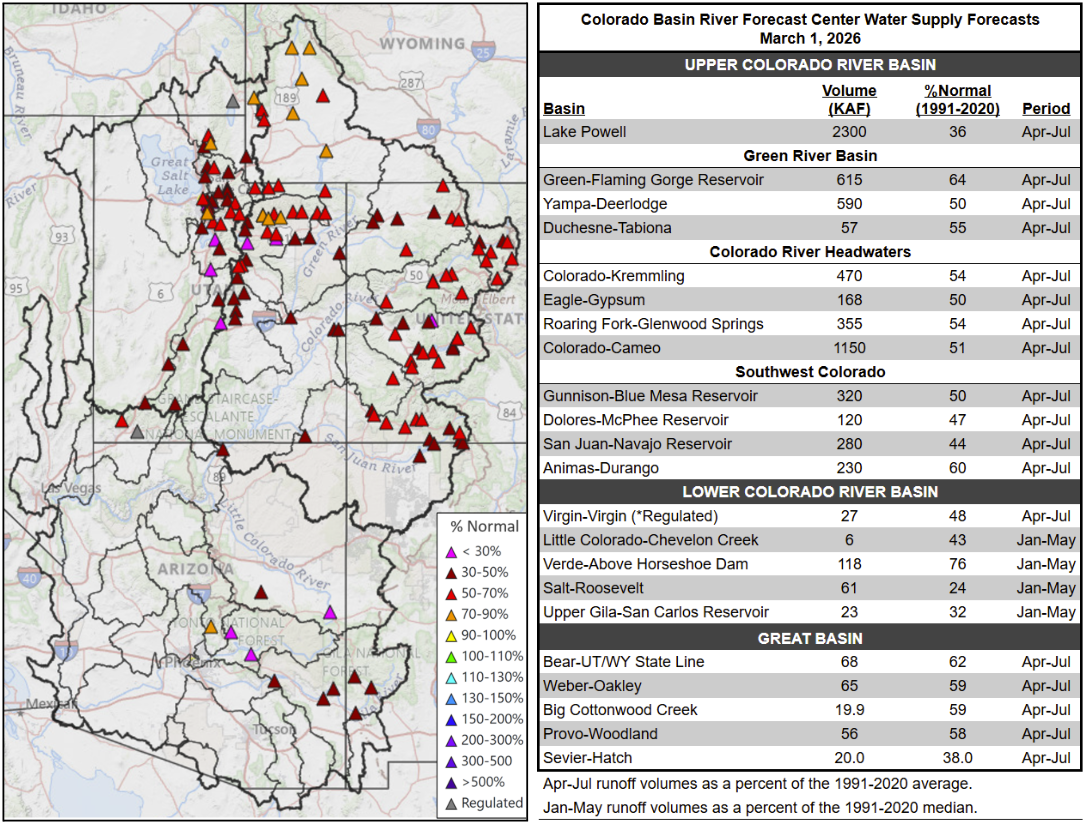
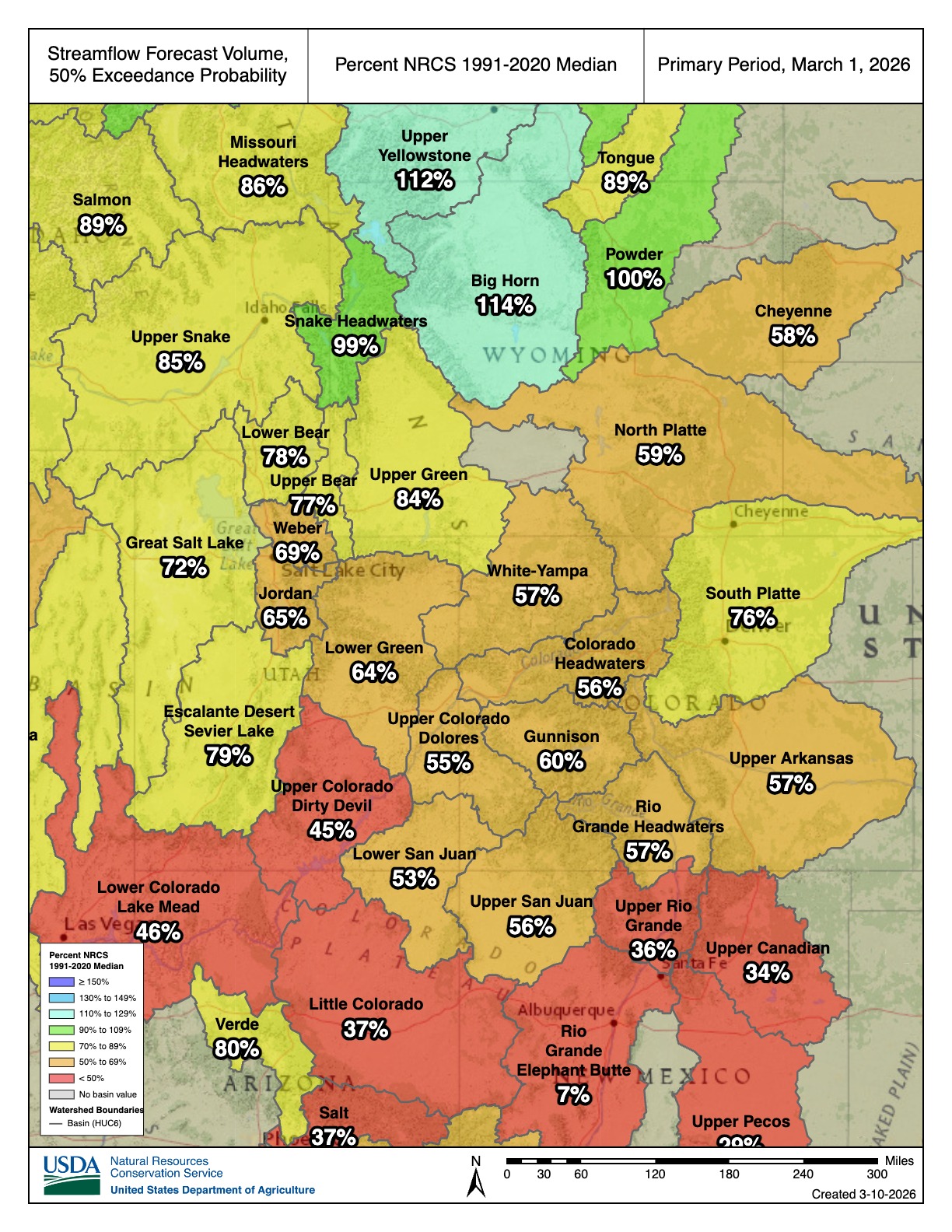
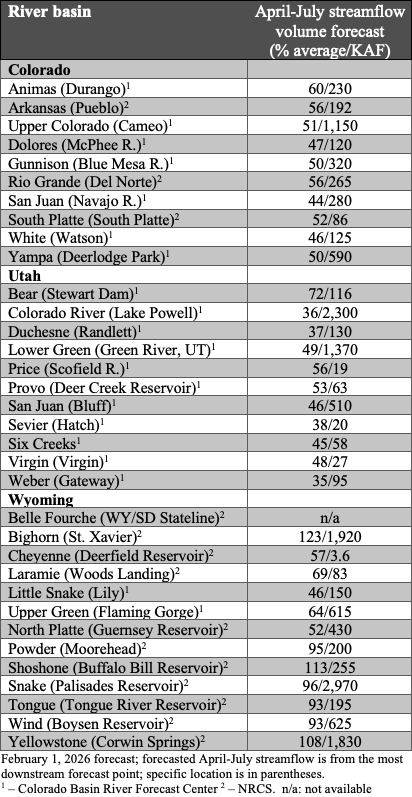
Seasonal streamflow volume forecasts for river basins in Colorado, Utah, and southeastern Wyoming are below to much below average. Near to above average seasonal streamflow volumes are forecasted for northern Wyoming. In Colorado, seasonal streamflow forecasts suggest 45-60% of average runoff for all major river basins. Runoff in most major Utah river basins is forecasted at 35-55% of average, except for the Bear River Basin (72%). Wyoming has a mix of streamflow forecasts, with below average forecasts in the Little Snake (46%), North Platte (52%), Cheyenne (57%), Upper Green (64%), and Laramie (69%) River Basins, near average forecasts in the Tongue (93%), Wind (93%), Powder (95%), and Yellowstone (108%) River Basins, and above average forecasts in the Shoshone (113%) and Big Horn (123%) River Basins. Below average inflow is forecasted for many regional reservoirs, including Lake Powell (36%), Navajo (44%), McPhee (47%), Blue Mesa (50%), Guernsey (52%), Deer Creek (53%), Scofield (56%), Deerfield (57%), and Flaming Gorge (64%) Reservoirs.

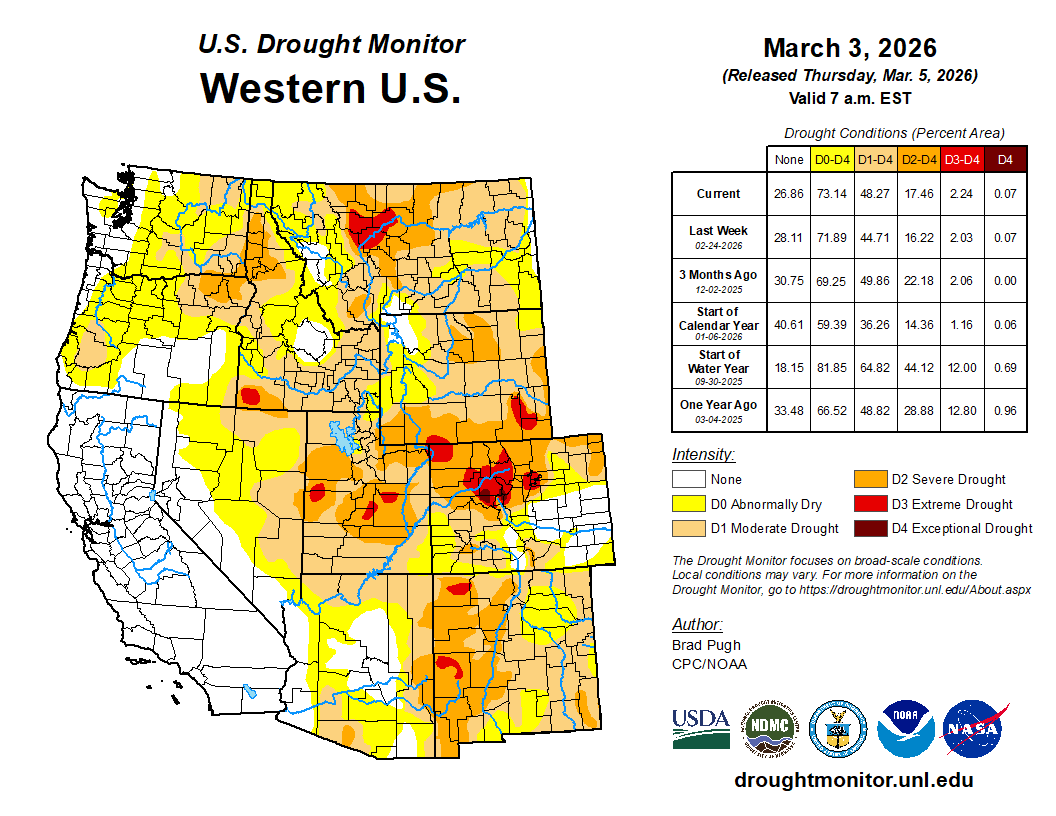
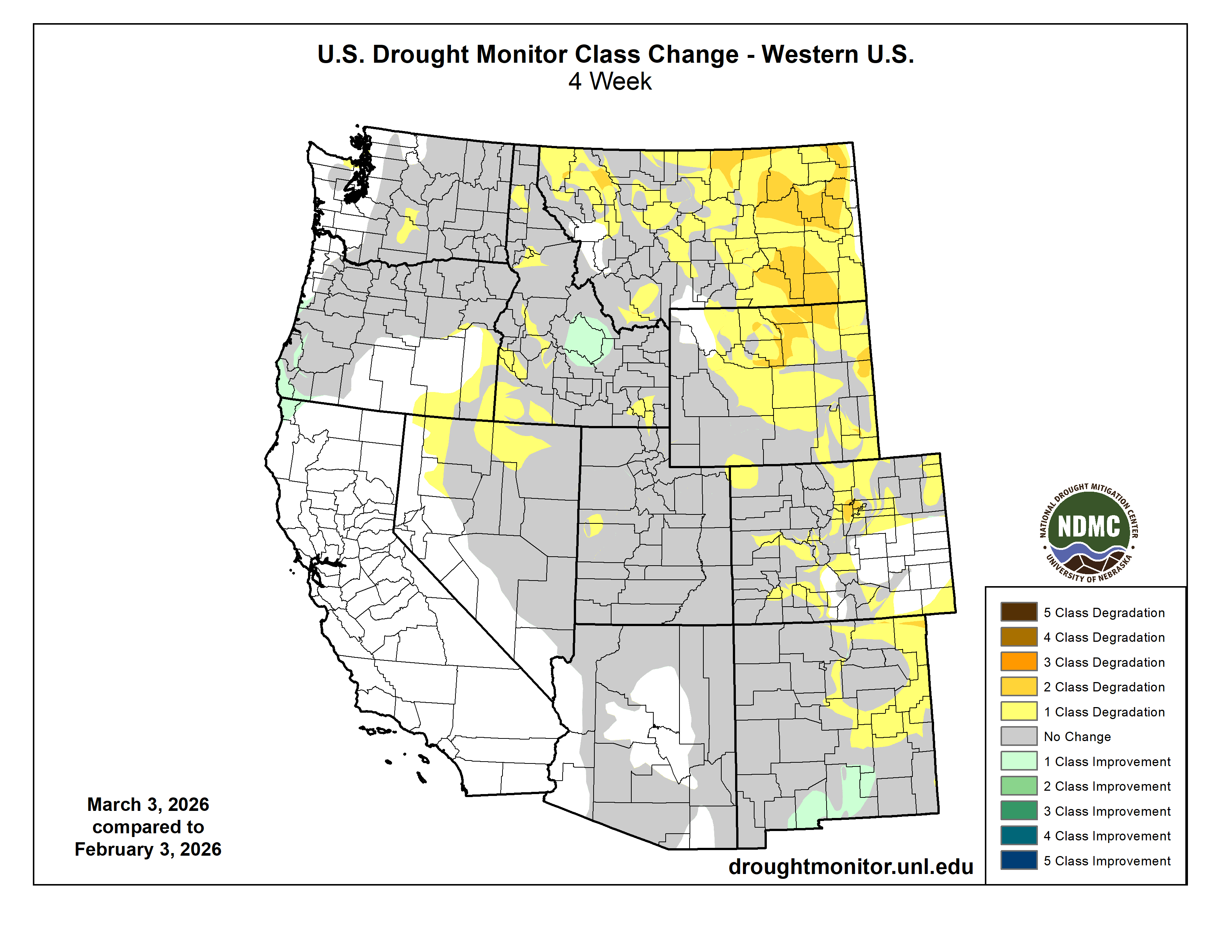
Dry and warm conditions during February caused regional drought coverage to increase to 76% by March 3 (drought covered 63% of the region on February 3). Drought conditions especially deteriorated in Wyoming, where moderate (D1) drought coverage increased by 33%, severe (D2) drought coverage increased by 14%, and extreme (D3) drought emerged in southwestern and southeastern Wyoming. In Colorado, D2 drought coverage increased by 11%, and D3 drought coverage increased by 3%, emerging in the Denver Metro region and northwestern Colorado. Utah drought coverage remained the same, with an emergence of D3 drought in northeastern Utah.

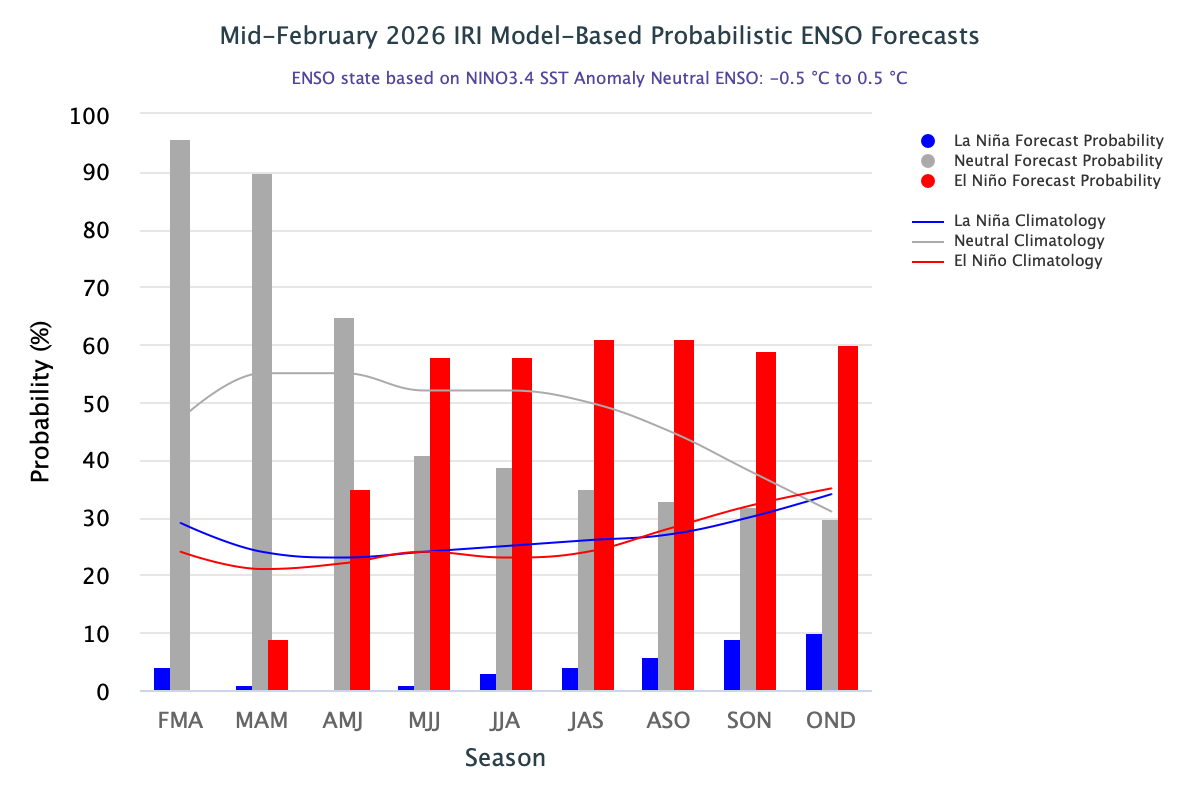
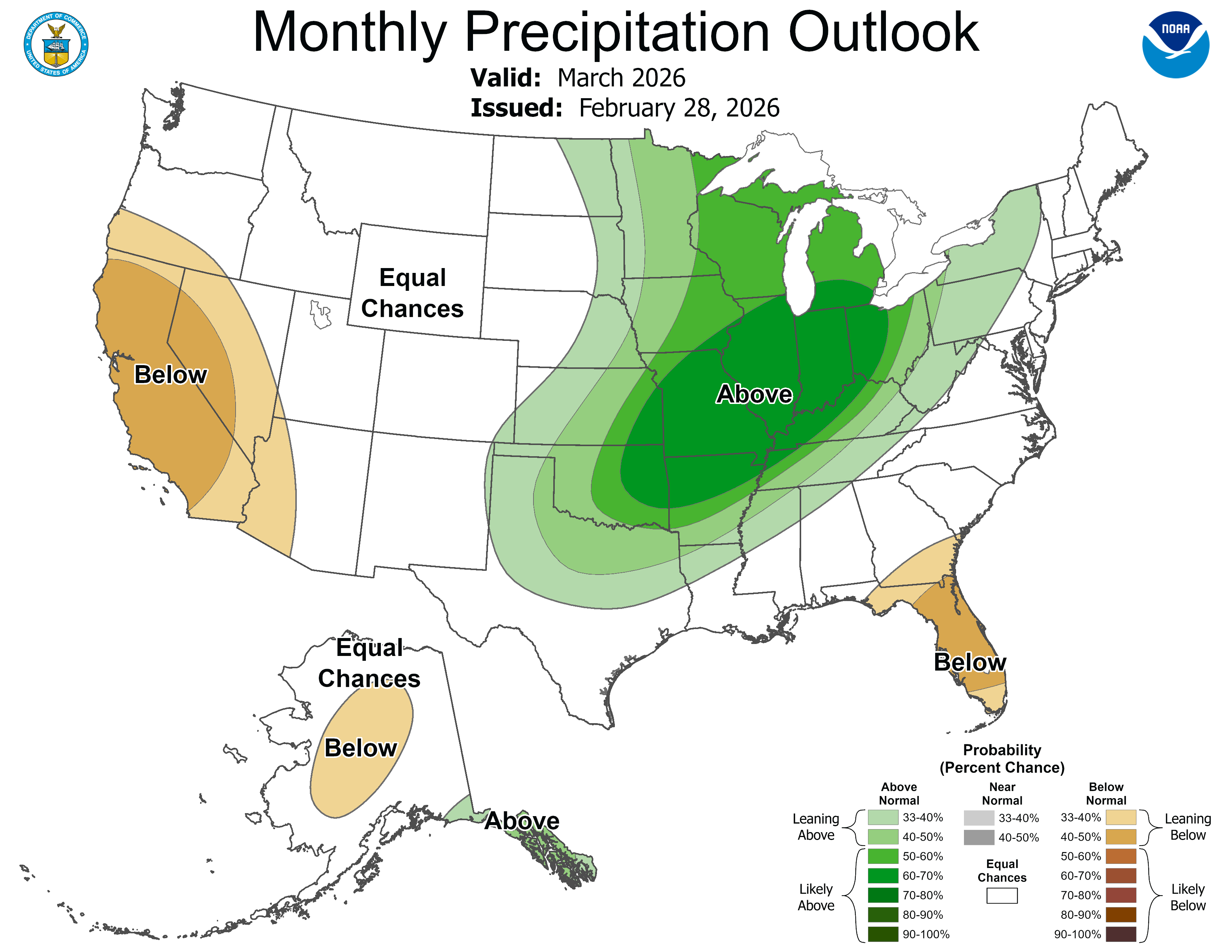
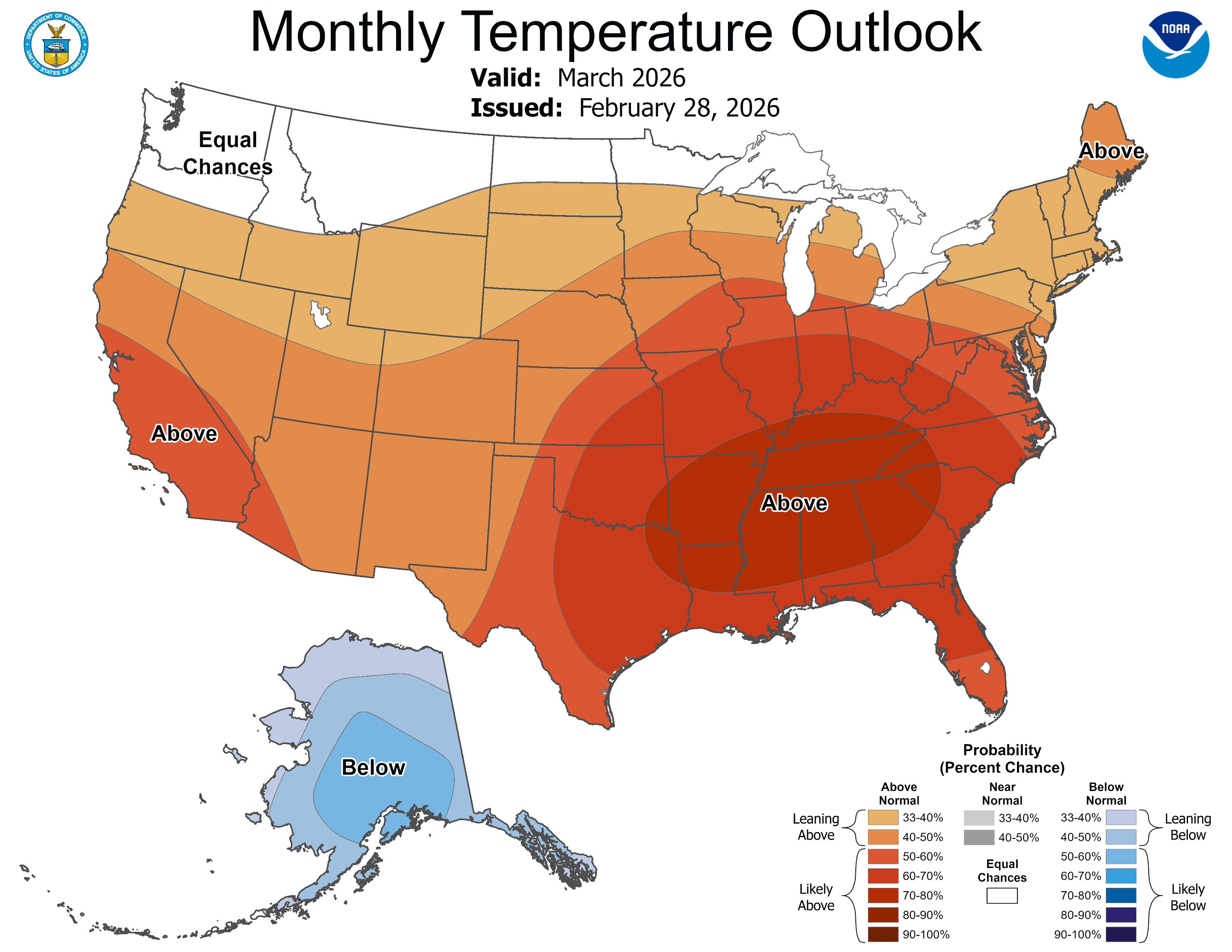
As of mid-February, La Niña conditions are declining and there is a 90% probability of transitioning to ENSO-neutral conditions during March-May. The NOAA March Precipitation Outlook suggests equal chances while the March Temperature Outlook suggests an increased probability of above average temperatures throughout the region. The NOAA Seasonal Precipitation Outlook for March-May suggests an increased probability of below average precipitation in Colorado, Utah, and southern Wyoming, and particularly in the Four Corners region. The NOAA Seasonal Temperature Outlook for March-May suggests an increased probability of above average temperatures in Colorado, Utah, and southern and western Wyoming, and particularly in southern Utah and southwestern Colorado.

Significant weather event: Extremely warm and dry winter for the Front Range. Colorado, Utah, and Wyoming experienced the warmest meteorological winter (December-February) on record, and Colorado and Wyoming experienced the warmest February on record. Colorado’s statewide average temperature for December-February was 33.6°F, surpassing the previous record of 32.0°F during the 1980-1981 winter season. Colorado’s Front Range had a particularly warm and dry February, causing extreme (D3) drought to emerge in the Denver Metro region. Denver, Adams, and Arapahoe Counties experienced their driest February on record. Denver experienced its second warmest winter on record, with an average temperature of 39.6°F, just short of the 40.1°F record from the 1933-1934 winter season. For context, the average winter temperature for Denver is 31.9°F, which this winter season significantly exceeds. Denver also experienced its driest winter, with only 13.4 inches of snow recorded by the end of February, well below the average of about 35 inches of snow for December-February. These warm and dry conditions were due to many factors, but the persistent high-pressure ridge that stayed over the western U.S. coupled with La Niña conditions was particularly notable in keeping moisture and cold temperatures out of the region.