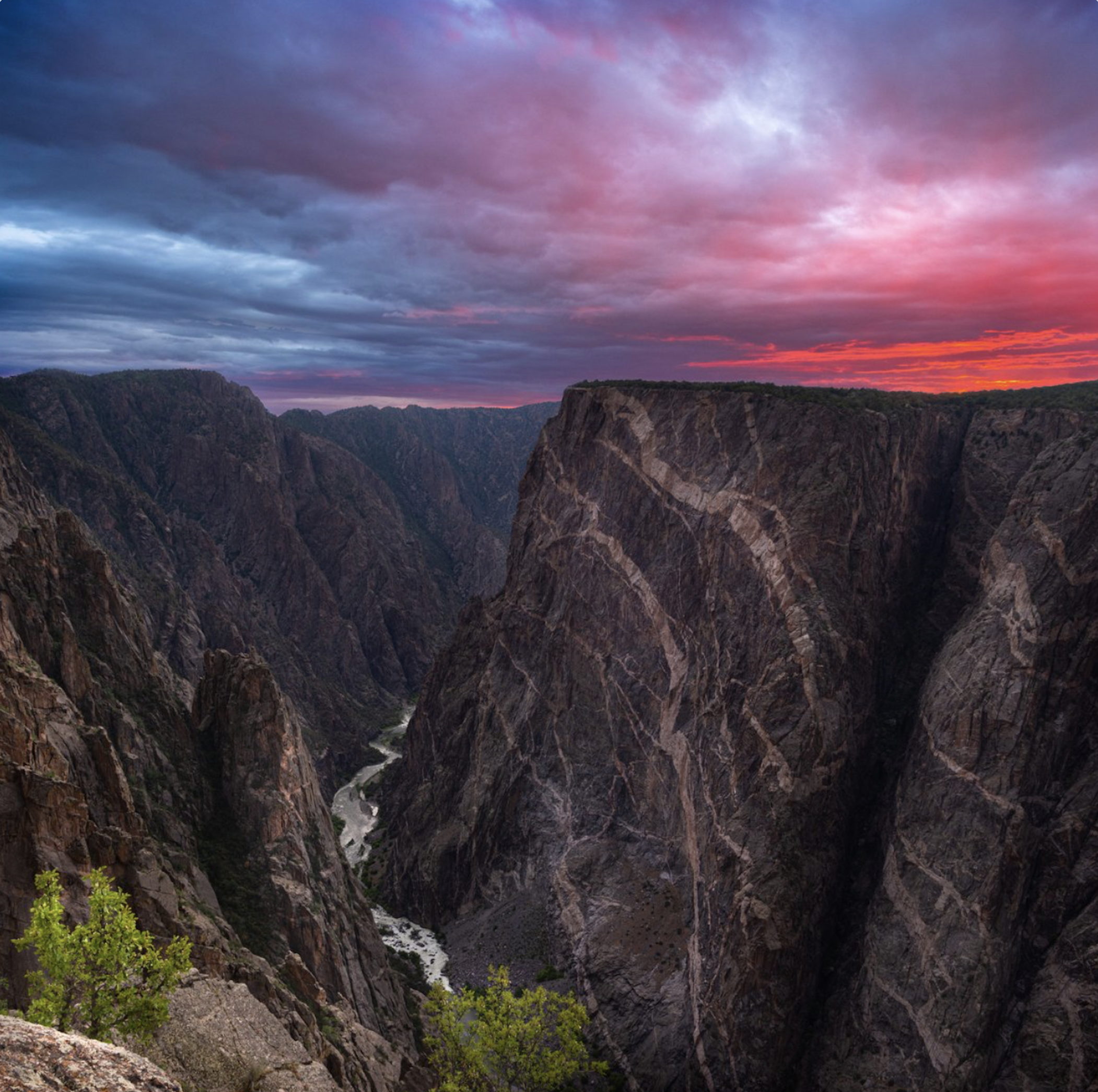
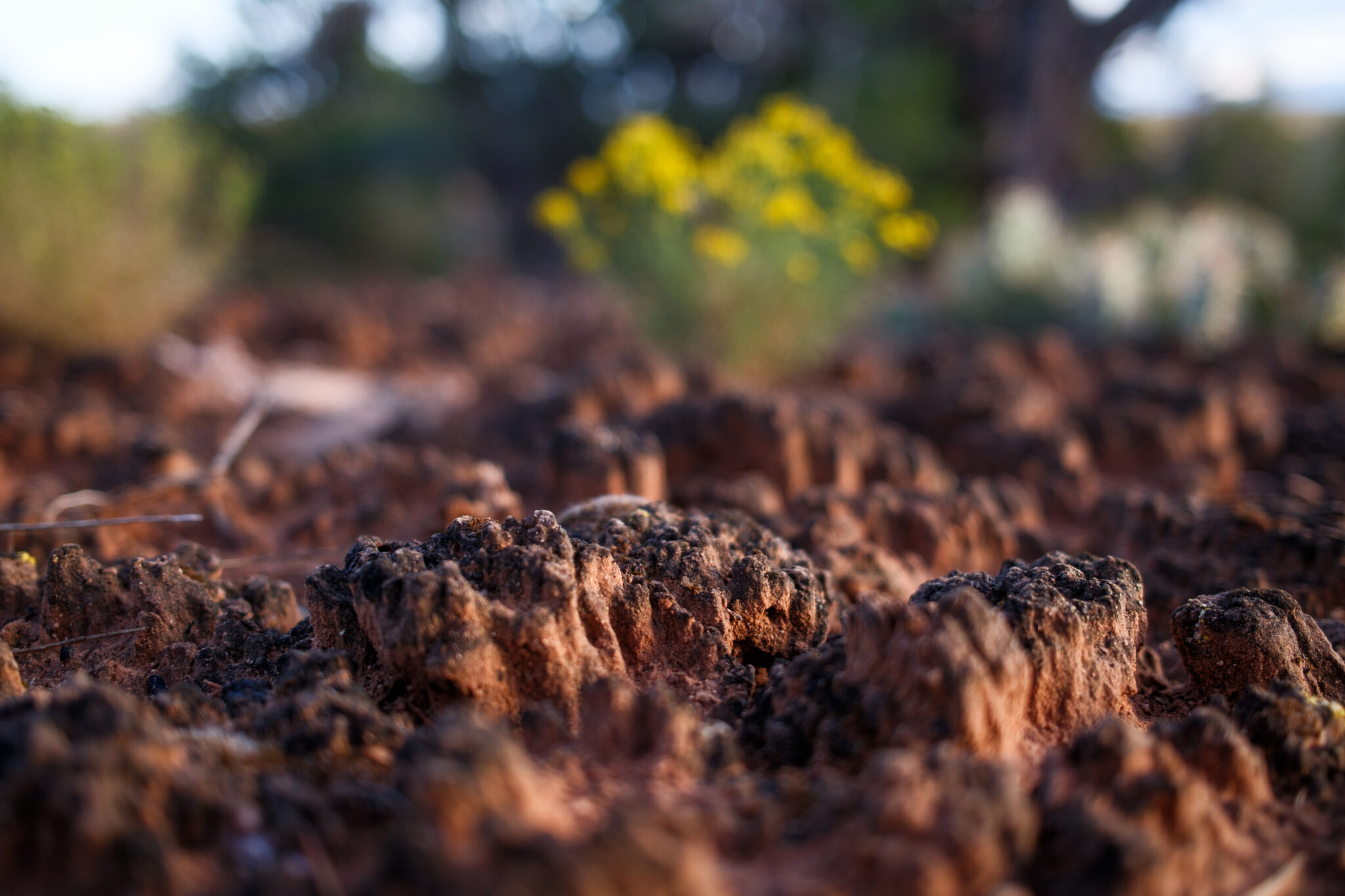
Black Canyon National Park July 2020. Photo credit: Claire Codling/The Department of Interior
From email from Reclamation (Andrew Limbach):
July 14, 2026
Aspinall Unit Operations Update – Release scheduled change to 1,390 cfs on Wednesday, July 15th.
On Wednesday, July 15th, the adjusted scheduled releases from Crystal Dam will decrease to 1,390 cfs from 1,465 cfs.
Gunnison River flows in the Black Canyon/Gunnison Gorge will decrease to 360 cfs.
On Thursday, July 16th, the adjusted scheduled releases from Crystal Dam will decrease to 1,315 cfs from 1,390 cfs.
Gunnison River flows in the Black Canyon/Gunnison Gorge will decrease to 290 cfs.
Reclamation will continue to monitor flows in the Gunnison River, and on Friday, July 17th, the scheduled releases from Crystal Dam may decrease to 1,265 cfs from 1,315 cfs.
Gunnison River flows in the Black Canyon/Gunnison Gorge would decrease to 250 cfs. An additional notification will be sent out confirming any change after Wednesday.
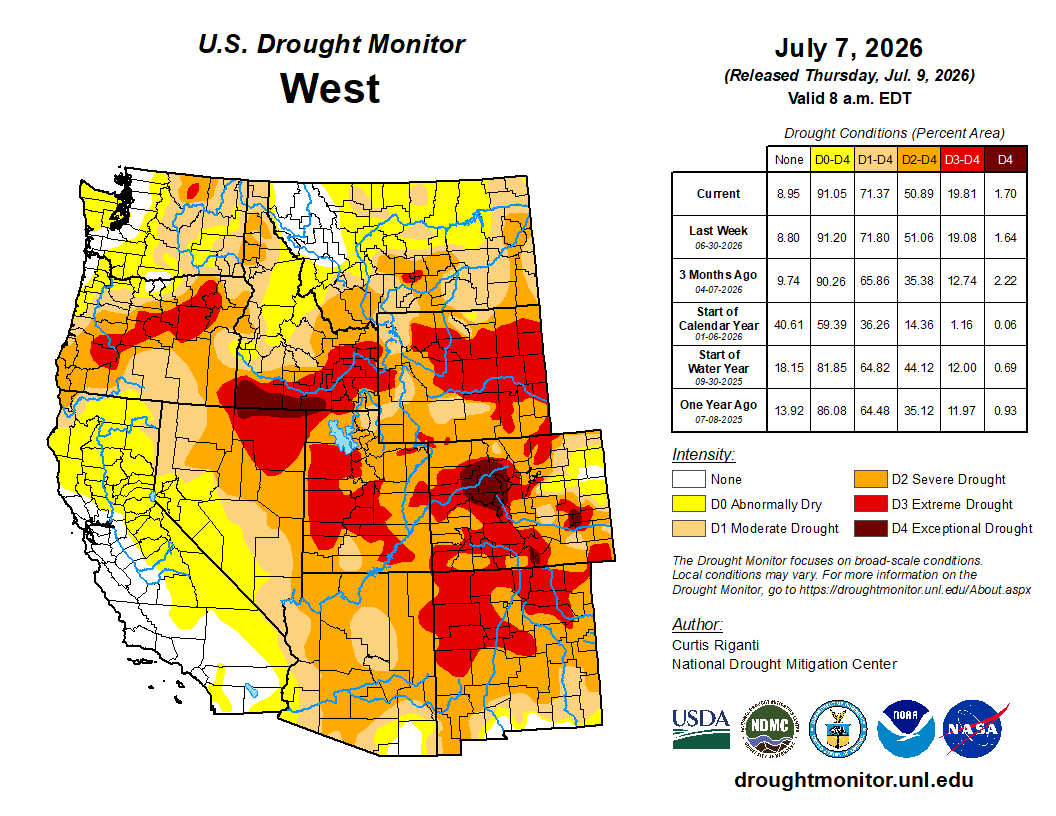
In response to the extreme drought conditions, the BOR has collaborated with US Fish and Wildlife and the National Park Service to reduce the target flows to 500 cfs at Whitewater and 200 cfs through the Black Canyon of the Gunnison until further notice. These releases are made for the authorized purposes of the Aspinall Unit, and to attempt to maintain a target base flow through the endangered fish critical habitat reach of the Gunnison while preserving critical storage in Blue Mesa Reservoir.
Contact Andrew Limbach (alimbach@usbr.gov or 970-248-0644) for more information regarding Aspinall operations or the Operation Group meeting.
President Donald Trump signed a pair of executive orders on Monday to again shrink Bears Ears and Grand Staircase-Escalante national monuments in Utah — this time more dramatically, by about 3 million acres or 90% of their original size.
Utah’s all-Republican congressional delegation, Gov. Spencer Cox and House Speaker Mike Schultz stood around Trump’s desk in the Oval Office during the closed-door signing that was live-streamed on YouTube by the White House.
“Let’s sign,” Trump said as he put pen to paper. “This is very nice. I’m very happy about this. And better than the first time.”
While signing the second executive order, Trump added: “Almost 3 million acres, going to be well taken care of now.”
The move continues a longstanding game of tug-of-war between multiple presidential administrations that has changed the boundaries of the national monuments several times over nearly a decade.
It also marks the second time Trump has slashed the size of the monuments.
In 2017, during his first term as president, Trump shrank Bears Ears from about 1.35 million acres to roughly 228,000 acres and Grand Staircase-Escalante from about 1.87 million acres to roughly 1 million acres. In 2021, former President Joe Biden restored both of the monuments to their original sizes, to frustration from Republicans and applause from conservation groups and tribes.
This time, Trump shrunk Bears Ears to about 121,000 acres and Grand Staircase-Escalante to about 182,000 acres, according to a news release issued by Utah Gov. Spencer Cox’s office.
When he cut the national monuments the first time nearly 10 years ago, Trump’s cuts were applauded by Republican state elected leaders, saying it freed the land from federal control and allowed more public access for hunting, ranching and economic development. Conservation groups and tribes reacted with outrage and lawsuits, arguing Trump lacked the authority to downsize the protections. Bears Ears in particular has deep spiritual and cultural significance for tribes.
Utah Republicans cheer
On Monday, Utah’s top Republican leaders again lauded Trump’s reduction of both monuments, saying it will better allow the lands to be managed and preserved while also enabling better public access. They said the monuments’ smaller sizes provides more targeted protection for valuable land, arguing the original designations spanned too large.
“We deeply value these natural, cultural, and scientific treasures,” Cox, Utah’s governor, said in a prepared statement. “The question has never been whether to protect them, but how to protect them best. The historic landmarks and other nationally significant resources remain under federal protection, while allowing agencies to direct limited resources toward caring for these specific sites rather than millions of surrounding acres.”
A sign welcomes visitors to a Grand Staircase-Escalante National Monument Visitor Center in Big Water, Utah on Sunday, Feb. 2, 2025.
Utah Sen. Mike Lee, while standing in the Oval Office behind Trump, said the Antiquities Act has been “abused” by turning larger than necessary swaths of land into monuments. Trump, he said, “is right-sizing it to bring it in compliance with what the law says.”
“These are 3 million acres. As I explained to President Biden, that’s two Delawares,” Lee said.
Utah Rep. Celeste Maloy said both monuments were created “over the unanimous opposition of Utah’s federal delegation, our governors, county commissioners, the locals who were worried about losing multiple uses on these federal lands.”
She applauded Trump for “listening to the people of Utah and saying, ‘We know you value this land, you want it used for multiple use and not locked up.’ And so this is a very different process in how the monuments were created.”
Trump’s orders also come after Lee and Maloy crafted a proposal to repeal Biden-era standards for managing the vast Grand Staircase monument, calling them too restrictive on uses like road access and too far from what neighboring communities wanted. That plan, however, has since stalled.
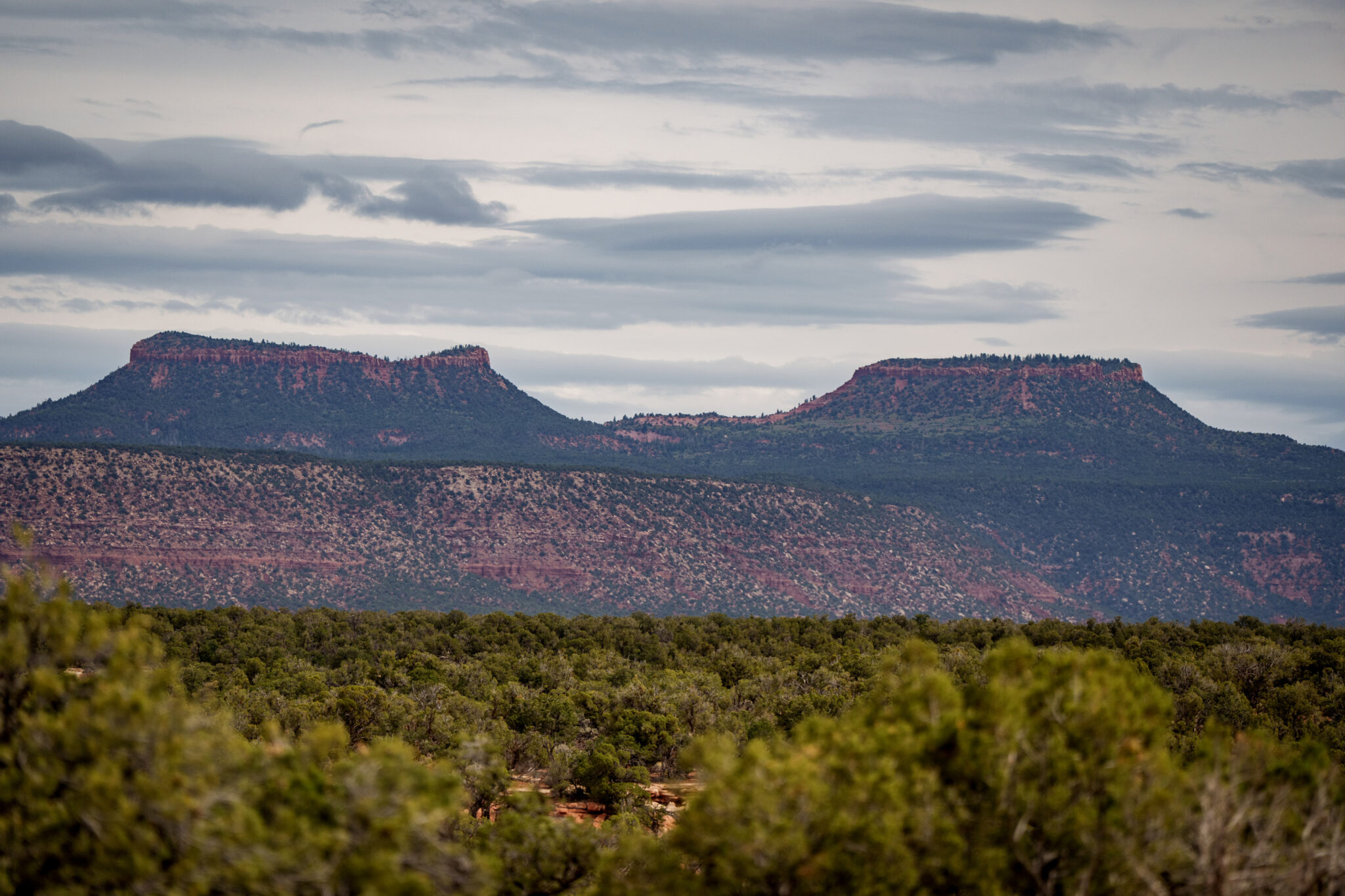
The Bears Ears buttes, namesake of the Bears Ears National Monument, are pictured on Friday, Sept. 19, 2025. (Photo by Spenser Heaps for Utah News Dispatch)
Environmental groups, tribal leaders and Utah Democrats express outrage
Members of the Grand Staircase-Escalante Inter-Tribal Coalition issued a lengthy statement strongly condemning the move to “virtually eliminate” the monuments while calling for “the defense and protection” of their ancestral lands.
“Our Tribes were not informed of or asked about this decision, and that’s unacceptable. The federal government must honor its Trust and Treaty obligations to our Tribes — it is not optional,” Autumn Gillard, inter-tribal coalition coordinator who is a descendent of the Cedar Band of Paiutes, said in a prepared statement. “Today’s action is a direct strike against the federal government’s duty to consult with Tribes. It also profoundly disrespects our intergenerational Traditional Knowledge by destroying a framework for Tribal co-stewardship over our ancestral lands in which we invested years of effort. Today’s action cannot stand.”
Utah House’s top Democrat, Minority Leader Angela Romero — who is the first and only enrolled member of a federally recognized tribe to serve in the Utah House — said in a prepared statement that “this back-and-forth with every administration has to stop.”
“These lands deserve the protections that come with national monument status,” she said. “Less than a decade ago, the Trump administration reduced protections for these same monuments despite overwhelming public support and the objections of the Tribal Nations whose ancestors have lived on these lands for thousands of years.”
The Citadel, an Ancient Puebloan structure in the Cedar Mesa area of Bears Ears National Monument, is pictured on Saturday, Sept. 20, 2025. (Photo by Spenser Heaps for Utah News Dispatch)
Romero said the federal government “should honor Tribal Nations’ wishes by protecting these sacred lands from unnecessary development and overuse.”
“These are places where Tribal history, culture, and spiritual traditions continue today. Future generations deserve the opportunity to experience these places as they have existed for centuries,” Romero said.
The Center for Western Priorities, a conservation advocacy group, issued a news release after Monday’s signing saying Trump shrunk the monuments “based on false information.”
The group pointed to a moment during the signing when Trump falsely said: “You can’t do anything. You can’t go hunting. You can’t go fishing. You can’t do anything. You can virtually not even walk on it.”
“That’s exactly right, sir,” Deputy Interior Secretary Kate MacGregor told the president in response. “So you are remedying that today.”
Bears Ears and Grand Staircase “explicitly allow hunting, fishing and outdoor recreation inside the monuments,” the Center for Western Priorities said, while also pointing to Utah’s own hunting regulations.
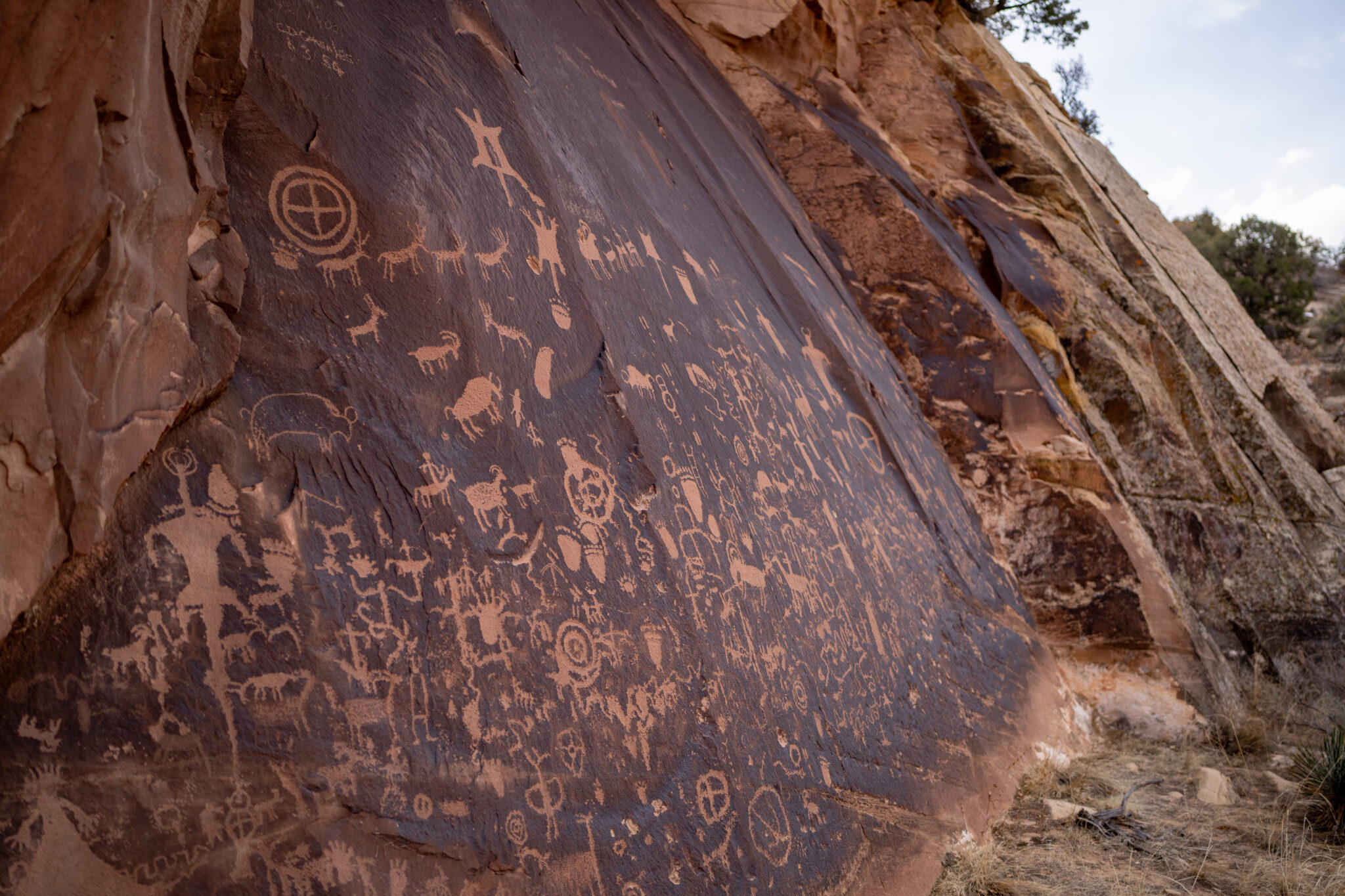
The Newspaper Rock Petroglyphs are pictured along Indian Creek in Bears Ears National Monument near Monticello on Wednesday, Jan. 29, 2025.
The Center also said McGregor “misled” Trump when she said the first monuments established by former President Teddy Roosevelt with the Antiquities Act were small in size.
“In fact, Teddy Roosevelt used the Antiquities Act to protect 800,000 acres of public land at the Grand Canyon,” the center said. “The Supreme Court later confirmed that such landscape-scale protections were proper under the Antiquities Act, and that large landscapes were considered ‘objects’ under the Act.”
Aaron Weiss, executive director of the Center for Western Priorities, accused MacGregor of misleading the president.
“We all know that President Trump has very little understanding of what he’s told to sign,” Weiss said. “But Kate MacGregor knows better. Giving the president documents to sign based on false information is unconscionable. If she’s going to take over running America’s public lands while Doug Burgum plays pool boy, the least she can do is be honest with the president and the American people.”
Cattle grazes on along Indian Creek in Bears Ears National Monument near Monticello on Wednesday, Jan. 29, 2025.
Tracy Stone-Manning, president of The Wilderness Society, pledged the group “will fight this attack and stand with everyone working to protect these remarkable places.”
“National monuments protect extraordinary wildlife, irreplaceable cultural and Tribal heritage, and our freedom to explore some of our country’s iconic landscapes. They belong to all of us,” she said in a prepared statement.
Stone-Manning said Trump’s administration is “on the wrong side of history here, ignoring the voices of Tribal Nations, local communities, and the millions of Americans who want these places protected for future generations.”
“As our nation marks 250 years, these public lands should be handed down, not over to drilling and mining interests,” she said.
A group of Democratic members of Congress and tribal leaders plan to hold a virtual news conference Tuesday morning to condemn the “attacks” on the monuments.
Ben McAdams — who is likely to return to Congress as Utah’s only Democrat next year — also issued a statement vowing to fight the reductions.
“Utahns deserve a say in what happens to the land that belongs to them. I’m not backing down from this fight, and I’m not going to stop until it’s reversed,” McAdams said.
Legal challenges loom
Trump’s latest pair of executive orders are sure to draw legal challenges, as did the first time he shrank the monuments. Lawsuits from tribes, conservation groups and businesses challenging those 2017 cuts were put on hold in early 2021 and remained pending in federal court before Biden restored the monuments later that year.
On Monday, Scott Braden, executive director of the Southern Utah Wilderness Alliance, vowed in a prepared statement that the nonprofit devoted to protecting Utah’s red rock wilderness would “challenge this unlawful decision in federal court.”
“Today’s action makes it clear that Utah is the epicenter of Republican efforts to dismantle and obliterate America’s system of public lands,” Braden said in a prepared statement issued Monday. “President Trump’s outrageous attack on Grand Staircase-Escalante and Bears Ears national monument was taken at the urging of Utah politicians – Sens. Mike Lee and John Curtis, Governor Spencer Cox, and the others – who championed this action. These two landscapes deserve to be protected for current and future generations of Utahns and Americans, not opened to exploitation.”
The Center for Western Priorities argued the Antiquities Act — a 1906 law that allows presidents to protect federal lands of historic or scientific interest by establishing them as national monuments — is a “one-way statute” that can’t be reversed.
In 1996, former President Bill Clinton first designated the Grand Staircase-Escalante National Monument. In 2016, former President Barack Obama designated Bears Ears National Monument at the request of five sovereign Tribal nations.
“The Antiquities Act was a one-way statute when Teddy Roosevelt signed it into law. It was a one-way statute when President Trump tried to ignore it in 2017. It’s still a one-way statute today,” the Center for Western Priorities said in a prepared statement issued Friday, when news of Trump’s expected executive orders broke.
The Center for Western Priorities also noted that “just last month, Congress had a chance to weaken the management plan for Grand Staircase-Escalante and declined,” pointing to the failure of Maloy and Lee’s proposal.
“The American people have made it clear over and over again that they want our national monuments protected, not sold out to drilling and mining companies,” the Center for Western Priorities said. “President Trump and Interior Secretary Doug Burgum would be wise to remember that.”
Braden also called Trump’s orders “unlawful, unwise and unacceptable.”
“These spectacular landscapes deserve to be protected for current and future generations, not opened to exploitation at the behest of Utah politicians,” Braden said in a prepared statement issued Friday ahead of the executive orders. “This action will only bring uncertainty and chaos to places that should instead be protected for their rich biodiversity, unique geology, and remarkable cultural values.”
Braden called Grand Staircase-Escalante a “crown jewel of America’s public lands” and Bears Ears an “incomparable cultural landscape.” He said the protection of both moments is “overwhelmingly popular with Utahns and Americans,” pointing to a 2024 poll conducted for the Grand Canyon Trust that found 71% and 74% of Utah voters supported keeping Bears Ears and Grand Staircase-Escalante national monuments, respectively.
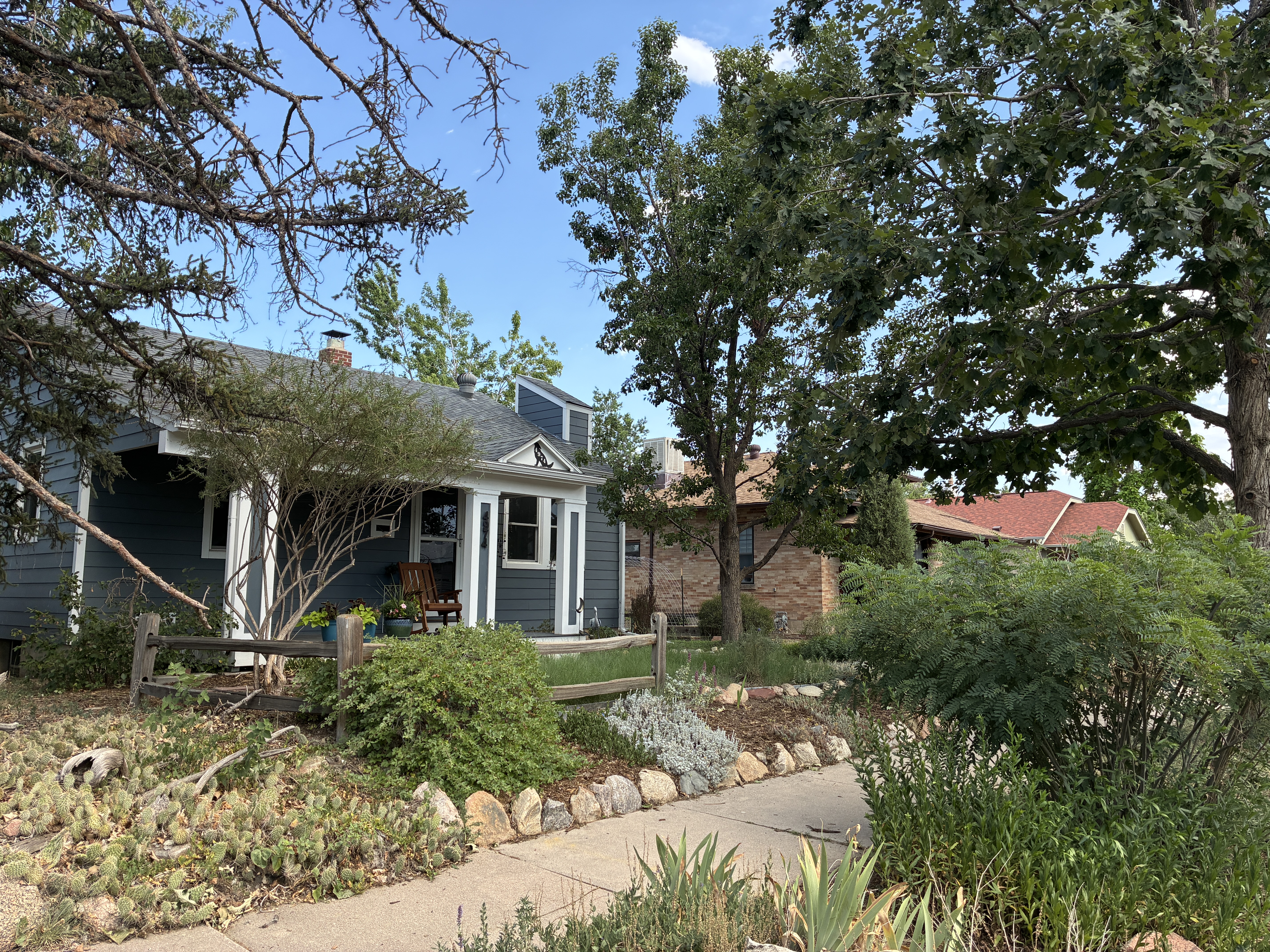
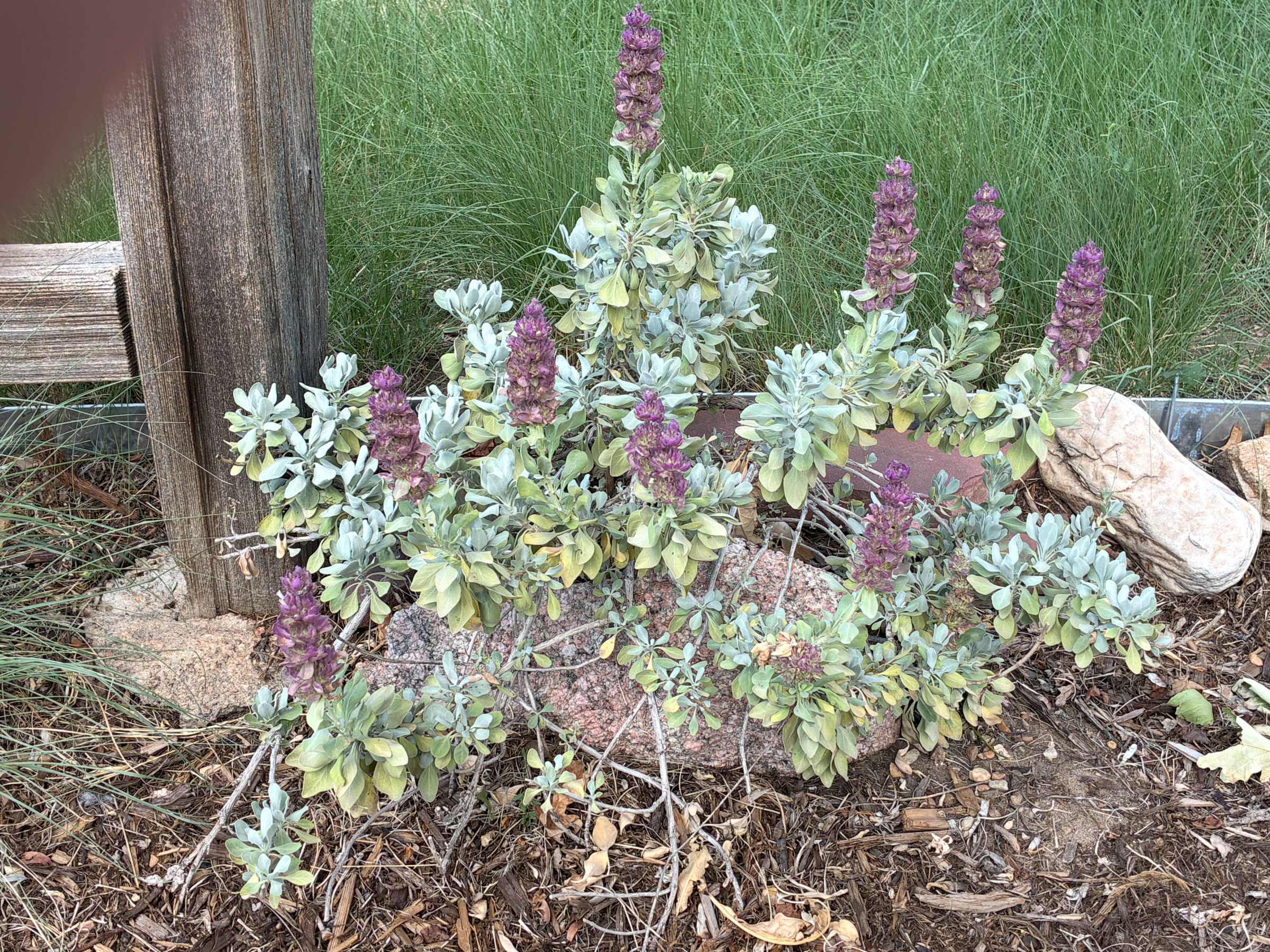
Mojave sage (Salvia pachyphylla), excellent (I’m told) for bees, butterflies, and hummingbirds, in Mrs. Gulch’s landscape July 13, 2026. That would be just like her.
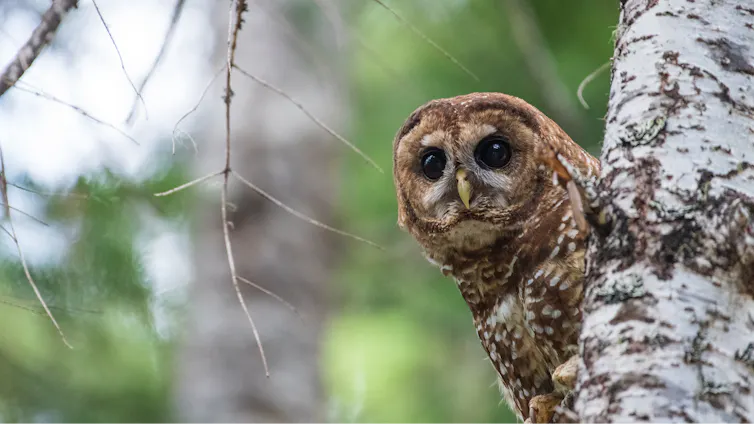
Northern spotted owls living in old growth forests in the Pacific Northwest were listed as threatened species because of habitat loss. Kyle Sullivan/Bureau of Land Management, CC BY
It wouldn’t make much sense to prohibit people from shooting a threatened woodpecker while allowing its forest to be cut down, or to bar killing endangered salmon while allowing a dam to dry out their habitat.
For 50 years, the U.S. government has interpreted the Endangered Species Act as protecting threatened and endangered species from actions that either directly kill them or eliminate their habitat. A new federal rule change, announced July 10, 2026, keeps the first part – protecting against the direct killing of the species – but removes habitat destruction.
That matters, because most species on the brink of extinction are on the Endangered Species list because there is almost no place left for them to live. Their habitats have been paved over, burned or transformed. Habitat protection is essential for their survival.
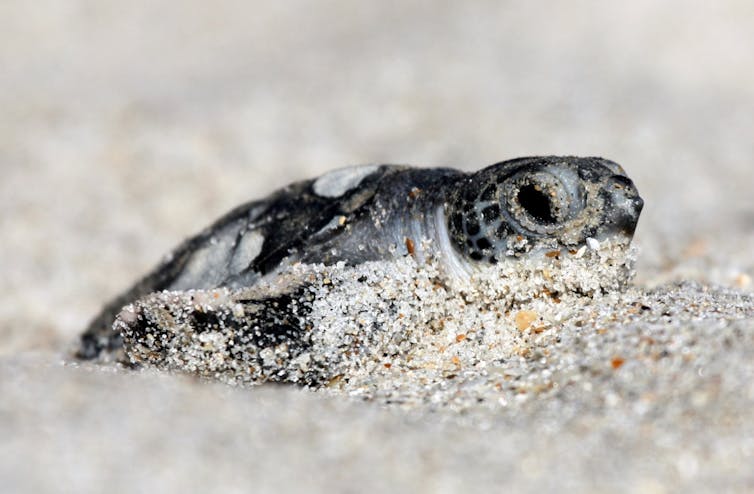
Green sea turtles, like this hatchling in Florida, are endangered due in part to habitat destruction and fishing nets. Keenan Adams/USFWS
As an ecologist and a law professor, we have spent our entire careers working to understand the law and science of helping imperiled species thrive. We recognize that the rule change could green-light the destruction of protected species’ habitats, making it nearly impossible to protect those endangered species.
Since 1975, regulations have defined “harm” to include habitat destruction that kills or injures wildlife. Developers and logging interests challenged that definition in 1995 in a Supreme Court case, Babbitt v. Sweet Home Chapter of Communities for a Great Oregon. However, the court ruled that the definition was reasonable and allowed federal agencies to continue using it.
In short, the law says “take” includes harm, and under the regulatory definition at the time, harm included indirect harm through habitat destruction.
The Trump administration has now changed the definition of “harm” in a way that leaves out habitat modification.
Critical habitat throughout the U.S., including many coastlines and mountain areas. Note: Alaska is not to scale. U.S. Fish and Wildlife Service
This narrowed definition unravels the most significant protections granted by the Endangered Species Act.
Why habitat protection matters
Habitat protection is the single most important factor in the recovery of endangered species in the United States – far more consequential than curbing direct killing alone.
A 2019 study examining the reasons species were listed as endangered between 1975 and 2017 found that only 17% were primarily threatened by direct killing, such as hunting or poaching. That 17% includes iconic species such as the red wolf, American crocodile, Florida panther and grizzly bear.
As natural landscapes are converted to agriculture or taken over by urban sprawl, logging operations and oil and gas exploration, ecosystems become fragmented and the space that species need to survive and reproduce disappears.
The Catalina Island fox is endemic to Catalina Island. Habitat loss, diseases introduced by domestic dogs, and predators have diminished the population of these small foxes to threatened status. Catalina Island Conservancy/Wikimedia Commons, CC BY-SA
Under the new change, development could be accelerated in endangered species’ habitats.
Gutting the Endangered Species Act
The definition change is a quiet way to gut the Endangered Species Act.
It is also fundamentally incompatible with the purpose Congress wrote into the act: “to provide a means whereby the ecosystems upon which endangered species and threatened species depend may be conserved [and] to provide a program for the conservation of such endangered species and threatened species.” It contradicts the Supreme Court precedent, and it would destroy the act’s habitat protections.
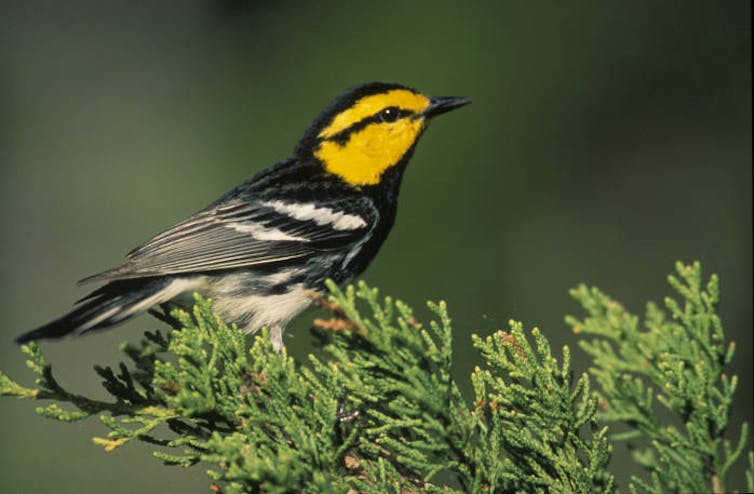
The golden-cheeked warbler breeds only in Texas, primarily in Texas Hill Country. It has been losing habitat as development expands in the region. Steve Maslowski/USFWS, CC BY
But altering an existing species to look like an extinct one is both wildly expensive and a paltry substitute for protecting existing species.
The administration has also didn’t conduct the usual analysis of the environmental impact that changing the definition could have. That means the American people won’t even know the significance of this change to threatened and endangered species until it’s too late, though wildlife groups are already planning to sue over the change.
The ESA is saving species
Surveys have found the Endangered Species Act is popular with the public, including Republicans. The Center for Biological Diversity estimates that the Endangered Species Act has saved 99% of protected species from extinction since it was created, not just from bullets but also from bulldozers. This regulatory rollback seeks to undermine the law’s greatest strength: protecting the habitats species need to survive.
Congress knew the importance of habitat when it passed the law, and it wrote a definition of “take” that allows the agencies to protect it.