#Drought, #ClimateChange affect quality of well water: Study shows 15-25% of private #groundwater wells used for drinking water in the #SanLuisValley contain elevated levels of arsenic, uranium and other heavy metals — AlamosaCitizen.com

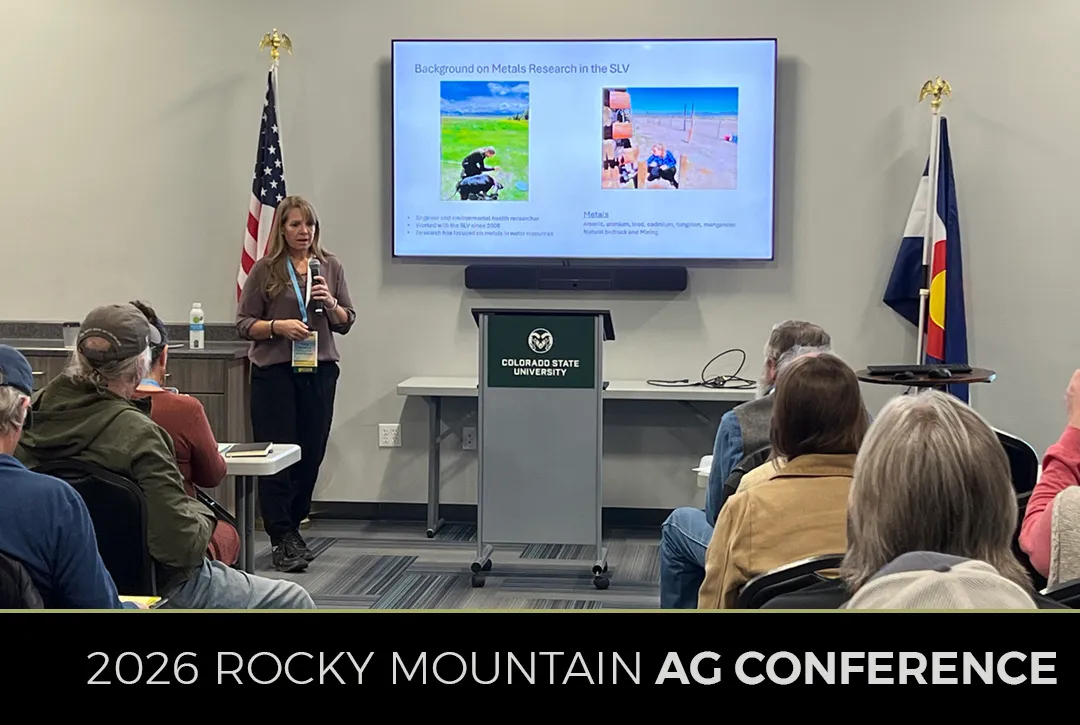
Kathy James talks at the 2026 Southern Rocky Mountain Ag Conference. Credit: The Citizen

Click the link to read the article on the Alamosa Citizen website:

February 3, 2026

There is another emerging issue that decades of drought and the warming climate is causing in the San Luis Valley – elevated levels of heavy metals in drinking wells that can cause health issues for households that rely on them.

It’s a topic Kathy James, Ph.D., and associate professor with the Colorado School of Public Health, knows well after spending the past three years working with families in the Valley that rely on private drinking wells.

James provided an update to the work during Tuesday’s opening day of the 2026 Southern Rocky Mountain Ag Conference. She reported that 15 to 25 percent of the private groundwater wells used for drinking water in the San Luis Valley contain elevated levels of arsenic, uranium and other heavy metals.

Her confidence in the findings is bolstered by the fact that 850 households in the different counties of the Valley participated in the study and provided samples to help James and her team evaluate the effect drought is having on water quantity and water quality.

“The comprehensive information that we have about distribution of metals across the Valley is by far one of the best we’ve seen in most western states that do experience elevated metals,” James said.

She noted how low snowpack impacts the age of water underground and ultimately the quality of water people are drinking from a private well.

The Upper Rio Grande Basin, like the Colorado River, is suffering from snow droughtsin the high elevations of the west and below-normal spring runoff levels.

Less snow, less spring runoff for recharge of the aquifers, and higher levels of arsenic, uranium and other heavy metals is the emerging issue. James talks more about the study and the team’s findings in the next episode of The Valley Pod, which streams Wednesday on AlamosaCitizen.com

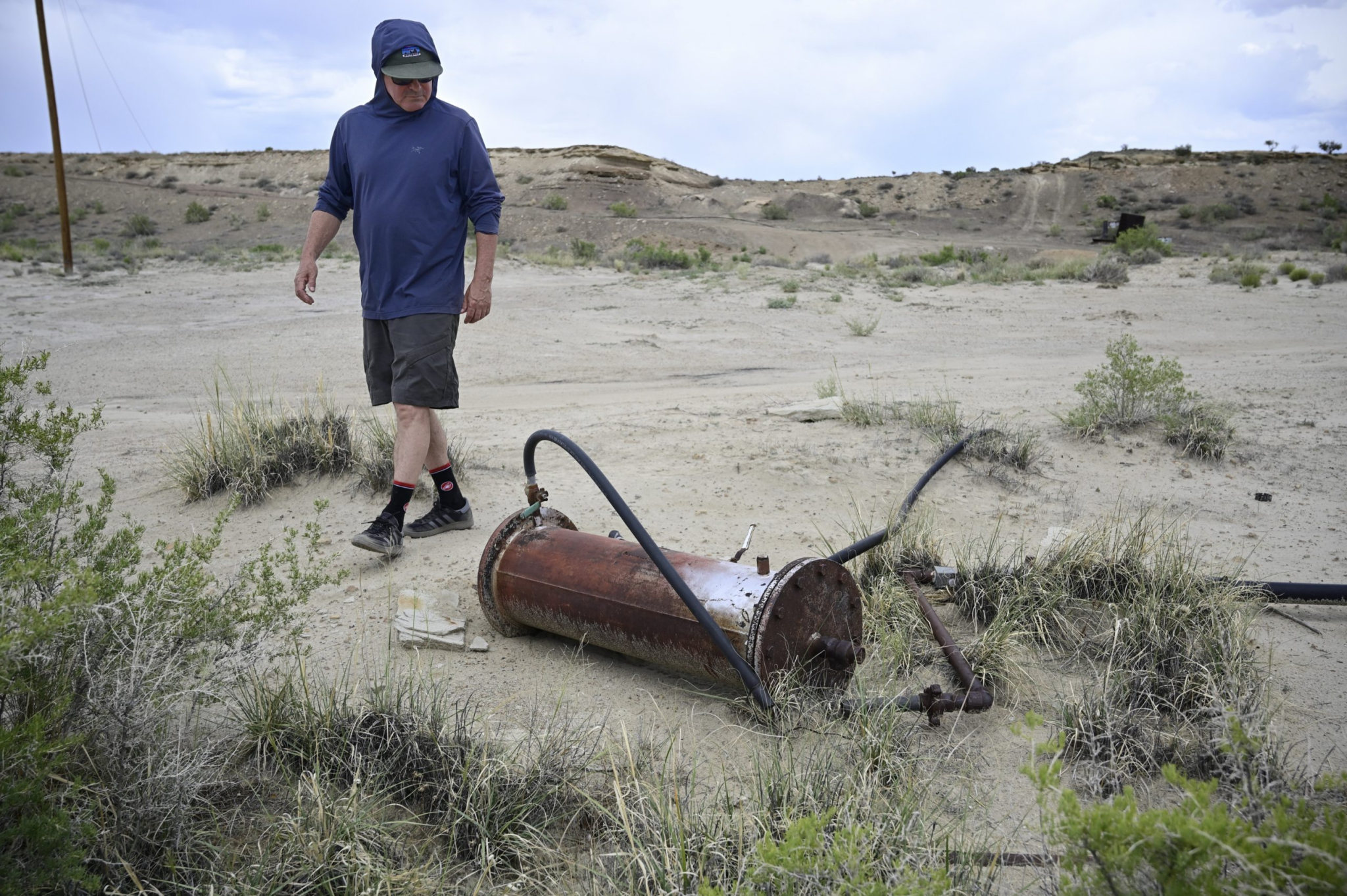
Typical water well

Why too much phosphorus in America’s farmland is polluting the country’s water — Dinesh Phuyal (TheConverstion.com)

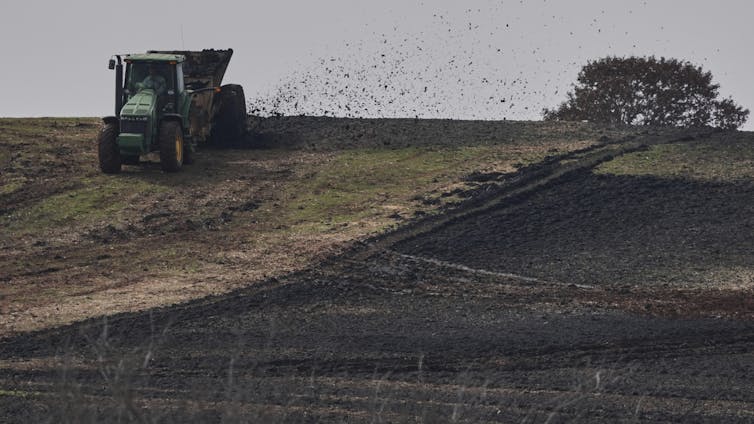
A spreader sprays sewage sludge, which is rich in phosphorus, across a farm in Oklahoma. AP Photo/Joshua A. Bickel

Dinesh Phuyal, University of Florida

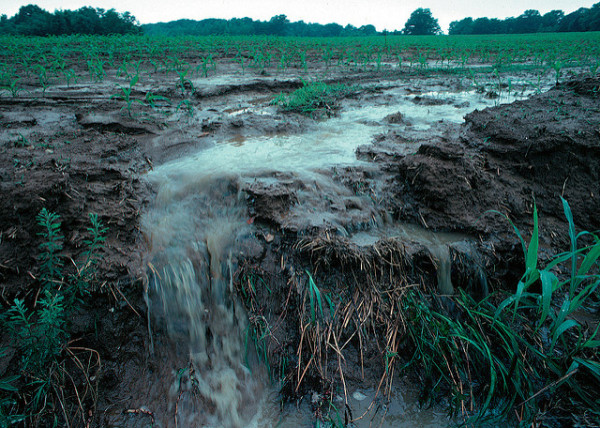
When people think about agricultural pollution, they often picture what is easy to see: fertilizer spreaders crossing fields or muddy runoff after a heavy storm. However, a much more significant threat is quietly and invisibly building in the ground.

Across some of the most productive farmland in the United States, a nutrient called phosphorus has been accumulating in the soil for decades, at levels far beyond what crops actually require. While this element is essential for life-supporting root development and cellular chemistry to grow food, too much of it in the wrong places has become a growing environmental liability.

I’m part of a research effort to figure out how much phosphorus is already in the soil, to then determine how much more, if any, to add to particular fields.

Why farmers add phosphorus in the first place

Small dark pellets.
Pellets of monoammonium phosphate fertilizer. AP Photo/Paul Sancya

Phosphorus is one of the three primary nutrients plants require for growth, along with nitrogen and potassium. Without enough phosphorus, crops struggle and production suffers.

For decades, applying phosphorus fertilizer has been a kind of insurance policy in American agriculture. If farmers weren’t sure how much was already in the soil, adding a little extra seemed safer than risking a shortfall. Fertilizer was relatively inexpensive, and the long-term consequences were poorly understood.

Unlike nitrogen, which easily escapes from soil into the air or groundwater, phosphorus sticks to soil particles. Once it’s added, it tends to remain in place. That trait made phosphorus seem environmentally benign.

However, phosphorus can still be carried off fields when rain or irrigation water erodes phosphorus-rich soil, or some of the built-up phosphorus dissolves into runoff.

Years of application have led to something no one initially planned for: accumulation.

How much phosphorus has built up?

Since the mid-20th century, farmers across the United States have applied hundreds of millions of tons of phosphorus fertilizer. From 1960 to 2007, phosphate fertilizer consumption in the U.S. increased from approximately 5.8 million metric tons per year to over 8.5 million metric tons annually.

In more recent decades, fertilizer use has continued to rise. In corn production alone, phosphorus applications increased by nearly 30% between 2000 and 2018. Crops absorb some of that phosphorus as they grow, but not all of it. Over time, the excess has piled up in soils.

In many regions across the United States, soil phosphorus levels are now far higher than what crops actually require. In parts of Florida, for example, some agricultural soils contain phosphorus concentrations more than 10 times above levels considered sufficient for healthy plant growth.

Scientists call this buildup “legacy phosphorus.” It’s a reminder that today’s environmental challenges are often the result of yesterday’s well-intentioned decisions.

Green algae float on the surface of water.
Algae float on the surface of Lake Erie. AP Photo/Paul Sancya, File

When soil phosphorus becomes a water problem

If phosphorus stayed locked in the soil, farmers would have wasted money on fertilizer they didn’t need. And excess phosphorus in soil can hinder the uptake of essential plant micronutrients and alter the soil microbial community, reducing diversity that is important for good soil health.

Unfortunately, phosphorus doesn’t always remain in place. Rainfall, irrigation and drainage can transport phosphorus – either dissolved in water or attached to eroded soil particles – into nearby canals, streams, rivers and lakes. Once there, it becomes food for algae.

The result can be explosive algal growth, known as eutrophication, which turns clear water a cloudy green. When these algae blooms die, their decomposition consumes oxygen, sometimes creating low-oxygen “dead zones” where fish and other aquatic life struggle to survive. This process is primarily driven by phosphorus leaching, as seen in the Florida Everglades.

Another prime example is the largest dead zone in the United States, covering about 6,500 square miles (16,835 square kilometers), which forms each summer in the Gulf of Mexico. Cutting back on nitrogen without lowering phosphorus can worsen eutrophication.

Some algal blooms also produce toxins that threaten drinking water supplies. Communities downstream may be told not to drink or touch the water, and face high treatment costs and lost recreational opportunities. National assessments document toxins associated with algal blooms in many states, particularly where warm temperatures and nutrient pollution overlap.

Rising global temperatures are exacerbating the problem. Warmer waters hold less oxygen than colder waters, increasing the likelihood that phosphorus pollution will trigger eutrophication and dead zones.

A small white box sits in a field of grass, with a solar panel behind it.
A phosphorus monitor operates next to a small stream near an agricultural field in Ohio. AP Photo/Joshua A. Bickel

Flawed testing hid the problem

Given the risks, a natural question arises: Why don’t farmers simply stop adding phosphorus where it isn’t needed?

Part of the answer lies in how the amount of phosphorus in the soil is measured. Most soil tests used today were developed decades ago and were designed to work reasonably well across many soil types. But soils are incredibly diverse. Some are sandy; others are rich in organic matter formed from centuries of decayed plants.

And those traditional soil tests use acids to extract phosphorus from the soil, delivering inaccurate findings of how much phosphorus plants can actually access. For instance, in soils that have more than 20% organic matter, like those found in parts of Florida and other agricultural regions, the tests’ acids may be partially neutralized by other compounds in the soil. That would mean they don’t collect as much phosphorus as really exists.

In addition, the tests determine a total quantity of phosphorus in the soil, but not all of that is in a form plants can take up through their roots. So soil where tests find high phosphorus levels may have very little available to plants. And low levels can be found in soil that has sufficient phosphorus for plant growth.

When farmers follow the recommendations that result from these inaccurate tests, they may apply fertilizer that provides little benefit to crops while increasing the risk of pollution. This isn’t a failure of farmers. It’s a mismatch between outdated tools and complex soils.

Three plastic containers show different levels of different chemicals.
Soil testing determines levels of various nutrients, but the results don’t always line up with what’s available to plants. Wayan Vota via Flickr, CC BY-NC-SA

A smarter way forward

The solution isn’t to eliminate phosphorus fertilization. Crops still need it, and many soils genuinely require additional nutrients. The challenge is knowing when enough is truly enough.

Researchers, including me, are developing improved testing methods that better reflect how plants actually interact with soil. Some approaches mimic plants’ root behavior directly, estimating how much phosphorus crops can realistically take up from any given field or type of soil – rather than only measuring how much exists chemically.

Other tests look at the amount of phosphorous a field’s soil can hold before releasing excess nutrients into waterways. These approaches can help identify fields where farmers can use less phosphorus or pause it altogether, allowing crops to draw down the legacy phosphorus already present.

The phosphorus problem is a slow-moving one, built over decades and hidden below ground. However, its effects are increasingly visible in the form of algal blooms, fish kills and contamination of drinking water supplies. Farmers can measure and manage soil nutrients differently and reduce pollution, save money and protect water resources without sacrificing agricultural productivity.

Dinesh Phuyal, Postdoctoral Associate in Soil, Water and Ecosystem Sciences, University of Florida

This article is republished from The Conversation under a Creative Commons license. Read the original article.

Adams County water district sues #Denver over contamination from fire training facility: Since the South Adams Water & Sanitation district first discovered problem in 2018, it has spent tens of millions on mitigation — The #Denver Post

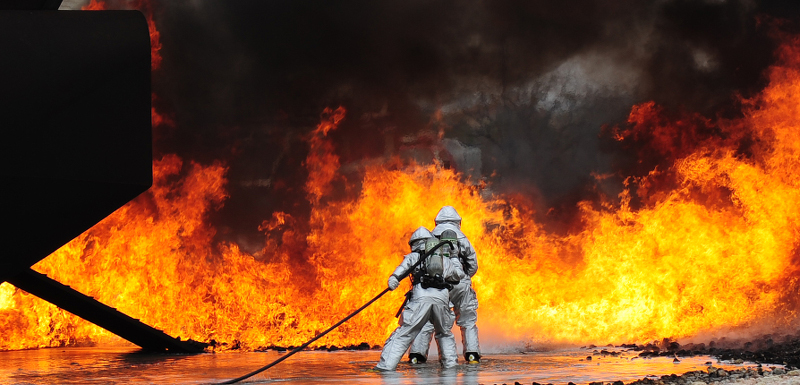
Firefighting foam containing PFAS chemicals is responsible for contamination in Fountain Valley. Photo via USAF Air Combat Command

Click the link to read the article on The Denver Post website (Elliot Wenzler). Here’s an excerpt:

January 21, 2026

An Adams County water district filed a lawsuit against Denver on Tuesday [January 20, 2026], alleging that foam from the city’s fire training facility has contaminated its water for decades. The South Adams County Water and Sanitation District says the city’s Roslyn Fire Training Facility, near the Rocky Mountain Arsenal National Wildlife Refuge, has used firefighting foam containing a group of chemicals known as PFAS, also known as “forever chemicals,” since at least 1991…

“Denver has failed to eliminate or control releases of (the chemicals) at and from the fire training facility and those releases have contaminated and continue to contaminate the District’s drinking water supplies,” the lawsuit alleges.

The district serves about 75,000 residents in Commerce City and unincorporated Adams County. It first discovered the contamination in 2018. Since then, the district has spent tens of millions of dollars to mitigate the issue, according to the lawsuit. Officials there built another water treatment facility specifically to treat PFAS, and it purchased water from Denver Water to dilute the contaminated water…Even with state and federal funding, the lawsuit says, “there remains a huge deficit” from the costs associated with the firefighting foam. The district asks a U.S. District Court judge to rule that Denver is liable for the response costs and for the ongoing costs the district will incur. It notes that water district officials notified Denver city officials of this claim back in 2019. The amount that the city of Denver would have to pay, if found liable, would be determined in a trial.

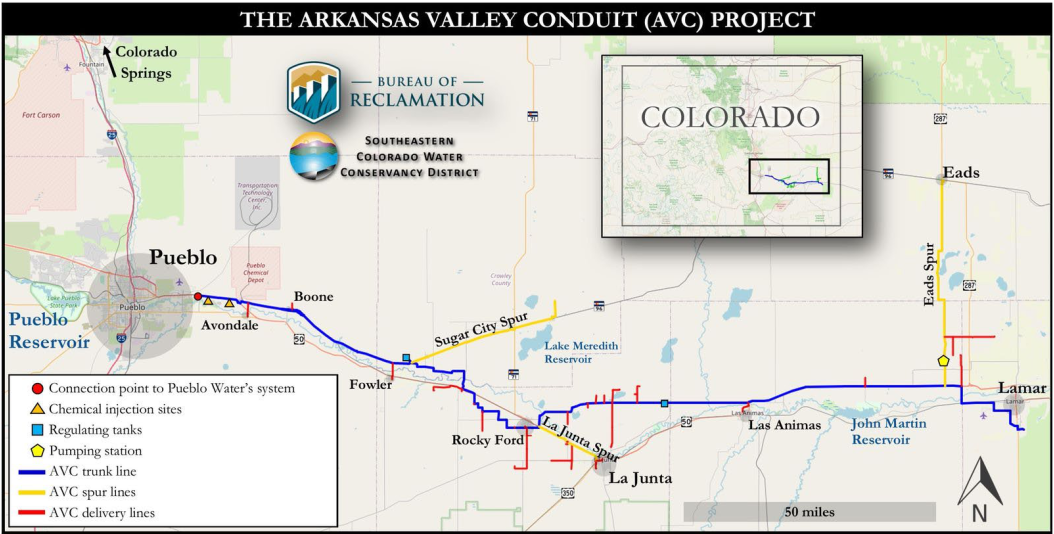
The Arkansas Valley Conduit project has about three years of cash left to keep building, despite President Trump’s veto — Jerd Smith (Fresh Water News) #ArkansasRiver #ColoradoRiver #COriver #aridification

Arkansas Valley Conduit map via the Southeastern Colorado Water Conservancy District (Chris Woodka) June 2021.

Click the link to read the article on the Water Education Colorado website (Jerd Smith):

January 15, 2026

Water officials and Colorado’s congressional reps are scrambling to find an affordable path forward for communities in the Lower Arkansas Valley who had hoped the federal government would help them lower their costs for a critical clean water pipeline.

President Trump vetoed the bipartisan Finish the Arkansas Valley Conduit Act on New Year’s Eve, and despite Colorado’s efforts, Congress failed to override the veto last week.

Construction on the $1.39 billion pipeline began in 2023. There’s enough money left from the $500 million appropriated by Congress to continue building for another three to five years, according to Bill Long, president of the board for the Pueblo-based Southeastern Water Conservancy District. The district operates the federal Fryingpan-Arkansas Project and is overseeing pipeline construction for the U.S. Bureau of Reclamation.

That means the pipeline should eventually reach Rocky Ford, a point roughly halfway between its start east of Pueblo Reservoir and its endpoint farther east, near Lamar. “It’s when we get to the second half of the project where it will be challenging to build and repay our portion of the debt,” Long said. “Without this legislation, there will be a point where we will have to stop.”

What comes next isn’t clear yet, though members of Colorado’s congressional delegation and water officials in the Lower Arkansas Valley said they are evaluating their options for taking another run at the issue in Congress.

“Obviously things are up in the air,” Long said.

“Sooner rather than later we may be looking at a new piece of legislation, but the question is, would this administration be amenable to a new piece of legislation. If we can’t find something, we may have to wait this administration out,” he said.

Pueblo Dam. Photo courtesy of Colorado Parks and Wildlife

Waiting for clean water in the Lower Arkansas Valley is nothing new.

First envisioned as part of the U.S. Bureau of Reclamation’s Fryingpan-Arkansas Project in 1962, the pipeline languished on paper for decades because of high costs. The 130-mile pipeline serves 39 communities.

The need for clean water in the Lower Arkansas Valley became apparent in the 1950s and earlier, by some accounts, when wells drilled near the Arkansas River were showing a range of toxic elements, including naturally occurring radium and selenium. Both can cause severe health problems, including bone cancer and lung issues if high amounts are consumed.

Without safe drinking water, towns in the region have either had to haul water or install expensive reverse osmosis plants to purify their contaminated well water.

Things changed on the stalled project in 2023, when Congress directed some $500 million toward the pipeline.

The legislation would have gone further, allowing the repayment terms on the loans from the federal government to be extended to 75 years, up from 50 years, and to cut interest rates in half, from 3.046% to 1.523%. The legislation also would have allowed the project to be classified as one of hardship, a move that may have allowed the U.S. Bureau of Reclamation to forgive some loan payments if a case for economic hardship could have been made.

The conduit project is also partially funded with grants and loans from state agencies, including the Colorado Water Resources and Power Development Authority.

“The act was an important step in making this project affordable,” said Keith McLaughlin, executive director of the Colorado Water Resources and Power Development Authority, one of the agencies helping fund the work.

“Obviously we’re disappointed,” he said.

Colorado politicos say they’re still working to push legislation through. The bipartisan act was sponsored by Colorado Republican U.S. Reps. Lauren Boebert and Jeff Hurd in the U.S. House and Democratic U.S. Sens. John Hickenlooper and Michael Bennet in the U.S. Senate.

Trump’s veto of the measure is widely seen as being the result of ongoing conflicts between his administration and Colorado Gov. Jared Polis, a Democrat, including a request to pardon former Mesa County Clerk Tina Peters, who is serving a nine-year prison term for orchestrating a data breach of the county’s elections equipment violating state elections. Polis so far has declined to intervene in that case, although he did describe the sentence as “harsh,” leading some to speculate that he might commute it. In a statement, Polis said he was hopeful that Congress would ultimately succeed in approving some form of aid to help complete the conduit.

Neither Boebert nor Hurd responded to a request for comment. But Hickenlooper said that all the congressional reps continue to work on a new path forward.

“The people of southeastern Colorado have waited 60 years for clean, safe drinking water. We’re continuing to work with our partners in the delegation to complete the Arkansas Valley Conduit and deliver on the federal government’s promise,” Hickenlooper said via email.

More by Jerd Smith

Bill signing – H.R. 2206 Public Law 87-590, Frying-Pan-Arkansas Project, Colorado. Photo credit: John F. Kennedy Presidential Library and Museum

U.S. Representatives Lauren Boebert and Jeff Hurd’s veto override attempt on water pipeline bill fails — The #GrandJunction Daily Sentinel #ArkansasRiver #ColoradoRiver

Pueblo Dam. Photo courtesy of Colorado Parks and Wildlife

Click the link to read the article on the Grand Junction Daily Sentinel website (Nathan Deal). Here’s an excerpt:

January 9, 2026

After Coloradan U.S. House Reps. Lauren Boebert and Jeff Hurd saw their Finish the Arkansas Valley Conduit Act approved unanimously by Congress in December, they were stunned when President Donald Trump — once a proponent of the project — vetoed it…After the rejection of the legislation sponsored by Boebert, the former 3rd Congressional District representative and co-sponsored by Hurd, the district’s current representative, they sought a rare move for Congressional Republicans in the Trump era: a veto override that could have defied the president. A vote on the veto override was held in the House on Thursday, needing two-thirds of voters to vote “yes” to pass. It ultimately failed with 249 “yes” votes and 176 “no” votes, with one “present” vote, around 8% short of the threshold for passage. All 213 Democrats voted to back the override, while 36 Republicans backed the override but 176 did not. Five Republicans did not vote…

Boebert’s bill, H.R. 131, would have provided communities in the region more time and flexibility to repay the federal government by extending repayment periods and lowering interest rates. In his veto decision, Trump cited financial concerns, but on the House floor, both Boebert and Hurd emphasized that the bill would not expand the project, authorize new construction or increase federal share. Per Boebert, the U.S. Bureau of Reclamation found that Arkansas Valley drinking water has such high levels of radium, uranium and other pollutant contamination that people in the area could see the cost of drinking water triple without this legislation.

“Contrary to what the veto message states, my bill does not authorize any additional federal funding. It simply modifies the repayment terms for small rural communities in my district so they’re able to afford their 35% cost share of the project that they are statutorily obligated to repay,” Boebert said…

Hurd said that rural Colorado and rural America voted “overwhelmingly” for Trump because they didn’t want to be forgotten by the government, adding, “They expected Washington to keep its word, not abandon them midway.” He also expressed concern about the precedent a failed veto override would set, not just for the rest of Trump’s term but moving forward on Capitol Hill. This was a similar, though less alarmingly phrased, point as Neguse earlier stating, “No state is safe from political retaliation.”

Arkansas Valley Conduit map via the Southeastern Colorado Water Conservancy District (Chris Woodka) June 2021.

U.S. Senators John Hickenlooper, and Michael Bennet Slam President Trump’s Veto of Their Finish the Arkansas Valley Conduit Act #ArkansasRiver #ColoradoRiver

President John F. Kennedy at dedication of the Fryingpan-Arkansas Project.

Click the link to read the release on Senator Hickenlooper’s website:

December 31, 2025

U.S. Senators John Hickenlooper and Michael Bennet issued the following statement after President Trump vetoed their bipartisan Finish the Arkansas Valley Conduit Act

“Nothing says ‘Make America Great Again’ like denying 50,000 rural Coloradans access to clean, affordable drinking water. President Trump’s first veto of his second term blocks a bipartisan bill that both the House and Senate passed unanimously, costs taxpayers nothing, and delivers safe, reliable water to rural communities that overwhelmingly supported him. Trump’s attacks on Southern Colorado are politics at its worst—putting personal and political grievances ahead of Americans. Southeastern Coloradans were promised the completion of the Arkansas Valley Conduit more than 60 years ago. With this veto, President Trump broke that promise and demonstrated exactly why so many Americans are fed up with Washington. We will keep fighting to make sure rural Coloradans get the clean drinking water they were promised.”

Arkansas Valley Conduit map via the Southeastern Colorado Water Conservancy District (Chris Woodka) June 2021.

As #Colorado’s native fish struggle, wildlife scientists are working to make their lives easier —  Elisabeth Kwak-Hefferan (Fresh Water News)

Greenbacks and Colorado River cutthroat via DNR

Click the link to read the article on the Water Education Colorado website (Elisabeth Kwak-Hefferan):

December 30, 2026

A mayfly loving trout — speckled, shiny and perfectly hand-sized for that Instagram hero shot. A five-foot-long torpedo of a predator, capable of powering through floodwaters and migrating hundreds of miles. A three-inch minnow, living only a couple of years and content with life in a small pool in an ephemeral creek. Which fish is the true Colorado native?

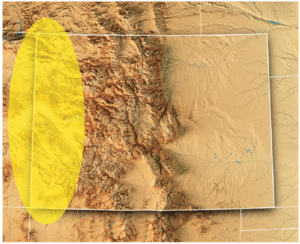
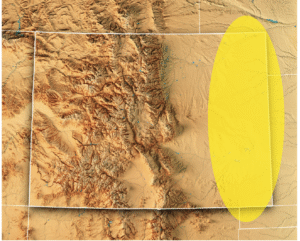
The answer is all of them. A state with waterways as diverse as Colorado’s has naturally produced a diverse assortment of native fish to match. We have cutthroat trout, lovers of pristine, high-elevation streams on both sides of the Continental Divide. Large, long-lived species like Colorado pikeminnow and humpback chub fight their way through the whitewater of the Western Slope. Tiny brassy minnows and redbelly dace ply the shallow, sandy creeks of the Eastern Plains. Each is adapted to its own ecological niche, body and behavior tailored to its particular home waters and the other aquatic creatures that evolved alongside it.

Humans have dramatically altered this delicate balance in a very short time span. While some native populations still thrive, many others struggle as their habitats and predators have changed. Starting a couple of hundred years ago, mining pollution, overfishing, and haphazard stocking of non-native fish led some Colorado species to plummet, or even go extinct. Today, native fish still grapple with climate change, dams, water diversions, and competition with invasive species. But humans are also working to turn back the clock and restore these native species. Follow along on this tour of Colorado’s waterways, meeting our home-state fish — and learning what it takes to help them endure.

Headwaters

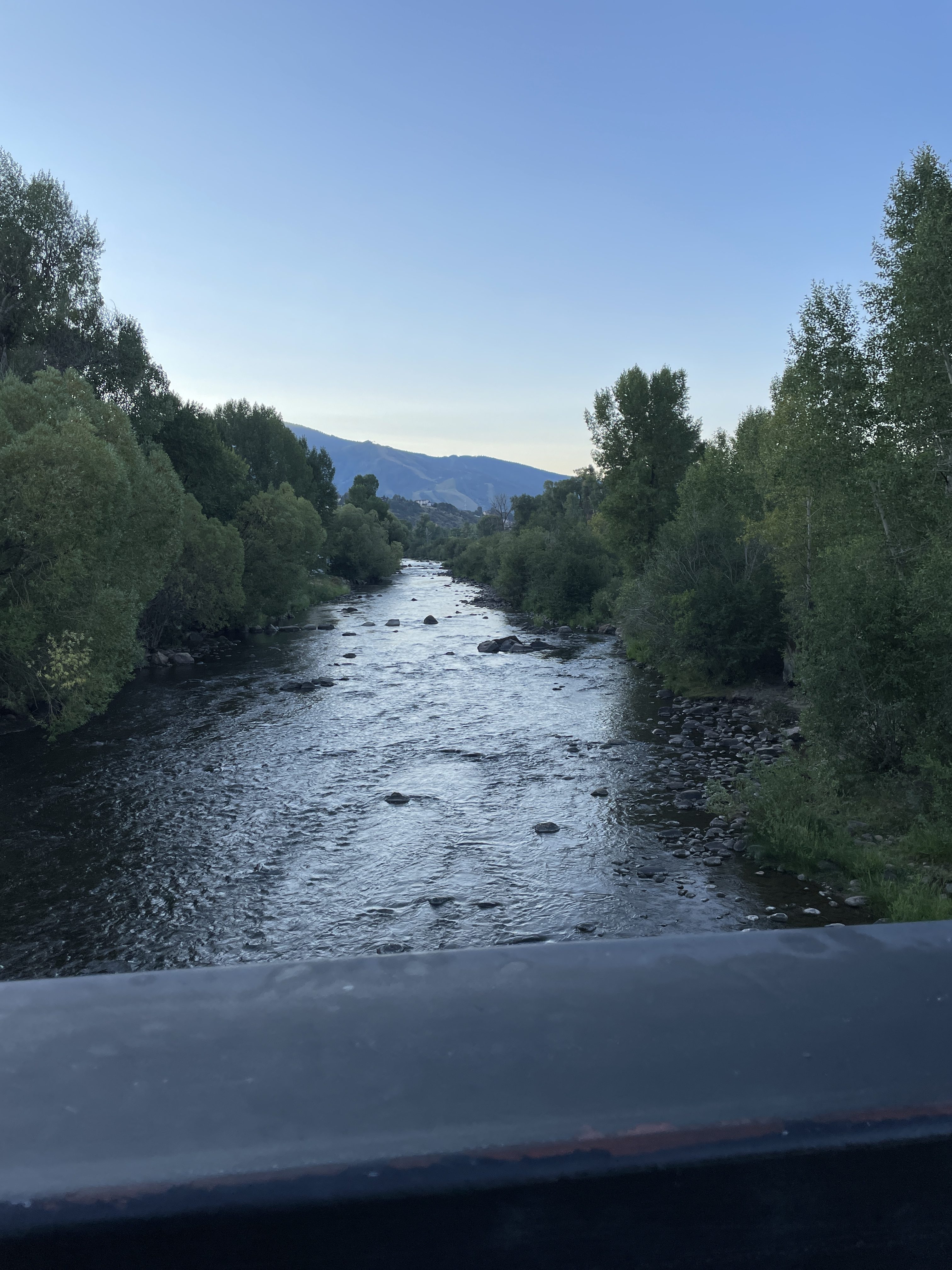
On the Yampa River Core Trail during my bicycle commute to the Colorado Water Congress’ 2025 Summer Conference August 21, 2025.
The headwaters region is the realm of the cutthroat trout. Credit: Water Education Colorado

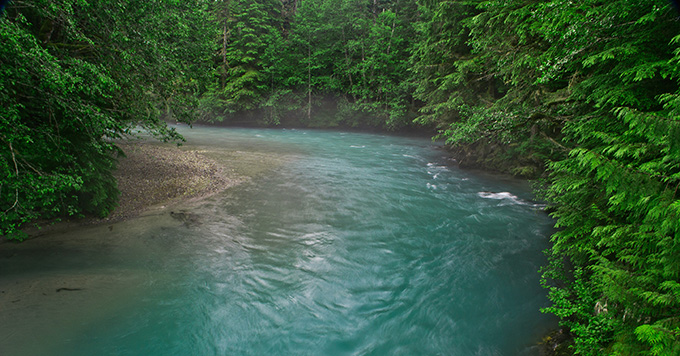
Let’s begin where the rivers do: high in the Rocky Mountains, where clean, cold streams form and flow downhill, eventually feeding the state’s largest rivers. This is the realm of Colorado’s poster fish, the cutthroat trout. Colorful, beautiful and beloved by anglers, cutthroats — recognizable by the iconic red slash markings under the jaw that give the species its name — live in the headwaters of almost every river basin in the state. Cutthroat trout are at home where there’s oxygenated water, gravelly bars for spawning, and good vegetative cover on stream banks.

“Cutthroat trout” isn’t just one type of fish in Colorado, but rather, six. There’s the greenback cutthroat trout, originally from the South Platte River Basin on the east side of the Divide. The yellowfin cutthroat came from the Arkansas River Basin, but is now considered extinct. Moving southwest, the Rio Grande cutthroat rose from the Rio Grande Basin. Then, on the Western Slope, the Colorado River cutthroat is further divided into three lineages: the Green River lineage, found in the Green, White and Yampa rivers; the Uncompahgre lineage, of the Dolores, Gunnison and Upper Colorado rivers; and the San Juan lineage, of the San Juan River Basin.

That’s not to say the average angler — or indeed, the average fish biologist — can tell the cutthroats apart just by looking at them. Nor can they be identified based on where they’re caught these days. Humans, from regular people trying to create new fishing opportunities to professional fisheries managers, spent much of the last couple of centuries moving cutthroats around the state with little understanding of the differences between subspecies. “It’s really hard to put the genie back in the bottle once that happens,” says Jim White, southwest senior aquatic biologist for Colorado Parks and Wildlife (CPW). “One of the great mysteries in cutthroat trout distributions was, what went where? What did these river basins look like before we started widespread stocking of cutthroats and non-natives?”

Biologists didn’t know the answer until 2012, when a landmark study led by University of Colorado Boulder researchers conducted DNA analysis on museum fish specimens gathered at the beginning of European contact with the West. Those results confirmed the existence of the six genetically distinct types of cutthroat — five previously known to science, and one brand-new one, the San Juan lineage trout. The study speculated that San Juan cutthroats had also gone extinct, but CPW biologists had to be sure. “We beat the bushes, surveyed all the populations, and conducted molecular tests on fin clips from all known cutthroat trout populations in the San Juan Basin,” says Kevin Rogers, CPW aquatic research scientist and co-author on the 2012 genetic study. “Indeed, there were about a half-dozen populations that [matched] the fish that had been collected in the mid- to late 1800s.”

One thing all five remaining Colorado cutthroat varieties have in common is a reduction in the amount of habitat they occupy. The state’s cutthroats are now relegated to just 12% of their historical habitat on the high end, down to half a percent on the low end, says Boyd Wright, native aquatic species coordinator with CPW. “Most of the lower elevations have been invaded by non-native trout, so cutthroats are persisting only in the headwaters,” Rogers says. Greenback cutthroats are federally listed as threatened, and Rio Grande and Colorado River cutthroats (occupying just 12% and 11% of their historic habitat, respectively) are state species of special concern. The culprits? What began with pollution, overharvesting and the stocking of non-native fish in the era of Western colonization continues today.

Non-native fish pose a major threat to native cutthroats, particularly the brown, brook and rainbow trout that have been stocked statewide and now thrive in Colorado’s waters. “To sum it up, there’s hybridization, there’s predation, and there’s competition,” White says. “All of those three things can interact to disadvantage our native fish populations.” Rainbow and cutthroat trout can breed, resulting in the hybrid cutbow. Non-native trout sometimes even eat the natives. They also compete with cutthroats for food, and often win. Brook and brown trout spawn in the fall and hatch in the spring — so when the cutthroat fry hatch in late summer, their non-native rivals have already had several months to grow bigger.

Climate change isn’t helping. “We have the two ugly stepchildren that come along with a changing climate: drought and wildfire,” Rogers notes. “The toll wildfire can take on cutthroat is substantial. The debris flows that invariably happen afterward can wipe out populations.” Drought can also lower or dry up streams, further contracting ranges.

But CPW and partner organizations like the U.S. Fish and Wildlife Service are actively working to conserve Colorado’s native cutthroats. Biologists raise the trout in hatcheries for stocking back in their native streams, but there’s a lot more to it than that. First, managers must prep the waterways by removing non-native trout, often by poisoning with natural fish toxicants, a process that can take years. Any present pathogens, like whirling disease, must be eradicated. Managers also have to make sure non-native fish can’t reinvade the stream, usually by building a barrier, like a waterfall. Despite the difficulty and expense, the state is actively working on recovery projects for all five cutthroat varieties. “That’s what we’re about, trying to preserve diversity for future generations to enjoy,” Rogers says.

Desert Rivers

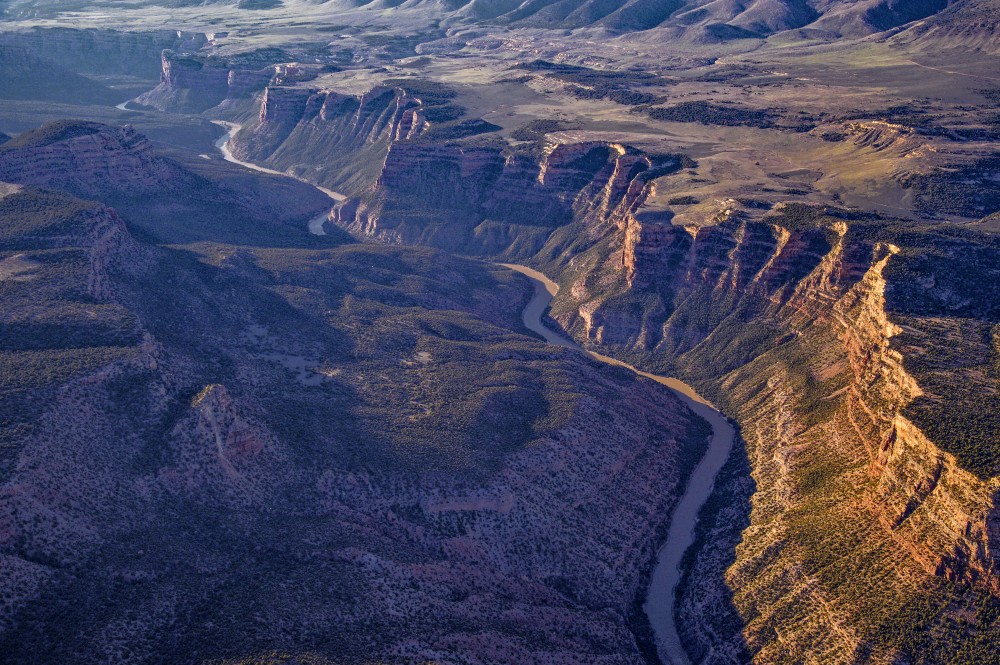
The Yampa River winds through towering cliffs on its journey west to meet the Green River in Dinosaur National Monument. Photo Credit: Dave Showalter
Credit: Water Education Colorado

As the mountain streams follow gravity into the western lowlands, they flow into larger networks: Rivers like the Yampa, White and Animas feed the desert arteries of the Green and San Juan, and these, together with the Gunnison, Dolores and others join the Colorado. The entire basin touches seven states, from Wyoming and Colorado up north to Arizona and California in the southwest.

The cold swift headwaters give way to rivers that historically swung between huge springtime floods and slow, turbid flatwater. And the trout give way to large, long-lived fish with bodies suited to big water and wild rapids.

Just over a dozen fish species evolved with the chops to survive in the larger rivers within the Colorado River system. Three of them, called just “the three species” by biologists, are the flannelmouth sucker, bluehead sucker, and roundtail chub. These omnivorous swimmers persist in today’s rivers, though managers keep a close eye on conserving their populations so that they don’t go the way of four other native species.

These four — all federally listed as endangered or threatened — have struggled in the face of drastic, human-caused changes to their habitats. The bonytail, a large-finned, skinny-tailed omnivore, is the worst off, with no sustainable wild populations left. Its relative, the humpback chub, sports a pronounced bump behind its head, all the better to stabilize the fish in whitewater. Its populations have stayed stable over the past few years, with most of them found near the Grand Canyon, and the species was downlisted from endangered to threatened in 2021. The Colorado pikeminnow, a powerful swimmer shaped like a missile, is the largest minnow in North America. It can migrate 200 miles annually and lives 40 years or more. Its numbers are slowly increasing in the Upper Colorado and San Juan subbasins, but are declining in the Green River. And the razorback sucker, a bug- and plankton-eater, features a similar keel behind its head that helps it maneuver through high flows.

All four populations have crashed in response to human water use and reduced water availability resulting from drought and climate change, which has altered the habitats they once inhabited. “We have cross-basin diversions that feed water from the Western Slope over to the Front Range,” says Jenn Logan, native aquatic species manager for CPW. “We don’t have the volume of water that we used to see in the spring. With dams and water going into ditches and filling reservoirs, runoff is nowhere near where it used to be. We don’t have sandbars formed in the way that we used to, and these systems relied on sediment to form complex habitats.” Not only that, but dams change water temperature, with released water alternately cooling or warming the river downstream depending on where in the reservoir it comes from. And of course, they form a physical barrier for fish that evolved migrating through a huge, interconnected river system.

Then there’s the non-native interlopers — primarily smallmouth bass, northern pike, walleye, and green sunfish — all introduced, either purposely or accidentally, by humans looking for expanded angling opportunities. “They’re predatory species — they get in the river and can really compete with and consume the native fish in the Colorado River,” says Josh Nehring, deputy assistant director, aquatic branch, of the CPW fish management team. All have found happy homes in the modern Colorado River Basin with its dams, reservoirs and warmer waters.

But just as in the mountain streams, fisheries managers on the Western Slope are working aggressively to protect the natives. The Upper Colorado River Endangered Fish Recovery Program and the San Juan River Basin Recovery Implementation Program oversee the recovery of the four fish species listed as threatened or endangered. The recovery programs are coalitions of water users, federal, state and tribal agencies, plus nonprofits and energy organizations. They take steps like installing nets at the edge of reservoirs to keep non-natives contained and stocking sterile non-native fish in reservoirs to keep them from establishing a population if they do get out. Other work looks like electrofishing stretches of river — that is, introducing a current that stuns fish in the water — and physically removing the non-natives, leaving the native fish to recover and swim another day; and gillnetting northern pike in their springtime spawning habitats. Water managers go so far as to recontour river channels on the upper Yampa to cut off access to northern pike’s spawning wetlands.

Dam management is another useful tool for both helping native fish and disadvantaging the non-natives. The Upper Colorado River Endangered Fish Recovery Program works with the U.S. Bureau of Reclamation at Utah’s Flaming Gorge Dam on the Green River on timed releases — releasing water when biologists detect the year’s razorback sucker larvae “to attempt to move them down to their wetland habitats,” Logan says. They’ll release water to disrupt smallmouth bass nesting, when possible. And in the Lower Basin downstream of Lake Powell, managers have begun releasing cooler water specifically to make the Colorado River there less hospitable to smallmouth bass. As long-term drought has dropped water levels in Lake Powell, “We’ve been seeing increases in water temperature releases coming through the dam,” says Ryan Mann, aquatic research program manager for the Arizona Game and Fish Department. Some smallmouth bass made their way into the river below the dam in years past, but the water had been cold enough to keep them from reproducing. But in 2022, biologists found baby bass. Last summer’s cold-water releases prevented widespread spawning, and managers may continue them into the future.

Today’s Colorado River Basin is a radically different place than in centuries past, and, “Unless there’s some amazing technology that comes along to remove all non-native fish or a way to return flows to historic conditions we’re not going to be able to move [major river systems] back to native fish,” Nehring says. But that doesn’t mean those species are doomed. CPW and its partners are actively raising threatened species in hatcheries and reintroducing them to targeted habitats. “We’re really focusing on the tributaries, to keep the natives alive in enough areas where we know they’ll persist,” Nehring says.

Eastern Plains

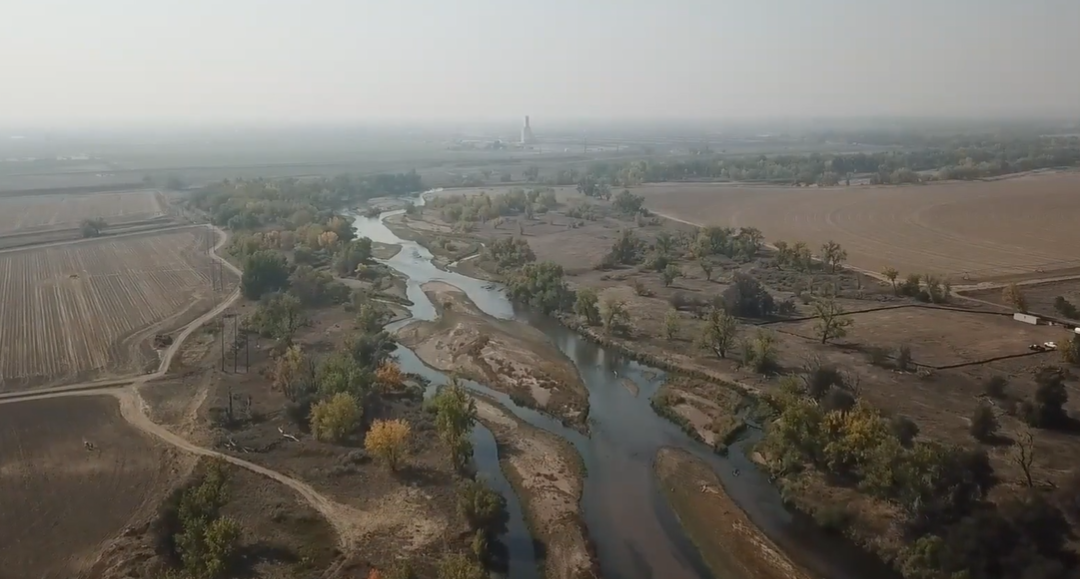
Here at the confluence of the Big Thompson and South Platte rivers near Greeley, a new conservation effort is underway. It restores wetlands and creates mitigation credits that developers can buy to meet their obligations under the federal Clean Water Act to offset any damage to rivers and wetlands they have caused. Credit: Westervelt Ecological Services
Credit: Water Education Colorado

As alpine streams flow east, they meander through Front Range cities, then spread across the arid plains. The water warms, rocky beds grow sandy, and habitats shrink as creeks dry up seasonally. Waters dominated by a single species explode with different fish. “We’ve got this melting pot of biological diversity along the transition zone,” says Wright. “You go from historically a one-species profile in the mountains to more than 28 as you go farther east. These [plains] are very harsh, unpredictable environments.”

The fish that evolved to thrive on the plains, from the region’s western edges in Colorado out into Kansas, Oklahoma and Nebraska, are largely the opposite of the big, long-lived species on the Western Slope. They’re a few inches long, live just a couple of years, and reproduce early. These fish are used to biding their time in small pools until rain or spring runoff reconnects the intermittent creeks, finally allowing them a change of scenery.

But the Eastern Plains haven’t escaped the challenges affecting Colorado’s other rivers — its native fish are struggling, too. “Most of our plains fishes are declining or locally extinct because of habitat modification or loss,” says Ashley Ficke, fisheries ecologist with engineering firm GEI Consultants. Humans have diverted water to farms and municipalities, redirected streams into straight channels lacking habitat complexity, and even drained some waters completely. That hits fish like the plains minnow particularly hard, as its semi-buoyant eggs float vast distances between spawning grounds and ideal nursery habitat. “It needs vast portions of unfragmented stream habitat,” Wright says. “We’ve really lost that in Colorado, and that’s a big reason why they’re very rare.”

As elsewhere in the state, though, fish managers are working to replenish the swimmers of the plains. At a hatchery in Alamosa, CPW breeds 12 rare native fish, half of them eastern species: plains minnow, suckermouth minnow, northern and southern redbelly dace, Arkansas darter, and common shiner. “We’re working with private landowners that have streams or ponds that would be suitable for these native fish, working with them to maintain or improve that habitat, and stocking those waters with the native fish,” Nehring says. By preserving and restoring enough of the plains’ stream habitats, managers hope to give back sufficient waters for these little fish to persist.

This article first appeared in the fall edition of Headwaters magazine.

More by Elisabeth Kwak-Hefferan

Colorado Rivers. Credit: Geology.com

Our Four Biggest Concerns with President Trump’s Administration’s Proposed #WOTUS Rule: What are the biggest impacts on rivers and streams? — Gary Belan (AmericanRivers.org)

Warner Wetlands, Oregon | Greg Shine, BLM

Click the link to read the article on the American Rivers website (Gary Belan):

November 26, 2025

In May of 2023, the Supreme Court handed down a decision that significantly limited the scope of the Clean Water Act, undoing protections that safeguarded the nation’s waters for over 50 years. Specifically, it erased critical protections for tens of millions of acres of wetlands, threatening the clean drinking water sources for millions of Americans.

While the Biden administration amended rules to comply with the Supreme Court ruling, the Trump administration recently released a new draft rule that would go further than even the Supreme Court in limiting what waters can be protected.

Nooksack River, Washington | Brett Baunton

The Clean Water Act’s definition of “Waters of the United States” (WOTUS) is core to defining what waters are protected and which aren’t. Unfortunately, the Trump Administration’s newly proposed WOTUS rule would roll back protections for vast areas of wetlands and river tributaries. It’s estimated that close to 80% of America’s remaining wetlands would lose Clean Water Act protections. As written, the rule would leave many waterways vulnerable to pollution, degradation, and destruction, threatening water quality and community resilience across the country.

Blanca Wetlands, Colorado BLM-managed ACEC Blanca Wetlands is a network of lakes, ponds, marshes and wet meadows designated for its recreation and wetland values. The BLM Colorado and its partners have made strides in preserving, restoring and managing the area to provide rich and diverse habitats for wildlife and the public. To visit or get more information, see: http://www.blm.gov/co/st/en/fo/slvfo/blanca_wetlands.html. By Bureau of Land Management – Blanca Wetlands Area of Critical Environmental Concern, Colorado, Public Domain, https://commons.wikimedia.org/w/index.php?curid=42089248

Here are our top four concerns with the new WOTUS proposal

1. The rule requires streams and wetlands to have surface water “at least during the wet season” in order to qualify for protection. But it never defines what the wet season actually is.

What this means for rivers: Wet seasons vary dramatically from region to region, and without a clear, science-based definition, many healthy and ecologically important streams risk being excluded.

2. Narrow definitions and expanded exemptions shrink the scope of protected waters.

What this means for rivers: By redefining “tributary” to include only streams with year-round or steady “wet-season” flow, and expanding exemptions for wastewater and waste-treatment systems, the new rule would eliminate protections for many intermittent streams and man-made infrastructure that function like natural streams, opening the door to more unregulated pollution. Many rivers in the Southwest only flow for part of the year. This updated definition would put many of these rivers at risk.

3. The rule suggests any artificial or natural break in flow cuts off upstream protection.

What this means for rivers: Under the proposed rule, a culvert, pipe, stormwater channel, or short dry stretch can sever jurisdiction. This means upstream waters that feed larger rivers may no longer be protected, allowing pollution to still flow into nominally protected rivers and streams.

4. The rule significantly eliminates wetland protections by requiring “wetlands” to physically touch a protected water and maintain surface water through the wet season.

What this means for rivers: The new definition excludes many wetlands, which naturally store floodwater, filter pollutants, and safeguard communities. This puts the drinking water for millions at risk and increases the risks of flooding for many communities.

The health of our rivers depends on the small streams and wetlands that feed them. By discarding science, narrowing long‑standing definitions, and creating confusing jurisdictional tests, the Trump Administration’s proposed WOTUS rule risks undoing decades of progress toward cleaner, safer water. America’s rivers—and the communities that depend on them—deserve better.

These rollbacks will put our waterways and the life that depends on them in jeopardy. The public comment period to speak up and defend clean water protections is open until January 5. Please take action today and send a letter to the EPA urging them to keep the current definition of Waters of the United States in place!

Ephemeral streams are streams that do not always flow. They are above the groundwater reservoir and appear after precipitation in the area. Via Socratic.org

#Colorado’s #UncompahgreRiver project turns problems into opportunities — Hannah Holm (AmericanRivers.org)

Uncompahgre River, Colorado | Hannah Holm

Click the link to read the article on the American Rivers website (Hannah Holm):

November 12, 2025

The Uncompahgre River flows from Colorado’s San Juan mountains through the towns of Ouray and Ridgway and then into Ridgway Reservoir, which stores water for farms and households downstream. The river is beautiful, but also troubled; runoff from old mines carries heavy metals into the river, and it is pinched into an unnaturally straight and simple channel as it passes from mountain canyon headwaters into an agricultural valley.

As the river moves through the modified channel, it carves deeper into the valley floor and less frequently spills over its bank. As a result, the local water table has dropped, and riverside trees such as cottonwoods have died, impoverishing this important habitat. Water users on the Ward Ditch at the top of the valley were also struggling with broken-down infrastructure, making it difficult to access and manage water for irrigation. This confluence of challenges created a landscape of opportunity for the Uncompahgre Multi-Benefit Project, which addresses environmental problems along the river and water users’ needs, while also improving water quality and reducing flood risks downstream. 

Uncompahgre River, Colorado | Hannah Holm

The Project, managed by American Rivers, took an integrated approach to restoring a one-mile stretch of the river, which included replacing and stabilizing the Ward Ditch diversion, notching a historic berm to reconnect the river to its floodplain, and placing rock structures in the river that both protect against bank erosion and improve fish habitat. Meanwhile, ditch and field improvements make it easier to spread water across the land for agriculture and re-establish native vegetation.

Photo credit: American Rivers

In addition to the direct benefits this project delivers for on-site habitat and landowners, the enhanced ability of the river to spread out on its floodplain, both through the ditch diversion and natural processes, also provides downstream benefits. As the water slows and spreads across the floodplain during high flows, its destructive power to erode banks and damage infrastructure downstream is diminished. The same dynamics enable pollutants and sediment from upstream abandoned mines or potential wildfires to settle out before the river flows into the downstream reservoir.

Uncompahgre River, Colorado | Hannah Holm

With construction wrapping up in November 2025, the transformation of this stretch of river and its adjacent floodplain is nearly complete.  Fields of flowers and fresh willow plantings are replacing invasive species and dead cottonwoods, and new pools, sandbars, and riffles are providing instream habitat, complementing other organizations’ work to remediate old mines upstream. As a bonus, when the water level is right, the reach has become an inviting run for skilled whitewater boaters.

Map of the Gunnison River drainage basin in Colorado, USA. Made using public domain USGS data. By Shannon1 – Own work, CC BY-SA 4.0, https://commons.wikimedia.org/w/index.php?curid=69257550

Federal Water Tap, November 17, 2025: Bureau of Reclamation Cancels Fall High-Flow Experiment at Glen Canyon Dam — Brett Walton (circleofblue.org)

Click the link to read the article on the Circle of Blue website (Brett Walton):

November 17, 2025

The Rundown

  • Because of the government shutdown, the Bureau of Reclamation cancels a high-volume water release from Glen Canyon Dam meant to rebuild Colorado River beaches.
  • Department of Energy research lab announces a funding opportunity to develop cheaper wastewater treatment for coal power plants.
  • Economic disaster declaration approved for an Illinois county where a harmful algal bloom in July resulted in a ‘do not drink’ water advisory.
  • The Bureau of Land Management is scheduled this week to publish a final environmental impact statement for a proposed groundwater pipeline in Utah.
  • Hydropower generation at federal dams in the western states was below average in fiscal year 2025.

And lastly, House Democrats from Illinois ask the EPA to release lead pipe replacement funds.

“Using federal funds as leverage against communities based on political considerations represents a dangerous abuse of power that undermines public trust and puts lives at risk. The longer we wait, the higher the long-term health, educational, and economic costs will climb, with costs being borne disproportionately by low-income and marginalized communities who have the least political power to demand faster action.” – Letter from seven Illinois representatives to Lee Zeldin, the EPA administrator, asking him to release federal funds for lead pipe replacements.

By the Numbers

River Mile 46.5: Estimated location, as of November 14, of the leading edge of the saltwater “wedge” in the Mississippi River in southern Louisiana. The wedge – salt water that pushed upriver due to weak water flow – has retreated 10 miles in the last three weeks.

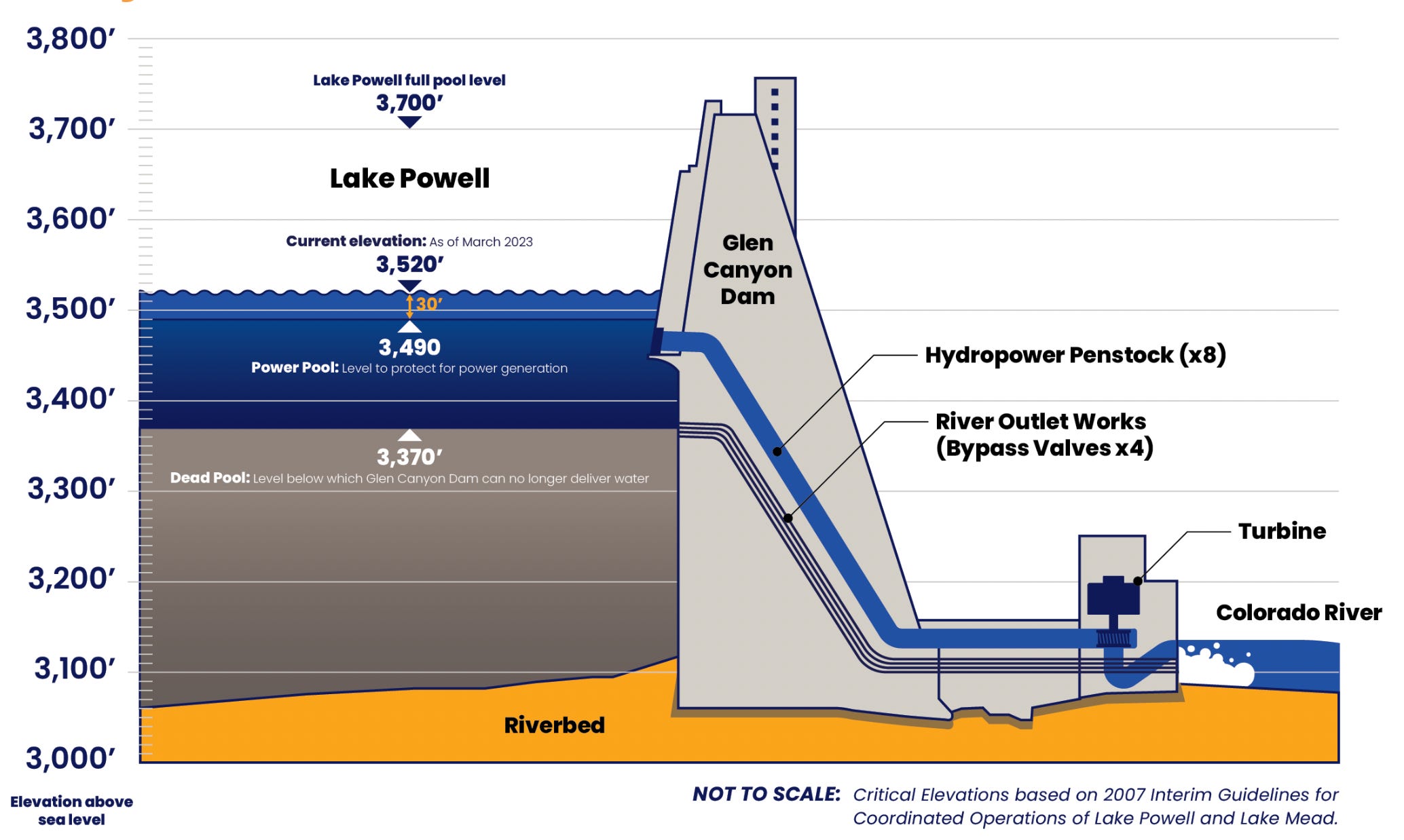
88: Percent of average hydropower generation at federal dams overseen by the Western Area Power Administration in fiscal year 2025.

In context: Two-Decade Hydropower Plunge at Big Colorado River Dams

November 2012 High Flow Experiment via Protect the Flows

News Briefs

Glen Canyon Dam High-Flow Release Canceled
Due to the government shutdown, the Bureau of Reclamation canceled a planned high-volume release of water from Glen Canyon Dam.

“This decision is based on the current lapse in appropriations, which has created uncertainty concerning necessary resources,” said Wayne Pullan, director of the Upper Colorado Basin Region, in a letter dated October 31.

High-flow releases are typically carried out when downstream sediment conditions are ripe for rebuilding Colorado River beaches. The last such release was in April 2023.

Pullan said that conditions in spring 2026 will probably be conducive to a high-flow release.

Illinois Harmful Algal Bloom
The Small Business Administration approved an economic disaster declaration for Coles County, Illinois, for a harmful algal bloom in July that resulted in residents being told not to drink their tap water.

The disaster declaration allows small businesses that were hurt by the do-not-drink order to receive low-interest loans. Small businesses in six contiguous counties are also eligible.

Microcystin, a neurotoxin produced by the algae, was found in the treated water above safety limits in the town of Mattoon. The town issued two do-not-drink orders in a week. Businesses closed and residents bought bottled water.

Mattoon’s water comes from Lake Paradise, the source of the algae.

Studies and Reports

Keeping Coal Going
The National Energy Technology Laboratory, a Department of Energy research arm, is offering $50 million in federal funding for projects to develop wastewater treatment systems for coal power plants.

It is the largest part of a $100 million funding announcement intended to improve the “efficiency, effectiveness, costs, emissions reductions, and environmental performance of coal and natural gas use.”

For wastewater treatment, the goal is to reduce discharges and generate useful, money-making byproducts.

Applications are due January 7, 2026.

On the Radar

Senate Hearings
On November 19, the Senate Committee on Environment and Public Works will hold a hearing on PFAS cleanup and disposal.

Also that day, the Senate Energy and Natural Resources Committee will discuss BLM land use planning.

Utah Rivers map via Geology.com

Utah Groundwater Supply Pipeline
The BLM is due to release an environmental impact statement on November 21 for the Pine Valley Water Supply Project, a scheme to pump groundwater in southwest Utah’s Beaver County and move it to neighboring Iron County for municipal supply and irrigation water.

Proposed by the Central Iron County Water Conservancy District, the project includes 15 wells to supply 15,000 acre-feet of groundwater per year, 70 miles of pipeline, and a 200-acre solar field.

In context: Big Water Pipelines, and Old Pursuit, Still Alluring in Drying West

Federal Water Tap is a weekly digest spotting trends in U.S. government water policy. To get more water news, follow Circle of Blue on Twitter and sign up for our newsletter.

Northern Water again delays filling Chimney Hollow Dam over uranium issues — Michael Booth (Fresh Water News)

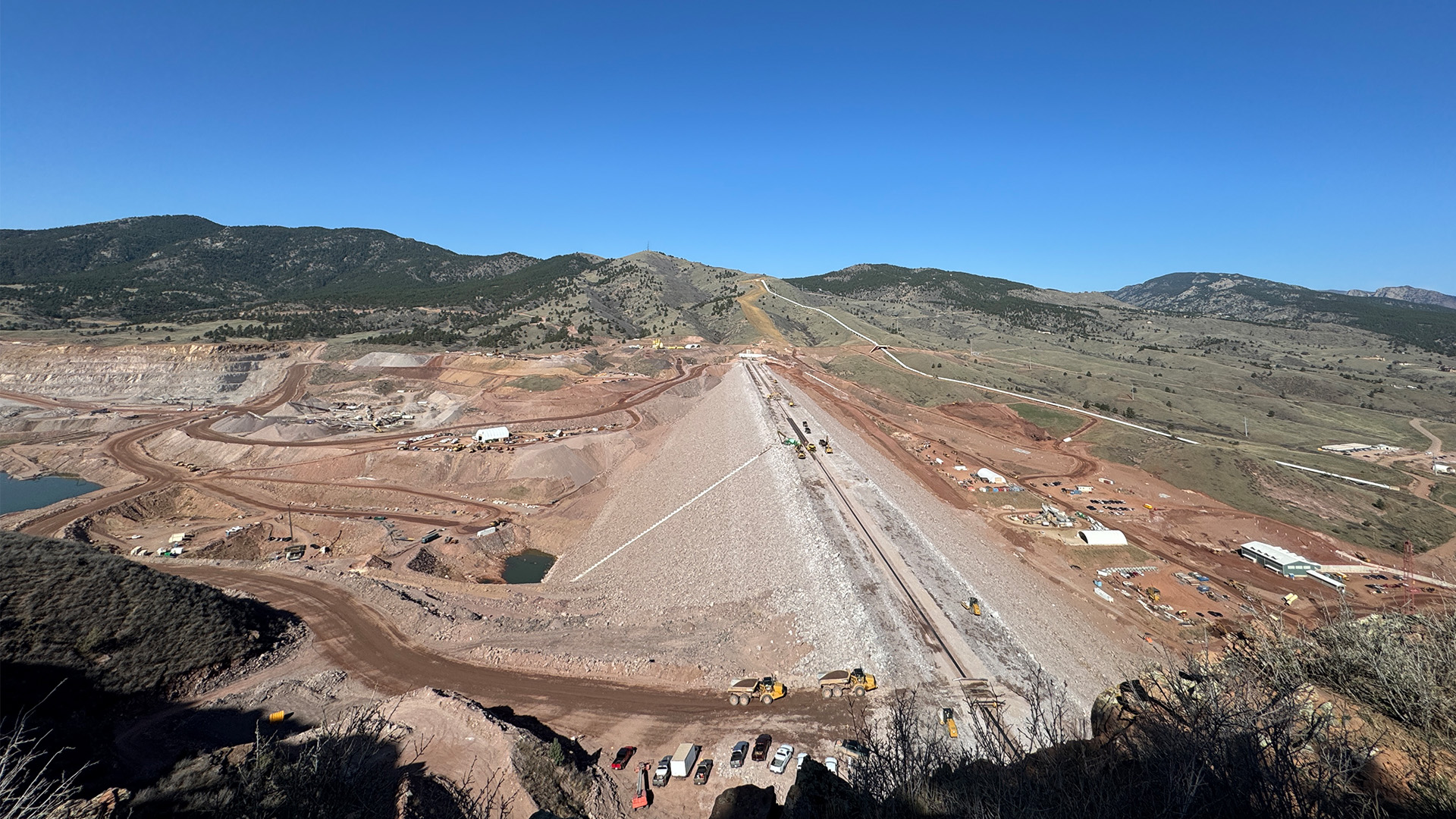
Chimney Hollow Dam construction site. Photo credit: Northern Water

Click the link to read the article on the Water Education Colorado website (Michael Booth):

November 13, 2025

Northern Water will further delay an initial partial filling of its new Chimney Hollow Reservoir into next year to allow time for expanded groundwater tests in the area to make sure unexpected uranium leaching inside the planned pool would not migrate to other supplies.

After spending years permitting and constructing the dam west of Loveland, Northern Water was surprised in June that routine water quality tests ahead of the filling go-ahead found natural uranium leaching out of rocks exposed from a quarry used for dam fill. Initial water fill-up was then delayed for testing, to see how long the leaching might last, and how the uranium would be diluted when water diverted under the Continental Divide by the Colorado-Big Thompson system eventually fills Chimney Hollow.

Now Northern Water says it needs more time to test groundwater outside the reservoir to provide background levels of naturally occurring uranium, and determine whether a filled reservoir would “influence” nearby groundwater with uranium-tainted water. A Northern Water spokesperson used “influence” rather than “leaking” to describe what engineers would be watching.

“Influence or mixing of surface and groundwater can vary greatly, depending on many factors, scenarios and even locations,” spokesperson Amy Parks said. “Without adequate baseline data, we are not able to assess those future conditions, so this short delay allows us to do that work.”

Map from Northern Water via the Fort Collins Coloradan.

Similar-sized Carter Lake Reservoir is just over a ridge that makes up the east edge of Chimney Hollow.

“At this time, due to the existing bedrock, we do not think that migration of water from Chimney to Carter is likely. However, additional monitoring will help us ensure that can be detected in the future,” Parks said.

Filling of a small portion of the reservoir had been planned for this month, but now is “expected in early 2026,” according to the agency.

The 12 Northern Water members that bought into the project, including the cities of Broomfield and Loveland, are already paying for construction bonds through their rates. The delay in filling the reservoir is not expected to affect their finances, the utility said.

Members were not scheduled to receive Chimney Hollow water for years. “This doesn’t affect water deliveries or anything that project participants have been expecting, so it’s a good time” to widen testing protocols,  Parks said in an interview.

“It’s really just an abundance of caution and making sure we’re putting the health and safety of our public and neighbors into priority, and making sure we’re crossing our t’s and dotting our i’s before we take that step of adding water,” she said.

What mitigation is necessary remains unknown

Northern Water still does not know the scale of mitigation required to keep uranium in Chimney Hollow water at safe levels. The agency earlier this year said it believed uranium leaching would decrease over time as stored water stopped penetrating farther into the naturally occurring seams. Excavators have now capped some unused construction materials that will eventually be underwater with a clay layer that will prevent some leaching.

If uranium levels in the filled pool do not drop far enough, other mitigation measures could include a water treatment plant or system below the reservoir, Parks said. Northern Water does not yet have a cost estimate on how much the testing, delays or treatment will cost, until more testing is complete, she said.

Engineering and testing teams decided “it’s best to delay this for a few months to make sure that we have the groundwater samples from the reservoir, from around the reservoir, before that water goes in there,” Parks said. “We just want to make sure that any water that goes into the reservoir now doesn’t influence groundwater around it.”

Chimney Hollow was built to store 90,000 acre-feet of water for 11 northern Colorado communities and water agencies and the Platte River Power Authority. The project was meant to “firm” or store water rights Northern Water owns in the Windy Gap project near Granby, which collects and pumps Colorado River water into the Adams Tunnel for Front Range buyers. Windy Gap and Chimney Hollow allow the Front Range communities to take advantage of their water rights in wet years when Lake Granby is too full to contain their portion of the river. Northern Water has also suffered setbacks this year on its other major project, the proposed $2.7 billion twin-reservoir Northern Integrated Supply Project. Some members of NISP, a slightly different list than Chimney Hollow members, are warning they will pull out of the two-dam and pipeline construction plan after decades of permitting because costs have risen too high and delays raise uncertainty.

More by Michael Booth

Dinosaurs, big rains, thin #snowpack, oh my — Jonathan P. Thompson (LandDesk.org)

Bisti Badlands in the San Juan Basin of northwestern New Mexico. The area has yielded many important fossil finds. Jonathan P. Thompson photo.

Click the link to read the article on The Land Desk website (Jonathan P. Thompson):

November 4, 2025

The San Juan Basin in northwestern New Mexico and southwestern Colorado is known for producing oodles of fossil fuels over the last century. But it is really so, so much more than that: An epicenter of cultures, lovely landscapes, and geological wonders. It is also a hotspot for fossils, some of which recently have yielded new information about the dinosaurs’ last days on earth. 

While it’s generally accepted that non-avian dinosaurs were wiped out by an asteroid some 66 million years ago, researchers have long debated whether the big reptiles were doing well leading up to the cataclysmic event, or were already in decline and headed for extinction. A study published last month in Sciencebased on the fossil record of the San Juan Basin, finds that a diverse array of dinosaurs were actually flourishing at the end of the Cretaceous period. Had it not been for that asteroid, they might have stuck around for quite a bit longer. 

The authors sum up their findings:

Pretty cool stuff. Read the study here


And that’s not all for San Juan Basin dinosaur news! In September, a team of researchers announced they had identified a new species of duck-billed dinosaur in northwestern New Mexico. The Ahshiselsaurus, an herbivore, weighed up to nine tons and spanned up to 35 feet from bill to tail. 

In a news release, the New Mexico Department of Cultural Affairs notes that the bones that led to the identification were unearthed in 1916 in what is now the Ah-shi-sle-pah Wilderness in San Juan County. “In 1935, the fossils were classified as belonging to another hadrosaurid called Kritosaurus navajovius. However, this new research identified distinctions between these fossils and all known hadrosaurids, including several key differences in the animal’s skull.”


Cottonwood trees in full autumn splendor in the Paradox Valley, Colorado. Jonathan P. Thompson photo.

🥵 Aridification Watch 🐫

This past weekend, my sister held the annual garlic-planting and apple cider-making ritual at her farm in the North Fork Valley in western Colorado. Folks from all around gather to help put thousands of garlic cloves into the ground. At the same time, a handful of us crank the handle and toss apples into the 125-year-old cider press that my ancestors brought to the Animas Valley from Pennsylvania in the early part of the century. 

It was a lovely day, with an intensely blue, cloudless sky and high temperatures in the 60s. We felt lucky to have such conditions in early November, but they weren’t wildly abnormal. Though a few places in the region set daily high temperature records, at least as many also set daily low temperature records as the mercury dipped down to around 22° F, even in the lowlands, overnight.

More striking to me was when I stopped in Silverton on the trip back to Durango to take a bike ride on the new trails on Boulder Mountain. That mountain biking is even an option in Silverton in early November is a little odd. That the trails were bone dry at 10,600 feet in elevation is even odder. And that I was not just warm, but downright hot and sweaty in just short sleeves and shorts felt downright weird.

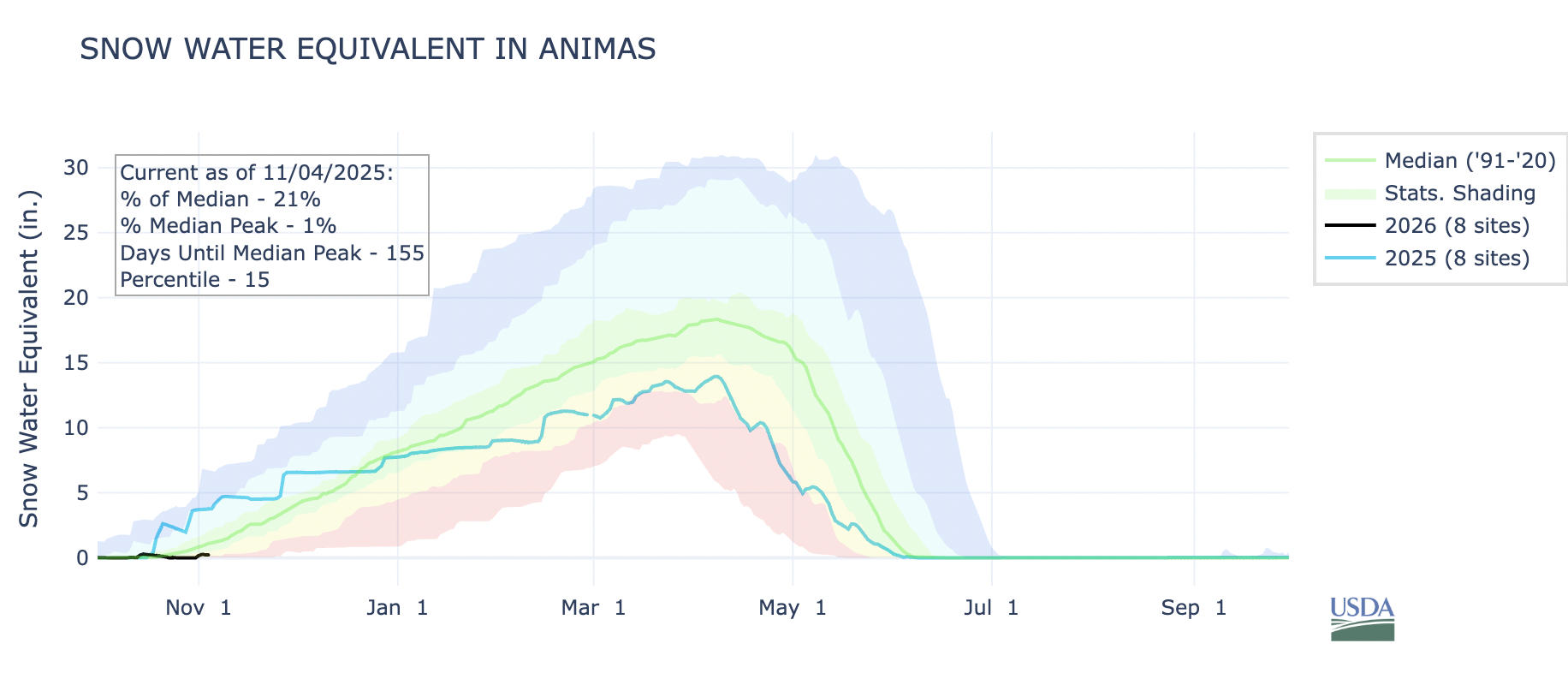
A cursory look at the data reveals that this has been one of the wettest — and least snowiest — starts to a water year on record, at least in southwestern Colorado. The huge, flood-spawning rains of October pushed the accumulated precipitation levels up into record high territory. But most of that liquid abundance fell as rain, not snow, even at high elevations. And the warm temperatures that followed has deteriorated what little snowpack existed. It’s striking to see only a thin layer of white painting its designs on north-facing slopes at 12,000 or 13,000 feet. And without a radical shift in weather (which is certainly possible), it’s hard to imagine ski areas opening by Thanksgiving.

Still, we’re only about one month into the 2026 Water Year, so it’s far too early to draw any conclusions from the data. Last year started out as one of the snowier seasons on record, before fading out into a pretty sparse snow year.

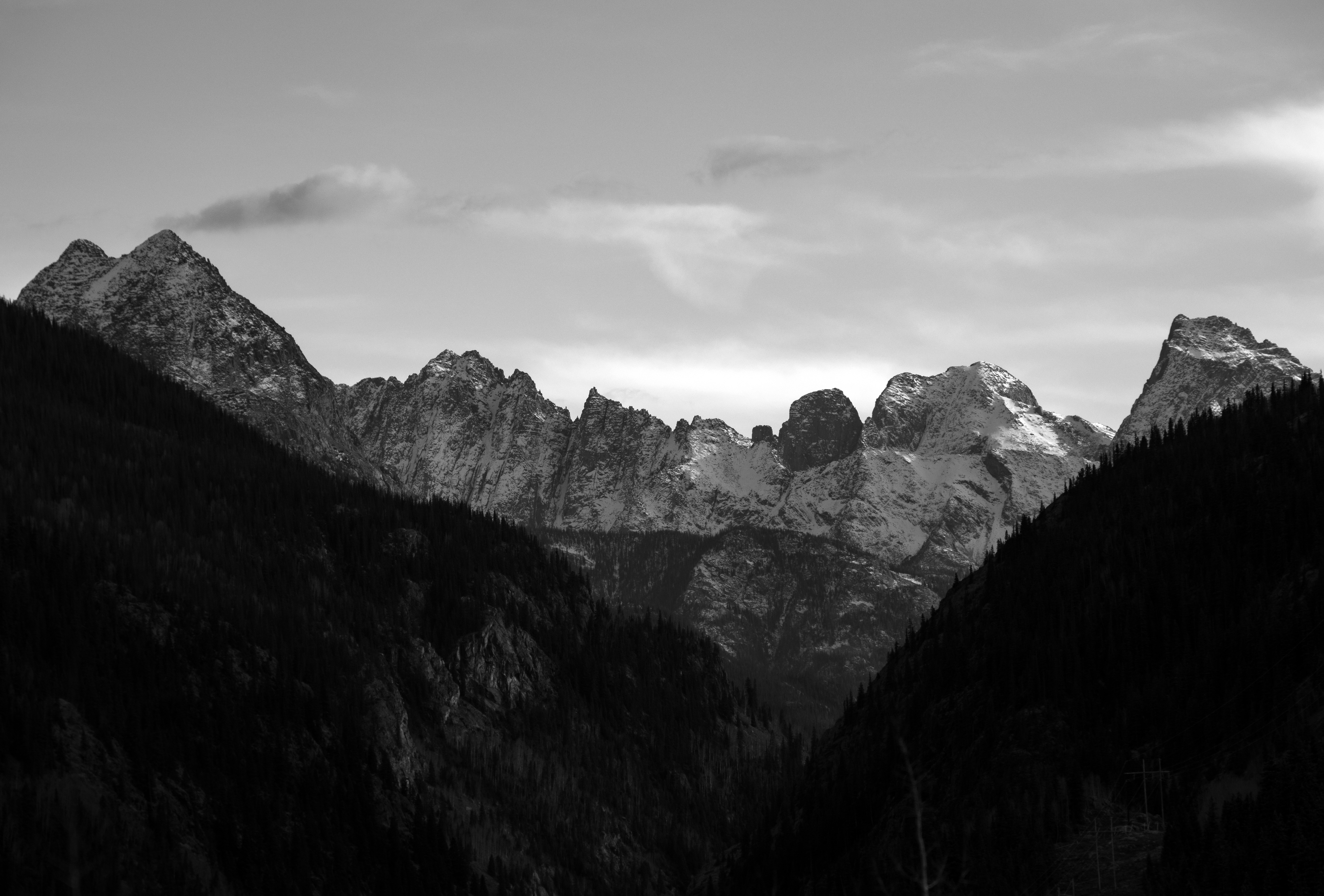
North-facing peaks in the San Juan Mountains, late October 2025. There’s snow, but a lot less than one would expect. Jonathan P. Thompson photo.

📖 Reading Room 🧐

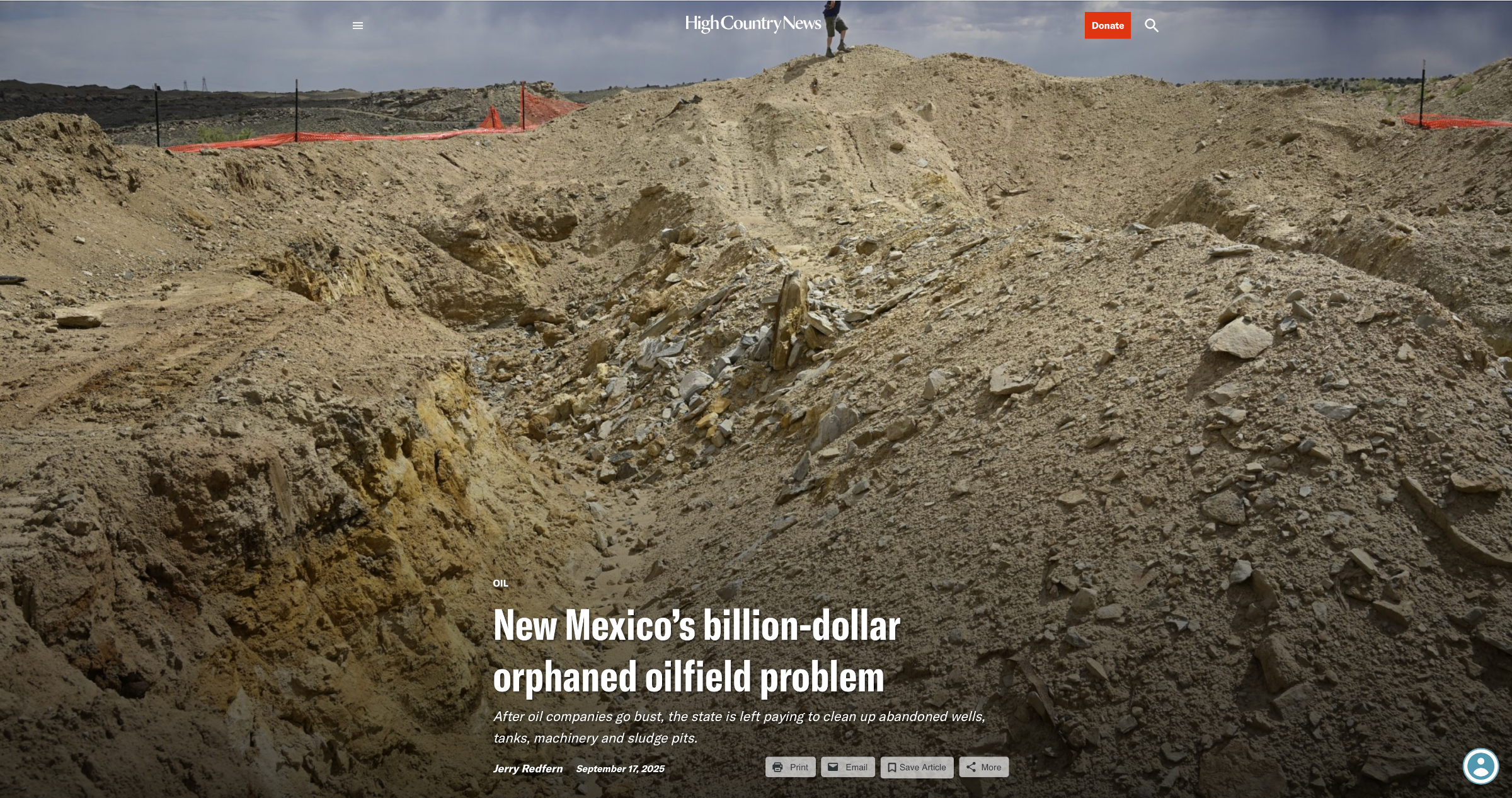
  • Nick Bowlin and ProPublica just published an extensive investigation into oil and gas field “purges,” which is when injecting produced wastewater underground forces toxic water to spew out of old wells in mind-blowing volumes, killing vegetation and trees and contaminating the earth.|
    Bowlin’s investigation focuses on Oklahoma — where regulators are doing little to address it — but these purges occur anywhere that produced wastewater is injected into the ground as a way to dispose of it, which is to say every oil and gas field from Wyoming to New Mexico. Each barrel of oil pulled from the ground is accompanied by anywhere from three to 30 barrels of brackish wastewater that can be contaminated with an assorted soup of hazardous chemicals. This means that hundreds of billions of this stuff must be disposed of each year, usually by deep injection.
    As oil production continues, and as more and more wells are “orphaned” or abandoned without being plugged, the purge problem will only grow worse. 
  • KUNC’s Alex Hagar has a nice, good-news piece on how beavers are returning to Glen Canyon and its tributary canyons as Lake Powell’s water levels recede. It’s yet more evidence that if — when — Lake Powell disappears, the canyons it and ecosystems it drowned will eventually recover, and may do so far more quickly than might be expected.

🔋Notes from the Energy Transition 🔌

Those of you who watch Denver television will certainly recognize longtime Denver 7 weather forecaster. He retired a little while back and has taken on a sort of second career advocating for a Super Grid — an integrated, nationwide, direct current, underground power grid designed to move power from where it’s generated to where it’s needed when it’s needed. 

It’s a cool idea, but also a very, very ambitious one. Instead of rehashing all of the details, I’ll let you watch this video of his presentation, which gives a very informative overview of the whole energy situation.

Uranium Monitoring, Testing and Modeling Continue — Northern Water E-Waternews October 2025

Map from Northern Water via the Fort Collins Coloradan.

From email from Northern Water:

Northern Water and Chimney Hollow participants are committed to keeping our customers, stakeholders and end users, as well as the general public, informed as we gather additional information on the discovery of uranium at the Chimney Hollow Reservoir construction site. Collecting data and modeling are crucial steps in the development of mitigation strategies, and we are actively working to learn more by evaluating test results from field investigations and modeling scenarios.   

Before making mitigation decisions, we want to make sure we have all the information to evaluate operational and treatment options. We are following a rigorous process, starting with geochemical characterization and scoping studies, to inform mitigation alternatives analyses and ultimately select a final approach. Following these steps allows us to make informed decisions, evaluate trade-offs and determine the best path forward.   

Northern Water has been testing how the uranium minerals leach into water and what concentration to expect when the reservoir fills and its operation begins. To allow time for additional data collection and investigations to advance, we have elected not to fill the reservoir as quickly as initially planned. A small amount of water (less than 2 percent of total capacity) will be moved into Chimney Hollow Reservoir in November 2025. During this time, additional water quality data will be collected and used to evaluate the performance of model simulations, and required dam safety monitoring will begin. Even as the reservoir fills, no water will be released as further assessments are underway and mitigation options continue to be evaluated.  

Because the mineralized uranium is coming from materials quarried at the site, excess (unused) rock from construction has been buried under a layer of water-sealing clay. The clay cap will effectively minimize uranium leaching from these materials.  

We expect uranium leaching from the dam to decrease over time because there is a finite quantity of soluble uranium at the site. The duration of the leaching process is not yet fully understood and will depend on how the reservoir is operated over time. While the discovery of mineralized uranium has caused Northern Water and the Chimney Hollow participants to modify our plans, it is an issue that can be safely managed. The new reservoir remains an important part of securing water supply needs for Northern Colorado and its future. Please visit the Water Quality page on our website for more information and a list of Frequently Asked Questions.

#BlueRiver Watershed Group plans water quality monitoring website

Map of the Blue River drainage basin in Colorado, USA. Made using USGS data. By Shannon1 – Own work, CC BY-SA 4.0, https://commons.wikimedia.org/w/index.php?curid=69327693

Click the link to read the release on the Summit Daily News website (Blue River Watershed Group):

October 31, 2025

With a newly approved grant of over $30,000 from the Colorado Basin Roundtable, the Blue River Watershed Group will install cameras and measuring devices on the river to report on stream conditions.

A news release stated the group will use a technical consultant to create a webpage with a community-facing geographic information system map to share water quality data, as well as information about how the data affects the Summit County community.

The database will share locations, data types, collection purposes and data quality objectives from each of the Blue River watershed’s collecting entities.

The grant was part of the more than $180,000 of spending the Colorado Basin Roundtable approved in its September meeting. The rest of the money is funding projects around the state.

Water rates to edge up slightly in 2026 — Cathy Proctor and Kim Unger (DenverWater.org)

October 22, 2025

A core element of Denver Water’s mission is ensuring the large, complex system that collects, cleans and delivers drinking water for 1.5 million people is prepared to meet future challenges. 

And with more than 100 years of operations under its belt, Colorado’s largest water provider, which serves about 25% of Colorado’s population, is in the biggest period of capital investment in its history. Denver Water expects to invest about $1.7 billion into the system during the next 10 years. 

“The work we do provides the critical water supply that the community we serve needs to thrive and grow,” said Denver Water CEO/Manager Alan Salazar.

“Continuing to maintain and invest in the system that supports our water supply will ensure that we — Denver Water as well as our customers — are ready for what lies ahead, from a warming climate to the potential for new regulations, while keeping rates as low as good service will allow,” Salazar said. 

Since 2022, Denver Water has replaced an average of 97,000 feet of water mains per year. Photo credit: Denver Water.

Responsibility to maintain and protect the state’s largest water system, along with a desire to encourage water conservation, keep essential indoor water use affordable and ensure the utility is financially stable, were incorporated into the Oct. 22 decision by Denver’s Board of Water Commissioners to approve new water rates for 2026. 

Denver Water is protecting and preparing the complex system and its customers for the future in many ways, including: 

  • The Lead Reduction Program, which started in 2020, is protecting customers from the risk of lead in their drinking water and to date has replaced more than 35,000 old, customer-owned lead service lines at no direct cost to customers.
  • The new Northwater Treatment Plant, which began operations in 2024, can clean up to 75 million gallons of water per day and can be expanded when needed to 150 million gallons per day.
  • The Gross Reservoir Expansion Project, which began construction in 2022, is designed to nearly triple the reservoir’s storage capacity.
  • The Landscape Transformation Program, which helps customers remodel landscapes dominated by water-intensive Kentucky bluegrass into water-wise, climate-resilient ColoradoScapes.
  • And ongoing work to replace aging water mains, upgrade infrastructure on the utility’s southern collection and treatment system, and reach a net-zero carbon emissions goal by 2030.

Overall, Denver Water expects to invest $1.7 billion over the next 10 years in projects that will maintain, repair, protect and upgrade the system, and make it more resilient and flexible in the future. 

In addition to rates paid by customers, funding for Denver Water’s infrastructure projects, day-to-day operations and emergency expenses like water main breaks comes from bond sales, cash reserves, hydropower sales, grants, federal funding and fees paid when new homes and buildings are connected to the system.

The utility does not receive tax dollars or make a profit. It reinvests money from customer water bills and fees to maintain and upgrade the water system. 

And the utility is committed to delivering a safe, clean and affordable water supply to its customers while managing the impacts of the larger economy, from inflation to supply chain issues. 

How the 2026 water rates will affect individual customer bills will vary depending on where the customer lives (either in Denver or in one of the utility’s suburban distributor districts) and how much water they use. 

And major credit rating agencies recently confirmed Denver Water’s triple-A credit rating, the highest possible, citing the utility’s track record of strong financial management. 

Also, it’s important to note that Denver Water has made clear in discussions with the Denver Broncos that any costs associated with relocating some of the utility’s operations facilities, if needed, to accommodate a new stadium cannot be financed or subsidized by its ratepayers. (See Denver Water’s statement on the Broncos’ Sept. 9 announcement of Burnham Yard as their preferred site.) 

New rates for 2026

Monthly bills for single-family residential customers are comprised of two factors: a fixed charge, which helps ensure Denver Water has a more stable revenue stream to continue the necessary water system upgrades to ensure reliable water service, and a volume rate for the amount of water used.

Combining both of those factors, a typical single-family residential customer who uses 104,000 gallons of water annually will see their monthly bill increase by an average of $2.45 to $3.30 over the course of the year, depending on where the customer lives (in Denver or in one of the utility’s suburban distributor districts) and the type of service the customer’s suburban distributor district receives from Denver Water. 

(See the infographic below for information about Denver Water’s suburban distributor districts, types of service and rates.) 

The monthly bill example above includes an increase to the fixed monthly charge, which is tied to the size of the meter. For most single-family residential customers with a 3/4-inch meter, the fixed charge will increase by $1.85 in 2026, to $20.91 per month.

The more you use, the more you pay

After the fixed monthly charge, Denver Water’s rate structure for residential single-family customers has three tiers based on the amount of water used. The tiers are designed to keep essential indoor water use affordable while encouraging water conservation outdoors. (See additional details about the 2026 rates for the three tiers in the infographic below.)

  • The first tier is charged at the lowest rate and covers essential indoor water use for bathing, cooking and flushing toilets. Each customer has their individual first tier determined by the average of their monthly water use as listed on bills that arrive in January, February and March — when there is very little or no outdoor watering.
  • The second tier is for water consumption, typically used for outdoor watering, that is above the customer’s first tier and up to 15,000 gallons of water per month. Water use in this tier is considered to be an efficient use of water outdoors.
  • The third tier is for water use of more than 15,000 gallons per month. It is priced at the highest level to signal potentially excessive water use and encourage conservation efforts by larger-lot customers.

Bills in the summer months can be higher if customers use water to irrigate their outdoor landscapes. 

Need help? 

Denver Water offers one-time payment assistance to customers who may qualify. The utility’s Customer Care representatives also can help customers navigate payment options and unique circumstances. Customers can reach them via denverwater.org/ContactForm or by calling 303-893-2444.

What customers can do to save water, money

Denver Water encourages all customers to conserve water where they can indoors and out.

Finding and plugging leaks inside the home can be done year-round, and the utility offers rebates for qualified water-saving toilets and sprinkler equipment.

To help customers remodel their lawns to create a more vibrant, diverse ColoradoScape, Denver Water in 2026 will again offer a limited number of customer discounts on Resource Central’s popular turf removal service and its water-wise Garden In A Box plant-by-number kits. Photo credit: Denver Water.

Outside, Denver Water encourages customers to conserve water by remodeling unused areas of water-intensive Kentucky bluegrass into more diverse, water-wise ColoradoScapes that fit naturally into our dry climate and are interesting to look at through all seasons. These drought-resistant and climate-resilient ColoradoScapes include tree canopies and plants that help maintain vibrant urban landscapes and benefit our communities, wildlife and the environment.

Using less water also means more water can be kept in the mountain reservoirs, rivers and streams that fish live in and Coloradans enjoy. It also can lower monthly water bills, saving money.

Note 1: An individual customer’s monthly water bill will vary depending on where they live in Denver Water’s service area (in Denver or in one of the utility’s suburban distributor districts), the types of service the suburban distributor district receives from Denver Water, and how much water the customer uses.

Note 2: The difference in volume rates (in the infographic above) for Denver Water customers who live inside Denver compared to those who live in the suburbs is due to the Denver City Charter (see Operating Rules), which allows permanent leases of water to suburban water districts based on two conditions: 1) there always would be an adequate supply for the citizens of Denver, and 2) suburban customers pay the full cost of service, plus an additional amount.

Could Good Samaritans Fix America’s Abandoned Hardrock Mine Problem? — Daniel Anderson (Getches-Wilkinson Center)

Photo credit: Trout Unlimited

Click the link to read the article on the Getches-Wilkerson Center website (Daniel Anderson):

October 20, 2025

Until the passage of the Comprehensive Environmental Response, Compensation, and Liability Act (CERCLA) in 1980, miners across the American West extracted gold, silver, and other valuable “hardrock” minerals—and then simply walked away. Today, tens of thousands of these abandoned hardrock mines continue to leak acidic, metal-laden water into pristine streams and wetlands. Federal agencies estimate that over a hundred thousand miles of streams are impaired by mining waste. Nearly half of Western headwater streams are likely contaminated by legacy operations. Despite billions already spent on cleanup at the most hazardous sites, the total cleanup costs remaining may exceed fifty billion dollars.

So how did we end up here? In short, the General Mining Law of 1872 created a lack of accountability for historic mine operators to remediate their operations, but CERCLA and the Clean Water Act (CWA) arguably add an excess of accountability for third parties trying to clean up abandoned mines today.

The Animas River running orange through Durango after the Gold King Mine spill August 2015. Photo credit: Jonathan P. Thompson/The Land Desk

The first legislation to address this problem was introduced in 1999. Many iterations followed and failed, even in the wake of shocking images and costly litigation due to the Gold King Mine spill that dyed the Animas River a vibrant orange in 2015. Finally, in December, 2024, Congress passed the Good Samaritan Remediation of Abandoned Hardrock Mines Act of 2024 (GSA).

The GSA is a cautious, bipartisan attempt to empower volunteers to clean up this toxic legacy. The law creates a short pilot program and releases certain “Good Samaritans” from liability under CERCLA and the CWA, which has long deterred cleanup by groups like state agencies and NGOs. EPA has oversight of the program and the authority to issue permits to Good Samaritans for the proposed cleanup work.

Despite the promise of this new legislation, critical questions remain unanswered about the GSA and how it will work. Only time will tell whether EPA designs and implements an effective permitting program that ensures Good Samaritans complete remediation work safely and effectively. EPA now has the opportunity as the agency that oversees this program to unlock the promise of the GSA.

The GSA left some significant gaps unanswered in how the pilot program will be designed and directed EPA to issue either regulations or guidance to fill in those gaps. EPA missed the statutory deadline to start the rulemaking process (July, 2025) and is now working to issue guidance on how the program will move forward. EPA must provide a 30-day public comment period before finalizing the guidance document according to the GSA. With EPA’s hopes of getting multiple projects approved and shovels in the ground in 2026, the forthcoming guidance is expected to be released soon. While we wait, it’s worth both looking back at what led to the GSA and looking ahead to questions remaining about the implementation of the pilot program.

A Century of Mining the West Without Accountability

The story begins with the General Mining Law of 1872, a relic of the American frontier era that still governs hardrock mining on federal public lands. The law allows citizens and even foreign-based corporations to claim mineral rights and extract valuable ores without paying any federal royalty. Unlike coal, oil, or gas—which fund reclamation through production fees—hardrock mining remains royalty-free.

As mining industrialized during the 20th century, large corporations replaced prospectors. Until 1980, mines were often abandoned without consequences or cleanup once they became unprofitable. The result: an estimated half-million abandoned mine features will continually leach pollution into American watersheds for centuries.

CERLCA Liability Holds Back Many Abandoned Mine Cleanups

Congress sought to address toxic sites through CERCLA, also known as the Superfund law, which makes owners and operators strictly liable for hazardous releases. In theory, that ensures accountability. In practice, it creates a paradox: if no polluter can be found at an abandoned site, anyone who tries to clean up the mess may be held responsible for all past, present, and future pollution.

The Clean Water Act’s Double-Edged Sword

Even state agencies, tribes, or nonprofits that treat contaminated water risk being deemed “operators” of a hazardous facility. That fear of liability—combined with enormous costs—has frozen many potential Good Samaritans in place. Federal efforts to ease this fear have offered little more than reassurance letters without real protection.

The Clean Water Act compounds the problem. Anyone who discharges pollution into a surface water via any discernible, confined and discrete conveyance must hold a point source discharge permit. By requiring these permits and providing for direct citizen enforcement in the form of citizen suits, the CWA has led to significant improvements in water quality across the country. That said, courts have ruled that drainage pipes or diversion channels used to manage runoff from abandoned mines may also qualify as point sources. As a result, Good Samaritans who exercise control over historic point sources, like mine tunnels, could face penalties and other liabilities for unpermitted discharges, even when they improve overall conditions.

The 2024 Good Samaritan Act Steps onto the Scene

After decades of failed attempts, the Good Samaritan Remediation of Abandoned Hardrock Mines Act was signed into law in December, 2024. The GSA authorizes EPA to create a pilot program, issuing up to fifteen permits for low-risk cleanup projects over seven years. Most importantly, permit holders receive protection from Superfund and Clean Water Act liability for their permitted activities. This legal shield removes one of the greatest barriers to cleanup efforts.

Applicants can seek either a Good Samaritan permit to begin active remediation or an investigative sampling permit to scope out a site for potential conversion to a Good Samaritan permit down the road.

In either case, applicants must show:

  • they had no role in causing, and have never exercised control over, the pollution in their application,
  • they possess the necessary expertise and adequate funding for all contingencies within their control, and
  • they are targeting low-risk sites, which are generally understood to be those that require passive treatment methods like moving piles of mine waste away from streams or snowmelt or diverting water polluted with heavy metals below mine tailings toward wetlands that may settle and naturally improve water quality over time

Under the unique provisions of the GSA, each qualifying permit must go through a modified and streamlined National Environmental Policy Act (NEPA) review process. EPA or another lead agency must analyze the proposed permit pursuant to an Environmental Assessment (EA). If the lead agency cannot issue a Finding of No Significant Impact (FONSI) after preparing an EA, the permit cannot be issued. The GSA therefore precludes issuance of a permit where the permitted activities may have a significant impact on the environment.

The pilot program only allows for up to fifteen low risk projects that must be approved by EPA over the next seven years. Defining which remediations are sufficiently low-risk becomes critical in determining what the pilot program can prove about the Good Samaritan model for abandoned mine cleanup. To some extent, “low risk” is simply equivalent to a FONSI. But the GSA further defines the low-risk remediation under these pilot permits as “any action to remove, treat, or contain historic mine residue to prevent, minimize, or reduce (i) the release or threat of release of a hazardous substance, pollutant, or contaminant that would harm human health or the environment; or (ii) a migration or discharge of a hazardous substance, pollutant, or contaminant that would harm human health or the environment.”

This excludes “any action that requires plugging, opening, or otherwise altering the portal or adit of the abandoned hardrock mine site…”, such as what led to the Gold King mine disaster. Many active treatment methods are also excluded from the pilot program, therefore, because they often involve opening or plugging adits or other openings to pump out water and treat it in a water treatment plant, either on or off-site. As a result, the Good Sam Act’s low-risk pilot projects focus on passive treatment of the hazardous mine waste or the toxic discharge coming off that waste, such as a diversion of contaminated water into a settlement pond.

The GSA requires that permitted actions partially or completely remediate the historic mine residue at a site. The Administrator of EPA has the discretion to determine whether the permit makes “measurable progress”. Every activity that the Good Samaritan and involved permitted parties take must be designed to “improve or enhance water quality or site-specific soil or sediment quality relevant to the historic mine residue addressed by the remediation plan, including making measurable progress toward achieving applicable water quality standards,” or otherwise protect human health and the environment by preventing the threat of discharge to water, sediment, or soil. The proposed remediation need not achieve the stringent numeric standards required by CERCLA or the CWA.

Furthermore, it can be challenging to determine the discrete difference between the baseline conditions downstream of an acid mine drainage prior to and after a Good Samaritan remediation is completed. Not only do background conditions confuse the picture, but other sources of pollution near the selected project may also make measuring water quality difficult. This may mean that the discretion left to the EPA Administrator to determine “measurable progress” becomes generously applied.

Finally, once EPA grants a permit, the Good Samaritan must follow the terms, conditions, and limitations of the permit. If the Good Samaritan’s work degrades the environment from the baseline conditions, leading to “measurably worse” conditions, EPA must notify and require that the Good Samaritantake “reasonable measures” to correct the surface water quality or other environmental conditions to the baseline. If these efforts do not result in a “measurably adverse impact”, EPA cannot consider this a permit violation or noncompliance. However, if Good Samaritans do not take reasonable measures or if their noncompliance causes a measurable adverse impact, the Good Samaritan must notify all potential impacted parties. If severe enough, EPA has discretion to revoke CERCLA and CWA liability protections.

Recently, EPA shared the following draft flowchart for the permitting process:

Disclaimer: This is being provided as information only and does not impose legally binding requirements on EPA, States, or the public. This cannot be relied upon to create any rights enforceable by any party in litigation with the United States. Any decisions regarding a particular permit will be made based upon the statute and the discretion granted by the statute, including whether or not to grant or deny a permit.

Challenges Facing the Pilot Program Implementation

Despite its promise, the pilot program’s scope is limited. With only fifteen Good Samaritan permits eligible nationwide and no dedicated funding, the law depends on states, tribes, and nonprofits to provide their own resources. The only guidance issued so far by EPA detailed the financial assurance requirements that would-be Good Samaritans must provide to EPA to receive a permit. Definitions provided in this financial assurance guidance raised concerns for mining trade organizations and nonprofits alike with EPA’s proposed interpretations of key terms including “low risk” and “long-term monitoring”. Crucial terms like these, along with terms impacting enforcement when a permitted remediation action goes awry, like “baseline conditions”, “measurably worse”, and “reasonable measures” to restore baseline conditions, are vague in the GSA. How EPA ultimately clarifies terms like these will play a large role in the success of the GSA in its ultimate goal: to prove that Good Samaritans can effectively and safely clean up abandoned hardrock mine sites. The soon-to-be-released guidance document will therefore be a critical moment in the history of this new program.

Funding the Future

Funding remains the greatest barrier to large-scale remediation efforts. Coal mine cleanups are funded through fees on current production under the Surface Mining Control and Reclamation Act. Current hardrock mining, however, still pays no federal royalty. A modernized system could pair Good Samaritan permitting with industry-funded reclamation fees, ensuring that those profiting from today’s mining help repair the past. Without this reform, the burden will remain on underfunded agencies and nonprofits. However, this General Mining Law reform remains politically unlikely. In the meantime, the GSA creates a Good Samaritan Mine Remediation Fund but does not dedicate any new appropriations to that fund. Grants under Section 319 of the CWA (Nonpoint Source Pollution) and Section 104(k) of CERCLA (Brownfields Revitalization) programs may help, but funding opportunities here are limited.

The GSA includes provisions that allow Good Samaritans to reprocess mine waste while completing Good Samaritan permit cleanup work. These provisions include a key restriction: revenue generated from reprocessing must be dedicated either to the same cleanup project or to the GSA-created fund for future cleanups. A January 20, 2025 executive order to focus on domestic production of critical minerals led to a related Interior secretarial order on July 17, 2025, for federal land management agencies to organize opportunities and data regarding reprocessing mine waste for critical minerals on federal lands. Shortly after these federal policy directives, an August 15, 2025, article in Science suggested that domestic reprocessing of mining by-products like abandoned mine waste has the potential to meet nearly all the domestic demand for critical minerals. Legal and technical hurdles might prevent much reprocessing from occurring within the seven-year pilot program. Reprocessing projections aside, the political appetite for dedicated funding for the future may still grow if the GSA pilot projects successfully prove the Good Samaritan concept using a funding approach reliant on generosity and creativity.

Despite Significant Liability Protections, Good Samaritans Face Uncertainties

While the new law should help to address significant barriers to the cleanup of abandoned mines by Good Samaritans, uncertainties remain. The GSA provides exceptions to certain requirements under the Clean Water Act (including compliance with section 301, 302, 306, 402, and 404). The GSA also provides exceptions to Section 121 of CERCLA, which requires that Superfund cleanups must also meet a comprehensive collection of all relevant and appropriate standards, requirements, criteria, or limitations (ARARs).

In States or in Tribal lands that have been authorized to administer their own point source (section 402) or dredge and fill (section 404) programs under the CWA, the exceptions to obtaining authorizations, licenses, and permits instead applies to those State or Tribal programs. In that case, Good Samaritans are also excepted from applicable State and Tribal requirements, along with all ARARs under Section 121 of CERCLA.

However, Section 121(e)(1) of CERCLA states that remedial actions conducted entirely onsite do not need to obtain any Federal, State, or local permits. Most GSA pilot projects will likely occur entirely onsite, so it is possible that Good Samaritans might still need to comply with local authorizations or licenses, such as land use plans requirements. While it appears that GSA permitted activities are excepted from following relevant and applicable Federal, State, and Tribal environmental and land use processes, it is a bit unclear whether they are also excepted from local decision making.

The liability protections in the GSA are also limited by the terms of the statute. Good Samaritans may still be liable under the CWA and CERCLA if their actions make conditions at the site “measurably worse” as compared to the baseline. In addition, the GSA does not address potential common law liability that might result from unintended accidents. For example, an agricultural water appropriator downstream could sue the Good Samaritan for damages associated with a spike in water acidity due to permitted activities, such as moving a waste rock pile to a safer, permanent location on site.

Finally, the GSA does not clearly address how potential disputes about proposed permits may be reviewed by the federal courts. However, the unique provisions of the GSA, which prohibit issuance of a permit if EPA cannot issue a FONSI, potentially provide an avenue to challenge proposed projects where there is disagreement over the potential benefits and risks of the cleanup activities.

Measuring and Reporting Success of the Pilot Program

The Good Samaritan Act authorizes EPA to issue up to fifteen permits for low-risk abandoned mine cleanups, shielding participants from Superfund and Clean Water Act liability. Applicants must prove prior non-involvement, capability, and target on low-risk sites. Each permit undergoes a streamlined NEPA Environmental Assessment requiring a FONSI. To be successful, EPA and potential Good Samaritans will need to efficiently follow the permit requirements found in the guidance, identify suitable projects, and secure funding. The GSA requires baseline monitoring and post-cleanup reporting for each permitted action but does not require a structured process of learning and adjustment over the course of the pilot program. Without this structured, adaptive approach, it may be difficult for Good Samaritan proponents to collect valuable data and show measurable progress over the next seven years that would justify expanding the Good Samaritan approach to Congress. EPA’s forthcoming guidance offers an opportunity to fix that by publicly adopting a targeted and tiered approach in addition to the obligatory permitting requirements.

The EPA’s David Hockey, who leads the GSA effort from the EPA’s Office of Mountains, Deserts, and Plains based in Denver, has suggested taking just such a flexible, adaptive approach in public meetings discussing the GSA. EPA, working in coordination with partners that led the bill through Congress last year, like Trout Unlimited, intends to approve GSA permits in three tranches. EPA currently estimates that all fifteen projects will be approved and operational by 2028.

The first round will likely approve two or three projects with near-guaranteed success. If all goes according to plan, EPA hopes to have these shovel-ready projects through the GSA permit process, which includes a NEPA review, with the remedial work beginning in 2026. These initial projects will help EPA identify pain points in the process and potentially pivot requirements before issuing a second round of permits. This second tranche will likely occur in different western states and might increase in complexity from the first tranche.

Finally, the third tranche of permits might tackle the more complex projects from a legal and technical standpoint that could still be considered low risk. This may include remediation of sites in Indian Country led by or in cooperation with a Tribal abandoned mine land reclamation program. Other projects suited for the third tranche might include reprocessing of mine waste, tailings, or sludge, which may also require further buy-in to utilize the mining industry’s expertise, facilities, and equipment. These more complex projects will benefit most from building and maintaining local trust and involvement, such as through genuine community dialogue and citizen science partnerships. The third tranche projects should contain such bold choices to fully inform proponents and Congress when they consider expanding the Good Samaritan approach.

EPA appears poised to take a learning-by-doing approach. But the guidance can and should state this by setting public, straightforward, and measurable goals for the pilot program. This is a tremendous opportunity for EPA and everyone who stands to benefit from abandoned mine cleanup. But this is no simple task. Each permit must be flexible enough to address the unique characteristics at each mine site, sparking interest in future legislation so more Good Samaritans can help address the full scale of the abandoned hardrock mine pollution problem. But if EPA abuses its broad discretion under the GSA and moves the goalposts too much during the pilot program, they may reignite criticisms that the Good Samaritan approach undercuts bedrock environmental laws like the Clean Water Act. If projects are not selected carefully, for instance, the EPA could approve a permit that may not be sufficiently “low risk”, or that ultimately makes no “measurable progress” to improve or protect the environment. Either case may invite litigation against the EPA under the Administrative Procedure Act’s arbitrary and capricious standard or bolster other claims against Good Samaritans.

While the GSA itself imposes only a report to Congress at the end of the seven-year pilot period, a five-year interim report to Congress could help ensure accountability. If all goes well or more pilot projects are needed, this interim report could also provide support for an extension before the pilot program expires. The guidance issued by EPA should only be the beginning of the lessons learned and acted on during the GSA pilot program.

Seizing the Window of Opportunity

The GSA represents a breakthrough after decades of gridlock. It addresses the key fears of liability that stymied cleanup. Yet its success will depend on how effectively the EPA implements the pilot program and the courage of Good Samaritans who are stepping into some uncertainty. If it fails, America’s abandoned mines will continue to leak toxins into its headwaters for generations to come. But if the program succeeds, it could become a model for collaborative environmental restoration. For now, the EPA’s forthcoming guidance could mark the first steps toward success through clear permitting requirements and by setting flexible yet strategic goals for the pilot program.

If you are interested in following the implementation of the Good Samaritan Act, EPA recently announced it will host a webinar on December 2, 2025. They will provide a brief background and history of abandoned mine land cleanups, highlight key aspects of the legislation, discuss the permitting process, and explain overall program goals and timelines. Visit EPA’s GSA website for more information.

Download a PDF of the paper here. 

Map of the San Juan River, a tributary of the Colorado River, in Arizona, Colorado, New Mexico and Utah, USA. Made using USGS National Map data. By Shannon1 – Own work, CC BY-SA 4.0, https://commons.wikimedia.org/w/index.php?curid=47456307

Federal Water Tap, October 20, 2025: Abandoned Mine Cleanup Application Review to Begin This Fall, EPA Says — Brett Walton (circleofblue.org)

The “Bonita Peak Mining District” superfund site. Map via the Environmental Protection Agency

Click the link to read the article on the Circle of Blue website (Brett Walton):

The Rundown

  • Democrats on budget committees tell EPA and Interior to halt potential staff cuts during the shutdown.
  • White House budget office says $11 billion in Army Corps infrastructure projects will be paused.
  • BLM will begin an environmental analysis of a proposed expansion of a Mojave Desert gold mine that will need more groundwater to operate.

And lastly, EPA prepares to permit abandoned hardrock mine cleanups under a new Good Samaritan law.

“If you were a nonprofit or a county with a serious water pollution issue coming out of an old set of mine tailings, you could not work on that problem. The moment you touched it, you accepted total liability for the pollution going downstream. So nobody would ever do anything about all these 140,000 abandoned mines. Almost every one of them having some environmental problem. Almost all of it connected to water.” – Sen. John Hickenlooper (D-CO) speaking with the Western Governors’ Association podcast about the problem of cleaning up abandoned mines in the western United States.

Last year the Good Samaritan Remediation of Abandoned Hardrock Mines Act was signed into law. It requires the EPA to permit 15 pilot cleanup projects to be completed within seven years. The projects can be located on private, federal, or state land.

David Hockey, acting director of the EPA Office of Mountains, Deserts, and Plains, said the agency will review project applications starting this fall. He hopes to have the first projects under construction next year and all 15 in progress by summer 2028.

By the Numbers

$11 Billion: Army Corps infrastructure projects that will be “paused,” Russell Vought, the director of the White House budget office, wrote on X. Vought blamed the government shutdown for the freeze. The targeted projects are mostly in states where Democrats are in power, E&E News reports.

News Briefs

Potential Shutdown Staff Cuts
Leading Democrats sent letters to the heads of EPA and Interior asking them to halt potential job cuts at their agencies during the shutdown.

Sen. Jeff Merkeley and Rep. Chellie Pingree are the ranking Democrats on the budget committees that oversee spending by those agencies.

Their concern is over the administration’s use of “reduction in force” during the shutdown to pare the federal workforce closer to President Trump’s vision of a diminished bureaucracy, even though Congress is supposed to set funding levels.

“This coordinated, government-wide approach to implementing RIFs during a lapse in appropriations appears designed to circumvent the appropriations process,” they wrote in their letter to Lee Zeldin, EPA administrator.

Of particular concern, they wrote, are proposed changes and reductions to the EPA’s science assessment and research division.

Similar concerns were raised in the letter to Doug Burgum, the interior secretary.

Studies and Reports

State Revolving Fund Audits
The EPA Office of Inspector General reviewed the financial documents for the state revolving fund programs, the main federal vehicle for water infrastructure funding.

The review found that 42 state drinking water programs and 43 clean water programs had an independent financial audit.

Audited financial statements help to identify wasteful and fraudulent spending.

On the Radar

Shutdown Continues
Nineteen days and counting, as of this writing.

Proposed Mojave Mine Expansion
The Bureau of Land Management will do an environmental impact analysis for a proposed expansion of the Castle Mountain open-pit gold mine in California’s part of the Mojave Desert.

The expansion would extend the mine’s life by 30 years and would entail construction of a 32-mile pipeline to supply 2,250 acre-feet of groundwater per year.

The mine is part of FAST-41, a federal program to accelerate project permitting and environmental reviews through close interagency coordination. The project dashboardsuggests that permitting for the Castle Mountain expansion will be completed by December 2026.

Public comments are being accepted through November 20. Submit them via the above link.

A virtual public meeting will be held on November 5 to outline the project and collect public input. Register here.

Federal Water Tap is a weekly digest spotting trends in U.S. government water policy. To get more water news, follow Circle of Blue on Twitter and sign up for our newsletter.

Federal Water Tap, October 13, 2025: Underwater Dam again Built across #MississippiRiver in #Louisiana — Brett Walton (circleofblue.org)

Map of the Mississippi River Basin. Made using USGS data. By Shannon1 – Own work, CC BY-SA 4.0, https://commons.wikimedia.org/w/index.php?curid=47308146

Click the link to read the article on the Circle of Blue website (Brett Walton):

October 13, 2025

The Rundown

  • Army Corps, for fourth consecutive year, authorizes an underwater dam to keep salt water from moving up the Mississippi River in Louisiana.
  • A cold-water flow experiment at Glen Canyon Dam to disrupt non-native fish downstream will end within a week.
  • Senate passes a defense spending authorization bill with water-related provisions.

And lastly, EPA sits on a “forever chemical” toxicity assessment, ProPublica finds.

“Do not make American families pay the price for Trump’s war on affordable American energy.” – Sen. Martin Heinrich (D-NM) speaking on the Senate floor to rally votes to end President Trump’s national energy emergency. Heinrich and his Democratic colleagues faulted the White House for increasing electricity prices by cancelling wind and solar projects and fully supporting data center developments, which consume large quantities of electricity. Yet, the Democrats’ effort to repeal the emergency declaration failed.

In context: Data Center Energy Demand Is Putting Pressure on U.S. Water Supplies

By the Numbers

River Mile 53.1: Approximate location of the front of the saltwater “wedge” that is pushing up the Mississippi River, in southern Louisiana, according to the Army Corps of Engineers. If the wedge moves far enough upriver it will endanger drinking water supplies for communities that draw from the river. Chloride concentrations are higher in the trailing sections of the wedge. The Corps estimates that the point at which they exceed EPA drinking water standards is 15 to 25 miles behind the wedge front.

News Briefs

Saltwater Barrier
The Army Corps of Engineers, for the fourth consecutive year, has authorized the construction of an underwater dam across the bottom Mississippi River as a way of keeping salt water from the Gulf of Mexico from moving upriver and spoiling municipal water supplies.

A contractor is building the dam at river mile 64. As of October 10, the front of the saltwater wedge was estimated at river mile 53.1.

Salt water intrudes when river flows are too feeble to push it out. These low-flow conditions have happened in the late summer or early fall every year since 2022.

Because salt water is heavier than fresh, the intrusion happens along the bottom of the river, which is why the temporary earthen dam is placed across the river bed.

If salt water moves too far upstream, it will contaminate the water supply for communities whose intake pipes extend into the river. In 2023, the Army Corps barged 153 million gallons of fresh water to communities in southern Louisiana that were affected by the saltwater intrusion.

Senate Passes Defense Spending Bill
The Senate passed a bill that authorizes defense spending for fiscal year 2026. The bill also has a number of water-related provisions.

It requires the Defense Department to conduct a pilot wastewater surveillance study at four or more military installations. The goal is to test wastewater for substances that would identify drug use among service members or the presence of infectious disease. (Wastewater surveillance grew in prominence as a testing tool during the Covid pandemic.)

It establishes a working group on “advanced nuclear” technologies that could power desalination facilities.

It requires a report on energy and water use for any data center built or expanded on military property.

It repeals a moratorium on the burning of PFAS substances, including firefighting foam.

The bill includes an amendment from Sen. Tim Kaine (D-VA) that requires NASA to pay for new drinking water wells for the Eastern Shore town of Chincoteague. The town’s existing wells were contaminated with PFAS when the land was owned by the Navy. That land has since been transferred to NASA.

Studies and Reports

EPA Sits on ‘Forever Chemical’ Report
An EPA report on the toxicity of PFNA – one of the thousands of PFAS in circulation – was ready to be published in mid-April, ProPublica reports. But the agency has not yet released it.

PFNA is one of six PFAS that the Biden administration decided to regulate in drinking water. The Trump administration announced in May that it would attempt to reverse that decision for four of the chemicals – including PFNA.

On the Radar

Glen Canyon Dam Flow Experiment
The Bureau of Reclamation began releasing cool water from the depths of Lake Powell in mid-August.

The cold water is meant to disrupt smallmouth bass spawning downstream of Glen Canyon Dam. Smallmouth bass are a non-native species that federal agencies and their partners are attempting to rein in to protect threatened native species like the humpback chub.

The cold-water flow experiment is set to end by October 20.

Because the cold-water flows bypass Glen Canyon Dam’s turbines, the dam has been producing less power. That means more power purchased on the market. According to the Western Area Power Administration, which markets federal hydropower, purchased power expenses are “significant.” WAPA opposed the cold-water release plan, arguing the end date should be October 1, which would reduce purchased power costs.

Sales of hydropower fund the operation and maintenance of Glen Canyon Dam.

Federal Water Tap is a weekly digest spotting trends in U.S. government water policy. To get more water news, follow Circle of Blue on Twitter and sign up for our newsletter.

In Lower Arkansas River Valley, a $1.39B pipeline is the Holy Grail of clean water — Jerd Smith (Fresh Water News)

Click the link to read the article on the Water Education Colorado website (Jerd Smith):

October 2, 2025

Rick Jones strides quickly into the offices of the May Valley Water Association. He’s running late after a morning of checking leaks in a pipeline that is one of several delivering well water to his 1,500 customers.

Jones has lived in Wiley, nearly 200 miles southeast of Denver, most of his life and has served as superintendent of the association for 38 years.

Outside the front door of his office in a small, well-kept brick building on Main Street, a dispenser delivers radium-free water for 25 cents a gallon to anyone who walks up with a container. It helps the small water company offer clean water because its own groundwater-based system struggles with radium contamination. Having the dispenser helps it meet its state obligations to deliver some clean water to the public.

Last year, the machine dispensed 24,000 gallons.

“It’s usually pretty busy,” Jones says.

But this may be changing. With construction of the long-awaited Arkansas Valley Conduit finally underway,  the May Valley Water Association is in line to get clean water from Pueblo Reservoir, more than 100 miles to the west. Then contamination notices from the state health department will stop and the cloud that lies over these small towns in the Lower Arkansas River Basin due to their historically bad water will begin to lift.

The long-awaited conduit, he says, “is what everyone is hanging their hopes on.”

Arkansas Valley Conduit map via the Southeastern Colorado Water Conservancy District (Chris Woodka) June 2021.

A dark water history

The need for clean water in the Lower Arkansas Valley became apparent long before the conduit was initially approved more than 60 years ago. In the 1950s and earlier, by some accounts, wells drilled near the river were showing a range of toxic elements, including naturally occurring radium and selenium. Both can cause severe health problems, including bone cancer, with long-term exposure to radium, and heart attacks and lung issues with selenium, if high amounts are consumed.

In 1962, the U.S. Bureau of Reclamation prepared to build the Fryingpan-Arkansas Project, an ambitious plan to capture clean water from the Arkansas and Colorado rivers and store it in Pueblo Reservoir. The conduit, or AVC, was a component of the project that never got built.

Source: Southeastern Colorado Water Conservancy District

Why? No one could figure out how to provide clean water to so few people living in a remote area of the state, let alone how to pay for it, according to Chris Woodka, a senior policy manager with the Southeastern Colorado Water Conservancy District. The district operates the sprawling Fryingpan-Arkansas Project for the federal government and is overseeing the conduit’s construction.

But everything changed in 2023, when decades of lobbying Congress produced some $500 million in cash toward the $1.39 billion pipeline. That equals $30,888 per person, a cost many people say is extraordinary in a region whose household income of $47,000 is roughly half of the state average of $89,000.

“It’s a very expensive project for 45,000 people,” said Keith McLaughlin, executive director of the Colorado Water Resources and Power Development Authority, which has set aside $30 million in federal grant money to help cover the cost. “It’s an enormous project for that number of people.”

Still he said it’s important for the state, despite the state’s own budget challenges. “You have very low-income communities down there and it’s a really critical project. That makes this very high on our priority list,” McLaughlin said.

To date, 39 communities have signed onto the project. Towns at the far western end of the conduit, such as Avondale and Boone just outside Pueblo, could see water as soon as 2027, while others farther east will wait another 10 years or so as each segment of pipeline is laid and spurs to each community are built, Woodka said.

Alarm as costs rise

La Junta is the largest customer so far, according to Tom Seaba, who manages the historic town’s water and sewer department. He can’t remember a time when the much-delayed conduit and water quality problems didn’t hang darkly over the region.

La Junta residents are among the most critical of the pipeline largely because it’s not clear exactly when it will reach the town, and costs are expected to continue rising, Seaba said..

In the valley these are not idle concerns. The federal government’s first construction estimate in 2016 put the price of the pipeline at $600 million. Nearly 10 years later it has more than doubled, to $1.39 billion, according to the Southeastern Colorado Water Conservancy District.

Seaba won’t say whether he supports or opposes the giant pipe, but he will say that the final cost is likely to be breathtaking.

“Could people’s water bills double? Absolutely,” he said.

To address those staggering costs, Colorado’s congressional delegation, in a bipartisan effort, has pushed hard to make sure the cash comes through and that repayment terms are affordable. The delegation is proposing, right now, to cut interest rates in half and extend the life of the loans to 75 years. The bill has passed the U.S. House, where it was sponsored by Republican Reps. Lauren Boebert and Jeff Hurd, whose congressional districts span the valley. It is pending in the U.S. Senate, where it is being sponsored by Democratic Sens. John Hickenlooper and Michael Bennet.

The State of Colorado has also stepped in to help. The Colorado Water Conservation Board is offering $30 million in grants, and a $90 million loan. The Colorado Water Resources and Power Development Authority can provide up to another $30 million in federal grants if application deadlines can be met.

A plan to share costs

Right now, the U.S. Bureau of Reclamation is slated to pick up 65% of the project’s $1.39 billion cost, or $903.5 million. The Southeastern Conservancy District will cover its 35% share, or $486.5 million.

At the same time, there are also plans to ask the U.S. Bureau of Reclamation to declare the project a hardship due to the region’s low income, and its shrinking population and economy, Woodka said. Should that occur, the valley’s remaining costs could be picked up by the federal government.

Sources: Southeastern Colorado Water Conservancy District, Colorado Water Resources and Power Development Authority, Colorado Water Conservation Board

Still financial pressures are rising. The Colorado Water Resources and Power Development Authority received millions in federal funding after the pandemic, but it must spend all the cash by 2028. And that means that small towns and water districts hoping to connect to the pipeline must move quickly to design new delivery systems, get cost estimates, and submit applications to the state.

McLaughlin, the water and power authority director, is worried these communities, some with just 200 or 300 people, won’t be able to get their loan applications for the spur lines done in time to meet his agency’s deadlines with the federal government. Only a handful have been received to date.

“While we want to fund as many of the spur lines coming in as possible, there are lots of projects competing for the same dollar,” McLaughlin said. “And the money is awarded first-come, first-served.”

The Colorado Department of Public Health and Environment (CDPHE) is also watching the clock as the valley’s water woes continue.

Seventeen of the 39 districts and towns that plan to tap the conduit’s clean water, are under state enforcement orders to permanently remove contaminants, according to the CDPHE. Some of those orders have been in place for decades, and the state has, so far, allowed them to continue delivering flawed water as the long-awaited pipeline comes together.

“As part of this regulatory process, the public drinking water systems are required to do public notice, and certainly they are aware of the health risk associated with their drinking water so they can decide whether they want to make another choice,” said Ron Falco, safe drinking water program manager for the state health department.

Several communities have done just that, spending millions of dollars to install reverse osmosis systems. These remove contaminants and make the drinking water safe to consume.

Las Animas is one of them, according to Bill Long, a resident who also serves as president of the Southeastern Colorado Water Conservancy District.

“In Las Animas, we built a reverse osmosis plant. Now our drinking water is perfect, but we have a problem with the reject water from the RO plant,” Long said, referring to the contaminated wastewater that is a byproduct of treatment. “We can discharge that back to the river, but we can’t do that in perpetuity. We solved one problem but we created a new one. … The state won’t allow us to discharge that forever.”

To Long, the pipeline is the only way to ensure long-term, clean drinking water for the Lower Valley and to provide a chance to rebuild its economy.

“Better water creates new opportunities,” Long said. “If we try to do anything in Las Animas that requires a new water supply, we can’t do it. We would have to build a new RO plant, and apply for a new discharge permit, which the state would likely not give us.” Long was referring to the Arkansas River’s own water quality problems, which can be worsened by the discharges.

Back in Wiley, Jones said the May Valley Water Association plans to start saving to pay for the $5.1 million he expects to spend to repair aging pipes, and install the new lines and pumps that will allow him to connect to the conduit and get off the state’s list of drinking water safety violators.

Does his community feel shortchanged that it has taken so long to have what most communities take for granted?

“Yes. There are people who say ‘Yeah, we got shorted.’ But the good thing is they’ve started it. I guess I’m hopeful. It will bring better water quality, and for some places like us, we will finally get out of trouble with the state.”

More by Jerd Smith

Bacteria attached to charcoal could help keep an infamous ‘forever chemical’ out of waterways — The Conversation

Biochar, which can be made from corn, is a versatile material. Tom Fisk/pexels.com, CC BY

David Ramotowski, University of Iowa

Polychlorinated biphenyls, or PCBs, a class of fire-resistant industrial chemicals, were widely used in electrical transformers, oils, paints and even building materials throughout the 20th century. However, once scientists learned PCBs were accumulating in the environment and posed a cancer risk to humans, new PCB production was banned in the late 1970s, although so-called legacy PCBs remain in use.

Unfortunately, banned isn’t the same as gone, which is where scientists like me come in. PCBs remain in the environment to this day, as they are considered a class of “forever chemicals” that attach to soil and sediment particles that settle at the bottom of bodies of water. They do not easily break down once in the environment because they are inert and do not typically bind or react with other molecules and chemicals.

An image showing how polychlorinated biphenyls in the environment are able to cycle through land, water, and air around the world.
PCBs can enter the environment through landfill runoff and cycle through land, air and water. David Ramotowski

Some sediments can release PCBs into water and air. As a result, they have spread all over the world, even to the Arctic and the bottom of the ocean, thousands of miles from any known source.

Airborne PCBs particularly affect people living near contaminated sites. Current cleanup methods involve either transferring contaminated sediment to a chemical waste landfill or incinerating it, which is expensive and could unintentionally release more PCBs into the air.

I’m a Ph.D. candidate in civil and environmental engineering at the University of Iowa. My research seeks to prevent PCBs from getting into the air by using bacteria to break down the PCBs directly at contaminated sites – without needing to remove and dispose of the sediment.

Introducing bacteria to the environment

I work with a bacteria species called Paraburkholderia xenovorans LB400, or LB400 for short. First discovered in 1985 in a New York chemical waste landfill, LB400 has since become one of the most well-known aerobic, or oxygen-using, PCB-degrading bacteria, able to work in both freshwater and saltwater sediments. LB400 can effectively break down the lighter PCBs that are more likely to end up in the air and pose a threat to nearby communities.

Two images showing Petri dishes with teal-colored bacteria on the left and a bottle filled with teal-colored bacterial solution on the right.
The bacteria Paraburkholderia xenovorans LB400 on a petri dish, left, and in its liquid state, right. David Ramotowski

LB400 degrades PCBs by adding oxygen atoms to one side of a PCB molecule. This ultimately results in the PCB splitting in half and producing compounds called chlorobenzoates, along with other organic acids. Other bacteria can degrade these compounds or turn them into carbon dioxide. My colleagues and I plan to measure them in our future work to ensure that these byproducts do not pose a threat to LB400 and other life forms.

However, LB400 cannot survive for very long in most PCB-polluted environments, so it can’t yet clean up these chemicals at a larger scale. For example, in some places with historically high levels of contamination, such as the harbor of New Bedford, Massachusetts, strong currents can wash the bacteria out to sea as soon as they’re introduced. Additionally, changing oxygen levels at high and low tide and salinity in the harbor may harm them.

Where biochar comes in

A jar containing biochar (charcoal) made from corn kernels.
The corn-kernel biochar prior to being used in the lab. I grind the kernels to increase the surface area for the bacteria to attach, similar to the principle of grinding coffee beans before brewing. David Ramotowski

Because it is difficult to introduce bacteria on its own into the environment, I am working on a delivery mechanism that involves attaching the bacteria to the surface of biochar.

Biochar is a charcoallike material made from heating plant materials at very high temperatures in low-oxygen conditions in a process called pyrolysis.

Combined with bacteria, biochar could become an effective one-two punch to keep PCBs out of our air. The biochar provides a safe habitat for the bacteria, and it can attract PCBs from sediment through adsorption, bringing the PCBs into contact with the bacteria on the surface, which will break down the PCBs.

My colleagues and I still need to figure out the specifics of adding the bacteria-coated biochar into the environment. Right now, the idea is that the biochar will sink to the bottom where sediments are. But if the biochar doesn’t travel on its own to where we need it to be, we may need to look into other delivery methods, such as injecting it directly into the sediment.

An image of polychlorinated biphenyls (PCBs) moving from sediment to air on the top left. The bottom left shows bacteria being attached to corn-kernel biochar, and the right side of the image shows a magnet attracting a polychlorinated biphenyl
Scientists may be able to use two unlikely heroes – corn and bacteria – to protect communities from airborne PCBs. David Ramotowski

In addition, my research group has tested different types of biochar materials and found that biochar made from corn kernels worked best with the bacteria. For the 2025-2026 market year, the United States is projected to produce over 400 million tons of corn, making it a stable, abundant, homegrown resource for this research.

Before any federal, state or city-level agencies can use this PCB cleanup method on a large scale, I need to solve two important problems. First, I must determine the correct amount of biochar to use. Too little would have no significant effect because there would not be enough biochar to attract PCBs and not enough bacteria to break them down. But too much would be too expensive and impractical.

Additionally, my colleagues and I are working to further protect the bacteria attached to biochar by surrounding it with a protective “sol-gel” material, which we are working to patent. Due to its high porosity and ideal pore size, this gel allows pollutants such as PCBs in while keeping out toxins that could pose a threat to LB400. The sol-gel also helps prevent strong currents from detaching the bacteria.

An image showing two pieces of biochar with bacteria attached. One piece of biochar is also surrounded with a glass-like
This diagram shows how applying a glasslike ‘sol-gel’ coating can further protect the bacteria in the environment by allowing in PCBs while keeping other harmful toxins out. The sol-gel also helps prevent bacteria from being detached from the biochar. David Ramotowski

This sol-gel could further extend the bacteria’s useful life, which will make the treatment more cost-effective and practical for communities affected by airborne PCBs.

While our methods have not yet been used at a large scale, my research group and I are currently working on testing this hypothesis in the lab. If successful, we could then begin to conduct field trials and work toward scaling up this method for use at PCB-contaminated sites nationwide.

My research team hopes the combined forces of bacteria and corn-kernel biochar can potentially one day give communities the freedom to flourish in a world free from PCBs.

David Ramotowski, Ph.D. Candidate in Civil and Environmental Engineering, University of Iowa

This article is republished from The Conversation under a Creative Commons license. Read the original article.

Orange rivers signal toxic shift in Arctic wilderness: Warming soil unleashes metals deadly to fish and food chains — University of #California, Riverside

Salmon River Brooks Range Alaska: Photo credit: Taylor Rhoades/University of California, Riverside

Click the link to read the release on the University of California website (Jules Bernstein):

September 8, 2025

In Alaska’s Brooks Range, rivers once clear enough to drink from now run orange and hazy with toxic metals. As warming thaws formerly frozen ground, it sets off a chemical chain reaction that is poisoning fish and wreaking havoc on ecosystems. 

Researcher testing murky waters in Alaska’s Brooks Range. (Photo: Taylor Rhoades)

As the planet warms, a layer of permafrost — permanently frozen Arctic soil that locked away minerals for millennia — is beginning to thaw. Water and oxygen creep into the newly exposed soil, triggering the breakdown of sulfide-rich rocks, and creating sulfuric acid that leaches naturally occurring metals like iron, cadmium, and aluminum from rocks into the river. 

Often times, geochemical reactions like these are triggered by mining operations. But that is not the case this time. 

“This is what acid mine drainage looks like,” said Tim Lyons, a biogeochemist at the University of California, Riverside. “But here, there’s no mine. The permafrost is thawing and changing the chemistry of the landscape.”

How the Salmon River looked prior to the permafrost thawing. (Patrick Sullivan/University of Alaska)

A new paper detailing the severity of the contamination has been published in the Proceedings of the National Academy of Sciences. Though the study focuses on the Salmon River, researchers warn that similar transformations are already underway across dozens of other Arctic watersheds. 

“I have worked and traveled in the Brooks Range since 1976, and the recent changes in landforms and water chemistry are truly astounding,” said David Cooper, Colorado State University research scientist and study co-author. 

Ecologist Paddy Sullivan of the University of Alaska first noticed the dramatic changes in 2019 while conducting fieldwork on Arctic forests shifting northward — another consequence of climate change. A pilot flying Sullivan into the field warned him the Salmon River hadn’t cleared up after the snowmelt and looked “like sewage.” Alarmed by what he saw, Sullivan joined forces with Lyons, Roman Dial from Alaska Pacific University, and others to investigate the causes and ecological consequences. 

The research team on site in the Alaska wilderness. (Photo: Taylor Rhoades)

Their analysis confirmed that thawing permafrost was unleashing geochemical reactions that oxidize sulfide-rich rocks like pyrite, generating acidity and mobilizing a wide suite of metals, including cadmium, which accumulates in fish organs and could affect animals like bears and birds that eat fish.

In small amounts, metals aren’t necessarily toxic. However, the study shows that levels of metals in the river’s waters exceed U.S. Environmental Protection Agency toxicity thresholds for aquatic life. In addition, the iron-clouded waters reduce the amount of light reaching the bottom of the river and smother insect larvae eaten by the salmon and other fish.

While current metal concentrations in edible fish tissue are not considered hazardous to humans, the changes to the rivers pose indirect but serious threats. Chum salmon, a key subsistence species for many Indigenous communities, might struggle to spawn in gravel beds choked with fine sediment. Other species, such as grayling and Dolly Varden, may also be affected.

Hoof prints serve as reminders that river contamination affects more than fish. There are implications for whole ecosystems. (Photo: Taylor Rhoades)

“It’s not just a Salmon River story,” Lyons said. “This is happening across the Arctic. Wherever you have the right kind of rock and thawing permafrost, this process can start.”

Unlike mine sites, where acid drainage can be mitigated with buffers or containment systems, these remote watersheds might have hundreds of contamination sources and no such infrastructure. Once the chemical process begins, the only thing that can stop it is recovery of the permafrost.

“There’s no fixing this once it starts,” Lyons said. “It’s another irreversible shift driven by a warming planet.” [ed. emphasis mine]

The study, funded by the National Science Foundation’s Rapid Response program, highlights the potential danger for other Arctic regions. The researchers would like to help communities and land managers anticipate future impacts and, when possible, prepare for them.

“There are few places left on Earth as untouched as these rivers,” Lyons said. “But even here, far from cities and highways, the fingerprint of global warming is unmistakable. No place is spared.”

Federal Water Tap, September 29, 2025: Federal Judge Allows Flint Residents to Continue Lawsuit against EPA — Brett Walton (circleofblue.org)

Pesticides sprayed on agricultural fields and on urban landscaping can run off into nearby streams and rivers. Here, pesticides are being sprayed on a soybean field in Iowa. (Credit: Eric Hawbaker, Blue Collar Ag, Riceville, IA)

Click the link to read the article on the Circle of Blue website (Brett Walton):

The Rundown

  • EPA finalizes new water quality standards for a 38-mile urbanized section of the Delaware River.
  • EPA internal watchdog will begin assessments of wildfire and inland flood risk to Superfund sites.
  • USGS studies long-term trends for pesticide concentrations in groundwater, finding them declining.
  • GAO recommends that the Department of Energy hasten its reviews of historical PFAS use at its sites.
  • Defense Department delays PFAS cleanup at some of its contaminated sites.

And lastly, a federal judge allows a lawsuit against the EPA over the Flint water crisis to continue.

“The EPA failed to keep children and families safe during the water crisis. It is outrageous that a decade has passed without the EPA admitting its mistake and paying the citizens of Flint what they are owed. The EPA administrator should settle this lawsuit right now.” – Rep. Kristen McDonald Rivet (D-MI), in a statement about a lawsuit against the EPA for its role in the Flint water crisis. A federal district judge denied the EPA’s petition to dismiss the lawsuit, which was brought by city residents and alleges that the agency was negligent in its duties under the Safe Drinking Water Act.

By the Numbers

57: Department of Energy sites that are slated for an assessment of historical PFAS use. According to the Government Accountability Office, only 20 of the sites have completed an initial review. Twenty-one sites have a review in progress, and 16 have not started. More than 100 other DOE sites are not being reviewed.

News Briefs

PFAS Cleanup Delay
The Defense Department is delaying PFAS cleanup at some of its contaminated sites, the New York Times reports. New timelines are in place for about 140 sites, the Times found when comparing a Trump administration update to a Biden-era plan.

Delaware River
To protect two endangered fish species, the EPA strengthened water quality standards for a 38-mile urbanized section of the Delaware River.

The standards, which originated during the Biden administration and seek to increase dissolved oxygen levels, apply to parts of the river between Philadelphia and Wilmington, Delaware. Two species of endangered sturgeon live in these waters.

The standards will result in lower polluted discharges from industrial and municipal sewage and stormwater systems.

Studies and Reports

Pesticides in Groundwater
A U.S. Geological Survey analysis found long-term declines in pesticide concentrations in groundwater in the nation’s major aquifer systems.

Across three decades of groundwater testing, the researchers found decreasing levels of most pesticides. That includes atrazine, one of the most broadly used chemicals. Twenty-one pesticides were analyzed.

Why the declines? Several factors are at play: less pesticide use, chemical degradation of pesticides in soils, and variable rainfall patterns and soil management, which can influence movement of pesticides after they are sprayed.

Some pesticides leave enduring legacies. DBCP, which was banned for agricultural use in the U.S. in 1979, was still the only pesticide in the study that exceeded human health standards in groundwater. (Though sampling for it took place only in California.)

The declines “can be viewed as encouraging results,” the authors write.

But they also urge caution: “many negative human-health effects have been linked to pesticide exposure, and these negative effects can occur when pesticide concentrations are below the human health benchmarks used in this study.”

The study results come from sampling 59 regional well networks and comparing pesticide concentrations to health standards. These networks represent agricultural and urban land uses, as well as areas in which groundwater is a drinking water source.

On the Radar

Superfund Environmental Risks
The EPA’s internal watchdog will begin two investigations into environmental risks for Superfund sites.

One assessment will look at risks from inland flooding and whether remediation plans take into account potential flood disruptions. The other will do the same analysis but for wildfire risk.

Texas Desalination
The Army Corps of Engineers issued permits for a proposed 100-million gallon per day desalination facility near Corpus Christi, Texas.

Federal Water Tap is a weekly digest spotting trends in U.S. government water policy. To get more water news, follow Circle of Blue on Twitter and sign up for our newsletter.

U.S. Representative Paul Gosar looks to eliminate two #Arizona national monuments: Plus — Mining Monitor, Hydrocarbon Hoedown, Messing with Maps — Jonathan P. Thompson (LandDesk.org)

Rock fins jutting up at the south foot of the Henry Mountains laccolith in southern Utah. Jonathan P. Thompson photo.

Click the link to read the article on The Land Desk website (Jonathan P. Thompson):

September 19, 2025

🌵 Public Lands 🌲

For the most part, President Donald Trump has done everything we feared the candidate would do and then some: following Project 2025 to a T, gutting environmental and public health protections, shredding the First Amendment (to the point of even losing Tucker Carlson), threatening political opponents, and generally embracing authoritarianism.

But when it comes to public lands, there is actually one act we expected the administration to do shortly after the inauguration, but that it hasn’t yet attempted: Shrinking or eliminating national monuments, especially those designated during the Clinton, Obama, and Biden administrations. Even after Trump’s Justice Department opined (wrongly, I’d say) that the Antiquities Act authorizes a president to shrink or revoke national monuments, the administration didn’t actually do it.

I suspect this is because they realize how deeply unpopular that would be. Sure, Trump’s first-term shrinkage of Grand Staircase-Escalante and Bears Ears national monuments may have garnered some support from a handful of Utah right-wingers, but they’d be behind him regardless. Meanwhile, it pissed off a lot of Americans who value public lands but might otherwise support Trump’s policies.

That’s not to say the national monuments are safe. It’s just that the administration seems to be intent, for now, to outsource their destruction to their friends in Congress. The House Republicans’ proposed budget, for example, would zero out funding for GSENM’s new management plan — a de facto shrinkage.

And now, Rep. Paul Gosar, a MAGA Republican from Arizona, has introduced bills that would nullify Baaj Nwaavjo I’tah Kukveni – Ancestral Footprints of the Grand Canyon National Monument and the Ironwood Forest National Monument northwest of Tucson. The former blocks new mining claims in an area that has been targeted for uranium extraction. And the latter, established by Bill Clinton in 2000, covers a 189,713-acre swath of ecologically rich Sonoran Desert near the gaping wound known as the Asarco Silver Bell copper mine. The national monument designation blocked new mining claims.

Ironwood Forest is immensely popular with locals, and the Marana town council in August voted unanimously to oppose efforts to reduce or revoke the monument designation.

Interestingly enough, neither of the national monuments are in Gosar’s district, which covers the heavily Republican western edge of the state, so he won’t suffer from voter blowback if the legislation succeeds.

⛏️ Mining Monitor ⛏️

Congressional Republicans, with some Democratic support, are again trying to pass legislation that would allow mining companies to dump their waste on public lands.

The Mining Regulatory Clarity Act of 2025, introduced by Rep. Mark Amodei, R-Nevada, made it through the House Natural Resources Committee this week on a 25-17 vote. It would tweak the 1872 Mining Law to ensure that mining companies can store tailings and other mining-related waste on public land mining claims that aren’t valid, meaning the claimant has not proven that the parcels contain valuable minerals. This was actually the norm for decades until 2022, when a federal judge ruled that the proposed Rosemont copper mine in Arizona could not store its tailings and waste rock on public land. That ruling was followed by a similar one in 2023, leading mining state politicians from both parties to try to restore the pre-Rosemont Decision rules.

The bill would supplement Trump’s executive order from March invoking the Defense Production Act to expedite mining on public lands, and his “emergency” order that fast-tracks mining and energy permitting on public lands.

***

Photo credit: Jonathan P. Thompson/The Land Desk

IsoEnergy, the company that owns the controversial Daneros Mine just outside Bears Ears National Monument and the Tony M Mine, plans to begin exploratory drilling at its Flatiron claims in Utah’s Henry Mountain uranium district. Last year, the Canada-based company staked a whopping 370 lode claims on federal land. Along with two Utah state leases, this adds up to about 8,800 acres south-southwest of Mt. Hillers.

🛢️ Hydrocarbon Hoedown

A peer-reviewed study out of UCLA recently found that pregnant women living near the Aliso Canyon natural gas storage facility in Los Angeles during the sustained blowout of 2015 experienced more adverse birth outcomes than expected. Specifically, the prevalence of low birthweight was 45% to 100% higher than those living outside the affected area. This should concern not only folks living near Aliso Canyon (which is still operational), but also anyone who lives near an oil and gas well or other facility.

Aliso Canyon is a depleted oil field in the hills of the Santa Susana Mountains in northern LA. Southern California Gas pipes in natural gas, pumps it into the oil field, and stores up to 84 billion cubic feet of the fuel there. In October 2015, one of the wells blew out and for the next 112 days spewed a total of about 109,000 metric tons of methane, a potent greenhouse gas and the main ingredient of natural gas.

That’s bad. But also mixed into the toxic soup that erupted from the field were other compounds such as mercaptans including tetrahydrothiophene and t-butyl mercaptan, sulfides, n-hexane, styrene, toluene, and benzene. All really nasty stuff that you don’t want in your air, and that is often emitted by oil and gas wells. The authors write:

“The emissions of BTEX and other HAP compounds are of particular concern as even at levels below health benchmarks they have been linked to health effects, including neurological, respiratory, and developmental effects.”

That appears to have been the case with the Aliso Canyon blowout, where “low birth weight and term low birth weight was higher than expected among women living in the affected area whose late pregnancy overlapped with the disaster.”

It’s simply more confirmation that fossil fuel development and consumption can take a big toll on the environment, the climate, and the people who live in or near the oil and gas patch or associated infrastructure. And that limits on methane emissions are important, even if you don’t care about climate change.

***

Long-time Land Desk readers might remember my story about the Horseshoe Gallup oil and gas field and sacrifice zone in northwestern New Mexico. I wrote about how the area had been ravaged by years of drilling and largely unfettered development, how the wells had been sold or handed off to increasingly irresponsible and slipshod companies as they were depleted, and how that had left dozens of abandoned facilities, oozing and seeping nasty stuff, but were not cleaned up because state and federal regulators still considered them to be “active.”


A trip through a sacrifice zone: The Horseshoe Gallup oilfield — Jonathan P. Thompson

Saga of an Oil Well (The Horseshoe Gallup Field Sacrifice Zone Part II) — Jonathan P. Thompson


The field is still there, along with most of the abandoned wells. But Capital & Main’s Jerry Redfern reports that some of the worst sites, including the NE Hogback 53, are being cleaned up. Well, sort of. The extensive reclamation of the well and the tank battery was started, only to be halted in May at the end of the state’s fiscal year. It resumed in July, and is expected to cost about $650,000.

This highlights the need for stronger enforcement and, most importantly, adequate reclamation bond requirements. At prices like that, cleaning up just the Horseshoe Gallup could cost tens of millions of dollars, and the taxpayer will be left to shoulder most of the bill.

🥵 Aridification Watch 🐫

Clarification: In Tuesday’s dispatch on the Colorado River and Lake Powell, I wrote that another dry winter would put “… the elevation of Lake Powell at 3,500 feet by this time next year. And, due to the infrastructure’s limitations, Glen Canyon Dam would have to be operated as a ‘run of the river’ facility.” That probably needs a bit more explanation. 

One smart reader pointed out that even after the surface level of Lake Powell drops below minimum power pool, or 3,490 feet in elevation, the dam can still release up to 15,000 cfs from its river outlets. Technically, managers would not be forced to go to run of the river until the surface level dropped below 3,370 feet, which is known as “dead pool.”

However, the Bureau of Reclamation is very wary of relying on the river outlets, because they weren’t designed for long-term use and could fail under those circumstances. So, BoR is intent on keeping the water levels above minimum power pool so that all releases can go through the penstocks and the hydroelectric turbines. “In effect,” the authors of the paper wrote, “at least for the short term, the engineering and safety issues associated with the ability to release water through Glen Canyon Dam mean that the amount of water actually available for release from Lake Powell is only that which exists above elevation 3500 feet.”

So, as long as this is the case, the BoR will need to go to run of the river as soon as the elevation drops to 3,500 feet. I hope that helps clear things up!

🗺️ Messing with Maps 🧭

Today’s map is less about the map than it is about the publication it comes from, the USGS’s Guidebook of the Western United States Part E. the Denver & Rio Grande Western Route, published in 1922. This thing is super cool, and super detailed (it’s 384 pages long). It’s got some great photos and maps, like this one (click on the image to see it in larger size on the website).

Besides having a cool, hand drawn style, this map struck me because it was made prior to the reservoirs on the Gunnison River. And it shows how the railroad tracks used to go into the Black Canyon at Cimarron and continue along the river all the way to Gunnison (most of that section is now under water). I suppose I should have known that was where the tracks went, but it never really occurred to me before. Credit: USGS

Related to that map were these two photos illustrating the miracle of irrigation.

Map of the Gunnison River drainage basin in Colorado, USA. Made using public domain USGS data. By Shannon1 – Own work, CC BY-SA 4.0, https://commons.wikimedia.org/w/index.php?curid=69257550

#Colorado poised to join lawsuit over alleged endangered species violations linked to oil trains — David O. Williams (ColoradoNewsline.com) #ColoradoRiver #COriver #aridification

A Union Pacific train travels along the Colorado River near Cameo on May 16, 2023. (Chase Woodruff/Colorado Newsline)

Click the link to read the article on the Colorado Newsline website (David O. Williams):

September 21, 2025

Projects in Utah’s Uinta Basin could significantly increase hazardous oil shipments through Colorado

Colorado, along with 15 other states, is poised to sue the federal government for ignoring endangered species regulations in a wide range of infrastructure projects on public lands. One of those projects, a controversial proposal to expand an oil shipping facility in Utah, would significantly increase hazardous rail shipments through Colorado.

Phil Weiser, Colorado’s attorney general, and the attorneys general of the other states provided in a July 18 letter to Trump administration officials a 60-day notice of their intent to sue. The notice expired last week.

The letter cites violations of the Endangered Species Act it says have occurred in pursuit of an executive order, called “Declaring a National Energy Emergency,” which President Donald Trump signed on his first day in office in January. 

“The ESA and implementing regulations do not allow agencies to routinely avoid and delay implementation of the ESA’s protections of endangered species and their critical habitats in the manner you have directed and which your agencies are carrying out,” the letter says.

The letter was addressed to Trump, Secretary of the Interior Doug Burgum, Commerce Secretary Howard Lutnick and the directors of the U.S. Fish and Wildlife Service, U.S. Army Corps of Engineers and the National Marine Fisheries Service.

The letter lists pipeline, cable and mining projects in states from Washington to Illinois — including the Wildcat Loadout Facility Right-of-Way Amendment on U.S. Bureau of Land Management land near Price, Utah — that it says pose risks to listed endangered species or critical habitat for fish and aquatic mammals from rainbow trout to salmon to sturgeon to whales.

The letter says Trump’s executive order declaring an energy emergency to fast-track fossil fuel production, despite record oil production in the United States, “unlawfully directs the (Army) Corps and Interior to bypass legal requirements, including those provided in the ESA. Congress did not authorize agencies to routinely bypass the ESA’s requirements to develop the President’s preferred energy sources.”

Asked if by signing onto the pending endangered species lawsuit, Colorado Attorney General Phil Weiser is signaling he intends to join a separate lawsuit challenging the legality of Trump’s “energy emergency” executive order, a spokesperson for Weiser said that has yet to be determined.

“The notice of intent to sue to enforce the ESA could be a basis for joining the lawsuit challenging the White House energy emergency executive order,” Weiser spokesman Lawrence Pacheco wrote in an email this month. “The attorney general, however, has not made a decision on joining the EO lawsuit.”

Pacheco did not provide additional information on when the endangered species litigation will be filed or how it will be announced.

“We announce all lawsuits that we join or file ourselves,” Pacheco said. “I don’t have any idea on timing.”

Sued by environmental groups

The Wildcat Loadout expansion, as first reported by Newsline in 2023, has been plagued by air quality violations and other matters related to Native American antiquities. It would allow crude oil producers in the Uinta Basin to vastly expand drilling and transportation, including by rail through Colorado. Another proposed project in the basin, the bitterly opposed Uinta Basin Railway, would allow for even greater oil shipments. When the U.S. Supreme Court in late May cleared the way for the 88-mile rail link project, proponents said their next step was “completion of the Endangered Species Act (ESA) process.“

The BLM in early July invoked Trump’s emergency declaration to complete an accelerated environmental review of the permit for the Wildcat facility, which could increase oil capacity on the main rail line through Colorado by up to 80,000 barrels a day. Combined with the expansion of other nearby facilities, it will allow for the trucking and transfer to rail of up to 75% of the oil proposed for the Uinta Basin Railway project.

The railway project, estimated to cost at least $2.4 billion to build, would allow for up to 350,000 barrels of oil per day — more than doubling U.S. oil-by-rail transport — to move in heated oil tankers for 100 miles along the headwaters of the Colorado River, under the Continental Divide at Winter Park and through Denver on their way to refineries along the Gulf Coast. Backers of the project are seeking low-interest U.S. Department of Transportation private activity bonds.

Eagle County and five environmental groups sued to overturn U.S. Surface Transportation Board approval of the railway in 2022. They were initially successfully, but the U.S. Supreme Court overturned a favorable 2023 federal appellate court decision. Eagle County has long sought more direct state involvement in litigation opposing the project.

In a press release following the Supreme Court ruling, Keith Heaton, director of Utah’s Seven County Infrastructure Coalition, which has been using taxpayer dollars to pursue the railway project, said, “It represents a turning point for rural Utah — bringing safer, sustainable, more efficient transportation options, and opening new doors for investment and economic stability. We look forward to continuing our work with all stakeholders to deliver this transformative project.”

The coalition is not a sponsor of the Wildcat Loadout project.

Asked for project updates and comment on the pending endangered species litigation, Melissa Cano, director of communications for the Uinta Basin Railway and the Seven County Infrastructure Coalition, replied in an email: “At this time, the coalition does not have additional information or updates to provide beyond what has already been made publicly available. What I do wish to stress is that the Uinta Basin Railway Project is moving forward.”

Uinta Basin Railway project proposed routes.Credit:Surface Transportation Board

#NewMexico’s billion-dollar orphaned oilfield problem: After oil companies go bust, the state is left paying to clean up abandoned wells, tanks, machinery and sludge pits — Jerry Redfern (High Country News)

Dave Fosdeck climbs a hill of dirt surrounding an excavation at the site of a Chuza tank battery outside Farmington, New Mexico, in June. The orange staining in the hole is the result of years of leaking oil waste from the tanks and equipment that once sat here. Jerry Redfern

Click the link to read the article on the High Country News website (Jerry Redfern):

September 17, 2025

This story was originally published by Capital & Main and is republished here by permission.

Dave Fosdeck crested a dirt berm on the Hogback, a ridge of hills west of Farmington, New Mexico, when the scent hit him. “Whoa! It stinks!” he yelped. It was June, and he was there with two others to look at the cleanup operations around a battery of massive oil tanks that sat abandoned for years in this rolling, high-desert corner of New Mexico.

The berm surrounds a hole where a semi-buried tank the size of a backyard swimming pool once sat, collecting and leaking waste sludge from surrounding oil wells. Nearby is an even bigger but much newer hole where a cleanup crew had removed contaminated soil. The void wasn’t fully excavated but already was big enough to drop a small house in. The pit’s sides were stained orange and an even stronger petroleum smell rose from it. 

For years, a separator, a semi-trailer-sized machine that split valuable oil from wastewater and other contaminants, sat here. And for years, that separator leaked those toxic compounds onto the ground, where they soaked in, leading to the orange, contaminated soil and foul air. 

The two holes, the stink and a few massive piles of dirt were about all that remained of a facility — known as a tank battery — that treated oil from 30 nearby wells for decades. In addition to the separator and sludge pit, the site was home to seven cylindrical green tanks the size of small grain silos, a decades-old tanker truck with flat tires, several plastic barrels and dozens of ruptured, unlabeled, cube-shaped tanks leaking mystery chemicals. That’s mostly gone now, except for the white and yellow chemical staining on the ground where those cubical tanks leaked. 

“I can’t believe they didn’t dig that all out,” Fosdeck said. 

For a few years, all of this belonged to Chuza Oil, which went bust in 2018, leaving the wells, tank battery and other equipment to bake in the high desert sun. In 2022, Fosdeck, Mike Eisenfeld of the San Juan Citizens Alliance and local rancher Don Schreiber identified the remote site covered in abandoned wells and leaking equipment and began nagging federal and state officials to do something about it.

A view of the Chuza tank battery in 2023. It had been abandoned for years at this point and several unmarked plastic containers were clearly leaking. Jerry Redfern

This spot in the Hogback exemplifies a worrying, expensive trend in New Mexico’s changing oilfield remediation landscape, where well operators declare bankruptcy and abandon highly contaminated and dilapidated facilities for state and federal agencies to clean up. It’s a national trend that sweeps from the country’s first oilfields in Pennsylvania to the California coast.

Currently, New Mexico pays contractors as much as $165,000 to plug an old oil well, according to the Oil Conservation Division, the state’s primary oil and gas regulator. That’s $65,000 more than the Division reported paying just three years ago. A recent report by the state’s Legislative Finance Committee warns that New Mexico could be on the hook for up to $1.6 billion in cleanup costs in coming years from bankrupt oil and gas companies and rising plugging costs. (The report also gave the Oil Conservation Division a tongue lashing over “inconsistent cost control” in its oilfield remediation contracts.) 

And while the report does talk about cleaning up tank batteries — and describes three very expensive examples — it doesn’t mention how many more may be lurking in the state’s oilfields, or what they could cost the state in the future.

Well plugging involves pulling old equipment out of the ground and scraping and flushing the wellbore before sealing it. So when a contractor arrives on site, often, “Nobody knows what they’re dealing with because it’s subsurface,” said Jason Sandel, the president of Aztec Well Servicing. Pipes rust. Pipes break. Wells might be shallower or deeper than recorded. After the pipe comes out, the contractor injects a series of cement plugs underground to keep oil, gas and other contaminants from migrating to water-bearing formations.

A tank battery has none of that, so at first glance cleaning one up looks like the easier task. But that’s not necessarily the case. The Chuza Oil tank battery site covers only about half an acre, and according to the Oil Conservation Division, the cleanup operation is on track to cost more than $650,000, much of that incurred because it was necessary to dig out and truck away the contaminated soil where the separator leaked at the remote location.

In mid-June, the cleanup clearly wasn’t finished. Orange barrier netting flapped in the wind around the pits, and the orange staining and gassy reek indicated more contaminated soil awaited removal. (Sidney Hill, public information officer for the New Mexico Energy, Minerals and Natural Resources Department, said that work stopped in May due to the end of the state’s 2025 fiscal year and resumed in July with the new fiscal year.)

Fosdeck, Eisenfeld and Schreiber have spent years tracking and highlighting problems in the oilfields around Farmington. Fosdeck, on his own, follows the paper trails of abandoned wells and other fossil fuel ventures. Schreiber and Eisenfeld rattle the cages of state and federal government officials to get oil, gas and coal sites cleaned up. 

“This whole part of the equation — the cleanup part — has been neglected,” Eisenfeld said. That’s one of many reasons why he thinks digging for oil, gas and coal shouldn’t be done in the first place.

Randy Pacheco retired recently from a company that plugs and cleans up old well sites like Chuza’s, and before that he was dean of the School of Energy at San Juan College in Farmington, the state’s oilfield trade school. He visited the Hogback field with Fosdeck, Eisenfeld and Schreiber before the cleanup began. It wasn’t the worst thing he had ever seen, but, still, it was a mess.

“I think there’s people who have big aspirations to make a lot of money in the oil and gas industry and they end up purchasing these assets and then they don’t know what to do,” he said. 

Even so, the site confounded him. “How would you get yourself in this kind of a mess?” he wondered about the abandoned equipment and dilapidated tank battery he saw. “Who’s selling them those dreams?”

Mike Eisenfeld, the energy and climate program manager at the San Juan Citizens Alliance, checks out a piece of abandoned equipment in the remains of the Chuza oilfield in June. Jerry Redfern

SOMETIMES THE DREAM sells itself.

Bobby Goldstein is best known for producing Cheaters, a COPS-style reality TV show of hidden cameras, secret lovers, slapped faces and shattered dreams. 

“I’ve got a thousand episodes that run wild all over the world, every day, all day,” Goldstein said. Those episodes made him wealthy. In July, over a long, free-wheeling phone call, Goldstein explained in his smooth Texas patter how he, a Dallas lawyer and TV impresario, followed a dream to become an oil man and how that venture completely collapsed.

“I’ll never forget all this shit,” he said.

In 2010, Goldstein persuaded a couple of acquaintances to go into the oil business with him. They formed Chuza Oil — the name behind the Hogback mess — and, for a little less than $3 million, they bought Parowan Oil, a small company with some old wells and a tank battery near Farmington. 

“[I] grew up around a bunch of rich brats whose families were big oil people,” he said. “They made the earth shake and I always thought, ‘Man, I wish I had some sense to do that.’ That opportunity came about, and I went on it.”

He continued, “I never was an oil man. I was a speculator, and for a minute there I looked real smart. … You see, I bought the land cheap, [and] oil rose and rose and rose.”

Goldstein said Chuza spent about $2 million redeveloping the oilfield infrastructure. “We made a vast improvement to the field so that it would be more efficient and more likely to be operational. So, over time, most all of those wells were working … I even moved to Santa Fe where I could be closer,” he said. “Shit, I bought a jet so I could fly out there direct in an hour and a half and be on that field. I was out there a lot.”

What happened next set the stage for the collapse of Chuza Oil and what became of the Hogback Field.

Goldstein said the company spent millions drilling two fracked wells, which involved ramming huge amounts of water, sand and chemicals into long, horizontal branches of a main wellbore to fracture the surrounding rock and loosen oil and gas trapped within. 

Those wells produced for two months, but the oil was laden with paraffin. The naturally occurring, waxy hydrocarbon can slowly clog wells, in much the same way that cholesterol blocks arteries. In addition, the fracking loosened paraffin in Chuza’s other wells, fouling them as well, Goldstein said.

Then, a financial catastrophe: “The son of a bitch [partner] that was supposed to pay for the wells left us a $3 million unpaid bill with various creditors,” Goldstein said. “So not only did we have a fiscal issue going on, but we also had production issues and the company wound up into a Chapter 11,” he said.

“If everybody had listened to me on that field, we’d probably already sold it for $200 or $300 million. But people that have a little money think they know something, especially when they inherited it and never worked for it,” Goldstein said. “Those are the worst kind of idiots to have to deal with.”

After spending around $15 million to buy and expand the operation, Goldstein said Chuza Oil collapsed into years of bankruptcy litigation, foreclosure, 30 abandoned, paraffin-clogged wells and one messy tank battery.

“It was my Tom Sawyer experience,” Goldstein said. “I did something that I never had any background in, training for, education. And it was just a Wild West venture capital gamble.”

And if he made a show about the experience? “I would call it ‘Pricks and Jackasses Gone Wild,’” he said.

As for his former oilfield in New Mexico, Goldstein said, “I don’t really know what’s going on.” He was unaware that the wells had been plugged and the tank battery removed. In part, that’s because he’s no longer responsible.

One reason to set up a corporation is to protect its principals from fiscal fallout should the company fail. And in that, Chuza Oil succeeded: Bankruptcy protected Goldstein and the other partners from paying for the cleanup.

Chuza’s assets were on Navajo tribal trust land, managed by the U.S. government for the benefit of the tribe. The Bureau of Land Management managed those operations, making it responsible for the overall cleanup that began late last year.

Fosdeck, left, and Schreiber talk while standing next to an abandoned Chuza oil well west of Farmington, New Mexico, in 2023. The site is on tribal trust land and the warning sign is written in Navajo. Jerry Redfern

Federal regulations give the Bureau the ability to go after earlier but still extant owners to clean up well sites abandoned by recent owners. In this case, Chuza Oil was the last in a string of owners stretching back to the 1940s for some of the oldest wells. In the end, a Bureau spokesperson said Marathon Petroleum, BP America, Woodside Energy/BHP and Enerdyne plugged 23 Chuza wells they sold years ago. BLM asked the New Mexico Oil Conservation Division to plug five wells and deal with the tank battery — none of which had extant previous owners. The Bureau plugged the remaining two wells. The cost of the cleanup bypassed Goldstein and the bankrupt Chuza Oil entirely. 

Goldstein wasn’t too wistful about his wells getting torn out and smoothed over. “I’m sure the Navajo are glad that all that shit’s gone. I don’t think they ever liked all that going on there and it’s a beautiful piece of land. It was really nice to be out there,” he said.

“Special experience for me,” he concluded.

THE CLEANUP OF Chuza Oil’s wells and tanks represents a nominal victory after years of work by Fosdeck, Eisenfeld, Schreiber and others to expunge the legacy of neglect from the northwest corner of the state. But the victory is small. 

According to Oil Conservation Division numbers from the beginning of September, New Mexico has 70,000 oil and gas wells and 6,717 registered tank batteries. About 100 new wells are drilled each month. Eventually, all of those will have to be plugged, and the land returned to something resembling its natural state.

The Legislative Finance Committee report notes that over the past 20 years, operators themselves plugged 95% of nonproducing wells in New Mexico, as the law requires. The remaining 5% were declared orphaned wells and plugged by the Oil Conservation Division. 

The report says there are around 700 orphan wells awaiting state plugging with another 3,400 inactive or low-producing wells that could be added to the list in the near future. Extrapolating forward, the report suggests New Mexico could be on the hook for up to $1.6 billion in cleanup costs over the coming years as more small companies declare bankruptcy before fulfilling their obligations to plug their wells and remove equipment. 

New Mexico’s Oil and Gas Reclamation Fund — filled by a fraction of a tax paid by oil and gas producers — covers the costs of implementing the Oil and Gas Act, which defines how the industry can operate in the state. The fund also pays for plugging and reclamation costs of abandoned wells and facilities. Earlier this year, the fund had $66 million, its highest balance ever. The state has kept that much in the fund by paying for plugging operations with $55.5 million in recent federal grants, as well as forfeited financial assurances that well owners are required to carry but rarely cover the actual costs of cleanup. The Finance Committee report says that the state is eligible for another $111 million from the feds. 

All told, it’s a long way from $1.6 billion.

“That is why the Reclamation Fund is not a substitute for adequate bonding and financial assurance from operators,” state Rep. Matthew McQueen (D – Galisteo) said. He thinks that the report’s $1.6 billion estimate is “scary enough,” but could be low. He said the report seems to expect a stable future for an industry with a notorious boom-and-bust cycle. “In a significant downturn, the State’s liability could skyrocket rapidly” as weak companies fold and abandon wells, he said.

Smaller companies are often the first to feel economic shocks, and the state has a lot of smaller oil and gas producers. In 2024, 326 companies reported producing 740 million barrels of oil to New Mexico’s Oil Conservation Division. Just 25 companies produced 92% of that total. The numbers are similar for natural gas production.

Fosdeck holds a methane detector as it lights up from a leak at an abandoned Chuza oil well in 2023. Schreiber shields the detector from the wind with his hat. Jerry Redfern

In the last legislative session, McQueen proposed a bill that would have kept well owners on the hook for remediation costs into the future if they sell wells to owners that go bankrupt — similar to what the federal government does. “It would cause the industry to self-police and make sure that any future operators had the wherewithal to properly remediate well sites,” he said. It didn’t pass.

McQueen also proposed legislation to weed out potential buyers without the money or know-how to run an oil production business, as well as so-called bad actors with histories of negligence or bankruptcy. That, too, didn’t pass.

The Finance Committee report recommends several procedural and definition changes, as well as creating a law allowing the Oil Conservation Division to disallow well sales if “the purchaser is unlikely to be able to fulfill its asset retirement obligations” — much like McQueen proposed. It also called for increasing the required financial assurances paid by oilfield operators for cleanup costs on low-producing wells, which are more likely to be orphaned.

However, the Chuza Oil assets wouldn’t have been subject to these proposed laws, because the wells and tank battery were on federal land not subject to state jurisdiction, despite the fact that the state ended up paying for the cleanup.

Ben Shelton, deputy cabinet secretary of the New Mexico Energy, Minerals and Natural Resources Department — the mothership to the Oil Conservation Division — said, “The report got a lot right, including identifying a need for [the Division] to be able to scrutinize transfers more closely in order to reduce the likely incidences of orphaned wells.”

Shelton said that the Division didn’t have an estimate for either the number of orphaned tank batteries or their average cleanup costs, but the oilfield cleanups of a trio of tank batteries were some of the most expensive the state paid for in the last couple of years, at $623,000, $5.1 million and $7.6 million. The estimated $650,000 Chuza Oil tank battery cleanup will eventually join the list.

As of publication, that months-long process wasn’t finished. And in the end, the cleanup around the Chuza Oil tank battery, while expensive and time-consuming, isn’t necessarily uncommon, according to Sandel at Aztec Well Servicing, which is cleaning up the site. 

“There were many more yards of contaminated soil than expected. … But I don’t think that’s abnormal,” Sandel said. “I wouldn’t characterize it as outside the bounds at all.”

We welcome reader letters. Email High Country News at editor@hcn.org or submit a letter to the editor. See our letters to the editor policy.

Federal Water Tap, September 15, 2025: EPA Says It Won’t Regulate Four #PFAS in Drinking Water — Brett Walton (circleofblue.org)

Unprotected farm fields yield topsoil as well as farm fertilizers and other potential pollutants when heavy rains occur.

Click the link to read the article on the Circle of Blue website (Brett Walton):

The Rundown

  • EPA intends to retract a Biden-era regulation for four PFAS in drinking water.
  • Report on children’s health highlights MAHA concern with fluoride in drinking water.
  • GAO finds that the outcomes from Biden-era environmental justice focus are unknown.
  • Defense spending and harmful algal bloom bills move through Congress.

And lastly, Reclamation will do more analysis on an ag-to-urban Colorado River water transfer in Arizona.

“Following the completion of studies on fluoride, CDC and USDA will educate Americans on the appropriate levels of fluoride, clarify the role of EPA in drinking water standards for fluoride under the Safe Drinking Water Act, and increase awareness of the ability to obtain fluoride topically through toothpaste.” – Excerpt from the MAHA Commission strategy for improving children’s health.

By the Numbers

$1 Billion: Federal aid to livestock producers who were affected by wildfire and flooding in 2023 and 2024. The funds, announced by USDA, are intended to offset higher feed costs.

News Briefs

PFAS Regulation…And Others
The EPA says it will attempt to retract its regulation of four PFAS in drinking water, a rule that was established during the Biden administration.

The agency will keep federal drinking water limits on two forever chemicals: PFOA and PFOS. But it wants to drop federal regulation of four others: PFHxS, PFNA, PFBS, and Gen X.

The EPA is also not defending the rule in court, asking judges to invalidate it, Bloomberg Law reports.

Utilities are challenging the rule on procedural grounds as well as objecting to its cost for small systems. Public health groups point out that federal law has “anti-backsliding” provisions to prevent existing drinking water limits from being weakened.

The agency signaled its intention to scrap limits on the four PFAS in the Unified Agenda, a semiannual listing of the federal government’s regulatory plans.

Other water-related regulatory actions mentioned in the agenda: perchlorate in drinking water, a definition of the “waters of the United States” that are subject to Clean Water Act permitting, and expanding the area in which oil and gas wastewater (a.k.a “produced water”) can be reused.

Water Bills in Congress
The House passed a defense spending authorization bill that includes several water provisions.

It instructs the department to provide clean drinking water from an alternative source to any household on a private well that is contaminated with PFAS due to military activities.

The bill also directs the military secretaries to assess water-supply risk at their bases. Each secretary will identify the three most at-risk bases under their command and develop a strategy to reduce water-supply risk.

The Senate, meanwhile, passed a bill that reauthorizes a federal program for harmful algal bloom research and monitoring.

Arizona Injection Well Management
The EPA granted Arizona’s application to oversee permitting for wells that inject fluids and waste underground in the state.

Studies and Reports

Water and Children’s Health
The Make America Healthy Again Commission released its strategy for improving children’s health.

The 20-page document refers to drinking water as a pathway for contaminants. But it provides vague direction on solutions. Federal agencies “will assess ongoing evaluations of water contaminants and update guidance and prioritizations of certain contaminants appropriately,” it states.

Several contaminants are called out. Fluoride, a favored enemy for the MAHA movement, is one. Others are pharmaceuticals and PFAS. Farm chemicals are indirectly cited, in a sentence that asks the USDA to research water quality and farm conservation practices. At the same time, EPA is directed to reduce permitting requirements to “strengthen regional meat infrastructure.”

The report is undermined by actions other federal agencies are taking – approving new chemicals for commercial use, cutting research and enforcement budgets, not defending PFAS regulations.

Evaluating Environmental Justice Push
To help poor and disadvantaged communities overcome histories of pollution, racism, and poverty, the Biden administration ordered that they receive 40 percent of the benefits of certain federal spending. Donald Trump ended this Justice40 initiative in his first month in office.

What did the program achieve?

That’s hard to say, according to an audit by the Government Accountability Office.

Looking at three agencies that were key players in the program – EPA, Interior, and USDA – the audit concluded that, though they modified grant programs, provided assistance, and began to track outcomes, “overall results of agency actions are unknown.”

On the Radar

Arizona Water Transfer
Following a court order for a more-thorough analysis, the Bureau of Reclamation will conduct an environmental impact assessment of an ag-to-urban transfer of Colorado River water that it already approved.

Queen Creek, a fast-growing Phoenix exurb, purchased water from GSC Farm, in La Paz County, on the opposite side of the state. The assessment will also consider the effects of moving the water to Queen Creek via the Central Arizona Project canal.

Cities and counties in western Arizona sued to block the water transfer.

Two virtual public meetings will be held on October 1 to gather comments. Log-in details are found here.

Senate Hearing
On September 17, the Environmental and Public Works Committee will hold an oversight hearing on the Army Corps of Engineers.

House Hearings
On September 16, an Oversight and Government Reform subcommittee will hold a hearing on weather modification. The subcommittee is led by Rep. Marjorie Taylor Greene, who incorrectly blamed Hurricane Helene on a “they” who control the weather. She introduced a bill in July to ban geoengineering, cloud seeding, aerosol injection, and other methods of altering the weather. Carbon emissions, however, are not explicitly mentioned.

Another Oversight subcommittee will hold a hearing that same day on EPA enforcement during the Biden administration.

Also on September 16, an Energy and Commerce subcommittee will hold a hearing on appliance efficiency standards, which Republicans and the president have criticized as limiting customer choice, even though they reduce water and energy consumption.

Federal Water Tap is a weekly digest spotting trends in U.S. government water policy. To get more water news, follow Circle of Blue on Twitter and sign up for our newsletter.

Two hundred fish died in Grizzly Reservoir from toxic metals. Climate change is to blame — #Aspen Public Radio

Lincoln Creek, just above its confluence with the Roaring Fork River, on June 14, 2017. Passersby had left rock piles in the clear, warm, and shallow stream.

Click the link to read the article on the Aspen Public Radio website (Michael Fanelli). Here’s an excerpt:

September 9, 2025

About 200 fish were found dead on Aug. 18 on the banks of Grizzly Reservoir, a popular fishing and camping site near Aspen. Colorado Parks and Wildlife officials determined that naturally occurring metals had become toxic for rainbow trout the agency had stocked in the reservoir. Kendall Bakich, an aquatic biologist with CPW, is part of a team measuring the concentration of metals in the reservoir. She said this new metal toxicity is part of a growing trend.

“I would probably say across the world, but certainly across North America, there’s rivers that are becoming more impacted by heavy metals from natural sources, due to climate change,” Bakich said.

Human-caused climate change has led to warming temperatures and drought, increasing the concentration of naturally occurring metals in bodies of water and creating deadly conditions for fish. Bakich said the main culprit in this case was copper, to which fish are especially sensitive. That copper comes from a body of heavy metals at the top of Lincoln Creek, which feeds into Grizzly Reservoir and eventually into the Roaring Fork River.

Map of the Roaring Fork River drainage basin in western Colorado, USA. Made using USGS data. By Shannon1 – Own work, CC BY-SA 4.0, https://commons.wikimedia.org/w/index.php?curid=69290878

Where are the anti-tyranny, federal overreach folks when you need them? — Jonathan P. Thompson (LandDesk.org)

Looking up Recapture Canyon in the Lands Between. Jonathan P. Thompson photo.

Click the link to read the article on The Land Desk website (Jonathan P. Thompson):

September 9, 2025

🤯 Annals of Inanity 🤡

Please forgive me for being confused about the state of our nation, about the actions of our president, and about the reaction to it.

See, a decade ago, Western state politicians — particularly conservative Republicans and, if you will, Sagebrush Rebels — were up in arms, sometimes literally, about something they called “federal overreach.” In most cases, it referred to actions by the Bureau of Land Management and U.S. Forest Service that ranged from closing roads or prohibiting motorized vehicles in sensitive areas to attempting to round up cattle that had been grazing illegally on public land to arresting suspected pothunters to enforcing laws on federal land.

When a herd of assault-weapon toting self-proclaimed militia showed up at Cliven Bundy’s Bunkerville ranch in 2014, they were resisting federal overreach; when Phil Lyman led a flock of ATV riders down Recapture Canyon in Utah, he was protesting federal overreach; when Ammon and Ryan Bundy led the siege of the Malheur Wildlife Refuge in Oregon, they were protesting federal overreach.

In 2014, congressional Republicans even held a hearing on what they called “Threats, Intimidation, and Bullying by Federal Land Managing Agencies.” In this case, according to witnesses, “bullying” included enforcing the Endangered Species Act and failing to coordinate with the local sheriff.

Indeed, in 2011 Dennis Spruell, then-sheriff of Montezuma County, Colorado, threatened to arrest land management officials who dared to close roads across federal lands. He continued: “The sheriff is the ultimate law enforcement authority. I have an obligation to protect my county from enemies, both foreign and domestic. So if the federal government comes in and violates the law, it’s my responsibility to make sure it stops.”

A couple of years later, 28 Utah sheriffs wrote a letter to President Obama threatening violent revolt if he were to enact gun control. “No federal official will be permitted to descend upon our constituents and take from them what the Bill of Rights — in particular Amendment II — has given them,” they wrote. “We, like you, swore a solemn oath to protect and defend the Constitution of the United States, and we are prepared to trade our lives for the preservation of its traditional interpretation.”

All of which is a very wordy lead in to a question: Where the hell is the concern about federal overreach now?

The Trump administration is figuratively shredding the U.S. Constitution on an almost daily basis; masked federal ICE agents are terrorizing immigrants and citizens, alike; the administration is forcing utilities to keep operating coal plants; and not only has it sent the National Guard and even the Marines into Democratic-led cities unbidden in clear violation of states rights, but Trump himself declared “war” on an American city in a social media post. This makes a bit of BLM “overreach” look like child’s play.

If anything would warrant a response from the so-called militia, or the folks who oppose gun control because it would hamper their ability to resist tyranny, it would be this. Or so it seems. After all, sending the Marines to Los Angeles appears to have violated the Posse Comitatus Act, which makes it illegal “to employ any part of the Army of the United States, as a posse comitatus, or otherwise, for the purpose of executing the laws.” This Reconstruction-era law is often used by “constitutional” sheriffs and federal overreach crowd to bolster their positions.

So where’s Ryan Bundy and his pocket Constitution? Where are Richard Mack and the “constitutional sheriffs” and the folks that used to rail about posse comitatus? Where’s Phil Lyman, who repeatedly called the Obama administration and the BLM “despotic” for daring to increase protections on public lands and for sending in law enforcement officers to arrest folks who violated the Antiquities Act?

They are, it turns out, nowhere to be found. The reason is obvious: All of the “federal overreach” grievance was performative. An act based not on principle, but on false victimhood, on a sense of entitlement, on a selfish desire the liberty to do what they please, not for Liberty as a principle or creed. So long as ICE doesn’t come after them, their cattle, their guns, they don’t have any beef with federal overreach, no matter how egregious or harmful — especially if it’s done in the name of retribution and “owning the libs.”

But there is an exception, and a surprising one to me. Ammon Bundy, who led the armed takeover of the wildlife refuge in Oregon, told Mother Jones’ Stephanie Mencimer that he actually finds the military occupation of cities “very concerning.” I’ll admit I didn’t catch Mencimer’s story, which was published a month ago, until I was writing this piece, and was looking for possible Bundy reactions. Ammon told her he has been relatively subdued (he hasn’t occupied any federal facilities yet) in response to Trump because he’s got enough legal troubles as it is 1.

While I’m no supporter of Ammon Bundy, you got to hand it to him for his consistency. He rightly considers the ICE raids as an affront to the founding principles of the United States. And he points out — apparently referring to his one-time allies — “It has been my sad experience that most people will set principles, justice, and good aside to spite those whom they despise.” You got that one right. [ed. emphasis mine]


Wise Use Echoes: The rhetoric and ideology of today’s right-wing extremism mirrors that of a lesser-known anti-public lands movement of the 1990s — Jonathan P. Thompson

Sage Brush Rebellion folks, Recapture Canyon, Utah Photo credit: Jonathan P. Thompson

Like millions of people from around the globe, I watched the images of coup-pawns invading the U.S. Capitol on Jan. 6 with shock, rage, and sadness. But, like many others, I wasn’t surprised. After all, almost exactly five years earlier we had been transfixed and alarmed by another violent attack on an American institution, the occupation of the Malheur…


1 *Ammon Bundy was one of the few people to speak out against the Trump administration and FBI head Kash Patel for honoring the FBI agents who shot and killed LaVoy Finicum amid the Malheur occupation, and for fabricating the circumstances surrounding the incident.

‘You need to have a fair bit of data’: Officials expand testing in search for answers on #LincolnCreek contamination — Heather Sackett (AspenJournalism.org) #RoaringForkRiver

From left, Bryan Daugherty with Pitkin County Environmental Health, Matthew Anderson and Chad Rudow, both with the Roaring Fork Conservancy. The three spent Wednesday, Aug. 13 taking water quality samples at 14 sites from Lincoln Creek, the Ruby Mine outflow and the mineralized tributary. CREDIT: HEATHER SACKETT/ASPEN JOURNALISM

Click the link to read the article on the Aspen Journalism website (Heather Sackett):

August 15, 2025

High above Aspen at 11,400 feet, past the ghost town of Ruby, at the end of a rough dirt road surrounded by willows and ramshackle cabins, Lincoln Creek runs clean and clear.

The mountain stream is barely more than a trickle at its headwaters, but it still supports fish that dart and hide in the cool shadows. But just a few hundred yards downstream, the creek begins to turn foul. 

First by what appears to be a small tributary or groundwater that flows into the creek and leaves a white residue on the rocks, an indication of aluminum. Then comes the runoff from the abandoned Ruby Mine, which leaves a hardened orange crust on the ground where it joins the creek. Just downstream of the mine is the site where experts say the majority of the aluminum, copper, zinc and iron contamination is entering Lincoln Creek: the “mineralized tributary.”

Although it’s hard to pinpoint the exact source — the entire mountainside above the creek on the east side is stained orange, suggesting the widespread presence of metals — a group of scientists, government officials and local nonprofits are ramping up efforts to better understand the workings of the Lincoln Creek watershed and what can be done to improve its water quality. 

On Wednesday [August 13, 2025], a team from the Roaring Fork Conservancy and Pitkin County spent the day collecting water quality samples from Lincoln Creek, the Ruby Mine discharge, the mineralized tributary and points downstream. It was the third time this summer scientists have collected water samples from the creek, and it is part of an overall effort with Colorado Parks and Wildlife and University of Colorado Boulder to test and monitor the area. 

“I think one of our big goals is really to continue to fill in the data,” said Chad Rudow, water quality program manager with the Roaring Fork Conservancy. “As I like to tell people, science takes time. To even apply statistical analysis to it, you need to have a fair bit of data.”

Matthew Anderson, left, a water quality technician with the Roaring Fork Conservancy, and Bryan Daugherty with Pitkin County Environmental Health take samples from Lincoln Creek on Aug. 13, 2025. The creek has such high concentrations of some metals that it is toxic to aquatic life. CREDIT: HEATHER SACKETT/ASPEN JOURNALISM

Local residents, government agencies and environmental groups have long been concerned about Lincoln Creek, which, according to a report from the Environmental Protection Agency, is toxic to aquatic life. The tributary of the Roaring Fork River has been under increased scrutiny in recent years as fish kills and discoloration of the water downstream of Grizzly Reservoir have become more frequent. 

“We’re worried about the aquatic health of the river,” said Bryan Daugherty, environmental health specialist with Pitkin County. “There certainly could be human impacts if it got really bad, but at this point it’s really the aquatic life that we’re concerned with.”

Since early 2024, the ad hoc Lincoln Creek Workgroup has been meeting to figure out what to do about the contaminated creek. Bolstered by a state grant of $100,000, the group is increasing water quality testing. The team of scientists has grown the number of testing sites this year from seven to 14 and are focusing current efforts on what’s happening above Grizzly Reservoir. 

Pitkin County Healthy Rivers, whose mission is to maintain and improve water quality and quantity in the Roaring Fork River basin, is playing a crucial role by securing grant money and working with consultant LRE Water on phase II of the data collection and modeling project, which will cost $207,000. Colorado Parks and Wildlife staff have also set up conductivity loggers, which measure how well water conducts electricity, and trail cameras to take photos of Lincoln Creek. 

“It’s definitely a team effort with a lot of different groups playing an important role in adding different pieces to the overall puzzle,” Rudow said. 

The uppermost reaches of Lincoln Creek run clean and clear, and support aquatic life. Just a few hundred yards downstream, metals contamination begins to enter the creek. CREDIT: HEATHER SACKETT/ASPEN JOURNALISM
The outflow from the Ruby Mine produces an orange crust on the ground. The mine drainage flows into Lincoln Creek. CREDIT: HEATHER SACKETT/ASPEN JOURNALISM

Highly acidic concentrations

The process of metals leaching into streams can be both naturally occurring and caused by mining activities. In both cases, sulfide minerals in rock come into contact with oxygen and water, producing sulfuric acid. The acid can then leach the metals out of the rock and into a stream, a process known as acid rock drainage, which is happening in other mountainous regions of Colorado and around the West.

Prior to mining, snowmelt and rain seep into natural cracks and fractures, eventually emerging as a freshwater spring (usually). Graphic credit: Jonathan Thompson

The metals concentrations from acid rock drainage seems to be increasing in recent years and may be exacerbated by climate change as temperatures rise. But because the vast majority — 98.5% of the copper, according to the EPA report — of the contamination is from natural sources and not related to the Ruby Mine, the EPA is not authorized to clean it up. That leaves local and state agencies, and nonprofit organizations to fill the gap.

Wednesday’s testing revealed a pH of 7.29 on the upper reaches of Lincoln Creek (7 is considered neutral); 6.4 below the Ruby Mine and 3.2 below the confluence of the mineralized tributary. The pH scale is logarithmic, meaning a decrease of one whole number equals a 10-fold increase in acidity. 

“The highly acidic concentrations that we’re seeing up here is part of the process that’s speeding up mobilizing the metals from the rock into the stream system,” Rudow said.

Scientists also collected data about dissolved oxygen, water temperature and salinity. The water samples are then shipped to a lab in Fort Collins, which tests for metals concentrations.

Rudow and others also used Wednesday’s trip to the high alpine as a chance to scout spots for an upcoming synoptic survey. At the request of LRE, scientists will pick a day this fall to take water quality samples and flow measurements at points along the entire length of the creek to better understand the sources of contamination. But only year-round tributaries — not seasonal snow-fed seeps — will be included.

“We’re pushing that into September because what we really want to focus on for that project is those year-round streams that are coming into Lincoln Creek,” Rudow said. “(LRE) is going to take all of this data and ultimately build a model to show what’s going on in the creek and how these different inputs are influencing the creek.”

Water quality sampling in 2024 focused on Grizzly Reservoir and points downstream to better understand the impacts of a dam repair project. Last summer the reservoir was drained for work on the dam, and a slug of sediment-laden, orange-colored water was released downstream, alarming Aspen residents. 

Matthew Anderson, a water quality technician with the Roaring Fork Conservancy, takes a sample of water from the mineralized tributary on Aug. 13, 2025. Experts have determined this is a major source of the metals contamination on Lincoln Creek. CREDIT: HEATHER SACKETT/ASPEN JOURNALISM
Grizzly Reservoir, a forebay that collects water to send through the Twin Lakes Tunnel to the Front Range, sits in the middle of the Lincoln Creek watershed and connects water users on both sides of the Continental Divide. The reservoir was drained during the summer of 2024 so the dam could get a new face. CREDIT: HEATHER SACKETT/ASPEN JOURNALISM

Both sides of the divide

The water quality issues on Lincoln Creek bind together water users on both sides of the Continental Divide. Lincoln Creek feeds into the Twin Lakes Reservoir and Canal Company’s transmountain diversion system, in which Grizzly Reservoir is used as a collection pond before sending water through the Twin Lakes Tunnel to the Front Range, where it is used primarily in cities, including for drinking water. Colorado Springs Utilities owns about 55% of the water in the Twin Lakes system, while about 35% goes to the Pueblo area. 

A map of the Independence Pass Transmountain Diversion System, as submitted to Div. 5 Water Court by Twin Lakes Reservoir and Canal Co.

Twin Lakes President Alan Ward, who also works as a water resources manager for Pueblo Water, is a member of the Lincoln Creek workgroup. Each organization contributed $5,000 toward the LRE Phase II work. 

Ward said next summer Grizzly Reservoir will be drained again so Twin Lakes can work on the damaged outlet works that release water downstream to Lincoln Creek. To avoid another sediment release, the company will create a small basin with cofferdams where the last 10-12 acre-feet at the bottom of the reservoir can settle out before sending it downstream or through the Twin Lakes Tunnel.

Ward said impacts to drinking water aren’t much of a concern for the east side of the divide because the water from Lincoln Creek is diluted by the 141,000-acre-foot Twin Lakes Reservoir, which stores water from multiple sources. 

“I think for us the concerns are more on Lincoln Creek itself because Grizzly Reservoir is right in the middle of it,” Ward said. “We just want to stay really engaged on this to figure out the water quality issues and how they impact Grizzly Reservoir itself and if there are ways to mitigate the problem.”

Map of the Roaring Fork River drainage basin in western Colorado, USA. Made using USGS data. By Shannon1 – Own work, CC BY-SA 4.0, https://commons.wikimedia.org/w/index.php?curid=69290878

Officials talk irrigation and how to keep salt out of the #ColoradoRiver — The #GrandJunction Daily Sentinel #COriver

Colorado River in Grand Junction. Photo credit: Allen Best

Click the link to read the article on The Grand Junction Daily Sentinel website (Dan West). Here’s an excerpt:

August 15, 2025

Every year, millions of tons of salt flows down the Colorado River. The Colorado Department of Agriculture works with local irrigation companies and agricultural producers to limit the amount drawn from Colorado’s farming industry. On Thursday [August 14, 2025], members of the Department of Agriculture and others toured different areas around Palisade from a lined canal to a peach orchard to see what methods are being used to limit how much salt the Grand Valley washes into the river. Colorado Department of Agriculture Salinity Program Coordinator Paul Kehmeier explained that the soils around the Grand Valley contain salt that can be washed into the river by irrigating fields too deeply.

“It doesn’t really feel like it this morning, but we’re actually standing on the bottom of an ocean right now,” Kehmeier said. “The water’s gone, but all the salt from the ocean is still here. When the water from the Colorado River gets in contact with it, it dissolves the salt and the salt gets into the water and it’s carried down on the river.”

Kehmeier said the salt content in the river in Colorado is still low, but more gets dissolved along the river’s course and there is a large amount by the time it reaches the Lower Colorado Basin states. In the 1970s, the federal government passed legislation to reduce the salt level in the river…Cindy Lair, the Colorado Department of Agriculture deputy director for conservation services division and climate resilience specialist, said over time the federal government shifted to allow states to take the lead in reducing salt levels in the river by providing grant funding. The types of projects that can reduce salinity include things like lining canals and helping farmers use more efficient irrigation systems that don’t soak down below the root level of the crops.

Laying pipe near Crawford, Colorado. Photo credit: USBR

Uranium Company Receives #Wyoming’s First Fast-Tracked Mining Permits — Jake Bolster (InsideClimateNews.org)

Inside Uranium Energy Corp.’s Irigaray Central Processing Plant located in Wyoming’s Powder River Basin. Credit: Uranium Energy Corp.

Click the link to read the article on the Inside Climate News website (Jake Bolster):

August 6, 2025

The state could eventually host the nation’s largest uranium production facility to use two different mining methods. Environmentalists worry that expedited permitting in the nuclear sector could threaten “safety, environmental quality and public trust.”

Uranium Energy Corp.’s Sweetwater uranium project has become the first mining proposal in Wyoming to be fast-tracked under President Donald Trump’s March executive order to increase U.S. mineral production. 

The company announced Aug. 5 that it planned to expand its uranium mining operations in Wyoming’s Red Desert as a result of the expedited permitting process. The federal government expects to post a permitting timetable for the project by Aug. 15.

Through other executive orders, the dismantling of environmental regulations and the spending bill congressional Republicans passed in July, the second Trump administration has made it easier for extractive industries to receive permits for mining on public lands. Trump has classified uranium as a “critical mineral” for the U.S., which imported 99 percent of its fuel for nuclear energy in 2023, according to data from the U.S. Energy Information Administration.

John Burrows, energy and climate policy director at the Wyoming Outdoor Council, saw the fast-tracking news as evidence of a pattern in the state’s nascent nuclear industry. 

“Across the nuclear supply chain we’re seeing permits getting expedited and we’re having concerns around safety, environmental quality and public trust,” he said. 

Last month, the U.S. Nuclear Regulatory Commission accelerated its review of an advanced nuclear reactor being built in Kemmerer, Wyoming, with an end-of-year completion goal. TerraPower, the company behind the new technology, was co-founded by billionaire Bill Gates.

Uranium Energy’s Sweetwater permits were fast-tracked by the Federal Permitting Improvement Steering Council. Trump’s March executive order required the executive director of the council to publish such projects on a special dashboard.

“I am excited to welcome the Sweetwater Complex to the FAST-41 transparency dashboard in support of President Trump’s goal of unlocking America’s mineral resources,” said Emily Domenech, the council’s executive director, in a statement accompanying Uranium Energy’s announcement. “The uranium that this project can produce would be game-changing for our nation as we work to reduce our reliance on Russia and China, strengthen our national and economic security, and reestablish a robust domestic supply chain of nuclear fuel.”

The Federal Permitting Improvement Steering Council was established in 2015 under President Barack Obama and made permanent by President Joe Biden’s Infrastructure Investment and Jobs Act in 2021. 

Pictorial representation of the In situ uranium mining process. Graphic credit: (source: Heathgate Resources)

If approved, Uranium Energy expects to begin “in-situ” uranium mining within its permit boundaries. The process involves leaching uranium from underground rock and does less surface disturbance than conventional strip-mining methods. The company already operates conventional uranium mines in Wyoming but wants to expand its claim to include nearby areas it says are suitable for in-situ retrieval methods. 

“This will provide the Company unrivaled flexibility to scale production across the Great Divide Basin,” Amir Adnani, Uranium Energy’s president and CEO, said in an email.

If Uranium Energy receives its permits, which could still take years, the company said its Sweetwater facility will become the largest in the United States capable of processing both conventionally and in-situ-mined uranium. Its current licensed production capacity at the Sweetwater facility is 4.1 million pounds of uranium annually, the company said.

Toxicity: The Invisible Tsunami — Deep Science Ventures

Click the link to access the report on the Deep Science Ventures website:

How pervasive toxicity threatens  human and planetary survival

What if one of the biggest threats to our health and planet is invisible, yet found in our air, food, and water?

Our latest report is the first time that a single report has attempted to analyse the broader collective problem and solution spaces of chemical toxicity answering the questions: how and why are toxic chemicals produced, how do they get into our bodies and the environment, and how do they affect the health of humans and other organisms?

Over eight months, we conducted an extensive analysis, including reviewing countless peer-reviewed studies and 50+ interviews with global experts. This research shows that the impacts of chemical toxicity are largely underestimated, contributing to increasing cancer rates, declining fertility, and a surge in chronic diseases, alongside ecosystem damage.

The overarching conclusion is that chemical toxicity is an underestimated risk to society and deserves significantly more attention and resources. 

But this report isn’t just about the problem; it’s a call to action for solutions. We highlight critical industry, regulatory gaps and, most importantly, identify key areas for innovation and urgent funding that can put us on the right path to increase our understanding and make positive changes where it’s most needed.

We identified three opportunity areas that demand solutions: pesticides (herbicides and insecticide), food contact materials, personal care products.

Key takeaways include:

  • Over 3,600 synthetic chemicals from food contact materials are found within human bodies globally.
  • PFAS have contaminated the entire world, with levels in rainwater often exceeding safe drinking water limits.
  • Over 90% of the global population is exposed to air pollution exceeding World Health Organisation (WHO) guidelines.
  • The impact of pesticide use on cancer incidence may rival that of smoking and is linked to leukaemia, non-Hodgkin’s lymphoma, bladder, colon, and liver cancer. Prenatal pesticide exposure increases the odds of childhood leukemia and lymphoma by over 50%.

To learn more, you can download both the executive summary and the full report below. If you’re curious about how to create an impactful and commercially viable company in this space, we’d love to hear from you!

Download the report.

#LakePowell forecasts show hydropower generation is at risk next year as water levels drop — Shannon Mullane (Water Education Colorado) #ColoradoRiver #COriver #aridification

This 2023 diagram shows the tubes through which Lake Powell’s fish can pass through to the section of the Colorado River that flows through the Grand Canyon. Credit: USGS and Reclamation 2023

Click the link to read the article on the Water Education Colorado website (Shannon Mullane):

July 17, 2025

Federal officials reported Tuesday that the water level in Lake Powell, one of the main water storage reservoirs for the Colorado River Basin, could fall low enough to stop hydropower generation at the reservoir by December 2026.

The reservoir’s water levels have fallen as the Colorado River Basin, the water supply for 40 million people, has been overstressed by rising temperatures, prolonged drought and relentless demand. Upper Basin officials sounded the alarm in June, saying this year’s conditions echo the extreme conditions of 2021 and 2022, when Lake Powell and its sister reservoir, Lake Mead, dropped to historic lows.

The basin needs a different management approach, specifically one that is more closely tied to the actual water supply each year, the Upper Colorado River Commission’s statement said.

The seven basin states, including Colorado, are in high-stakes negotiations over how to manage the basin’s water after 2026. One of the biggest impasses has been how to cut water use in the basin’s driest years.

“You can’t reduce what doesn’t come down the stream. And that’s the reality we’re faced with,” Commissioner Gene Shawcroft of Utah said in the statement. “The only way we’re going to achieve a successful outcome is if we’re willing to work together — and not just protect our own interests.”

Lake Powell is seen in a November 2019 aerial photo from the nonprofit EcoFlight. The Upper Basin states are proposing two pools of stored water in Lake Powell: A Lake Powell protection account and a Lake Powell conservation account. Credit: EcoFlight

Lake Powell, located on the Utah-Arizona border, collects water from Colorado, New Mexico, Utah, Wyoming, part of Arizona and tribal reservations in the Colorado River’s Upper Basin. Glen Canyon Dam releases the reservoir’s water downstream to Lake Mead, Native American tribes, Mexico, and Lower Basin states, including Arizona, California and Nevada.

Lake Powell and Lake Mead make up about 92% of the reservoir storage capacity in the entire Colorado River Basin.

The U.S. Bureau of Reclamation’s July report, called a 24-month study, shows the potential for Lake Powell to decline below two critical elevations: 3,525 feet and 3,490 feet.

It could drop below 3,525 feet in April 2026, which would prompt emergency drought response actions. That’s in the most probable scenario, but the federal agency also considers drier and wetter forecast scenarios. The dry forecast shows that the reservoir’s water levels would fall below this elevation as soon as January.

Lake Powell would have to fall below 3,490 feet in order to halt power generation.

Planning for emergency water releases

In 2021 and 2022, officials leapt into crisis management mode and released water from upstream reservoirs — including Blue Mesa, Colorado’s largest reservoir — to stabilize Lake Powell’s water levels.

The emergency releases prompted some concerns about recreation at Blue Mesa.

The July 24-month study triggered planning for potential emergency releases, called drought response operations, at Lake Powell, and Flaming Gorge, Blue Mesa and Navajo reservoirs, said Chuck Cullom, executive director of the Upper Colorado River Commission.

“The Upper Division States and Reclamation have been monitoring the risks to Lake Powell since January 2025 due to the declining snowpack and runoff, and are prepared to take appropriate actions as conditions evolve through 2025 and spring of 2026,” he said in an email to The Colorado Sun.

The back of Glen Canyon Dam circa 1964, not long after the reservoir had begun filling up. Here the water level is above dead pool, meaning water can be released via the river outlets, but it is below minimum power pool, so water cannot yet enter the penstocks to generate electricity. Bureau of Reclamation photo. Annotations: Jonathan P. Thompson

At-risk hydropower

Hydroelectric power generation takes a hit with lower water levels at Lake Powell and Lake Mead.

Reclamation’s dry conditions forecast says Lake Powell could fall below 3,490 feet by December 2026, and Lake Mead’s water level could fall below a key elevation, 1,035 feet, by May 2027. At that point, Hoover Dam would have to turn off several turbines and its power production would be significantly reduced, said Eric Kuhn, a Colorado water expert.

In more typical or unusually wet forecasts, neither reservoir would fall below these critical elevations in the next two years, according to the report.

Lake Powell and other federal reservoirs provide a cheap and consistent source of renewable energy. Without that, electricity providers would have to look to other, more expensive sources of energy or nonrenewable supplies. Some of those costs can get handed down to customers in their monthly utility bills.

Output capacity of the dam’s turbines decreases in direct proportion to the reservoir’s surface elevation. As Lake Powell Shrinks, the dam generates less power. Source: Argonne National Laboratory.

Glen Canyon’s hydropower is normally pooled with other power sources to serve customers in Wyoming, Colorado, Arizona, New Mexico, Nevada, Texas and Utah. Its power generation has already been impacted: Fourteen of the lowest generation years at the dam have occurred since 2000.

A strong monsoon season this summer could help elevate the water levels in the major reservoirs, as could a heavy winter snowpack in the mountains this coming winter.

“If next year is below average, then we’re setting ourselves up for some very difficult decisions in the basin,” said Kuhn, former general manager of the Colorado River District and author of “Science Be Dammed,” a book about the perils of ignoring science in Western water management.

Arizona power house at Hoover Dam December 2019. Each of the 17 hydroelectric generators at Hoover Dam can produced electricity sufficient for 1,000 houses. Photo credit: Allen Best/The Mountain Town News

Kuhn has also been tracking the releases from Lake Powell with big, interstate legal questions in mind.

If the river’s flow falls below a 10-year total of about 82.5 million acre-feet, it could trigger a legal mire. In that scenario, the Lower Basin could argue that the Upper Basin would be required to send more water downstream in compliance with the foundational agreement, the 1922 Colorado River Compact.

Some Upper Basin lawyers disagree about the terms of when states, like Colorado, would be required to send more water downstream. That’s a big concern for water users, including farmers and ranchers, who say they already don’t have enough water in dry years.

From 2017 to 2026, the 10-year cumulative flow is expected to be about 83 million acre-feet, Kuhn said.

“We’re OK through 2026,” Kuhn said. “But under the most probable and minimum probable [forecasts], it’s almost a certainty that the flow will drop below 82.5.”

Lake Powell’s ecosystems feel the strain

Bridget Deemer, a research ecologist for the U.S. Geological Survey, keeps her eye on how lower water levels impact ecosystems in Lake Powell.

In a recent study, she found that low dissolved oxygen zones grow larger as water levels fall and more sediment gets backed up in the reservoir over time. This sediment can spur more decomposition, which uses up oxygen in the water.

The zones can cut down on fish habitat. Fish don’t want to be in the warm surface waters of the lake, but as they search for their preferred temperature and food source, they can end up in an area with low oxygen, Deemer said.

The effect is greatest right below Glen Canyon Dam. In 2023, there were 116 days when the oxygen was below 5 milligrams per liter, which is the threshold for trout. At 2 to 3 milligrams per liter, the fish can die.

Deemer also studies how these zones are impacted by algae blooms.

Lake Powell researchers noted toxic algae blooms around the Fourth of July and last fall. They don’t know definitively what caused either bloom event, but research does show that warming water temperatures and increased nutrients are two leading causes of harmful algae blooms.

These blooms can impact fish, people, pets or anything that ingests the algae.

“In general, Lake Powell is doing well,” she said. “Its waters are really clear without a lot of nutrients and algal growth. These blooms are smaller scale and localized.”

More by Shannon Mullane

Map credit: AGU

Dismantling of EPA’s Scientific Research Arm Fulfills Key Chemical Industry Goal — Marianne Lavelle (InsideClimateNews.com)

EPA-estimated cancer risk in the region (Cancer Alley). By MiseDominic – Own work, CC0, https://commons.wikimedia.org/w/index.php?curid=147151609

Click the link to read the article on the Inside Climate News website (Marianne Lavelle):

July 21, 2025

Companies feared rules and lawsuits based on the Office of Research and Development’s assessments of the dangers of formaldehyde, ethylene oxide and other substances.

Soon after President Donald Trump took office in January, a wide array of petrochemical, mining and farm industry coalitions ramped up what has been a long campaign to limit use of the Environmental Protection Agency’s assessments of the health risks of chemicals.

That effort scored a significant victory Friday when EPA Administrator Lee Zeldin announced his decision to dismantle the agency’s Office of Research and Development (ORD).

The industry lobbyists didn’t ask for hundreds of ORD staff members to be laid off or reassigned. But the elimination of the agency’s scientific research arm goes a long way toward achieving the goal they sought. 

In a January 27 letter to Zeldin organized by the American Chemistry Council, more than 80 industry groups—including leading oil, refining and mining associations—asked him to end regulators’ reliance on ORD assessments of the risks that chemicals pose for human health. The future of that research, conducted under EPA’s Integrated Risk Information System program, or IRIS, is now uncertain.

“EPA’s IRIS program within ORD has a troubling history of being out of step with the best available science and methods, lacking transparency, and being unresponsive to peer review and stakeholder recommendations,” said an American Chemistry Council spokesperson in an email when asked about the decision to eliminate ORD. “This results in IRIS assessments that jeopardize access to critical chemistries, undercut national priorities, and harm American competitiveness.”

The spokesperson said the organization supports EPA evaluating its resources to ensure tax dollars are being used efficiently and effectively.

H. Christopher Frey, an associate dean at North Carolina State University who served as EPA assistant administrator in charge of ORD during the Biden administration, defended the quality of the science done by the office, which he said is “the poster case study of what it means to do science that’s subject to intense scrutiny.”

“There’s industry with a tremendous vested interest in the policy decisions that might occur later on,” based on the assessments made by ORD. “What the industry does is try to engage in a proxy war over the policy by attacking the science.”

Among the IRIS assessments that stirred the most industry concern were those outlining the dangers of formaldehyde, ethylene oxide, arsenic and hexavalent chromium. Regulatory actions had begun or were looming on all during the Biden administration.

The Biden administration also launched a lawsuit against a LaPlace, Louisiana, plant that had been the only U.S. manufacturer of neoprene, Denka Performance Elastomer, based in part on the IRIS assessment of one of its air pollutants, chloroprene, as a likely human carcinogen. Denka, a spinoff of DuPont, announced it was ceasing production in May because of the cost of pollution controls.

Public health advocates charge that eliminating the IRIS program, or shifting its functions to other offices in the agency, will rob the EPA of the independent expertise to inform its mission of protection.

“They’ve been trying for years to shut down IRIS,” said Darya Minovi, a senior analyst with the Union of Concerned Scientists and lead author of a new study on Trump administration actions that the group says undermine science. “The reason why is because when IRIS conducts its independent scientific assessments using a great amount of rigor … you get stronger regulations, and that is not in the best interest of the big business polluters and those who have a financial stake in the EPA’s demise.”

The UCS report tallied more than 400 firings, funding cuts and other attacks on science in the first six months of the Trump administration, resulting in 54 percent fewer grants for research on topics including cancer, infectious disease and environmental health.

EPA’s press office did not respond to a query on whether the IRIS controversy helped inform Zeldin’s decision to eliminate ORD, which had been anticipated since staff were informed of the potential plan at a meeting in March. In the agency’s official announcement Friday afternoon, Zeldin said the elimination of the office was part of “organizational improvements” that would deliver $748.8 million in savings to taxpayers. The reduction in force, combined with previous departures and layoffs, have reduced the agency’s workforce by 23 percent, to 12,448, the EPA said.

With the cuts, the EPA’s workforce will be at its lowest level since fiscal year 1986.

“Under President Trump’s leadership, EPA has taken a close look at our operations to ensure the agency is better equipped than ever to deliver on our core mission of protecting human health and the environment while Powering the Great American Comeback,” Zeldin said in the prepared statement. “This reduction in force will ensure we can better fulfill that mission while being responsible stewards of your hard-earned tax dollars.”

The agency will be creating a new Office of Applied Science and Environmental Solutions; a report by E&E News said an internal memo indicated the new office would be much smaller than ORD, and would focus on coastal areas, drinking water safety and methodologies for assessing environmental contamination.

Zeldin’s announcement also said that scientific expertise and research efforts will be moved to “program offices”—for example, those concerned with air pollution, water pollution or waste—to tackle “statutory obligations and mission essential functions.” That phrase has a particular meaning: The chemical industry has long complained that Congress never passed a law creating IRIS. Congress did, however, pass many laws requiring that the agency carry out its actions based on the best available science, and the IRIS program, established during President Ronald Reagan’s administration, was how the agency has carried out the task of assessing the science on chemicals since 1985.

Justin Chen, president of the American Federation of Government Employees Council 238, the union representing 8,000 EPA workers nationwide, said the organizational structure of ORD put barriers between the agency’s researchers and the agency’s political decision-making, enforcement and regulatory teams—even though they all used ORD’s work.

“For them to function properly, they have to have a fair amount of distance away from political interference, in order to let the science guide and develop the kind of things that they do,” Chen said. 

“They’re a particular bugbear for a lot of the industries which are heavy donors to the Trump administration and to the right wing,” Chen said. “They’re the ones, I believe, who do all the testing that actually factors into the calculation of risk.”

ORD also was responsible for regularly doing assessments that the Clean Air Act requires on pollutants like ozone and particulate matter, which result from the combustion of fossil fuels. 

Frey said a tremendous amount of ORD work has gone into ozone, which is the result of complex interactions of precursor pollutants in the atmosphere. The open source computer modeling on ozone transport, developed by ORD researchers, helps inform decision-makers grappling with how to address smog around the country. The Biden administration finalized stricter standards for particulate matter in its final year based on ORD’s risk assessment, and the Trump administration is now undoing those rules.

Aidan Hughes contributed to this report.

Federal Water Tap, July 21, 2025: Draft House Budget Would Cut Key Water Infrastructure Funds — Brett Walton (circleofblue.org)

December 22, 2008 Kingston Fossil Plant coal ash retention pond failure via the Environmental Protection Agency and the Tennessee Valley Authority

Click the link to read the article on the Circle of Blue website (Brett Walton):

The Rundown

  • The House budget, though not as severe as the White House’s, proposes a 25 percent cut to the main source of federal funding for local water systems.
  • Senate approves Trump’s $9.4 billion in cuts to public broadcasting and foreign aid.
  • Other water bills in Congress include tribal water infrastructure funding, sinkhole monitoring, microplastics, and Great Lakes fisheries.
  • Bureau of Reclamation announces $200 million for water recycling projects in two western states.
  • EPA delays requirements to monitor groundwater at coal ash dumps.
  • Before taking summer break, Congress will hold hearings this week on fossil fuel pipeline safety, rising electricity demand, FEMA improvement, and NEPA reviews.

And lastly, Congress’s watchdog finds NRCS could improve its dam safety approach.

“While requests greatly exceeded the funding available for projects, we did our best to provide some funding for all eligible projects given the impact these dollars will have in communities across the country.” Rep. Mike Simpson (R-ID), speaking about water infrastructure earmarks in his committee’s 2026 budget proposal.

By the Numbers

$200 Million: Bureau of Reclamation funding announced for two water reuse projects in the western states. Phoenix will receive $179 million for its North Gateway project, which will produce 8 million gallons of recycled water a day. Washington County Water Conservancy District, which encompasses high-growth St. George in southwest Utah, will see more than $20 million for its regional recycled water system. The final cost for that system is expected at more than $1 billion.

News Briefs

House Proposes Water Cuts
In its draft fiscal year 2026 budget, a House Appropriations subcommittee proposes a 25 percent combined cut to the state revolving funds, the main source of federal funding for local water systems.

The Drinking Water State Revolving Fund would be funded at $895 million, down from $1.1 billion. The Clean Water State Revolving Fund, which is for sewer and stormwater projects, would be funded at $1.2 billion, compared to $1.6 billion in 2025.

Though not as deep as President Trump’s proposal of a 90 percent cut, the budget proposal still drew criticism from water utility groups, who would prefer federal assistance be maintained or increased.

Combined, half of the appropriated funds would be redirected as earmarks to specific projects. This action pulls money out of circulation in the revolving funds, which grow as utilities repay interest. Water groups worry that if Congress continues down this path of carving out earmarks from the revolving funds the viability of the funds will be at risk.

In context: Will Congress Defy Trump on Water Infrastructure Spending?

Delaying Coal Ash Compliance
The EPA granted states and utilities more time to meet federal rules for cleaning up waste pits at coal-fired power plants that pollute groundwater and rivers.

Groundwater monitoring requirements will not be mandatory until August 2029, according to the new timeline. It is a 15-month extension.

In context: President Trump Wants Coal Ash in State Hands

Senate Approves Foreign Aid, Public Broadcasting Cuts
Joining the House, the Senate endorsed the president’s desire to cut $9.4 billion in already approved spending on public broadcasting and foreign aid.

Reuters details the on-the-ground fallout from U.S. foreign aid cuts, documenting 21 water projects that were abandoned before completion.

Other Water Bills in Congress
Besides the budget, members introduced bills on microplastics, tribal water access, and sinkholes.

  • Representatives from Florida and Oregon introduced a bipartisan bill in both chambers that would require a federal study on the damage to human health from microplastics in food and water.
  • The House Natural Resources Committee approved a bill to reauthorize a federal research program for Great Lakes fisheries.
  • The House passed a bill to establish within the U.S. Geological Survey a sinkhole mapping and risk assessment program.
  • Democrats in the House and Senate introduced the Tribal Access to Clean Water Act, a bill that would increase funding authorizations for a number of federal programs that invest in water infrastructure and technical assistance on tribal lands. The largest chunk would be directed to the Indian Health Service, authorized at $500 million annually through 2030 for sanitation facilities. Even if the bill were to pass, Congress would still need to appropriate the money.

Studies and Reports

Dam Safety
The Government Accountability Office reviewed the Natural Resources Conservation Service’s approach to dam safety.

The report found that NRCS could improve in several areas. For one, the agency does not monitor completion of dam inspections with its local project sponsors.

Also, the agency is missing data on the condition of the dams, even those that are rated high-hazard and threaten lives and property downstream if they fail.

NRCS helped to plan, design, and construct nearly 12,000 dams.

On the Radar

Congressional Hearings
A few hearings on tap this week before the representatives take summer break.

On July 22, the House Natural Resources Committee will hold a hearing on NEPA reviews, which agencies are beginning to shorten.

That same day, a House Energy and Commerce subcommittee will hold a hearing on fossil fuel pipeline safety. This week marks the 15th anniversary of one of the nation’s largest inland oil spills. In July 2010, an Enbridge pipeline ruptured near Marshall, Michigan, spilling more than 843,000 gallons of oil into local waterways.

Also on July 22, the House Appropriations Committee will vote on the fiscal year 2026 budget bill for EPA and Interior.

On July 23, the Senate Energy and Natural Resources Committee will discuss challenges to meeting rising electricity demand. Data center growth is causing energy demand to soar.

Also on July 23, a House Transportation and Infrastructure subcommittee will discuss ways to improve FEMA’s disaster response.

Cybersecurity Webinar for Water Utilities
The EPA and the federal government’s cybersecurity agency will hold a free webinar for water utilities on cybersecurity vulnerabilities.

The webinar is July 24 at 2:00 p.m. Eastern. Register here.

Federal Water Tap is a weekly digest spotting trends in U.S. government water policy. To get more water news, follow Circle of Blue on Twitter and sign up for our newsletter.

As the #ColoradoRiver shrinks, desert towns grow: Kanab gets a bunch of new development, Imperial Irrigation District scoffs at farmland #solar — Jonathan P. Thompson (LandDesk.org) #COriver #aridification

A houseboat docks on the mudflats near Wahweap Marina during the summer of 2021, when reservoir levels dropped perilously low. Jonathan P. Thompson photo

Click the link to read the article on The Land Desk website (Jonathan P. Thompson):

July 8, 2025

🥵 Aridification Watch 🐫

If Lake Powell is like a big thermometer gauging the hydrologic health of the Upper Colorado River Basin, then it’s running a high fever.

In one case, the fever analogy is a bit too literal: The National Park Service has detected high concentrations of cyanotoxins in the reservoir around the mouth of Antelope Canyon, and is warning folks to limit their exposure to the water. Warm water is one of the drivers of cyanotoxin growth.

The surface level peaked out on June 19 at 3,562 feet above sea level, with about 7.8 million acre-feet of storage (or about one-third of its capacity). That means the big, white “bathtub” ring on the sandstone cliffs has grown by about 27 feet in the past year, re-revealing some landforms and rendering some boat ramps unusable. Levels will continue to drop throughout the summer.

This is because more water is leaving the reservoir via downstream releases and evaporation than is flowing into it. Reservoir inflows during June were a mere 883,000 acre feet, or about 41% of the median inflows. That’s far lower than the last two years and is only marginally higher than in 2002, 2018, and 2021, some of the worst years on record. And with the water year three-fourths of the way done, only 4.2 million acre-feet has flowed from the Colorado River and its upstream tributaries into the reservoir, setting the stage for a water year total of just about 5.5 million acre-feet — or 2 million acre-feet less than the minimum release from Glen Canyon Dam.

The only good news is that temperatures at the reservoir mostly have been in the 80s or 90s for the past several weeks, which is about normal for this time of year. Oh, and another sorta-kinda silver lining: As the reservoir levels drop, the surface area decreases, reducing the rate of evaporation. Yay?

Inflow volumes at Lake Powell have been pretty skimpy this water year, with June of 2025 delivering just 41% of the median flows for that month. 1983 was the biggest water year on record since Glen Canyon Dam was completed in 1963, and 2002 was the lowest inflows.

Meanwhile, many of the Colorado River’s users continue under the illusion that the Colorado River Compact and the Law of the River will trump nature and the reality of diminishing flows.

Take the Imperial Valley in southern California. The Imperial Irrigation District is the single largest water user on the river, consuming some 2.3 million acre-feet during the 2024 calendar year to grow various food crops and a lot of alfalfa. That’s about seven times more Colorado River water than all of southern Nevada’s casinos, hotels, golf courses, and homes consume.

Bales of alfalfa in the Imperial Irrigation District of southern Calfornia, grown with Colorado River water. Photo by Brian Richter

But it’s also about 200,000 acre-feet less than the irrigation district consumed in 2013. That’s in part because some farmers are being paid to not irrigate or to irrigate less, often meaning they must fallow their fields, at least temporarily. And some of those farmers have chosen to lease their land — about 13,000 acres — to solar companies for utility-scale energy installations, allowing them to continue to make money off the land without further depleting the Colorado River.

Thanks to Dustin Mulvaney for tipping us off to this resolution on Bluesky.

That irks the Imperial Irrigation District’s board, which recently passed a resolution“opposing the continued expansion of utility-scale solar projects on active or historically farmed agricultural land” in the district. “Our identity and economy in the Imperial Valley are rooted in agriculture,” said IID Board Chairwoman Gina Dockstader, in a written statement. “Solar energy has a role in our region’s future, but it cannot come at the cost of our farmland, food supply, or the families who depend on agriculture. This resolution is about protecting our way of life.”

The resolution doesn’t carry any legal weight, but the IID has a lot of influence, and could easily push the county to ban or heavily restrict solar installations on farmland as dozens of other counties across the nation have done.


Meditations on solar, Joshua trees, and the movement to kill clean energy — Jonathan P. Thompson


Granted, taking land out of agriculture and irrigation has consequences. It can become a weed-choked, dust-spawning expanse. In the Imperial Valley, irrigation runoff feeds the Salton Sea. And, of course, you lose food production and farmworker jobs.

Nevertheless, the resolution seems somewhat short-sighted. It is based on the assumption that the IID will be able to flex its senior water rights in perpetuity, and never have to give up significant amounts of irrigation. It robs farmers of their private property rights, their ability to diversify their income sources, and an opportunity to conserve increasingly scarce water.

And, if the solar installations aren’t built there, they are likely to end up on public land in desert tortoise and other wildlife habitat that could require the removal of hundreds or even thousands of Joshua trees. Worse, it might result in new natural gas or even coal plants to meet the burgeoning demand for power driven by the proliferation of energy- and water-intensive data centers.


A Dog Day Diatribe on AI, cryptocurrency, energy consumption, and capitalism — Jonathan P. Thompson


🏠 Random Real Estate Room 🤑

And on that note, there’s Kanab, in south central Utah. I’ve driven through Kanab many a time, but usually I just roll on through, finding more of interest in Ordervilleor Fredonia or even Colorado City and Hildale. I mean, Orderville does have “Ho-Made Pies,” or so the sign declares, and was founded as a bastion of the United Order, the tenets of which were communalism, cooperation, and equal distribution of wealth.

Kanab, meanwhile, was notable to me only as the home of former Utah state representative Mike Noel, who was a Wise Use/Sagebrush Rebel leader of the early 2000s, and I wasn’t going to stop in for a cup of coffee — er, a soda — with the guy. So I failed to notice that the little community was not only growing, but sprawling into the surrounding red-rock desert in the form of upscale resorts and housing communities and even a brand new town. A friend sent me this video, which enthusiastically offers details:

  • There is, for example, Catori Canyon “a premium housing development & luxury gated community” that “redefines modern indoor-outdoor living.” Prices start at $450,000 — for a bare lot. It also predictably has a pickleball court, which is what I think they mean when they say it “isn’t just home — it’s a lifestyle.” I call that real estate propaganda.
  • And Ventana Resort, which is on state trust lands and is described by the Utah Trust Lands Administration as an “ambitious project that includes townhomes, affordable housing, nightly rentals, single-family homes, and even a hotel.” The Kane County Water Conservancy District, headed by the aforementioned Mike Noel, had hoped to build a golf course on the land, but pickleball — yes, the development has courts — and four swimming pools won out, apparently. The townhomes are expected to begin at $650,000, according to the Southern Utah News.
  • The new town? It was originally just a huge subdivision called Willow Preserve Estates, which received county approval (after the county had denied its proposed public infrastructure district). But apparently the developers weren’t content with the limits of the subdivision approval, so they petitioned the state to incorporate their own municipality called Willow, which would allow them to approve their own PID with higher housing density. Kane County commissioners are miffed. If the state approves the municipality, it will include 1,200 to 1,400 home sites along with commercial areas on a big parcel of land east of Kanab and just south of Hwy 89.

That’s a lot of homes; Kanab has about 2,000 households, and that doesn’t count Catori Canyon or Ventana Resorts, let alone Willow. And, if you’re like me, you’re wondering where these folks — along with the other developments with their swimming pools and lawns — are going to get their water.

It appears the answer is: wells. Kanab currently supplies its 5,000 residents with several groundwater wells and springs. Willow will likely get its water from Kane County Water Conservancy District’s Johnson Canyon system, which is also fed primarily by groundwater. Which is to say, they aren’t taking it directly out of the Colorado River system, but they are taking it indirectly from the system, since groundwater and surface water is all connected. Plus, aquifers all over the Colorado River Basin are being depleted by over-pumping. Pulling more out of them is not sustainable.

But that’s not all. Kanab is also about to be home to two new ultra-exclusive resorts in a similar vein as Amangiri, the posh place frequented by the Kardashians and located just outside the (past and possibly present) polygamist community of Big Water, Arizona. 

Canyon Country, my friends, is rapidly being gentrified. 

Kaia, by Outdoor Citizen, bills itself as a “new ultra-luxury RURAL EB-5 investment opportunity.” That is, if you’d like to migrate to America, just fork out a million or so bucks for one of the 40 planned residences in Johnson Canyon outside Kanab and, voila!, you have permanent U.S. residency. In Europe they call that a “golden passport.” The project’s developer is FirstPathway Partners, whose sole purpose is to facilitate these EB-5 visas.

Kaia, by Outdoor Citizen, bills itself as a “new ultra-luxury RURAL EB-5 investment opportunity.” That is, if you’d like to migrate to America, just fork out a million or so bucks for one of the 40 planned residences in Johnson Canyon outside Kanab and, voila!, you have permanent U.S. residency. In Europe they call that a “golden passport.” The project’s developer is FirstPathway Partners, whose sole purpose is to facilitate these EB-5 visas. 

Kaia’s website says the development …

Yeah, the BLM land might be protected for now. But a warning to the rich folks that might want to invest: Utah politicians are leading the charge to turn that lovely “Greenbelt” of public land over to housing developers. So instead of those fetching red rocks, you might one day have a view of a subdivision out your giant front window. And if Sen. Mike Lee and his ilk can’t sell the public land straight out, the Trump administration might just fast-track a uranium or coal mine, AI-crunching data center, or oil and gas development in that greenbelt just a few hundred meters from your luxury home.


Late light on Glen Canyon rock formations. Jonathan P. Thompson photo.

President Trump’s First EPA Promised to Crack Down on Forever Chemicals. His Second EPA Is Pulling Back — Anna Clark (Propublica.org)

Lock and Dam No. 1 on the Cape Fear River in Bladen County, North Carolina. By Bud Davis, U.S. Army Corps of Engineers – U.S. Army Corps of Engineers Digital Visual LibraryImage pageImage description pageDigital Visual Library home page, Public Domain, https://commons.wikimedia.org/w/index.php?curid=2000782

Click the link to read the article on the Propublica website (Anna Clark):

July 2, 2025

EPA Administrator Lee Zeldin claims to prioritize combatting long-lasting chemicals called PFAS. Despite this, the agency has delayed enforcement of standards and terminated over $15 million in funding for “forever chemicals” research.

ProPublica is a nonprofit newsroom that investigates abuses of power. Sign up to receive our biggest stories as soon as they’re published.

One summer day in 2017, a front-page story in the StarNews of Wilmington, North Carolina, shook up the lives of hundreds of thousands of people. The drinking water system, it said, was polluted with a contaminant commonly known as GenX, part of the family of “forever” PFAS chemicals.

It came from a Chemours plant in Fayetteville, near the winding Cape Fear River. Few knew about the contaminated water until the article described the discoveries of scientists from the Environmental Protection Agency and a state university. Given that certain types of PFAS have been linked to cancer, there was widespread anxiety over its potential danger.

In the onslaught of legal action and activism that followed, the EPA during President Donald Trump’s first term took an assertive stance, vowing to combat the spread of PFAS nationwide.

In its big-picture PFAS action plan from 2019, the agency said it would attack this complex problem on multiple fronts. It would, for example, consider limiting the presence of two of the best-known compounds — PFOA and PFOS — in drinking water. And, it said, it would find out more about the potential harm of GenX, which was virtually unregulated.

By the time Trump was sworn in for his second term, many of the plan’s suggestions had been put in place. After his first administration said PFOA and PFOS in drinking water should be regulatedstandards were finalized under President Joe Biden. Four other types of PFAS, including GenX, were also tagged with limits.

But now, the second Trump administration is pulling back. The EPA said in May that it will delay enforcement on the drinking water limits for PFOA and PFOS until 2031, and it will rescind and reconsider the limits on the other four. Among those who challenged the standards in court is Chemours, which has argued that the EPA, under Biden, “used flawed science and didn’t follow proper rulemaking procedures” for GenX.

These EPA decisions under Trump are part of a slew of delays and course changes to PFAS policies that had been supported in his first term. Even though his earlier EPA pursued a measure that would help hold polluters accountable for cleaning up PFAS, the EPA of his second term has not yet committed to it. The agency also slowed down a process for finding out how industries have used the chemicals, a step prompted by a law signed by Trump in 2019.

At the same time, the EPA is hampering its ability to research pollutants — the kind of research that made it possible for its own scientists to investigate GenX. As the Trump administration seeks severe reductions in the EPA’s budget, the agency has terminated grants for PFAS studies and paralyzed its scientists with spending restrictions.

Pointing to earlier announcements on its approach to the chemicals, the EPA told ProPublica that it’s “committed to addressing PFAS in drinking water and ensuring that regulations issued under the Safe Drinking Water Act follow the law, follow the science, and can be implemented by water systems to strengthen public health protections.”

“If anything,” the agency added, “the Trump administration’s historic PFAS plan in 2019 laid the groundwork for the first steps to comprehensively address this contamination across media and we will continue to do so this term.”

In public appearances, EPA Administrator Lee Zeldin has pushed back on the suggestion that his agency weakened the drinking water limits on GenX and similar compounds. Future regulations imposed by his agency, he said, could be more or less stringent.

“What we want to do is follow the science, period,” he has said.

That sentiment perplexes scientists and environmental advocates, who say there is already persuasive evidence on the dangers of these chemicals that linger in the environment. The EPA reviewed GenX, for example, during both the first Trump and Biden administrations. In both 2018 and 2021, the agency pointed to animal studies linking it to cancer, as well as problems with kidneys, immune systems and, especially, livers. (Chemours has argued that certain animal studies have limited relevance to humans.)

Scientists and advocates also said it’s unclear what it means for the EPA to follow the science while diminishing its own ability to conduct research.

“I don’t understand why we would want to hamstring the agency that is designed to make sure we have clean air and clean water,” said Jamie DeWitt, a toxicologist in Oregon who worked with other scientists on Cape Fear River research. “I don’t understand it.”

Delays, Confusion Over PFAS

Favored for their nonstick and liquid-resistant qualities, synthetic PFAS chemicals are widely used in products like raincoats, cookware and fast food wrappers. Manufacturers made the chemicals for decades without disclosing how certain types are toxic at extremely low levels, can accumulate in the body and will scarcely break down over time — hence the nickname “forever chemicals.”

The chemicals persist in soil and water too, making them complicated and costly to clean up, leading to a yearslong push to get such sites covered by the EPA’s Superfund program, which is designed to handle toxic swaths of land. During the first Trump administration, the EPA said it was taking steps toward designating the two legacy compounds, PFOA and PFOS, as “hazardous substances” under the Superfund program. Its liability provisions would help hold polluters responsible for the cost of cleaning up.

Moving forward with this designation process was a priority, according to the PFAS plan from Trump’s first term. Zeldin’s EPA describes that plan as “historic.” And, when he represented a Long Island district with PFAS problems in Congress, Zeldin voted for a bill that would have directed the EPA to take this step.

The designation became official under Biden. But business groups, including the U.S. Chamber of Commerce, and organizations representing the construction, recycling and chemical industries, sued. Project 2025, The Heritage Foundation’s playbook for the new administration, also questioned it.

Zeldin has said repeatedly that he wants to hold polluters accountable for PFAS, but his EPA requested three delays in the court case challenging the Superfund designation that helps make it possible.

The agency said in a recent motion it needed the latest pause because new leadership is still reviewing the issues and evaluating the designation in context of its “comprehensive strategy to address PFOA and PFOS.”

The EPA also delayed a rule requiring manufacturers and importers to report details about their PFAS use between 2011 and 2022. An annual bill that sets defense policy and spending, signed by Trump in his first term, had charged the EPA with developing such a process.

When Biden’s EPA finalized it, the agency said the rule would provide the largest-ever dataset of PFAS manufactured and used in the United States. It would help authorities understand their spread and determine what protections might be warranted.

Businesses were supposed to start reporting this month. But in a May 2 letter, a coalition of chemical companies petitioned the EPA to withdraw the deadline, reconsider the rule and issue a revised one with narrowed scope.

When the EPA delayed the rule less than two weeks later, it said it needed time to prepare for data collection and to consider changes to aspects of the rule.

In an email to ProPublica, the agency said it will address PFAS in many ways. Its approach, the agency said, is to give more time for compliance and to work with water systems to reduce PFAS exposure as quickly as feasible, “rather than issue violations and collect fees that don’t benefit public health.”

The court expects an update from the EPA in the Superfund designation case by Wednesday, and in the legal challenges to the drinking water standards by July 21. The EPA could continue defending the rules. It could ask the court for permission to reverse its position or to send the rules back to the agency for reconsideration. Or it could also ask for further pauses.

“It’s just a big unanswered question whether this administration and this EPA is going to be serious about enforcing anything,” said Robert Sussman, a former EPA official from the administrations of Presidents Bill Clinton and Barack Obama. As a lawyer, he now represents environmental groups that filed an amicus brief in PFAS cases.

Back in North Carolina, problems caused by the chemicals continue to play out.

A consent order between the state and Chemours required the manufacturer to drastically reduce the release of GenX and other PFAS into the environment. (The chemicals commonly called GenX refer to HFPO-DA and its ammonium salt, which are involved in the GenX processing aid technology owned by Chemours.)

Chemours told ProPublica that it invested more than $400 million to remediate and reduce PFAS emissions. It also noted that there are hundreds of PFAS users in North Carolina, “as evidenced by PFAS seen upstream and hundreds of miles away” from its Fayetteville plant “that cannot be traced back to the site.”

PFAS-riddled sea foam continues to wash up on the coastal beaches. Chemours and water utilities, meanwhile, are battling in court about who should cover the cost of upgrades to remove the chemicals from drinking water.

Community forums about PFAS draw triple-digit crowds, even when they’re held on a weeknight, said Emily Donovan, co-founder of the volunteer group Clean Cape Fear, which has intervened in federal litigation. In the fast-growing region, new residents are just learning about the chemicals, she said, and they’re angry.

“I feel like we’re walking backwards,” Donovan said. Pulling back from the drinking water standards, in particular, is “disrespectful to this community.”

“It’s one thing to say you’re going to focus on PFAS,” she added. “It’s another thing to never let it cross the finish line and become any meaningful regulation.”

A letter dated April 29, 2025, notifying Michigan State University about the termination of a grant for research into PFAS, one day after the EPA said in a press release that it was committed to combating PFAS contamination by, in part, “strengthening the science.” Credit: Obtained by ProPublica

Research Under Fire

The EPA of Trump’s first term didn’t just call for more regulation of PFAS, it also stressed the importance of better understanding the forever chemicals through research and testing.

In a 2020 update to its PFAS action plan, the EPA highlighted its support for North Carolina’s investigation of GenX in the Cape Fear River. And it described its efforts to develop the science on PFAS issues affecting rural economies with “first-of-its-kind funding for the agriculture sector.”

Zeldin, too, has boasted about advancing PFAS research in an April news release. “This is just a start of the work we will do on PFAS to ensure Americans have the cleanest air, land, and water,” he said.

At about the same time, though, the agency terminated a host of congressionally appropriated grants for PFAS research, including over $15 million for projects focused on food and farmlands in places like Utah, Texas and Illinois.

Scientists at Michigan State University, for example, were investigating how PFAS interacts with water, soil, crops, livestock and biosolids, which are used for fertilizer. They timed their latest study to this year’s growing season, hired staff and partnered with a farm. Then the EPA canceled two grants.

In virtually identical letters, the agency said that each grant “no longer effectuates the program goals or agency priorities. The objectives of the award are no longer consistent with EPA funding priorities.”

The contrast between the agency’s words and actions raises questions about the process behind its decisions, said Cheryl Murphy, head of Michigan State’s Center for PFAS Research and co-lead of one of the projects.

“If you halt it right now,” she said, “what we’re doing is we’re undermining our ability to translate the science that we’re developing into some policy and guidance to help people minimize their exposure to PFAS.”

At least some of the researchers are appealing the terminations.

About a month after PFAS grants to research teams in Maine and Virginia were terminated for not being aligned with agency priorities, the agency reinstated them. The EPA told ProPublica that “there will be more updates on research-related grants in the future.”

Even if the Michigan State grants are reinstated, there could be lasting consequences, said Hui Li, the soil scientist who led both projects. “We will miss the season for this year,” he said in an email, “and could lose the livestock on the farm for the research.”

Federal researchers are also in limbo. Uncertainty, lost capacity and spending restrictions have stunted the work at an EPA lab in Duluth, Minnesota, that investigates PFAS and other potential hazards, according to several sources connected to it. As one source who works at the lab put it, “We don’t know how much longer we will be operating as is.”

The EPA told ProPublica that it’s “continuing to invest in research and labs, including Duluth, to advance the mission of protecting human health and the environment.”

Meanwhile, the agency is asking Congress to eliminate more than half of its own budget. That includes massive staffing cuts, and it would slash nearly all the money for two major programs that help states fund water and wastewater infrastructure. One dates back to President Ronald Reagan’s administration. The other was spotlighted in a paper by Trump’s first-term EPA, which said communities could use these funds to protect public health from PFAS. It trumpeted examples from places like Michigan and New Jersey.

The EPA lost 727 employees in voluntary separations between Jan. 1 and late June, according to numbers the agency provided to ProPublica. It said it received more than 2,600 applications for the second round of deferred resignations and voluntary early retirements.

“These are really technical, difficult jobs,” said Melanie Benesh, vice president for government affairs at the nonprofit Environmental Working Group. “And the EPA, by encouraging so many employees to leave, is also losing a lot of institutional knowledge and a lot of technical expertise.”

The shake-up also worries DeWitt, who was one of the scientists who helped investigate the Cape Fear River contamination and who has served on an EPA science advisory board. Her voice shook as she reflected on the EPA’s workforce, “some of the finest scientists I know,” and what their loss means for public well-being.

“Taking away this talent from our federal sector,” she said, will have “profound effects on the agency’s ability to protect people in the United States from hazardous chemicals in air, in water, in soil and potentially in food.”

Map showing the Cape Fear River drainage basin. By Kmusser – Self-made, based on USGS data., CC BY-SA 3.0, https://commons.wikimedia.org/w/index.php?curid=5506415

Can fracking #wastewater be reused?: #NewMexico’s legislators are eager to repurpose “produced water,” but environmental organizations say that there is no safe way to do that — Shi En Kim (High Country News)

A DEQ worker collects samples from Alkali Creek below where produced water from the Moneta Divide Field is discharged. (Wyoming DEQ)

Click the link to read the article on the High County News website (Shi En Kim):

June 9, 2025

On Oct. 2, 2024, a geyser erupted in Toyah, a town in west Texas 50 miles from the New Mexico border. This was not a case of water miraculously appearing in the desert, a deliverance from the area’s long-standing drought. Rather, it was an environmental disaster: a blowout from an orphaned oil and gas well.

What gushed from the ground wasn’t actually water, but rather a vile brine of heavy metals, radioactive substances, chemical additives and noxious organics — the by-product of fracking. 

The Toyah incident is the latest of at least eight leaks over the preceding 12 months in the Permian Basin, a fracking hub across west Texas and southeastern New Mexico. It highlights the increasingly urgent challenge of what to do with fracking’s wastewater — what fossil fuel companies euphemistically call “produced water.” But some New Mexico legislators have a solution in mind: For the last few years, they’ve proposed reusing the wastewater off the oil field for industrial purposes, such as data center cooling and hydrogen production.

Part of their argument is that New Mexico desperately needs water. More than 90% of its residents live in areas facing drought. In the next 50 years, the already-arid state will see its ground- and fresh water sources shrink by 25%.

Political pressure is mounting on New Mexico’s lawmakers to tap into fracking wastewater as a new resource. Environmental groups, however, strongly oppose the idea, arguing that there is still no way to make the wastewater safe for off-field use. Year after year, the New Mexico Legislature finds itself at a crossroads.

“We are, as a state, very beholden to oil and gas,” said Carlos Matutes, the New Mexico director at the advocacy group GreenLatinos that’s part of the coalition opposing produced water reuse. Any bill that sanctions produced water, he said, “is almost guaranteed to come back.”

PRODUCED WATER is an existential dilemma for the oil and gas industry. Fracking involves blasting underground rock with water to free up trapped oil and gas, but when that water returns to the surface, it is laden with contaminants it picks up from the earth. Every barrel of hydrocarbons reaped also generates up to 10 barrels of contaminated water. In 2021 alone, New Mexico was spewing 147 million gallons of toxic wastewater daily.

Drilling companies usually dispose of wastewater in dedicated injection wells. Water, however, does what water always does: It flows where it wishes, heedless of human-drawn boundaries. And it can travel for miles underground, then burst forth from improperly sealed oil wells, as it did with Toyah. (So far, no company has claimed ownership of the well, though its use dates back to 1961.) Even wastewater that stays underground finds ways to revolt — by triggering earthquakes. As fracking operations have ramped up over the last decade, so too has the tally of tremors. In the past year alone, New Mexico experienced over 2,500 quakes, most of them concentrated in the southeastern corner of the state, where fracking is most flagrant. In comparison, only 45 tremors rumbled the state in 2017.

Currently, most of New Mexico’s produced water is either injected underground or transported across state lines for disposal elsewhere. By contrast, neighboring Texas permits repurposing treated wastewater for other uses or discharging it into the environment.

Produced water. Graphic credit: U.S. Department of Energy

In late 2023, New Mexico Gov. Michelle Lujan Grisham floated a strategic water supply proposal to follow in the footsteps of its neighbor. Initially, she proposed investing $500 million of state funds in treating produced water. But that measure dried up in legislative budget negotiations. In subsequent revisions, Lujan Grisham has watered down the funding allocation, from $250 million in 2024 to $75 millionin 2025. Each time, pushback from environmental groups helped flush produced water treatment from the proposals altogether.

Even if the plan had sailed through, though, it would not have recouped a significant amount of water, said Rachel Conn, the deputy director of the water conservation organization Amigos Bravos. Removing contaminants from fracking wastewater requires copious energy to boil off and squeeze fresh water from dissolved toxins. Her team estimates that it costs at least $2 to treat a barrel, twice as much as it costs to send it down an injection well. The total amount could easily top $1 billion a year. (In Texas, oil companies pay more, as much as $10 per barrel for treatment.) Given the high costs, Conn said that the amount of water the strategic water supply could afford to treat would meet no more than 1% of New Mexico’s water needs — a literal drop in the bucket.

Additionally, environmental organizations like Amigos Bravos have raised concerns about the safety of fracking wastewater, whether it’s treated or untreated. Radioactivity levels around several injection wells in Ohio and West Virginiaexceed the federal safety limit by several hundred-fold; and in one Pennsylvanian river, radium still persists among mussels even five years after the last discharge of produced water.

The complex cocktail of chemicals found in produced water makes it hard to characterize, said Bonnie McDevitt, a research physical scientist at the U.S. Geological Survey. Companies usually guard the chemical additives in their fracking fluid as a trade secret. Toxicity requirements cannot cover every contaminant present, essentially leaving some questionable compounds completely unregulated. That means that even if the treated wastewater technically meets drinking water standards, it may not necessarily be safe to drink. Environmental advocates are calling for testing limits on 600 compounds potentially found in fracking wastewater before it can be used off fracking fields.

But the fossil fuel industry insists that the treatment technology is ready; Ryan Hall, the director of technical operations at NGL Energy Partners, said, “We can treat to any spec.” As one of the nation’s largest handlers of the industry’s wastewater, his company manages 2.5 million barrels from the Permian Basin, mainly by disposing of it in injection wells. NGL Energy has also explored wastewater treatment in some states, and Hall said it is eager to start in New Mexico once authorities give the legislative greenlight.

The New Mexico Produced Water Research Consortium, which is partially funded by oil and gas companies, is currently leading the effort to develop purportedly safe and affordable treatment methods. The institute’s recent projects include advancing various separation technologies and studying the health impacts of produced water on indicator species, like aquatic microbes and plants. “I’m with the environmental groups,” said Pei Xu, the institute’s research director and an environmental engineer at New Mexico State University. “We also want this water to be very safe. I think we have made a lot of very good progress.”

THE BATTLE BETWEEN industry and environmental groups is heating up. In April, New Mexico’s Water Quality Control Commission announced that it would allow pilot treatment projects to discharge up to 84,000 gallons of wastewater into groundwater daily. Environmental groups filed court briefs and staged a protest outside the Capitol, and 27 state legislators wrote a letter to the commission urging it to reconsider. In a follow-up hearing on May 13, the commission rescinded its April decision and reinstituted the ban.

What environmental groups want, ideally, is to end fracking altogether. But that’s unlikely to happen anytime soon: New Mexico is economically dependent on oil and gas, ranking second in the nation’s top fossil fuel-producing states. Industry has a solid grip on politics here — roughly 60% of Lujan Grisham’s 2017-2022 campaign contributions came from the state’s largest oil corporations.

At the very least, environmental groups say, taxpayer dollars shouldn’t be used to solve a problem of the industry’s own making. “It should be the industry’s responsibility to clean up that produced water,” Conn said. Her suggestion: Reuse the wastewater for future fracking. About 60% of wastewater is recycled on oil fields; Conn says bumping the rate to 90% could save 4 billion gallons of fresh water — more than all the produced water that the strategic water supply proposal would treat.

Active Permian Basin pumpjack east of Andrews, Texas. By Zorin09 – Own work, CC BY 3.0, https://commons.wikimedia.org/w/index.php?curid=14607474

Meanwhile, drilling shows no signs of slowing down. Across the Permian playa, pumpjacks rise like giant birds pecking at the ground. Strewn alongside these steel flocks are miles-deep injection wells, each designated by a comparatively squat wellhead that often comes in the shape of a cross — a headstone for an otherwise unmarked grave for the vast refuse that refuses to go quietly.

Environmental groups protest outside New Mexico’s Capitol after the state announced it would allow pilot treatment projects to discharge up to 84,000 gallons of wastewater into groundwater daily. Courtesy of New Energy Economy

Romancing the River: The Empire Strikes the Public Lands, Part 3 — George Sibley (SibleysRivers.com)

Credit: Sibley’s Rivers

Click the link to read the article on the Sibley’s Rivers website (George Sibley):

June 24, 2025

There it is again – the invocation for most of the 20th century. But – wait: aren’t we in the 21st century? Well, really – not yet in any way that matters. President Biden tried, through his big beautiful legislative acts (two of them), to nudge and cajole us into the early 21st century: beginning to commence to proceed to address the scientific reality of a climate that our created realities have been inadvertently changing for the worse, and the socioeconomic realities of an increasingly inequitable society that unbridled private capitalism has been advertently imposing on us all. But Biden’s acts no longer address our official realities.

The new official reality, which wants to take us back to the good old days of the mid-20th century, includes a full restitution of the fossil energies (including beautiful clean coal) that, a mere seven months ago, we were told we needed to stop using as soon as we possibly could for the sake of our continued existence on the planet. Trump may have missed a couple ‘first day’ promises – low grocery prices and peace in the Ukraine – but one first-day promise he did fulfill was issuing an executive order on January 20, 2025 for ‘Unleashing American Energy,’ colloquially known as ‘Drill, baby, drill.’

Therein, Trump explained that ‘in recent years, burdensome and ideologically motivated regulations have impeded the development of these (fossil) resources,’ inflicting ‘high energy costs upon our citizens … driving up the cost of transportation, heating, utilities, farming, and manufacturing, while weakening our national security.’ Trump proclaimed that this constituted a ‘National Energy Emergency’ caused by President Biden and other liberals obsessed by a ‘climate crisis’ that is now, almost magically, no longer an official part of American reality.

Biden-era policies, according to this MAGA narrative, kept energy development off of the public lands by ‘locking the lands up’ for conservation, preservation and recreation, making Biden’s administration responsible for our high gasoline and home-heating prices. And the Trump administration was going to reverse that by reopening the public lands for the O&G industry to drill new wells, increasing the supply of gas and oil to both bring down O&G costs and re-establish America’s global energy dominance – a dominance in O&G production that we already in fact have.

Trump’s Interior Secretary Doug Burgum followed this up February 3, 2025 with a seven-page order revoking all of President Biden’s energy-related executive orders dating back to 2021, and replacing them with orders specific to ‘drill, baby, drill.’

But there is a problem they are not acknowledging, however: is the O&G industry really going to get out there and ‘drill, baby, drill’? The truth, as usual with Trump, lies elsewhere….

Let’s take a look at how the leasing process goes, on our Bureau of Land Management lands (with similar rules on the National Forests):

  • First, someone from the public – usually someone from the O&G industry – expresses interest in a piece of land for oil or gas production. The BLM then has to prepare a lease sale for that land. Biden rules put in force last year (now rescinded) restricted this to lands with some probability of actual O&G resources in the land.
  • Once requested lands are mapped into lease units (maximum lease 2,560 acres in the lower 48 states, 5,760 acres in Alaska), the BLM holds quarterly auctions to lease the mapped units. The 2024 rules (now rescinded) raised the minimum bid from $2/acre to $10/acre, and also declined to sell the leases when there was no competitive bidding.
    The leases are for 10 years (renewable in some cases), with rental at $3/acre for the first two years, $5/acre for the next six years, and $15/acre for any year thereafter – obvious incentive to get a lease into production.
  • Before leaseholders can do anything on the land, they need to put up a bond to cover the cost of closing-off and site reclamation when they abandon the well (after 4 years with no action). The minimum bond was increased in 2024 from $10,000 to $150,000, making forfeiture painful (now rescinded).
  • When leaseholders are ready to ‘develop’ a lease, they apply for a drilling permit. If their drilling plan is approved by the BLM (more than 95 percent are), they pay a permitting fee (minimum $10,000) and can then ‘drill, baby, drill.’ Biden rules (now reduced again) charged a 16.67 percent royalty to the government on what they produce.
  • Oil wells can be operated as long as they are profitable, with lease extensions. When they are no longer producing enough to profitably cover lease rent plus operating expenses, the company owning the lease is responsible for closing down the well and restoring the land.

Did the ‘Biden-era’ government ‘shut down’ this leasing and permitting process, ‘locking out’ energy development, as the Trump administration and the O&G industry claim? Hardly; that’s just more Trumpty-Dumpty fake news. Anyone with a cultural memory that goes back further than 2025 will remember that environmental interests were constantly haranguing the Biden administration to stop the leasing on public lands, since it undermined the administration’s other efforts to address the climate crisis, which was then officially part of our reality, like it or not. It is also part of our reality, however, that our need for gasoline and natural gas has not diminished much, and Biden had to work for a balance no one liked. Anyone wanting to revisit the kind of pressure from both sides that Biden and his Interior Department encountered on such issues could look at this AP story about leases in Alaska’s far frozen north.

There’s a more important fact (remember ‘facts’?) to keep in mind about the leasing situation, however, and Trumpish complaints that the government is blocking our energy dominance on the planet: 25 million acres of public land are currently reserved in O&G leases, but at least a third of that, maybe more, is in leases that have not been developed. Let me say that again: the O&G industry already holds several thousand leases that it has not begun to bring into production.

Two questions rise: Why are they not developing these leases on which they are paying rent? And why are they agitating for even more leases?

The answer to the first question is the most obvious: they do not want to bring more wells into production because the price of a barrel of oil has been dropping below their industrial break-even price of around $65/barrel. Energy production is governed to some extent by a calculation called the ER:EI – ‘Energy Return on Energy Investment.’ In the good old days of 30-cents-a-gallon gasoline, oil was ‘gushing’ abundantly from wells. The ER:EI of oil then ranged from 20:1 upward, depending on how fast it flowed and how far it had to go to market – meaning 20 barrels were produced for every barrel-equivalent of energy invested.

The miracle of ‘fracking’ opened up vast new regions from which oil could be squeezed, but fracked oil does not gush; instead it has to be freed from rock formations with complex and expensive drilling and pumping procedures. The ER:EI of fracked petroleum and natural gas is 5:1 or often lower. The O&G frackers need barrel prices above $65 to even begin making a profit.

Recent rumors of war in the Mideast have pushed the price up to the $70-75/barrel range, but that is a fluctuating situation that will not be reflected at the gas pump. And that may be countered by the OPEC+ nations (all the Arabian nation-states plus Russia and a handful of other non-Arabian states), who just upped the ante. They still have oil they can access at an ER:EI significantly above that of the United States frackers – and they recently voted to increase their production June 1 by an additional 411,000 barrels a day, which pretty well insures that the global prices of a barrel will not go up to where United States frackers will want to start developing the thousands of leases they are paying rent on. Unless, perhaps, Trump decides to put a tariff on OPEC oil and gas, with all the political chaos that would create – including driving up the price of gasoline and heating gas here.

So therein lies the truth about who is responsible for persisting higher gas prices: it wasn’t the Biden administration shutting off opportunities; it was the O&G industries refusing to develop low-cost public-land opportunities they already owned – not wanting to produce oil and gas at a loss as a patriotic MAGA gesture. America has no more ‘cheap’ oil with the massive profitability of a high ER:EI.

But at any rate, if we do actually have a ‘national energy emergency,’ it is certainly not going to be resolved by putting a lot more public land up for leases to ‘unleash’ America’s fossil energy, with more than a third of the public land already leased but not developed due to low energy prices. A January lease offer – Biden’s last – in the Arctic National Wildlife Refuge had no bidders.

So why the big push for more public lands leasing?

Well, in Trumpland it may not be about lower prices for consumers at all, but about industrial control in the public lands. An O&G lease, so long as the rent is paid – pocket change for the industry – amounts to a priority use on public lands managed for multiple uses. So long as a lease remains undeveloped, it can’t be fenced; it is open for grazing cattle, hikers, bikers and other ‘multiple-users’ to wander over. But the O&G company has the priority use on the land, and if it decides to develop the lease, the surface land needed for the drilling and pumping operations becomes single-use land, with a road leading into it – no longer really ‘public’ or ‘multiple use’ for so long as the well operates.

As noted in the leasing and permitting process outlined above, the drilling company has to put up a bond assuring that it will properly shut down and plug the well and reclaim the area when the well runs out. The historic $10,000 bond was so low that companies found it cheaper to just forfeit the bond and leave it leaking methane into the atmosphere, polluting the underground water table, and surrounded by the refuse from the fracking operation. The Biden administration raised the bond for a permit to drill to $150,000, about twice the current average reclamation cost, and enough to make some miners/drillers to think twice about just abandoning the well. Now, of course, that Biden-era move toward good sense is being rescinded.

How many ‘orphaned wells’ are there (abandoned with little or no reclamation)? No one seems to know for sure. The EPA estimates there are as many as four million abandoned wells nationwide, most plugged to some degree with known owners and operators; but some 100-150 thousand of the abandoned wells are orphaned – no financially solvent owner-operator can be found, and many of those are not plugged, and are emitting methane into the atmosphere and oil and toxic fracking fluids into water tables. Those numbers are more guesstimates than estimates, and no one really knows how many of the orphaned wells are on public lands, but we taxpayers will end up paying to plug, clean up and maintain the orphans, as (chronically inadequate) budgets allow (2024 information).

There may be another rationale behind the O&G industries’ desire for more leasing and permitting, when they aren’t developing a third of what they already have. There is a huge overlap between the 90 percent of BLM land that is open for O&G leasing at the request of the industry, and the BLM land that is suitable for the development of the massive solar, wind and geothermal renewable energy resources that will be needed when American reality again encompasses the climate crisis. Leasing processes have been worked out for renewable energy development – somewhat more rigorous than those for the O&G industry – and many of the suitable sites find an O&G lease right in the middle of them, with its undeveloped use priority. The developers of the renewables have to buy surface-use waivers from the O&G leaseholders – unless the O&G leaseholders don’t want to give up the chance to develop their non-renewables.

Well – enough said on this. I hope this disabuses you of the Trumpty-Burgumty nonsense about a ‘national energy emergency’ that can be resolved through a wide-open assault on our public lands. That’s the good news; the bad news is the fact that gasoline at the pump is probably never going to go down much, so long as a barrel of oil has to bring more than $70 to the fossil-fuel producer.

An intelligent and forward-looking society would be working to gently and fairly phase out the truculent O&G industries, and phase in the renewable energy resources with a lot of job creation – which the Biden administration, now seemingly maligned by everyone, was actually trying to do with the two big beautiful infrastructure acts that the Trumpty-Burgumties are trying to rescind as thoroughly as possible, for no discernible reasons other than their own ‘creative reality,’ and of course, with Trump, vengeance on his enemies.

The Trumpty-Burgumty teams have come up with some other plans for the public lands, including selling off some of them – a lemon from which it might actually be possible to squeeze some lemonade, depending on how it shakes out. More about that in the future, when we see if it stays in the Big Piggy Bill….

Next post – back to the Colorado River where, believe it or not, things are pretty much still where they were a year ago – which is to say ‘a standstill’ – at least in terms of a new management plan for the post-2026 era. Stay tuned.

Oil and gas infrastructure is seen on the Roan Plateau in far western Colorado. (Courtesy of EcoFlight)

On May 29, the Supreme Court – minus Justice Neil Gorsuch, who recused himself – decided the case of Seven County Infrastructure Coalition v. Eagle County, #Colorado — Westword

A coal train travels along the Colorado River north of Gypsum in Eagle County on June 12, 2023. (Chase Woodruff/Colorado Newsline)

Click the link to read the article on the Westword website (J.B. Ruhl). Here’s an excerpt:

June 8, 2025

Getting federal approval for permits to build bridges, wind farms, highways and other major infrastructure projects has long been a complicated and time-consuming process. Despite growing calls from both parties for Congress and federal agencies to reform that process, there had been few significant revisions – until now. In one fell swoop, the U.S. Supreme Court has changed a big part of the game. Whether the effects are good or bad depends on the viewer’s perspective. Either way, there is a new interpretation in place for the law that is the centerpiece of the debate about permitting: the National Environmental Policy Act of 1969, known as NEPA…

Decades of litigation about the scope of indirect effects have widened the required evaluation. As I explain it to my students, that logical and legal progression is reminiscent of the popular children’s book If You Give a Mouse a Cookie, in which granting a request for a cookie triggers a seemingly endless series of further requests – for a glass of milk, a napkin and so on. For the highway example, the arguments went, even if the agency properly assessed the pollution from the cars, it also had to consider the new subdivisions, malls and jobs the new highway foreseeably could induce. The challenge for federal agencies was knowing how much of that potentially limitless series of indirect effects the courts would require them to evaluate.

The Uinta Basin is shown on this map, along with existing rail terminals in Carbon County, Utah, where limited amounts of the basin’s waxy crude is loaded into train cars. A proposal to create a direct rail link to the basin would provide shippers with enough transportation capacity to quadruple output.

Supreme Court puts Utah’s oil train back on the rails — Lisa Song (High Country News)

The proposed Uinta Basin Railway could traverse through part of the Ashley National Forest in Utah, seen from above.Ken Lund / CC via Flickr

Click the link to read the article on the High Country News website (Lisa Song):

June 4, 2025

This article was originally published by Inside Climate News.

The U.S. Supreme Court has ruled in favor of a controversial Utah railway project that critics say erodes the National Environmental Policy Act (NEPA), a bedrock of environmental law for the past half century.

The case centered on a proposed 88-mile railway that would connect the oil fields of northeastern Utah to a national rail network that runs along the Colorado River and on to refineries on the Gulf Coast.

The waxy crude oil is currently transported by truck over narrow mountain passes. Project proponents said shipping the fossil fuel by rail — as many as 10 trains daily — would be quicker and revitalize the local economy by quadrupling the Uinta Basin’s oil production, ICN previously reported, 

In 2020, the Seven County Infrastructure Coalition applied to the U.S. Surface Transportation  Board for approval of the railroad’s construction. Under NEPA, the board was required to conduct an Environmental Impact Statement (EIS) to evaluate possible harms from the project and consider how they could be mitigated.

Environmental groups and Eagle County, Colorado, opposed the railway project. They cited the potential for derailments and spills into the Colorado River, the drinking water supply for 40 million people. Opponents were also concerned about increased air pollution in the Uinta Basin, where oil fields emit high levels of methane, a potent planet-warming greenhouse gas, as well as volatile organic compounds, some of which have been linked to increased risks of cancer. 

Gulf Coast communities would also be harmed by air pollution when the crude oil was refined, opponents argued. The increased oil production and associated emissions would also drive climate change and its disastrous global effects: hurricanes, floods, droughts and extreme heat.

The Center for Biological Diversity, among the groups that had sued the Surface Transportation Board, said in a prepared statement that the ruling “relieves federal agencies of the obligation to review all foreseeable environmental harms and grants them more leeway to decide what potential environmental harms to analyze, despite what communities may think is important. It tells agencies that they can ignore certain foreseeable impacts just because they are too remote in time or space.”

In 2021, the board issued a 3,600-page EIS, which identified numerous “significant and adverse impacts that could occur as a result of the railroad line’s construction and operation— including disruptions to local wetlands, land use, and recreation,” according to court documents. 

The board nonetheless approved the railroad construction, concluding that the project’s transportation and economic benefits outweighed its environmental impacts.

Opponents, including EarthJustice and Utah Physicians for a Healthy Environment petitioned the U.S. Court of Appeals for the District Columbia. They argued the board’s environmental review excluded impacts of the project on people living near the oil fields, as well as Gulf Coast residents. 

The appellate court agreed. It ruled that the board’s EIS impermissibly limited the analysis of upstream and downstream projects.

“The appeals court had ruled that the federal agency that approved the railway failed in its obligations to consider the regional consequences of massively increased oil extraction on the Uinta Basin, the increased air pollution for the communities in Texas and Louisiana where the oil would be refined and the global climate consequences,” said Dr. Brian Moench, president of Utah Physicians for a Healthy Environment. 

The Seven County Coalition and the railroad company then appealed to the Supreme Court.

“The Supreme Court’s ruling will allow all these consequences to unfold without meaningful restraint,” Moench said. “This court has made a name for itself making rulings that mock science and common sense and fail to protect the common good. This unfortunate ruling fits that same pattern.”

The Uinta Basin lies in the northeast corner of Utah and has seen oil and gas development since 1925. The proposed railway could take one of three potential routes – the favored of which would run through 390 acres of state lands and 401 acres of roadless U.S. Forest Service lands. James St. John/CC via Flickr

NEPA has been federal law since 1970. It doesn’t prescribe specific environmental decisions, but it does establish a process to ensure federal agencies follow proper procedure in permitting. It can be a laborious, time-consuming process, but requires an agency to be thorough in assessing potential environmental impacts while giving the public adequate opportunity to comment.

NEPA doesn’t necessarily halt projects but it can force project developers to pursue alternatives that protect environmentally sensitive areas and communities.

In his first term, Trump rolled back some aspects of NEPA, including weakening requirements to consider cumulative impacts of a project and the effects of climate change. Shortly after taking office this year, Trump signaled he plans to further streamline NEPA to expedite its approval process, especially for energy projects.

Justice Brett Kavanaugh, who was appointed by President Trump in his first term, wrote the opinion on behalf of four other members of the court. “NEPA has transformed from a modest procedural requirement into a blunt and haphazard tool employed by project opponents (who may not always be entirely motivated by concern for the environment) to try to stop or at least slow down new infrastructure and construction projects,” Kavanaugh wrote.

Courts should “afford substantial deference and should not micromanage those agency choices so long as they fall within a broad zone of reasonableness,” Kavanaugh wrote. “NEPA does not allow courts, under the guise of judicial review of agency compliance with NEPA, to delay or block agency projects based on the environmental effects of other projects separate from the project at hand.”
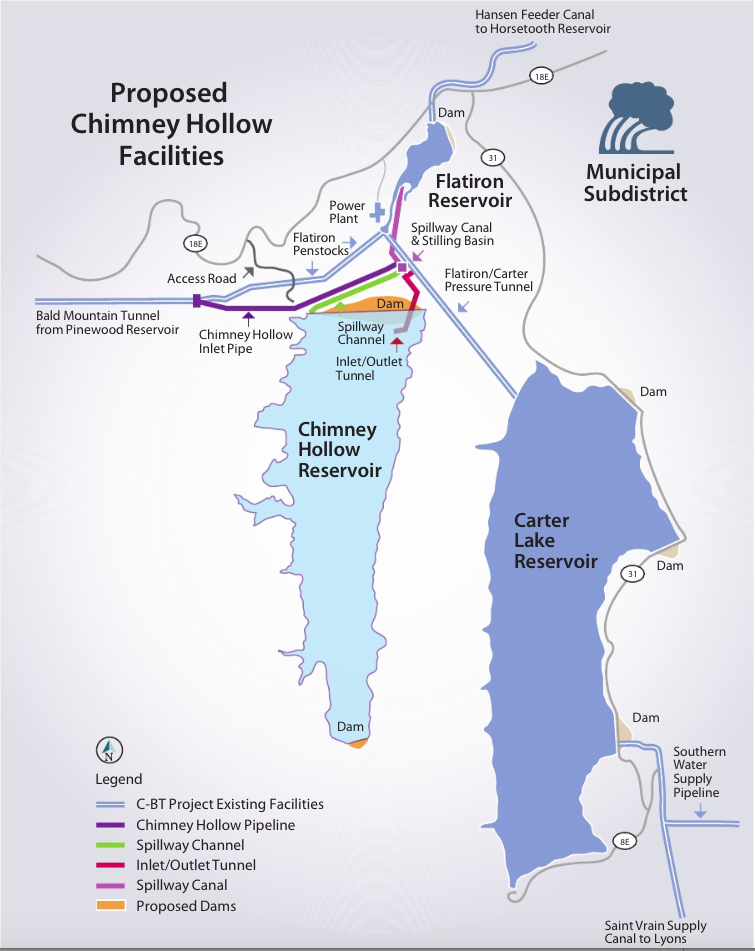
The 8-0 decision excluded Justice Neil Gorsuch, who recused himself because of his close connection to billionaire Philip F. Anschutz, who would economically benefit from the project.

In a concurring opinion, Justice Sonia Sotomayor differed with Kavanaugh on his rationale for the ruling, but agreed on the outcome. She wrote that NEPA didn’t require the board to consider the effects of oil drilling and refining because those activities were outside its authority. “Even a foreseeable environmental effect is outside of NEPA’s scope if the agency could not lawfully decide to modify or reject the proposed action on account of it.”

Justices Elena Kagan and Ketanji Brown Jackson joined Sotomayor in the concurrence.

The coalition was represented by Jay Johnson of Venable LLP, who said the ruling “restores much-needed balance to the federal environmental review process.” 
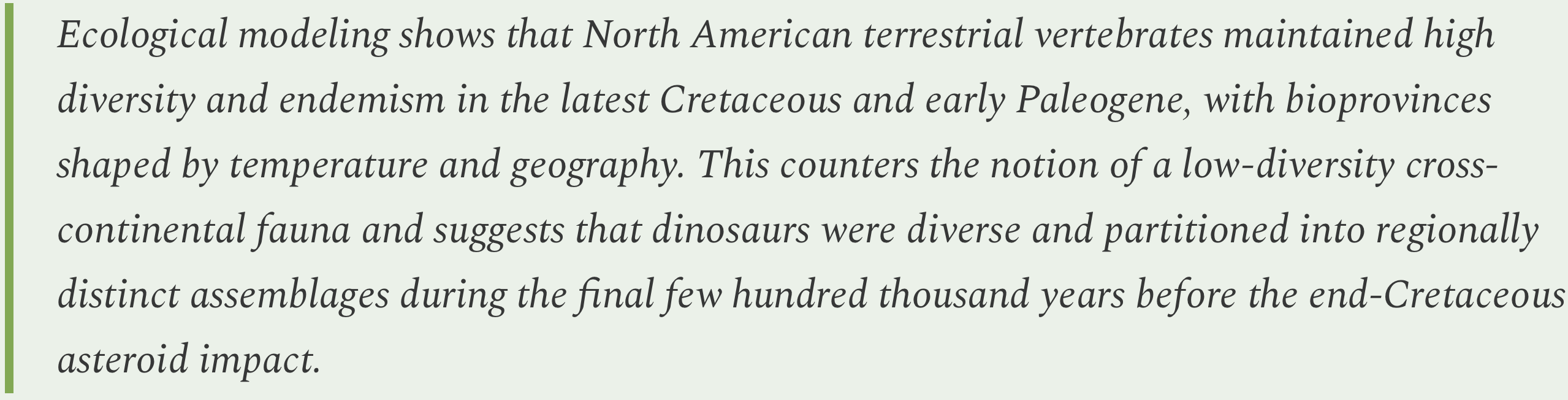
Keith Heaton, director of the Seven County Infrastructure Coalition, the project’s public partner, said the decision affirms the years of work and collaboration that have gone into making the Uinta Basin Railway a reality. “It represents a turning point for rural Utah—bringing safer, sustainable, more efficient transportation options and opening new doors for investment and economic stability.”

Wendy Park, a senior attorney at the Center for Biological Diversity, said despite the court’s ruling, “we’ll keep fighting to make sure this railway is never built.”

Uinta Basin Railway project proposed routes.Credit:Surface Transportation Board

New #Colorado stream protection law targets massive permitting backlog, treatment costs — Jerd Smith (Fresh Water News)

Wastewater Treatment Process

Click the link to read the article on the Water Education Colorado website (Jerd Smith):

June 5, 2025

State health officials will face tighter deadlines and more scrutiny of a water quality permitting program that has been plagued by massive backlogs and criticized by some small communities who say they can’t afford their state-mandated water treatment systems.

The changes will come under a new bipartisan law Senate Bill 305 approved last month. Gov. Jared Polis is expected to sign the bill this week, according to state Sen. Jeff Bridges, a Democrat from Greenwood Village who is one of the bill’s sponsors and chairs the Joint Budget Committee.

“This bill is a reset in the relationship between the Colorado Department of Public Health and Environment (CDPHE) and local governments that both sides believe will result in better communication, collaboration and ultimately better water quality,” Bridges said this week.

The permits are required under the federal Clean Water Act and are designed to protect Colorado’s rivers and streams from contaminants contained in wastewater. The state is required to enforce the federal law.

The measure is designed to help the CDPHE battle a permitting backlog that has left dozens of communities without a current wastewater discharge permit. Those communities can still discharge under a special administrative rule, but the backlog means the communities aren’t complying with the most current wastewater treatment standards that seek to reduce the various contaminants, such as ammonia and nitrates, being discharged into streams.

Earlier this year, as the state sought to fast-track permit approvals, small towns revolted, saying the new permits that were issued were too tough and that it was too expensive to upgrade treatment systems to comply.

The controversy comes as climate change and drought reduce stream flows and cause water temperatures to rise, and as population growth increases the amount of wastewater being discharged to Colorado’s rivers.

In response to the towns’ concerns, the CDPHE water quality control division took the unusual step in March of holding off on taking enforcement action against at least some of the towns that say they can’t comply with the new regulations.

Senate Bill 305 will allow communities to hire outside engineers and consultants to help speed permit processing times and it also requires the CDPHE to develop new rules establishing clear timeframes for granting or denying different types of permits by Dec. 31, 2027.

In addition, according to Nicole Rowan, director of the Water Quality Control Division, they will set a schedule by Dec. 31, 2026, for reducing the backlog.

The changes aren’t likely to help Ault, a community of 2,350 people on the Eastern Plains that finally received a new permit in March. The permit, however, contains standards the town’s 9-year-old wastewater treatment plant can’t meet. The CDPHE has agreed to suspend any enforcement action against the community until it can do additional analysis to see if it can comply with the new rules simply by upgrading its treatment plant, according to Grant Ruff, who oversees the town’s treatment system.

The town still owes $1.2 million on the existing plant. Building a new one would likely cost more than $20 million, Ruff said.

“We hope it is feasible [to comply] by making minor upgrades,” he said. “Otherwise we will have to spend $20 million to $30 million.”

That won’t be the case for towns seeking new permits in the years ahead. 

“The new standards will be tremendously helpful in the future because the state will have to take into consideration the community’s ability to pay,” he said.

More by Jerd Smith

US Supreme Court paves way for controversial Uinta Basin rail project that would haul crude oil along #ColoradoRiver: Unanimous ruling narrows the scope of a decades-old environmental review law — The Sky-Hi News #COriver

Uinta Basin Railway project proposed routes.Credit:Surface Transportation Board

Click the link to read the article on the Sky-Hi News website (Robert Tann). Here’s an excerpt:

May 30, 2025

In a 36-page ruling, Supreme Court justices said the Surface Transportation Board, a federal agency that oversees rail transit, had sufficiently considered the proposal’s environmental impacts when it approved the plan in 2021. Justice Brett Kavanaugh, writing the opinion for the other justices, said the board “identified and analyzed numerous ‘significant and adverse impacts that could occur as a result’ of the railroad line’s construction and operation — including disruptions to local wetlands, land use, and recreation.”

[…]

The plan had been on hold after a lower appeals court in 2023 ruled in favor of a lawsuit brought by Eagle County and five environmental groups that claimed the transportation board’s review had underestimated the railway’s environmental impact.  The lawsuit garnered support from a coalition of local governments, including Pitkin, Routt, Grand and Boulder counties, the cities of Basalt, Avon, Minturn, Red Cliff, Crested Butte, Glenwood Springs and Grand Junction, and the Northwest Colorado Council of Governments…

At the heart of the lawsuit and the question before the Supreme Court was whether the transportation board had sufficiently followed the National Environmental Policy Act, or NEPA,  when it approved the railway…The 55-year-old law requires federal agencies to consider the environmental impacts of their decisions, and the transportation board issued a 3,600-page environmental analysis as part of that review. 

#YampaRiver Scorecard grade slips for South Routt — Steamboat Pilot & Today

Bear River at CR7 near Yampa / 3:30 PM, May 16, 2019 / Flow Rate = 0.52 CFS. Photo credit: Scott Hummer

Click the link to read the article on the Steamboat Pilot & Today website (Suzie Romig). Here’s an excerpt:

May 14, 2025

The recently released Yampa River Scorecard Project grade of C-plus for the upper segment of the Yampa River shows a need for some improvements for overall river health in the stretch between Stillwater and Stagecoach reservoirs. Jenny Frithsen, environmental program manager at Friends of the Yampa, oversees the long-term river health monitoring and evaluation project. Frithsen said a major reason for the lower score is because that river segment is heavily utilized by agricultural water users but has less water coming in from smaller tributaries compared with downstream sections of the river.

“The first and foremost contributor to river health is water in the river, and the Upper Yampa and the Bear River are arguably the hardest-working and most heavily administered sections of river in the Yampa River system,” Frithsen said. “It probably is no surprise that the flow regime has lower scores for our ecological river health assessment. It is an altered flow regime.”

Frithsen presented a high-level overview of the 2024 river study segment during a South Routt Water Users meeting Monday evening at Soroco High School. The study looks at 45 indicators and nine characteristics of river health to determine and issue a score for combined flow and sediment regime, water quality, habitat and riverscape floodplain connectivity, riparian condition, river form, structural complexity and biotic community. On the positive side, the study team found the Upper Yampa stretch rated good in water quality, structural complexity, beaver activity, channel morphology and invasive weeds. The healthy beaver activity, especially on U.S. Forest Service land, showcases the natural engineering work of the large rodents to help mitigate the impacts of human water use and infrastructure. The beavers’ work maintains minimum flows in late summer and fall and provides a refuge for fish during low flows.

Yampa River Basin via Wikimedia.

Bureau of Land Management restores significant water right north of Silverton: Mineral Point Ditch once diverted 11 cubic feet per second from #AnimasRiver — The #Durango Herald

The “Bonita Peak Mining District” superfund site. Map via the Environmental Protection Agency

Click the link to read the article on The Durango Herald website (Reuben M. Schafir) Here’s an excerpt:

April 29, 2025

The Bureau of Land Management is restoring up to 11 cubic feet per second of water previously diverted to the Uncompahgre River Basin back to the headwaters of the Animas River north of Silverton. That’s a win for fish, other aquatic wildlife and mining remediation, said Trout Unlimited’s Mining Coordinator Ty Churchwell, because the water will dilute heavy metals to less toxic concentrations. Both the national organization of Trout Unlimited and the local Five Rivers chapter provided financial assistance with the acquisition. The 11-cubic-foot diversion is about 10% of the river’s total current flows in Silverton before the confluence with Cement Creek…

The previous owner held the rights to divert the water through the Mineral Point Ditch – before it entered Burrows Creek – over into the Uncompahgre Basin for agricultural use. This resulted in a 100% depletion of that water from the Animas River…The BLM paid $297,000 – fair market value – to buy the water right from a willing seller, agency spokeswoman Katie Palubicki said in an email to The Durango Herald, using funding from the Land and Water Conservation Fund and the agency’s Abandoned Mine Lands program to acquire the right.

Federal Water Tap, April 21, 2025: Agencies Fast-Track Controversial #FossilFuel and Mining Projects in Great Lakes, #Arizona — Brett Walton (circleofblue.org)

Click the link to read the article on the Circle of Blue website (Brett Walton):

April 19, 2025

The Rundown

  • Army Corps expedites permit process for Line 5 oil tunnel that crosses beneath the Great Lakes.
  • White House fast-tracks 10 mining projects in its quest for domestically produced minerals.
  • FEMA cancels grant program meant to prepare communities for weather hazards, while USDA overhauls climate-smart agriculture grant program.
  • Federal agencies intend to shrink wildlife habitat protections under the Endangered Species Act.
  • Judge sets a trial date for Rio Grande lawsuit between New Mexico and Texas.
  • EPA extends public comment period for health risk assessment of PFAS in sewage sludge.

And lastly, the Justice Department seeks to end an agreement to improve sewage infrastructure in Alabama.

“The DOJ will no longer push ‘environmental justice’ as viewed through a distorting, DEI lens. President Trump made it clear: Americans deserve a government committed to serving every individual with dignity and respect, and to expending taxpayer resources in accordance with the national interest, not arbitrary criteria.” – Assistant Attorney General Harmeet K. Dhillon of the Justice Department’s Civil Rights Division, as reported by Inside Climate News.

Dhillon is referring to a Biden-era civil rights agreement with the state of Alabama that sought to improve sewage infrastructure in the state’s poorest counties, which are also majority Black. The Justice Department is trying to end that agreement.

The agreement directed Alabama agencies to take a number of actions, such as halting referral of home wastewater violations to law enforcement and expanding a public health campaign about the dangers of raw sewage. It included a sewage system assessment and an infrastructure plan for at-risk areas.

By the Numbers

$882 Million: Funding that FEMA is rescinding from the Building Resilient Infrastructure and Communities program, which was meant to prepare towns for floods, sea level rise, hurricanes, and heat. FEMA is canceling the grant program, Engineering News Record reports.

$3 Billion: Biden-era funding for the Partnership for Climate-Smart Commodities that is being retooled by the Trump administration. The U.S. Department of Agriculture said it will reevaluate the program it has rebranded as Advancing Markets for Producers to ensure that less money is spent on administrative costs. Expenditures under the previous grants that were incurred through April 13 will be paid out.

Great Lakes satellite photo via Wikipedia.

News Briefs

Line 5 Tunnel Expedited
The Army Corps of Engineers determined that the Line 5 tunnel, a proposal to drill an oil pipeline tunnel beneath the strait that separates lakes Michigan and Huron, is being put on the permitting fast track.

The determination is in response to President Donald Trump’s declaration of a national energy emergency in order to speed up the permitting and construction of fossil fuel infrastructure.

Carrie Fox, an Army Corps spokesperson, told Circle of Blue that the new permit review procedures and timeline are not known right now.

“We are coordinating with the applicant, who is Enbridge, and also coordinating with the Council on Environmental Quality, who will assist in establishing the review timeline,” Fox said. “So until those steps take place, we don’t have a timeline. And so we won’t know how exactly it’ll change yet. We just know right now that the permit has been placed under emergency procedures, but the timeline is to be determined.”
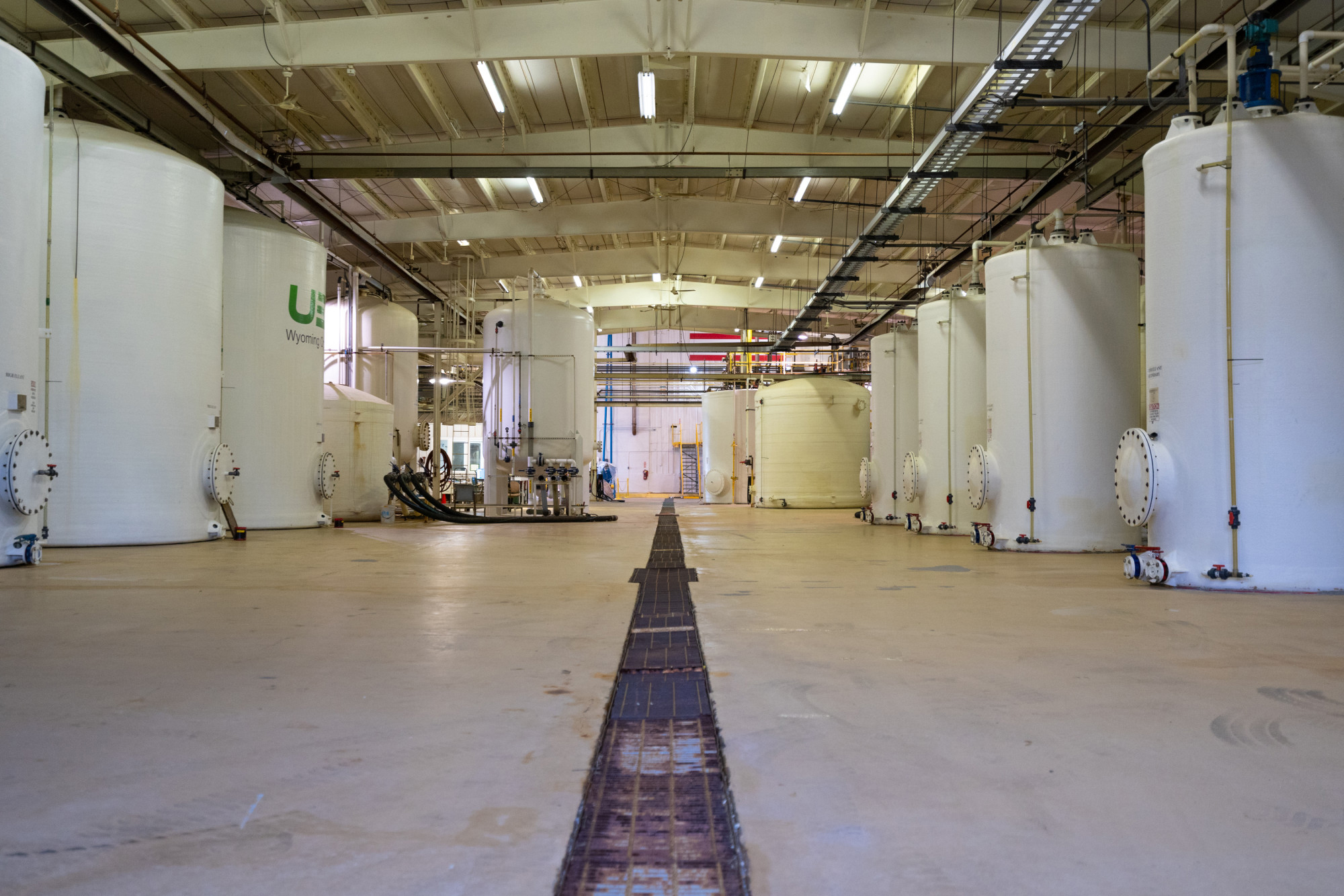
Enbridge proposes drilling a 3.6-mile tunnel beneath the Straits of Mackinac. The existing seven-decade-old pipeline sits exposed on the lakebed. It has been hit by ship anchors and a rupture would be calamitous for Great Lakes ecology, tourism, and water supplies.

Six Great Lakes tribes, after learning in March that the project permitting would likely be expedited, withdrew from the federal review process in protest, the Milwaukee Journal Sentinel reports.

Mining Projects Fast-Tracked
The White House put 10 mining projects on the fast-track for regulatory approval, continuing the administration’s desire for more domestically produced minerals.

Oak Flat, Arizona features groves of Emory oak trees, canyons, and springs. This is sacred land for the San Carlos Apache tribe. Resolution Copper (Rio Tinto subsidiary) lobbied politicians to deliver this National Forest land to the company with the intent to build a destructive copper mine. By SinaguaWiki – Own work, CC BY-SA 4.0, https://commons.wikimedia.org/w/index.php?curid=98967960

The list includes the Resolution Copper mine, in Arizona, which would be located on land that is sacred to the Apache people. Tribe members have petitioned the U.S. Supreme Court to halt the project, the Arizona Republic reports.

The U.S. Department of Agriculture, the lead permitting agency for the Resolution project, will update the timeline by May 2.

The other mining projects would produce gold, phosphate, copper, lithium, and other critical minerals.

Redefining the Endangered Species Act
Two federal agencies that oversee the Endangered Species Act intend to eliminate the definition of “harm” because it does not fit with the new administration’s interpretation of a recent Supreme Court ruling.

The National Marine Fisheries Service and the U.S. Fish and Wildlife Service had considered harm to mean habitat destruction. No longer, after the Loper Bright decision that the administration reads as curtailing agency authority in this matter.

The only wrongful actions under the ESA would be those that “take” an animal, meaning to capture, injure, or kill it.

The proposed change would apply only to new permits and would not affect existing actions. Public comments are being accepted through May 19 via www.regulations.gov using docket number FWS-HQ-ES-2025-0034.

Studies and Reports

Army Corps Water Storage Agreements
The Army Corps could improve its communication with utilities about the fees it charges them for water storage space in its reservoirs, according to a Government Accountability Office report.

The fees are a portion of the cost to operate and maintain the reservoirs. The Corps had 438 water storage agreements nationwide, as of 2023.

Tile Drainage and Transportation
The U.S. Geological Survey published a report describing how drainage from farm fields affects downstream flows.

The only wrongful actions under the ESA would be those that “take” an animal, meaning to capture, injure, or kill it.

The proposed change would apply only to new permits and would not affect existing actions. Public comments are being accepted through May 19 via www.regulations.gov using docket number FWS-HQ-ES-2025-0034.

Studies and Reports

Army Corps Water Storage Agreements
The Army Corps could improve its communication with utilities about the fees it charges them for water storage space in its reservoirs, according to a Government Accountability Office report.

The fees are a portion of the cost to operate and maintain the reservoirs. The Corps had 438 water storage agreements nationwide, as of 2023.

View of runoff, also called nonpoint source pollution, from a farm field in Iowa during a rain storm. Topsoil as well as farm fertilizers and other potential pollutants run off unprotected farm fields when heavy rains occur. (Credit: Lynn Betts/U.S. Department of Agriculture, Natural Resources Conservation Service/Wikimedia Commons)

Tile Drainage and Transportation
The U.S. Geological Survey published a report describing how drainage from farm fields affects downstream flows.

Tile drains, common in the Midwest, move water from beneath fields into ditches.

The report was supported by state transportation departments, which want to build roads, bridges, and culverts that can withstand high water flows.

On the Radar

Future Army Corps Projects
The Army Corps is seeking proposals from states, tribes, and regional bodies for projects to be considered for future feasibility studies or improvements.

Proposals are due August 15.

PFAS in Sewage Sludge
The EPA is extending the public comment period for its draft risk assessment of two PFAS in sewage sludge, also known as biosolids.

Comments are now due August 14. Submit them via http://www.regulations.gov using docket number EPA-HQ-OW-2024-0504.

In the assessment, the agency evaluated risks to people living on or near lands where these biosolids are applied. The analysis, which looked at PFOA and PFOS, also considered risks for people whose primary consumption of water and food comes from these lands. It is not intended to assess risk for the general public.

Rio Grande and Pecos River basins. Map credit: By Kmusser – Own work, Elevation data from SRTM, drainage basin from GTOPO [1], U.S. stream from the National Atlas [2], all other features from Vector Map., CC BY-SA 3.0, https://commons.wikimedia.org/w/index.php?curid=11218868

Rio Grande Lawsuit
The lawsuit between Texas and New Mexico over water supply from the Rio Grande will have a 10-day trial starting June 9, Source NM reports.

The parties to the case, which include Colorado and the federal government, are continuing to seek a mediated solution before the trial begins.

Federal Water Tap is a weekly digest spotting trends in U.S. government water policy. To get more water news, follow Circle of Blue on Twitter and sign up for our newsletter.

Small #Colorado towns cry foul as state seeks to clean up their #wastewater to protect rivers — Jerd Smith (Fresh Water News)

Wastewater Treatment Process

April 10, 2025

Dozens of small towns in Colorado have banded together to protest new wastewater treatment permits that are designed to protect state rivers and streams, saying they  contain new rules that are too costly to implement and they haven’t had time to make the necessary changes to comply.

The controversy comes as climate change and drought reduce stream flows and cause water temperatures to rise, and as population growth increases the amount of wastewater being discharged to Colorado’s rivers.

In response to the towns’ concerns, the water quality control division of the Colorado Department of Public Health and Environment has taken the unusual step of holding off on taking enforcement action against at least some of the towns that say they can’t comply with the new regulations. It issued notice of its decision March 24.

“Some smaller communities have faced real technical and financial challenges meeting these new requirements,” CDPHE spokesman John Michael said in an email. “In response, we issued a temporary enforcement discretion memo to give systems time to work through compliance barriers without immediate penalties.”

Now Colorado lawmakers who represent the Eastern Plains have drafted a bill designed to help small communities cope with the new regulatory requirements by extending the time they have to build or upgrade new plants and raise the money to pay for them.

The issue came to a head last month. Akron Town Manager Gillian Laycock, whose town is trying to comply with its new permit, invited dozens of communities facing the same issues to attend a special meeting. Representatives from 64 towns attended along with lawmakers, Laycock said.

But problems have been brewing for years. The water quality control division has been battling a large backlog in wastewater discharge permits, meaning small towns have been allowed to operate their plants under old rules as they waited for their new permits to arrive. Laycock said Akron had been waiting for its new permit for at least eight years.

“We knew something was coming,” she said, “but this has been a shock.”

In recent years, lawmakers have given the division more money to hire additional people so that the backlog can be reduced and more towns can come into compliance with the new standards.

But Sen. Barbara Kirkmeyer, a Republican from Brighton, and Sen. Byron Pelton, a Republican from Sterling, said they are frustrated that the more than $2 million spent to address the problem isn’t helping.

“I told the CDPHE if they continue down this road, the folks out in the rural areas are about ready to tell them to pound sand,” Pelton said. “That’s how stressful it’s been for these small municipalities. The regulations just keep coming at them.”

Under the federal Clean Water Act, entities that discharge fluids into streams, including wastewater treatment plants and factories, must get approval from state water quality regulators to ensure what they’re putting into the waterways does not harm them.

Towns and water districts can receive either a general permit, which has standard terms and conditions, or individual permits, which take much longer to process, are typically more expensive and are often used by large systems in cities such as Denver.

The general permits were finalized in 2022 to help small towns comply with the stricter regulations quickly and at less cost, said Michael, the CDPHE spokesperson. But many haven’t been issued because of the backlog.

Akron finally received its new permit last October, Laycock said. But the town was unprepared for the strict new limits on what and how much can be discharged, the tight timelines to comply and the costs.

Once the new permit was issued, Laycock said, its old permit expired almost immediately, leaving the town out of compliance with the new regulations, exposing them to potential legal issues and fines.

The regulatory shock is understandable, but could have been avoided, according to Meg Parish, an attorney for the Environmental Integrity Project, a nonprofit focused on enforcing air and water pollution regulations. She previously worked for the state’s water quality control division and helped develop the new general permit that is causing current concerns.

“Some of these towns have really old permits,” Parish said. They’ve been allowed to continue discharging under a special administrative permit. In the interim, strict new standards have taken effect.

But she said the new rules shouldn’t have come as a surprise to anyone.

She said the new general permit was finalized after months of public work sessions and outreach meetings.

“We invited every small discharger in the state to participate. All the terms are on the state’s website….it literally says ‘if your (wastewater discharge) flow is this much, this is what your limit is going to be. There is no mystery.”

But Adam Sommers, an environmental engineer who has several clients trying to obtain new permits, said the process is cumbersome and expensive.

“Each permitting activity has a 180-day review period and if changes are needed, the clock starts over,” he said in an email.

“This frequently adds years to the schedule,” Sommers said. “The estimates engineers create are time sensitive. If years have passed between when they prepare the budget and when the project is constructed, they face affordability issues.”

Sens. Kirkmeyer and Pelton are working on a bill that will be introduced shortly forcing the CDPHE to give the towns more time to comply and help them address the financial challenges of the new regulations. It will also set strict deadlines on the permitting process, according to the latest draft of the bill. Kirkmeyer said the CDPHE has been helping with the new legislation.

Kirkmeyer said she was taking the unusual step of running the bill through the Joint Budget Committee because it approves the budget for the water quality control division and she wanted to send a strong message to the regulators.

“I want them to know we are serious about this,” she said.

Looking ahead, as water quality continues to deteriorate, treatment standards will continue to tighten, Parish said.

“One of the key realities is that wastewater treatment plants need to upgrade their plants and do better, and pollute less,” Parish said.

Laycock, the Akron town manager, said she understands the urgency of the problem but she said the state’s approach needs work.

“We are agricultural people and we love our land, but how do we as a town afford to meet these requirements? I understand what they are trying to do. But this is not the way to do it.”

More by Jerd Smith

Polluted discharge from the Moffat Tunnel continues to be released into the #FraserRiver — Sky-Hi Daily News

The pipeline, at the base of the Winter Park ski area, that moves water as part of the existing Moffat Collection System Project. The portal of the railroad tunnel is behind the pipeline, in this view. Photo credit: Brent Gardner-Smith/Aspen Journalism

Click the link to read the article on the Sky-Hi Daily News website (Meg Soyars Van Hauen). Here’s an excerpt:

March 25, 2025

According to Grand County Water Quality Manager Katherine Morris, polluted discharge from the Moffat Tunnel has adversely impacted the Fraser River. The Grand County water quality team recently wrote two letters to the Colorado Department of Public Health & Environment, outlining its concerns with violations by Union Pacific Railroad, which manages the tunnel. During a Grand County Board of Commissioners meeting March 11, 2025 Morris explained that polluted water from the tunnel enters the nearby Fraser River, which is a main tributary of the Colorado River. This ongoing problem began after the tunnel was completed, and Grand County government began advocating to fix the problem nearly two decades ago…

James Peak via ColoradoWildAreas.com

In the early 2000s, residents and governmental officials raised alarm about pollutants and increased turbidity (or clarity issues) in the Fraser River when water was discharged from the tunnel. The tunnel bores through James Peak. Groundwater from cracks in the mountain rock seeps into the tunnel, and that water needs a way out. Coal dust, heavy metals and other particulate matter can travel into the Fraser River through the runoff. At the time, a water treatment plant existed on the east portal of the tunnel but not on the west portal at Winter Park. People questioned why there was no treatment plant to protect Grand County, home to the headwaters of the Colorado River. Over the years, Union Pacific received fines and a cease-and-desist order. The railroad finally built a treatment plant in 2017, but issues have continued — even worsened in some cases, Morris said. A water centrifuge at the plant is designed to separate solids from the water, creating a sludge-like “centrifuge cake” that is put in a drum and disposed of in Utah. (This disposal has raised its own concerns.) The remaining water is discharged into the river.

Take your children out into these landscapes” — Kevin Fedarko

My friend Joe’s son and the Orr kids at the top of the Crack in the Wall trail to Coyote Gulch with Stevens Arch in the Background. Photo credit: Joe Ruffert

Kevin Fedarko was the keynote speaker at the symposium and he is as inspirational a speaker as you could ask for. It doesn’t hurt that the landscape that he spoke about is the Grand Canyon. He urged the attendees to, “Take your children out into these landscapes so that they can learn to love them.” He is advocating for the protection of the Grand Canyon in particular but really he is advocating for the protection all public lands.

Kevin Fedarko and Coyote Gulch at the Rio Grande State of the Basin Symposium hosted by the Salazar Rio Grande del Norte Center at Adams State University in Alamosa March 29, 2024.

What an inspirational talk from Kevin. I know what he is saying when he speaks about the time after dinner on the trail where the sunset lights up the canyon in different hues and where, he and Pete McBride, his partner on the Grand Canyon through hike, could hear the Colorado River hundreds of feet below them, continuing its work cutting and molding the rocks, because the silence in that landscape is so complete. He and I share the allure of the Colorado Plateau. Kevin was introduced to it through Collin Flectcher’s book The Man Who Walked Through Time, after he received a dog-eared copy from his father. They lived in Pittsburgh in a landscape that was industrialized but the book enabled Kevin to imagine places that were unspoiled.

My introduction to the Colorado Plateau came from an article in Outside magazine that included a panoramic photo of the Escalante River taken from the ledges above the river. Readers in the know can put 2 and 2 together from the name of this blog — Coyote Gulch — my homage to the canyons tributary to Glen Canyon and Lake Foul.

Stevens Arch viewed from Coyote Gulch. Photo via Joe Ruffert

Kevin’s keynote came at the end of the day on March 29th after a jam-packed schedule.

Early in the day Ken Salazar spoke about the future of the San Luis Valley saying, “Where is the sustainability of the valley going to come from.” Without agriculture this place would wither and die.” He is right, American Rivers and other organizations introduced a paper, The Economic Value of Water Resources in the San Luis Valley which was a response to yet another plan to export water out of the valley to the Front Range. (Currently on hold as Renewable Water Resources does not have a willing buyer. Thank you Colorado water law.)

Claire Sheridan informed attendees that their report sought to quantify all the economic benefits from each drop of water in the valley. “When you buy a bottle of water you know exactly what it costs. But what is the value of having the Sandhill cranes come here every year?”

Sandhill Cranes Dancing. Photo by: Arrow Myers courtesy Monte Vista Crane Festival

Russ Schumacher detailed the current state of the climate (snowpack at 63%) and folks from the Division of Water Resources expounded on the current state of aquifer recovery and obligations under the Rio Grande Compact.

The session about the Colorado Airborne Snow Measurement Program was fascinating. Nathan Coombs talked about the combination of SNOTEL, manual snow courses, Lidar, radar, and machine learning used to articulate a more complete picture of snowpack. “You can’t have enough tools in your toolbox,” he said.

Coombs detailed the difficulty of meeting the obligations under the Rio Grande Compact with insufficient knowledge of snowpack and therefore runoff volumes. Inaccurate information can lead to operational decisions that overestimate those volumes and then require severe curtailments in July and August just when farmers are finishing their crops. “When you make an error the correction is what kills you,” he said.

If you are going to learn about agriculture in the valley it is informative to understand the advances in soil health knowledge and the current state of adoption. That was the theme of the session “Building Healthy Soils”. John Rizza’s enthusiasm for the subject was obvious and had me thinking about what I can do for my city landscape.

Amber Pacheco described how the Rio Grande Basin Roundtable and other organizations reach out to as many folks in the valley as possible. Inclusivity is the engine driving collaboration.

Many thanks to Salazar Rio Grande del Norte Center director Paul Formisano for reaching out to me about the symposium. I loved the program. You can scroll through my posts on BlueSky here

Orr kids, Escalante River June 2007

Microplastics might be worse than you think. Here’s why — Karen Garvey (MSUDenver.edu)

Click the link to read the article on the Metropolitan State University of Denver website (Karen Garvey):

February 11, 2025

Antibiotic-resistant bacteria that thrive in deteriorating plastics could cause the next pandemic, an environmental researcher says.

Just when it seemed the news about microplastics’ potential for harm couldn’t get worse, an environmental researcher at Metropolitan State University of Denver has found a new cause for concern: Microplastics are contributing to the global problem of antibiotic resistance.

In research published in the Journal of Environmental Chemical Engineering, Sung Hee Joo, Ph.D., director of MSU Denver’s Environmental Engineering program, and colleagues describe how plastic waste, particularly in fresh water, creates a habitat that allows antibiotic-resistant bacteria and genes that promote antibiotic resistance to thrive, which could lead to another pandemic.

“That’s a significant concern, not just in the U.S. but globally,” Joo said. “We already have microplastics detected in tap water, and water-treatment methods don’t remove them all — yet there is no regulation on microplastics in drinking water. So I’m very concerned about another pandemic because of plastic waste and the genetic changes we see in bacteria as a result.”

As plastics age and degrade, their chemical makeup changes, which creates an environment where antibiotic-resistant microorganisms can survive and reproduce, Joo and her colleagues wrote in the study. The World Health Organization has called the growing problem of antibiotic resistance one of the world’s most critical health threats.

Sung Hee Joo, Ph.D., director of MSU Denver’s Environmental Engineering program, is surrounded by different types of plastic, including her polyester hat made from polyethylene terephthalate (PET). Photo by Amanda Schwengel via MSU Denver

Joo and her colleagues intend to conduct further research into the threat posed by microplastics. But her efforts on behalf of the environment don’t stop there. Thanks to a $1 million grant from the U.S. Department of Energy, Joo and one of her research colleagues, Katrina Knauer of the National Renewal Energy Laboratory, are set to lead a project to put some of those thrown-away plastics to new use.

“Increased regulation and education are essential to addressing the problem,” Joo said. “One thing we can do is focus on upcycling, which converts plastic waste into resources. That’s why we’re so excited for this collaboration with NREL.”


RELATED: Partnership expands pathway to careers in renewable energy


As part of the project, Joo will lead an education program, a cooperative between MSU Denver and NREL, that will examine ways to put postconsumer recycled plastics to use in new products, such as an asphalt replacement. Beginning this summer, the project will create internships for MSU Denver Environmental Engineering students and will include a community component. Interns will educate residents in low-income areas of Pueblo about the importance and benefits of recycling.

“We need to educate the public because many people don’t realize how important proper recycling is,” Joo said.

Joo teaches the Environmental Assessment of Plastic Particles class at MSU Denver. Photo by Amanda Schwengel via MSU Denver

If successful, the project would reduce greenhouse-gas emissions by up to 60% by developing an asphalt replacement that incorporates plastic waste while integrating bio-based additives. Using microplastics this way not only provides a new way to pave streets but reduces microplastic waste and decreases temperatures needed to create asphalt.

Joo, whose research over more than two decades has earned her numerous awards, including the Environmental Protection Agency’s Scientific and Technological Achievement Award, said finding new uses for plastic waste is one important way to combat the potentially deadly spread of antibiotic-resistant bacteria.

“The human body carries plastics, and tiny plastic particles are found in every organ, including the brain, especially in the blood-brain barrier,” Joo said. “Still, it’s not too late to act now to protect our environment and public health.”