Montrose: Gunnison Tunnel 100th year celebration

A picture named gunnisontunnelnps.jpg

Montrose is gearing up for their celebration of 100 years of operation of the Gunnison Tunnel, from The Delta County Independent. From the article:

Celebrating 100 years of water provided by the Gunnison Tunnel, the Uncompahgre Valley Water Users Association (UVWUA) invites Montrose, Olathe and Delta community members and all Coloradoans, to join in fun activities culminating with the celebrations and ceremonies in Montrose at UVWUA headquarters on Saturday, Sept. 26…

Association manager Marc Catlin said the benefits of the tunnel to the Uncompahgre Valley cannot be overstated. “Opening the Gunnison Tunnel and then delivering the water to growers made this valley green while attracting a thriving population,” said Catlin. According to U.S. Census Bureau data, the populations of both Delta and Montrose counties more than doubled between 1900, which the idea was first developed, and 1910, one year after the tunnel was completed. The data show that the decade of 1900-1910 saw the most significant population growth in the valley, ever.

More Gunnison Basin coverage here.

Ridgway to hike water and sewer rates

A picture named watertreatment.jpg

From The Telluride Watch (Gus Jarvis):

The current draft of Ordinance 09-08 raises both water and sewer rates over a three-year period to get the operations back into a financially health operation. Sewer rates for users within town are currently $18 per month and the draft ordinance would raise that rate in $5 increments over the next three years starting on Jan. 1, 2010 where the monthly rate would be raised, if passed, to $25 per month. It would then be raised to $30 per month in 2011 and to $35 per month in 2012. (Council has recommended raising that increment to from $5 to $7 but is still up for review).

For water users in single-family homes, the draft ordinance would raise the rates from the current rate of $22 a month in $5 increments over the next three years with $27 per month being the rate in 2010, $32 per month in 2011 and $37 in 2012.

More infrastructure coverage here.

Energy policy — hydroelectric: Ouray to install small generation plant, Cortez micro-hydroelectric plant moving forward

A picture named microhydroelectricplant.jpg

From The Telluride Watch (Beverly Corbell):

{Ouray Mayor Bob Risch] said the city has applied for a grant from the Governor’s Energy Office for about $20,000 to use water from the old Biota water line to generate electricity near the city-owned Ouray Hot Springs pool…

The energy generated, about 20,000 kW, is not great, but would reduce what the city has to pay to San Miguel Power Association. “Anyway we can save energy is good,” Risch said.

From The Cortez Journal (Steve Grazier):

The city established a hydroelectric power enterprise during its Aug. 11 regular meeting and authorized loan documents for the approximately $2 million hydropower center, said City Manager Jay Harrington. “Basically, we’ll be taking energy (water pressure) that’s not utilized … to create electricity,” Harrington said. “It’s a 20-year project to recoup money. But in 20 years, the city will have an asset as a moneymaker.” Harrington noted that an agreement is in place with Empire Electric Association to produce power through the city hydroelectric plant. That power will go into Empire’s grid and help the cooperative’s renewable energy needs. “The pieces are continuing to move forward on the project,” he said.

In addition, a hydroelectric plant could generate electricity off an existing pipeline to provide enough power to run the water treatment facility altogether and produce additional power used for other resources, according to Jack Nickerson, the city’s public works director. “We could generate enough power to run the entire (water treatment) plant and have some left over to sell back to Empire Electric for credit,” Nickerson has said. “We want to utilize the energy that’s there, and lower the city’s carbon footprint (in burning electricity) at the same time.”

More hydroelectric coverage here and here.

Colorado Water Congress’ annual summer meeting

A picture named westportalmoffattunnel.jpg

Here’s a recap of yesterday’s goings on at the annual conference, from Joe Hanel writing for The Durango Herald:

During a question-and-answer period, one audience member asked how [State Senator Josh] Penry’s support for building dams squared with his backing last year of Amendment 52, which would have capped the money in Colorado’s water savings accounts and redirected extra money to highways. Penry responded that the state doesn’t spend the money it has effectively. “We study too much. We analyze too much,” he said.

Harris Sherman, head of the state Department of Natural Resources, disputed Penry’s charge that Colorado does too many studies at the expense of physical projects. In 2007, the state made $146 million in project loans, $87 million in 2008 and $45 million this year. “To imply that the state has not funded water projects in recent years is simply inaccurate,” Sherman said. In any case, the Legislature drained $107 million from those accounts the last two years to help cover the state budget gap…

Rod Kuharich is director of the South Metro Water Supply Authority, which serves fast-growing suburbs that have an unreliable water supply. Kuharich sits on the IBCC, but he called it “dysfunctional” and said it spends too much time on studies. Kuharich complained that IBCC members have become even more entrenched in their regional perspectives. He wants the Gunnison basin to entertain the idea of a pipeline from Blue Mesa Reservoir to the Front Range.

But IBCC member Peter Nichols said it’s not surprising no agreement is in sight, four years after the IBCC began its work. The engineering of a big water project is much easier than the politics, he said. “Give this time to work,” Nichols said. “It took us 150 years to get here. If it takes us 15 years to get out of here, I don’t think that’s absurd.”

More IBCC coverage here.

More coverage of the conference, from The Cortez Journal (Joe Hanel):

State lawmakers have turned to savings accounts for dams, canals and pipelines in order to cope with a budget crisis that’s entering its third year. In the past two years, the Legislature has taken $107 million out of the water accounts, said Harris Sherman, director of the Department of Natural Resources. “These are funds that have been built up over decades,” Sherman said…

“There are staggering costs involved in meeting our future water needs – tens of billions of dollars,” he said.

But the water project funds won’t be paid back this year, and they’ll probably be raided again, said Rep. Kathleen Curry, D-Gunnison, who chairs the House Agriculture Committee. At the same time, cuts continue to threaten the State Engineer’s Office, which administers water rights. The office lost six jobs in Gov. Bill Ritter’s budget cuts this week. “I’m getting tired of this. Every year this happens, and we have got to find a way to solve this,” Curry said. This week’s cuts hit health care and human services especially hard. But in the long term, colleges are at risk. So Curry recommended that the water community reach out to advocates for higher education to find a solution to the perpetual budget crisis.

“We can’t have just water meetings anymore,” she said.

Oak Creek: Contract for treatment plant awarded

A picture named wastewatertreatmentwtext.jpg

From the Steamboat Pilot & Today (Zach Fridell):

Local contractor Duckels Construction won the bid to complete a wastewater treatment plant on the north end of Oak Creek. Town officials say the construction should be finished within about a year. Duckels entered the low bid in the project at $1.6 million, beating four other companies that had bids ranging up to $1.84 million.

The project, in planning stages for years, includes a wood-framed building on a concrete slab near the two lagoons on the northern end of town. The two lagoons also will be cleaned and rebuilt with modern technology. Wes Woodford, a retired engineer who agreed to work as a temporary plant manager, said the new system will improve the way wastewater is handled in Oak Creek. “They’re going to be operated in a more modern manner,” he said. “Technology has changed over the years and (the lagoons) are going to be updated and modernized.” Instead of floating aerators on top of the pond, perforated pipes will be installed on the bottom of the lagoons to pump air through the wastewater.

More wastewater coverage here and here.

Nestlé Waters Chaffee County project: Commissioners approve 1041 permit

A picture named nestlehaffeepipelinec.jpg

From the Salida Citizen (Lee Hart):

The approval includes 40 conditions, totaling 11 pages and addressing what the commissioners considered some of the most controversial aspects of the proposal, namely water and economics.

However, it was a seemingly minor issue that proved to be the day’s most contentious. Citing private property rights and potential adverse impact to wildlife, Commission Chair Frank Holman adamantly objected to requiring Nestle to provide overland fishing access to the Arkansas River. Commissioner Tim Glenn was just as adamant that the easement was “not overly burdensome” to Nestle and provided very desirable public shoreline fishing access in a county where recreation is such an important part of the economy. Commissioner Dennis Giese was on the fence. In the end, the commissioners agreed to let the local Division of Wildlife determine if and where overland fishing access would be appropriate on the Nestle property.

Nestle had hoped to have the overland fishing access condition deleted from the final list of conditions writing in a memo to county staff that to do so would “unacceptably increase risk to security and spring water quality” and created an “unwarranted and significant business risk” to the company…

Sam Schabacker of the national non-profit Food and Water Watch said Colorado’s battle with Nestle is being closely watched around the country and is considered pivotal to the nationwide fight against the privatization of water. “This is the first battleground in the Rocky Mountain West – the arid West – and CCFS has shown great leadership in this national struggle.” Schabacker said the intelligence and dedication CCFS has shown through the application review process puts the organization in a good position to recalibrate and take the fight to the next level, joining the ranks of citizens in Maine, California, Michigan and Flagstaff, AZ.

More Nestlé Waters Chaffee County project coverage here and here.

Clear Creek Whitewater Park

A picture named clearcreekcanyon.jpg

From the Clear Creek Courant (Ian Neligh):

An official groundbreaking was held Aug. 11 for the Clear Creek Whitewater Park at Lawson. Plans for the park include specially engineered boulders that will provide chutes and waves for kayakers and other boaters along the 450-foot stretch of river just upstream from Mile Hi Rafting. Seating also will be provided on terraced rocks on the south bank. Other additions will include parking and a changing station with environmentally friendly toilets. Eighty percent of the funding for the $400,000 whitewater park comes from a grant from the Federal Highway Administration through the Colorado Department of Transportation. The rest is being split between the county Open Space Commission and Clear Creek County. According to Pete Helseth, chairman of Clear Creek Open Space, the stretch of Clear Creek is well known in boating communities. He said the stream’s path through the area was carved in the 1960s while Interstate 70 was being built…

Helseth said the idea behind the whitewater park is to take the existing boulders, improve the course, and make it into something more permanent. The project will be overseen by Recreation Engineering and Planning of Boulder, which did the designs at similar whitewater parks in Golden, Steamboat Springs and Buena Vista.

More whitewater coverage here.

USDA halts tamarisk leaf beetle releases in eight western states

A picture named tamariskleafbeetle.jpg

From The Durango Telegraph:

A decades-old effort to bring a natural tamarisk predator into the region has started to yield strong results. Tamarisk stands along the Dolores, Colorado and San Juan rivers have taken hard hits in recent years thanks largely to the release of the beetles.

In 2004, beetles were transported to Moab and the Horsethief bench outside of Fruita. Not only have those local transplants thrived at the expense of tamarisk, they have started to spread through the region and chewed through many of the invasive trees in their wake. The beetles have spread up the Dolores drainage, along the Mancos River and could already be eating salt cedar in the Animas River drainage. The State of Colorado also recently got on the beetle bandwagon and sowed the bugs along the Arkansas River

However, U.S. Department of Agriculture officials recently revoked Colorado’s permits to move the beetles across state borders. The USDA also banned any release of the beetles in eight other Western states.

The orders were the result of a lawsuit filed by the Center for Biological Diversity and the Maricopa Audubon Society. The suit charged that the tamarisk leaf beetle is contributing to the decline of the endangered southwestern willow flycatcher.

Flycatchers nest in the invasive tamarisk because the species of native riparian trees in which they previously nested have been replaced by tamarisk and are no longer available. The Endangered Species Act requires that federal agencies not harm endangered species or their habitat and that they consult with the U.S. Fish and Wildlife Service to formulate plans to avoid such harm.

Following the moratorium, the Center for Biological Diversity and Maricopa Audubon Society killed their legal challenge. “We are relieved that the program has decided to obey the law and will now consult with the Fish and Wildlife Service to prevent any further jeopardy to a federally protected species. Our case will now be dismissed,” said attorney Matt Kenna of the Durango-based Western Environmental Law Center.

More invasive species coverage here and here.

Ouray: Council to raise water and sewer rates?

A picture named ouray.jpg

From the Ouray News (Patrick Davarn):

The Town of Ridgway is proposing an increase to the monthly base rates by $5 for water and $7 for sewer, each year over three years. The hike will take Ridgway’s base water rate from $22 to $37 by 2012, and the sewer rate from $18 to $39…

Public Works Director Joanne Fagan explained that an Enterprise Fund must be run like a business, its revenues sufficient to pay expenditures. “It should not be running at a loss,” said Fagan. “When we apply for (capital project) grants, they look to see if we are at least sustaining. Neither fund, water or sewer are right now.” Fagan showed the town’s current budget of operating revenue and expenses to start Council’s discussion of the draft ordinance to change water and sewer rates. The Water Fund is estimated at $234,700 in operating revenue from 571 customers with operating expenses of $325,632 including debt service, and operating expenditures of $276,133 without the debt service. Debt or not, the projecting indicates a net loss. Fagan’s budget projections for the Sewer Fund are more ominous. Operating revenues for 2009 are estimated $181,700 as compared to operating expense of $269,184 without the debt and $342,000 including the service.

More infrastructure coverage here.

Hartland Dam project to enable fish passage

A picture named glencanyonconst.jpg

From the Delta County Independent:

Colorado Water Conservation Board (CWCB) is funding the majority of the concept design phase with some financial support from Delta County. The project leader, Painted Sky Resource & Conservation Development Council, has hired Tetra Tech, an international engineering firm with an office in Breckenridge, to complete the preliminary design and cost estimate. U.S. Fish & Wildlife Service (USFWS) will fund the final design phase. Construction is scheduled for early fall of 2009. At that time, Painted Sky will solicit bids from design and construction companies…

Modifying the dam structure has three objectives that will benefit fish, Hartland Dam Company, boaters and private landowners.

First, the dam has blocked the flannelmouth sucker, the bluehead sucker and the round tail chub from habitat upstream of the dam since it was installed. A fish passage in the new design will reconnect populations of fish above and below the dam, increasing their available habitat. Although not endangered, these three fish are species of concern to USFWS, making this the top priority for Region 6 of the USFWS.

Second, all modifications must allow Hartland Ditch Company to access its full water decree.

The third objective of the project benefits recreational boaters and private landowners on the riverfront near the dam. After the project completion in the spring of 2010, boaters crossing the dam will be safer and less tempted to trespass by portaging around the dam.

Spring Creek designated groundwater basin?

A picture named southplattealluvialaquifer.jpg

The Northern Colorado Water Association is hoping to get the Spring Creek basin designated groundwater status to avoid having to pay returns to the South Platte River. The creek is currently considered tributary to the South Platte. Here’s a report from Bobby Magill writing for the Fort Collins Coloradoan. From the article:

Spring Creek flows into northeast Larimer County from Wyoming and crosses I-25 just north of Wellington. There are now eight groundwater basins in Colorado, all of which are on the Eastern Plains. The last time the state approved a new designated groundwater basin was in 1987.

The groundwater the association currently obtains from wells in the area could affect South Platte surface water rights holders. If the new basin is not designated, the association would be required to return some water into the basin decades from now. The association claims a new designated basin would prevent it from being subject to the needs of the South Platte water rights holders because the water it uses is so far away from the South Platte and has little effect on surface water in the river. “Our engineers are telling us that even though we’ve been pumping stuff since the ’60s, we wouldn’t have any impact on the river for 200 years,” Patterson said.

Keith Vander Horst, designated groundwater team leader for the Colorado Groundwater Commission, said commissioners will decide today whether to consider the association’s request. A hearing that will determine if Spring Creek is viable as a groundwater basin will soon follow.

More groundwater coverage here and here.

Fountain Creek: Colorado Springs Utilities takes a $35,500 hit in lawsuit over spills

A picture named fountaincreek.jpg

From The Pueblo Chieftain (Robert Boczkiewicz):

The penalty was the only sanction in a long-awaited decision in a lawsuit the Sierra Club brought in 2005 against the city for violating the federal Clean Water Act. Senior U.S. District Judge Walker Miller denied Sierra’s request to order Colorado Springs to take specific actions designed to reduce spills of pollutants into the creek. The judge, in a 36-page decision, stated the Colorado Department of Public Health and Environment already has issued those kinds of orders. He said the city has spent more than $100 million on its sewage system to make spills less likely and may spend more than $250 million. “There have been substantial improvements” in the operation of the system, he wrote. “Given the state’s involvement with its permits and compliance orders (against the city), I conclude that, absent proof of the inadequacy of the state’s enforcement, the overall public interest in avoiding pollution . . . is better served with the active enforcement by the CDPHE rather than by this court,” Miller wrote. He said the state’s enforcement is “effective.” The judge said he temporarily will keep jurisdiction of Sierra’s case against Colorado Springs “to assure that CDPHE is diligently enforcing its permits and orders.”

More Fountain Creek coverage here and here.

Aspinall operations meeting August 27

A picture named bluemesa.jpg

From email from Reclamation (Dan Crabtree):

The August Aspinall Operations Meeting will be held starting at 1:00 p.m. on Thursday August 27th. The meeting location is the Elk Creek Visitors Center at Blue Mesa Reservoir. Reclamation will be discussing past and upcoming operations, planned maintenance activities, status of the draft EIS and more. The Division of Wildlife will be describing trout issues at Blue Mesa Reservoir and in the Gunnison River, and the Park Service and BLM will be giving brief updates regarding the effect of this year’s operation on Gunnison River related resources . This is an opportunity for any interested party to comment on operations and provide input. Please reply to this email or call Dan Crabtree at 970-248-0652 with questions or other agenda items.

More Aspinall Unit coverage here and here.

University of Colorado ‘Waterblitz’ project to sample Rocky Mountain National Park water quality

A picture named trailridgeroad.jpg

From The Associated Press via The Aspen Times:

The project, called “WaterBlitz,” will assess the water quality of streams and explore whether the pine beetle epidemic that’s killing trees is affecting the water. Researchers think the beetle-killed trees are changing nutrient levels in the waterways.

Here’s an in-depth look at the pine beetle devastation and how to mange what will be left over, from Greg Zausen, forester with the Colorado State Forest Service-Fort Collins District. He writes:

On a large scale, there is nothing environmentally, economically, or socially acceptable we can do to stop the bark beetle epidemic at this point. We can start planning for the future and managing our forests to create a future forest that is less susceptible to such widespread tree mortality. Management should include promoting species diversity, frequent and periodic thinning to maintain healthy trees that are less susceptible to insects and disease, and patch cuts in lodgepole pine stands to promote structural and age diversity across the landscape.

Aspen: Water quality projects take funding hit

A picture named roaringfork.jpg

From The Aspen Times (Carolyn Sackariason) via the Vail Daily:

April Barker, the city’s stormwater manager, told the council that the fee was originally estimated to generate $900,000 annually. This year, it will bring in $430,000. Projections over the next decade have been adjusted to reflect a 4 percent increase each year. As a result, several projects have been put on hold, most of which have to do with flood control. However, three projects related to water quality have been given high priority and will be funded with money available.

More Roaring Fork watershed coverage here and here.

Fountain Creek water quality study update

A picture named fountaincreek.jpg

Here’s an update on Colorado State University’s efforts to develop water quality data and find some answers to Fountain Creeks problems, from Chris Woodka writing for The Pueblo Chieftain. From the article:

Joe Garcia, CSU-Pueblo president touted the contributions of the Lower Arkansas Valley Water Conservancy District in helping set up the study and aiding in the purchase of the equipment – a high-tech inductively coupled plasma mass spectrometer – for the project. Since the program started in 2005, it has received support from the city of Pueblo and Pueblo County as well. With more support from all involved, the studies can be expanded from Fountain Creek to the Arkansas River, Garcia said.

Three parts of the study were reviewed Wednesday: Human bacteria in Fountain Creek, the presence of midges and the accumulation of metals in fish tissues. So far, there is no correlation in finding human bacteria looking at flows, time of year or location at the 27 Fountain Creek sites that have been sampled, said biology professor Brian Vanden Heuvel. “We just don’t know where it’s coming from,” Vanden Heuvel said. “The source of the E. coli remains a mystery.” Preliminary findings by the U.S. Geological Survey on Upper Fountain Creek are pointing to birds as the most likely source, he added.

Studies have found a wide variety of midge species – technically chironomids – on Fountain Creek, said biology professor Scott Herrmann. “They are the grocery source for fish,” Herrmann said. The presence or absence of species is a good indicator of the health of the creek, and can be used in the future to determine how the habitat is changing, he said.

Studies are also looking at the accumulation of metals like mercury, selenium and cadmium in fish tissues, said Kat McGarvy, a student working on the project.

More Fountain Creek coverage here and here.

Nestlé Waters Chaffee County project: Chaffee County Commissioners approve 1041 permit

A picture named nestlehaffeepipelinec.jpg

From The Pueblo Chieftain (Tracy Harmon):

Nestle will be able to pump a maximum of 200 acre-feet of water annually from one spring source at the 16-acre Ruby Mountain Spring site of Nathrop between Salida and Buena Vista…

The commission on Wednesday finalized a list of nearly 50 conditions that deal with environmental, economic-development and water issues. Nestle will be required to establish a $500,000 endowment to fund science, environmental or Chaffee County school projects, plus establish and perpetually replenish a $200,000 mitigation fund to cover the county’s administrative costs for overseeing the permit condition reviews and other unforeseen expenses. In addition, Nestle will be required to hire local contractors, buy supplies locally and employ at least 50 percent of its truck drivers from Chaffee County. Nestle also has pledged to obtain a conservation easement for the property so it will remain open space and can never be developed.

“One area I really struggle with is the project benefits. Do they outweigh future development of that property or those resources?” Commissioner Tim Glenn said. “The alternatives of what might happen, I can see, will be 2-acre subdivisions with wells and septic tanks. “Is that going to be a benefit to the area? In some regards, yes; in some regards, no,” Glenn said…

“My issue was water and long-term water loss. With augmentation, there is no doubt the water is being replenished in time, place and amount. I believe all the conditions satisfy my concerns; we’ve worked hard for the citizens,” Commissioner Dennis Giese said…

“I am pleased with a unanimous vote for approval with the conditions. We will bring a very good project to Chaffee County that will improve the economy, provide open space preservation and restore the (old private) fish hatchery,” said Bruce Lauerman of Nestle.

More coverage from The Mountain Mail (Jennifer Denevan):

County staff members were directed to write separate resolutions – one for the 1041 permit and another for the special land use permit. The resolutions will be considered during a future regular business meeting. Some changes were made to the conditions considered by commissioners during the special meeting Wednesday and must be rewritten, but will be included in both resolutions…

Commissioners discussed conditions with which they had issues and determined how they needed to be rewritten. They wanted to ensure wording fits needs and intent. Commissioners requested clarification of the cost reimbursement fund and the fishing access stipulation. The cost reimbursement fund is money Nestlé would put aside for three types of project-related costs including anticipated and unanticipated – such as lawsuits. Commissioners also discussed the fishing access condition. Holman and Tim Glenn disagreed about access being allowed in the Bighorn Springs area. After rewording the condition, commissioners agreed if Colorado Division of Wildlife personnel don’t find it suitable, Nestlé won’t be required to create a river access point.

More coverage here and here.

Lower Arkansas Valley Water Conservancy District meeting recap

A picture named arkansasriverbasin.jpg

From The Pueblo Chieftain (Chris Woodka):

The Lower Arkansas Valley Water Conservancy District Wednesday heard a report on the concept for the compliance plan from Gregg Ten Eyck of Leonard Rice Engineers. “There are really two plans,” Ten Eyck said, separating the valley into regions where flows are returned either above or below John Martin Reservoir. “There are different requirements in timing, the types of water and how they respond to the rest of the river system.”

The plan is being developed in response to State Engineer Dick Wolfe’s plan to file the rules in Division 2 Water Court on Sept. 30. There will be one more meeting, on Sept. 21, of an advisory committee before the rules are filed. The rules primarily are aimed at large irrigation sprinkler systems fed by ponds put in since 1999 and are meant to avoid further violations of the Arkansas River Compact. The compliance plans would cost farmers $100 per farm headgate, plus fees of up to $25 an acre-foot for replacement water under the plan presented by Ten Eyck. A 10-year average, calculated for each farm in the plan, would be used to determine how much water the Lower Ark would be expected to provide. Once a farmer signed on, the Lower Ark district would absorb the ups and downs of the hydrologic cycle.

More Arkansas Basin consumptive use rules coverage here and here.

From The Pueblo Chieftain (Chris Woodka):

The Lower Arkansas Valley Water Conservancy District board Wednesday agreed to extend its agreement to help improve Fountain Creek for another two years. The new agreement will include the Fountain Creek Watershed Flood Control and Greenway District as well as Colorado Springs Utilities. The Fountain Creek District board will consider on Aug. 28 an offer by the Lower Ark and Colorado Springs as a way to fund a director and administrative costs until a $50 million commitment by Colorado Springs kicks in.

More Fountain Creek coverage here and here.

Colorado Water Congress summer conference

A picture named roanplateau.jpg

Here’s a recap of day one of the Colorado Water Congress’ summer session, from Zach Fridell writing for the Steamboat Pilot & Today. From the article:

The annual water conference, held once every two years in Steamboat Springs, is hosting more than 200 attendees and a few Colorado legislators for an event titled “A Change in the Financial Climate.”[…]

Doug Kemper, executive director of the Colorado Water Congress, said legislators help the organization form a two-way street, with legislators learning about water policy as they help craft laws, and the Water Congress discussing their views and conservation efforts with legislators. “You can just about hold a session of the legislature” with all the attendees, Kemper said. Kemper said that by talking about water issues with the legislators, the group also can tackle the budgetary concerns. “The budget issue drove us all last session, and it’s going to be with us for quite a bit ahead,” he said. The very first issue on the agenda Wednesday was a state budget forum, hosted by the Water Congress’ budget committee.

Nestlé Waters Chaffee County Project: Chaffee County Commissioners approve 1041 permit

A picture named nestlehaffeepipelinec.jpg

From The Colorado Springs Gazette (R. Scott Rappold):

But county commissioners voted 3-0 to issue a 1041 land-use permit, with a host of conditions they said will address the concerns…

The company draws water from 50 springs around the country, but this will be the first in Colorado. Nestle says it plans to tap several other springs in the state.

More coverage here and here.

Farm Service Agency: Financial assistance and business planning loans available

A picture named barkerreservoir.jpg

From the Valley Courier:

Farm Ownership Loans may be used to purchase a farm, enlarge an existing farm, construct new farm buildings and/or improve structures, pay closing costs, and promote soil and water conservation and protection. Eligible applicants may obtain direct loans up to a maximum indebtedness of $300,000. Maximum indebtedness for guaranteed loans is $1,094,000 (amount adjusted annually for inflation). The maximum repayment term is 40 years for both direct and guaranteed farm ownership loans.

Farm Operating Loans may be used for normal operating expenses, machinery and equipment, real estate repairs, and refinancing debt. Eligible applicants may obtain direct loans for up to a maximum indebtedness of $300,000, and guaranteed loans for up to a maximum indebtedness of $1,094,000 (amount adjusted annually for inflation).

Southern Delivery System: Colorado Springs Utilities rejects opportunity to buy Morley’s Stonewall Springs reservoir site

A picture named stonewallspringsproject.jpg

From The Colorado Springs Gazette (R. Scott Rappold):

During a meeting of city council – sitting as the Colorado Springs Utilities Board – Utilities officials said the asking price was too steep for a reservoir they don’t need now.

“We don’t have an immediate need right now, and there is plenty of time for us to develop an appropriate solution for our partners,” Utilities CEO Jerry Forte said. “Based on what we know right now, this is expensive, and I think we can do a better job for our customers.”

Utilities has an agreement with several other cities to build a reservoir near the Arkansas River for treated effluent. The Morleys’ site, known as Stonewall Springs, has been identified as a possible site, and in 2005 Utilities was in talks to buy it.

The deal was deemed too expensive – a Utilities appraisal listed it at $3 million, but the sellers wanted $7.25 million – and Utilities stepped away. In June, Utilities was lukewarm to a proposal to buy the site from the Morleys, who had since bought it, for $38 million, an increase in asking price related to the fact the developers had done some work to get land-use approvals for a reservoir.

More Southern Delivery System coverage here and here.

Flaming Gorge pipeline: Corps of Engineers extends comment period to September 28

A picture named flaminggorgepipelinemillion.jpg

From the Casper Start Tribune (Jeff Gearino) via Billings Gazette:

The scoping comment period for the U.S. Army Corps of Engineers’ environmental impact statement will now close Sept. 28, Corps project leader Rena Brand said Tuesday in a media release.
She said the extended comment period will allow the Corps additional time to respond to more than 40 requests for cooperating agency status from a variety of agencies and organizations, including Green River and Sweetwater County.
“The Corps intends to communicate with some entities on consolidating participation by appointing a single point of contact to represent multiple entities,” Brand said…

locals contended the project would hurt local businesses in the area, would curtail future growth in Green River and neighboring Rock Springs and could threaten the world-class fisheries on the river and in the gorge. Last week, Rock Springs council members voted to join a coalition with Green River and the county that aims to fight Million’s proposal. The three governmental entities allocated a combined $450,000 to the Communities Protecting the Green River coalition for the effort, which officials said may include litigation. Additionally, the county and Green River are seeking cooperating agency status as part of the Corps’ environmental impact statement process. Corps officials predicted the draft EIS could be released as early as 2012, with a final permit decision taking up to five years.

In written comments submitted to the Corps last week, the U.S. Fish and Wildlife Service said it was opposed to the Million project plan. Service officials said the agency’s concerns focused on how the pipeline would affect threatened or endangered species, migratory birds and habitats, and the overall ecosystem balance.

More Flaming Gorge pipeline coverage here and here.

Pueblo Board of Water Works board meeting recap

A picture named bessermerditch.jpg

The PBOWW finished up the sale of the Columbine Ditch and approved a 3.2 percent rate hike this week. Here’s a report from Chris Woodka writing for The Pueblo Chieftain. From the article:

The 3.2-percent rate hike will raise a little more than $1 million to pay debt service on $23 million in bonds, said Seth Clayton, finance division manager. “We will be coming back in November for another increase to cover our normal operations,” Clayton told the board. Clayton estimated the total increase for 2010 would be about 8 to 9 percent, with another 6 to 8 percent in 2011. That’s lower than initial projections of 10 percent each year…
“Nobody in the community is in favor of a rate increase,” President Nick Gradisar said. “But the people I talk to are in favor of what we are doing on the Bessemer.” The bonds would be issued Oct. 22…

The Columbine sale would close Sept. 21. Columbine Ditch is on Fremont Pass 13 miles north of Leadville and brings water to the Arkansas River from the Eagle River basin. Climax needs the water because it lost a water court claim to Denver Water and plans to expand in the future, said Bud O’Hara, water resources division manager. The agreement also would keep Aurora from objecting in the eventual change of use case for the Bessemer Ditch shares, and would also take the Pueblo water board out of the change of diversion case associated with the Columbine. The Columbine water already is available for all uses under the water board’s decree, so it will not require a change of use decree…

The water board is now looking at 67 contracts for a total of 5,339 shares at $10,150 each, with another 10.5 shares pending on the Bessemer Ditch, Hamel said. There are about 20,000 shares on the ditch. The water board plans to spend about $60 million, and will begin closing contracts in September using funds already in the water development fund and from lease revenue.

More Pueblo Board of Water Works coverage here and here.

Energy policy — geothermal: Upper Ark gets briefing from Mount Princeton Geothermal LLC

A picture named geothermalplant.jpg

Here’s a report about last Thursday’s presentation to the Upper Arkansas Water Conservancy District about Mount Princeton’s proposed geothermal project in Chaffee County, from Ron Sering writing for The Mountain Mail. From the article:

Fred Henderson III of Mount Princeton Geothermal LLC, who wants to develop geothermal energy near Mount Princeton hot springs, recently completed another round of research. Colorado School of Mines summer field camp personnel visited and conducted additional research on area geology and hydrology, marking the third consecutive year of research by the college. “They’re coming again next year, but after that have been invited to Idaho,” Henderson said. He stressed the project is subject to a battery of regulatory reviews by the Colorado Department of Water Resources. “All will have public meetings mandated by the DWR,” Henderson said. “Citizens are entitled to raise concerns before all permitting.”

The effort has completed the first of a four-phase project plan – thermal gradient drilling to determine potential to generate electricity using geothermal energy. Researchers found the hottest known geothermal resources in the state. Three additional phases are planned, with hoped-for development of an electric generation plant within the next few years. “Where will the facility be?” Henderson said. “It depends where the resources are.” Henderson added size of the facility will depend upon resources available. “We could do a three megawatt facility and make a profit,” Henderson said. He said the goal is to build structures the approximate size of the greenhouses on-site at Mount Princeton Hot Springs…

A technique proposed by Henderson is “pump and dump” which pulls hot water from the ground, through a heat exchanger, transferring heat to a fluid with a boiling point lower than water. Resulting steam drives turbines to generate electricity. Water is then pumped via injection wells back to its source. Henderson explained the technique is nonconsumptive of water resources. “It’s critical to return the water, because it will be reheated,” Henderson said.

More geothermal coverage here and here.

Southern Delivery System update

A picture named sdspreferredalternative.jpg

Here’s an update on Colorado Springs Utilities proposed Southern Delivery System, from Chris Woodka writing for The Pueblo Chieftain. From the article:

“The people who are supposed to be in oversight agencies are not looking out for me,” rancher Gary Walker said Monday. “I’m sure Colorado Springs has met one-on-one with the Bureau of Reclamation and the Pueblo County commissioners. I have asked for that, but it hasn’t happened yet. The playing field isn’t level.” Walker’s latest complaint comes after last week’s action by the Army Corps of Engineers to deny requests for a public hearing on SDS. The Corps explained the Bureau of Reclamation’s environmental impact statement sufficiently covered most of the issues in the case. Reclamation issued a record of decision approving the SDS use of federal facilities at Lake Pueblo on March 20. It will negotiate contracts with the SDS partners – Colorado Springs, Security, Fountain and Pueblo West – at a later date.

The Bureau of Reclamation has not visited Walker Ranches to discuss his concern about rare native plants that are still being catalogued by the Nature Conservancy and the Colorado Natural Heritage program, Walker said. “With my finding of rare and endangered plants in the SDS’s proposed route and with the ongoing damage that was caused by your last pipeline that crossed my property, I was in hope of having some semblance of equality in this issue,” Walker wrote in an e-mail to the Bureau of Reclamation Monday…

Reclamation ran a five-year public process on the project, and provided other opportunities for Walker to comment, said Kara Lamb, public information officer for the bureau. “All of those environmental mitigations are included in the final EIS,” Lamb said. “And there is another public process on the horizon when contract negotiations start.”[…]

Last month, Colorado Springs City Council voted to move completion of the first phase of the $1 billion-plus pipeline project to 2016, from the announced completion date of 2012. “We believe the 2016 in-service date provides adequate time to address Mr. Walker’s concerns and develop specific mitigation plans for his property. It’s our intent to work closely with Mr. Walker on these plans,” said Keith Riley, SDS planning and permitting manager. “We’ve been working on a rare plant study with the Colorado Natural Heritage program – the group recommended by Mr. Walker,” Riley added. “We’ve also been working to identify some areas to do test plots for revegetation after pipeline construction. This will allow us to test the revegetation process to ensure it will be effective.”

More Southern Delivery System coverage here and here.

Ruedi operations update

A picture named ruedidam.jpg

From email from Reclamation (Kara Lamb):

Several of you have been calling, so I thought it best to let everyone know that it looks like releases from Ruedi will stay up and the Fryingpan flows will remain around 500 cfs for the time being. After the inspection up on the Colorado River at Shoshone last week, the Fish and Wildlife Service maintained their call for their contracted Ruedi water for the Upper Colorado River Endangered Fish Recovery Program. Flows in the Colorado remain lower than anticipated there. Contracted water from Ruedi is being used to help boost those flows.

Ms. Lamb is also pointing to the website for the reservoir operations.

More Roaring Fork watershed coverage here.

Sterling: City Council approves ballot issue for new treatment plant

A picture named watertreatment.jpg

From the Sterling Journal Advocate (Forrest Hershberger):

The city is confronted with an issue of how to supply water that meets the quality standards dictated by the Environmental Protection Agency and consequently the state health department. The issue is that the amount of uranium detected in the city’s water is higher than new EPA standards, and the city has a limited amount of time to show progress toward changing it…

A question brought up to the council is what happens if the voters do not approve the bonds. Mayor Dan Jones said if the city does not update the water system, the EPA could declare the city’s water system noncompliant and consequently federal funding, such as Freddie Mac and Fannie Mae, would disappear. Real estate in the area would be virtually worthless, he said. Kiolbasa said the city is applying for funding from the Department of Local Affairs. Meanwhile, Sterling water users are in a bind, but no different than any other community along the South Platte River. “I think everyone else along the South Platte is in the same boat,” said councilman Jerry Haynes.

More Sterling coverage here and here.

Eagle County: Brush Creek enhancement project enters final phase

A picture named eagleriver.jpg

From the Vail Daily:

The intent of the project is to improve stream health from the upper Sylvan Lake Road bridge to the upper end of the Eagle Ranch development boundary, about 8,300 feet. The project is coordinated jointly by the Eagle Ranch Wildlife Committee, town of Eagle and the Colorado Division of Wildlife under permit from the Army Corps of Engineers. Funding for the project comes from the Eagle Ranch Wildlife Trust Fund and Scott Skelton, an adjacent property owner. The project involves using mechanical equipment to construct gravel bars, pools and riffles, as well as stabilize eroding stream banks. “The work uses well established practices that improve stream health and fish habitat for spawning, feeding, resting and wintering,” said Eagle Open Space Coordinator Bill Heicher. “The work is planned on portions of the stream on town open space, along with land where adjacent property owners have agreed to allow in-stream and bank work on their property.”

More Eagle River watershed coverage here and here.

Colorado Springs Utilities’ Conservation and Environmental Center and Xeriscape Demonstration Garden

A picture named rockgarden506.jpg

From The Colorado Springs Gazette (Kristina Iodice):

On the third Tuesday of each month through September, Colorado Springs Utilities’ Conservation and Environmental Center and Xeriscape Demonstration Garden hosts an open house, complete with displays, tours and classes. Classes are free. The next open house, focusing on energy and water conservation, will be 4 to 7:30 p.m. Tuesday at the center, 2855 Mesa Road. In addition to a scheduled class, volunteers and staff will be on hand to answer questions. The scheduled class will cover low- to no-cost ways for homeowners to save money. Utilities experts will offer ways to save energy and water — and thus money — by discussing heating and air conditioning systems, water heaters, appliances, insulation, windows and water use.

More conservation coverage here.

Upcoming Colorado water related events from the Colorado Watershed Assembly

A picture named westelks.jpg

Here’s the link to the Colorado Watershed Assembly’s comprehensive schedule of upcoming events.

Denver Water: Moffat Collection System and the proposed expansion of Gross Reservoir

A picture named grossreservoir.jpg

Say hello to the shiny new Denver Water website. I’m most excited about the RSS feed for their news page. You Coyote Gulch readers know I crave Colorado water news. 🙂

At any rate check out the new part of the website for the expansion Gross Reservoir, part of Denver Water’s Moffat Collection System. They write:

If approved, the project would produce 18,000 acre-feet of new supply by expanding an existing reservoir rather than building a new one. The current dam height would increase from 340 feet to approximately 465 feet. The proposed project would increase Gross Reservoir from its current storage capacity of 41,811 acre-feet to approximately 114,000 acre-feet – an increase of 72,000 acre-feet. (Denver Water has determined four acre-feet of storage are needed for every one acre-foot of supply.)

Because Gross Reservoir was originally designed to be this larger size, other facilities, such as the Moffat Tunnel and South Boulder Canal, do not need to be modified and no additional water rights are needed. The additional water would be carried through the existing Moffat Tunnel from the Fraser River basin and Williams Fork River basin in Grand County, as well as from South Boulder Creek basin. Streamflow in the Fraser and Williams Fork rivers and South Boulder Creek would only be decreased by this project during wet and average years during the runoff months.

Denver Water officials anticipate that the Corps of Engineers draft environmental impact statement for the project will be released in the next few weeks.

More Denver Water coverage here and here.

Colorado’s water future dependent on new transmountain diversions?

A picture named coloradopipelineconcepts.jpg

The Colorado Department of Natural Resources is looking at four pipeline concepts and two agricultural fallowing and dry up concepts as possible solutions to watering the unbridled growth along the Front Range. Here’s a report, from Bruce Finley writing for The Denver Post, about the pipeline plans from Flaming Gorge and the Green River proposed by the Colorado-Wyoming Coalition and the Million Resource Group. From the article:

Colorado municipal water suppliers are in discussions with their Wyoming counterparts exploring the feasibility. Separately, a private entrepreneur’s proposal to build a pipeline is under federal review. Colorado government officials — who have met with both contingents and are talking with Wyoming officials — recently included the “Flaming Gorge concept” among four options for diverting Western Slope water to the Front Range…

Huge hurdles remain, including financing and Colorado’s and Wyoming’s obligations to downriver states under an interstate compact. Conservationists object to the potential environmental impact of withdrawing the water…

The pipeline concept originated with entrepreneur Aaron Million and his Million Conservation Resource Group. In 2008, the group applied for a permit from the U.S. Army Corps of Engineers, which regulates construction in waterways and wetlands. An environmental review has begun, and engineers are sifting through a deluge of public comments, said Rena Brand, regulatory specialist for the agency. “The majority of letters are against it” and “push for the idea of conserving more along the Front Range,” Brand said. Federal wildlife officials are among those questioning possible impacts on endangered species and migratory birds…

Million must provide a list of likely customers by January to establish a need for the pipeline, Brand said. Last week, Million said that “ongoing negotiations with 20-plus” potential customers in Wyoming and Colorado “are going well.” He declined to name them. The project could be done in five years, he said. He wasn’t invited to the municipal suppliers’ discussions at a country club, a slight he calls unfortunate. “The lack of collaboration is problematic. It was the private sector that developed the water in the West” before federal agencies got involved, he said. “This is a return to the historical development of water resources, using the efficiency of the private sector to get things accomplished.”

Meanwhile, the municipal suppliers’ group was to continue discussions in Wyoming this week. They are close to formalizing a coalition, Jaeger said. He declined to name participants.

Colorado’s top natural resources officials say they’ve talked with Million and Jaeger. The state’s emerging strategies for meeting projected demand — which include conservation, the re-use of water and rethinking low-density versus high-density growth — assume that importing some water between river basins will be necessary, said Harris Sherman, executive director of the Colorado Department of Natural Resources. “Whether it is a public or a private project, it must incorporate public benefits,” Sherman said. “Sometimes it’s easier to incorporate public benefits with a public project, because the sponsoring entity is the public, and it will be focussed on public benefits. But it’s not impossible for a private project to incorporate a wide variety of public benefits. “

More Flaming Gorge pipeline coverage here and here. Colorado-Wyoming Coalition coverage here.

Republican River Basin: Arbitration next for dispute between Colorado, Kansas and Nebraska

A picture named republicanriverbasin.jpg

From the Yuma Pioneer (Tony Rayl):

According to Janelle Myotte of Quality Irrigation, who attended the RRCA meeting, Commissioner Dunningan of Nebraska and Commissioner Barfield of Kansas both voted NO on the approval of the pipeline. Commissioner Wolfe of Colorado voted YES. Nebraska stated that they had concerns over the proper accounting procedures, this is the reason why they are not approving the pipeline. Kansas stated that they have not had enough time to review the resolutions presented by Colorado on their issues regarding the pipeline. Colorado is filing for arbitration on this matter.

More Republican River Basin coverage here.

Montrose: Gunnison Tunnel 100th year celebration September 26

A picture named gunnisontunnelnps.jpg

Here’s the lowdown on the upcoming celebration, from Katharhynn Heidelberg writing for the Montrose Daily Press. From the article:

Celebration organizers are encouraging community involvement right now by inviting the public to the Gunnison Tunnel Museum at Main and Townsend. The temporary museum is in renovated space that formerly housed Sagebrush Books. It will feature displays, historic newspaper articles, photographs and artifacts from the tunnel’s opening day, Sept. 23, 1909, when President William Howard Taft came to town. The museum also functions as headquarters for the centennial celebration, which is being organized through the collaborative efforts of the Uncompahgre Valley Water Users Association, individuals, staffers, ditch riders, historians and committee members. The chamber and visitors bureau, the Montrose County Historical Museum, plus many local businesses and governmental entities are also pitching in for the centennial event Sept. 26, which is funded through donations.

“It’s all combined together,” said Marc Catlin, director of the Uncompahgre Valley Water Users Association. “It’s a place to see the history, to see what’s going to happen at the event and to see the memorabilia.”

More Gunnison Basin coverage here.

Peru Creek Basin: Efforts at restoration paint a costly and complicated picture

A picture named perucreekbasin.jpg

Many Colorado water watchers were hoping that the restoration work up in the Peru Creek Basin would be a successful demonstration project for good samaritan efforts at mine cleanup. What has been shown is that restoration projects related to past mining activity are complicated and costly. Current estimates for cleaning up the runoff and drainage in the basin is at $20 million. Here’s a report from Bob Berwyn writing for the Summit Daily News. From the article:

That amount includes construction and annual operations and maintenance for as long as 20 years, but it’s still much higher than expected. When Trout Unlimited entered the picture, there was speculation that a treatment plant could be built for under $1 million. “All the work that’s been done up there paints a much more dire picture of what we need to do,” [Trout Unlimited’s Liz Russell] said. He said the stakeholders working on the cleanup had also hoped that Congress would have passed some Good Samaritan legislation by now. Such a liability limiting law would have eased the cleanup process by enabling a nonprofit to work on remediation without fear of being pinned with responsibility for the cleanup work forever.

One option that’s not on the table anymore is a Superfund designation for the Pennsylvania Mine. EPA officials previously suggested a Superfund listing would loosen up federal funding for a cleanup. But county officials were not keen on the idea of Superfund status for the mine, preferring to explore alternate options instead.

This summer, some of the research at mine is focused on treating other sources of pollution in the area besides the mine itself. State and federal experts are teaming up to find sites for repositories, where some of the mine waste could be stored in a place where running water can’t get to it. That could help reduce metals-loading into Peru Creek.

The Snake River is showing signs of making a comeback. From the sidebar to the article linked above:

Latest survey shows promising signs of recovery
Trout populations in the Snake River appear to be making a comeback after a surge of pollution two years ago all but wiped out most of the fish. Colorado Division of Wildlife biologists recently surveyed a stretch of the river running through Keystone Resort and found evidence that some rainbow trout survived over the winter.

More Peru Creek Basin coverage here.

Pueblo Board of Water Works to consider raising rates

A picture named waterfromtap.jpg

From The Pueblo Chieftain (Chris Woodka):

The Pueblo Board of Water Works will meet next week and is expected to act on a staff recommendation to raise water rates 3.2 percent next year in order to provide $1.05 million in debt service for bonds to help pay for shares of the Bessemer Ditch. The 3.2 percent increase would amount to about 96 cents per month for the average customer with a 1-inch residential tap. The board meets at 2 p.m. Tuesday in the board room at 319 W. Fourth St.

More Pueblo Board of Water Works coverage here.

Energy policy — geothermal: Mount Princeton Geothermal LLC is proposing a 10 megawatt geothermal electric generation plant near Buena Vista

A picture named geothermalenergy.jpg

From The Pueblo Chieftain (Chris Woodka):

“This is a big deal,” Bill Bennett, energy use adviser for Sangre de Cristo Electric said Thursday. “Everyone in the valley should be interested in this project. This is a nonpolluting, renewable power supply that could provide all the electricity this valley needs.”

Bennett’s comments came during the monthly meeting of the Upper Arkansas Valley Conservancy District, which heard a presentation from Fred Henderson, of Mount Princeton Geothermal LLC.

Gov. Bill Ritter’s office has scheduled another meeting on geothermal development from 2 to 4:30 p.m. Wednesday at the Upper Ark offices, 339 East U.S. 50.

Last month, the Upper Ark board heard concerns from some residents in the Buena Vista area about the potential impacts of geothermal power generation. Henderson attempted to address those concerns – noise, the potential for earthquakes, land disturbance – during Thursday’s presentation. “I can’t answer all the questions. This is a three- to four-year project,” Henderson said. “We need to drill into the deep aquifer before we can even decide where the plant would be.”

Bennett said Sangre de Cristo’s lines could easily accommodate the output from a 10 megawatt plant, adding that such a plant could easily provide most of the 104 million kilowatt hours Sangre de Cristo customers used last year. “People fight this because they don’t understand it,” Bennett said. “They should be fighting to get this.” Ironically, geothermal power could have little to do with water rights, even though it would likely be administered by the Division of Water Resources. That’s because no water would be consumed in what Henderson described as a “pump and dump” system. Essentially, water would be pumped up from the heat source in the area – which lies somewhere below the 2,000-foot level if engineering predictions are correct – run through a sort of reverse air conditioner and reinjected into the deep underground reservoir. Six extraction and four injection units would be air-cooled, again using no water. What deep-well drilling will attempt to show in the next phase of the project is where the reservoir lies, Henderson said.

More geothermal coverage here and here.

Southern Delivery System: No public hearing for Corps permit

A picture named sdspreferredalternative.jpg

From The Colorado Springs Gazette (R. Scott Rappold):

… the Corps determined there was enough information presented in documents and hearings with the U.S. Bureau of Reclamation and Pueblo County, both of which have approved the pipeline. “With all the information we received and all the prior hearing and public comments, we didn’t think we’d get any new information that would change our decision,” said Van Truan, with the Corps Pueblo office, Friday.

More Southern Delivery System coverage here and here.

S. 787: The Clean Water Restoration Act

A picture named playalake.jpg

Here’s an opinion piece in opposition to S. 787, the Clean Water Restoration Act, from Patrick O’Toole writing in The Denver Post. From the article:

The reality is that an expansion of the Act will restrict the ability of states, municipalities and individuals to adjust to such variables as changing snowpack and runoff due to climate change. The dying forests of the West present another watershed challenge that we must be prepared to address, post haste. We live in a time in which people in the water community need more flexibility, not less.

More S. 787 coverage here.

ResourceSmart Colorado

A picture named cityparksunrise.jpg

From the Denver Business Journal:

Denver Water and Xcel Energy Inc. have teamed up with industry group NAIOP Colorado to promote energy and water conservation in commercial buildings. The three organizations have launched a new program toward those ends called ResourceSmart Colorado, they said Tuesday.

NAIOP Colorado is the local chapter of the national NAIOP trade group, formerly called the National Association of Industrial and Office Properties. This state’s NAIOP branch is one of the group’s largest, with 800 members.

Huerfano County: Petroglyph Operating Company Inc. angling to restart coalbed methane wells

A picture named groundwater.jpg

From The Pueblo Chieftain (Anthony A. Mestas):

The Colorado Oil and Gas Conservation Commission shut down the methane wells in 2007 because of seepage into private water wells.

Residents, however, still are complaining that coal-bed methane has migrated into their water wells and that some of those wells are drying up. Farmers and ranchers also are expressing fears that drilling for coal-bed methane could contaminate groundwater. The Boise, Idaho-based company has requested a 10-year permit to pump water from one formation, treat it and then reinject it into another formation that contains domestic water wells and is used for agriculture. The company hopes to create a barrier of water to prevent methane from going where it shouldn’t.

More than 100 people gathered Monday at the Walsenburg Community Center for a meeting with U.S. Environmental Protection Agency officials to speak out against the permit. Valois Shea, an environmental scientist with the EPA, led the meeting.

More coalbed methane coverage here and here.

Arkansas Basin Roundtable is taking a close look when allocating Water Supply Reserve Account dough

A picture named arkansasriverbasin.jpg

From The Pueblo Chieftain (Chris Woodka):

“The CWCB budget is decimated and will be for several years,” Dils said. The original plan was to provide $10 million statewide annually to the Water Supply Reserve Account for four years, beginning in 2006. The fund was cut to $6 million in 2007, restored to $10 million in 2008 and lopped again to $5.8 million this year. That leaves only $173,000 for the Arkansas basin’s account, plus whatever it can convince the CWCB to give it from $4.2 million in a statewide account. The roundtable can only count on that amount being 40 percent funded in the first cycle this September, Dils said.

Based on that information, the roundtable agreed to fund a project sponsored by Pueblo to remove bed-load sediment from Fountain Creek for $225,000 and a $180,000 study to look at water availability in the Upper Arkansas region. Between the two projects, about $70,000 would come from the basin funds.

A third, $110,000 project to look at water availability in the Upper Black Squirrel groundwater basin in El Paso County was put on hold for now. Roundtable President Gary Barber, who represents El Paso County on the panel, abstained from the decision.

More Arkansas Basin coverage here and here.

Next water availability task force meeting August 26

A picture named agwaterusesjuly2004.jpg

From email from the CWCB (Ben Wade):

The next Water Availability Task Force (WATF) meeting is scheduled for August 26, from 9:30-11:30a at the Division of Wildlife Headquarters in the Bighorn Room. The agenda will be posted on the CWCB website.

In the event you are unable to attend the meeting in person, you can attend the meeting via the web using services of See N’ Share and a conference call in. The See N’ Share software allows you to access the desktop of the computer used to run the PowerPoint presentations. An email will be sent to you shortly before the meeting starts with a link to the conference and a conference phone number to call in. Instructions are given in the email to connect to the online conference.

For any other questions or if you will be joining us thru the web, please contact Ben Wade at 303-866-3441 ext. 3238 or at ben.wade@state.co.us by August 25.

More Colorado Water Conservation Board coverage here.

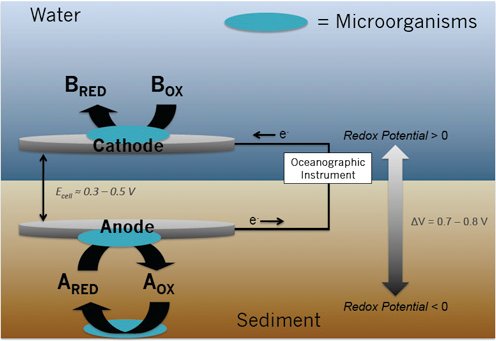
Microbial desalination cells based on using air cathodes

A picture named benthicmicrobialfuelcell.jpg

From Science Daily

“Water desalination can be accomplished without electrical energy input or high water pressure by using a source of organic matter as the fuel to desalinate water,” the [Penn State researchers, Bruce Logan, Kappe Professor of Environmental Engineering and Maha Mehanna postdoctoral fellow] report in a recent online issue of Environmental Science and Technology…

The team modified a microbial fuel cell — a device that uses naturally occurring bacteria to convert wastewater into clean water producing electricity — so it could desalinate salty water.

“Our main intent was to show that using bacteria we can produce sufficient current to do this,” said Logan. “However, it took 200 milliliters of an artificial wastewater — acetic acid in water — to desalinate 3 milliliters of salty water. This is not a practical system yet as it is not optimized, but it is proof of concept.”

A typical microbial fuel cell consists of two chambers, one filled with wastewater or other nutrients and the other with water, each containing an electrode. Naturally occurring bacteria in the wastewater consume the organic material and produce electricity.

More wastewater and water treatment coverage here and here.

Flaming Gorge pipeline: U.S. Fish and Wildlife Service sides with opponents

A picture named flaminggorgepipelinemillion.jpg

It’s a good thing the Aaron Million is a young man. He may age a bit before he sees his dream of a pipeline from Flaming Gorge Reservoir to the Front Range bear fruit. Here’s a report from the Associated Press via CBS4Denver.com. From the article:

The agency submitted written comments to the U.S. Army Corps of Engineers, which is conducting an environmental study of the proposal. The Fish and Wildlife comments focused concern on how the pipeline would affect threatened or endangered species, migratory birds and habitats and ecosystem balances.

More Flaming Gorge pipeline coverage here and here.

Wiggins: New water attorney named

A picture named measuringwithweir.gif

From The Fort Morgan Times (Jesse Chaney):

The council hired [Frederick] Fendel of Petrock and Fendel, P.C. to replace former water attorney Steve Jeffers, who left due to a conflict of interest. Town Administrator Bill Rogers said after the meeting that Jeffers’ firm represents the Weldon Valley Ditch Co., which has control of water the town may seek to acquire…

Fendel said local Gary Teague is interested in selling the town 10 shares of Weldon Valley Ditch Co. water. The ditch company would have to approve the exchange, Fendel said, and he has been working to specify exactly which shares Teague would like to sell. “I plan to have a draft agreement this week that I hope everyone here can look at,” he said.

More Wiggins coverage here and here.

Republican River Basin: Still no settlement between Colorado, Kansas and Nebraska

A picture named republicanriverbasin.jpg

From the Kearney Hub (Leslie Reed):

David Barfield, Kansas water czar, said his state continues to assess whether to take the long-running dispute to the U.S. Supreme Court. “Obviously there’s substantial distance between the states on these issues, particularly with Nebraska’s future consumption,” Barfield said in an interview following the meeting. “You can expect Kansas to pursue this matter until we’re satisfied.”

It was the first meeting of the Republican River Compact Administration – the top water officials from each of the states that share in the basin – since an arbitrator made a nonbinding ruling last month that Nebraska irrigators need to reduce pumping in the basin to allow more water to flow to Kansas. The arbitrator also concluded that Kansas so far has established only nominal monetary losses as a result of Nebraska irrigators overusing their share of water during the drought years of 2005 and 2006. Although the states remain at odds, there was little saber-rattling at the meeting. Each official made a point of acknowledging the other states’ work on the issue.

Plentiful rain in the past two years has brought Nebraska back into compliance with the Republican River agreement, but Barfield warned that Nebraska would quickly fall out of compliance should the weather turn dry.

More Republican River Basin coverage here and here.

Upper Colorado River Endangered Fish Recovery Program: Senator Udall introduces legislation for permanent Ruedi Reservoir pool

A picture named coloradopikeminnow.jpg

From the Grand Junction Daily Sentinel:

The bill would let the U.S. Bureau of Reclamation permanently use Ruedi water to help the Colorado pikeminnow, razorback sucker, humpback chub and bonytail chub…Water users negotiating the agreement have decided half of the water will be provided by converting old, unused agricultural rights, and half will come from unobligated water in Ruedi Reservoir…Additional unsold water would remain in the reservoir to help defray construction costs. But because the water targeted by the bill would be used for fish recovery, the bill would waive the requirement that it be used to pay for reimbursement of costs, Udall’s office said.

More endangered species coverage here.

Montrose County: Piñon Ridge plant pollution control

A picture named uranuim.jpg

Here’s a report about precautions at the proposed Piñon Ridge mill in Montrose County, from Joe Hanel writing for The Durango Herald. From the article:

In an application to Montrose County for a special use permit on the mill site, Energy Fuels briefly lists some of the steps it will take to control pollution.

The mill will have the best available technology to reduce air emissions, according to the application. Mill opponents worry about dust pollution from the strong winds common to the Paradox Valley.

But company officials say they will spray roads, stockpiles and tailings with water or chemical dust suppressants.

Five air monitors are collecting data to establish a baseline for air quality, and they will continue monitoring during mill operation.

Waste ponds will be lined to avoid groundwater pollution and designed to withstand a 1,000-year storm. The mill site will be designed to have no stormwater discharge, according to the county permit application.

More energy policy nuclear coverage here and here.