
From the Longmont Times-Call (John Fryar):
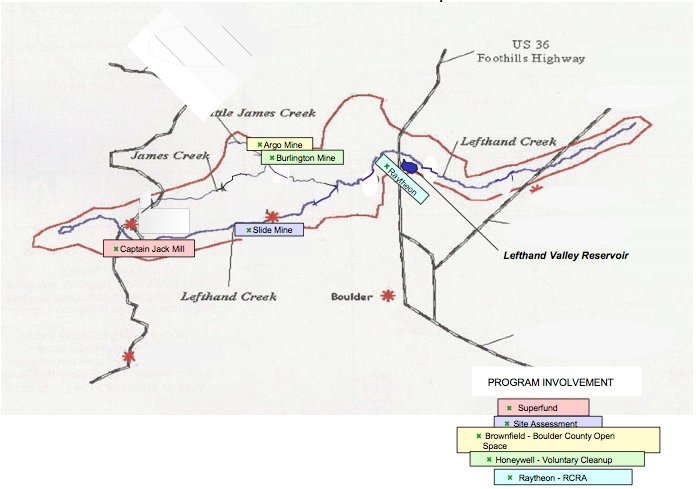
The onetime gold and fluorspar mine is about 1.5 miles northwest of Jamestown. It’s on a 13.7-acre parcel the county acquired for $70,000 in December 2000 to preserve as open space and to prevent future mining or development on the property. While a county historical survey indicated that the Argo Mine was originally developed in 1875, there’s not known to have been any active mining there since the late 1950s or early 1960s. However, waterborne contaminants from the mine and its piles of waste rock have been found to be loading copper, iron, lead, zinc and magnesium into Little James Creek…
Little James Creek converges with James Creek, with their waters eventually flowing into Lefthand Creek. Lefthand Creek, in turn, is one of the sources of water the Left Hand Water District provides to about 18,000 residents and agricultural producers in unincorporated Boulder County, including drinking water for areas such as Niwot. But Left Hand Water District general manager Kathy Peterson and Glenn Patterson, watershed coordinator for the Lefthand Watershed Oversight Group, both said in interviews that the Argo Mine pollutants weren’t an immediate threat to the safety of the drinking water that’s treated and distributed downstream…
A more important reason for the Argo Mine cleanup, Patterson said, was to help improve Little James Creek’s own stream health and its ability to support aquatic life…
[Barry Shook, the Boulder County Parks and Open Space Department’s coordinator of the project] and EPA officials said the cleanup work took the mine’s waste rock, mixed it with fly ash, cement and water, and stowed that paste mixture inside the old mine’s central cavern, or “stope.” The next step, Shook said, was reclaiming the sites where the waste rock had come from. One of the rock piles was graded and capped with 18 inches of topsoil, officials said. Shook said that elsewhere, about 8 inches of topsoil was spread over areas that were disturbed when waste rock was removed. The topsoil areas were then seeded and mulched, and Shook said that “we’re waiting for a good winter of snow so that the seeds out there germinate.”[…]
Shook and EPA officials said removal of the waste rock and the closing of the cavernous stope will make the property itself safer if Boulder County opens the property to hikers or other public uses. EPA officials said removal of the piles of mine tailings means they’ll no longer be in direct contact with water or exposed to surface water runoffs and drainage. Also, entombing the mine tailings in concrete reduces their exposure to groundwater.

More restoration coverage here.