
From Colorado Public Radio (Grace Hood):
…when climate scientists start predicting a loss of snow for Colorado’s high country, the ski resorts take notice. A Colorado Water Conservation Board report projects a “precipitous decline” in snowpack at elevations below 8,200 feet in the West by the middle of this century, and declines of about 10-20 percent at higher elevations. (The base of Arapahoe Basin is 10,780 feet. In Aspen, it’s about 7,800 feet.)
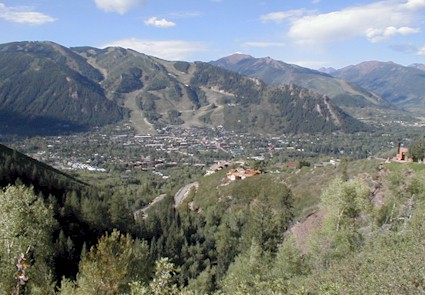
A different report by the National Resources Defense Council, a conservation advocacy group, paints one scenario in which the snowpack on Aspen Mountain, at 10,700 feet, will be confined to the top quarter of the peak.
Some Colorado ski resorts have long lobbied for climate change action. With the Paris Climate Talks kicking off at the end of the month, an alliance of snowsports businesses sounded the alarm to President Barack Obama:
2014 was the warmest year in the temperature record, and 2015 is on track to surpass it. Failure to act now on climate is unacceptable, and will result in damage to the environment, tourism and the economy. This is the greatest opportunity of our Jme. We need meaningful action from all, and it is time to act. The snowsports industry is doing our part as well to address climate change. We not only advocate for a stronger climate policy, but we’ve broadly implemented clean energy and energy efficiency measures throughout our businesses.
On one level, Colorado’s mountain resorts are trying to do their part to reduce waste and emissions that contribute to greenhouse gasses by adopting renewable energy systems like solar panels, changing snowmaking equipment to be more energy efficient, or introducing composting programs aimed at guests and workers alike to cut back on garbage sent to landfills. That’s what’s going on at Arapahoe Basin, as it tries to influence the ways in which its visitors think about climate change.
“We really just want people to have it in their mind, think about how their individual actions and day-to-day lifestyle choices really can have a big impact in a good or a bad way,” said Mike Nathan, A-Basin’s assistant manager of sustainability.
The Aspen Skiing Company is going one step further. On opening day this Thanksgiving, Vice President of Sustainability Auden Schendler says skiers will see signs on the mountain and on lifts that map out carbon dioxide emissions and rising temperatures. People will be encouraged to contact Congress and ask for action.
“It’s going to force a conversation about climate change, and it’s going to be a friendly conversation and an easy one. But it will be in your face,” said Schendler.