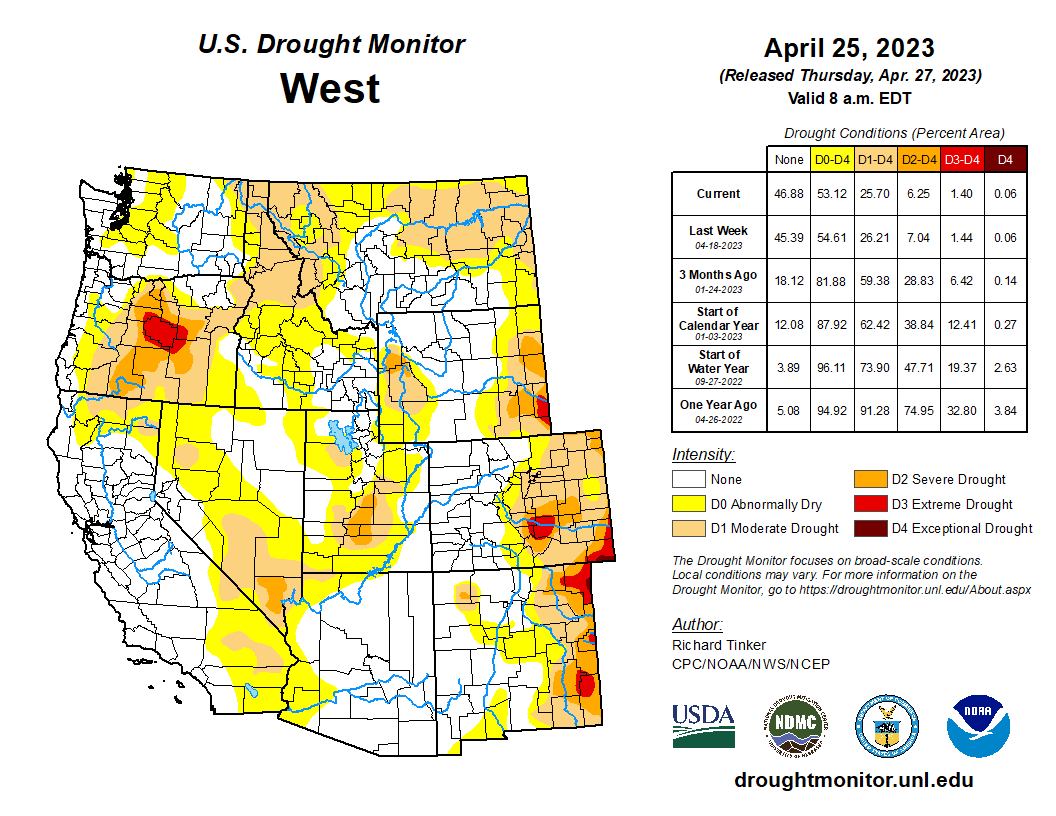
Freshwater use in oil and gas drilling has come under scrutiny in Colorado as the state faces a historic drought. On Wednesday, March 12, state regulators announced new rules that will require drillers to use more recycled water in their operations and, hopefully, relieve pressure on scarce freshwater resources.
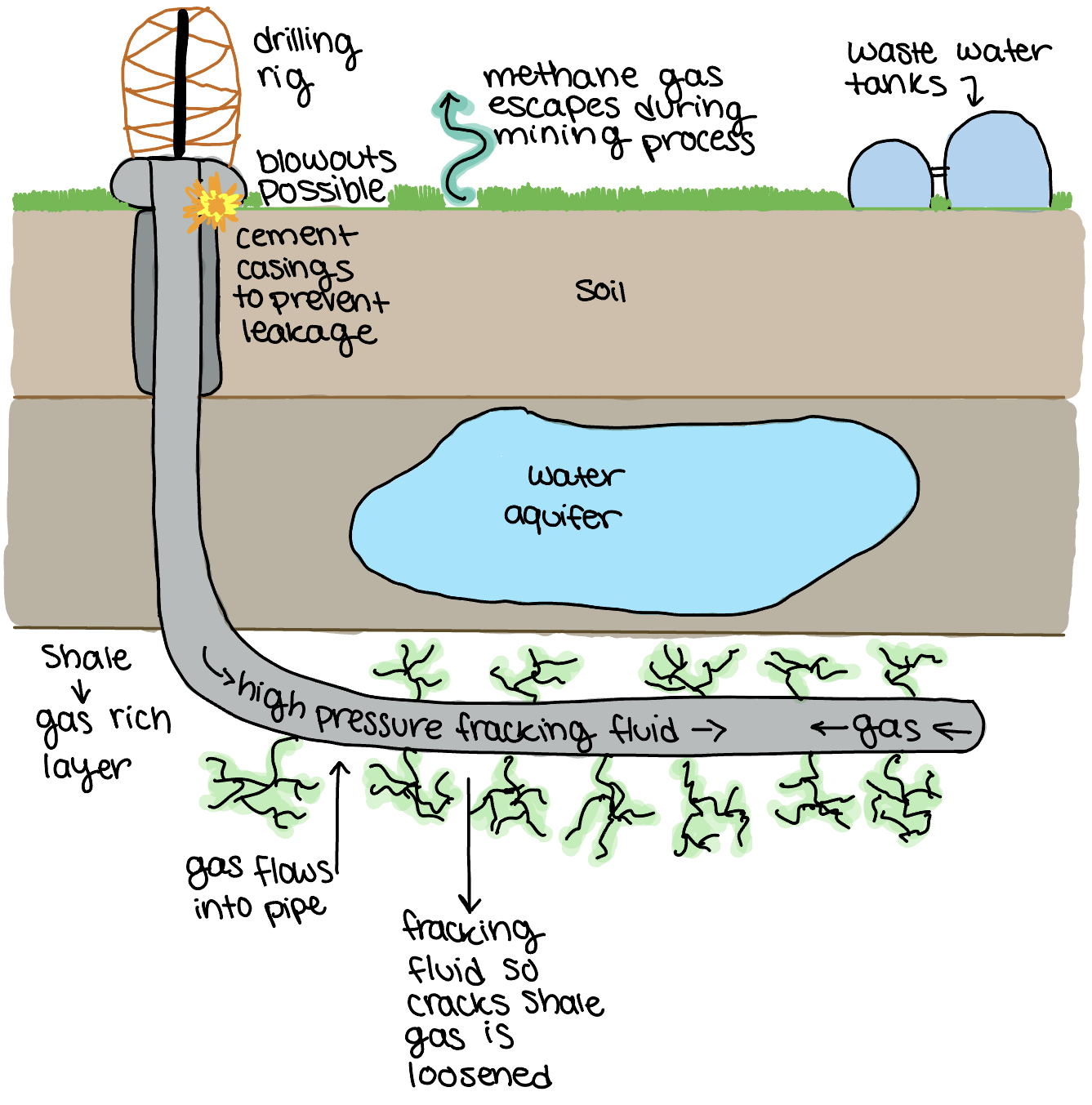
As Colorado continues to produce fossil fuels at record pace, the Centennial State has become awash in a caustic, brackish and chemically-laden fluid known as produced water, a byproduct of the drilling and fracking process.
This water can have high levels of salts, metals and other contaminants, making it more difficult and expensive to treat for reuse than for disposal. Oil and gas companies in Colorado typically dispose of produced water by pumping it back into old, out-of-service wells and other geological formations using injection wells, permanently severing it from the hydrological cycle. Meanwhile, freshwater demand for oil and gas production in Colorado is forecasted to rise in the coming decade as the industry drills deeper vertically and farther horizontally.
The oil and gas industry, whose activity in Colorado accounts for almost 4 percent of U.S. total crude oil output, uses about 11 billion gallons of fresh water annually in Colorado, according to data collected by the Colorado Energy and Carbon Management Commission (ECMC). That’s comparable to the amount of water stored behind a small dam, but accounts for less than one percent of all fresh water used in the state.
“Things are changing quickly” for Colorado as climate change intensifies, said Harmony Cummings, a director of the Green House Connection Center, an environmental nonprofit party to the rulemaking. “How low the reservoirs are is terrifying to me.”
Turning Waste Into a Resource
In 2023, the Colorado state legislature passed HB23-1242 (Water Conservation In Oil And Gas Operations: Concerning water used in oil and gas operations, and, in connection therewith, making an appropriation), which required the ECMC to adopt rules “requiring a statewide reduction in usage of fresh water and a corresponding increase in usage of recycled or reused water in oil and gas operations.”
The bill also created Colorado’s Produced Water Consortium, a body of 31 people including regulators, industry representatives, environmentalists and scientists. The group is studying how produced water that comes to the surface during drilling can be reused in other oil and gas operations to reduce freshwater consumption, and its reports served as the basis for its recommendations to the ECMC.
“The consortium started out with everyone coming in with an agenda,” said Hope Dalton, the consortium’s director. “Then they began to learn from each other and trust each other and really work to create these data-informed recommendations…I think the recommendations are very solid.”
Produced water is a catch-all term for water that flows out of oil and gas wells after conventional drilling or hydraulic fracturing, or fracking. This liquid waste can contain drilling chemicals injected into wells, toxic hydrocarbons like benzene, a known carcinogen, and water dislodged from deep underground that carries sediments, salts, metals like barium, manganese and strontium, and Naturally Occurring Radioactive Materials (NORM).
Oil and gas evaporation pond
The Produced Water Consortium compiled data on existing water practices in Colorado’s oil and gas industry to inform the rule-making. It found that water diverted for fracking in Colorado totals about 26,000 acre feet a year, or 0.17 percent of the state’s total water use. One acre-foot is 325,851 gallons of water, meaning the oil and gas industry holds rights to about 8.5 billion gallons of freshwater annually.
Between July 2023 and March 2024, according to the consortium’s findings, operators reported to the state that they disposed of 87 percent of their produced water and recycled the remaining 13 percent. Companies reported that 93.2 percent of produced water disposal was into underground injection wells. Much smaller volumes of water are disposed of in pits or discharged into state surface water bodies. The initial data on recycling rates is self-reported by the companies and only reflects the short period of time that reporting has been required.
The Denver-Julesburg basin, or DJ Basin for short, along Colorado’s Front Range is home to a vast majority of the industry’s development and water demand. It is also home to the vast majority of the state’s population, including the metro areas of Denver, Boulder and Fort Collins. From 2019 to 2024, an average of two new fracking wells were completed daily in the DJ Basin, five-and-a-half times the industry’s rate in other basins in the state, according to ECMC data.
Niobrara Shale Denver Julesberg Basin
Companies in the DJ Basin account for almost three quarters of the industry’s total water use, according to ECMC data from 2022. In the DJ Basin, only 0.4 percent of that water is recycled. The Western Slope, which is more rural, has fewer drilling companies but a much higher rate of recycling produced water for operations, sometimes as high as 100 percent.
Under Colorado’s new regulations, by the beginning of 2026, oil companies must use at least 4 percent recycled produced water across their operations in the state. In 2030, that requirement increases to a minimum of 10 percent.
The ECMC will convene again in 2028 to draft new benchmarks beyond 2030. If a consensus fails to emerge, minimum averages of 20 percent recycled water in 2034 and 35 percent in 2038, as recommended by the Consortium, will become law.
If an operator is unable to meet these thresholds, they would be allowed to purchase “credits” for excess produced water recycled by other operators, but only if those credits would be used in the same basin.
“Increasing recycling doesn’t necessarily equate to a decrease in freshwater” use, said Cummings. If the rate of fracking in Colorado rises faster than the produced water recycling thresholds, it’s possible that produced water reuse and freshwater use could both go up, she said.
Other new rules require oil and gas companies to make quarterly reports on what freshwater is used for, the total amount of water and produced water used in each basin, and figures on emissions from truck traffic, among other statistics. Operators will also be required to report how they would meet produced water reuse thresholds. The ECMC could issue penalties to companies that don’t comply with the new rules.
But Cummings worried those penalties aren’t onerous enough. There are “no real teeth” in the enforcement mechanisms, said Cummings, who spent eight years working in the oil and gas industry. If given the proper combination of regulation and incentives, she is confident companies could recycle produced water at greater rates than Colorado is requiring.
“I’ve seen them do incredible projects when profits are on the other side of that,” she said.
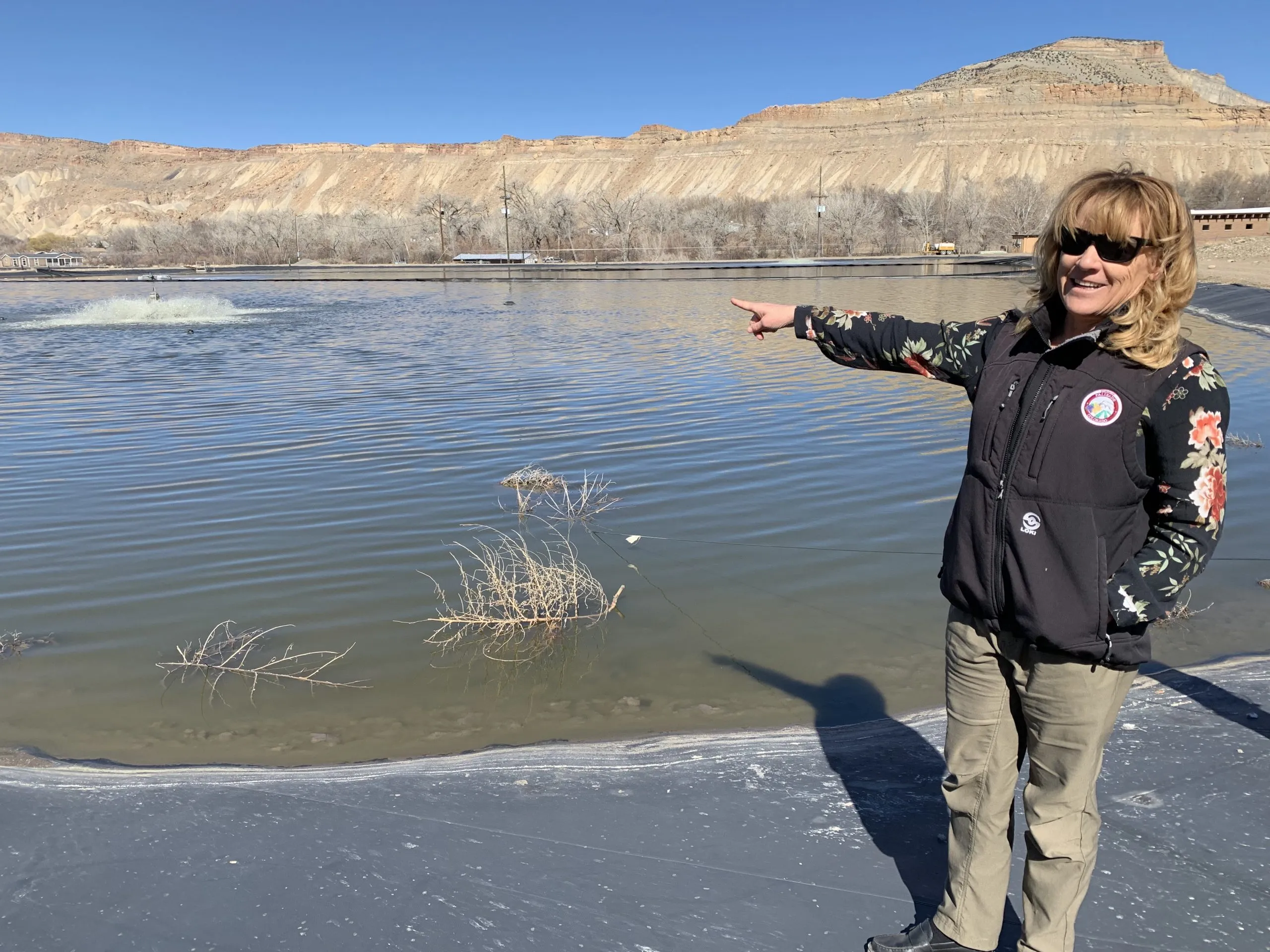
Palisade Town Manager Janet Hawkinson points out the aerators in the town’s wastewater lagoons. The Town plans to pipe its wastewater to Clifton’s treatment plant and reclaim the nine-acre area as wetlands using a $3 million federal grant — funding which has now been paused by the Trump administration. Credit: HEATHER SACKETT/Aspen Journalism
In the Grand Valley south of Highway 50, Orchard Mesa Canal No. 1 winds through 18 miles of rural agricultural farmland and residential backyards.
In January, the Orchard Mesa Irrigation District was promised $10.5 million from the U.S. Bureau of Reclamation to pipe the open canal — which has crumbling chunks of concrete and rebar poking out along its sides — and install more-efficient valves instead of headgates. In addition to delivering water more easily to the 6,700 users in the district, a goal of the project is to improve the irrigation system’s efficiency so more water could be left for endangered fish in a critical 15-mile stretch of the Colorado River.
But the future of the project is uncertain because about $151 million in funding for projects aimed at conservation and drought resilience on the Western Slope has been frozen by the Trump administration.
“We are on hold ourselves because we don’t have the revenue to move forward,” said Jackie Fisher, manager of the Orchard Mesa Irrigation District.
On Jan. 17, during the final days of the Biden administration, the U.S. Bureau of Reclamation announced it had awarded $388 million in funding through the Inflation Reduction Act for projects throughout the Colorado River’s Upper Basin (Colorado, New Mexico, Utah and Wyoming). The money was allocated through what the bureau called “Bucket 2, Environmental Drought Mitigation,” or B2E, which is earmarked for projects that provide environmental benefits and address issues caused by drought.
But just three days later, the Trump administration issued an executive order, “Unleashing American Energy,” which said “all agencies shall immediately pause the disbursement of funds appropriated through the Inflation Reduction Act of 2022.”
Water managers say they are waiting on information from the bureau and have not heard anything about the status of funding since the Jan. 17 announcement. Most are operating under the assumption funding is still paused and, with it, their projects. The Trump administration has yet to appoint a new Bureau of Reclamation commissioner.
“Officially, from Reclamation we have not heard a thing,” said Steve Wolff, general manager of the Durango-based Southwestern Water Conservation District, which was awarded $26 million for drought mitigation. “We’re very happy we were successful, but now we are in a no-man’s land.”
Officials from the bureau did not respond to questions from Aspen Journalism about the status of the funding.
Seventeen of the 42 Upper Basin projects are in western Colorado and include things such as almost $3 million for dam removal and wetlands restoration at Fruita Reservoir; $1.9 million for studying the effectiveness of beaver dam analogs in the headwaters of the Roaring Fork River; and $4.6 million for drought resiliency on conserved lands. The funding pause also affects six tribal water projects in the Upper Basin, including $16 million for the Southern Ute Indian Tribe for drought mitigation on the Pine River.
Abby Burk, a senior manager with Audubon Rockies’ Western Rivers Program, said everyone awarded the funding is in limbo now. Burk is involved with two of the projects awarded B2E money in the Grand Valley: the Fruita Reservoir dam removal and restoration, and a project in Palisade that would convert wastewater lagoons into wetlands.
“We’ve got some great projects that are just hanging in the air waiting for a decision,” Burk said. “We in the environmental community are trying to support our project partners; we are just at a momentary loss. There’s just quite a bit of uncertainty.”
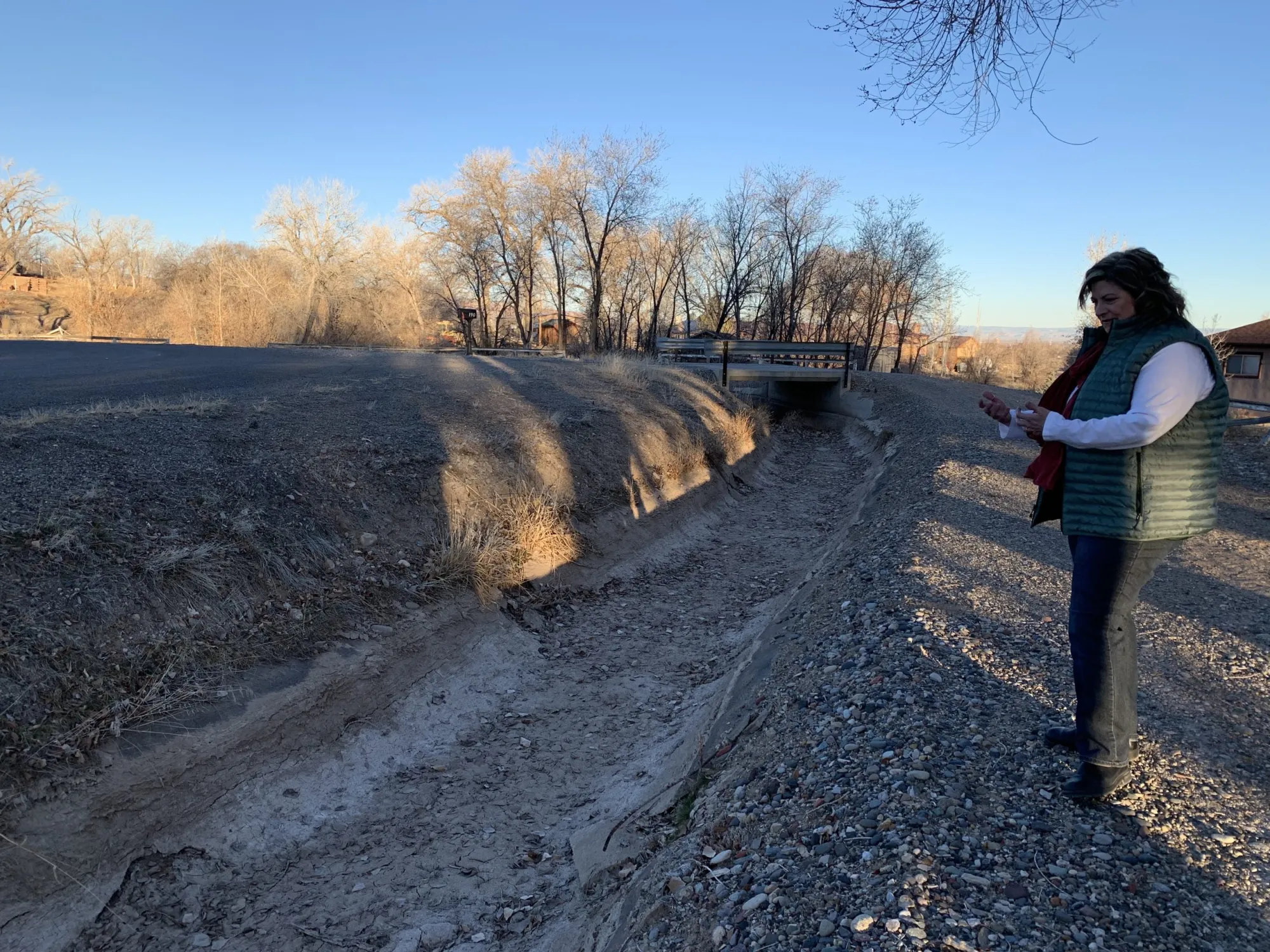
Manager of the Orchard Mesa Irrigation District Jackie Fisher points out the crumbling concrete in the lining of the district’s canal No. 1. OMID was awarded a $10.5 million federal grant for infrastructure upgrades, but that funding has been paused by the Trump administration. Credit: HEATHER SACKETT/Aspen Journalism
The uncertainty surrounding B2E funding comes at a crucial time for the Colorado River basin, which has been plagued by drought and dwindling streamflows due to climate change for more than the past two decades. Representatives from the seven Colorado River basin states (California, Arizona and Nevada, which comprise the Lower Basin) are in the midst of tense negotiations about how the nation’s two largest reservoirs — Lake Powell and Lake Mead — will be operated and how water-supply shortages will be shared in the future.
Some water managers said that without this once-in-a-lifetime federal funding they were promised, many of these projects probably won’t happen. Southwestern Water Conservation District was awarded the grant, but the district plans to distribute the money to smaller local entities for a variety of projects, including invasive plant control through the Mancos Conservation District; to the Ute Mountain Ute Tribe for erosion control and restoration; and to Mountain Studies Institute for restoration of fens.
“For these projects to happen, we absolutely need this funding,” Wolff said. “I certainly hope it does shake loose.”
The $10.5 million awarded to the Orchard Mesa Irrigation District would cover the entire cost of the canal piping project, and without federal money, the district would struggle to pay for it, Fisher said.
“We already run on a shoestring budget, so a $10.5 million project is nearly impossible,” Fisher said. “We’re pinching pennies all the way around.”
The Glenwood Springs-based Colorado River Water Conservation District is the recipient of the biggest B2E award in Colorado: $40 million toward the purchase of the Shoshone water rights. The River District is in the midst of a campaign to buy the water rights associated with Xcel Energy’s hydropower plant in Glenwood Canyon for $99 million. These water rights are some of the oldest nonconsumptive rights on the Western Slope and help keep water flowing to downstream ecosystems, cities, agricultural and recreational water users.
In a prepared statement, the River District’s general manager, Andy Mueller, struck a slightly more optimistic tone.
“While the timing of federal funding to secure the Shoshone water rights remains uncertain, the River District is encouraged by key appointments within the Department of the Interior,” Mueller said. “We are prepared to work closely with the next Bureau of Reclamation commissioner to advance this critical effort and other essential water projects that protect agriculture and the communities that rely on it — both in Colorado and across the basin.”
In western communities, mobile home parks provide a more affordable place to live, but residents often face problems with their drinking water.
In Colorado, a new law gives the state authority to test water quality in these communities and force owners to fix any issues.
The state plans to start testing the water at hundreds of parks across the state this summer. Officials have already gotten a head start at one community in Western Colorado that helped spur the legislation.
Apple Tree Park sits on the banks of the Colorado River just across from the town of New Castle.
Silvia Barragán moved to the park in 2015. Her street is lined with trees and she has a big yard with a garden.
“Some people might look at this as just a trashy mobile park, but it’s not,” Barragán said. “It’s a nice, nice neighborhood. There’s a lot of kids in the summer running around and there’s a lot of elderly people that have lived here most of their lives.”
Barragán is originally from Michoacán, Mexico, and she raised her family in western Colorado. Her experience at Apple Tree Park over the last decade has mostly been positive.
“Since I moved here, I felt peaceful and at home,” Barragán said. “My neighbors are great neighbors and I haven’t had any issues in Apple Tree except the water.”
For years, Barragán and her neighbors have been speaking out about the discolored water that comes out of their taps.
“It’s kind of brownish, yellowish. It’s kind of nasty,” she said. “It’s like river water, like if I’m camping and I go get river water, that’s what it looks like.”
Barragán only wears black now because the water stains her clothes and laundry, and it ruins her appliances.
It has an unpleasant smell and taste, so she fills up water jugs at the local grocery store.
“I buy water,” Barragán said. “I buy water for cooking, I buy water for drinking, I buy water for the dogs.”
When the state tested the water at Apple Tree Park, they found it meets federal EPA standards under the Safe Drinking Water Act, passed in 1974, but it has higher than normal levels of heavy metals such as iron and manganese. The park is supplied by groundwater wells, and is outside the limits of the nearby town of New Castle, which draws the majority of its drinking supply from a nearby creek.
Joel Minor used to manage the Colorado Department of Public Health and Environment’s environmental justice program, and said Apple Tree’s situation — of heavy metals showing up in underground well water — is pretty common.
“Because of the taste and color and odor of the water, it can be unpleasant to drink and can cause other issues,” Minor said. “We recognize that that creates challenges for park residents and may require them to spend money on things like bottled water or repairing or replacing appliances.”
While Apple Tree’s overall water system meets federal health standards for drinking, a recent round of testing this winter found that a few samples out of the 200 taken had manganese levels that were above the EPA’s health advisory for infants. High levels of manganese can negatively impact babies’ brain development.
When the state got the test results back in February, they worked with the park owner—Utah-based company Investment Property Group (IPG)—to notify residents and local health officials about the issue.
“What we want folks to know is to be cautious about using tap water from the park for making formula for infants under the age of six-months-old,” Minor said. “These particular locations where this occurred seem to be spots where maybe the water isn’t being flushed quite as well.”
With the passage of the Mobile Home Park Water Quality Act in 2023, the state’s been working with IPG to do more regular testing and to fix the water issues. The company didn’t respond to multiple requests for comment.
In 2020, IPG bought the mobile home park from the local Talbott family, which had owned the park since its inception. The company has properties across 13 states, including more than 110 mobile home parks, according to the Mobile Home Park Home Owners Allegiance’s online database.
The state has been having regular meetings with IPG, Garfield County health officials, local advocacy groups and park residents to come up with a variety of ways to improve the water.
“One key short-term solution that we’ve been working with the park on is flushing the water system more frequently, which can help remove iron and other metals that have accumulated in the system,” Minor said. “We’ve also worked with that same coalition to put on an informational webinar about how to do in-home flushing for appliances like water heaters and pipes so that residents are also able to flush their own water systems.”
Another short-term fix already underway is putting in water stations where residents can fill up jugs for cooking and drinking.
The state is providing direct funding to the park in the form of an assistance grant to help install these stations. One has already been installed at a local school across from the mobile home park that’s also owned by IPG, and the company plans to install a second by early June in a communal area near the entrance to the park.
“That was something we came up with based on feedback from park residents that folks are having to drive across the river and across the highway into New Castle to fill water jugs for drinking and other purposes,” Minor said. “So these are key short-term solutions, but we recognize they don’t address the root cause of the problem.”
To address the root cause, the state is proposing bigger engineering solutions like installing a filtration system, or even connecting Apple Tree to a municipal water supply.
But Apple Tree is just one of about 750 mobile home parks in Colorado. The new legislation gives the state authority to test, but the full scope of just how bad water quality could be at those parks, and the costs to fix the various causes could easily begin to rise as testing ramps up.
There is additional funding available for park owners to make these system-wide changes, and if they don’t, the state could impose fines until the problem is fixed.
“We are really trying to prioritize solutions that won’t increase rent for park residents by either looking at lower cost options or ways of getting outside funding that can ensure that some of those costs don’t get passed on to residents,” Minor said. “We know that passing along the cost could potentially make the equity challenges that are already at play worse if residents have to pay more for their water bills or their space rents.”
Alex Sanchez leads the Glenwood Springs-based Latine advocacy nonprofit Voces Unidas, which worked with Apple Tree residents and Democratic Colorado House Representative Elizabeth Velasco of Glenwood Springs to pass the water quality legislation.
“We’re not opposed to getting state dollars and federal dollars to be able to support or incentivize some of these solutions,” Sanchez said. “But ultimately, we believe it’s the responsibility of those corporate owners who have been making a lot of profit off the backs of hardworking folks without having access to, you know, quality water, potentially sidewalks, infrastructure and other benefits that many of us take for granted.”
For Sanchez and Voces Unidas, the new law is just the first step in addressing a widespread environmental justice issue — many people living in these communities have lower incomes, don’t speak English as a first language, don’t have access to resources to file complaints, and are Latines or other people of color.
“The issue is not just contained to one or two parks. Something is happening in these mobile home park communities and because they’re not regulated, there’s not a lot of accountability,” Sanchez said. “Many of these communities across Colorado are owned by corporations that are from out of state.”
In a recent statewide poll in Colorado, Voces Unidas found 41% of mobile home park residents surveyed did not trust or drink their water.
Since 2020, the state’s health and environment department has received 66 formal water quality complaints from 42 parks. State officials estimate that it will take them four years to test the water at all of Colorado’s roughly 750 parks.
For her part, Apple Tree Park resident Silvia Barragán is glad that her community is at the top of the state’s list.
“When I bought this place, I thought I was gonna retire here,” Barragán said. “So I would be sad to think that I need to buy another place just because, you know, I haven’t seen any change.”
Barragán hopes the new legislation will speed things up, but she doesn’t know how much longer she can wait for clean water.
This story was produced by Aspen Public Radio, in partnership with The Water Desk, an independent initiative of the University of Colorado Boulder’s Center for Environmental Journalism.
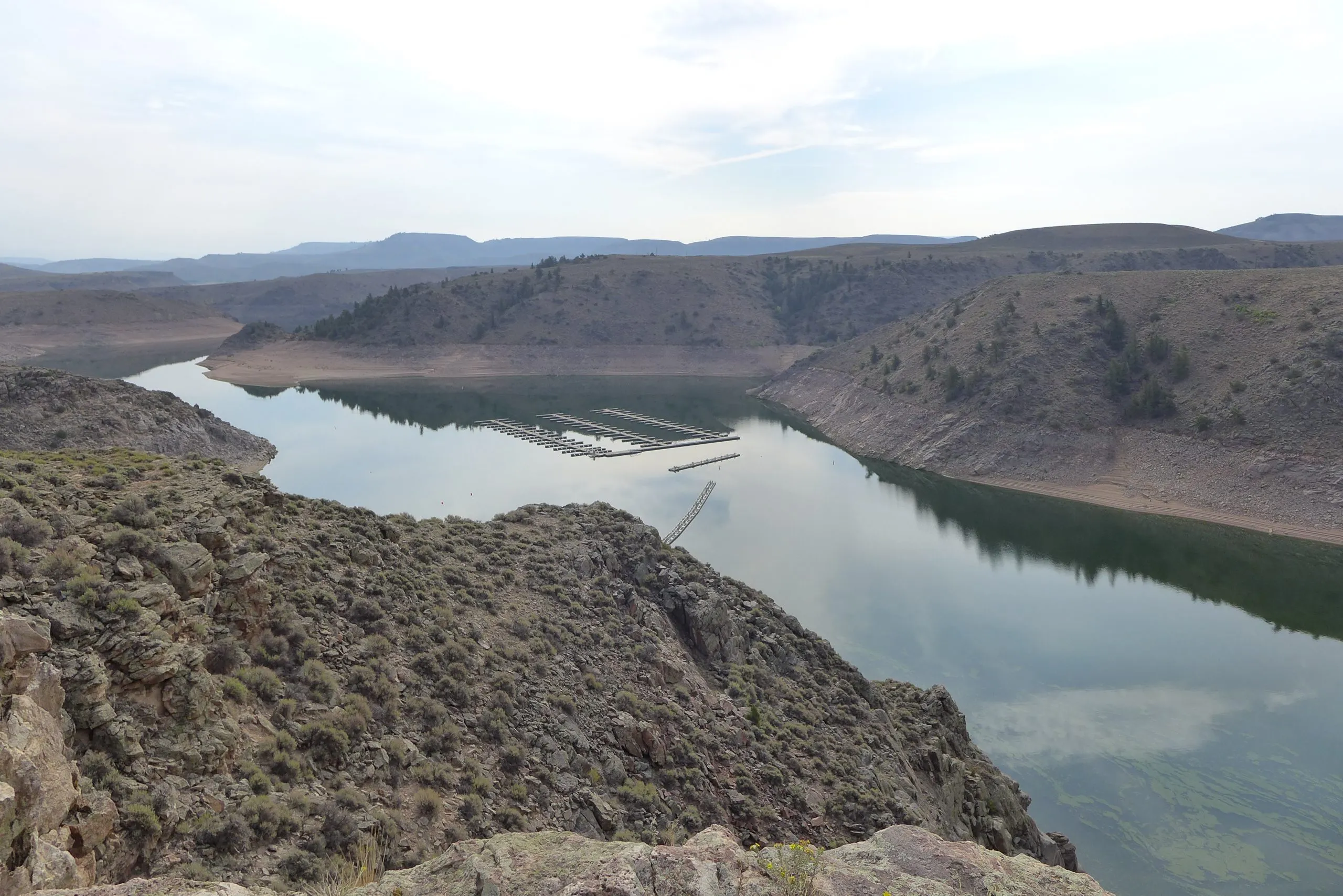
Elk Creek Marina at Blue Mesa Reservoir on the Gunnison River was temporarily closed so the docks could be moved out into deeper water in 2021 after federal officials made emergency releases from the reservoir to prop up a declining Lake Powell. A state drought task force did not make recommendations regarding an interstate conservation program. CREDIT: HEATHER SACKETT/ASPEN JOURNALISM
Programs that would pay water users to conserve and send that water downstream for the benefit of the Colorado River system remain too controversial for Colorado water managers to agree on.
A statewide task force has failed to make recommendations to lawmakers about the primary issue they were supposed to tackle: how to address drought in the Colorado River basin and respond to a downstream call through water conservation programs.
Senate Bill 295 created the 17-member Colorado River Drought Task Force this year, with representatives from Western Slope water users, Front Range water providers, local governments, the state Department of Natural Resources, environmental groups and tribal leaders. The group met 10 times between July and December at locations across the state and remotely.
According to SB 295, the purpose of the task force was to provide recommendations for state legislation “to develop programs that address drought in the Colorado River basin and interstate commitments related to the Colorado River and its tributaries through the implementation of demand reduction projects and the voluntary and compensated conservation of the waters of the Colorado River and its tributaries.”
But a draft recommendation about what a conservation program should look like lost on a 9-7 vote, meaning task force members did not advance it as a recommendation to legislators. A narrative about the issue was still included in the report.
“I was personally disappointed that some of the larger topics that are out there in the water world or brought up at the task force did not get support from the task force,” said state Sen. Dylan Roberts, a Democrat who represents District 8 and was a sponsor of SB 295. “They either didn’t have time or shied away from those conversations about longer-term solutions.”
The losing recommendation contained many of the state’s same long-discussed themes surrounding demand management: Any potential program should be temporary, voluntary and compensated, should avoid disproportionate impacts to any one region, and must not injure other nonparticipating water rights holders; and Western Slope conservation districts should be involved with projects within their boundaries.
Task force members could not agree on whether the timing was right for such a program, with some saying it’s “premature.” The “no” votes came from those representing Front Range water providers, the Department of Natural Resources, the Department of Agriculture, the Southwestern Water Conservation District and Colorado’s two tribes, the Ute Mountain Ute Tribe and Southern Ute Indian Tribe.
“I think there is a lot of institutional pressure that keeps us tethered to the status quo in water policy in Colorado,” said Roberts, who represents Clear Creek, Eagle, Garfield, Gilpin, Grand, Jackson, Moffat, Rio Blanco, Routt and Summit counties. “We owe it to Coloradans and the people in the West to grapple with the reality of what faces us in the decades ahead. … There’s no time like the present to prepare for a bad situation.”
The lack of recommendations about conservation programs highlights the complicated nature of water in Colorado and the difficulty of achieving consensus among competing interests. A 2021 work group that had been created to tackle speculation also failed to make recommendations to lawmakers.
Water managers say any program designed to conserve water to send downstream to help boost the Colorado River system will likely involve mostly Western Slope agriculture. Members of a state drought task force could not agree on whether the timing was right for a conservation program, with some saying such a program is “premature.” CREDIT: BRENT GARDNER-SMITH/ASPEN JOURNALILSM
Conservation controversy continues
Demand management, water banking, system conservation, a strategic water reserve — the names and details are different, but the basic concept is the same: paying water users to use less on a temporary and voluntary basis. They have been controversial in Colorado, with skeptics saying these types of programs could strip rural agricultural communities of their water.
The Colorado Water Conservation Board undertook its own demand management feasibility investigation in 2019 with eight work groups devoted to exploring different aspects of a potential program. The CWCB shelved the investigation last year without implementing a program.
Some have argued that implementing a state conservation program now would weaken or constrain Colorado’s negotiating position among the six other Colorado River basin states as they hammer out new reservoir operating guidelines. The concern is that implementing a program now would remove the focus from where some say it belongs — that the crisis is driven by overuse in the lower basin. Some task force members said they simply didn’t have enough time to thoroughly discuss conserved consumptive use (CCU) programs.
“Unfortunately, the task force spent very little time discussing this recommendation,” Southwestern Water Conservation District General Manager Steve Wolff wrote in the report. “If we had, we may have been able to develop language that we all could have agreed to and moved a recommendation forward. As written, there are aspects that could not be supported by Southwestern.”
Alexandra Davis, Aurora Water’s deputy director of water resources, served on the task force and voted “no” on the recommendation on conservation programs.
“It’s been contentious,” Davis said. “The CWCB has had a difficult time coming to some sort of idea of what kind of program would benefit the state as a whole and to create sideboards for something that we haven’t been able to agree on yet just seemed premature.”
The Glenwood Springs-based Colorado River Water Conservation District, which recognizes that any CCU program is likely to heavily involve water users within its 15-county Western Slope area, has taken the lead on demand management and system conservation discussions and has commissioned its own studies on the topic in recent years. River District General Manager Andy Mueller wrote the minority report on the task force’s failed recommendation.
“Unfortunately, the task force was unable to provide clear guidance to the members of the General Assembly with respect to how our state should be prepared to move forward should the pressure to participate in an interstate conserved consumptive use program increase in the future,” Mueller wrote. “We respectfully disagree that the CCU proposal is premature, and that this conversation should wait until a specific program is implemented.”
Although the River District does not necessarily endorse a CCU program, officials have repeatedly said they should be prepared with guidelines that protect water users if the state decides to go forward with one and that the River District should be involved to ensure a measure of local control.
“If there are programs that are designed incorrectly, …you will destroy the future of our communities,” Mueller said at the Dec. 7 task force meeting in Denver. “We have seen an interstate water conservation program roll out without any approval by our state legislature or our government and we could see another one come out. … The West Slope will be the target of that produced water.”
Mueller was referring to the Upper Colorado River Commission’s System Conservation Program, which pays water users in the upper basin states — Colorado, New Mexico, Wyoming, Utah — to conserve. The program was rolled out in 2022 without evaluation or approval by the River District.
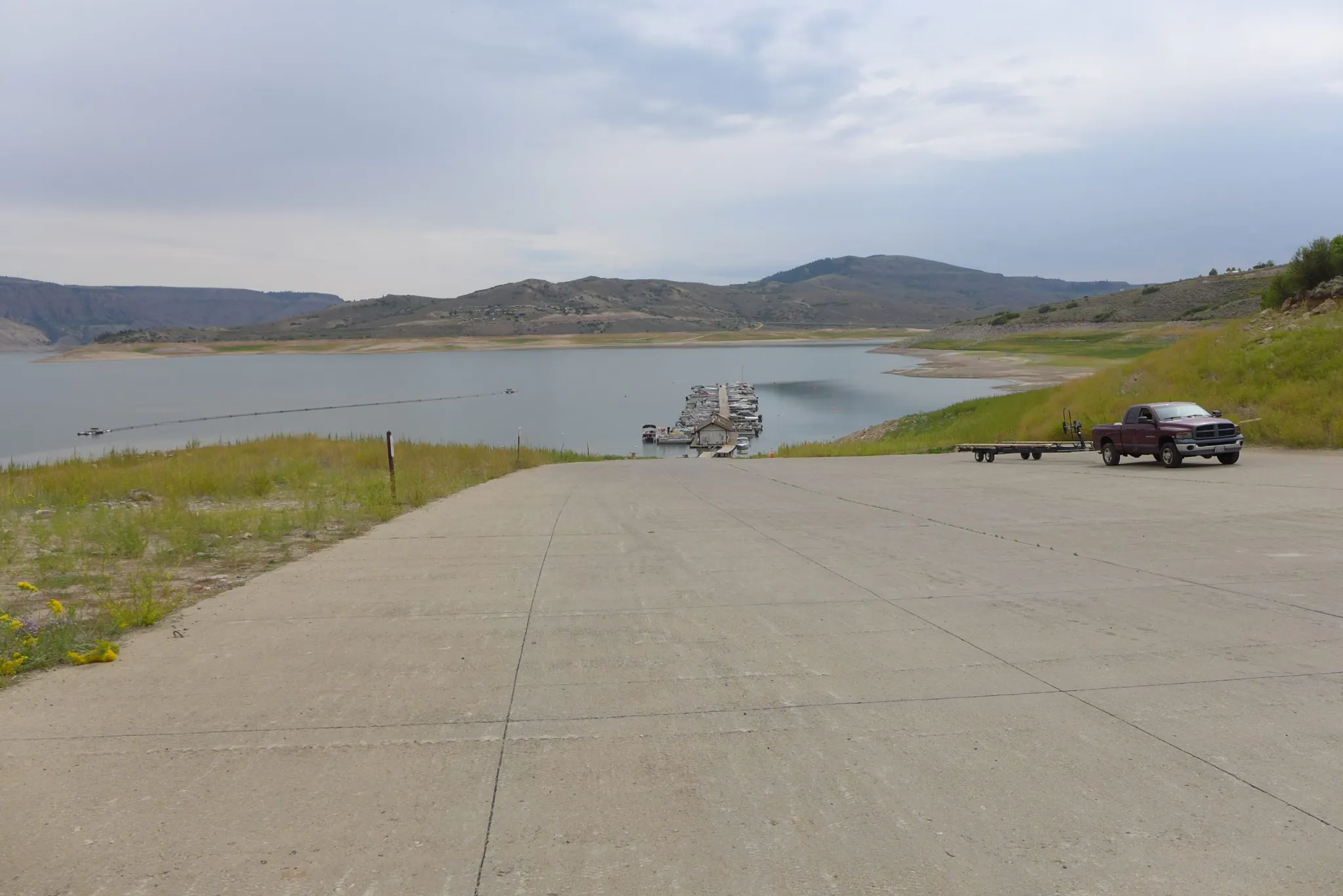
The Lake Fork Marina boat ramp at Blue Mesa Reservoir on the Gunnison River closed early for the season in 2021 after U.S. Bureau of Reclamation officials made emergency releases from the reservoir to prop up a declining Powell. Members of a statewide drought task force could not agree to advance a recommendation regarding conservation programs to help aid the Colorado River system. CREDIT: HEATHER SACKETT/ASPEN JOURNALISM
12 recommendations
The task force still came up with eight recommendations to legislators, most of which are expansions of or increased funding for existing programs: Continue funding of a technical assistance grant program; increase funding for aging water-related infrastructure; prioritize forest health and wildfire-ready watersheds; expand a temporary loan program to include storage rights; expand agricultural water rights protections beyond divisions 1 and 2 (the South Platte and Arkansas river basins); continue state funding of measurement tools; remove invasive species; and increase funding for municipal turf removal.
A sub-task force on tribal matters made four recommendations: fund a study of a potential pilot program to compensate tribes to not develop their water; have state officials write a letter requesting the U.S. Congress fully fund the Indian Irrigation Fund; waive a requirement for matching funds for state grant programs; and provide cultural protection of instream flows.
Task force Chair Kathy Chandler-Henry — a nonvoting member of the group, the president of the River District board and an Eagle County commissioner — said the time constraints were challenging. Coming up with recommendations in just five months for a field that normally moves at a snail’s pace was hard.
“I think the work that was done in that concentrated period of time is going to bear fruit in ways we don’t know about yet,” she said. “I think that, in itself, is the real value of the task force.”
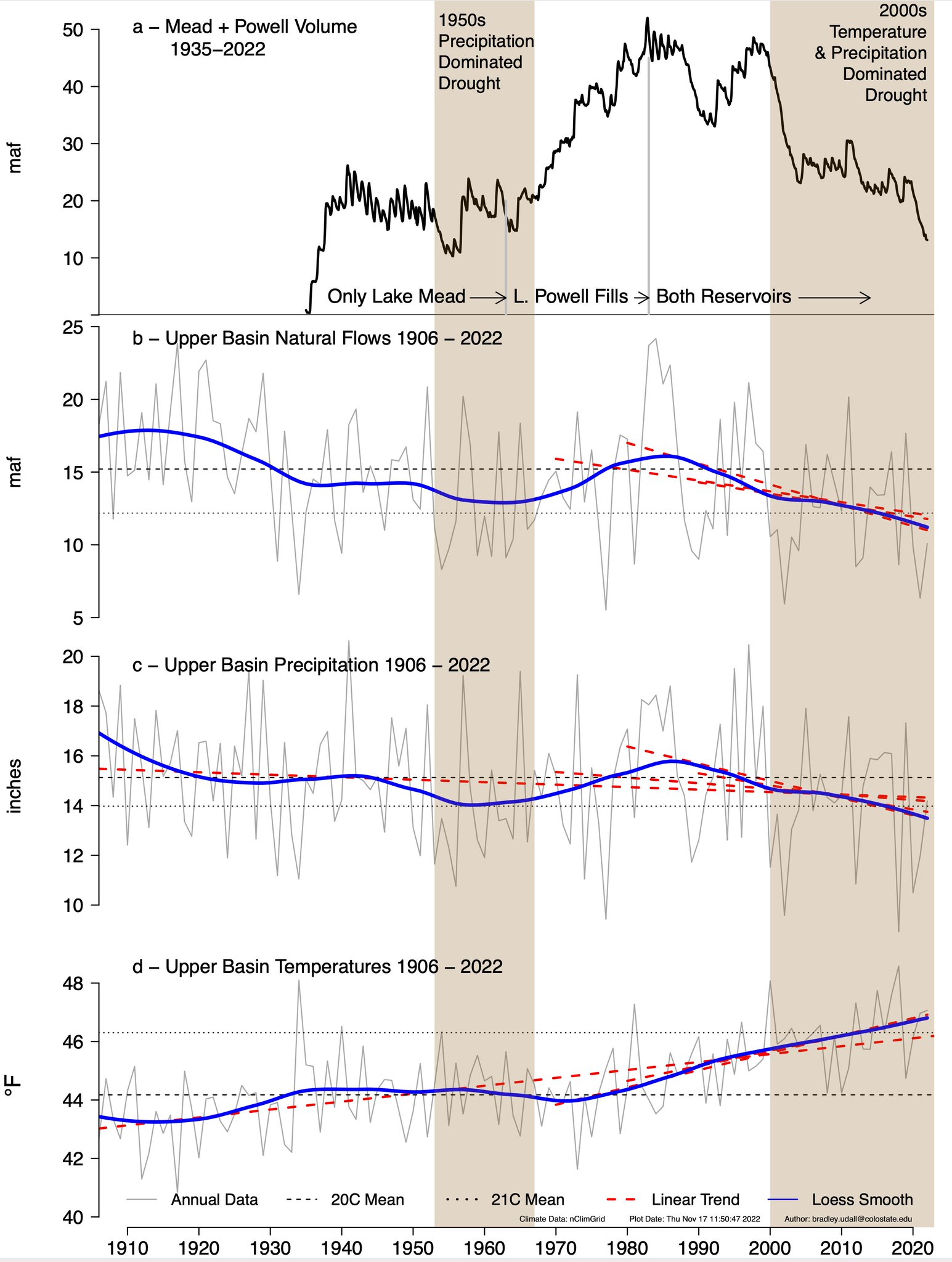
“New plot using the nClimGrid data, which is a better source than PRISM for long-term trends. Of course, the combined reservoir contents increase from last year, but the increase is less than 2011 and looks puny compared to the ‘hole’ in the reservoirs. The blue Loess lines subtly change. Last year those lines ended pointing downwards. This year they end flat-ish. 2023 temps were still above the 20th century average, although close. Another interesting aspect is that the 20C Mean and 21C Mean lines on the individual plots really don’t change much. Finally, the 2023 Natural Flows are almost exactly equal to 2019. (17.678 maf vs 17.672 maf). For all the hoopla about how this was record-setting year, the fact is that this year was significantly less than 2011 (20.159 maf) and no different than 2019” — Brad Udall
Click the link to read the article on The Denver Post website (Elise Schmelzer). Here’s an excerpt:
The final recommendations from a statewide task force charged with finding water-saving solutions for the drying Colorado River focus largely on expanding and tweaking existing programs…Delivered after four months of hours-long meetings, all but one of the eight recommendations would expand or change current programs, including initiatives aimed at continuing the measurement of snowpack, improving water infrastructure and boosting a program to replace thirsty grasses with native plants…
State lawmakers formed the 17-member Colorado River Drought Task Force in May, charging it with drafting recommendations for legislation to address drought and overuse in the Colorado River Basin. Members of the task force spanned a wide range of water interests, including representatives from environmental nonprofits, utility companies, the agricultural sector, state and local government, the Ute Mountain Ute and Southern Ute tribes…
The task force’s eight recommendations to the legislature are to:
Expand a program that helps local entities apply for federal grant money for water projects
Direct more money to state programs that pay for improving and repairing aging water infrastructure, like ditches and headgates. The improvements will help water systems be more efficient and lose less water to leakage or transit.
Expand a program that allows some water rights holders to loan their water to the Colorado Water Conservation Board to preserve and improve the environment
Expand statewide a program that allows agricultural water rights holders to lease, loan or trade part of their allotment
Continue funding improvements to technology to measure stream flows and snowpack statewide
Pay for a statewide assessment of changes in riparian plant communities and fund a statewide program to control and remove invasive plant species that hurt waterways, such as tamarisk and Russian olives
Increase funding from $2 million to $5 million for an already established program that incentivizes the replacement of water-sucking turf with native grasses and plants
[…]
The task force’s recommendations might do some good but they only “scratch the surface of the problem,” Mark Squillace, a water law professor at the University of Colorado, wrote in an email. The inherent problem is that people who use Colorado River water are using more than the river produces in an average year, he said. Solutions must involve permanent reduction of consumption, he said, such as paying farmers to switch to plants that consume less water or limiting water rights so that farmers have a slightly shorter growing season. More broadly, the seven Colorado River states should consider creating a new compact with a promise to modernize their water laws, he said.
Colorado’s health department is years behind in processing special Clean Water Act permits critical to protecting water quality in the state’s streams and rivers.
Right now, just 33% of the active discharge permits on file with the Colorado Department of Public Health and Environment’s Water Quality Control Division, are current, far below the agency’s 75% goal, according to the agency. Under the federal Clean Water Act, entities that discharge fluids into streams, including wastewater treatment plants and factories, must get approval from water quality regulators to ensure what they’re putting into the waterways does not harm them.
But it is a tough job, as pressure on streams rises due to the warming climate, populations grow, and new toxins, such as PFAS, emerge. PFAS make up a large class of chemicals used in everything from firefighting foam to Teflon. They are known as “forever chemicals” because they last decades in the environment and the human body. The EPA has just begun setting regulatory standards for them. “Colorado could be doing better and it should be doing better,” said John Rumpler, senior attorney and director of clean water at the Boston-based Environment America.
Lagging EPA standards
Permitting backlogs exist across the country, due in part to the EPA’s failure to update the standards the states work to enforce, he said.
“We’re tolerating more pollution in our waterways than the law should abide,” Rumpler said. “Old threats we have succeeded in reducing, but new ones emerge. Now we have PFAS in our waterways, urban runoff and new chemicals. We’re just not keeping up.”
In an email, EPA officials said they’re aware of the issue. “EPA currently is in the process of evaluating permitting data for all states, including backlogs, and will be posting that information on our website by the end of January,” said Rich Mylott, a spokesman for EPA’s Region 8 office in Denver.
Of the more than 10,129 active discharge permits in Colorado, 67% have been continued without a formal review. The state’s Water Quality Control Division has wrestled with the problem for several years as staffing shortages and budget shortfalls grip the agency.
Though holders of expired permits are legally allowed to discharge under the Clean Water Act, the special status means dischargers face major uncertainty about what future requirements may be and how much it will cost to meet them, said Nicole Rowan, director of Colorado’s Water Quality Control Division.
“What is challenging is when permits are backlogged and older, they aren’t current with environmental regulations,” Rowan said.
“And if a facility wants to expand or change something, we can’t do it because it is in that administrative state,” she said.
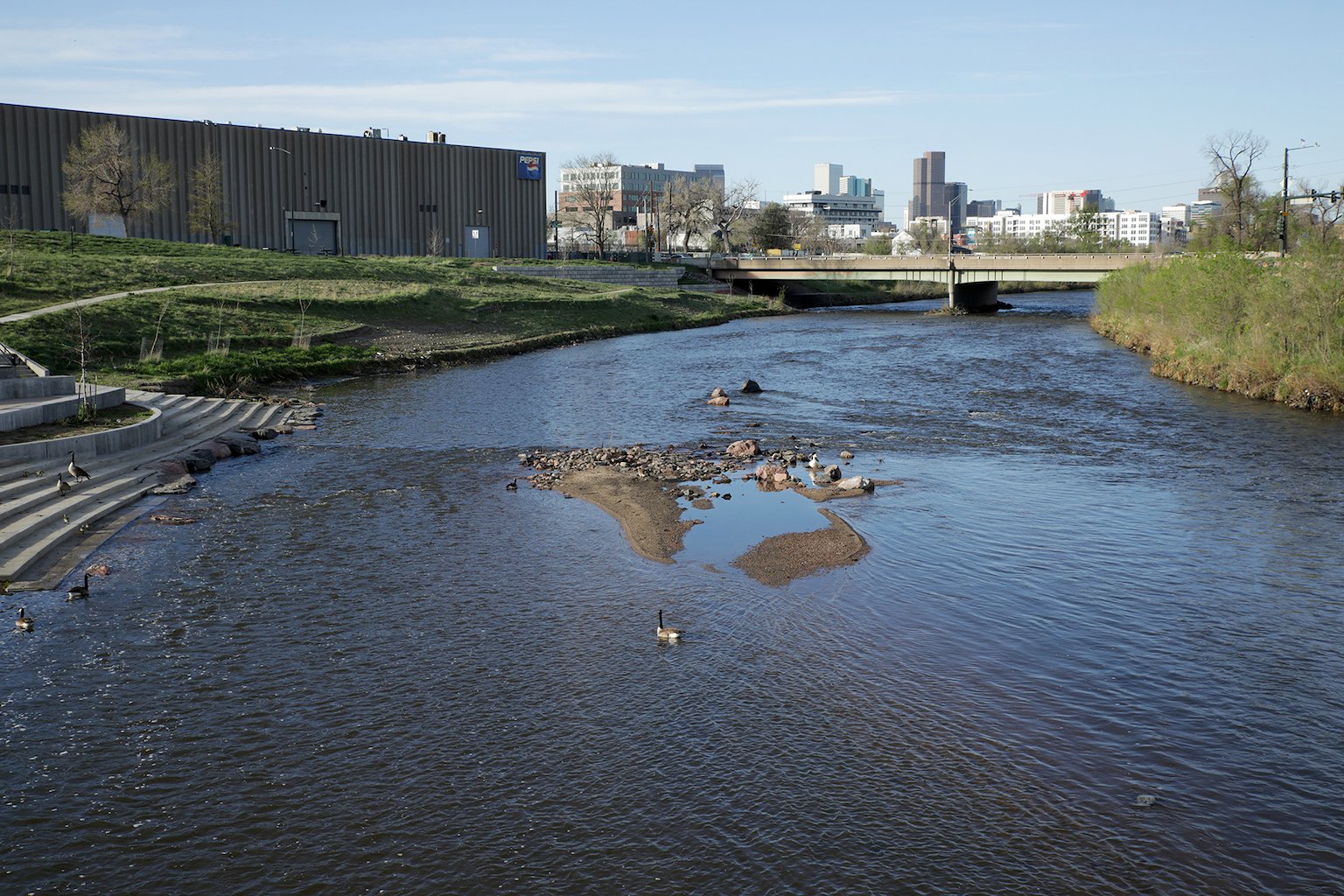
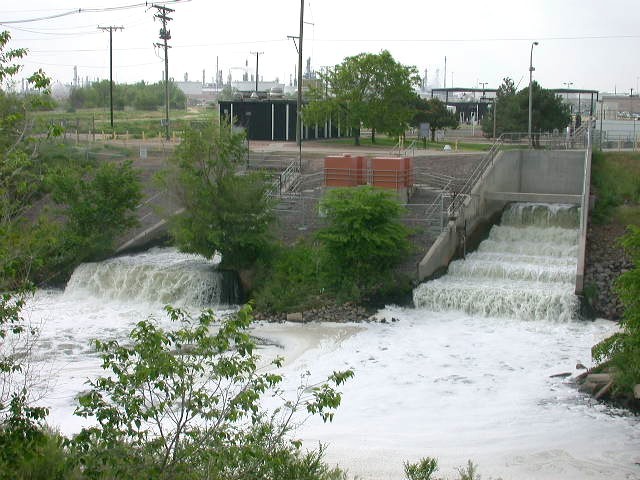
Metropolitan Wastewater Reclamation District Hite plant outfall via South Platte Coalition for Urban River Evaluation
Those facilities operating with expired permits include Metro Water Recovery in Denver, which processes wastewater for millions of metro area residents. It is Colorado’s largest wastewater treatment plant. The agency declined an interview request, but in a statement said that resolving the backlog would help everyone.
“Like many public agencies, Metro understands that the Colorado Department of Public Health and Environment is resource constrained. … Metro believes that it is in the best interest of all parties for permits to be renewed within a five-year cycle so that they are consistent with the current regulatory framework.”
The City of Aurora is also among those agencies operating with a expired permit, according to spokesman Greg Baker. Aurora’s permit expired in 2017. Baker declined to comment on the impact of the delay.
In response to the problem, state lawmakers agreed earlier this year to add $2.4 million temporarily to the division’s budget.
“What the General Assembly did was a really big step in providing us some stability,” Rowan said.
But funding lasts only until June 2025, at which point the agency must present a formal plan to lawmakers for keeping the permitting system current and adequately funded.
Rowan and others are hopeful the revamp of the system will dramatically improve the state’s ability to monitor and protect water quality. Anyone interested in participating and tracking the state’s process can do so by signing up here. The next meeting is Dec. 18.
Fresh Water News was launched in 2018 as an independent, nonpartisan news initiative of Water Education Colorado. Our editorial policy and donor list can be viewed at wateredco.org.
More by Jerd SmithJerd Smith is editor of Fresh Water News. She can be reached at 720-398-6474, via email at jerd@wateredco.org or @jerd_smith.
“New plot using the nClimGrid data, which is a better source than PRISM for long-term trends. Of course, the combined reservoir contents increase from last year, but the increase is less than 2011 and looks puny compared to the ‘hole’ in the reservoirs. The blue Loess lines subtly change. Last year those lines ended pointing downwards. This year they end flat-ish. 2023 temps were still above the 20th century average, although close. Another interesting aspect is that the 20C Mean and 21C Mean lines on the individual plots really don’t change much. Finally, the 2023 Natural Flows are almost exactly equal to 2019. (17.678 maf vs 17.672 maf). For all the hoopla about how this was record-setting year, the fact is that this year was significantly less than 2011 (20.159 maf) and no different than 2019” — Brad Udall
Colorado could spend millions more to replace water-hungry lawns, keep extra water in streams to protect fish and their habitats, and repair water-wasting farm and city delivery systems, according to a list of potential fixes from a state task force hoping to drought-proof the Colorado River.
The 17-member panel finished its preliminary list of recommendations [December 1, 2023]. It will finalize the list Thursday and hone it for a final report to lawmakers due December 15, 2023.
The task force’s job has been to identify new policies and tools to help save water and ensure neither Colorado water users nor the environment are adversely affected by any new federal Colorado River agreements designed to protect the drought-strapped river across the seven-state region where it flows.
Created by lawmakers last spring when they approved Senate Bill 23-295, the task force includes representatives of environmental and agricultural groups, urban and rural water users, and the Southern Ute and Ute Mountain Ute tribes, among others.
In all, 24 recommendations will be voted on this week, covering a broad range of options, including small storage projects, more flexibility in sharing water stored in reservoirs, and new tools to measure water so that conservation programs can operate effectively.
“It has been a very short timeline, but it has been concentrated time,” task force chair Kathy Chandler-Henry said. “People showed up every other week in far-flung places for five-hour meetings and we have worked well together. It has felt as if it was a common goal to do something positive for drought in Colorado and get something useful to the legislature.”
The recommendations could make their way to lawmakers next year, or could be addressed by water agencies if no legislation is required to make the changes.
Among the proposals is a request to dramatically boost funding for a new state program that gives cities, water districts and nonprofits cash to help residents and businesses tear out thirsty lawns and replace them with water-saving landscapes. Last year, lawmakers provided $2 million for the work, including $1.5 million in actual grants. But some task force members would like to see that number rise significantly, perhaps as high as $5 million, according to Randi Kim, utilities director for the City of Grand Junction. Nevada spends $24 million on such programs, according to the task force.
“The current levels are helpful,” Kim said. “We received a $25,000 grant and we can do about 50 single-family homes. More money would have a broader effect.”
Also on the list are several proposals that would bolster tools used to keep water in streams, including a state program that allows water to be loaned to a stream for a certain period of time. Under one task force recommendation, the loan program could be operated for longer periods of time.
In another proposal, Tri-State Generation and Transmission Association is asking that water rights it controls, which are used to help run its coal plants in the Yampa River Valley, be preserved once the plants are shut down, a process that is scheduled to occur between 2025 and 2028. The recommendation isn’t specific only to Tri-State, but could include other utilities with coal-fired power plants and creates a pilot program in the Yampa Valley.
Under Colorado law, the rights to water that is no longer used must be transferred or sold to another user or the water must be returned to the river. Traditionally, the idea has been to prevent water right holders from hoarding water they are not using. But the utility is asking that its water rights be protected and left in the river even if they are not being used through 2050, in case they are needed for future green power projects.
Such proposals have won the support of environmental groups, including Conservation Colorado, which maintain that finding ways to leave additional water in streams offers more protection for the environment, and the communities and recreation economies that rely on the waterways.
“The Western Slope in particular has been threatened by drought, by river closures due to low flows, and fish kills due to low flows. These measures could help Colorado become more resilient,” said Josh Kuhn, senior water campaign manager for Conservation Colorado.
There also are recommendations to provide more funding to improve leaky water systems for irrigators and cities. Though water funding has increased from some sources, such as tax revenue from sports betting in Colorado and from the federal government, task force members said funding is still difficult to come by and needs to be prioritized.
Steve Wolff, a task force member representing the Southwestern Water Conservation District in Durango, said it’s unclear how many of the recommendations will turn into on-the-ground drought fixes.
“I certainly think it’s been a good discussion,” Wolff said. “But a lot of these things involve more funding. We need to understand if by doing these things, are we taking money from elsewhere and is that fair? I think it would be helpful to start prioritizing, whether it should be for aging infrastructure, or more storage, or other things.”
More by Jerd SmithJerd Smith is editor of Fresh Water News. She can be reached at 720-398-6474, via email at jerd@wateredco.org or @jerd_smith.
Top: Ron Mettle, left, and Sandy Bertch replaced thirsty turf with low-water native species at the edge of their HOA’s property in Greeley but hope to now expand replacements into other parts of the commons area. Photo credit: Allen Best/Big Pivots
Click the link to read the article on the Big Pivots website (Allen Best):
Nov 22, 2023
This story, a collaboration of Big Pivots and Aspen Journalism, is part of a series that examines the intersection of water and urban landscapes in Colorado.
Between 50% and 60% of Coloradans live in housing governed by homeowners associations, commonly called HOAs. Squeezing water devoted to urban landscapes must necessarily involve these neighborhoods.
It’s already happening but, so far, mostly on the edges. A case in point: a small HOA in Greeley called Bittersweet Pointe.
“We keep saying that all the other HOAs are pointless,” Sandy Bertch, president of the board of directors, joked as he led visitors to a hillside on the edge of the HOA’s commons area.
There, three-fourths of an acre of Kentucky bluegrass had been replaced this year by a mixture of blue grama and buffalo grass. With a summer of watering bills now in hand, Bertch estimates that the HOA needs 60% less water to irrigate that section. More turf replacement will occur on the HOA’s 2.5 acres of common ground, Bertsch promised, now that the efficacy of the native grasses has been demonstrated.
The HOA is among the smallest you’re likely to find. It has 11 duplexes, or 22 units altogether, all of whose residents are retired. It is self-managed, unlike most HOAs, which employ property management firms.
Ron Mettler, a retired electrical engineer, was president of the board when he brought up the subject of turf conversion. He got immediate pushback. “Don’t you touch that green grass. That’s why I am here,” said a resident, who has since died.
Finally, last year, consensus was achieved. Costs were crucial. The retirees will save money in reduced water bills and won’t need to mow the difficult hillside as frequently.
Making the decision easier was the city of Greeley’s incentive: $1 a square foot for removal of Kentucky bluegrass in addition to rebates for water efficiency.
Clinching the deal was the shared perception of growing water scarcity. Homeowners agreed that they needed to do their part in lessening demands.
“These two are poster children,” Ruth Quade, Greeley’s water conservation administrator, said of Mettler and Bertsch. “The key to a successful project is having one or two champions, and that is what these two are.”
Every turf conversion project needs a champion, says Ruth Quade, water conservation administrator for Greeley. This lawn of this Presbyterian church has been partially replaced with pollinator-friendly vegetation. Photo/Allen Best
Replacing Kentucky bluegrass and other cool-weather grasses with native grasses and other less-thirsty species will not solve all of Colorado’s water problems. Nearly 90% of water in Colorado goes to agriculture. Only 7% of the state’s water gets used within towns and cities, and roughly half of that goes to outdoor use for lawns, gardens and other urban landscaping.
So, why does it matter? For one thing, it’s very expensive, and politically fraught, for cities to develop new water sources, usually from distant locations. Treating that water to potable standards is expensive, too. Water used indoors, which is largely contained in pipes, can be recycled. Water engineers calculate that 85% of water used for outdoor landscapes is lost because of evaporation and other causes.
All of this has water providers looking to focus on water devoted to discretionary outdoor use in road medians, business parks, homes and common areas. Experts say this transition to less water-demanding landscapes in urban areas will take many years.
Clearings around castles
How did thirsty bluegrass become the landscaping default, the cultural norm in Colorado and elsewhere?
“Nowhere in the world are lawns as prized as in America,” Michael Pollan wrote in an essay published in The New York Times Magazine in 1989. “In little more than a century, we’ve rolled a green mantle of grass across the continent, with scarcely a thought to the local conditions or expense.”
In his essay, “Why Mow? The Case Against Lawns,” Pollan shared that when he was a child growing up on New York’s Long Island, his father defied convention and refused to mow the turf at the family’s tract house. The turf grew tall enough to flower and seed, something impossible with mowed lawns. “The lawn rippled in the breeze like a flag,” wrote Pollan.
Neighbors saw something else. Some instructed their children not to play with the young Pollan. Later, when he got a lawn himself, Pollan began mulling the purpose of lawns. In this suburban paradise, he concluded, such individuality was unacceptable.
Pollan and other writers have traced our modern idea of a lawn to the early 17th century. In at least one telling, aristocrats wanted clearings around their castles for defensive purposes. They either had animals graze it or dispatched servants with scythes to keep the grasses low.
The idea of grassy lawns around homes was transferred to the United States in the mid-19th century. At first, it was limited to the American aristocracy. Thomas Jefferson put in a lawn at Monticello. So did other wealthy landowners. But for Americans of lesser means, yards were devoted to more functional pursuits, such as the growing of vegetables or the keeping of pigs and other animals. Photo credit: Allen Best/Big Pivots
“Turf War,” a 2008 essay by Elizabeth Kolbert published in The New Yorker, identifies Andrew Jackson Downing as a seminal influencer as the masses began to embrace lawns. In his 1841 book, “A Treatise on the Theory and Practice of Landscape Gardening,” Downing, based in New York, took aim at the dowdy rural landscapes of his familiarity. He equated personal self-improvement with gussied-up front yards.
“In the landscape garden, we appeal to that sense of the Beautiful and the Perfect, which is one of the highest attributes of our nature,” Downing wrote. Essential to that perfect garden, Downing wrote, was an expanse of “grass mown into a softness like velvet.”
Others spread the gospel. Frank J. Scott, in an 1870 book titled “The Art Of Beautifying Suburban Home Grounds of Small Extent,” wrote that “a smooth, closely shaven surface of grass is by far the most essential element of beauty on the grounds of a suburban house.” Frederick Law Olmsted deployed the broad lawns of Central Park and also planted grass in some of our first suburbs.
Technology also played a role. In 1830, a textile engineer in England adapted a carpet cutter to create the world’s first reel lawn mower. After an improved design in 1870, hand-pushed lawn mowers were produced by the tens of thousands annually. In 1893 came a patent for the first steam-powered mower. We were well on our way to the Saturday ritual many people know so well. “Over time,” wrote Kolbert, “the fact that anyone could keep up a lawn was successfully, though not altogether logically, translated into the notion that everyone ought to.”
Kolbert further identified the role of what farmers call inputs. To get potassium and other essential elements to spur growth, farmers over the ages had used everything from human dung to ground-up bones. In Europe, some robbed human graves for the skeletons. On the American Great Plains, bison were shot, their bones piled high and shipped to the East Coast.
Costs of waging war on weeds
In 1909 came an invention in Germany with profound but conflicting implications. Fritz Haber, a chemist who later won the Nobel Prize, figured out an economical way to synthesize ammonia from atmospheric nitrogen.
One result: explosives and gasses used to help run up the death toll in World War I to 20 million. Another: the ability to create fertilizer that, when applied to fields, enabled the world’s population to expand by several billion more than it probably would have otherwise.
This synthesized fertilizer could also be applied to turfgrass to counteract the seasonal cycle. By tricking the plants into putting out new growth, wrote Kolbert, fertilized grass could become ever-green. Other chemicals could quell the yellow blemishes of dandelions and every other shade of plant deemed a weed. That includes clover, which otherwise has value for fixing nitrogen in the soil. Such is the cost of having unadulterated grass.
By the time baby boomers were mostly toddlers, the idea of a perfect lawn had swept the country, even to the smallest of Colorado towns and cities. Along the shores of the Atlantic Ocean, Abraham Levitt, the namesake for the Long Island town, declared that “no single feature of a suburban residential community contributes as much to the charm and beauty of the individual home and locality as well-kept lawns.”
In “The Lawn: A History of an American Obsession,” Virginia Scott Jenkins pointed to the export of this idea to deserts of the Southwest and also to the Middle East. “Even the American community in Saudi Arabia has front lawns in the middle of the desert,” she wrote.
“Don’t crush me,” says this sign at a housing development in Timnath. Native grasses take several years to get established, but then require far less maintenance and water. Photo/Allen Best
Perfection was possible — but at a well-known cost. Rachel Carson, in her 1962 book, “Silent Spring,” described the risk to human health posed by indiscriminate pesticide use. This, wrote Kolbert, inverted the calculation about the meaning of a well-tended, unblemished lawn. “Instead of demonstrating that a homeowner cared about his neighbors, a trim and tidy stretch of turf showed that he didn’t,” Kolbert wrote.
What then? If shaved lawns of green no longer represent civic virtue, what should take their place? That’s the question now being addressed in Colorado and many other places.
Perfect lawns also bump up against a hard hydrologic reality in Colorado. It is the nation’s seventh-most-arid state, and the story of the 21st century has been of a warming, drying climate.
Cities with growing populations exist in this shifting axis between supply and demand. They’re looking to conserve water in the most-cost-effective ways. To succeed, some of this must necessarily involve homeowners associations.
Private governments
Homeowners associations have been described as private governments enforcing covenants among homeowners. Colorado as of 2022 had 10,510 HOAs with 2.4 million residents, according to the Community Associations Institute, a national organization. Most are managed by private companies. And, according to detractors, they tend to be stuck in their ways.
Perfection was possible — but at a well-known cost. Rachel Carson, in her 1962 book, “Silent Spring,” described the risk to human health posed by indiscriminate pesticide use. This, wrote Kolbert, inverted the calculation about the meaning of a well-tended, unblemished lawn. “Instead of demonstrating that a homeowner cared about his neighbors, a trim and tidy stretch of turf showed that he didn’t,” Kolbert wrote.
What then? If shaved lawns of green no longer represent civic virtue, what should take their place? That’s the question now being addressed in Colorado and many other places.
Perfect lawns also bump up against a hard hydrologic reality in Colorado. It is the nation’s seventh-most-arid state, and the story of the 21st century has been of a warming, drying climate.
Cities with growing populations exist in this shifting axis between supply and demand. They’re looking to conserve water in the most-cost-effective ways. To succeed, some of this must necessarily involve homeowners associations.
Private governments
Homeowners associations have been described as private governments enforcing covenants among homeowners. Colorado as of 2022 had 10,510 HOAs with 2.4 million residents, according to the Community Associations Institute, a national organization. Most are managed by private companies. And, according to detractors, they tend to be stuck in their ways.
Before George Teal became a Douglas County commissioner, he was a member of the Castle Rock City Council for 6½ years. Because the city was heavily reliant on a large but unrenewable underground aquifer, it wanted to encourage low-water landscapes — what it calls ColoradoScapes.
Homeowners associations resisted, said Teal. He cited “just numerous examples” given to the City Council members each year of homeowners being told by their HOAs that they could not rip out their turf. That included his own neighborhood and HOA, Crystal Valley Ranch, one that he describes as consisting of mostly working middle-class people. A change would have required a 65% vote. He similarly cites another HOA, Woodland, which consists of more-affluent residents.
“It became kind of a rallying cry on the council,” Teal said in a recent interview. “What could we do to get HOAs to accept the more water-smart landscape methodologies that were being advocated by our water utility?”
The answer was nothing. Local governments did not have the power to curb HOA powers. It had to be done at the state level.
Colorado legislators have nudged HOAs toward less water-consumptive landscapes several times in the last few years. Photo/Allen Best
In 2019, Colorado legislators passed the first of four laws that do so. House Bill 19-1050stipulates that it is contrary to public policy for common-interest communities, such as HOAs, to “prohibit or limit installation or use of drought-tolerant vegetative landscapes, or require cultivated vegetation to consist wholly or partially of turf grass.”
The law did allow HOAs to adopt aesthetic guidelines.
In 2021 came another law, HB21-1229. It required HOAs to allow artificial turf in backyards and also solar panels, once again subject to “reasonable aesthetic guidelines.”
These steps were applauded by Jody Beck, an associate professor in the College of Architecture and Planning at the University of Colorado Denver. “Extensive green lawns are almost never an appropriate expression of responsible citizenship in the arid West, if by responsible citizenship we mean the conscientious use of limited shared resources,” he said.
In 2022, legislators did not specifically target HOAs and water. Instead, HB 22-1151 instructed the state’s chief water agency, the Colorado Water Conservation Board, to develop a program for the voluntary replacement of turf in cooperation with local governments and appropriated $2 million for that work. After administrative expenses, $1.5 million has been awarded to more than two dozen local jurisdictions in Colorado.
Later that same year, legislators were advised that another law was needed to close a loophole in the 2019 law. At least some HOAs had used the clause that gave them aesthetic discretion in reviewing plans to effectively stall or even block turf-replacement projects proposed by owners of single-family homes.
Proponents have cited abundant anecdotal evidence. The most-direct evidence came from a survey conducted in 2021 by Western Resource Advocates in cooperation with the city of Greeley. The survey was intended to reveal the primary barriers keeping residents from replacing some or all of their grass with water-wise landscaping. Cost? Expertise? Aesthetics?
Nothing was asked by the survey about HOAs, but when allowed the opportunity to describe the challenges, 41 of the 720 who completed the survey cited their HOAs.
A step in the right direction
This year’s bill had bipartisan support. “In practice, we see barriers to people who want to replant their front yards with more water-conserving plants,” said state Sen. Sonya Jaquez Lewis, a Democrat from Longmont, when introducing the bill, HB23-178, at a legislative committee hearing.
Another bill sponsor, Sen. Perry Will, a Republican from New Castle, who represents seven Western Slope counties, cited demands on the Colorado River. “This will not save all of Colorado’s water, but it is a step in the right direction.”
The bill requires that HOAs must select at least three preapproved water-saving landscaping templates that residents can follow. Residents and HOAs can choose to go for other designs, but at least three options must be preapproved. There’s no real excuse for saying no.
Part III. How bluegrass lawns became the default for urban landscapes Some Colorado HOAs have started moving the needle, while state legislators prod others into water-wise landscapes; plus, a history of how we arrived at a certain idea of landscape perfection.
Part IV coming. The outliers of the native grass movement. Some Coloradans have taken it upon themselves to remove their thirsty turf, and a non-profit is helping them do it.
Part V coming. Do we really need bluegrass in road medians? And Aurora, Castle Rock and Denver push for sharper limits on what can be installed in the first place.
The state’s most significant organization representing HOAs didn’t bother to show up to testify one way or another. The bill passed with minor opposition grounded in questions of local control.
Teal, who testified in both legislative committee hearings, said he would have preferred local control. But, given the sweeping powers of HOAs, he believed the state had to step in order to aid municipalities. “Water conservation and water reuse have become primary goals of the town of Castle Rock and, I think, soon will become one of our primary policy goals here in (Douglas) County as well,” he said.
Robert Greer, a Denver attorney, helped draft the bill that he says closed the loophole in the 2019 law that was big enough to “drive a solar system through.”
He was driven, he said, most powerfully by a desire to create urban landscapes that accommodate pollinators of the natural ecosystem. His sentiment is part of a broad and powerful undercurrent in Colorado’s push to replace Kentucky bluegrass, perennial ryegrass and other imported cool-season varieties. It’s not all about saving water.
Also testifying was Chris Marion, who began work in 2017 as a water conservation specialist. After getting a master’s degree in sustainability planning from the University of Colorado Boulder, he founded a company called 3.0 Management. It provides management for about 40 HOAs in metropolitan Denver.
Marion sees an opportunity for HOAs and other places with large expanses of turf to rethink their landscapes. Irrigation systems installed 40 to 50 years ago need replacement or updating, Some HOAs are poorly funded for replacement of leaking pipes and so forth.
“It’s not only the cost of water, but the associated maintenance costs of older grass,” he said.
Something else is going on, a shifting cultural norm. The impetus for expanses of Kentucky bluegrass that we see today was “simple, cost-effective landscaping, which was primarily bluegrass.” Now, said Marion, younger generations in particular have become at least aware of “the concept of personal ecological footprints.”
That shift in attitudes is now being integrated into governance of HOAs.
A sidewalk divides Kentucky bluegrass on the left from the native grasses at the Oak Ridge commons area in Fort Collins. Photo/Allen Best
Lessons from Fort Collins
In Fort Collins, Colorado’s fourth-largest city, with a population of 170,000, residents of the Oak Ridge VII homeowners association were informed in 2018 that they would have to pay $18,000 more annually for water.
When the tap fee for the commons area owned by the 52 members of Oak Ridge VII and two other HOAs had been assessed several decades ago, it assumed a maximum volume of water. Water use for that commons area had been rising, exceeding the maximum. Homeowners had to figure out how to use less water or pay the greater fee.
The 10.1-acre commons area consists of expansive lawns interspersed with trees that turn bright with warm colors during the fall. It also has a soccer field and a 1.4-acre detention area designed to hold stormwater. Water can get 1 foot deep when it rains, as it did prodigiously this year. In previous drier years, though, Kentucky bluegrass required irrigation to maintain its well-coiffed look.
In 2019, HOA directors approved conversion of the bluegrass to buffalo and blue grama grasses. A survey of homeowners found that 80% supported the shift. Later, another problem area — a small south-facing hill that was difficult to irrigate and mow — was also replaced. Water use for the park has declined to 3.1 million gallons per year — the original projected need when the subdivision was created 30 years ago — from 4 million to 5 million gallons per year.
The full cost of the landscaping work of $86,000 was defrayed by $57,000 in grants from Northern Water, the bulk water provider, and the city of Fort Collins. “We never could have done it without the grants,” said Susan Gilbert, a homeowner who championed the shift.
“People have loved it,” said Gilbert during a walk through the park. A pollinator park along the concrete pathway, buzzing with bumblebees, has been particularly popular.
Weeds can be a problem in conversions, and this was no exception. The HOA had its landscaper apply herbicides in some spots.
“Everybody gets a little jittery when we do spraying,” said Milan Hanson, president of the HOA’s board of directors.
“During the first year or two, I think every native grass conversion looks pretty bad,” he added.
Tony Koski, a professor of turfgrass sciences at Colorado State University and described by many as the guru of water-wise landscaping in Colorado, condones the use of herbicides as essential in landscape conversions, but he counsels care and transparency.
Native turf grasses green up more slowly in spring and turn brown more rapidly in autumn, as was evident at this commons area of a homeowners association in Fort Collins in mid-October. Kentucky bluegrass and other imported grasses have a longer season of green. Photo/Allen Best
The need for herbicides diminishes as the native grasses become dominant over the course of about three years. But homeowners planting native grasses should expect to see the new turf brown more quickly in the fall and green up more slowly in the spring.
Still, Oakridge residents have seen enough to think about converting other places to native grasses.
What caused the increased water use? It’s not uncommon, said Frank Kinder, water-efficiency manager for Northern Water. The agency distributes Colorado River water to providers along the northern Front Range.
“People are watering earlier and watering more during a year to keep up the appearance,” said Kinder. “The landscape may take up to 120% of the previous amount in order to keep looking like what people want it to look like.”
HOAs undertaking conversions can have different motivations: costs, concerns about climate change, a desire for landscape diversity or easier maintenance. “Bluegrass takes a lot of work to meet certain expectations,” said Kinder.
Key lessons from Fort Collins and Greeley HOAs are that turf replacements take time and are most easily accomplished with partnerships. Key in both cases, too, were grassroots champions.
Very likely, you will also begin to see more and more cool-weather turf converted to low-water landscapes in Colorado’s HOAs. That’s exactly what some of those who helped draft some of Colorado’s recent laws intended. Call it a grassroots movement.
Next: Colorado allows sales of only low-flush toilets to better conserve limited water. What role should the state have in reducing water use allocated to urban landscapes? A task force has been studying the state’s options and opportunities.
Allen Best, a longtime Colorado journalist, publishes Big Pivots, which tracks the energy and water transitions in Colorado and beyond. Aspen Journalism is a nonprofit, investigative news organization covering water, environment and community. This story is part of a five-part series produced in a collaboration between Big Pivots and Aspen Journalism. Find more at https://bigpivots.com and at https://aspenjournalism.org
The chair of a special task force set up in Colorado to help protect in-state interests on the Colorado River told lawmakers Tuesday that it would deliver its final report to them Dec. 15.
Lawmakers created the Colorado River Drought Task Force when they approved Senate Bill 23-295 last spring. It includes representatives of environmental and agricultural groups, urban and rural water users, and the Southern Ute and Ute Mountain Ute tribes, among others. It is charged with developing policy recommendations and new tools to help save water, and ensuring neither water users nor the environment are adversely affected by any new Colorado River programs and agreements.
The 17-member task force has drawn fire from some, who worry that its public discussions of in-state Colorado River water issues could weaken Colorado’s position as it negotiates with the other states in the basin on how to rescue the drought-strapped river system.
“Last year we put a lot of money into our Colorado River negotiating team,” said Sen. Jeff Bridges, D-Arapahoe County. “And what I have heard from them is that this work is not necessarily helpful. I hope you are taking this into account.”
Bridges’ comments came at a meeting of the Colorado Legislature’s Water Resources and Agriculture Review Committee on Oct. 31 in Denver. Bridges is a member of the committee.
Task force chair Kathy Chandler-Henry said the group was aware of those concerns but did not share them. “As a task force, we have talked about how we can best support our negotiators … Our plan is to do no harm, protect Colorado, and tell the Lower Basin to clean up its act,” she said. Chandler-Henry is also an Eagle County Commissioner and president of the board for the Colorado River District, which protects local water interests within the 15 counties on Colorado’s Western Slope within its boundaries.
The broader Colorado River system includes seven states, with Colorado, New Mexico, Utah and Wyoming comprising the Upper Basin, and Arizona, California and Nevada making up the Lower Basin. Chandler-Henry was referring to years of overuse in the Lower Basin, which most experts believe contributed to the current crisis on the river.
Colorado River headwaters tributary in Rocky Mountain National Park photo via Greg Hobbs.
The Colorado River system has its headwaters within Colorado’s Rocky Mountain National Park. As it flows west, Colorado’s massive mountain snowpack generates roughly two-thirds of the water that eventually serves cities from Denver to Los Angeles and millions of acres of productive farmland from Colorado to California.
But a 22-plus-year drought, widely believed to be the worst in more than 1,200 years, as well as a sharp decline in flows due to climate change nearly drained the river’s two major reservoirs, lakes Powell and Mead, last year. The crisis prompted the federal government to order the states to dramatically cut back their water use.
This year, negotiations among the states and the federal government have begun on how to stabilize the river. Suggestions include reducing water use in the Lower Basin, finding new ways to grow food using less water, and improving water delivery systems so that less water is lost to leakage and evaporation.
Interest remains high within Colorado on how to protect water users’ interests in the river here at home as well as how to protect its ecology as climate change continues to sap its flows.
Sen. Dylan Roberts, D-Avon, current chair of the Water Resources and Agriculture Review Committee, who was also a co-sponsor of the bipartisan bill that created the drought task force, said he believed the group’s report would prove useful and that it would be important to be prepared for what may lie ahead on the river.
“We are having conversations now so that tools are in place when we need them,” Roberts said.
Task force staffer Kelsea Macllroy said the group will have its draft report ready for public review Dec. 1 through Dec. 7 and that public comments could be submitted during that time via its website. Once the final report is completed, lawmakers will evaluate the recommendations and determine how to proceed prior to the start of the 2024 General Assembly Jan. 9.
Fresh Water News is an independent, nonpartisan news initiative of Water Education Colorado. WEco is funded by multiple donors. Our editorial policy and donor list can be viewed at wateredco.org.
Click the link to read the guest column on the Vail Daily website (James Dilzell). Here’s an excerpt:
What are we to do in those years when we’re up against poor snowpack, warmer summers and a lack of a monsoon season? Our fisheries will still need water. Our recreation-based economy relies on the river for both its whitewater and rafting season and its role in snowmaking at resorts. Ranchers will still need to irrigate. Locals, visitors and wildlife across Colorado will need to access clean drinking water. How can we better protect our community’s values when it comes to our rivers? Enter the Colorado River Drought Task Force. Senate Bill 23-295, which passed this spring, created a task force of diverse stakeholders — including representatives of agriculture, recreation, conservation, natural resources, the environment, municipal water providers, state and local agencies, and Colorado’s Indigenous Peoples. The group of 17 stakeholders is tasked with providing recommendations for programs to assist Colorado in addressing drought in the Colorado River Basin and the state’s interstate commitments related to the Colorado River and its tributaries…
Ultimately, the goal is to come up with creative and proactive policies and programs that can benefit river users, the environment, and all Coloradans. Our state has been hard at work to conserve water and find reasonable solutions, but the policies that this group creates will strengthen our abilities and options when it comes to managing water. This group is meeting biweekly on Thursdays, with public comment on the agenda at every meeting. Rivers are at the mercy of Colorado River Water users’ willingness to work together and collaborate to find solutions that benefit the environment and all of us now, and well into the future. To learn more about the Colorado River Drought Task, its members, and meeting topics, visit CRDroughtTaskForce.com. If you’d like to get more involved, reach out to me at ERWC.org.
Over the course of two decades, David Cooper, a senior research scientist emeritus of wetland and riparian ecology at Colorado State University, returned to Rocky Mountain National Park’s Kawuneeche Valley to map a visual timeline of the ecological collapse occurring before his eyes.
Bypass structure Grand River Ditch July 2016. Photo credit: Greg Hobbs
Cooper’s research team found that the 86-year-old Grand Ditch—a 15-mile water diversion that siphons 20,000 acre-feet of water per year from the Colorado River and transports it to the arid Eastern Plains—had dried out the valley floor, making it difficult for riparian trees and shrubs to grow. Swelling elk and moose populations were overgrazing the remaining vegetation, leaving an already dwindling beaver population with few building materials for their dams. The area’s beaver population was critical to keeping the ecosystem healthy. Without beavers’ careful stewardship, their ponds drained, decreasing the amount of surface water in the area by 95% and dramatically altering the hydrology of the valley, according to Cooper.
It’s a reality that plays out across Colorado and the West. Riparian areas—the lands along the edges of rivers and streams—and wetlands, have been degrading for decades due to mining pollution; overgrazing; flow alterations from dams, diversions and roads; and historical and present-day farming and timber management practices. Approximately 61% of smaller streams and 97% of major rivers in Colorado have experienced floodplain alterations, rendering them partially or wholly nonfunctional, according to a 2017 analysis for the Center for American Progress.
David Cooper talks with members of the Kawuneeche Valley Ecosystem Restoration Collaborative during a tour of the valley in July 2022. Photo by Eric Brown, courtesy of Northern Water
Cooper’s decades-long research helped inform the creation of the Kawuneeche Valley Ecosystem Restoration Collaborative, which is working to restore four riparian areas within the valley by protecting vegetation and mimicking beaver activity in hopes of luring nature’s master river engineers back to their historical homes. The project, which is primarily using low-tech, process-based restoration methods, is one of dozens of such projects occurring across the state—bolstered by a recent influx of state and federal funding.
Process-based restoration, of which low-tech, process-based restoration is a subset, targets the root causes of ecosystem change with a goal of restoring a river’s natural processes.
Research shows that connected floodplains and healthy riparian areas provide valuable ecosystem services such as capturing sediment as it heads downstream; filtering out pollutants; storing more water on the landscape to increase vegetative growth and biodiversity; and moderating soil moisture, streamflows and temperatures throughout the year. All of this combines to make the watershed more resilient to floods, wildfire and drought.
But research surrounding low-tech, process-based restoration is fairly limited, especially as it relates to how projects might impact downstream water availability and the timing of flows.
Because of this, in part, the process for getting restoration projects approved in Colorado has been somewhat opaque and challenging for practitioners to navigate, prompting state lawmakers to draft a bill last session that sought to clarify the process in order to scale up efforts across the state. The final bill was amended by those who were concerned with how the projects might impact priority water rights, so work continues to determine whether more restoration projects can be better facilitated with policy that makes them easier to permit while still protecting water rights.
Scientists and restoration experts are pushing forward with projects, given the scope of riparian degradation and the strain climate change and population growth continue to have on water resources and the ecosystems that support them.
Beaver mimicry as restoration
Jackie Corday, a land and water conservation attorney based in Montrose, has been an enthusiastic proponent of low-tech, process-based restoration since 2018, when she first saw the impact that these low-tech projects could have. “I could see the difference. It just made sense,” Corday says.
While working at Colorado Parks and Wildlife as a water resource manager, she began to research the benefits—and potential legal barriers—for scaling up those types of restoration projects.
“You can do it the fast way and come in with a big excavator and try to reset the elevation to what it would have been,” Corday says. “But that’s very expensive. It’s like $600,000 to $1 million a mile, and there are thousands of miles. It’s not even a possible approach [on its own].” By comparison, low-tech, process-based approaches can be cheaper and faster, at $50,000 to $100,000 per mile.
“Also, the science was showing that [a high-tech approach] wasn’t necessarily always bringing back the [ecosystem] that you were hoping for,” she adds.
“What these researchers were showing was that, well, there’s actually a better way to do this. You mimic beaver.”
A beaver dam on the Gunnison River. Photo: Brent Gardner-Smith/Aspen Journalism
Beaver dams have been shown to retain sediment and nutrients, as well as heavy metals, which can improve water quality.
Construction of Beaver Dam analogue Photo courtesy of the Rio Grande Headwaters Restoration Project.
An example of a low-tech, process-based method would be to install posts vertically into a creek bed to catch wood and debris floating downstream, mimicking natural log jams. This can jumpstart a beaver’s home. In other cases, structures that mimic a beaver dam, called a beaver dam analog, are installed in the stream to slow the flow of water to allow it to pool and rehydrate the soil.
While low-tech, process-based restoration is seemingly growing in popularity, it’s not always the right tool. Sometimes, higher-tech engineering is needed, such as after major flooding events, below dams that alter flows, or when a river’s natural processes have been strained to the breaking point, rendering them unable to self heal, according to a design manual created by Joe Wheaton, an assistant professor of fluvial geomorphology at Utah State University.
Low-tech, process-based restoration also may not be appropriate near housing developments or busy roads, where there is the potential for flooding and infrastructure damage, according to Corday.
“So we have to look farther up the watershed in the public lands and the private lands, the big ranches where there is space for the river to be natural again and to reconnect with its floodplain,” Corday says.
Legislation to pave the way for minor stream restoration projects
In 2019, Corday helped create Colorado’s Healthy Headwaters group, which included conservationists, academics, NGOs, state and federal agencies, and water stakeholders, to come up with policies and strategies to scale up riparian restoration projects throughout the state. The group influenced legislation that was introduced by state lawmakers in April 2023 as SB 23-270. But amendments reduced the bill to include only “minor” restoration projects—and removed language related to low-tech, process-based restoration projects.
“Those [low-tech, process-based] projects were the least understood and raised the most concerns for water users,” says Kelly Romero-Heaney, the state’s assistant director for water policy with the Colorado Department of Natural Resources. “And so that’s why we ended up having to amend coverage for those projects.”
The bill, which was signed into law on June 5, clarifies that minor stream alterations such as bank stabilization or restructuring a channel after it’s been damaged by wildfire or flood are presumed to not impact water rights users.
“The key [in the final bill] is there can only be an incidental amount of flooding or pooling with those structures and they can’t exceed the ordinary high water mark, so they can’t push water outside of the natural channel,” says Romero-Heaney.
For minor restoration projects defined in the bill, a person or group does not need to go to water court, obtain water rights or get a plan of augmentation, according to Romero-Heaney. Projects established before August 2023 are also “grandfathered in” meaning they are presumed to not impact water rights and can move forward.
Those who sought to amend or defeat the bill included various agricultural groups, cities, water districts, and some environmental groups.
“Their concerns are that their water rights may be injured by a stream restoration project that changes the timing in flow or increases evapotranspiration associated with the growth of trees and shrubs along the river corridor,” says Romero-Heaney, who also sits on Gov. Jared Polis’ policy team as a special advisor on water policy. “What we hear a lot is it might be ‘death by 1,000 cuts.’”
Tyler Garrett, the director of government relations for Rocky Mountain Farmers Union—a group that represents 17,000 farmers and ranchers across Colorado, New Mexico and Wyoming—told state lawmakers that his main concerns with the original bill were related to what recourse a person could seek if their water rights were impacted by a restoration project, and the amount of time they had to file a complaint or lawsuit.
“The geomorphic changes may not even be completed during this two-year window and injury may not be realized,” he said during the bill committee hearing this spring. “We also need to ensure the water right holders have time to collect the proper data and build a proper suit when they are injured.”
Romero-Heaney says it will take time for the Department of Natural Resources to interpret the new law in order to provide guidance to existing project managers and other entities interested in restoration
In the meantime, Corday says the Colorado Healthy Headwaters group is continuing to have conversations on how to streamline the process for restoration projects in the hopes of potentially introducing another bill next legislative session to expand the existing law’s scope.
Romero-Heaney is excited to participate and help coordinate field trips for members of the water community to see process-based projects in action.
She hopes the conversations help bridge the divide between the ecological community and the water attorneys who work on protecting water rights portfolios.
Colorado River Kawuneeche Valley May 19, 2023.
Progress in the Kawuneeche Valley
Back at Rocky Mountain National Park, the Kawuneeche Valley Ecosystem Restoration Collaborative—which includes the National Park Service, Northern Water, the U.S. Forest Service, the Colorado River District, The Nature Conservancy, Grand County, and the Town of Grand Lake—is installing beaver-like structures within Beaver Creek to slow streamflows, catch sediment, and promote vegetative growth farther from the banks.
Members of the Kawuneeche Valley Ecosystem Restoration Collaborative walk along an abandoned irrigation ditch during a tour of the valley in July 2022. Photo by Eric Brown, courtesy of Northern Water
“We’re really looking to improve the habitat, kind of the Field of Dreams approach, where if we improve the habitat in the area, then hopefully beavers will come back on their own,” says Kimberly Mihelich, a water protection specialist with Northern Water, a water conservancy district that serves eight counties in Northeastern Colorado.
The group—funded by the Rocky Mountain Conservancy, The Nature Conservancy, Northern Water, and the Colorado Water Conservation Board—isn’t looking to re-introduce beavers into the ecosystem since the environment wouldn’t be able to support them given the lack of vegetation available for them to build dams. But beavers have started to show interest.
In summer 2021, the group stumbled upon something they hadn’t seen in nearly two decades—an active beaver dam. The beaver home was nestled within a 35-acre, fenced-in restoration area in the valley that had been installed a decade ago to keep moose and elk from overbrowsing the willow trees. The fences have gaps in the bottom so small animals such as beavers can slip through.
“We were like, ‘Oh my gosh, these fences work!’” Mihelich says. “There was so, so much excitement.”
“[The beaver dam] did get washed away in some of the spring runoff,” she quickly adds. “But it was really exciting to show that if the habitat is there, beavers in the area might make it home.” This isn’t unusual: Beaver dams are often damaged during large floods, but the beaver are able to rebuild if the environment can support them.
This summer, the team installed more fence enclosures to keep moose and elk from overgrazing the restoration areas and continued using herbicides to kill off invasive plants.
Mihelich says Northern Water is involved in restoring the riparian areas because it’s a way to improve drinking water quality. The Colorado River, which winds through the Kawuneeche Valley, is part of a storage system that includes Grand Lake, Shadow Mountain Reservoir and Granby Reservoir on the Western Slope. The system has struggled with poor water quality due to increases in fine sediment loading, debris and nutrients, all of which impair water quality and can clog up water infrastructure. The system has also been impacted by recent wildfires, which are increasing in frequency and intensity due to climate change.
But restoring the riparian zones and changing the hydrology of the valley will take time, says Koren Nydick, the resource stewardship manager for Rocky Mountain National Park, especially since the damage has spanned decades.
And efforts to replace natural processes aren’t always as effective as the real thing, she adds. “We aren’t beavers. We can’t do it all,” she says. “The hope is that they come in and do it better than we could ever do it.”
Fresh Water News is an independent, nonpartisan news initiative of Water Education Colorado. WEco is funded by multiple donors. Our editorial policy and donor list can be viewed at wateredco.org.
More by Moe ClarkMoe K. Clark is an independent journalist based in Denver. She covers topics related to the criminal justice system, environmental issues and housing/homelessness.
American beaver, he was happily sitting back and munching on something. and munching, and munching. By Steve from washington, dc, usa – American Beaver, CC BY-SA 2.0, https://commons.wikimedia.org/w/index.php?curid=3963858
Colorado’s legislature recently approved a new Colorado River Drought Task Force that will help provide guidelines and recommendations to manage the state’s water supply from the river as dry conditions continue. The aim of the task force is to give recommendations for state legislation and to develop additional tools to help address drought in the Colorado River basin.
“Since the early 2000s the Colorado River basin has been experiencing an unprecedented drought,” Colorado Representative Julie McCluskie, one of the bill’s sponsors, told the Daily Planet…
The 17-member task force is composed of representatives from local governments, agricultural water users, environmental groups, water management boards and the Southern Ute and Ute Mountain Ute tribes. There will also be a sub-task force to focus on tribal water rights and to provide additional recommendations for state legislation…Members met for the first time at the start of August. The task force will issue recommendations in mid-December…
Seven states are part of the Colorado River compact. Colorado, New Mexico, Utah and Wyoming represent the Upper Basin, and Arizona, Nevada and California comprised the Lower Basin. The majority of the Colorado River’s water originates in the Upper Basin, but the Lower Basin is currently using more than the river can supply. Along the river, agriculture takes up 80% of the Colorado River’s water. The Colorado River Drought Task Force will focus on the Upper Basin, as it only will be providing recommendations for the state of Colorado…
All of the task force’s meetings are open to the public. People can attend either in person or online. McCluskie encouraged people to be involved.
“There are ample opportunities for public participation. All of us should have interest in the Colorado River,” [Kathy] Chandler-Henry said.
Beavers have constructed a network of dams and lodges on this Woody Creek property. Pitkin County is betting big on beavers, funding projects that may eventually reintroduce the animals to suitable habitat on public lands. CREDIT: HEATHER SACKETT/ASPEN JOURNALISM
During the summer of 2020, Woody Creek landowner Jennifer Craig noticed that beavers had taken up residence on her property, building a dam across the channel and creating a pool.
The network of dams, pools and lodges has continued to grow over the past few seasons, creating a lush, muddy wetland thick with willows. And despite what Craig characterized as complaints about flooded land from downstream neighbors and calls for her to clear out the beaver handiwork she says the beavers are beneficial because they keep water on the landscape.
“As an upstream landowner, the best thing I can do is nothing,” she said. “Flooding from a beaver dam is natural, but people don’t like the chaos. Beavers provide habitat for so many other creatures, and they are keeping water in that whole corridor down there.”
Pitkin County is hoping that other landowners see things the way Craig does as it makes beavers a top priority, funding measures that may eventually restore North America’s largest rodent to areas it once lived in the Roaring Fork watershed.
Prized among early trappers for their fur that made fashionable hats, beavers were also seen as a nuisance to farmers and ranchers — perspectives used to justify killing them. But there has been a growing recognition over the past few years that beavers play a crucial role in the health of ecosystems. By building dams that pool water, the engineers of the forest can transform channelized streams into sprawling, soggy floodplains that recharge groundwater, create habitat for other species, improve water quality, and create areas resistant to wildfires and climate change.
The growing popularity of the animal caught the attention of Healthy Rivers board members, a group whose mission includes improving water quality and quantity. They are hoping to teach landowners how to coexist peacefully with beavers, correct beaver misconceptions and maybe even reintroduce them onto carefully chosen areas of the watershed. The Pitkin County Healthy Rivers board has spent just over $70,000 to date, with another $50,000 planned toward bringing back beavers, according to Healthy Rivers staff.
“They are so important for our environment and, in particular, our water environments,” said Wendy Huber, chair of the Healthy Rivers board. “How do we shift people’s perception of them from being destructive rodents to being our partners in protecting the environment?”
Woody Creek landowner Jennifer Craig points out the network of beaver dams, ponds and lodges on her property. She first noticed the animals had moved in during the summer of 2020 and the beaver dam complex has been growing each season. CREDIT: HEATHER SACKETT/ASPEN JOURNALISM
Forest Service inventory
Healthy Rivers has, so far, come up with two ways to do that.
One is a public-awareness campaign called Bring Back Beavers that features cute yet edgy beaver characters and catchphrases (“It’s About Dam Time,” for example), with plans to put the slogans on T-shirts and stickers. A new website presents beaver facts (their teeth never stop growing) and busts beaver myths (they don’t eat fish).
The other part of the strategy is to fund a program with the U.S. Forest Service for a beaver survey that aims to document more than 200 randomly selected riparian sites on public land in the headwaters over two years to find where beavers are thriving and identify locations where they could be successfully relocated in the future. Healthy Rivers has spent $50,000 on the project, which paid for two Forest Service technicians to carry out the work and has earmarked another $50,000 for next season.
Clay Ramey, a fisheries biologist with White River National Forest, is leading the effort, along with two technicians in the field, Samantha Alford and Stephanie Lewis, who are spending the summer chasing beavers. Ramey said that for a watershed-scale project such as this, it is important to analyze data collected from around the entire region, not just in places where beavers live.
“Beavers come and go, so measuring known sites is not helpful,” he said. “We are in the habitat business, so we want to know the big-picture questions like where do we have beavers, where do we not have beavers and what is the habitat like at the places where we do have beavers and what is the habitat like at the places where we do not have beavers.”
To that end, Alford and Lewis have been heading into sometimes-remote sites on streams throughout the watershed — North Thompson Creek, Fryingpan River, Conundrum Creek, Hunter Creek, Snowmass Creek and others — to measure the width of waterways, the slope of streams, the types of vegetation present and any signs of beaver activity, past or present, such as dams, lodges or chewed sticks.
Beavers generally like slow-moving streams that are not too steep and have plenty of nearby willows, aspens, cottonwoods and alders, which they can use for food and building materials.
“We know slope is relevant to where a beaver can prosper,” Ramey said. “Aspen, cottonwood, alder — a site that has none of those is not a place a beaver is going to do well because it doesn’t have any food.”
Ramey hopes the information collected by the inventory project will be incorporated into revisions for the updated forest-management plan, which is in progress.
Samantha Alford, right, and Stephanie Lewis, technicians with the U.S. Forest Service, measure the slope and width of Conundrum Creek. Pitkin County has spent $50,000 on this summer’s beaver habitat survey and has earmarked another $50,000 for next season.
CREDIT: HEATHER SACKETT/ASPEN JOURNALISM
Beaver relocation
Tom Cardamone, executive director of the Watershed Biodiversity Initiative and former longtime director of the Aspen Center for Environmental Studies, is one of several beaver boosters who have been quietly meeting over the past few months, plotting how to communicate with the public about beaver restoration.
With permission from Colorado Parks & Wildlife, Cardamone has relocated nuisance beavers on Nicholson Creek, which is a tributary of Capitol Creek, but he realized that a more formal protocol will be needed if rehoming them becomes more frequent. An eventual outcome of Pitkin County’s campaign may be relocating troublemaking beavers on private land to sites identified by the Forest Service survey as prime habitat on public land.
“You need to catch a whole group and move them to get them to stick,” Cardamone said. “It takes a few days to catch them and you have to hold them someplace that’s protected and secure, so no predators. You have to clean them and make sure they are healthy and then move them all as a group. That’s a bit of a lift.”
But there may be a looming legal question about new ponds created by relocated beavers. This year, Colorado lawmakers rejected a version of a bill that would have made it easier for environmental groups to do stream-restoration projects that mimic beaver activities because of potential unknown impacts to downstream water rights holders. Engineers from the Division of Water Resources last year told groups proposing projects on Eagle County Open Space that would have included beaver dam analogues that they must get an augmentation plan — which are costly, require the work of attorneys and engineers, and involve a lengthy water court process — to replace the water lost to evaporation by the creation of small ponds.
Could the same thing happen if the ponds were created by actual beavers on Forest Service land?
“We have not seen any indication that there’s a substantial legal concern,” said Pitkin County Assistant Attorney Laura Makar.
That’s good news for Huber, who has such an affection for the creatures that she once tried but failed to carry a favorite stick she found on a Montana fishing trip — its ends chewed and denuded of bark by beaver incisors — through airport security.
“Let’s bring them back,” she said. “They were here first. It’s a no-brainer.”
Aspen Journalism is a nonprofit, investigative news organization covering water, environment, social justice and more. Visit http://aspenjournalism.org. Aspen Journalism is supported by a grant from the Pitkin County Healthy Community Fund. Jennifer Craig is the daughter of Carol Craig, a long-time Aspen Journalism supporter.
American beaver, he was happily sitting back and munching on something. and munching, and munching. By Steve from washington, dc, usa – American Beaver, CC BY-SA 2.0, https://commons.wikimedia.org/w/index.php?curid=3963858
A new state Colorado River Drought Task Force will meet nine times between now and early December, and hold two public hearings to develop recommendations on how the parched river’s supplies will be managed inside state lines as its flows continue to decline.
At its first meeting Monday [July 31, 2023], 100 people joined the virtual session as the 17-member task force began planning the work it must conclude by Dec. 15.
“We are at a truly historic moment in Colorado River history,” said Kathy Chandler-Henry, an Eagle County Commissioner who is non-voting chair of the group.
“We are tasked with providing recommendations for programs addressing drought in the Colorado River Basin. … It’s a tall order but I am confident we can deliver. … My hope is that we can reach a broad consensus. My concern is the time crunch … 4.5 months in water time is a blink of an eye.”
Lawmakers created the Colorado River Drought Task Force in May when they approved Senate Bill 23-295. The 17-member task force includes representatives of environmental groups, urban and agricultural water users, and the Southern Ute and Ute Mountain Ute tribes, among others. Its task: to recommend state legislation that would create new tools and programs to address drought and declining flows on the Colorado River.
The seven-state Colorado River Basin is divided into two regions, with Colorado, New Mexico, Utah and Wyoming comprising the Upper Basin, and Arizona, Nevada and California making up the Lower Basin.
But it is in the Upper Basin and in Colorado, specifically, where roughly two-thirds of its flows originate.
Colorado is home to eight major rivers, four of which are major tributaries to the Colorado River on the West Slope. They are the Yampa/White/Green, the Gunnison, the San Juan/San Miguel/Dolores, and the Colorado River itself.
Four river basins, the Colorado, Yampa/White, Gunnison and Southwest would participate in a demand management program that eventually will include the entire state. Source: Colorado River District
This year, negotiations among the states and the federal government are beginning on how to manage and protect the river now and beyond 2026, when many of the existing Colorado River management agreements expire.
Overuse in the Lower Basin is considered to be the largest issue to resolve, but Upper Basin states may be called on to reduce their agricultural water use as well. One proposal, known as demand management, is to create a new drought pool in Lake Powell by having farmers and ranchers fallow their fields in return for cash payments. And the state’s urban water users may also be called on to cut back.
Colorado water users on the West Slope and Front Range are concerned that changes to the river’s seven-state management system could harm their water rights.
Scott Hummer, water commissioner for District 58 in the Yampa River basin, checks out a recently installed Parshall flume on an irrigation ditch in this August 2020 photo. Compliance with measuring device requirements has been moving more slowly than state engineers would like.
CREDIT: HEATHER SACKETT/ASPEN JOURNALISM
Mike Camblin, a task force member representing agricultural water users, said it would be critical to find ways to ensure farmers’ and ranchers’ lands remain healthy and their operations profitable. Agriculture uses 80% of the Colorado River’s supplies across the basin and the agricultural industry is deeply worried that it will take the hit if and when reductions are required.
“I hope we can come up with a plan. I would hate to see our ancestors cuss us down the road,” Camblin said.
Melissa Youssef, a task force member who is also mayor of Durango, said her city is already seeing its water supplies reduced. She said she was glad to have a seat on the task force and to have a say in how her community should be protected.
“My hope is that we can come together, making our positions abundantly clear. We have senior water rights on two rivers, but we are exposed to a reduction in water supplies through drought,” Youssef said.
Alex Davis, assistant general manager of Aurora Water, is a task force member representing Front Range water users. She said urban reliance on the Colorado River is significant.
Colorado transmountain diversions via the State Engineer’s office
Roughly half of water supplies for Aurora and Denver, among others, come from the Colorado River.
“My concern is that people will bring very specific agendas from different entities that will benefit their constituents but may not be beneficial to the state as a whole,” she said.
The group will meet at sites around the state, with one meeting each month slated to be in-person and the others designed to be virtual. The next meeting is Aug. 10 in Denver. It is in-person. A location has not yet been determined. All meetings are open to the public.
Jerd Smith is editor of Fresh Water News. She can be reached at 720-398-6474, via email at jerd@wateredco.org or @jerd_smith.
Colorado River “Beginnings”. Photo: Brent Gardner-Smith/Aspen Journalism
Click the link to read the article on the Colorado Public Radio website (Michael Elizabeth Sakas). Here’s an excerpt:
The Colorado state legislature created the task force last year to bring together representatives from agriculture, water managers from Front Range cities and Western Slope towns, environmentalists, Southern Ute and Ute Mountain Ute representatives and industry. The 17 members will meet 10 times until Dec. 7, when it will submit a report of recommendations to lawmakers ahead of the 2024 legislative session…Colorado’s new task force will consider how the state might be affected if the Colorado River and its reservoirs drop to critically-low levels. The federal government has threatened to step in and make water cuts necessary to prevent that. There’s also concern that, eventually, Colorado and the other upper-basin states— Wyoming, Utah and New Mexico — might have to respond to legal challenges if the downstream states — Arizona, Nevada and California — feel they aren’t getting enough water.
“My greatest fear about the task force is that we know that the lower basin is going to be watching, other states in the Colorado River Basin are watching,” said Lee Miller, general counsel of the Southeastern Colorado Water Conservancy District. “That we don’t give them fuel to divide us more or use it against us in the negotiations for the interim guideline extension.”
[…]
Upper Colorado River Commissioner Rebecca Mitchell, who was recently appointed as the state’s first full-time Colorado River representative and negotiator, is a member of a subcommittee that will focus on tribal water issues.
“I think really my focus is to make sure that as I go into the negotiations, that Colorado stands united, because I think that’s going to be incredibly important,” Mitchell said at the meeting.
She said the current guidelines on how managing the Colorado River and Lake Mead and Lake Powell, “aren’t working for us right now, and they really have not worked for the tribes ever.”
Native America in the Colorado River Basin. Credit: USBR
State Sen. Kerry Donovan, middle, and Rep. Dylan Roberts, right, speaks at the legislative session at Colorado Water Congress in January, 2020. Donovan . Heather Sackett/Aspen Journalism
We spoke with Senator Dylan Roberts, D-Avon, for the summer 2023 issue of Headwaters magazine “The Healthy Headwaters Issue” about healthy riparian systems and Senate Bill 23-270, signed into law in early June. Sen. Roberts sponsored this bill on Projects to Restore Natural Stream Systems and continues to work on next steps related to restoration. Sen. Roberts is a member of the WEco Board of Trustees and chair of the Colorado Senate Agriculture and Natural Resources Committee, he serves Colorado’s Eighth Senate District.
Can you speak to the importance of Colorado’s headwater systems, and what you hear from constituents about healthy streams and riparian areas?
So this is an issue that’s incredibly important here on the Western Slope and here in the headwaters area of the Colorado River, or any river system. Having healthy watersheds is vital for the entire river system. I’ve heard of and personally seen many great stream restoration projects across my district and across the state and have been able to see the value of them and the way they preserve our environment and protect our watersheds. So that is one of the reasons why I was very enthusiastic to sponsor the stream restoration legislation last session.
It was building off of some of the great work that we’ve seen with stream restoration projects across the state but also hearing from local governments and nonprofit groups and organizations that wanted to do more [restoration work] but were running into legislative hurdles or cost burdens preventing those projects from happening. So the reason for that legislation was to reduce some of the barriers getting in the way of these important projects.
And it sounds like the focus of that bill was significantly narrowed before it was passed, can you talk about what happened there? Is there an impact?
So we had been working with stakeholders and [the Colorado Department of Natural Resources] (DNR) for many months prior to the introduction of that bill and then the work continued after the introduction and we heard some very valid concerns from folks in the water community that the threat in the way the bill was introduced could have unintended consequences … so we worked with them through amendment and committee processes and narrowed the scope of the bill. So the bill [that passed] this year was focused on minor restoration projects and we’re going to continue the conversation this summer and fall and into the next [session] about tackling bigger restoration projects … ultimately the legislation that passed is going to be very impactful and is ultimately going to help us set up a conversation [around bigger restoration projects] moving forward.
What comes next? Is there ongoing work and study to see if some of the gray areas around restoration can be cleared up through legislation in the future?
I was just speaking with DNR about this and we are currently planning a field trip for the Water Resources and Agriculture Review Committee to go down to the San Luis Valley in July to look at some stream restoration projects that have happened down there … Then I plan to have the stream restoration topic as part of our committee agenda during our fall meeting and hope to engage all of the relevant stakeholders if we decide to move forward [with reintroducing legislation] in the next session.
For folks on the committee and the broader water community, to make sure they’re comfortable with the bill we need to figure out the size of projects or the scope of projects that would be acceptable to move forward outside of the water court process. The big concern that we heard before the bill was amended this year was that there were projects that were too big to move forward without going through the water court process which would have put some downstream users at risk without having a forum to object to that.
We need to find what is the acceptable size of a project that we can put in statute that doesn’t need to go through the water court process, and what size of project should still need to go through that [water court] process so it’s finding that delineation point.
Ideas in water take a lot of time to discuss and we don’t want to rush into anything and have things result in unintended consequences. So just having the stream restoration concept top of mind for folks in Colorado in a multi-year process will get everyone comfortable with the process, get everyone an opportunity to engage, and make sure we’re not rushing through legislation.
I’ve heard that everyone thinks stream restoration projects are a good thing but it was a new thing for a lot of people to see legislation that would have expanded [the scope of which projects can proceed without going through water court]. But the fact that we’re just keeping it at the top of everybody’s radar will help a lot to make folks more comfortable.
Is there anything else in the works or that you’re thinking about related to the restoration and preservation of stream systems?
On the restoration front, one of the other reasons why we passed the bill this year and something I’m going to stay in touch with DNR on is there is a historic amount of funding available from the federal government through some of the legislation that Congress passed over the last couple of years that can be accessed through these projects. So that’s the other hurdle is having the approval and funding to [proceed with these projects and implement them]. So I want to continue following how does Colorado maximize the federal funding for these projects.
Us passing that bill and getting it signed into law is a huge step because now Colorado can say we’ve cut down some barriers. We want to maximize federal funding to get as many of these projects off the ground as possible.
And as a Water Education Colorado (WEco) board member, anything to say about your time on the board or our work?
I am thrilled and honored to be on the WEco board. I just became the chair of the Senate Agriculture and Natural Resources Committee over the past year so that’s how I’m able to be on that board [one seat on the WEco board is reserved for the Senate committee chair and one seat is reserved for the House Agriculture, Livestock and Water Committee chair] but I’ve been involved with WEco during my time on the legislature, and value the things that WEco does.
I think us working on stream restoration and WEco’s work more broadly couldn’t come at a more important time. We know Colorado’s water future is top of mind for many people and a lot of people are worried about our state’s water future. The work that WEco does and the work the legislature is doing could not be more important. There are a ton of opportunities and exciting things happening with WEco and the state so I’m excited about the work ahead.
Our decisions about the health and functioning of our streams and rivers reflect our priorities and values and influence all areas of life for people, birds, and nature. This legislative session, SB23-270, Projects To Restore Natural Stream Systems, was passed by the Senate, then the House, and then signed into law on June 5, 2023, by Governor Polis. SB23-270 is a solid win for Colorado’s streams and a good first-step opportunity to steward our rivers back into health. The bill was led by the Department of Natural Resources staff and sponsored by Senators Dylan Roberts and Cleave Simpson, along with Representatives Karen McCormick and Marc Catlin.
Through numerous meetings, outreach events, and late-night (or early morning?) committee hearings, SB23-270 moved through substantial changes from when it was first introduced. Audubon Rockies, Colorado Healthy Headwater Working Group, and Water for Colorado partners worked with agencies, lawmakers, water conservation districts, and other partners for the best possible outcome for healthy, functioning, and resilient river systems for people and birds—the natural water systems that we all depend upon.
Why the Need for Stream Restoration Legislation in 2023?
The need for stream restoration clarity around water rights administration is mainly three-fold.
First, existing Colorado water administration creates substantial regional variability, uncertainty, and even barriers to restoring the valuable natural processes of stream corridors. Legal clarity for stream restoration can reduce barriers for these important projects to get off the ground.
Second, the majority of our stream corridors have been degraded by more than two centuries of hydrologic modification, agricultural land use practices, roads and development, channelization, mining, and climate-driven disasters. The good news is that case studies of Colorado and other Western states’ stream restoration projects have proven successful in improving human and environmental health and reducing vulnerability to fire, flood, and drought. Thus, it was critical to provide clarity on how stream restoration could be done without needing to obtain a water right. The uncertainty around water rights was causing many projects to be put on hold.
Third, the timing of the currently available once-in-a-lifetime opportunity to receive funding from federal programs for stream and watershed restoration is critical so that we can have healthy streams and rivers for decades into the future.
The Evolution of the Bill
The bill moved through significant water community dialogue, education, and input throughout the arc of the legislative session. Significant amendments during the Senate Agriculture and Natural Resources Committee hearing resulted in unanimous support and forward movement through the General Assembly for the final version that passed.
The original bill draft was based on the science of utilizing the “historic footprint”* for where stream restoration could take place without enforcement actions. The historical footprint is how stream restoration has operated in Colorado for more than 30 years. However, that was not a concept that many legislators and water stakeholders were familiar with, so the language evolved to things they were familiar with.
The final bill defines a set of minor stream restoration activities that are not subject to water rights administration. These include stabilizing the banks or substrate of a natural stream with bioengineered or natural materials, installing porous structures in ephemeral or intermittent streams to stop degradation from erosional gullies and headcuts, and installing structures in stream systems to help recover from and mitigate the tremendous impacts that occur to water supplies from wildfires and floods. The language in SB23-270 provides clarity for project proponents and the water rights community. It also provides protections for completed stream restoration projects and those that have secured permits before August 1, 2023.
While this bill is an important step forward in facilitating stream restoration activities that improve the health and resilience of our streams and landscapes, Audubon and our partners will continue to work with stakeholders and regulators to clarify a path forward for stream restoration projects that do not fit within the minor stream activity categories.
Senator Roberts remarked at the SB23-270 bill signing on June 5th, 2023, “This bill is taking away the red tape that has gotten in the way of some of these projects and costs barriers that have gotten in the way of these projects. We can do this type of work in so many parts of our state. That’s so important right now, as we know as we try to do everything we can to conserve and protect our water. This bill started off with a very contentious idea. We made some amendments that made it a little less contentious. We know we will continue to work on this issue as it goes forward. But we are making major progress here today.”
What’s Next?
In the coming months, the Colorado Department of Natural Resources will work closely with the Division of Water Resources to interpret the language signed into law. Following this, Audubon and the Healthy Headwaters Working group will facilitate outreach and training events on SB23-270 for stream restoration practitioners and interested organizations. And most importantly, we will continue to educate decision-makers on the evolving state of river restoration science and the benefits of healthy functioning floodplains and river corridors for birds and people.
Thank You!
Thank you for your interest and engagement during the 2023 Colorado legislative session on stream restoration! More than 300 people attended the live Audubon-Colorado Department of Natural Resources stream restoration webinars, part 1 and part 2. And 1,266 Audubon members sent supportive comments to legislators. Canyon Wrens, Yellow Warblers, and Belted Kingfishers depend on you to support our healthy rivers, wetlands, and watersheds for all of us. Audubon will continue working with agencies, lawmakers, and partners to prioritize water security for people, birds, and the healthy freshwater ecosystems we all depend upon.
*Historic footprint references the historic riverine footprint encompassing the stream channel, associated riparian zones, and floodplain.
Denver – Colorado Department of Natural Resources Executive Director Dan Gibbs announced the appointment of the Governing Body of the Colorado Produced Water Consortium. The Consortium was created by the Colorado General Assembly to help reduce the consumption of freshwater within oil and gas operations.
The Governing Body members are; John Messner, Commissioner, Colorado Energy and Carbon Management Commission (formerly Colorado Oil and Gas Conservation Commission); Tracy Kosloff, Deputy State Engineer, Division of Water Resources; and Trisha Oeth, Director of Environmental Health and Protection, Colorado Department of Public Health and Environment.
“I am honored to appoint these dedicated public servants to lead the Colorado Produced Water Consortium, said Dan Gibbs, Executive Director, Colorado Department of Natural Resources. “John, Tracy, and Trisha bring years of experience and a wealth of expertise to this role to reduce the use of freshwater and increase the recycling of produced water in oil and gas operations.”
The Colorado Produced Water Consortium (Consortium) was established in the Department of Natural Resources by HB23-1242 to help reduce the consumption of freshwater within oil and gas operations. The Consortium’s responsibilities also include making recommendations towards developing an informed path for reuse and recycling of produced water inside and potentially outside of oil and gas operations within the state, measures to address barriers associated with the utilization of produced water and research to evaluate analytical and toxicological methods employed during produced water treatment.
Turf replacement. Photo credit: Western Resource Advocates
Click the link to read the article on the CBS Denver 7 website (Katie Perkins). Here’s an excerpt:
Gov. Jared Polis has signed into law a measure that would change Coloradans’ Homeowner Association rules. Around 60% of Coloradans live under a HOA, according to a press release from the governor’s office. Under the newly confirmed State Senate Bill 178, homeowners can now swap their grass lawns for alternatives like turf that require less water.
Previously, state law granted an exception for an HOA to adopt design or aesthetic guidelines that apply to “nonvegetative turf grass and drought-tolerant vegetative landscapes.” The association was allowed to regulate the type, number and placement of drought-tolerant plants installed on a homeowner’s property.
Saying the state will fare best if it stands together when it comes to protecting Colorado River water rights, Western Slope legislators are hailing a bill that creates a drought task force.
“It’s to get Colorado to come to the table and start talking about what we can do, rather than somebody on the eastern side of the state, or the governor, talking,” Rep. Marc Catlin, R-Montrose, who was House sponsor of Senate Bill 295, with Rep. Julie McCluskie, D-Dillon, House speaker. “We’re trying to get people from the Western Slope, particularly since the Western Slope is going to have to deal with it.”
Senate Bill 295 passed 63-2, with Sens. Perry Will, R-Newcastle, and Dylan Robert, D-Eagle, carrying it in the Senate. The bill creates a Colorado River Drought Task Force, with subcommittees, to guide the development of water legislation. It is to include the Ute Mountain Ute and Southern Ute tribes, regional water conservation districts, local government, farmers, ranchers, environmental nonprofits and the Colorado Department of Natural Resources. Members are charged with developing steps and tools the legislature can use to address drought in the Colorado River Basin and commitments under the Colorado River Compact through conservation of the river and its tributaries, such as the Gunnison River and the Uncompahgre. If the bill creating the task force is signed into law, its members have a short window to act: between July and Dec. 15, they are to furnish their recommendations and a summary of their work to the legislative water resources and agricultural review committee…
The bill says recommendations need to be for programs that can be reasonably implemented in a way that does not harm economic or environmental concerns in any sub-basin or region in the state. The recommendations must also fall in line with the 2019 Colorado River Drought Contingency Plan. The recommendations must further ensure any program related to acquiring water rights is voluntary, temporary and compensated, while also looking at revenue sources for the acquisition of program water. [Perry] Will and [Marc] Catlin worry about entities that are purchasing farm land, as well as buying or leasing water, especially if they are not providing adequate compensation…
“The Uncompahgre (River), we’ve got the oldest, biggest water right on the Western Slope of Colorado. Certainly, there are people looking at us,” Catlin said. He said speculators need to understand that when they buy water, they are affecting the entire ag community, not just individual farmers — and that reality needs to be part of the conversation.
WAM bought this 57-acre parcel as part of a $6 million deal in January 2020, leading some to suspect the company was engaging in investment water speculation. WAM’s activity in the Grand Valley helped prompt state legislators to propose a bill aimed at curbing speculation.
CREDIT: BETHANY BLITZ/ASPEN JOURNALISM
This home is part of the City of Aurora’s water-wise landscape rebate program. Aurora City Council last month passed an ordinance that prohibits turf for aesthetic purposes in all new development and redevelopment, and front yards. Photo credit: The City of Aurora
BOULDER – Today [May 17, 2023], Governor Polis is signing bills into law today to protect Colorado’s water resources and pollinators.
“With these exciting new laws, Coloradans will now have the opportunity to save water at their home, while also saving money, doing their part to be stewards of our environment with composting and recycling, and protect our pollinators,” said Gov. Polis. “We are also continuing to boost Colorado’s role as a national leader in the advanced industries sector, providing bold support to companies that find cures to deadly diseases, innovative solutions to the climate crisis, and keep Colorado at the epicenter of the aerospace industry.”
This morning in Boulder at Harlequin’s Gardens, Governor Polis was joined by First Gentleman Marlon Reis, state lawmakers and advocates as he signed the bipartisan SB23-178 Water-wise Landscaping In Homeowners’ Association Communities sponsored by Senators Sonya Jaquez Lewis and Perry Will, Representatives Karen McCormick and Mandy Lindsay to remove HOA barriers to water-wise landscaping, and giving Coloradans opportunities to save water with the way they plan their yards.
Native solitary bee. Photo: The Xerces Society / Rich Hatfield
Also this morning, at Long’s Gardens, Governor Polis was joined by First Gentleman Reis, legislators, and advocates as he signed into law SB23-266 Neonic Pesticides As Limited-use Pesticides sponsored by Senators Kevin Priola and Sonya Jaquez Lewis, Representatives Kyle Brown and Cathy Kipp to protect pollinators from harmful toxins. Taking action to save consumers and local governments money and making it easier for consumers to understand what are and are not compostable products, Governor Polis signed into law SB23-253 Standards For Products Represented As Compostable sponsored by Senator Lisa Cutter, Representatives Meg Froelich and Karen McCormick. He also signed SB23-191 Colorado Department Of Public Health And Environment Organics Diversion Study, which directs the agency to examine how to improve the diversion of organic materials away from landfills. That bill was sponsored by Representatives Junie Joseph and Cathy Kipp, and Senator Lisa Cutter.
Later this afternoon at MSU Denver’s Advanced Manufacturing Sciences Institute, Governor Polis will sign the bipartisan SB23-066 Advanced Industry Acceleration Programs sponsored by Senators Cleave Simpson and Chris Hansen, Representatives Shannon Bird, and Mike Lynch to ensure Colorado continues to lead the advanced industry sector, extending the successful Advanced Industry Acceleration programs for a decade. This high-impact initiative provides critical support to advanced industry companies in Colorado so that they can innovate and develop new products and services.
Colorado lawmakers approved seven major new water bills this year, including one that approves millions in more funding for the Colorado Water Plan, another that makes restoring streams easier, and a third that creates a high-profile Colorado River task force.
The 2023 General Assembly, which adjourned May 8, also approved four others that address water wise landscaping, water use in oil fields, “don’t flush” labels for the disposable wipes that plague water systems, and one giving more muscle to an interim legislative committee whose job is to evaluate water problems and propose laws to fix them.
Two of the bills, the labeling requirement, as well as the legislative committee changes, have been signed into law by Gov. Jared Polis. The five remaining bills await his signature.
Funding Water Projects
Each year the Colorado General Assembly considers the Colorado Water Conservation Board (CWCB) “projects bill,” which this year—Senate Bill 177—appropriates $95 million from three sources: CWCB’s construction fund, severance taxes on oil and gas production, and sports betting revenue. No general fund tax dollars are used. An important part of the funding goes to support grants for projects that help implement the state water plan.
A major difference in this year’s bill is the amount of money coming from sports betting. Last year’s bill appropriated $8.2 million from that source, the first time since the passage of Proposition DD in 2019, which legalized sports betting and authorized the state to collect up to $29 million in taxes on gambling proceeds, with over 90% of that going for water. SB 177 triples that amount, appropriating $25.2 million to fund projects that help implement the state water plan. Sen. Dylan Roberts, D-Avon, a bill sponsor, noted that sports betting revenue provides critical funding “that never existed before for water.” As he pointed out, “that number keeps growing every year which is positive for our water future.”
Construction of Beaver Dam analogue Photo courtesy of the Rio Grande Headwaters Restoration Project.
Stream Restoration
Senate Bill 270 allows minor stream restoration activities to proceed without having to secure a water right. Its intent is to promote the benefits natural stream systems provide—clean water, forest and watershed health, riparian and aquatic habitat protection—by mitigating damages caused by mining, erosion, flooding and wildfires. Minor stream restoration activities include stabilizing stream banks and beds, installing porous structures that slow down water flow and temporarily increase surface water area, and rechanneling streams to recover from wildfire and flood impacts.
At the bill’s initial hearing in the Senate Agriculture & Natural Resources Committee, Sen. Roberts, committee chair and a bill cosponsor, emphasized that stream restoration activities “help promote recovery from natural disasters like fires and floods.” He also noted the bill could “help access federal dollars that are available in sort of a once-in-a-lifetime opportunity right now that could be used for these very valuable projects.”
Another bill cosponsor, Sen. Cleave Simpson, R-Alamosa, a water right holder and water conservation district manager, recognized “the value and importance of healthy rivers and streams and what it means to all water users.”
As introduced, SB 270 would have created a “rebuttable presumption” that a stream restoration project does not cause material injury to a vested water right. It was amended in committee after testimony by several witnesses who expressed concern over the bill’s potential impacts on water rights—loss of water due to evaporation and infiltration into soils, and delayed timing of delivery downstream. They all expressed support for the concept of stream restoration and with the amendments adopted, pledged to work together in the future to strike a balance between stream restoration benefits and protecting water rights.
Updated Colorado River 4-Panel plot thru Water Year 2022 showing reservoirs, flows, temperatures and precipitation. All trends are in the wrong direction. Since original 2017 plot, conditions have deteriorated significantly. Brad Udall via Twitter: https://twitter.com/bradudall/status/1593316262041436160
Colorado River Drought Task Force
Faced with two decades of drought in the Colorado River Basin, Senate Bill 295 creates a task force to make legislative recommendations that will help water users most directly affected by drought and aid the state in meeting its commitments under the Colorado River Compact. The task force’s focus is on reducing water demand and on ensuring that any effort to achieve that goal by fallowing irrigated farmland must be done on a voluntary, temporary and compensated basis.
The task force is made up of 17 voting members representing agricultural, municipal, industrial, conservation, environmental and tribal stakeholders from across the state, with the state engineer serving in an advisory capacity. It includes a sub-task force to study and make recommendations on tribal matters comprised of five members, including representatives from the Southern Ute Indian Tribe and the Ute Mountain Ute Tribe. The task force and sub-task force must report any recommendations, which are to be made by majority vote, to the General Assembly’s Water Resources and Agriculture Review Committee by Dec. 15, 2023.
Testimony in the Senate Agriculture & Natural Resources Committee raised concern with the bill’s timing. Several Front Range municipal water providers said the state’s primary focus should be on supporting federal efforts to force lower basin states—primarily California and Arizona—to reduce their river use since they have consistently exceeded their compact allocations while the Upper Basin states have never fully utilized theirs. Sen. Roberts, the bill’s sponsor, acknowledged that but emphasized “There is drought happening in Colorado right now … The purpose of the task force isn’t just to consider interstate obligations, it’s also to make recommendations surrounding drought mitigation and drought security.”
Others worried that the bill might split the state’s West Slope and East Slope water users, but lawmakers pledged the task force would seek cooperative solutions. “This bill is going to codify a collaborative path forward on some difficult issues facing the Western Slope and the entire state,” said Rep. Marc Catlin, R-Montrose.
This home is part of the City of Aurora’s water-wise landscape rebate program. Aurora City Council last month passed an ordinance that prohibits turf for aesthetic purposes in all new development and redevelopment, and front yards. Photo credit: The City of Aurora
Water-Wise Landscaping
Senate Bill 178 is designed to reduce barriers to residents in homeowner association (HOA)-governed communities (roughly half the state’s population) who want to plant landscapes that use less water than bluegrass lawns. To encourage HOAs and owners of single-family detached homes to work together in planting landscapes that conserve water, improve biodiversity, and expand the amount of food grown in private gardens, SB 178 requires HOAs to adopt three pre-planned water-wise landscape designs that homeowners can install if they want to replace non-native turf. It doesn’t preclude other designs with HOA approval. Although the bill removes some aesthetic discretion, HOAs retain the authority to reject designs for safety, fire or drainage concerns.
Water Conservation in Oil and Gas Operations
House Bill 1242 seeks to reduce freshwater use in oil and gas operations and increase recycling and reuse of produced water, which is water in or injected into the ground and coproduced with oil or natural gas extraction. It is often disposed off-site but can be recycled and reused if properly treated.
The bill requires oil and gas well operators to report periodically to the Colorado Oil and Gas Conservation Commission on the volume of freshwater and recycled or reused produced water used, produced water removed for disposal, and produced water recycled or reused in another well and removed for recycling or reuse at a different location. The commission will use this data in adopting rules by July 1, 2024 to require a statewide reduction in freshwater use and a corresponding increase in recycled or reused produced water in oil and gas operations.
The bill also creates the Colorado Produced Water Consortium in the Department of Natural Resources to make recommendations to the General Assembly and state agencies by Nov. 1, 2024 on legislation or rules necessary to remove barriers to recycling and reuse of produced water. The consortium consists of 28 members that will work with state and federal agencies, research institutions, colleges and universities, non-government organizations, local governments, industries, environmental justice organizations and members of disproportionately impacted communities in conducting its work and making recommendations.
Disposable Wipes and Water Quality
Aimed at reducing sewer backups and water pollution in Colorado, Senate Bill 150 requires a manufacturer of disposable wipes sold or offered for sale in the state, and a wholesaler, supplier or retailor responsible for labeling or packaging those products to label them “Do Not Flush.” Disposable wipes include baby, cleaning and hand sanitizing wipes made of materials that do not break down like toilet paper when flushed. They end up clogging pipes and releasing plastics into waterways, costing water utilities a lot of money to fix.
Water Resources and Agriculture Review Committee
Senate Bill 10 turns the interim Water Resources and Agriculture Review Committee into a year-round committee. The committee will meet at the call of the chair, conduct hearings and vet issues as they come up instead of having to wait until after each session adjourns. It will not duplicate the functions of existing standing committees, but will continue to recommend bills to the Legislative Council, which will refer them to relevant committees for action.
Larry Morandi was formerly director of State Policy Research with the National Conference of State Legislatures in Denver, and is a frequent contributor to Fresh Water News. He can be reached at larrymorandi@comcast.net.
Workers construct a post-assisted log structure or PALS, on the Brush Creek Valley Ranch and Open Space south of the town of Eagle. These structures mimic large woody debris like a downed cottonwood and are designed to promote and restore natural stream functioning in areas that have been degraded. Photo courtesy of Eagle County Open Space
Colorado lawmakers may pass a stream-restoration bill this session, but it won’t be the one proponents and environmental groups were hoping for.
A bill aimed at making it easier for stream-restoration projects that mimic beaver activity to take place has been gutted after stakeholders couldn’t reach an agreement, underscoring how difficult it is for environmental interests to gain a toehold under Colorado’s system of water law.
An original draft of Senate Bill 270 clarified that restoration projects do not fall under the definitions of a diversion, storage or a dam; are presumed to not injure downstream water rights; and do not need to go through the lengthy and expensive water-court process to secure a water right or augmentation plan.
Project proponents would have had to file an information form with the Division of Water Resources (DWR) showing that projects would stay within the historical footprint of the floodplain before it was degraded and didn’t create new wetlands. Anyone, including downstream water users who believed the project would injure their water rights, could then challenge the project plans by filing a complaint.
“Beaver Dam Analogues” or “Temporary Wood Grade Structures,” or TWGS, (pronounced like twigs), are designed to help back up water and create a lively wetland habitat that encourages healthy biodiversity not just for the cutthroat, but the entire ecosystem. They are being employed in what’s called “Process-Based Restoration.” These man-made structures are relatively easy and straightforward to make. They are built with natural resources such as wooden posts, willow branches, aspen branches, and rocks. Though they are simple to create, Remshardt said “we’re not as good at building them” as the beavers. Photo courtesy Rio Grande Headwaters Restoration Project
The types of projects that the original bill aimed to address are known as low-tech, process-based restoration and include things such as beaver-dam analogs (BDAs). These temporary wood structures consist of posts driven into the streambed with willows and other soft materials woven across the channel between the posts.
By pooling water on small tributaries in the headwaters, these process-based restoration projects act as if rehydrating a dry sponge and restore watersheds to a more natural condition before they were degraded by human activities. These projects can improve water quality, raise the water table, and create a buffer against wildfires, drought and climate change. The idea is that by creating appealing habitat in areas that historically had beavers, the animals will recolonize and continue maintaining the health of the stream.
But the watered-down version of the bill that made it out of committee and is up for a second reading in the House on May 3 no longer addresses these types of projects. After amendments removed language referring to these projects, the bill now only includes minor stream-restoration activities such as bank stabilization or restructuring a channel to recover from wildfire or flood impacts.
“The stuff that got taken out was the projects that would reconnect the channel and the floodplains and push water out of the channel in a way that would saturate the meadow and potentially change the hydrology,” said Kelly Romero-Heaney, assistant director for water policy at the Colorado Department of Natural Resources (DNR). “Those projects are very much intended to maximize the ecological uplift from a stream restoration project. They are also the projects that gave the most heartburn to the water community.”
DNR staff and environmental groups were the proponents of the original legislation. If stream-restoration projects were required to secure a water right and spend money on an expensive augmentation plan, in which water is released to replace depletions that it causes, it could discourage these types of projects. Currently, proposals are evaluated by division engineers, who determine whether an augmentation plan is needed.
Two PALS on the Brush Creek Valley Ranch and Open Space south of the town of Eagle help restore natural stream functioning in areas that have been degraded by ranching and grazing. Eagle County Open Space installed 13 on a half-mile stretch of Brush Creek last fall. Photo courtesy of Eagle County Open Space
Agricultural concerns
Some agricultural water users were concerned that keeping water on the landscape for longer could potentially injure their downstream water rights by slowing the rate of runoff and creating more surface area for evaporation.
“Any time you’re talking about water and changing things in the water system, you run the risk of impacting water rights and the doctrine of prior appropriation, which is my guiding star when it comes to water issues,” state Sen. Cleave Simpson, a Republican, said at a Senate Agriculture and Natural Resources Committee hearing April 13. Simpson, a sponsor of the bill, is a rancher who represents District 6.
Prior appropriation is the cornerstone of Colorado water law in which the oldest water rights have first use of the river.
Austin Vincent, general counsel and director of public policy for the Colorado Farm Bureau, said the original bill would have placed an unfair and expensive burden on water rights holders to file a complaint and prove they were being injured by a stream-restoration project.
“It takes money to get an attorney and an engineer to prove your water right was injured,” he said. “The Farm Bureau is happy we are having this conversation, but we need to make sure this policy is done right. With the prior appropriation system being the law of the land here in Colorado, we need to make sure that’s not eroded.”
Pitkin County Commissioner Kelly McNicholas Kury testified at the committee hearing, expressing the county’s strong support for the original draft of the bill.
“Our western rivers are the lifeblood of our state and they are in crisis,” she said. “We should all be committed to restoring our rivers to a healthy and thriving state.”
Pitkin County has funded a summer program with the U.S. Forest Service for a beaver inventory in the headwaters of the Roaring Fork River, which could be the first step toward reintroducing the animals.
During negotiations on bill amendments, some groups had floated the idea of a cap that would place a limit on how much new surface area of water that restoration projects were allowed to create. But a too-small cap didn’t appeal to environmental groups.
“The cap became the dynamite stick in the water community dialogue,” said Abby Burk, western rivers region program manager for Audubon Rockies. “If we had gone forward with these caps, we would have caged stream restoration, so it was better to pause.”
Legislators have said they plan to revisit the issue in the interim committee and perhaps again next session with a new bill addressing process-based restoration projects.
This PALS on the Brush Creek Valley Ranch and Open Space south of the town of Eagle mimics a downed cottonwood. The Division 5 Engineer’s office said these post-assisted log structures don’t injure downstream water rights. Photo courtesy of Eagle County Open Space
Eagle County project
Staff from Eagle County Open Space learned firsthand the issues that can arise with stream-restoration projects, when they planned for 13 beaver-dam analogs to restore a half-mile section of Brush Creek that had seen intense ranching and grazing. The creek had been straightened and disconnected from its floodplain, and the riparian and aquatic habitat was impaired.
County staff submitted their plans to DWR, which told them they would have to get a plan for water replacement, or augmentation, to replace the water that would be evaporated from the small ponds created by the project.
“It appears the BDAs associated with this project will result in a series of impoundments in ponds/pools that will result in additional evaporation from increased surface area that will injure downstream water rights,” the response from DWR reads.
Getting an engineer to model the amount of water lost, then implementing a plan to replace that water was cost-prohibitive for the county, said Peter Suneson, open-space manager for Eagle County.
“Modeling a leaky beaver dam is doable, but you’re going to end up throwing a lot of money at it and you still have to find water to put back in the creek,” he said.
Instead of the BDAs, Eagle County instead moved forward with another low-tech, process-based project that DWR did not have a problem with: post-assisted log structures (PALS). These mimic large woody debris — a downed cottonwood tree, for example — that is affixed to a streambank and extends into the channel but does not span the entire waterway.
According to DWR, as long as PALS do not funnel water away from a diversion structure such as an irrigation headgate and do not impound water, they will not injure downstream users.
“We got 13 PALS in last fall and we are going to do that again this fall,” Suneson said.
It was exactly these types of projects that drafters of the original bill were hoping to make exempt from the water-court process, but which remain evaluated on a case-by-case basis by division engineers. But as drought and climate change have tightened their grip on Colorado, resulting in less water to go around, even restoration projects that everyone agrees are beneficial to the environment can be contentious.
“The entrenched interests like to see the status quo protected and preserved and those newer types of water uses, whether it be recreational or environmental, are at the end of the line,” said Drew Peternell, director of Trout Unlimited’s Colorado Water Program. “It’s a tough uphill battle to pass legislation that allows water to be used for those newer values.”
Aspen Journalism is a nonprofit, investigative news organization that covers water, environment and social justice.
A beaver dam on the Gunnison River. Photo: Brent Gardner-Smith/Aspen Journalism
Click the link to read the article on The Denver Post website (Conrad Swanson). Here’s an excerpt:
Colorado’s legislative leadership promised this year that the state’s water problems would be the “centerpiece” of conservation efforts but their keystone proposal focused on the Colorado River and widespread drought plaguing the West is to study the issue further. At such a late stage in the drying American West, water experts tell The Denver Post that creating another study group amounts to procrastination while time is running out. And, they say, it’s unlikely that evaluating the drought – exacerbated and made permanent by climate change – yet again will yield any new ideas.
Lawmakers introduced the bipartisan bill, SB23-295, late in their session. It is on its way to clearing the Senate and heading to the House of Representatives. Behind the measure are Western Slope Sens. Dylan Roberts, an Avon Democrat, and Perry Will, a New Castle Republican, Speaker of the House Julie McCluskie, and Marc Catlin, a Montrose Republican. The bill would create a 16-member task force, plus an advisory member, consisting of a cross-section of water users including representatives of the Department of Natural Resources, the Colorado Agriculture Commission, members of the Ute Mountain Ute and Southern Ute tribes, water commissions and environmental organizations.
On a day in late May [2022] when wildfire smoke obscured the throat of an ancient volcano called Shiprock in the distance, I visited the Ute Mountain Ute farming and ranching operation in the southwestern corner of Colorado. Photo credit: Allen Best/Big Pivots
Officials in Colorado could be doing far more, though, than convening another task force, Dan Beard, a former U.S. Bureau of Reclamation commissioner, said. He lambasted the proposal.
“It isn’t a flop, it’s a belly flop,” Beard said.
Once formed, the task force would begin meeting by July and by December recommend ways Colorado could counter drought in the Colorado River Basin and related inter-state commitments. The group would have broad leeway for the types of recommendations it could offer…While Colorado isn’t the biggest water user in the Colorado River Basin, it could still contribute meaningful water savings, [Dan] Beard said. For example, lawmakers could work to curb the amount of water piped out of the basin, Beard said. Major urban centers along the Front Range (like Denver) draw water from the river and move it across the Continental Divide to their taps. Farmers and Ranchers east of the divide also rely on Colorado River water. Trans-basin water transfers like those are problematic because all the water taken out of the basin is lost to the Colorado River forever. On the contrary, water used within the basin to irrigate crops will ultimately flow back into the river if it’s not absorbed by the plants.
Colorado transmountain diversions via the State Engineer’s office
Earlier this month, Colorado Senator Dylan Roberts, House Speaker Julie McCluskie, Senator Perry Will, and Representative Marc Catlin introduced bipartisan legislation — “Senate Bill 23-295, Colorado River Drought Task Force” — to create a task force to make legislative recommendations to address the historic drought conditions on the Colorado River. The task force will be responsible for generating legislative recommendations that:
Proactively address climate-driven drought impacts on the Colorado River and its tributaries;
Avoid disproportionate economic/environmental impacts to any region of the state, ensuring acquisition of agricultural water rights is voluntary, temporary, and compensated;
Provide for collaboration among the Colorado River Water Conservation District, Southwestern Water Conservation District, and the State of Colorado in the design and implementation of drought security programs;
Explore ways new programs can benefit the environment and recreation;
Evaluate sources of revenue for the acquisition of program water; and
Establishes the Tribal Sub-Task Force to ensure there is appropriate space and time for their unique consideration.
A three-decade long drought threatens the Colorado River. Just last week, and previous years before, our allies at American Rivers listed it number one on their top endangered rivers in the United States. Colorado’s water security is decreasing as a result. These diminishing supplies are threatening our drinking water, agriculture, and environmental and recreational opportunities.
More flexible tools, that could be recommended by the task force established in SB23-295, can help Colorado communities respond to threats and impacts of drought exasperated by a warming climate and over allocation. Without clear action in the immediate future, these problems will only get worse.
Reach out to your legislator today to let them know you support action to make Colorado more resilient in the face of drought and climate change.
Colorado River “Beginnings”. Photo: Brent Gardner-Smith/Aspen Journalism
Click the link to read the article on the Water Education Website (Jerd Smith):
A new, late-session bill creating a statewide task force designed to shore up the state’s Colorado River drought protection efforts will be heard this week by Colorado lawmakers, with the Senate Agriculture and Natural Resources Committee considering the bill today.
The Colorado General Assembly adjourns May 6, giving lawmakers just days to deliberate on the bill.
Senate Bill 23-295 is sponsored by Sen. Dylan Roberts, D-Avon; House Speaker Julie McCluskie, D-Summit County; Sen. Perry Will, R-New Castle; and Rep. Marc Catlin, R-Montrose. It would create a task force that has six months to come up with ways to protect the state from water shortages due to the ongoing megadrought in the Colorado River Basin, and to ensure that efforts to temporarily fallow West Slope farms and ranches to help keep more water in the Colorado River don’t impose undue burdens on West Slope farms and ranches and other water users.
“This legislation … will bring us one step closer to addressing one of the most pressing issues our state has ever faced – the endangered Colorado River – and ensure every Colorado community has access to the water resources they need now and into the future,” Roberts said in a statement.
The Colorado River Basin covers seven states. The Lower Basin is made up of Arizona, California and Nevada, and the Upper Basin comprises Colorado, New Mexico, Utah and Wyoming.
The majority of the river’s supplies are generated here in the Upper Basin, with Colorado being the largest contributor to the system.
And the majority of the river’s water, roughly 80%, is used to grow food. If states can find ways to reduce agricultural water use, it would help rebalance the system. But it is a complicated undertaking, and could harm rural farm economies and food production if not done properly.
Map credit: AGU
Major water districts on Colorado’s West Slope, including the Glenwood Springs-based Colorado River District, as well as the Durango-based Southwestern Water Conservation District, represent many growers who rely on the Colorado River. They have been frustrated by what they say is a failure by the state to include them in decision making about new federal farm fallowing pilot programs, among other things. The proposed task force would be charged with devising a formal structure for including water districts and other interested parties.
Last month these districts were alarmed when the Colorado Water Conservation Board, the state’s lead water policy body, opted not to give them the opportunity to review fallowing proposals submitted to the Upper Colorado River Commission as part of what is known as the System Conservation Pilot Program (SCPP), a short-term initiative that would pay growers to voluntarily fallow their fields, or switch crops, or use other techniques to reduce their use of Colorado River water.
Steve Wolff is general manager of the Southwestern Water Conservation District. He said state water officials need to be more inclusive and transparent about decisions being made about the Colorado River.
Wolff said the CWCB’s decision to exclude the water districts from the SCPP review process is an example of the lack of transparency that is driving concern on the Western Slope.
He said the task force bill is a major undertaking and may not be finished before the session ends.
“It’s moving very fast,” he said.
The CWCB did not immediately respond to a request for comment. But CWCB Director Becky Mitchell has acknowledged previously that the SCPP initiative was rolled out very quickly, and its processes could be improved. Mitchell also represents Colorado on the Upper Colorado River Commission.
This year, due to historically deep mountain snows in Colorado and elsewhere, lakes Powell and Mead, the two largest reservoirs in the Colorado River system, will see more water flowing in than they have in decades. But because both reservoirs have sunk to less than 30% full, the bountiful runoff won’t be enough to restore the system.
In the coming weeks, major decisions loom on how to restore the river and to sustain it as climate change and lingering drought continue to sap its flows.
This week, for instance, the Upper Colorado River Commission, which represents the four Upper Basin states, will likely make decisions about which growers will participate in the $125 million SCPP.
Later this summer, the U.S. Bureau of Reclamation will announce how much Lower Basin states will have to cut their water use and which states will take the largest cuts.
Last summer, U.S. Bureau of Reclamation Commissioner Camille Touton ordered the seven states to cut 2 million to 4 million acre-feet of water this year, but negotiations have failed to produce a consensus.
The Upper Basin states, along with Nevada and Arizona, have agreed to a six-point plan that includes the SCPP, as well as a longer-term plan to create a special protected drought pool in Lake Powell, an initiative known as demand management. At the same time, California has offered its own plan that proposed cuts that are largely opposed by Arizona.
The new Colorado task force, if approved, would include West Slope and Front Range water district members, as well as environmental, agricultural and industrial interests.
Brad Wind is general manager of the Berthoud-based Northern Colorado Water Conservation District. It is one of the largest users of Colorado River water on the Front Range, and serves hundreds of farmers and more than a million urban water users.
He said his board won’t have time to take a formal position on the bill, but he said he’s concerned that it favors West Slope districts over those on the Front Range.
“There will be a lot more work between now and then [the end of the session],” Wind said. “It’s going to be a lively discussion.”
Jerd Smith is editor of Fresh Water News. She can be reached at 720-398-6474, via email at jerd@wateredco.org or @jerd_smith.
As the Colorado Legislature this session grapples with headlining issues such as land use, firearm violence reduction and reproductive health care access, a batch of bills is also trying to pump resources into wildfire mitigation and resilience.
Experts agree that the wildfire season is longer and more intense in Colorado and the rest of the West due to the effects of climate change. The three largest wildfires in state history all occurred in 2020, and the most destructive fire — the 2021 Marshall Fire — leveled entire subdivisions in an urban area once thought relatively safe from wildfires.
It’s an issue drawing attention from statewide, regional and national leaders.
“We must continue strengthening our aerial capabilities, supporting our professional and volunteer firefighters, and preparing for a hotter, drier climate,” Gov. Jared Polis, a Democrat, said in his State of the State address to the General Assembly in January. “Getting this right is critical for the health of our communities and the future of our state.”
While there are many more than just five bills this session concerned with wildfire prevention, mitigation and containment, the five detailed below are noteworthy in their scope. Additionally, there is legislation related to buying another firefighting helicopter, exempting some taxes for people rebuilding their home after a wildfire, and adding fire damage as a condition that makes a housing unit uninhabitable, among others.
There are just two more weeks of the legislative session.
HB-1288: Fair Access To Insurance Requirements Plan
Colorado home and business owners who cannot secure adequate property insurance because of wildfire risk could obtain an insurance plan of “last resort” under a bill from Democrats House Speaker Julie McCluskie of Dillon and Rep. Judy Amabile of Boulder.
“The overarching goal is that we don’t have another Marshall Fire experience where people wake up after the fire and realize that they’re dramatically underinsured,” Amabile told reporters last week.
Roughly two-thirds of the homes lost in the Marshall Fire may have been underinsured, according to data collected by Colorado’s Division of Insurance.
The bill would set up a board to run that quasi-state insurance plan for property owners who can prove they are unable to get insurance from a private company. As the threat of wildfires grows in Colorado, the bill sponsors said it has become more challenging for certain property owners to get coverage as private insurers become skittish.
“Even if that hasn’t happened yet, we can see that that is what is on the horizon. This bill helps us get out in front of a looming problem so that we will be ready when we need it,” Amabile said on the House floor last week.
The program would be a safety net, not intended for widespread use instead of private insurance.
The bill passed through the House 48-15 on third reading on April 21. Its Senate sponsor is Sen. Dylan Roberts, an Avon Democrat.
SB-166: Establishment Of A Wildfire Resiliency Code Board
Perhaps one of the most sweeping bills related to wildfires this session aims to create a new board to adopt a statewide building code for wildfire resiliency. The 21-member board would be tasked with defining high-risk areas in the wildland-urban interface — that transition area between wilderness and developed land — and creating a minimum building and landscaping code for local governments to adopt.
“There’s a lot of data that this is one of the very best ways we can prevent fires from devastating our state. A minimum code is hugely impactful,” bill sponsor Sen. Lisa Cutter, a Littleton Democrat, said on the Senate floor earlier this month. A similar effort was abandoned last year towards the end of session.
Bill sponsors point to data that shows $1 spent on hardening homes can prevent between $4 and $8 in damage.
The bill is also sponsored by Democrats Sen. Tony Exum of Colorado Springs, Rep. Meg Froelich of Englewood and Rep. Elizabeth Velasco of Glenwood Springs.
“This is about community resiliency. This is about community safety and making sure we are ready for the next event,” Velasco told reporters last week.
The bill, which has cleared the Senate, passed through the House Appropriations Committee on April 21.
The East Troublesome Fire burns north of Granby on Oct. 22, 2020. (Chase Woodruff/Colorado Newsline)
SB-5: Forestry And Wildfire Mitigation Workforce
A bipartisan bill aims to bolster the state’s workforce as related to wildfire mitigation, specifically when it comes to timber and forest management. It would authorize the expansion and creation of forestry programs at higher education institutions, with some receiving financial support to train students quickly.
“In Colorado, we’re estimated to be 20 to 50 percent understaffed in peak wildfire season, so we must do everything we can to increase educational resources and the recruitment of our frontline firefighters,” bill sponsor Sen. Sonya Jaquez Lewis, a Longmont Democrat, said on the Senate floor earlier this month.
The bill would also include high school outreach and set up internships with the timber industry in partnership with the Colorado State Forest Service.
The bill is also sponsored by Cutter, House Minority Leader Mike Lynch, a Wellington Republican, and Marc Snyder, a Manitou Springs Democrat.
It has already passed the Senate and passed on third reading in the House on Monday.
HB-1273: Creation Of Wildfire Resilient Homes Grant Program
Snyder was Manitou Springs mayor when the Waldo Canyon fire devastated the community in 2012, forcing tens of thousands of people to evacuate and destroying 346 homes. This year, Snyder is running two wildfire-related bills in the Legislature.
HB-1273 would create a grant program to help homeowners make their houses more resilient against wildfires. The grants could pay for best practices and materials for new builds, as well as retrofitting and structural improvements to existing houses.
“A lot of this is common sense — you mitigate 100 feet from your home any vegetation that’s flammable. But there’s a lot of other small changes that you can make,” Snyder told reporters earlier this month. Other improvements could include replacing roofing and siding material or closing open soffit vents to prevent embers from getting inside a house.
It would be housed within the Division of Fire Prevention and Control in the Department of Public Safety.
The grant program would have $2 million to start, but Snyder thinks that getting it up and running will make it easier to effectively use incoming federal dollars.
The bill made it through the House Agriculture, Water and Natural Resources committee on April 13. Democratic Rep. Junie Joseph of Boulder is also sponsoring the bill.
HB-1075: Wildfire Evacuation And Clearance Time Modeling
Another Snyder bill would direct the state’s emergency management office to study the feasibility of an evacuation and clearance time modeling system that would help residents understand various evacuation routes and the time it might take to evacuate during a wildfire.
Snyder said that a public-facing interface with that information could be a helpful pre-evacuation tool for residents in high-risk areas.
“When they ask everyone to leave at once, it can be a real nightmare. We saw what happened in Paradise, California, when a lot of people perished in their vehicles trying to flee,” he said, referring to a 2019 fire that killed 85 people.
The bill is also sponsored by Joseph and Democratic Sen. Tony Exum of Colorado Springs.
It made it through the House on April 11 on a 51-10 vote. It passed through its Senate committee on April 20 and was referred to the Senate Appropriations Committee.
The Colorado River from Navajo Bridge below Lee’s Ferry and Glen Canyon Dam. The proposed Marble Canyon Dam would have been just downstream from here. Jonathan P. Thompson photo.
Colorado legislators on Thursday [April 20, 2023] introduced a bill that would create a drought task force with the aim of providing recommendations about how to implement water-conservation programs and avoid a compact call.
A draft of Senate Bill 295 says the purpose of the task force is to provide recommendations for state legislation to develop programs that address drought “and interstate commitments related to the Colorado River and its tributaries through the implementation of demand reduction projects and the voluntary and compensated conservation of the waters of the Colorado River and its tributaries.”
District 8 State Sen. Dylan Roberts, a Democrat, is a sponsor of the bill, along with other Western Slope legislators: District 5 Sen. Perry Will, who is a Republican; District 13 Rep. Julie McCluskie, the Democrat speaker of the house; and District 58 Rep. Marc Catlin, a Republican.
The bill resurrects a yearslong, ongoing and controversial conversation about a potential “demand management” program, which would pay water users to cut back on a temporary and voluntary basis.
“We absolutely want them to consider what a demand-management program would look like,” Roberts said. “If we can create a voluntary and temporary program that is well compensated, I think it will be much more successful and less damaging to Western Slope agriculture interests and Western Slope economies.”
The task force would have 15 representatives from a wide swath of the Colorado water world, including the Department of Natural Resources, the state engineer’s office, the Ute Mountain Ute Tribe, the Southern Ute Indian Tribe, the Colorado River Water Conservation District, the Southwestern Water Conservation District, Front Range water providers, environmental groups, agricultural producers and industrial water users.
The task force would begin meeting no later than July 31 and may hold up to 12 meetings throughout the rest of the year. Members must submit a written report that includes recommendations and a summary of their work to the Water Resources and Agriculture Review Committee no later than Dec. 15. Roberts said the task force meetings will be open to the public.
Bruce, Ron, Billy, and vehicles with ferry at the Bullfrog Basin Marina. By The Greater Southwestern Exploration Company from Claremont, California, United States – 201812_0106, CC BY 2.0, https://commons.wikimedia.org/w/index.php?curid=78352599
Demand-management redux
The option for demand management was laid out in the 2019 Drought Contingency Plan and established a special 500,000-acre-foot pool in Lake Powell, where the upper basin states could store water to protect against a compact call. If the upper basin states (Colorado, Utah, New Mexico and Wyoming) were not able to deliver the 75 million acre-feet of water over 10 years to the lower basin states (Nevada, Arizona and California), as required by the 1922 Colorado River Compact, it could trigger involuntary cutbacks in water use.
With climate-change-fueled hotter temperatures robbing the upper basin of streamflows, the possibility of a compact call becomes more of a looming threat each year.
The state of Colorado spent over two years investigating the feasibility of a demand-management program, forming eight work groups that considered various aspects and challenges of a potential program. But the Colorado Water Conservation Board shelved the investigation last year in favor of exploring a drought resiliency toolkit.
Demand management has many skeptics, especially in western Colorado where some worry that temporarily compensating irrigators to use less could be a slippery slope toward “buy and dry,” stripping communities of their water.
In response to the federal government’s announcement in June that basin states needed to cut 2 to 4 million acre-feet of water use, the Upper Colorado River Commission unveiled its 5-Point Plan. One leg of that plan is implementing a program that is conceptually the same as demand management (paying water users to cut back), but with one important difference: it does not have a specially designated pool in Powell to store the water. Any water conserved under the System Conservation Program, which is being funded with $125 million from the Inflation Reduction Act, just stays in the stream and can be picked up by the next water user.
Head of the CWCB and Colorado’s Commissioner to the UCRC Becky Mitchell had promised the Colorado River Water Conservation District and the Southwestern Water Conservation District they could have a say in approving projects within their boundaries. But with an announcement in March that applications would be considered solely on criteria developed by the UCRC, Mitchell walked back her commitment, effectively cutting the conservation districts out of the process. The UCRC is in the process of finalizing contracts with selected project applicants.
Senate bill 295 explicitly instructs the task force to include the CWCB and districts in its process, saying it must specify their respective roles and obligations in the development, implementation and operation of any conservation programs.
The Colorado River Water Conservation District, based in Glenwood Springs, has not taken a formal position on supporting or opposing the creation of a demand-management program, but the organization has been a leader on the topic, producing reports and studies, such as one on the secondary economic impacts of a program on communities. River District leaders have said that if a demand-management program comes to pass, it must be done with careful guidelines that prevent harm to water users and to ensure that conservation doesn’t happen disproportionately in one geographic area.
River District board members Wednesday voted unanimously to support the Senate bill 295.
Zane Kessler, River District director of government relations, said the bill codifies a collaborative path forward.
“This is a broad-based and bipartisan effort with support from Speaker McCluskie and Representative Catlin, senators Roberts and Will. That’s about as balanced as it gets,” Kessler said in an email. “We believe it provides an important seat at the table for agricultural producers, West Slope communities, and the conservation districts charged with protecting the Colorado River’s water resources, and for engaging and working with other interests across the state to navigate a complex and rapidly evolving water future.”
The Colorado Farm Bureau supports the bill. Environmental groups are also supporting the bill, including Conservation Colorado and Western Resource Advocates. Environmental groups want to ensure that any water saved through conservation programs could also benefit the environment by boosting streams at certain times of year.
“We are very encouraged that a task force is being set up to address one of the most challenging issues we are facing as a state,” said Bart Miller, director of Healthy Rivers at WRA. “We are looking forward to being part of that discussion and to make sure as that’s happening we are keeping rivers, recreation, local economies and all the things that depend on flowing streams in mind.”
The nation’s two largest reservoirs, Lake Powell and Lake Mead, both on the Colorado River, have plummeted to record-low levels, threatening the ability to make hydropower. In order to keep the system from crashing, the federal government has issued warnings to the seven basin states to cut their water use. Throughout the basin, there is a growing recognition that those cuts will come from agriculture, by far the largest water-use sector.
Roberts said the current crisis on the river, coupled with an unprecedented amount of federal funding, brings new urgency to conservation discussions.
“We are now in a situation where the Bureau of Reclamation and the federal government are looking at the Colorado River and forcing the states to try to figure this out like we’ve never seen before,” he said. “There is significant federal funding available, and we want the task force to come up with recommendations on how we can maximize Colorado’s benefit from that federal funding to make a demand-management program incredibly well compensated and successful.”
Aspen Journalism is a nonprofit, investigative news organization that covers water, the environment and social justice. To support this work or learn more, go to aspenjournalism.org.
A hayfield near Grand Junction irrigated with water from the Colorado River. State officials are now exploring a demand management program that would pay willing irrigators to fallow hay fields and send the water otherwise use to Lake Powell. Photo: Brent Gardner-Smith/Aspen Journalism
Colorado lawmakers on Thursday, April 13, will hear why Colorado should study the nexus of solar energy and water. Aquavoltaics, as this still-emerging practice is known, positions solar panels above canals and other water bodies.
The marriage, proponents say, can save water by reducing evaporative losses while boosting the amount of electricity solar panels generate.
The proposal is part of a bill, SB23-092, that will be heard by the Senate Transportation and Energy Committee.
That same bill also proposes to nudge development of agrivoltaics, where solar production occurs simultaneously with agricultural production. A similar agrivoltaics bill was introduced last year, but was not passed. Aquavoltaics is new to this year’s bill.
State Sen. Chris Hansen, D-Denver, a principle sponsor of both bills, said his study of water conservation efforts around the world found that aquavoltaics was one of the most advantageous ways to reduce evaporation from canals and reservoirs. Doing so with solar panels, he says, produces a “huge number of compounded value streams.”
Covering the water can reduce evaporation by 5% to 10%, he says, while the cooler water can cause solar panels to produce electricity more efficiently, with a gain of 5% to 10%. Electricity can in turn be used to defray costs of pumping water.
Solar panels in cooler climates produce electricity more efficiently, which is why solar developers have looked eagerly at the potential of Colorado’s San Luis Valley. At more than 7,000 feet in elevation, the valley is high enough to be far cooler than the Arizona deserts but with almost as much sunshine.
Colorado already has limited deployment of aquavoltaics. Walden in 2018 became the state’s first community to deploy solar panels above a small pond used in conjunction with water treatment. The 208 panels provide roughly half the electricity needed to operate the plant. The town of 600 people, which is located at an elevation of 8,100 feet in North Park, paid for half of the $400,000 cost, with a state grant covering the rest.
Other water and sewage treatment plants, including Fort Collins, Boulder and Steamboat Springs, also employ renewable generation, but not necessarily on top of water, as is done with aquavoltaics.
As introduced, the bill would authorize the Colorado Water Conservation Board to “finance a project to study the feasibility of using aquavoltaics.”
Hansen said he believes Colorado has significant potential for deploying floating solar panels on reservoirs or panels above irrigation canals. “There is significant opportunity in just the Denver Water reservoirs,” he said. “Plus you add some of the canals in the state, and there are hundreds of megawatts of opportunity here,” he said.
Other Western states are also eying the technology.
Arizona’s Gila River Indian Community announced last year that it is building a canal-covering pilot project south of Phoenix with the aid of the U.S. Amy Corp of Engineers. “This project will provide an example of new technology that can help the Southwest address the worst drought in over 1,200 years,” said Stephen Roe Lewis, governor of the tribe.
When completed, the canal-covering solar project will be the first in the United States.
But both the Gila and a $20 million pilot project launched this year by California’s Turlock Irrigation District are preceded by examples in India.
Officials with the Central Arizona Project (CAP), a major user of Colorado River water and the largest consumer of electricity in Arizona, will be closely following the pilot projects in Arizona and California, according to a report in the Arizona Republic. In the past, both CAP and the Salt River Project, two of the largest water providers in Arizona, have cited engineering challenges of aquavoltaics.
The new Colorado bill also would authorize the Colorado Agricultural Drought and Climate Resilience Office to award grants for new or ongoing demonstration or research projects that demonstrate or study the use of agrivoltaics. This is to be overseen by a stakeholder group.
Mike Kruger, chief executive of the Colorado Solar and Storage Association, says his members want to see the most expansive definition of eligible projects possible. “I don’t think it will ever be ‘amber waves of grain’ under panels. It will more likely be cattle and sheep grazing,” he says.
That is indeed what will be happening near Delta. There, a solar project was proposed near an electrical substation with the intent of serving the Delta-Montrose Electric Association. Neighbors objected, and the county commissioners rejected it in a 2-to-1 vote. The project developer returned with a revised project, one that calls for sheep grazing to occur amid the solar panels. This revised proposal passed in a 3-to-0 vote.
Hansen says this is exactly the model he expects to see play out in the contest between devoting land for agriculture and for renewable power generation.
“What is clear is that county commissions do not want the fight between solar and agriculture if they can help it,” says Hansen. He cites the Delta County case as a prime example.
“If you combine it with grazing, we are going to say yes, and that’s exactly what the Delta County commissioners did. That is why I see this as one of the ways to address the fight between solar and agriculture.”
Allen Best is a frequent contributor to Fresh Water News. He also publishes Big Pivots, an e-journal that chronicles the energy and water transitions in Colorado and beyond.
Brighton Village mobile home park next to a river. Multiple trailers are intersperses with bare deciduous trees on a riverbank. Photo credit: Aqua Talk
State legislators have introduced a bill that would create a water-testing program at mobile home parks, addressing residents’ long-standing concerns about water quality.
House Bill 1257, which is sponsored by District 57 Rep. Elizabeth Velasco, D-Garfield County, would require the Colorado Department of Public Health and Environment to create a water-testing program that covers all mobile home parks in the state by 2028. If the testing finds a water-quality issue, the park owner must come up with a remediation plan and not pass the cost of fixing the problem on to the residents.
The testing results would be made available to park residents and the public in English, Spanish and other languages. The bill would also require park owners to identify the water source and establish a grant program to help park owners pay for remediation options such as infrastructure upgrades.
The bill was introduced March 26, and its other sponsors are Rep. Andrew Boesenecker, D- Larimer County, and Sen. Lisa Cutter, D-Jefferson County.
Velasco, who said she lived in mobile home parks growing up, said she has heard complaints from residents about discolored water that stains clothes, smells and tastes bad, causes skin rashes, and breaks appliances. But often, those complaints go unaddressed because the water may still meet the standards of the Environmental Protection Agency’s Safe Drinking Water Act.
“The odor, the taste, the color, those are secondary traits of the water, according to these regulations,” Velasco said. “These issues are in low-income communities, majority people of color. These issues are not happening to wealthy families.”
Environmental justice issue
Water quality in mobile home parks is an environmental-justice issue for the Latino community. According to the Colorado Latino Climate Justice Policy Handbook, nearly 20% of Latino households live in mobile homes. And according to survey results in the 2022 Colorado Latino Policy Agenda, 41% of mobile home residents said they do not trust or drink the water in their homes. Eighty percent of survey respondents said they support new regulations requiring that mobile home parks provide their residents with clean drinking water.
Beatriz Soto is executive director of Protegete, a Latino-led environmental initiative of Conservation Colorado that developed the climate justice handbook. Conservation Colorado supports the bill. Soto, who also lived in mobile home parks in the Roaring Fork valley, said for years she has heard the same complaints Velasco did about water quality, so she knew it was a top priority for the Latino community. The survey results confirmed the anecdotes.
“This is not just little things we are hearing here and there in the community; this is a bigger issue,” Soto said. “When you work two jobs and you have to drive two hours to work and you come home and have to go to a laundromat because you can’t wash your clothes at your residence, there’s a real cumulative impact of living under those conditions.”
The Aspen-to-Parachute region has 55 parks, which combined have about 3,000 homes and 15,000 to 20,000 residents. Mobile home parks are some of the last neighborhoods of nonsubsidized affordable housing left in the state and provide crucial worker housing, especially in rural and resort areas.
Residents have complained about the water quality in some parks for years, but agencies have lacked the regulatory authority to enforce improvements. Recently, residents in parks near Durango and in Summit County have lacked running water for weeks at a time.
Voces Unidas de las Montanas, a Latino-led advocacy nonprofit that is based in Colorado’s central mountains and works in the Roaring Fork Valley, is one of the organizations leading Clean Water for All Colorado, a committee that helped to craft the legislation.
“Many of us who grew up in mobile home parks, myself included, have always known and normalized buying bottled water from the store, and it’s because we don’t trust our water,” said Alex Sanchez, president and CEO of Voces Unidas. “Many residents have been complaining and calling for action for decades, and no one has answered their call.”
Sanchez said the bill is his organization’s No. 1 legislative priority this session.
Rocky Mountain Home Association and Colorado Manufactured Housing Coalition oppose the bill. Tawny Peyton, executive director of the Rocky Mountain Home Association, said the mobile home park industry has been bombarded with sweeping law changes in recent years, causing confusion and additional operation and legal costs. Laws enacted in 2019, 2020 and 2022 granted extra protections to mobile home park residents.
“The Rocky Mountain Home Association is concerned with the entire bill,” Peyton said in an email. “Why is the mobile home park industry being singly targeted with this legislation? Industry was not made aware that mobile home park water quality was such an issue that a 23-page bill was warranted.”
Bill proponents acknowledge that the issue may take years to get resolved and that new regulations would be just the first step toward gathering data and assessing the problem.
“This is just a first stab at trying to resolve this issue,” Soto said. “This is establishing a framework to start testing and get all the information and documenting all the water sources for mobile home parks to determine what is the problem.”
House Bill 1257 is scheduled for a hearing by the Transportation, Housing and Local Government Committee on Wednesday [April 12, 2023].
DENVER – Today, Governor Jared Polis signed into law administratively the bipartisan HJR23-1007 Water Projects Eligibility Lists sponsored by Representatives Karen McCormick and Marc Catlin and Senators Dylan Roberts and Cleave Simpson to support water projects across the state that design and construct safe drinking water, wastewater, and stormwater infrastructure projects.
“We are here to serve the people of Colorado, and must continue working together to solve pressing problems and help improve the lives of Coloradans. I appreciate the legislature sending this bipartisan bill to my desk, sponsored by the vast majority of Colorado’s General Assembly with the goal of providing clean and safe water to the people of our state,” said Governor Polis.
In his State of the State address to the General Assembly in January, Governor Polis outlined his vision for Colorado at 150, including making sure Colorado has the water resources necessary for farms, communities, and industries to thrive. The Polis administration has dedicated significant resources toward protecting Colorado’s water resources and the Governor’s budget proposal includes new, ongoing resources for climate action and preparedness for water quality, defending Colorado’s water rights.
Click the link to read the article on the Big Pivots website (Allen Best):
Let me give you a precise example of what we’re talking about. An infill housing development took shape a couple of years ago near the Arvada High School in metropolitan Denver.
My midnight walks—it’s safer to walk then—often take me up that hill above the baseball diamond where grass was planted next to a row of mini-mansions. Rarely, if ever, will anybody set foot on that basketball court-sized plot of grass save to mow it.
Why was the turf planted? Likely because that’s the way it was always done. What I know with greater certainty is that roughly 75% of the water for this municipality comes from tributaries of the Colorado River. And I also know that these water rights—Arvada gets water from Denver Water—are junior to the 1922 Colorado River Compact. Water did not begin flowing through the Moffat Tunnel until 1936.
Huffing up the hill past this ornamental turf, I ask myself, “Don’t they know that adding turf in metro Denver or, for that matter, Grand Junction, during this time of rapid climate change is deeply problematic? Doesn’t this qualify as either terribly ignorant or, just perhaps, arrogant?”
In Colorado, we’ve resumed our conversation about how we use water and, more broadly, the type of development we want to see. Gov. Jared Polis made housing a central portion of his state-of-the-state address in early January—and he cycled around again and again to frame it within an ecosystem of impacts and goals, including water. He mentioned water 24 times in his address:
“Let me be clear – housing policy is climate policy.
Housing policy is economic policy.
Housing policy is transportation policy.
Housing policy is water policy.”
On Jan. 26, in an address to the Colorado Water Congress, Polis made it a little more clear what he has in mind. He called for a “comprehensive approach to housing to preserve our water resources.” He cited multiple benefits for revised land-use policies: reduced traffic, saved money for consumers and – most important, he added, it “limits demand on water resources.”
Polis said the Colorado Water Conservation Board will lead a study on integrating land use and water demand.
Front yard in Douglas County’s Sterling Ranch are sparse on turf. Houses use well below the average volumes for Colorado. Photo/Allen Best
This 21-member Urban Landscape Conservation Task Force is to include representatives from 8 water utilities, 2 conservation districts, 2 environmental NGOs, with the balance to come from areas of expertise and interests such as stormwater, equity, and urban planning.
Looming over the three-day Water Congress conference was the future of the Colorado River. Attorney General Phil Weiser and Becky Mitchell, the director of the Colorado Water Conservation Board, both spoke from the same script. They said Colorado has kept within its limits as specified by the compact. The problems of the Colorado River are due very fundamentally to overuse by the lower-basin states, particularly California.
“Denial is not just a river in Egypt,” Weiser said.
Mitchell reported that Colorado and the three other upper-basin states in 2020 used altogether 3.5 million acre-feet compared to the 7.5 million acre-feet Colorado River Compact apportionment. The lower-basin states used on the order of 10 million acre-feet. The upper basin states live within what the climate delivers, she said, while the lower-basin states have lived beyond their means, steadily draining the federal reservoirs, both big and small. “They must do something, they must do it now,” Mitchell said.
On Jan. 30, an agreement was announced among six of the seven states – California was the hold-out. It didn’t impress many people.
“Let’s cut the crap,” Brad Udall, who has emerged in the last decade as one of the most insightful observers of the Colorado River, told The Denver Post. “We don’t have elevation to give away right now,” a reference to elevations of the two big reservoirs, Mead and Powell.
Some homes in Erie have almost football field-sized back yards. Photo/Allen Best
Sounds simple enough. We wear the white hats. Yet Eric Kuhn, a former long-time manager of the Colorado River Water Conservation District, said it’s not really that simple. He’s parsed the agreements at length in a book he co-authored called “Science Be Dammed,” a history of the Colorado River Compact, as well as various other papers and studies.
Kuhn said it’s not a given that Colorado municipal water providers—most of whom have water rights junior to the Colorado River Compact—will always be able to access the Colorado River and its tributaries. And having no water is not an option.
“Curtailment of those junior users is not acceptable at any time in the future,” said Kuhn.
But the only logical place for growing towns and cities to expand their water portfolios is from water users with senior appropriations, namely agriculture.
When we spoke several days after the water conference, Gimbel reminded me that it was written for a business audience understanding that it needed to include the water community. “It was our opportunity to tell the business community ‘pay attention, because what happens with water is going to affect our economy one way or another.’”
This is from Big Pivots 67, a reader-supported e-journal covering climate change and the resulting energy and water transitions in Colorado.
Useful to this understanding is the Common Sense Institute’s mission statement:
“Common Sense Institute is a non-partisan research organization dedicated to the protection and promotion of Colorado’s economy. CSI is at the forefront of important discussions concerning the future of free enterprise in Colorado and aims to have an impact on the issues that matter most to Coloradans.”
The report cites the need for demand-mitigation measures such as removing non-functional turf in new development. They cite the examples of Sterling Ranch, a tiny project in Douglas County where the developers, because they had little water, were forced to figure out how to minimize water use. They also cite Aurora, which last year adopted regulations that dramatically ratchet down water for new development.
They say this must become more common as Colorado’s population grows.
“Lacking statewide or regional standards, home developers are free to choose cities with less strict conservation standards,” they wrote. “Regional approaches are needed.”
They suggest regional conservancy and conservation districts might be a vehicle in lieu of statewide standards. They also cite WISE, the project in metro Denver and several of its suburban water providers, particularly those on the south side.
Lake Powell has been about a quarter-full. The snowpack looks strong now, but it’s anybody’s guess whether there will be enough runoff come April and May to substantially augment the reservoir. May 2022 photo/Allen Best
The report, if broad-ranging and data-rich, also has a vagueness to it on this point. Gimbel says that lack of specificity was intentional. “The idea of demand-management measures in the report was left vague for a reason,” she says. “We purposefully did not develop it more, to allow discussion already taking place to maybe morph into broad action.”
“We have to do more with less,” said Kuhn. He cited projected population growth of 1.6 to 1.8 million new residents by 2050, most along the Front Range, but also the probability that the warming climate will make less water available, particularly from the Colorado River.
At several times during their Water Congress presentation, Gimbel and Kuhn acknowledged that state-wide standards would be an uphill struggle. In Colorado, towns, cities, and counties have traditionally called their own shots on land use and other development questions.
This is starting to shift, though. It is clear in Colorado’s agenda on reducing greenhouse gas emissions. But even here, there’s a balancing act. Legislators—with the consent of Polis—have told the investor-owned utilities they must meet carbon reduction goals. They have delivered the same mandate to Tri-State Generation and Transmission, which operates in ways that somewhat resemble those of Xcel.
But legislators left alone the municipal providers and the independent electrical cooperatives, instead choosing to persuade. It always helps, though, when the market is marching at a fast pace in the same direction.
In what I see as a direct parallel, the state recently has started to apply pressure to local jurisdictions to get ready for electrification in their building codes. There’s some wiggle room for local jurisdictions, but it’s not the free-for-all of yesteryear. Climate change forces a more urgent focus on issues we would have faced anyway but for other reasons.
Colorado has been having this water conversation for a while. In 2014, Ellen Roberts, then a state senator from Durango, and Don Coram, then a state representative from Montrose, introduced a conservation bill called “Limit Use of Ag Water for Lawn Irrigation.”
Local governments didn’t want the state stepping in. And there was pushback from the ag sector. “If it’s water intensive, are you going to tell us that we can’t grow that?” one agriculture sector representative responded.
In the end, the bill became a study bill, the idea directed to an interim committee for further study. That, notes Roberts, is where bills commonly get sent to die. In this case, though, the conversation continued—and that was what she had intended all along.
“My concern was that if we waited for that to happen naturally, it might never happen or it would be so slow that it would have no meaningful impact,” she says.
If the proposal was watered down, so to speak, even some legislators from the Western Slope who might not vote for it were “appreciative that somebody was willing to walk the plank on the topic.” In Durango itself, support ranged from those on the far left to those on the far right of the political spectrum.
The same issues that Roberts encountered are still very much alive.
Aurora, if lately a shining light for advocates of demand-management policies, harbors skepticism of mandates. “Aurora must retain control of what our city looks like,” says Greg Baker, the city’s spokesman. Guidelines could be acceptable—and smaller water municipalities could very well use help in delivering incentives.
This said, Aurora is open to discussion “and it needs to be a proportional discussion,” says Baker. “We don’t want to tell agriculture how to use their water, but they account for 85% of water use in this state.”
On Jan. 31, in a legislative forum sponsored by Empower our Future, a Boulder County energy-focused organization, I asked State Sen. Fenberg, the Senate president, if the legislative broad brushes to advance the Polis land-use agenda could be described. He didn’t deliver specifics, but he did a good job of describing the dynamics of what he called a “third-rail issue.”
“It will come down to what things should stay at the local level and I think the vast majority will remain at the local level.” That said, he continued, the question remains of how we go about this in ways to advance Colorado’s other goals.
More issues have become statewide in nature. More state funding has been advanced for funding to expand housing. Water use is associated with housing, so the state has a connected interest, he suggested.
“Because of that, I think people have started asking more questions. If it is a state problem, shouldn’t the state be more involved in either solving the problem or stopping the problem from getting worse?”
It will be, he concluded, a “tough conversation.” Laws governing water move slowly, and speakers at the Water Congress repeatedly said it is wise to move cautiously. Can the rapidly changing water story in the Colorado River Basin and the changing climate that is producing the crisis abide caution?
Audubon and the Colorado Department of Natural Resources (DNR) have partnered to host a webinar series on important stream restoration legislation. The DNR-led stream restoration legislation is expected to be introduced in mid-February and will provide clarity on where stream restoration projects can occur without being subject to enforcement actions.
Part one of the series showed substantial interest with more than 160 live participants, including legislators, staff/aids, and interested stakeholders. The roster of expert panelists included SenatorDylan Roberts and RepresentativeKaren McCormick—bill sponsors for the stream restoration legislation—Assistant Director of Water Policy for Colorado’s Department of Natural Resources Kelly Romero-Heaney, Colorado State University Professor and renowned Fluvial Geomorphologist Dr. Ellen Wohl, Land and Water Conservation Lawyer Jackie Corday, and was facilitated by Audubon Rockies Western Rivers Regional Program Manager Abby Burk. Here’s a recap of the discussion and what you need to know to support Colorado’s streams and riverscapes. A recording of the webinar is included at the end.
Healthy streams and riverscapes are beneficial to us all—they provide a suite of multifaceted benefits that all Coloradans depend upon. Unfortunately, the majority of our streams have been degraded by more than two centuries of hydrologic modification, agricultural land use practices, roads and development, channelization, mining, and climate-driven disasters. The good news is that case studies of Colorado and other Western states’ stream restoration projects have proven successful to improve human and environmental health and reduce vulnerability to fire, flood, and drought. However, existing Colorado water governance creates substantial uncertainty and even barriers to restoring the valuable natural processes of streams.
Under the direction of Governor Polis, the DNR and associated experts drafted a legislative solution to this challenge. As with many water law issues, there is a need to provide clarity, which is what the legislation will do by setting forth where stream restoration can take place (in the historic footprint of the stream riparian corridor), without being subject to water administration.
Senator Dylan Roberts (6:16) reports, “This bill is a key part in protecting our watersheds, streams, and rivers, and capitalizing on the incredibly unique and once-in-a-lifetime opportunity to receive funding from the federal government so that we can have healthy streams and rivers for decades into the future.” He further stated that “by having legal clarity for stream restoration, we can reduce barriers for these important projects to get off the ground and still protect water rights, and draw down some of the federal funding.”
Dr. Ellen Wohl (22:05) led the audience through the changes and challenges our river systems face and the importance of this timely opportunity to steward our rivers back into health. Jackie Corday (32:14) provided a detailed overview of the many benefits that healthy riverscapes offer through a series of successful restoration case studies, including reduced flood risks, improved water quality and resilience to drought and fires, reduction in sedimentation of reservoirs and headgates, and restoration aquatic and terrestrial habitat. All such projects could be in jeopardy in the future without a legislative fix.
Kelly Romero-Heaney (10:55) spoke to the importance of this unique opportunity for the Colorado General Assembly to “set a vision for the state, and the landscapes that have served us well for generations.” She reminded the audience that “Colorado provides the headwaters for 19 states and Mexico” and that “we have shared responsibility to store water through our landscapes in a way that restores and maintains its environmental benefits.” Both Kelly and Senator Roberts informed the audience that the Colorado General Assembly has invested $45 million in watershed restoration over the last few years. Water providers, conservation organizations, and local governments have also invested millions of dollars in restoring our streams.
Representative Karen McCormick (43:55) recounted the similar policy solutions in neighboring Western states, setting the path for Colorado to take lead. “We want to make sure we’re removing these barriers to stream restoration while protecting the rights of water users. This is an everybody conversation. We need to craft the best solution that brings all voices to the table.”
Healthy riverscapes contribute to healthy forest systems, provide habitat for birds and wildlife, improve water supplies and forage for agriculture, and offer clean and reliable drinking water. Please join us in supporting our streams to ensure they can be restored to their natural function so that we can all thrive. Mark your calendars for a second installment of the series on March 8th. Registration and further details will be released in the coming weeks.
For specific draft stream restoration bill inquiries, please contact Kelly Romero-Heaney or Daphne Gervais. Any further questions about the need and benefits of stream restoration can be sent to Abby Burk or Jackie Corday.
This beaver dam analogue, with posts across the creek and soft, woody material woven across, was built by environmental restoration group EcoMetrics, keeps water on the landscape by mimicking beaver activity. The state Department of Natural Resources has penned draft legislation clarifying that this type of restoration project does not need a water right. CREDIT: JACKIE CORDAY
Click the link to read the article on the Aspen Journalism website (Heather Sackett):
Colorado officials have drafted a bill aimed at addressing a tension between stream restoration projects and water rights holders.
The draft clarifies that restoration projects do not fall under the definitions of a diversion, storage or a dam and do not need to go through the lengthy and expensive water court process to secure a water right.
But before a project begins, proponents would have to file an information form with the state Division of Water Resources showing the project will stay within the historical footprint of the floodplain before it was degraded and doesn’t create new wetlands, the draft bill proposes. These forms would be publicly available, and anyone could then challenge whether the project meets the requirements by filing a complaint, which would be taken up by DWR staff.
If stream restoration projects were required to secure a water right and spend money on an expensive augmentation plan, in which water is released to replace depletions it causes, it could discourage these types of projects, something the state Department of Natural Resources wants to avoid.
“We are trying to make it clear that stream restoration projects do not fall under the definition of diversion,” said Kelly Romero-Heaney, the state’s assistant director for water policy. “However, we put limits on what a restoration project is or isn’t and the restoration project has to fall within the historical footprint of the stream system.”
This stream restoration project on Trail Creek, in the headwaters of the Gunnison River, mimics beaver activity. Some worry that projects like this have the potential to negatively impact downstream water rights.
CREDIT: JACKIE CORDAY
Slowing the flow
Restoration projects on small headwaters tributaries often mimic beaver activity, with what are called beaver dam analogues. These temporary wood structures usually consist of posts driven into the streambed with willows and other soft materials woven across the channel between the posts. The idea is that by creating appealing habitat in areas that historically had beavers, the animals will recolonize and continue maintaining the health of the stream.
The goal of process-based restoration projects like these is to return conditions in the headwaters to what they were before waterways were harmed by mining, cattle grazing, road building and other human activities that may have confined the river to a narrow channel and disconnected it from its floodplain.
In these now-simplified stream systems, water, sediment and debris all move downstream more quickly, said Ellen Wohl, a fluvial geomorphologist at Colorado State University.
“Natural rivers have all these sources of variability,” Wohl said. “They have pools and riffles, meanderings, obstructions like wood and beaver dams. All those things can help slow the flow, which leads to less bed and bank erosion. It allows sediment to be deposited gradually along the channel, and you increase biological processing and recharge of ground water and soil moisture.”
Although these projects benefit the environment, improve water quality and create resiliency against wildfires and climate change, keeping water on the landscape for longer could potentially have impacts to downstream water users. Under Colorado’s system of prior appropriation, the oldest water rights — which nearly always belong to agriculture — have first use of the water.
Some are concerned that if the projects create numerous ponds in the headwaters, it could slow the rate of peak spring runoff or create more surface area for evaporation, meaning irrigators may not get their full amount of water.
John McClow is an attorney for the Upper Gunnison River Water Conservancy District and is chair of a Colorado Water Congress sub-committee studying the bill, which will make suggestions to the bill’s sponsors. He said there have been wet meadow restoration projects in the headwaters of the Gunnison River that have harmed water rights holders.
“We had some examples of well-intentioned but poorly designed projects,” he said. “In each case we worked with water rights holders and removed the obstruction so their water rights were not impaired.”
McClow said he would like to see the bill set a standard to avoid problems at the outset of projects.
State Sen. Dylan Roberts, who represents District 8 and is chair of the Agriculture and Natural Resources Committee, is one of the bill’s sponsors. He said part of the bill’s urgency is so that Colorado can take advantage of unprecedented federal funding for stream restoration from the Infrastructure Investment and Jobs Act and the Inflation Reduction Act.
“If we can demonstrate to the federal government that we have a streamlined process for stream restoration projects, then we will make Colorado significantly more eligible for those federal funds,” Roberts said. “We are trying our best to position our state to receive the resources that we deserve.”
Roberts, a Democrat whose Western Slope district includes Eagle, Garfield, Grand, Moffat, Rio Blanco, Routt and Summit counties, expects the bill to be introduced later this month.
Romero-Heaney said the state’s system of water law works well because it is adaptable to the evolving needs of Coloradans. The stream restoration legislation aims to reduce barriers to projects while still protecting water rights.
“We are at that moment where we need to make a decision: Do we want to have a future with healthy streams that are providing all those environmental services, or do we want to make that future pretty difficult to achieve?” she said. “It’s a soul-searching conversation for the water community.”
Aspen Journalism covers water and rivers in collaboration with The Aspen Times.
Colorado River February 2020. Photo: Abby Burk via Audubon Rockies.
“Water is the conversation. It will be the centerpiece of our agenda this year,” said newly elected Speaker of the House Julie McCluskie, setting the tone and elevating water issues for Colorado’s 2023 General Assembly.
It’s no secret Colorado’s rivers and streams are suffering and our state’s challenges are a good example of water crises gripping the American West. Parched rivers; stressed farms, livestock and fish; and more frequent floods and wildfires are all symptoms of the disruption wrought as climate change impacts our region and already strained water supply.
Abby Burk brings a lifetime love of rivers, particularly of the Colorado River and its tributaries. As the western rivers regional program manager for Audubon Rockies. Photo credit: Audubon Rockies
Colorado’s lawmakers and other leaders have a responsibility to ensure Coloradans have the tools we need to proactively respond to drought and its impacts — on the legislature’s opening day, Senate President Steve Fenberg made it clear water will be among the high priority items the General Assembly takes on. And Speaker McCluskie concurred, saying: “Colorado has to be seen as a leader in this space.” Gov. Jared Polis’s proposed 2023 budget has already highlighted support for addressing our state’s water challenges. Last year the federal government injected a once-in-a- generation allocation of public funds to support water needs in the West. Now action is needed within the Colorado legislature to increase funding and capacity to establish both immediate and long-term drought security and to protect clean drinking water alongside river and watershed health.
We’re excited to see the Governor’s budget request for a historic $25.2 million to advance implementation of the state’s water plan, providing capacity to meet increasing demands, to combat the effects of climate change, and to support the health of our rivers. It’s important to note: these state funds are vital for unlocking matching federal dollars, dollars that are expected to be leveraged for approximately $100 million worth of water project grants across the state — a 4-to-1 return on investment. By engaging local communities, investing federal funds in needed infrastructure projects, and empowering millions of people to take action to conserve water, Colorado will make significant progress toward responding to long-term climate trends.
Flows in the Colorado River have decreased by more than 20% in just the past 20 years, which is why improving the struggling Colorado River system has been, and remains, the top priority for Water for Colorado. A healthy and vibrant river system serves as habitat for wildlife, increases resilience to floods and wildfires, enhances the quality and availability of water and forage for livestock, bolsters critical rural recreation economies and provides numerous ecological services that protect our sources of clean drinking water. With increasing threats of extreme weather events, healthy and functioning streams are critical to ensuring resilient communities, and a thriving state. This is why we are supporting efforts by the state’s Department of Natural Resources to pass legislation clarifying stream restoration projects can proceed without unnecessary red tape; and also why we support Governor Polis’s budget request to increase Colorado’s ability to leverage federal funds and assist with the crisis we are facing on the Colorado River.
Water policy is no longer a niche issue. Water conversations are happening at every level of state leadership — from the Governor’s office, to the General Assembly, to the Attorney General’s office — and across issue areas this session, making national headlines week after week. For example, as Governor Polis and the General Assembly seek to address land-use patterns and the affordable housing crisis, they are inserting water use into the conversation as a vital element. Integrating land use, development planning and more flexible water management can be another area on which our state leads.
Jessica Gelay Colorado Government Affairs Manager. Photo credit: Western Resource Advocates
The focus on water needs to be wide-ranging, but it also must be consistent. The time is now for Colorado to implement innovative policies that keep rivers flowing and proactively respond to drought conditions. In doing so, we will be a leader, showing other states how to do more with less, supporting the health of our river systems, and securing our state’s long-term vitality in the face of a hotter, drier future.
As Speaker McCluskie told us, the work ahead on water may be “the most challenging work the state has ever done.” While this is likely true, it may also be the most
rewarding — we can tell our children and grandchildren they live in a more resilient state because of the work conducted this session.
In his 2023 State of the State, Governor Polis reminded us “water is life in Colorado and the (W)est, it’s as simple as that.” The consequences of inaction this session are too great to consider. Failing to protect our water resources is not an option. Luckily, Colorado has the opportunity to not only protect our water resources in the near-term, but lead the charge toward longer-term drought resilience and climate resilience. It’s incumbent upon our lawmakers to secure Colorado’s water future. We look forward to working together to do so.
Abby Burk is Western Rivers Regional Program Manager for Audubon Rockies. Jessica Gelay is the Colorado Government Affairs Manager for Western Resource Advocates. Audubon Rockies and Western Resource Advocates are both members of the Water for Colorado Coalition.
Click the link to read the article on the Audubon website (Abby Burk):
Water is our most precious natural resource and life-sustaining force for Coloradans, birds, and other wildlife. On January 9, Colorado lawmakers headed to the Capitol to start the 120-day legislative session. As a centerpiece of the session, water will connect and unite lawmakers and constituents with ripple effects for years to come.
At a critical time for water, leadership from all three legislative chambers have commented on the importance of Colorado’s water to the sustainability and vitality of our state. “(Water) is the conversation, it will be the centerpiece of our agenda this year, if for no other reason than that Colorado has to be seen as a leader in this space,” said Speaker of the House Julie McCluskie. “The conversation around water is going to be a big one,” said Senate President Steve Fenberg.
On January 17, 2023, Governor Jared Polis, in the State of the State address, remarked: “Water is life in Colorado and the west, it’s as simple as that. But we’re at a crossroads. Increased demand, chronic and extreme drought, conflicts with other states, and devastating climate events are threatening this critical life source— and we’ve all seen the impacts. Wildfires have destroyed hundreds of thousands of acres and devastated entire communities. Farmers and ranchers across the state fear that Colorado won’t have the water resources to sustain the next generation of agricultural jobs… When Colorado is 150, I want our state to have the water resources necessary for our farms, communities, and industries to thrive, and the tools in place to protect our state’s waterways and defend our rights.”
Clearly, water is a legislative priority. Big water ideas are in the wind, but proponents need to share concepts broadly. Our decisions about water influence all areas of life for people and nature. We’re doing a better job of including and valuing a diversity of input in water decisions, but we need to do more. A diversity of water stakeholders must support legislative proposals that support multiple beneficial uses.
Audubon Rockies is busy working with lawmakers, agencies, and partners to prioritize healthy, functioning, and resilient watersheds and river systems for people and birds—the natural systems that we all depend upon. There are already seven bills on our water watch list, plus several draft bills. Here are three water priority areas for Audubon in the 2023 Colorado legislative session. Please make sure you’re signed up to hear about opportunities to engage with them.
Funds provided by grants and landowners near Kremmling, Colorado, have facilitated improvements such as this back stabilization project. (Source: Paul Bruchez)
Stream Health
Colorado’s ability to thrive depends upon the health and function of our natural stream systems. Healthy, functioning stream systems provide critical habitat to most of Colorado’s wildlife; improve wildfire resilience, drought mitigation, flood safety, water quality, forest health, riparian and aquatic habitat; and provide many other ecological benefits that are beneficial to all Coloradans.
Stream restoration practices have been successfully implemented across Colorado for more than 30 years by federal, state, and local agencies, conservation organizations, water providers, and private landowners. The projects are usually designed to address the environmental, public safety, infrastructure, and economic impacts of degraded river corridor conditions. However, recently there has been increased uncertainty about stream restoration practices in regards to water rights issues. Project proponents need a clear path to initiating and completing a stream restoration project.
Colorado Department of Natural Resources (DNR) is on track to introduce proposed 2023 legislation to provide clarity and certainty on where stream restoration projects may take place based on the historical footprint (the presence of a stream and its riparian corridor’s location before disturbance occurred) without being subject to water rights administration. Without a legislative solution, Colorado could miss out on the critical benefits of healthy functioning river corridors and the significant funding currently available for watershed restoration work through the federal Infrastructure Investment and Jobs Act and Inflation Reduction Act.
This stream restoration legislation is a top priority for Audubon. We have partnered with DNR to host a water legislator webinar series on this bill.
Join me on February 2, 8-8:45 AM for a bill orientation webinar with DNR leadership, bill sponsors, and leading experts. Register here.
Climate stripes through 2022. Credit: Ed Hawkins
Climate Resiliency
Despite near-term optimism from a snowy December and January, climate change and unprecedented drought conditions in recent years are threatening Colorado’s ability to satisfy water users, environmental needs, and potentially interstate obligations. We need more flexible ways to manage and deliver water to support the Colorado we love. The Colorado River Basin has been in an extended drought going on 24 years. There are real consequences for people, birds, and every other living thing that depends on rivers in this region. Colorado needs tools and resources to proactively respond to drought conditions and maximize the benefits to the state, its water users, and river systems from once-in-a-generation competitive federal funds that have recently been made available to address the Colorado River Basin drought. Audubon will be watching this session for legislation to support that will provide new innovative solutions to the water threats we face.
Water Funding & Projects
Governor Polis’ proposed budget request includes a historic $25.2 million to advance the state’s Water Plan implementation and expansion of staff and funding to capture competitive federal funds. These much-needed proposals should be well-received by lawmakers, given that water security, drought, and fire are on everyone’s mind for this legislative session. We must ensure that these funds are invested wisely in water projects and water resources management strategies. The strategies must be equitable and fair for vulnerable communities and improve the health of Colorado’s watersheds for people and nature. Funding and water projects that support our river ecosystems are intrinsically related to our public health, economy, and the Coloradan ways of life.
Melvin J. Baker, Chairman Southern Ute Indian Tribe.Manual Heart. Photo credit: Ute Mountain Ute Tribe
Click the link to read the article on the Colorado Newsline website (Chase Woodruff):
Leaders of the two federally-recognized Native American tribes within Colorado’s borders used part of their first annual address to the state’s General Assembly to brief lawmakers on the long history of their relations with other governments — beginning with a treaty with the Spanish more than a century before the United States existed.
“The Ute people have been here since time immemorial,” Chairman Manuel Heart of the Ute Mountain Ute Tribe said. “We as the Ute people have lost a lot over time, up to the present day, 2023 … We all claim these lands as our homelands, but let us look at the past history and what has been taken away.”
Heart and Melvin J. Baker, chairman of the Southern Ute Tribe, stressed attention to education and water issues in separate speeches to nearly 100 Colorado lawmakers gathered for a joint session of the state Legislature on Wednesday. They were the first addresses delivered under Senate Bill 22-105, a law passed last year that invites tribal representatives to give an annual address modeled on the governor’s State of the State speech.
“Today’s address marks an historic step forward in strengthening our partnership with Colorado’s Tribes and uplifting the priorities, concerns and accomplishments of those communities,” Senate President Steve Fenberg of Boulder and Majority Leader Dominick Moreno of Commerce City, both Democrats, said in a statement.
The Southern Ute and Ute Mountain tribes are headquartered on reservations in southwest Colorado’s La Plata and Montezuma counties, respectively, where they were forcibly relocated in the late 19th century following a gold and silver rush in the San Juan Mountains. A third Ute tribe is headquartered on the Uintah and Ouray Indian Reservation in eastern Utah.
In general, Baker said, the two tribes have a strong working relationship with state and local agencies in Colorado.
“When we look at other states, we often see friction between the states and the tribes within (their) borders, but not in Colorado,” he said. “Colorado is the leader among all states when it comes to honoring the tribal-state relationship.”
But both chairmen faulted lawmakers for legislative efforts that have not always taken tribal concerns and sovereignty into account, like its 2019 referral of a sports-betting measure to the statewide ballot, where it was approved by voters. Heart and Baker said that their tribes weren’t consulted on the measure’s language, and have faced hurdles in setting up sports books at tribal casinos.
“There are times when you legislate that you may not remember that there are two sovereign tribes within your borders,” said Baker.
Education a priority
Heart praised the Legislature’s passage of Senate Bill 21-116, which prohibits the use of American Indian mascots by public schools and went into effect last year. But he noted that Colorado’s curriculum standards don’t include specific teachings on the history of the Utes, and called on lawmakers to change that.
“It is important that future generations are provided with this history and knowledge,” Heart said. “Now is the time to ensure that the oldest continuous residents of this country, their history be required in the curriculum in the public education system.”
Other recent legislation passed by the General Assembly includes the creation of a new state office to investigate cases involving missing and murdered Indigenous people. The Colorado Bureau of Investigation last month launched a Missing Indigenous Persons Alert system, which was activated for the first time on Jan. 3 following the disappearance of Wanbli Oyate Vigil, a 27-year-old Denver resident who was found deceased by police two days later.
Heart said a priority for the Ute Mountain Utes is to improve the quality of education on tribal lands. The tribe’s efforts have included the opening of a new charter school in 2021, where students are taught the Ute language and other cultural traditions alongside standard elementary instruction. He spoke of the long-lasting damage caused by the boarding schools where many Native American children were sent under federal forced-assimilation policies as recently as the early 20th century.
“The boarding school era was an atrocity,” Heart said. “It had a devastating impact on three to four generations of tribal families in a very negative way, right up to today.”
Baker urged lawmakers to consult and cooperate with the Southern Ute Tribe on issues including oil and gas and clean-energy development, as well as regional water management in an age of worsening drought driven by climate change. Both tribes hold key water rights within the Colorado River system, where states, tribal governments and federal agencies are negotiating ahead of a 2026 deadline that could reshape the river’s future.
“Please remember that our most important resource is water,” Baker said. “It is essential that we work together for the protection of those water rights so they are present for future generations.”
WHEN State Sen. Cleave Simpson reports for duty at the Colorado Capitol this week, he does so representing a newdistrict that was carved out as part of the 2021 Colorado redistricting process.
What isn’t changing is his legislative focus and the issues he plans to continue working on. He also has some serious thinking to do, specifically on what his political future may look like entering 2024.
Colorado redistricting shifted Simpson into Senate District 6 which consists of the San Luis Valley’s six counties and then lower southwest Archuleta, Dolores, La Plata, Montezuma and counties north to Montrose County. In 2020, when he was first elected, he represented state Senate District 35 which included the San Luis Valley and counties of southeastern Colorado.
“It’s really about people, and honestly it will still be about water,” Simpson told Alamosa Citizen ahead of the 2023 legislative session. “Folks on the Rio Grande and the Arkansas (River) worry about water. The folks on the Western Slope, given the condition of the Colorado River and how much water gets moved out of that transbasin to support front range interests, that similarity will continue and that sense of urgency may even escalate more going west.”
AS a Republican in a Colorado Senate controlled by Democrats, Simpson finds himself in an oddly comfortable spot. In his two years as state senator, he’s managed to carve out a reputation as a leading bipartisan legislator who Republicans and Democrats alike can work with.
He has major pieces of bipartisan legislation to his name, including Colorado’s 988 Crisis Hotline in 2021 and the Groundwater Compact Compliance Fund which remarkably sailed through both the state senate and state house with no opposition in the 2022 session. He’s also focused his early legislative work on behavioral health legislation and sits on the legislature’s influential Capitol Development Committee and his favorite, Agriculture & Natural Resources Committee.
“I like to think I spent two years building some credibility where folks will listen to what’s important to me, which is hopefully what’s important to rural Colorado,” he said.
“It’s been very intentional,” he said of his bipartisan approach, “but it’s also who I am. I didn’t change who I was when I got elected to the legislature. It feels like I’ve built that reputation in two years and folks on the other side of the aisle are always willing to engage with me.”
Not always the case with the Colorado Republican Party. He still smarts about the time the party chair wouldn’t help when he was rallying state leaders to oppose the proposed transbasin diversion of water from the Rio Grande to Douglas County that former Colorado Gov. Bill Owens, a fellow Republican, is behind through Renewable Water Resources. Owens himself has called out Simpson. “When the attorney general and state Sen. Cleave Simpson claim they will do all they can to stop the voluntary selling of water rights, they are saying to Coloradans that they know better than you do what to do with your private property,” Owens penned in an op/ed published just a year ago.
Will he run again?
Simpson finds himself uncomfortable with the politics of the time and wonders if he will run again when his state senate term expires in two years. His job as general manager of the Rio Grande Water Conservation District and farming with his dad and son provide him with more than enough to do. When he travels north for legislative work he thinks about the work he’s leaving behind and wonders if being a gentleman legislator it’s what he truly wants to do.
Friends back home in the Valley are in his ear about running again in 2024, some even suggesting he challenge Rep. Lauren Boebert to represent the 3rd Congressional District. He’s heard the calls and understands the water issues he cares so much about will find their way to the nation’s capital.
Like others in the water community he’s frustrated by Boebert’s apparent lack of engagement on the critical issues of the Colorado and Rio Grande basins. There was frustration at the Rio Grande Water Conservation District that a federal House bill called the Rio Grande Water Security Act was introduced last session by New Mexico Rep. Melanie Stansbury without their knowledge and without Boebert, their congressperson’s, involvement.
The bill actually made it out of the House but was detoured through the U.S. Senate through political maneuvering to make sure it wouldn’t advance into law. Simpson and his team at the Rio Grande Water Conservation District, along with staff in U.S. Sen. Michael Bennet’s office, helped bring attention to the flaws they saw in the bill.
If Simpson is tempted to challenge Boebert it would be because of the water issues on the Colorado and Rio Grande basins.
He’s vowed to work the 2023 legislative session and then give more thought to his political future. He has a new state senate district to represent and spent the summer traveling to Telluride, Cortez, Durango and other communities west of the San Luis Valley which coincidentally aligns to the 3rd Congressional District.
“They are definitely different, but they are also similar in a lot of respects,” he said of representing communities west of the San Luis Valley versus his travels east the past two years.
“It’s still rural Colorado,” he said. “The southeast is dominated by irrigated agriculture. There is certainly an abundance of some of that going west but not to the same level. There will be more ranching and there’s a lot more public land going west.”
And there’s the Colorado River and its troubles, which Simpson is deeply attuned to given his work at the Rio Grande Water Conservation District and efforts to recover the Upper Rio Grande Basin.
It’s the water issues on the Colorado and Rio Grande that Simpson said are most critical and where he plans to continue to focus his legislative attention.
“There’s just such a compelling and growing concern on my part and others about where water is going to push this state, and I think legislators need to be better engaged and better informed,” he said.
Heading into this third legislative session he enters the Capitol more confident and with friends, as they say, on both sides of the aisle.
Colorado State Capitol. Photo credit: Allen Best/Big Pivots
Updated Colorado River 4-Panel plot thru Water Year 2022 showing reservoirs, flows, temperatures and precipitation. All trends are in the wrong direction. Since original 2017 plot, conditions have deteriorated significantly. Brad Udall via Twitter: https://twitter.com/bradudall/status/1593316262041436160
Click the link to read the article on The Denver Post website (Nick Coltrain). Here’s an excerpt:
Colorado’s top lawmakers spared no superlative in describing the need to address the state’s water crisis at the annual pre-legislative breakfast Wednesday morning. The annual Business Legislative Preview, hosted by the Denver Metro Chamber of Commerce, serves as an unofficial start to the legislative session. While crime, housing, and decarbonization were all discussed, it was water that incoming Speaker of the House Julie McCluskie said would be “the centerpiece” of the legislative agenda.
Senate Majority Leader Dominick Moreno joined McCluskie on the Democratic side of the panel, and incoming Senate Minority Leader Paul Lundeen and House Minority Leader Mike Lynch represented the Republican side. Each side noted the political reality of the upcoming legislative session…
…each side underscored the importance of water and the desire to be part of the conversation. They also noted the complexity of laws governing the resource, other states’ rights — and over-slurping of — water.
“For almost all of us up here, and quite frankly probably most of you folks in the room, this is an issue we don’t have the depth of knowledge we ought to have,” Lundeen said. “Water is critical, it’s not only critical today, but it’s critical to the future of Colorado that our children and grandchildren will live in.”
He warned of the state’s “parched” future if something isn’t done to secure water and pledged his caucus’ engagement on the issue. Lynch likewise said water “will dictate the future of this state.” Each emphasized the need for new reservoirs to store water before it flows out of state.
Click the link to read the post on The Buzz website (Floyd Ciruli):
Politics in 2023 will be the topic in a January 25 panel of Colorado political pundits at the annual Colorado Water Congress conference. Republican Dick Wadhams, Democrat Mike Dino, and pollster Floyd Ciruli will visit the hot Colorado topics in 2023 and heading into the 2024 presidential election.
Among the topics are:
Congressmen Boebert and Caraveo were in the five closest elections in the country in 2022. Will they have difficult 2024 reelections?
Will the large Democratic legislative majority affect the ideological/partisan shape of legislation in 2023? Are there any restraints on Democratic legislative priorities, especially of the far left? Can Republicans have influence?
Colorado’s Independent voters (46% of electorate, 40% of 2022 voters) are center stage. How are they changing the state’s politics? Can Democrats lose them, can Republicans reach them?
Can the current Colorado political distribution of power address the urban-rural divide (agriculture, endangered species, water, oil & gas)?
Does the changing political leadership (mostly Democrats) among Colorado River states affect the possibility for new agreements on saving or sharing water?
Will Joe Biden and Donald Trump be the two presidential nominees in 2024? If not, who? Will Governor Polis be a factor in the 2024 national race? Hickenlooper, Bennet?
Click the link to read the article on The Denver Post website (Nick Coltrain and Seth Klamann). Here’s an excerpt:
Clean air and eyes on water
[Steve] Fenberg said members are working on several bills to reduce ozone emissions and aiming to boost air quality in the state . First, officials need to separate out what is in state control and what isn’t, while also balancing that regulations come with economic and personal costs. Fenberg cited the temporary closure of the Suncor refinery specifically: It may lead to cleaner air for a few months, but it may also mean people already under the thumb of inflation may pay more for energy. Lawmakers will also continue to look at the oil and gas industry, though Fenberg said those details aren’t yet finished. He mentioned incentivizing the electrification of drill rigs to tamp down on pre-production drilling emissions as one likely effort. Regulators have also been working on new rules for energy production, a product of 2019’s Senate Bill 181, and lawmakers will be watching to see if it accomplishes what they wanted, he said.
“I want to be careful and make sure the appropriate things are at the regulatory side so that we’re not over-prescribing at the legislative level,” Fenberg said.
Water remains a defining aspect of life in the West, and Colorado’s water crisis remains as acute as ever. Fenberg called it “a bit of an existential threat” to the state’s economy and its communities. Conservation, drought resilience and infrastructure efforts will be big aims, though the legislative leaders did not have specific policies yet.
“One of the biggest frustrations when we talk about water quantity is certainly the diverse interests that come to the table,” McCluskie said. “This isn’t a Republican and Democrat issue, this is a Western Slope and eastern slope issue. It is an ag economy, a tourist economy and outdoor recreation economy interest.”
Right now, the goal is to convene stakeholders to find common ground across those sometimes disparate interests, she said. And the bevy of new lawmakers also need time to brush up on the dissertation-worthy topic of western water law. McCluskie said state Rep. Karen McCormick, who will chair the Agriculture, Water and Natural Resources Committee, has been putting together a “water boot camp” for her members.
The Citizen’s 2022 Year in Water compilation will help you see more of the big picture – both with the unconfined aquifer and the confined aquifer of the Upper Rio Grande Basin. It’s important to see the fuller landscape, and we think the 2022 year in review does the trick. We would also direct you to our most recent podcast with state Sen. Cleave Simpson, who talks both about the upcoming 2023 legislative session and the critical time we’re in when it comes to water and irrigated ag in the San Luis Valley.
Colorado’s Joint Committee on Legislative Council has approved a slate of bills put forward by various interim committees to be introduced and considered in the next legislative session, ranging from a bill to create a new office for youth eating disorder prevention to one that would create a new task force to look into high altitude water storage.
The Legislative Council, which is made up of nine senators and seven representatives, is required to review bills put forward by the committees that meet outside of the legislative session. The bills they approve then get introduced in the session as a committee bill.
The council approved two items from the Interim Committee on Judicial Discipline, which was formed last legislative session in response to allegations of a quid pro quo to deter a former Judicial Branch chief of staff from going public with evidence of alleged misconduct.
“Senate Bill 22-201, which created this particular interim committee, did make some important changes in statute concerning flow of information about judicial discipline and, for the first time, codified independent funding for the commission. But statutory change alone did not and could not address the fundamentals of the system,” state Rep. Mike Weissman, an Aurora Democrat, said.
Both items passed out of the interim committee unanimously to be considered by the Legislative Council.
“These constitute meaningful and necessary changes to our judicial discipline process. They reflect all of us grappling hard with the 17 different points in our charge,” Weissman said.
One of the items from the interim committee, a concurrent resolution, would ask Colorado voters in 2024 to change some constitutional framework for judicial discipline. Primarily, it would make judicial discipline matters public and create an Independent Judicial Discipline Adjudicative Board that would replace the role of “special masters” in imposing sanctions.
The other item, a companion bill, fleshes out some of the details from the concurrent resolution.
Bills to address water storage, wildfire mitigation
The Legislative Council approved a bill from the Water Resources and Agriculture Review Committee that would create a task force to study the feasibility of high altitude water storage and whether snowmaking would result in meaningful storage. The task force would submit its report by June 2024.
The task force would focus on whether the idea could “augment water storage in a creative way,” Democratic state. Sen Kerry Donovan of Vail said. “That will be a very interesting bill to see what thoughts it produces.”
The council also approved a bill that would make the Water Resources and Agriculture Review Committee a year-round committee.
“If we could move it to a year round committee, then there will be that consistency of focus and consistency of knowledge base that will then allow the General Assembly to be much more engaged with Colorado’s water future,” Donovan said.
Of the five bills presented by the Wildfire Matters Review Committee and approved by the council, two concern workforce development.
“We’ve heard for the past couple of years in this committee how workforce issues are becoming a real problem and felt like it was time to move forward and assist,” Rep. Lisa Cutter said during a Sept. 28 meeting. “We’ve put a lot of funds towards wildfire mitigation programs over the past few years, and now our workforce is lagging. If we don’t have the workforce to accomplish those programs, then it’s not going to make any difference.”
East Troublesome Fire. Photo credit: Northern Water
One bill would direct the Colorado state forest service to develop materials on work opportunities to be distributed in high schools, provide partial reimbursements for interns at wildfire mitigation entities, create a new forestry program within the community college system and appropriate money from the general fund to recruit educators.
Cutter said the committee will continue to “listen and refine” the bill to make sure it is compatible with existing programs.
Another bill from the committee would create a timber, forest health, and wildfire mitigation industries workforce development program within the state forest service. It would provide partial reimbursement for interns through an income tax credit.
Youth bill to create office on eating disorders
The council approved three bills from the Youth Advisory Council, which considers issues concerning the state’s young people.
“We have some very bright and intelligent young people that put forward these ideas. I think they are very eager to see these policies and ideas advance with bipartisan support. By no means are these bills in their final form, and I think they’d be really willing to consider any changes to make sure they do pass with that broad base of support,” Senate Majority Leader Dominick Moreno, a Democrat who served as the vice chair of the Youth Advisory Council, said.
One would establish an office of disordered eating prevention within the Colorado Department of Public Health and Environment that would have wide authority to work with other departments to provide and compile resources, collaborate with advocacy groups and educate the public, particularly young people, on disordered eating prevention methods. It would also create a grant program until 2027 to support research on the topic.
This would take an “upstream approach to eating disorders and make sure we’re doing the most we can to not only prevent eating disorders in our state but be a trailblazer across the country in spearheading this public health effort,” committee member Aimee Resnick, who lives in Centennial, said during a Sept. 30 bill discussion when the committee voted on which bills to put forward to the Legislative Council.
Another bill would create a committee within the Department of Education to develop a uniform practice for schools to identify students who may need treatment for substance abuse. The third bill put forward by the committee and approved by the Legislative Council would require school boards to adopt a policy to address disproportionate disciplinary practices in public schools.
The Colorado Legislature convenes for its next session on Jan. 9, 2023.
The Colorado General Assembly’s Interim Water Resources and Agriculture Review Committee recommended two bills for consideration next session, which will begin in January 2023, at its third and final meeting on Sept. 22. One would change the committee from an interim to a year-round committee, and the other would create a task force to explore the use of snowmaking by ski areas as an alternative form of water storage.
Joint Water Committee
George Washington addresses the Continental Congress via Son of the South
The committee unanimously recommended a bill that would change its status from an interim committee — limited to meeting after the legislature adjourns each session — to a year-round committee that would meet at least four times each year. Its purposes would remain the same: “contributing to and monitoring the conservation, use, development, and financing of the water resources of Colorado for the general welfare of its inhabitants; identifying, monitoring, and addressing Colorado agriculture issues; and reviewing and proposing water resources and agriculture legislation.” And its make-up would not change: 10 members, with five appointed by the president of the Senate and two by the minority leader; and five appointed by the speaker of the House of Representatives after consultation with the minority leader.
In proposing the bill, Sen. Cleave Simpson, R-Alamosa, said he was responding to a “sense of urgency, and really approaching almost emergency status in the state about water issues.” He pointed to “challenges from Nebraska on the South Platte, [and] declining reservoirs in the Colorado River system” that would benefit from giving the committee “the ability to meet as needed throughout the course of the year.”
High-Altitude Storage
The committee also unanimously recommended a bill that would create a seven-member task force to study and report back on the feasibility of using high-altitude snowmaking to serve as water storage. Task force members would include the state engineer, two state legislators, a representative of the ski industry and one from the whitewater rafting industry, an engineer with experience in high-altitude hydrology, and staff from the U.S. Forest Service. If the bill passes, the task force would meet no later than Nov. 1, 2023, and report its findings and any recommendations to the committee by June 1, 2024.
Snowmaking. Photo credit: Allen Best
At an earlier committee meeting in August, Rep. Hugh McKean, R-Loveland, said he had been mulling the concept of an alternative water storage system and this approach “would allow ski resorts to blow other people’s water as snow up into the high woods to extend the snowmelt by 30-45 days and literally allow them to create storage up high as snow.” He thought this could be a “transformative way of storing water in the state of Colorado that does some things for an industry we depend on, and does some things to delay water coming down, in some cases, until we really need it.”
In introducing the bill, Rep. McKean acknowledged that “this is intended to be a conversation” to explore whether the idea makes sense. He was looking for the task force to help determine if “there is a financial and logistical way of increasing storage at high altitude.”
Other Issues
The committee had seven other bills before it but all were withdrawn by their sponsors, citing the need for additional work. Among those receiving testimony was a bill that would restrict a homeowners association from unreasonably requiring the use of either rock or turf grass on more than a certain percentage of a homeowner’s landscape and providing an option for drought-tolerant plantings on the rest of the property. Another bill would provide legal protections and financial incentives to treat nontributary water that is “developed,” or brought to the surface, as a byproduct of oil and gas operations for other beneficial uses.
Larry Morandi was formerly director of State Policy Research with the National Conference of State Legislatures in Denver, and is a frequent contributor to Fresh Water News. He can be reached at larrymorandi@comcast.net.