Climate Change is altering rainfall’s chemistry

by Robert Marcos, photojournalist

Climate change is altering the chemical makeup of rainfall. It’s increased the concentration of dissolved carbon dioxide which makes rainfall more acidic1. At the same time it has shifted the levels of atmospheric pollutants that wash out when it rains. This changing chemistry is a problem because it alters how water interacts with soils, plants, aquatic systems, infrastructure, and even the atmosphere itself. Increased acidity in rainfall acts as a chemical catalyst that destabilizes both terrestrial and aquatic environments through the following mechanisms2

  • Nutrient Leaching: Acidic rain strips the soil of essential buffering minerals and nutrients—such as calcium, magnesium, and potassium—which are vital for plant cell structure and growth.
  • Heavy Metal Mobilization: As soil pH drops, naturally occurring but normally stable metals like aluminum become soluble. This “mobile” aluminum is toxic to plants, damaging root systems and preventing them from absorbing water.
  • Microbial Disruption: Many beneficial soil bacteria and fungi are sensitive to pH changes. Increased acidity can suppress the microbial activity responsible for decomposition and nitrogen fixation, ultimately reducing soil fertility.
  • Biological Stress and Mortality: Many aquatic species have narrow tolerance ranges. At a pH of 5.0, most fish eggs cannot hatch, and lower levels can lead to the death of adult fish, amphibians, and insects like mayflies.
  • Gill Damage: Soluble aluminum leached from nearby soil enters waterways and clogs the gills of fish. This impairs their osmoregulation and ability to breathe, often serving as the primary cause of fish kills in acidified lakes.
  • Food Web Collapse: The loss of acid-sensitive “base” species, such as certain plankton and invertebrates, triggers a cascade effect that starves larger predators and simplifies the entire ecosystem.

Effects on Agricultural Production

The chemical and physical shifts in rainfall are fundamentally destabilizing the economic foundations of global food systems3.

  • Declining Crop Productivity: For every 1°C of warming, global yields of major staples are projected to decline significantly: maize by 7.4%, wheat by 6.0%, and rice by 3.2%.
  • Nutritional Degradation: Increased atmospheric and altered soil chemistry reduce the concentrations of protein and essential minerals like zinc and iron in crops like wheat and soybeans.
  • Increased Costs: Farmers must spend more on lime to neutralize soil acidity and additional fertilizers to replace leached nutrients like calcium and magnesium.
  • Direct Foliar Damage: Acidic rain erodes the waxy cuticle of leaves, making plants more vulnerable to dehydration, pests, and diseases.

Impacts on Commercial Fishing

Marine fisheries and seafood industries, which supported $319 billion in sales in 2023, face major disruptions as fish stocks move toward cooler poles or become less productive4.

  • Catch Potential Losses: Tropical regions are predicted to see declines of up to 40% in potential seafood catch by 2050 due to warming and acidification.
  • Shellfish Vulnerability: Ocean and coastal acidification (exacerbated by acidic runoff) hinder calcification, weakening the shells of oysters, clams, and scallops. This is estimated to cause consumer losses of $480 million per year by the end of the century.
  • Ecosystem Collapse: Acidified freshwater and marine environments disrupt reproductive cycles; for instance, at a pH of 5, most fish eggs cannot hatch, leading to the collapse of local populations and the industries that rely on them.

Impacts on Water Infrastructure

More acidic rainfall significantly deteriorates water infrastructure by accelerating the chemical breakdown of both metallic and cement-based materials. When rainwater’s pH drops—oftenhttps://www.gov.nl.ca/eccc/files/waterres-reports-drinking-water-study-on-ph-adjustment-systems-task-7-study-report.pdf due to sulfuric and nitric acids—it becomes highly corrosive, leading to structural damage and water quality issues. Acidic water targets the internal and external surfaces of the pipes that transport water.5

  • Chemical Dissolution: Acidic rain reacts with the calcium carbonate and calcium hydroxide in concrete, dissolving these components and leaving the structure porous and weak.
  • Structural Failure: As the concrete matrix dissolves, the protective layer around steel reinforcements (rebar) can fail. Corroding steel expands up to six times its size, creating internal pressure that cracks the surrounding concrete.
  • Surface Erosion: Prolonged exposure causes surface “spalling” or peeling, exposing coarse aggregates and increasing maintenance costs for bridges, dams, and treatment basins.

Challenges for Water Treatment

  • Water treatment facilities must expend more resources to manage increasingly acidic sources of water.
  • Increased Neutralization Costs: Facilities must add more alkaline substances, such as caustic soda or soda ash, to raise the pH to a non-corrosive range (typically 6.5 to 8.5).
  • Disinfection Interference: Efficient chlorination is more difficult in water that is too acidic or too basic, potentially requiring higher chemical doses to ensure safety.
  • Contaminant Mobilization: Acid rain leaches aluminum and other minerals from the surrounding soil into reservoirs, requiring more complex filtration to remove these additional contaminants.6
#Drought news February 5, 2026: As of March 3, snow water equivalent is less than 70 percent of normal across the Central Rockies, less than 50% in the Four Corners region #snowpack

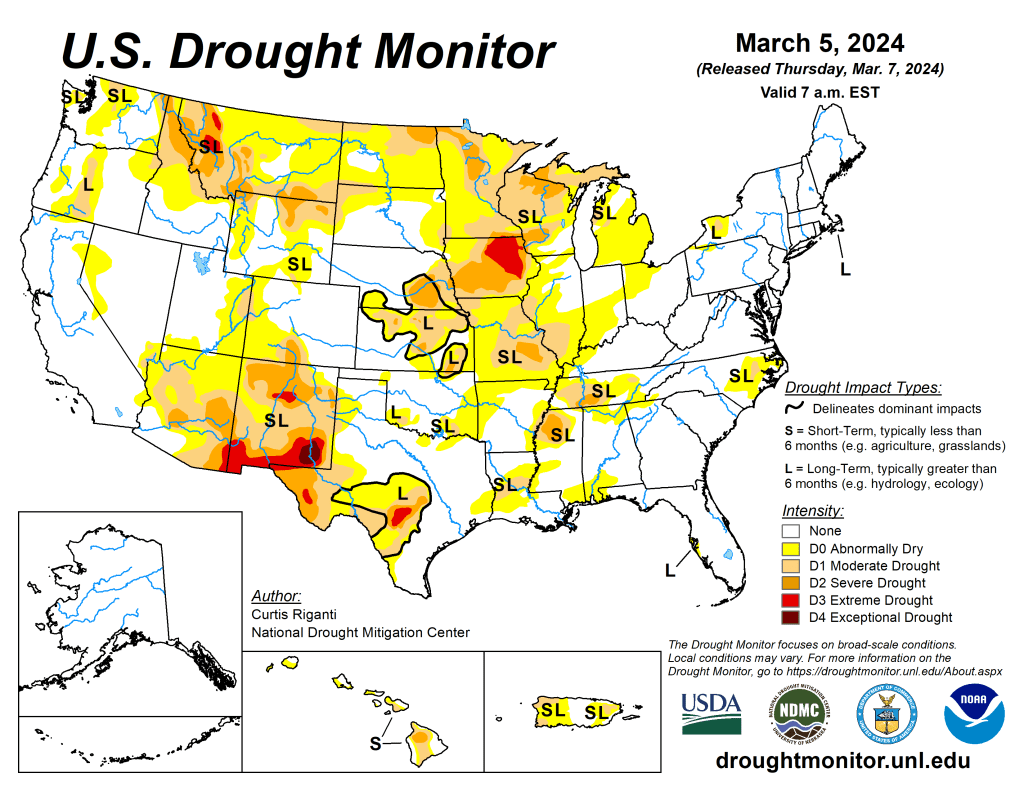
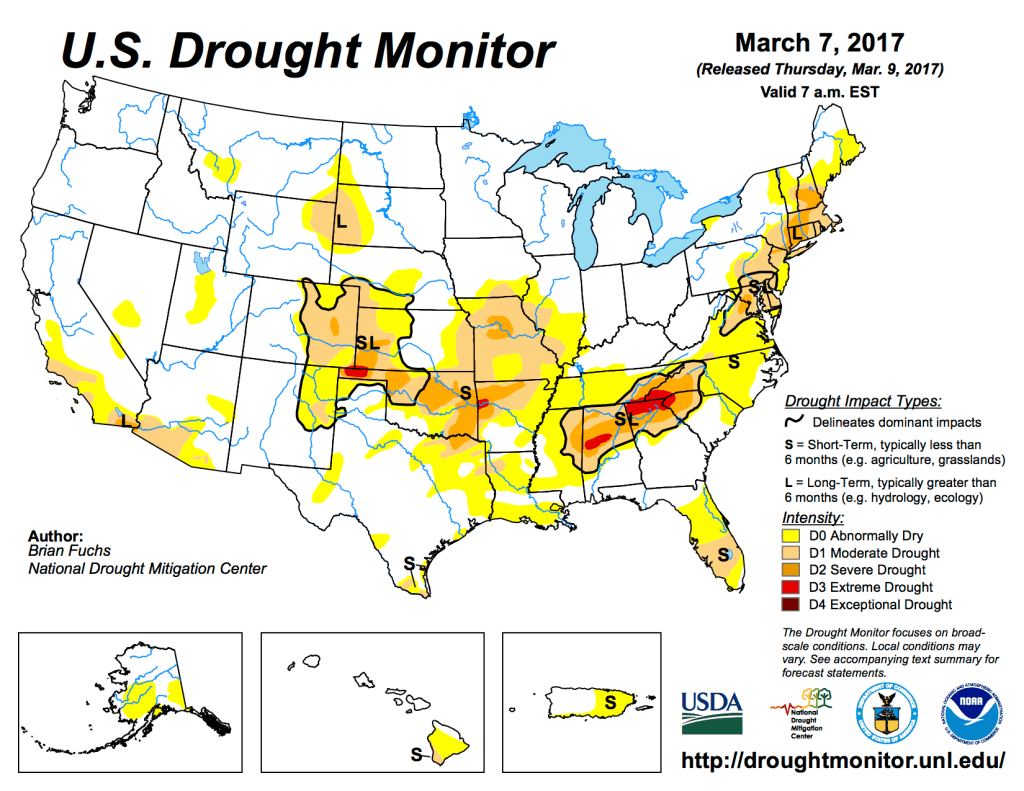
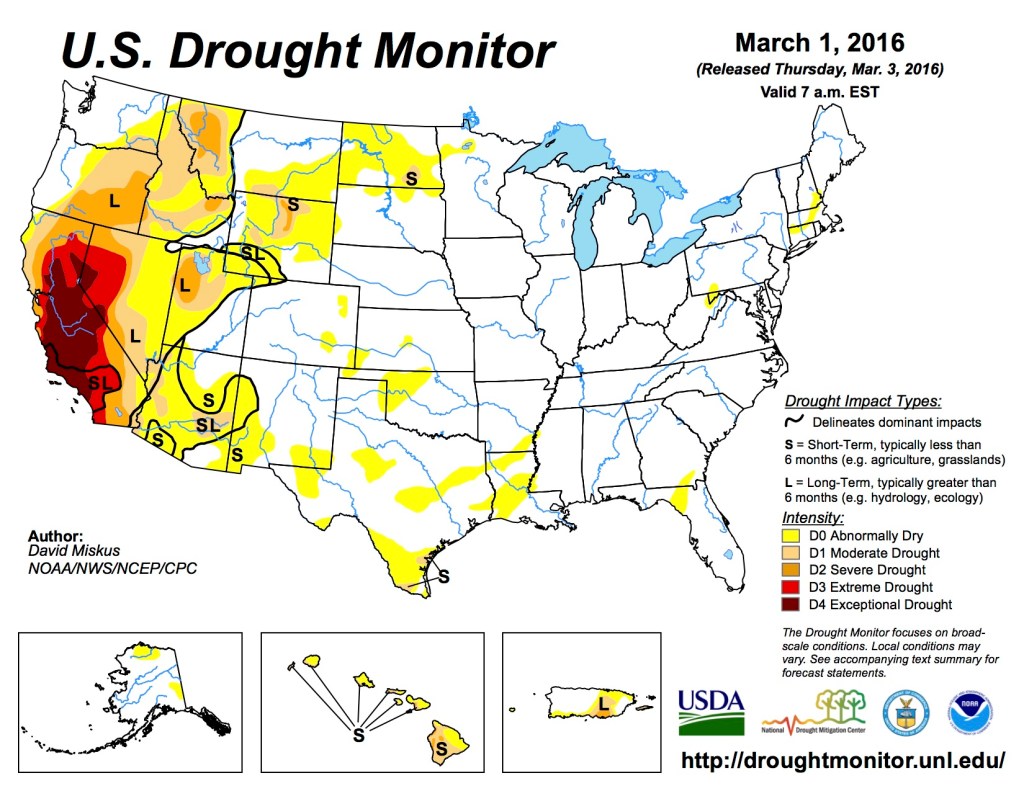
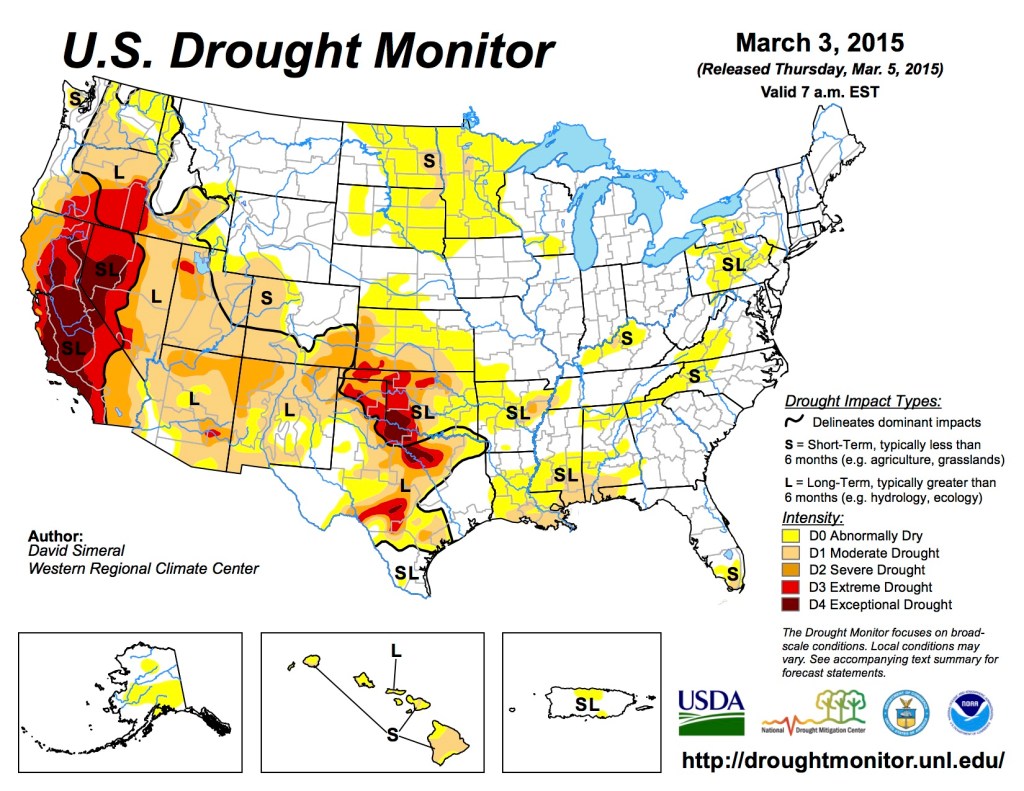
Click on a thumbnail graphic to view a gallery of drought data from the US Drought Monitor website.

Click the link to go to the US Drought Monitor website. Here’s an excerpt:

This Week’s Drought Summary

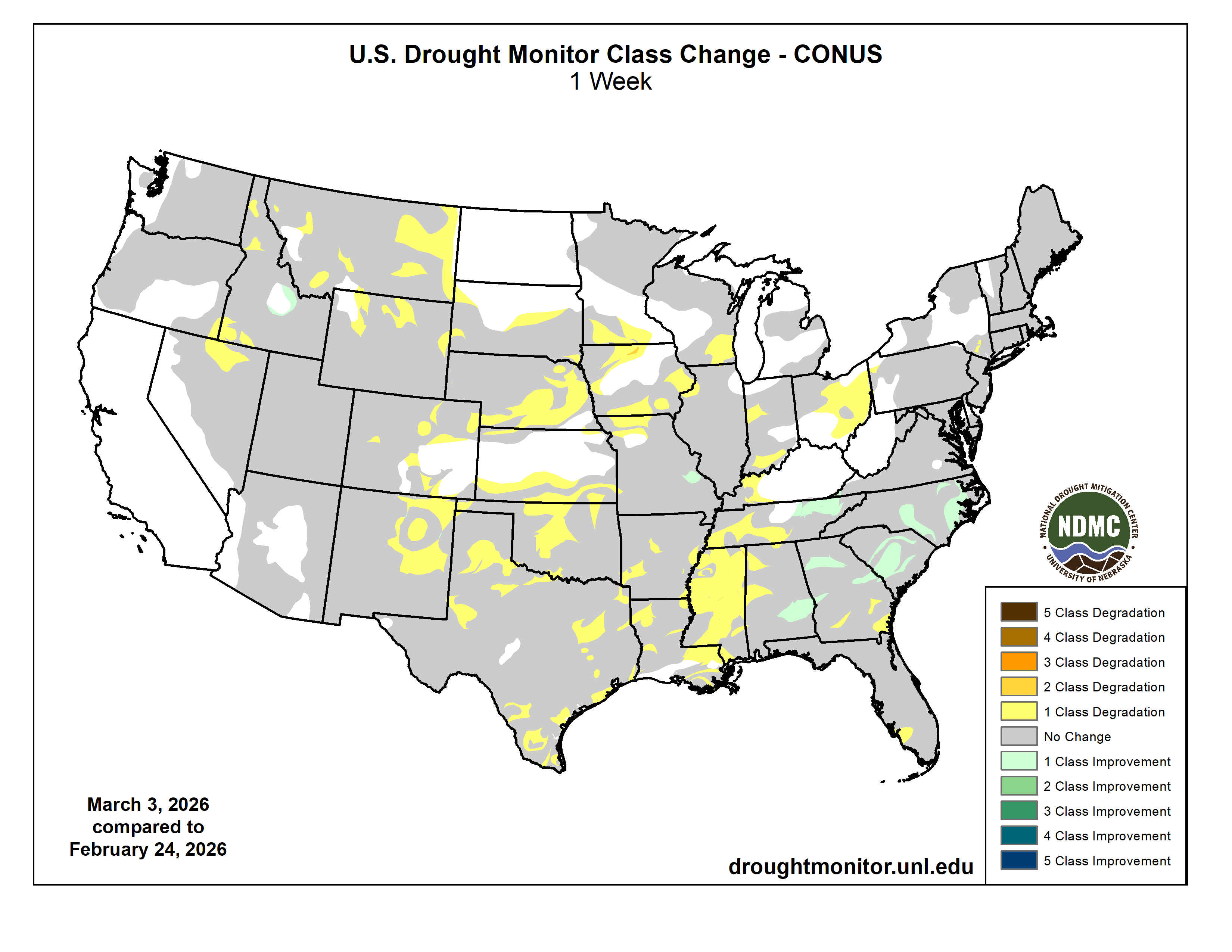
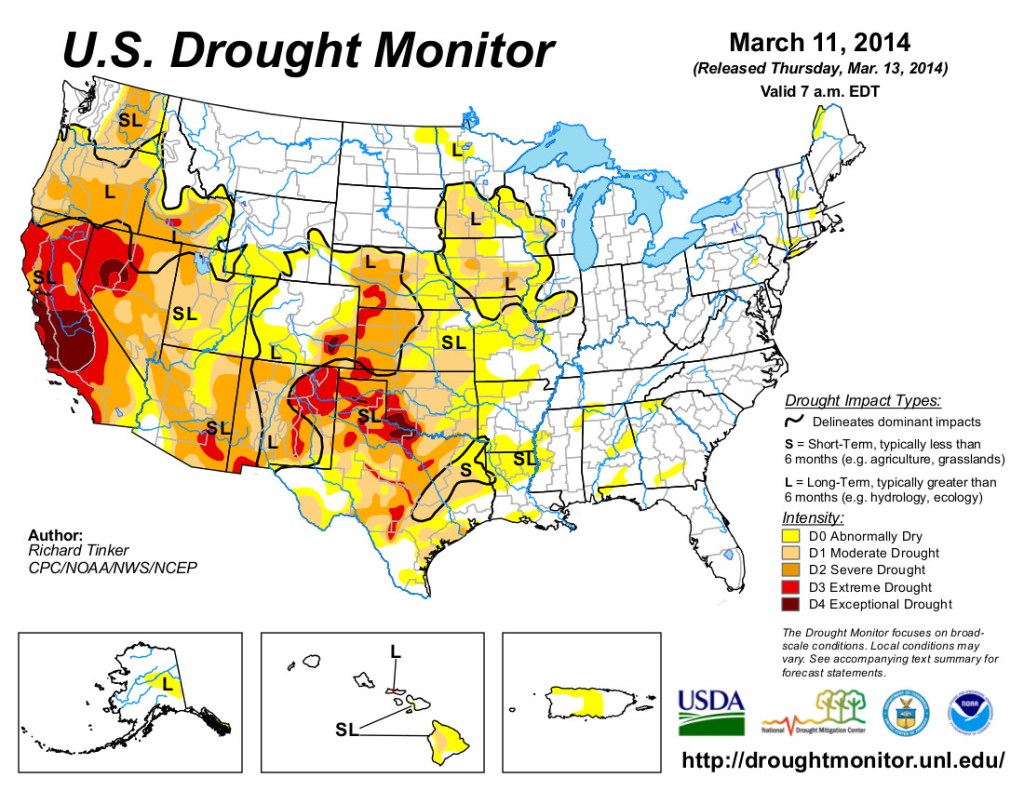
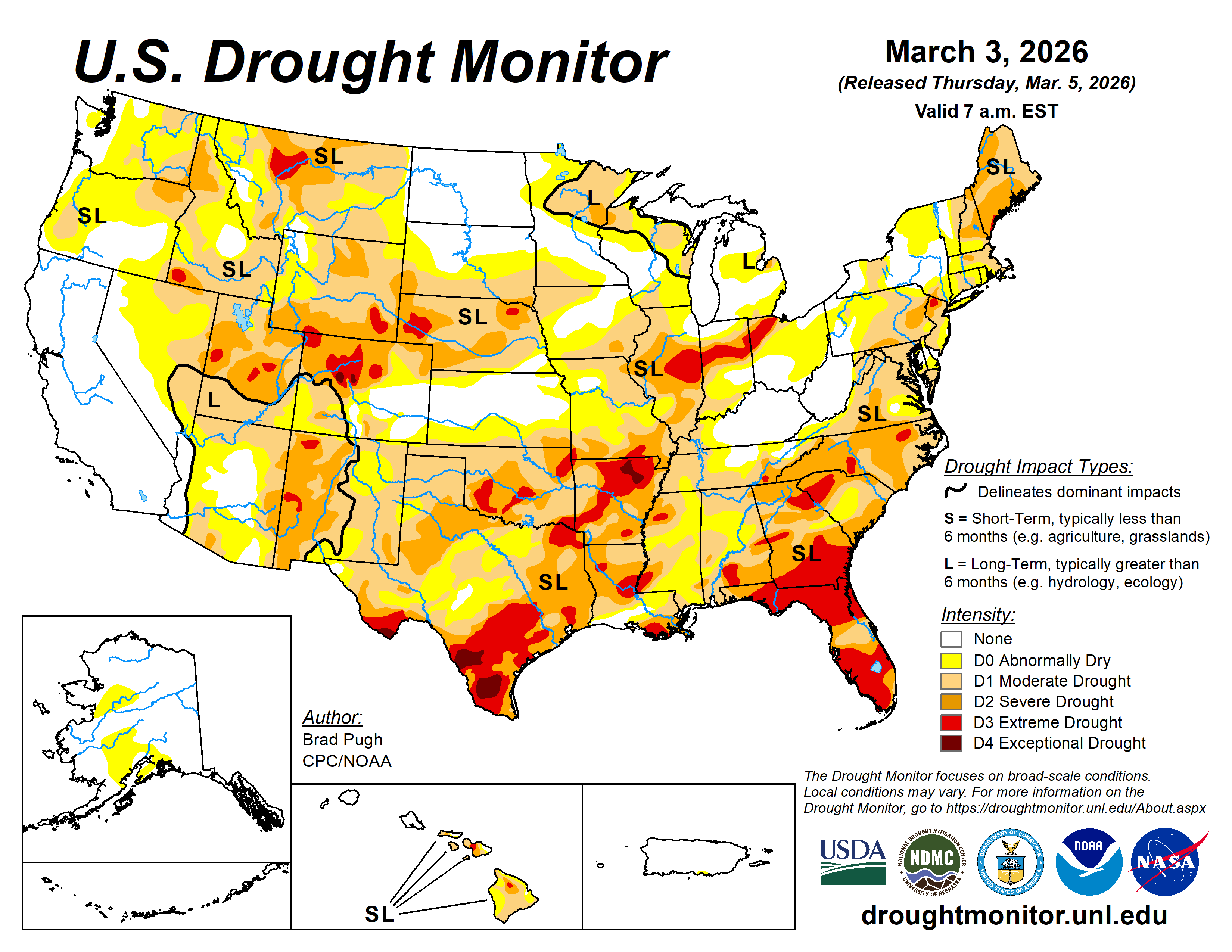
Since the beginning of December 2025, drought expanded and intensified across the Lower Mississippi Valley and Southern Great Plains which is typical during a La Nina winter. Much needed precipitation at the end of February led to small improvements across parts of the Southeast and also at least briefly stabilized the drought status for this region. Widespread severe to extreme drought is designated for much of the Carolinas, Georgia, southeastern Alabama, and Florida. A longer-term drought continues to affect the Mid-Atlantic and portions of the Northeast. The unusually dry winter persisted across the Midwest through the end of February with additional degradations made this past week. These worsening drought conditions extend west to the Central Great Plains along with the Central to Northern Rockies. Below-normal snowpack remains a major concern for the West heading into the spring. Drought coverage decreased in Hawaii during the past few weeks, while Alaska and Puerto Rico remained drought-free…

High Plains

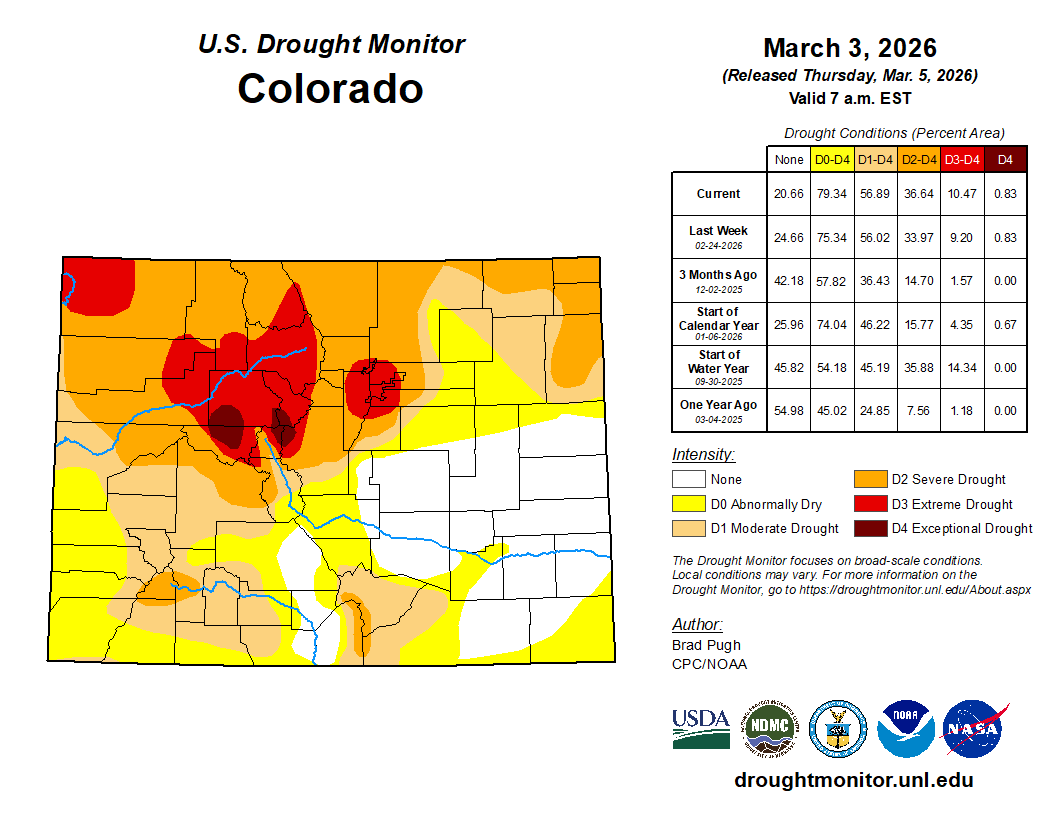
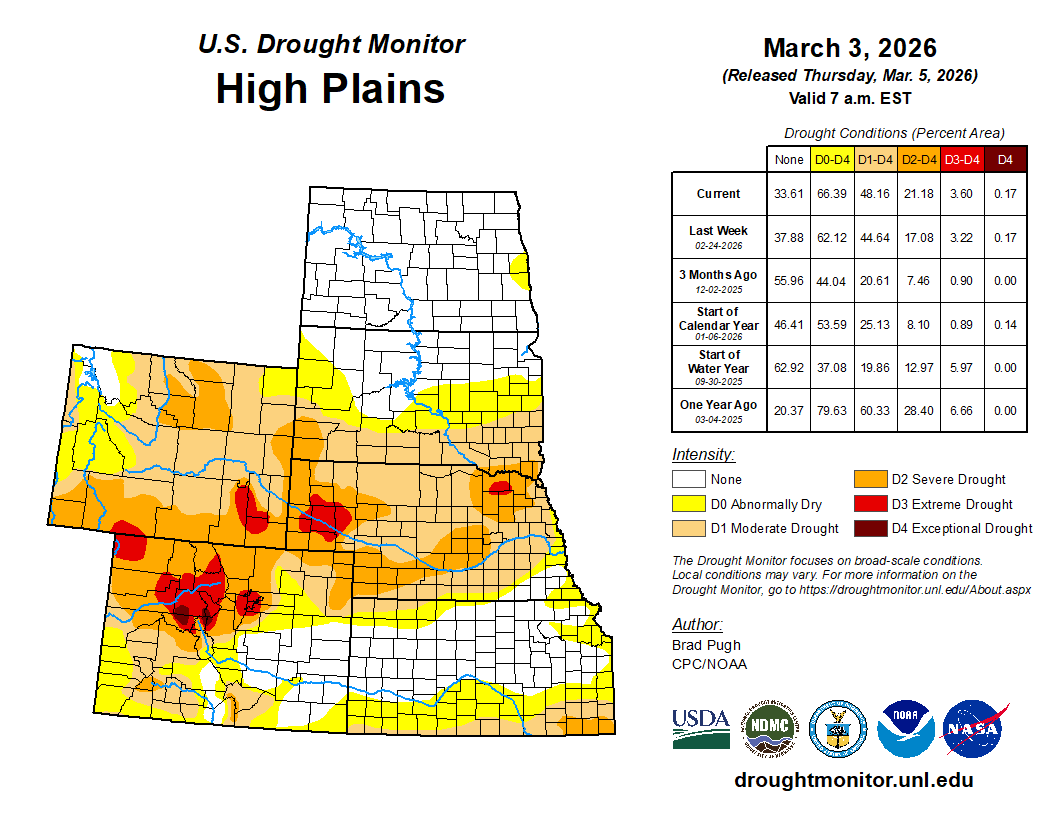
Although late winter is a relatively dry time of year across the Central Great Plains, periods of unseasonably warm temperatures and enhanced winds this past month led to intensifying drought across northeastern Colorado and Nebraska. 30-day temperatures averaged 6 to 10 degrees F above normal throughout the Great Plains. A 1-category degradation was made this past week to parts of Kansas and South Dakota. Widespread drought of varying intensity remains designated for much of Colorado and Wyoming. As of March 3, snow water equivalent is less than 70 percent of normal across the Central Rockies…

Colorado Drought Monitor one week change map ending March 3, 2026.

West

Water-year-to-date precipitation (October 1, 2025 to March 2, 2026) averaged below-normal for the Great Basin which led to a slight increase in moderate (D1) coverage across northeastern Nevada this past week. Following a drier- and warmer-than-normal February, a 1-category degradation was also made to parts of Montana. A 1-category degradation was also warranted for parts of Idaho, reflecting the below-normal precipitation and low snowpack this past winter. Even for areas of the West that have received above-normal precipitation since the beginning of October 1 such as the Northern Intermountain West and Northern Cascades of Washington, snow water equivalent (SWE) is running below normal. The low snowpack throughout much of the West is a major concern heading into the spring. As of March 3, SWE is less than 50 percent of normal from the Cascades of the Pacific Northwest southward through the Great Basin and Four Corners region. Although California remains drought-free, SWE is 59 percent of normal statewide according to the California Department of Water Resources…

South

Heavy rainfall (1 to 3 inches, locally more) resulted in a small 1-category improvement to parts of northeastern Tennessee. For the Lower Mississippi Valley and Southern Great Plains, drought continued to expand and intensify through the end of February and beginning of March. The major change this past week was a widespread 1-category degradation to Mississippi and also north-central Oklahoma. Since the beginning of December, precipitation has averaged less than 50 percent of normal across much of the Lower Mississippi Valley and Southern Great Plains. Impact reports from north-central Oklahoma include poor wheat conditions and surface water supply shortages. An expansion of moderate drought (D1) was also warranted for northeastern New Mexico. In addition to the drier-than-normal winter, 90-day temperatures have averaged 2 to 6 degrees F above normal. The lack of winter precipitation combined with periods of unseasonably warm temperatures and enhanced winds led to an increasing coverage of severe (D2) to extreme (D3) drought from the Mississippi River west through Oklahoma and Texas…

Looking Ahead

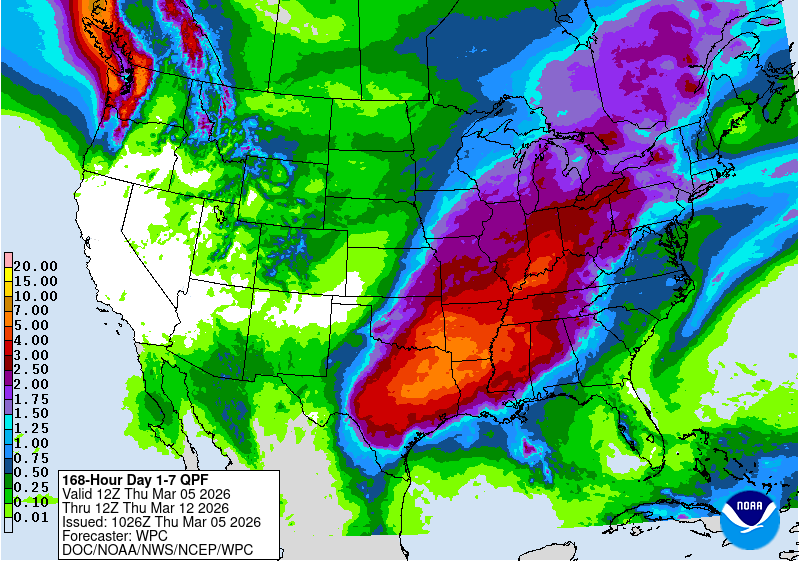
A major pattern change is underway which will promote multiple low pressure systems tracking across the Great Plains and Midwest during early to mid-March. The Weather Prediction Center (valid March 5-9) depicts a swath of heavy precipitation (1 to 3 inches, locally more) from eastern Texas and southeastern Oklahoma northeast through the Lower to Middle Mississippi and Ohio Valleys. This heavier precipitation is forecast to extend into parts of the Northeast, but little to no precipitation is expected from Virginia south to Florida. Much-needed snowfall is expected across the Northern to Central Rockies, while dry weather prevails across California and the Southwest. Much above-normal temperatures are forecast across the southeastern and central U.S. where daily record highs may be broken from March 5 to 9.

The NWS 6-10 day outlook (valid March 10-14) calls for an increased chance of above-normal temperatures for the East, Middle to Lower Mississippi Valley, Southern Great Plains, Southwest, and California. Below-normal temperatures are more likely from the Pacific Northwest east to the Northern Great Plains. Below-normal temperatures are strongly favored for Alaska. The 6-10 day outlook favors above-normal precipitation from the Mississippi Valley to the East Coast. Above-normal precipitation probabilities decrease west across the Great Plains. Above-normal precipitation is also favored for the Pacific Northwest and Northern Rockies. Near to below-normal precipitation is favored across Alaska, while large above-normal precipitation probabilities are forecast throughout Hawaii.

US Drought Monitor one week change map ending March 3, 2026.

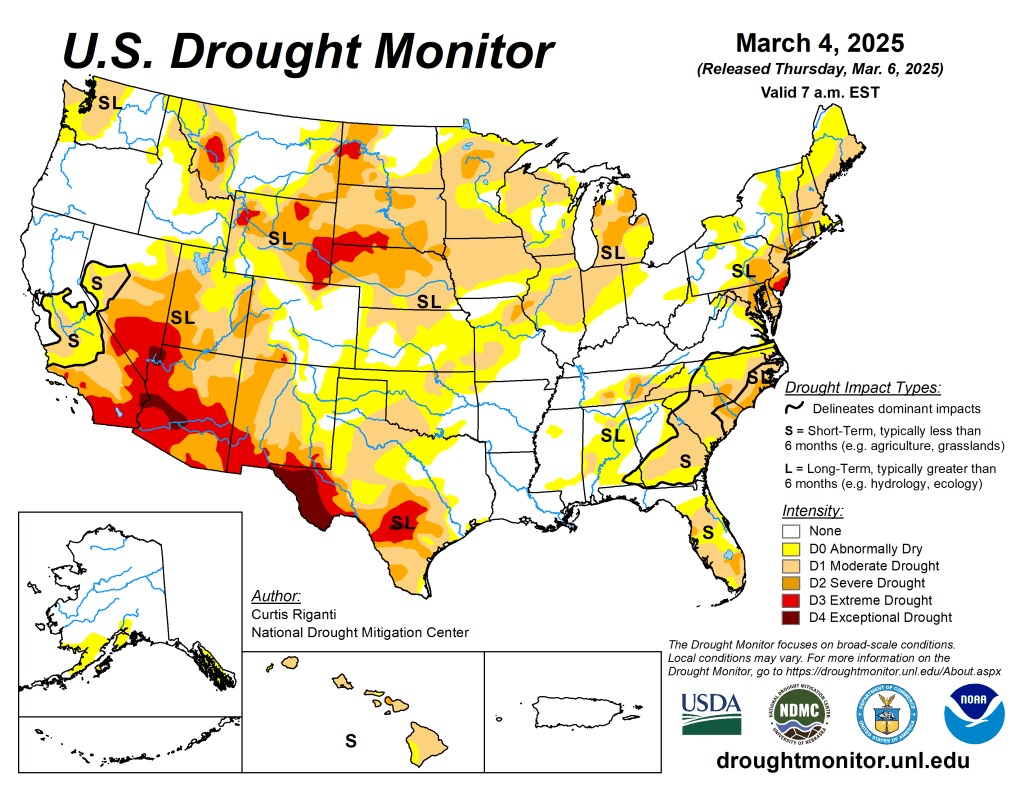
Just for grins here’s a slideshow of US Drought Monitor maps for the past few years.