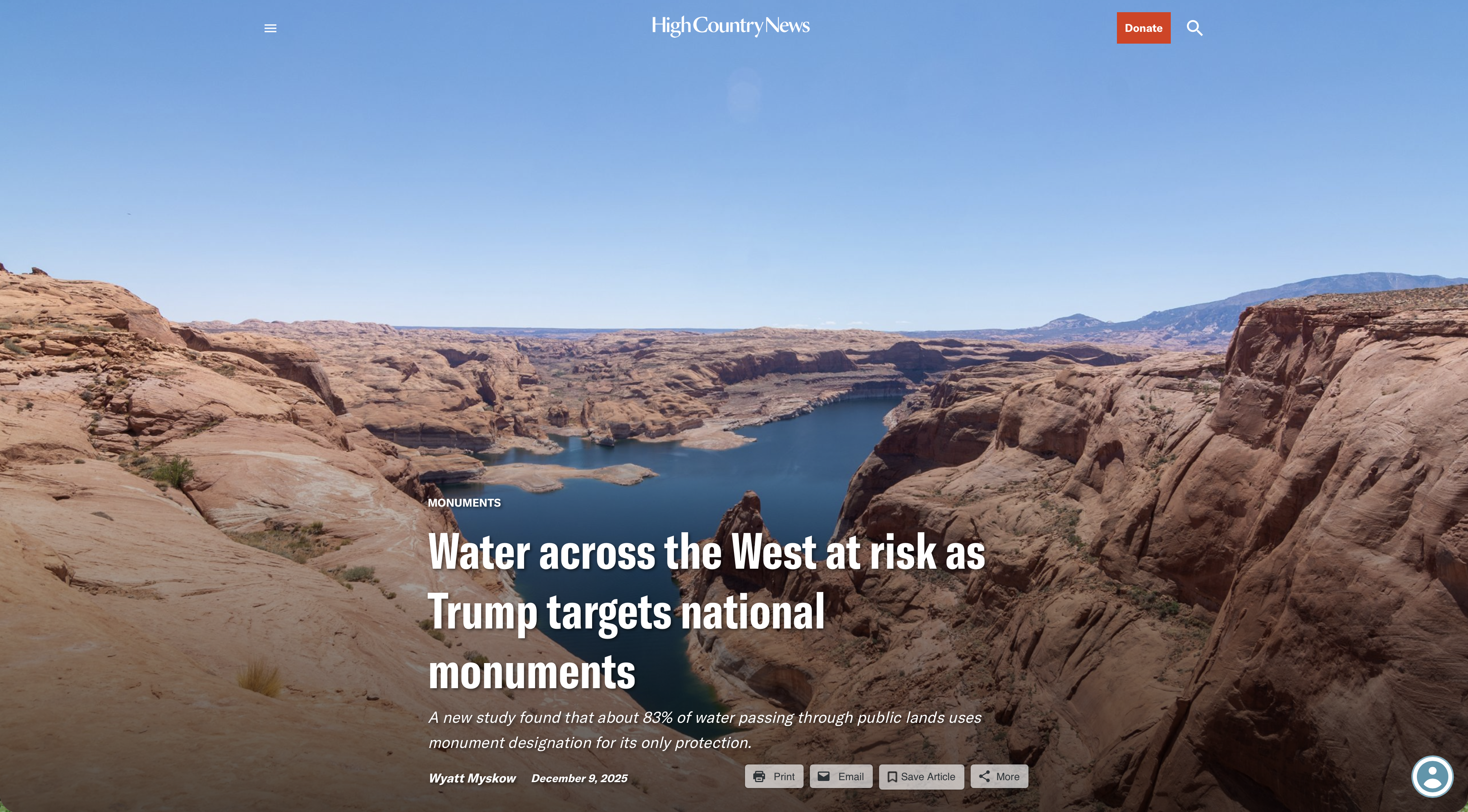
Water across the West at risk as President Trump targets national monuments: A new study found that about 83% of water passing through public lands uses monument designation for its only protection — Wyatt Myskow (High Country News)

RuggyBearLA PhotographyĀ RuggyBearLA / via Flickr

Click the link to read the article on the High Country News website (Wyatt Myskow):

December 9, 2025

This story was originally published bInside Climate News and is republished here through a partnership with Climate Desk.

The 31 national monuments designated since the Clinton administration, which could be downsized as the Trump administration pushes to open more public lands to extractive industries, safeguard clean water for millions of Americans, according to a new analysis from the Center for American Progress.

Using geospatial data to quantify the miles of rivers and watersheds within the studied national monument boundaries, as well as the number of users who depend on that water, the report found that the water supplies for more than 13 million Americans are directly provided by watersheds within or downstream of these national monuments. About 83% of the water passing through these public lands has no other protection besides the monument designations, it found.

National monuments protect more than 21,000 miles of waterways across the U.S., nearly twice as much waterway mileage as the National Wild and Scenic Rivers System, the analysis also determined.

The report comes as the Trump administration weighs downsizing or revoking the designation of  some national monuments.
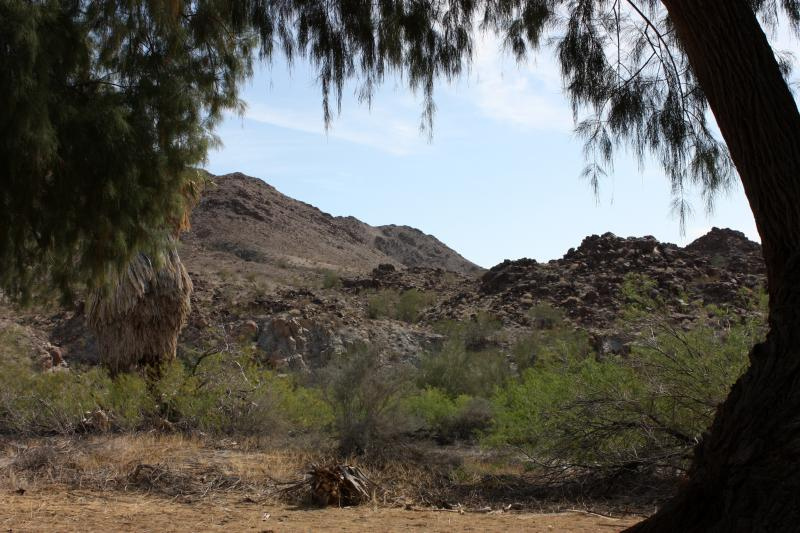
Corn Springs Chukwalla Mountains California. By Michael Dorausch from Venice, USA – Corn Springs CA, CC BY-SA 2.0, https://commons.wikimedia.org/w/index.php?curid=41004589

In March, the Trump administration announced it would eliminate California’s Chuckwalla and SĆ”ttĆ­tla Highlands national monuments before removing language from a White House fact sheet announcing that decision. The following month,Ā The Washington PostĀ reportedĀ that the administration was considering downsizing or eliminating six national monuments, and in June, the U.S. Department of Justice issued an opinion that the president has the power to rescind national monument designations, backtracking on a decades-old determination on the matter.

Stone and evening light, Bears Ears National Monument, Utah. Jonathan P. Thompson photo.

During Trump’s last term, Bears Ears and Grand Staircase-Escalante national monuments, established by the Obama and Clinton administrations, respectively, were shrunk to fractions of their original sizes, but they were restored by President Joe Biden after he took office.

If national monuments are downsized or eliminated, the areas surrounding a waterway will lose protections from extractive industries, including oil and gas drilling, mining and grazing. Contamination from those industries could seep into streams and, in turn, rivers. Those industries also use water, sometimes vast amounts in arid regions, further reducing the supply that flows to nearby communities. (In certain cases, some mining and grazing are already permitted on national monument lands, but the activities are limited in scale and more regulated than they are outside the monuments.)

ā€œLandscapes and waterways go hand in hand,ā€ said Drew McConville, a senior fellow for conservation policy at the Center for American Progress and a co-author of the report. ā€œThe clean water depends on what comes into them from natural lands … Just protecting the wet stuff itself doesn’t guarantee that you’re keeping [water] clean and durable.ā€

The portion of historically marginalized communities living within the watersheds of the national monuments is greater than the average for watersheds nationally, it found. Twenty-three of the monuments studied are also found in regions expected to face water shortages due to climate change in the coming decades, making the arid regions downstream even drier.
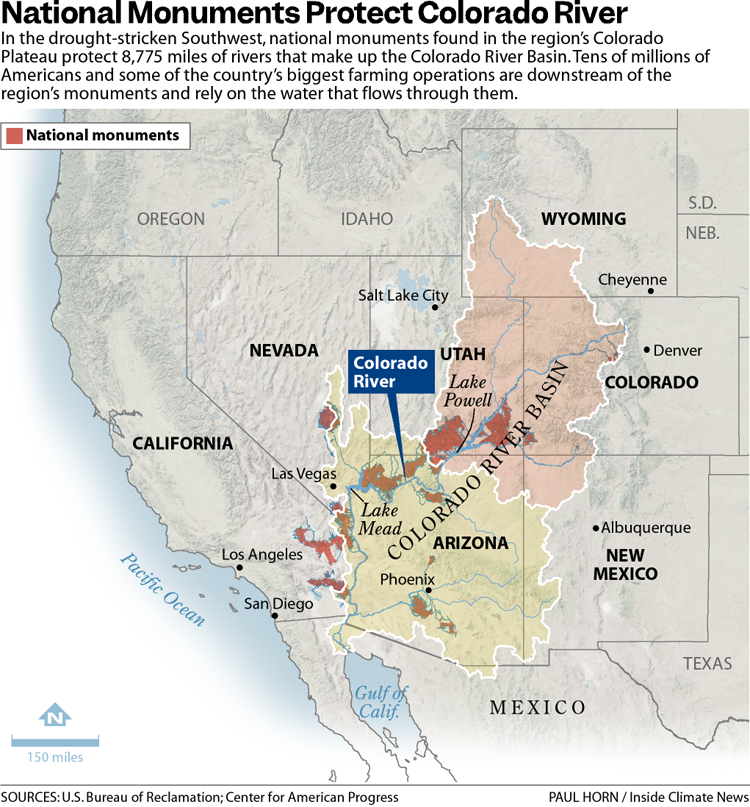
Grand Staircase-Escalante National Monument, for example, protects 2,517 miles of waterways, according to the analysis, and nearly 90% of the watersheds within the monument are expected to see declines in their water levels. The monument straddles the Upper and Lower Colorado River Basins, with the Paria and Escalante rivers flowing within its boundaries and Lake Powell, the nation’s second-largest reservoir, just to its south. 

The monument is often thought of as a sparse, arid region, which it is, said Jackie Grant, the executive director of Grand Staircase Escalante Partners, a nonprofit focused on protecting the monument that has spent $11 million to protect the Escalante River watershed and all its tributaries. It remains vital to the Colorado River System, which millions of people in the Southwest rely on. Grand Staircase-Escalante helps slow water from the Paunsaugunt Plateau in Bryce Canyon National Park, much of which starts as snowpack in the park before melting and flowing downstream. 

ā€œPeople don’t think of water when they think of Grand Staircase-Escalante National Monument,ā€ Grant said. ā€œSo when we can bring this view of water and how important it is to the protection of the monument, it helps us put another building block in our case for supporting the monument, because not only is it important for the animals, the native plants, the geology and the paleontology, water plays a huge role in the monument, and the monument protects the water itself.ā€

The Antiquities Act of 1906 was signed into law by Theodore Roosevelt, for ā€œā€¦ the protection of objects of historic and scientific interestā€ through the designation of national monuments by the President and Congress. National monuments are one of the types of specially-designated areas that make up the BLM’s National Conservation Lands. Some of the earliest national monuments included Devils Tower, the Grand Canyon, and Death Valley. They were initially protected by the War Department, then later by the National Park Service. More recently, the BLM and other Federal agencies have retained stewardship responsibilities for national monuments on public lands. In fact, the BLM manages more acres of national monuments in the continental U. S. than any other agency. This includes the largest land-based national monument, the Grand Staircase-Escalante National Monument in Utah featured here. National monuments under the BLM’s stewardship have yielded numerous scientific discoveries, ranging from fossils of previously unknown dinosaurs to new theories about prehistoric cultures. They provide places to view some of America’s darkest night skies, most unique wildlife, and treasured archaeological resources. In total, twenty BLM-managed national monuments, covering over five million acres, are found throughout the western U. S. and offer endless opportunities for discovery. Photos and description by Bob Wick, BLM.

Stretching across 1.87 million acres of public land, Grand Staircase-Escalante National Monument is one of the country’s most expansive national monuments, protecting scores of wildlife as well as archeological resources in southern Utah. But a nine-billion-ton coal deposit is buried in the center of the monument along with deposits of minerals, including uranium and nickel. The Trump administration has long touted boosting the country’s coal production, and has established a pro-mining agenda this year.

ā€œIt’d be very easy to contaminate either one of those rivers if mining were to take place in the center section of the monument,ā€ Grant said.Ā 

Margaret Walls, a senior fellow at Resources for the Future who has studied national monuments but was not part of this study, said national monuments are designated to protect cultural or historical landmarks, and it can be forgotten that they can also serve purposes like safeguarding water. Though she noted that even if monument protections are loosened, the areas remain federal lands, and their changes in status do not guarantee they will be developed. 

ā€œWe don’t protect waterways the way we do land,ā€ Walls said, ā€œwe’re going to get those water benefits by protecting the land.ā€

Created by Imgur user Fejetlenfej , a geographer and GIS analyst with a ā€˜lifelong passion for beautiful maps.’ It highlights the massive expanse of river basins across the country – in particular, those which feed the Mississippi River, in pink.

The secret double life of america’s public lands: And why you should know about it if you drink water… — Ā John Zablocki (AmericanRiver.org)

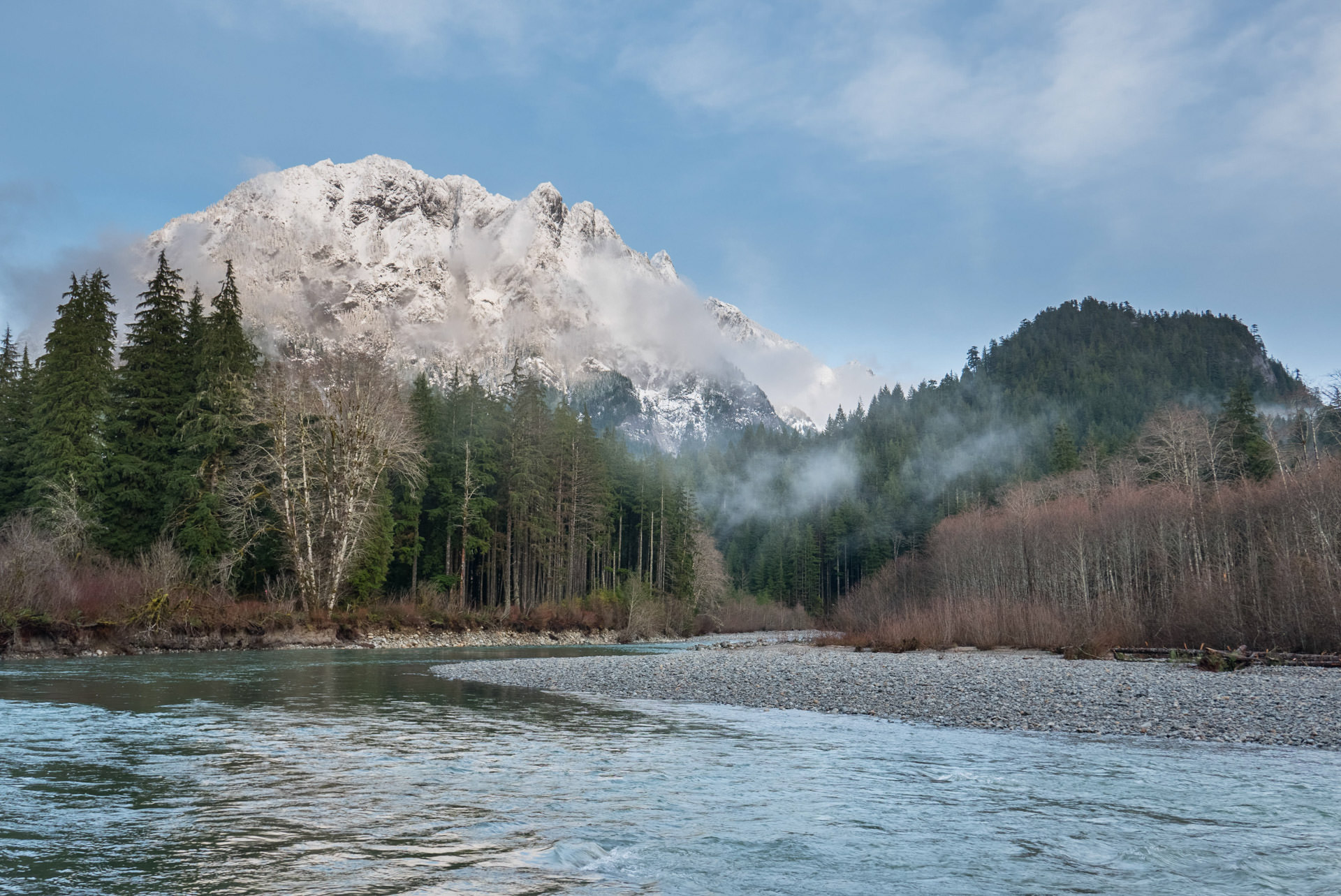
Middle Fork Snoqualmie River, Washington | Monty Vanderbilt

Click the link to read the article on the American Rivers website (John Zablocki):

January 21, 2025

Public lands are the birthright of every American. One of the great privileges of living in this country is the ability to access hundreds of millions of acres to enjoy the great outdoors — all for free.

People care about and use public lands for many reasons. From hunters and anglers to miners and ranchers, hikers and mountain bikers—there is something for almost everyone on public lands. But what if you live in a city and never set foot on public lands?  Why care about them then?

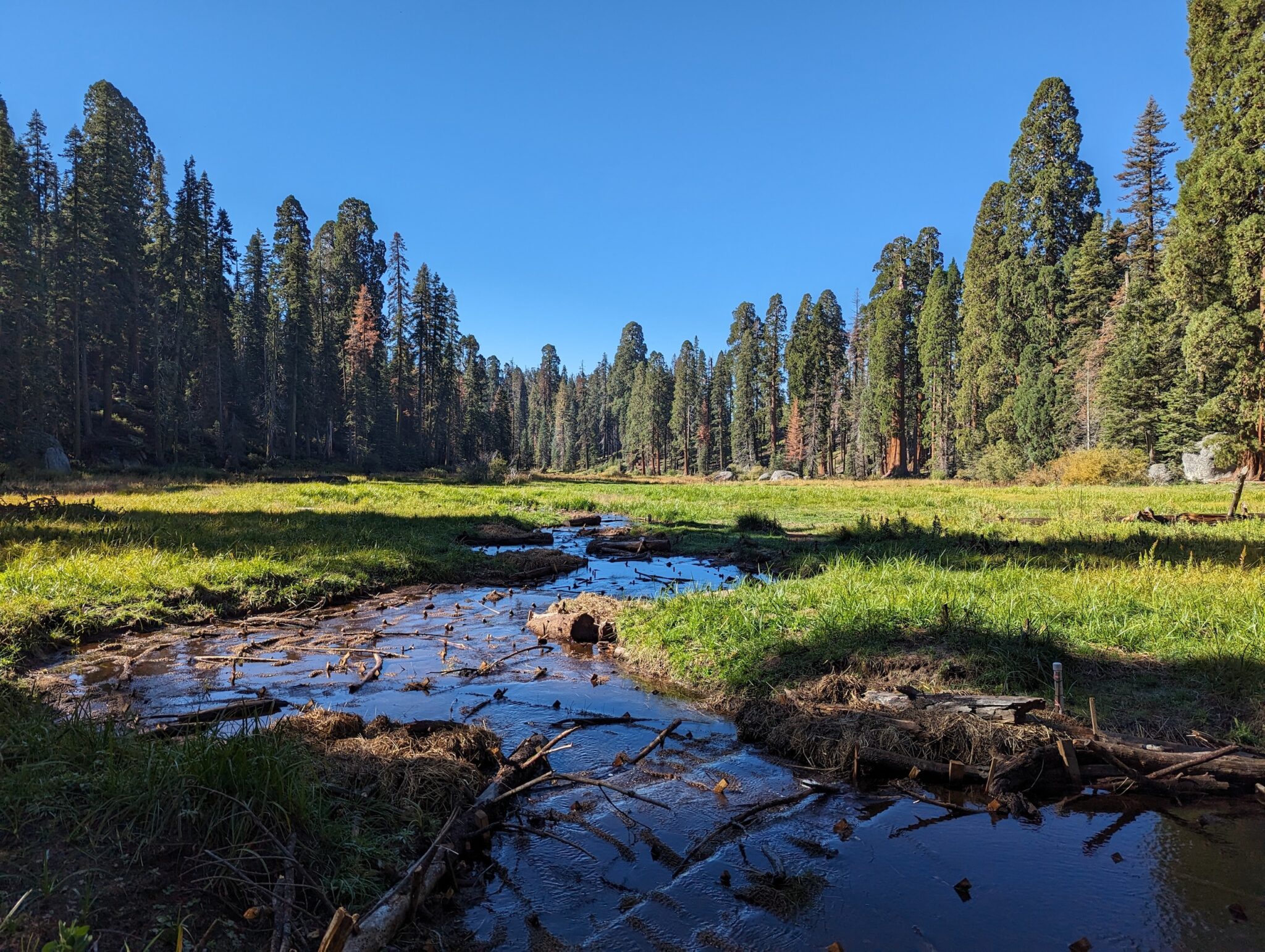
Log Meadow, California | Maiya Greenwood

Not everyone hunts, fishes, mines, ranches, hikes, or bikes; but everyone, truly everyone, depends on clean water. The big secret about public lands is that they are arguably the country’s single biggest clean water provider. According to the US Forest Service, National Forests are the largest source of municipal water supply in the nation, serving over 60 million people in 3,400 communities across 33 states. Many of the country’s largest urban areas, including Los Angeles, Portland, Denver, and Atlanta receive a significant portion of their water supply from national forests.

Healthy forests and grasslands perform many of the functions of traditional water infrastructure. They store water, filter pollutants, and transport clean water to downstream communities. And they do it naturally — essentially for free. When rivers are damaged from land uses on public lands, we all pay the price — literally; we all pay more in taxes and utility bills to clean up the water.

What happens on the public’s land also happens to the public’s water. The importance of managing public lands for the benefit of public water is so fundamental, it has been a pillar of public lands management agencies’ missions since their inception over a century ago. For example, The Organic Act of 1897[1]Ā that created the US Forest Service stated:

What tribal leaders think about Interior’s dams report: The federal government has acknowledged the harms of #ColumbiaRiver dams. Now what? — @HighCountryNews

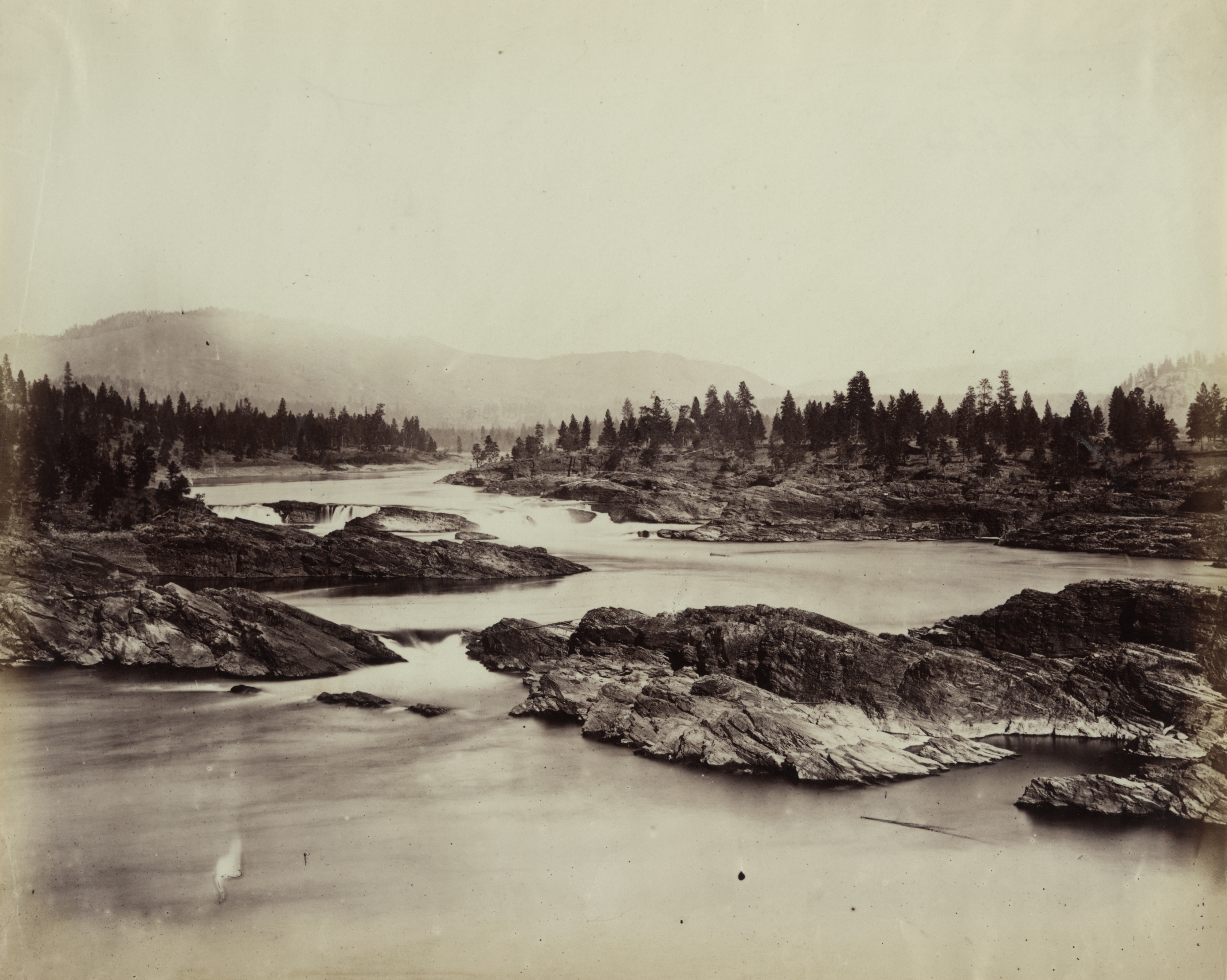
Kettle Falls in 1860. By Unknown author – Library of Congress archives at http://hdl.loc.gov/loc.pnp/ppmsca.03399, Public Domain, https://commons.wikimedia.org/w/index.php?curid=3923552

Click the link to read the article on the High Country News website (B. ā€˜Toastie’ Oaster):

September 1, 2024

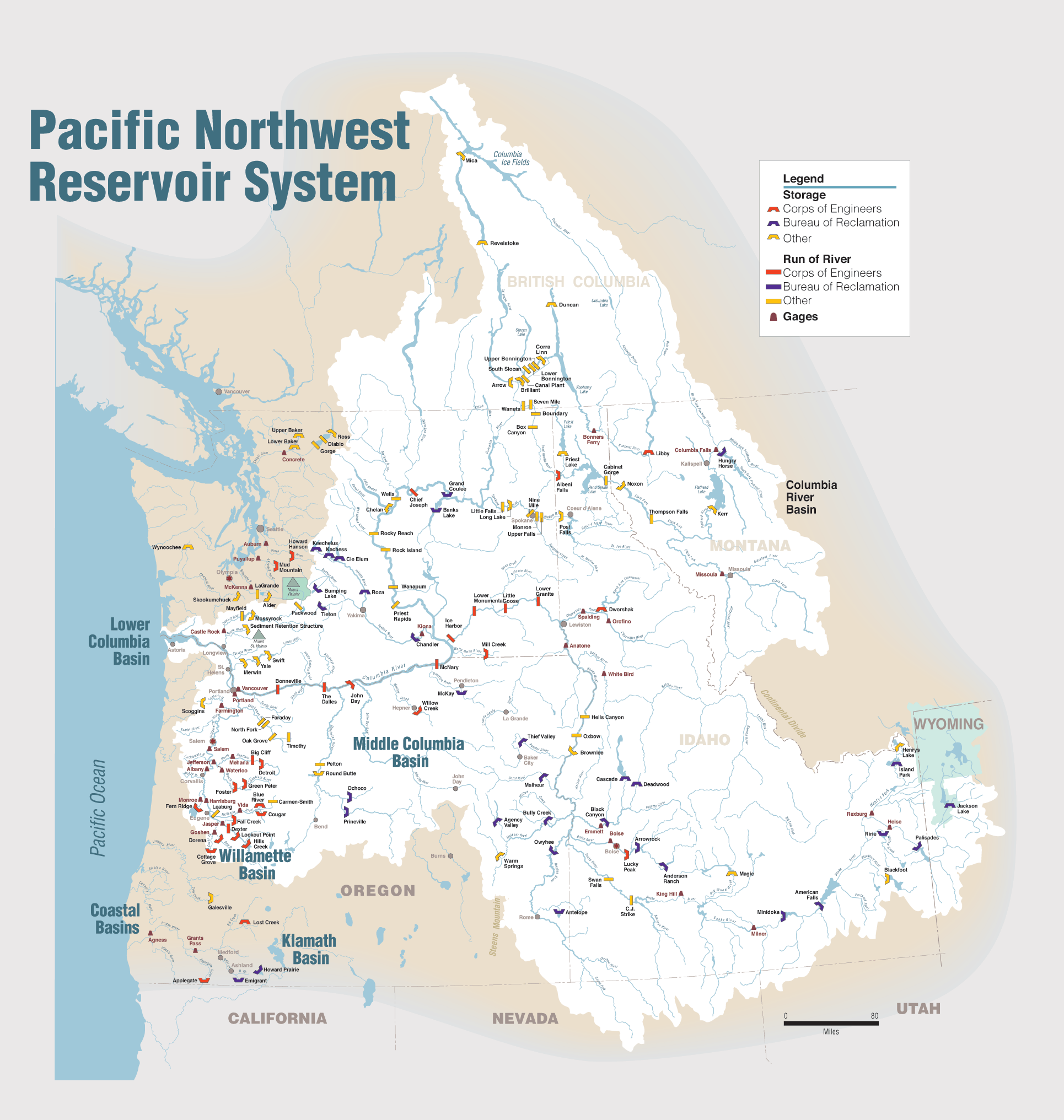
There was a time you could catch tons of salmon in a single day at Kettle Falls, a series of pools cascading into each other on the Columbia River in northern Washington. That was before the U.S. government built Grand Coulee Dam in 1942. After 82 years, in June of this year, the Department of Interior published Historic and Ongoing Impacts of Federal Dams on the Columbia River Basin Tribesan analysis that explores how 11 hydropower dams on the mainstem Columbia, Snake and North Fork Clearwater rivers have hurt Indigenous economies, cultures, spiritual practices, environments and healthThose historic and ongoing harms include the destruction of important cultural sites like Kettle, as well as Celilo Falls, another ancient fishery that was also a magnificent international marketplace. Dams are also famously driving the basin’s salmon stocks toward extinction. ā€œOf sixteen once existing salmonid stocks, four have been extirpated — Mid-Columbia River Coho, Mid-Columbia River Sockeye, Upper Columbia River Coho, and Snake River Coho,ā€ the report reads. All but five of the remaining stocks are now endangered or threatened. 

Indigenous people have long known about the damage dams cause, but to hear the federal government admit it is another thing. HCN spoke to Shannon Wheeler, chair of the Nez Perce Tribe; Phil Rigdon, superintendent of the Natural Resources Department at the Confederated Tribes and Bands of the Yakama Nation; and Corinne Sams, who’s on the board of trustees for the Confederated Tribes of the Umatilla Indian Reservation and is also chair of the Umatilla Fish and Wildlife Commission and the tribal nation’s representative at the Columbia River Inter-Tribal Fish Commission. Here’s what they have to say about Interior’s report.

These conversations have been edited for brevity and clarity.

High Country News: What was tribal involvement in creating the Interior Department’s report?

Shannon Wheeler: We are the ones that submitted (it) to them. We had already completed this in the 1990s. We revamped it and gave them the newest version over the past eight months, and that’s what they have been working (from).

Corinne Sams: We’ve always been heavily engaged with the Department of Interior, along with the recent Columbia Basin Restoration Initiative, which is now being called the Resilient Columbia Basin Agreement, with the United States government. That was solidified in January of this year. Over the last three years, Umatilla Tribe and our staff have worked vigorously to ensure that the United States government understands the impacts and the losses that have occurred to salmon and other anadromous fish within the Columbia and Snake Basin. So we’ve played an enormous role.

Phil Rigdon: The Department of Interior came, and we did a consultation with the federal government on (the report). Our leadership expressed concerns (about) the impacts that the dams have had on our salmon, lamprey, sturgeon and fish species, but also the knowledge of our connection to the Columbia River. Our lives have changed forever, ever since those (dams) were in. But we continue to advocate and go fish and continue to practice our culture and our way of life. This report comes out in a manner that highlights a lot of broken promises to our people, but we continue to push and advocate on behalf of resources that we hope will be returned back to the levels they should be

HCN: Is there anything you think the report gets wrong or leaves out?

SW: No.

CS: No. This is the first time the federal government has ever recognized the true impacts to our people and to our ecosystem in regard to hydro systems, so we’re very optimistic and encourage individuals to read the report, to become informed. Because our ultimate goal is to decarbonize and replace the energy sector, which will eventually, hopefully, replace those hydro systems. We recognize that this isn’t only about fish. We have several other interests in the basin: transportation, recreation, irrigation. All of those components are important, and we don’t want to leave one out. We’re really pushing for everybody within the basin to remain whole. 

PR: These reports are important. But sometimes (it’s) tough to understand the heart of it. Our people are still down (there) fishing right now. Our people continue to carry our way. But the report is an important step into highlighting those things that we consider problematic over the history of the dams.

HCN: What kinds of federal actions do you want to see based on this report?

SW: Consideration for breaching of the four Lower Snake River dams.

CS: There’s a billion-dollar backlog on infrastructure and hatchery maintenance, and we utilize those hatcheries as mitigation fish, for the loss of the abundant natural runs. But our ultimate goal is to get our natural runs back to healthy and harvestable levels. We’ve done a significant amount of work and have been co-managing these resources (with government agencies) for decades, but the tribes have been managing these resources for millennia. This isn’t just a tribal effort. This is for all Americans that live within the basin.

PR: There’s Bateman Island Causeway down at the mouth of the Yakima (River) that causes the thermal block that causes enormous problems for juvenile and adult fish migration up to the Yakima Basin. The small things really need to be invested in and done now. Some of these things that have been a problem for a long time are critical. And then to look at the big things, like the Lower Snake River dams, and really come up with solutions. But we also believe it can’t be like it was for us. We can’t leave people behind in the manner that we were left behind, putting the dams in for the energy development. There is a balance here that needs to be achieved through what these reports do, but also what we’re trying to do as a people.

HCN: Do you think any federal action hinges on Democrats winning the upcoming presidential election?

SW: Tribal nations across the country have all had impacts one way or another regardless of what type of administration is in. But I also believe that this administration understands that there’s impacts that the United States has had on its people.

CS: Absolutely. If we see a shift in administration, all of these agreements, all of these reports, become uncertain.

PR: I think it’s not important. Republicans fish, and Democrats fish, too. We need to come together to find solutions. I don’t think we should make it all dependent on who wins an election, but we should be thinking about how we solve long-term problems. The polarization that you see is sad, in a lot of ways, because I don’t think we’re getting to the right conversations. I don’t think we want to go political. I have red-state Republicans advocating for our work in the Yakima. That’s unique because of our partnerships, but also how we’re trying to build trust within our local communities. We’re from rural communities, rural America, tribal people. Sometimes we’re less concerned about the politics. We’re thankful for the Biden administration and the leadership they’re showing in doing these studies. I don’t want to discount that at all. But we want to make sure it’s not dependent upon who gets elected, but that we continue moving forward as a people.

Native salmon fishermen at Celilo Falls. Russell Lee, September 1941. By Russell Lee – This image is available from the United States Library of Congress’s Prints and Photographs divisionunder the digital ID fsa.8c22374.This tag does not indicate the copyright status of the attached work. A normal copyright tag is still required. See Commons:Licensing., Public Domain, https://commons.wikimedia.org/w/index.php?curid=3923525

HCN: Do you think there’s a path here to bringing back Celilo Falls?

CS: When they inundated Celilo Falls, several years after that they did sonograms. And they say the falls are still under there. I think deep in our hearts we always hope to see the return of that fishery, that place. Our ancestors and our old people talk about just the sound alone, the sound of those falls. They miss that sound. 

PR: I would love to see that. I don’t want to get our hopes up, either.    

We welcome reader letters. Email High Country News at editor@hcn.org or submit a letter to the editor. See our letters to the editor policy.

This article appeared in the September 2024 print edition of the magazine with the headline ā€œWhat tribal leaders think about Interior’s dams report.ā€

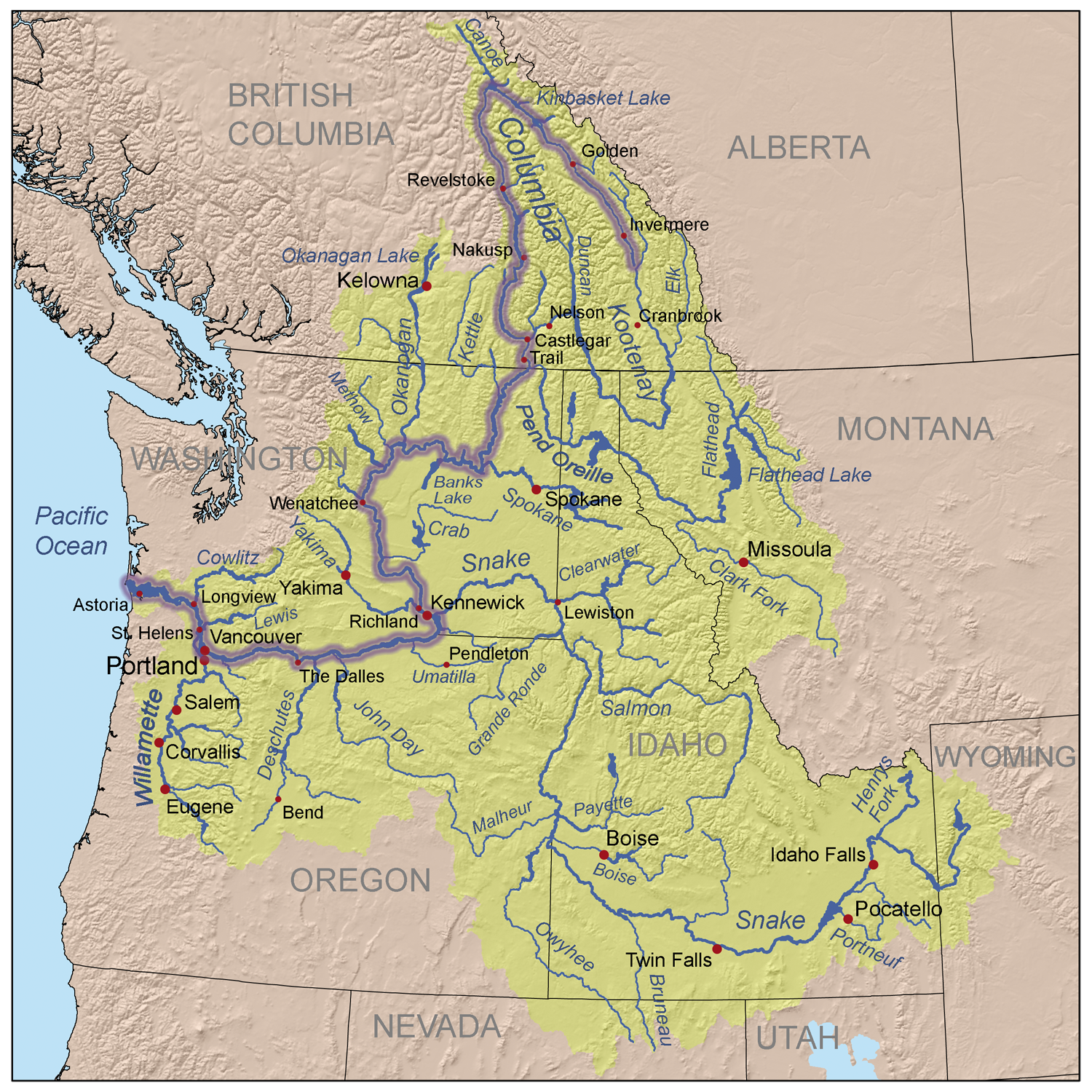
Map of the Columbia River watershed with the Columbia River highlighted. By Kmusser – self-made, based on USGS and Digital Chart of the World data., CC BY-SA 3.0, https://commons.wikimedia.org/w/index.php?curid=3844725

Yellowstone seeks to stiffen invasive species rules, ban some boats: To defend against troublesome mussels, large motorboats and sailboats would have to be dried for 30 days before being launched — @WyoFile #YellowstoneRiver #MissouriRiver #SnakeRiver

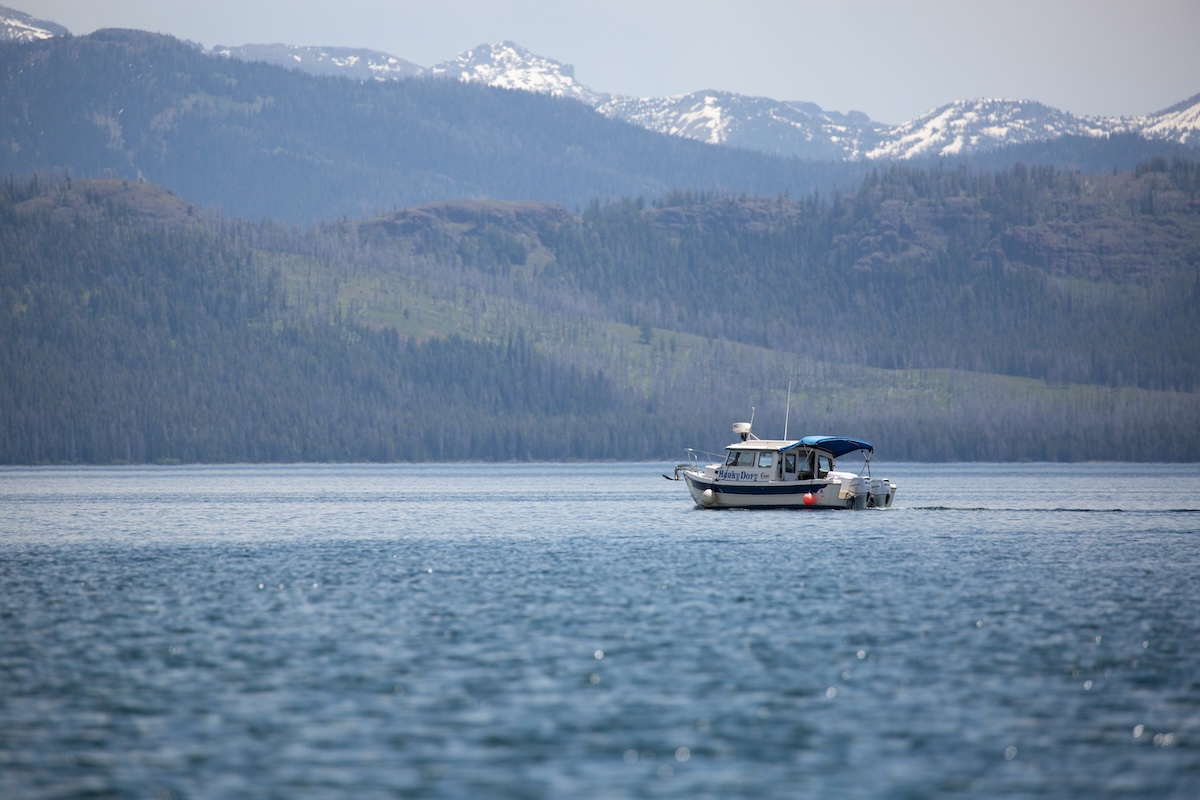
A motorboat on Yellowstone Lake. (NPS/Diane Renkin)

Click the link to read the article on the WyoFile website (Angus M. Thuermer Jr.):

March 12, 2024

To protect the headwaters of three major Western rivers from invasive, troublesome mussels, Yellowstone National Park wants to require larger boats to undergo a 30-day ā€œdry timeā€ before launching.

New rules up for comment also would ban any boat that’s once been contaminated by invasive Dreissena zebra or quagga mussels, regardless of decontamination cleaning.

The proposal builds on existing rules, including inspection of all watercraft, designed to protect Yellowstone and downstream waters from the fingernail-sized freshwater bivalves that cling to hard structures like boat hulls, docks and irrigation headgates. The proposal would help protect the ecological integrity of Yellowstone Park and the Yellowstone, Missouri and Snake rivers downstream in Idaho, Montana and Wyoming.

Map of the Yellowstone River watershed in Wyoming, Montana and North Dakota in the north-central USA, that drains to the Missouri River. By Background layer attributed to DEMIS Mapserver, map created by Shannon1 – Background and river course data from http://www2.demis.nl/mapserver/mapper.asp, CC BY-SA 4.0, https://commons.wikimedia.org/w/index.php?curid=9355543
Map of the Missouri River drainage basin in the US and Canada. made using USGS and Natural Earth data. By Shannon1 – Own work, CC BY-SA 4.0, https://commons.wikimedia.org/w/index.php?curid=67852261
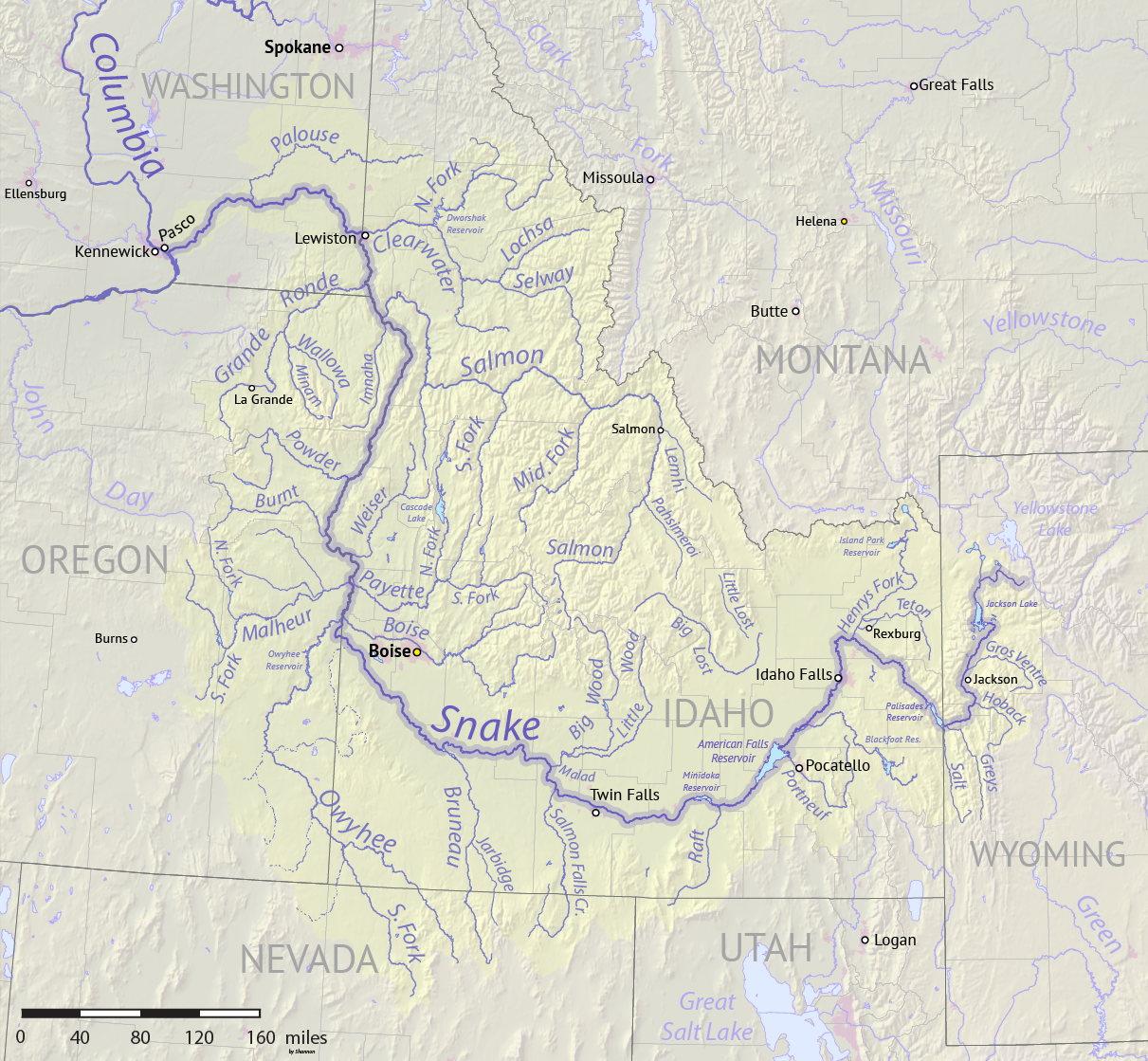
Map of the Snake River watershed, USA. Intended to replace older File:SnakeRiverNicerMap.jpg. Created using public domain USGS National Map data. By Shannon1 – Own work, CC BY-SA 4.0, https://commons.wikimedia.org/w/index.php?curid=62294242

Under the proposed rules, boats with inboard, inboard/outboard and inboard jet motors — as well as sailboats — would have to be dried under a certified program for 30 days before launch. ā€œLarge, complex, trailered watercraft pose the highest risk of transporting and introducing invasive mussels … because they are difficult to inspect and less likely to … be fully decontaminated,ā€ the park said in a release.

Manual cleaning is not 100% effective, the park said.

Mussels were recently discovered in waters within a day’s drive of Yellowstone, including the first found in the Columbia/Snake drainage last year near Twin Falls, Idaho. The year before, mussels showed up in Pactola Reservoir, South Dakota, not far from Wyoming’s eastern state line.

People can comment online through April 5 or to Yellowstone Center for Resources, Attn: AIS Proposed Changes, PO Box 168, Yellowstone National Park, WY 82190.

Spreading threat

The zebra mussel is native to the Black, Caspian, and Azov Seas and the quagga also comes from that area of Europe. They have infected the Midwest and lower Colorado River drainage.

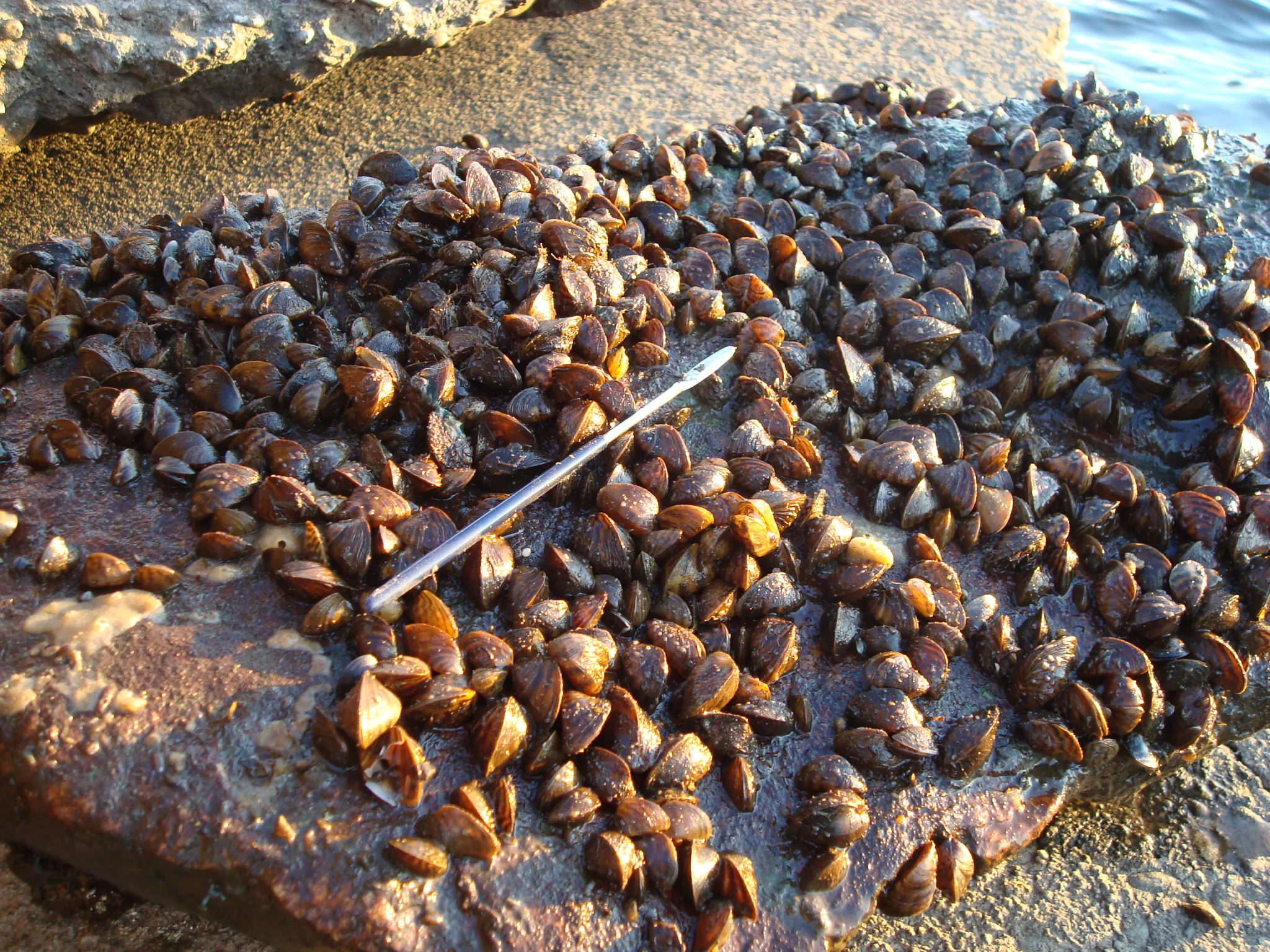
Zebra Mussels in Lake Ontario. (John Manier/USGS)

They could threaten Yellowstone cutthroat trout, a species the park has spent more than two decades restoring. The mussels can also be destructive to water and power infrastructure, according to the U.S. Department of Interior. There are no known ways to eradicate the mussels. Any invasion would be expensive to mitigate.

Motor- and sailboats falling under the new rule would be inspected and sealed to a trailer for the 30-day dry period. Seals from Yellowstone National Park, Idaho State Department of Agriculture, Montana Fish, Wildlife, and Parks and Wyoming Game & Fish Department would be honored.

Once-infected boats would be banned because of the possibility they could, even if cleaned, cause a false detection during routine DNA monitoring and consequently waste resources.

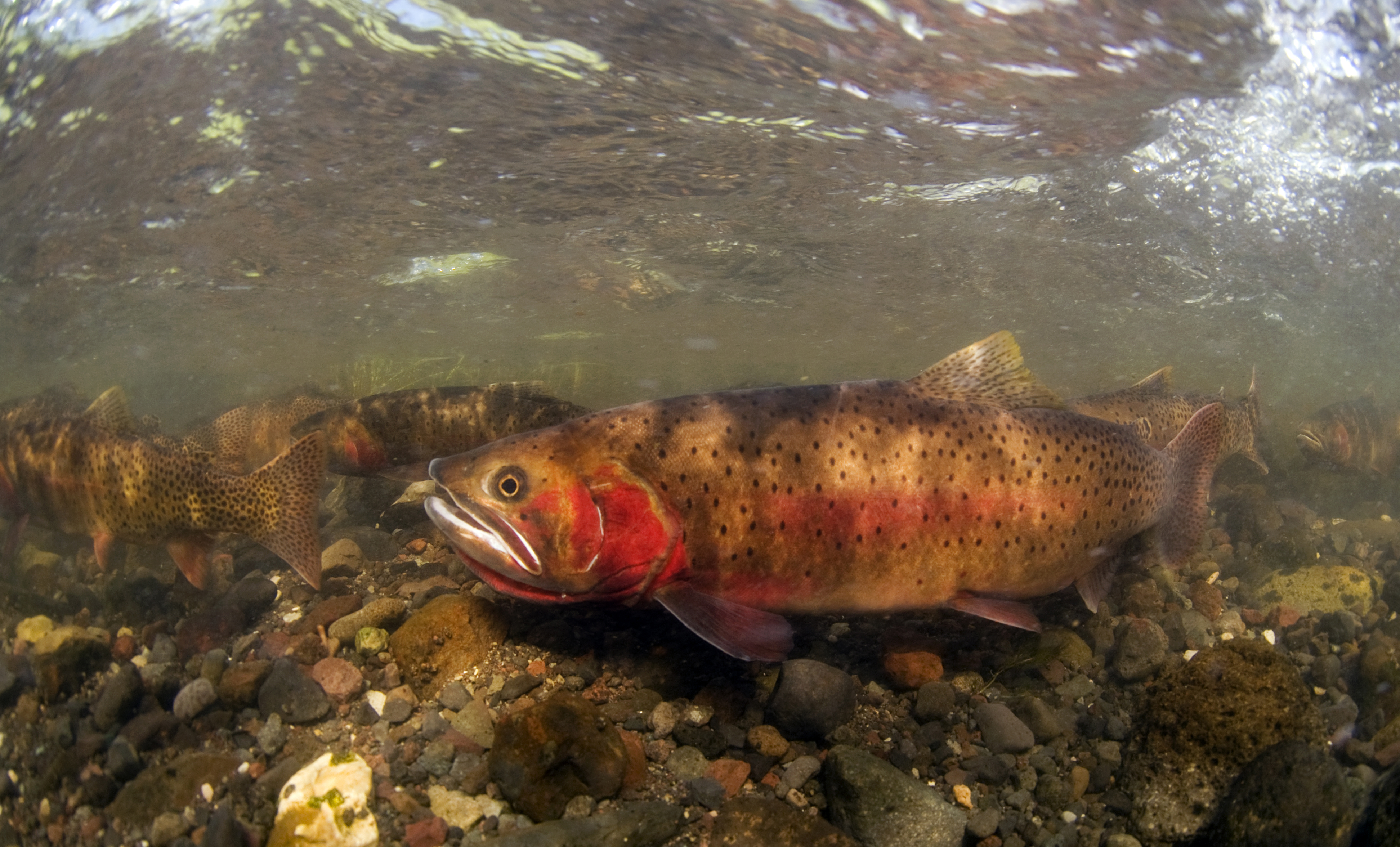
Spawning cutthroat trout, Lamar Valley; Jay Fleming; July 2011. By Yellowstone National Park from Yellowstone NP, USA – Spawning cutthroat trout, Public Domain, https://commons.wikimedia.org/w/index.php?curid=50246593

Article: Irrigation intensification impacts sustainability of streamflow in the Western United States — Nature Communications

An irrigation headgate on a canal in the Upper Green River Basin has a lock that can be used to regulate flows. (Angus M. Thuermer Jr./Wyofile)

Click the link to access the article on the Nature Communications website (David Ketchum,Ā Zachary H. Hoylman,Ā Justin Huntington,Ā Douglas BrinkerhoffĀ &Ā Kelsey G. Jencso). Here’s the abstract:

Abstract

Quantifying the interconnected impacts of climate change and irrigation on surface water flows is critical for the proactive management of our water resources and the ecosystem services they provide. Changes in streamflow across the Western U.S. have generally been attributed to an aridifying climate, but in many basins flows can also be highly impacted by irrigation. We developed a 35-year dataset consisting of streamflow, climate, irrigated area, and crop water use to quantify the effects of both climate change and irrigation water use on streamflow across 221 basins in the Colorado, Columbia, and Missouri River systems. We demonstrate that flows have been altered beyond observed climate-related changes and that many of these changes are attributable to irrigation. Further, our results indicate that increases in irrigation water use have occurred over much of the study area, a finding that contradicts government-reported irrigation statistics. Increases in crop consumption have enhanced fall and winter flows in some portions of the Upper Missouri and northern Columbia River basins, and have exacerbated climate change-induced flow declines in parts of the Colorado basin. We classify each basin’s water resources sustainability in terms of flow and irrigation trends and link irrigation-induced flow changes to irrigation infrastructure modernization and differences in basin physiographic setting. These results provide a basis for determining where modern irrigation systems benefit basin water supply, and where less efficient systems contribute to return flows and relieve ecological stress.

Pacific Northwest tribal nations, states sign historic #ColumbiaRiver Basin agreement with U.S. — The Seattle Times

Columbia River Basin. By U.S. Army Corps of Engineers – Portland District Visual Information, U.S. Army Corps of Engineers, Public Domain, https://commons.wikimedia.org/w/index.php?curid=8963386

Click the link to read the article on The Seattle Times website

Leaders of four Pacific Northwest tribal nations indigenous to the region on Friday inked a historic agreement with the U.S. that lays out the future of the operations of hydropower dams in the Columbia River Basin, including the dams on the Lower Snake River. At the White House on Friday, the Nez Perce, Umatilla, Warm Springs and Yakama tribes, and the states of Washington and Oregon, signed a memorandum of understanding, outlining a series of commitments from the federal government. It’s not an agreement for dam removal; in fact, removal of the Lower Snake dams, a long-running and controversial goal of tribes and other groups, is put off for years. But it’s the end of an era.

ā€œWe need a lot more clean energy, but we need to develop it in a way that’s socially just,ā€ Yakama Nation Chair Gerald Lewis said at the White House. ā€œThe last time energy was developed in the Columbia Basin it was done on the backs of tribal communities and tribal resources.ā€

[…]

Tribal nations helped draw up a road map for the future of the region’s energy and salmon.Ā Under the $1 billion-plus agreementĀ announced in December and approved by a federal judge this month,tribes will help restore wild fish and lead in the construction of at least 1 to 3 gigawatts of clean-energy production. The agreement stems from years of mediated negotiations in a decadeslong court battle over dam operations. A stay of litigation is in place for up to five years and could continue for as long as 10. In a key compromise, the agreement also reduces water spilled over the dams for summer and fall run fish, including fall Chinook, one of the more robust salmon runs on the river, and a mainstay of tribal and sport fisheries. That allows the Bonneville Power Administration to sell more power from the dams into the lucrative California power market. However, spring spill would be boosted, to help spring Chinook by providing something more like a spring freshet for young fish migrating to the sea.

It comes as climate change turns more mountain snowĀ to rain, throwing imperiled salmon and steelheadĀ into hot water, and straining access to aĀ steady stream of hydropower.

Map of the Columbia River watershed with the Columbia River highlighted. By Kmusser – self-made, based on USGS and Digital Chart of the World data., CC BY-SA 3.0, https://commons.wikimedia.org/w/index.php?curid=3844725

Our Power is Rivers: Good Hydro versus Bad Hydro and the Future of Energy in the Pacific Northwest — @AmericanRivers #ActOnClimate

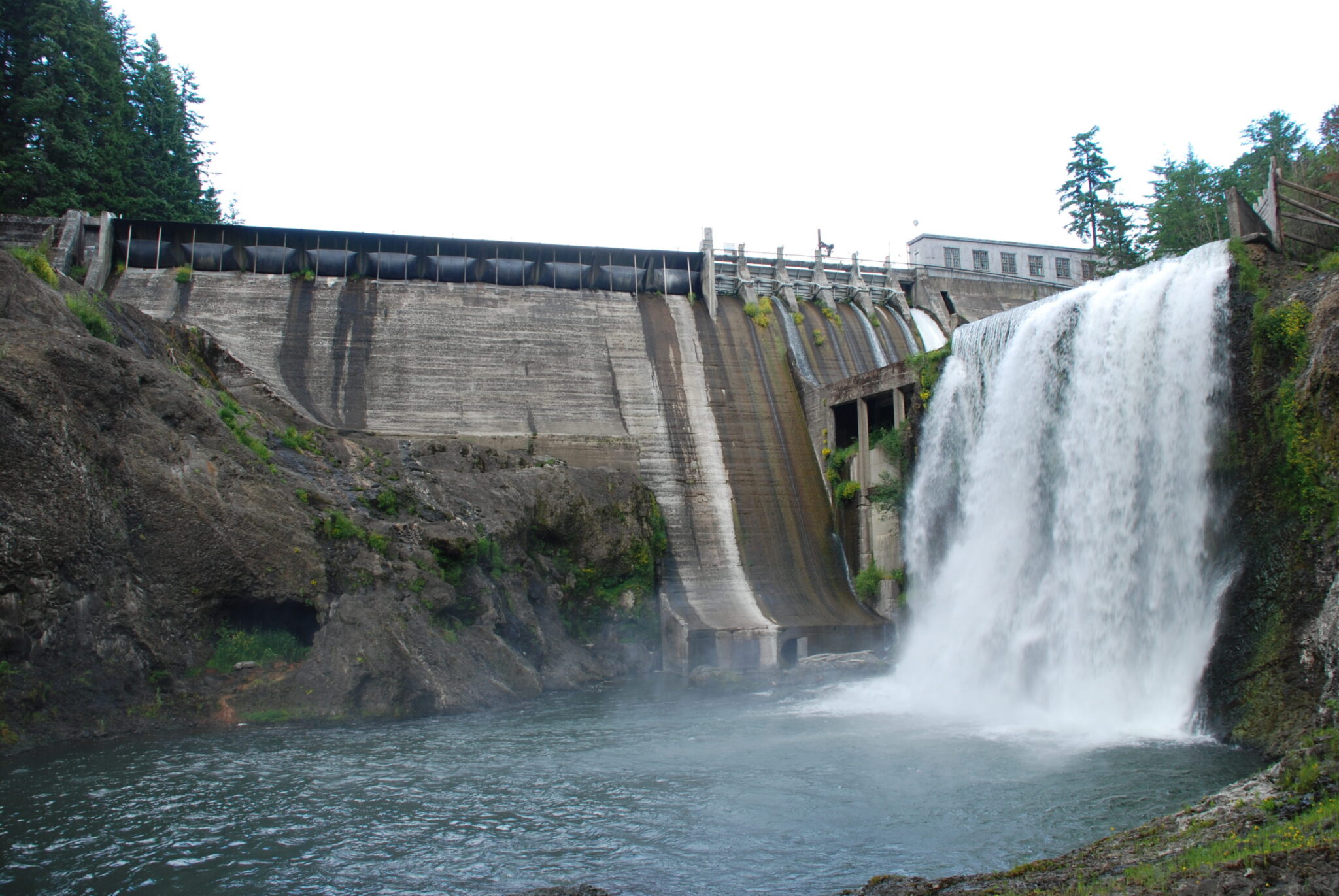
Condit Dam (removed in 2011), Washington | Photo by Thomas OKeefe via American Rivers

Click the link to read the article on the American Rivers website (Kyle Smith):

October 13, 2023

There is an ongoing debate in the Pacific Northwest around whether hydropower as a whole is ā€œgoodā€ or ā€œbadā€. But this conversation misses important details and nuance.

There are thousands of dams blocking rivers across the Northwest. Many dams provide energy, transportation, flood control, and irrigation. But many are causing more harm than good – and they are falling apart. As a society, we are making choices about the costs and benefits of dams: Which ones can be operated in a more environmentally friendly and economically viable way? And which dams need to be removed?

Dams harm rivers. They can destroy fish and wildlife habitat, degrade water quality, and turn free-flowing rivers into slow moving reservoirs that emit methane, a potent greenhouse gas that causes climate change. Dams in the Pacific Northwest have been a main cause of salmon extinction and a source of painful injustice for the region’s Tribal Nations.

American Rivers has always taken a pragmatic, solutions-oriented approach to dams and hydropower. While we lead the movement to remove outdated dams, we are also a founding member of the Hydropower Reform Coalition, working to improve the operations of dams whose continued operation is important for our energy supply and economy. For the past several years, we’ve also been working with the hydropower industry in the ā€œUncommon Dialogue on Hydropower, River Restoration, and Public Safetyā€ – finding common ground on plans to retrofit and rehabilitate dams that still serve an important purpose and remove dams that pose a safety risk.

Simply put: American Rivers is ensuring our nation prioritizes healthy rivers, whether that’s by making hydro dams more river- and fish-friendly, maximizing the performance and efficiency of dams, and removing dams whose costs outweigh their benefits.

So, what does this look like in the Pacific Northwest where 50 percent of our annual energy generation comes from hydro? Major dams, including those on the Columbia River, helped build our world-class economy and will continue to support our vibrant region. But we must take a hard look at dams that are causing far more harm than good.

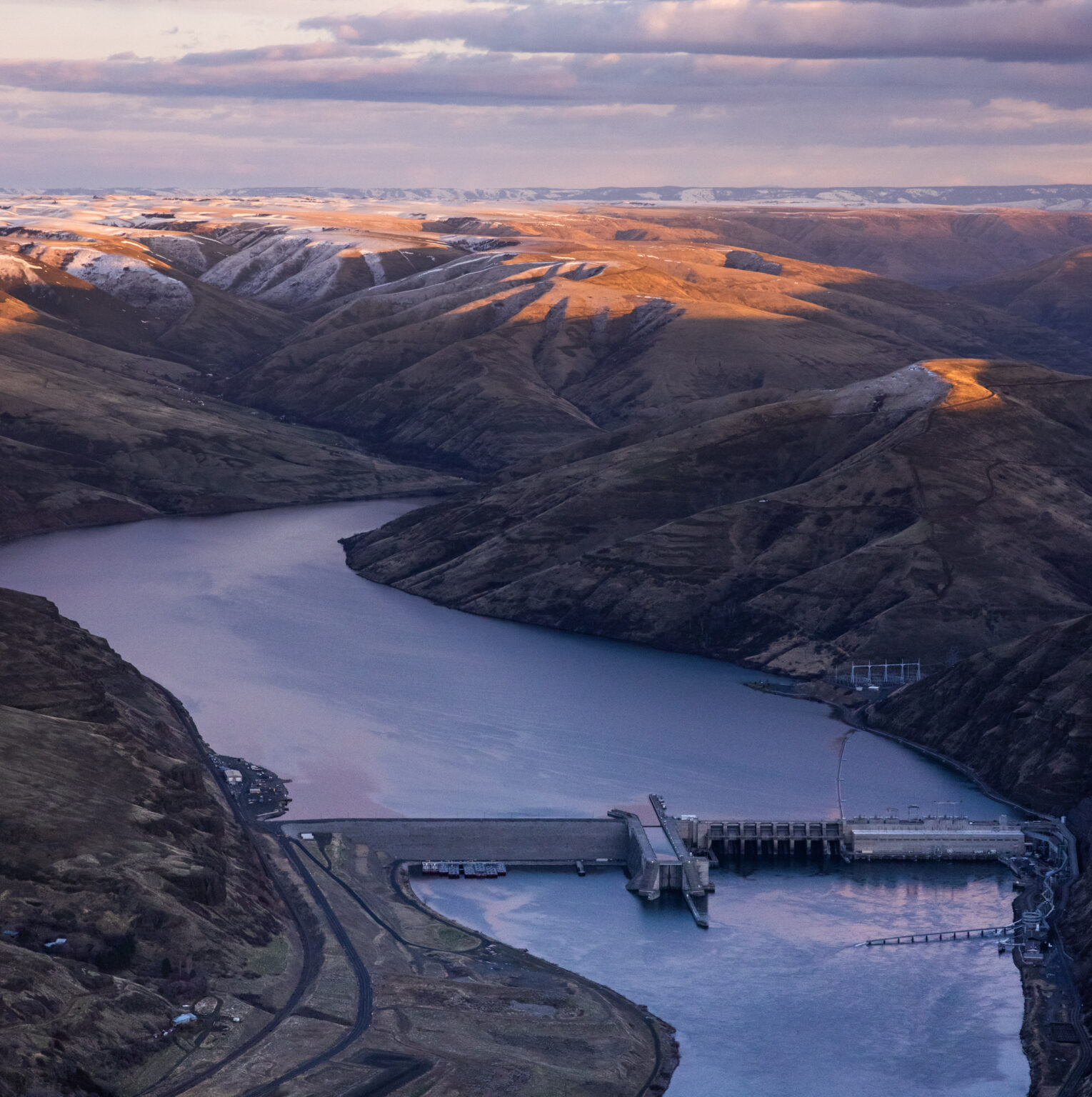
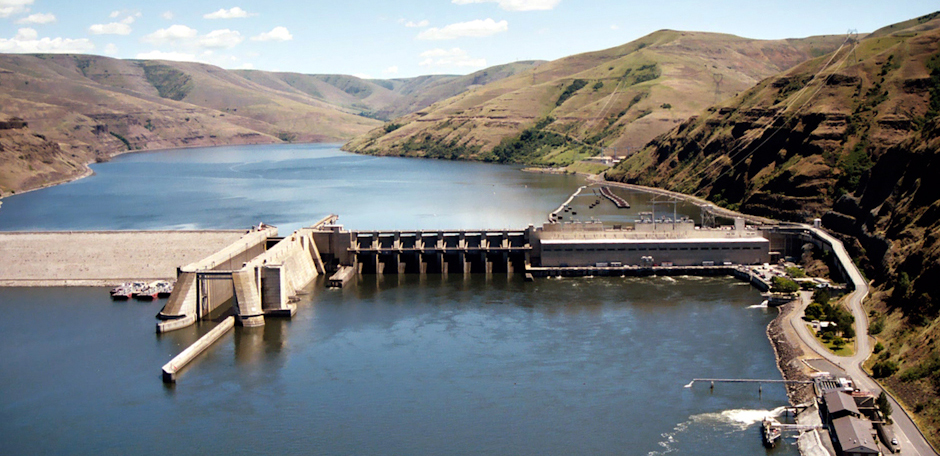
The lower four Snake River dams, which stretch between Tri-Cities, WA and Lewiston, ID, were constructed between 1957 and 1972. These dams provide around 900 average megawatts of power — around 4% of the Northwest’s energy generation. They also provide irrigation for crops grown around the Tri-Cities, as well as transportation for barge traffic between the Tri-Cities and Lewiston. While the services the lower four Snake River dams provide are valuable to surrounding communities, those services can be replaced with alternative technologies. Breaching the earthen portion of the dams is the best solution we have to solve the significant impacts the dams are having on salmon, steelhead, killer whales, Tribal Nations, and economies that rely on these species.

Unlike the mainstem Columbia dams, the lower four Snake River dams are ā€œrun of the riverā€ projects that do not provide flood control and store relatively little water in the reservoirs behind each dam. In summer months, those reservoirs bake in the hot sun, raising water temperatures and creating harmful conditions for cold water-dependent salmon and steelhead. In 2015, warm water in the lower Snake was responsible for killing over 95% of the year’s adult sockeye salmon run. Impacts on juvenile salmon are harder to measure, but conservative estimates are that upwards of 50% of juvenile salmon die between Lower Granite Dam on the Snake and Bonneville Dam on the Columbia during their journey to the ocean, and that figure is likely much greater in years when water temperatures rise above 70 degrees.

As we mentioned before, the lower four Snake River dams combined produce an average of around 900 megawatts. Compare that with John Day Dam on the mainstem Columbia 50 miles east of Hood River, which by itself produces around 1,200 average megawatts, and you begin to see why these four dams are the target of so much attention. Four times the negative impacts from dams and their harmful slackwater reservoirs, for less power than John Day Dam alone just doesn’t make sense as we envision a new clean energy future.

Granite Dam on the Snake River | Photo: Army Corps of Engineers

Finally, no form of energy can be considered clean if it leads to the extirpation of as many species as the lower four Snake River dams continue to cause, particularly when you consider the value those species have for Tribal Nations that have lived in the Columbia Basin since time immemorial. The American Fisheries Society, the National Oceanic and Atmospheric Administration, Trout Unlimited, and many other science-based organizations all recognize that breaching the lower four Snake River dams must be the centerpiece action for restoring salmon populations in the Columbia Basin.

Tribal Nations across the Northwest are leading this initiative to breach the lower four Snake River dams because of these negative impacts. The largest impact being to the salmon populations; their dwindling numbers directly impact the culture and traditions of tribal members and their future generations. In addition, with the harm placed on salmon by these dams, treaties made between the U.S. Government and the Tribes are being violated. We have a moral and ethical obligation to uphold our treaty promises and to save Snake Basin salmon and steelhead from extinction.

As we work to develop a bold new clean energy future for the Pacific Northwest, hydropower will continue to be an important part of our generation portfolio. When measured on the whole, it becomes clear that the lower four Snake River dams cannot be a part of that vision. We must build a system that is reliable, resilient, and equitable. We must continue working together to achieve a future of healthy rivers, abundant salmon, and affordable, reliable clean energy.

Map of the Snake River watershed, USA. Intended to replace older File:SnakeRiverNicerMap.jpg. Created using public domain USGS National Map data. By Shannon1 – Own work, CC BY-SA 4.0, https://commons.wikimedia.org/w/index.php?curid=62294242