
From The Telluride Daily Planet (Collin McRann):
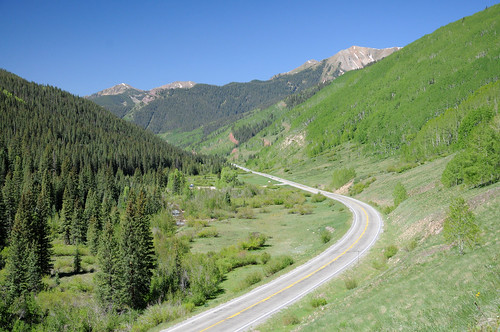
Heavy rains in combination with steep slopes make much of the region prone to slides, especially around Highway 145. Driving to or from Telluride can be unpredictable, especially after heavy rains.
Since July, numerous closures have delayed traffic on 145 due to debris from slides. The first closure came on July 24 when two-way traffic was closed for several hours near Rico while crews cleaned up a slide from an avalanche path. The next slides were between Placerville and Keystone Hill, when on the afternoon of July 31 showers brought 14 different slides down onto the highway. And on Aug. 2, the highway was blocked on several locations, also near Keystone Hill, due to an unknown number of slides.
“What’s been coming down is lots of rocks, water, mud and tree branches,” said Nancy Shanks, spokesperson for the Colorado Department of Transportation. “But even the mud we have to haul off, we can’t just push it over. Right now we’re stockpiling it because we have to put it somewhere. We’re working to find a place for the debris, it might be places where we can take and smooth it out and use it.”[…]
Most of the slides are caused by heavy, slow moving storms and debris typically flows down through dry creek beds. Road closures due to mudslides can last for hours, but crews are typically prepared for dealing with them.
Rains in San Miguel County were recorded as close to or slightly above normal in July, with between 3 and 4 inches, according to the National Oceanic and Atmospheric Administration. The most rain came just west of Telluride in areas prone to slides.
From the Montrose Daily Press (Mike Easterling):
Jim Daniels, a meteorologist for the National Weather Service in Grand Junction, said the rainy season for the region is in full swing and shows no signs of dissipating.
“For July, the monsoon season really got going for Western Colorado, which is getting normal to above-normal precipitation for most places, although it may not seem like it,” he said. “The outlook for August — in fact, right on through the fall — is still … above-normal precipitation for Western Colorado. So I think we’ll continue remaining in a pattern friendly for monsoonal moisture.”