
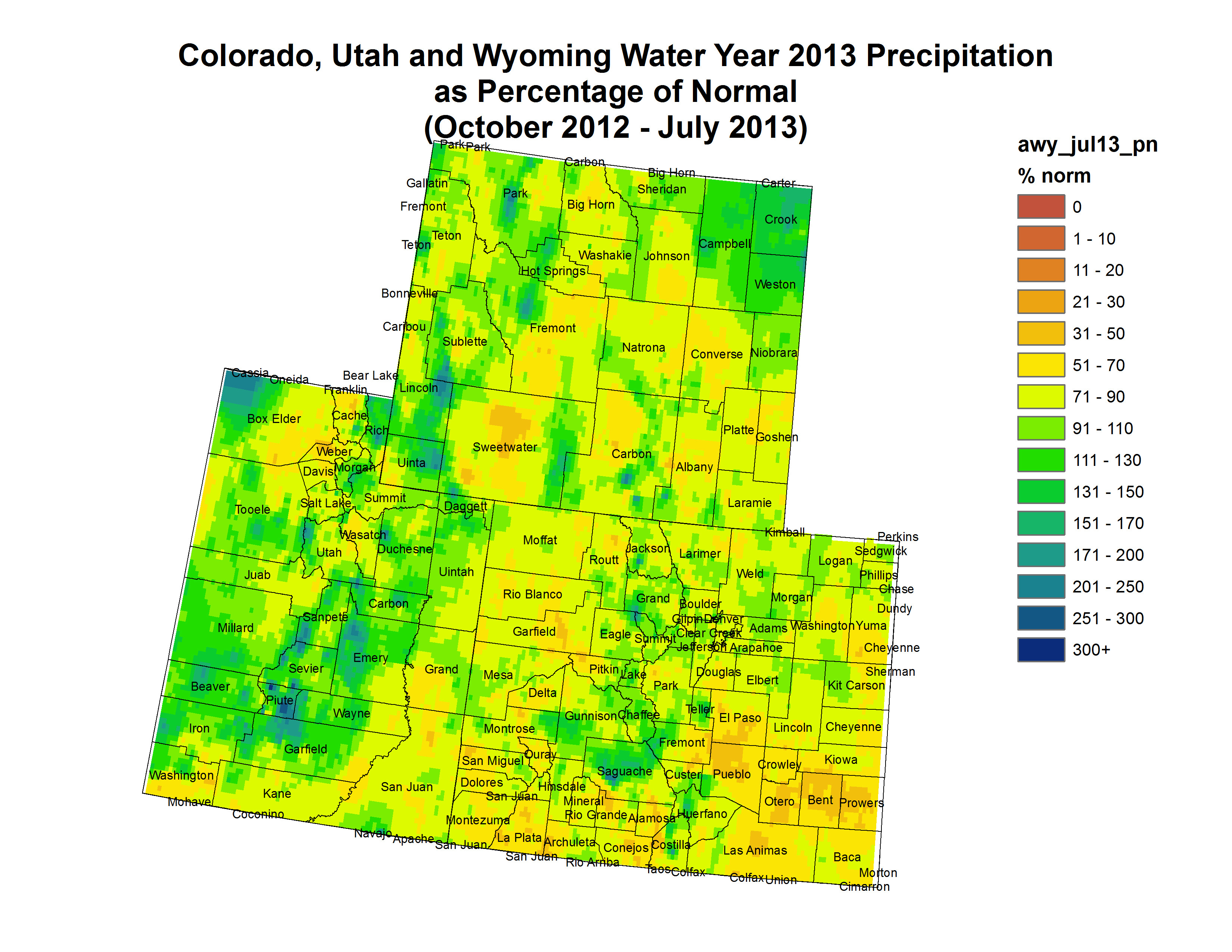
Click on the thumbnail graphic for the water year precipitation map for the Upper Colorado River region from the Colorado Climate Center.
From The Pueblo Chieftain (Chris Woodka):
Rainfall in the past week has doubled the year’s precipitation total for Pueblo, but even with all that moisture, the official count is just 78 percent of average. That has the potential to change again, as storms are expected to move through the area today and Wednesday, with lingering showers the rest of the week. “I think we’re making a dent in the short-term precipitation deficit, but it’s going to take several months of above-average rain to get out of the drought,” said Eric Petersen, meteorologist with the National Weather Service in Pueblo.
The U.S. Drought Monitor shows Southeastern Colorado is moving out of the most extreme stage of drought, although the corridor along the Arkansas River remains exceptionally dry.
The rains, 3 inches since Aug. 1, have been coming right on schedule, because the first two weeks of August are historically the wettest in summer. They also are coming later in the day, since the storms usually lose their punch by sundown. Much of the recent rainfall in Pueblo has developed at dusk and hung around until midnight, Petersen said. The rains continue to be local, with some areas getting pounded and others just receiving a mist. Maps for the last week from the Community Collaborative Rain, Hail and Snow Network, a group of volunteer weather spotters, show that storms have been far from uniform.
That explains why heavy rains in Manitou Springs west of Colorado Springs aren’t making much of an impact on Fountain Creek by the time it gets to Pueblo. The greatest surge came early Saturday, causing a 1-foot increase at the confluence of Fountain Creek with the Arkansas River. The flow of water briefly hit 1,000 cubic feet per second and then quickly dropped as the wave passed through.
During the rains, many Puebloans have turned off their sprinkler systems and left watering the lawn to Mother Nature.
From email from Governor Hickenlooper’s office (Eric Brown):
Gov. John Hickenlooper declared a disaster emergency related to flooding in recent days in El Paso County. The declaration will make resources available to remove flooding debris and provide flood emergency protective measures.
El Paso County and the City of Manitou Springs on Aug. 10 requested the state assistance. The governor gave verbal approval on the same day.
The governor authorized $400,000 be transferred into the Disaster Emergency Fund from the General Fund appropriation in Fiscal Year 2013-14 to the Controlled Maintenance Trust Fund. The director of the Colorado Office of Emergency Management will direct and allocate the funding to the appropriate government agencies to address the disaster.
The governor also activated the State Emergency Operations Plan to address the flooding. The activation requires all state departments and agencies to take whatever actions may be required and requested by the director of the Colorado Office of Emergency Management, including provision of appropriate staff and equipment as necessary.
The governor further authorized the Colorado National Guard to assist with search and rescue missions in the area, if necessary, as more rain continues to fall.
One thought on “Drought news: Monsoon moisture helps but southeastern Colorado is still behind for the water year #COdrought”