The health of our waters is the principal measure of how we live on the land — Luna Leopold
#Snowpack news: February Mountain Precipitation Lowest in Last Thirty Years — Brian Domokos
Here’s the release from the Natural Resources Conservation Service (Brian Domokos):
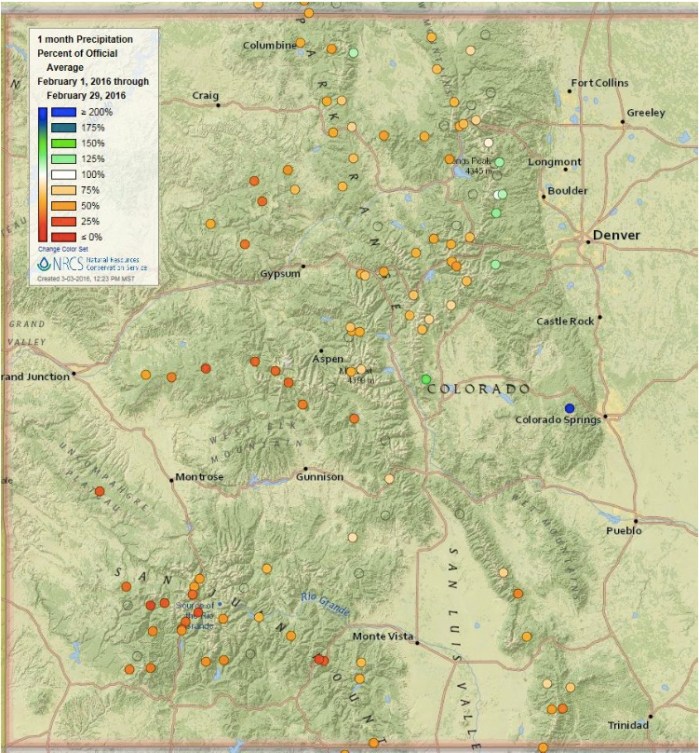
According to the USDA Natural Resources Conservation Service (NRCS) SNOw TELemtery network of mountain weather stations, Colorado statewide precipitation during February was the lowest in more than 30 years. The combined San Miguel, Dolores, Animas & San Juan basin only received 35 percent of the normal February precipitation. Statewide mountain precipitation, while still poor, was only slightly better at 56 percent of normal. “February in the mountains of Colorado is typically a slightly drier month than compared to say, April. But a dry February like this could have big ramifications should April and May not pan out” comments Brian Domonkos, Snow Survey Supervisor with the USDA NRCS.
Figure 1:February precipitation for SNOTEL sites (Click on map for link)
As expected, snowfall came up short as well, statewide snowpack is thankfully near normal at 99 percent, down 13 percent during the month of February. Most major watersheds in the state currently fall within a narrow range from 102 percent in the Arkansas and South Platte to 97 percent in the combined San Miguel, Dolores, Animas and San Juan basins. The numerical outlying basins are the combined Yampa, White & North Platte River basins at 93 percent of normal.
Reservoir storage has been very consistent since the beginning of the water year, not wavering one percentage point at 110 percent of the thirty year normal. Currently reservoir levels are far better than the deficits that were experienced during the winters of 2013 and 2014.
The majority of streamflow forecasts in the state fall between 75 and 105 percent of normal, yet are down from last month. With the two most significant precipitation months yet to come, spring and summer runoff are heavily dependent on March and April weather systems which leave room and the possibility for improvement.
For more detailed information about individual Colorado watersheds or supporting water supply related information, have a look at the Colorado Water Supply Outlook Report or feel free to go to the Colorado Snow Survey website at: