
From The Pueblo Chieftain (Matt Hildner):
A dry and warm February and early March bodes poorly for San Luis Valley irrigators but it may have a slight silver lining if snow returns to the high country later this spring.
Temperatures ranging to as much as 6 degrees above normal in February led to an early thaw on the valley’s creeks and rivers, allowing Colorado to send more water downstream than it might otherwise.
That water goes toward Rio Grande Compact requirements that divvy the river’s water between Colorado, New Mexico and Texas.
And the February flows, which were 900 acre feet above normal on the Conejos River and nearly 4,300 acrefeet higher than normal on the Rio Grande, mean curtailments might be 1 to 3 percentage points lower fwor irrigators once they begin watering their crops in April.
“It puts a little smile on our face to get this bonus delivery but we’re more concerned about what’s going to happen for our irrigators,” said Pat McDermott a staff engineer for the Colorado Division of Water Resources in Alamosa.
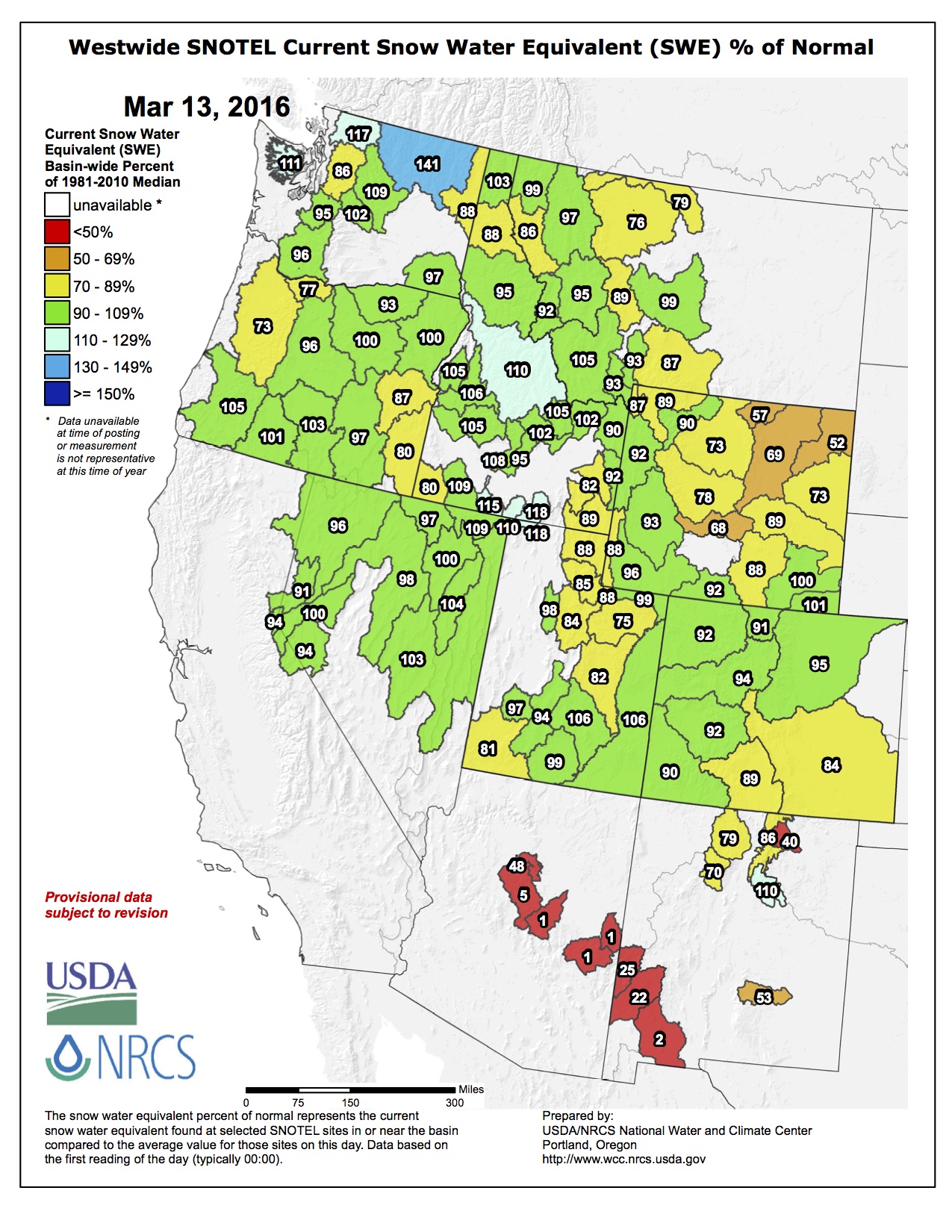
The Rio Grande basin’s snowpack, which stood at 126 percent of normal at the end of December, was at 98 percent at the beginning of March.The dwindling snowpack comes despite an El Nino weather pattern that was expected to favor the San Juan Mountains.
“We all expected this El Nino to come in roaring like a lion and it’s meowing like a kitten,” McDermott said.
Snowpack could still rebound.The National Weather Service’s forecast still calls for above average precipitation in the region through May.
As of now, the Division Engineer’s office for the valley is predicting slightly more than the 620,000 acre-foot average that annually passes through Del Norte on the Rio Grande.
The valley’s second biggest river, the Conejos, is expecting roughly 290,000 acre-feet, which would mark the sixth year in a row the river has had below-average flows.