The health of our waters is the principal measure of how we live on the land — Luna Leopold
Trout Unlimited honors Denver Water with River Stewardship Award
Here’s the release from Colorado Trout Unlimited (Randy Schofield):
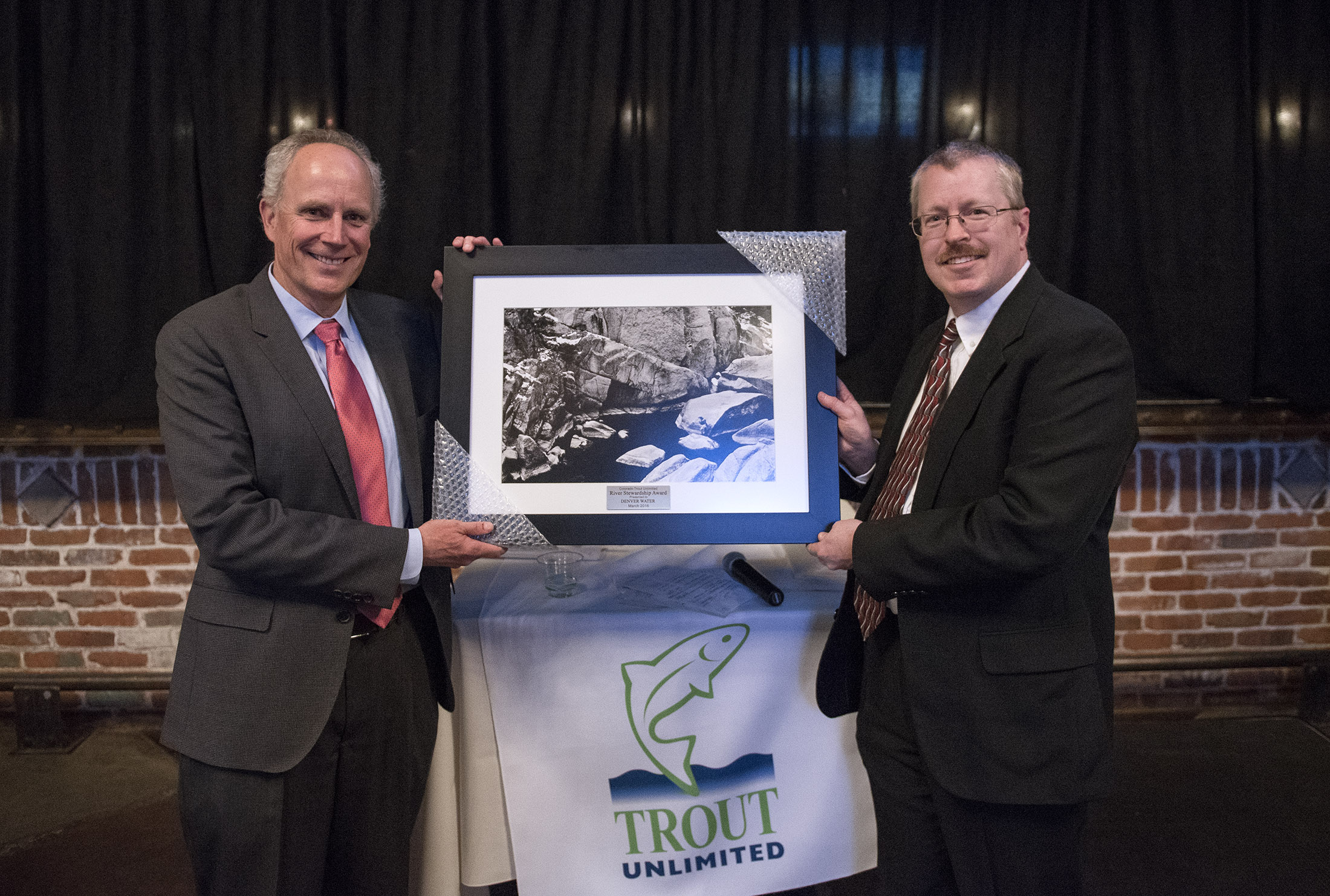
Trout Unlimited has awarded Denver Water, the Denver metro area’s largest water utility, its 2016 River Stewardship Award, recognizing the utility’s leadership in urban water conservation and its collaborative efforts with Trout Unlimited and other stakeholders to promote river health in the Upper Colorado River and South Platte basins. TU presented the award at its annual River Stewardship Gala http://coloradotu.org/2016/02/2016-river-stewardship-gala/ Thursday evening at Mile High Station in Denver.
“We’re recognizing the fact that, 25 years after the divisive Two Forks Dam battle, Denver has engaged former adversaries as partners in a shared 21st Century effort for river stewardship,” said David Nickum, executive director of Colorado Trout Unlimited. “That’s a remarkable and encouraging sign of progress in protecting the rivers that help sustain Colorado’s wildlife, communities and recreation economy.”
Denver Water provides water supply to approximately 25 percent of Colorado’s population with less than 2 percent of all the water used in the state and has been a leader in advancing water conservation, with customers reducing water use by more than 20 percent over the past 10 years, despite a 10 percent increase in population.
Denver has also established new collaborative relationships with the West Slope and with conservation groups, including TU, to help improve river conditions in the Colorado River headwaters through “Learning By Doing https://denverwaterblog.org/2016/01/27/ending-a-rocky-mountain-family-feud/,” a monitoring and adaptive management program with the goal of maintaining, and where possible, improving the health of Colorado River headwater streams in Grand County http://coloradotu.org/2014/07/moffat-agreement-whats-in-it-for-the-river/. Under LBD, Denver has agreed to promote flexibility in their operations to deliver flows when and where they are most needed to minimize river impacts, as well as invest in restoration projects to help improve stream habitat and water quality.
The LBD partnerships follow similar collaborative efforts in the South Platte River through the South Platte Protection Plan, which emerged as a locally developed alternative to Wild and Scenic designations being considered for segments on the South Platte River upstream of Denver. For nearly 12 years, the Plan has promoted collaboration among water suppliers, local governments, recreationists and conservationists – including flow management, an endowment to support investment in
river-related values, and partnerships for water quality and watershed health. Development of the Plan also inspired the creation of the Coalition for the Upper South Platte, a group that has helped direct millions of dollars into watershed restoration efforts including post-Hayman fire recovery projects.
“In the years since the Two Forks veto, Denver Water has truly changed its culture,” said Nickum. “Rather than looking at conservationists and the West Slope as enemies to be defeated, they have engaged those parties as allies in conserving the watersheds we all share. Colorado TU is pleased to recognize Denver Water for its leadership in promoting partnerships that not only supply water to Denver citizens, but also promote stewardship of Colorado’s rivers as well.”
“Part of what makes Colorado an amazing state are our great cities, variety of recreational opportunities and beautiful natural environment. Denver Water is committed to continuing to collaboratively work together with partners from all sectors to keep our rivers healthy,” said Jim Lochhead, Denver Water CEO/manager. “We’re honored to receive the 2016 River Stewardship Award from Trout Unlimited and look forward to continuing our work with them in the future.”
Denver Water CEO Jim Lochhead, left, receives award from CTU executive director David Nickum
The Upper Colorado River system and the Fraser/Williams Fork rivers
provide important aquatic habitat and serve as a critical municipal,
agricultural, recreational and industrial water supply for the state as
a whole. A substantial percentage of the native flows of the Colorado,
Fraser and Williams Fork rivers is currently diverted for Front Range
water supply projects, and as a result, the health of the rivers has
declined over the years. Two projects will divert additional native
flows from these rivers across the Continental Divide to meet growing
municipal needs of the Front Range: the Windy Gap Firming Project and
the Moffat Collection System Project. Although these two projects
triggered conflicts between West Slope and East Slope entities, years of
negotiation produced the 2012 Colorado River Cooperative Agreement
(CRCA), which establishes a long‐term partnership between Denver Water
and the West Slope. The CRCA is a framework for numerous actions to
benefit water supply, water quality, recreation, and the environment on
both sides of the Continental Divide. The LBD Cooperative Effort emerged
from the CRCA.