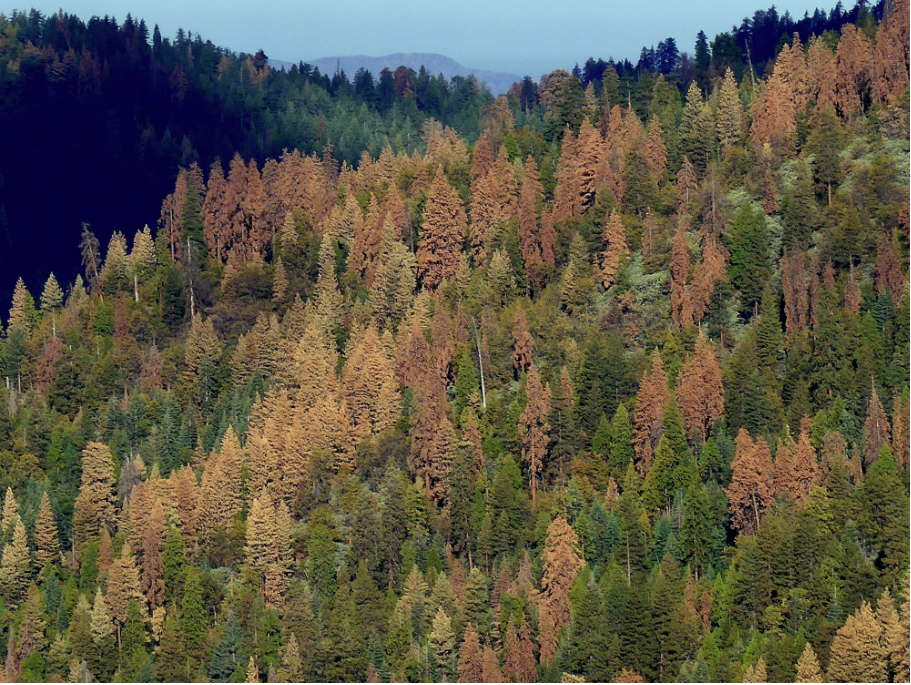
From the United States Geological Survey:
In recognition of World Water Day and in conjunction with the White House Water Summit, the U.S. Geological Survey is raising awareness of water issues and potential solutions in the United States.
Yep. It’s Getting Hotter and Drier Out There
“Hotter droughts,” which are severe droughts associated with human-caused climate change, are an emerging but poorly understood threat to forests worldwide. As climate change drives much of the nation into hotter, drier conditions, forest managers and scientists are not able to rely on historical patterns of temperature and precipitation for planning and decision making. Yet it is critical to identify forests and tree species most at risk.
Thus, USGS scientists and their collaborators are using California’s recent hotter drought (2012-2015) as a preview of the future, gaining the information needed to help forest managers adapt to a warming world.
Drought is More Than a Low Water Supply – And Why That Really Matters
We usually think of droughts as periods of low water supply caused by less rain or snow, but often overlook the other side of the equation: the drying power of the atmosphere, or atmospheric water demand. For example, if we look only at precipitation records, California’s recent drought would rank as severe but not unprecedented; comparable periods of low precipitation occurred during the Dust Bowl era of the 1920s and 1930s. However, compared to the Dust Bowl era, temperatures during the 2012-2015 California drought averaged about 1º C (about 2º F) warmer. Even though this may not seem like much, it significantly increased the atmospheric water demand and easily made this the most severe drought in California’s 120-year instrumental record, and perhaps much longer.
Additionally, water supplies for California’s cities, agriculture, industry and forests all depend on the accumulation of a thick mountain snowpack each winter, which then melts and slowly releases water during the otherwise dry summer months. But the higher temperatures of the recent drought meant that virtually no snow accumulated during the winter, and the little bit that did accumulate melted far earlier than usual in the spring.