From The Denver Post (Bruce Finley):
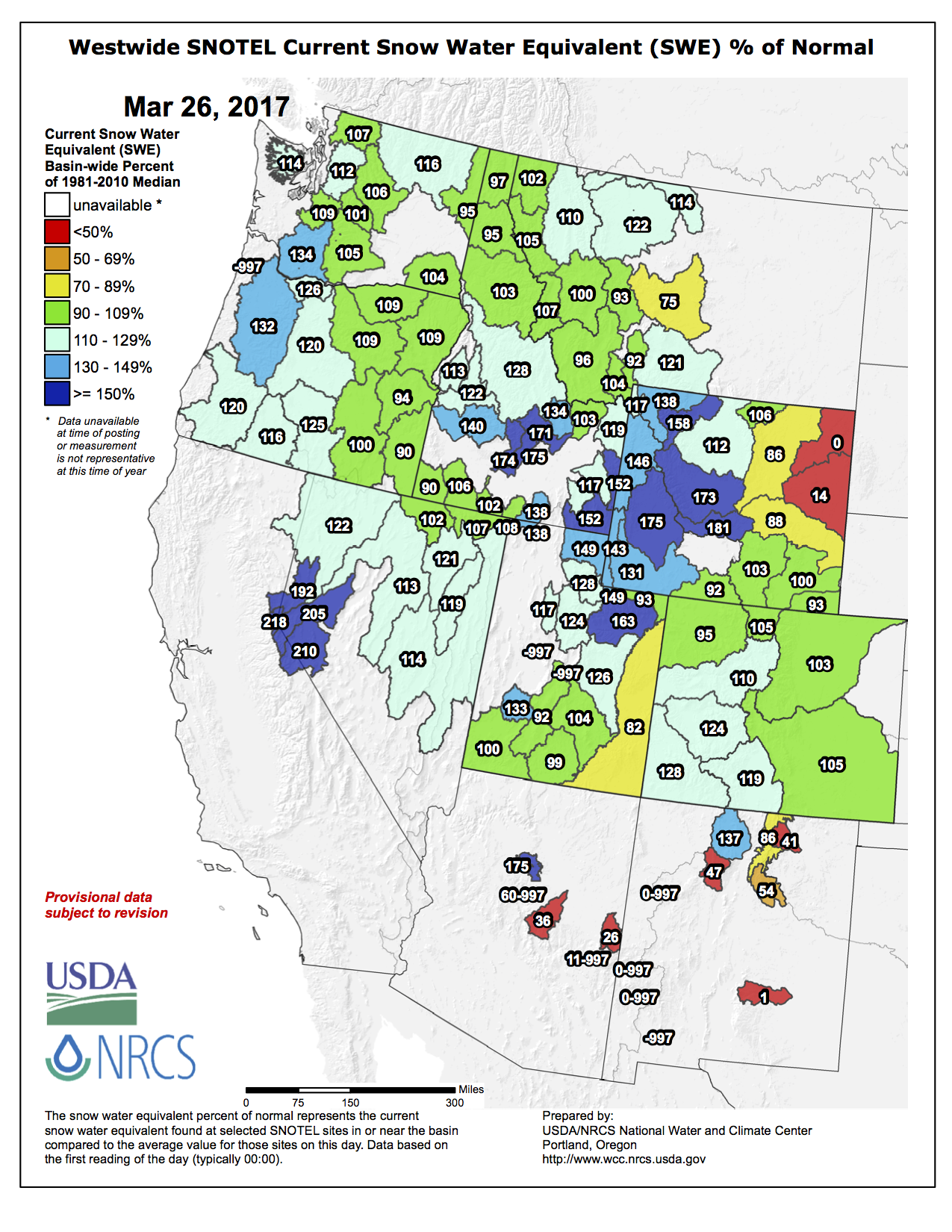
Colorado’s mountain snowpack water supply registered healthy Sunday, but exceptionally high temperatures in metro Denver over several months — 9 degrees above normal so far in March — rendered the past winter relatively wimpy.
While December and January temperatures dipped a bit below normal, February and March in metro Denver meant enduring temperatures at least 7 degrees higher than the average, according to National Weather Service data. And metro Denver temperatures during the pre-winter month of November also measured above normal.
Even at higher-elevation icy areas, such as Leadville, late winter temperatures this year in Colorado turned mild. Leadville’s average temperature was 5 degrees warmer than normal in February, 4.7 degrees in March through last Wednesday and 4 degrees in November.
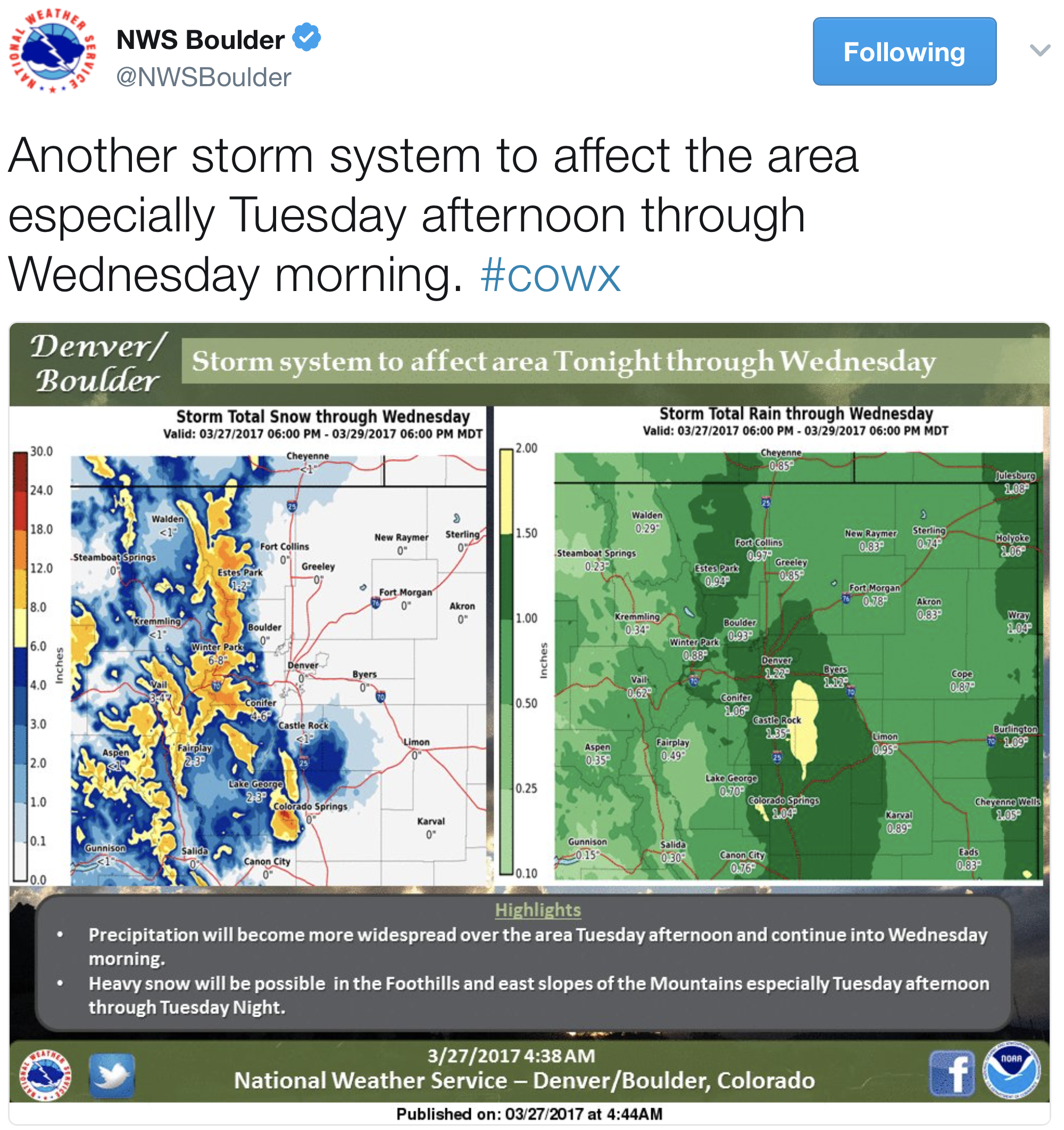
For Denver, weather service meteorologists on Sunday said storms this week could pull down the plus-9 degree March average of 48.7 degrees through Saturday, well above the March norm of 39.7 degrees. However, precipitation doesn’t guarantee lower temperatures, meteorologist Natalie Sullivan said. Denver residents were told they would face temperatures in the 50s and 60s through the week…
For Colorado food producers and urban residents, this is the key time of year for assessing mountain snowpack. The snow serves as slow-release water storage, closely watched by irrigators and municipal supply managers, because melting snow determines the amount of water that will end up in streams, rivers, reservoirs and irrigation canals. Water in mountain snowpack normally peaks in April.