U.S. Supreme Court Upholds Native American Adoption Law — Navajo Nation President Jonathan Nez

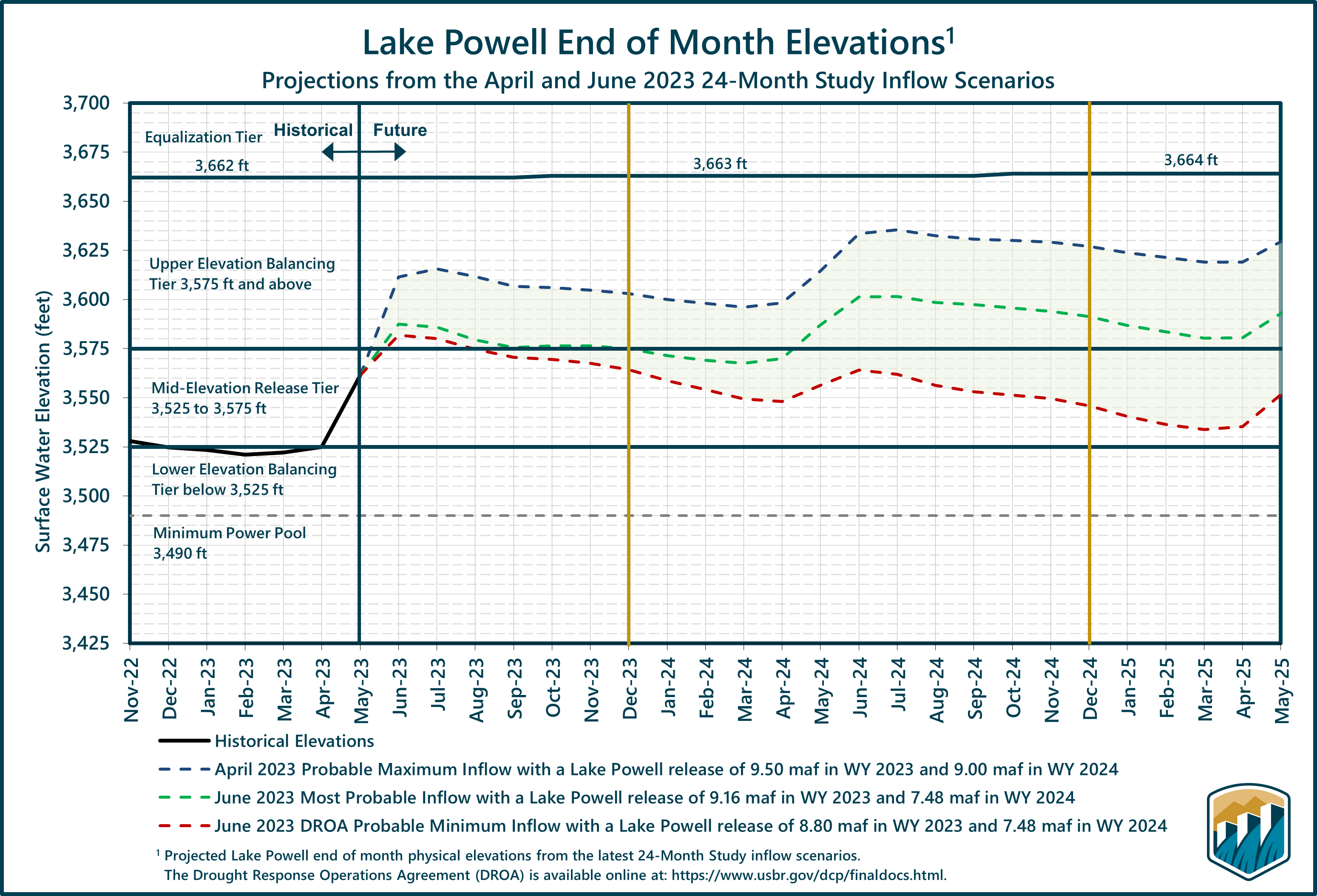
Reclamation: June 2023 Most Probable 24-Month Study projectons for #LakePowell and #LakeMead #ColoradoRiver #COriver #aridification

Click the link to access the latest projections on the Reclamation website.

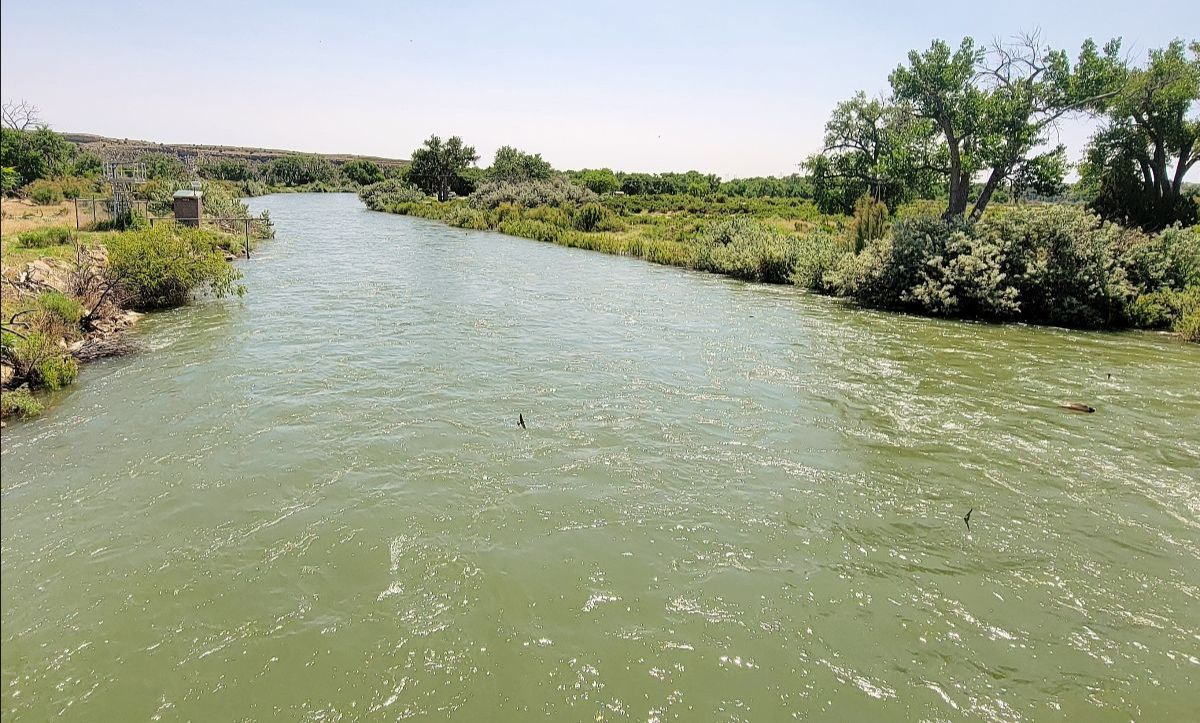
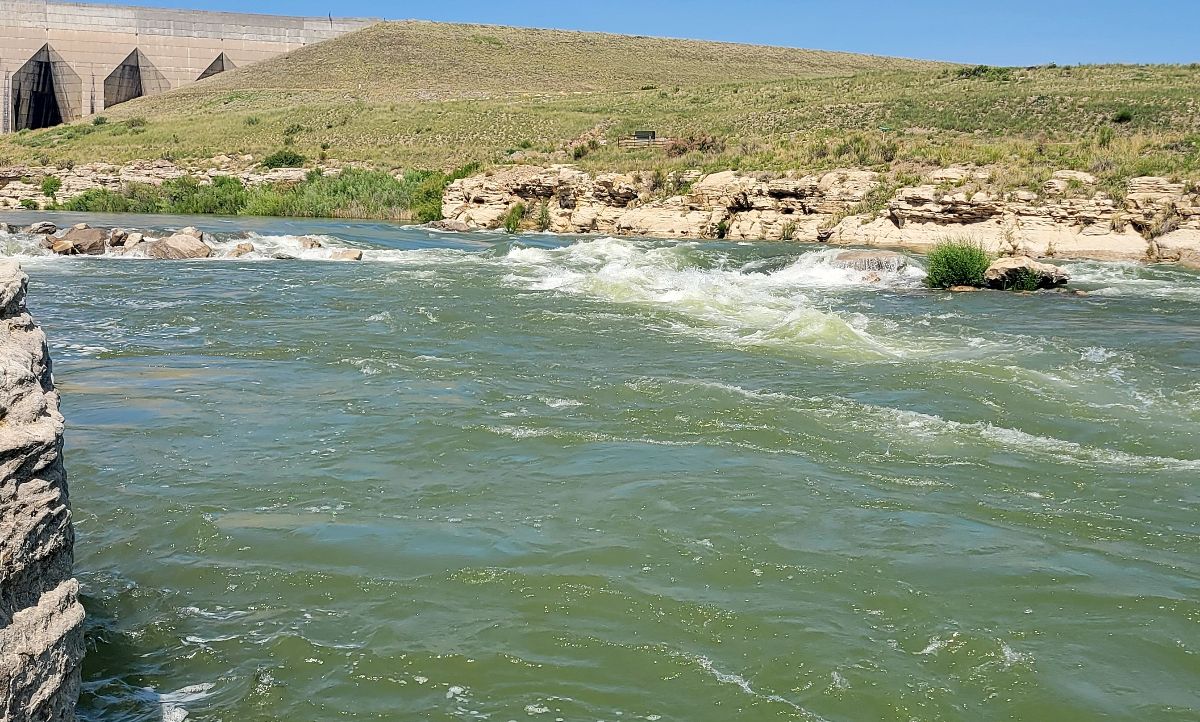
#Colorado Parks & Wildlife cautions public to avoid #ArkansasRiver below Lake #Pueblo due to high, cold, surging #waterĀ flows (June 15, 2023)

Pueblo Dam. Photo courtesy of Colorado Parks and Wildlife

Click the link to read the release on the Colorado Parks & Wildlife website (Bill Vogrin):

June 15, 2023

CPW cautions public to avoid Arkansas River below Lake Pueblo due to high, cold, surging water flows

PUEBLO, Colo. – Colorado Parks and Wildlife and its partner agencies are urging the public to avoid the Arkansas River below the Lake Pueblo State Park dam as flows have exceeded 3,000 cubic feet per second (CFS) due to recent normal runoff from spring snow melt in the mountains and locally heavy rains.

CPW, the Pueblo County Sheriff’s office and the City of Pueblo Fire Department are warning that the currents in the river below the dam are fluctuating dramatically, causing surges in the water levels. And the water is extremely cold below the dam – just 58 degrees – because of the spring runoff from the high mountains around the Upper Arkansas River Valley.

ā€œWe urge everyone to stay out of the river until the flows calm down,ā€ said Joe Stadterman, CPW’s park manager at Lake Pueblo. ā€œAnd anyone fishing along the banks should wear life jackets. This is an especially important time to be safe around the river.ā€

Spring runoff from snowmelt typically causes water levels in Lake Pueblo, in the Arkansas River below the dam and through the city of Pueblo to jump dramatically. Recent heavy rains have compounded the surge of water into the lake forcing heavier than normal releases from the dam.

This week, water is being released at a rate of about 3,365 cfs. That translates to a discharge rate equal to one cubic foot of water per second or about 7.5 gallons per second. Prior to this surge, water was being discharged at just about 200 cfs or less.

ā€œThe tailwaters below the dam are a popular place to fish and tube,ā€ Stadterman said. ā€œBut this is not a safe time for any activities in the water. Everyone should wait until this river advisory is lifted and the flows are back to normal.ā€

The partner agencies expect the river advisory to remain in place for at least a week. Please await further information as to when flows are reduced and the river is back to normal levels.

CPW manages recreation at Lake Pueblo in partnership with its owner, the U.S. Bureau of Reclamation. The bureau built Lake Pueblo in 1970-75 as part of the Fryingpan-Arkansas water diversion, storage and delivery project. It provides West Slope water to upwards of 1 million Front Range residents, primarily in southeastern Colorado, as well as agricultural irrigation.

Photo credit: Colorado Parks & Wildlife

Interior Department Initiates Process to Develop Future Guidelines and Strategies for Protecting the #ColoradoRiver #COriver #aridification

Lake Powell. Photo credit: USBR

Click the link to read the release on the Department of Interior website:

WASHINGTON — The Department of the Interior today [June 15, 2023] announced that it isĀ initiating the formal processĀ to develop future operating guidelines and strategies to protect the stability and sustainability of the Colorado River. The new guidelines will replace the 2007 Colorado River Interim Guidelines for Lower Basin Shortages and the Coordinated Operations for Lake Powell and Lake Mead, which are set to expire at the end of 2026.

The robust and transparent public process will gather feedback for the next set of operating guidelines, including new strategies that take into account the current and projected hydrology of the Colorado River Basin. The Basin is currently facing an historic drought, driven by climate change, that is increasing the likelihood of warming temperatures and continued low-runoff conditions, and therefore reduced water availability, across the region.

“The Biden-Harris administration has held strong to its commitment to work with states, Tribes and communities throughout the West to find consensus solutions in the face of climate change and sustained drought. Those same partnerships are fundamental to our ongoing work to ensure the stability and sustainability of the Colorado River Basin into the future,ā€ said Deputy Secretary Tommy Beaudreau. ā€œAs we look toward the next several years across the Basin, the new set of operating guidelines for Lake Powell and Lake Mead will be developed collaboratively based on the best-available science.ā€

“Developing new operating guidelines for Lake Powell and Lake Mead is a monumentally important task and must begin now to allow for a thorough, inclusive and science-based decision-making process to be completed before the current agreements expire in 2026,” said Reclamation Commissioner Camille Calimlim Touton. “The Bureau of Reclamation is committed to ensuring we have the tools and strategies in place to help guide the next era of the Colorado River Basin, especially in the face of continued drought conditions.ā€

The process announced today is separate from the recently announced efforts to protect the Colorado River Basin through the end of 2026. The Supplemental Environmental Impact Statement to revise the December 2007 Record of Decision will set interim guidelines through the end of 2026; the process announced today will develop guidelines for when the current interim guidelines expire.

The Notice of Intent to prepare an Environmental Impact Statement asks the public to consider the past 15 years of operating experience since adoption of the 2007 Interim Guidelines, as well as how the best-available science should inform future operational guidelines and strategies that can be sufficiently robust and adaptive to withstand a broad range of hydrological conditions. The NOI also asks the public to consider how and whether the purpose and elements of the 2007 Interim Guidelines should be retained, modified, or eliminated to provide greater stability to water users and the public throughout the Colorado River Basin. The NOI will be available for public comment until August 15, 2023.

While the post-2026 process would only determine domestic operations, the Biden-Harris administration is committed to continued collaboration with the Republic of Mexico. It is anticipated that the International Boundary and Water Commission will facilitate consultations between the United States and Mexico, with the goal of continuing the Binational Cooperative Process under the 1944 Water Treaty.

President Biden’s Investing in America agenda represents the largest investment in climate resilience in the nation’s history and is providing pivotal resources to enhance the resilience of the West to drought and climate change, including to protect the short- and long-term sustainability of the Colorado River System. Through the Bipartisan Infrastructure Law, Reclamation is investing $8.3 billion over five years for water infrastructure projects, including water purification and reuse, water storage and conveyance, desalination and dam safety. The Inflation Reduction Act is investing an additional $4.6 billion to address the historic drought.

To date, the Interior Department has announced the following investments for Colorado River Basin states, which will yield hundreds of thousands of acre-feet of water savings each year once these projects are complete:

Map credit: AGU

A lot is still unknown heading into high-stakes negotiations on the future of the #ColoradoRiver — #Colorado Public Radio #COriver #aridifcation

Bluff UT – aerial with San Juan River and Comb Ridge. https://commons.wikimedia.org/w/index.php?curid=6995171

Click the link to read the article on the Colorado Public Radio website (Rachel Estabrook). Here’s an excerpt:

Representatives from more than a dozen Indigenous tribes spoke at a CU Boulder law conference last week about their interests in the Colorado River from each of their perspectives.Ā  Many of the prominent state and federal officials who manage the water attended the conference. But as they and other water authorities prepare to negotiate the river’s future, it’s unclear how tribes will participate, to what degree tribes will be treated as equal sovereigns, and how their desire to use all the water they legally have rights to will be considered. It’s also unclear whether negotiators will aim for a way to make the long-term reductions in water usage that a decades-long megadrought has made necessary or whether they will propose more short-term changes.Ā 

The gathering happened at a critical time: Collectively, Colorado River users have to figure out how to live with significantly less water going forward, and the federal government is forcing states to come to an agreement…

The group of tribal representatives and state water officials, along with academics who study the river, used the two-day conference for discussions about how to make their collective use of the river more sustainable over the long term…The tribes have a shared history of using the river and its tributaries over thousands of years and migrating based on water availability. In the century since the river has been dammed and diverted across seven states, each tribe has a different story about how their water rights have been denied and what they seek to change in the river’s management going forward…

Some river scholars and even people with roles in the negotiations are unclear about what’s possible as they determine longer-term allocations of the water…A lot is at stake for tribes, and each circumstance is unique…For example, Hopi Tribe council member Dale Sinquah said his people still need to have their water rights settled. Southern Ute Tribal Council Vice Chair Lorelei Cloud said the tribe wants to use water they have legal rights to in southwestern Colorado, but they don’t have the infrastructure. She said about 1,000 tribal members still have to manually haul water to their homes, and the tribe hasn’t been able to develop farmland…Crystal Tulley-Cordova from the Navajo Nation said her tribe couldn’t rely on groundwater because of abandoned uranium mines on their land.Ā Dwight Lomayesva, vice chairman of the Colorado River Indian Tribes on the border of California and Arizona, said his people would like to upgrade their farming and water infrastructure to make it more efficient, but the federal government still owns it. ā€œThe last major change in our irrigation infrastructure was made in 1942, when the United States government built some canals for the Japanese who were interned on our reservation,ā€ he said. Each needs to negotiate for themselves individually.

ā€œTo think that there’s an ā€˜Indian solution,’ really dishonors that individuality and the uniqueness of each one of those tribes,ā€ said Daryl Vigil, a Jicarilla Apache water leader who used to direct a tribal partnership in the Colorado River basin.

From the 2018 Tribal Water Study, this graphic shows the location of the 29 federally-recognized tribes in the Colorado River Basin. Map credit: USBR

Three big ideas to rescue the #ColoradoRiver, but are states and #water users ready for them? — @WaterEdCO #COriver #aridification

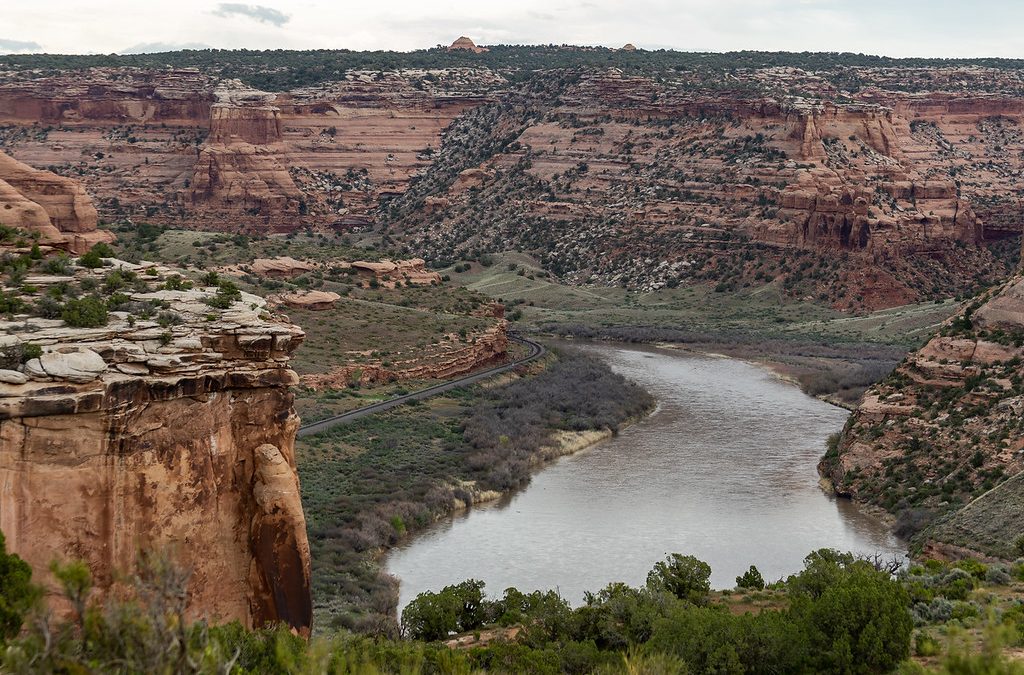
The Colorado River in McInnis Canyons National Conservation Area, near Grand Junction, Colorado, on April 26, 2019. Photo by Mitch Tobin/The Water Desk

Click the link to read the article on the Water Education Colorado website (Jerd Smith):

To save the Colorado River, its water users must look at radical new options, including a hard stop on new diversions, dams and reservoirs across the seven-state river basin, managing lakes Powell and Mead as one entity, and paying millions to farmers who agree to permanently switch to water saving crops and to change irrigation practices.

Those were among suggestions experts offered at a University of Colorado conference focused on the river June 8 and June 9 presented by the Getches-Wilkinson Center for Natural Resources, Energy and the Environment and the Colorado River Basin’s Water & Tribes Initiative.

Mark Squillace, a University of Colorado law professor who specializes in water law acknowledged that the ideas, such as banning nearly all new development of water on the river, weren’t likely to be popular among established water users.

ā€œBut we can’t just keep appropriating water,ā€ he said. Already heavily overused,  the river’s dwindling supplies must still be reallocated to set aside water for the 30 Native American tribes whose reservations are located within the basin. Several of them have been waiting more than a century to win legal access to water promised to them by the federal government.

Pushed to the brink by a 22-plus year drought, overuse and shrinking flows caused by climate change, the river’s dwindling supplies prompted the federal government last summer to order the seven states to permanently reduce water use by 2 million to 4 million acre-feet annually.

The call to stop water development on the Colorado River is being heard more often due to the crisis, but it is a tough sell, especially in states, such as Colorado, that have not developed all the water to which they are legally entitled.

The basin is divided into two segments, with Colorado, New Mexico, Utah and Wyoming comprising the Upper Basin, and Arizona, California and Nevada making up the Lower Basin.

The river’s two largest reservoirs, Lake Powell in the Upper Basin and Lake Mead in the Lower Basin, have long been managed separately with different rules, including the time periods in which water is measured, a critical component of forecasting supplies. But experts say that approach isn’t working and is making it more difficult to rebalance the system.

Map credit: AGU

ā€œWhy not do things far more simply,ā€ said Brad Udall, a senior scientist and climate expert at Colorado State University. ā€œLet’s give up the game on Upper Basin and Lower Basin. It just seems stupid. The old system is overly complex. It allows people to game the system.ā€

Udall was referring, in part, to a set of operating rules adopted in 2007, known as the Interim Operating Guidelines, that were intended to better coordinate operations between the two reservoirs, but which some now believe exacerbated the river’s problems.

This year, thanks to abundant mountain snows and a cool, rainy spring, the river is enjoying a bit of a reprieve. But critical negotiations on how to manage it in the future are set to begin this year, with painful decisions facing the seven states, the tribes and Mexico.

Lessening some of that pain is hundreds of millions of dollars in new federal funding dedicated to helping the basin reduce water use and find more sustainable ways to support critical industries, including agriculture, which uses roughly 80% of the river’s supplies.

But agricultural water use is critical to feeding the nation, and finding ways to reduce it without crippling rural farm economies and threatening the food supply is a major challenge.

To that end, Squillace and others say simple steps will deliver big results. Take alfalfa hay production. Most alfalfa growers irrigate their fields all summer, harvesting the crop multiple times over the course of a growing season. Eliminating one of those harvests late in the growing season could save as much as 845,000 acre-feet of water in the Lower Basin states each year. That alone would cover nearly one-quarter of the water use experts say is needed to help the river recover and sustain itself in an era of dwindling flows.

Also high on the list of important steps to better balance the river is to use most of the tens of million in federal funding to pay for permanent reductions water use.

ā€œI would hate to see us waste our money on temporary things when we know we have a permanent problem,ā€ Squillace said.

Colorado’s U.S. Senator John Hickenlooper, who made a brief video appearance at the conference, said he and other senate colleagues did not want to interfere in state-level talks.

ā€œNone of the senators want to meddle in state efforts to come to an agreement,ā€ Hickenlooper said, ā€œBut we have to make sure that money is spent wisely, and we also have to look at lasting solutions … we recognize that a lot of traditional landscapes and lifestyles are dependent on us finding the right solutions.ā€

Jerd Smith is editor of Fresh Water News. She can be reached at 720-398-6474, via email atĀ jerd@wateredco.orgĀ or @jerd_smith.

Colorado River “Beginnings”. Photo: Brent Gardner-Smith/Aspen Journalism

IN MEMORIAM: Charles Wilkinson – A Trailblazer for Justice, the Earth, and American Indian Law — #Colorado Law

Charles Wilkinson. Photo credit: Colorado Law

Click the link to read the release on the Colorado Law website:

The University of Colorado Law School and the Getches-Wilkinson Center mourn the profound loss of Charles Wilkinson, the Moses Lasky Professor of Law Emeritus and Distinguished Professor at our esteemed institution. Wilkinson passed away surrounded by family on Tuesday, June 6, 2023.

After graduating from Stanford Law School and practicing with prestigious firms in Phoenix and San Francisco, Wilkinson embarked on a remarkable career that encompassed teaching, writing, and advocating for the rights of Indigenous Peoples and the environment. In 1971, he joined the newly formed Native American Rights Fund in Boulder, Colorado as a staff attorney, helping to shape the organization’s pathbreaking advocacy for Tribes. Together with the late Dean David Getches, Professor Richard Collins, and NARF Executive Director John Echohawk, Wilkinson helped to secure landmark victories in tribal treaty rights litigation and establish a relationship between Colorado Law and NARF that endures to this day.

Wilkinson was a passionate and inventive teacher and mentor, educating and inspiring thousands of students and scores of colleagues at law schools throughout the country. As his colleagues and students would attest, Wilkinson left an indelible mark, not just on legal education and scholarship, but on those attributes that are the very essence of the American West.

ā€œCharles’s enormous legacy touches every aspect of public lands, natural resources, and American Indian law,ā€ reflected Professor Sarah Krakoff. ā€œHe blended fierce advocacy with deep scholarship. He wrote in ways that were accessible to the general public while also influencing policy makers at the highest levels of government. And he was a ceaselessly generous, optimistic, kind, and huge-hearted friend and mentor to generations of students and colleagues. To put it in a way Charles himself might have—Dammit we will miss him, but how very lucky we were to know him.ā€ 

Most of Wilkinson’s teaching career was spent at the Oregon and Colorado law schools, where his influence and impact were deeply felt. In 1997, the regents of the University of Colorado recognized Wilkinson as a Distinguished Professor, one of only twenty-five at the University. His gift for teaching and deep commitment to research were repeatedly acknowledged through numerous teaching and research awards throughout his illustrious career. Wilkinson was famous for hiring law students as research assistants and sending them out in the world to learn about legal problems. These opportunities were often life-changing, with dozens of his students going on to practice Indian Law and Public Land Law over the decades.

As a prolific writer, Wilkinson authored fourteen books, which stand as seminal works that shaped the fields of Indian Law and Federal Public Land Law. These include highly regarded casebooks and general audience books, including Crossing the Next Meridian, that tackled pressing issues related to land, water, the West, Indigenous rights, and the complex histories that shape our nation. His writings, marked by their clarity and profound insights, resonated with scholars, practitioners, and the general public, making him an influential voice in legal and environmental discourse. He was an early thought leader in the field of environmental justice, seeing early on that the rights of Native Americans had to be considered at the heart of public lands and conservation policy. 

ā€œCharles was a beloved person in Indian country,” said Professor Kristen Carpenter who directs the American Indian Law Program. ā€œFrom the Navajo and Hopi people in the southwest deserts and canyons to the Yurok, Nisqually, and Siletz people along the rivers and coasts of the northwest, Charles spent much of his life working with tribes and they came to trust him. Charles Wilkinson’s deep, respectful engagement with Indigenous Peoples is a model that the AILP will always share with our students.”

Beyond the classroom, the written word, his work with tribes, and support for students, Wilkinson devoted himself to numerous special assignments for the U.S. Departments of Interior, Agriculture, and Justice. His expertise was sought after, and he played instrumental roles in critical negotiations and policy development. From facilitating agreements between the Timbisha Shoshone Tribe and the National Park Service to serving as a special advisor for the creation of Grand Staircase-Escalante National Monument and Bears Ears National Monument, Wilkinson’s successes extended far beyond the confines of academia.

Charles Wilkinson’s exceptional achievements were recognized through a multitude of prestigious awards and honors. These accolades include the National Wildlife Federation’s National Conservation Award, which acknowledged his unwavering commitment to the preservation of our natural heritage. The Earle A. Chiles Award from the Oregon High Desert Museum celebrated his career-long dedication to the High Desert region, while the Twanat Award from the Warm Springs Museum recognized his tireless work in support of Indian people.

Wilkinson’s visionary leadership and dedication to the Colorado Plateau were honored with the John Wesley Powell Award from the Grand Canyon Trust. Additionally, the Federal Bar Association bestowed upon him the Lawrence R. Baca Award for Lifetime Achievement in Indian Law, recognizing his profound contributions to the field. In 2021, the Colorado Center for the Book and Colorado Humanities honored Charles Wilkinson with the Colorado Book Awards Lifetime Achievement Award for his contributions to the Colorado and national literary, history, and legal communities.

ā€œCharles Wilkinson’s passing brings into sharp focus his extraordinary legacy—a legacy that embodies the very best of what our law school stands for. He was a brilliant advocate, and his life’s work will continue to guide and inspire us,ā€ remarked Dean Lolita Buckner Inniss. ā€œHis memory will remain a source of comfort and strength for so many as they carry forward his remarkable dedication and honor the profound difference he made.ā€

Charles Wilkinson’s legacy will indeed continue to inspire generations to come, as those who knew him directly and those who were touched through his work strive to emulate his vision, passion, and commitment to creating a more just and sustainable world.

To Charles Wilkinson’s family and loved ones, the University of Colorado Law School offers our deepest condolences during this difficult time. 

Details regarding a celebration of life will be shared as soon as possible.

Gifts in memory of Charles to the law school may be made here. We invite you to share a story or favorite memory of Charles. Please send any questions to wilkinsontribute@colorado.edu.