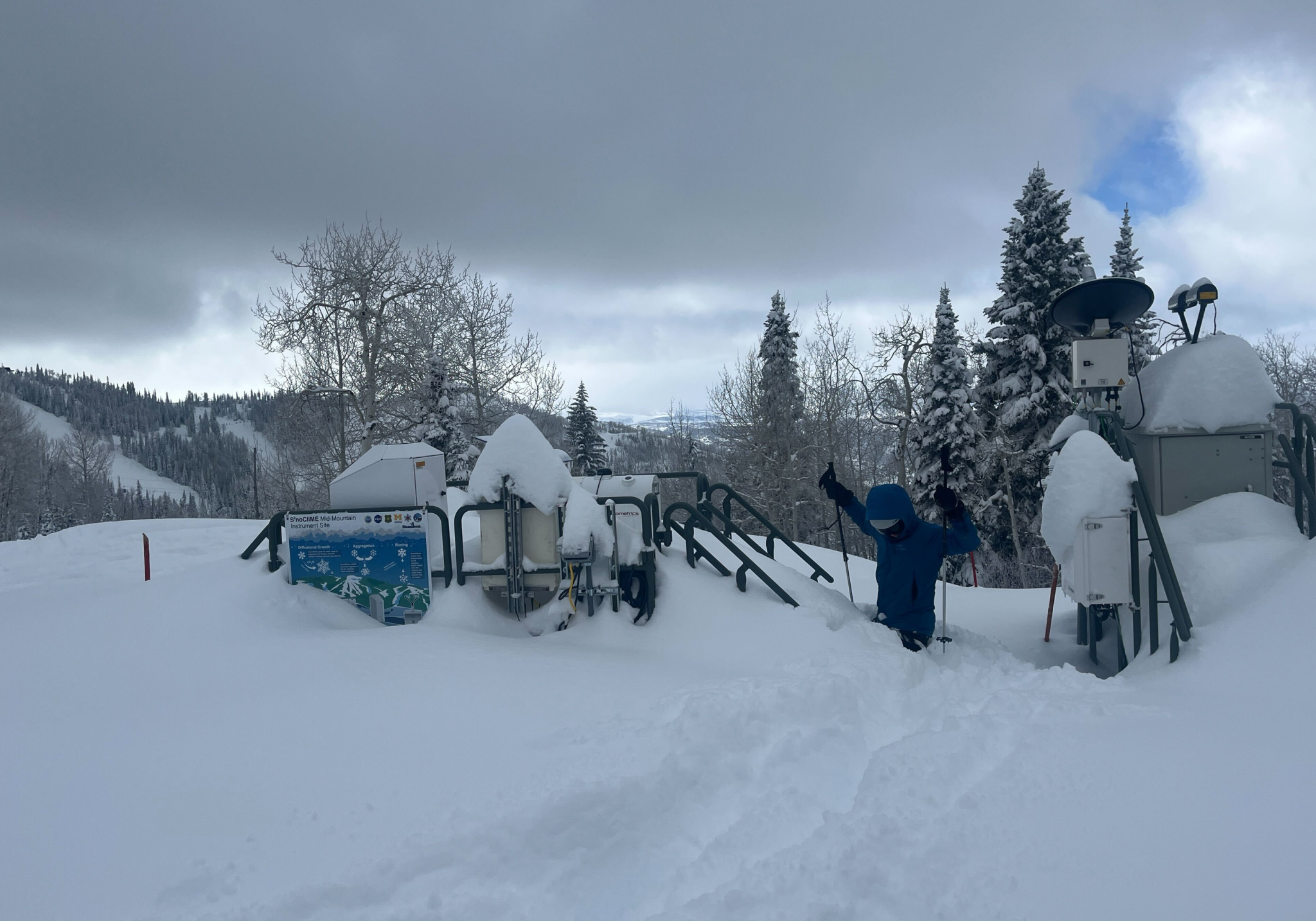
Storm Peak Laboratory/Courtesy photo
Click the link to read the article on the Steamboat Pilot & Today website (Suzie Romig). Here’s an excerpt:
November 22, 2025
Changing snowpack trends in the West are bringing more variability to snow conditions and more moisture to the snowpack, threatening the future number of light and fluffy powder days. Increasing variability was the predominant message from a panel of snow experts during the presentation “Stories of a Changing Snowpack” hosted by nonprofit Yampatika on Nov. 13 in Steamboat. The panel, including representatives from the Storm Peak Laboratory and Airborne Snow Observatories, presented in-depth data and answered audience questions about how changing weather and climate conditions are affecting snowfall and snowpack impact to recreation and water supplies in northwest Colorado.
“We are seeing earlier snowmelts, heavier snow, more variability,” said Atmospheric Science Professor Gannet Hallar, Ph.D., who directs the Storm Peak Lab which sits atop the Steamboat Resort.
Hallar said across the Western states, scientists are confirming decreases in snow-water equivalent, according to measurements taken April 1, increasing spring temperatures and dust — factors that cause snow to melt. She explained the snowflake formation science behind how even small increases in winter temperatures can make a large difference in snow quality…Earlier spring runoff, hydrograph changes and increased variability of snowpack creates challenges for everything from sufficient river flows for endangered fish species to the timing of reservoir releases to agricultural irrigation, Burchenal said. Hallar said dust on snow measurements and understanding how dust on snow impacts melt timing is important because some scientists have documented that a large dust storm may lead to a 10- to 14-day earlier snow melt off…Allen and Hallar discussed the value of snowmaking additives such as Snomax, made from a protein derived from a naturally occurring microbe, used to provide nuclei for artificial snow making.
“This allows more significant volumes of snow to be produced at lower temperatures, with less water and energy.” according to the website for Snomax International. “This substantially increases the efficiency of the snow-making system, while at the same time delivering a consistent snow quality even during the most extreme temperature fluctuations.”