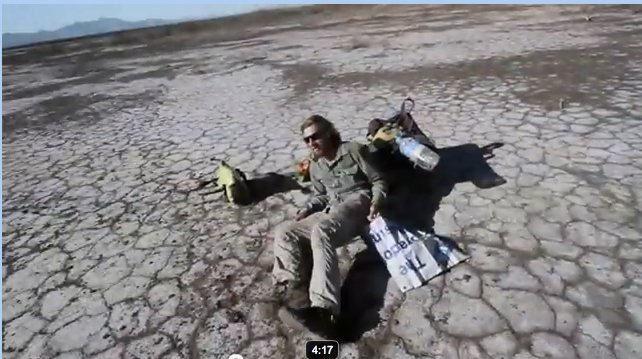
‘Water Wranglers’ is George Sibley’s new book about the Colorado River District #coriver

georgesibleyfromgardsibleyorg.jpg

waterwranglersgeorgesibley2012.jpg

Here’s the link to the web page where you can order a copy. Here’s the pitch:

Water Wranglers
The 75-Year History of the Colorado River District:
A Story About the Embattled Colorado River and the Growth of the West

The Colorado River is one of America’s wildest rivers in terms of terrain and natural attributes, but is actually modest in terms of water quantity – the Mississippi surpasses the Colorado’s annual flow in a matter of days. Yet the Colorado provides some or all of the domestic water for some 35 million Southwesterners, most of whom live outside of the river’s natural course in rapidly growing desert cities. It fully or partially irrigates four-million acres of desert land that produces much of America’s winter fruits and vegetables. It also provides hundreds of thousands of people with recreational opportunities. To put a relatively small river like the Colorado to work, however, has resulted in both miracles and messes: highly controlled use and distribution systems with multiplying problems and conflicts to work out, historically and into the future.

Water Wranglers is the story of the Colorado River District’s first seventy-five years, using imagination, political shrewdness, legal facility, and appeals to moral rightness beyond legal correctness to find balance among the various entities competing for the use of the river’s water. It is ultimately the story of a minority seeking equity, justice, and respect under democratic majority rule – and willing to give quite a lot to retain what it needs.

The Colorado River District was created in 1937 with a dual mission: to protect the interests of the state of Colorado in the river’s basin and to defend local water interests in Western Colorado – a region that produces 70 percent of the river’s total water but only contains 10 percent of the state’s population.

To order the book, visit the Wolverine Publishing website at http://wolverinepublishing.com/water-wranglers. It can also be found at the online bookseller Amazon.

More Colorado River District coverage here.

Aspen: The search is still on for an economic geothermal resource

geothermaltempswesternususgs.jpg

From The Aspen Daily News (Andrew Travers):

The twice-suspended project had been set to resume this fall, but new drilling plans have yet to be finalized as September draws to a close, and remain in the works…

The prospect of tapping cheap, clean and renewable energy in underground Aspen water was encouraged by a 2008 city study, which found that water below town may be as warm as 140 degrees. Water warmer than 100 degrees could be used to heat homes or offices.

If the Prockter drilling site is successful, city officials have said they would want to find a second test drilling site before attempting to use the geothermal energy.

More geothermal coverage here and here.

San Luis Valley: Geothermal event set for October 4 (Saguache), October 5 (Crestone)

coloradohotsprings.jpg

From The Mountain Mail:

The Northern San Luis Valley Conservation Roundtable will present an educational event about local geothermal resources Oct. 4 in Saguache and Oct. 5 near Crestone.

“We’re in Hot Water – Geothermal in the Northern San Luis Valley” will be presented at 6:30 p.m. both nights – at the Saguache Road & Bridge meeting room, 305 Third St. and Baca Grande POA Hall, 68575 CR T.

Paul Morgan, senior geothermal geologist with Colorado Geological Survey, will speak about geothermal resources and possible resource development in the Northern San Luis Valley.

Topics include how geology, water sources and geothermal resources interrelate, Colorado Geological Survey research relating to geothermal leasing in the San Luis Valley, and other Colorado Geological Survey research in the area.

Morgan will answer questions during and following the presentation.

Refreshments will be served. More information is at 719.221.8434 or barb@olt.org.

More geothermal coverage here and here.
Pagosa Springs geothermal development hampered by shortage of capital

coloradohotsprings.jpg

From the Pagosa Springs Sun (Jim McQuiggin):

…two recent events highlighted the growing sense that Pagosa Country is edging closer towards making that geothermal resource the centerpiece of a larger economic development initiative.

Late last month, several community members made their way to Denver to make a presentation at the Geothermal Working Group meeting, sponsored by the Colorado Energy Office (previously known as the Governor’s Energy Office). In fact, Pagosa Country featured three speakers at the meeting out of a total 19 presenters, providing substantial representation for geothermal issues in the area…

“One problem,” [Archuleta County Commissioner Michael Whiting] told SUN staff last week, “is the lack of capital,” stating that it is difficult for rural communities to secure government dollars needed to develop geothermal resources. “The problem is parochialism,” Whiting continued, referring to attitudes that reject, or are unable to grasp, the potential of geothermal as an important resource for energy and economic development…

In essence, Starr’s presentation implied that, not only could local governments identify resources (geothermal) for state interests, but, after having done so, could apply for state funds to develop those resources. Starr’s presentation went on to show that the next provision of that section states, “(2) (a) The department of local affairs shall oversee and coordinate the provision of technical assistance and provide financial assistance as may be authorized by law.”[…]

local businessman Jerome Smith (founder of Pagosa Verde, LLC., a company currently engaged in researching the energy-producing potential of the local geothermal aquifer) presented on a subject Whiting had previously touched on: The challenges businesses faced acquiring needed funding for geothermal projects. As a solution, Smith spoke about the importance of an alliance of geothermal communities in the Region 9 Economic Development District of Southwest Colorado and throughout the state. Smith also spoke to the opportunities for financing geothermal development and power generation.

More geothermal coverage here.

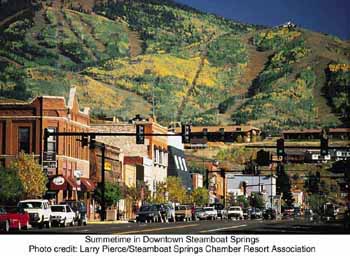
Steamboat Springs: Colorado Water Congress Summer Conference August 15 – 17

steamboatsprings.jpg

Here’s the link to the registration page. Here’s the description of the event (Meg Meyer):

The 2012 Colorado Water Congress Summer Conference will include water and energy interests once again as we combine forces and explore areas of common interest. The theme of the conference is The Balance of Power. We will spin the concept several different ways as we look at the balance of political power, the balance of governance, and the balance of energy and water sources.

Immediately preceding the CWC Summer Conference, the Colorado Coal and Power Generation group will hold an all-day event at the Holiday Inn in Craig on Tuesday, August 14th which will include a golf tournament and evening barbeque.

In addition, the Interim Water Resources Review Committee will meet in Steamboat, Tuesday afternoon, for their first substantive meeting to prepare for the 2013 legislative session.

The CWC Summer Conference will be held August 15th through August17th at the Sheraton in Steamboat Springs.

We will have three workshops on Wednesday morning covering topics of drought and current weather conditions, public trust, and endangered species. We will try something a little different this year with the conference kicking off with a luncheon on Wednesday. General Sessions will follow on Wednesday afternoon. An evening open public forum will held on Wednesday at 7:30 pm (attendance is optional for water and energy professionals).

We will have networking breakfasts on Thursday or Friday – a light continental breakfast will be served, but no formal speaker. The hotel restaurant or other local venues are available for those that prefer a heartier breakfast. General Sessions will be held on Thursday from 9:00 to 12:00. On Thursday afternoon, we will offer a couple of tours or you may want to use this time to catch up on other business. The POND Committee is also planning outdoor activities. We will have a reception on Thursday evening at 5:00. The Friday morning format will be similar to Thursday and the conference will conclude with a box lunch.

Report on the Pagosa Springs Area geothermal resources suggests that potential is more extensive than previously identified

pagosahotsprings.jpg

Here’s the abstract from the report:

Pagosa Springs, Colorado is famous for the hydrothermal activity in its groundwater system, though the system is poorly understood. At present, the hot water flow is used for both tourism and the heating of some buildings, but further expansion of the springs’ usage could reduce the effective energy produced in both cases. To better understand the nature and extent of the hydrothermal flow, several geophysical methods were designed and implemented, including: Gravity, magnetics, electromagnetics, seismic, Direct Current (DC) resistivity, and ground penetrating radar (GPR), all of which were tied in with global positioning system (GPS) data. The surveys were designed to determine the structural geology, the locations of water sources, and the direction and magnitude of that flow. These geophysical surveys were employed to give students a better understanding of geophysical methods as well as assisting Pagosa Springs in learning more about the complexion of the springs so as to better utilize the hydrothermal energy without damaging, and hopefully improving, the existing infrastructures.

The data of the geophysical methods was processed, interpreted and integrated by students to attain a plausible explanation of the results and the geothermal system the results describe. At the Stevens Airport and the Barn 3, a survey site far to the south of town, it was shown that the Eightmile Mesa Fault, as well as nearby faults, likely penetrate into the basement geology which could provide a conduit for deep hot water transport. At another site three kilometers south of Pagosa where there were geothermal springs cooler than the Pagosa springs, the data entertains the possibility that there is water flowing from the ridge to the east toward the river to the west. The data also shows that there is likely a fault to the east of the Pagosa Mother Spring. The Pagosa Mother Spring is the main spring in the town that was measured to be at least 1,000 feet deep. Closer to the Mother Spring, on the field southwest and east of the river, the flow of water in the subsurface near the spring was surveyed. Two conduits were expressed in the data: one running east-west and the other going north-south. Finally, one line indicated the possibility of two additional faults north of Pagosa, though further investigation is necessary to better define these results. These integrations can be used to sum up a plausible explanation of the hydrothermal system, however, there are several studies that could still be done in this area to better understand the hydrothermal system as well as hopefully improve the current geothermal usage in Pagosa.

From the Pagosa Sun (Jim McQuiggin):

Earlier this month, the Colorado School of Mines Geophysics Department (CSM) released results of research recently conducted throughout the area. After spending two weeks in Pagosa Country this past May, studying characteristics of the area’s geothermal aquifer, a team of CSM students and faculty members provided a lengthy report on findings during that visit.

The full report can be downloaded at http://geophysics.mines.edu/GEO-Field-Camp.

While not quite as exciting as the almost certain discovery of the Higgs boson that was announced on Tuesday, the report provided some interesting suggestions regarding geothermal resources in the area. Primary among the findings was a suggestion of geothermal resources far more extensive than had been previously postulated.

That report indicated the discovery of three previously unknown faults north, south and west of the “Mother” spring (the Great Pagosa Hot Springs that provides water for local bathers and heating systems).

“First, the seismic results from both the Stevens Airport and the Barn 3 (south of town) line show that the Eightmile Mesa Fault, and possibly other faults nearby, penetrates the basement material,” the report reads. This discovery shows that faults in the area can penetrate the basement (several layers of strified rock that sit atop the water) and provide a conduit for deep and hot water transport.

More geothermal coverage here and here.

Pagosa Springs: The Geothermal Greenhouse Partnership scores $25,000 for greenhouse project

geothermalopenloop.jpg

From the Pagosa Daily Post (Elaine Feeney Wood):

The Geothermal Greenhouse Partnership (GGP) was recently awarded a $25,000 grant from the Laura Jane Musser Fund to contribute to the implementation of the greenhouse initiative in Centennial Park. The Musser Foundation encourages the collaborative and participatory efforts among citizens in rural communities to strengthen their towns in civic areas including economic development, arts and humanities, public space improvement and education…

The GGP aims to:
1) create a center for lifelong education as well as for advanced study in agriculture and renewable technology;
2) provide a test site for the commercialization of year-round organic crops at high altitude using renewable energy;
3) provide affordable, organic, locally grown food for people and businesses; and
4) provide year-round community gardens.

The greenhouse domes will be built in Centennial Park on the banks of the San Juan River. This park will invite locals and visitors alike to pause, enjoy the natural setting, pursue environmental education, experience sustainable agriculture, and appreciate renewable energy technologies.

More geothermal coverage here and here.

The BLM has scheduled open houses in Saguache and Alamosa for comments on potential geothermal leases

riogranderift.jpg

Here’s the link to the announcement from the U.S. Bureau of Land Management.

Geothermal Energy Leasing Environmental Assessment

The Bureau of Land Management welcomes your comment on an environmental assessment (EA) to amend the 1991 BLM San Luis Resource Management Plan (RMP) for geothermal energy leasing on BLM-managed lands. The Colorado Geological Survey recognizes the potential for geothermal energy in the San Luis Valley. Currently, there are no geothermal energy leases on BLM lands in the Valley.

Public comment on this EA opens March 12, 2012 and closes April 10, 2012. BLM is also hosting two open house meetings: Tuesday, March 20th from 4 – 7 p.m at the Saguache County Road and Bridge Building and Wednesday, March 21st from 4 – 7 p.m. at Adams State College (McDaniel Hall)

Thanks to the the Associated Press via The Denver Post for heads up.

More geothermal coverage here and here.

State of the Rockies Project: Will and Zak release a new video — ‘A Paddler’s Perspective on the Colorado River Delta’

willorzakcoloradoriverdelta2012stateoftherockies.jpg

Here’s the link to the video. Will and Zak paddled from the headwaters of the Green River to the Colorado River Delta as researchers for Colorado College’s State of the Rockies Project.

More Colorado River Basin coverage here.

Aspen: The city will restart its quest to assess geothermal potential on April 1

geothermalenergy.jpg

From the Aspen Daily News (Andrew Travers):

The city’s open space board unanimously voted Thursday evening to allow drilling from April 1 through May 25 in the city-owned parking lot of the Prockter Open Space. The lot is across Neale Avenue from Herron Park and sits near the north bank of the Roaring Fork River…

In November and early December, drillers reached 1,003 feet underground without hitting any water. They had anticipated reaching water at 1,000 feet down. McDonell said they now expect to hit water before 1,500 feet. “Our experts tell us we’re pretty close,” [city environmental programs manager Lauren McDonell] said…

City Council is holding another public meeting on Feb. 27. The council does not have to approve any aspects of the project, but McDonell and city officials want to give neighbors ample opportunity to comment.

More geothermal coverage here and here.

Recent report chronicles Poncha Springs geothermal potential

geothermalenergy.jpg

From The Mountain Mail (Joe Stone):

Fred Henderson of Hendco Services and Paul Morgan of Colorado Geological Survey recently completed a study and issued a report providing new data about the Poncha Hot Springs geothermal resource.

The report lists several conclusions based upon information compiled during the study:

– The study area contains the highest “thermal gradient anomaly” measured to date in Colorado.
– Geological fault structures, including the main east-west Poncha Hot Springs fault and subsidiary faults to the north, appear to control the upwelling and flow of geothermal water from a deep geothermal source.
– Previous geothermometry studies indicate the possible presence of a deep, high-temperature reservoir.
– Scientific observations suggest existence of a deep, high-temperature reservoir capable of producing electricity in significant amounts.
– Findings support conducting a magnetotelluric survey followed by one or two 1,000-1,500-foot-deep thermal gradient holes to further validate and locate a potential deep geothermal reservoir.

More geothermal coverage here and here.

The Aspen Art Musuem is evaluating geothermal potential at new building site

geothermalenergy.jpg

From the Aspen Daily News (Curtis Wackerle):

With excavation and construction for the 30,000-square-foot building set to begin this spring, museum officials are trying to determine if they can tap a geothermal energy source to make the structure more efficient and environmentally friendly…

In the case of the art museum site, the contractor is drilling down to about 425 feet. Drilling is expected to take a week, and contractors should know within a few weeks whether there is any geothermal potential, according to museum officials.

“The use of geothermal technology is a key tactic in our overall efforts to construct an environmentally sensitive and sustainable building,” museum director Heidi Zuckerman Jacobson said in a statement. “We look forward to reporting on our findings from this initial testing, and on our overall progress toward these goals.”

More geothermal coverage here.

Colorado River Basin: What are the reasonable water management options and strategies that will provide water for people, but also maintain a healthy river system?

coloradoriverbasin.jpg

Here’s a guest commentary written by Eric Kuhn, David Modeer and Fred Krupp running in The Denver Post. The trio are issuing a call to arms of sort, asking for input for the Colorado River Basin Study. Here’s an excerpt:

Management of the Colorado River is a complex balancing act between the diverse interests of United States and Mexico, tribes, the seven basin states, individual water users, stakeholders, and communities. The challenges posed by new growth and climate change may dwarf anything we faced in the past. Instead of staring into the abyss, the water users, agencies, and stakeholder groups that make managing the Colorado River responsibly their business are working together, using the best science available to define the problem, and looking for solutions.

We’re calling our inquiry the Colorado River Basin Study, and we want your help. As Colorado River management professionals, we have a lot of knowledge and ideas, but we know that we don’t have them all. We want ideas from the public, from you, but we need your input by February 1. You can submit your suggestions by completing the online form at: http://on.doi.gov/uvhkUi.

The big question we need to answer is: What are the reasonable water management options and strategies that will provide water for people, but also maintain a healthy river system? We don’t believe there’s a single silver bullet that will resolve all of our challenges. We want to continue to explore the benefits and costs of every possibility, from conservation to desalination to importing water from other regions.

The West was built on innovation and hard work, and that spirit is still strong. Our landscapes and communities are unparalleled in their beauty, resilience, and character. The economic well-being of our rural and urban communities in the Colorado River basin is inextricably linked to Colorado River and its environmental health.

That’s why we are asking for the public’s input to help us craft a study showing a path forward that supplies our communities with the water they need to thrive and protects the health of the Colorado River-and the ecosystems and economies it supports.

More Colorado River basin coverage here.

Gypsum: Flint Eagle LLC hopes to test geothermal potential of the Rio Grande rift at airport site

geothermaltempswesternususgs.jpg

From the Eagle Valley Enterprise (Derek Franz):

Lee Robinson of Flint Eagle hopes to find water in the Rio Grande Rift that’s hot enough to use for heating or energy. The concept of going that deep is a relatively new one. Most geothermal resources that are used today are much closer to the earth’s surface.

Since he first approached the town of Gypsum, the permitting has become more involved than initially predicted. Mineral and water rights had to be determined first, and now Robinson is working with the Department of Water Resources for permits that clarify and stipulate all the procedures that will be used for the well.

“Right now it’s a paper process,” Robinson said. “It details how the operation will be conducted but there is nothing that is controversial. Our objective now is to test the volume, chemistry and temperature.” Robinson hopes to get a draft permit with the first quarter of 2012. If that happens, he would be drilling the exploratory well within a year.

More geothermal coverage here and here.

Pagosa Springs hopes to expand use of geothermal resources in 2012

pagosahotsprings.jpg

From the Pagosa Sun (Jim McQuiggin):

On Monday, Pagosa Springs Mayor Ross Aragon invited SUN staff into his office to discuss several projects that suggest the town could be on the threshold of significantly expanding the use of its geothermal resources, potentially putting Pagosa Springs on the map as a leader in green energy production and self-sustainability…

Long a pet project of the mayor’s, a geothermal greenhouse may soon be a feature in the core downtown area. With preliminary engineering completed on the project, Aragon indicated that the first of three greenhouses could be installed as soon as early summer…

To be located at the west end of Centennial Park, the project will ultimately include three, 51-foot growing domes, each with a specific purpose. The first to be installed will be used for education, with local K-12 students, as well as college students, studying permaculture practices and geothermal potential. Through their work and research, those students will determine which crops do well in geothermally-heated greenhouses, with the results of that research determining what would be grown in the second dome, used for commercial production…

One project, approved earlier this year by the Pagosa Springs Town Council and the Archuleta County Board of County Commissioners, is a study that monitors the town’s geothermal wells in order to gather real-time data, measuring the extent of the geothermal aquifer’s behavior as well as the extent of available resources. To be conducted by Gerry Huttrer, president of the Geothermal Management Company (GMC) and one of the geothermal energy experts who has visited Pagosa Springs on numerous occasions to scope out area geothermal resources, the project would test the hypothesis that (as Huttrer and other geothermal experts proposed in a study released last October) “ … appears as if the geothermal resource is currently underutilized.”[…]

With meters installed on many geothermal wells throughout the area, data collected will measure moment-to-moment flows and temperatures. In a second phase of the study, Pagosa Springs Well No. 3 will be opened up (several times) to test the effects of uninhibited flows on the aquifer’s pressure and temperatures. That second phase has been timed to coincide with low use of geothermal wells to minimize potential effects on well users. A third phase would drill to various depths and then reinject the pumped water back into the aquifer in order to test the effect of cooled water on the reservoir…

Another project (as reported in the Nov. 3 edition of The SUN) will be conducted next May, complementing Huttrer’s research. At that time, Dr. Terry Young (head of the Geophysics Department at the Colorado School of Mines), Dr. Michael Batzle and Dr. André Revil (both professors of geophysics at Mines) will converge on Pagosa Country with dozens of graduate students, researching numerous characteristics of the aquifer…

Finally, Smith described what he calls “The Power Project” — research that would test temperatures and pressures deeper within the aquifer in order to see if conditions are sufficient for power generation. The first phase of the project entails shallow drilling into the aquifer to gather gases generated in the geothermal reservoir. Those samples will be sent to the University of New Mexico to determine what kinds of isotopes are generated in the aquifer. If those isotopes are specific to pressures and temperatures that suggest the potential for power generation, a second phase would drill deeper into the aquifer to determine if phase one results were accurate. Current understanding of the aquifer shows temperatures somewhat below the threshold required for power generation. If research shows that temperatures deep within the aquifer exceed those needed to generate power, “The Power Project” would proceed with the installation of Colorado’s first geothermal power plant.

More geothermal coverage here and here.

Mt. Princeton Geothermal public meeting recap: Magnetotelluric survey, to be completed by the end of the month, does not involve drilling

magnetotelluricsurveynewmexico.jpg

From The Mountain Mail (Joe Stone):

Fred Henderson and Hank Held of Mt. Princeton Geothermal, LLC, organized the meeting, and Warren Dewhurst provided information about the magnetotelluric survey his company, Dewhurst Group, LLC, will conduct. Held, founder of Mt. Princeton Geothermal, acknowledged the controversial nature of efforts to develop the geothermal resource. He said, “There will continue to be controversy until questions are answered.”

Those questions will not be answered without drilling a deep test well, and Henderson, chief scientist with Mt. Princeton Geothermal, said an investor is interested in drilling a deep well in the area. He said the investor requested the magnetotelluric survey, which, along with shallow temperature measurements, will identify the best place to drill a deep well.

Dewhurst said the survey will be completed before the end of the month, will not involve any drilling and will require at least 100 sites for good results…

Dewhurst said the survey will involve technicians placing five electrodes and two magnetometers on the ground at each site and taking readings for two hours before moving to the next site…

Dewhurst said his company’s technology is capable of modeling subsurface electrical conductivity to 10 kilometers (6 miles) or deeper. It works well for geothermal exploration because geothermal water is an electrical conductor…

More information about the magnetotelluric technology used by Dewhurst Group is at www.dewhurstgroup.us.

More geothermal coverage here and here.

Aspen: Geothermal test well has yet to hit water

geothermalenergy.jpg

From the Aspen Daily News (Andrew Travers):

As of Thursday afternoon, they had drilled down 1,003 feet. They had expected to reach water, for temperature-taking, by 1,000 feet underground. The city’s drilling permit allows them to drill as far as 1,500 feet…

She said the city does not have a precise finish date at this time, but the driller — California-based Dan’s Water Well & Pump Service — believes it’s on the verge of hitting water. “Our experts believe it’s close but it’s impossible to pinpoint the exact depth until we reach it,” [Lauren McDonell, the city of Aspen’s environmental programs manager] said…

The work has…been slowed, at points, by the density of the Leadville limestone through which the crew is drilling. A partial collapse of the 6-inch-diameter hole Wednesday also delayed their progress. The drillers were installing steel casing Wednesday to reinforce the hole, before they begin to drill deeper…

Anecdotal reports from 19th century miners about the extreme heat in mines below town have indicated that geothermal could be harnessed for 21st century needs. A 2008 geothermal feasibility study boosted hopes further, indicating that the temperature of local underground water ranges from 90 to 140 degrees. To heat or cool buildings with geothermal energy, 100-degree water is required.

More geothermal coverage here and here.

Buena Vista: Mount Princeton Geothermal is hosting a public meeting November 30 about a planned magnetotelluric survey of the Chalk Creek area

magnetotelluricsurveynewmexico.jpg

From The Mountain Mail:

A public meeting to discuss the survey and surface measurements is scheduled for 7 p.m. Nov. 30 in the Sangre De Cristo Electric Association community room, 29780 N. U.S. 24 in Buena Vista. The purpose of the survey is to verify the existence of a deep, highly conductive geothermal water reservoir…The survey consists of 125-150 noninvasive surface measurements of deep natural electrical currents in the earth. Measurements require two 1-meter-long magnetic sensors laid on the ground and four probes positioned in the ground at depths less than 1 foot. Magnetotelluric measurements require 2-12 hours to complete and can provide geological data to depths of 5,000 feet.

More geothermal coverage here and here.

School of Mines graduate students plan to study the geothermal aquifer underlying Pagosa Springs next May

coloradohotsprings.jpg

From the Pagosa Sun (Jim McQuiggin):

That research will involve two projects, one large scale, the other much smaller in scope.

Dr. Terry Young (head of the Geophysics department), Dr. Michael Batzle and Dr. André Revil (both professors of geophysics) described the research their School of Mines team will conduct in Pagosa.

Although faculty and students would be researching numerous characteristics of the aquifer, that research would be the result of the two primary studies: deep seismic profiles made of a portion of the aquifer and passive, “geoelectrical methods” of data collection — “including self-potential, electrical resistivity, and induced polarization” — that Revin describes on his website.

As far as deep seismic profiling, Young said that, “The technique is very similar to medical technology, such as an MRI or a CAT scan.”

What Young meant was that significantly large sound waves are directed beneath the earth’s surface, allowing a computer to translate the received echoes as shapes and depths (much in the way that an MRI — Magnetic Resonance Imaging — provides three dimensional images of a patient).

Those sound waves will be generated through the use of so-called “thumper trucks” — 60,000-pound pieces of equipment that generate controlled seismic energy.

Through both reflection and refraction, seismic surveys of the subterranean topography are achieved as seismic waves, travelling through a medium such as water or layers of rocks, are recorded by receivers, such as geophones or hydrophones.

Revin’s research, on the other hand, measures electrical signals associated with the movement of water in porous, fractured materials to locate the movement and characteristics of geothermal water.

With dozens of graduate students in tow, working with Mines faculty, the team will mobilize in specific areas throughout Pagosa Country, attempting to map portions of the aquifer for the first time ever.

More geothermal coverage here and here.

Science Daily: ‘Geothermal Mapping Report Confirms Vast Coast-To-Coast Clean Energy Source in U.S.’

geothermalmapus10142011smugoogle.jpg

Click on the thumbnail graphic to the right for the map of geothermal resources produced by the mapping project. Here’s a report from Science Daily. From the article:

The results of the new research, from SMU Hamilton Professor of Geophysics David Blackwell and Geothermal Lab Coordinator Maria Richards, confirm and refine locations for resources capable of supporting large-scale commercial geothermal energy production under a wide range of geologic conditions, including significant areas in the eastern two-thirds of the United States. The estimated amounts and locations of heat stored in Earth’s crust included in this study are based on nearly 35,000 data sites — approximately twice the number used for Blackwell and Richards’ 2004 Geothermal Map of North America, leading to improved detail and contouring at a regional level.

Based on the additional data, primarily drawn from oil and gas drilling, larger local variations can be seen in temperatures at depth, highlighting more detail for potential power sites than was previously evident in the eastern portion of the U.S. For example, eastern West Virginia has been identified as part of a larger Appalachian trend of higher heat flow and temperature.

Conventional U.S. geothermal production has been restricted largely to the western third of the country in geographically unique and tectonically active locations. For instance, The Geysers Field north of San Francisco is home to more than a dozen large power plants that have been tapping naturally occurring steam reservoirs to produce electricity for more than 40 years.

However, newer technologies and drilling methods can now be used to develop resources in a wider range of geologic conditions, allowing reliable production of clean energy at temperatures as low as 100˚C (212˚F) — and in regions not previously considered suitable for geothermal energy production. Preliminary data released from the SMU study in October 2010 revealed the existence of a geothermal resource under the state of West Virginia equivalent to the state’s existing (primarily coal-based) power supply…

Areas of particular geothermal interest include the Appalachian trend (Western Pennsylvania, West Virginia, to northern Louisiana), the aquifer heated area of South Dakota, and the areas of radioactive basement granites beneath sediments such as those found in northern Illinois and northern Louisiana. The Gulf Coast continues to be outlined as a huge resource area and a promising sedimentary basin for development. The Raton Basin in southeastern Colorado possesses extremely high temperatures and is being evaluated by the State of Colorado along with an area energy company.

Here’s the link to Google’s enhanced geothermal systems website.

More geothermal coverage here and here.

Aspen geothermal test is on now that a drilling contractor is on board

geothermalenergy.jpg

From The Aspen Daily News (Andrew Travers):

The temporary drilling will be on the gravel parking lot for the city-owned Prockter Open Space, beside the Roaring Fork River and across Neale Avenue from Heron Park.

The city finalized an agreement with a driller for the site this week…

The final contract also allows for a drill-site footprint of about 3,500 square feet, up from the original bid’s estimate of about 400 square feet of surface infrastructure. The well itself is expected to be just 6 to 8 inches wide. The drill hole will be up to 1,000 feet deep…

Work is scheduled to take place between 7 a.m. and 5 p.m. on weekdays, and from 9 a.m. to 5 p.m. on Saturdays. In all, the project will take 19 to 31 days, including testing, with actual drilling taking place on eight to 10 of those days…

Based on a 2008 geothermal feasibility study, the temperature of local underground water ranges from 90 to 140 degrees. To heat or cool buildings with geothermal energy, 100-degree water is required. To generate electricity, the city would need water of at least 220 degrees.

More geothermal coverage here and here.

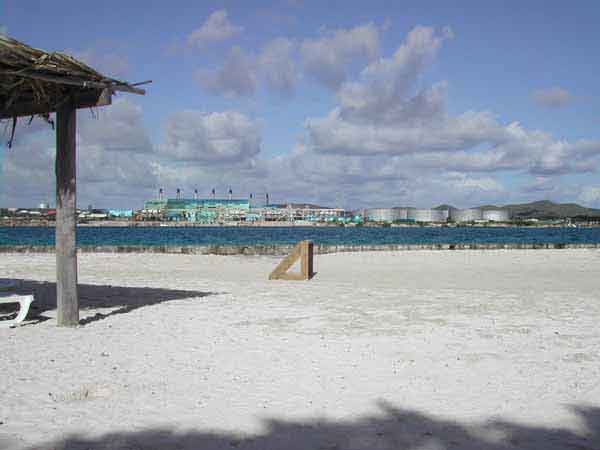
Energy policy: Renewable energy installations are increasingly being co-located with water reuse, reclamation and desalinisation facilities

arubadesalination.jpg

From RenewableEnergyWorld.com (Jerome Muys/Van Hilderbrand):

One approach to reducing greenhouse gases has been more reliance on renewable energy. But energy projects, both conventional and renewable, typically require large amounts of water. That means the long-term physical and legal availability of water resources will play an important role in the siting of renewable energy facilities.

In the U.S., federal programs such as the Endangered Species Act and the push to reserve water rights for parks, wilderness areas and tribal lands are further limiting water availability for development.

To remedy this, two trends are emerging. First is an effort to co-locate renewable energy projects with water reuse, reclamation and desalinisation facilities. Second is a growing interest in new water conservation technologies being developed in Israel and other countries which have a long experience of dealing with water shortages.

More infrastructure coverage here.

Energy policy — geothermal: No drillers responded to Aspen’s RFP for a geothermal test project

geothermalenergy.jpg

From The Aspen Daily News (Andrew Travers):

The city’s Open Space and Trails Board in July unanimously approved a temporary test-drilling site on the gravel parking lot of the city-owned Prockter Open Space, beside the Roaring Fork River and across Neale Avenue from Heron Park. The city has dedicated $150,000 to the exploration project, and also won a $50,000 grant from the Governor’s Energy Office to help fund the test drilling…

Drilling had been slated for mid-September, but no drillers responded to a city request for proposals (RFP). An Aug. 29 deadline for proposals came and went without any interested contractors coming forward.

“We didn’t get any bids, so we’re trying again,” said [Canary Initiative] director Lauren McDonnell. The city has put the project out for proposals again, with a new deadline set for this Monday, Sept. 19.

More geothermal coverage here and here.

Energy policy — geothermal: Results from Poncha Springs test hole looks promising

geothermalenergy.jpg

From The Mountain Mail (Cailey McDermott):

The first hole at Poncha Hot Springs [which demonstrated a thermal gradient of 178 degrees Celsius per kilometer] was drilled to a relatively shallow depth of 255 feet to determine if the thermal gradient is sufficient to warrant a deeper hole. Morgan said shallow holes cost about $10,000 each, while the cost of a borehole deep enough to facilitate geothermal electricity production is around $1 million. The project budget, $50,000, came from a state grant…

[Frederick Henderson of Hendco Services] said temperature readings gathered from the first hole were “really very good.” But he clarified that the number is preliminary and the hole will need to be retested when the temperature has stabilized. He said drilling machines sometimes makes a difference in air temperature in the hole and the next test may be higher or lower. Henderson said geothermal testing near Mount Princeton returned thermal gradient measurements eight times greater than normal, making it the most significant thermal gradient in the state.

More geothermal coverage here and here.

Energy policy — geothermal: Aspen to drill test bore to assess geothermal potential

A picture named geothermalenergy.jpg

From The Aspen Times (Andre Salvali):

Lauren McDonell, environmental initiatives program manager for the city of Aspen, explained the plan to four [Aspen’s Open Space and Trails Board] members before their vote and said that geothermal energy could be another way for the community to reduce its carbon footprint. “If we’re sitting on top of a clean, renewable, carbon-free source of energy, I think we have a responsibility to explore it,” she said. “It could help us decrease our dependence on fossil fuels, and help us address climate change in Aspen. So it’s kind of an exciting opportunity.”[…]

The city likely will start the test well in late September, drilling up to 1,000 feet below the surface of the parking lot. If answers can be obtained at a shallower depth, the city won’t need to drill any deeper, she said. The nearby Roaring Fork River won’t be affected, McDonell said. The parking lot is located within the Prockter Open Space, which is why permission from the city’s Open Space and Trails Board was needed. The test site is simply that, McDonell said, explaining that it’s unlikely to be used as a production area should the city move forward with a geothermal energy project. However, it could be used for future monitoring and tests…

The project is expected to take 30 to 45 days, McDonell said. Noise from the test site will be kept at or below 55 decibels, the limit stipulated in a city ordinance based on the time of day and area of town…

According to a city news release, the test site lies just west of old silver mine workings. The project won’t disturb any heavy metal deposits in the area. “We wanted to pick a site that is city-owned and as close to old mine workings as possible without being in them,” consultant John Kaufman said in a prepared statement. “We are looking to find out the temperature of the water, the water chemistry, like if it is hard water or alkaline and we hope not to find heavy metals in the water,” he said, adding that historical evidence suggests Aspen miners more than a century ago encountered hot water as they worked.

More coverage from Andrew Travers writing for the Aspen Daily News. From the article:

The board voted 4-0 for the drilling project, following a brief presentation by Lauren McDonnell of the city’s Canary Initiative, which is spearheading the initiative…

Board member Charlie Eckart asked how many truckloads of dirt and rocks would be produced from drilling. Just one every three to four days during drilling, McDonnell said. All the board members encouraged her to continue communicating proactively with neighbors about noise and other impacts from the test.

The city held a neighborhood meeting on Monday seeking feedback on the geothermal project from adjacent homeowners. Twelve neighbors attended that meeting. None attended Thursday’s meeting to oppose or support the project…

McDonnell will now begin searching for a drilling company to do the work. The contract for drilling will be subject to City Council approval later this summer. Drilling is scheduled to take place in mid- to late-September, McDonnell told the open space board. The parking lot will be closed up to 45 days during drilling and the subsequent testing of the hole…

Based on a 2008 geothermal feasibility study, the temperature of local underground water ranges in temperature from 90 to 140 degrees. To heat or cool buildings with geothermal energy, 100-degree water is required. To generate electricity, the city would need water of at least 220 degrees.

More coverage from Andrew Travers writing for the Aspen Daily News. From the article:

The potential of tapping local renewable energy sources like geothermal has drawn support from the city’s Canary Initiative, which aims to reduce local greenhouse gas emissions by 80 percent before 2050. Geothermal energy taps the consistent temperatures below ground to heat or cool interiors above ground. “We’re excited that if we find the geothermal potential we’re talking about, it could be enough for heating and cooling buildings in Aspen with a local clean energy source,” said Lauren McDonnell, director of the Canary program…

If the Prockter test site is successful, McDonnell said, the city would drill a second test well on another public site before actually tapping any geothermal energy…

The city’s hopes for geothermal resources are based largely on historical accounts from 19th century silver miners in Aspen. “The miners encountered very hot, uncomfortable conditions in the mines here,” Kaufman said. That anecdotal evidence led the city to conduct a feasibility study for local geothermal in 2008, which found the temperature of underground water in Aspen ranged from 90 to 140 degrees. Drilling for geothermal, however, will avoid the vast network of mining tunnels below Aspen, Kaufman said, because they are not structurally sound.

More geothermal coverage here and here.

Energy policy — geothermal: Pagosa Springs is moving slowly on geothermal research

A picture named geothermalenergy.jpg

From the Pagosa Sun (Jim McQuiggin):

Later in the meeting, the council was asked to “bless” a decision by the Pagosa Springs Community Development Corporation to spend $2,000 to fund a work plan that would satisfy council’s concerns regarding details of the study.

In late February, county commissioner and CDC board member Michael Whiting proposed reallocating $30,000 of CDC money to fund the research. Although the Archuleta Board of County Commissioners voted unanimously to reallocate their $15,000 portion of CDC funding to pay for research, council has twice rejected reallocating its $15,000 of CDC funding.

Council members opposed to allocating CDC funds for the research have cited discomfort with inadequacies and unanswered questions in the proposed work plan outlining the study.

More geothermal coverage here and here.

Energy policy — geothermal: Two organizations appeal decision to lease USFS land near Tomichi Dome

A picture named geothermalenergy.jpg

From The Crested Butte News (Alissa Johnson):

The Forest Service has received two appeals against forest supervisor Charlie Richmond’s February 4 decision to consent to lease 3,756 acres of National Forest Service land near Tomichi Dome for geothermal development. The parcel is one of two areas approved in March for geothermal leasing by the Bureau of Land Management (BLM), which manages the mineral estate and would manage the sale and development of the leases for both parcels of land…

Public scoping of the potential lease identified a wide range of environmental concerns, including protection for the Gunnison sage grouse, Canada lynx habitat, wetland riparian areas and large game habitat. According to Gunnison District forest ranger John Murphy, there were enough concerns that Forest Service discussion included consideration of not leasing. “There are a lot of restrictions on the lease,” Murphy said. “If somebody decides to operate on National Forest system lands, it will be controlled very tightly.”

Those stipulations include measures such as prohibiting disturbance within four miles of known or yet to be discovered lekking grounds for the Gunnison sage grouse and seasonal limitations on surface disturbance to protect winter game range. But both the Double Heart Ranch and the Center for Native Ecosystems filed appeals against the Forest Service decision to lease. The major points of concern surround the protection of the Gunnison sage grouse.

More geothermal coverage here and here.

Energy policy — geothermal: The U.S. Bureau of Land Management and the Colorado Department of Natural Resources enter into agreement to improve and coordinate exploration applications

A picture named geothermalenergy.jpg

Here’s the release from the BLM and DNR (Vanessa Delgado/Todd Hartman):

The Bureau of Land Management and the Colorado Department of Natural Resources have signed an agreement designed to assist geothermal energy development on state and federal lands and mineral holdings.

The Memorandum of Understanding (MOU) will allow more efficient and effective leasing, permitting and administration of geothermal resources in Colorado where federal ownership or administration is involved. The MOU should streamline geothermal work by fostering better cooperation and communication between the agencies.

“The Bureau supports renewable energy development on public lands to meet the nation’s energy needs,” said Helen Hankins, Bureau of Land Management Colorado State Director. “By working with the state, we want to make it easier to take advantage of opportunities for geothermal energy development.”

“We look forward to collaborating with our partners at the Bureau of Land Management to ensure Colorado can benefit from its geothermal energy potential,” said Mike King, executive director of the Department of Natural Resources. “This work creates jobs, builds and diversifies local economies and harnesses a clean and reliable source of energy.”

The clean energy potential on America’s public lands is significant, which is why the Interior is investing $41 million through the President’s economic recovery plan to facilitate a rapid and responsible move to large-scale production of renewable energy. The BLM currently manages more than 816 geothermal leases as of December 2010 in California, Colorado, Idaho, Nevada, New Mexico, Oregon and Utah. Last November, BLM Colorado leased an 800-acre geothermal parcel in Buena Vista during its quarterly lease sale. This was the first of its kind for Colorado in 35 years. The BLM is also evaluating geothermal leasing in at least two other field offices in southwestern Colorado.

Colorado ranks extremely high nationally in geothermal potential. An MIT report written by a team of international experts calculated that Colorado has the largest quantity of geothermal heat of any U.S. state that could potentially be used to generate electricity in the depth range of 10- to 13,000 feet – a depth easily reached by oil drilling rigs. A separate study by the Idaho National Laboratory showed that Colorado ranks fourth in the nation in the number of hot-spring sites with good potential for geothermal electricity generation.

The MOU ensures an exchange of information and consultation between agencies when BLM and the Colorado State Land Board receive nominations to lease geothermal parcels, as well as when any other division within DNR seeks to convey rights to geothermal resources. The agreement also ensures that lessees will be notified of applicable state and federal laws and regulations related to water rights, rights-of-way issues and protection of existing geothermal features.

The BLM is responsible for leasing and developing geothermal resources on the federal mineral estates, including such resources beneath U.S. Forest Service lands. The Colorado State Land Board, a division of the DNR, manages three million acres of land and four million acres of mineral rights that the federal government gave to Colorado to generate revenue for public education and some of the state’s institutions.

More geothermal coverage here and here.

Energy policy — geothermal: School of Mines Geophysics Field Camp in Chaffee County is assessing geothermal potential including drill sites for exploration

A picture named geothermalenergy.jpg

From The Mountain Mail (Joe Stone):

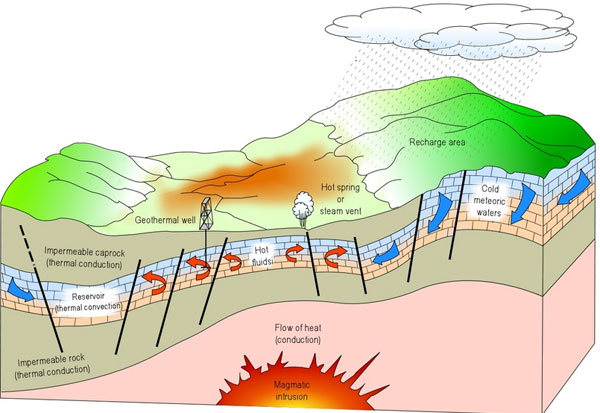
Enhanced geothermal systems require injecting fluid into hot underground rock to create fractures. After rock is fractured, water can be injected and pumped back to the surface after it has been heated by the hot rock.

Geophysics Field Camp supports the project by gathering data helping refine and validate imaging technology, [Mike Batzle, professor of geophysics at Colorado School of Mines] said. The imaging project will provide an overall understanding of the Mount Princeton geothermal system and “identify potential drill sites to optimize the geothermal yield of the valley,” according to the energy department on-line project description.

It gives students a real-world problem to which they must apply classroom knowledge, Batzle said. Students have used a variety of techniques to help map underground water and heat resources. Electrodes on the ground can identify hot water flow within 60 feet of the surface, including “one really big one up above Deer Valley Ranch near the (Chalk) Cliffs,” Batzle said. Batzle said the dramatic white cliffs consist not of chalk but kaolinite, “an alteration of granite that indicates a stable hydrothermal system active for thousands of years.” Field camp students have also been gathering data on deeper features using seismic and gravity imaging that can provide a subsurface map to the bottom of the basin, Batzle said. He said field camp studies are not directly concerned with hot water flow, but with deep geologic structure of the basin at the northern end of the Rio Grande Rift. The rift formed where tectonic plates were pulling apart. Near Mount Princeton, hot water reaches the surface along fractures at intersecting faults.

From a scientific viewpoint, Batzle said, researchers are “more interested in what’s happening in the center of the valley.” He said a deep borehole is needed to determine if the geothermal resource is hot enough to support generation of electricity. He said state-owned land near the center of the valley could be a potential location for drilling. Drilling on the Colorado-owned parcel would require state approval, but the location would have none of the split-estate issues that generated protests from landowners potentially affected by the Mount Princeton geothermal lease…

Copies of Geophysics Field Camp reports from 2007-2010 are available on-line at http://inside.mines.edu/GEO-Field-Camp

More geothermal coverage here and here.

Energy policy — geothermal: Gypsum town council green lights exploration project

A picture named geothermalenergy.jpg

From the Glenwood Springs Post Independent (Derek Franz):

The plan to drill an exploratory well about 4,000 feet deep at the Eagle County Regional Airport has been in the works since July 2010. Since then, lawyers for the town and the company who wants to do the drilling — Flint Eagle LLC — have been sorting issues of water, mineral and property rights. “Thank you for entertaining this concept,” Robinson said to the council. “We feel we’re on solid ground after months of research.”

Robinson hopes to find water in the Rio Grande Rift that’s hot enough to use for heating or energy. The concept of going that deep is a relatively new one. Most geothermal resources that are used today are much closer to the earth’s surface…

The drilling for the exploratory well will take about two weeks to 30 days. The bore will only be 77⁄8 inches in diameter — just enough to see what’s down there. If there’s a resource, the diameter of the well will be expanded.

More geothermal coverage here and here.

Energy policy — geothermal: The U.S. Bureau of Land Management and Colorado Department of Natural Resources enter into agreement to improve and coordinate exploration applications

A picture named geothermalenergy.jpg

From The Grand Junction Daily Sentinel (Dennis Webb):

The deal is designed to improve cooperation and communication between the U.S. Bureau of Land Management and Colorado Department of Natural Resources when the BLM and Colorado State Land Board receive geothermal lease nominations, and when any other DNR divisions seek to convey geothermal rights, the BLM said in a news release. It also ensures that those obtaining leases will be notified of any state and federal rules regarding considerations such as water rights and protection of existing geothermal features.

More geothermal coverage here and here.

Energy policy — geothermal: Chaffee County League of Women Voters meeting recap

A picture named geothermalplant.jpg

From The Chaffee County Times (Kathy Davis):

During the meeting at the Sangre De Cristo Electric Association community meeting room, Colorado Division of Water Resources and state water engineer Kevin Rein spoke about the effects of Colorado water law on the development of geothermal energy. Bureau of Land Management geologist Melissa Smeins spoke about the process of obtaining a lease of federal or public land and the permit processes.

Rein, who is the water administrator for surface water or geothermal water, said, “Geothermal energy is energy that is extracted from the natural heat of the earth.” On a map of Colorado he pointed out what he described as a “hot spot” for geothermal energy in Chaffee County, Mount Princeton Hot Springs. “It is the best spot for geothermal potential,” he said. Interest in the development of geothermal energy includes the possibility of development of a power plant for electricity, Rein said. Thirty-five test wells have been drilled and Cyprus Amax, the former owner of the Climax mine, did most of these several years ago. “A geothermal power plant for electricity would have no mining fossil fuels and no boiler and no transportation,” Rein said. In answer to a question about whether or not the process cools the resource, Rein said it is not known exactly much it would cool the resource. “Some have been operating for a long time and the resource is not affected. We have to look at it case by case,” he said.

Geothermal energy also could be a direct use such as heating greenhouses or hot springs pools. Other potential areas for geothermal energy development are Poncha Hot Springs near Poncha Springs and Waunita Hot Springs near Doyleville.

More geothermal coverage here and here.

Energy policy — geothermal: Grand Mesa, Uncompahgre and Gunnison Forests Supervisor Charlie Richmond signs ‘consent to lease’ for certain lands

A picture named geothermalenergy.jpg

From The Telluride Watch:

This decision does not authorize surface disturbing activities. Should the land be leased by BLM and subsequent development be proposed, additional environmental analysis would be required. [Supervisor Charlie Richmond] stated, “I carefully considered the information in the analysis and the extent of the required stipulations as I made my decision.” He went on to state that while there are some significant requirements to protect surface resources, some of the benefits of this decision include the potential to: provide an opportunity to develop renewable energy sources that can lead to clean sources of energy; reduce or off-set possible greenhouse gas emissions; and provide economic benefits to the surrounding communities.

More geothermal coverage here and here.

Energy policy — geothermal: Salida scores $50,000 from the Governor’s Energy Office to evaluate geothermal potential

A picture named geothermalplant.jpg

From The Mountain Mail (Cailey McDermott):

A $50,000 geothermal energy grant for the city-owned Poncha Hot Springs was unanimously approved by Salida City Councilmen Tuesday. The grant from the Governor’s Energy office will be used to explore the site for geothermal potential.

More geothermal coverage here and here.

Energy policy — geothermal: Gypsum deep geothermal project update

A picture named geothermalenergy.jpg

From the Eagle Valley Enterprise (Derek Franz):

“We wasted four months because we were handling (the geothermal resources) as a mineral right and then realized it made more sense being handled as a water-right issue,” said Jeff Shroll, Gypsum’s town manager. “No one’s really sure how to handle it.”

Lee Robinson, a manager for Flint LLC — known as Flint Eagle LLC in this particular venture — phrased the situation a little differently. “It’s a bit of legal pioneering that we’re doing,” he said. “Nobody has done what we are trying to do, at least not in Colorado.” The legal complications have to do with federal and state statutes and their classifications for a geothermal resource. Robinson described an involved process for sorting out the paperwork before the company can drill…

“Surface geothermal has been used before, but no one has really gone that deep before,” Shroll said recently. Robinson estimated the resource could save some town entities around 20 percent or more in energy expenses, depending on the water’s temperature. If the exploration proves fruitful, Robinson wants to drill more wells and utilize the resource throughout the county…

In his July presentation, Robinson said the Rio Grande Rift extends from Mexico into Colorado under the earth’s surface. The rift is caused by the earth’s crust getting pulled apart. Water trickling down into the deep nooks and crannies of such a rift is then heated by the earth’s mantle. Robinson said the airport is the closest land to the rift that’s entirely owned by Gypsum, including mineral rights, and that’s why he wants to explore there, west of the runway.

More geothermal coverage here.

Energy policy — geothermal: BLM Mt. Princeton lease sale update

A picture named mountprincetonfrommtprincetonorg.jpg

From The Pueblo Chieftain (Tracy Harmon):

John Kreski, who owns the Creekside Hot Springs vacation rental in the lease area, is among private landowners breathing a sigh of relief. “They (3E Geothermal) have 10 years to develop it and I think the reason they bought it was to protect the drinking water supply in the area and keep the aesthetics of the area pristine,” Kreski said…

The lease will not be issued until the 16 protest letters have been resolved. If the lease is issued, it would be the first step in any geothermal development process, according to Keith Berger, BLM field manager. “The BLM’s next action would come if the lessee submits a project proposal. The BLM would then initiate an environmental review of the proposal and seek public input for concerns and potential issues related to that proposal,” Berger explained.

More geothermal coverage here and here.

Energy policy — geothermal: Mount Princeton geothermal lease will be issued by the BLM January 1

A picture named geothermalenergy.jpg

From The Mountain Mail (Joe Stone):

The lessee, 3E Geothermal, is a wholly owned subsidiary of Young Life, which owns Frontier Ranch, a Christian youth camp on land above a portion of the lease…

[Vanessa Delgado, bureau public affairs specialist] said bureau specialists resolved protest issues quickly because the issues were addressed Sept. 7 in the National Environmental Policy Act Determination of Adequacy. Therefore, she said, they didn’t require additional lease stipulations. The determination of adequacy cites federal and state regulations that protect water quality, “including the Mount Princeton Hot Springs domestic water supply,” and notes the regulations “are applied when (the bureau) receives an application for development of geothermal resources in the lease area.” Among requirements for geothermal resource development are an environmental assessment and public comment periods.

Delgado said 3E Geothermal will have 10 years to develop and make beneficial use of the geothermal resource, or the lease will be terminated. Because the lease is for commercial development, Delgado said 3E Geothermal will need to develop a commercial use of the resource to retain the lease beyond 10 years…

Young Life officials earlier made clear their intention to protect the camping experience at Frontier Ranch by protecting the natural beauty of the area.

More geothermal coverage here and here.

Energy policy — geothermal: Pagosa Springs geothermal infrastructure update

A picture named geothermalenergy.jpg

From the Pagosa Sun (Jim McQuiggin):

Last month, Pagosa Springs Geothermal Supervisor Phil Starks presented a report to council stating that the potential for systemic failure is especially apparent in the town’s geothermal heating system, which experienced a cascade of failures during the past year. Initial repairs to the system earlier this summer were immediately followed by failures downline (concentrated along the Lewis Street corridor), most likely the result of differential pressure created when the initial repairs were done. Reporting the work completed over the summer, Starks added that the failures were symptomatic of a system that had exceeded its lifespan and would see increased failures in the near future.

When SUN staff, during a later phone interview, asked Starks if those failures were systemic, Starks replied, “Yeah, essentially.” According to Starks, “It’s the whole system in general because of the nature of the geothermal water, the age and type of piping used, plus the heat of the water. We are fatiguing the system due to the depressurizing and repressurizing that takes place every year.” Currently, the town carries most of its water for geothermal heating through asbestos cement (AC) piping, which under normal circumstances has a lifespan of anywhere between 50 and 70 years. While the AC piping in Pagosa Springs has been in the ground for over 30 years, “The way we use our system is causing the breakdowns,” said Starks. Starks said that breaks occur in the system, “Normally when we repressurize — about one a year,” but added that, with the stress on the aging system, he anticipates that number to increase, similar to what happened this past summer…

Although the Obama administration has allocated hundreds of billions of dollars for infrastructure projects since early 2009 — with allocations especially designated for renewable energy — the town has been slow to pursue those funds. Despite an additional $50 billion being released by the administration this past summer, with those funds tied directly to infrastructure (with priority given to renewable energy projects), the town has just recently investigated availability of infrastructure stimulus money for its geothermal system (Starks and the town, after several fits and starts, have pursued federal funds for construction of its wastewater treatment plant). While Starks said that a grant application was being written by Mary Tighe (the Pagosa Springs Community Development Corporation’s newly-hired community grant writer), he could not say what kind of priority was being given to the grant application or when it would be submitted.

More geothermal coverage here and here.

Energy policy — geothermal: 3E Geothermal, LLC leases Colorado’s first geothermal lease for $37 per acre

From The Mountain Mail (Keith Berger):

After some spirited competitive bidding, the parcel sold for $37 per-acre to 3E Geothermal, LLC, in Colorado Springs. The company paid a bonus bid of $29,600 for the parcel.

You may be wondering what is next. There were 16 protest letters submitted on the geothermal parcel during the protest period. Prior to the sale, the protests were screened for any critical issues that would merit deferring the parcel from the sale. Though the expressed concerns are important, they were not deemed critical, or were addressed in our pre-sale environmental review, so the sale of the parcel proceeded. Concerns included contamination of ground water, surface water and vegetation, interruption of animal habitat and recreational activities, traffic, noise from industrial drilling, unstable soils below some prominent cliff formations, and a potential for earthquakes. Each letter will be reviewed in-depth with a response to the protester as to whether the protest is upheld or dismissed and why. The lease will not be issued until all 16 protests have been resolved. If the lease is issued it would be the first step in any geothermal development process.

The bureau’s next action would come if the lessee submits a project proposal. The bureau would then initiate an environmental review of the proposal and seek your input for concerns and potential issues related to that proposal…

Information about the Mount Princeton Geothermal Lease Parcel is available on our website at http://www.blm.gov/co/st/en/fo/rgfo.html or you can contact Melissa Smeins, Royal Gorge Field Office geologist at (719) 269-8523.

More coverage from Joe Stone writing for The Mountain Mail. From the article:

3E Geothermal LLC, the company that acquired the Mount Princeton geothermal lease Wednesday, is a wholly owned subsidiary of Young Life and will “protect the natural beauty of our camp’s setting,” said Steve Lundgren, camp manager of Frontier Ranch. Frontier Ranch, a Christian youth camp owned by Young Life, occupies much of the surface estate of the 799-acre geothermal lease near Nathrop. “We did not want to be in a situation where other parties would have the ability to scar the landscape so critical to giving our guests a great camping experience,” Lundgren said…

When asked about the possibilities for developing the geothermal resource, Lundgren said lease owners have a responsibility “to make a good faith effort to evaluate the viability of geothermal resource production.” He said Young Life desires to protect the natural beauty of the land but is “currently contemplating the most conscientious way of complying with the requirement.” Under U.S. Bureau of Land Management terms of the lease, failure to develop the geothermal resource would result in termination of the lease in 10 years.

More geothermal coverage here and here.

Energy policy — geothermal: DOE grant allows state to install geothermal system at Colorado capitol

A picture named geothermalopenloop.jpg

Here’s the release from Governor Ritter’s office (Tyler Smith/Todd Hartman/Lance Shepherd):

Gov. Bill Ritter today praised a project that will provide geothermal heating and cooling for the State Capitol building with the help of a U.S. Department of Energy Recovery Act grant. Colorado’s Capitol, which opened in 1894, will be among the first in the nation to benefit from a geothermal system.

The DOE grant will provide $4.6 million for an open-loop geothermal system that will save the state an estimated $95,000 in heating and cooling costs in the first year alone.

“This is a great project to highlight the significant potential that geothermal energy has here in Colorado, and it serves as a shining example of how the New Energy Economy creates jobs, diversifies our energy resources and bolsters energy security,” Gov. Ritter said. “By tapping into the steady temperature below the earth’s surface we will be able to heat and cool the Capitol building with a reliable and clean source of renewable energy at a reduced cost to the people of Colorado.”

The total cost of the project is an estimated $6 million, with $1.4 million funded by the state through Certificates of Participation and a lease-purchase agreement with Chevron. Under the agreement Chevron will guarantee utility savings are sufficient to make the annual lease-purchase payments.

“Today’s announcement is another example of how the Recovery Act is benefiting Colorado and states across the country. This project will help save taxpayers money, reduce our dependence on foreign oil, and support Colorado’s role as a leader in the clean energy economy of the future,” said U.S. Energy Secretary Steven Chu.

The first phase of the project, which began last week, will drill a well deeper than 900 feet down into the Arapahoe Aquifer, with a second phase beginning in the spring that will include HVAC upgrades and drilling a second well. Water will be pulled from the aquifer to take advantage of consistent 55-degree temperatures that can be used to heat the building in the winter and cool the building in the summer.

The project follows a similar instillation in which a geothermal ground source heat pump was installed at the Governor’s Residence in 2009. The instillation has shown considerable energy savings by reducing the natural gas load by 70 percent and the electricity by 15 percent at the Residence.

More coverage from Brighter Energy (James Cartledge):

The first phase of installation began last month, drilling a well more than 900 feet down into the Arapahoe Aquifer, and is expected to continue through into the spring of 2011 with heating and air conditioning upgrades and the drilling of a second well. The project will see water pumped from the underground aquifer, which offers consistent temperatures of 55 degrees, which can be used to heat the building in winter and cool the building in the summer…

A similar geothermal system was installed at the Governor’s residence last year, which has reduced the building’s natural gas use by 70% and electricity consumption by 15%.

More geothermal coverage here and here.

Energy policy — geothermal: The Bureau of Land Management has incorporated public comments for the proposed Chalk Creek lease

A picture named geothermalenergy.jpg

Here’s an in-depth background article about the proposed sale from Joe Stone writing for The Mountain Mail. Click through and read the whole thing. Here’s an excerpt:

The U.S. Bureau of Land Management will address public concerns about the Mount Princeton geothermal lease through a combination of lease stipulations and studies required by the National Environmental Policy Act. In announcing the lease sale, the bureau released an environmental compliance document known as a Determination of NEPA Adequacy which describes issues raised by 278 public comments and how those issues will be addressed.

More geothermal coverage here and here.

Energy policy — geothermal: Great Pagosa Aquifer has big potential to drive economic growth in the Upper San Juan Basin

A picture named pagosahotsprings.jpg

From the Pagosa Sun (Jim McQuggin):

Meeting with town and county officials last week, representatives from the National Renewable Energy Laboratory (NREL) — part of the U.S. Department of Energy’s (DOE) Office of Energy Efficiency and Renewable Energy — concluded a two-day visit to Pagosa Springs by telling local officials that, while future research is warranted, initial indications suggest a vast resource with almost unlimited potential. “There are a huge amount of resources,” said Gerald Huttrer, president of the Geothermal Management Company, Inc. and consultant for NREL. “The resource is way, way bigger than anybody had anticipated.”

That knowledge, said Elaine Wood, former Pagosa Springs resident and a consultant on clean energy projects with NREL, “Takes away the fear of scarcity.”[…]

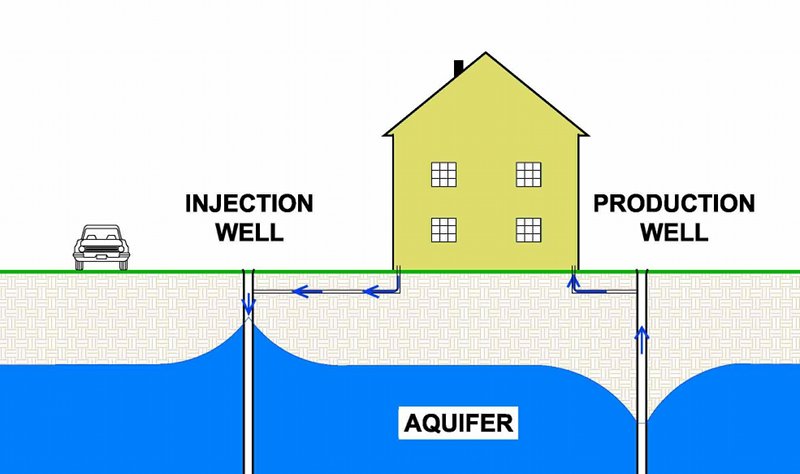
The result of the visit and subsequent analysis of the Great Pagosa Aquifer, all three agreed, was a surprising view of a resource that had been previously viewed by many as a limited pool at risk of depletion. Not only did all three concur that ample resources existed for further possible use, but that processes could be employed to replenish geothermal water taken out of the aquifer. Calling Pagosa Springs a “pump and dump” community (meaning that geothermal water is currently dumped into the river after using it for heating), Lund proposed that future production wells be accompanied by injection wells — the means to put water back into the aquifer after drawing it up for heating or other purposes. While Lund stated that the aquifer contains ample amounts of water, injection wells would ensure adequate levels — as well as provide a psychological assurance that little danger exists of depleting the geothermal water. Huttrer added that reinjection would not alter the aggregate temperature of the aquifer. Comparing the reinjection process to trying to cool a hot bath with a drop of cold water, Hettrer said, “A 10 to 20 degree change (in reinjected water) relative to the amount of water (in the aquifer) would be immeasurable.”

From the San Juan Silver Stage Online:

The magma-heated Great Pagosa Hot Springs draws its name from the Utes who, after frequent skirmishes with other tribes and (legend has it) a decisive knife fight, eventually claimed the springs as their own. They called it “Pah gosah,” The term is open to loose interpretation. According to local lore, the name has been variously translated in recent years as meaning “boiling water” or “healing water.” However, a Ute elder once suggested that a more accurate translation would be “water that has a strong smell.” The sulphur-like odor comes from the water’s high concentration of hydrogen sulfide. For centuries, long before the white man came, the Utes and other Native Americans availed themselves of the mineral-rich water’s curative powers for multiple ailments. Some uses were rather imaginative. For instance, young warriors suffering from adolescent skin eruptions treated them by coating the offensive spots with the mineral rich mud.

The practice was later repeated by cowboys sparking a lady when the white man first came to the area and cattle ranching, and along with lumbering, was the economic backbone of Pagosa Springs. The cowboys often brought their horses to heal sore hooves in the warm, soothing mud after a long cattle drive. (The Indians did that too, supposedly bathing first the men, then the horses and last, the women!) But mostly, it was people who sought healing from the springs. Following the Civil War, and in conjunction with a world view that considered mineral baths a curative for all sorts of ailments, the Pagosa Springs became a popular spot for those suffering from arthritis, rheumatism, intestinal problems and more. It still is.

The Mother Spring dates back to as much as ten million years ago, when it was formed by volcanic activity that helped form what is now the San Juan Mountains. Nobody knows how deep it is, although several have tried to find out over the last century or two—none with much success. According to The Springs Resort, The Springs’ retained hydrologist coated an aluminum boat in foam, paddled out to the center of the pool and tested its depths with a sounding device. At 1500 feet, the device floated back up, buoyed by the hot water and hotter gasses streaming up from the Pagosa Aquifer below. So, it may very well be the deepest hot springs in the world. The water contains heavy concentrations of sulfate, sodium (no wonder we floated), chloride, potassium, silica and magnesium.

More geothermal coverage here and here.

Energy policy — geothermal: BLM Royal Gorge Field Office releases Determination of NEPA Adequacy for geothermal leasing

A picture named geothermalplant.jpg

Here’s the release from the Bureau of Land Management (Cass Cairns):

The Bureau of Land Management Royal Gorge Field Office has released the 2010 Determination of NEPA Adequacy (DNA) for the proposed Mt. Princeton Geothermal Lease Parcel. The Mt. Princeton Geothermal Lease Parcel is scheduled for the Nov. 10, 2010 Oil and Gas lease sale in Denver.

The DNA demonstrates that leasing geothermal resources for the RGFO within the Mt. Princeton Geothermal Lease Parcel is compliant with our Resource Management Plan as amended by the December 2008 Record of Decision and Resource Management Plan Amendments for Geothermal Leasing in the Western United States Programmatic Environmental Impact Statement.

The Mt. Princeton Geothermal Lease Parcel was deferred from the BLM Colorado Oil and Gas Lease Sale in Feb. 2010 to allow for review of comments received during the lease sale protest period. Those comments were taken into consideration and addressed in the DNA.

To view a copy of the DNA go to http://www.blm.gov/co/st/en/fo/rgfo.html and click on the Mt. Princeton Geothermal Lease Parcel link under the Frequently Requested section. For further information contact Melissa Smeins, RGFO geologist at 719-269-8523.

More geothermal coverage here and here.

Energy policy — geothermal: November 10 is the next try by the BLM to lease parcels near Mt. Princeton Hot Springs

A picture named geothermalplant.jpg

From The Denver Post (Mark Jaffe):

The Bureau of Land Management said it will offer a 799-acre parcel near Mount Princeton Hot Springs Resort in Chaffee County for geothermal development Nov. 10. The lease sale was postponed in February after a volley of opposition and questions about whether the picturesque and narrow Chalk Creek Valley was an appropriate site for a geothermal power plant. It had been delayed earlier by questions from the state about jurisdiction over geothermal development — which involves water wells.

On Friday, the BLM issued a new environmental assessment that responded to 287 protest letters and issued about a dozen “stipulations” limiting lease activity and protecting wildlife and water. “We wanted to be sure to respond to the issues raised by residents,” said Steve Hall, a spokesman for the BLM. “This is the first lease sale in Colorado, and we had to do a better job of explaining.”

More geothermal coverage here and here.

Energy policy — geothermal: The BLM is seeking public comment on possible development

A picture named geothermalenergy.jpg

From The Pueblo Chieftain (Matt Hildner):

The agency will use the comments to help identify issues and develop alternative proposals that will be analyzed in an environmental assessment. The environmental assessment would lay out which lands would be eligible for leasing and under what conditions. The agency has already identified 10 preliminary issues for analysis, including impacts to water resources, existing geothermal developments and big game and other threatened or sensitive species, according to the agency’s notice in the Federal Register.

Here’s the release from the Bureau of Land Management (Michael Blakeman):

The San Luis Valley Public Lands Center (SLV-PLC) is seeking public comment to guide a geothermal land use analysis. Ultimately, the environmental assessment will form the basis to amend the Bureau of Land Management’s 1991 San Luis Resource Area Resource Management Plan.

The analysis will identify which public lands and subsurface mineral estates to make available for geothermal leasing. The analysis will also determine under what conditions these lands will be made available for geothermal leasing. Comments will help identify issues and be used to develop alternatives to be analyzed.

Written comments may be submitted by mail to SLV-PLC Attn: BLM Geothermal, 1803 W. Hwy 160, Monte Vista, CO, 81144 or via email to slvplc_comments@blm.gov. Comments are requested by the end of the formal public scoping period Oct 13, 2010. All public comments received to date will be considered in the analysis.

Information regarding the project is posted on the BLM website at www.blm.gov/co/st/en/fo/slvplc.html, or contact Joseph Vieira at 719-852-6213 for more information.

More geothermal coverage here and here.

Energy policy — geothermal: Free workshop planned for September 8 in Glenwood Springs

A picture named geothermalenergy.jpg

From the Glenwood Springs Post Independent (John Colson):

The free workshop, which is sponsored by the Colorado Governor’s Energy Office, is scheduled for Sept. 8 at the Glenwood Springs Community Center, 100 Wulfsohn Road, from 2:45-6:30 p.m. “It’s an educational event for the community,” said Joani Matranga of Carbondale, who is the GEO’s Western Slope representative. “The hope is that the community will think about how they should take some steps forward in terms of geothermal.”[…]

“Most of the Colorado hot springs communities are now considering ways to expand geothermal uses to reduce their fuel use, long-term costs and impacts,” wrote John Gitchell of Sustainable Business Solutions in Eagle. Matranga conceded that geothermal heating, cooling and electric generation systems are “definitely more difficult to implement” than other alternative energy technologies, such as solar or wind generators…

The workshop will feature talks by Matranga, Francisco Flores, also of the GEO; Paul Morgan with the Colorado Geological Survey; geologist Mike Galloway of ERO Resources; and Kevin G. Rein, an engineer with the Colorado Division of Water Resources.

To learn more about Glenwood Springs’ potential for geothermal, the city has posted the Lund report on its website, www.cogs.us.

More geothermal coverage here.

Energy policy — geothermal: The Bureau of Land Management is assessing the geothermal energy potential for the San Luis Valley

A picture named coloradohotsprings

From The Pueblo Chieftain (Matt Hildner):

The agency, which administers the federal mineral estate, has started an analysis of what lands should be open to geothermal leasing and what conditions should govern the development, said Joe Vieira, project manager for the valley’s BLM office. There are no outstanding geothermal leases in the region, nor have there been any parcels nominated for leasing, but federal and state officials hope that will change…

Nine areas of the state have been identified as spots with the best potential, including the edges of the San Luis Basin, the Raton Basin west of Trinidad and Mount Princeton near Buena Vista…

The agency is seeking public comment on the kinds of leasing stipulations that should apply and what areas should be off limits to development. Restrictions could include no surface occupancy, controlled surface occupancy or timing limitations, in which developers are barred from any construction activity for a specific time frame. Areas that will be excluded from leasing include the National Park System, congressionally-dedicated wilderness areas and wilderness study areas.

More geothermal coverage here and here.

Energy policy — geothermal: Mt. Princeton Geothermal, LLC, update

A picture named geothermalenergy

From Yahoo! (Joe Stone):

Interest in the location is motivated in part by Colorado’s mandated goal of generating 30 percent of its power from renewable resources by 2020. Another motivating factor is new technology that has lowered the
temperature threshold at which geothermal power generation becomes feasible. The new technology — already in use at Chena Hot Springs in Alaska and Thermo, Utah — works like an air conditioner in reverse. Instead of using a refrigerant to cool air, it uses hot water to vaporize the refrigerant, which then turns turbines attached to electrical generators. Once the heat is transferred from the water to the refrigerant, the water is returned to the underground reservoir, maintaining existing water levels…

Henderson said the feasibility of the project is unknown without drilling deep wells to obtain data on the underlying geothermal reservoir. Henderson hopes to find temperatures of 250 degrees in the deep exploratory wells, but the project will also need to prove “no damage to water quality, quantity or temperature.” Otherwise, the Colorado Division of Water Resources will not issue a permit for production, said Henderson. He believes that tapping the geothermal resource at depths greater than 2,000 feet will prevent any damage to the shallow aquifer that feeds local wells and hot springs.

More geothermal coverage here and here.

Energy policy — geothermal: The BLM is planning leases in southeastern Gunnison County

A picture named geothermalenergy

From the Associated Press via The Grand Junction Daily Sentinel:

The BLM says a renewable energy company has nominated two areas covering about 14 square miles. Some of the land overlaps habitat for Gunnison sage grouse and Canada lynx. The company’s name wasn’t released. The BLM will analyze possible environmental impacts before deciding if leases should go forward. No public lands in Colorado have been leased for geothermal energy development yet.

More geothermal coverage here and here.

Energy policy — geothermal: Governor Ritter signs SB 10-174 (Promote Geothermal Energy Development)

A picture named geothermalenergy.jpg

Here’s the release from the Governor’s office (Megan Castle/Evan Dreyer):

GOV. RITTER DEDICATES SALIDA’S TOUBER BUILDING AND PROMOTES GEOTHERMAL ENERGY

Gov. Ritter was joined today by Sen. Gail Schwartz and local officials at the dedication of the new Touber Building, named after former Salida Mayor Edward Touber. The City of Salida and Chaffee County will use this historic building for office space.

“The Touber Building is a shining example of the success that can happen when local and state governments and public and private entities pool their collective financial and creative resources,” said Gov. Ritter. “I know the struggles of Chaffee County, along with the rest of the state and the nation, have not been easy. Partnering together to build a complex like this that will house both city and county community services helps from a financial standpoint. Also, it is a 21st century solution towards building sustainable communities. The state was honored to partner with you on this solution.”

Immediately following the Touber Building dedication ceremony, Gov. Ritter signed Senate Bill [10-174] (pdf), sponsored by Sen. Gail Schwartz and Reps. Christine Scanlan and Tom Massey, which promotes geothermal energy in Colorado.

“Senate Bill 174 will help Colorado to begin to realize the potential of geothermal energy,” Gov. Ritter said. “Geothermal is a great clean renewable energy source, that can be a base load provider and help to bring the benefits of the New Energy Economy to rural Colorado.”

“Geothermal energy will diversify Colorado’s energy portfolio. This bill will improve cooperation between the federal, state, and local governments, strengthen Colorado’s energy sector, and create jobs for Coloradans,” Sen. Schwartz said. “I would like to thank Chaffee County for their efforts on this bill and the broader water community for the work on protecting existing geothermal water rights and those in the future.”

“Geothermal is an exciting clean energy movement with the potential to exceed even solar and wind in supplying the US’s electricity needs in the future. In fact, the state Capitol will be moving towards using it next year for the building’s energy needs,” said Rep. Scanlan. “I am pleased that we have made a commitment to strengthen this energy sector.”

For a complete list of Gov. Ritter’s 2010 legislation decisions, visit www.colorado.gov/governor or click here.

More geothermal coverage here and here.