Could Good Samaritans Fix America’s Abandoned Hardrock Mine Problem? — Daniel Anderson (Getches-Wilkinson Center)

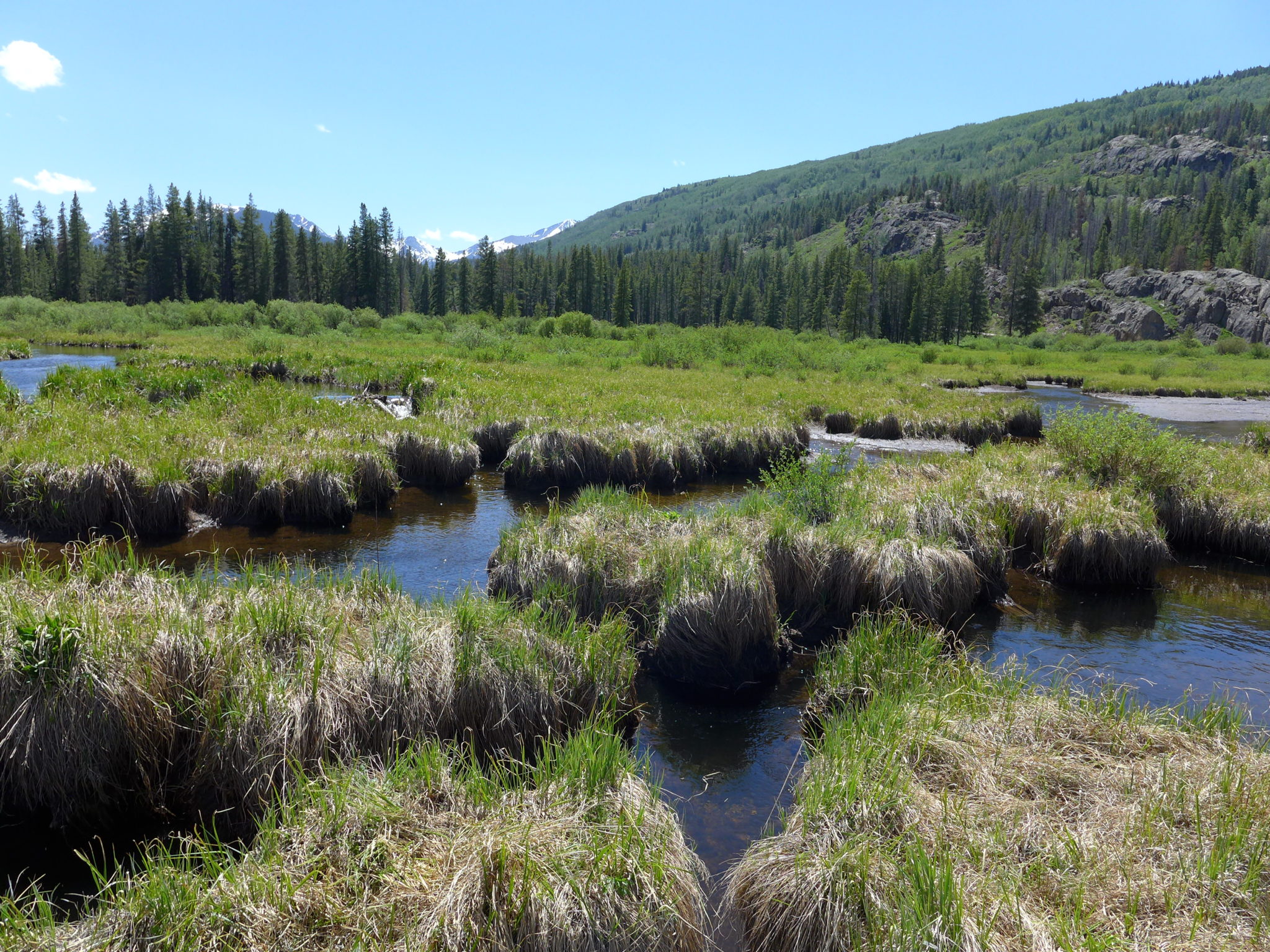
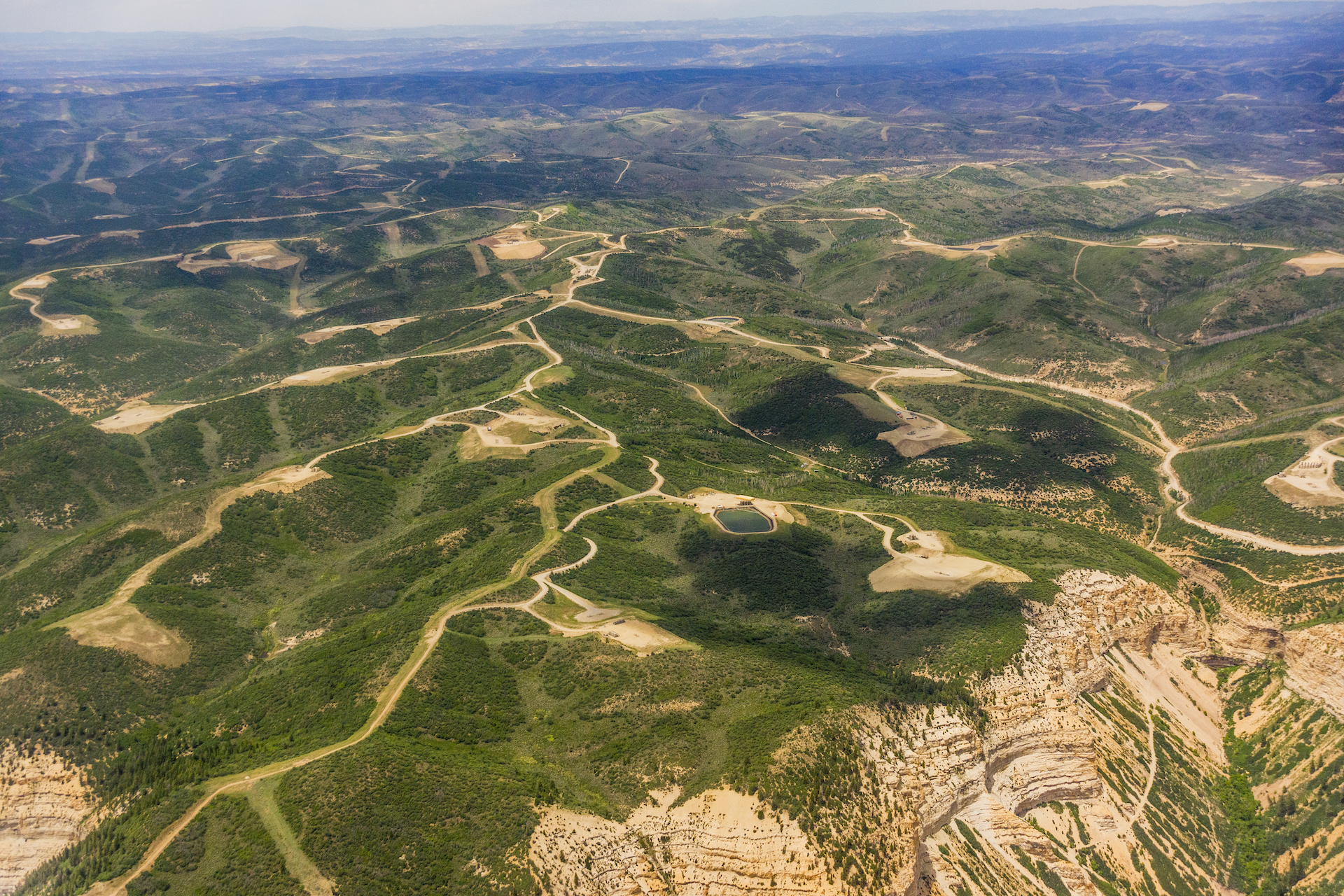
Photo credit: Trout Unlimited

Click the link to read the article on the Getches-Wilkerson Center website (Daniel Anderson):

October 20, 2025

Until the passage of the Comprehensive Environmental Response, Compensation, and Liability Act (CERCLA) in 1980, miners across the American West extracted gold, silver, and other valuable “hardrock” minerals—and then simply walked away. Today, tens of thousands of these abandoned hardrock mines continue to leak acidic, metal-laden water into pristine streams and wetlands. Federal agencies estimate that over a hundred thousand miles of streams are impaired by mining waste. Nearly half of Western headwater streams are likely contaminated by legacy operations. Despite billions already spent on cleanup at the most hazardous sites, the total cleanup costs remaining may exceed fifty billion dollars.

So how did we end up here? In short, the General Mining Law of 1872 created a lack of accountability for historic mine operators to remediate their operations, but CERCLA and the Clean Water Act (CWA) arguably add an excess of accountability for third parties trying to clean up abandoned mines today.

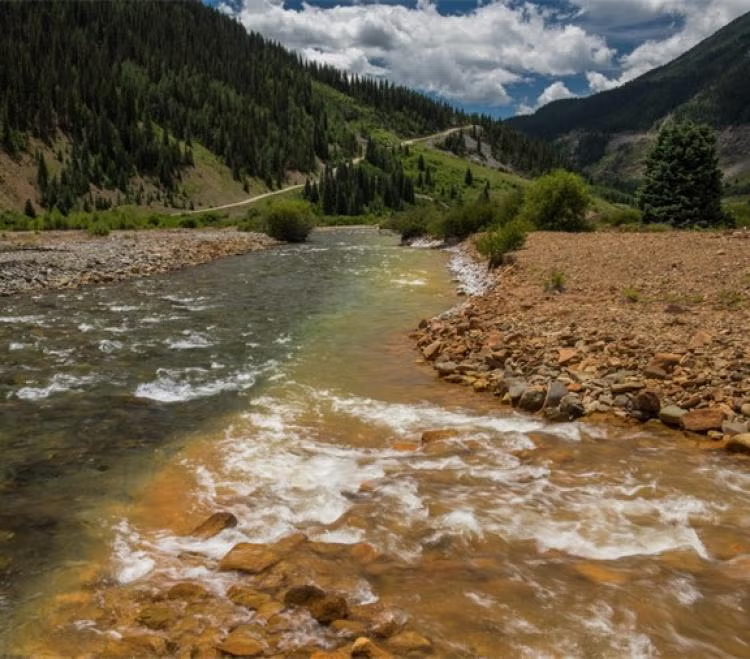
The Animas River running orange through Durango after the Gold King Mine spill August 2015. Photo credit: Jonathan P. Thompson/The Land Desk

The first legislation to address this problem was introduced in 1999. Many iterations followed and failed, even in the wake of shocking images and costly litigation due to the Gold King Mine spill that dyed the Animas River a vibrant orange in 2015. Finally, in December, 2024, Congress passed the Good Samaritan Remediation of Abandoned Hardrock Mines Act of 2024 (GSA).

The GSA is a cautious, bipartisan attempt to empower volunteers to clean up this toxic legacy. The law creates a short pilot program and releases certain “Good Samaritans” from liability under CERCLA and the CWA, which has long deterred cleanup by groups like state agencies and NGOs. EPA has oversight of the program and the authority to issue permits to Good Samaritans for the proposed cleanup work.

Despite the promise of this new legislation, critical questions remain unanswered about the GSA and how it will work. Only time will tell whether EPA designs and implements an effective permitting program that ensures Good Samaritans complete remediation work safely and effectively. EPA now has the opportunity as the agency that oversees this program to unlock the promise of the GSA.

The GSA left some significant gaps unanswered in how the pilot program will be designed and directed EPA to issue either regulations or guidance to fill in those gaps. EPA missed the statutory deadline to start the rulemaking process (July, 2025) and is now working to issue guidance on how the program will move forward. EPA must provide a 30-day public comment period before finalizing the guidance document according to the GSA. With EPA’s hopes of getting multiple projects approved and shovels in the ground in 2026, the forthcoming guidance is expected to be released soon. While we wait, it’s worth both looking back at what led to the GSA and looking ahead to questions remaining about the implementation of the pilot program.

A Century of Mining the West Without Accountability

The story begins with the General Mining Law of 1872, a relic of the American frontier era that still governs hardrock mining on federal public lands. The law allows citizens and even foreign-based corporations to claim mineral rights and extract valuable ores without paying any federal royalty. Unlike coal, oil, or gas—which fund reclamation through production fees—hardrock mining remains royalty-free.

As mining industrialized during the 20th century, large corporations replaced prospectors. Until 1980, mines were often abandoned without consequences or cleanup once they became unprofitable. The result: an estimated half-million abandoned mine features will continually leach pollution into American watersheds for centuries.

CERLCA Liability Holds Back Many Abandoned Mine Cleanups

Congress sought to address toxic sites through CERCLA, also known as the Superfund law, which makes owners and operators strictly liable for hazardous releases. In theory, that ensures accountability. In practice, it creates a paradox: if no polluter can be found at an abandoned site, anyone who tries to clean up the mess may be held responsible for all past, present, and future pollution.

The Clean Water Act’s Double-Edged Sword

Even state agencies, tribes, or nonprofits that treat contaminated water risk being deemed “operators” of a hazardous facility. That fear of liability—combined with enormous costs—has frozen many potential Good Samaritans in place. Federal efforts to ease this fear have offered little more than reassurance letters without real protection.

The Clean Water Act compounds the problem. Anyone who discharges pollution into a surface water via any discernible, confined and discrete conveyance must hold a point source discharge permit. By requiring these permits and providing for direct citizen enforcement in the form of citizen suits, the CWA has led to significant improvements in water quality across the country. That said, courts have ruled that drainage pipes or diversion channels used to manage runoff from abandoned mines may also qualify as point sources. As a result, Good Samaritans who exercise control over historic point sources, like mine tunnels, could face penalties and other liabilities for unpermitted discharges, even when they improve overall conditions.

The 2024 Good Samaritan Act Steps onto the Scene

After decades of failed attempts, the Good Samaritan Remediation of Abandoned Hardrock Mines Act was signed into law in December, 2024. The GSA authorizes EPA to create a pilot program, issuing up to fifteen permits for low-risk cleanup projects over seven years. Most importantly, permit holders receive protection from Superfund and Clean Water Act liability for their permitted activities. This legal shield removes one of the greatest barriers to cleanup efforts.

Applicants can seek either a Good Samaritan permit to begin active remediation or an investigative sampling permit to scope out a site for potential conversion to a Good Samaritan permit down the road.

In either case, applicants must show:

  • they had no role in causing, and have never exercised control over, the pollution in their application,
  • they possess the necessary expertise and adequate funding for all contingencies within their control, and
  • they are targeting low-risk sites, which are generally understood to be those that require passive treatment methods like moving piles of mine waste away from streams or snowmelt or diverting water polluted with heavy metals below mine tailings toward wetlands that may settle and naturally improve water quality over time

Under the unique provisions of the GSA, each qualifying permit must go through a modified and streamlined National Environmental Policy Act (NEPA) review process. EPA or another lead agency must analyze the proposed permit pursuant to an Environmental Assessment (EA). If the lead agency cannot issue a Finding of No Significant Impact (FONSI) after preparing an EA, the permit cannot be issued. The GSA therefore precludes issuance of a permit where the permitted activities may have a significant impact on the environment.

The pilot program only allows for up to fifteen low risk projects that must be approved by EPA over the next seven years. Defining which remediations are sufficiently low-risk becomes critical in determining what the pilot program can prove about the Good Samaritan model for abandoned mine cleanup. To some extent, “low risk” is simply equivalent to a FONSI. But the GSA further defines the low-risk remediation under these pilot permits as “any action to remove, treat, or contain historic mine residue to prevent, minimize, or reduce (i) the release or threat of release of a hazardous substance, pollutant, or contaminant that would harm human health or the environment; or (ii) a migration or discharge of a hazardous substance, pollutant, or contaminant that would harm human health or the environment.”

This excludes “any action that requires plugging, opening, or otherwise altering the portal or adit of the abandoned hardrock mine site…”, such as what led to the Gold King mine disaster. Many active treatment methods are also excluded from the pilot program, therefore, because they often involve opening or plugging adits or other openings to pump out water and treat it in a water treatment plant, either on or off-site. As a result, the Good Sam Act’s low-risk pilot projects focus on passive treatment of the hazardous mine waste or the toxic discharge coming off that waste, such as a diversion of contaminated water into a settlement pond.

The GSA requires that permitted actions partially or completely remediate the historic mine residue at a site. The Administrator of EPA has the discretion to determine whether the permit makes “measurable progress”. Every activity that the Good Samaritan and involved permitted parties take must be designed to “improve or enhance water quality or site-specific soil or sediment quality relevant to the historic mine residue addressed by the remediation plan, including making measurable progress toward achieving applicable water quality standards,” or otherwise protect human health and the environment by preventing the threat of discharge to water, sediment, or soil. The proposed remediation need not achieve the stringent numeric standards required by CERCLA or the CWA.

Furthermore, it can be challenging to determine the discrete difference between the baseline conditions downstream of an acid mine drainage prior to and after a Good Samaritan remediation is completed. Not only do background conditions confuse the picture, but other sources of pollution near the selected project may also make measuring water quality difficult. This may mean that the discretion left to the EPA Administrator to determine “measurable progress” becomes generously applied.

Finally, once EPA grants a permit, the Good Samaritan must follow the terms, conditions, and limitations of the permit. If the Good Samaritan’s work degrades the environment from the baseline conditions, leading to “measurably worse” conditions, EPA must notify and require that the Good Samaritantake “reasonable measures” to correct the surface water quality or other environmental conditions to the baseline. If these efforts do not result in a “measurably adverse impact”, EPA cannot consider this a permit violation or noncompliance. However, if Good Samaritans do not take reasonable measures or if their noncompliance causes a measurable adverse impact, the Good Samaritan must notify all potential impacted parties. If severe enough, EPA has discretion to revoke CERCLA and CWA liability protections.

Recently, EPA shared the following draft flowchart for the permitting process:
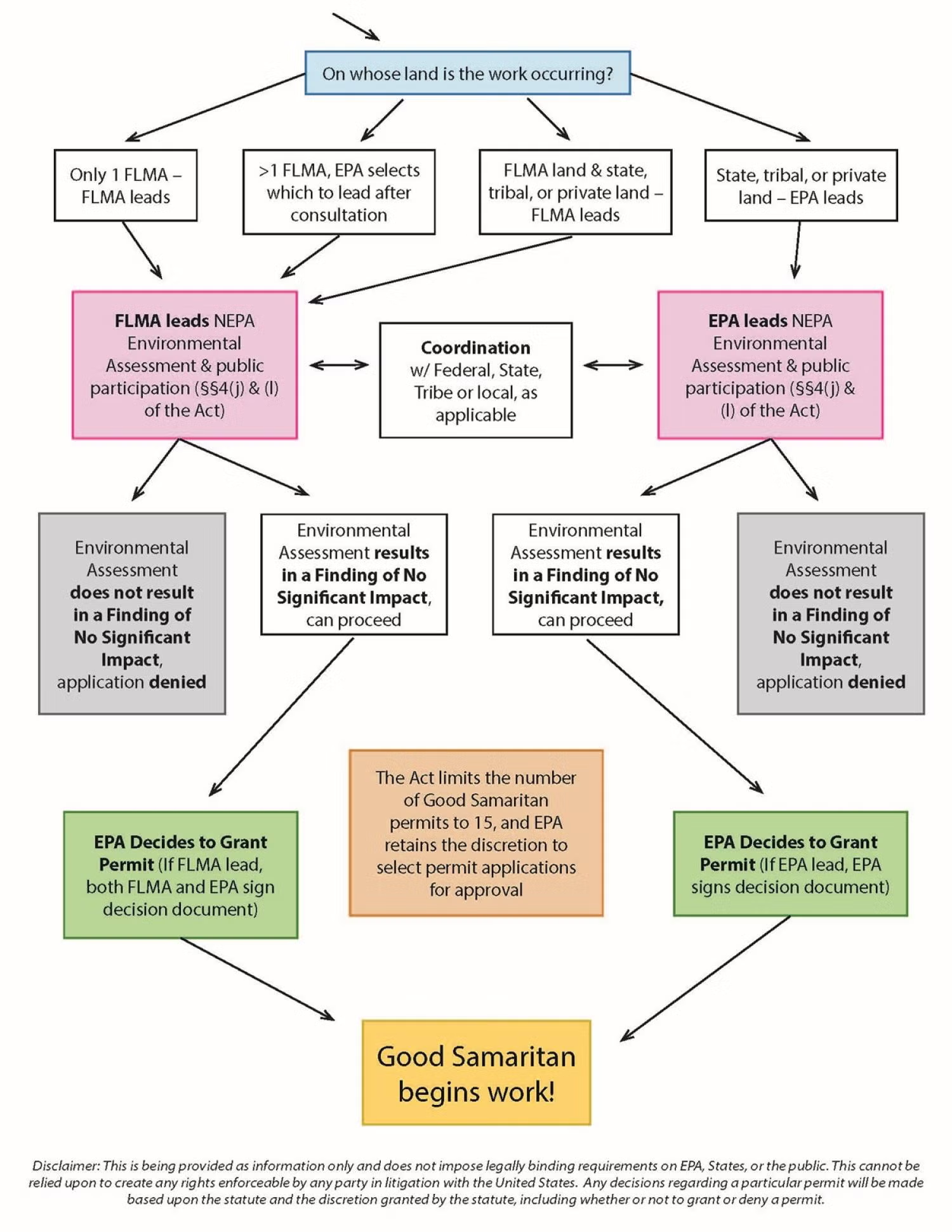
Disclaimer: This is being provided as information only and does not impose legally binding requirements on EPA, States, or the public. This cannot be relied upon to create any rights enforceable by any party in litigation with the United States. Any decisions regarding a particular permit will be made based upon the statute and the discretion granted by the statute, including whether or not to grant or deny a permit.

Challenges Facing the Pilot Program Implementation

Despite its promise, the pilot program’s scope is limited. With only fifteen Good Samaritan permits eligible nationwide and no dedicated funding, the law depends on states, tribes, and nonprofits to provide their own resources. The only guidance issued so far by EPA detailed the financial assurance requirements that would-be Good Samaritans must provide to EPA to receive a permit. Definitions provided in this financial assurance guidance raised concerns for mining trade organizations and nonprofits alike with EPA’s proposed interpretations of key terms including “low risk” and “long-term monitoring”. Crucial terms like these, along with terms impacting enforcement when a permitted remediation action goes awry, like “baseline conditions”, “measurably worse”, and “reasonable measures” to restore baseline conditions, are vague in the GSA. How EPA ultimately clarifies terms like these will play a large role in the success of the GSA in its ultimate goal: to prove that Good Samaritans can effectively and safely clean up abandoned hardrock mine sites. The soon-to-be-released guidance document will therefore be a critical moment in the history of this new program.

Funding the Future

Funding remains the greatest barrier to large-scale remediation efforts. Coal mine cleanups are funded through fees on current production under the Surface Mining Control and Reclamation Act. Current hardrock mining, however, still pays no federal royalty. A modernized system could pair Good Samaritan permitting with industry-funded reclamation fees, ensuring that those profiting from today’s mining help repair the past. Without this reform, the burden will remain on underfunded agencies and nonprofits. However, this General Mining Law reform remains politically unlikely. In the meantime, the GSA creates a Good Samaritan Mine Remediation Fund but does not dedicate any new appropriations to that fund. Grants under Section 319 of the CWA (Nonpoint Source Pollution) and Section 104(k) of CERCLA (Brownfields Revitalization) programs may help, but funding opportunities here are limited.

The GSA includes provisions that allow Good Samaritans to reprocess mine waste while completing Good Samaritan permit cleanup work. These provisions include a key restriction: revenue generated from reprocessing must be dedicated either to the same cleanup project or to the GSA-created fund for future cleanups. A January 20, 2025 executive order to focus on domestic production of critical minerals led to a related Interior secretarial order on July 17, 2025, for federal land management agencies to organize opportunities and data regarding reprocessing mine waste for critical minerals on federal lands. Shortly after these federal policy directives, an August 15, 2025, article in Science suggested that domestic reprocessing of mining by-products like abandoned mine waste has the potential to meet nearly all the domestic demand for critical minerals. Legal and technical hurdles might prevent much reprocessing from occurring within the seven-year pilot program. Reprocessing projections aside, the political appetite for dedicated funding for the future may still grow if the GSA pilot projects successfully prove the Good Samaritan concept using a funding approach reliant on generosity and creativity.

Despite Significant Liability Protections, Good Samaritans Face Uncertainties

While the new law should help to address significant barriers to the cleanup of abandoned mines by Good Samaritans, uncertainties remain. The GSA provides exceptions to certain requirements under the Clean Water Act (including compliance with section 301, 302, 306, 402, and 404). The GSA also provides exceptions to Section 121 of CERCLA, which requires that Superfund cleanups must also meet a comprehensive collection of all relevant and appropriate standards, requirements, criteria, or limitations (ARARs).

In States or in Tribal lands that have been authorized to administer their own point source (section 402) or dredge and fill (section 404) programs under the CWA, the exceptions to obtaining authorizations, licenses, and permits instead applies to those State or Tribal programs. In that case, Good Samaritans are also excepted from applicable State and Tribal requirements, along with all ARARs under Section 121 of CERCLA.

However, Section 121(e)(1) of CERCLA states that remedial actions conducted entirely onsite do not need to obtain any Federal, State, or local permits. Most GSA pilot projects will likely occur entirely onsite, so it is possible that Good Samaritans might still need to comply with local authorizations or licenses, such as land use plans requirements. While it appears that GSA permitted activities are excepted from following relevant and applicable Federal, State, and Tribal environmental and land use processes, it is a bit unclear whether they are also excepted from local decision making.

The liability protections in the GSA are also limited by the terms of the statute. Good Samaritans may still be liable under the CWA and CERCLA if their actions make conditions at the site “measurably worse” as compared to the baseline. In addition, the GSA does not address potential common law liability that might result from unintended accidents. For example, an agricultural water appropriator downstream could sue the Good Samaritan for damages associated with a spike in water acidity due to permitted activities, such as moving a waste rock pile to a safer, permanent location on site.

Finally, the GSA does not clearly address how potential disputes about proposed permits may be reviewed by the federal courts. However, the unique provisions of the GSA, which prohibit issuance of a permit if EPA cannot issue a FONSI, potentially provide an avenue to challenge proposed projects where there is disagreement over the potential benefits and risks of the cleanup activities.

Measuring and Reporting Success of the Pilot Program

The Good Samaritan Act authorizes EPA to issue up to fifteen permits for low-risk abandoned mine cleanups, shielding participants from Superfund and Clean Water Act liability. Applicants must prove prior non-involvement, capability, and target on low-risk sites. Each permit undergoes a streamlined NEPA Environmental Assessment requiring a FONSI. To be successful, EPA and potential Good Samaritans will need to efficiently follow the permit requirements found in the guidance, identify suitable projects, and secure funding. The GSA requires baseline monitoring and post-cleanup reporting for each permitted action but does not require a structured process of learning and adjustment over the course of the pilot program. Without this structured, adaptive approach, it may be difficult for Good Samaritan proponents to collect valuable data and show measurable progress over the next seven years that would justify expanding the Good Samaritan approach to Congress. EPA’s forthcoming guidance offers an opportunity to fix that by publicly adopting a targeted and tiered approach in addition to the obligatory permitting requirements.

The EPA’s David Hockey, who leads the GSA effort from the EPA’s Office of Mountains, Deserts, and Plains based in Denver, has suggested taking just such a flexible, adaptive approach in public meetings discussing the GSA. EPA, working in coordination with partners that led the bill through Congress last year, like Trout Unlimited, intends to approve GSA permits in three tranches. EPA currently estimates that all fifteen projects will be approved and operational by 2028.

The first round will likely approve two or three projects with near-guaranteed success. If all goes according to plan, EPA hopes to have these shovel-ready projects through the GSA permit process, which includes a NEPA review, with the remedial work beginning in 2026. These initial projects will help EPA identify pain points in the process and potentially pivot requirements before issuing a second round of permits. This second tranche will likely occur in different western states and might increase in complexity from the first tranche.

Finally, the third tranche of permits might tackle the more complex projects from a legal and technical standpoint that could still be considered low risk. This may include remediation of sites in Indian Country led by or in cooperation with a Tribal abandoned mine land reclamation program. Other projects suited for the third tranche might include reprocessing of mine waste, tailings, or sludge, which may also require further buy-in to utilize the mining industry’s expertise, facilities, and equipment. These more complex projects will benefit most from building and maintaining local trust and involvement, such as through genuine community dialogue and citizen science partnerships. The third tranche projects should contain such bold choices to fully inform proponents and Congress when they consider expanding the Good Samaritan approach.

EPA appears poised to take a learning-by-doing approach. But the guidance can and should state this by setting public, straightforward, and measurable goals for the pilot program. This is a tremendous opportunity for EPA and everyone who stands to benefit from abandoned mine cleanup. But this is no simple task. Each permit must be flexible enough to address the unique characteristics at each mine site, sparking interest in future legislation so more Good Samaritans can help address the full scale of the abandoned hardrock mine pollution problem. But if EPA abuses its broad discretion under the GSA and moves the goalposts too much during the pilot program, they may reignite criticisms that the Good Samaritan approach undercuts bedrock environmental laws like the Clean Water Act. If projects are not selected carefully, for instance, the EPA could approve a permit that may not be sufficiently “low risk”, or that ultimately makes no “measurable progress” to improve or protect the environment. Either case may invite litigation against the EPA under the Administrative Procedure Act’s arbitrary and capricious standard or bolster other claims against Good Samaritans.

While the GSA itself imposes only a report to Congress at the end of the seven-year pilot period, a five-year interim report to Congress could help ensure accountability. If all goes well or more pilot projects are needed, this interim report could also provide support for an extension before the pilot program expires. The guidance issued by EPA should only be the beginning of the lessons learned and acted on during the GSA pilot program.

Seizing the Window of Opportunity

The GSA represents a breakthrough after decades of gridlock. It addresses the key fears of liability that stymied cleanup. Yet its success will depend on how effectively the EPA implements the pilot program and the courage of Good Samaritans who are stepping into some uncertainty. If it fails, America’s abandoned mines will continue to leak toxins into its headwaters for generations to come. But if the program succeeds, it could become a model for collaborative environmental restoration. For now, the EPA’s forthcoming guidance could mark the first steps toward success through clear permitting requirements and by setting flexible yet strategic goals for the pilot program.

If you are interested in following the implementation of the Good Samaritan Act, EPA recently announced it will host a webinar on December 2, 2025. They will provide a brief background and history of abandoned mine land cleanups, highlight key aspects of the legislation, discuss the permitting process, and explain overall program goals and timelines. Visit EPA’s GSA website for more information.

Download a PDF of the paper here. 

Map of the San Juan River, a tributary of the Colorado River, in Arizona, Colorado, New Mexico and Utah, USA. Made using USGS National Map data. By Shannon1 – Own work, CC BY-SA 4.0, https://commons.wikimedia.org/w/index.php?curid=47456307

Federal Water Tap, October 20, 2025: Abandoned Mine Cleanup Application Review to Begin This Fall, EPA Says — Brett Walton (circleofblue.org)

The “Bonita Peak Mining District” superfund site. Map via the Environmental Protection Agency

Click the link to read the article on the Circle of Blue website (Brett Walton):

The Rundown

  • Democrats on budget committees tell EPA and Interior to halt potential staff cuts during the shutdown.
  • White House budget office says $11 billion in Army Corps infrastructure projects will be paused.
  • BLM will begin an environmental analysis of a proposed expansion of a Mojave Desert gold mine that will need more groundwater to operate.

And lastly, EPA prepares to permit abandoned hardrock mine cleanups under a new Good Samaritan law.

“If you were a nonprofit or a county with a serious water pollution issue coming out of an old set of mine tailings, you could not work on that problem. The moment you touched it, you accepted total liability for the pollution going downstream. So nobody would ever do anything about all these 140,000 abandoned mines. Almost every one of them having some environmental problem. Almost all of it connected to water.” – Sen. John Hickenlooper (D-CO) speaking with the Western Governors’ Association podcast about the problem of cleaning up abandoned mines in the western United States.

Last year the Good Samaritan Remediation of Abandoned Hardrock Mines Act was signed into law. It requires the EPA to permit 15 pilot cleanup projects to be completed within seven years. The projects can be located on private, federal, or state land.

David Hockey, acting director of the EPA Office of Mountains, Deserts, and Plains, said the agency will review project applications starting this fall. He hopes to have the first projects under construction next year and all 15 in progress by summer 2028.

By the Numbers

$11 Billion: Army Corps infrastructure projects that will be “paused,” Russell Vought, the director of the White House budget office, wrote on X. Vought blamed the government shutdown for the freeze. The targeted projects are mostly in states where Democrats are in power, E&E News reports.

News Briefs

Potential Shutdown Staff Cuts
Leading Democrats sent letters to the heads of EPA and Interior asking them to halt potential job cuts at their agencies during the shutdown.

Sen. Jeff Merkeley and Rep. Chellie Pingree are the ranking Democrats on the budget committees that oversee spending by those agencies.

Their concern is over the administration’s use of “reduction in force” during the shutdown to pare the federal workforce closer to President Trump’s vision of a diminished bureaucracy, even though Congress is supposed to set funding levels.

“This coordinated, government-wide approach to implementing RIFs during a lapse in appropriations appears designed to circumvent the appropriations process,” they wrote in their letter to Lee Zeldin, EPA administrator.

Of particular concern, they wrote, are proposed changes and reductions to the EPA’s science assessment and research division.

Similar concerns were raised in the letter to Doug Burgum, the interior secretary.

Studies and Reports

State Revolving Fund Audits
The EPA Office of Inspector General reviewed the financial documents for the state revolving fund programs, the main federal vehicle for water infrastructure funding.

The review found that 42 state drinking water programs and 43 clean water programs had an independent financial audit.

Audited financial statements help to identify wasteful and fraudulent spending.

On the Radar

Shutdown Continues
Nineteen days and counting, as of this writing.

Proposed Mojave Mine Expansion
The Bureau of Land Management will do an environmental impact analysis for a proposed expansion of the Castle Mountain open-pit gold mine in California’s part of the Mojave Desert.

The expansion would extend the mine’s life by 30 years and would entail construction of a 32-mile pipeline to supply 2,250 acre-feet of groundwater per year.

The mine is part of FAST-41, a federal program to accelerate project permitting and environmental reviews through close interagency coordination. The project dashboardsuggests that permitting for the Castle Mountain expansion will be completed by December 2026.

Public comments are being accepted through November 20. Submit them via the above link.

A virtual public meeting will be held on November 5 to outline the project and collect public input. Register here.

Federal Water Tap is a weekly digest spotting trends in U.S. government water policy. To get more water news, follow Circle of Blue on Twitter and sign up for our newsletter.

Awaiting the #ColoradoRiver 24-Month Study — John Fleck, Anne Castle, Eric Kuhn, Jack Schmidt, Kathryn Sorensen, and Katherine Tara (InkStain.net) #COriver #aridification

Click the link to read the article on the InkStain website (John Fleck, Anne Castle, Eric Kuhn, Jack Schmidt, Kathryn Sorensen, and Katherine Tara):

As we await Friday’s (Aug. 15, 2025) release of the Bureau of Reclamation’s Colorado River 24-Month Study, we need to remember a painful lesson of the last five years of crisis management: whatever you see in Reclamation’s report of the “Most Probable” reservoir levels for the next two years, we must prepare for things to be much worse.

A year ago, Reclamation’s “Most Probable” forecast told us to expect Lake Powell to hold 10.36 million acre feet of water at the end of July 2025, with a surface elevation 3,593 feet above sea level. Actual storage in Powell at the end of July was 7.46 maf, 2.9 million acre feet less, and the reservoir is 38 feet lower, than the “Most Probable” forecast.

Four years ago, one of us (Eric Kuhn) wrote this, which is helpful in understanding what is happening:

“The problem: the assumptions underlying the study do not fully capture the climate-change driven aridification of the Colorado River Basin.”

Udall/Overpeck 4-panel Figure Colorado River temperature/precipitation/natural flows with trend. Lake Mead and Lake Powell storage. Updated through Water Year 2024. Credit: Brad Udall

In 2022, a Utah State Center for Colorado River Studies team led by Jian Wang (including one of us, Schmidt) took this on in more technical detail – Evaluating the Accuracy of Reclamation’s 24-Month Study of Lake Powell Projections. The finding provided technical support for an intuition water managers already had: the 24-Month Study has an optimistic bias.

It is a practical demonstration of the problem U.S. Geological Survey scientist Paul Milly and colleagues famously warned us about nearly two decades ago – in water management, climate change means the past is increasingly unhelpful in projecting the future. [ed. Also: Stationarity Is Dead: Whither Water Management?]

The 24-Month Study: A Brief Primer

Produced monthly, Reclamation’s 24-Month Study includes three scenarios: Most Probable, Minimum Probable, and Maximum Probable. The Study includes 18 pages of data and forecasts for twelve Colorado River system reservoirs, from Fontenelle and Flaming Gorge in the north to Mohave and Havasu in the south, projecting things like elevation, storage, inflows, releases, evaporation, and hydropower production each month for the next two years.

Here is Wang et al’s explanation of how it works:

“Projections for reservoir elevations during the next few months are based on predictions of reservoir inflow using a widely accepted watershed hydrologic model run by the Colorado Basin River Forecast Center. The input data for that model are observed snowpack in the watershed, soil moisture, and anticipated precipitation and temperature. Projections for reservoir elevations beyond the immediately proximate winter, a year or more in the future (‘second year projections’), are based on statistical probabilities calculated using analyses of past inflows during a 30-year reference period.”

The resulting model runs represent a wide range of uncertainties, which are captured in three resulting scenarios:

  • Most Probable: the middle of the range
  • Maximum Probable: the 90th percentile scenario, meaning that 10% of the model runs predict even wetter hydrology and 90% predict drier.
  • Minimum Probable: the 10th percentile scenario, meaning that 10% of the model runs predict even drier hydrology and 90% predict wetter.

The problem, implicit in the argument Milly et al. made nearly two decades ago, is that a 30-year reference period is no longer a reliable indicator of what we should expect in the future. It represents a river we no longer have. This is not to suggest any bias or partiality on the part of Reclamation, but merely that the algorithms and modeling used to produce the 24-Month Study have proven in recent years to be skewed more toward the the past than the true-to-life. Our response needs to reflect that reality.

Because of the changing conditions in the Colorado River Basin, the Minimum Probable scenario has become the most valuable in providing a reliable indicator of the future. Actual flows and reservoir levels have been tracking the minimum probable forecast since March of this year. As we enter the fall of 2025, with the weak summer monsoon for most of the Upper Basin coupled with weak La Niña conditions persisting through the fall and early winter, and NOAA’s seasonal outlook pointing to a warmer and drier than average fall, it’s a good bet that this trend will continue at least through mid-winter. The Basin should be prepared for minimum probable conditions, with a clear possibility that  actual conditions could be worse than the 10th percentile scenario. The basin community needs to be ready to respond with the necessary water use reductions now to protect the Colorado River system on which we all depend.

Sources:

Map of the Colorado River drainage basin, created using USGS data. By Shannon1 Creative Commons Attribution-Share Alike 4.0

Western public land sale axed from Senate budget bill: #Utah U.S. Senator Mike Lee withdraws a plan that could have auctioned more than a million acres — Angus M. Thuermer Jr. (WyoFile.com)

This map shows land owned by different federal government agencies. By National Atlas of the United States – http://nationalatlas.gov/printable/fedlands.html, “All Federal and Indian Lands”, Public Domain, https://commons.wikimedia.org/w/index.php?curid=32180954

Click the link to read the article on the WyoFile website (Angus M. Thuermer Jr.):

June 28, 2025

Utah Sen. Mike Lee withdrew his land-sale provision from the Senate reconciliation budget bill Saturday evening.

“I was unable to secure clear, enforceable safeguards to guarantee that these lands would be sold only to American families – not to China, not to Blackrock, and not to any foreign interest,” Lee posted on X. “For that reason, I’ve made the decision to withdraw the federal land sales provision from the bill.”

The Republican had sought to require the sale of Bureau of Land Management property — owned by all Americans — to help Western communities resolve affordable housing worries. Critics said existing laws allow such sales and that the measure violated a core western value — public access to public land.

More than one million acres of public land were at stake. The provision required the government to auction the property rapidly and with curtailed public involvement.

Conservationists, hunters and anglers and outdoor recreation businesses erupted in virtual applause after Lee conceded. Opposition across the West stirred thousands to rally in support of continued ownership of and access to their publicly owned property.

“Public lands are the cornerstone of our conservation legacy,” Chris Wood, president and CEO of Trout Unlimited said in a statement heralding the provision’s demise.

Others were less reserved.

“Total faceplant,” wrote Land Tawney, co-chair of American Hunters & Anglers.

“He rewrote his scheme multiple times,” Tawney said of Lee. “And tonight? He yanked his own language from the bill,” Tawney wrote in a statement.

Shaping #Colorado’s Water Future: How Audubon Rockies will protect birds, watersheds, and communities in Colorado in 2025 — Abby Burk (RockieAudubon.org)

Great Blue Heron. Photo: Michael Rodock/Audubon Photography Awards.

Click the link to read the article on the Audubon Rockies website (Abby Burk):

February 24, 2025

Audubon Rockies is committed to advocating for smart, science-driven, and collaborative water policies that sustain healthy rivers and resilient ecosystems—because protecting water means protecting the birds, communities, and economies that depend on it. As the 2025 legislative session unfolds, water remains a foundational topic. By collaborating with both Republicans and Democrats, we have successfully driven meaningful change over the years.  

Key decisions at the Colorado State Capitol shape how we manage this vital resource in the face of climate change-influenced supplies and changing demands. From securing funding for water conservation efforts to advancing nature-based solutions and ensuring equitable water management, this year’s legislative discussions will have ripple effects across our landscapes, wildlife, and people. Stay tuned as we break down the important areas of water legislation work moving through the State Capitol this session. 

Funding for Water 

Colorado’s budget plays a critical role in protecting and sustaining our water resources, yet ongoing fiscal challenges, a deficit of more than one-billion dollars, and federal funding fluctuations put pressure on funding water, habitat conservation, and more. Colorado is facing a budget crisis due to a combination of factors, including declining tax revenues, rising costs, and constitutional constraints like the Taxpayer’s Bill of Rights (TABOR), which limits the state’s ability to generate and allocate funds. Increased demands on essential services such as education, healthcare, transportation, and water infrastructure, coupled with inflation and economic uncertainty, have strained available resources. As demands on our water supply grow and climate change intensifies pressures on our rivers, wetlands, and watersheds, it is essential to advocate for sustainable financial solutions that support Colorado’s long-term resilience. Audubon is working to ensure that state water funding remains strong and dedicated to conservation, restoration, and resilience-building efforts.  

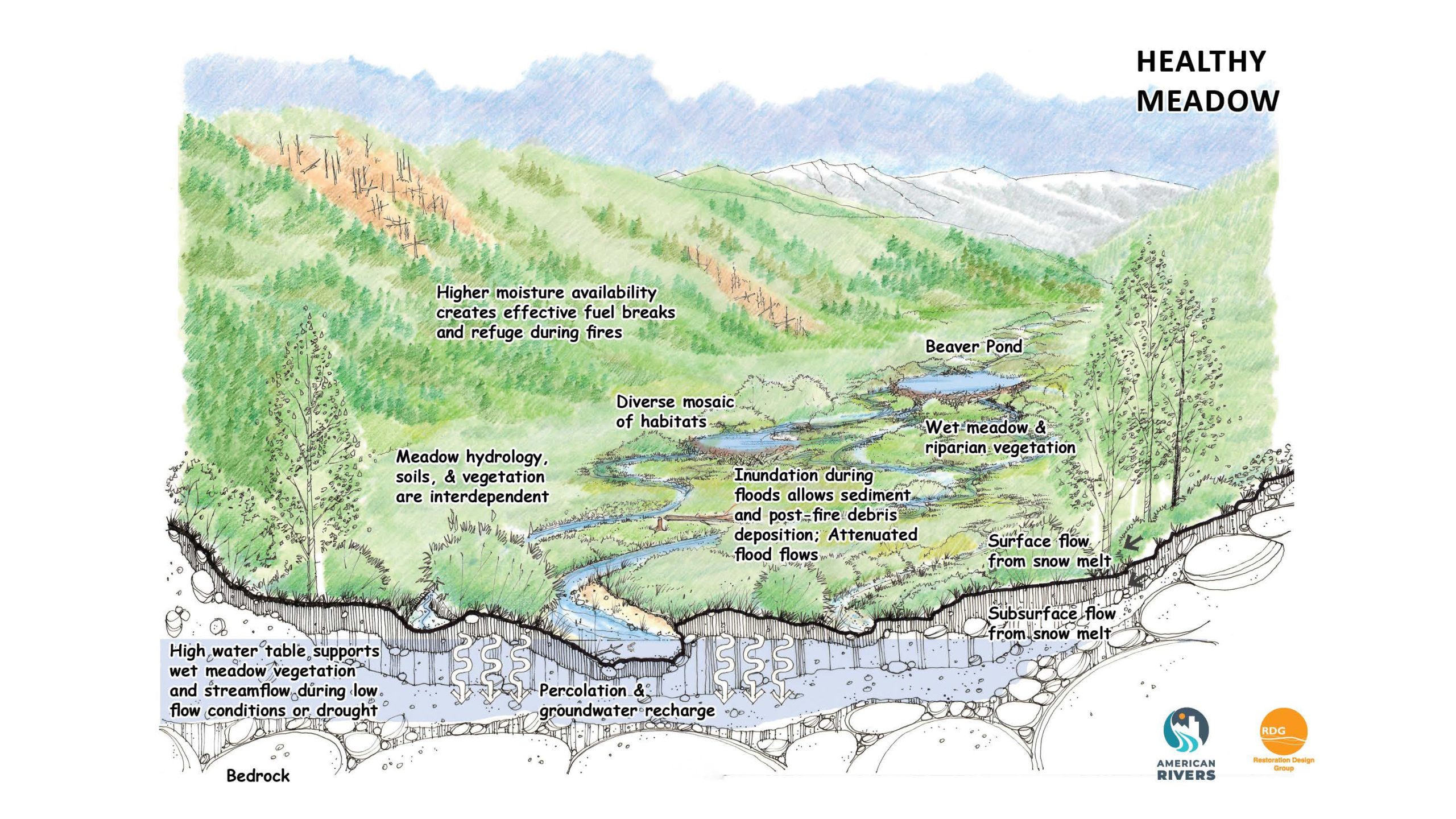
Healthy mountain meadows and wetlands are characteristic of healthy headwater systems and provide a variety of ecosystem services, or benefits that humans, wildlife, rivers and surrounding ecosystems rely on. The complex of wetlands and connected floodplains found in intact headwater systems can slow runoff and attenuate flood flows, creating better downstream conditions, trapping sediment to improve downstream water quality, and allowing groundwater recharge. These systems can also serve as a fire break and refuge during wildfire, can sequester carbon in the floodplain, and provide essential habitat for wildlife. Graphic by Restoration Design Group, courtesy of American Rivers

Wetlands Rulemaking  

In 2025, Audubon Rockies remains actively engaged in the HB24-1379 rulemaking process. In collaboration with state agencies and conservation partners, Audubon is advocating for science-based policies to ensure that permitting prioritizes avoiding and minimizing impacts to vital ephemeral streams and wetlands, and that any key ecological functions lost due to permitted activities in these waters are compensated for through restoration activities. These objectives align with the legislative intent of HB24-1379 and are vital to protecting the fragile wetland ecosystems birds rely on. By providing expert input, supporting transparent decision-making, and championing nature-based solutions, Audubon works to secure strong, practicable, lasting protections for freshwater habitats and the birds and communities that depend on them. 

Protecting Land and Rivers 

Audubon works closely with the State of Colorado to ensure that public lands and healthy watersheds are protected and sustainably managed for both people and wildlife through federal administration changes. Through outreach, collaboration, and on-the-ground conservation efforts, Audubon supports management and policies that enhance watershed resilience, improve habitat connectivity, and safeguard the vital water resources that flow through our public lands.  

As Colorado River negotiations continue, Audubon remains committed to supporting collaborative, science-based solutions that balance the needs of people, wildlife, and ecosystems. With increasing pressures from drought, climate change, and growing water demands, finding equitable and lasting agreements among basin states is critical. Audubon advocates for water management strategies across the Colorado River basin that prioritize healthy ecosystems and sustainable water use while ensuring that birds and communities reliant on the Colorado River have a secure future. By working with policymakers, water leaders, and conservation partners, Audubon advocates for consensus-based solutions that promote the river’s ecological integrity and support a sustainable water future for all. 

President Trump’s funding freeze muddies water outlook on the drought-stricken #ColoradoRiver — AZCentral.com #COriver #aridification

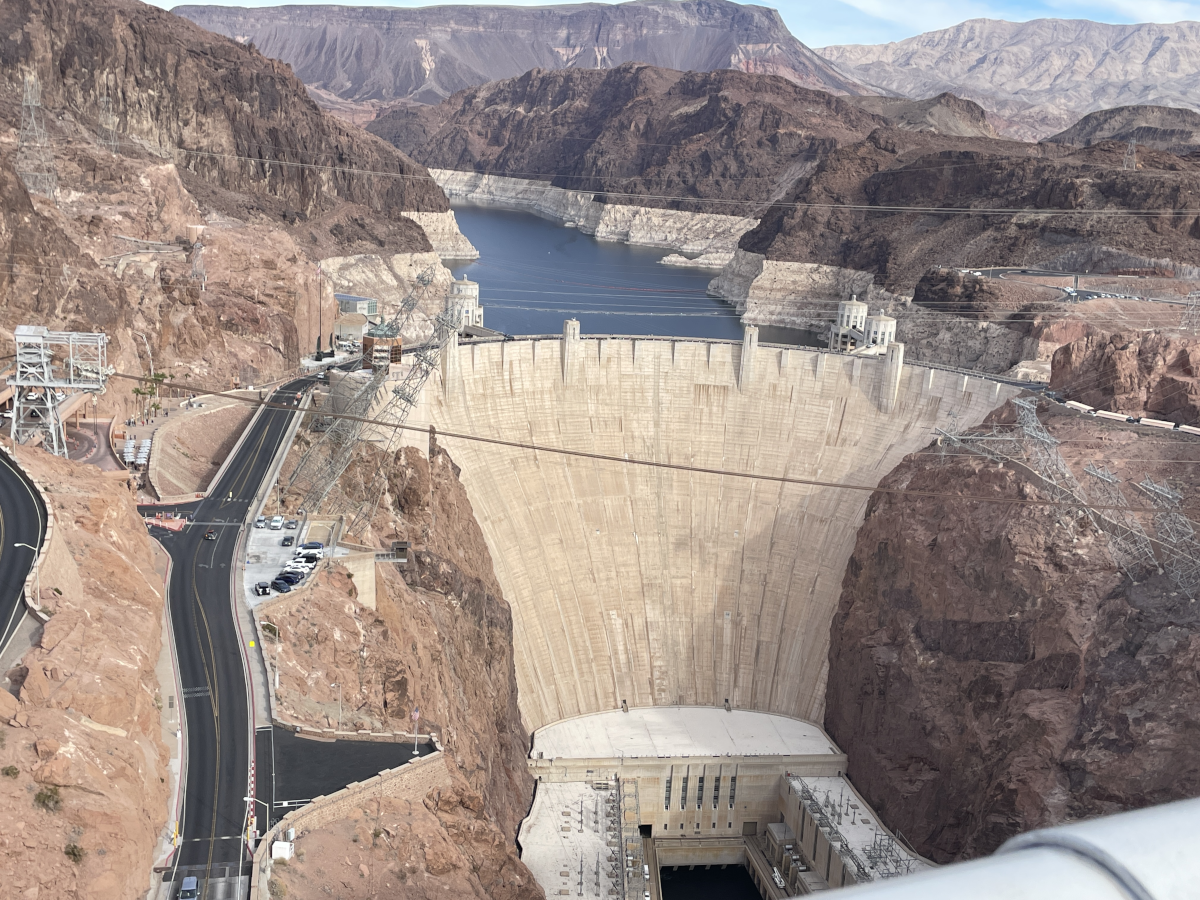
Hoover Dam from the U.S.-93 bridge over the Colorado River December 3, 2024.

Click the link to read the article on the AZCentral website (Brandon Loomis):

February 27, 2025

Key Points

  • Congress and the Biden administration committed $4 billion to Western drought relief, including money for users who agree to leave water in Lake Mead.
  • The money is apparently caught in a freeze of federal funds ordered by President Donald Trump, though questions remain without a Reclamation commissioner.
  • Lawmakers and Arizona’s top water official fear that without the funding, the Colorado River could be pushed deeper into drought, leading to more cutbacks in Arizona.

Facing a dwindling supply that provoked emergency actions to keep the river flowing past Hoover Dam, Congress directed $4 billion to Western drought relief, most of it aimed at shoring up Colorado River water storage. The U.S. Bureau of Reclamation signed deals with irrigators, tribes and other rights holders to forgo deliveries and save 1.5 million acre-feet of water over three years through 2025, with some extensions beyond this year. A second round of funds, which members of Congress say is also frozen, is intended to make long-term efficiency improvements, such as lining canals to stop losses when water is delivered to farms. Without the water or the agreements, some officials fear the ongoing negotiations among the seven river states could fall apart…

Officials with the Bureau of Reclamation did not respond to requests for comment or to confirm the freeze or how long it is intended to last. The administration has frozen various congressionally appropriated funds as cost-cutting aide Elon Musk’s team searches for fraud and savings. The president has not yet appointed a commissioner for the Reclamation Bureau, which manages the dams on the Colorado…

Projections for likely reservoir storage by the end of next year put Mead dangerously close to 1,050 feet above sea level, or the trigger that would cause Arizona to lose another 80,000 acre-feet, Arizona Water Resources Director Tom Buschatzke said this week…Failure to save  water with the contractual deals that Reclamation made for 2025 could tip the region into that next shortage tier, he said, because the projections already assume that the water will have been saved.

“I have advocated strongly to my Arizona (congressional) delegation — the entire delegation — that that money in both the upper and lower basins that was committed needs to be spent,” Buschatzke said. “Those projects are critical to stabilizing the system as we continue to work toward a post-2026 world.”

The Biden administration inked three-year deals with about two dozen water users, including the cities of Phoenix, Tucson, Scottsdale and others, at a rate of $400 per acre-foot. California’s Imperial Irrigation District got a sweeter deal, at $777 for a one-year contract in 2023, but also has among the river’s safest rights against reductions when reservoir levels fall. Most of the water users who signed on were in Arizona, though the biggest deal, a four-year pact to leave 351,000 acre-feet in Mead, was with the Metropolitan Water District of Southern California and Paloverde Irrigation District of California. Arizona’s largest deal was with the Gila River Indian Community, for 341,000 acre-feet, according to a chart provided by Stanton’s staff. The contracts in the Lower Basin states — those downstream of Glen Canyon Dam —  totaled nearly $664 million…A second batch of federal conservation funds, also reportedly frozen, is intended to make lasting water savings by, for instance, putting $87 million toward an advanced water purification plant in Tucson that will enable 56,000 acre-feet to stay in Lake Mead over a decade. A $107 million investment in the Gila River Indian Community, south of Phoenix, is projected to save 73,000 acre-feet over 10 years.

Udall/Overpeck 4-panel Figure Colorado River temperature/precipitation/natural flows with trend. Lake Mead and Lake Powell storage. Updated through Water Year 2024. Credit: Brad Udall

Colorado’s Stream & Wetlands Protection Bill Becomes a Law: Representing the environment as a stakeholder in Colorado’s HB24-1379 rulemaking — Nathan Boyer-Rechlin (Rockies.Audubon.org)

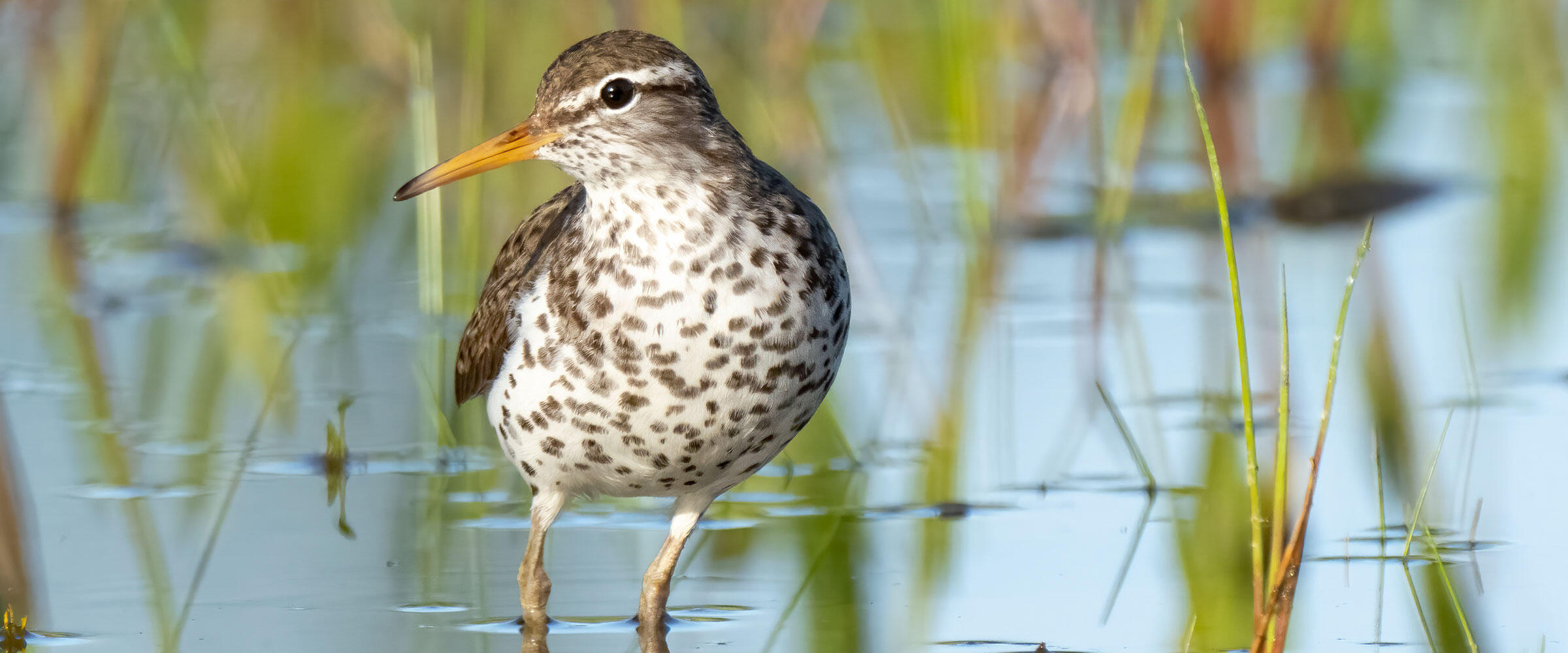
Spotted Sandpiper. Photo: Mick Thompson/Audubon Rockies

Click the link to read the article on the Audubon Rockies website (Nathan Boyer-Rechlin):

January 28, 2025

Colorado is in the midst of a nation-leading rulemaking for its state-waters protection program, established by HB24-1379: Regulate Dredge & Fill Activities in State Waters (HB1379) which Governor Polis signed into law on May 29th. This bill establishes a state regulatory program to permit dredge and fill activities that impact state waters not covered by the Clean Water Act (CWA). This encompasses removal, filling, or other alteration of wetlands and ephemeral streams from activities such as mining and infrastructure development. Audubon Rockies told the story of why Colorado needed new legislation following the Supreme Court’s Sackett Decisionwhich removed crucial wetland protections—and how the bill passed with bi-partisan support in our June 2024 blog post, “A Colorado Program the Colorado Way.”

Ephemeral streams are streams that do not always flow. They are above the groundwater reservoir and appear after precipitation in the area. Via Socratic.org

The core of this program’s regulatory jurisdiction are ephemeral streams and isolated wetlands. Existing federal and state-managed regulatory programs tend to undervalue these types of streams and wetlands, and inadequately mitigate for loss of these habitats and their ecological functions. HB1379 has given Colorado the opportunity to lead the nation in developing a regulatory program that not only fills the gap left by Sackett, but effectively addresses impacts to these key habitats that birds, and humans, rely on. Although the bill set a strong framework for the regulatory program, the gains made during the legislative session could be minimized if the next step isn’t done well. That next step, the rulemaking process, is currently underway.

Anatomy of a Rulemaking

Most of us who grew up with the American public school system likely remember Bill, that “sad little scrap of paper” who only ever dreamed of becoming a law (revisit that Schoolhouse Rock clip for a trip down memory lane). However, what our schoolhouse rock education left out was the long road ahead once poor Bill finally achieves his dream. Sadly for him, it’s not over yet. In most cases, a bill that passes through the state or federal legislature is a sketch or outline which sets the structure and parameters for how a law will function. The rulemaking process fills in the color and detail. 

In our bill’s case, HB24-1379 outlines key requirements and structure for a state program to regulate dredge and fill impacts to state waters which are not covered under the Supreme Court’s current interpretation of the Clean Water Act. The bill directs Colorado’s Department of Public Health and Environment’s (CDPHE) Water Quality Control Commission (WQCC) to develop and promulgate rules detailing how the program will be administered by December 31, 2025. These rules will determine regulatory requirements for stream restoration projects; determine how permits are evaluated, including standards avoiding and minimizing impacts to state waters; and establish a compensatory mitigation program to ensure that all lost stream and wetland functions due to permitted activities are replaced. How these rules are written will determine how effectively the state program meets the bill’s objectives.

CDPHE began convening stakeholders, including Audubon and our partners, in September 2024.  They then released the first draft of new regulations on December 6th. CDPHE is holding monthly stakeholder meetings through November 2025 to build consensus on priorities and draft additional language. WQCC will begin the formal rulemaking process in August 2025, which will include a public comment period for the proposed rules and the rulemaking hearing will be held on December 8, 2025.

What’s at Stake?

The United States Geological Survey’s National Hydrography Dataset estimates that 24 percent of Colorado’s streams are ephemeral and 45 percent are intermittent. These streams provide key habitat for more than 400 bird species throughout Colorado and are vital for mitigating climate and drought impacts, protecting water quality in downstream riverways by capturing sediment and other pollutants, and regulating late season flows and stream temperatures.

Colorado Rivers. Credit: Geology.com

One of the most critical components of a dredge and fill permitting program is compensatory mitigation. In the federal dredge and fill permitting program ((§) 404 of the CWA), which Colorado is modeling its program after, permittees must first avoid and minimize all impacts to regulated waters and then compensate for all unavoidable impacts. Wetland compensatory mitigation most commonly takes place through mitigation banks, where permittees purchase credits from a mitigation bank that has previously constructed wetlands. Mitigation can also be done through an in-lieu fee program or onsite, where the impacts are taking place, by the permittee.

Sunrise Over Wetland by NPS/Patrick Myers

While wetland mitigation has been a well-established practice for decades, stream mitigation has only become common in the last 20 years. Due to challenges unique to streams, and particularly ephemeral streams which are more challenging to create or replace through mitigation banks, stream mitigation has been largely ineffective at replacing the functions lost through dredge or fill impacts. One review of the efficacy of stream mitigation programs found that “existing methods often devalued partially degraded, small, and non-perennial streams and thus discouraged protection and restoration of these stream types.” Developing a compensatory mitigation program that effectively replaces the functions of ephemeral streams that are lost through unavoidable impacts is a key challenge this rulemaking will address.

HB24-1379 included three key provisions to ensure the program adequately protects ephemeral streams and isolated wetlands:

  1. The rules must focus on avoidance and minimization of all adverse impacts [of permitted projects] and describe avoidance and minimization standards.
  2. The rules must implement a compensatory mitigation program for all unavoidable impacts [of permitted projects]. Compensatory mitigation must compensate for all “functions of state waters that will be lost as a result of the authorized activity”
  3. The rules must include an exemption [from permitting] for stream restoration projects in ephemeral streams that are designed solely for ecological lift. Ecological life refers to improvement in the biological and/or hydraulic health of the stream.

While the first draft regulation has been released, many of the sections of the rules that will address these issues are still under development.

Better Together – Working Collaboratively for the Environment

Audubon and our partners have been actively engaged with CDPHE through their stakeholder engagement processes to advocate for strong rules in these three areas. In November, Audubon along with 10 other conservation organizations contributed and signed on to a letter to CDPHE detailing our priorities. This coalition, Protect Colorado’s Waters, also submitted specific feedback on the draft regulations in early January and are continuing to be engaged in advocating for strong rules that ensure avoidance and minimization of wetlands impacts and effective mitigation when needed. Our priorities also include ensuring that qualified stream restoration projects, designed for ecological lift, can continue without undue regulatory burden.

While Audubon and our partners secured a major victory for birds and people with the passing of HB24-1379, our bill’s journey is not done yet. If CDPHE can develop and promulgate rules for this program that ensure that permitted projects are the least damaging available alternative, ensure any lost functions are replaced through mitigation, and streamline permitting for voluntary stream restoration projects, then Colorado’s program will be the first of its kind to effectively protect these vital habitats. To stay engaged and attend future stakeholder meetings, visit CDPHE’s dredge and fill engagement website.

Colorado River headwaters tributary in Rocky Mountain National Park photo via Greg Hobbs.

Endangered fish programs extension part of Congress-approved bill — The #GrandJunction Daily Sentinel

RAZORBACK SUCKER The Maybell ditch is home to four endangered fish species [the Humpback chub (Gila cypha), Bonytail (Gila elegans), Colorado pikeminnow (Ptychocheilus lucius), and the Razorback sucker (Xyrauchen texanus)] © Linda Whitham/TNC

Click the link to read the article on the Grand Junction Daily Sentinel website (Dennis Webb). Here’s an excerpt:

December 18, 2024

The Upper Colorado and San Juan River Basins Endangered Fish Recovery Programs Reauthorization Act was included in the fiscal year 2025 National Defense Authorization Act. The fish legislation extends programs that protect four threatened and endangered native fish species in the Upper Colorado and San Juan river basins. The defense bill now heads to the president’s desk. The Senate version of the fish bill was sponsored by U.S. Sens. John Hickenlooper and Michael Bennet, both D-Colo., and Sen. Mitt Romney, R-Utah, among others. U.S. Rep. Lauren Boebert, R-Colo., carried a House version of the fish bill. A negotiated version of her bill and the Senate bill ended up being included in the defense bill. The Senate passed the defense bill Monday after passage by the House, despite controversy over a provision banning some gender-affirming care for transgender children of service members, according to a Reuters story.

The fish programs provide for studying, monitoring and stocking the four fish species, managing habitat and river flows, and combating invasive species through 2031. That provides certainty for Upper Basin water use and fulfills the federal government’s trust responsibility to tribes, according to a news release from Hickenlooper’s office…The fish bill language authorizes up to $92 million for the Bureau of Reclamation to contribute annual cost-shared funding for program implementation. It also adds up to $50 million to the authorization ceiling for capital projects, which will fund infrastructure improvements to benefit the fish.

The new Farm Bill extension provides some relief for #Colorado producers, but leaves much unsettled — Colorado Public Radio

Photo credit: Jones Farms Organics

Click the link to read the article on the Colorado Public Radio website (Caitlyn Kim). Here’s an excerpt:

December 24, 2024

As part of a temporary stopgap government funding measure passed last week, Congress also approved a one-year extension of the Farm Bill. While the Farm Bill is seen as-must pass legislation by all sides in Congress, Congressional leaders still struggled to reach a compromise over the last two years, leaving farmers relying on outdated provisions approved in 2018, well before the COVID pandemic, the increases in operating costs, and a number of natural disasters.

Delayed farm bill punted until after election with Congress stuck on how to pay for it — Source #NewMexico

A farmer stores grain near Eldridge, Iowa, on Sept. 28, 2024. (Photo by Kathie Obradovich / Iowa Capital Dispatch)

Click the link to read the article on the Source New Mexico website (Allison Winter):

October 3, 2024

Sweeping legislation that would set food and farm policy for the next five years is in limbo, waiting for lawmakers to decide its fate after the election.

The latest deadline for the farm bill passed unceremoniously at midnight on Sept. 30, without a push from lawmakers to pass a new farm bill or an extension.

Congress will have to scramble in the lame-duck session set to begin Nov. 12 to come up with some agreement on the farm bill before benefits run out at the end of the year — which if allowed to happen eventually would have major consequences.

The law began 90 years ago with various payments to support farmers but now has an impact far beyond the farm, with programs to create wildlife habitat, address climate change and provide the nation’s largest federal nutrition program.

Ag coalition in disarray

The omnibus farm bill is more than a year behind schedule, as the bipartisan congressional coalition that has advanced farm bills for the last half century has been teetering on the edge of collapse.

Congress must approve a new federal farm bill every five years. The previous farm bill from 2018 expired a year ago. With no agreement in sight at the time, lawmakers extended the law to Sept. 30, 2024.

The delay creates further uncertainty for farmers, who are facing declining prices for many crops and rising costs for fertilizer and other inputs.

Lawmakers have some buffer before Americans feel the consequences of the expiration.

Most of the key programs have funding through the end of the calendar year, but once a new crop year comes into place in January, they would revert to “permanent law,” sending crop supports back to policy from the 1938 and 1949 farm bills.

Those policies are inconsistent with modern farming practices and international trade agreements and could cost the federal government billions, according to a recent analysis from the non-partisan Congressional Research Service.

‘Groundhog Day’ cited by Vilsack

The stalemate between Democrats and Republicans over the farm bill has centered on how to pay for it and whether to place limits on nutrition and climate programs.

Agriculture Secretary Tom Vilsack told reporters in a press call on Saturday that the process “feels like Groundhog Day” — because he keeps having the same conversations about it. Vilsack said Republicans “just don’t have the votes” on the floor for legislation passed in the House Agriculture Committee, which is why it has sat dormant in the House for four months.

“If they want to pass the farm bill they’ve got to get practical, and they either have to lower their expectations or raise resources. And if they’re going to raise resources, they have to do it in a way where they don’t lose votes, where they actually gain votes,” Vilsack, a former Iowa governor, said.

The Republican-led committee approved its farm bill proposal largely on party lines at the end of May, amidst complaints from Democrats that the process had not been as bipartisan as in years past.

Partisan division is not uncommon in today’s Congress but is notable on the farm bill, which historically brought together lawmakers from both sides of the aisle. Bipartisan support can be necessary for final passage because the size of the $1.5 trillion farm bill means it inevitably loses some votes from fiscal conservatives and others.

Shutdown threat

Lawmakers are on borrowed time with both the farm bill and the appropriations bills that fund the federal government.

The House and Senate both approved stopgap spending bills at the end of September to avoid a partial government shutdown. The short-term funding bill, sometimes referred to as a continuing resolution, or CR, will keep the federal government running through Dec. 20.

Some agriculture leaders had asked for the continuing resolution to not extend the farm bill, to help push the deadline for them to work on it when they return.

The day after they approved the CR and left the Capitol, 140 Republican House members sent a letter to congressional leadership asking to make the farm bill a priority in the waning weeks of 2024.

“Farmers and ranchers do not have the luxury of waiting until next Congress for the enactment of an effective farm bill,” the letter states, noting rising production costs and falling commodity prices that have put farmers in a tight spot.

House Democrats also say they want to pass a new farm bill this year.

House Minority Leader Hakeem Jeffries, a New York Democrat, listed the farm bill as one of his top three priorities for the lame duck. Also on his list were appropriations and the National Defense Authorization Act, which sets policy for the Pentagon.

“It will be important to see if we can find a path forward and reauthorize the farm bill in order to make sure that we can meet the needs of farmers, meet the needs from a nutritional standpoint of everyday Americans and also continue the progress we have been able to make in terms of combating climate crisis,” Jeffries said in remarks to reporters Sept. 25.

Nearly 300 members of the National Farmers Union visited lawmakers in September to ask for passage of a new five-year farm bill before the end of 2024.

“Family farmers and ranchers can’t wait – they need the certainty of a new farm bill this year,” National Farmers Union President Rob Larew said in a statement after the meetings. “With net farm income projected at historic lows, growing concentration in the agriculture sector, high input costs and interest rates, and more frequent and devastating natural disasters, Congress can’t miss this opportunity to pass a five-year farm bill.”

Disagreements over SNAP formula

The key dispute for Democrats this year is a funding calculation that would place limits on the “Thrifty Food Plan” formula that calculates benefits for the Supplemental Nutrition Assistance Program, SNAP.

It would keep SNAP payments at current levels but place a permanent freeze on the ability of future presidents to raise levels of food support. Democrats have characterized it as a sneaky cut to vital support for hungry Americans that makes the bill dead on arrival.

Republicans are using the limits as part of a funding calculation to offset other spending in the bill. The bill would raise price supports for some crops like cotton, peanuts and rice.

“They have to do one of two things,” Vilsack said of lawmakers. “They either have to recognize that they can’t afford all the things that they would like to be able to afford, if they want to stay within the resources that are in fact available … Or another alternative would be to find more money.”

Vilsack recommended finding other sources of funding outside the farm bill, like changes to the tax code.

“You close a loophole here or there in terms of the taxes or whatever, and you generate more revenue, and you have that revenue directly offset the increase in the farm bill. … That’s the correct way to do it. And that’s, frankly, the way Senator Stabenow is approaching the farm bill,” Vilsack said, referring to Senate Agriculture Committee Chairwoman Debbie Stabenow, D-Mich.

The Senate Agriculture Committee has had no public markup or formal introduction of a bill. But leaders say committee staff have been meeting weekly to discuss a path forward. Stabenow has not publicly disclosed the offsets for the money she says is available to be moved into the bill.

A powerful sprinkler capable of pumping more than 2,500 gallons of water per minute irrigates a farm field in the San Luis Valley June 6, 2019. Credit: Jerd Smith via Water Education Colorado

2024 #COleg: #Colorado Water Quality Control Commission to kick off high-stakes wetlands regulatory process Sept. 4 — Jerd Smith (Fresh Water News)

Blanca Wetlands, Colorado BLM-managed ACEC Blanca Wetlands is a network of lakes, ponds, marshes and wet meadows designated for its recreation and wetland values. The BLM Colorado and its partners have made strides in preserving, restoring and managing the area to provide rich and diverse habitats for wildlife and the public. To visit or get more information, see: http://www.blm.gov/co/st/en/fo/slvfo/blanca_wetlands.html. By Bureau of Land Management – Blanca Wetlands Area of Critical Environmental Concern, Colorado, Public Domain, https://commons.wikimedia.org/w/index.php?curid=42089248

Click the link to read the article on the Water Education Colorado website (Jerd Smith):

August 28, 2024

Dozens of environmentalists, homebuilders, farmers and road builders, along with Colorado water quality regulators, will buckle down next week to begin work on a complex new set of rules designed to protect thousands of acres of wetlands for years to come.

And, yes, they want your help.

Colorado’s Water Quality Control Commission plans a series of public meetings in the coming months, with a kickoff meeting Sept. 4, followed by workshops Sept. 13 and Oct. 4. Meetings will be held virtually and workshops will be held virtually and in person, according to state health officials.

Colorado is the first state to address a major gap created last year when the U.S. Supreme Court, in its Sackett v. EPA decision, wiped out a critical set of environmental safeguards contained in the Clean Water Act. 

Healthy mountain meadows and wetlands are characteristic of healthy headwater systems and provide a variety of ecosystem services, or benefits that humans, wildlife, rivers and surrounding ecosystems rely on. The complex of wetlands and connected floodplains found in intact headwater systems can slow runoff and attenuate flood flows, creating better downstream conditions, trapping sediment to improve downstream water quality, and allowing groundwater recharge. These systems can also serve as a fire break and refuge during wildfire, can sequester carbon in the floodplain, and provide essential habitat for wildlife. Graphic by Restoration Design Group, courtesy of American Rivers

House Bill 1379, approved by Colorado lawmakers in May, identifies which streams and wetlands must be protected, and where exceptions and exclusions for such things as homebuilding, farming and road building will apply. During the next 16 months, the rules spelling out how the law will be enforced must be crafted and approved by the Colorado Water Quality Control Commission.

Lawmakers have given the regulators and participants until December 2025 to finish the rules and launch the oversight program.

“For 50 years we all depended on the Clean Water Act to protect our watersheds,” said Stu Gillespie, an attorney with EarthJustice who helped negotiate House Bill 1379. “But that was taken away by the Supreme Court. Now we all need to be involved because we all rely on these watersheds. I hope people will keep tabs and engage from the outset so we don’t lose any more wetlands and streams.”

Ephemeral streams are streams that do not always flow. They are above the groundwater reservoir and appear after precipitation in the area. Via Socratic.org

The Sackett case had major impacts in Colorado and the West, where vast numbers of streams are temporary, or ephemeral, flowing only after major rainstorms and during spring runoff season, when the mountain snow melts. The Sackett decision said, in part, that only streams that flow year-round are subject to oversight. It also said that only wetlands that had a surface connection to continually flowing water bodies qualified for protection. Many wetlands in Colorado have a subsurface connection to streams, rather than one that can be observed above ground.

House Bill 1379 corrected those problems.

But lawmakers and others remain worried that the Colorado Department of Public Health and Environment’s Water Quality Control Division, already facing a major backlog on issuing permits for one of its programs, will have difficulty keeping up with the permitting demands of the new wetlands program.

Sen. Barbara Kirkmeyer, a Republican from Brighton, said she is hopeful that new requirements calling for frequent reporting to the state’s Joint Budget Committee, or JBC, and lawmakers will keep the program on track and help fill the funding gaps that have plagued the health department in recent years.

Lawmakers have provided nearly $750,000 this year for the initial work and OK’d four new full-time positions for the program as well as part-time legal support, according to the final fiscal note on House Bill 1379.

“We’ve always understood that we needed a permitting process in place,” Kirkmeyer said Aug. 20 at a meeting of the Colorado Water Congress. “But we also need safeguards to ensure there is oversight at the JBC so we can ensure permits are being processed in a timely manner.”

More by Jerd Smith

Wetlands, which are havens of biodiversity, offer priceless ecological benefits. (Photo Credit: John Fielder via Writers on the Range)

2024 #COleg: A #Colorado Program the Colorado Way — Audubon Rockies

Photo credit: Audubon Rockies

Click the link to read the release on the Audubon Rockies websiite (Abby Burk):

On May 29, 2024, Colorado Governor Jared Polis stated “Water is life in Colorado and today I was proud to protect our water resources that are essential for our agriculture, our economy, and our way of life.” That day, he signed HB24-1379 Regulate Dredge & Fill Activities in State Waters, making Colorado the first state in the nation to pass legislation that addresses the stream and wetlands protection gap created by the May 2023 Sackett vs. Environmental Protection Agency (EPA) decision. It took a lot of hard work, long days, collaboration, substantive and technical outreach, leaning into complex topics, working through misinformation, and dealing with a competing bill. We had to make some compromises, but ultimately, we came together in the “Colorado way” on a new law that works for Colorado’s unique intermountain waterways and protects wetlands and streams that were put at risk of losing protection by the Sackett decision.

Audubon convened and facilitated conversations to support consensus around a good solution and worked to depoliticize wetland and stream protections. After all, they support all of us. Audubon celebrates our network who submitted 2,248 comments to legislators in support of creating a robust Colorado Dredge and Fill Program that covers all streams and wetlands. Audubon members also made more than 60 contributions to the “What’s Your Wetland?” storymap in support of HB24-1379. Audubon celebrates our critical partnerships with the Protect Colorado Waters Coalition and the Colorado Healthy Headwaters Working Group as we worked together to preserve our critical needs through a storied and challenging process.

The new law—led by Speaker of the House Julie McCluskie (D-Dillon), Senator Dylan Roberts (D-Frisco), Representative Karen McCormick (D-Longmont), and Colorado Department of Public Health and Environment’s (CDPHE) Director of the Water Quality Control Division, Nicole Rowan—is excellent news for Colorado’s birds and communities that critically depend upon clean water. It helps lead the way for other states in their pursuit of wetland and stream protections in the post-Sackett landscape.

House Bill 24-1379 was one of two proposed bills that sought to address the regulatory gap created by the Sackett decision. Senate Bill 24-127, sponsored by Senator Barbara Kirkmeyer (R-Brighton), was the second. Due to the two competing approaches of the two bills, consensus was found after a wild ride of public engagement, testimonies, intense negotiations, and 29 amendments. Notably, Senator Kirkmeyer became a co-sponsor to the amended and final HB24-1379 within the last week of the legislative session, winning bipartisan backing.

Why Was a “Colorado Program” Necessary to Protect Wetlands and Streams? 

Wetlands and stream systems are essential for birds and provide ecosystem services such as water purification, wildlife habitat, and flood, wildfire, and drought mitigation. Colorado has lost about 50 percent of its wetlands due to development since statehood, so protecting what remains is imperative. 

The Clean Water Act  provides authorities for the EPA and the U.S. Army Corps of Engineers (USACE) to define and regulate different types of water bodies. This includes the 404 Permit Program, which determines which wetlands must be regulated and which kinds of dredge-and-fill activities must be permitted for specific waterways. The U.S. Supreme Court decision in Sackett v. EPA dramatically narrowed the scope of these regulations and undercut waters subject to federal regulation and placed an estimated 60 percent of Colorado wetlands at risk of losing protections. Moreover, all ephemeral streams and a significant portion of intermittent streams in every area of the state would have lost protection if a new state program was not adopted. The United States Geological Survey’s National Hydrography Dataset* (as reported in Colorado’s 2022 Sackett Amicus Brief) estimates that 24 percent of Colorado’s streams are ephemeral and 45 percent are intermittent** meaning over two-thirds of Colorado’s waters are temporary and lack year-round flow.  

The Sackett decision opened the doors for development to occur next to and on top of wetlands on private land, so long as there is no surface water connection between them and flowing waterways. House Bill 24-1379 was drafted to moderate the pendulum swings in federal wetland and stream protection levels in Colorado by creating a predictable State permitting and protections program that would work for Colorado’s intermountain semi-arid waterways.

What Does the New Law do for Colorado’s Wetlands, Streams, and Restoration Projects? 

The new state Dredge and Fill Permit Program created by HB24-1379 contains many details established in statute, and there are areas where more time and attention is needed to determine outcomes through a rulemaking process. Although the new law contains all of the federal 404 agricultural exemptions and some new exemptions tailored to Colorado needs on irrigation ditches, and much more, the below list pertains to Audubon and the Colorado Healthy Headwater Working Group’s direct work in protecting wetlands and streams and restoration project capabilities. 

  • The new regulatory protections program, with its broad application to Colorado ‘State Waters,’ surpasses the scope of the federal ‘Waters of the United States.’
    • State Waters” C.R.S. 25-8-103(19) means any and all surface and subsurface waters which are contained in or flow in or through this state, but does not include waters in sewage systems, waters in treatment works of disposal systems, waters in potable water distribution systems, and all water withdrawn for use until use and treatment have been completed.
  • The new permitting program is structured to prioritize avoidance of adverse impacts to State Waters, followed by minimization and, finally, compensatory mitigation of the unavoidable impacts.
  • Federal 404 guidelines are the floor and not the ceiling for any state rules, allowing Colorado to customize regulations that work for intermountain semi-arid waterways.
  • The existing Water Quality Control Commission (WQCC) will draft the new rules and review and issue individual permits so that no new regulatory commission will be formed, and reports will be generated detailing the functionality of the new permitting approach.
  • The new law creates a new definition in the statute of “ecological lift,” which “means an improvement in the biological health, as well as the chemical, geomorphic or hydrologic health of an area that has been damaged, degraded for destroyed.
  • This new definition is used as one of several criteria for when certain restoration projects will not be required to obtain a state dredge and fill permit: For ephemeral streams, the WQCC must promulgate rules that include: “An exemption for voluntary stream restoration efforts in ephemeral streams that do not require compensatory mitigation and are designed solely to provide ecological lift where the activity is taking place.” This was one of the provisions that Audubon pressed hard for to maintain the status quo that restoration of rangeland ephemeral drainages to stop erosional headcuts from destroying critical mesic areas could continue to take place without having to obtain a dredge and fill permit (as these areas have always fallen outside of the federal 404 permit jurisdiction). These mesic area restoration projects have been happening for about 10 years in Colorado with great success.
  • For perennial and intermittent streams, if your restoration project requires a federal USACE 404 Nationwide Permit 27 or other general permit, provided those activities result in net increases in aquatic resource functions and services, then a project proponent will not need a separate permit from the Water Quality Control Division. 

What Are the Next Steps? 

CDPHE will initiate the rulemaking process starting September 2024 through December 2025 to fully form the regulatory program put in place by HB24-1379. All voices will play a role in both the design and implementation of HB24-1379’s regulatory program, helping to set up Colorado for long-term success. Watch for additional information and engagement from Audubon. Sign up for notifications and learn more here!

Conclusion 

Water connects us all, and rivers do not stop flowing at state lines. More must be done to restore federal protections for interstate river health while adequately supporting state wetland and stream protection programs. As a headwater state, Colorado must continue to lead the way for the rest of the West and the nation in terms of what can be accomplished with collaboration and shared vision. HB24-1379 does that and puts Colorado on a path to protect its waterways for future generations. At Audubon, we know the value and connectivity of our watersheds, wetlands, streams, and rivers; these are waterways we all depend upon—birds and people. We also know the value of bringing people together for durable solutions and we cannot do this work without you. Together, we can protect our most precious natural resource, water, and the health of our waterways and continue the Colorado way of coming together to address our most pressing issues.

Thank you for helping us pass this historic legislation. 

Healthy mountain meadows and wetlands are characteristic of healthy headwater systems and provide a variety of ecosystem services, or benefits that humans, wildlife, rivers and surrounding ecosystems rely on. The complex of wetlands and connected floodplains found in intact headwater systems can slow runoff and attenuate flood flows, creating better downstream conditions, trapping sediment to improve downstream water quality, and allowing groundwater recharge. These systems can also serve as a fire break and refuge during wildfire, can sequester carbon in the floodplain, and provide essential habitat for wildlife. Graphic by Restoration Design Group, courtesy of American Rivers

#Colorado tribes want to get into lucrative online sports betting. But a long-running dispute with the state is getting in the way — Fresh Water News

Colorado Columbine. Photo credit: Greg Hobbs

Click the link to read the article on the Water Education Colorado website (Jerd Smith):

Colorado tribes want to offer online sports betting. But their tax status, and other issues, has some people worried that allowing the Southern Ute and Ute Mountain tribes to offer remote wagering on professional sports might siphon valuable revenue away from Colorado water projects.

The Colorado Department of Revenue declined to comment on the specifics of the dispute, while tribal representatives say they are frustrated with the state’s refusal to allow them to offer it.

In November, a proposition referred to the ballot by lawmakers in House Bill 1436, will ask voters to allow the state to keep more of the revenue generated by sports gaming. Taxes collected on those bets, which were authorized in 2019, are projected to generate $34.2 million in tax revenue in the state’s next fiscal year, which begins July 1.

Under the current sports gaming law, the state cannot collect revenues in excess of $29 million. If voters approve the ballot measure, that cap would be removed, potentially generating millions of dollars more for water programs.

Colorado voters approved limited gaming in 1990 and the Ute Mountain Ute and Southern Ute tribes opened their own casinos soon after.

Remote sports betting is offered by casinos in Black Hawk, Central City and Cripple Creek, but the tribes have so far not been allowed to participate because of a failure to reach an agreement with the state on how it would operate, according to Peter Ortego, a lawyer representing the Ute Mountain Ute Tribe, in Towaoc. Ortego said the Ute Mountain Ute have not taken a position on the new ballot measure.

Representatives for the Southern Ute Tribe in Ignacio did not respond to a request for comment.

One of the issues is taxation. Because tribes are sovereign nations, they are exempt from paying state taxes. That tax-free status is problematic from the state’s perspective because if tribes allowed other commercial gaming companies to locate a remote sports betting kiosk on tribal land, it too would be exempt from taxation, shrinking the amount of money the state could collect for water programs including conservation, habitat restoration, stream protection and planning and storage, according to state Rep. Dylan Roberts, D-Frisco.

“When the legislature referred the sports betting initiative to voters in 2019, a key part was the state collecting tax on the revenues and dedicating 90% of that money to water projects,” Roberts said. “Now there is a concern that if the physical locations moved to tribal lands, we would lose most of the funding for water.”

The Colorado Gaming Association’s stance on the issue is not clear. The trade group did not respond to a request for comment.

Lawmakers are expected to take up the issue later this summer when a special interim committee on tribal affairs meets, Roberts said.

“I would be open to finding a middle ground. The complication is that tribal lands are not subject to state law, so lawmakers have very little ability to work in that space,” Roberts said.

Previous attempts to break the impasse have failed. The Ute Mountain Ute’s Ortego said it’s not clear when — or if — the dispute will be resolved.

“We want the opportunity to do what every other casino in the state is allowed to do,” Ortego said. “And we believe we have the right to do so.”

More by Jerd Smith

Jerd Smith is editor of Fresh Water News. She can be reached at 720-398-6474, via email at jerd@wateredco.org or @jerd_smith.

2024 #COleg: #Colorado’s new wetlands protections lead the nation 1 year after EPA rules were struck by Supreme Court — Fresh Water News

Autumn view of the wetlands and cottonwood groves in the Yampa River basin at Carpenter Ranch, located west of Steamboat Springs, Colorado. Photo courtesy of The Nature Conservancy

Click the link to read the article on the Water Education Colorado website (Jerd Smith):

One year after  the U.S. Supreme Court removed federal regulations protecting wetlands and streams from development pressures in its Sackett v. the EPA decision, Colorado is the first state in the nation to pass legislation replacing those regulations, according to a new national report.

The report, by the Clean Water For All coalition and Lawyers for Good Government, shows that eight other states have taken action to restore some level of protection or are trying; five launched failed attempts to impose further cutbacks; and one state, Indiana, rolled back protections further. Thirty-five states have taken no action.

Environmentalists say the spotty response is a clear indication that Congress must intervene to create consistent, clearly defined protections that work for all states, and which protect rivers and wetlands that cross state boundaries.

“Different states are struggling to see how to respond to it,” said Kristine Oblock, senior campaign manager for the Clean Water for All coalition. “And the state-by-state solutions are not going to be enough to protect our waters. … Our goal is to restore federal protections.”

The problem is particularly acute in Colorado and other Western states, where vast numbers of streams are temporary, or ephemeral, flowing only after major rainstorms and during spring runoff season, when the mountain snow melts. The Sackett decision said, in part, that only streams that flow year-round are subject to federal oversight. It also said that only wetlands that had a surface connection to continually flowing water bodies qualified for protection. Many wetlands in Colorado have a subsurface connection to streams, rather than one that can be observed above ground.

The Sackett decision came after decades of federal court battles over murky definitions about which waterways fall under the Clean Water Act’s jurisdiction, which wetlands must be regulated, and what kinds of dredge-and-fill work in waterways should be permitted. There also were long-running disputes over what authority the act had over activities on farms and Western irrigation ditches, and what activities industry and wastewater treatment plants must seek permits for.

Finding a clear, bipartisan solution that Congress might embrace isn’t likely to be easy. “It’s only been a year, so a lot of different entities are still working out the path forward,” said Jonathan Wood, vice president of law and policy at Montana-based Property and Environment Research Center, or PERC, a conservative think tank that filed a brief supporting the Sacketts, in last year’s Supreme Court case. The Sacketts are private landowners.

“It’s possible that Congress could act,” Wood said. “I think there is an appetite for it but it seems unlikely. And if the suggestion is to just go back to how it was applied pre-Sackett, I don’t see a path forward for that.”

Polls in Colorado and nationwide show majority support among Democrats, Republicans and independents for restoring protections.

Colorado lawmakers were able to win bipartisan backing for their bill after weeks of intense negotiations. Whether the same thing could occur at the national level is a big question.

“Bipartisan is easier at the state level because you aren’t trying to regulate different hydrologies across the country. Any time you’re trying to establish a rule that applies to New England and the West, it is difficult,” Wood said. That Colorado lawmakers were able to agree on regulatory exemptions for agriculture, developers, some cities and other industries also likely helped propel the measure to passage, Wood said.

And there are other options besides Congress. PERC’s mission is to find free market solutions to environmental problems. Wood said PERC would like to see incentives for private landowners to protect wetlands, something Indiana lawmakers approved this year, even after removing other protections. PERC would also like to see industry held accountable for paying the costs of restoring the wetlands that have already been lost.

“Wetlands reduce pollution from someone else, so why not make the polluters pay,” Wood said. “These kinds of opportunities all provide a path forward that is less conflict ridden than the Clean Water Act regulations that have applied for the last several decades.”

Still, environmentalists plan to keep their eyes on Congress, said Josh Kuhn, senior water campaign manager for Conservation Colorado.

“It’s clear that there is bipartisan support for this effort from the public and we need them to make their voices heard,” Kuhn said. “Doing so will create the political will to address the threat of deteriorating water quality and the impacts of climate change,” Kuhn said.

More by Jerd SmithJerd Smith is editor of Fresh Water News. She can be reached at 720-398-6474, via email at jerd@wateredco.org or @jerd_smith.

November 2024 will be bursting with ballot measures: So far nine have qualified on a variety of issues — @AlamosaCitizen

Click the link to read the article on the Alamosa Citizen website:

May 20, 2024

It’s filling up. Already nine ballot measures have been approved for Colorado voters to decide in the Nov. 5 general election. Two of the measures are citizen initiatives – one requiring the state to seek voter approval to retain property tax revenue projected to increase more than 4 percent over the prior year; another asking voters to signal the right to an abortion, including allowing for health insurance coverage for public employees.

The other seven measures were sent to the ballot by the Colorado Legislature. Those include:

  • A proposed amendment to the Colorado Constitution that removes the provision that states, “Only a union of one man and one woman shall be valid or recognized as a marriage in the state.” 
  • A ballot measure that would collect an 11 percent retail sales tax from firearms dealers, manufacturers, and ammunition vendors. The collected revenue would fund the Firearms and Ammunition Excise Tax Cash Fund that would support programs for crime victims, education, and mental and behavioral health for children and veterans.
  • A legislative-approved ballot measure that asks voters to allow the state to retain tax revenue collected above $29 million annually from sports betting. The money kept by the state would be used to pay for projects in the Colorado Water Plan.

In an episode of The Valley Pod, Colorado State Sen. Cleave Simpson and State Rep. Matthew Martinez talked about their support for the state legislature’s referred-measure to amend the Colorado Constitution on the definition of marriage. If adopted the amendment essentially would remove the ban on a same-sex marriage in the Colorado Constitution.

“Nobody here (in Colorado) has been denied a marriage license for same-sex marriage because of the direction from the U.S. Supreme Court. This just affirms and puts us in that position,” said Simpson. “And I have any number of same-sex marriage friends and acquaintances, and I just think out of respect to them, and this should be something that the people of Colorado should decide. It doesn’t have huge financial implications. It doesn’t have huge personal implications other than folks, I know that this impacts them. And I think this is something that the voters should be able to decide.”

“I think it’s pretty straightforward. And we’ve had this control through the legislature, the ability to have same-sex marriage for some time,” said Martinez. “This just really aligns what we’re already doing, both with the state and with the federal level.”

Simpson also weighed in on allowing Colorado to keep gambling revenue that exceeds $29 million in any given year. Currently revenue above $29 million that’s collected goes back to the casinos that generated the revenue. 

In addition to the measures already on the ballot, there are 25 others with petitions out collecting voter signatures to try to qualify. Here’s a look at what’s qualified so far:


Other proposed amendments to the Colorado Constitution referred by the Colorado Legislature

Colorado Independent Judicial Discipline Adjudicative Board Amendment – Amendment to the Colorado Constitution concerning judicial discipline and establishing an independent judicial discipline adjudicative board, setting standards for judicial review of a discipline case, and clarifying when discipline proceedings become public.

Colorado Initiative and Referendum Filing and Judicial Retention Filing Deadlines Amendment – Changes deadlines for filing initiative and referendum petition signatures and judicial retention notice deadlines and allows for one extra week for the Colorado Secretary of State to certify ballot order and content and election officials’ deadline to transmit ballots.

Colorado Property Tax Exemption for Veterans with Individual Unemployability Status Amendment – Expands eligibility for property tax exemption by allowing a veteran who has individual unemployability status, as determined by the U.S. Department of Veterans Affairs, to claim the property tax exemption beginning in 2025.

Remove Right to Bail in First Degree Murder Cases Amendment — Creates an exception to the right to bail for cases of murder in the first degree when proof is evident or presumption is great.


Ballot Initiatives

Initiative No. 50 Voter approval to retain additional property tax revenue – Proposal “conditionally decreases property tax revenue in years when statewide property tax revenue is projected to grow more than 4 percent over the prior year, unless voters approve a ballot measure allowing for the additional revenue to be retained.” The initiative is sponsored by Advance Colorado Institute, a conservative think tank. 

Initiative No. 89 Right to Abortion – Proposals reads, “The right to an abortion is hereby recognized. Government shall not deny, impede, or discriminate against the exercise of that right, including prohibiting health insurance coverage for abortion.” Initiative submitted by Dusti Gurule of the Colorado Organization for Latina Opportunity and Reproductive Rights; and Dani Newsum, director of strategic partnerships at Cobalt, reproductive advocates.

2024 #COleg: Colorado’s demand for water is slated to surpass supplies by 2050. Did lawmakers do enough to address the crisis? — The #Denver Post

A wetland along Castle Creek. Photo credit: Brent Gardner-Smith/Aspen Journalism

Click the link to read the article on The Denver Post website (Elise Schmelzer). Here’s an excerpt:

May 18, 2024

Nine major bills aim to reduce water use in cities, replace nixed federal protections of wetlands and minimize the amount of toxic “forever chemicals” leaching into water supplies. Gov. Jared Polis already has signed four of the bills into law, while four more await his signature and one will go to voters…But momentum must continue if Colorado is to avoid looming water shortages, lawmakers and advocates said. Critical conversations about paying farmers and others to use less water and making sure that conserved water is used thoughtfully must turn into policy, they said…

The biggest achievement this year, lawmakers and advocates said, was the passage of House Bill 1379, which fills a gap in wetlands and stream protection created by a U.S. Supreme Court decision last year…Among other water-related bills passed this session were two focused on quality: Senate Bill 81, which has been signed into law, bans the sale of some consumer products with intentionally added PFAS chemicals — like cookware and ski wax — beginning in 2026 and another class of products in 2028, in part to reduce how much of the chemicals reach waterways. And Senate Bill 37 (not yet signed into law) orders a study of ways to use “green infrastructure” to improve water quality…Voters will be asked in November to decide a ballot measure referred by House Bill 1436 allowing the state to keep more sports betting tax revenue for state water projects. The measure would remove the cap on the amount of money that goes for those projects…

Several other bills are targeted at conservation in various ways:

  • Senate Bill 197 (not yet signed into law), would implement recommendations from the Colorado River Drought Task Force convened last year. That includes making it easier for tribal nations to apply for state water grants and allowing people who hold agricultural water rights to loan them to the state water conservation board to boost flows.
  • Senate Bill 5 (signed into law), bans the installation of new non-functional turf and artificial turf on commercial, industrial, government and HOA-owned property beginning in 2026.
  • House Bill 1362 (signed into law), allows the installation of graywater systems in new construction statewide. Graywater systems collect water after its first use and reuse it for a variety of purposes, like flushing toilets or watering plants.
  • House Bill 1435 (not yet signed), would allocate $56 million to water projects through state agencies, including water supply forecasting and turf replacement. The bill also includes $20 million for the purchase of the Shoshone power plant water rights.
  • Senate Bill 148 (signed into law), allows stormwater facilities to harvest and store rain running off hard surfaces like asphalt.

2024 #COleg: #Colorado lawmakers passed 10 new water measures this year. These are the biggest ones — Fresh Water News

Colorado state capitol building. Photo credit: Allen Best/The Mountain Town News

Click the link to read the article on the Water Education Colorado website (Larry Morandi and Jerd Smith):

May 16, 2024

Colorado lawmakers gave the thumbs-up to 10 water measures this year that will bring millions of dollars in new funding to help protect streams, bring oversight to construction activities in wetlands and rivers, make commercial rainwater harvesting easier, and support efforts to restore the clarity of Grand Lake.

Money for water conservation, planning and projects was a big winner, with some $50 million approved, including $20 million to purchase the Shoshone water rights on the Colorado River.

Sen. Dylan Roberts, D-Frisco, chair of the Senate Agriculture and Natural Resources Committee, expressed gratitude for the legislature’s focus on water issues and for funding the Shoshone purchase. “This continues to show the state’s financial investment in our water future,” he said, “and we’ll now ask voters to retain even more money from sports betting to continue that funding commitment.”

Roberts was referring to a ballot initiative that will ask voters in November to allow the state to hold onto more of the tax revenue generated by sports betting.

Another major law created a new permitting program to protect wetlands and streams from construction, road building and development activities. Those federal regulations were wiped out last year by the U.S. Supreme Court in its Sackett v. EPA decision. Two competing measures were initially introduced, but lawmakers joined forces toward the end of the session to arrive at a bipartisan consensus.

In another action, lawmakers approved a narrow change to storm water storage rules that will allow an innovative commercial rain-water harvesting pilot program in Douglas County’s Sterling Ranch development to proceed.

“Dominion is excited to continue to advance the only regional rainwater harvesting project in the state, which now can be completed in a cost effective and timely manner with the unanimous support of the Colorado Legislature and the governor,” said Andrea Cole, general manager of Dominion Water and Sanitation, which is conducting the pilot program and which serves Sterling Ranch.

And lawmakers also approved two high-profile resolutions, one supporting efforts to restore clarity in the state’s Grand Lake, and a second resolution urging Congress to provide funding to help repair aging water systems serving tribal communities and others in southwestern Colorado. A third identifies projects eligible for funding through the Colorado Water and Power Development Authority. Resolutions, unlike laws, don’t usually come with money and have little legal weight.

Here’s a look at the most significant measures that passed.

House Bill 1435 — Colorado Water Conservation Board projects

This is an annual bill that provides grants and loans to projects requested by the Colorado Water Conservation Board. None of the money is from the state’s general fund; it includes interest earned from CWCB loans, severance taxes and sports betting revenue. The largest amounts this year are for two CWCB loans: up to $155.65 million for the Windy Gap Firming Project, and up to $101 million for the Northern Integrated Supply Project. The balance is for grants that include:

  • $23.3 million to help implement the state water plan (all of it from sports betting revenue, up from $10 million last year)
  • $20 million to support the purchase of Shoshone power plant water rights by the Colorado River Water Conservation District
  • $4 million for drought planning and mitigation projects
  • $2 million for the turf replacement program.

House Bill 1379 — Regulating dredge and fill activities in state waters

This bill grew out of the May 23, 2023 U.S. Supreme Court decision in Sackett v. U.S. Environmental Protection Agency, which narrowed the scope of waters protected under the federal Clean Water Act. It ruled that federal regulation of dredge and fill activities applies only to wetlands that have a “continuous surface connection” to rivers and other permanent bodies of water where it would be difficult to determine where the river stopped and the wetland began, eliminating federal protection to large areas of wetlands and seasonal streams in Colorado.

House Bill 1379 requires the Water Quality Control Commission in the Colorado Department of Public Health and Environment to develop rules by Dec. 31, 2025, to implement a state program that is at least as protective as the guidelines developed under Section 404 of the Clean Water Act. It covers discharges to “state waters,” which are defined as “any and all surface and subsurface waters that are contained in or flow in or through the state, including wetlands.” House Speaker Julie McCluskie, D-Dillon, said that by shifting from a “gap” program that covers only those waters left unprotected by Sackett to a “state waters” approach “we ensure clarity and certainty.”

The bill exempts certain activities and excludes some waters from coverage. Activities not requiring a permit include normal farming, ranching and forestry operations, along with maintenance of currently serviceable structures and construction or maintenance of irrigation ditches. Excluded waters include those in ditches and canals, wetlands adjacent to ditches or canals that are supported by water in the ditch or canal, and artificially irrigated areas that would revert to upland if irrigation ceased. Rep. Karen McCormick, D-Longmont, said that “codifying in statute the exemptions rather than leaving it to rulemaking” avoids some of the “unpredictability that existed at the federal level.”

Senate Bill 148 – Rain water harvesting, storage

Allows, with proper authorization, those operating an approved rain water harvesting pilot project to store water in a detention facility.

Senate Bill 197 — Water conservation

Senate Bill 197 contains provisions that were either recommendations or items discussed by the Colorado River Drought Task Force the General Assembly created last year. The bill allows the owner of a storage water right to loan water to the CWCB for stream sections where the CWCB does not hold an instream flow right. It permits the creation of agricultural water protection programs statewide instead of just in the South Platte, Republican and Arkansas river basins in eastern Colorado, and authorizes an irrigation water right holder to request a change in use to an agricultural protection water right that would allow the lease, loan or trade of up to 50% of the water.

The bill also allows electric utilities that plan to close coal-fired power plants in the Yampa River basin in northwestern Colorado from losing their water rights if they decrease or do not use the water for a specified period of time. Roberts said this would allow electric utilities “to temporarily toll their water rights and protect them from abandonment while those companies explore alternative energy development” to align with the state’s clean energy and greenhouse gas reduction goals.

The drought task force included a sub-task force to study tribal matters, which recommended a provision in the bill that requires the CWCB to reduce or waive any matching requirements for state water plan implementation grants awarded to the Ute Mountain Ute Tribe or the Southern Ute Indian Tribe.

House Bill  1436 — Sports betting revenue

Sports betting revenue has been used to help fund implementation of the Colorado Water Plan since passage of Proposition DD by the electorate in 2019, which legalized sports betting and taxed its proceeds. The amount of revenue that can be used to support the state water plan was capped at $29 million, a figure that is likely to be exceeded this year. Rather than refund the excess money to casinos and licensed sport betting operators that paid the tax, House Bill 1436 refers a ballot measure to the voters in November asking them to remove the cap and allow the state to keep all revenue and use it to fund water conservation and protection projects.

The bill’s fiscal note projects that sports betting revenue will exceed $29 million this fiscal year by $2.8 million, by $5.2 million in fiscal year 2025, and by $7.2 million in fiscal year 2026 (the actual revenue is distributed the year following its collection and spent the year after). Rep. Marc Catlin, R-Montrose, noted that sports betting revenue has exceeded expectations, and if the voters approve, “this seems to be the easiest way to fund these kinds of projects (because) you don’t have to go and ask for property tax revenue or for tax money out of the state general fund.”

Senate Bill 5 — Prohibiting certain landscaping practices to conserve water

Faced with climate change and increasing water demand, Senate Bill 5 is designed to reduce water used for landscaping in new development projects. It prohibits local governments from allowing the installation of nonfunctional turf — grass that is not used primarily for recreational purposes — in commercial, institutional, industrial or common interest community property, street rights-of-way, parking lots, medians or transportation corridors after Jan. 1, 2026. It does not apply to residential property or to turf that is part of a water quality treatment program, native grasses or artificial turf on athletic fields. The bill also prohibits the Department of Personnel from installing the same types of turf in any new state facility construction project after Jan. 1, 2025.

Roberts noted that irrigating nonfunctional turf “is responsible for what is believed to be up to 50% of municipal water use,” and pointed out that Senate Bill 5 builds on legislation passed two years ago that provides funding for a turf replacement program.

Senate Bill 37 — Green infrastructure to improve water quality

Senate Bill 37 calls for a study of how “green infrastructure” might replace traditional concrete and steel wastewater treatment plants in managing water quality. Green infrastructure, according to bill writers,  is “a strategically planned, managed, and interconnected network of green spaces, such as conserved natural areas and features, public and private conservation lands, and private working lands with conservation value.” It can improve water quality by reducing stormwater runoff as pollutants are absorbed into soils and filtered before entering waterways, and lessen the need for expensive wastewater treatment plants, also known as gray infrastructure.

The bill requires the University of Colorado and Colorado State University — in collaboration with CDPHE — to conduct a feasibility study of how green infrastructure can be used as an alternative to gray infrastructure in complying with water quality regulations, and the types of new funding mechanisms that might support it. The universities, with CDPHE’s approval, may conduct up to three pilot projects to test their findings. CDPHE and the universities must complete the study by April 1, 2026, and submit a report summarizing its findings and any recommendations to the General Assembly’s Water Resources and Agriculture Review Committee no later than Nov. 1, 2026.

Sen. Cleave Simpson, R-Alamosa, noted the cost-effectiveness of green infrastructure, especially in rural communities like those in his district where “to invest tens of millions of dollars in a new wastewater treatment plant to serve small numbers of people is just problematic.” He views Senate Bill 37 as offering “a different path forward where you can get the same outcomes but with more natural investments.”

More by Larry Morandi and Jerd Smith

2024 #COleg: How #Colorado’s 2024 legislative session will impact the environment — Colorado Newsline

Bicycling the Colorado National Monument, Grand Valley in the distance via Colorado.com

Click the link to read the article on the Colorado Newsline website (Chase Woodruff):

May 13, 2024

Despite bipartisan agreement on a handful of key reforms, Colorado’s 2024 legislative session highlighted the deep divides and entrenched interests that define some of the state’s thorniest and longest-running environmental challenges.

Colorado Democrats and environmental groups began the year with an ambitious plan to crack down on ozone pollution from the oil and gas industry. It was the most significant new attempt to regulate drilling since a sweeping health and safety overhaul passed by Democrats in 2019, and the opposition it drew from deep-pocketed industry groups was similarly intense.

In an eleventh-hour deal brokered by Gov. Jared Polis, proponents abruptly changed course, agreeing to drop most of the proposed regulations in favor of a new fee on oil and gas production to fund public transit and conservation projects. Other bills approved by lawmakers this session, which ended Wednesday [May 8, 2024], aim to establish or expand protections for disproportionately impacted communities, drinking water supplies and wild streams and wetlands.

“The 2024 legislative session was a win for the climate, for Colorado consumers, and for equity,” Elise Jones, executive director of the Southwest Energy Efficiency Project, said in a statement. “In particular,  lawmakers approved unprecedented funding for bus and rail service across the state, and adopted a package of climate-friendly land use bills to enable more affordable and abundant housing opportunities in Colorado’s cities along transit lines, while reducing transportation pollution and traffic congestion.”

Separately from the package of ozone reforms, lawmakers for the first time considered a bill that sought to put an end date on oil and gas extraction in Colorado as part of the state’s efforts to address climate change. Similar plans to phase out drilling are underway in states like California and in countries around the world, but Colorado’s Senate Bill 24-159 likely never stood a chance; facing a veto threat from Polis, a Democrat, and lacking support from key Democratic lawmakers, it died in its first committee hearing in March.

Air and water quality

Senate Bill 24-229Ozone mitigation measures

One of two bills introduced late in the 2024 session as part of the compromise on oil and gas issues, SB-229 will make a relatively minor set of reforms to the way state agencies issue permits and enforce regulations on oil and gas operations. It will give Colorado’s Energy and Carbon Management Commission more explicit power to penalize operators and address the problem of orphaned wells, and codify a mandate on oil and gas producers to reduce emissions of so-called ozone precursors, which Polis first issued in an executive order last year.

The bill has not yet been signed by the governor.

Senate Bill 24-230Oil and gas production fees

Beginning in July 2025, this bill will levy new fees on oil and gas production in Colorado. The per-unit fees will be adjusted quarterly based on benchmark prices, but will roughly equate to a surcharge of about 0.5% per barrel of crude oil, and will raise between $100 million and $175 million in a typical year. The revenue will fund projects to offset the impacts of oil and gas pollution, with 80% allocated to public transit projects and the remainder used by Colorado Parks and Wildlife for land acquisition and habitat projects.

SB-230’s fees will substantially increase the share of oil and gas production revenue collected by the state, while doing little to offset its exceptionally low rates of conventional taxes on the industry, a Newsline analysis found.

The bill has not yet been signed by the governor.

House Bill 24-1338Cumulative impacts and environmental justice

Sponsored by Democratic state Reps. Manny Rutinel of Commerce City and Elizabeth Velasco of Glenwood Springs, HB-1338 directs the Colorado Department of Public Health and Environment to carry out the recommendations of the state’s Environmental Justice Action Task Force. Those measures include increased oversight of the state’s only petroleum refinery, the Suncor facility in Commerce City, and the creation of a “rapid response” inspection team to act quickly to address air quality complaints.

The bill has not yet been signed by the governor.

House Bill 24-1379Regulate dredge and fill activities in state waters

Sponsored by Democratic House Speaker Julie McCluskie of Dillon and Republican state Sen. Barbara Kirkmeyer of Weld County, HB-1379 reestablishes protections for certain streams and wetlands following a 2023 Supreme Court decision that excluded them from the federal Clean Water Act. The bill creates a new CDPHE permitting program to regulate dredge and fill activities that impact those waters, with a variety of exemptions, including for many agricultural operations.

The bill has not yet been signed by the governor.

Senate Bill 24-197Water conservation measures 

Another bipartisan water bill, SB-197 would implement several conservation proposals endorsed by last year’s Colorado River Drought Task Force, including the expansion of a program for the temporary loaning of water rights to the Colorado Water Conservation Board to protect the environment.

The bill has not yet been signed by the governor.

Senate Bill 24-81Perfluoroalkyl and polyfluoroalkyl chemicals

SB-81 expands the state’s ban on products containing cancer-causing PFAS, so-called “forever chemicals,” to include new categories of items like nonstick cookware, ski wax and artificial turf.

It was signed into law by Polis on May 1.

Land use and transportation

For the second legislative session in a row, climate and environmental advocates lined up in support of a push to steer Colorado land-use policy towards more abundant, higher-density housing development. Proponents say the reforms are a critical step towards meeting the state’s clean transportation and energy goals, but they’ve run into stiff opposition from local governments and homeowners who object to the state interfering in local zoning and development policies.

Following the defeat of a sweeping package of land-use reforms in the 2023 legislative session, sponsors revived several of its components in piecemeal fashion this year.

House Bill 24-1313Transit-oriented communities

The most ambitious of 2024’s housing bills, HB-1313 sets goals for Colorado’s most populous cities to increase housing density in areas nearest to public transit stations. It establishes a $35 million fund to support infrastructure in communities that meet the goals, but a controversial provision that would’ve withheld state highway funding from local governments that failed to comply was stripped from the bill prior to its passage by the Senate.

The bill was signed into law by Polis on Monday.

House Bill 24-1152Accessory dwelling units

Accessory dwelling units, sometimes called “granny flats,” are housing units built on a property with an existing single-family home. HB-1152 would legalize the construction of ADUs across virtually all residential areas in Colorado’s most populous cities and suburbs, prohibiting local governments from restricting their construction on any land zoned for single-family residential development.

The bill was signed into law by Polis on Monday.

House Bill 24-1007Prohibit residential occupancy limits

HB-1007 bars local governments from regulating the number of unrelated people who can live together in a housing unit, except for standards enforced based on building or fire codes. Low occupancy limits in cities like Boulder — which prohibited more than three unrelated people from living together until last year, when it raised the limit to five — have been a flashpoint in local battles over housing affordability.

The bill was signed into law by Polis on April 15.

House Bill 24-1304Minimum parking requirements

HB-1304 would prohibit local governments from enacting minimum parking requirements for new housing developments in areas nearest to transit service. Critics of such ordinances say they inflate the cost of constructing new housing units while exacerbating traffic congestion and vehicle pollution.

Polis signed the bill into law on May 10.

Senate Bill 24-184Support surface transportation infrastructure development

As the state ramps up efforts to win federal funding for a new passenger rail system along the Front Range, SB-184 would create a new revenue stream for rail infrastructure spending by levying a new fee of up to $3 per day on rental cars. Transportation officials said the $58 million raised annually by the new fee will help the state “compete effectively” for federal passenger rail grants.

The bill has not yet been signed by the governor.

2024 #COleg: Bipartisan group approves law to fill federal regulatory gap that left #Colorado streams, wetlands at risk — Jerd Smith (Fresh Water News)

These wetlands, located on a 150-acre parcel in the Homestake Creek valley that Homestake Partners bought in 2018, would be inundated if Whitney Reservoir is constructed. Photo credit: Heather Sackett/Aspen Journalism

Click the link to read the article on the Water Education Colorado website (Jerd Smith):

May 9, 2024

Thousands of acres of Colorado wetlands and miles of streams, left unprotected by a U.S. Supreme Court decision last year, would be shielded under a hard-won measure that was approved this week by a bipartisan group of state lawmakers.

Environmental advocates say Colorado leads the nation in adopting such regulations, which will replace certain Clean Water Act rules that were wiped out last year in the U.S. Supreme Court case Sackett v. EPA.

“Colorado is the first state to pass legislation on this issue,” said Josh Kuhn, senior water campaign manager for Conservation Colorado. “It had a lot of attention because of the magnitude of the bill. There were dozens and dozens of meetings to try and strike the right balance. We’re really happy with this final piece of legislation.”

The Sackett case sharply limited the streams and wetlands that qualify for protection under the Clean Water Act, a decision that water observers said had a particularly broad impact in the West. In Colorado and other Western states, vast numbers of streams are temporary, or ephemeral, flowing only after major rainstorms and during spring runoff season, when the mountain snow melts. The Sackett decision said, in part, that only streams that flow year-round are subject to oversight. It also said that only wetlands that had a surface connection to continually flowing water bodies qualified for protection. Many wetlands in Colorado have a sub-surface connection to streams, rather than one that can be observed above ground.

The legal decision came after decades of federal court battles over murky definitions about which waterways fall under the Clean Water Act’s jurisdiction, which wetlands must be regulated, what kinds of dredge-and-fill work in waterways should be permitted, what authority the act has over activities on farms and Western irrigation ditches, and what activities industry and wastewater treatment plants must seek permits for.

With the passage of House Bill HB24-1379, which passed Monday, Colorado wetlands are once again formally protected, as are ephemeral streams, said Kuhn.

“It also sets the federal regulations as the floor, not the ceiling, so that Colorado can go above and beyond those to ensure we are protecting our resources,” Kuhn said.

House Bill 1379, sponsored by House Speaker Julie McCluskie, D-Dillon, Rep. Karen McCormick, D-Longmont, and Sen. Dylan Roberts, D-Frisco, was one of two proposed bills that sought to address the regulatory gap created by the Sackett decision. Senate Bill 127, sponsored by Sen. Barbara Kirkmeyer, R-Brighton, was the second.

While Senate Bill 127 ultimately was not approved, a number of exemptions it contained to address concerns of farmers, miners, developers and some cities, were eventually added to House Bill 1379 and Kirkmeyer signed onto the measure as well, becoming a Senate sponsor along with Roberts.

Those exemptions were important to gathering the support of farm and real estate interests, among others, according to John Kolanz, an attorney who represents developers and who served in a state workgroup that helped lay the groundwork for the new regulations.

“There was significant movement from the first draft to the end. Barb’s bill played a big role in that. This is an important program that touches a lot of people, and interests and activities. I think the end result is pretty good,” Kolanz said.

Among the exemptions that were added is a rule that specifically exempts maintenance work on irrigation ditches and canals. Another exempts work that disturbs less than one-tenth of an acre of wetland or 3/100th of an acre of a streambed.

“If you’re a developer … and you’re under those thresholds, you don’t need a permit, you just need to follow best management practices,” said Kuhn, who was among the negotiators who hammered out the details of the final legislation.

In addition, if a pipeline is installed or a ditch is lined, that activity is exempted if it can result in water conservation.

House Bill 1379 also gives regulators the option to add one staff person on the Western Slope to help with program administration in that region, and provides nearly $750,000 in the state 2024-25 fiscal year budget and nearly $250,000 in the next year to get the new regulatory program, housed within the Colorado Department of Public Health and Environment, up and running.

Senate  Bill 127 had proposed housing the program within the Colorado Department of Natural Resources, due to concerns about an existing backlog in the CDPHE’s wastewater discharge program.

With the decision to house the program in CDPHE come requirements that require frequent reporting to lawmakers to ensure that health officials have the resources they need to review and issue permits, Kuhn said.

The Water Quality Control Commission will have until Dec. 31, 2025 to finalize the rules implementing the new law.

The bill is awaiting the governor’s signature.

“In Colorado, where the rivers and streams are the lifeblood of our land, our agriculture, and our communities, the importance of water cannot be overstated,” Kirkmeyer said in a text message. “I believe that House Bill 1379 will be the strongest protection for Colorado streams and wetlands that we have had in the last 50 years.”

More by Jerd SmithJerd Smith is editor of Fresh Water News. She can be reached at 720-398-6474, via email at jerd@wateredco.org or @jerd_smith.

2024 #COleg: Roberts, Dems Strike Deal on Regulating Critical Wetlands as Kirkmeyer ‘Lets Water Bill Go’ — #Colorado Times-Recorder

A wetland along Castle Creek. Photo credit: Brent Gardner-Smith/Aspen Journalism

Click the link to read the article on the Colorado Times-Recorder website (David O. Williams):

May 7, 2024

For state Sen. Dylan Roberts (D-Frisco) “protecting and securing our water future is the most important issue and biggest challenge facing our state for the next several decades.”

So as the current legislative session circles the proverbial drain, he’s been pushing hard to secure funding for water projects, enact the recommendations of the Colorado River Drought Task Force, and, perhaps most critically, replace wetlands protections stripped away by the Trump-stacked U.S. Supreme Court in last year’s highly controversial Sackett v. EPA decision.

That ruling, which backed an Idaho couple who didn’t want to get a U.S. Army Corps of Engineers wetlands dredging permit, gutted decades of federal Clean Water Act protections for fully two-thirds of Colorado’s vital wetlands and streams, according to Colorado Attorney General Phil Weiser’s brief filed in support of those protections.

Colorado lawmakers this session stepped into that regulatory void with two competing bills – a rarity in the Colorado Legislature, according to Roberts. The Regulate Dredge and Fill Activities in State Waters bill (HB24-1379), sponsored in the House by Speaker Julie McCluskie (D-Dillon) requires a rulemaking by the Colorado Department of Health and Environment’s Water Quality and Control Division to permit dredge and fill activities on both public and private land.

The competing bill (SB24-127) from Republican state Sen. Barb Kirkmeyer (R-Brighton) known as the Regulate Dredged & Fill Material State Waters bill, was backed by the Colorado Association of Homebuilders. Environmental groups and some Democrats said the Kirkmeyer bill fell short of replacing longstanding federal protections for wetlands for several reasons.

“We reached an agreement with Sen. Kirkmeyer and some of the folks that she was working with on her bill,” Roberts said in a phone interview. “She is going to join me as the co-prime sponsor on the bill with the Speaker and let her Senate bill go. So, we’ve gotten to a really good place … We just made a few final amendments that got Kirkmeyer on board, but the environmental advocates are very pleased with where we stand.”

On Monday, the full Senate passed the new version of HB24-1379 and sent it back to the House, which then repassed it after considering amendments.

“We could not be more proud of the fact that Colorado is the first state in the nation to pass legislation that restores protections to our wetlands and streams that were overturned by Trump’s Supreme Court,” Conservation Colorado’s Senior Water Campaign Manager Josh Kuhn wrote in an email. “Our coalition and the bill sponsors worked to negotiate several significant compromises that led to the legislation we see today, and it remains a win for the environment.” Proponents hope the Colorado bill will become a national model.

Two of Kuhn’s biggest criticisms of the original Kirkmeyer bill was its “political line” saying waters outside of 1,500 feet from the historical floodplain would be unprotected, and its regulatory structure requiring a new agency in the state’s Department of Natural Resources.

“That’s not in our House bill,” Roberts said. “Our House bill is much more based on the actual wetland and the connection to Colorado waters and basically what the Army Corps was doing. So, the arbitrary line in the Kirkmeyer bill was a huge problem, and that is certainly not in the House bill. And it’ll stay with CDPHE, the Water Quality Control Commission.”

Asked if there was a concerted development industry effort to muddy the waters with the competing bill filed before the Speaker’s House bill, Roberts had this to say:

“It was an interesting tactic,” he said. “A lot of state legislatures, and obviously Congress does this, where there are similar bills that start in opposite chambers and they kind of compete with each other. That doesn’t normally happen here, but it was kind of interesting to have it play out that way this year.”

Roberts is also a bipartisan co-prime Senate sponsor with Sen. Cleave Simpson 9R-Alamosa) of a bill (HB24-1436) –Sports Betting Tax Revenue Voter Approval – that refers to a ballot measure asking voters in November if the state can spend additional sports betting tax revenue (above the current $29 million annual cap) on water-conservation projects. The bill passed out of both chambers and now heads to the desk of Gov. Jared Polis for his signature.

First established by voter approval of Proposition DD in 2019, the Water Plan Implementation Cash Fund goes toward water storage and supply, agricultural projects, and watershed health and recreation projects.

“If we don’t [pass HB24-1436], we’ll have to refund the excess to the casinos,” Roberts said. “So I hope it’s a really easy question for voters, and that they would prefer the money go to water rather than back to the casinos.”

Roberts was also the sponsor of the annual water projects bill, which allocates $56 million to the Colorado Water Plan and various water infrastructure projects. More than half of that money currently comes from sports betting, and this year $20 million of it will go toward acquiring the Shoshone power plant water right from Xcel Energy to keep that non-consumptive right on the Western Slope for farmers, boaters, and aquatic life along the endangered Colorado River.

Finally, Roberts was co-prime Senate sponsor, along with Sen. Perry Will, R-New Castle, of SB24-197 (Water Conservation Measures) that implements several key recommendations of the Colorado River Drought Task Force, including the ability to loan water to an instream flow loan program for stream health and restoration, as well as protections for agricultural water. 

The bill, which has cleared both the Senate and the House, will also allow power companies near the Yampa River in Northwest Colorado to temporarily loan their water to the river while they explore different types of energy development in a post-coal world, as well as enhance the ability of Colorado’s native tribes to get more funding for water projects using historic water rights. 

Colorado Rivers. Credit: Geology.com

Governor Jared Polis, lawmakers unveil new oil and gas fee in #climate deal aimed at defusing ballot war: Agreement calls for #Colorado Democrats to abandon four bills aimed at tightening industry regulations — The #Denver Post #ActOnClimate

Oil and gas infrastructure is seen on the Roan Plateau in far western Colorado. (Courtesy of EcoFlight)

Click the link to read the article on The Denver Post website (Seth Klamann and Nick Coltrain). Here’s an excerpt:

April 29. 2024

Leading Colorado Democrats and the state’s oil and gas industry announced a preemptive armistice Monday — one that seeks to defuse the latest round of dueling ballot initiatives and legislation aimed at the industry and its environmental impacts. The proposals, described to reporters by Gov. Jared Polis and legislative leadership, include imposing a new per-barrel production fee on the industry and enacting new environmental standards. In exchange, the industry, lawmakers and several environmental groups agreed to abandon recent attempts at regulatory legislation and ballot initiatives…

A key part of the deal takes the form of two new bills set to be introduced in the coming days — roughly one week before the end of the legislature’s 2024 session. One bill would institute a fluctuating production fee on oil and gas that is expected to generate roughly $138 million annually, based on returns from recent years. Much of that money would go toward supporting transit in Colorado, potentially including metro Denver’s Regional Transportation District. The state also would set aside a slice to help restore public lands impacted by oil and gas production. The second bill would seek to reduce emissions and improve air quality via new permitting and enforcement authority. It would include funding to plug orphan wells and strategies to help communities that are disproportionately impacted by the oil and gas industry, Polis and legislative leaders said at Monday’s late-afternoon news conference.

2024 #COleg: Correcting Discrepancies within SB24-127 — Getches-Wilkinson Center

Every March, thousands of Sandhill cranes stop in #GreatSandDunes National Park & Preserve on their way to their northern breeding grounds. The fields and wetlands of #Colorado’s San Luis Valley provide excellent habitat for these majestic #birds. With the dunes and mountains nearby, they dance and call to each other. It’s one of nature’s great spectacles. Photo @greatsanddunesnps by #NationalPark Service.

Click the link to read the article on the Getches-Wilkinson Center website (Andrew Teegarden):

April 24, 2024

Currently, there are two conflicting bills in the Colorado Legislature that would create a new state program regulating the dredge and fill of wetlands and streams across the State – HB 24-1379 and SB 24-127. A key question facing lawmakers is the scope of this new program or, in other words, which wetlands and streams will be protected. The sponsors of the Senate Bill assert that it will mirror the federal program as it existed under the Obama Administration and that it adopts the “significant nexus” test, which dictated the scope of the federal Clean Water Act program during that timeframe. This article dispels that argument and demonstrates that SB24-127 would, in fact, cover far fewer wetlands and waterbodies than were protected under the significant nexus test of the federal Clean Water Act.

I. The “Significant Nexus” Test

The history of wetland regulation at the federal level has a long and complicated history that we have previously detailed. The Supreme Court has now decided four cases that address the definition of “Waters of the United States” (WOTUS). In response to those cases, nearly every administration since 2000 has attempted to craft its own definition of WOTUS by regulation.

In 2006, the Supreme Court decided Rapanos v. Army Corps of Engineers, and Justice Kennedy developed by the significant nexus test in his concurring opinion.1 Pursuant to this test, wetlands were said to have a significant nexus to traditional navigable waters if, “either alone or in combination with similarly situated lands in the region, significantly affect the chemical, physical, and biological integrity of other covered waters.”2 To conform with this test, the Obama administration amended the regulatory definition of WOTUS and included eight categories of waters.

Under this regulatory definition of the significant nexus test, any wetlands located within the 100-year floodplain and are not more than 1500 feet from the ordinary high-water line were defined as “adjacent” and therefore a WOTUS.3 Additionally, wetlands within 4,000 feet of the high-water mark of any traditional navigable water, interstate water, territorial seas, impoundments, or covered tributaries could be included as a WOTUS if they have an effect on the chemical, physical, or biological integrity of navigable waters.4 Therefore, the significant nexus set a floor by including all wetlands within the 100-year floodplain and within 1500 feet from the ordinary high-water line while also protecting certain other wetlands within 4,000 feet of a high water mark depending on site characteristics.

II. Distinguishing SB24-127 from the Significant Nexus Test

SB24-127 does not fill the gap created by Sackett, because it does not provide potential protections for those wetlands out to 4000 feet from the ordinary high-water mark, which could include a significant number of wetlands in a high elevation state like Colorado. SB24-127 would limit the jurisdiction of the new state removal fill program, to those waters within the 100-year floodplain and those not more than 1500 feet from a lake, reservoir, or stream.5 Unlike the Obama Administration’s significant nexus test, however, SB24-127 does not provide for coverage for any wetlands outside the 100-year floodplain and 1500-foot demarcation, regardless of whether those waters have a significant nexus to traditional navigable waters. Thus, if a wetland were outside the 100-year floodplain and 1501 feet away from a state water, it would not be protected regardless of how important that wetland may be in protecting the integrity of state waters and wildlife habitat.

SB24-127 claims to limit jurisdiction under these parameters because it would help remove the time intensive and costly process of completing case-specific analysis to determine jurisdiction. However, the program will still have to engage in determining which wetlands are subject to the state agency’s jurisdiction.

Moose heading down to the wetlands and the Colorado River in Rocky Mountain National Park May 19, 2023.

III. Implications for Colorado

Our analysis demonstrates that SB24-127 does not fill the gap created by the Sackett decision. As compared to the significant nexus test that was put in place by the Obama Administration after the Rapanos decision, SB24-127 would protect far fewer wetlands across Colorado even though these wetlands play a critical role in protecting clean water, wildlife habitat, and outdoor recreation.

In our view, HB24-1379 is the better policy choice, because it includes all wetlands within the definition of state waters and thus does not require time-consuming and expensive case-by-case determinations about jurisdiction. HB 24-1379 also includes exclusions for certain activities – not categories of wetlands – which are much easier to administer. And it relies heavily on general permits for routine categories of activities, which provide predictability and certainty for the regulated community.

If we make the wrong policy choice in designing Colorado’s wetland protection program, we may possibly threaten the interconnectedness of our water systems in Colorado, create long-term water quality impacts, and affect downstream waters. Our state waters also play a vital role in flood and fire mitigation which are likely to be of greater importance as climate change ravages the Western United States.

SB24-179 does not fill the Sackett gap, it instead creates new, unpredictable regulatory gaps that will be difficult and expensive to administer, creating uncertainty for the regulated community and other stakeholders. If there is one thing we have learned from the tortured history of the federal wetland program it is this – any attempt to define the scope of the program based on the “connection” between a wetland and other surface water is doomed to conflict and unnecessary expense. All wetlands deserve protection, especially here in the state of Colorado. We have an opportunity right now to avoid that morass, but SB24-179 would simply lead us back down that same dusty road.

547 U.S. 715 (2006).

2 Id. at 780.

33 C.F.R § 328.3 (2018).

4 Id.

5 SB24-127 p. 19 lines 7-10 available at https://leg.colorado.gov/sites/default/files/documents/2024A/bills/2024a_127_01.pdf

Wetlands – Russell Lakes SWA with Avocets. Photo credit: Colorado Parks and Wildlife

2024 #COleg: #Colorado voters may be asked to send more sports betting money to water projects — Fresh Water News

Central City back in the day

Click the link to read the article on the Water Education Colorado website (Jerd Smith):

April 25, 2024

Colorado voters may be asked to let more money flow to water projects by allowing the state to keep all of the sports betting tax revenue it collects, if a measure referring the issue to the November ballot is approved by lawmakers.

House Bill 24-1436 has bipartisan support, with House Speaker Julie McCluskie, D-Dillon, and Rep. Marc Catlin, R-Montrose, serving as the measure’s main sponsors in the House, and Sen. Dylan Roberts, D-Frisco, and Sen. Cleave Simpson, R-Alamosa, leading sponsorship in the Senate.

The sports betting program was initially approved by voters in 2019, passing with just over 51% of the vote. The measure collects a 10% tax on the proceeds of licensed sports betting. Some of the money is used to cover the cost of regulating betting and the rest, up to $29 million total, is funneled toward water projects. In the event tax collections exceed $29 million, the legislature decides how to refund the money under the Taxpayer’s Bill of Rights.

That’s where House Bill 1436 comes in.

If House Bill 1436 passes but voters reject the ballot measure, the bill directs the state to refund any sports betting tax revenue collected in excess of $29 million to sports betting operators. The provision is aimed at persuading voters to cast a “yes” vote on the question.

While the original sports betting ballot measure received tepid support, the tax question, if it makes the ballot, may win broader support due to ongoing voter concerns about water conservation and protection and the high-profile crisis on the drought-stressed Colorado River, veteran pollster and political analyst Floyd Ciruli said.

“I have not seen any polls that negate what we knew strongly back then, that water conservation and water protection are environmental issues that Coloradans care strongly about,” he said.

Since 2021, nearly $43.1 million in sports betting tax revenue has been transferred to water projects, according to the Colorado Department of Revenue, with annual cash for water projects nearly tripling during that time, rising from $7.9 million at the end of the 2021 fiscal year, to $23.7 million in 2023.

Brian Jackson, director of Western water for the Environmental Defense Fund, helped spearhead the 2019 campaign backing the initial ballot measure. He and a similar coalition of environmental groups are forming to campaign for this latest ballot measure as well, if lawmakers ultimately refer it to the ballot.

“Frankly, we never thought we would hit that cap,” Jackson said. “But revenues and profits have snowballed.”

State forecasts indicate the cap is likely to be exceeded in the next year or two, Jackson said, reaching $31 million this fiscal year, which ends June 30, and $35 million in the next.

Jackson said early polling indicates strong support for a new ballot initiative among Democratic and Republican voters statewide, but he said those who back removing the cap plan to campaign heavily even with the early support, in part because this November’s ballot is expected to be crowded with a number of questions on topics like property taxes and abortion access.

“We are going to run a campaign because this is a great opportunity to invest in our state and to widen the message about conserving and protecting Colorado’s water,” Jackson said.

Voters approved Proposition II, a similar tax-surplus measure related to tobacco taxes for preschool funding, in 2023.

Little formal opposition appears to have formed as of now, although at least one tribal community, the Ute Mountain Ute in Towaoc, has been engaged in a three-year battle with the state over the sports betting program. Among the issues is whether, as a sovereign nation, the tribe should be required to pay the 10% tax on profits, according to Peter Ortego, general counsel for the Ute Mountain Ute.

“We believe federal law makes it clear that we do not have to pay that tax,” Ortego said.  “But we are very far apart from the state on that issue.” The Ute Mountain Ute have not taken a position on House Bill 1436.

The Colorado Department of Revenue did not respond to a request for comment about the dispute with the tribes over sports betting.

The gaming industry spent millions in 2019 in support of the original sports betting ballot measure. Whether it will support or oppose House Bill 1436 isn’t clear. The Colorado Gaming Association did not respond to a request for comment.

The measure has passed the House and is now in the Senate. The 2024 legislative session ends May 8.

More by Jerd SmithJerd Smith is editor of Fresh Water News. She can be reached at 720-398-6474, via email at jerd@wateredco.org or @jerd_smith.

How much water remains in southeast #Colorado’s aquifers?: Colorado legislative committee approves many millions for water projects in Colorado — including $250,000 for a study crucial for Baca County — Allen Best (@BigPivots) #OgallalaAquifer #RepublicanRiver #RioGrande

Corn in Baca County. Photo credit: Allen Best/Big Pivots

Click the link to read the article on the Big Pivots website (Allen Best):

Unanimous votes in the Colorado Legislature are rare, but they do happen. Consider HB24-1435, the funding for the Colorado Water Conservation Board projects.

The big duffle bag of funding for various projects was approved 13-0 by the Senate Water and Agriculture Resources Committee. It had bipartisan sponsors, including Rep. Marc Catlin, a former water district official from Montrose.

“Colorado has been a leader in water for a long, long time, and this is bill is an opportunity for us to stay in that leadership position,” said Catlin, a Republican and a co-sponsor.

“This is one of my favorite bills,” said Rep. Karen McCormick, a Democrat from Longmont and former veterinarian. She is also a co-sponsor.

This historical photo shows the penstocks of the Shoshone power plant above the Colorado River. A coalition led by the Colorado River District is seeking to purchase the water rights associated with the plant. Credit: Library of Congress photo

The bill has some very big-ticket items, including $20 million for the Shoshone power plant agreement between Western Slope interests and Public Service Co. of Colorado, better known by its parent company, Xcel Energy. Andy Mueller, the general manager of the Glenwood Springs-based Colorado River District, called the effort to keep the water in the river “incredibly important” to those who make a living in the Colorado River Basin.

This map shows the 15-mile reach of the Colorado River near Grand Junction, home to four species of endangered fish. Map credit: CWCB

Mueller also pointed out that keeping water in the river will benefit of four endangered species of fish that inhabit what is called the 15-mile stretch of the Colorado River near Grand Junction.

Another $2 million was appropriated for the turf-replacement program in cities, a program first funded in 2022. Another mid-range item is telemetry for Snotel sites, to keep track of snow depths, the better to predict runoff. It is to get $1.8 million.

Among the smallest items in the budget is a big one for Baca County, in Colorado’s southeast corner. The bill, if adopted, would provide the Colorado Water Conservation Board with $250,000 to be used to evaluate the remaining water in aquifers underlying southeastern Colorado. There, near the communities of Springfield and Walsh, some wells long ago exhausted the Ogallala aquifer and have gone deeper into lower aquifers, in a few cases exhausting those, too. Farmers in other areas continue to pump with only modest declines.

What exactly is the status of the underground water there? How many more decades can the agricultural economy dependent upon water from the aquifers continue? The area is well aside from the Arkansas River or other sources of snowmelt.

A study by the McLaughlin Group in 2002 delivered numbers that are sobering. Wes McKinley, a former state legislator from Walsh, at a meeting in February covered by the Plainsman Herald of Springfield, said the McLaughlin study numbers show that 84% of the water has been extracted. That study suggested 50-some years of water remaining. If correct, that leaves 34 years of water today.

Tim Hume, the area’s representation on the Colorado Groundwater Commission, has emphasized that he believes this new study will be needed to accurately determine how water should be managed.

How soon will this study proceed? asked Rep. Ty Winter, a Republican from Trinidad who represents southeastern Colorado. Tracy Kosloff, the deputy director of the Colorado Division of Water Resources, answered that the technical analysis should begin sometime after July. “I would think it is reasonable to finish it up by the end of 2025, but that is just an educated guess.”

She said the state would work with the Baca County community to come up with a common goal and direction “about how they want to manage their resources.”

Ogallala Aquifer groundwater withdrawal rates (fresh water, all sources) by county in 2000. Source: National Atlas. By Kbh3rd – Own work, CC BY-SA 3.0, https://commons.wikimedia.org/w/index.php?curid=6079001

Unlike the Republican River area of northeastern Colorado, where farmers also have been plunging wells into the Ogallala and other aquifers, this area of southeastern Colorado has no native river. In the Republican Basin, Colorado is trying to remove 25,000 acres from irrigation by the end of 2029 in order to leave more water to move into the Republican River. See story. A similar proposition is underway in the San Luis Valley, where farmers have also extensively tapped the underground aquifers that are tributary to the Rio Grande. See story.

San Luis Valley Groundwater

The closest to critical questioning of the bill came from Rep. Richard Holtorf, a Republican who represents many of the farming counties of northeastern Colorado. He questioned the $2 million allocated to the Office of the Attorney General.

He was told that $1 million of that constantly replenishing fund is allocated to the Colorado River, $110,000 for the Republican River, $459,000 for the Rio Grande, $35,000 for the Arkansas and $200,000 for the South Platte.

Then there’s the litigation with Nebraska about the proposed ditch that would begin in Colorado near Julesburg but deliver water to Nebraska’s Perkins County. Colorado hotly disputes that plan.

Lauren Ris, the director of the Colorado Water Conservation Board, said Colorado is “very confident in our legal strategy.”

Holtorf also noted that the severance tax provides 25% of the funding for the water operations. The severance tax comes from fossil fuel development. As Colorado moves to renewable energy, “what happens to this Colorado water if we kill the goose that lays the golden egg?”

Ris replied said future declines in the severance tax is a conversation underway among many agencies in Colorado state government.

The South Platte Hotel building that sits at the Two Forks site, where the North and South forks of the South Platte River come together. Photo: Brent Gardner-Smith/Aspen Journalism

Proposed ballot measure directs more money to water projects — The #GrandJunction Daily Sentinel

The Grand River Diversion Dam, also known as the “Roller Dam”, was built in 1913 to divert water from the Colorado River to the Government Highline Canal, which farmers use to irrigate their lands in the Grand Valley. Photo credit: Bethany Blitz/Aspen Journalism

Click the link to read the article on The Grand Junction Daily Sentinel website (Charles Ashby). Here’s an excerpt:

April 13, 2024

HB24-1436, introduced by a bipartisan group of four Western Slope lawmakers, would increase the $29 million cap that voters approved when they legalized sports betting in the state, money to be used entirely for water projects. That happened in 2019 when voters narrowly approved Proposition DD, which legalized sports betting in Colorado and imposed a 10% tax on proceeds. Under the bill, which was introduced by House Speaker Julie McCluskie, D-Dillon, and Rep. Marc Catlin, R-Montrose, the state would be able to retain an additional $15.2 million over the next three years…

Tax money from sports betting goes into the Colorado Water Plan Implementation Fund, which is administered by the Colorado Water Conservation Board. That panel doles out the money in the form of grants for projects already identified under the Colorado Water Plan. That plan, implemented in 2015, identified about $20 billion worth of water projects that would be needed to offset dwindling supplies and a handle a growing population.

2024 #COleg: Instead of flushing away precious water, new bill seeks to allow more Coloradans to use graywater systems — The Sky-Hi News

Graywater system schematic.

Click the link to read the article on the Sky-Hi News website (Elliot Wenzler). Here’s an excerpt:

April 8, 2024

Conservationists point to graywater uses as a way to cut down on water consumption in the West

A bill that would allow graywater systems to be included in new homes throughout Colorado received rare unanimous approval from the Colorado House on Friday…The bipartisan House Bill 2024-1362 (Measures to Incentivize Graywater Use) is sponsored by Rep. Meghan Lukens, D-Steamboat Springs, and Rep. Marc Catlin, R-Montrose, Sen. Dylan Roberts, D-Frisco, and Sen. Cleave Simpson, R-Alamosa…Currently, local governments are permitted to opt into graywater programs. Under the bill, the whole state would be automatically allowed to include graywater systems in new constructions, but local governments could choose to opt their community out…

Since the state gave initial approval for local governments to opt into graywater programs in 2013, only six jurisdictions have chosen to do so including Pitkin County, Grand Junction, Denver, Castle Rock, Fort Collins, Broomfield and Golden. If approved by the Senate and signed by the governor, the bill would go into effect at the start of 2026. 

Graywater is mentioned in the Colorado Water Plan as a possible tool for the state to meet current and future water needs. It notes there are challenges with the technology, including the effort of retrofitting existing buildings with the systems. It also includes a “general lack of interest on the part of local governments to enact local graywater ordinances,” a “lack of interest from developers” and “concerns that property owners could be resistant to operating and maintaining a graywater system within their residences” as challenges.

2024 #COleg: New wetlands, stream oversight proposal surfaces at the #Colorado Capitol — Fresh Water News

Blanca Wetlands, Colorado BLM-managed ACEC Blanca Wetlands is a network of lakes, ponds, marshes and wet meadows designated for its recreation and wetland values. The BLM Colorado and its partners have made strides in preserving, restoring and managing the area to provide rich and diverse habitats for wildlife and the public. To visit or get more information, see: http://www.blm.gov/co/st/en/fo/slvfo/blanca_wetlands.html. By Bureau of Land Management – Blanca Wetlands Area of Critical Environmental Concern, Colorado, Public Domain, https://commons.wikimedia.org/w/index.php?curid=42089248

Click the link to read the article on the Water Education Colorado website (Jerd Smith):

March 27, 2024

Colorado lawmakers will consider a fresh proposal to grant the state authority to oversee streams and wetlands left unprotected by a U.S. Supreme Court decision last year.

House Bill 24-1379, sponsored by House Speaker Julie McCluskie, D-Dillon, Rep. Karen McCormick, D-Longmont, and Sen. Dylan Roberts, D-Frisco, would allow the Colorado Department of Public Health and Environment (CDPHE) to oversee a wide array of industrial players, including home and road builders and mining companies, and determine what steps are necessary to minimize any damage to streams and wetlands caused by their activities.

In May, the U.S. Supreme Court issued a ruling in Sackett vs. EPA that sharply limits the streams and wetlands that qualify for protection under the Clean Water Act, a decision that water observers said had a particularly broad impact in the West. In Colorado and other Western states, vast numbers of streams are temporary, flowing only after major rainstorms and during spring runoff season, when the mountain snow melts.

Colorado Rivers. Credit: Geology.com

In addition, hundreds of Colorado wetlands lack an obvious surface connection to streams, in part because so many of the state’s streams don’t flow year-round.

“As a state we don’t want to let a good crisis go to waste,” McCluskie said in a briefing last week, referring to the Sackett decision and the regulatory gap that was created. “Our water is part of the romance and tradition of being a Coloradan. Protecting those waterways could not be more important. But we recognize there needs to be clarity and certainty for our industry partners. And we have tried to be very considerate of differing viewpoints.”

At issue is how the U.S. Environmental Protection Agency now defines so-called Waters of the United States, or WOTUS, which determines which waterways and wetlands are protected under the federal Clean Water Act. The definition has been heavily litigated in the nation’s lower courts since the 1980s and has changed dramatically under different presidential administrations.

The U.S. Supreme Court decided in May that the WOTUS definition that included wetlands adjacent to streams was too broad.

In its ruling, the court said only those wetlands with a direct surface connection to a stream or permanent body of water, for instance, should be protected.

The court’s decision in the WOTUS case means it will be up to Colorado and other states to decide whether and how to handle that regulation — including permitting — and enforcement.

Colorado enacted temporary emergency protections last year to give the state time to create a new program.

And last month, Republican Sen. Barbara Kirkmeyer, of Brighton, introduced  Senate Bill 24-127, also designed to fill the regulatory gap. The Kirkmeyer measure, which has broad industry support, is scheduled for its first hearing April 4, but it’s likely to meet stiff resistance in the Democratic-controlled General Assembly.

Among the key differences between the two measures is that Kirkmeyer’s proposal states that any new rules can’t be more restrictive than those in place prior to the Sackett decision, while McCluskie’s says protections should be “at least as protective” as those in place at that time, according to Jarrett Freedman, spokesman for the House Democrats.

Another difference is that Kirkmeyer’s bill would place the new oversight program within the Colorado Department of Natural Resources instead of the CDPHE. Kirkmeyer said a huge permitting backlog at CDPHE  shows the agency would be unable to handle dredge-and-fill permitting required under her proposal.

McCluskie, however, believes the new program would be better housed within the state health department and that new funding would alleviate permitting delays.

The first hearing on the House Bill 24-1379 has not been scheduled, Freedman said.

A broad array of environmental groups has come out in favor of McCluskie’s measure.

Iron Fen. Photo credit from report “A Preliminary Evaluation of Seasonal Water Levels Necessary to Sustain Mount Emmons Fen: Grand Mesa, Uncompahgre and Gunnison National Forests,” David J. Cooper, Ph.D, December 2003.

“Wetlands are nature’s kidneys, they filter natural pollutants, they help reduce the severity of wildfires,” said Josh Kuhn, senior water campaign manager at Conservation Colorado who spoke on behalf of the Protect Colorado Waters Coalition.

“But the Sackett decision left many of those wetlands unprotected … and we have also lost protections for seasonal streams.  If pollution is dumped into streams when snow melts and runs off, that pollution gets washed into the larger rivers. … If there is mining or development activity and they are dumping fill, or dirt, into dry streambeds, when there is water moving through those streambeds it is going to take those pollutants with it and pollute our water supply,” he said.

Farm, homebuilding and mining interests have been closely watching the bill, which includes extensive exemptions for agriculture for such things as irrigation ditch repair, and on-farm water management activities. It also includes some exemptions for mining operations.

But there is still concern about the regulatory burden the new program will place on those industries and the time it will take to write new regulations and launch the program.

House Bill 24-1379 stipulates that rules be written by May 31, 2025.

“The rulemakings that they are contemplating are going to be complicated and detailed, and it’s going to be a lot to accomplish in a short period of time,” said John Kolanz, a northern Colorado attorney who often represents developers and who is tracking the bill. “It seems like a tall task.”

More by Jerd SmithJerd Smith is editor of Fresh Water News. She can be reached at 720-398-6474, via email at jerd@wateredco.org or @jerd_smith.

Ephemeral streams are streams that do not always flow. They are above the groundwater reservoir and appear after precipitation in the area. Via Socratic.org

2024 #COleg: Wolves, water and wildlife: How will this year’s state budget impact the Western Slope? — Steamboat Pilot & Today

State Capitol May 12, 2018 via Aspen Journalism

Click the link to read the article on the Steamboat Pilot & Today website (Elliot Wenzler). Here’s an excerpt:

March 29, 2024

The budget, which is not yet finalized, includes funding for non-lethal wolf deterrence, water litigation and wildlife management. The six-member Joint Budget Committee, which writes the state budget, settled on a $40.6 billion budget that would take effect July 1…

Water

The proposed budget also includes about $300,000 for two additional full-time employees in the Department of Law to help secure the state’s water interests…Colorado is part of nine interstate water compacts, one international treaty, two U.S. Supreme Court decrees and one interstate agreement. 

“As climate change and population growth continue to impact Colorado’s water obligations, the DOL’s defense of Colorado’s water rights is more critical than ever,” according to the document. 

One of the new employees, a policy analyst, will monitor government regulations and neighboring states’ activities on water policy. The other position will “bolster the representation and litigation support of the DOL across the various river basins,” support the state’s efforts to negotiate Colorado’s water and compact positions and communicate with the state’s significant water interests. 

2024 #COleg: Western Slope lawmakers introduce rival bill to protect #Colorado wetlands — Summit Daily

Blanca Wetlands, Colorado BLM-managed ACEC Blanca Wetlands is a network of lakes, ponds, marshes and wet meadows designated for its recreation and wetland values. The BLM Colorado and its partners have made strides in preserving, restoring and managing the area to provide rich and diverse habitats for wildlife and the public. To visit or get more information, see: http://www.blm.gov/co/st/en/fo/slvfo/blanca_wetlands.html. By Bureau of Land Management – Blanca Wetlands Area of Critical Environmental Concern, Colorado, Public Domain, https://commons.wikimedia.org/w/index.php?curid=42089248

Click the link to read the article on the Summit Daily website (Elliot Wenzler). Here’s an excerpt:

March 22, 2024

House Bill 1379 is only one of the approaches being considered by the Colorado legislature this session. Senate Bill 127, introduced in February by Sen. Barbara Kirkmeyer, R-Brighton, proposes that the permitting system should instead be managed by the Colorado Department of Natural Resources. 

“They do the floodplain planning, the water planning, they’re responsible for the streams and rivers, that’s not the health department,” she said. 

Kirkmeyer argues that the permitting shouldn’t be under CDPHE because the department already has a huge backlog for its other permit programs. The two bills have several other key differences, including how they define which waters should be protected and how stringent the permitting process is for different industries, such as mining. Agricultural activities would be largely exempt under both bills.  Senate Bill 172 has a more narrow approach to which state waters should be protected, largely consistent with the Sackett decision. House Bill 1379 would go somewhat beyond the scope of what was protected before that ruling…

House Bill 1379 was assigned to the House Agriculture, Water and Natural Resources Committee. Senate Bill 172 is set to be heard by the Senate Agriculture and Natural Resources Committee April 4.

2024 #COleg: #Colorado Battles Another ‘Terrible’ U.S. Supreme Court Decision With Wetlands Protection Bill — Colorado Times Recorder

Wetlands, which are havens of biodiversity, offer priceless ecological benefits. As wetlands are lost to development nationwide, critics of the dam project worry about its local impact. (Photo Credit: John Fielder via Writers on the Range)

Click the link to read the article on the Colorado Times Recorder website (David O. Williams):

March 21, 2024

Outrage over the Trump-packed U.S. Supreme Court rolling back federal reproductive rights has in some ways overshadowed the now 6-3 conservative majority’s relentless assault on environmental regulations that for decades protected Colorado’s clean air and water.

Former president and current GOP candidate Donald Trump’s recently installed SCOTUS (he appointed three of the six staunch conservatives in his last term), has consistently ruled against federal environmental regulation – from carbon-spewing power plants to downwind air pollution. And it’s likely to rule against President Joe Biden’s new vehicle emissions limits.

Last year’s Sackett v. Environmental Protection Agency (EPA) decision – in which an Idaho couple simply didn’t want to have to apply for a federal wetlands dredging permit — largely flew under the national outrage radar, but it stripped away Clean Water Act protections for fully two-thirds of Colorado’s wetlands and streams, according to an amicus brief filed in support of those federal protections by Colorado Attorney General Phil Weiser.

Now Colorado lawmakers are trying to step into that regulatory void with Wednesday’s filing of the Regulate Dredge and Fill Activities in State Waters bill (HB24-1379). If passed, it would require a rulemaking process by the Colorado Department of Health and Environment’s Water Quality and Control Division to permit dredge and fill activities on both public and private land.

“There’s no mistake that [the Sackett] decision came right after Trump appointed three new justices to the Supreme Court, where there’s a conservative majority who could issue an industry-favorable ruling on this issue,” Conservation Colorado Senior Water Campaign Manager Josh Kuhn said in a phone interview.

“It’s unfortunate that the Supreme Court ruled in favor of industry but now it does create an opportunity for Colorado to create regulatory certainty, and it’s imperative that we get this done the right way,” Kuhn added. “The Supreme Court’s decision ignores the science of groundwater. What it did is it said if you are standing in a wetland, and you don’t see surface water connecting that wetland to another covered [by EPA regulation] water body, it is no longer protected.”

Iron Fen. Photo credit from report “A Preliminary Evaluation of Seasonal Water Levels Necessary to Sustain Mount Emmons Fen: Grand Mesa, Uncompahgre and Gunnison National Forests,” David J. Cooper, Ph.D, December 2003.

Anyone who’s hiked Colorado’s backcountry knows there are all sorts of water bodies that are disconnected from rivers, streams and lakes, fed by springs and often only existing on the surface when it’s been raining or following a decent snow year. In fact, the Colorado Wetland Information Center identifies 15 different types of wetland ecological systems in Colorado.

Those wetlands and ephemeral (not continually flowing) streams provide critical habitat for Colorado’s dwindling wildlife, guard against increasingly devastating wildfires fueled by manmade climate change and filter pollutants from vital sources of drinking water.

“Colorado has already lost half of our wetlands since statehood, and they are super-important for ecosystem services, where they mitigate floods, decrease the severity of wildfire, help retain water like sponges and release that water to provide base flows in drier parts of the year, providing critical wildlife habitat for about 80% of wildlife,” Kuhn said.

Now, thanks to the right-leaning SCOTUS – including Colorado’s own Neil Gorsuch – 60% of those waterbodies are currently unprotected by the Clean Water Act’s 404 permit process administered successfully for five decades by the U.S. Army Corps of Engineers. Now the state of Colorado must attempt to fill that role.

“Water is a precious resource and is critical to our economy and way of life,” Colorado Gov. Jared Polis wrote in a press release Wednesday. “I am committed to protecting Colorado’s water today and building a more water-efficient, sustainable, and resilient future. Today, we further our commitment to protect Colorado’s water for the next generation of Coloradans.”

The Polis-backed bill is sponsored in the Colorado Senate by Dylan Roberts, D-Frisco, and in the Colorado House by state Rep. Karen McCormick, D-Longmont, and Speaker of the House Julie McCluskie, D-Dillon.

A competing bill (SB24-127) was introduced last month by Republican state Sen. Barb Kirkmeyer. That proposal, dubbed the Regulate Dredged & Fill Material State Waters bill, has the backing of the Colorado Association of Homebuilders – a development trade organization that did not return a call seeking comment on the Dem-backed bill.

“Now that [definition of] Waters of the U.S. is much more limited than it was, the things that [SCOTUS] said are not ‘Waters of the U.S.’ are ephemeral streams, disconnected wetlands and fens,” Eagle County Commissioner Kathy Chandler-Henry said in a phone interview. “So on the Western Slope, the mountains, nearly all of our streams are not year-round streams. They flow when there’s water. So if those are not protected anymore by the feds, then are they going to be protected by the state or not? That’s the question that’s going be answered in these two competing legislative bills.”

Chandler-Henry is currently the Eagle County representative for and president of both the Colorado River District and the Water Quality and Quantity (QQ) program of the Northwest Colorado Council of Governments. She said both groups are likely to weigh in on the new bill at some point.

Conservation Colorado’s Kuhn said the Kirkmeyer bill “basically draws a political line. It says that if waters are outside of 1,500 feet from the historical floodplain, they would be unprotected.”

That would make state regulation of dredge and fill more expensive, he argues, because the state would then have to physically survey and determine whether bodies of water outside of that boundary should be regulated. State regulation will primarily be paid for by permit fees and possibly some federal grants. Colorado is out front nationally on this contentious issue.

Blanca Wetlands, Colorado BLM-managed ACEC Blanca Wetlands is a network of lakes, ponds, marshes and wet meadows designated for its recreation and wetland values. The BLM Colorado and its partners have made strides in preserving, restoring and managing the area to provide rich and diverse habitats for wildlife and the public. To visit or get more information, see: http://www.blm.gov/co/st/en/fo/slvfo/blanca_wetlands.html. By Bureau of Land Management – Blanca Wetlands Area of Critical Environmental Concern, Colorado, Public Domain, https://commons.wikimedia.org/w/index.php?curid=42089248

“The Kirkmeyer bill houses the program in the Department of Natural Resources, and so that would also drive up the costs because you’d have to create a new division, and you’d also have to create a new commission and staff for that commission, whereas that expertise already exists within the [CDPHE’s] Water Quality Control Division and the Water Quality Control Commission.”

Kuhn thinks Colorado’s agriculture industry should support HB24-1379.

“We’re actually hopeful that ag will not be opposing this legislation because in the existing 404 program there are longstanding exemptions and exclusions,” Kuhn said. “One of those exemptions is for certain types of agricultural activity. That would be copied and pasted into legislation and that should appease concerns from the ag community.”

And Kuhn added that while the new law will mostly focus on development aimed at dredging and filling bodies of water on private land, there’s a concern about protections for wetlands on Forest Service and U.S. Bureau of Land Management (BLM) land facing development.

“The [SCOTUS] ruling does apply to both public and private land, but the majority of the development pressure is on private land,” Kuhn said. “That doesn’t mean if there was a mining claim on Forest Service land and they wanted to build a road or something – [in the past] they would have had to secure a 404 permit — but if those waters weren’t jurisdictional today, they could just go out and destroy it without a permit.”

Mark Eddy, representing the Protect Colorado Waters Coalition, cited AG Weiser’s contention that responsible industry should not fear reasonable regulation.

“That’s the way we look at this is it’s reasonable, it’s transparent, everybody knows what the rules are, and it protects a valuable resource,” Eddy said. “It is not saying you can never touch these places; it’s that there’s a process in place to determine which ones you can touch, and then, when you do have to develop them, what kind of mitigation needs to occur.”

Tom Caldwell, co-owner and head brewer at Big Trout Brewing Company in Winter Park, said in a press release that his company needs clean, cold water to craft award-winning beer.

“Our town depends on clean water for a multitude of tourist activities that bring people from all over the world,” Caldwell said. “We need to protect our waterways and wetlands. House Speaker Julie McCluskie and Senator Dylan Roberts’ bill is a needed remedy to a terrible decision by the U.S. Supreme Court.”

Colorado Rivers. Credit: Geology.com

Click the link to read “State lawmakers propose plan after half of Colorado’s waters lost federal protections: Bill would create state program to regulate dredging and filling waterways” on The Denver Post website (Elise Schmelzer). Here’s an excerpt:

March 21, 2024

Democratic lawmakers on Wednesday night introduced a bill that requires the state to create a permitting process for people who want to fill in, dredge or pave over waterways. Colorado has had no method to regulate these dredge-and-fill activities since the May court decision removed federal protection for more than half of Colorado’s waters…House Bill 1379 would require the Colorado Department of Public Health and Environment to develop a permitting process by May 1, 2025. That process would need to minimize harm to the environment when people want to dig up or fill in waterways while building housing developments, roads or utilities. The permitting process would mirror the federal process that no longer applies to wetlands and seasonal streams…

Both wetlands and seasonal streams serve critical roles in the state’s environment, conservation advocates said. Seasonal streams deliver snowmelt to larger streams during runoff season. Wetlands act like a sponge in the ecosystem — they absorb floodwaters, serve as critical animal habitat and act as a buffer to wildfire…Half of Colorado’s wetlands have disappeared or been destroyed since the late 1800s, according to the Colorado Wetland Information Center…“

Wetlands, headwater streams, and washes are profoundly connected like capillaries of the circulatory system to larger waters downstream,” Abby Burk, senior manager of the Western Rivers Program at Audubon Rockies, said in a news release. She called the waterways “essential for birds and vital natural systems,” which support the resilience of water supplies in Colorado’s drying climate.

Colorado River headwaters near Kremmling, Colorado. Photo: Abby Burk via Audubon Rockies

Click the link to read “Democratic leaders introduce bill to protect Colorado wetlands” on the Colorado Politics website (Marianne Goodland). Here’s an excerpt:

March 21, 2024

Nearly a million acres of wetlands in Colorado could gain state protection that lost federal oversight when the U.S. Supreme Court decided last year wetlands that lacked direct connection to bodies of water didn’t require Environmental Protection Agency preservations…Last summer, lawmakers heard from municipal and state officials that Colorado needed to develop its own protections for those wetlands…

Alex Funk, director of water resources and senior counsel for the Theodore Roosevelt Conservation Partnership, said in August that almost 90% of fish and wildlife in Colorado rely on the state’s wetlands at some point during their lifecycle. That includes species such as the Gunnison sage grouse, greenback cutthroat trout, and migratory birds. These ecosystems are also crucial to the state’s economy, Funk said. They provide other benefits, such as filtering pollutants from drinking water or regulating sedimentation that may otherwise clog up infrastructure and reservoirs…

The bill would apply to about 60% of Colorado’s wetlands and is intended to cover those wetlands that are not already federally protected. The permitting framework in HB 1379 “is based on well-established approaches already used by the Army Corps of Engineers and will provide clarity on when a permit is needed. Normal farming and ranching activities, such as plowing, farm road construction, and erosion control practices would not require a permit,” the statement said. Until Sackett, the Army Corps’ permitting program protected Colorado waters from pollution caused by dredge and fill activities.

“Dredge and fill activities involve digging up or placing dirt and other fill material into wetlands or surface waters as part of construction projects,” the statement explained. 

Rocky Mountain Alpine-Montane Wet Meadow. Photo credit: Colorado Natural Heritage Program

2024 #COleg: Ute tribes discuss water rights, education, health and more with #Colorado legislature — The #FortCollins Coloradoan

Colorado Territorial Map early 20th Century via Greg Hobbs. Note the large rectanglular area from Four Corners north and east. Those were the lands originally promised to the Ute tribes.

Click the link to read the article on the Fort Collins Coloradoan website (Natasha Lovato). Here’s an excerpt:

March 15, 2024

For a second year, the Ute Mountain Ute Tribe and Southern Ute Indian Tribe addressed the General Assembly in their annual State of the Tribes. Signed into law in 2022, Tribal Governments Annual Address to Joint Session requires that any future speaker of the state House of Representatives and the president of the state Senate invite representatives from Colorado’s recognized tribes to give an address to a joint session of the General Assembly on an annual basis.

“The Native Ute people were here long before Colorado was a state, and they deserve to have their voices heard and their needs addressed,” said Rep. Barbara McLachlan. “This annual address helps us forge a path forward together to ensure we’re fostering a strong inter-governmental relationship.”

[…]

Water rights

The Ute continue to experience shortfalls on water despite settlements, according to [Manuel] Heart. Heart stated that there must be a process through legislation to ensure water rights to tribes. [Melvin J.] Baker added that the lack of funding remains a critical issue for the Ute economy that depends on the water projects industrially and agriculturally.

“The Colorado river tribes have been left out of key conversations for too long,” Baker said. “We want a seat at the table, to be heard and part of the decisions, and not be overlooked. We want the commitment to protect water rights and no caps placed on the future developments of water resources.”

In response to this request Friday, a bipartisan resolution was passed by Speaker of the House Julie McCluskie (D); Rep. Barbara McLachlan (D); and Sens. Dylan Roberts (D) and Cleave Simpson (R) to urge Congress to fully fund the Water Infrastructure Improvements for the Nation (WIIN) Act, which would provide $35 million in funding for critical infrastructure projects across the country, including the Pine River Indian Irrigation Project, which carries freshwater to Southern Ute Indian Tribe land.

2024 #COleg: #Colorado’s most aggressive steps yet to limit water for urban landscaping — Allen Best (@BigPivots)

Governor Jared Polis signs non-functional turf law. Photo credit: Allen Best

Click the link to read the article on the Big Pivots website (Allen Best):

March 18, 2024

Bill signed into law on Friday makes thirsty imported grasses a no-no in new road medians and other public places that rarely see human feet. Native grasses OK.

The remarks in the office of Colorado Gov. Jared Polis on Friday afternoon were brief, befitting the bill that was soon to be signed into law, the state’s most aggressive effort yet to curb water allocated to urban landscaping.

“We want folks to be part of the solution around water and to reduce the water needs of their non-functional turf, ranging from Colorado-scaping and xeriscaping to lower-water solutions with different types of grasses that may require less water,” said Polis of SB24-005.

Taking the lectern, Sen. Dylan Roberts, a prime sponsor and a Democrat who represents much of northwestern Colorado, noted an irony. It had snowed hard the previous day along the northern Front Range, where about 75% of Coloradans live, and the snow was extremely wet, even for March.

“It’s funny, with all the snow right now, you might not think that we have to deal with a lot of water scarcity, but we do,” said Roberts, a Frisco resident.

“We know that in Colorado we face a historic drought and we need to put in place every single common-sense tool to save water that we can. And this is one of those.”

Colorado in 2022 began incentivizing removal of what is commonly called non-functional turf. The phrase means imported grass species with high water requirements that typically get almost no use. A legislative allocation of $2 million resulted in grants to about three-dozen communities across Colorado but especially in Front Range cities where 85% of the state’s residents live.

In September 2023, the Colorado Water Conservation Board awarded a $1.5 million grant to Boulder-based Resource Central. The nonprofit was formed in 1976 to encourage conservation. In 2023, it completed 604 lawn-replacement projects along the Front Range. Its marquee program, Garden In A Box, provides low-water plants and has partnerships with several dozen municipalities along the Front Range. The state grant will allow Resource Central to expand its programming to the Western Slope.

In October 2023 a year-round legislative water committee that is chaired by Roberts heard a proposal from Denver Water, Western Resource Advocates and others. That proposal was the basis for the new law.

Instead of incentives to change, the new law draws lines of restraint. Beginning in 2026, local governments can no longer allow the installation, planting or placement of non-functional turf, artificial turf, or invasive plant species. This applies to commercial, institutional, and industrial properties, but also common-interest community property. Read that as HOAs.

Also verboten will be planting of non-functional turf in street rights-of-way, parking lots, median or transportation corridors.

Non-functional turf planted with thirsty imported species will be banned from new road medians and other public and commercial places in Colordo that see few human feet beginning in 2026, a year earlier in projects of state government. Photo/Allen Best

The law applies to new or redeveloped state facilities beginning in 2025.

Imported species such as Kentucky bluegrass can use twice as much water as native grass. Native species such as buffalo and blue gamma or species hybridized for arid conditions will be allowed.

Several Colorado jurisdictions have gone further. Aurora and Castle Rock in 2022 both adopted limits to residential water use for landscaping. The state law does not touch water use at individual homes. The two municipalities both expect substantial population growth but have limited water portfolios for meeting new demand.

Other municipalities and water providers from Broomfield to Grand Junction have also adopted laws crowding out water-thirsty vegetation. Their motives vary but all are premised on Colorado’s tightening water supplies. Cities use only 7% of the state’s water, and roughly half of that goes to landscaping.

Yet developing new sources of water requires going farther afield, usually converting water from agriculture, and can become very expensive. Consider plans by Parker Water and Sanitation District and Castle Rock. They are planning a pipeline to the Sterling area in coming years with a new if smallish reservoir near Akron. In this case, the project has support from an irrigation district in the Sterling area, but all this new infrastructure comes at a great expense.

The bill faced no major opposition in the Legislature, although most House Republicans — nearly all from rural areas — voted against it.

During her time at the microphone, Rep. Karen McCormick, a Democrat from Longmont, emphasized the need to define what constitutes non-functional turf.

“Coming up with those terms of functional versus non-functional turf was really important so that the people of Colorado understand that the choices that we have in these spaces (can result  in) beautiful, Western drought-tolerant grasses and bushes and flowers.” she said.

State Rep. Barbara McLachlan, a Democrat from Durango, emphasized cost savings as well as water savings. “If you’re not having a picnic on that little piece of turf or having a soccer game, you probably don’t need to be spending the water and money it takes to keep that alive.”

Sen. Cleave Simpson, a Republican from Alamosa who represents much of southwestern Colorado and the fourth prime sponsor, was not present for the bill-signing.

Rep. Karen McCormick of Longmont said that urban landscapes of great beauty can be created that need less water. Photo/Allen Best

Those present for the bill signing included Denver Water’s Alan Salazar, the chief executive, and Greg Fisher, the manager of demand planning.

A Denver Water staff member decades ago had invented the word “xeriscaping” but the agency had never put much muscle into curbing water use. After all, it had a flush water portfolio. The thinking as explained in Patty Limerick’s book about Denver Water, “A Ditch in Time,” was that if drought got bad enough, the agency could always squeeze residential use for water, as it did in the severe drought summer of 2002.

With new leadership and a worsening story in the Colorado River Basin, Denver had altered its thinking. The city – which provides water for about 1.6 million people, including many of the city’s suburbs – gets roughly half of its water from transmountain diversions. That statistic holds true for the Front Range altogether. Denver’s water rights are relatively senior, but they’re junior to the Colorado River Compact of 1922.

That compact assumed far more water in the river than occurred in most of the 20th century. Flows during the 21st century have diminished, at least in part due to intensifying heat. That heating – and drying – will very likely worsen in coming decades. While Colorado accurately claims that it has not used its full allocations under river compacts, there’s the underlying and shifting hydrology that argues against any certainty.

The city this year will partner with Resource Central, a first, to encourage transformation of front yards with high water demands into less-needy landscapes.

Lindsay Rogers, a water policy advisor for Western Resource Advocates, said the key work during the next couple of years will be to work with local jurisdictions to implement the new law.

“Not only that, they’ll need to figure out how they’re going to enforce their new landscaping standards. And if they do that well, this bill will be hugely impactful.”

She said this bill should be understood as being part of a “growing understanding that everyone needs to do their part to conserve. There are lots and lots of opportunities across the land-use development spectrum.”

At least some of those ideas can be found in a report by a state task force issued in late January. Polis had appointed the 21-member group a year before and gave it the job of examining what steps Colorado could take to reduce water devoted to urban landscaping.

After seven meetings, the task force issued a report in late January that concluded that “the time to rethink our landscapes is now.” It provided 10 recommendations.

Topping the recommendations was a statement in accord with the new law. The task force also called for continued support of turf replacement in existing development, promotion of irrigation efficiency and encouragement of pricing mechanism that steer decisions that promote water conservation.

Considering that it took well more than a century to install the existing urban landscapes, this shift will not be accomplished in a few short years. The climate could shift to produce more water for Colorado, but the warming atmosphere would almost certainly steal those gains.

In short, the water scarcity driving this new law is not going away.

See also this five-part series in 2023 published in collaboration with Aspen Journalism:

I. Colorado squeezing water from urban landscapes

II. Enough water for lawns at the headwaters of the Colorado River?

III, How bluegrass lawns became the default for urban landscapes

IV. Why these homeowners tore out their turf

V. Colorado River crisis looms over state’s landscape decisions

And also: Bill limiting nonfunctional turf planting clears Senate

Mrs. Gulch’s Blue gramma “Eyelash” patch August 28, 2021.

2024 #COleg: #Colorado lawmakers approve resolution backing efforts to restore #GrandLake’s clarity — Fresh Water News

Grand Lake and Mount Craig. CC BY 2.5, https://commons.wikimedia.org/w/index.php?curid=814879

Click the link to read the article on the Water Education Colorado website (Jerd Smith):

Colorado lawmakers OK’d a measure this week backing efforts to restore Grand Lake, the state’s deepest natural lake once known for its clear waters.

Advocates hope the resolution will help fuel statewide support for the complicated work involved in restoring the lake and give them leverage with the federal government to secure funding for a new fix.

The resolution is largely symbolic and doesn’t come with any money, but it adds to the growing coalition of water interests on the Western Slope and Front Range backing the effort.

After more than a year of work, Mike Cassio, president of the Three Lakes Watershed Association, said he is hopeful the resolution will create a new path forward after years of bureaucratic stalemate. The association advocates on behalf of Grand Lake, Shadow Mountain and Lake Granby.

“It’s been a long process, but this resolution puts the state legislators in support of what we are trying to do and we will be able to take that to our congressional representatives,” Cassio said.

The measure was carried by Sen. Dylan Roberts, a Democrat from Frisco, and House Speaker Julie McCluskie, a Democrat from Dillon.

“I’m really encouraged with all the work that has been done in the past few months and I think it will hopefully lead to more progress,” Roberts said.

Colorado-Big Thompson Project map. Courtesy of Northern Water.

Owned by the U.S. Bureau of Reclamation and operated by Northern Water, what’s known as the Colorado-Big Thompson Project gathers water from streams and rivers in Rocky Mountain National Park and Grand County, and stores it in Lake Granby and Shadow Mountain Reservoir. From there it is eventually moved into Grand Lake and delivered via the Adams Tunnel under the Continental Divide to Carter Lake and Horsetooth Reservoir, just west of Berthoud and Fort Collins, respectively.

On the Front Range, the water serves more than 1 million people and thousands of acres of irrigated farmlands. But during the pumping process on the Western Slope, algae and sediment are carried into Grand Lake, clouding its formerly clear waters and causing algae blooms and weed growth, and harming recreation.

Advocates have long been frustrated at the failure to find a permanent fix to the lake’s clarity issues, whether it’s through a major redesign of the giant federal system or operational changes.

The Bureau of Reclamation, Northern Water, Grand County and other agencies and local groups have been working since 2008 to find a way to keep the lake clearer, and Northern Water and others have experimented with different pumping patterns and other techniques to reduce disturbances to the lake’s waters.

Now an even broader coalition has come together, Cassio said, led by Grand County commissioners and Northern Water’s board of directors.

“Northern Water is fully committed to the continued and collaborative exploration of options to improve clarity in Grand Lake and water quality in the three lakes,” said Esther Vincent, Northern Water’s director of environmental services.

Last year, a technical working group reconvened, and is now studying new fixes that may be possible, including taking steps to reduce algae growth and introduce aeration in Shadow Mountain, a shallow artificial reservoir whose warm temperatures, weeds and sediment loads do the most damage to Grand Lake, Cassio said.

Though much more work lies ahead, the work at the legislature is critical, he said.

“This resolution is one piece of the puzzle,” Cassio said. “We’re at the finish line and everybody is coming together. It’s a wonderful thing.”

More by Jerd SmithJerd Smith is editor of Fresh Water News. She can be reached at 720-398-6474, via email at jerd@wateredco.org or @jerd_smith.

2024 #COleg: Colorado lawmakers gear up to create new protections for unshielded wetlands and streams — Fresh Water News

Blanca Wetlands, Colorado BLM-managed ACEC Blanca Wetlands is a network of lakes, ponds, marshes and wet meadows designated for its recreation and wetland values. The BLM Colorado and its partners have made strides in preserving, restoring and managing the area to provide rich and diverse habitats for wildlife and the public. To visit or get more information, see: http://www.blm.gov/co/st/en/fo/slvfo/blanca_wetlands.html. By Bureau of Land Management – Blanca Wetlands Area of Critical Environmental Concern, Colorado, Public Domain, https://commons.wikimedia.org/w/index.php?curid=42089248

Click the link to read the article on the Water Education Colorado website (Jerd Smith):

February 14, 2024

What’s the best way to protect hundreds of acres of wetlands and streams in Colorado, in the absence of federal rules that once did that work? It’s one of the biggest water issues facing state lawmakers this year.

But as the legislative session kicks into high gear, there is no consensus yet on how to proceed.

Last week, Republican Sen. Barbara Kirkmeyer, introduced Senate Bill 24-127 as a first stab at figuring it out. 

At issue is how the U.S. Environmental Protection Agency now defines so-called Waters of the United States, or WOTUS, which determines which waterways and wetlands are protected under the federal Clean Water Act. The definition has been heavily litigated in the nation’s lower courts since the 1980s and has changed dramatically under different presidential administrations.

In May, in Sackett v. EPA the U.S. Supreme Court decided, among other things, that the WOTUS definition that included wetlands adjacent to streams, was too broad.

In its ruling, the court said only those wetlands with a direct surface connection to a stream or permanent body of water, for instance, should be protected.

The court’s decision in the WOTUS case means it will now be up to the state to handle that regulation — including permitting — and enforcement.

Last year limited temporary emergency protections were put in place to give the state time to create a new program.

Water experts said the Sackett decision and the new Colorado permitting program will have far-ranging implications for the environment, as well as agriculture, construction and mining, all major parts of Colorado’s economy.

The Sackett decision may have more impact in semi-arid Western states, where streams don’t run year-round and wetlands often don’t have a direct surface connection to a stream.

The U.S. Geological Survey, for instance, estimates 44% of Colorado’s streams are intermittent, meaning they are sometimes dry, and 24% are ephemeral, meaning they can be dry for months or years and appear only after extraordinary rain or snow. Just 32% of Colorado streams are classified as being perennial, meaning they flow year-round.

Kirkmeyer’s bill would create a new, nine-member commission appointed by the governor that would be housed in the Colorado Department of Natural Resources. The commission would oversee a staff responsible for issuing permits regulating how any activity impacting nearby streams and wetlands, such as road building, home construction and mining, would be conducted to minimize and repair any disturbances the activity caused. It would also sharply limit the kinds of streams and wetlands that could be protected, in keeping with the narrow scope enshrined in law by the U.S. Supreme Court in its Sackett v. EPA decision, Kirkmeyer said.

“These waters are important to all of us,” the Brighton lawmaker said. 

Wetlands, which are havens of biodiversity, offer priceless ecological benefits. As wetlands are lost to development nationwide, critics of the dam project worry about its local impact. (Photo Credit: John Fielder via Writers on the Range)

The bill is supported by the Colorado Livestock Association, Weld County and the mining giant Freeport-McMoRan. Conservation Colorado and the Sierra Club, and liberal environmental nonprofits, oppose the measure.

Kirkmeyer  said she proposed placing the program in the Department of Natural Resources, in part, because the Colorado Department of Public Health Environment’s Water Quality Control Division has been plagued with huge backlogs in processing permits in other programs it oversees.

Her proposal, however, may face an uphill battle in the Democratically controlled legislature. There are also questions about what the state’s new regulatory burden will mean in terms of cost.

A broad-based working group convened last year by the Colorado Department of Public Health and Environment is still analyzing options on how best to address the regulatory gap, and has been briefing lawmakers on possible options. Those options, however, would likely give the regulating job to the Colorado Department of Public Health and Environment and would likely seek to cover a broader class of streams and wetlands than Senate Bill 127 envisions, according to Alex Funk, a member of the working group who is also director of water resources and senior counsel at the Teddy Roosevelt Conservation Partnership.

Iron Fen. Photo credit from report “A Preliminary Evaluation of Seasonal Water Levels Necessary to Sustain Mount Emmons Fen: Grand Mesa, Uncompahgre and Gunnison National Forests,” David J. Cooper, Ph.D, December 2003.

Funk said he wants to see a bill that is housed within the health department and which offers broader protection for uniquely Colorado waters, such as fens, a kind of high-altitude bog, as well as playa lakes, small shallow pools found on the high plains.

“There is a real opportunity (this session) for Colorado to provide some clarity once and for all with a program that is inclusive of all stakeholders,” Funk said.

“The federal program has been a tennis ball,” he said, referring to the program’s long history of lawsuits over shifting definitions of what constitutes protected wetlands and streams.

 “Everyone has agreed that hasn’t worked well. But I think Colorado can get this right.”

2024 #COleg: Bill limiting nonfunctional turf planting clears #Colorado Senate — Allen Best (@BigPivots) #ActOnClimate #conservation #cwcac2024

A bill moving through the Colorado General Assembly would require local jurisdictions to amend their landscaping codes to eliminate use of thirsty species of grasses from alongside roads such as this streetscape in Arvada. CREDIT: ALLEN BEST/BIG PIVOTS

Click the link to read the article on the Big Pivots website (Allen Best):

January 30, 2024

Minor pushback to proposed limits on new water-thirsty grasses in areas that get little or no foot traffic

This story was produced as a collaboration between Big Pivots and Aspen Journalism — two nonprofit news organizations covering Colorado’s water. It follows a five-part series that examined the intersection of water and urban landscapes in Colorado.

Colorado legislators in 2022 passed a bill that delivered $2 million to programs across the state for removal of turf in urban areas classified as nonfunctional. By that, legislators mean Kentucky bluegrass and other thirsty-grass species that were meant to be seen but rarely, if ever, otherwise used.

Now, they are taking the next step. The Colorado Senate on Tuesday voted in favor of a bill, Senate Bill 24-005, that would prevent thirsty turf species from being planted in certain places that rarely, if ever, get foot traffic, except perhaps to be mowed.

Those places include alongside roads and streets or in medians, as well as in the expansive areas surrounding offices or other commercial buildings, in front of government buildings, and in entryways and common areas managed by homeowners associations. 

The bill also bars use of plastic turf in lieu of organic vegetation for landscaping.

“If we don’t have to start watering that turf in the first place, we never have to replace it in the future,” state Sen. Dylan Roberts, D-Frisco, a co-sponsor, said in making the case for the proposed new state standard.

Roberts stressed that the prohibition would not apply to individual homes or retroactively to established turf. “It applies to new development or redevelopment. It does not apply to residential homes,” he said. “This is about industrial, commercial and government property across the state.”

Kentucky bluegrass and other grass species imported from wetter climatic zones typically use far more water than buffalo grass and other species indigenous to Colorado’s more arid climate. The bill, however, does allow hybrids that use less water as well as the indigenous grass species.

Originally reviewed by an interim legislative committee in October, the bill was subsequently modified to provide greater clarity about what constitutes functional versus nonfunctional turf, while giving towns, cities and counties greater flexibility in deciding which is which within their jurisdictions. If the bill becomes law, local jurisdictions will have until Jan. 1, 2026, to incorporate the new statewide standard into their landscaping code and development review processes.

After being approved on a third reading by the Senate by a 28-5 vote on Wednesday morning, the measure now moves to the House.

Advocates do not argue that limits on expansion of what the bill calls nonfunctional turf will solve Colorado’s water problems. Municipalities use only 7% of the state’s water, and outdoor use constitutes roughly half of municipal use. 

“One more tool in the toolbox,” Roberts said.

State Sen. Cleave Simpson, R-Alamosa, said if the standard had been adopted 20 to 30 years ago, perhaps 10,000 acre-feet of water could have been saved annually. 

“As a percentage, it is minimal,” he conceded. “It’s closing the gaps in small increments as best you can as opposed to large sweeping change.”

The backdrop for this is more frequent drought and rising temperatures since 2002, what Simpson called the aridification of the West. The climatic shift is forcing harder choices.

“We are all trying to figure out how to live and work in this space,” Simpson said.

In a Senate Agriculture and Natural Resources Committee meeting Jan. 25, Simpson also said he was motivated to help prevent water grabs by Front Range cities from the San Luis Valley, what locals sometimes call Colorado’s south slope. Three separate attempts have been made in the past 35 years to divert water from the San Luis Valley, a place already being forced to trim irrigated agriculture to meet requirements of the Rio Grande Compact.

“That’s largely my motivation to be part of this conversation and do everything I can to reduce that pressure on my rural constituents and our way of life,” Simpson said in the committee hearing. The bill passed the committee on a 4-1 vote.

Developing water for growing cities — particularly along the Front Range but even in headwaters communities — has become problematic as the climate has veered hotter and, in most years of the 21st century, drier.

The result, as was detailed in a five-part collaboration in 2023 between Big Pivots and Aspen Journalism, has been a growing consensus about the need to be more strategic and sparing about use of water in urban landscapes.

Agriculture uses nearly 90% of the state’s water, as was noted by state Sen. Chris Hansen, D-Denver. At Tuesday’s Senate hearing, he chided Roberts, Simpson and other legislative sponsors for not addressing efficiency in agriculture.

Hansen, who grew up in a farm town in Kansas near the Colorado border, applauded the bill but questioned why the interim committee hadn’t come up with legislation to improve efficiency of agricultural water use. He cited the use-it-or-lose-it provision of Colorado water law that he suggested discouraged farmers and ranchers from innovating to conserve water.

“I feel the interim water committee let us down by not bringing forth anything that advances conservation on what is by far the largest category of use, almost 90%,” he said. “I want to know what is next on that front.” 

The San Luis Valley is one of several areas of Colorado where irrigated agriculture must be curbed in order to meet interstate river compacts. Top: Grassy areas along a street in Arvada. Photos/Allen Best

Hansen got strong pushback. Simpson responded that agriculture in the San Luis Valley has already been forced to change. To comply with the Rio Grande Compact, his district is trying to figure out how to take 10,000 to 20,000 acres out of agricultural production. On his own farm, he said, water deliveries that traditionally lasted until mid-July have ended as early as May 20. “I have to figure out a way to grow crops that are less water-consumptive, more efficient and ultimately take irrigated acreage out of production,” Simpson said.

State Sen. Byron Pelton, R-Sterling, also took the occasion to cite incremental gains in irrigation efficiency and the loss of production in the Republican River basin. There, roughly 25,000 acres need to be taken out of production for Colorado to meet interstate compact requirements.

As had been the case several days before at the bill’s legislative committee hearing, most of the limited opposition in the Senate was against the notion that cutting water used for landscaping is a statewide concern. It’s a familiar argument — a preference for local control — used in many contexts.

A representative of the Colorado Municipal League (CML), a consortium of 270 towns and cities, told the Senate committee that the proposal constituted state overreach in a one-size-fits-all approach. 

Heather Stauffer, CML’s legislative advocacy manager, cited the regulations of Aurora, Greeley and Aspen as examples of approaches created to meet specific and local needs. “We would advocate that the state put more money into funds that address turf removal programs that have been very successful among municipalities across the state,” Stauffer said. 

In 2023, Boulder-based Resource Central completed 604 lawn-replacement projects along the Front Range. With aid of state funding, it plans to expand its turf-removal and popular Garden In A Box programs to the Western Slope this year.

No representatives from any towns or cities showed up to oppose the bill. But representatives of three local jurisdictions, including Vail-based Eagle River Water and Sanitation District and the water provider for unincorporated Pueblo West, testified that the bill filled a need.

Denver is behind the bill. Denver Water, which provides water to 1.6 million people, including the city’s 720,000 residents as well as many suburban jurisdictions, has committed to reducing the water devoted to urban turf in coming years by 30%, or roughly the turf covering 6,000 acres. Utility representatives have said they don’t want to become frugal with water devoted to existing landscapes only to see water used lavishly in new development.

Andrew Hill, government affairs manager for Denver Water, called the bill a “moderate approach” in creating a new waterwise landscaping standard, one in which imported grasses are not the default.

“It makes real changes statewide, but it’s narrow enough to only apply to areas [where] I think a consensus exists,” Hill said at the committee hearing.

Sod last autumn was removed from this library in Lafayette. Many local jurisdictions in Colorado have participated in sod-removal programs. Photo/Allen Best

Local governments can go further, and many have already. Thirty-eight local governments and water providers in Colorado offer turf-replacement programs. Western Resource Advocates found last fall that 17 of the jurisdictions already limit new turf while another nine plan to do so.

Aurora and Castle Rock, late-blooming municipalities in the metropolitan area, have adopted among the most muscular regulations in Colorado, taking aim at water devoted to new homes’ front yards. Both expect to continue growing in population, and together they plan to pursue importations of water currently used for farming along the South Platte River in northeastern Colorado. Aurora also still owns water rights in the Eagle River basin that it has been trying to develop for the past 40 years.

In the full Senate debate, Republican leaders argued for incentives, such as the expanded buy-back program for turf removal, instead of a statewide thou-shalt-not approach. 

The Colorado River Drought Task Force recommended legislators allocate $5 million annually for turf-removal programs. Key legislators have already indicated they plan to introduce legislation to do just that.

But is this the answer? Such programs are “inefficient and not cost-effective” if water-thirsty grass species continue to be planted in questionable places, the policy manager for municipal conservation at Western Resource Advocates said in the committee hearing last week.

The policy manager, Lindsay Rogers, said passing the bill would build the momentum to “help ensure that Coloradans live within our water means and particularly in the context of a growing state and worsening drought conditions.” 

The Associated Landscape Contractors of Colorado, which represents 400 Colorado landscape and supplier companies, testified in support of the bill but hinted at future discussions as the bill goes through legislative sausage-making. Along with sod growers, they quibble over the dichotomous phrasing of nonfunctional versus functional turf. They prefer the words recreational and utility.

On the flip side of these changes, some home gardeners might find buffalo grass and other indigenous grasses more conserving of water but less appealing. Buffalo grass, for example, greens up a month or so later in spring and browns up a month earlier in fall.

Water in urban landscapes is also on the agenda for three programs this week at the annual meeting of the Colorado Water Congress, the state’s preeminent organization for water providers. Included may be a report from a task force appointed by Gov. Jared Polis last February that met repeatedly through 2023 to talk about ways to reduce expansion of water to urban landscapes. 

For more from Big Pivots and Aspen Journalism, visit their websites at https://bigpivots.com and at https://aspenjournalism.org.

2024 #COleg: Clipping thirsty grasses at the margins in #Colorado — Allen Best (@BigPivots)

Wide green median in Erie. Photo credit: Allen Best/Big Pivots

Click the link to read the article on the Big Pivots website (Allen Best):

January 30, 2024

Relatively minor pushback in Colorado Senate to proposed limits to new water-thirsty grasses in urban areas that get little or no foot traffic

Colorado legislators in 2022 passed a bill that delivered $2 million for programs across the state for removal of thirsty turf classified as non-functional, meaning that the grass is mainly ornamental, to be seen but not otherwise used.

This morning [January 30, 2024] the Colorado Senate will review a bill that, if approved, will extend the concept.

“This bill is about not putting (in) that non-functional turf in the first place,” explained Sen. Dylan Roberts, D-Frisco, in introducing SB24-005 to the Senate Agriculture and Water Committee last Thursday. “If you don’t put it in the first place, you don’t have to replace it.”

The committee approved the bill, titled “Prohibit Landscaping Practices for Water Conservation,” in a 4-1 vote.

The Colorado Municipal League registered opposition, but tellingly, no representatives of towns or cities showed up to argue against the bill. Instead, support was expressed by representatives of several local jurisdictions, including the Eagle River Water and Sanitation District, the second largest water provider on the Western Slope, as well as the special district that provides water for Pueblo West.

The bill takes aim at Kentucky bluegrass and other species imported from wetter climatic zones that are planted along streets and in medians, amid parking lots, in front of government buildings as well as the expanses you often see around office parks and many business and industrial areas. The imported species can use far more water than buffalo grass and other species indigenous to Colorado’s more arid climate.

Residential property is unaffected. Worried about a public backlash, legislators amended the bill to make that exemption doubly clear.

The bill also bars use of plastic turf in lieu of organic vegetation for landscaping.

Originally reviewed by an interim legislative committee in October, the bill was subsequently modified based on input of stakeholders. Functional and non-functional turf were clarified. The bill was also modified to give cities and counties flexibility to determine areas of “community, civic and recreational” turf grasses, in effect letting them decide what is functional in some instances. The revised bill language also made it clear that installing native species of grass or those hybridized species that use less water would be OK. The revised bill also give municipalities and counties until Jan. 1, 2026, to review and revise their landscaping code and development review processes.

Part of the impetus to reduce water devoted to urban landscapes is a desire to protect water for agriculture in the San Luis Valley and other farm areas of Colorado. Photo/Allen Best

Sen. Cleave Simpson, R-Alamosa, a co-sponsor, called the bill a “natural extension” of the turf-buy-back bill from 2022. He said he was surprised at the reaction in Alamosa to that funding. The water district he manages began getting inquiries about how to participate. “It kind of inspired me that there’s more room for improvement here in this space,” he told committee members.

Simpson also said he was motivated to help prevent water grabs by Front Range cities from the San Luis Valley, what locals sometimes call Colorado’s South Slope. Three separate attempts have been made in the last 35 years to divert water from the San Luis Valley, a place already being forced to trim irrigated agriculture as necessary to meet requirements of the Rio Grande Compact.

“That’s largely my motivation to be part of this conversation and doing everything we can to reduce that pressure on my rural constituents and our way of life,” said Simpson.

Nobody argues that the limits on expansion of what the bill calls non-functional turf will solve Colorado’s water problems. Municipalities use only 7% of the state’s water, and outdoor use constitutes roughly half of municipal use. Agriculture uses nearly 90% of the state’s water.

But developing water for growing cities, particularly along the Front Range but even in the headwaters’ communities, has become problematic as the climate has veered hotter and, in most years of the 21stcentury, drier.

The result, as was detailed in a five-part collaboration during 2023 between Big Pivots and Aspen Journalism, has been a growing consensus about the need to be more strategic and sparing about use of water in urban landscapes.

See also:

Part V: Colorado River crisis looms over state’s landscape decisions

Part IV: Why these homeowners tore out their turf

Part III: How bluegrass lawns became the default for urban landscapes

Part II: Enough water for lawns at the headwaters of the Colorado River?

Part I: Colorado squeezing water from urban landscapes

Disagreements remain about whether the state should create a state-wide standard, as is proposed in this legislation, or whether local governments should figure out their own solutions.

It’s a familiar arguing point in Colorado, but rarely are the divisions neat and simple. That’s also true in this case. Colorado Springs, the state’s second largest city, has a robust program for urban landscape transformation but was hesitant about the bill’s approach, wanting to ensure local flexibility.

Denver is fully behind the bill. Denver Water, which provides water to 1.6 million people, including the city’s 720,000 residents as well as many suburban jurisdictions, has committed to reducing the water devoted to urban turf in coming years by 30%, or roughly 6,000 acres. It says it doesn’t want to become parsimonious with its water only to see water used lavishly in new settlements.

Andrew Hill, the government affairs manager for Denver Water, called the bill a “moderate approach” in creating a new waterwise landscaping standard, one in which imported grasses are not the default.

“It makes real changes statewide, but it’s narrow enough to only apply to areas (where) I think a consensus exists,” said Hill at the committee hearing.

Local governments can go further, and many have already. Colorado has 38 turf replacement programs, and Western Resource Advocates found last fall that 17 of the jurisdictions already limit new turf and another 9 plan to do so.

Aurora and Castle Rock, late-blooming municipalities in the metropolitan areas, have adopted among the most muscular regulations in Colorado, even taking aim at water devoted to front yards. Both expect to continue growing in population, and together they plan to pursue importations of water currently used for farming along the South Platte River in northeastern Colorado. Aurora also still owns water rights in the Eagle River that it has been trying to develop for the last 40 years.

The Colorado Municipal League, a consortium of 270 towns and cities, insists that the proposal represents state overreach of one-size-fits-all policies for local landscapes. Heather Stauffer, CML’s legislative advocacy manager, cited the regulations of Aurora, Greeley, and Aspen as examples of approaches created to meet specific and local needs.

“We would advocate that the state put more money into funds that address turf removal programs that have been very successful among municipalities across the state,” Stauffer said. In 2023, Boulder-based Resource Central completed 604 lawn-replacement projects along the Front Range. With aid of state funding, it plans to expand its turf-removal and popular Garden In A Box programs to the Western Slope this year.

The Colorado River Drought Task Force recommended legislators allocate $5 million annually for turf removal programs. Some legislators have indicated they plan to introduce legislation to do just that.

Removal of turf, such as at this library in Lafayette, has become more common in Colorado. Photo/Allen Best

Witnesses at the committee hearing repeatedly echoed what Roberts said in introducing the bill. Paying for turf removal is “inefficient and not cost-effective” if water-thirsty grass species continue to be planted in questionable places said Lindsay Rogers, policy manager for municipal conservation at Western Resource Advocates, which helped shape the bill.

Rogers said passing the bill would build the momentum to “help ensure that Coloradans live within our water means and particularly in the context of a growing state and worsening drought conditions.”

The Associated Landscape Contractors of Colorado, which represents 400 Colorado landscape and supplier companies, testified in support of the bill but hinted at future discussions as the bill goes through legislative sausage-making. Along with sod growers, they quibble over the dichotomous phrasing of “non-functional vs functional turf. They prefer the words recreational and utility.

On the flip side of these changes, some home gardeners might well find buffalo and other indigenous grasses, if more conserving of water, less appealing. Buffalo grass, for example, greens up a month or so later in spring and browns up a month earlier in autumn.

Water in urban landscapes is also on the agenda for three programs this week at the annual meeting of the Colorado Water Congress, the state’s preeminent organization for water providers. Included may be a report from a task force appointed by Gov. Jared Polis last February that met repeatedly through 2023 to talk about ways to reduce expansion of water to urban landscapes.

2024 #COleg: After the Supreme Court gutted federal protections for half of #Colorado’s waters, can state leaders fill the gap?: Wetlands, seasonal streams no longer have federal protection from pollution, prompting legislation — The #Denver Post #WOTUS

The vegetation in this beaver wetland rebounded vigorously after the Cameron Peak Fire. Photo: Evan Barrientos/Audubon Rockies

Click the link to read the article on The Denver Post website (Elise Schmelzer). Here’s an excerpt:

When the Cameron Peak wildfire ripped across northern Colorado in 2020, it left hundreds of thousands of acres charred and dusty — except for a series of beaver ponds tucked inside Poudre Canyon. The wetlands survived the state’s largest recorded wildfire and acted as a buffer as the flames raged through the canyon. And after the flames were extinguished, they served as a sponge to absorb floodwaters sped by the lack of vegetation, minimizing flood damage downstream. But a U.S. Supreme Court decision last year left wetlands like the ones in Poudre Canyon — as well as thousands of miles of seasonal streams critical to the state’s water system — without protection under federal law. The court’s majority limited the coverage of the Clean Water Act, leaving protection gaps for more than half of Colorado’s waters that lawmakers, conservationists, developers and state water quality officials are rushing to fill…Colorado, like many states, relied on the federal government’s permitting process to regulate when people could dig up waterways or wetlands and fill them in — activities known as dredging and filling. Although Colorado has its own Water Quality Control Act that makes it illegal to pollute waters, there is now no process to vet proposed dredge and fill projects, or to issue permits allowing those projects to legally proceed…

Colorado House Speaker Julie McCluskie is crafting a bill this legislative session to give the CDPHE the authority to fill that gap. But key questions remain about how far lawmakers and state officials are willing to go in replacing federal protections…

In May, the high court’s justices ruled 5-4 that wetlands not connected on the surface to another body of federally protected water do not qualify for protection themselves under the Clean Water Act. The law also doesn’t protect wetlands connected to rivers or lakes via groundwater below the surface, the court found, and it doesn’t protect streams that flow seasonally or only after precipitation falls. The ruling left the protection of the newly exempt waters to the states, many of which do not have robust water protection laws…

Ephemeral streams are streams that do not always flow. They are above the groundwater reservoir and appear after precipitation in the area. Via Socratic.org

The Department of Public Health and Environment in July enacted an emergency rule to provide some oversight over dredge and fill activities in waters that lost federal protection…The state policy states that the department will not punish people who dredge or fill in waters if the person notifies the CDPHE, the impacted area is small and the activities comply broadly with the federal law that existed before the Supreme Court decision. The goal, said Nicole Rowan, director of CDPHE’s Water Quality Control Division, is to give developers and others a way to proceed with projects without fearing legal trouble because of ambiguity in the law.

2024 #COleg: Resilience and Stewardship for #Colorado’s Waterways, 2024 Legislative Priorities: @Audubon supports proactive water strategies to benefit birds and people — Audubon Rockies

Colorado River. Photo credit: Abby Burk

Click the link to read the article on the Audubon Rockies website (Abby Burk):

A new year brings a new opportunity for Colorado decision-makers to shore up water resource vulnerabilities and accelerate resilience and stewardship practices. Policy is born by addressing a solution to a problem.  Impacts of climate change and unsustainable water demand bring uncertainty to Colorado’s birds, communities, watersheds, and waterways. Resilience and stewardship are top themes for 2024 legislation on water, our most valuable natural resource. Audubon Rockies is busy working with lawmakers, agencies, and partners to prioritize healthy, functioning, and resilient watersheds and river systems for people and birds—the natural systems that we all depend upon.

Below are the two top water priorities for Audubon in the 2024 Colorado legislative session. Please make sure you’re signed up to hear about opportunities to engage with them.

Healthy mountain meadows and wetlands are characteristic of healthy headwater systems and provide a variety of ecosystem services, or benefits that humans, wildlife, rivers and surrounding ecosystems rely on. The complex of wetlands and connected floodplains found in intact headwater systems can slow runoff and attenuate flood flows, creating better downstream conditions, trapping sediment to improve downstream water quality, and allowing groundwater recharge. These systems can also serve as a fire break and refuge during wildfire, can sequester carbon in the floodplain, and provide essential habitat for wildlife. Graphic by Restoration Design Group, courtesy of American Rivers

1. Clean Water Stewardship for Colorado

Speaker of the House McCluskie mentioned the need to restore protections removed from the Sackett vs. Environmental Protection Agency decision in her opening 2024 legislative session remarks:

“Water is intrinsic to the Colorado Spirit, and the lifeblood of our agriculture industry and tourism economies. The recent United States Supreme Court decision about the definition of Waters of the United States leaves many of our waterways in Colorado unprotected. In the wake of this difficult decision, we have an opportunity to take action to reestablish these critical protections.”

It is imperative to protect our waterways for all of Colorado to thrive. The United States passed the Clean Water Act (CWA) in 1972 for water quality and related public health protections, realizing the outsized importance of our rivers, streams, and wetlands to communities and wildlife. At the time when waterways were literally burning with industrial waste, Congress recognized the threat to public health and addressed the widespread problem with bipartisan support and passage of the CWA. The CWA aimed to restore and maintain the chemical, physical, and biological integrity of the nation’s waters and took a watershed approach due to the connectivity of waters from headwaters to lowlands. The CWA protects waterways and their many benefits by requiring certain activities such as the construction of highways to minimize or mitigate their impact.

Despite the CWA’s successes over the last 50 years, there has been a lot of litigation and legal interpretations over the years. Most recently, the United States Supreme Court, through the Sackett case decision, effectively rewrote the CWA by severely narrowing the scope of its protections. Before Sackett, the CWA provided for the protection of the majority of Colorado’s wetlands and streams at the federal level

So what is the void created by the Sackett decision for Coloradospecifically? In Colorado, we no longer have a federal partner to help protect our waterways. The decision upended a regulatory system that protected water quality for public health. Wetlands and streams are crucial ecosystems, particularly in Colorado, where we are semi-arid to arid. Before Sackett, the CWA would have protected all Colorado waters with a significant affect on downstream water quality and availability. After the Supreme Court decision, protections were sharply reduced. 

Here are some examples of waterways that now have reduced or no federal protections in Colorado: 

These wetlands, located on a 150-acre parcel in the Homestake Creek valley that Homestake Partners bought in 2018, would be inundated if Whitney Reservoir is constructed. The Forest Service received more than 500 comments, the majority in opposition to, test drilling associated with the project and the reservoir project itself. Photo credit: Heather Sackett/Aspen Journalism
  • Wetlands that are not adjacent to a flowing river

  • Playa lakes, which are groundwater-dependent,
Iron Fen. Photo credit from report “A Preliminary Evaluation of Seasonal Water Levels Necessary to Sustain Mount Emmons Fen: Grand Mesa, Uncompahgre and Gunnison National Forests,” David J. Cooper, Ph.D, December 2003.
  • Fens, (a type of peat-accumulating wetland fed by mineral-rich ground or surface water)
Colorado River headwaters tributary in Rocky Mountain National Park photo via Greg Hobbs.
  • Headwater streams that flow only after precipitation events

In Colorado, 26 percent of streams only flow in response to rainfall, and 59 percent flow seasonally. By some estimates, as much as two thirds of Colorado’s waterways have lost protections.* Nationwide, approximately 63 percent of all wetlands are now unprotected.

With the loss of 3 billion birds in the past 50 years—in part due to dwindling wetlands and significant development of natural spaces—and Audubon science showing that two-thirds of North American bird species are at risk of extinction from climate change, action is needed at the state and federal levels to protect the water bodies and habitat that birds need to survive. Protecting water quality is a bipartisan stewardship issue and brings broad public support. We look forward to working with the state as it creates a wetlands and streams protection program for water quality protection that works for Colorado’s unique waterways. If Colorado does this right, it could be a model for other semi-arid Western states to follow suit. 

Colorado snowpack basin-filled map April 16, 2023 via the NRCS.

2. Resilient tools to deal with long-term uncertainty in the Colorado River

Despite near-term optimism (and a momentary sigh of relief) from a heavy 2023 snowpack and recent January storms, climate change and unprecedented drought conditions in the Colorado River Basin for the last 24 years are threatening Colorado’s ability to satisfy water users, ecosystem needs, water-related recreation, and, potentially, interstate obligations. There are real consequences for people, birds, and every other living thing that depends on rivers in this region. 

In 2023, the Colorado General Assembly determined that it is in the best interest of Colorado to form a task force to provide recommendations for programs to assist Colorado in addressing drought in the Colorado River Basin and the state’s interstate commitments related to the Colorado River and its tributaries (SB-295, Section 1). From August through December 2023, the Colorado River Drought Task Force and a sub-task force on Tribal matters, met to draft a report on recommendations for further actions. You can learn more about the recommendations here.  

As Colorado contends with near-certainty of continued warming, severe drought, and declining river flows over the next several years, we need more flexible ways to manage and deliver water to support the Colorado River we love. Colorado needs tools and resources to proactively respond to drought conditions and maximize the benefits to the state, its water users, and river ecosystems from once-in-a-generation competitive federal funds available to address the Colorado River Basin drought. Audubon will be engaging this session for solutions that will provide new and innovative solutions to the water threats we face.

*The State is waiting for additional guidance from the United States Environmental Protection Agency and Army Corps of Engineers to determine exactly how many of Colorado waters may lose protection.

Colorado Rivers. Credit: Geology.com

2024 #COleg: #Colorado lawmakers to push even harder in 2024 to replace lawns, tackle other major water issues — Fresh Water News

Map of the Colorado-Big Thompson Project via Northern Water

Click the link to read the article on the Water Education Colorado website (Jerd Smith):

January 10, 2024

Colorado lawmakers will be asked to weigh in on more than a half-dozen proposed water bills this year that will likely include support for improving the water quality in Grand Lake, significant new funding for replacing thirsty lawns, a pilot program to test using natural systems — such as plants and soils, rather than water treatment plants, to clean up water — and new state-level protection for wetlands.

resolution asking lawmakers to support work to improve the clarity of water in Grand Lake, under consideration for months, is receiving broad-based support from powerful water interests, including Northern Water, said Mike Cassio, president of Grand Lake’s Three Lakes Watershed Association. Cassio is among a group of advocates who have been trying to improve the lake’s once-clear waters for decades.

“Nothing official until it makes it to the floor, and it is passed.  However, we are further than ever,” Cassio said.

Forget bluegrass lawns

Ambitious plans are also on the table to boost to $5 million the amount of money the state is putting into an existing turf replacement program. Gov. Jared Polis as well as members of a special Colorado River Drought Task Force have asked that the program be expanded. It was approved by lawmakers in 2022 and given $2 million in funding.

“I would love to see the project continue,” said state Sen. Cleave Simpson, a Republican from Alamosa, “and $5 million seems appropriate,” at least initially.

Simpson, who is general manager of the Rio Grande Water Conservation District, is a sponsor of a bill that would provide at least $1 million to launch a pilot program testing so-called “green” infrastructure, a term that refers to using such things as plants, wetlands and soils to clean up water, helping offset the use of more expensive tools, such as water treatment plants.

That’s only part of what could be another record-breaking year for funding Colorado water projects, according to Sen. Dylan Roberts, a Democrat from Frisco.

Last year, lawmakers approved $92 million in water funding, Roberts said, money that helps pay for water conservation, planning, dams and irrigation projects, and new technology, among other things.

“Last year’s projects bill (the legislative tool through which funding is approved) was the largest amount of funding on record,” he said. “I am hopeful we can break that record this year.”

Roberts said he also hopes to introduce legislation expanding the amount of water available to protect streams and to add more protection for farmers and ranchers who agree to place their water into conservation programs benefiting the Colorado River and potentially other waterways.

Replacing federal wetland protections

Another major initiative likely to surface is a plan to create a state-level program to protect streams and wetlands affected by road-building and construction. Last year, the U.S. Supreme Court, in its Sackett v. EPA decision, drastically narrowed the definition of what constitutes a protected stream or wetland under rules known as waters of the United States. The decision left vast swaths of streams and wetlands in the American West and elsewhere unprotected.

Colorado is among a handful of states seeking to set up its own program to ensure its streams and wetlands are safe even without federal oversight. Last year, the Colorado Department of Public Health and Environment (CDPHE) took temporary, emergency action to protect streams, but state lawmakers must approve any new, permanent program.

The CDPHE has been working with a large group of people on the issue, including farm and water interests, environmentalists, and construction and development firms. But what the new program might contain and how it will fare in the legislature is not clear.

“I think there is a lot of desire to get something like this done,” said John Kolanz, a Loveland-based attorney and water quality expert who represents construction interests. “The Sackett opinion really changed things. Some people estimate that it has reduced coverage of streams by 50% or more.”

As a result, Kolanz said, “The new state program is going to have to be quite large and it will have significant land-use implications. We’ve got to get it right on the front end.”

Fresh Water News was launched in 2018 as an independent, nonpartisan news initiative of Water Education Colorado. Our editorial policy and donor list can be viewed at wateredco.org.

More by Jerd SmithJerd Smith is editor of Fresh Water News. She can be reached at 720-398-6474, via email at jerd@wateredco.org or @jerd_smith.

Grand Lake and Mount Craig. CC BY 2.5, https://commons.wikimedia.org/w/index.php?curid=814879

2024 #COleg: Wildfire, #water, and more on the agenda for #RoaringForkRiver lawmakers in 2024 session — #Aspen Public Radio

Shoshone Falls hydroelectric generation station via USGenWeb

Click the link to read the article on the Aspen Public Radio website (Caroline Llanes). Here’s an excerpt:

Also on the agenda for Will, Velasco, and other Western Colorado lawmakers is water issues. Earlier this month, the lawmakers both attended the announcement of the Colorado River District’s purchase of the Shoshone water right at the Hotel Colorado in Glenwood Springs…

“Purchase of the Shoshone water rights keeps water in the river. That’s good for fish, that’s good for recreation, that’s good for agriculture, that’s good for West Slope Colorado,” Will said.

The River District will pay nearly $100 million for the water right, and is fundraising now to be able to complete the purchase. Velasco and Will were both confident the assembly would be able to help with the funding to see the deal to the finish line.

#ColoradoRiver crisis looms over state’s landscape decisions — @AspenJournalism #COriver #aridification

A proposed state law would take aim at thirsty turf varieties planted along streets and roads in new developments. This housing project, Leyden Rock in Arvada, has less space devoted to front-yard turf than many older subdivisions. CREDIT: ALLEN BEST/BIG PIVOTS

Click the link to read the article on the Aspen Journalism website (Allen Best):

The deepening troubles of  the Colorado River, a significant source of water for most of Colorado’s 5.9 million residents, has implications for the types of grasses we grow in our yards and in street medians.

Speaking in Las Vegas recently, former Arizona Gov. and former U.S. Interior Secretary Bruce Babbitt recalled warnings of worsening drought and imbalances between supplies and demand. “There’s going to be a day of reckoning,” Babbitt, 85, told Politico’s E&E News, referring to the warnings of scientists during past decades. “Here we are. The crisis has arrived.”

Colorado’s mounting efforts to limit new expanses of thirsty turf won’t solve the Colorado River problems. Colorado is just one of seven states in the basin. And even within Colorado, agriculture consumes roughly 90% of Colorado’s water and cities about 7%. Exterior use, such as for watering thirsty Kentucky bluegrass yards, consumes 40% to 60% of municipal water.

But if this water use is on the margins, it’s one that many water managers believe must be addressed. A bill that originated in the Water Resources and Agriculture Review Committee in October has the support of two of the state’s largest cities and has sponsors from both political parties from across Colorado.

This proposal would preclude the installation of nonfunctional turf as well as artificial turf in commercial, institutional or industrial properties or in transportation corridors, such as along streets or in road medians. Nonfunctional turf is defined as grasses that are predominantly ornamental — and that few will ever walk on unless to mow, yet still require heavy watering. Think, for example, of those giant carpets of green grass that commonly surround business parks such as the Denver Tech Center or Broomfield’s Inverness business park.  

The bill, however, does not address residential water use.

Many urban landscapes in Colorado are planted in Kentucky bluegrass and other thirsty species that require close to double what the semiarid climate delivers. Native grasses such as blue gramma and even some imported species can survive with far less or even no supplemental water.

Continued population growth also adds pressure to city water utilities. The Colorado Water Plan projects growth of the state’s current population to at least 7.7 million by 2050, mostly along the Front Range.

Legislators have been advised by the state’s Colorado River Drought Task Force to bump funding to $5 million per year for turf removal. In 2022, they allocated $2 million, which has now been exhausted in grants to local jurisdictions.

Also informing Colorado’s path forward will be recommendations from another task force, appointed by Gov. Jared Polis last January, to investigate opportunities for an accelerated transformation in use of water in urban landscapes. The 21 committee members were drawn from the ranks of local governments, academia, environmental advocacy groups and developers. 

At their eight meetings, committee members wrestled with what should be the proper mix of incentives and mandates and ultimately just how far the state should push into matters of local land use. One member suggested that banning new turf in road medians was a no-brainer. Another member urged flexibility for local jurisdictions to achieve state goals. “We’re going to be on this journey for a long time,” said Catherine Moravec of Colorado Springs Utilities. “Less controversy will help keep us together.”

In final meetings, now concluded, members agreed on the need to support state legislation. The Colorado Water Conservation Board, which oversaw the process, emphasizes that the task force’s report will have no direct connection to legislation. The task force’s pending report “may be used by decision-makers at state, local or even neighborhood scales,” said Jenna Battson, the agency’s outdoor water conservation coordinator. “It’s a resource.” The task force recommendations are expected to be released in late January after review – and perhaps tweaking – by Polis.

Northern Water maintains a demonstration garden at its headquarters in Berthoud that illustrates various landscaping alternatives. CREDIT: ALLEN BEST/BIG PIVOTS

Changing the status quo

Water scarcity underlies all these discussions. Specific circumstances vary. Some jurisdictions, most notably those between Denver and Colorado Springs, depend upon receding underground aquifers for most of their water. They get very little or no Colorado River water.

Most other jurisdictions do rely upon the Colorado River. Ambiguity has long dogged the Colorado River Compact, the agreement reached by delegates from the seven basin states in 1922. What if runoff declined substantially? The river since 2000 has delivered an average 12.3 million acre-feet per year, far short of the 20 million acre-feet that delegates had assumed.

Must Colorado and the three other upper-basin states — New Mexico, Utah and Wyoming — leave more water to flow downstream if runoff declines even more? That would cause curtailment of diversions with water rights after 1922. A study commissioned by the Glenwood Springs-based Colorado River Water Conservation District found that 96% of Front Range water use could be subject to curtailment.

That includes diversions by Denver Water. “It is possible that Denver Water’s deliveries of Colorado River basin supplies could be curtailed for a period of time,” advised a statement from Denver Water issued in August 2022 when the utility was issuing new water bonds.

That statement was issued the same month that Denver Water and 30 other utilities from Colorado to California that rely upon Colorado River Basin water committed to removing urban turf, with a goal of 75 million square feet in the case of Denver Water. That’s an area roughly equivalent in size to 1,800 football fields. At the current rate, that will be achieved in 100 years, according to Denver Water.

Even so, that was a sharp reversal for Denver Water, a utility that delivers water to 1.5 million people in Denver and 17 other municipalities in the metro area. Even after severe drought 20 years before, Denver made no move to remove turf. If drought got bad enough, the agency reasoned, it could ask customers to stop watering their yards. The utility now plans a pilot program in 2024 in conjunction with Resource Central to cost-share lawn removal with customers.

Greg Fisher, Denver Water’s manager of demand planning and efficiency, told legislators in October that spending money to help remove turf makes no sense if thirsty nonnative turf species are simultaneously being planted elsewhere.

“Ultimately, success for us is changing the status quo, creating a new cultural landscape that will benefit Colorado’s environment and save water at the same time,” he said. Fisher cited the ancillary benefit of providing habitat for pollinators, which is not provided by imported grasses. Denver supports the bill.

The proposed state law up for consideration in the 2024 session would also preclude artificial turf in lieu of grass. The bill says artificial turf releases harmful chemicals into watersheds and exacerbates the heat island effect compounded by rising temperatures in coming decades.

Colorado is famously a local-control state. Its towns and cities, many of them operating under home-rule charters, jealously guard local prerogatives. They, not the state, decide the speed limits on their streets and don’t like the state telling them what to do, particularly in land use. Always, there is tension.

But in water, the state has already adopted efficiency requirements. Any toilet sold in Colorado must consume no more than 1.2 gallons per flush. Colorado law also requires the most efficient pop-up sprinklers.

Should state law also override local authority in deciding landscaping choices? If still a sensitive area, even cities normally inclined to tell legislators to butt out are now more inviting of state engagement or at least inclined to remain neutral.

“Aurora will typically be one of the communities that shows up and says don’t do anything at the state level that impedes our local control,” Marshall Brown, general manager of Aurora Water, told the legislative committee in October in support of the ban on planting new vegetation with high water needs. This proposal, he added, retains local control while providing strong guidance from the state. 

Real estate developers in Aurora typically created lavish areas devoted to turf along streets, including this one, but a 2022 law dramatically reduced what is permitted in future developments. CREDIT: ALLEN BEST/BIG PIVOTS

When Aurora changed its mind

For many years, Aurora tried voluntary programs for turf removal, in order to stretch its water. It made no sense if others then planted large amounts of grass. “We didn’t have success until we mandated a ban on nonfunctional turf,” Brown said.

In September 2022, Aurora City Council adopted a wide-ranging ordinance that is among the most aggressive in Colorado. It bans Kentucky bluegrass and other thirsty cool-weather grass in front yards of new residential developments. New golf courses are allowed, but not with thirsty grasses. They must have grasses that use less water. New ornamental water features, such as fountains, are also banned.

Several decades ago, Aurora had gained a reputation for lacking greenery due to the mostly treeless landscape of newer subdivisions.

“I would ask those people to go east of Aurora and see what they see,” said Tim York, water conservation manager for Aurora. “They won’t see turf and they won’t see very many trees. Although we aren’t against trees. We definitely need trees. Just be sure to put them in the right places.”

Aurora, now with a population of 400,000, for many decades believed it needed well-watered turf in its urban landscapes. Even in the late 1980s, the city water department had just one employee devoted to conservation.

“In retrospect, installing landscapes for aesthetic purposes that require over 2 feet of water per year was probably not the right way to do it,” said York.

US Drought Monitor June 25, 2002.

The 2002 drought forced a new reckoning. That hot, dry, windy year revealed the inadequacy of Aurora’s portfolio of water rights and storage, both for that intense drought but also in regard to projected population growth. The city’s utility manager warned of dire reductions if snow didn’t arrive. It did the next spring, on St. Patrick’s Day of 2003, but the episode revealed the city’s vulnerabilities.

Both reuse and conservation became an active part of the municipal agenda. Since then, per-capita water use has declined by 36%. The population during that time has grown by 30%. The city offered rebates to residents willing to replace their thirsty turf.

In 2022, though, the city recognized the fallacy of creating a bigger problem that would have to be addressed later.

York, a landscape architect by training with experience in Las Vegas, contends that pleasant urban landscapes can be created with lesser volumes of water. It just takes more thoughtfulness about the function.

“That function should not be that ‘It looks pretty’ and that is all that it does,” York said. “A water-wise landscape, done correctly with species variation, can be far more attractive than the monotonous green carpet turf found in most places.”

Aurora Mayor Mike Coffman said homeowners resisted the ban at first, as did some members of the City Council, who saw it as going too far. They were convinced by Coffman that taking action now may prevent more dramatic actions in the future if the Colorado River situation deteriorates further. Aurora gets 25% of its water from multiple sources in the Colorado River basin.

There were also arguments that water-wise landscaping is ugly. 

“I don’t think it’s ugly,” Coffman said in an interview. “What is ugly is when homeowners, because of the cost of water, give up on their yards. That’s ugly. But anyway, it’s the new reality we live in, and people have to get used to it.”

Native grasses use far less water than Kentucky bluegrass and other imported species but can look bedraggled, as was evident in September at this site near the Colorado State University Spur Campus in Denver. CREDIT: ALLEN BEST/BIG PIVOTS

Down the Colorado River

Nevada and California have adopted far more significant restrictions. 

A century ago, when the Colorado River Compact was crafted, Las Vegas had a population of little more than 2,000. The compact allocated only 300,000 acre-feet to Nevada, compared with 4.4 million acre-feet for California.

By 1996, Las Vegas was becoming a metropolitan area, and lawns replicating those found in Midwestern towns were still being planted in an environment of soaring summer heat and only 4 inches of average precipitation. The Southern Nevada Water Authority began offering incentives for turf removal. That program has since then cost $285 million, according to a January 2023 report prepared for the Colorado Water Conservation Board.

In 2021, with the notion of an empty Lake Mead becoming an all-too-real possibility, Nevada banned all ornamental turf dependent upon Colorado River water. Ornamental in this case applies to grass used in street medians, entrances to developments and office parks — in general, places where people rarely set foot except to mow. This covers about 31% of all the grass in the Las Vegas area.

California also took a very aggressive step in 2023. The law, Assembly Bill 1572, prohibits using drinking water for purely decorative grass in medians and outside business and in common areas of homeowner association neighborhoods, the Los Angeles Times reported in September. The ban will take effect in phases between 2027 and 2031. It exempts sports fields, parks, cemeteries and residences.

Metropolitan Water, the agency that supplies wholesale water to most of Southern California, estimates that the bill will save 300,000 acre-feet. That’s equal to Nevada’s Colorado River allocation.

Sterling Ranch may be Colorado’s best example of judicious water use. The development of more than 3,000 houses lies in the southwest corner of metropolitan Denver. The developer set out to do better than 0.75 acre-feet annually per single-family residence, which is Douglas County’s requirement. It aimed for 0.4 acre-feet but has come in at 0.2 acre-feet. The developer expects an apartment complex will yield even less consumption, at 0.14 acre-feet per unit.

Andrea Cole, general manager of Dominion Water & Sanitation District, the water provider at Sterling Ranch, said “conservation” is not used in messaging “because it implies that it was yours to use and we are asking you to please use less.” At Sterling Ranch, she said, developers combined demand-management techniques — including higher rates for outdoor water use — with land-use planning to dial down water use.

Several Colorado jurisdictions have taken more-limited action in the past several years. In August, for example, Broomfield adopted a code limiting new turf grass to 30% of front and side yards of detached single-family homes and commercial properties. Turfgrass must primarily consist of low-water grasses. Both a city and a county, Broomfield has 77,000 people but with expectations of growing to 125,000 as land is developed.

In Edgewater, a municipality of moderately dense neighborhoods west of downtown Denver, redevelopment will be the primary target of regulations adopted in November. The regulations limit Kentucky and other cool-weather grasses to 25% of residential areas. It also has limitations in commercial and other areas similar to what is proposed in the proposed state law.

Paige Johnson, sustainability director for Edgewater, said the primary goals are saving water and creating and sustaining robust and diverse natural ecosystems.

In Castle Rock, areas surrounding a football field are planted with native grasses that use less water. Waterwise regulations typically exempt athletic fields, parks and other common and higher-use areas from prohibitions against imported grasses. CREDIT: ALLEN BEST/BIG PIVOTS

And in Castle Rock

Castle Rock gets virtually no water from the Colorado River except for a tiny bit of reused water. It was a late bloomer among cities of metro Denver with fewer than 4,000 residents in 1980. The limited water from Plum Creek combined with wells drilled into aquifers of the underling Denver Basin were just fine.

It now has 80,000 residents but plans for 142,000 in decades ahead. In anticipation of that much larger population, it has been offering rebates of $1.50 per square foot for replacement of water-thirsty grasses with native species that use less water. Those who replace grass with concrete or artificial turf can get only $1. Both exacerbate heat-island effects of high temperatures and create more runoff problems during rains.

Castle Rock calls these less-thirsty yards “ColoradoScapes.” Such areas must have 75% vegetation to qualify. 

In October 2022, after several years of outreach, Castle Rock adopted regulations that lifted the bar several notches higher. No thirsty grasses can be planted in front yards. Backyards, where families tend to gather, can have a maximum of 500 square feet. Castle Rock also banned new ornamental turf — grass that no one actually walks on — in road medians and at entrances to housing projects.

Mark Marlowe, director of Castle Rock Water, emphasizes cost in justifying the restrictions. Building water-treatment plants and distribution to meet peak demand during the hot days of summer bears a large price tag. Getting additional water from more distant places is also expensive. 

Castle Rock residents today use 118 gallons per capita on average daily. “If we can get our community below 100 gallons per capita a day, we can save upward of $70 million in long-term water rights and infrastructure,” Marlowe said.

Similar to other Colorado cities, 50% of Castle Rock’s water was devoted to outdoor landscaping. That has declined to 42%. Marlowe projects it will continue to drop as Castle Rock Water has set a goal of removing 30% of the current non-functional grass turf in the municipality and replacing it with Coloradoscape by approximately 2050.

Limiting water devoted to outdoor landscaping helps Castle Rock in another way. Water applied to outdoor landscapes mostly disappears into the atmosphere, while about 90% of water used indoors gets treated. In many places in Colorado, this treated water is released into streams and rivers to satisfy those with water rights downstream. 

Because it draws the water from the aquifers, Colorado water law allows Castle Rock to reuse that water repeatedly, to “extinction.” Overall, the city hopes to achieve 75% renewable water by midcentury, reserving use of the Denver Basin aquifers to droughts.

Denver has a very different situation. A century ago, when Castle Rock was a small ranch town of fewer than 500 residents, Denver already had 256,000 people. Envisioning a far larger city, civic leaders had laid plans for Colorado’s first major transmountain diversion to take water from the Fraser River via the Moffat Tunnel.

Now, the city is landlocked, able to grow upward but not outward. Water use has leveled off. The city has a strong water portfolio but wants to help residents learn how to use less water for landscaping. 

“You don’t have to have wall-to-wall grass to have an inviting city,” said Denver Water’s Fisher. He cautioned against pointing fingers at those with cool-weather turf. “I do think we’re trying to slowly change how people approach their landscapes and make that connection back to water,” he said.

Only trees get watered at the Hugo Golf Club, located in Lincoln County in eastern Colorado. The fairways consist of buffalo grass, cactus and sand. CREDIT: COURTESY PHOTO/LINCOLN COUNTY ECONOMIC DEVELOPMENT CORPORATION

A golf course without water hazards

In Colorado Springs, the state’s second-largest city, overall water demand has remained relatively flat since the mid-1980s. During that time, the city’s population has nearly doubled. Most of that 40% decline in per-capita water use has occurred since 2001. Other Front Range cities similarly report substantial declines of 35% to 40%.

Colorado Springs Utilities has championed the use of native grasses in urban landscaping but also paid careful attention to the efficiency of preinstalled irrigation systems as it plans for a population of 800,000 in coming decades. It’s now at 500,000.

The city also wants to help residents maintain their yards using water-wise techniques. Between 25% and 30% have stopped irrigating their yards. That neglect “has a significant, negative impact on our collective quality of life and economic vitality,” said Colorado Springs Utility in a statement. “Our work is to reach those customers as well.” 

The changing climate also poses challenges. Julia Galluci, supervisor of water conservation for Colorado Springs, said the city expects to have water resources available for outdoor watering about one day a week by 2050. “We are trying to implement the kinds of landscapes that can survive in that kind of climate and environment,” she said.

Colorado Springs has been moving slowly, only this year moving into its messaging of the more general population. “It’s not a quick fix,” said Galluci.

Of course, if the Colorado River situation deteriorates rapidly, city and state policies may accelerate. After last winter’s strong snowpack, the big reservoirs— Mead and Powell — rebounded slightly after dropping to perilously low levels. In April 2022, railroad tracks on a ledge of the canyon wall that had been abandoned upon completion of the Glen Canyon Dam re-emerged after being underwater since soon after the dam was completed in 1966. Those artifacts are underwater again, but no one knows for how long.

As for new golf courses, they may look different in the future. Aurora’s recent commitment to restrictions was triggered by a golf course approved long before. The golf course has been granted authority to move ahead after agreeing to use a grass variety that will cause it to use 250 acre-feet annually instead of the 400 acre-feet that would be needed by more conventional grass.

Developers of the golf course will tap an aquifer with a projected 50-year supply. When that aquifer goes dry, they will not seek to use city water, Other golf course developers may also want to study new hybrid species of grass. A new type of Bermuda grass, for example, uses 50% to 75% less water.

Colorado has two golf courses that use no more water than comes from the sky. One is a nine-hole municipal course at Springfield, in southeast Colorado. The other lies 100 miles east of Aurora, near Hugo. The Hugo Golf Club falls under the heading of “pasture golf.” It has 300 trees that get watered, but the fairways where bison once grazed now consist of native buffalo grass, cactus and sagebrush. For greens, it has sand. Naturally, it has no water hazards.

Of course, if the Colorado River situation deteriorates rapidly, city and state policies may accelerate. After last winter’s strong snowpack, the big reservoirs— Mead and Powell — rebounded slightly after dropping to perilously low levels. In April 2022, railroad tracks on a ledge of the canyon wall that had been abandoned upon completion of the Glen Canyon Dam re-emerged after being underwater since soon after the dam was completed in 1966. Those artifacts are underwater again, but no one knows for how long.

As for new golf courses, they may look different in the future. Aurora’s recent commitment to restrictions was triggered by a golf course approved long before. The golf course has been granted authority to move ahead after agreeing to use a grass variety that will cause it to use 250 acre-feet annually instead of the 400 acre-feet that would be needed by more conventional grass.

Developers of the golf course will tap an aquifer with a projected 50-year supply. When that aquifer goes dry, they will not seek to use city water, Other golf course developers may also want to study new hybrid species of grass. A new type of Bermuda grass, for example, uses 50% to 75% less water.

Colorado has two golf courses that use no more water than comes from the sky. One is a nine-hole municipal course at Springfield, in southeast Colorado. The other lies 100 miles east of Aurora, near Hugo. The Hugo Golf Club falls under the heading of “pasture golf.” It has 300 trees that get watered, but the fairways where bison once grazed now consist of native buffalo grass, cactus and sagebrush. For greens, it has sand. Naturally, it has no water hazards.

Mrs. Gulch’s landscape September 14, 2023.

2024 #COleg: #Colorado lawmakers expected to consider state permit program protecting wetlands: Goal is to fill regulatory gap left by Supreme Court decision — @AspenJournalism #WOTUS

A wetland area along Homestake Creek in Eagle County. A recent U.S. Supreme Court decision says only wetlands with a direct surface water connection to a stream or permanent body of water are now protected under the Clean Water Act. Photo credit: Brent Gardner-Smith/Aspen Journalism

Click the link to read the article on the Aspen Journalism website (Heather Sackett):

Colorado lawmakers are expected to consider legislation next session aimed at providing project permits while still protecting wetlands, which were left vulnerable after a U.S. Supreme Court decision in May.

The Environmental Protection Agency’s Clean Water Act has protected the “Waters of the United States” (WOTUS) since 1972. But exactly which wetlands and water bodies fall under the definition of WOTUS has long been the subject of litigation and policy that changed with each presidential administration. In Sackett v. EPA, the U.S. Supreme Court found that the definition of WOTUS did not include wetlands adjacent to streams. Only wetlands with a direct surface water connection to a stream or permanent body of water are now protected under the Clean Water Act.

While it is not always clear whether a wetland has a direct surface connection to a qualifying stream, experts say the decision removed federal protections from at least half of Colorado’s wetlands. The ruling also excludes from protection many ephemeral streams that run only seasonally during spring runoff or summer monsoons.

Colorado Rivers. Credit: Geology.com

The state will have to decide how to protect the wetlands that now fall outside the purview of the Clean Water Act, which water policy experts are calling “gap waters.”

According to a policy brief by Andrew Teegarden, a water fellow at the Getches-Wilkinson Center for Natural Resources, Energy and the Environment at the University of Colorado Boulder, “the Supreme Court’s decision in Sackett created a gaping hole in Colorado’s program for protecting and regulating discharge and fill activities and the current state of the law in Colorado is inadequate to fill the gap.”

“Sackett was more devastating than anyone envisioned it being,” said Alex Funk, director of water resources and senior counsel at the Theodore Roosevelt Conservation Partnership. “Basically, if it’s not a continuously flowing stream or interstate river, it’s no longer protected.”

The main way many wetlands had federal protection under the Clean Water Act in the past was through a permitting process with the U.S. Army Corps of Engineers. Developers and property owners had to get a 404 permit — also known as a dredge-and-fill permit — if they wanted to undertake certain projects that involved wetlands. The corps applied guidelines and criteria for making sure the project would not destroy or degrade the waters.

The Colorado Department of Public Health and Environment is now expected to present to lawmakers a state-level permitting process that would step in to fill the regulatory gap left by Sackett v. EPA. Last summer, CDPHE enacted a new policy that requires notice of discharge into state waters and allows the agency to take enforcement actions when unpermitted discharges of dredge and fill materials takes place. This policy was intended to be temporary while the state comes up with a permanent program.

CDPHE has also been meeting with and taking input from stakeholders — including environmental groups, agriculture interests and water providers — to explore creating a more permanent regulatory program to protect Colorado’s streams and wetlands to the same extent they were protected before the Sackett v. EPA decision.

In August, Trisha Oeth, CDPHE’s director of environmental health and protection, told lawmakers at a meeting of the Water Resources and Agriculture Committee that the agency has been hearing from stakeholders that any program should have a clear scope and also avoid permitting delays. She said stakeholders want to maintain the status quo and do not have an interest in developing a program that goes beyond the scope of what was federally protected prior to Sackett v. EPA.

“We are going to need to be creative here in Colorado to address those concerns about balance — preserving the status quo with having an efficient program,” Oeth said. “We’ve also been hearing it’s really important to protect source waters.”

These wetlands along Homestake Creek in Eagle County may no longer be protected under the Clean Water Act after the Supreme Court decision in Sackett v. EPA. Colorado will now have to decide how to protect the wetlands without a direct surface connection to a stream, which water policy experts are calling “gap waters.” Photo credit: Heather Sackett/Aspen Journalism

Fens could be at risk

One example of those source waters is a type of sensitive, high-country wetland now potentially left vulnerable: fens. These are groundwater-fed wetlands that form peat over thousands of years, are home to rare plants and insects, and cannot be easily restored if destroyed. Fens are sometimes isolated with no stream as an outlet.

“All of our groundwater-fed wetlands are outside of the Clean Water Act regulation now,” said David Cooper, a senior research scientist at Colorado State University and a fen expert. “In the San Juan mountains, we did a project and I think we estimated there were about 10,000 fens, and most of them, because of the Sackett decision, would not be considered adjacent to navigable waters.”

Cooper said most of the water that feeds streams in Colorado goes through fens in the highest part of watersheds, which remove sediment and pollutants. They are also a key piece of the ecosystem that support biodiversity, he said.

“Fens occupy a 10th of 1% of our landscape, but they support probably 25% of species in Colorado,” Cooper said. “Their importance greatly exceeds their tiny presence on the landscape.”

Aaron Citron, a senior policy adviser for The Nature Conservancy, said any new state program should provide regulatory certainty, redirect development to less environmentally sensitive areas and be consistent with the best available wetlands science.

“Every presidential administration has kind of redefined the scope of the 404 program,” he said. “And that’s not good for regulated entities; it’s not good for the natural environment. It just makes everything more complicated. So, one of the goals is to just set a standard and decide that Colorado knows what’s best for Colorado waters.”

Photo credit from report “A Preliminary Evaluation of Seasonal Water Levels Necessary to Sustain Mount Emmons Fen: Grand Mesa, Uncompahgre and Gunnison National Forests,” David J. Cooper, Ph.D, December 2003.

#Colorado squeezing water from urban landscapes — Allen Best (@BigPivots) #conservation

Meredith Slater, S. Denver. Photo credit: Allen Best/Big Pivots

Click the link to read the article on the Big Pivots website (Allen Best):

Pace of transition has accelerated, deepened and broadened as headwaters state struggles to embrace limits of water supply in a warming, likely drying climate 

This story, a collaboration of Big Pivots and Aspen Journalism, is the first of a five-part series that examines the intersection of water and urban landscapes in Colorado.

Like weekly haircuts for men, a regularly mowed lawn of Kentucky bluegrass was long a prerequisite for civic respectability in Colorado’s towns and cities. That expectation has begun shifting.

A growing cultural norm blesses a broader range of respectable landscapes, which require not much more water than what occurs naturally across most of Colorado. Denver, for example, averages 15.6 inches annually.

Native grasses, most prominently buffalo and blue grama, need half to one-third as much of the supplemental water a year required to keep Kentucky bluegrass — a species native to Europe — bright green. In metro Denver, for example,  Westminster and Broomfield estimate that these cool-season grasses require 24 to 29 inches of supplemental water annually in addition to the 15 to 16 inches of average precipitation.  Other water-wise landscape choices can also ratchet down water requirements by at least half.

Many homeowners have the additional goal of installing shrubs, flowers and other plants that attract pollinators.

The shift can be traced back to at least 1981, when Denver Water coined the term “xeriscape” to reflect landscaping choices that use less water. The drive to cut excessive water use for landscapes picked up significantly during and after the searing drought of 2002. When that drought ended, many consumers retained their new, more judicious habits of irrigation.

Now, say water providers and others, the pace of transition has accelerated, deepened and broadened. If still far from universal, Coloradans have started developing a new aesthetic around urban landscapes. What is required to be a responsible homeowner and property manager is being redefined. 

With Colorado River water woes still unresolved and depletion of aquifers in the Denver Basin and elsewhere continuing, Big Pivots in collaboration with Aspen Journalism set out to understand water devoted to urban landscapes in Colorado. This is the first of five stories about this giant and probably long-term shift in how we use water in urban landscapes.

Nobody argues that this shift alone will solve Colorado’s water challenges. Water devoted to lawns and other urban landscapes constitutes just 3% to 4% of Colorado’s total water consumption. Nonetheless, that use is being questioned as never before.

Western Slope residents have long objected to dewatering of rivers and streams for lawns along the Front Range. Now, water utilities on both sides of the Continental Divide see more-judicious use of water as being the most cost-effective strategy in serving larger populations in a hotter and possibly drier climate. And many homeowners have decided that by replacing imported varieties of turf with native plants, they can be part of the solution to declining populations of pollinating insects. 

Colorado legislators have passed several laws in recent years to curb standard turf-growing practices. In January, they will be asked to approve a bill that would require local governments and homeowners associations to ban the installation, the planting or the placement of new nonfunctional turf, artificial turf or invasive plant species in commercial, institutional or industrial properties. The bill takes aim at purely aesthetic non-functional turf along roads and in medians.  Residential homes would be exempted from the prohibition.

At Interlochen, a business park in Broomfield, an expanse of grass lies behind a fence at a corporate headquarters. Photo by Allen Best

Nonfunctional turf generally means grass intended to be seen but rarely, if ever, touched by human feet. For example, the Flatirons Mall in Broomfield, a hospital in Fort Collins and a warehouse complex in Aurora have broad swathes of green grass surrounding them. Another example is along the drive-up lane to an ATM at a bank on East Colfax Avenue in Denver. Cosmetic or aesthetic turf is universal.

The bill has the backing of both Denver and Aurora. They argue that replacing existing turf, a costly task, is negated if the saved water is then used for new development that hews to the old habits of landscape. Aurora, in particular, has made clear that voluntary approaches have had only marginal success.

Colorado Springs, although equally committed to reducing water use, believes that a harder but better approach will be more effective in the long term. The Colorado Municipal League, representing 270 of the state’s 272 towns and cities, has concerns. At issue is a familiar one in Colorado: state mandate vs. local prerogative.

Voluntary approaches, though, have been impressive. For example, thoughtful design can be found in abundance at Centerra, a commercial and housing complex in Loveland. There’s still bluegrass, but it tends to be minimized.

In Boulder, Resource Central began offering water-conservation services to Front Range communities during the severe drought of 2002. The nonprofit reports a rapid uptick in its lawn replacement and other programs. It now has relationships with 47 water providers who help support the nonprofit’s Garden In A Box and other programs.

“This is the first year that we have seen more than 10,000 people participating in our various water-conservation programs, which tells us that this is rapidly becoming the new norm in Colorado,” said Resource Central CEO Neal Lurie, referring to lower-water landscapes. “What happens is one person makes a change in their yard and their neighbors come over and ask, ‘What are you doing?’”

It is that neighbor-to-neighbor conversation that is driving the urban landscape changes evident to anyone moving about most Colorado towns and cities.

Centerra, a business and residential complex in Loveland, blends traditional and new landscaping in ways that lessen water requirements and heighten visual interest. Photo by Allen Best

Growing awareness of water scarcity also drives these altered sensibilities as well as new government regulations limiting outdoor water use. Declined flows in the Colorado River figure prominently in the thinking of many individuals but also public officials.

Aurora adopted bold restrictions on water use for outdoor landscapes in 2022. No use of Kentucky bluegrass or other so-called cool-weather varieties that use higher volumes of water will be allowed at new golf courses. The same applies to new front yards, although 500 square feet or 45% of backyards, whichever is less, will be permitted. The regulations also take aim at water for road medians and curbside landscapes. Fountains, waterfalls and other ornamental water features will also be banned in new development.

Aurora Mayor Mike Coffman — whose city has the state’s third-highest population, at 400,000 — cites worries about potential diminishment of water imported from the Colorado River basin as one of several reasons for taking action. “The longer you wait, the more dramatic your decisions have to be,” he said. “I think we’re on the right path.” 

At least 38 utilities and other water providers have instituted turf-replacement programs, offering incentives that in some places can reach $3 per square foot of turf removed. That’s almost double the number of jurisdictions of just a few years ago. Like Aurora, many local governments have also adopted limitations on outdoor landscaping. Broomfield adopted regulations in late August.

Doing their small parts

In southeast Denver, Meredith Slater took a break on an August morning to explain why she and her husband, Jake Hyman, earlier this year had replaced the lawn of their brick home with plants native to Colorado and nearby areas. The yellow, red and orange flowers were thick with bees and other pollinators.

“Over the last few years, I’ve come to recognize that native bees, birds and insects don’t have a place to call home in much of Denver because of all the grass and nonnatives,” Slater said as her husband used a tiller to rip out  the remaining Kentucky bluegrass on the other half of the front yard. “That was part of the impetus for this.”

Slater works for a global organization called ActionAid. It operates in 40 countries, many of them in Africa and Asia, to assist farmers faced with the challenges of a warming climate. That work has made her particularly attentive to the challenge of protecting adequate water for agriculture. In Denver, she sees water devoted to lush green lawns as wasteful. 

“I’m just trying to do my little part with my front yard,” she said.

Her thought was echoed by dozens of homeowners from Colorado Springs to Fort Collins to Durango who were interviewed for this series of stories. “We’re not going to save the world, but we’re doing what we can,” said a Denver homeowner.

Colorado gets 83% of its water from rivers, streams and other surface sources, while the other 17% comes from groundwater, according to the 2023 Colorado Water Plan. Agriculture uses about 90% of Colorado’s water, towns and cities 7%, and industry 3%.

Within urban areas, outdoor irrigation consumes roughly 50% of water. 

Why would cities want to cut outdoor use? Motivations vary.

For most jurisdictions, conserving water through reduced outdoor use represents the cheapest way to serve larger populations. Colorado Springs Utilities, for example, serves a population of 500,000 but has expectations of serving 800,000 at buildout.

Population growth along the Front Range during the past century has been primarily satisfied by transmountain diversions. Half of the water for Front Range cities comes from the Western Slope. In theory, Colorado has undeveloped water in the Colorado River. New transmountain diversions, though, can be very expensive and problematic. Aurora and Colorado Springs, for example, completed their Homestake diversion project in 1967. Since the early 1980s, they have been seeking additional diversions from Homestake Creek, an Eagle River tributary. Conservation has been more easily accomplished.

Easier in most cases than transmountain diversions — but still difficult — has been converting agriculture water to municipal use. That’s true even in the South Platte River Basin. As The New York Times reported in a September story, the Denver suburb of Thornton began acquiring water rights near Fort Collins in 1985. Construction of a 72-mile pipeline to bring that water to Thornton residents and businesses has barely started.

A pipeline almost to Nebraska

Several of Denver’s south-metro-area cities have been unsustainably drafting the Denver Basin aquifers. Parker gets nearly 60% of its water from the aquifers; Castle Rock attributes “most” of its water from the aquifers. 

Parker Water and Sanitation District, working with farmers in the Sterling area, plans to pump water roughly 125 miles across eastern Colorado. It estimates the cost at $800 million. Castle Rock may participate in that project and also has a project called Box Elder that would draw water from 60 miles away in northeastern Colorado.

Lessened demand from landscaping means less need for costly new infrastructure. It also makes water utilities more resilient in the face of drought. Landscapes can sparkle with little water. Actually, they can be even brighter at times. After all, the “perfect” lawn is a monotone, unblemished by yellow dandelions or anything else. 

Still other water providers have been motivated simply by a desire to leave water in streams and rivers. That’s the case in Vail, which is landlocked with no expectations of significant expansion. There, the town has been replacing water-consumptive Kentucky bluegrass in town parks since 2019 with less-thirsty native species. This year’s projects also include removal of grass from an on-ramp to Interstate 70.

Vail’s motivation is simple: to preserve flows in Gore Creek and protect the aquatic environment, said Todd Oppenheimer, the town’s capital projects manager. 

Boulder has a robust portfolio of water rights and self-imposed growth limitations. Unlike neighboring jurisdictions along the Front Range, It has no practical considerations driving landscape changes. But for 20 years, it has been participating in Resource Central’s water-saving programs. This year, the city provided each customer $500 that can be applied toward either turf removal or Garden In A Box programs.

Turf removal reflects community values, said Laurel Olsen, Boulder’s utilities engagement and outreach senior program manager. “We have decided as a community that wise use of our resources is a high priority.”

Turf grown to be seen but rarely, if ever, used, can be found across Colorado, including along roads and parking lots surrounding a shopping complex in Broomfield. Photo/Allen Best

In theory, this should result in Boulder’s leaving more water in creeks. The city, however, does not have a tabulation of that.

Colorado’s state government has also been delivering nudges. State legislators in 2022 directed the state’s leading water agency, the Colorado Water Conservation Board, to develop a statewide program that would use financial incentives to encourage the voluntary replacement of irrigated turf with water-wise landscaping. That law allocated $2 million for the programs. Through early September, funding had been awarded to 25 jurisdictions with 13 others considered “eligible.” A deadline to apply for a second round of grants was in late August.

In February, Gov. Jared Polis appointed 21 members to a new Urban Landscape Conservation Task Force. He asked them to identify practical ways to advance outdoor water-conservation through state policy and local initiatives. Members must report their findings in January.

Several of the major water providers in the Colorado River basin have also agreed to reduce water for urban landscapes.

In August 2022, water providers from Denver, Aurora and Pueblo, along with those from Los Angeles and other southwestern cities, announced a memorandum of understanding. The MOU commits participating water utilities to “reduce the quantity of nonfunctional turf grass by 30% through replacement with drought- and climate-resilient landscaping, while maintaining vital urban landscapes and tree canopies that benefit our communities, wildlife and the environment.”

The MOU does not specify water savings, only the reduction in turf. 

Shifting attitudes 

Driven, at least in part, by the Colorado River troubles, public perceptions have been shifting rapidly. 

Denver Water has conducted surveys since 2016 that ask respondents how scarce they think water is now, and how scarce they think it will be in 10 years. Survey results show a sharp uptick in concern.

“Two-thirds of people think water is scarce now, and 90% of people think water is going to become more scarce in the future,” said Greg Fisher, manager of demand planning for Denver Water. 

Fisher sees a link to the “innumerable Colorado River stories” that have been published and broadcast in recent years. “We’re attaching that to climate change. And I think from what I read, it’s a lot of people asking, ‘What can I do? I now understand there’s this problem in the Colorado River. What can I do to help that?’ And I think we’re starting to show them a way that they can help.”

Denver Water in 1981 coined the term “xeriscape,” combining the Greek prefix “xero,” which means dry, with landscape. Water conservation advocates now rarely use it. They say too many people take it to mean zero-landscape, and for many, that means rocks and cactus. Yards of gravel are anathema to landscape architects. Not only are gravel yards boring, but they contribute to the heat-island effect of urban areas.

Colorado Springs-based landscape architect Carla Anderson said she constantly stresses the alternatives to turf grasses imported from other parts of the world to Colorado’s semi-arid climate.

“I have been advocating for years – not saying that grass is bad but to put it in places that make sense. A little bit of turf can go an awful long way in creating a feeling of an oasis,” she said. “The good thing is we’re getting some wonderful options to bluegrass.”

Gravel spread across lawns, such as this one in Denver, may seem like an easy replacement for turf, but landscape architects roll their eyes, as do others. Also, gravel yards contribute to the heat-island effect of urban areas. Photo by Allen Best

In her work, she sees a generational shift. Older people, generally 70-plus, tend to insist on bluegrass lawns because they see it as a status symbol. “If you have this big, sweeping front lawn, you have made it,” she said.

Younger generations, even including those in their 60s, have a broader perspective. They are less likely to assign status to a lawn. 

But conversions to water-wise landscapes do take time and energy. “That is a stumbling block for a lot of lower-income people,” said Anderson.

Riding on a bus in Colorado Springs, her attention was directed toward a weedy front yard. “What would you call that?” she was asked. “An unkempt yard.”

Colorado Springs officials estimate that 30% of homes in the city are unkempt. The challenge they see is to ease the conversion to low-water yards. They hope to help foster native grasses, which use little water and, once installed, demand less maintenance.

The process of changing attitudes will take time, said Anderson. “It won’t happen overnight. We have this long affair with the bluegrass lawn in all corners of our country, and so the process of changing people’s perception of what is right and looks good, what is aesthetically pleasing, is a significant process. It is just going to take time. Unfortunately, we don’t have that much time. We need to crack down and save water in a hurry.” 

A new word

As the word “xeriscape” falls out of favor, it is being replaced with new words: water-wise, water-efficient and Coloradoscape.

“There is no agreement yet” on which should be the commonly accepted phrase, said Lindsay Rogers of Western Resource Advocates, a group that has devoted substantial resources to the shift.

“We want climate-appropriate landscapes in Colorado that are verdant and beautiful and use native plants but also use less water than Kentucky bluegrass,” she said.

Westminster is unusual among Front Range cities in its small reliance on the Colorado River. The city’s water utility located midway between Denver and Boulder serves 135,000 people. Most of the water comes from Clear Creek. And it has no expectations of rapid growth, unlike Aurora, which envisions a near doubling of population in the next 50 years. 

More than 80% of Westminster residents live in single-family homes and have above-average affluence. Converting lawns into water-efficient landscapes, which saves both time and money in the long term, has high up-front costs that rebates by utilities only partially cover.

From his perspective as Westminster’s senior water resource analyst, Drew Beckwith sees a broad social transformation beginning.

“We are in the midst of seeing this social change in how people view a green lawn along the Front Range of Colorado,” he said. 

Beckwith perceives a challenge to prevailing notions. Bright-green lawns require not only regular irrigation in most years, but frequent fertilization. They must be mowed regularly, at least to conform to cultural expectations.

“My customers are saying, ’I don’t want to do that anymore,’ and I don’t think it’s only because of the cost of water,” Beckwith said. “I think there is a new social idea, that a green-grass lawn is not a very responsible thing to do in a water-short and dry area like Colorado.”

Westminster, like dozens of other municipalities along the Front Range, has been paying homeowners to replace thirsty turf. The city shares the costs of landscape transformation with homeowners by providing a rebate on physical turf removal, providing new plants to take its place, or a mix of the two. From 11,000 square feet, when the program began in 2020, the program expanded last year to 107,000 square feet in 191 separate projects. On average, customers paid $560 for each project, and the city paid $650. 

“We have taken out 4 acres of turf grass in residential properties in Westminster over the last three years,” Beckwith said. That’s enough water for 20 single-family homes.

In these numbers, Beckwith sees just the earliest stage of a transformation.

“You will have the bleeding edge of folks who pick it up because they are super trend-setters. They were doing this over a decade ago,” he said. “I think we are past the bleeding edge, and we are now into the early adopters. These are normal people who are saying, ’Yeah, this is probably something we should do.’”
Beckwith expects to see, during the next three to five years, many more of the early adopters wanting to replace their turf.

”And then we are going to be in the meat of that general population that is going to start changing their landscapes,” he said. “Beyond will be some people who will never want to change. And that’s OK.”

Nothing to the contrary

By Beckwith’s classification, Don and Jill Brown would be classified as being on the bleeding edge. They live in a red-brick house in Colorado Springs with a large lot. He’s a counselor, of marriages among other things, and she is an author.

In 2017, they decided to do something with a weedy 30-foot-by-80-foot section of their large lot. But instead of Kentucky bluegrass, said Don Brown, they wanted vegetation more natural to Colorado. They chose blue grama.

After planting buffalo grass in their yard in Colorado Springs, Don and Jill Brown rarely need to mow it and give it little water. Once established, it outcompetes weeds. Photo by Allen Best

The grass can go brown in a drought but does not die. “In a dry year, we might water it once or twice. This year, not at all,” he said.

It grows to be about knee-high, but that’s it. Once established, it leaves no room for weeds. He rarely mows.

“We really love it,” he said. “We like the look of it. We like the low maintenance. And we especially like the sense of being responsible stewards of this property.”

A native grass, blue grama evolved in the context of Colorado’s arid environment, the nation’s seventh driest, with an average 18.1 inches of precipitation annually. Colorado Springs gets a little less: 15 to 16 inches.

“In this fairly arid state, we learned that if you use native plants, you will do a lot better,” Don Brown said.

As for the aesthetics, it hasn’t provoked any contrary comments from passersby. “It looks like a meadow,” he said.

Next in the series:  The Western Slope delivers 70% of the Colorado River water. So why do Aspen, Vail and Grand Junction, too, want to crimp thirsty turf? 

Allen Best, a longtime Colorado journalist, publishes Big Pivots, which tracks the energy and water transitions in Colorado and beyond. Aspen Journalism is a nonprofit, investigative news organization covering water, environment and community. This story is part of a five-part series produced in a collaboration between Big Pivots and Aspen Journalism. Find more at https://bigpivots.com and at https://aspenjournalism.org