New #Colorado stream protection law targets massive permitting backlog, treatment costs — Jerd Smith (Fresh Water News)

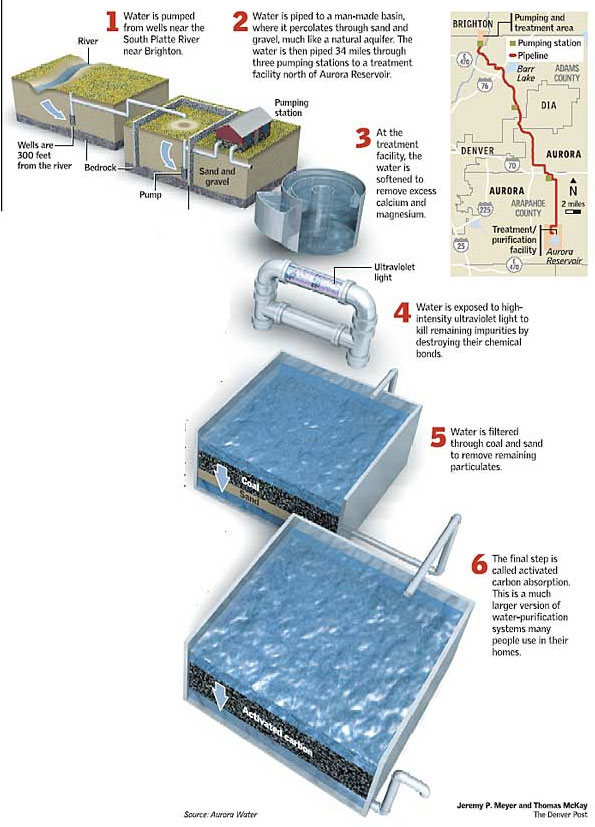
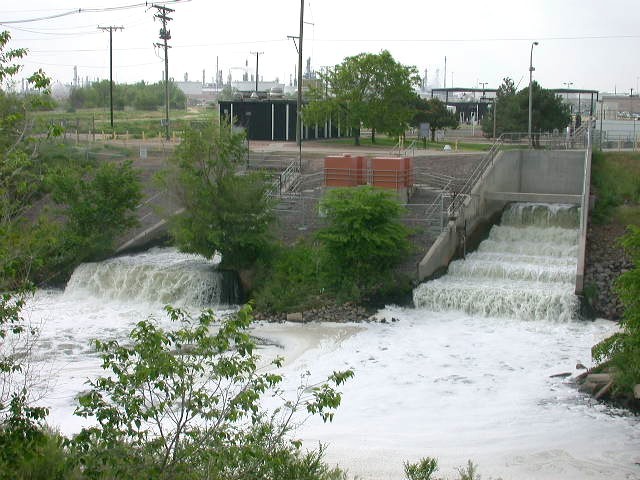
Wastewater Treatment Process

Click the link to read the article on the Water Education Colorado website (Jerd Smith):

June 5, 2025

State health officials will face tighter deadlines and more scrutiny of a water quality permitting program that has been plagued by massive backlogs and criticized by some small communities who say they can’t afford their state-mandated water treatment systems.

The changes will come under a new bipartisan law Senate Bill 305 approved last month. Gov. Jared Polis is expected to sign the bill this week, according to state Sen. Jeff Bridges, a Democrat from Greenwood Village who is one of the bill’s sponsors and chairs the Joint Budget Committee.

“This bill is a reset in the relationship between the Colorado Department of Public Health and Environment (CDPHE) and local governments that both sides believe will result in better communication, collaboration and ultimately better water quality,” Bridges said this week.

The permits are required under the federal Clean Water Act and are designed to protect Colorado’s rivers and streams from contaminants contained in wastewater. The state is required to enforce the federal law.

The measure is designed to help the CDPHE battle a permitting backlog that has left dozens of communities without a current wastewater discharge permit. Those communities can still discharge under a special administrative rule, but the backlog means the communities aren’t complying with the most current wastewater treatment standards that seek to reduce the various contaminants, such as ammonia and nitrates, being discharged into streams.

Earlier this year, as the state sought to fast-track permit approvals, small towns revolted, saying the new permits that were issued were too tough and that it was too expensive to upgrade treatment systems to comply.

The controversy comes as climate change and drought reduce stream flows and cause water temperatures to rise, and as population growth increases the amount of wastewater being discharged to Colorado’s rivers.

In response to the towns’ concerns, the CDPHE water quality control division took the unusual step in March of holding off on taking enforcement action against at least some of the towns that say they can’t comply with the new regulations.

Senate Bill 305 will allow communities to hire outside engineers and consultants to help speed permit processing times and it also requires the CDPHE to develop new rules establishing clear timeframes for granting or denying different types of permits by Dec. 31, 2027.

In addition, according to Nicole Rowan, director of the Water Quality Control Division, they will set a schedule by Dec. 31, 2026, for reducing the backlog.

The changes aren’t likely to help Ault, a community of 2,350 people on the Eastern Plains that finally received a new permit in March. The permit, however, contains standards the town’s 9-year-old wastewater treatment plant can’t meet. The CDPHE has agreed to suspend any enforcement action against the community until it can do additional analysis to see if it can comply with the new rules simply by upgrading its treatment plant, according to Grant Ruff, who oversees the town’s treatment system.

The town still owes $1.2 million on the existing plant. Building a new one would likely cost more than $20 million, Ruff said.

“We hope it is feasible [to comply] by making minor upgrades,” he said. “Otherwise we will have to spend $20 million to $30 million.”

That won’t be the case for towns seeking new permits in the years ahead. 

“The new standards will be tremendously helpful in the future because the state will have to take into consideration the community’s ability to pay,” he said.

More by Jerd Smith

Lots going on in #Kiowa these days: Well project advances — #Colorado Community Media

Kiowa Creek. Photo credit: The Town of Kiowa

Click the link to read the article on the Colorado Community Media website (Nicky Quinby). Here’s an excerpt:

April 29, 2025

The Town of Kiowa has good news to report, including a new Main Street Board and progress towards funding the Water Well Redundancy Project…After some starts and stops, the Kiowa Water and Wastewater Authority is making headway on its Water Well Redundancy Project, thanks in part to Congresswoman Lauren Boebert. On March 20, Boebert visited with Town of Kiowa staff and town trustees…Boebert pledged to write letters supporting road improvement and parks projects, and also agreed to write Kiowa Water and Wastewater Authority a congressional letter of support for the Well Redundancy Project, [Kim] Boyd said. Boyd further explained that the Town of Kiowa currently relies on a single 66-foot alluvial groundwater well to meet the community’s water needs.

“This infrastructure is insufficient for current demands and poses a significant risk in the event of mechanical failure or environmental stress,” she shared. “It limits the town’s ability to grow and sustain essential services, including domestic water supply and fire protection.”

The Colorado Department of Public Health and Environment (CDPHE) mandates that municipal water systems maintain at least two wells to ensure redundancy and protect public health.

Small #Colorado towns cry foul as state seeks to clean up their #wastewater to protect rivers — Jerd Smith (Fresh Water News)

Wastewater Treatment Process

April 10, 2025

Dozens of small towns in Colorado have banded together to protest new wastewater treatment permits that are designed to protect state rivers and streams, saying they  contain new rules that are too costly to implement and they haven’t had time to make the necessary changes to comply.

The controversy comes as climate change and drought reduce stream flows and cause water temperatures to rise, and as population growth increases the amount of wastewater being discharged to Colorado’s rivers.

In response to the towns’ concerns, the water quality control division of the Colorado Department of Public Health and Environment has taken the unusual step of holding off on taking enforcement action against at least some of the towns that say they can’t comply with the new regulations. It issued notice of its decision March 24.

“Some smaller communities have faced real technical and financial challenges meeting these new requirements,” CDPHE spokesman John Michael said in an email. “In response, we issued a temporary enforcement discretion memo to give systems time to work through compliance barriers without immediate penalties.”

Now Colorado lawmakers who represent the Eastern Plains have drafted a bill designed to help small communities cope with the new regulatory requirements by extending the time they have to build or upgrade new plants and raise the money to pay for them.

The issue came to a head last month. Akron Town Manager Gillian Laycock, whose town is trying to comply with its new permit, invited dozens of communities facing the same issues to attend a special meeting. Representatives from 64 towns attended along with lawmakers, Laycock said.

But problems have been brewing for years. The water quality control division has been battling a large backlog in wastewater discharge permits, meaning small towns have been allowed to operate their plants under old rules as they waited for their new permits to arrive. Laycock said Akron had been waiting for its new permit for at least eight years.

“We knew something was coming,” she said, “but this has been a shock.”

In recent years, lawmakers have given the division more money to hire additional people so that the backlog can be reduced and more towns can come into compliance with the new standards.

But Sen. Barbara Kirkmeyer, a Republican from Brighton, and Sen. Byron Pelton, a Republican from Sterling, said they are frustrated that the more than $2 million spent to address the problem isn’t helping.

“I told the CDPHE if they continue down this road, the folks out in the rural areas are about ready to tell them to pound sand,” Pelton said. “That’s how stressful it’s been for these small municipalities. The regulations just keep coming at them.”

Under the federal Clean Water Act, entities that discharge fluids into streams, including wastewater treatment plants and factories, must get approval from state water quality regulators to ensure what they’re putting into the waterways does not harm them.

Towns and water districts can receive either a general permit, which has standard terms and conditions, or individual permits, which take much longer to process, are typically more expensive and are often used by large systems in cities such as Denver.

The general permits were finalized in 2022 to help small towns comply with the stricter regulations quickly and at less cost, said Michael, the CDPHE spokesperson. But many haven’t been issued because of the backlog.

Akron finally received its new permit last October, Laycock said. But the town was unprepared for the strict new limits on what and how much can be discharged, the tight timelines to comply and the costs.

Once the new permit was issued, Laycock said, its old permit expired almost immediately, leaving the town out of compliance with the new regulations, exposing them to potential legal issues and fines.

The regulatory shock is understandable, but could have been avoided, according to Meg Parish, an attorney for the Environmental Integrity Project, a nonprofit focused on enforcing air and water pollution regulations. She previously worked for the state’s water quality control division and helped develop the new general permit that is causing current concerns.

“Some of these towns have really old permits,” Parish said. They’ve been allowed to continue discharging under a special administrative permit. In the interim, strict new standards have taken effect.

But she said the new rules shouldn’t have come as a surprise to anyone.

She said the new general permit was finalized after months of public work sessions and outreach meetings.

“We invited every small discharger in the state to participate. All the terms are on the state’s website….it literally says ‘if your (wastewater discharge) flow is this much, this is what your limit is going to be. There is no mystery.”

But Adam Sommers, an environmental engineer who has several clients trying to obtain new permits, said the process is cumbersome and expensive.

“Each permitting activity has a 180-day review period and if changes are needed, the clock starts over,” he said in an email.

“This frequently adds years to the schedule,” Sommers said. “The estimates engineers create are time sensitive. If years have passed between when they prepare the budget and when the project is constructed, they face affordability issues.”

Sens. Kirkmeyer and Pelton are working on a bill that will be introduced shortly forcing the CDPHE to give the towns more time to comply and help them address the financial challenges of the new regulations. It will also set strict deadlines on the permitting process, according to the latest draft of the bill. Kirkmeyer said the CDPHE has been helping with the new legislation.

Kirkmeyer said she was taking the unusual step of running the bill through the Joint Budget Committee because it approves the budget for the water quality control division and she wanted to send a strong message to the regulators.

“I want them to know we are serious about this,” she said.

Looking ahead, as water quality continues to deteriorate, treatment standards will continue to tighten, Parish said.

“One of the key realities is that wastewater treatment plants need to upgrade their plants and do better, and pollute less,” Parish said.

Laycock, the Akron town manager, said she understands the urgency of the problem but she said the state’s approach needs work.

“We are agricultural people and we love our land, but how do we as a town afford to meet these requirements? I understand what they are trying to do. But this is not the way to do it.”

More by Jerd Smith

Colorado’s Stream & Wetlands Protection Bill Becomes a Law: Representing the environment as a stakeholder in Colorado’s HB24-1379 rulemaking — Nathan Boyer-Rechlin (Rockies.Audubon.org)

Spotted Sandpiper. Photo: Mick Thompson/Audubon Rockies

Click the link to read the article on the Audubon Rockies website (Nathan Boyer-Rechlin):

January 28, 2025

Colorado is in the midst of a nation-leading rulemaking for its state-waters protection program, established by HB24-1379: Regulate Dredge & Fill Activities in State Waters (HB1379) which Governor Polis signed into law on May 29th. This bill establishes a state regulatory program to permit dredge and fill activities that impact state waters not covered by the Clean Water Act (CWA). This encompasses removal, filling, or other alteration of wetlands and ephemeral streams from activities such as mining and infrastructure development. Audubon Rockies told the story of why Colorado needed new legislation following the Supreme Court’s Sackett Decisionwhich removed crucial wetland protections—and how the bill passed with bi-partisan support in our June 2024 blog post, “A Colorado Program the Colorado Way.”

Ephemeral streams are streams that do not always flow. They are above the groundwater reservoir and appear after precipitation in the area. Via Socratic.org

The core of this program’s regulatory jurisdiction are ephemeral streams and isolated wetlands. Existing federal and state-managed regulatory programs tend to undervalue these types of streams and wetlands, and inadequately mitigate for loss of these habitats and their ecological functions. HB1379 has given Colorado the opportunity to lead the nation in developing a regulatory program that not only fills the gap left by Sackett, but effectively addresses impacts to these key habitats that birds, and humans, rely on. Although the bill set a strong framework for the regulatory program, the gains made during the legislative session could be minimized if the next step isn’t done well. That next step, the rulemaking process, is currently underway.

Anatomy of a Rulemaking

Most of us who grew up with the American public school system likely remember Bill, that “sad little scrap of paper” who only ever dreamed of becoming a law (revisit that Schoolhouse Rock clip for a trip down memory lane). However, what our schoolhouse rock education left out was the long road ahead once poor Bill finally achieves his dream. Sadly for him, it’s not over yet. In most cases, a bill that passes through the state or federal legislature is a sketch or outline which sets the structure and parameters for how a law will function. The rulemaking process fills in the color and detail. 

In our bill’s case, HB24-1379 outlines key requirements and structure for a state program to regulate dredge and fill impacts to state waters which are not covered under the Supreme Court’s current interpretation of the Clean Water Act. The bill directs Colorado’s Department of Public Health and Environment’s (CDPHE) Water Quality Control Commission (WQCC) to develop and promulgate rules detailing how the program will be administered by December 31, 2025. These rules will determine regulatory requirements for stream restoration projects; determine how permits are evaluated, including standards avoiding and minimizing impacts to state waters; and establish a compensatory mitigation program to ensure that all lost stream and wetland functions due to permitted activities are replaced. How these rules are written will determine how effectively the state program meets the bill’s objectives.

CDPHE began convening stakeholders, including Audubon and our partners, in September 2024.  They then released the first draft of new regulations on December 6th. CDPHE is holding monthly stakeholder meetings through November 2025 to build consensus on priorities and draft additional language. WQCC will begin the formal rulemaking process in August 2025, which will include a public comment period for the proposed rules and the rulemaking hearing will be held on December 8, 2025.

What’s at Stake?

The United States Geological Survey’s National Hydrography Dataset estimates that 24 percent of Colorado’s streams are ephemeral and 45 percent are intermittent. These streams provide key habitat for more than 400 bird species throughout Colorado and are vital for mitigating climate and drought impacts, protecting water quality in downstream riverways by capturing sediment and other pollutants, and regulating late season flows and stream temperatures.

Colorado Rivers. Credit: Geology.com

One of the most critical components of a dredge and fill permitting program is compensatory mitigation. In the federal dredge and fill permitting program ((§) 404 of the CWA), which Colorado is modeling its program after, permittees must first avoid and minimize all impacts to regulated waters and then compensate for all unavoidable impacts. Wetland compensatory mitigation most commonly takes place through mitigation banks, where permittees purchase credits from a mitigation bank that has previously constructed wetlands. Mitigation can also be done through an in-lieu fee program or onsite, where the impacts are taking place, by the permittee.

Sunrise Over Wetland by NPS/Patrick Myers

While wetland mitigation has been a well-established practice for decades, stream mitigation has only become common in the last 20 years. Due to challenges unique to streams, and particularly ephemeral streams which are more challenging to create or replace through mitigation banks, stream mitigation has been largely ineffective at replacing the functions lost through dredge or fill impacts. One review of the efficacy of stream mitigation programs found that “existing methods often devalued partially degraded, small, and non-perennial streams and thus discouraged protection and restoration of these stream types.” Developing a compensatory mitigation program that effectively replaces the functions of ephemeral streams that are lost through unavoidable impacts is a key challenge this rulemaking will address.

HB24-1379 included three key provisions to ensure the program adequately protects ephemeral streams and isolated wetlands:

  1. The rules must focus on avoidance and minimization of all adverse impacts [of permitted projects] and describe avoidance and minimization standards.
  2. The rules must implement a compensatory mitigation program for all unavoidable impacts [of permitted projects]. Compensatory mitigation must compensate for all “functions of state waters that will be lost as a result of the authorized activity”
  3. The rules must include an exemption [from permitting] for stream restoration projects in ephemeral streams that are designed solely for ecological lift. Ecological life refers to improvement in the biological and/or hydraulic health of the stream.

While the first draft regulation has been released, many of the sections of the rules that will address these issues are still under development.

Better Together – Working Collaboratively for the Environment

Audubon and our partners have been actively engaged with CDPHE through their stakeholder engagement processes to advocate for strong rules in these three areas. In November, Audubon along with 10 other conservation organizations contributed and signed on to a letter to CDPHE detailing our priorities. This coalition, Protect Colorado’s Waters, also submitted specific feedback on the draft regulations in early January and are continuing to be engaged in advocating for strong rules that ensure avoidance and minimization of wetlands impacts and effective mitigation when needed. Our priorities also include ensuring that qualified stream restoration projects, designed for ecological lift, can continue without undue regulatory burden.

While Audubon and our partners secured a major victory for birds and people with the passing of HB24-1379, our bill’s journey is not done yet. If CDPHE can develop and promulgate rules for this program that ensure that permitted projects are the least damaging available alternative, ensure any lost functions are replaced through mitigation, and streamline permitting for voluntary stream restoration projects, then Colorado’s program will be the first of its kind to effectively protect these vital habitats. To stay engaged and attend future stakeholder meetings, visit CDPHE’s dredge and fill engagement website.

Colorado River headwaters tributary in Rocky Mountain National Park photo via Greg Hobbs.

Announcement: Public water systems grant availability for emerging contaminants: Grant application deadline is March 21 — #Colorado Department of Public Heakth & Environment

Firefighting foam containing PFAS chemicals is responsible for contamination in Fountain Valley. Photo via USAF Air Combat Command

From email from CDPHE:

January 24, 2025

The Water Quality Control Division (division) is pleased to announce the Request for Applications (RFA) for the Emerging Contaminants in Small or Disadvantaged Communities Grant Program. This RFA is open as of January 24, 2025. 

This program helps non-transient, non-community or community public water systems in small or disadvantaged communities. The funds can help with planning, design, and infrastructure to reduce public health risks from emerging contaminants, including PFAS (per-and polyfluoroalkyl substances), manganese, and others. 

The details of this RFA are located on the division’s website. Written questions and inquiries regarding the RFA are due on February 7, 2025, by 2:00 p.m. MDT.

The application deadline is March 21, 2025, at 11:59 p.m. MDT.
Lenguaje y accesibilidad
Si necesita ayuda en español o en otro idioma, póngase en contacto con la división escribiendo a cdphe.commentswqcd@state.co.us.

Do homebuyers know enough about a property’s water? What to ask the real estate agent — Fresh Water News

The downtown Denver skyline from Arvada. Photo credit: Allen Best/Big Pivots

Click the link to read the article on the Water Education Colorado website (Shannon Mullane):

January 2, 2025

Potential property owners are often not asking enough questions about water, experts say — and it can end up being a costly mistake.

When someone buys a property in Colorado, they can find themselves thrust into the complicated world of Western water. People looking in towns and cities might need to learn about providers and rate changes. Those interested in empty lots, unincorporated areas of  counties or rural areas of the state might need to study up on water rights, wells and irrigation.

If they’re prepared, buyers will reach out to experts, and even attorneys, to understand the ins-and-outs of their new water supply before signing a deal. If they’re not, they could end up in the middle of a fight or with an expensive liability.

“There have been neighborly confrontations over water,” said John Wells, a broker and owner of the Wells Group in Durango. “I’ve seen people turn other people’s ditches off, locking their headgates, unlocking their headgates. It doesn’t make for a good neighborly situation.”

Western water law is frequently confusing — even for experts and real estate agents. Interested buyers coming from out of state are often used to a completely different system of managing water. Urban residents looking to move into rural Colorado might have little experience with ditches, ponds or water law.

“Most brokers don’t understand it because it’s complicated and confusing, and it doesn’t really impact their client’s ability to purchase a house,” said Aaron Everitt, a Fort Collins-based broker and developer with The Group Real Estate.

But skipping past a thorough review of water assets can leave buyers with frustrating problems. They might face water bill increases, lead pipes, or leaky sprinklers. For more rural properties, a typo or missing signature in a water or land deed can take an extra month to fix. Ponds and reservoirs on a property might actually be illegal water storage — which could take a court process or big dollars to resolve, said Bill Wombacher, an attorney with Nazarenus, Stack & Wombacher, who teaches a water law class for real estate agents.

New property owners might be surprised to see a stranger in their backyard clearing out a ditch — or, as happened in 2022 in Kittredge, dozens of people using private property to access a popular creek running through private property, which prompted a local debate about public access.

It is easier to handle any water questions that come up before a deal is signed, and buyers might want to budget extra time in the purchase process for tasks like well inspections, said Amanda Snitker, chair of the market trends committee for Denver Metro Association of Realtors.

One piece of advice: “Be sure they’re being thorough. Don’t be afraid to ask questions, even though they might seem silly,” Wells said. “There’s no silly question when it comes to water.”

So what kind of questions should a buyer ask? [We] asked the experts to break it down.

I want to buy in an urban area. Where do I start?

People interested in buying a home, apartment or townhome in a more populated area — like a town, city, special district or planned development — should start by understanding their water supply and who provides it.

Is the property already connected to a main water system?

If so, it can save money for the buyer. Tap fees, the cost of adding a new connection, can be as low as $1,500 to $8,000, said Wells, who works in small towns and rural areas in southwestern Colorado. Or, the price of tapping into the local water system could be more like $50,000 in areas of the Front Range or $200,000 in some areas of the Western Slope where water supplies are tight, Wombacher said. Some water providers can also freeze adding new connections when their water system or supply is maxed out.

Who is the property’s water provider? 

Some areas come with more established networks of pipes, canals, tunnels and reservoirs operated by a water provider. These water districts and utility providers are public entities, and buyers should know how functional or dysfunctional the organization is, Everitt said.

It’s also helpful to understand if the organization is planning to build new water infrastructure or has a backlog of needed repairs, Snitker said. The cost of water and related fees can vary depending on the water provider, and it’s good to know those details up front, she said.

Graphic credit: EPA

The experts also recommended learning about wastewater systems, water quality and any water-related expenses that could come up for new owners. Here are some questions they recommended asking:

  • Can the seller provide 12 months of water bills?
  • Are there any broken sprinklers or leaky pipes?
  • Can buyers add water-efficiency features, like systems that capture grey water or rain?
  • Has the property ever had any issues with galvanized pipes? Does it have any lead pipes?
  • What is the quality of the water, and are there any contaminants?
  • If there is a septic system, how old is it and where is it located?

Outside of a service area? Here’s how to begin.

Not all properties lie within an established service area for a water provider, like homes in unincorporated areas, rural counties and some new developments.

Homes, ranches and land in rural areas also might come with water rights — a complicated part of how Coloradans access water.

When a buyer tours a property, they should keep an eye out for certain features to know what to ask: Look for wells, ponds, lakes, ditches, streams, irrigation systems and other outdoor water features, experts said.

This Parshall flume on Red Mountain measures the amount of water diverted by the Red Mountain Ditch. Pitkin County commissioners approved a roughly $48,000 grant to pipe the last 3,600 feet of the ditch in the Starwood neighborhood. CREDIT: HEATHER SACKETT/ASPEN JOURNALISM

What’s up with ditches

Colorado is covered with a decades-old network of ditches that help transfer water to farmers, ranchers and communities around the state. These are often earthen, straight and clearly human-made, but they can also be easy to miss.

For Wombacher, ditch easements are the single most-frequent source of frustration among his clients, he said.

They are tied to a complicated system of water rights, which means ditch users have legal rights to receive a certain amount of water at specific times and locations during the year.

Ditch managers and users can move up and down the channel, even on private property, to do maintenance and manage water supplies.

That means property owners might see water flowing, but it’s not theirs to use. They cannot disrupt the transfer of water, use ditch water or move the ditches (unless they go to water court). If that does happen? “It’s like an immediate lawsuit every single time,” Wombacher said.

Questions to ask:
  • Is it actively used?
  • How might this impact what I can and can’t do with the property?
  • If I’m not able to move the ditch, do I still want the property?
  • Who operates the ditch?
See a pond, get the papers

If a buyer sees a pond or lake on the property, they should ask for the water court decrees attached to the stored water.

This pond in Chaffee County near Salida is one of thousands in the Arkansas River Basin that is being evaluated by the Division 2 engineer’s office as part of a new pond management program. Engineers say ponds without decreed water rights could injure senior water rights holders. Photo credit: Colorado Division of Natural Resources via Aspen Journalism

“There are quite a few unlawful uses going on out there, particularly with ponds and reservoirs,” Wombacher said.

Property owners build water storage and sometimes do not go through the water court process to get a legal right to access, store and use the water.

“Just because a seller has been able to get away with something for a long time, doesn’t mean the buyer will,” Wombacher said. “Anytime there’s a water use going on on a property, you want to make sure as a buyer that it’s a lawful use.”

Typical water well

What does it mean if there’s a well?

The state of Colorado regulates wells, and well permits come with specifications about how much water can be used and what it can be used for.

Interested buyers should start by learning about water court decrees and permits related to the well. The state has databases that can provide more information about a well using its permit number.

Adding new wells can be expensive and come with limitations based on the location and characteristics of a property, like whether it is larger or smaller than 35 acres, experts said. Buyers will also want to ask about any water quality, contamination or pressure issues in advance.

Questions to ask: 
  • If there is not a well — and a buyer might want one — what are the options for getting a well?
  • Can you provide a recent inspection report?
  • Does the well produce the amount of water stated in the permit? If not, the property might need a cistern.

“Just like you do a home inspection, you call someone and they do a well inspection,” Snitker said.

What do I need to know about water rights?

Many properties, especially in rural areas, come with irrigation water supplies — and therefore, water rights.

Water rights can add value to a property, but they also come with restrictions related to where, when and how much water can be used. These rights are legally tied to certain beneficial purposes, like farming, drinking, snowmaking, fire prevention and more.

“I think a lot of lay people, and it’s not their fault, think they can use water anytime they want,” Wells said.

Some water rights are also more valuable than others: Under Colorado water law, more recently established “junior” rights get cut off first when water is short so older and more valuable “senior” rights get their share.

Don’t need irrigation water? A property owner has to go to water court to change details of a water right. And a new owner can’t just own a water right and plan never to use the water for its intended purpose. If that happens, the state might analyze whether a right has been “abandoned,” which could dissolve the right.

Water rights are often transferred from one owner to another using a deed or a title. New buyers should check to make sure these documents are in good order, Wells said.

“Sometimes it’s prudent to hire a water attorney to make sure that what is in the deed matches what you’ll actually be sold,” he said.

Questions to ask:
  • How much water can I use, when, where and for what purpose?
  • What year is the water right, and how senior is it compared with others on the same stream or river?
  • What is the supply like in periods of drought?
  • Does the water right match what I’d like to use the water for, or could I have to go to water court to change it?
  • Are the ditches, canals and other infrastructure that deliver the water well-maintained?
  • What fees come with the water supply?

More by Shannon Mullane

Safe Drinking Water Act Turns 50: Landmark law encounters new problems, enduring challenges — Brett Walton (@circleofblue)

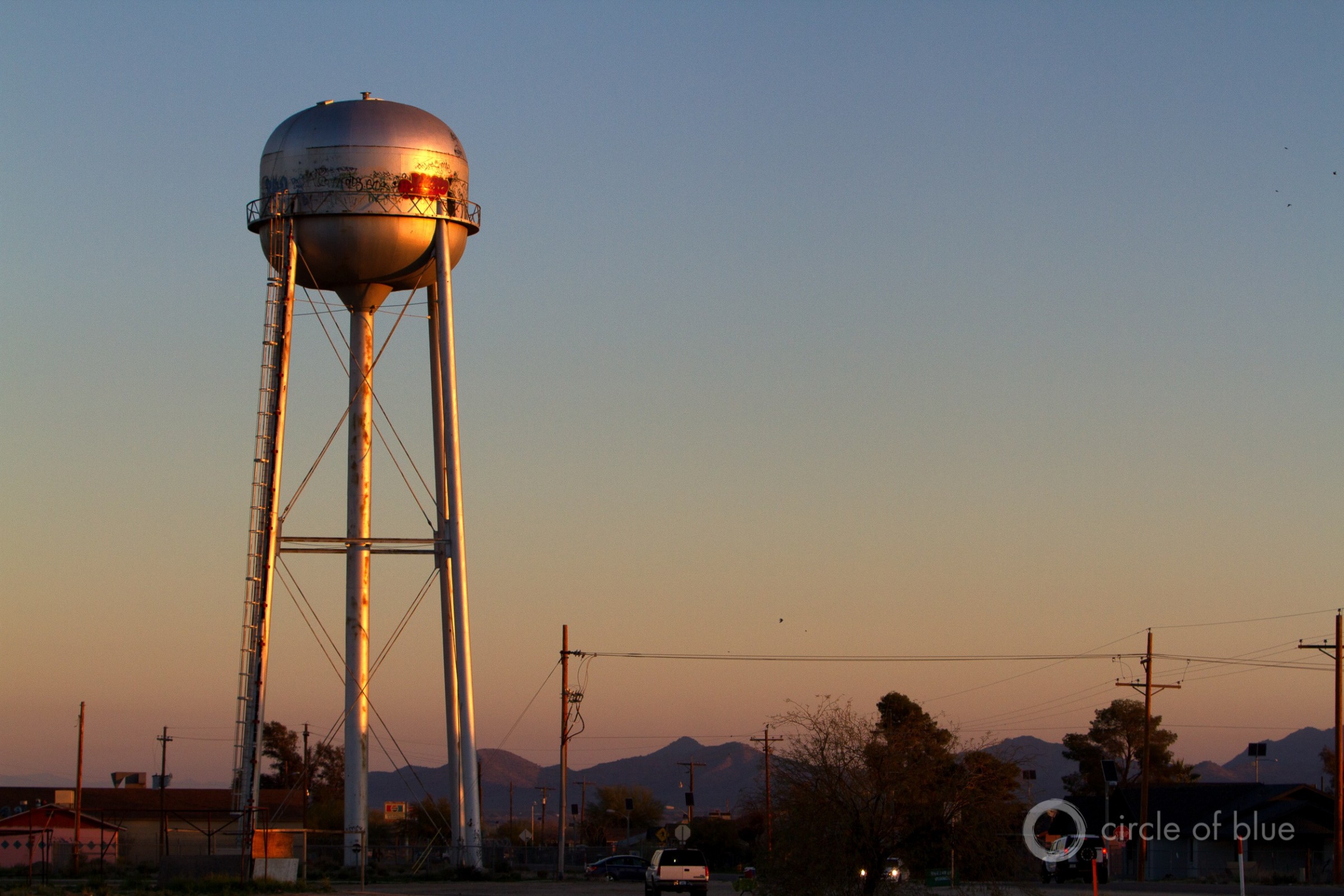
A water tower in Sacaton, the central town of the Gila River Indian Community. Photo © J. Carl Ganter / Circle of Blue

Click the link to read the article on the Circle of Blue website (Brett Walton):

December 16, 2024

The American public, newly conditioned to the health dangers of a polluted environment, was worried.

Media reports documented carcinogens in the lower Mississippi River. The federal government, empowered by recent legislation, sued Reserve Mining Company for dumping asbestos-like fibers into Lake Superior, thereby jeopardizing the water supply for Duluth, Minnesota, and at least four other communities. Congress had just approved groundbreaking laws for cleaner air and ecosystems. What about tap water?

Those were the circumstances in 1974 as a receptive Congress and a supportive-but-cost-conscious Ford administration debated first-ever national drinking water standards.

In the previous four years, lawmakers had passed the Clean Air Act and the Clean Water Act. “Nothing is more essential to the life of every single American than clean air, pure food, and safe water,” Russell Train, then-administrator of the Environmental Protection Agency, wrote to President Gerald Ford. “The time is overdue for a Safe Drinking Water Act.”

Fifty years ago, on December 16, 1974, Ford clinched a public health victory when he signed a bill that joined the pantheon of federal environmental protection laws enacted that decade.

Today, the country still reaps the benefits. Most Americans are provided high-quality water from their taps.

“At a time when the American public is skeptical of the government’s ability to take positive action and improve their lives, the Safe Drinking Water Act is an example of the essential work that our government can and must do to stand up for our well-being,” Radhika Fox, assistant administrator for water at the U.S. Environmental Protection Agency from 2021 to 2024 told a Senate committee last month. “It’s a demonstration of the most basic mission of our government: to safeguard the rights and interests of its people.”

As the Safe Drinking Water Act begins its next half century, it is clear that the law is an essential piece of the country’s project to assure every American access to safe, reliable, affordable water. But there is still much room for improvement. By one estimate, some two million people in the country do not have running water or indoor plumbing at home. Black and Hispanic communities, especially if they are poor, are more likely to have low quality drinking water. The struggles of small water systems that serve dozens or hundreds of people remain problems.

The act was weakened in 2005, following secret meetings between the oil industry and the Bush administration, that advanced oil and gas development by exempting chemical fluids used in fracking from federal oversight.

There are also elements of drinking water provision that the act does not explicitly address. Aging infrastructure, a changing climate, decaying plumbing within buildings, and limited funding for repairs are major impediments. Private well water is not regulated.

Health and environmental groups, seeing the proliferation of chemicals in commerce and their links to cancer, kidney disease, and other chronic ailments, encourage the U.S. Environmental Protection Agency (EPA) to regulate more of these contaminants.

The agency appears to be paying attention. It decided earlier this year to set national standards for six PFAS – the persistent and toxic “forever” chemicals used in non-stick, water-repellent goods and firefighting foams. They were the first additions to the roster of regulated contaminants in decades. Perchlorate, used in explosives and a concern for fetal brain development, is next on the EPA agenda, due to a court order.

A counter argument – offered most passionately by public policy experts and utility leaders – is that the EPA is focusing on the wrong risks. This line of thinking suggests that regulators are targeting new chemical contaminants when they should be more concerned about the reliability of the pipes through which water flows. Utilities and municipalities have limited funds, the argument goes, so the biggest health risks should be addressed first.

Pipe breaks – which occur by the hundreds every day in this country – can pull pathogens into water systems and do immediate harm. Plumbing systems inside buildings, which are not regulated by the Safe Drinking Water Act, can harbor Legionella bacteria, which causes Legionnaires’ disease, a respiratory illness that is the country’s deadliest waterborne disease. It kills about one in 10 people it infects. A Legionnaires’ outbreak in Grand Rapids, Minnesota, that began in 2023 sent 11 people to the hospital.

Chad Seidel, president of Corona Environmental Consulting, worries that the failure to invest in basic infrastructure will result in less reliable water systems that are prone to malfunctioning and spreading disease. Backsliding on infrastructure quality would be detrimental, he said.

“I believe the health risks of regressing are higher than the risk of unregulated contaminants,” Seidel said.

The data show that certain water providers have higher risks of failure. In 1970, the EPA’s drinking water division assessed the quality of water from 969 systems. Most failing systems were small.

So it is today. Small water systems, a half century later, are more likely to violate health standards and monitoring requirements.

The country counts about 50,000 public water systems, most of them small. Many lack the financial strength or managerial know-how to successfully operate. There is a growing consensus that small systems will need to be absorbed into larger neighbors, or form regional entities that take advantage of scale to provide better service.

Amendments to the act in 1996 established a revolving loan fund that is the federal government’s primary vehicle for financing local drinking water improvements. Despite tens of billions of dollars added to the fund in the last three decades, state and local governments still account for about 95 percent of water infrastructure spending. Utility leaders fret that Congress is starting to erode the revolving fund by extracting earmarks from its annual appropriation. In time, this will result in less money available to lend.

“You can’t talk about the future of safe drinking water without talking about how to pay for it,” said Rob Greer, who studies public administration at Texas A&M University.

Water utilities are lobbying for a federal program to assist low-income people with their water bills, as the government does for energy bills. During the pandemic, Congress approved a short-term water bill assistance program but it has expired. A federal program would allow utilities to raise rates to pay for needed repairs, while not burdening their poorest customers with large bills.

Even if adequate funding is secured, there are social and cultural headwinds buffeting utilities. An unknown but rising number of people do not drink their tap water. They do not trust it.

Mistrust is highest among Black and Hispanic communities who are also most likely to have tap water that exceeds federal standards or looks and tastes gross. Notorious tap water failures in Flint, Michigan, and Jackson, Mississippi, in the last decade highlight the ease by which trust can be lost.

Mistrust is illustrated by soaring sales of bottled water and the growing presence of commercial water kiosks, a trend documented by Samantha Zuhlke of the University of Iowa and Manny Teodoro of the University of Wisconsin-Madison. Both bottled water and kiosk water have less regulatory scrutiny than tap water.

Water is an intimate relationship between individuals and their government because water is the “only government service you ingest,” Teodoro said.

The water treatment process

Column: With its ‘Chevron’ ruling, the Supreme Court claims to be smarter than scientific experts — The Los Angeles Times

The U.S. Supreme Court Building, current home of the Supreme Court, which opened in 1935. By Senate Democrats – 7W9A9324, CC BY 2.0, https://commons.wikimedia.org/w/index.php?curid=92666722

Click the link to read the article on The Los Angeles Times website (Michael Hiltzik). Here’s an excerpt:

July 2, 2024

The case concerned a 40-year-old precedent known as “Chevron deference.” That doctrine held that when a federal law is ambiguous, the courts must defer to the interpretations offered by the agencies the law covers — as long as those interpretations are “reasonable.” On Monday, the court discarded Chevron deference. This may sound like an abstruse legalistic squabble, but it has massive implications for Americans in all walks of life. It could subject agency decisions on scientifically based issues such as clean air and water regulations and healthcare standards to endless nitpicking by a federal judiciary that already has displayed an alarming willingness to dismiss scientific expertise out of hand, in favor of partisan or religious ideologies. The ruling amounts to an apogee of arrogance on the part of the Supreme Court’s conservative majority, wrote Justice Elena Kagan in a dissent joined by Justices Sonia Sotomayor and Ketanji Brown Jackson. But it’s not a new development.

“The Court has substituted its own judgment on workplace health for that of the Occupational Safety and Health Administration,” Kagan wrote; “its own judgment on climate change for that of the Environmental Protection Agency; and its own judgment on student loans for that of the Department of Education…. In one fell swoop, the majority today gives itself exclusive power over every open issue — no matter how expertise-driven or policy-laden.”

Conservatives have had it in for the Chevron doctrine
for a long time; given their current majority on the court, the doctrine’s death has been a foregone conclusion, awaiting only the appearance of a suitable case to use as a bludgeon. Indeed, the majority was so impatient to kill the doctrine that the court’s six conservatives chose to do so by using a case that actually is moot. That case arose from a lawsuit brought by the herring industry, which objected to a government policy requiring herring boats to pay for government observers placed on board to make sure the boats were complying with their harvesting permits. The rule was imposed under the Trump administration, but it was canceled in April 2023 by Biden, who repaid the money that had been taken from the boat owners — so there’s nothing left in it for the court to rule on.

Interestingly, Chevron deference was not always seen as a bulwark protecting progressive regulatory policies from right-wing judges, as it’s viewed today. At its inception, it was seen in exactly the opposite way — as giving conservative policies protection from progressive-minded judges.

A String of Supreme Court Decisions Hits Hard at Environmental Rules — The New York Times #ActOnClimate #WOTUS

Click the link to read the article on The New York Times website (Coral Davenport). Here’s an excerpt:

June 29, 2024

This term, the court’s conservative supermajority handed down several rulings that chip away at the power of many federal agencies. But the environmental agency has been under particular fire, the result of a series of cases brought since 2022 by conservative activists who say that E.P.A. regulations have driven up costs for industries ranging from electric utilities to home building. Those arguments have resonated among justices skeptical of government regulation. On Friday [June 28, 2024], the court ended the use of what is known as the Chevron doctrine, a cornerstone of administrative law for 40 years that said that courts should defer to government agencies to interpret unclear laws. That decision threatens the authority of many federal agencies to regulate the environment and also health care, workplace safety, telecommunications, the financial sector and more…

But more remarkable have been several decisions by the court to intervene to stop environmental regulations before they were decided by lower courts or even before they were implemented by the executive branch. On Thursday, the court said the E.P.A. could not limit smokestack pollution that blows across state borders under a measure known as the “good neighbor rule.” In that case, the court took the surprising step of weighing in while litigation was still pending at the United States Court of Appeals for the District of Columbia Circuit.

Iron Fen. Photo credit from report “A Preliminary Evaluation of Seasonal Water Levels Necessary to Sustain Mount Emmons Fen: Grand Mesa, Uncompahgre and Gunnison National Forests,” David J. Cooper, Ph.D, December 2003.

The court also acted in an unusually preliminary fashion last year when it struck down a proposed E.P.A. rule known as Waters of the United States that was designed to protect millions of acres of wetlands from pollution, acting before the regulation had even been made final…Similarly, in a 2022 challenge to an E.P.A. climate proposal known as the Clean Power Plan, the court sharply limited the agency’s ability to regulate greenhouse gas emissions from power plants, even though that rule had not yet taken effect.

That kind of intervention has little in the way of precedent. Usually, the Supreme Court is the last venue to hear a case, after arguments have been made and opinions have been rendered by lower courts…Collectively, those decisions now endanger not only many existing environmental rules, but may prevent future administrations from writing new ones, experts say…

For example, the court’s decision to curtail the E.P.A.’s authority to regulate wetlands and so-called ephemeral streams means that about half the nation’s wetlands could be polluted or paved without federal penalty, potentially harming thousands of species of plants and animals. In addition, new research has shown that the court’s decision also makes major American river basins vulnerable to pollution.

The Environmental Protection Agency, South Adams County Water and Sanitation District to break ground on drinking water treatment enhancements for #PFAS chemicals on April 25, 2024

This USGS map shows the number of PFAS detected in tap water samples from select sites across the nation. The findings are based on a USGS study of samples taken between 2016 and 2021 from private and public supplies at 716 locations. The map does not represent the only locations in the U.S. with PFAS. Sources/Usage: Public Domain. Visit Media to see details.

From email from the EPA:

DENVER (April 23, 2024) — On Thursday, April 25, U.S. Environmental Protection Agency (EPA) Regional Administrator KC Becker will join U.S. Senator Michael Bennet on a visit to the South Adams County Water and Sanitation District (SACWSD) to break ground on a water treatment system that will allow SACWSD to deliver high-quality drinking water that meets all state and federal regulations, including EPA regulations for to treat PFAS chemical contamination by 2029.

WHO:       

·       U.S. Senator Michael Bennet

·       EPA Regional Administrator KC Becker

·       South Adams County Water and Sanitation District Board President Heidi McNeely

·       South Adams County Water and Sanitation District Manager Abel Moreno

Additional representatives from South Adams County Water and Sanitation District will be in attendance, along with other key project partners from:

·       Brown & Caldwell, engineering consultant

·       PCL Construction, construction manager

·       United States Environmental Protection Agency

·       Colorado Department of Public Health and Environment

WHAT:  

EPA and partners will break ground on the Klein Enhancement Project. The project, a partnership with Brown & Caldwell Engineering and PCL Construction, will construct an ion-exchange water treatment system that will allow SACWSD to deliver high-quality drinking water that meets all state and federal regulations, including EPA regulations required to treat for PFAS chemical contamination. SACWSD was recently awarded nearly $61 million in federal funding to complete the construction. The project is expected to be completed in late 2026. 

Tours of existing treatment facilities and the enhancement project site will be available after speakers’ remarks.

WHEN:         2 p.m., Thursday, April 25, 2024

WHERE:       7400 Quebec Street, Commerce City, Colorado 

Polluters must pay to clean up areas contaminated with PFOA, PFOS — SourceNM.com #PFAS

EPA Administrator Michael Regan (Photo by Lisa Sorg / NC Policy Watch)

Click the link to read the article on the SourceNM.com website (Lisa Sorg):

April 22, 2024

Industries that discharge toxic PFOA and PFOS compounds into the environment will now be held legally and financially responsible for the contamination, according to a final rule issued by the EPA last week.

The Department of Defense is also subject to the new requirements.

PFOA and PFOS are now classified as hazardous substances under Superfund law, which authorizes the EPA to use its enforcement powers to require polluters pay for and clean up the contamination. The designation also mandates new reporting requirements for facilities that release the compounds into the environment.

These facilities include 3M, DuPont and its spinoff company, Chemours.

“Designating these chemicals under our Superfund authority will allow EPA to address more contaminated sites, take earlier action, and expedite cleanups, all while ensuring polluters pay for the costs to clean up pollution threatening the health of communities,” EPA Administrator Michael Regan said.

The EPA announced the new rule a week after setting legally enforceable drinking water standards for five types of the toxic compounds, as well as a mixture. PFOA and PFOS are among those compounds with maximum contamination limits of 4 parts per trillion.

Exposure to PFOA, PFOS and other similar compounds has been linked to multiple health problems, including thyroid and liver disorders, reproductive and fetal development problems, immune system deficiencies, high cholesterol, and kidney, testicular and other cancers.

There are several exemptions to the rule — entities that receive, often unknowingly, these compounds from industrial sources: community water systems and publicly owned treatment works, municipal storm sewer systems, publicly owned/operated municipal solid waste landfills, publicly owned airports and local fire departments, and farms where biosolids are applied to the land.

When Regan announced the new drinking water standards, public utilities clamored for ways to pass the treatment costs to polluters. PFOA and PFOS, as well as other types of the toxic compounds, can’t be removed through traditional treatment methods. The upgrades can run in the tens of millions of dollars. The $1 billion in federal funding to help utilities meet the drinking water standards is not enough, given the widespread contamination.

“Communities across the Southeast and the country have been shouldering the costs of PFAS contamination for far too long,” said Kelly Moser, senior attorney and leader of the Water Program at the Southern Environmental Law Center. “Today’s designations will help put the burden of addressing PFAS pollution back on the polluter. Now states and municipalities must use the tools they have to stop ongoing toxic PFAS pollution before more contaminated Superfund sites are created.”

Under the new rule, entities are required to immediately report releases of PFOA and PFOS that meet or exceed the reportable quantity of one pound within a 24-hour period to the National Response Center, as well as state, tribal and local emergency responders.

“After decades of industry using and disposing PFOA and PFOS, EPA can now accelerate cleanups of the most contaminated sites,” said Earthjustice Legislative Counsel Christine Santillana, in a prepared statement. “It’s highly encouraging to see EPA initiate this designation and gives hope to impacted communities that their health will be better protected.”

The final rule also means that federal entities that transfer or sell their property must provide notice about the storage, release, or disposal of PFOA or PFOS on the property and guarantee that contamination has been cleaned up or, if needed, that additional cleanup will occur in the future. It will also lead the Department of Transportation to list and regulate these substances as hazardous materials, according to the EPA.

Under federal law, hazardous materials can be transported only with a special permit, accompanied by a shipping manifest. Transportation documents for most hazardous substances are public through the EPA’s e-Manifest database; it will now be easier to track the transport of PFOA and PFOS.

This designation of the two chemicals will also ensure that hundreds of Department of Defense installations with PFOA and PFOS contamination are finally cleaned up.

This could affect the Tarheel Army Missile Plant in Burlington, where PFOA and PFOS were found in the groundwater and soil last year. Although the military has already transferred that property to private owners, the Department of Defense is responsible for cleaning up contamination below the ground — now including PFOA and PFOS.

“Nearly 500 military installations are contaminated with PFAS, but the DOD has failed to make PFAS cleanup a priority – and our service members and defense communities are paying the price,” said Jared Hayes, a senior policy analyst at the Environmental Working Group.

The national Sierra Club had submitted public comments last year, asking the EPA to crack down on industrial dischargers.

“We’re grateful that the EPA continues to find ways to fight what can only be described as an uphill battle against PFAS contamination,” said Erin Carey, acting director of the North Carolina chapter of the Sierra Club. “Right now, the regulation of these dangerous chemicals is far too narrow to be fully protective. With more than ten thousand of these compounds in production, we must move toward regulation of PFAS as a class, rather than this ‘whack-a-mole’ method of regulating individual compounds. Broader and more ambitious action will be required of this agency, of industry and of our elected leaders to meaningfully tackle the terrifying and widespread threat of ‘forever chemicals’ in our bodies and our environment.”

NC Newsline is part of States Newsroom, a nonprofit news network supported by grants and a coalition of donors as a 501c(3) public charity. NC Newsline maintains editorial independence. Contact Editor Rob Schofield for questions: info@ncnewsline.com. Follow NC Newsline on Facebook and Twitter.

Drinking water for 268,000 Coloradans exceeds new limits on “forever chemicals.” How will providers find millions to fix the water? — The #Denver Post #PFAS

This USGS map shows the number of PFAS detected in tap water samples from select sites across the nation. The findings are based on a USGS study of samples taken between 2016 and 2021 from private and public supplies at 716 locations. The map does not represent the only locations in the U.S. with PFAS. Sources/Usage: Public Domain. Visit Media to see details.

Click the link to read the article on The Denver Post website (Noelle Phillips and Elise Schmelzer). Here’s an excerpt:

April 21, 2024

The 27 water systems identified by the Colorado Department of Public Health and Environment as exceeding the new standards range in size from Thornton, which serves about 155,000 customers, to Dawn of Hope Ranch, a religious retreat in Teller County that serves 55 people. Some of the larger utilities on the state’s list already are planning to build multimillion-dollar filtration systems, but experts say the smaller water providers will be among the last to fall into compliance. While grant money is available, experts note it’s likely water customers will pay some of the costs via higher rates.

The federal regulations announced 10 days ago require drinking water providers to lower the concentration of forever chemicals below the new limit by 2029. The chemicals — perfluoroalkyl and polyfluoroalkyl substances, collectively known as PFAS — have been used for decades to make waterproof, nonstick or stain-resistant products and are linked to a wide range of health problems, including cancer and reduced fertility…

In Colorado, state water regulators have a good idea which water systems have PFAS in their drinking water supplies, said Christopher Higgins, a professor of civil and environmental engineering at the Colorado School of Mines, who is an expert in PFAS contamination. Fifty-six other water providers in the state have found PFAS in their water but in concentrations below the EPA’s limit, including Aurora, Frisco and Gunnison…

The federal government set aside more than $10 billion to help communities test and treat drinking water for PFAS. That money is intended for rural or disproportionately impacted communities. That’s not nearly enough, Zobell said…Unless there is a leap in PFAS-removal technology in the next three years, many providers will have to raise rates or find money elsewhere, Zobell said. Moody, with the American Water Works Association, said the financial burden has been a primary concern among water providers…There are just a handful of companies in the United States that build and install the filtration systems, Moody said. They will go after the larger contracts, leaving the smallest, more rural water companies in the back of the line because those contracts will be less profitable.

‘Forever chemicals’ found in Sleepy Bear well water system: City water shows undetectable amount of PFAS — Steamboat Pilot & Today

Click the link to read the article on the Steamboat Pilot & Today website (Suzie Romig). Here’s an excerpt:

April 14, 2024

Children age five and younger, and women who are pregnant, planning to become pregnant or breastfeeding, are more susceptible to health impacts from commonly called “forever chemicals,” which have been found so far in unhealthy levels in one neighborhood water system in Routt County…Sleepy Bear mobile home park, located along U.S. Highway 40 on the western edge of Steamboat Springs, has recorded PFAS levels in the neighborhood water system that are higher than health advisory and national drinking water standards. The mobile home park is not part of the city water system and uses a well water system, according to the local park manager…

“Most people living in the United States have some amount of these chemicals in their blood,” according to the Colorado Department of Public Health & Environment. “People in communities that have been contaminated by PFAS — through water or other sources — are more likely to have health impacts.”

[…]

Consumer drinking water testing for Sleepy Bear showed 9.2 parts per trillion of PFOA, which is more than double the newly released legally enforceable standards set by the U.S. Environmental Protection Agency. The EPA limits PFOA and PFOS drinking water standards to four parts per trillion. The CDPHE, which issues water system permits in the state, advised Sleepy Bear residents to “consider taking action to reduce your exposure.” Since the EPA previously issued a health advisory in June 2022, Sleepy Bear voluntarily participated in a proactive testing program for PFAS water sampling in June 2023. Sleepy Bear contracted water operator Ron Krueger, owner of Crystal Clear Water Treatment in Lakewood, said Thursday he is awaiting direction from the CDPHE for next steps…

Mount Werner Water & Sanitation District General Manager Frank Alfone said the district has been conducting voluntary PFAS testing that will continue throughout 2025. The most recent testing in February showed no detectable levels of PFAS in the city drinking water supply.

2024 #COleg: #Colorado Wetlands: Lawmakers clash as they seek state protections — Colorado Politics

Colorado River headwaters tributary in Rocky Mountain National Park photo via Greg Hobbs.

Click the link to read the article on the Colorado Politics website (Marianne Goodland). Here’s an excerpt:

April 13, 2024

This month, lawmakers looked at the dueling approaches contained in two measures seeking to implement a way for the state to manage “dredge and fill discharge” permits tied to a recent U.S. Supreme Court decision [Sackett vs. EPA] that redefined how a body of water can be protected under the Environmental Protection Agency’s “Waters of the United States” rule…Supporters of the first bill, which gives the task to the Colorado Department of Public Health and Environment, insist it’s the proper venue because it already experience dealing with permitting and water quality issues. Supporters of the second measure, which hands the responsibility to the Colorado Department of Natural Resources, maintain that the Department of Natural Resources is better equipped, since it already deals with related disciplines, such as water resource management, water rights law and land management.

In any case, policymakers agree that Colorado residents, industries and the wetlands needs certainty…Alex Funk with the Theodore Roosevelt Conservation Partnership told a legislative committee last August that almost 90% of fish and wildlife in Colorado rely on the state’s wetlands at some point during their lifecycle.  House Speaker McCluskie told the House agriculture committee on April 8 that since Sackett v. Environmental Protection Agency held that only permanent streams and rivers are protected under the federal Clean Water Act, those with a continuous surface connection to another permanent water body. That puts Colorado waters at risk, she said.  Pitkin County Commissioner Greg Poschman also noted that the state’s headwaters are made up of small streams that do not have year-round flow because they are under snowpack half the year — suggesting Sackett would put those waters at risk.

#Colorado takes emergency action to oversee #wetlands, after U.S. Supreme Court removes protections — Water Education Colorado #WOTUS

Photo credit from report “A Preliminary Evaluation of Seasonal Water Levels Necessary to Sustain Mount Emmons Fen: Grand Mesa, Uncompahgre and Gunnison National Forests,” David J. Cooper, Ph.D, December 2003.

Click the link to read the article on the Water Education Colorado website (Jerd Smith):

Looking to oversee hundreds of streams and wetlands left unprotected by a recent U.S. Supreme Court ruling, Colorado water quality officials have taken emergency action to provide at least temporary protections while a more permanent program can be set up.

The move comes just weeks after a U.S. Supreme Court decision sharply reduced the number of wetlands and streams protected under the Clean Water Act.

“We will rely on this temporary policy while we work out something longer term,” said Nicole Rowan, director of the Colorado Department of Public Health and Environment’s (CDPHE) Water Quality Control Division.

Under the new policy, the CDPHE is requiring notice of discharge into state waters and it will use its new authority to guide its enforcement actions when unpermitted dredge and fill materials are discharged into state waters, according to Kaitlyn Beekman, a CDPHE spokesperson.

Members of a working group, which includes environmental and agricultural interests, as well as water utilities and mining companies, have been working with the state to explore how to create a permanent mechanism to protect Colorado’s streams and wetlands in the future.

At issue is how the U.S. EPA defines so-called Waters of the United States (WOTUS), which determines which waterways and wetlands are protected under the federal Clean Water Act. The definition has been heavily litigated in the nation’s lower courts since the 1980s and has changed dramatically under different presidential administrations.

But on May 25 in Sackett v. EPA, the U.S. Supreme Court decided, among other things, that the WOTUS definition that included wetlands adjacent to streams, was too broad.

In its ruling, the court said only those wetlands with a direct surface connection to a stream or permanent body of water, for instance, should be protected.

The court decision has far-ranging implications for the environment, as well as agriculture, construction and mining, all major parts of Colorado’s economy, officials said.

The decision may also have more impact in semi-arid Western states, where streams don’t run year round and wetlands often don’t have a direct surface connection to a stream.

“Although the court’s decision directly addresses only the scope of ‘adjacent wetlands,’ its description of ‘waters of the United States’ as including only relatively permanent bodies of water connected to traditional interstate navigable waters will likely result in ephemeral and intermittent waters, which constitute the majority of Colorado’s stream miles, being outside the scope of federal Clean Water Act jurisdiction,” the CDPHE said in a statement on its website.

Under the Clean Water Act, the EPA and the U.S. Army Corps of Engineers are responsible for issuing permits and enforcing violations when dredge and fill activities associated with construction and road projects, among others, harm wetlands and waters considered to be waters of the United States.

Right now, though, as a result of the new Supreme Court decision, no agency has the authority to issue a permit or take enforcement action on these newly unprotected wetlands, according to Trisha Oeth, CDPHE’s director of environmental health and protection programs.

“There are waters that used to be protected under federal law and you used to be able to get a permit [for dredge and fill work]. Now there is no protection and no way to get a permit,” Oeth said.

Alex Funk, director of water resources and senior counsel at the Theodore Roosevelt Conservation Partnership, said he was pleased the state was moving quickly to fill in the regulatory gap.

“We were not excited about Sackett,” Funk said. “But we’re glad Colorado is doing something about it.”

Funk is hopeful that the CDPHE and lawmakers will move to introduce legislation next year that will create a wetlands law specific to Colorado that will offer broad, lasting protections. Funk said a handful of states, including Ohio and New York, have taken similar action to address the changes to the Waters of the U.S. rule.

Agricultural interests have long been worried about the WOTUS rule, because irrigators routinely work with streams and irrigation systems on their lands, where wetlands also exist.

Austin Vincent, general counsel and policy director for the Colorado Farm Bureau, said his members are comfortable with the approach the CDPHE is taking in part because there are critical exemptions for on-farm work, such as irrigating, plowing and irrigation system maintenance.

Part of the problem in the past is that the law changed so frequently, that it was difficult to know with certainty where and when permits were needed, Vincent said.

“It’s a big, big issue,” he said. “We want to make sure that the definition the state comes up with doesn’t encompass an overly broad number of waterways … Certainty is difficult in water. But we want as much certainty as we can get from the regulatory community.”

Jerd Smith is editor of Fresh Water News. She can be reached at 720-398-6474, via email at jerd@wateredco.org or @jerd_smith.

Ephemeral streams are streams that do not always flow. They are above the groundwater reservoir and appear after precipitation in the area. Via Socratic.org

The Pagosa Area Water & Sanitation District board approves $40 million #water plant contract — The #PagosaSprings Sun

The water treatment process

Click the link to read the article on the Pagosa Springs Sun website (Josh Pike). Here’s an excerpt:

At a May 25 special meeting, the Pagosa Area Water and Sanitation District (PAWSD) Board of Directors approved contracts with PCL Construction and Veolia Water Technologies and Solutions for construction of and equipment for the Snowball Water Treatment Plant project. According to the contract with PCL, the guaranteed maximum price (GMP) for the project is $40,565,680…The meeting opened with District Engineer/Manager Justin Ramsey explaining that the con- tract with PCL is for the construction work on the plant…He added that PCL’s contract costs also include the costs associated with the Veolia and Pall contracts…

[Director Ramsey] also clarified the reasons why PAWSD is undertaking the project, explaining that the main reason is the regulatory requirements of the Colorado Department of Public Health and Environment (CDPHE).

Pagosa Area Water & Sanitation District Vista Wastewater Treatment Plant upgrades could cost $15 million — The #PagosaSprings Sun #SanJuanRiver

Piedra River valley from Chimney Rock National Monument. By Dicklyon – Own work, CC BY-SA 4.0, https://commons.wikimedia.org/w/index.php?curid=82546701

Click the link to read the article on the Pagosa Springs Sun website (Josh Pike). Here’s an excerpt:

At its Jan. 30 meeting, the Pagosa Area Water and Sanitation Dis- trict (PAWSD) Board of Directors discussed state-mandated modi- fications to the Vista Wastewater Treatment Plant that come with a potential cost of $15 million during a public hearing on a potential State Revolving Fund (SRF) loan for the project. The modifications are intended to improve nutrient removal and allow the plant to comply with new state nutrient standards. Nutrient removal involves the removal of nutrients such as phosphorus or nitrogen, which can be damaging to drinking water and aquatic environments in high quan- tities, from wastewater.

According to the Colorado De- partment of Public Health and Environment (CDPHE), such nutrients from the Vista plant could impact both nearby drinking water wells and the Piedra River, claims disputed by PAWSD.

The hearing opened with PAWSD District Manager Justin Ramsey ex- plaining, in response to a question from board member Gene Tautges, that PAWSD is currently pursuing a “political route” in its efforts to delay the modifications and that it had some initial communication with Colorado Sen. Cleave Simpson.

#PFAS from #Colorado military bases contribute to environmental injustice: Toxins from Peterson have contaminated the drinking #water of downstream communities — Colorado Newsline

FORT CARSON, Colo. – 4th Combat Aviation Brigade, 4th Infantry Division receives first CH-47 Chinook helicopters at Butts Army Airfield on Fort Carson, Colo., Jan. 22, 2013. Crew members conduct their post flight checks. The Chinooks are the first CH-47s to arrive to the new combat aviation brigade. (Photo by Sgt. Jonathan C. Thibault, 4th Combat Aviation Brigade, 4th Infantry Division Public Affairs NCOIC/Released)

Click the link to read the article on the Colorado Newsline website (Jonathan Sharp):

For over a century, the U.S. Army has been plagued by the lasting consequences of its negligent use, storage and disposal of hazardous chemicals. As a result, countless troops and dependents residing on contaminated bases regularly came into contact with toxins known to trigger adverse health effects and deadly diseases.

In high-profile cases like North Carolina’s Camp Lejeune, nearly 1 million service members and their families were exposed to deadly toxins for over 30 years (1953-1987), including health hazards like benzene, vinyl chloride, trichloroethylene, perchloroethylene, and per/polyfluoroalkyl substances — PFAS.

Also known as “forever chemicals,” PFAS are a group of over 12,000 artificial compounds that represent a distinct environmental concern due to their resilient molecular structure, which prevents natural decomposition, allowing them to easily permeate the soil and contaminate drinking water sources. Exposure to PFAS has been linked to testicular cancer, organ damage (liver, kidneys), high cholesterol, decreased vaccine efficiency in children, and impaired reproduction.

On Camp Lejeune and more than 700 army bases across the US, PFAS contamination is directly linked to aqueous film-forming foam used since the early 1970s to extinguish difficult fuel blazes. In 2016, the EPA established a health advisory of 70 parts per trillion for PFOA and PFOS, the main PFAS compounds.

Although service members and their relatives are the most burdened, contamination originating from military sources plays a larger role in an insidious pattern of discrimination that affects marginalized minority communities.

Due to discriminatory redlining policies, land in minority neighborhoods was significantly undervalued and became a cost-efficient solution to situate army bases, industrial facilities, landfills, traffic routes, and other sources of toxic pollution. The higher toxic burden that vulnerable minority communities experience due to systemic prejudice is better known as “environmental racism.”

2021 report notes that Colorado has the highest PFAS footprint in the country, with approximately 21,000 sites suspected of using or storing such compounds. Although industrial activities are the primary driver of PFAS’ prevalence, frontline communities also have to contend with contamination from several military sources.

(Widefield aquifer via the Colorado Water Institute.)

Nine army bases in Colorado are known to have been affected by PFAS due to aqueous film-forming foam, with the most contaminated including Schriever Air Force Base (870,000 ppt), Buckley Space Force Base (formerly Buckley Air Force Base, 205,000 ppt), Fort Carson (156,000 ppt), U.S. Air Force Academy (72,000 ppt) and Peterson Space Force Base (formerly Peterson Air Force Base, 15,000 ppt). Significantly, PFAS from Peterson has previously contaminated the drinking water sources of downstream communities, with a CDC study finding PFAS compounds in the blood of residents in one exposed community registering concentrations 1.8 to 8.1 times the national average.

While the Air Force and Department of Defense have been involved in some remediation efforts, from distributing bottled water to installing filters and building treatment plants, their contributions are considered limited by Coloradans, given the lack of actual PFAS cleanup projects. Unlike Camp Lejeune, none of the contaminated Colorado bases are listed as Superfund sites.

Frontline communities exposed to higher health risks due to environmental racism’s lingering effects rely on state and federal authorities to establish a legal framework that keeps polluters accountable and protects vulnerable citizens. Since 2020, Colorado has enacted some of the country’s most stringent PFAS laws and adopted a PFAS narrative policy that closely follows the EPA’s 2016 advisories.

Federally, the National Defense Authorization Act will see aqueous film-forming foam phased out by 2024 and finance PFAS cleanup projects on contaminated installations, while the Bipartisan Infrastructure Law will provide impacted communities with crucial investments to address pollution and other causes of environmental injustice. The Honoring Our PACT Act will provide improved health benefits and compensation for veterans and military families exposed to toxins in highly contaminated locations like Camp Lejeune.

Despite these encouraging developments, the DoD has yet to commence cleanup on any of the most affected bases in the country per NDAA’s provisions, and diseases resulting from exposure to PFAS aren’t recognized as presumptive conditions under HOPA. Moreover, while Colorado adopted the EPA’s 2016 guidelines, it falls behind other states that employ even stricter standards.

Still, Colorado has the opportunity to stay ahead of the game by implementing more effective PFAS standards that align with the EPA’s most current efforts to regulate these toxic compounds. With the goal of setting enforceable maximum contaminant levels in drinking water, the EPA has drastically reduced its non-binding advisories for PFOA and PFOS in June 2022 to a paltry 0.004 ppt and 0.02 ppt, respectively, illustrating the dangers these substances represent even at exceedingly low concentrations.

Products that contain PFAS. Graphic credit: Riverside (CA) Public Utilities

San Juan Basin Public Health offering free well testing for #PFAS chemicals — The #PagosaSprings Sun

PFAS contamination in the U.S. via ewg.org.

Click the link to read the article on the Pagosa Springs Sun website (Megan Graham). Here’s an excerpt:

San Juan Basin Public Health (SJBPH) has received a grant from the Colorado Department of Public Health and Environment to address contaminants in drinking water. The funding will be used to provide free testing for perfluoroalkyl and polyfluoroalkyl substances (PFAS), which is a broad group of manmade chemicals in industry and consumer products sometimes known as “forever chemicals” because they do not easily break down in the environment or the human body…

La Plata County and Archuleta County residents can now have their private wells sampled and tested for PFAS chemicals at no cost. The program is targeting areas in the counties close to fa- cilities where PFAS chemicals are known to be used or stored, but all well owners in both counties are encouraged to have their wells tested. Facilities that may have stored or used PFAS chemicals in- clude airports, landfills and some fire stations. If you receive water from a municipality, water district or shared delivery system, contact your water provider for PFAS infor- mation. Several local public water providers have already tested their systems for PFAS contamination. SJBPH Environmental Health staff will be available to discuss test results, which will be processed by a certified independent labora- tory and can take up to 45 days to receive. Staff will assist well owners with determining next steps based on the test results. To have your well water tested, please contact us at eh@sjbpublichealth.org or (970) 335-2060…

There are several education events planned to help share in- formation on PFAS chemicals and testing options. Join us from 5:30 to 6:30 p.m., Thursday, Dec. 8, at the Durango Public Library, 1900 E. Third Ave., Durango. Additional education events in Archuleta and La Plata counties will be an- nounced in the weeks to come.

$500M in new federal funds to give thousands of Coloradans freedom from #lead, #PFAS tainted drinking #water — @WaterEdCO

Denver Water crews replacing a lead service line at 1657 Vine Street. Jan. 12, 2021. Credit: Jerd Smith

Click the link to read the article on the Water Education Colorado Website (Jerd Smith):

Hundreds of thousands of Coloradans exposed to drinking water tainted by lead from aging, corroded city pipes or so-called “forever chemicals,” will see clean water faster thanks to a historic infusion of $500 million from the federal government.

The money, largely from the new Bipartisan Infrastructure Law, is being funneled through the Colorado Department of Public Health and Environment over a five-year period and will allow miles of lead water delivery pipes to be replaced in towns across the state much faster than cities with little access to cash could achieve.

It will also be used to remove a set of chemicals known as PFAS, or poly and perfluoroalkyl substances, that are present in household and industrial products, such as Teflon and fire-fighting foam. The substances have been unregulated to date, although states and the federal government are writing new regulations to address the contaminants.

CDPHE officials said the money will double the agency’s capacity to fund its water quality safety work.

“The federal money is big,” said Nicole Rowan, director of the CDPHE’s Water Quality Control Division. “It’s a once in a generation opportunity to improve our infrastructure here in Colorado.”

To date, 67 Colorado water districts and communities, including the Academy Water and Sanitation District north of Colorado Springs, Limon, Louisville and Grand Junction, have expressed an interest in and are eligible for the funds, according to documents on file at the CDPHE.

Denver Water has been awarded $76 million to fast-track its lead pipe replacement program. The infusion will allow Denver to shave 1.5 years off the 15-year program, according to spokesman Jose Salas.

The City of Englewood also plans to apply, and will ask for $79 million to replace 8,000 lead service lines, according to Sarah Stone, deputy director of business solutions for Englewood Utilities.

Stone said the federal infrastructure funding will provide a critical boost to its efforts to remove lead from Englewood’s drinking water delivery system, if the city’s application is approved.

“We were extremely worried,” Stone said. “This means we can fund the program.”

Cities across the country, including Denver, Flint, Mich., Pittsburgh, Penn., Newark, N.J., and Washington, D.C., have been dogged by an increase in lead contamination as service lines age and corrode, allowing the lead to comingle with drinking water supplies, eventually reaching taps.

Denver Water, which is Colorado’s largest municipal water utility, has known lead was present at the tap in some of its customers’ homes since it appeared in routine sampling in 2013. The levels exceeded the benchmarks set under the Safe Drinking Water Act.

For several years, the utility ran pilot tests and negotiated with CDPHE and EPA over how best to eradicate the harmful metal. Though the amounts of lead found in Denver’s tap water samples varied, no amount of lead is considered safe to ingest, especially for young children.

The CDPHE issued an order in 2018 requiring Denver to begin adding phosphorous to its water, one of the most effective ways to reduce corrosion in pipes. But phosphorous is also a pollutant and causes problematic algae blooms in lakes and rivers. Adding it to the municipal drinking water supply would also make it harder for wastewater treatment operators to meet their own obligations to keep phosphorous out of rivers and streams.

Due to those concerns, Aurora, Metro Water Recovery, The Greenway Foundation, and eventually Denver, sued the CDPHE in 2018 to stop the order from taking effect.

The dispute was settled after Denver was able to obtain a rare variance under the Safe Drinking Water Act in exchange for agreeing to invest some $68 million over 15 years to replace lead service lines, offer free water filters to residents as they wait for the new lines to be installed, conduct community education programs, and increase the pH of the water supply to also help reduce corrosion in pipes.

Several cities and water districts are hoping the federal funding will allow them to mitigate their ongoing issues with PFAS contamination.

Roy Heald manages the Town of Security’s water utility. The town has been hard-hit by PFAS contamination attributed to Peterson Air Force Base. The PFAS chemicals from fire-fighting foam contaminated its groundwater.

Though the military facility has built a remediation plant for Security, it is considered a temporary facility, Heald said. With $450,000 in federal money from the American Rescue Plan Act approved earlier this year, Security is converting the plant to a permanent facility, one capable of operating for the decades it will likely take to clean up the groundwater.

“We’re happy to get it,” Heald said. “This work has to be done, and it’s $450,000 our ratepayers won’t have to pay.”

Jerd Smith is editor of Fresh Water News. She can be reached at 720-398-6474, via email at jerd@wateredco.org or @jerd_smith.

#Westminster, #Thornton, #Northglenn sites on ‘forever chemicals’ list — The Northglenn/Thornton Sentinel #PFAS

PFAS contamination in the U.S. via ewg.org.

Click the link to read the article on the Northglenn/Thornton Sentinel website (Luke Zarzecki). Here’s an excerpt:

Rocky Mountain Metropolitan Airport, Thornton’s Ascent Solar and Westminster’s Ambassador Printing are all sites called out in a new interactive map that identifies places across the country contaminated by “forever chemicals.” […] The map calls out places that have tested positive for having PFAS onsite as well as “presumption contamination” from things such as firefighting foam and industrial chemicals. The sites in Northglenn, Thornton and Westminster are all listed among the sites with presumed contamination…[Alissa Cordner] said the tool’s purpose is to provide regulators, decision-makers and public health officials more information regarding potential risks to their communities.  Places with contamination or presumptive contamination do not imply direct exposure or ingestion…

In 2020, the Colorado Department of Public Health and Environment tested 400 Colorado water systems, 15 firefighting districts and 43 streams and found 34% of drinking water systems tested had some level of PFAS in the water.  A 2020 survey from the Colorado Health Department found 71 surface water samples had concentrations as high as 257 parts per trillion for 18 different kinds of PFAS.  The state health department released a report in April indicating that bodies of water in El Paso, Adams and Jefferson counties were contaminated with PFAS. CDPHE collected 49 fish representing 10 different species from Willow Springs Pond in El Paso County, Tabor Lake in Jefferson County and Mann-Nyholt Lake at Adams County’s Riverdale Regional Park. They found PFAS in 100% of the fish they collected. 

#Colorado OKs drinking treated #wastewater; now to convince the public it’s a good idea — @WaterEdCO

Filtration pipes at Metropolitan Water District of Southern California’s wastewater recycling demonstration plant. (Source: Metropolitan Water District of Southern California)

Click the link to read the article on the Water Education Colorado website (Jerd Smith):

Colorado regulators, after years of study, negotiations and testing, approved a new rule that clears the way for drinking treated wastewater this week, one of only a handful of states in the country to do so.

The action came in a unanimous vote of the Colorado Water Quality Control Commission Oct. 11.

Direct potable reuse (DPR) involves sophisticated filtering and disinfection of sewage water for drinking water purposes, with no environmental buffer, such as a wetland or river, between the wastewater treatment plant and drinking water treatment plant. That water is then sent out through the city’s drinking water system.

Colorado joins Ohio, South Carolina and New Mexico in setting up a regulated DPR system, with California, Florida and Arizona working to develop a similar regulatory scheme, according to Laura Belanger, a water reuse specialist and policy advisor at Western Resource Advocates.

Ron Falco, safe drinking water program manager for the Colorado Department of Public Health and Environment (CDPHE), said the new regulation would provide communities across the state important access to a new, safe source of drinking water, a critical factor in a water-short state.

“This is going to be a need in Colorado and we want to be prepared,” he said. “Can DPR be done safely? Our answer to that is yes.”

Aurora has had a reuse system in place for more than a decade that also uses treated wastewater. But Aurora’s water is treated and released from the wastewater treatment plant into the South Platte River, where it flows through the river’s alluvial aquifer, before Aurora pumps it out through groundwater wells. Aurora then mixes it with raw mountain water before treating it and distributing it to customers. That practice is known as indirect potable reuse — there’s an environmental buffer between the wastewater plant and the drinking water plant, in Aurora’s case, that’s the river. Indirect potable reuse is used by several big cities nationwide, including San Diego.

Graphic by Chas Chamberlin, Source: Western Resource Advocates

Under Colorado’s new regulation, water providers will be required to show they have the technical, managerial and financial resources needed to successfully treat wastewater.

Communities will also be required to show how they will remove contaminants in their watersheds before the water reaches rivers and streams.

Wastewater intended for drinking will require extensive disinfection and filtration, among other techniques, all of which are intended to eliminate pathogens like viruses and bacteria, and remove drugs and chemicals to safe and/or non-detectable levels, according to CDPHE.

And any community that seeks to add treated wastewater to its drinking water system will have to set up extensive public communication programs to show the public its process and to help educate residents about this new water source.

Communities will also have to collect a year’s worth of wastewater samples and prove that they can be successfully treated to meet the new standards.

Western Resource Advocates’ Belanger, who has long advocated for the use of DPR, said the approval has been a long time coming and is cause for celebration.

“We believe DPR is a very important water supply for our communities now and into the future. We feel [this new regulation] is robust and protective of public health.”

But key to tapping the new water source will be helping the public get over the “ick factor,” officials said.

Jason Rogers, vice chair of the Water Quality Control Commission who is also Commerce City’s director of community development, said public outreach should be carefully monitored to ensure it is actually reaching people in all communities and that it is being well-received.

“When thinking about that public meeting, where does it occur? People in some of these communities may have a high reliance on multi-modal transportation, it may not allow for that meaningful engagement,” Rogers said. “And if it isn’t being well received, we need to have them go out and do more public engagement.”

With a mega drought continuing to grip the Colorado River Basin and other Western regions, Colorado’s multi-year process to develop a sturdy new drinking water regulation drew widespread attention, said Tyson Ingels, the head drinking water engineer at the state’s Water Quality Control Division.

Ingels said Utah and Arizona participated in Colorado’s work sessions, demonstrating the interest in what could become an important new water source in the West. Arizona is just now kicking off its own rulemaking process, Ingels said, and Utah, while not yet regulating DPR, has seen a handful of communities proposing to use DPR.

Colorado’s rulemaking process, which dates back to 2015, was at times fractious, with water providers and wastewater operators concerned that the proposed regulation would interfere with what they’re doing already and could add burdensome costs to efforts to develop new water sources.

Ingels said the addition of a third-party facilitator was essential to resolving everyone’s concerns.

Jeni Arndt, a former lawmaker who also serves on the water quality commission, said finalizing the groundbreaking new regulation signaled an important step forward in navigating difficult public policy issues. [Editor’s note: Arndt is a former board member of Water Education Colorado, which sponsors Fresh Water News.]

“Gone are the days when we were struggling to come to agreement,” Arndt said. “I’m very excited to move forward into a new era.”

On Tuesday, several water utilities spoke in favor of the new regulation, including the Cherokee Metropolitan District, Castle Rock, and the City of Aurora.

Matt Benak, Castle Rock’s water resources manager, said the regulation will give his town the certainty it needs to move forward developing new water supplies. “DPR is a critical tool for sustainable water resources. Creating this regulation will allow water providers like us to plan and to potentially implement DPR,” he said.

Tuesday’s approval was contingent on fixing minor clerical errors in the regulation. Commissioners will give final formal approval of the regulation at its November meeting.

Jerd Smith is editor of Fresh Water News. She can be reached at 720-398-6474, via email at jerd@wateredco.org or @jerd_smith.

Prairie Waters schematic via Aurora Water.

2021 #COleg: Walking the legislative talk of environmental justice — @BigPivots #ActOnClimate #KeepItInTheGround

Suncor Refinery with Sand Creek in the foreground July 9, 2022. Photo credit: Allen Best/Big Pivots

Click the link to read the article on the Big Pivots website (Allen Best):

Colorado legislators in 2021 passed a suite of laws that in various ways give state agencies new marching orders that this energy transition will reconcile past wrongs and put people on an equal footing. But there’s a lot to sort through in this.

Now comes the part where the rhetoric about a just transition of the energy economy — paying special attention to disproportionately impacted communities and rectifying past wrongs with the word “equity” in mind — gets tested in the field.

In late July and early August, the three members of the Colorado Public Utilities Commission will take turns hosting six meetings from Lamar to Grand Junction, places selectively chosen because of evidence of disproportionate impacts from energy.

The meetings serve a dual purpose. The commissioners are gathering thoughts about how the state’s four regulated gas-distribution utilities will start changing how we heat buildings and water in order to reduce emissions. They are required to submit what are called clean-heat plans.

The four gas utilities —Xcel Energy, Black Hills Energy, Atmos Energy, and Colorado Natural Gas — must show how they will be able to reduce greenhouse gas emissions 4% by 2025 and 22% by 2030, based on a 2015 baseline.

But the commissioners are also very deliberately meeting in cities that have been identified by mapping tools as having, or being proximate to, disproportionately impacted communities.

Get accustomed to hearing that phrase, now used so often it has been reduced to an acronym in many documents: DIC. Among other things, the commissioners want to better understand how to define equity (as distinct from equality) and what constitutes a DIC community.

It’s an early milestone in Colorado’s difficult and still new process, one parallel to others underway in several states around the country.

Pushing their investigation are five laws passed by Colorado legislators in 2021 that collectively seek to put the hands of those communities on the steering wheel in ways that they have not before.

SB 21-272, “Modernize the Public Utilities Commission,” tells the PUC that it must adopt rules that “consider how best to provide equity, minimize impacts, and prioritize benefits to disproportionately impacted communities and address historical inequalities.”

What are disproportionately impacted communities? This law provides a glimpse:

“Certain communities, both in Colorado and internationally, have historically been forced to bear a disproportionate burden of adverse human health or environmental effects, as documented in numerous studies, while also facing systemic exclusion from environmental decision-making processes and enjoying fewer environmental benefits,” says SB21-272.

The law cites a 2021 report from the Goldman School of Public Policy at the University of California, Berkeley. The project, called Mapping for Environmental Justice, attempted to paint a holistic picture of intersecting environmental, social, and health impacts in individual states, including Colorado.

The study found that “communities of color breathe nearly twice as much diesel pollution and are 1.5 times more likely to live near a Superfund site than white communities. The disparity holds across an array of environmental hazards: from wastewater releases to air toxins, Coloradoans of color are consistently exposed to more pollution.”

This same law, SB 21-272, instructs the PUC to “identify disproportionately impacted communities” and host meetings and in other ways invite input from them to ensure that they will have at least proportionate access to the benefits of retail customer programs, incentives and investments.”

The PUC must go through a rule-making process that governs how the PUC reviews plans by utilities —including not just energy utilities, but also transportation and other sectors it regulates.

The goal is to deliver equity – which will be defined later – in programs and incentives that serve low-income customers and disproportionately impacted communities.

Clean Heat

The second law of relevance, SB 21-264, the “Clean Heat Bill,” requires Colorado’s four natural gas utilities to start figuring out how to reduce fossil fuel combustion from buildings. It gives the largest gas utilities, including Xcel, various ways to achieve a 22% reduction in emissions by 2030. They can, for example, help customers convert to electricity through use of air-source heat pumps. Utilities are required to submit clean-heat plans.

This clean-heat bill also has an environmental justice component. That law also calls out the “historic injustices that impact lower-income Coloradans and black, indigenous, and other people of color who have borne a disproportionate share of environmental risks while also enjoying fewer environmental benefits.”

As the PUC goes about creating the rules for evaluating clean-heat plans, it must hold at least two meetings in disproportionately impacted communities.

In planning six meetings, not just two, the PUC obviously aims for a robust compliance with the letter of the law. The PUC has gone a step beyond, and we’ll explain that later in this article.

Yet a third law, HB 21-1266, called the “Environmental Justice Act,” takes direct aim and, unlike the others, delivers more explicit instructions for the Air Quality Control Commission – an agency within the state’s health department – to engage with disproportionately impacted communities.

The law incorporates demographic factors but delegated to a new Environmental Justice Action Task Force the work of defining what exactly constitutes a disproportionately impacted community. The law also added transition to a more equitable clean energy economy to the mission of the Colorado Energy Office.

Two more laws deserve mention.

SB 21-246, Promote Beneficial Electrification, requires investor-owned utilities to file plans with the PUC that must include “programs targeted to low-income housing or disproportionately impacted communities with at least 20% of the total beneficial electrification program funding” directed to those communities and income levels.

HB21-1105 modified the eligibility standards for low-income programs.

The trajectory

Why did all of this come together in 2021?

Ean Tafoya, of GreenLatinos, who is co-chair of the new task force, says the thinking had been growing for years of the need to “redress” inequities.

In 2019, the first year that Democrats gained a majority in both chambers, as well as the governor’s mansion, the legislators who might have carried the bills were too new to the General Assembly to be effective.

Then came the killing of George Floyd by a Minneapolis police officer in 2020, spurring national protests, including in Denver. This was just months after the covid pandemic descended, hitting minority populations harder.

Those things “helped to galvanize the creation of a more formidable environmental justice coalition,” says Tafoya. This pressure seems to have created “more political room for the politicians to move forward.”

Tafoya also says that this powerful new environmental justice coalition wouldn’t settle for legislation that in early drafts didn’t initially include equity provisions.

In this, he refers to major bills driven by Sen. Chris Hansen of Denver and two Boulder County legislators, Sen. Steve Fenberg and Rep. Tracey Bernett, as well as Rep. Alex Valdez and Rep. Meg Froehlich.

A bill that started out as SB 200 was recreated in SB 1266 with Faith Winter as a primary author. She did not respond to several requests for an interview.

The Environmental Justice Act is sweeping. It requires the Air Quality Control Commission to adopt rules to reduce greenhouse gas emissions from oil and gas operations. It also requires that commission to adopt rules to reduce emissions from the industrial and manufacturing sector in Colorado by at least 20% by 2030 relative to 2015 levels.

This is from Big Pivots 59 (July 17, 2022). Please consider subscribing.

Environmental justice, though, is front and center in the law. It requires the Air Quality Control Commission to promote outreach to disproportionately impacted communities by creating new ways to gather input from communities across Colorado, using multiple languages and multiple formats.

The law also created the task force of which Tafoya is a member with the responsibility to make recommendations to legislators of “practical means to address environmental justice inequities” by Nov. 14.

That task force has met four times beginning in December, and it also has five subcommittees that meet monthly.

Pueblo’s Jamie Valdez, who is also on the task force, describes it as a “very difficult process.” But the goal is to avoid compromising as has occurred in the past.

Members have received much testimony “that there has not been enough consideration or responsiveness to community and too much to industry,” he says.

The table has been tilted heavily to a discussion between industry and regulators, to the exclusion of others, says Valdez, who is paid staff and a community organizer for southern Colorado on behalf of Mothers Outfront, a mothers-funded environmental justice organization whose mission is to work for a livable climate for all children.

Equity and equitable

The Colorado Public Utilities Commission has also been moving along. The commission held a workshop in February to get insights from participants about how to implement the environmental justice component of HB21-264, the law that requires the meetings in disproportionately impacted communities. In March, the PUC asked the states’ four natural gas utilities – Xcel, Black Hills Energy, Atmos, and Colorado Natural Gas – to identify three ideas for meeting locations.

Xcel identified Grand Junction, metro Denver, and Pueblo. Black Hills identified Montrose, Rocky Ford, and Yuma. Atmos Energy identified Greeley, Lamar, and Craig.

The utilities were advised to consult a data-rich mapping tool created by the Colorado Department of Public Health and Environment called EnviroScreen. This was a result of the Environmental Justice Bill. When I first looked at this a year ago, I found it primitive. It showed the Wildridge neighborhood north of Avon and the Singletree neighborhood of Edwards to be in an environmentally impacted tract. (That all of us should be so unfortunate as to live in such areas.)

A review for this article shows a sophisticated tool, if still not complete. A tutorial explains it was created “to help identify the relative health burdens and environmental risks facing different communities across Colorado.”

On June 1, the PUC hosted a session on equity initiatives. Kelly Crandell, of the PUC staff, explained the SB 21-272 requirement to promulgate rules that seek to “provide equity and minimize impacts and prioritizes benefits to disproportionately impacted communities that have experienced historical inequalities.”

During the next few months, she said, the PUC commissioners and staff will be focusing on learning things that can be used to shape these new rules, the ones being drawn up to govern how the PUC evaluates plans by utilities.

Crandell carefully distinguished between equality and equity. With the equality, the idea is to provide something to everyone equally. So, your residential rates for electricity will be the same as your neighbors’.

Equity as Crandell explained it has a historical dimension. It recognizes that things may need to change so that others can participate, that actions of the past such as redlining must be acknowledged to properly rectify going forward.

“It’s challenging to an agency such as ours because conversations more traditionally operated in the vein of equality,” she said.

The legislation, she explained, had three dimensions: 1) recognize why certain communities have suffered, such as because of redlining practices; 2) procedural inequalities. How can the PUC make its process more accessible to the public; and 3) broadly prioritizing the benefits of new energy programs to disproportionately impacted communities.

Different sorts of meetings

Most interesting of these meetings may be at Montbello, located in northeastern Denver on the north side of I-70. It will use a new format of outreach.

There, community members will be paid to attend and share their thoughts. The meeting will be led by the Denver Office of Climate Action, Sustainability and Resiliency. That municipal agency has been hosting community meetings. In this case two community-based organizations have been enlisted to put it together.

“The event will include a listening session on energy priorities within these neighborhoods in addition to a discussion about clean heat plans,” the decision notice issued by the PUC on July 6 says. The event will be presented in both English and Spanish.

Ah yes – the clean heat plans. The natural gas utilities must figure out how to reduce emissions from buildings. A small bit of this can be accomplished by augmenting supplies of methane distributed to homes for heating and cooking with what is called renewable natural gas, such as that harvested from landfills. But there are many other tools – including beneficial electrification, including the use of air source heat pumps to displace or at least augment natural gas furnaces. They’re still relatively expensive, though, with a payback that in most cases will take at least several years.

Tafoya observes that focus groups have already found that tax credits won’t work for lower-income residents. “It’s clear that people want down-payment assistance, not just tax credits.”

Colorado is far from alone in trying to look at utility decisions through the new lenses of equity. A report called “Advancing Equity in Utility Regulation” issued in November 2021 by Berkeley National Laboratory notes an effort in California in 2020 requiring “environmental justice” to be part of the state’s mission. New York and Washington also adopted legislation in 2019, the latter state charging the utilities commission with “ensuring that all customers are benefiting from the transition to clean energy.”

In 2021, Massachusetts, Oregon, Illinois, and Maine all passed somewhat parallel legislation along with Colorado.

Also worth checking out:

Colorado Department of Public Health & Environment Environmental Justice page

Colorado Public Utilities Commission Equity Initiatives page

Meetings

July 21: Greeley, Greeley Recreation Center, 11:30 a.m. to 1 p.m.

July 21: Denver, Montebello Recreation Center, 5-7:30 p.m.

July 27: Grand Junction, Colorado Mesa University Center, 11:30 a.m.-1 p.m.

July 28: Montrose, Montrose Event Center, 11:30 a.m.-1 p.m.

Aug. 4: Pueblo, Bessemer Community Room at Steelworks Center for the West, 11:30 a.m.-1 p.m.

Aug. 4: Lamar Cultural Events Center, 4:30-6 p.m.

The 5 bills:
SB21-272 “Measures to Modernize the Public Utilities Commission.” Requires PUC to identify disproportionately impacted communities (DICs) and to reach out to let them help create new rules.

SB 21-264, “Clean Heat Bill.” Requires natural gas utilities to begin decarbonizing gas distributed to buildings. Requires PUC to hold at least two meetings in DICs.

HB 21-1266 “Environmental Justice Act.” Instructions specifically to Air Quality Control Commission.

SB 21-246, “Promote Beneficial Electrification.” Requires 20% of program funds be used for low-income households or disproportionately impacted communities.

HB21-1105, modifies eligibility standards for low-income programs.

Photo from http://trmurf.com/about/

The Pagosa Area Water and Sanitation District (PAWSD) board will hold a public hearing concerning proposed upgrades to the Snowball #Water Treatment Plant on August 18, 2022 — The #PagosaSprings Sun

The water treatment process

Click the link to read the article on the Pagosa Springs Sun website. (Josh Pike). Here’s an excerpt:

He explained that the engineer had estimated that the cost would be $25 million but that the contractor placed the price at “closer to $40 million,” necessitating that PAWSD reapply for a larger loan. The meeting will be held at 5 p.m. at the PAWSD administrative office at 100 Lyn Ave.

Suncor discharging “forever chemicals” into #SandCreek and the #SouthPlatteRiver, enviro report says: Sand Creek and the South Platte provide drinking water and are used to irrigate crops — The #Denver Post #PFAS

PFAS contamination in the U.S. via ewg.org. [Click the map to go to the website.]

Click the link to read the article on The Denver Post website (Conrad Swanson). Here’s an excerpt:

Discharges from one of Suncor’s drainage ports accounts for between 16% and 47% of the total PFAS pumped into Sand Creek in 2021, according to a report from Wheat Ridge’s Westwater Hydrology LLC. The creek dumps into the South Platte River and the refinery can be linked to 3% to 18% of the total PFAS found in that waterway. Analysts with Westwater Hydrology prepared their report for Earthjustice, a national environmental nonprofit…Chemicals found in Sand Creek and the South Platte River can be especially troubling because cities like Commerce City, Brighton, Thornton and Aurora take in water from the river downstream of Suncor, the report indicates…

Pollution measured in the study only accounts for a portion of the discharges from Suncor, Wheeler said. The refinery installed a temporary treatment system in October to reduce PFAS discharges “but even with these measures in place, the pollution remains at toxic levels” under limits set by the Environmental Protection Agency and the Agency for Toxic Substances and Disease Registry.

Watershed moment: The Grand Valley grapples with proposed #water quality standards — The #GrandJunction Daily Sentinel

Bicycling the Colorado National Monument, Grand Valley in the distance via Colorado.com

Click the link to read the article on The Grand Junction Daily Sentinel website (Dennis Webb). Here’s an excerpt:

The Colorado Department of Public Health and Environment’s Water Quality Control Division is proposing the limits for 11 Colorado River tributaries in the valley with impaired water quality because of high levels of dissolved selenium and total recoverable iron, and in the case of two of the tributaries, E. coli. The river itself along that stretch, which meets water quality standards for selenium and E. coli, but not iron, is not itself targeted by the proposal, although it would benefit from it.

As required by the federal Clean Water Act and by Environmental Protection Agency regulations, the state is developing what it calls total maximum daily loads (TMDL) that would establish how much of those pollutants can enter each of the tributaries each day while maintaining water quality standards.

The Government Highline Canal flows past Highline State Park in the Grand Valley. CREDIT: BETHANY BLITZ/ASPEN JOURNALISM

The area being targeted by regulators altogether encompasses about 138 square miles, stretching from Lewis Wash in the Clifton area to Salt Creek in western Mesa County. The area is all north of the Colorado River and is bounded on the northern end by the Government Highline Canal. That location beneath the canal is noteworthy because selenium is naturally occurring in the Mancos shale geological formation in the area, but at high levels in water can be harmful to fish and aquatic birds. The Water Quality Control Division, in its draft Grand Valley TMDL public notice, says that “the predominant source of selenium in all of the watersheds is likely groundwater inflow from canal seepage and deep percolation from irrigated lands.” Put another way, the valley’s irrigated agriculture, lying downgrade of the Government Highline Canal, is mostly driving the selenium problems in the drainages.

But as it happens, state water-quality regulators have little say over that agricultural activity. The Water Quality Control Division holds permitting authority over point sources of surface water discharges. Agricultural stormwater discharges, and return flows from irrigated agriculture, aren’t considered point sources under the Clean Water Act. The state relies on incentive-based approaches to encourage partners to work on voluntary measures to address contaminants, something that grant funding is available to support. This can include measures such as lining or piping canals and changing irrigation methods and schedules to reduce the leaching of selenium…Still, a concern for some people, including Trent Prall, public works director for the city of Grand Junction, is that because of the state’s lack of authority over the agricultural side of things, it will lean on permitted sources of surface water discharges to fix a problem that is largely agriculture-driven.

Success Story: Safe Water for a Disproportionately Impacted Community — Aqua Talk

Brighton Village mobile home park next to a river. Multiple trailers are intersperses with bare deciduous trees on a riverbank. Photo credit: Aqua Talk

Click the link to read the article on the Aqua Talk website (Amy Schultz and Jorge Delgado):

The Brighton Village mobile home community (Park) is a 28-home community in Adams County that serves around 80 people and is a disproportionately impacted community, defined in HB21-1266 Environmental Justice Disproportionate Impacted Community. The department initially issued an Enforcement Order in 2003 due to high nitrate values and the Park’s failure to comply with the nitrate maximum contaminant levels. Infants below the age of six months who drink water containing nitrate above the MCL could become seriously ill and, if untreated, may die. Symptoms include shortness of breath and blue baby syndrome.

The 2003 enforcement order was closed in 2010. However, the department again issued an Enforcement Order in 2012 for nitrate violations and did so again in 2018. The Park had installed treatment but did not have the capabilities or the resources to operate the treatment appropriately to reliably achieve compliance. The long-term exposure to an acute contaminant created environmental injustices for this community.

From the EPA, environmental justice is “the fair treatment and meaningful involvement of all people regardless of race, color, national origin, or income, with respect to the development, implementation, and enforcement of environmental laws, regulations, and policies.” The Colorado Environmental Justice Act recognizes that all people have a right to drink clean water and live free of dangerous levels of toxic pollution, experience equal protection of environmental policies, and share the benefits of a prosperous and vibrant pollution-free economy.

The department facilitated meetings with the Park and the City of Brighton. The City of Brighton and the Park decided that the best way to serve safe drinking water to the public was to connect the park to the City’s municipal water supply. However, the Park was required to upgrade its water distribution system before the connections could be made. The department provided the Park with $16,000 in grants that allowed the Park to connect to the municipal water supply.

The Safe Drinking Water Program worked in partnership with both the Park and City of Brighton to ensure this disproportionately impacted community is being provided with access to a consistent and reliable source of safe drinking water. This is an Environmental Justice win for the residents of this community, the department, and Colorado.

#Empire still without #water as leak detection efforts continue: Public updates at 10 a.m. March 28, 2022 and 6:30 p.m. March 29, 2022 at Town Hall — The #ClearCreek Courant

Empire as seen from Douglas Mountain. By Xnatedawgx – Own work, CC BY-SA 3.0, https://commons.wikimedia.org/w/index.php?curid=25798349

Click the link to read the article on the Clear Creek Courant website (Corinne Westeman):

Most Empire residents and businesses are still without water, as of March 25, 2022 as town officials continue to search for a suspected large leak in the town’s water infrastructure. Anyone who does have water service is under a boil warning, which will remain in place until water service is restored to the entire town and it has been tested, Mayor Wendy Koch said. According to Koch and Police Chief John Stein, most of the town’s infrastructure has been pressurized with gas to locate the suspected leak. Those efforts didn’t yield any major leaks, but several smaller issues were noted and are now being addressed, Koch said. Now, Empire is restoring water service to different sections of the town to see if that helps to locate the suspected leak.

Stein said Empire will be hosting public updates at 10 a.m. March 28 and 6:30 p.m. March 29 at Town Hall. The latter will include an opportunity for public comment, but the former is an informational meeting only…

An emergency declaration has been made to assist with resources and seeking funding, Stein stated. Colorado’s Water/Wastewater Agency Response has been activated and is assisting, and volunteers were scheduled to deliver two cases of bottled water to every housing unit on March 25…

Stein said that, thankfully, several municipalities have offered to help fix whatever the problem is. However, the town is “still in detection mode,” he said. Another piece of good news, Koch detailed, is that surface water levels are back up thanks to the warmer weather. Additionally, Koch and Stein stated, Empire is adding a new filtration system to its old well. The state health department approved the design on March 24, and crews will start work on March 28.

If all goes according to plan, Koch said the town might have water service mostly restored by April 1. However, she stressed that she couldn’t guarantee it.

#Colorado health officials investigating contaminated #PFAS plume near #Denver fire training center — @WaterEdCO

The South Adams County Water and Sanitation district is one of several water providers around the state now treating to remove PFAS from its drinking water supplies. Nov. 23, 2021. Credit: Jerd Smith

Click the link to read the article on the Water Education website (Jerd Smith):

The Colorado health department is investigating a contaminated underground plume issuing from land next to the Denver Fire Training Academy to determine whether it is responsible for high levels of so-called “forever chemicals” in the raw water supply of an Adams County water district that serves more than 65,000 people in the north metro area.

Photo credit: Denver Fire Department

The contamination was discovered in 2018, and since then, officials said, the City of Denver’s fire training center has stopped using the fire-fighting foam containing hazardous PFAS, or poly- and per-fluoroalkyl substances. The compounds have long lifespans and have been linked to certain cancers. Contained in such common substances as Teflon and Scotchguard, they are also widely used to fight fires.

A spokesperson for the fire academy declined to comment on the investigation and referred media inquiries to the Denver Department of Public Health and Environment, which said via email that it was working with the state to address the problem. It declined an interview request.

Jennifer Talbert, a hazardous materials expert overseeing the investigation for the Colorado Department of Public Health and Environment (CDPHE), said she expects the investigation to be done later this year, at which time decisions on how to clean up the contaminants will be made.

“They did discover PFAS within a certain region of the [fire academy] site, but we need to do more sampling and investigation. We’re developing the plume boundary now,” Talbert said.

The four contaminated wells owned by the South Adams County Water and Sanitation District were shut down quickly in 2018 after testing showed extraordinarily high PFAS levels, 2400 parts per trillion (ppt), in the raw water, according to Kipp Scott, manager of water systems at the district.

The U.S. Environmental Protection Agency’s health advisory standard for PFAS says levels should be no higher than 70 ppt.

Since then the state and the Tri-County Health Department have issued alerts to private well owners in the area, notifying them not to drink the contaminated water. Other residents in the region are served by the South Adams County district, whose water is being treated to reduce PFAS levels to 35 ppt, a level that is considered safe under the existing voluntary federal guideline.

Anyone concerned about potential contaminants in their drinking water can have free testing done.

The CDPHE’s Talbert said it hasn’t determined who is responsible for the contamination and won’t be able to do so until its investigation is finished.

But Scott said no other PFAS sources within the district have been identified other than those found at the fire academy, whose site is less than a half mile from the contaminated wells.

“We infer that that is the largest source in the area that is affecting our groundwater supply,” Scott said. “There are no other sources identified.”

Little was known about the unregulated PFAS chemicals in Colorado until 2015 when national news began appearing about their links to cancer, their prevalence in fire-fighting foam used at military bases and fire-fighting centers, and their presence in groundwater.

Two years ago, as more testing revealed more contaminated sites, the CDPHE vowed to boost its oversight. Since then the Colorado Legislature has provided the health department with more authority and money to combat the problem. CDPHE’s approach has included conducting surveys to identify contaminated sites and affected drinking water systems, spending as much as $8 million to buy contaminated firefighting foam and store it, and helping communities whose water has been tainted by the compounds with testing support and grants to help cover treatment costs.

Dozens of fire departments, military facilities, water utilities, and commercial properties as diverse as hotels and apartment complexes are now monitoring and testing for the substances.

As Colorado ramped up its oversight, last year the EPA announced it would begin work on a regulation that will, for the first time, set an official limit on PFAS compounds in drinking water. It is set to be available for public review this fall and would be finalized by the fall of 2023.

In the meantime, Scott said the South Adams County Water and Sanitation District has spent $5 million to build a sophisticated testing and monitoring lab, and to strengthen its treatment program enough to comply with the 70 ppt federal health advisory limit.

But that won’t be enough long-term to ensure its customers have access to safe drinking water, Scott said, so the district is preparing to install an advanced $70 million treatment system to reduce PFAS levels even further. That price tag is almost three times the size of the district’s annual $26 million budget.

“If the health advisory number should go lower, and we think it will, we don’t have enough capacity to go to a lower number,” Scott said. “And we need that raw water from the wells we shut down to meet future demand.”

Who will pay to correct the situation isn’t clear yet, but Scott said the cost should not fall on his district. “We’ve spent around $5 million treating for this contaminant that is in our water supply, and we did not put it there. But that $5 million cost is being paid by each one of our residents through higher rates and fees.”

CDPHE’s Talbert said cleaning up the contamination near the fire training facility and other sites will likely be complicated because the chemicals have never been regulated and, as a result, methods and technologies for clean-up are still being developed. But she said most residents in the region have access to treated drinking water through their water utilities.

“The science is new,” Talbert said,” and we don’t know the extent of the contamination. If we find that people have an exposure we will get them on bottled water and/or a reverse osmosis system.”

Jerd Smith is editor of Fresh Water News. She can be reached at 720-398-6474, via email at jerd@wateredco.org or @jerd_smith.

CDPHE webinar: What is water reuse and how can we #reuse #water safely for drinking? Join GreenLatinos and CDPHE on Saturday, March 19, 2022, at 1:00 p.m.

Graphic credit: Water Education Colorado

Click the link to go to the CDPHE website to register:

We’re partnering with GreenLatinos to spread the word about water reuse in Colorado, and how you can get involved in a proposed regulation. As the population in the state of Colorado increases, so do the demands on water resources. A variety of strategies are being implemented across the state to address projected gaps in water supply, and direct potable reuse (DPR) is one of those strategies. Join GreenLatinos and CDPHE to learn more about the technology and safe practice of DPR, and find out how you can get involved.

Walking a Tightrope: #ColoradoSprings meets #stormwater requirements, but it remains under the watchful eye of federal and state regulators and #Pueblo County — The Colorado Springs Independent

Fountain Creek Highway 47 Bank Restoration Project before project. Photo credit: Fountain Creek Watershed
Flood Control And Greenway District

Click the link to read the article on the Colorado Springs Independent (Pam Zubeck). Here’s an excerpt:

The city plans to spend upward of $500 million over 20 years to put the brakes on the volume of water pouring into Fountain Creek and points south from storm drainage…

But while the city currently complies with the federal consent decree imposed in 2020 and the 2016 agreement with Pueblo County, city officials are walking a tightrope to avoid stiff penalties and more onerous oversight.

Rich Mulledy, as head of the city’s water resources engineering division, manages that tightrope walk, which is reshaping existing drainage systems. That’s no easy trick, considering some waterways have carved 40-foot-tall cliffs along creek beds, and others sped storm runoff into tributaries via concrete channels adding to the consequent flooding downstream.

Come April, the city will mark six years under the $460 million, 20-year intergovernmental agreement (IGA) with Pueblo County to fix the city’s drainage problems. The IGA emerged as a condition of Pueblo County’s approval of activation of Colorado Springs Utilities’ $825 million Southern Delivery System pipeline from Pueblo Reservoir to Colorado Springs.

Last fall, the city passed the one-year mark in the $95 million settlement of the lawsuit filed by the Environmental Protection Agency and state regulators alleging Clean Water Act violations stemming from its neglected stormwater system.

Mulledy and a regiment of inspectors and planners are working under those two edicts, engineered by Mayor John Suthers, who inherited the problem when elected in 2015. Besides negotiating the two agreements, Suthers persuaded voters to pony up millions of dollars to fund the city’s catch-up game.

So far, so good, according to Suthers.

#GoldKingMine settlement — @Land_Desk #AnimasRiver #SanJuanRiver #ColoradoRiver #COriver

This image was taken during the peak outflow from the Gold King Mine spill at 10:57 a.m. Aug. 5, 2015. The waste-rock dump can be seen eroding on the right. Federal investigators placed blame for the blowout squarely on engineering errors made by the Environmental Protection Agency’s-contracted company in a 132-page report released Thursday [October 22, 2015]

From The Land Desk (Jonathan Thompson):

We have just received word that the federal government and the owner of the Sunnyside Mine have agreed to pay a total of $90 million to settle claims relating to the 2015 Gold King Mine blowout. The proposed consent decree will be posted in the Federal Register and opened to public comment for 30 days prior to being finalized.

That consent decree will “resolve all claims, cross-claims, and counterclaims between the United States and Sunnyside Gold Corporation and Kinross Gold Corporation (the “Mining Defendants”) in this multidistrict litigation,” according to the U.S. District Court of New Mexico filing.

The Land Desk will have more details—along with a wonkfest explaining why Sunnyside is even involved with an incident that occurred at a mine it doesn’t own—next week.

The settlement by the numbers:

The “Bonita Peak Mining District” superfund site. Map via the Environmental Protection Agency

$40.95 million

Amount Sunnyside Gold Corp., a subsidiary of Canada-based Kinross Gold, will pay to the federal government under the settlement, all of which will be used to finance cleanup relating to the Bonita Peak Mining District Superfund site.

$4.05 million

Amount Sunnyside Gold will pay to the Colorado Dept. of Health and Environment.

$45 million

Amount the U.S. government, on behalf of federal settling agencies—the Environmental Protection Agency, the Bureau of Land Management, and the U.S. Forest Service—will pay to “appropriate federal accounts” under the settlement.

Prior to mining, snowmelt and rain seep into natural cracks and fractures, eventually emerging as a freshwater spring (usually). Graphic credit: Jonathan Thompson

From The Durango Herald (Aedan Hannon):

The Environmental Protection Agency, Justice Department, Department of the Interior, Department Agriculture and state of Colorado announced Friday they have reached a settlement with Sunnyside Gold Corp. and its parent company Kinross Gold Corp. to fund remediation in the Bonita Peak Mining District near Silverton.

In the case of an old-fashioned standoff, the federal government will drop its claims against Sunnyside Gold Corp. and Canadian mining company Kinross Gold Corp. and the two companies will drop their claims against the federal government after the settlement.

Sunnyside Gold Corp. will pay $40.95 million to the federal government and the EPA and another $4.05 million to Colorado, while the United States will contribute $45 million to the cleanup of mining contamination in the area…

The agreement marks the end of Sunnyside Gold Corp.’s remediation work in the Bonita Peak Mining District. The EPA previously ordered the company to undertake a costly investigation of groundwater in the area in March 2018.

The state of Colorado has also released Sunnyside from its reclamation permit obligations, which require the company to clean up its past mining operations and meet the conditions of a reclamation plan approved by the Colorado Department of Reclamation, Mining and Safety, a branch of the state’s Department of Natural Resources.

In addition, the settlement limits the future liability of both Sunnyside Gold Corp. and its parent company…

The settlement was made as a matter of practicality with no admission of wrongdoing or liability, Myers said in an email to The Durango Herald.

Myers noted the federal government’s matching $45 million was a result of the federal government’s own liability for the Gold King Mine spill and damage to the surrounding area…

The Colorado and the federal governments have argued that Sunnyside Gold Corp. is partly at fault and responsible for funding remediation in the Bonita Peak Mining District after placing bulkheads in the 1990s to prevent the drainage of contaminated water.

Bulkheads, like this one at the Red and Bonita Mine, help stop mine water discharges and allow engineers to monitor the mine pool. Credit: EPA.

In legal filings, the state has said the bulkheads backed up waste in surrounding mines, including the Gold King Mine, which was released when EPA contractors accidentally caused a blowout…

The EPA has already spent more than $75 million to remediate the site.

The Bonita Peak Mining District Community Advisory Group is working to define water-quality targets and other environmental standards that will need to be met for the area to be considered decontaminated. Those targets will help guide the work of the EPA…

[Ty Churchwell] said a full cleanup of the site will likely take at least another decade. He pointed to similar Superfund sites near Leadville and Idaho Springs that each took about two decades.

The settlement is a step in that direction.

Silverton, Colo., lies an at elevation of 9,300 feet in San Juan County, and the Gold King Mine is more than 1,000 feet higher in the valley at the left side of the photo. Photo/Allen Best

From The Associated Press (James Anderson) via The Colorado Sun:

The agreement must be approved by the U.S. District Court in the District of New Mexico after a 30-day public comment period…

An EPA-led contractor crew was doing excavation work at the entrance to the Gold King Mine, another site in the district not owned by Sunnyside, in August 2015 when it inadvertently breached a debris pile that was holding back wastewater inside the mine.

Settling ponds used to precipitate iron oxide and other suspended materials at the Red and Bonita mine drainage near Gold King mine, shown Aug. 14, 2015. (Photo by Eric Vance/EPA)

An estimated 3 million gallons of wastewater poured out, carrying nearly 540 U.S. tons of metals, mostly iron and aluminum. Rivers in Colorado, New Mexico and Utah were polluted…

Monies will be used for water and soil sampling and to build more waste repositories. The EPA said in a statement Friday it has spent more than $75 million on cleanup work “and expects to continue significant work at the site in the coming years.”

The orange plume flows through the Animas across the Colorado/New Mexico state line the afternoon of Aug. 7, 2015. (Photo by Melissa May, San Juan Soil and Conservation District)

The proposed consent decree follows Sunnyside settlements with New Mexico and the Navajo Nation earlier this year. Sunnyside admits no fault in the agreement.

Cement Creek aerial photo — Jonathan Thompson via Twitter

Hundreds ignore, refuse #Denver’s efforts to remove dangerous lead #water pipes — @WaterEdCO

Denver Water crews replacing a lead service line at 1657 Vine Street. Jan. 12, 2021. Credit: Jerd Smith

From Water Education Colorado (Jerd Smith):

Hundreds of Denver property owners have failed to respond to requests or have directly refused to allow Denver Water to replace lead service lines leading to homes and businesses, a situation that jeopardizes the city’s efforts to keep lead out of drinking water.

The pipe replacement program, one of the largest in the country, is being done to help the agency comply with the federal Safe Drinking Water Act, which sharply limits lead in drinking water.

Since the program’s approval by the U.S. Environmental Protection Agency and the Colorado Department of Public Health and Environment in 2020, Denver Water has replaced some 10,000 service lines out of 68,000 targeted in the program.

But the agency has yet to decide how to bring reluctant property owners into the fold, according to Alexis Woodrow, Denver Water’s lead reduction program manager.

“Of course we would like to get 100% consent or compliance and we’re continuing to come up with communications to make sure homeowners understand the why behind this work,” Woodrow said.

According to data obtained by Fresh Water News through an Open Records Act request, 534 property owners, roughly 5% of those targeted by the program to date, have either failed to respond to the agency’s request to replace the service lines or have specifically refused to allow the work to be done.

Top reasons for refusing, according to Woodrow, are that homeowners don’t want their landscapes disturbed or they believe their lead service lines have already been replaced.

Denver, which is Colorado’s largest municipal water utility, has known lead was present at the tap in some of its customers’ homes since it appeared in routine sampling in 2013. The levels exceeded the benchmarks set under the Safe Drinking Water Act.

For several years, the utility ran pilot tests and negotiated with CDPHE and EPA over how best to eradicate the harmful metal. Though the amounts of lead found in Denver’s tap water samples varied, no amount of lead is considered safe to ingest, especially for young children.

Though lead isn’t present in the city’s treated water, it shows up at customers’ taps if it is delivered through aging lead service lines, where corrosion allows it to seep into the supply.

Cities across the country, including Pittsburgh, Penn., Newark, N.J., and Washington, D.C., have been dogged by an increase in lead contamination as service lines age and corrode, allowing the lead to comingle with water supplies, eventually reaching taps.

The CDPHE issued an order in 2018 requiring Denver to begin adding phosphorous to its water, one of the most effective ways to reduce corrosion in pipes. But phosphorous is also a pollutant and causes problematic algae blooms in lakes and rivers. Adding it to the municipal drinking water supply would also make it harder for wastewater treatment operators to meet their own obligations to keep phosphorous out of rivers and streams.

Due to those concerns, Aurora, Metro Water Recovery, The Greenway Foundation, and eventually Denver, sued the CDPHE in 2018 to stop the order from taking effect.

The dispute was settled after Denver was able to obtain a rare variance under the Safe Drinking Water Act in exchange for agreeing to invest some $68 million over 15 years to replace lead service lines, offer free water filters to residents as they wait for the new lines to be installed, conduct community education programs, and increase the pH of the water supply to also help reduce corrosion in pipes.

In earlier negotiations the utility had proposed replacing the lines at a much slower rate that would have taken decades to complete.

MaryAnn Nason, CDPHE spokesperson, said the agency is happy that Denver Water has been able to replace so many lines so quickly.

“While we are pleased, our goal is to have everyone participate or use a filter to keep themselves safe,” Nason said via email.

“When Denver Water’s program was approved, a strong outreach component was included. We wanted Denver Water to reach out to the community and provide educational materials about why this is important to do and how it protects public health. We understand the disruption to their lives is significant, but the outreach program is intended to help customers understand the safety and health benefits of replacing their service line,” she said.

Citing state privacy laws, Denver Water declined to identify addresses of properties that had not complied with the replacement requests. But an analysis of the zip codes where the agency has been shut out shows that the largest number, 124, are in 80205, which encompasses an area north and west of City Park and which includes Five Points and the Whittier neighborhoods.

The zip code with the second largest number of non-compliant property owners, 72, is 80220, an area that includes South Park Hill, Montclair and Hilltop.

Though no large apartment complexes have refused to replace lead lines, according to Denver Water, dozens of small multi-family units have yet to agree to have the work done, according to Fresh Water News’ analysis.

Tom Romero, an associate professor of law at the University of Denver and an expert on water equity issues, said the replacement program is critical to providing safe drinking water to everyone in the city.

“I definitely am concerned for all of those residents where you have recalcitrant property owners that are refusing to have these lead pipes replaced,” Romero said.

“This is definitely a public health issue,” he said. “It’s pretty remarkable that they have been able to get a 95% response, but any lead level is putting people at risk. It goes to the duty of Denver Water to provide safe drinking water to us all.”

This year is the third year of program, and is a critical benchmark with the EPA, which will decide later this year whether to allow Denver to continue the work, or use a different strategy.

Denver Water’s Woodrow said the agency is still trying to decide how aggressive to be with reluctant property owners because legally it could access the properties without the owner’s consent.

“We have discussed internally if we could compel the customer,” she said. “But we haven’t gotten there yet in terms of making a decision.”

But that may change.

“When you’re looking at the long-term strategy, we’re going to have to come up with additional tactics to get these lines replaced,” she said.

Jerd Smith is editor of Fresh Water News. She can be reached at 720-398-6474, via email at jerd@wateredco.org or @jerd_smith.

#Greeley #Water and Sewer announces nearly 10% rate increases — The Greeley Tribune

Greeley in 1870 via Denver Public Library

From The Greeley Tribune (Trevor Reid):

Greeley Water and Sewer customers can expect about 10% rate increases starting this month, as the department funds more than $200 million in investments over the next several years.

The Greeley Water and Sewer Board recently approved the new rates in a unanimous vote, according to a city news release. On average, residents can expect a utility rate increase of about $10 a month, or about 9.8%.

The increases take effect this month, but residents may not see the changes until their February utility bills.

The increases break down as follows, according to the release:

  • Water: An average increase of $4.16 per month will help cover the city’s participation in a new water storage reservoir to provide enough water for more than 4,500 new residents.
  • Sewer: An increase of $4.22 per month will cover the cost of state- and federally mandated sanitary sewer upgrades. The mandates reduce the amounts of nitrogen and phosphorous allowed in the city’s treated wastewater discharge to reduce algae growth.
  • Stormwater: An increase of $1.54 per month will help the city resolve downtown flooding issues. The city will upgrade its storm drainage to handle large rain events, such as the one in July that damaged businesses and homes.
  • In the release, Harold Evans, chairman of the water and sewer board, cited the regulatory changes and providing for the city’s rapidly growing population as drivers behind the rate increases.

    #Colorado issues cease-and-desist order for #Nederland-area mine that’s leaking heavy metals into water — The Colorado Sun

    Barker Meadows Dam Construction

    From The Colorado Sun (Michael Booth):

    Tests at the Cross and Caribou mine that drains into drinking water supplies show elevated levels of lead, cadmium and other toxic minerals, as the state threatens high fines.

    State water quality officials have issued a cease and desist order and threatened substantial fines against owners of the Caribou gold mine above Nederland because of heavy metals leaking into drinking water sources, hammering Grand Island Resources over repeated violations.

    The dripping heavy metals are not a current threat to Middle Boulder Creek, Barker Reservoir or the parts of Boulder County downstream, state officials said. But they ordered the owners to build a new containment and cleanup system, and threatened to impose fines of up to $54,833 per day for each of multiple violations for the toxic metals and for failing to report test results.

    “A notice of violation is one of the most serious actions we take, and I think this shows that we really are committed to protecting the resource up there,” said Kelly Morgan, an environmental protection specialist for water quality in the Colorado Department of Public Health and Environment. “This is a big deal to us.”

    In a statement from a Nederland address, Grand Island Resources acknowledged the violations, and said that it had been moving since before the state’s notice to solve the problems and “replace the last 50 years of antiquated and obsolete water purification methods and treatments.”

    “We are working hand in hand with federal, state and local agencies. . . to make all the necessary investments and capital improvements that were not made by previous operators of the Cross and Caribou Mines,” the statement said. The company said it has hired a top engineering team to design new water capture and treatment facilities as ordered by the state.

    Nederland wants the Boulder County Commissioners to help monitor the situation, and is keeping careful track of water supplies fed by Coon Track Creek, where the mine discharges water, and downstream waters, town trustee Alan Apt said. Nederland over the summer passed a “natural rights of rivers” resolution for exactly this reason: protecting western Boulder County’s natural resources for the public, he noted…

    The once-thriving mine is near popular backcountry attractions a few miles northwest and northeast of Nederland, including Eldora ski area, to the Rainbow Lakes and Fourth of July trailheads, to the Caribou Ranch Open Space playgrounds…

    Apt said Grand Island wants to increase the amount of ore it mines at Cross and Caribou and hopes to build an ore crushing and processing plant at the site…

    The company’s attorney Ed Byrne said Boulder County approved an ore processing facility in 2008 and Grand Island still plans to build it, which would save dozens of truck trips a day…

    In terms of how high the eventual fines might be, Byrne said, “there was no chemical spill or release of ore processing water. The higher fine levels are typically reserved for damaging or reckless releases, not rare exceedances of stringent numerical aquatic life standards.”

    […]

    The state’s cease and desist order says mine owners failed to make some required pollutant reports in March and April of this year. When the state looked deeper, it found pollutant violations in those months but also many more alleged violations before and after, spanning a period of December 2020 through August 2021.

    In April, for example, Cross/Caribou self-reported copper traces of 50 micrograms per liter of water, when the state standard is a daily maximum of 20. In January, the mine reported lead of 10 micrograms per liter, when the state 30-day average limit was 3.8. The state’s order charges the mine with violating the Colorado Water Quality Control Act. The notice of violations and cease and desist order in early November say the state is continuing to investigate and may have “additional enforcement actions.”

    […]

    Grand Island Resources must also answer to the state’s Division of Reclamation, Mining and Safety, and will be subject to a hearing in front of the division’s board in mid-December. The company was trying to make improvements in recent months, Morgan said, but the state hasn’t found them effective…

    The violations related to failing to report tainted water were not intentional, Byrne, the company’s attorney, said. Some were “a misinterpretation on our part of the state reporting protocols,” he said, and others were related to weather delaying timely deliveries to a lab in Montana.

    Colorado launches #PFAS takeback, emergency grant programs — @WaterEdCO

    PFAS contamination in the U.S. via ewg.org. [Click the map to go to the website.]

    From Water Education Colorado (Jerd Smith):

    This fall Colorado has launched two new programs, one aimed at removing firefighting foam containing so-called “forever chemicals” from fire departments, military bases and other properties and an emergency grant program aimed at helping communities where the chemicals have appeared in drinking water.

    The chemicals, known broadly as PFAS or poly- and per-fluoroalkyl substances, have long lifespans and have been linked to certain cancers. Contained in such common substances as Teflon and Scotchguard, they are also widely used to fight fires, particularly those involving jet fuel.

    “We’re learning more every day about PFAS and its exposure in our environment,” said Erin Garcia, a spokeswoman with the Colorado Department of Public Health and Environment (CDPHE).

    Widefield aquifer via the Colorado Water Institute.

    The unregulated substances were once thought to be rare, but since at least 2015 have shown up at alarming levels in communities such as Fountain and Security, where groundwater was contaminated by runoff from the nearby Peterson Air Force Base. Those two communities were forced to shut down their water systems, find temporary substitute supplies, and build new treatment systems.

    The chemicals have also been found in groundwater wells that serve Commerce City and in areas near the Suncor Refinery in Adams County and Buckley Air Force Base in Aurora, among other sites.
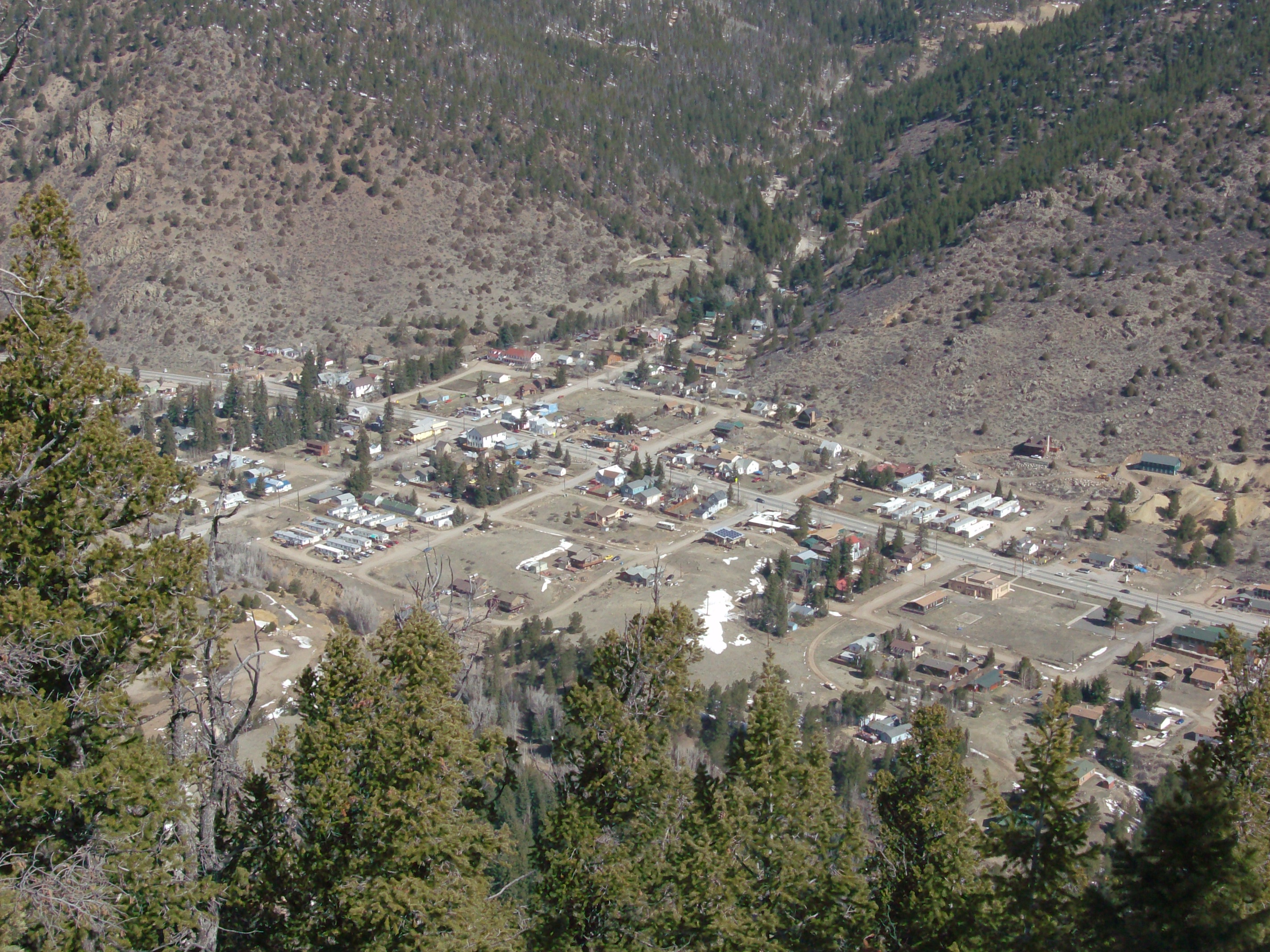
    Two years ago, as more testing revealed more contaminated sites, the CDPHE vowed to boost its oversight. Since then the Colorado Legislature has provided the health department with more authority and money to combat the problem, including conducting surveys to identify contaminated sites and drinking water systems, and providing as much as $8 million to buy contaminated firefighting foam and store it, and to help communities whose water has been tainted by the compounds.
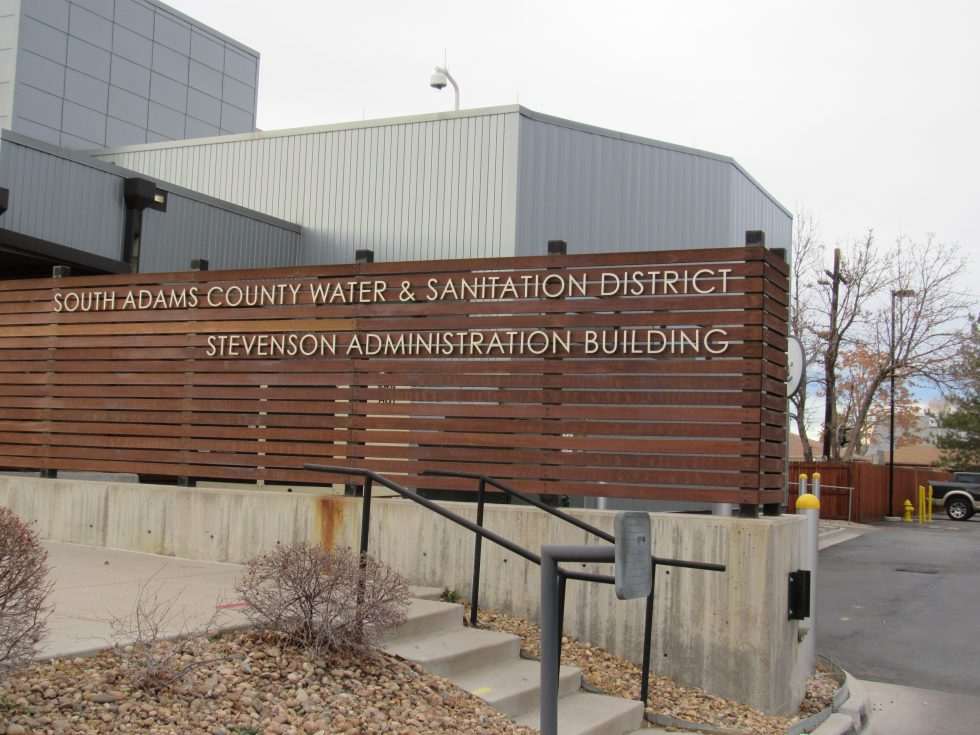
    Sugarloaf Mountain fire station.

    Dozens of fire departments, military facilities, water utilities, and commercial properties as diverse as hotels and apartment complexes, are now monitoring and testing for the substances.

    As Colorado has ramped up its oversight, last month the EPA announced it would begin work on a regulation that will, for the first time, set a limit on PFAS compounds in drinking water. It is set to be available for public review next fall and would be finalized by the fall of 2023.

    Ron Falco, CDPHE’s safe drinking water program manager, said he’s pleased the EPA is moving to regulate PFAS, but he said fast action is critical.

    “We want the EPA to hit that timeline,” he said.

    The South Adams County Water and Sanitation District, which serves Commerce City, is watching the state’s progress carefully. It discovered PFAS contamination in 2018 when it began testing voluntarily for the substances after the crises in Fountain and Security.

    It already had in place a carbon filtering system and was able to strengthen it to reduce PFAS contamination in its system to 35 parts per trillion (ppt), half of the EPA’s voluntary 70 ppt guideline. It also had to shut down wells whose contamination levels were so high, 2400 ppt, that no amount of carbon filtering could remove the chemicals fast enough to keep the drinking water safe.

    “The key here is that we can treat the current levels,” said Kipp Scott, manager of drinking systems at the South Adams County district, but better treatment will be needed once the federal regulation takes effect.

    And that means the district will need to install a new system that uses an ion exchange technology to remove the chemicals. Its estimated cost is $70 million. Scott said the district hopes the state’s emergency grant fund and new federal infrastructure dollars will help cover the cost.

    “I hope this moves in the right direction, and we can continue to provide safe water to our customers,” Scott said.

    Jerd Smith is editor of Fresh Water News. She can be reached at 720-398-6474, via email at jerd@wateredco.org or @jerd_smith.

    Tighter regulations for Suncor refinery on the way, #Colorado public health officials say: The new permit would be more restrictive than the old one, says Colorado Department of Public Health and Environment — The #Denver Post

    The Suncor refinery in Commerce City is pictured on Sand Creek near where it meets the South Platte River. Both streams have highly challenged water quality, though many conservationists argue they can get still better. Photo credit: Suncor

    From The Denver Post (Conrad Swanson):

    Following repeated pollution violations this year and calls to shut down the Suncor Energy oil refinery in Commerce City, Colorado health officials are seeking to renew the facility’s water quality permit, albeit with tighter restrictions.

    The refinery has been allowed to operate on expired permits because the company applied to renew them before they lapsed. And now officials with the Colorado Department of Public Health and Environment are considering a new water quality permit for the facility, spokeswoman Erin Garcia said in a release.

    The new permit would be more restrictive than the old one, Garcia said, and aims to better protect Sand Creek and downstream waters. The permit would also require more transparency surrounding the refinery’s operations and impose more pollution monitoring requirements and limits for toxic metals and chemicals.

    Suncor would be required to conduct “frequent” site inspections ensure that drinking water moving through its property remains safe, bolster its maintenance operations and alert people by text message if or when a spill occurs…

    But the draft permit isn’t finished yet, so state officials are soliciting public input. The department will host a virtual meeting Thursday between 6:30 p.m. and 8 a.m. to review current details of the draft permit. In addition the department will accept public feedback on the draft through Feb. 10, 2022. Additional details and public comment sections can be found online at http://cdphe.colorado.gov.

    The facility has repeatedly violated pollution standards, even after state health officials boasted last year of fining the company up to $9 million for violations in 2017. Between March 27 and April 22 of this year, the refinery exceeded pollution limits 15 times, emitting too-high levels of hydrogen sulfide, carbon monoxide and sulfur dioxide…

    State officials are also currently considering an air quality permit for the refinery, which would allow more of some types of pollution and crack down on others, The Denver Post reported in May. That proposed permit would raise permissible limits of volatile organic compounds that form ground-level ozone by 138 tons per year and allow 11 tons more particulate soot a year. It would, however, reduce sulfur dioxide and carbon monoxide…

    In the bigger picture, however, Suncor has pledged to invest $300 million in the refinery before 2023 to make the facility “better, not bigger.” To that end, Adesanya told The Post in September that the company installed an automated shutdown system in part of the plant last year and will upgrade the rest of the facility with similar technology by the end of next year.

    The #Colorado Department of Public Health & Environment alleges #waterquality violations by #Boulder County mining company — Colorado Newsline

    South Boulder Creek near the East Portal of the Moffat Tunnel via Jason Lee Davis

    Colorado water quality regulators have issued a cease and desist order to the owner of two hard-rock mines located just outside the town of Nederland, alleging the mines have discharged potentially hazardous pollutants well in excess of permitted levels into nearby watersheds.

    The Colorado Department of Public Health and Environment’s Water Quality Control Division issued a notice of violation on Nov. 5 to Grand Island Resources, LLC, which acquired the Cross and Caribou Mines in western Boulder County after the death of former owner and miner Tom Hendricks in 2020.

    The violation notice came after a series of compliance advisories were sent to the company over the summer. The November notice alleges a failure to comply with current water quality standards, citing multiple excess effluent discharges of heavy metals during the months of December 2020 to August 2021, as well as a failure to comply with required reporting of additional water pollutants.

    GET THE MORNING HEADLINES DELIVERED TO YOUR INBOX

    Pollutants listed in the violation for exceeding the daily or monthly limits included lead, copper, zinc, silver and cadmium, with the self-monitored data showing several occasions where effluent discharges exceeded levels by up to three or four times the permitted amounts. 

    Grand Island Resources is currently permitted through the state to release treated wastewater via one outfall into Coon Track Creek within the specified effluent limits. The need to stay within these limits is underscored by the fact that the small creek serves as a tributary in the Boulder Creek watershed, ultimately joining another creek through the town of Nederland and flowing into the Barker Reservoir, one of several potable water sources for the city of Boulder.

    In high concentrations, heavy metals are well documented to cause impacts to the environment and human health, including the ability to accumulate in the body over time and cause disease. Critically, the 2021 report of Boulder’s drinking water quality — which employs data from 2020 — reported no violations for lead or copper levels, and no public health advisories have been issued to date.

    Direct water quality testing for the natural spring located off Caribou Road — a spring often utilized by locals and recreational visitors — was not immediately available, nor was the immediate source of the spring known. 

    Representatives of Grand Island Resources did not respond to requests for comment.

    This is not the first time compliance advisories or notices of violations have been issued by CDPHE for the Cross and Caribou Mines. Publicly available documents show repeated enforcement actions regarding either excess effluent discharge or a failure to comply with reporting standards of treated wastewater dating back to the 1980s under previous ownership. 

    The current notice of violation for heavy metal water contaminants comes as Grand Island Resources is seeking revision of its current state permit, having filed for review with the Division of Reclamation, Mining and Safety, a branch of the state Department of Natural Resources, on Feb. 8. No determination has been made to date, with a pending response required from the mining company to proceed. At the same time, the notice of violation has been scheduled for a hearing before the Colorado Mined Land Reclamation Board on Dec. 15 to 16. 

    Grand Island Resources is also currently operating under a special use development agreement with the county of Boulder, according to Jesse Rounds, a senior planner with Boulder County Community Planning and Permitting. Rounds explained that this agreement is separate from the state mining permit and was acquired in the transfer of mine ownership. 

    According to Rounds, so long as the existing agreement is upheld, the agreement remains in place indefinitely. However, the county is now currently reviewing if the requested modifications to the state would continue to uphold the existing special use agreement, or if a full special use review may be necessary.

    The Cross and Caribou Mines were once estimated to potentially be worth billions of dollars in gold, raising questions as to the long-term scale of mining to be conducted by the new company, and the subsequent implications for Boulder County.

    Mining has had an enormous impact on Nederland’s history,” Nederland Mayor Kris Larsen said in an interview. “It’s why our town exists in the first place, and I have no doubt that it will continue to be part of our future as the demand for domestically sourced minerals is only going to grow. But it can’t be done like it’s been done. It has to be done in a responsible way that protects our air, water, and common environment.”

    SUPPORT NEWS YOU TRUST.

    Colorado Newsline is part of States Newsroom, a network of news bureaus supported by grants and a coalition of donors as a 501c(3) public charity. Colorado Newsline maintains editorial independence. Contact Editor Quentin Young for questions: info@coloradonewsline.com. Follow Colorado Newsline on Facebook and Twitter.

    Steamboat looks to new program to address high river temperatures: Water-quality trading on #YampaRiver and tributaries would create riparian shading — @AspenJournalism

    The far bank of the Yampa near the Flour Mill will get additional vegetation and trees to help cool river temperatures as part of this restoration project that began last week. The city of Steamboat is exploring a water quality trading program that could lower river temperatures and help the city comply with the permit requirements of its wastewater treatment facility.
    CREDIT: HEATHER SACKETT/ASPEN JOURNALISM

    From Aspen Journalism (Heather Sackett):

    The city of Steamboat Springs is exploring a way to help it stay in compliance with state regulations and also cool down chronically high temperatures in an impaired stretch of the Yampa River.

    A program called water-quality trading could allow the city to meet the requirements of its wastewater-treatment facility’s discharge permit from the Colorado Department of Public Health and Environment by cooling other areas of the river by planting trees.

    The Yampa River flows through downtown Steamboat, where several parks and the Core Trail have been built along its banks. The river, a vital and cherished amenity for the Steamboat community, is popular with tubers and anglers. According to a 2017 survey of citizens, 75% of respondents ranked the management and health of the Yampa as essential or very important.

    But low flows and high temperatures, made worse in recent years by climate change, have impacted the public’s ability to use one of their favorite amenities. In July, the city closed the river to commercial use because of high temperatures — over 75 degrees. The city also recommended a voluntary closure for noncommercial users of the river.

    The entire 57-mile segment of the Yampa from above the confluence with Oak Creek to above the confluence with Elkhead Creek often has temperatures that are too high during the summer months, and in 2016 the segment was designated as impaired for temperature under the Clean Water Act. For July, August, September and November, stream temperatures exceed state standards for a cold-water fishery.

    Because the river is classified as impaired, city officials expect that when CDPHE issues a future discharge permit for the city’s wastewater-treatment plant, it will include more-stringent water temperature standards. The wastewater-treatment plant may not be able to meet these standards unless it cools the effluent before releasing it back into the river. The city’s current discharge permit expires at the end of the year.

    According to CDPHE Marketing and Communications Specialist Eric Garcia, Steamboat’s next permit will likely not have temperature limits, but will have temperature monitoring requirements. The soonest the city would have temperature limits for the wastewater treatment plan is Jan. 1, 2027.

    “These monitoring requirements are included so that we have a full understanding of the temperature issues in the Yampa River and at the plant before we set any temperature limits,” Garcia said in an email.

    CDPHE: Algaecide in Vail Resorts pond water suspected in fish die-off — The #Vail Daily

    Gore Creek is healthy as it emerges from the Eagles Nest Wilderness Area, but has problems soon after, via The Mountain Town News. All photos by Jack Affleck.

    From The Vail Daily (John LaConte):

    An algaecide that was toxic to fish entered Mill Creek this week, the Colorado Department of Public Health and Environment has learned based on discussions with Vail Resorts.

    Colorado Parks and Wildlife recorded 120 dead fish Tuesday in Mill Creek and Gore Creek in Vail, where a spill was reported to the Colorado Department of Public Health and Environment by Vail Resorts…

    The department said it is inspecting Mill and Gore creeks to determine if there were possible violations of the Colorado Water Quality Control Act, Nason said.

    The department coordinated with Colorado Parks and Wildlife to provide the initial investigation Tuesday. Friday’s inspection was a follow-up to that effort, Nason said…

    On Monday, Vail Resorts was contacted by the Eagle River Water and Sanitation District, which had noticed an abnormally high water demand in the core Vail area over the weekend.

    The water and sanitation district had narrowed down the high use to a storage tank at Golden Peak. The major customer user from that tank is Vail Resorts for its snowmaking system, which, according to a memo from the town of Vail’s Environmental Sustainability Department, is not usually online until Oct. 1.

    Vail Resorts, according to the memo, discovered that a few isolation valves on their snowmaking setup had been left open since March. Maintenance had been performed on the snowmaking system on Sept. 17, which required the drain line to be opened for repair work.

    On Monday, the valves for the snowmaking setup were shut, which stopped the discharge of water to Mill Creek…

    Copper Sulfate

    The discharged water was blue-gray, and bugs, fish and algae had been killed in 1,500 feet of affected creek. Common algaecides contain copper sulfate, which is blue and can be toxic to fish.

    “Based on discussions with Vail Resorts, we learned that the spilled water to the river is a combination of potable water and pond water with algaecide, which in this case was toxic to fish given the dead fish,” Nason said. “While events that lead to fish kills are an immediate concern, dead fish doesn’t always mean there is an urgent public health threat.”

    The fish were surrounded by high levels of the spilled and contaminated water, Nason said.

    But for people or dogs playing near or in this area, Nason said the risk of health impacts are expected to be low “because much of that spilled water has been washed away and diluted as it moves downstream — otherwise we would be seeing many more dead fish downstream.”

    Area organizations protesting CDPHE selenium regulations — The Grand Junction Daily Sentinel

    Book Cliffs and Mt. Garfield (on right, approximate altitude 6,600′) in Mesa County, Colorado. By User Skez on en.wikipedia – Originally from en.wikipedia; description page is (was) here03:31, 2 March 2006 Skez 992×708 (137,232 bytes) (Near Grand Junction, CO Taken by Sean Davis http://flickr.com/photos/skez/32161524/), CC BY-SA 2.0, https://commons.wikimedia.org/w/index.php?curid=835434

    From The Grand Junction Daily Sentinel (Sam Klomhaus):

    A group of concerned Grand Valley organizations announced Wednesday they plan to appeal a decision by the Colorado Department of Public Health and Environment to implement total maximum daily levels of selenium and recoverable iron in watersheds north of the Colorado River in the Grand Valley.

    Selenium, recoverable iron and E. Coli are all “pollutants of concern” in the watershed, according to a CDPHE report on the total maximum daily levels.

    According to the report, elevated selenium levels can cause mortality, deformity and reproductive failure in fish and aquatic birds.

    The decision, which would affect 14 “washes” from the Government Highline Canal diversion to below Salt Creek, was announced Aug. 10. The appeal would stop the decision from being forwarded to the Environmental Protection Agency and formally implemented while the appeal process is ongoing.

    Mark Harris, general manager of the Grand Valley Water Users Association, said Wednesday he was “saddened and surprised” by the CDPHE’s decision, which he said ignored ongoing efforts to mitigate selenium levels in area water, as well as the amount of selenium that naturally occurs in area soils and gets washed into the watershed whenever it rains…

    Harris said that while protecting water quality is important, the amount of selenium reduction the CDPHE is requiring is impossible from a practical and cost standpoint.

    To comply with the regulations, Harris explained, the economic and physical landscape of the Grand Valley would have to change. The cost of complying with CDPHE’s proposed regulations would be borne by area governments and passed on to residents, Grand Junction Chamber of Commerce CEO Diane Schwenke said.

    Organizations supporting the appeal are Associated Members of Growth and Development, city of Fruita, city of Grand Junction, Mesa County Valley School District 51, Grand Junction Chamber of Commerce, Grand Valley Water Users Association, Housing and Building Association of Colorado, Mack airport, Mesa County, Orchard Mesa Irrigation District, Palisade Irrigation District and Western Colorado Contractors Association.

    The selenium in the soil is washed out of the Bookcliffs and into the watershed, Harris said, and mitigation efforts include lining irrigation canals and ditches to keep the selenium from leeching in.

    Harris said there has already been a lot of success reducing the selenium levels in the watershed since the 1970s and 80s, success he contends the CDPHE has ignored.

    #Colorado health officials hopeful after #Arizona court rejects Trump-era Clean Water Act rules — @WaterEdCO #DirtyWaterRule #WOTUS

    The Colorado Department of Public Health and Environment. Credit: Jerd Smith

    From Water Education Colorado (Jerd Smith):

    Colorado state health officials said they’re hopeful a recent federal court ruling that effectively overturned Trump-era rules reducing oversight of Western rivers and streams will allow states to revert back to a more protective standard.

    “We are aware of Arizona’s court decision and are following what it means for other states, especially arid states such as Colorado. We are hopeful the Arizona ruling will apply nationwide because it has the potential to allow states to revert back to standards that protected our state waters more,” said Trisha Oeth via email.

    Oeth, who is the environmental health and protection policy director at the Colorado Department of Public Health and Environment (CDPHE), also said the state understood the need to ensure that more certainty regarding the regulations was critical to protect all the interest groups affected by them.

    The Trump rule sought to overturn Obama Administration rules that expanded the scope of the Clean Water Act. But Aug. 30, the Arizona court rejected it, saying it harmed streams in Western states and ignored important science. It has directed regulators across the country to use a set of rules developed prior to the Obama Administration’s actions until the Biden Administration can develop new regulations.

    Since 2019, when the Trump-era rule was finalized, the CDPHE has been working, without success, on a proposed permitting program that lawmakers would have to approve. The permitting program would have covered streams and rivers left unprotected by the Trump rule. The so-called dredge-and-fill permits proposed by the state would be required when activities such as road and home building affect streams no longer covered by the Trump rule.

    But farm interests, developers and contractors remain concerned that the Clean Water Act (CWA) rule, known as the Waters of the U.S. (WOTUS) rule, will remain mired in legal battles and regulatory uncertainty, delaying projects and raising their costs.

    “It’s a big fear of ours,” said Zach Riley, the Colorado Farm Bureau’s director of public policy. The organization, which has 23,000 members, had supported the narrower WOTUS rule.

    The political seesaw has been going on for decades with the CWA legally hamstrung over murky definitions about which waterways fall under its jurisdiction, which wetlands must be regulated, what kinds of dredge-and-fill work in waterways should be permitted, what authority the CWA has over activities on farms and Western irrigation ditches.

    Administered by the U.S. Army Corps of Engineers and the Environmental Protection Agency, the CWA is credited with making U.S. waters some of the cleanest in the world. But it has also been difficult to administer, in part because the country is home to widely different geographies and because of numerous court cases that have altered how it is interpreted by different presidential administrations.

    Western states have been particularly concerned because in the Midwest and East, for instance, major rivers that carry barge and shipping traffic are clearly “navigable,” the term early courts used to determine how water would be regulated. If a stream was navigable, it was subject to federal law.

    But Colorado and other Western states rely on shallow streams that often don’t flow year round and don’t carry traditional commercial traffic. Over the years many of those streams too became protected by the Clean Water Act.

    The Trump administration’s WOTUS rule, however, excluded them, saying that only navigable streams would be regulated, meaning that thousands of miles of streams in Colorado and other Western states that don’t flow year round or carry commercial shipping traffic would no longer have been protected.

    Whether Colorado can or should craft a new permitting regulation that will remove it from the political back-and-forth that has dogged WOTUS and provide industry and environmental groups with more certainty isn’t clear yet.

    The CDPHE has not yet said what it plans to do, saying it is still analyzing the Arizona decision.

    “At the state level, it will be interesting,” said Alex Funk, senior counsel and director of water with the Theodore Roosevelt Conservation Partnership, which has advocated for a new state permitting program. “We’re still supportive of a state program to get out of this habit of having new WOTUS rules every four years…we need something that will survive at the federal level.”

    Still others want the CDPHE to take a breather, to wait and see how the EPA and other agencies interpret this latest ruling before trying to create a new state regulation.

    “Given the pace of change and the multiple rounds of litigation, the state could take more time to discuss what’s needed,” said Gabe Racz, an attorney who represents water utilities and industry at the Colorado Water Congress.

    And Racz said he believes there is a chance that the Biden Administration will be able to craft new rules that can endure at the federal level, regardless of who is in the White House.

    “The Biden Administration announced they planned to develop a durable rule. I’m hopeful. That’s a step in the right direction,” Racz said.

    Jerd Smith is editor of Fresh Water News. She can be reached at 720-398-6474, via email at jerd@wateredco.org or @jerd_smith.

    Colorado Rivers. Credit: Geology.com

    State monitoring finds elevated air pollution levels near Suncor refinery in #CommerceCity — #Colorado Newsline

    The Suncor oil refinery, located just north of Denver city limits, is one of the region’s largest sources of toxic air pollution. (Chase Woodruff/Colorado Newsline)

    A state effort to measure air pollution levels near the Suncor Energy oil refinery in Commerce City found elevated levels of hazardous particulate matter in the area, officials with the Colorado Department of Public Health and Environment said in a communication to residents Thursday.

    The new data were collected by CDPHE’s mobile air monitoring lab, which was stationed at the Eagle Pointe Recreation Center in Commerce City between May 14 and July 17. They showed that levels of fine particle pollution — an air pollutant known as PM2.5 because it consists of tiny particles less than 2.5 microns in diameter — were higher in the Commerce City and north Denver area in early summer than at many other monitoring stations along the Front Range.

    GET THE MORNING HEADLINES DELIVERED TO YOUR INBOX

    “CDPHE sent the mobile lab to the area because of department and community concerns regarding air quality in the area,” the department said. “Fine particle pollution in the area comes from local sources, such as Suncor and vehicles, and more distant sources, such as wildfire smoke. The mobile lab is not able to determine the sources of pollution it measures.”

    The mobile lab was stationed less than a mile from the boundaries of the Suncor refinery, closer than any of the state’s permanent monitoring stations are located. The refinery and other industrial facilities in the north Denver metro area are known to emit high levels of pollutants, but environmental activists and residents, many of whom are low-income and people of color, have long complained that the area has lacked adequate air-quality monitoring.

    The results of the state’s air monitoring investigation suggest that PM2.5 is the “most prominent pollutant of health concern in the area,” CDPHE said. Levels of another common pollutant, ozone, were lower on average than in many other parts of the Denver metro area.

    The effort also found that levels of volatile organic compounds, or VOCs, “did not reach levels experts expect would cause health impacts,” though CDPHE officials cautioned that scientists don’t yet fully understand how VOCs may interact with each other or other pollutants to cause or exacerbate health impacts. “Whether someone might experience health impacts depends on many factors, including the amount they are exposed to and for how long,” said a CDPHE website showing the results of the investigation.

    The department says that it’s planning to send the mobile lab back to the Commerce City area in the future. It’s one of several efforts to improve air monitoring in the area surrounding the Suncor facility, including a grant-funded community program operated by the nonprofit Cultivando; new requirements for “fenceline” monitoring mandated by legislation passed earlier this year; and a voluntary monitoring website recently launched by Suncor itself.

    SUPPORT NEWS YOU TRUST.

    Colorado Newsline is part of States Newsroom, a network of news bureaus supported by grants and a coalition of donors as a 501c(3) public charity. Colorado Newsline maintains editorial independence. Contact Editor Quentin Young for questions: info@coloradonewsline.com. Follow Colorado Newsline on Facebook and Twitter.

    #SouthPlatteRiver gets no new protections after heated Water Quality Control Commission hearing — The #Colorado Sun

    Ducks patrol the South Platte River as construction workers shore up bank. Oct. 8, 2019. Credit: Jerd Smith

    From The Colorado Sun (Michael Booth):

    Colorado water commissioners declined to upgrade water quality rules for the urban stretch of river, though conservation groups say they are finally being heard.

    Public officials, conservation groups and citizen speakers pleaded with the Colorado Water Quality Control Commission [August 9, 2021] to reverse a 2020 decision and strengthen protections for the South Platte River in north Denver and Adams County, but the commissioners declined.

    Opponents of the commission’s decision last year thought they had one last chance in a “town hall” feedback format to urge the commissioners to revisit the controversial vote, which rejected a staff recommendation to upgrade the South Platte to higher water quality protections. They pointed to the recent weeks of high heat and air pollution in metro Denver, as well as a new climate change report showing irrefutable and irreversible damage to the environment, as more reasons to protect the river with tougher regulations…

    “We cannot wait five more years to upgrade or revisit what’s happening to the communities in north Denver,” said Ean Tafoya, Colorado director of the nonprofit GreenLatinos.

    The commissioners, who are appointed by Gov. Jared Polis to oversee the Water Quality Control Division of the Colorado Department of Public Health and Environment, said they would not reverse their 2020 decision now. The coalition favoring more protections said after the town hall they would consider trying to force the commission to reconsider through a petition process, by taking legal action…

    The Platte River plods through downtown Denver, a small workhorse with a big load. Photo/Allen Best

    But some commissioners appeared to leave the door open to further discussions and to seek more community input on future river decisions…

    Those who want to elevate the South Platte’s urban stretches used the commission’s town hall comment period to attack the 2020 decision. The staff of the water quality division last year had recommended that the South Platte River through north Denver and Adams County, long plagued by industrial releases and wastewater effluent, be upgraded to the next higher level of stream protections.

    Metropolitan Wastewater Reclamation District Hite plant outfall via South Platte Coalition for Urban River Evaluation

    The higher level would have forced existing polluters in that section, like Metro Wastewater, Suncor or Molson Coors, to avoid further degrading water quality with any new activity unless they could prove it was essential to their continuing business. As it stands now, those existing polluters have “protected use” status that permits them to degrade the water, even though water quality in those central urban streams has improved in recent decades.

    The Colorado division of Parks and Wildlife, the Environmental Protection Agency, the Adams County Commissioners and others had supported the staff request for a river protection upgrade. The water commissioners rejected the idea last year, and then again in June.

    Adams County Commissioner Steve O’Dorisio said he wanted to be frank with the water commissioners that not enough opponents were prepared for the discussion ahead of the 2020 decision.

    “Back in 2020 we did not know how this specific decision would affect our river and our communities,” O’Dorisio said.

    Jeff Neuman-Lee, describing himself as a citizen speaker for the town hall forum, pointed to Colorado’s air fouled by wildfire smoke and heat-generated ozone in recent weeks.

    “We’ve been just degrading our Earth over and over and over again, and we can’t tolerate any more,” he said. “It’s depressing to see that we’re allowing water quality to go unheeded; to create stretches of our rivers and say we don’t care about them, we’re just going to let them go.”

    […]

    Sunrise along the Clear Creek Trail August 12, 2021.

    Some of Monday’s speakers said they were concerned that leaving the South Platte’s water quality protection where it is now will weaken the current permit renewal process underway for the Suncor refinery, which borders Sand Creek as it empties into the South Platte. The state health department is reviewing and answering public comments on Suncor’s permit application, and conservationists and neighborhood groups want Suncor’s water and air pollution caps cut way back.

    “This idea of grandfathered legacy pollution,” Tafoya said, “just because they always have, doesn’t mean they should continue to.”

    Snake River #Water District to invest $38.5 million in infrastructure improvements over next 10 years — The Summit Daily

    From The Summit Daily (Lindsay Toomer):

    The Snake River Water District will undergo a variety of rehabilitation and improvements throughout the next 10 years based on its 2021 master plan.

    The district, which provides drinking water to the Keystone valley, underwent a study with an engineering firm to look at its infrastructure’s strengths and weaknesses. The idea to look into infrastructure upgrades started about two years ago when the district was notified it had a slight lead exceedance based on two water samples.

    Scott Price, executive director and district administrator, said this occurs not because there is an issue with the actual water, but because pipes in some older homes in the area were built with lead and are still in use. If the water sits in the pipes for too long, it can lead to concentrations of lead in the water samples. Price said the Colorado Department of Public Health and Environment has to use the water that first comes out when the faucet is turned on when it tests water samples, which will likely be affected by lead if the water sat unused in old pipes.

    The district has three base plants, each with its own storage and water filtration system. The second base, which is also home to the district’s office, is likely to need an additional storage tank to serve the high-density area of Keystone Resort, as well as a pump station that can transport water uphill from the third to the second base.

    An existing infrastructure issue to address is water pipe breakage, something Price said can cost around 10 times more to fix in the winter than it does in the summer. Engineers looked at which pipes were more likely to break, but also the severity of consequences that can occur from a breakage.

    The study prioritized which pipes and fire hydrants in the district would need attention immediately, creating a map showing the different priorities based on each area. The district plans to chip away at these pipe and hydrant upgrades little by little during the 10-year plan.

    Meanwhile, the third plant underwent $8.5 million in upgrades a couple years ago, including a new filtration system. Price said he expects this filtration system to be in compliance for decades to come as water quality regulations get tighter over time…

    Price also said that should the base two plant need upgrades — which he is expecting to get a decision from the Colorado Department of Public Health and Environment by the end of the year — the whole district will be able to temporarily operate on the new base three plant.

    Lastly, the study showed that the district’s Pilot Lode storage tank by the Settlers Creek townhomes will need improvements to its interior lining, as it is around 25 years old and steel constructed.

    The study estimates that over 10 years, the district will need about $38.5 million in work, estimated as follows:

  • Pump station from base three to base two: $1.5 million
  • Base two storage tank: $7.6 million
  • Base two groundwater under direct influence compliance: $11.8 million
  • Pilot Lode tank rehabilitation: $550,000
  • Pipeline replacements: $13.5 million
  • Fire hydrant replacements: $1.6 million
  • On top of these costs there are several smaller projects included in the master plan that account for the remaining $2 million of the budget. These estimates cover only the cost of construction, and the district will need to pay more in the coming months for architects and engineers to design the systems…

    The plan calls for a 12% rate increase at the start of 2022, and the Snake River Water District’s board is currently planning to do 12% increases over the next three years. The base quarterly fee will go from $65 in 2022 to $91 in 2024.

    The Snake River Water District hasn’t increased its water rates in about eight years, which was then only a 3% increase. Prior to that, it hadn’t raised its quarterly rates since the 1990s.

    Unclear waters: How pollution, diversions and #drought are squeezing the life out of the lower #ArkansasRiver Valley — The #Denver Post

    This view is from the top of John Martin Dam facing west over the body of the reservoir. The content of the reservoir in this picture was approximately 45,000 acre-feet (March 2014). By Jaywm – Own work, CC BY-SA 4.0, https://commons.wikimedia.org/w/index.php?curid=37682336

    From The Denver Post (RJ Sangosti):

    The Arkansas Valley Conduit promises to bring clean drinking water to more residents of southeast Colorado

    n the 1940s, the Arkansas River was dammed south of town to build [John Martin Reservoir], a place locals call the Sapphire on the Plains. The reservoir was tied up in a 40-year battle until Colorado and Kansas came to an agreement, in 2019, to provide an additional water source to help keep the levels high enough for recreation and to support fish.

    Forty years may seem like a long time to develop a plan to save fish and improve water levels for a reservoir, but southeastern Colorado is used to long fights when it comes to water…

    Arkansas Valley Conduit map via the Southeastern Colorado Water Conservancy District (Chris Woodka) June 2021.

    For nearly a century, leaders in southeastern Colorado have worked on plans to bring clean drinking water to the area through the proposed Arkansas Valley Conduit, but progress on the pipeline project stalled after a major push in the 1960s. Pollution, water transfers and years of worsening drought amid a warming climate continue to build stress for water systems in the area. Adding to that, the area continues to see population decline combined with a struggling economy.

    The water needed for the conduit will be sourced from melting snowpack in the Mosquito and Sawatch mountain ranges [ed. and Colorado River Basin]. Under the Fryingpan-Arkansas Project Act, passed in the early 1960s, the water has been allocated for usage in the Lower Arkansas Valley. The water will be stored at Pueblo Reservoir and travel through existing infrastructure to east Pueblo near the airport. From there, the conduit will tie into nearly 230 miles of pipeline to feed water to 40 communities in need.

    Renewed plans to build a pipeline to deliver clean drinking water to the Lower Arkansas Valley are bringing hope for many people in southeastern Colorado. But in an area that is inextricably linked to its water, the future can seem unclear…

    “Deliver on that promise”

    “It was nearly 100 years ago, in the 1930s, that the residents of southeast Colorado recognized that the water quality in the lower valley of the Arkansas River was quite poor,” said Bill Long, president of the Southeastern Colorado Water Conservancy District and a former Bent County commissioner.

    Water systems in the district, which includes Pueblo, Crowley, Bent, Prowers, Kiowa and Otero counties, have two main issues affecting drinking water.

    The first is that a majority of those systems rely on alluvial groundwater, which can have a high level of dissolved solids. This can include selenium, sulfate, manganese and uranium, which are linked to human health concerns.

    Second, the remaining systems in the water district rely on the Dakota-Cheyenne bedrock aquifer that can be affected by naturally occurring radionuclides. Radium and other radionuclides in the underlying geologic rock formation can dissolve into the water table and then be present in drinking water wells, also carrying health risks.

    John F. Kennedy at Commemoration of Fryingpan Arkansas Project in Pueblo, circa 1962.

    In 1962, residents in southeastern Colorado thought President John F. Kennedy was delivering a solution to their drinking water problem during a ceremony in Pueblo. Congress had passed the Fryingpan-Arkansas Project Act, and Kennedy came to Pueblo to authorize the construction of a pipeline to deliver clean drinking water…

    Residents of the 1930s began working on ideas to deliver clean drinking water to southeastern Colorado. By the 1950s, they were selling gold frying pans to raise money to send backers to Washington, D.C., to encourage Congress to pass the Fryingpan-Arkansas Project Act. But it wasn’t until 1962 that the pipeline authorization became a reality.

    Fast forward 58 years, and two more politicians came to Pueblo to address a crowd about the same pipeline project. This time, on Oct. 3, 2020, it was at the base of Pueblo Dam. Because of funding shortfalls, the Arkansas Valley Conduit was never built after it was authorized in 1962.

    The Colorado communities could not afford to cover 100% of the costs, as initially required, so in 2009, the act was amended to include a 65% federal share and a 35% local cost share. Additionally, in 2020, Congress appropriated $28 million more toward the project, according to the water conservancy district.

    That October day, Sens. Michael Bennet and Cory Gardner took turns talking about the importance of the project. They told a small crowd that when the pipeline is built, it will provide clean drinking water to 50,000 residents in southeastern Colorado…

    The water conservancy district estimates the pipeline project’s cost will range from $546 million to $610 million…

    Physical construction of the pipeline won’t start until 2022, according to the water district…

    “The solution to pollution Is dilution”

    A hand-painted sign with stenciled letters welcomes travelers on Highway 96 into Olney Springs. The highway cuts across four blocks that make up the width of the small town with around 340 residents.

    Olney Springs is one of six water systems in Crowley County that plans to have a delivery point, known as a spur, on the Arkansas Valley Conduit. The plans for the pipeline call for two spurs in Pueblo County, three in both Bent and Prowers counties, and one in Kiowa County. Out of the 40 total participants, the remaining 25 are in Otero County…

    Located along the Arkansas River about 70 miles east of Pueblo, La Junta is the largest municipality in Otero County. With its population around 7,000 and a Walmart Supercenter, a Holiday Inn Express and Sonic Drive-In, La Junta can feel like a metropolis when compared to Olney Springs.

    La Junta is one of two Arkansas Valley Conduit participants, along with Las Animas, that uses reverse osmosis to remove potentially harmful and naturally occurring toxins from the water. Reverse osmosis is a process that uses pressure to push water through a membrane to remove contaminants. According to the Department of the Interior and the Bureau of Reclamation’s Arkansas Valley Conduit Environmental Impact Statement, reverse osmosis can treat source water to meet standards, but the brine from the process “is an environmental concern, and operation costs are high.”

    The other participants use conventional methods to treat water. The environmental impact statement said those methods can be as simple as adding chlorine for disinfection and filtration or adding chemicals to remove suspended solids, but that those treatments “…cannot remove salt or radionuclides from water.”

    Tom Seaba, director of water and wastewater for La Junta, said out of a total of 24 water districts in Otero County, 19 were in violation with the state due to elevated levels of radionuclide.

    Four of the 19 came into compliance with the state’s drinking water standards after La Junta brought them onto its water system. The remaining 15 are still in violation with the state, according to Seaba.

    La Junta spent $18.5 million to build a wastewater treatment plant that came online in 2019 to help meet water standards for its community. But the city’s water treatment came with its own issue: selenium.

    After La Junta treats its water using reverse osmosis, the water system is left with a concentrate, which is safe drinking water. However, it’s also left with a waste stream high in selenium. “That wastewater has to go somewhere,” Seaba said. It goes to the city’s new wastewater treatment plant…

    According to the environmental impact statement, “La Junta’s wastewater discharge makes up about 1.5% of average annual flow in the Arkansas River.” The study goes on to say that during drought or low-flow events, the wastewater discharge can contribute up to half of the streamflow downstream from the gage.

    Seaba is looking to the Arkansas Valley Conduit as a possible answer. “The solution to pollution is dilution,” he said. The water from the pipeline will not have a selenium problem, Seaba explained. By blending water from the conduit with the selenium waste from reverse osmosis, La Junta hopes to reduce costs and stay compliant with Environmental Protection Agency standards to discharge into the river.

    The environmental review studied a section of the Arkansas River from where Fountain Creek runs into the river east to the Kansas border. The study found that a section of the river was impaired by selenium…

    “I sure don’t drink it”

    The EPA sets a maximum contaminant level in drinking water at 5 picocuries per liter of air for combined radium and 30 micrograms per liter for combined uranium. If contaminant levels are above those numbers, the water system is in violation of drinking water regulations, which the state enforces.

    According to data provided by the Colorado Department of Public Health and Environment, the Patterson Valley Water Company in Otero County, one of the 40 pipeline participants, had the highest result of 31 picocuries per liter for combined radium in 2020. In that same county, Rocky Ford, another pipeline participant, had a high result of 0.2 picocuries per liter for combined radium. According to the state health department, Rocky Ford’s combined radium sample numbers were last recorded in 2013.

    Manzanola, also in Otero County and a pipeline participant, topped the list with the highest result of 42 micrograms per liter for combined uranium in 2020. In contrast, 19 other pipeline participants, from across the valley, had results of 0 micrograms per liter for combined uranium, according to the most recent numbers from the state health department.

    Levels of the two carcinogens are sporadic throughout the valley. The average of the highest results of all 40 participants in the pipeline for combined radium is roughly 8 picocuries per liter and combined uranium is roughly 5 micrograms per liter. According to Seaba, averaging the members’ highest results might seem unfair to some individual water systems because it brings their numbers up, but what those averages do show is that water in Pueblo Reservoir, which will feed the future conduit, is approximately three times less affected by combined radium and combined uranium than the average of current water used by pipeline participants. In 2020, the highest result of combined radium in the Pueblo Reservoir was 2.52 picocuries per liter, and the highest result of combined uranium was 1.7 micrograms per liter…

    “I sure don’t drink it,” said Manny Rodriquez. “I don’t think anybody in town drinks the water.”

    Rodriquez, who grew up in and still lives in Rocky Ford, was not sure if the water at his apartment was in violation of the state’s clean drinking water act or not. State data showed at that time his water was not in violation. Colorado is required to notify residents if their water system is in violation of the clean drinking water act…

    MaryAnn Nason, a spokesperson for the Colorado Department of Public Health and Environment, used an example to show how violations can add up: “If a public water system has two entry points that fail for both combined radium and gross alpha (measures of radionuclides), and they have those same violations for 10 years each quarter, that is going to appear as 160 violations on the website. But really, it is one naturally occurring situation that exists for a relatively long time,” Nason said.

    For some residents like Ruby Lucero, 83, it makes little difference to her if her water is in violation with the state or not. She plans to buy her drinking water no matter what the results say about her tap water…

    Straight line diagram of the Lower Arkansas Valley ditches via Headwaters

    “The struggling farmer”

    In the past decade, Otero County has seen a 2.9% drop in population. Residents have a ballpark difference of $38,000 in the median household income compared to the rest of the state, and the county is not alone. All six counties that are part of current plans for the Arkansas Valley Conduit are seeing economic hard times.

    Adding to those factors is drought. Years of drought keep hitting the area’s No. 1 industry: agriculture.

    The Rocky Ford Ditch’s water rights date back to 1874, making them some of the most senior water rights in the Arkansas River system. In the early 1980s, Aurora was able to buy a majority of those water rights. Over time, Aurora acquired more shares and has converted them to municipal use…

    “We still have a heavy lift before us”

    Planned off the main trunk of the Arkansas Valley Conduit, a pump station near Wiley will push water along a spur to support Eads in Kiowa County. Water that ends up in Eads will have traveled the longest distance of the pipeline project. The majority of the pipeline will be gravity-fed, but this section will need to be pumped uphill.

    The journey is a good representation of Eads’ battle with water. Not only is clean drinking water needed, but the area is also desperate for relief from years of drought exacerbated by climate change…

    Long said that Eads is different from a majority of the other participants in the project because it is not located along the Arkansas River…

    The domestic water that will be delivered via the conduit is even more important for a town like Eads, said Long. “It’s very difficult to attract new industry when you have a limited supply of very poor water.”

    Long believes the conduit will make a huge difference to support communities in the Lower Arkansas River Valley…

    Long has been working on the Arkansas Valley Conduit project for nearly 18 years.

    “After such a long fight, to finally be where we are feels good, but honestly I can say it doesn’t feel as good as I thought it would. Only because I know we have so much work still to do, and I know how difficult the past 18 years have been,” Long said. “We still have a heavy lift before us.”

    Arkansas River Basin via The Encyclopedia of Earth

    Waterways get a break as #Colorado refuses to ease rules for how much pollution gets discharged to rivers and streams — The Colorado Sun

    The Suncor refinery in Commerce City is pictured on Sand Creek near where it meets the South Platte River. Both streams have highly challenged water quality, though many conservationists argue they can get still better. Photo credit: Suncor

    From The Colorado Sun (Michael Booth):

    Members of the Water Quality Control Commission said they were shocked by the blowback to a proposed change that would have made it easier for industry, utilities to send more pollution downstream.

    The state Water Quality Control Commission has delayed for at least a decade a controversial proposal that would have allowed further degradation of Colorado waters already challenged by pollution

    In a scheduled review of the state’s “antidegradation” provision — a key to the federal Clean Water Act — some on the commission had sought to broaden chances for industries to discharge more pollutants into streams already considered heavily impacted by historic degradation. The rule currently in place says polluters must make a compelling argument that worsening the conditions of a stretch of river is unavoidable in creating economic growth for a community.

    Colorado waters are divided into three categories: “outstanding” waters, where no degradation can be permitted; “reviewable,” meaning degradation is only allowed if there is no other way for the economic activity to move forward; and “use protected,” where industrial or city dischargers can degrade existing water quality in heavily impacted streams in order to maintain or expand their operations.

    Conservation groups and multiple local and state officials argued last week that the commission’s proposed change would have allowed many more Colorado streams to fall under “use protected,” even when the entity seeking higher pollution permits was the one responsible for historic pollution.

    Metropolitan Wastewater Reclamation District Hite plant outfall via South Platte Coalition for Urban River Evaluation

    Heavy industrial users, such as Metro Wastewater Reclamation, which treats all metro area sewage, could have used the opening to say they didn’t need to further clean up their discharge.

    Citing the intense blowback against the proposed change by dozens of conservation and community groups testifying earlier in the week, the commission late Friday said current protections would stay in place until at least 2031.

    “The decision comes after extensive stakeholder engagement with the EPA, Colorado Parks and Wildlife, environmentalists and regulated entities, and it maintains the regulations as they are for the time being,” the state Water Quality Control Division said in a statement…

    Coors Brewery in Golden Colorado. Photo credit: Molson Coors via Westword

    Opponents of the change said it would open the door for existing permitted polluters such as Molson Coors, Suncor and Metro Wastewater to discharge more pollutants if they could show the water was already degraded beyond a chance for improvement. The industries could have asked for the leeway even if they were the ones whose waste had previously damaged streams, such as on the South Platte River through Adams County. In that stretch of river, discharge from Metro Wastewater’s treatment facility makes up most of the stream volume for much of the year.

    Groups testifying against the change ranged from Adams County commissioners to Colorado Parks and Wildlife, to Trout Unlimited and Green Latinos. Industrial dischargers, meanwhile, had argued in submitted filings that their use of waters supported important economic interests for communities, and that some heavily used Colorado streams simply won’t support more aquatic life than they already do…

    Conservation groups did not get the relief on Friday that they’d sought since a 2020 commission decision declining to upgrade protections for urban stretches of the South Platte River and Clear Creek, which flows past the Molson Coors plant. They said they will continue to seek ways to tighten down on pollution discharges into those waters and give them a chance to recover further.

    Industries could dump more pollution into Colorado rivers under proposed rule change that goes against recommendations — The #Colorado Sun

    The Suncor refinery in Commerce City is pictured on Sand Creek near where it meets the South Platte River. Both streams have highly challenged water quality, though many conservationists argue they can get still better. Photo credit: Suncor

    From The Colorado Sun (Michael Booth):

    Clean water advocates say a state commission is preparing to double down on a bad decision last year that failed to protect Clear Creek and the South Platte, and that a broader ruling may endanger more pristine streams.

    year ago, the state’s water quality commissioners overruled not only their staff but other state agencies like Colorado Parks and Wildlife, along with a broad and very angry coalition of conservation groups.

    Now, according to the conservation groups, the commission is about to do the same thing again. Only this time, the river advocates say, their proposals threaten every river in the state, weakening a bedrock 33-year-old rule the state uses to implement the federal Clean Water Act.

    Colorado industries and city wastewater plants could legally dump more pollution into state rivers if water quality commissioners endorse this year’s plan while also sticking with last year’s changes, conservation groups say.

    They argue the actions would mean the potential reversal of intensive efforts to clean city waters flowing past low-income areas already heavily impacted by economic and environmental problems.

    They claim it opens the way for water dischargers like Metro Wastewater, Molson Coors and others to seek permits for discharges that would further degrade waters they themselves have already tainted.

    “It’s just going to roll the clock backwards on pollution,” said Mely Whiting, legal counsel for the Colorado chapter of Trout Unlimited.

    Last year, the Colorado Parks and Wildlife division argued to upgrade protection of the South Platte and Clear Creek by saying there is “no evidence that pollution is irreversible,” according to supporting statements filed at the state. The Water Quality Control Commission in June rejected stronger protections for those urbanized stretches of water, including Clear Creek, which flows out of Golden and past the Molson Coors plant on its way to the South Platte.

    “I’ve always felt that a strong anti-degradation policy is very important in Colorado,” Water Quality Control Commission Paul Frohardt said during last year’s hearing about the South Platte and Clear Creek. “But I also believe that that policy makes sense and will have broad public support when it’s focused on truly high quality waters.”

    Sand Creek in Aurora.

    Now the commission is taking on a scheduled five-year review of the anti-degradation rule applying statewide. Conservationists fear the commission is leaning toward loosening the strictest level of water quality review for all streams.

    The “anti-degradation” rule currently in place says polluters seeking a new or renewed water quality permit must make a compelling argument that worsening the conditions of a stretch of river is an unavoidable part of an important economic development or civic improvement.

    They must offer this proof even if the given stretch of water is already better than EPA water quality minimums. The state has until now effectively raised the floor of quality as a stream improves, and says those waters can’t be “degraded” below the new floor.

    The Water Quality Control Commission has proposed new rules critics say would weaken that long-standing practice, by allowing dischargers to degrade the overall quality of a stream if even one regulated contaminant in the stream is already high.

    Fierce opposition by conservationists

    Big water dischargers who opposed the upgrade of urban river protections in written statements last year include Metro Wastewater, whose treated discharge makes up most of the water in the South Platte through Commerce City, and heavy industrial water users like Coors, according to state documents.

    Metro Wastewater declined to comment. Molson Coors spokesman Marty Malone said in an emailed statement, “We have an established track record of leading water protection initiatives in our industry. We do not support degradation of water quality.”

    Now that commissioners are pushing for a statewide weakening of the anti-degradation rule at their June 14 meeting, environmental advocates from Audubon to Trout Unlimited to Conservation Colorado are combining to mount fierce opposition.

    Decades of intense and expensive cleanup efforts on urban streams like the South Platte, including by Metro Wastewater, have improved water quality and given the river a chance at more fish, wildlife and recreation, the coalition says. The state’s job is to keep pushing for even cleaner water, Whiting said, not to clear the way for backsliding…

    At last year’s hearing, commission chairman Frohardt mentioned concerns of Metro Wastewater and others that they shouldn’t be responsible for further cleaning up river sections like the urban South Platte, because the waters are unlikely to ever support a major improvement in fish and wildlife beyond what they’ve recently achieved…

    State officials said Thursday they are writing alternate versions of the change that they hope will satisfy concerns of the conservation groups. The commissioners will hear the various proposals and arguments about them in their June 14 meeting…

    State officials have struggled, though, to explain why the regulations need to be changed. Clarifying the rules, Oeth said, will help establish how Colorado rivers got to their current water condition, and “to provide more clear direction to the commission about how to apply that past when they’re considering the specific example of segments in the future.”

    […]

    The conservation alliance said the draft alternatives are also unacceptable unless they come with much stronger language guaranteeing the state will include economic justice concerns, and the voices of impacted neighborhoods, when considering controversial water discharge permits.

    Grand County: CDPHE Regulators give developers deadline to respond to allegations of water pollution — The Sky-Hi News

    The confluence of the Fraser River and the Colorado River near Granby, Colorado. By Jeffrey Beall – Own work, CC BY 4.0, https://commons.wikimedia.org/w/index.php?curid=50012193

    From The Sky-Hi News (McKenna Harford):

    Water pollution concerns have prompted the Colorado Department of Public Health and Environment to issue separate notices to two developers in Grand County.

    In Kremmling, Blue Valley Ranch received notice dated April 13 for allegedly failing to submit monitor data for its wastewater treatment plant since December 2019. For that violation, Blue Valley Ranch faces a $3,000 fine.

    At the Grand Park development in Fraser, a state representative inspected the Elk Creek Condos, the Meadows and a storage facility in early April and found the facilities were discharging “sediment-laden stormwater” into Elk Creek and the Fraser River.

    In the report, the inspector noted there were no control measures around multiple locations at the Elk Creek Condos and the Meadows that allowed stormwater discharges or increased the potential for them…

    Altogether, regulators found three sites they believed were operating in violation of the Colorado Water Quality Control Act, its regulations or a discharge permit.

    In addition, based on inspections in September 2019 and August 2020, Elk Creek Condos and the Meadows were found to have incomplete stormwater management plans, multiple stormwater control measure concerns and incomplete inspection records. The storage facility on Old Victory Road is alleged to not have a discharge permit.

    The notices alleged that “Grand Park Development failed to implement, select, design, install, and maintain control measures in accordance with good engineering, hydrologic, and pollution control practices to minimize the discharge of pollutants from all potential pollutant sources.”

    […]

    The state also issued a notice of violation for the Mill Avenue apartments for starting construction without a discharge permit, but Lipscomb said state officials did so by mistake. The project had a permit under the Grand Park name before it was updated later with the Byers Peak Properties, according to permit documents provided by Grand Park.

    Lipscomb said he expects that all of the notices will be addressed without consequence. Grand Park has 30 days from April 20, when the notices were issued, to respond to each alleged violation. A response has already been sent regarding the Mill Apartments.

    If the state rejects the developer’s responses, the Colorado Department of Public Health and Environment could impose up to $10,000 per day in penalties. The state could also require Grand Park to hire a consultant to ensure compliance.

    The notices state that the CDPHE investigation is ongoing and may supplement the notice with additional violations and required further actions.

    CDPHE also issued a notice of violation to Blue Valley Ranch for failing to submit monitoring data for its wastewater treatment plant since December 2019, and the ranch is required to begin submitting the monitoring data for the treatment plant.

    The notice received by Blue Valley Ranch adds that the CDPHE investigation is ongoing and may supplement the notice with further violations and required actions.

    Like Grand Park, Blue Valley Ranch has 30 days to respond. Blue Valley Ranch representatives did not return the newspapers’ requests for comment.

    Fecal matter elevated in #SouthPlatteRiver as #Denver fights state health agency over water pollution — The Denver Post #stormwater

    Harvard Gulch. Photo credit: DenverGov.org

    From The Denver Post (Bruce Finley):

    Denver drainage carries contaminants into waterways at levels up to 137 times higher than federal safety limit

    Colorado health officials this week declared water quality in the South Platte River as it flows through Denver highly deficient, pointing to E.coli contamination at levels up to 137 times higher than a federal safety limit.

    This intestinal bacteria indicates fecal matter and other pollution from runoff after melting snow and rain sweeps Denver pollution through drainage pipes into the river. To deal with the problem, the Colorado Department of Public Health and the Environment has imposed, in a permit taking effect next month, stricter requirements for managing runoff water pollution.

    But Denver officials are fighting those requirements and twice petitioned the state health department to relax the new permit.

    “What the new requirements do is drastically increase the amount of expensive system maintenance beyond what could make a meaningful impact on E.coli concentrations,” city spokeswoman Nancy Kuhn said.

    Colorado public health officials last month rejected Denver’s latest appeal. They issued a statement standing by their demands for the city to reduce its water pollution, saying the agency hopes to avoid litigation.

    A more aggressive approach is required, state health officials said in the statement, “because the South Platte remains in bad shape for pathogens.”

    Denver officials told The Denver Post on Wednesday “no lawsuit has been filed” challenging the permit in state court and that they are “having conversations with the state on five or so new requirements with the hope of reaching compromise.”

    […]

    “Denver’s storm sewer system is a clear part of the problem,” CDPHE permitting officials said in an email. When inspectors in 2019 sampled water flowing out of city drainage “outfall” pipes into the South Platte, they detected E.coli at levels as high as 1,970 cfu from one pipe and 8,400 cfu from another, state data shows…

    “Denver has never opposed the numeric limit of 126 cfu per 100 milliliters,” [Nancy Kuhn] said, but opposes “the specific measures that CDPHE is mandating to achieve that limit.”

    A consultant analyzing Denver stormwater runoff in 2018 proposed, in a document included in a 419-page state fact sheet accompanying the new permit, a comprehensive effort to slow down drainage flows, treating runoff water as a useful resource for re-greening in a semi-arid area. He recommended wide use of low-cost measures such as flattening crowned streets, installing small dams in alleys to re-direct culvert-bound gushing runoff, and converting sidewalks to “semi-pervious” surfaces that let water sink between stones into the soil.

    Denver’s population growth and development boom have worked against greening to improve water quality. Developers have paved over more surfaces, leaving Denver as one of the nation’s most paved-over cities — especially in newly developed areas — sluicing away runoff water at high velocity without removing contaminants.

    Denver officials directed contractors at the city’s new Globeville Landing outfall drainage pipe, in a park built over a former toxic dump site, to install an ultraviolet light. This light, city officials say, zaps away more than 90% of E.coli before runoff water reaches the river.

    Wild animals such as raccoons in storm sewers add to the fecal pollution contaminating runoff, Kuhn said, and “dog waste that people don’t pick up is a huge problem and a significant source of E.coli.”