A sign of hope on the Colorado River — John Fleck (InkStain.net) #COriver #aridification

A high desert thunderstorm lights up the sky behind Glen Canyon Dam — Photo USBR

Click the link to read the article on the InkStain.net website (John Fleck):

December 5, 2024

One of the hopeful notes coming out of the recent Colorado River discussions is the way the operation of Glen Canyon Dam in a more flexible way, to accommodate a broader range of values, is back on the table. The USBR alternatives released ahead of this weekโ€™s Colorado River Water Users Association, while requiring some tea leaf divination because of their brevity, seem to leave the door open for this discussion.

Jack Schmidt and I have a new white paper offering some assistance, based on our understanding of the legal and regulatory structure around Grand Canyon National Park and Glen Canyon National Recreation Area. The idea behind what weโ€™re arguing isnโ€™t to wag a regulatory finger and say, โ€œThe law requires us to do X.โ€ Rather, weโ€™re saying, โ€œThe law enables us to do X,โ€ where for โ€œXโ€ we argue for the consideration of a wider range of social, cultural, and environmental values as we make decisions about how to divide the water up between Lake Mead and Lake Powell.

How many species could go extinct from #ClimateChange? It depends on how hot it gets — National Public Radio #ActOnClimate

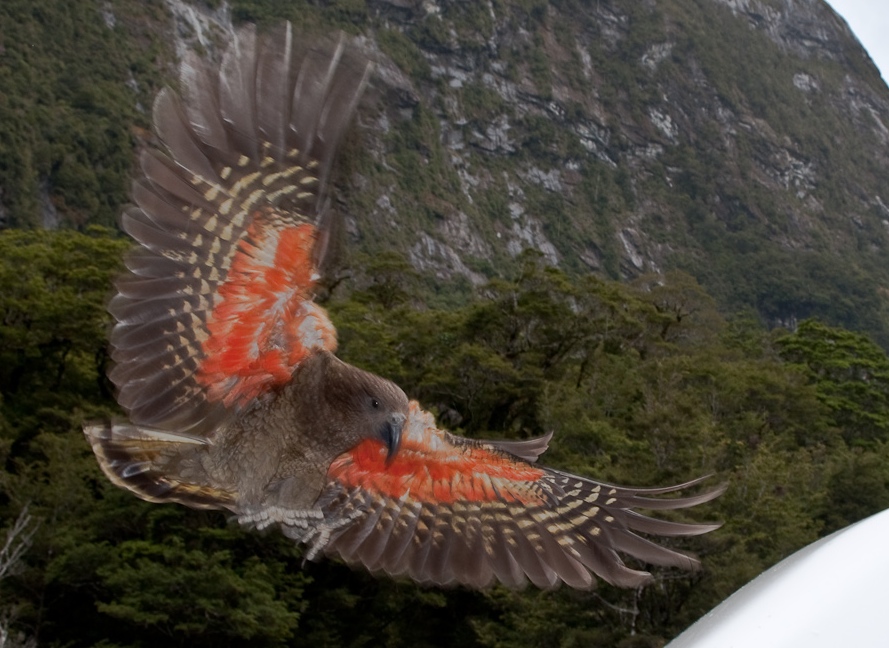
A kea about to land on a white vehicle, with wings outspread showing their orange underside. By klaasmerderivative work: CC BY-SA 2.0

Click the link to read the article on the National Public Radio website (Jonathan Lambert). Here’s an excerpt:

To consider how climate change could cause some extinctions, imagine a tiny mountain bird that eats the berries of a particular mountain tree. That tree can only grow at a specific elevation around the mountain, where it’s evolved over millennia to thrive in that microclimate. As global temperatures rise, both the tree and the bird will be forced to rise too, tracking their microclimate as it moves uphill. But they can only go so far.

“Eventually, they reach the peak, and then there’s nowhere else to go,” says Mark Urban, a biologist at the University of Connecticut.

Scientists call this mountain phenomenon the “escalator to extinction” and it’s just one way climate change is already squeezing plants and animals from their habitats. Researchers have conducted hundreds of studies projecting how different species might respond to different levels of climate change, finding varied results. In anย analysis published Thursdayย in the journalย Science, Urban sought to bring all those studies together…If countries meet the shared goal of limiting warming to 1.5 degrees Celsius, 1.8% of species will be at risk of extinction by the end of the century, Urban reports. But if global warming gets out of hand, warming four or five degrees Celsius, as many as 30% of species could be at risk…He points to confounding complexities in how species might respond to such climate extremes that scientists don’t yet know. More critters may simply not be able to cope, or ecosystems that lose species after species may collapse altogether. Additionally, many rare species are understudied, or not even discovered, and might be especially vulnerable in ways that don’t show up in this analysis…Different species face some different risks. Amphibians, including frogs and salamanders, are more vulnerable, Urban found, perhaps because their habitats are more sensitive to environmental changes. Species that live on islands, mountains and in freshwater could face more challenges, too. Targeted conservation efforts could help slow losses, Urban says, but they’re ultimately no substitute for reducing emissions.

Tools for better environmental adaptation as we manage the #ColoradoRiver — John Fleck (InkStain.net) #COriver #aridification

Raft in the Big Drop Rapids, Cataract Canyon. By National Park Service – National Park Service, Public Domain, https://commons.wikimedia.org/w/index.php?curid=8327636

Click the link to read the article on the InkStain website (John Fleck):

November 15, 2024

I put up a slide for my University of New Mexico water resources graduate students during class yesterday afternoon with two pictures โ€“ the emerging canyons at the upper end of Lake Powell, and a smallmouth bass.

When Lake Powell gets low, we get a) the remarkable emergence of Cataract Canyon, and b) warm water invasive smallmouth bass sneaking through Glen Canyon Damโ€™s outlets, headed downstream to dine on the endangered humpback chub. My University of New Mexico colleagues and collaborators Benjamin Jones and Bob Berrens famously dubbed these โ€œgreen-vs-greenโ€ tradeoffs:

Managing for one โ€“ keeping Lake Powell high to keep smallmouth bass out of the Grand Canyon โ€“ inevitably conflicts with the other โ€“ keeping Lake Powell low to protect the emerging environmental values of Cataract Canyon.

Inย a new white paper out today, my colleagues Jack Schmidt, Eric Kuhn, and I argue for the creation of a process to better incorporate and manage the multiplicity of values along the Cataract Canyon/Lake Powell/Glen Canyon/Grand Canyon/Lake Mead stretch of the Colorado River as we develop new post-2026 river operating guidelines. We recognize that keeping water flowing to taps and headgates across the Colorado River Basin is the primary motivation behindย the new operating guidelines being developed by the Bureau of Reclamation. We argue that, as the community is writing those rules, we have an opportunity to incorporate a broader set of community values.

In particular, we argue that more creative water accounting methods would allow water to be either held upstream in Lake Powell for later delivery, or send downstream early to Lake Mead, in order to better take into account what Benjamin and Bob called the โ€œmultiple dimensions of societal value.โ€

The white paper elaborates on our formal proposal submitted in March to Reclamation as part of the agencyโ€™s Post-2026 decision process.

Map credit: AGU

Audubonโ€™s Jennifer Pitt Testifies before Congress on #ColoradoRiver Habitats: Audubon supports bills that support wildlife habitat amid changing #climate #COriver #aridificationd

Audubonโ€™s Jennifer Pitt testifies before Congress on Colorado River habitats. Photo: Caitlin Wall/Audubon

Click the link to read the release on the Audubon website (Jennifer Pitt):

November 20, 2024

The following is the oral testimony of Jennifer Pitt, Audubon’s Colorado River Program Director before a House Natural Resources Subcommittee on Water, Wildlife and Fisheries:

Chair Bentz, Ranking Member Huffman, and members of the Subcommittee, thank you for holding this hearing on proposed legislation addressing water management in the western United States. My name is Jennifer Pitt and I serve as the Colorado River Program Director for the National Audubon Society, with over 25 years of experience working on water issues in the Colorado River Basin. National Audubon Society is a leading national nonprofit organization representing more than 1.4 million members and supporters. Since 1905, we have been dedicated to the conservation of birds and the places they need, today and tomorrow, throughout the Americas using science, advocacy, education, and on-the-ground conservation. Audubon advocates for solutions in the Colorado River Basin that ensure adequate water supply for people and the environment. 

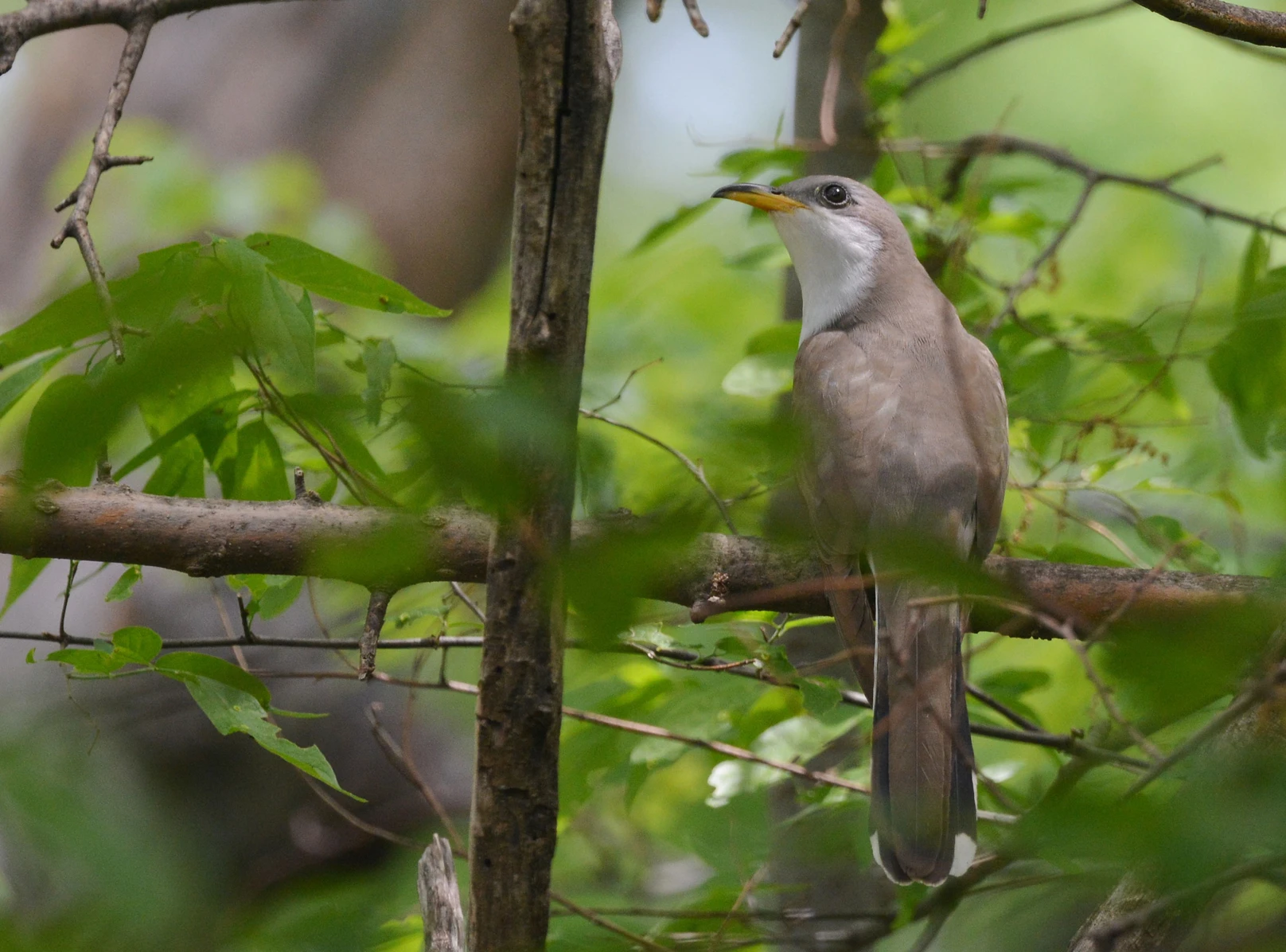
Audubon supports H.R. 9515, the Lower Colorado River Multi-Species Conservation Program Amendment Act of 2024. The Program constructs habitats along the Colorado River below Hoover Dam, and that habitat is essential not only for the 27 species the program targets, but also for many of the 400 species of birds that rely on the Lower Colorado River, including Yellow-billed Cuckoos, Sandhill Cranes, and Yuma Ridgwayโ€™s Rails. Today, because the Program spending does not keep pace with the collection of funds from non-federal partners, about $70 million is held in non-interest-bearing accounts. If these funds were held in an interest-bearing account, the Program would have about $2 million in additional funds per year, and be more able to maintain program implementation in the face of increasing costs. 

Audubon appreciates the inclusion of H.R. 9969 in this hearing. This bill directs Reclamation and the Western Area Power Administration, in consultation with the Glen Canyon Dam Adaptive Management Work Group, to enter into a memorandum of understanding to explore and address potential impacts of management and experimental actions to help control invasive fish passage in the face of drought and declining water levels. Rapidly changing conditions on the Colorado River warrant the experimental approach of adaptive management, with the Work Group bringing together varied interests to a consensus on how to protect downstream resources and strike a balance on river operations. Results of this collaboration include improved sediment flows that help maintain sandy beaches used by plants and animals that dwell in the floodplain, as well as by people traveling the canyon by boat.  

The context for these bills is the current crisis on the Colorado River. Climate change continues to ravage the Colorado River Basin, which is now in its 25th year of drought. The forecast for this winter is for above-normal temperatures and below-normal snowpack, which could impact Colorado River water supply. With a 2026 deadline looming for the expiration of existing federal guidelines for operation of federal Colorado River infrastructure โ€“ with implications for water supply reliability for people and the river itself โ€“ human nature is creating unacceptable risks. Colorado River water managers are preparing for conflict to protect their share of an increasingly scarce water supply, rather than focusing on holistic solutions.  

Earlier this year, Audubon joined with conservation partners in submitting to Reclamation our Cooperative Conservation Alternative for consideration in the post-2026 NEPA process for developing Colorado River Operating Guidelines. Cooperative Conservation is designed to improve water supply reliability, reduce the risk of catastrophic shortages to farmers and cities, create new flexible tools that can protect infrastructure, incentivize water conservation, help Tribes realize greater benefits from their water rights, and improve river health. We urge Reclamation and all Colorado River Basin parties to consider our approach as they proceed through the NEPA process. 

From a birdโ€™s eye view, the whole system matters. That needs to hold true for water users who must figure out how to share the Colorado River. The old adage applies: united we stand, divided we fall. The Colorado River community โ€“ in particular Upper Basin and Lower Basin interests โ€“ must stop thinking parochially and start thinking about how we survive drier times together.  

I would like to thank Congress for funding water conservation programs, such as WaterSMART and the Cooperative Watershed Management Program, and the crucial funding in the Bipartisan Infrastructure Law and the Inflation Reduction Act, both of which include funding to improve the resilience of the Colorado River Basin. With this funding, and states working together, we have avoided a crisis, but we are still just one bad winter away from catastrophic shortages. To be effective, this funding needs to get out of federal coffers and into the hands of water users and water managers, to incentivize water conservation and efficiency, to improve the health of the forests and headwater streams that are the riverโ€™s source, and to stabilize the river itself โ€“ the natural infrastructure that supplies water to more than 40 million people. Congress will need to help in the future with additional funding to support continued resilience investments in the Colorado River Basin as warming continues. 

Thank you very much for the opportunity to testify and I would be happy to answer your questions.

Alamosa Riverfront Project: Harnessing the #RioGrande for recreation: Multi-million dollar plan to improve access and habitat on track for 2026 start — #Alamosa Citizen #SanLuisValley

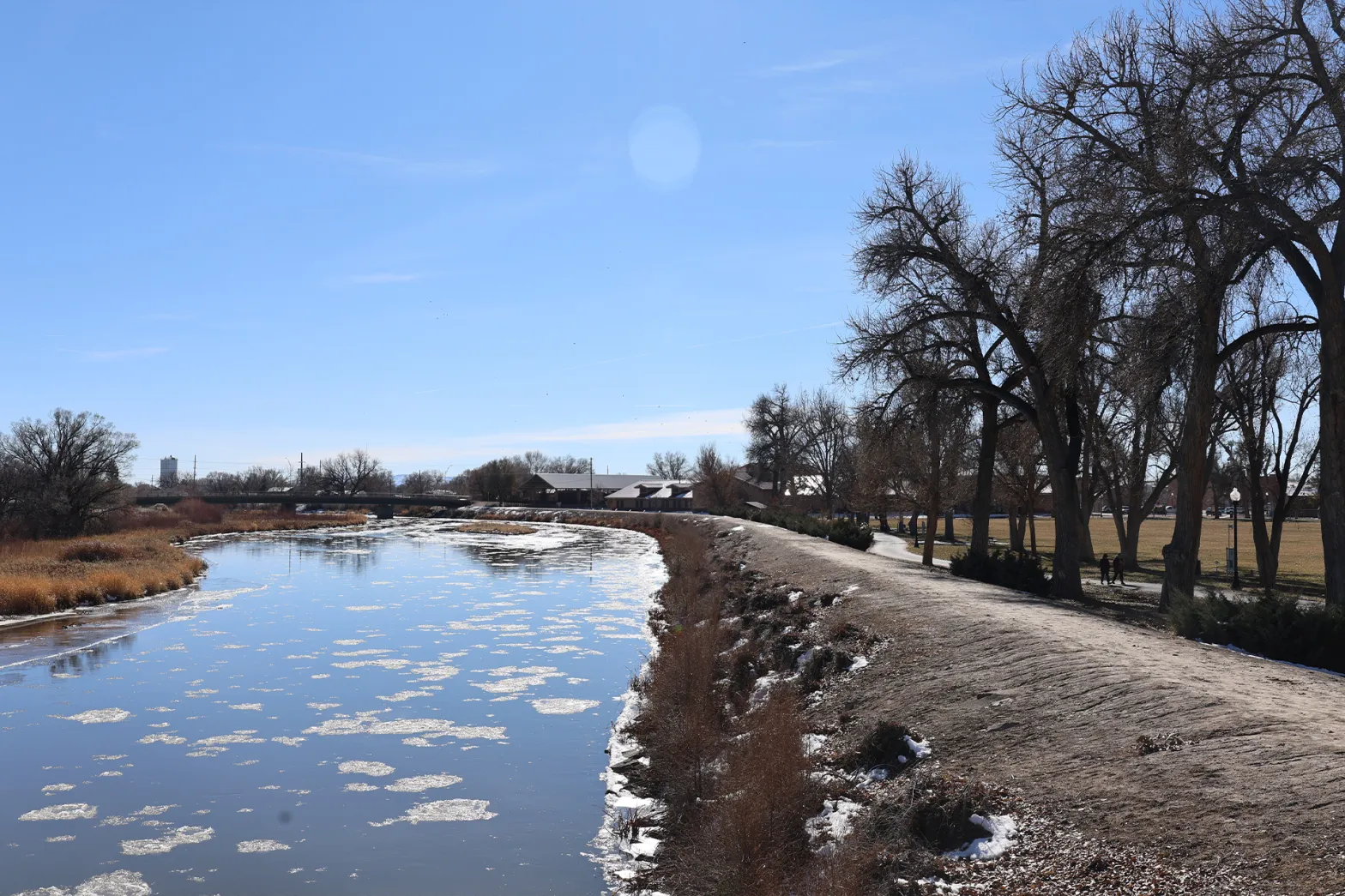
Rio Grande in Alamosa. Photo Credit: Owen Woods

Click the link to read the article on the Alamosa Citizen website:

November 21, 2024

Alamosa is continuing to piece together its Rio Grande recreation puzzle. With support from the city of Alamosa to pull back the levee to make way for a beach, the Alamosa Riverfront Project is taking a different shape. Support from the city will aid in helping bring the project to completion. 

During a city council meeting earlier in November, councilors recognized that the project aids in the cityโ€™s โ€œActivating the Rio Grande Corridor,โ€ a top priority for the Parks and Recreation Department. 

As the riverโ€™s oxbow loops lazily trickle ever southward to the Gulf of Mexico, deciphering how to ensure people can access the river, how the river can maintain its natural biodiversity, and how to prevent thousands from losing their homes in a โ€œ100-yearโ€ flood make it a daunting and sharp puzzle. 

Proposed changes to levee location and riverfront access Credit: JUB Engineering

The Alamosa Riverfront Project is looking to expand recreation access and improve river restoration from the State Avenue Bridge, upstream of Alamosaโ€™s Cole Park, to the West Side Ditch, downstream of Cole Park. Itโ€™s a multi-million dollar project that, so far, has received overwhelming support from the community, according to project planners and members of the community who showed up at a series of summer community meetings.  

You may be able to take the town from the river, but the river will continue to flow through town. 

The project is looking to connect people back to the Rio Grande, not through adrenaline-pumping white water, but instead by leveraging its natural geographic limitations.

Brian Puccerella, San Luis Valley Great Outdoorโ€™s outdoor recreation manager, has been involved in this project since about 2016. Thatโ€™s when the conversation about expanding access to paddlers, maybe adding a play wave, and just expanding recreation generally started making the rounds. 

The conversation was about โ€œwhat was possible in our stretch of river in town,โ€ Puccerella said. โ€œWe didnโ€™t know the answer to that.โ€ 

An engineering study was funded in 2017 to look at what was possible. 

โ€œThe conclusion,โ€ he laughed, โ€œwas not much. Itโ€™s pretty flat and we donโ€™t have a lot of flow. That doesnโ€™t mean there isnโ€™t going to be recreational improvement.โ€

The study equates Alamosaโ€™s stretch of low-flowing river, less than one mile per foot downhill through town, to a โ€œskinny lake.โ€ 

Puccerella explained that Alamosaโ€™s portion of the river doesnโ€™t have the flows or drops to ever get whitewater, even in a good year. A lot of the water that flows from the mountains into the river is diverted to different systems throughout the San Luis Valley. By the time the river reaches Alamosa, its flows are quite slow. 

What we do have, he said, is flatwater.

Thatโ€™s not a negative, though. โ€œIt creates opportunity for family-friendly recreation.โ€ 

Construction is still a ways out. Alamosans can expect construction to begin sometime around fall 2026. A lot of money still needs to be raised, and a lot can happen between now and then. What planners wonโ€™t have to worry about is the Army Corps of Engineersโ€™ levee recertification. 

Credit: The Alamosa Riverfront Project

BEACHFRONT PROPERTY

When construction is finished, the western levee, the side of the river adjacent to Cole Park, will be pulled back and a highly accessible riverfront beach will be added. Right now thereโ€™s a fairly steep, unfriendly drop to the water. In the future, there will be easy access for everyone. 

The Rio Grande Headwaters Restoration Project is heading up the funding and providing the support to engineers throughout the projectโ€™s timeframe. During the summer, the group held two community feedback meetings to both inform and learn. From those meetings, project planners were able to adjust the plans. 

Final plans will be revealed to the public in early 2025. These preliminary renderings can give us a hint, however. 

โ€œWeโ€™re doing this because this is what the community wanted,โ€ said Cassandra McCuen, program manager for the Rio Grande Headwaters Restoration Project. She called the project โ€œamazing and transformative.โ€ 

McCuen and Puccerella joined Outdoor Citizen podcast host Marty Jones to talk more about the project and provide updates. You can listen to that episode here, or wherever you get your podcasts.

From those community meetings, project planners were able to incorporate community feedback. Two of the most important pieces of feedback for engineers and designers: ensuring as much of the project is ADA accessible as possible, and making sure the river and beachfront are safe. 

Access from Cole Park will be a priority, as it will serve as a kind of hub. The project calls for a few more boat ramps, adding to the two Alamosa currently has. These boat ramps wonโ€™t be for motorboats, but personal watercraft such as paddle boards, tubes, kayaks, and canoes. 

Increasing recreational potential increases recreational safety. Currently, Puccerella and McCuen said, floating south of Cole Park isnโ€™t advised. The West Side Ditch Diversion and the railroad bridge are a bit of a snag of willows, rusty metal, and splintered wood. 

Rio Grande at location of Alamosa Riverfront Project. Photo credit: Owen Woods

INSIDE THE LEVEE

โ€œInside the levee itโ€™s more complicated,โ€ McCuen said. 

When it comes to changing the levee or potentially changing how water flows through town, you answer to the Army Corps of Engineers. 

The Corps is responsible for ensuring that levees donโ€™t fail during a proverbial โ€œhundred-year flood.โ€ Alamosa has a history of regular and devastating flooding. The levee system protects Alamosa proper and East Alamosa. Without a certified levee system, property owners are required to pay for flood insurance. 

The recertification process is still many years out. The riverfront project is just a few years out. McCuen said the city has been an amazing partner in supporting the project. 

With that in mind, project planners were able to meet with the Army Corps of Engineers and provide them with a full rundown of the project, plus the support of the city of Alamosa, and their proposal to pull the levee back. 

McCuen said it was a real point of concern, because the project planners were unsure of how the Corps would react to the projectโ€™s proposal of pulling the levee back and the inner-levee restoration work.

McCuen said they were finally able to meet with the Army Corps in August. During that meeting, the Corps told the project planners they would be willing to work with them, โ€œas long as you do not impact the flows through Alamosa negatively.โ€

Pulling the levee back to make way for a beach wonโ€™t impact flows in a noticeable way.

โ€œOur project has worked seamlessly with the work thatโ€™s gone into levee recertification,โ€ she said. 

Fish species thought to be present at Cole Park, based on CPW fish surveys. Credit: The Alamosa Riverfront Project

FISH PASSAGE

People are not only getting an upgrade, but so are the wildlife. This project is unique and special to Alamosa through both its recreation and restoration efforts. McCuen said the attempt is to improve the natural condition of the Rio Grande through town alongside increasing its recreational value. From the planning phase onward, restoration has been at the forefront of the project. 

In-town restoration work can be complicated due to the levee recertification, but also due to the geographical limitations Puccerella mentioned. The river is extremely confined, McCuen explained. 

Part of that confinement is because the Rio Grande is a very developed river. For example, diverting the Rio Grandeโ€™s flow before it reaches Alamosa creates that low flow prime for paddling and floating, but it also makes the water warm. 

Warm water is bad for the Rio Grandeโ€™s fish. โ€œSuper-duper low flows make the area hot,โ€ McCuen said. So one of the major aspects of the restoration portion is creating a safe, cool fish passage. 

โ€œWe want fish to be able to flow upstream and downstream.โ€ 

The fish passage would simply be deeper channels that fish would use as aquatic highways. Also needed are fish refuges, or backwater habitats that exist along the river to serve as places where native fish can take refuge from non-native carp and pike.

Restoring the Rio Grande will take time and effort, but connecting the people back to the river is a start. 

โ€œWe really wanted to create a project that spoke to the culture of Alamosa, spoke to the community, is something the community wanted, and I think weโ€™re gonna get there because people took time out of their day to be involved in all this,โ€ McCuen said.

The condors of Marble Canyon: Images from a serendipitous encounter — Jonathan P. Thompson(LandDesk.org)

Condor X8, a female hatched in 2018, sits on a Navajo Bridge beam. Jonathan P. Thompson photo.

Click the link to read the article on The Land Desk website (Jonathan P. Thompson):

November 15, 2024

On Wednesday morning I woke up in Holbrook and, before leaving, did a little tour around the high desert crossroads town, awed by the weirdness of it all. I donโ€™t mean that in a bad way. Holbrook, with its Bucket of Blood Street, grinning plastic dinosaurs, and mid-century kitsch, is truly unique, the product of the interstate, railroad, and Route 66 running through the nearest community to Petrified Forest National Park.

I headed west, doing my best to avoid driving on I-40. This led me to no fewer than three dead ends, forcing me to backtrack. But it also took me down some cool, if defunct, segments of Route 66, and almost got me creamed by a big rig hauling coal ash from the Cholla power plant, which looms over the sere landscape. After touring Joseph City and Winslow, I veered away from the Little Colorado River and headed southward across the Navajo Nation, up to Hopi, past the wintering corn fields at Moenkopi, and through Tuba City before continuing south on Hwy. 89.

The historic Navajo Bridge, now for pedestrians only, was built in 1929 and replaced by the larger bridge in the 1990s. Jonathan P. Thompson photo.

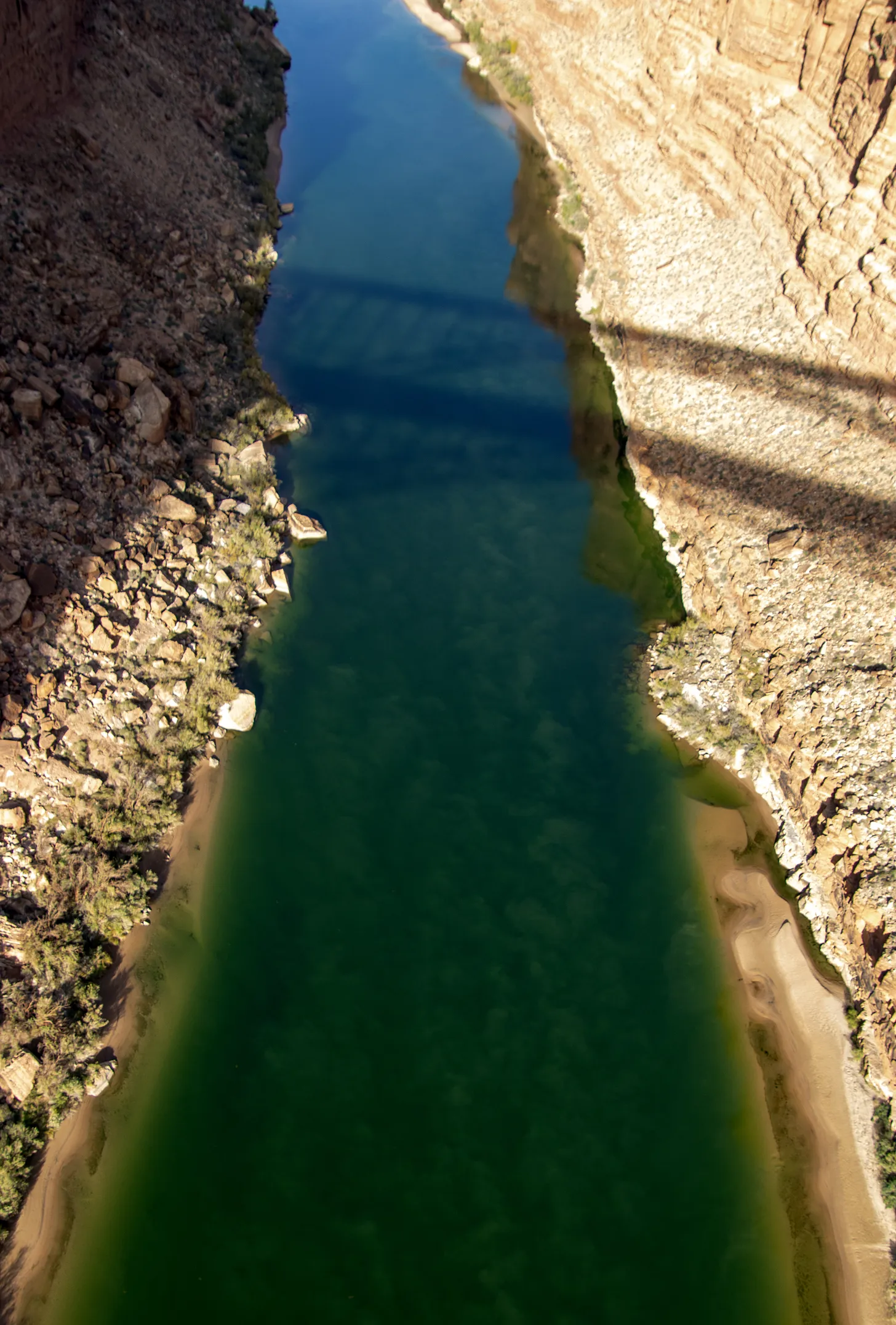
Whenever Iโ€™m in this part of Arizona, I try to get toย Navajo Bridgeย (which is actually a pair of bridges), which spans Marble Canyon and the Colorado River downstream from Lees Ferry. One of the bridges was built in 1929, and is now for pedestrians, the other in 1993. They resemble the bridge that crosses the Colorado just below Glen Canyon Dam. I like to go out on the dam-bridge, too, but I alsoย find it a bit frightening: the dam exudes an aura of, for lack of a better term, ominous violence. The Navajo Bridge, by contrast, is a place of serenity. You can stand out on it and, unimpeded by chain link fences, look straight down on the deep, murky green, slow-moving waters of the Colorado and do a bit of vertiginous meditation.

The Colorado River from the Navajo Bridge. Jonathan P. Thompson photo.

The light was crisp, almost harsh, on this visit, and the parking lot almost empty. I got out of the Silver Bullet, stretched, and ambled toward the bridge, noticing as I did a trio looking intently downriver through binoculars. It appeared as if they were studying the engineering of the automobile bridge, and I wondered if maybe it were cracking and getting ready to fail catastrophically. I readied my camera, just in case, and followed their gaze. Thatโ€™s when I saw them: a trio of giant birds perched on the steel beams of the bridge, some 470 feet above the river, doing a bit of meditating of their own (or perhaps waiting for carrion to float by).

Condors perched on steel girders some 450 feet above the Colorado River. Jonathan P. Thompson photo.

The magnificent creatures, their pink bald heads jutting out from brown-feathered bodies, are California condors, some perhaps the descendants of six birdsย releasedย in the area in 1996, others that were introduced in later years. They are huge โ€” sporting up to ten-foot wingspans โ€” but live a fragile existence. After being driven nearly to extinction, federal wildlife officials began rearing California condors in captivity and reintroducing them throughout the West. Now there are more than 500 California condors in the wild, but humans continue to imperil them.

Condors 6Y and 2A (Iโ€™m sure they have their own, more interesting names, but โ€ฆ) at the Navajo Bridge. According to condorspotter.com, 6Y is a male born in March 2019 at the Oregon Zoo. And 2A is a female hatched at the World Center for Birds of Prey in May 2021. Jonathan P. Thompson photo.

Perhaps the greatest threat is lead poisoning, which comes from ingesting carrion contaminated by lead ammunition. Lead ammunition is designed to shatter and fragment when it hits an animal, increasing its lethality. These fragments end up in the animalโ€™s flesh and the guts, which hunters often discard in the field to be eaten by scavengers. This fall a condor in Zion died from lead poisoning, and wildlife officials say nearly every condor they test has some level of lead in its bloodstream.

Federal and state-level efforts to ban the use of lead ammunition for hunting have run into strong resistance from gun rights advocates, who claim (erroneously) that the initiatives are aimed at stopping all hunting. So some states, including Arizona and Utah, have implemented voluntary programs that incentivize hunters to use non-lead ammunition and dispose of gut piles in a scavenger-safe way. In 2019, California prohibited the use of lead ammo for hunting, but did not ban the sale of the ammunition.

A young condor on the pedestrian bridge. Jonathan P. Thompson photo.

I spent a good part of the afternoon mesmerized by the birds, hoping they would spot something dead and rotting and delicious so I could witness one in flight. It didnโ€™t happen, but I consider myself fortunate nonetheless: As I was preparing to leave I looked straight down from my place on the bridge for one last glimpse at the mighty Colorado, all emerald green down below, and there, only about ten feet below me, sat a young condor, pink beak protruding from a fuzz of black feathers.

Extended Shoshone hydro plant outages add urgency to water rights campaign: Outage protocol not as reliable as water rights permanency — Heather Sackett (@AspenJournalsim) #ColoradoRiver #COriver #aridification

The twin turbines of Xcel Energyโ€™s Shoshone hydroelectric power plant in Glenwood Canyon can generate 15 megawatts. The plant was down for about a year and a half, according to the Colorado Division of Water Resources. Credit: Heather Sackett/Aspen Journalism

Click the link to read the article on the Aspen Journalism website (Heather Sackett):

October 31, 2024

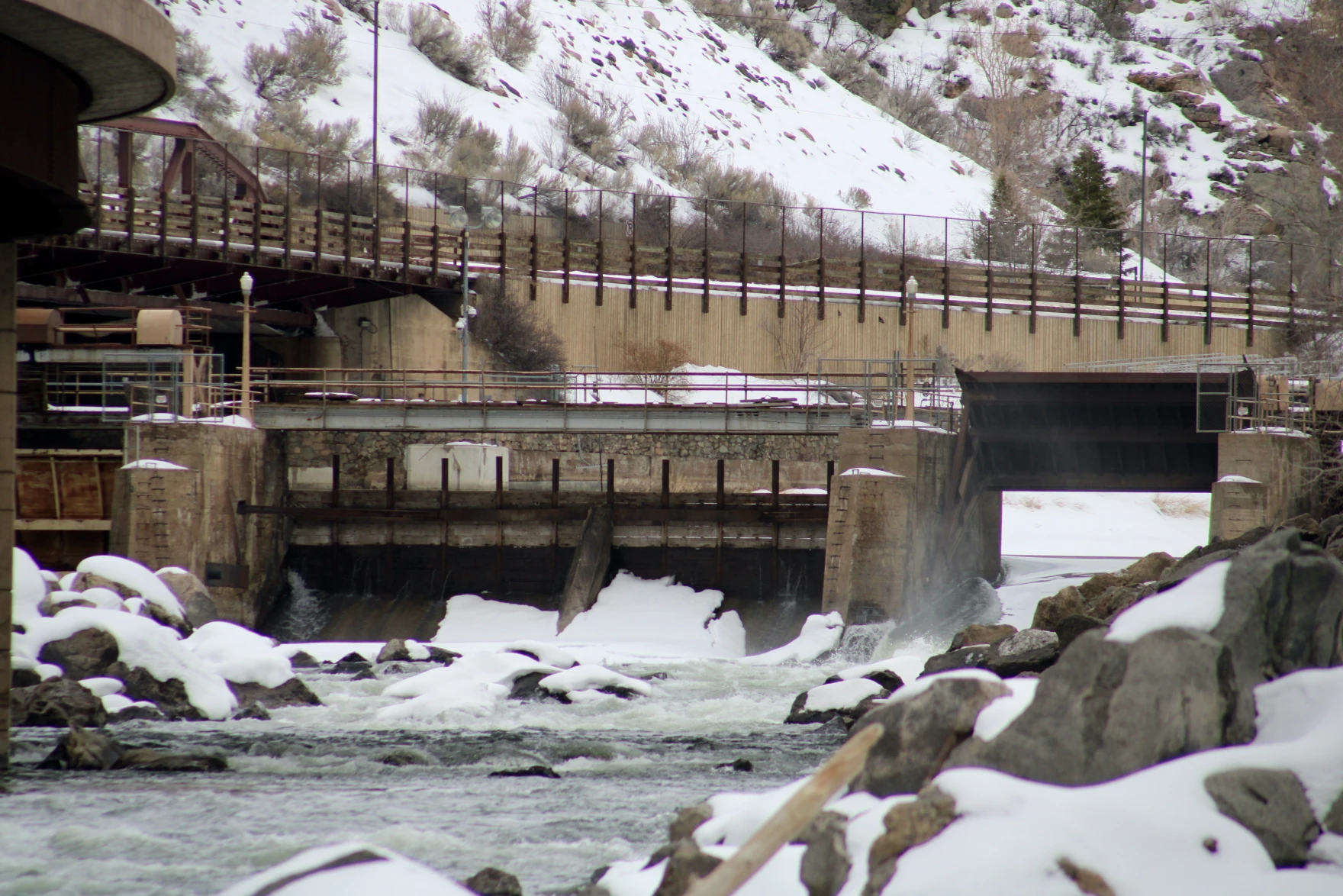
The Shoshone Hydropower Plant in Glenwood Canyon was not operating for nearly all of 2023 and more than half of 2024, adding urgency to a campaign seeking to secure the plantโ€™s water rights for the Western Slope.

According to records from the Colorado Division of Water Resources, the Shoshone Hydropower Plant was not operating from Feb. 28, 2023 until Aug. 8, 2024. According to Michelle Aguayo, a spokesperson from Xcel Energy, the company that owns the plant, there was a rockfall which forced an outage as well as maintenance which impacted operations during that time period.

The Grizzly Creek Fire burning along the Colorado River on August 14, 2020. By White River National ForestU.S. Forest Service – Public Domain

In 2024 the plant has been down for 221 days; in 2023 for 307 days; in 2022 for 91 days and in 2021 for 143 days. Water Resources Division 5 Engineer James Heath said he began tracking Shoshone outages in 2021 when they began to happen more frequently, starting with the post-Grizzly Creek fire mudslides in Glenwood Canyon.

โ€œIt was all these extended outages and just being able to have some sort of record of what was going on,โ€ Heath said. โ€œI kept getting questions from the parties on how many days we were operating ShOP and what the priorities were on those different days.โ€

The recent extended outages of the plant increase the urgency of the effort by the Colorado River Water Conservation District to acquire Shoshoneโ€™s water rights, which are some of the oldest and most powerful non-consumptive rights on the main stem of the Colorado River. If the plant were to shut down permanently, it would threaten the Western Slopeโ€™s water supply. The water rights could be at risk of being abandoned or acquired by a Front Range entity.

At a tour of the Shoshone plant in October, hosted by the Water for Colorado Coalition, River District Director of Strategic Partnerships Amy Moyer explained why the Shoshone water rights are important for improving water security and climate resilience on the Western Slope.

โ€œAs weโ€™re sitting here in the iconic Glenwood Canyon. โ€ฆ It is a beautiful place, but we have an active highway, a railroad, a hydro power plant, all nestled in this tiny canyon that has experienced its fair share of natural hazards and risks over the years,โ€ Moyer said. โ€œWhen weโ€™re looking at the level of risk, that is why we are looking for permanent protections for these water rights, and why we have a willing partner in Xcel Energy realizing that they had an incredible asset that was meaningful to Coloradoโ€™s Western Slope and the Colorado River itself.โ€

Water runs down a spillway at the Shoshone hydro plant in Glenwood Canyon. Rockfalls, fires and mudslides in recent years have caused frequent shutdowns of plant operations. Credit: Heather Sackett/Aspen Journalism

According to the terms of ShOP, when it is on during the summer, the plant can call 1,250 cfs. In the wintertime, that number falls to 900 cfs. The agreement is in place for 40 years (with 32 remaining), a relatively short period in water planning, after which it could be renegotiated. And ShOP doesnโ€™t have the stronger, more permanent backing of a water court decree.

โ€œShOP came about as a band aid to kind of maintain the river flow and the river regime when the plant was out,โ€ said Brendon Langenhuizen, River District director of technical advocacy. โ€œShOP wasnโ€™t meant to be for year after year after year of the plant being down.โ€

The Shoshone hydro plant in Glenwood Canyon. The River District has made a deal with Xcel Energy to buy the water rights associated with the plant to keep water flowing on the Western Slope. Credit: Heather Sackett/Aspen Journalism

The River Districtโ€™s campaign to acquire the Shoshone water rights has been gaining momentum over the last year, with about $55 million in committed funding so far from entities across the Western Slope, the River District and the state of Colorado. The River District plans to apply for $40 million in funding from the U.S. Bureau Reclamationโ€™s B2E funding. This money from the Inflation Reduction Act is earmarked for environmental drought mitigation.

The River Districtโ€™s plan is to add an instream flow use to the water rights in addition to their current use for hydropower. That requires working with the Colorado Water Conservation Board, which is the only entity in the state allowed to hold instream flow rights which preserve the environment, as well as getting a new water court decree to allow the change in use.

That way, when the Shoshone plant is offline, the instream flow right would be activated to continue pulling water downstream, making ShOP obsolete and solidifying a critical water right for the Western Slope.

Xcel would lease the water right for hydropower from the River District for as long as the plant is in operation.

“New plot using the nClimGrid data, which is a better source than PRISM for long-term trends. Of course, the combined reservoir contents increase from last year, but the increase is less than 2011 and looks puny compared to the โ€˜holeโ€™ in the reservoirs. The blue Loess lines subtly change. Last year those lines ended pointing downwards. This year they end flat-ish. 2023 temps were still above the 20th century average, although close. Another interesting aspect is that the 20C Mean and 21C Mean lines on the individual plots really donโ€™t change much. Finally, the 2023 Natural Flows are almost exactly equal to 2019. (17.678 maf vs 17.672 maf). For all the hoopla about how this was record-setting year, the fact is that this year was significantly less than 2011 (20.159 maf) and no different than 2019” — Brad Udall

โ€œColoradoโ€™s Western Slope is truly at an epicenter of increased temperatures and decreased streamflows that are exacerbating temperature issues, creating water quality issues,โ€ Moyer said. โ€œSo itโ€™s imperative that we look for these legacy level, permanent solutions to build resiliency in our basin.โ€

Map credit: AGU

Accelerating Responsible Clean Energy Development: Audubonโ€™s Efforts in 2024

Avangridโ€™s Manzana Wind Power Project in the Tehachapi area in Rosamond, California. Photo: Sydney Walsh/Audubon

Click the link to read the release on the Audubon website (Garry George):

October 18, 2024

From warbler research to transmission line placement, Audubon staff worked on planning with birds and people in mind.

This year wind and solar generation in the U.S. surpassed coal for the first time, and solar is expected to supply most of the growth in electricity generation through 2025. The Inflation Reduction Act (IRA) continues to be a major catalyst for this momentum by providing substantial incentives that include tax credits for renewable energy and transmission projects. At the state and local level, clean energy goals and mandates, new jobs, and economic and community benefits are driving the growth of renewables. 

Transitioning to clean energy is crucial for protecting hundreds of North American bird species from climate change, but infrastructure must be sited and operated with birds and people in mind. Audubon staff and chapters across the U.S. are working with planners, developers, and federal and state agencies to achieve this goal. Over the last 12 months, Audubon has been involved in the planning, permitting, siting, or operation of over 36 gigawatts of onshore and offshore wind and solar projects, as well as almost 45 gigawatts of transmission capacity. This conservation work includes providing recommendations on siting, permitting, monitoring, and research, grounded in Audubon’s extensive science and policy advocacy for birds and their habitats. 

Here are some of this yearโ€™s efforts across the network:  

Transmission Lines in Minnesota 

In May, Minnesota made a significant move by passing legislation to allowย transmission lines alongside highways, thanks to the efforts ofย Audubon Upper Mississippi Riverย and their work with the NextGen Highways coalition. Audubonโ€™sย Birds and Transmissionย reportย shows that placing transmission lines on existing rights-of-way minimizes the overall transmission footprint, leaving more habitat intact and reducing the chance of collisions. This approach advances the clean energy transition while ensuring that Minnesotaโ€™s birds and communities benefit from responsibly sited transmission.ย 

Canada Geese fly above transmission lines. Mjsimage/Shutterstock

Getting Build Ready for Clean Energy in Washington 

Audubon Washington is working with local chapters Lower Columbia Basin Audubon Society, Vancouver Audubon Society, and others to accelerate the state’s transition to clean energy on several fronts. The Audubon Washington team is championing a new Build Ready Clean Energy Program and advocating for the creation of a Clean Energy Development Authority to help meet the stateโ€™s clean electricity mandates. By joining forces with the NextGen Transmission coalition and actively participating in the Western Clean Energy Advocates (WCEA), Audubon is making its voice heard on key energy and transmission issues. Theyโ€™ve also weighed in on the stateโ€™s environmental impact assessments for major transmission projects, utility-scale solar, and onshore wind. Audubon has also conducted in-depth spatial analyses, pinpointing areas in Eastern Washington as candidate sites for low-conflict solar development. 

Monument Planning in California 

Whileย Audubon Californiaย co-leads the effort to designate theย Chuckwalla National Monumentย in Californiaโ€™s desert, Audubon has joined solar industry leaders and conservationists to secure monument status for this unique landscape while ensuring the designation would not impede solar development in designated areas outside the monument and existing and planned transmission development through the monument. By balancing conservation with clean energy needs, this collaborative effort aims to protect the Chuckwallaโ€™s important habitat and natural beauty while paving the way for responsible development.

A Prothonotary Warbler is fitted with a tracker. Photo: Erik Johnson/Audubon Delta

Warbler Research in Louisiana, Kansas, Arkansas, and Ohio 

In May and June, Audubon Delta and partners fitted over 50 Prothonotary Warblers with tiny trackers across Louisiana, Kansas, Arkansas, and Ohio. The multi-sensor geolocators will collect data on the flight behavior of these songbirds as they migrate across the Gulf of Mexico. The information gathered from returning birds will offer new insights into their use of airspace and their responses to inclement weather. This research will aid in assessing collision risks for offshore wind projects in the region and support improved planning and siting efforts. 

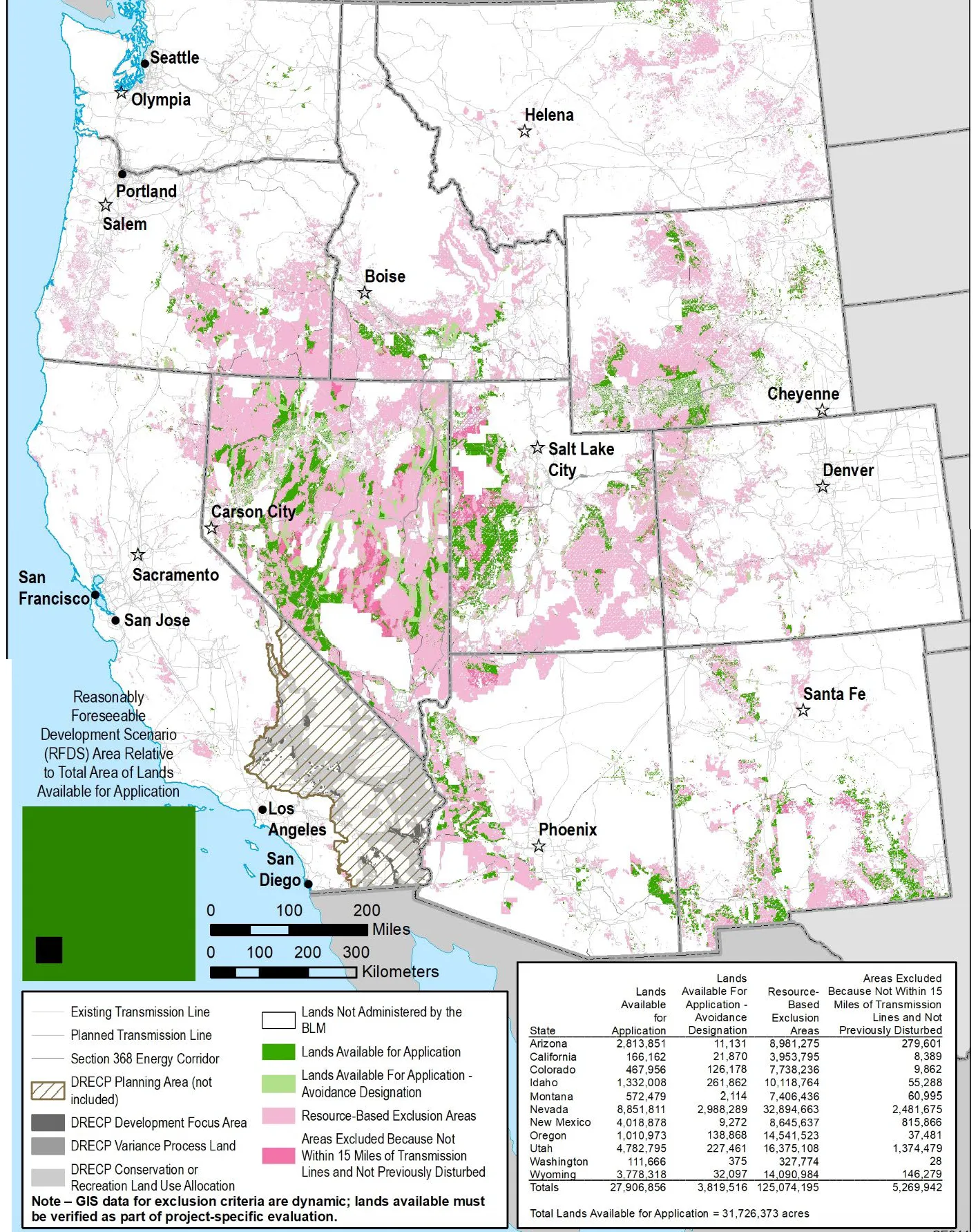
Reasonably foreseeable development scenario solar area relative to total area of lands available for application. Credit: Bureau of Land Management

Solar Development in Western States 

The Bureau of Land Management (BLM) finalized in a plan for how utility-scale PV solar will be sited and permitted on 30 million acres of public lands across 11 states. In April, Audubon filed detailed comments on the Draft EIS that recommended improvements to BLMโ€™s Solar PEIS, with a focus on avoiding and minimizing impacts to birds by prioritizing project development on degraded lands and close to transmission lines. Audubon also filed similar joint comments in a letter to BLM leadership in collaboration with four conservation organizations and five solar development companies. More than 2,900 Audubon supporters sent comments to the BLM in support of this approach. The Final EIS, released in August, improves on the initial draft, but further improvements are needed in plan implementation to streamline permitting for rapid deployment of solar energy on low conflict lands. 

Golden Eagle in flight. By Tony Hisgett from Birmingham, UK, CC BY 2.0, https://commons.wikimedia.org/w/index.php?curid=18249270

Improved Permitting for Wind Projects 

In February, the U.S. Fish and Wildlife Service (FWS) made their incidental take permitting program under the Bald and Golden Eagle Protection Actย more efficientย in ways that support the buildout of wind energy while benefitting Bald and Golden Eagle conservation. As part of the permit program, clean energy developers will commit to conservation measures and monitoring at their wind project and transmission sites, and the FWS will set the maximum number of eagles and eagle nests that might be harmed by wind energy and transmission without prosecution under the federal law. Audubonย advocated for these improvementsย alongside conservation and industry partners to help advance wind energy development while protecting eagles.ย 

The Offshore Wind panel during Climate Week NYC 2024. Photo: Darien Fiorino/Audubon

Offshore Wind Development 

During Climate Week NYC, Audubon hosted a panel on the future of offshore wind in the United States. As of September, the U.S. has approved ten lease areas for offshore wind projects, representing more than 15 gigawatts of energy. Thatโ€™s enough to power 5.25 million homes, and equivalent to half of the capacity needed to achieve the national goal of permitting 30 gigawatts of offshore wind by 2030. Audubon has been engaged on each project every step of the way, filing science-based comments that point to key areas that should be avoided for birds and sharing recommendations for research and operation. This is a collaborative effort with conservation partners as well as Audubonโ€™s coasts and seabird experts and state coastal offices in the Atlantic, Gulf of Mexico, and Pacific. In the Atlantic, Audubon has a seat on the Regional Wildlife Science Collaborative for Offshore Wind (RWSC), which released a new research plan in January and announced funding commitments from federal agencies and developers to implement the plan.  

Visit Audubon’s Birds and Clean Energy page for more information. 

The Crossing Trails Wind Farm between Kit Carson and Seibert, about 150 miles east of Denver, has an installed capacity of 104 megawatts, which goes to Tri-State Generation and Transmission. Photo/Allen Best

Agencies from Pitkin County to #GlenwoodSprings are collaborating on a regional recreation, conservation planning effort: Watershedwide approach looks to balance biodiversity and human footprint — @AspenJournalism #RoaringForkRiver

Full parking lots, like those at the base of Smuggler Mountain on a recent fall morning, can contribute to a sense of crowding on the trail, according to researchers with Utah State University who are conducting recreational surveys for the Roaring Fork Outdoor Coalition. The coalition is working to develop plans that strike a balance between recreation and conservation at a regional level. Credit: Elizabeth Stewart-Severy/Aspen Journalism

Click the link to read the article on the Aspen Journalism website (Elizabeth Stewart-Severy):

October 21, 2024

Thereโ€™s a certain whiplash that accompanies conversations about trails, crowding and conservation in the Roaring Fork Valley. 

Sure, the parking lots are full, but does that mean that trails are crowded? Maybe your answer depends on how recently you tried to hike or bike somewhere else, east of the Continental Divide or farther west, or how long ago your core memories of that particular trail were imprinted.

More broadly, are we making the right recreational choices at the right time of year to protect wildlife and the landscapes that draw so many people to the Roaring Fork Valley?

The 3-year-old Roaring Fork Outdoor Coalition, headed up by Pitkin County Open Space and Trails, is looking for expert and community involvement to help answer those questions and establish a plan for natural resource conservation and recreation in the Roaring Fork Valley. 

The coalition, which includes representatives from six local governments, two federal land management agencies and Colorado Parks and Wildlife, has entered the third and final phase of a five-year process with a $125,000 grant from the state. Representatives from Pitkin and Eagle counties, the cities of Aspen and Glenwood Springs, and the towns of Basalt and Snowmass Village are working with the state wildlife agency, the Bureau of Land Management and the U.S. Forest Service to identify regional priorities and possible projects, and map out a guide for future decisions involving recreation and conservation. 

The coalition will also include a community advisory group and is asking for participation from experts and stakeholders, including conservation-focused organizations such as Wilderness Workshop and American Rivers, local fire and ambulance districts, recreation heavy-hitters such as Aspen Skiing Co., outfitters and guides, and more. 

Some of these groups have given feedback on the first two phases of the project, which included listening sessions, gathering data and building a framework for the coalitionโ€™s work. In the final phase, land managers aim to create a plan that helps anticipate current and future trends while exploring the best strategies to harmonize recreation and conservation. 

Although there are many documents that guide recreation and conservation decisions around the valley, โ€œWe havenโ€™t worked at the valleywide scale before,โ€ said Carly Oโ€™Connell, senior planner and landscape architect for Pitkin County Open Space and Trails. Even when trails cross several jurisdictions, such as the Rio Grande Trail, recreation and conservation management โ€œhappens ad hoc, as needed, and thereโ€™s not a ton of coordination.โ€ 

Oโ€™Connell said the regional effort is not meant to replace any existing plans.

โ€œWe want this to be a strategic and higher level vision for the planning of recreation and conservation in the valley,โ€ she said. 

Colorado Gov. Jared Polis signed an executive order in 2020 that called for the creation of regional planning groups such as the Roaring Fork Outdoor Coalition and for funding to support those efforts. 

โ€œThe state is looking for actions and priority projects to fund that have widespread support,โ€ Oโ€™Connell said, so part of the coalitionโ€™s goal is to identify those projects in this area. 

Winter is a critical time for elk and deer, since food is scarce and the animals are more sensitive to disturbance from recreation. Research from the Colorado Natural Heritage Program identified the best habitat quality for elk and deer in the winter; the data will help inform conservation and recreation decisions as the Roaring Fork Outdoor Coalition works on a regional plan. Credit: Courtesy CNHP and Watershed Biodiversity Initiative

Watershed biodiversity report informs conservation values and needs  

Recreation and conservation are both at the heart of Roaring Fork Valley community values, and are simultaneously in tension and deeply reliant on each other. 

โ€œThe regionโ€™s growing popularity threatens to overwhelm the very attributes that make it special,โ€ the Roaring Fork Outdoor Coalitionโ€™s March 2024 vision framework notes. โ€œThe surrounding White River National Forest is the most heavily used National Forest with more than 18 million annual visitors. Land managers in various agencies and organizations are at capacity responding to growing recreational pressure at portals within their respective jurisdictions.โ€

It is less clear if the lands and trails themselves are at or near capacity. Two recent studies have worked to unpack the realities involving both recreation and conservation in the area, and the coalition will work to bring the studies together to inform future planning. 

Beginning in 2018, the Watershed Biodiversity Initiative set out to identify and map the biodiversity and habitat quality for both wide-ranging, large animals such as deer and elk and rare species in the Roaring Fork Valley. The local nonprofit hired scientists with Colorado State Universityโ€™s Colorado Natural Heritage Program (CNHP) to produce the Roaring Fork Watershed Biodiversity and Connectivity Study, which includes detailed mapping and ranking of habitat by conservation and restoration value.

โ€œWhat we saw is that the overall conservation health or conservation index for the Roaring Fork Valley is really quite healthy. It really has a lot of conservation value,โ€ said Renee Rondeau, conservation planner and ecologist at CNHP and a lead scientist on the report. Rondeau will serve as a biodiversity expert for the Roaring Fork Outdoor Coalition. 

There are areas that are heavily impacted by development, particularly along Highway 82 and Highway 133. 

โ€œThose highways have a huge impact on large wildlife, especially deer and elk,โ€ Rondeau said. โ€œAs density goes up, it impacts biodiversity. As our footprint increases, it impacts biodiversity.โ€ 

Researchers at the Colorado Natural Heritage Program studied the habitat quality and conservation values across the Roaring Fork watershed to identify the areas that are most critical for conservation and those with potential for restoration to protect local biodiversity. Red and orange areas on the map show spots โ€“ many along highways 82 and 133 โ€“ where restoration work could improve habitat connectivity for elk and deer. Credit: Courtesy CNHP and Watershed Biodiversity

As both Coloradoโ€™s population and the popularity of recreation grow, Rondeau expects to see human impact on biodiversity and habitat increase as well. A main concern is conserving low-elevation lands where deer and elk spend winters, a critical time for the animalsโ€™ health. 

โ€œHow can we make sure that people have a place to live and thrive and enjoy life, but also protect all those things that people came here for?โ€ Rondeau said. โ€œBiodiversity is at the forefront.โ€

Certainly, recreation is not the only stressor for biodiversity and wildlife, and the impact that recreation has is both species- and timing-specific. For example, recreation during summer months in many popular areas does not impact elk and deer, but recreation can be highly disruptive in the spring months during calving season or in the winter when the animals are trying to conserve energy.

The biodiversity and connectivity report gives a general overview of the conservation values across the watershed, and its advanced mapping tools also can provide highly specific details about when and why some areas are critical to protect.  

โ€œIโ€™m going to help [the Roaring Fork Outdoor Coalition] make sure that people know how to unpack this and use it wisely,โ€ Rondeau said.  

Rondeau anticipates helping the coalition identify a series of questions that will guide decision-making and plans for conservation and recreation, something like a dichotomous key for planning. And she will be an advocate for conservation as a top priority, because once land is used for other purposes, itโ€™s very difficult to go back. 

โ€œRestoration is super, super expensive,โ€ Rondeau said. โ€œConserving the land, if itโ€™s in good shape, is the cheapest thing you could possibly do.โ€

Rondeau also sees the value in recreation, alongside measures to protect the best remaining lands for biodiversity and habitat. 

โ€œRecreation is super important for lots of reasons, from economics to our well-being, our joy, our children. We canโ€™t say no to recreation,โ€ Rondeau said. โ€œMost conservation biologists understand that there are some compromises that we have to make, even for the benefit of some animals. The more people who get out and observe them, the more likely they are to want to protect them.โ€ 

Responses from surveys at trailheads show that trail users, including hikers and mountain bikers, do not feel that local trails are too crowded. The Roaring Fork Outdoor Coalition will use data from the surveys and a biodiversity report to generate a regional plan for recreation and conservation. Credit: Elizabeth Stewart-Severy/Aspen Journalism

Trailhead surveys show limited concerns about crowding, even at recreational hotspots

A series of surveys paid for by the coalition and begun in 2022 and are ongoing look closely at the motivations and experiences of people recreating in the Roaring Fork Valley. The coalition will use the survey responses alongside the biodiversity report and mapping data, working to bring the reports together for the first time. Oโ€™Connell said such an inquiry will help answer key questions for the coalition. 

โ€œAre these portals for recreation in the right spot? Are we managing for the right experiences in the right places?โ€ she asked. โ€œAre there places that are seeing high levels of use that maybe shouldnโ€™t be? And are there places in the valley that could accommodate higher levels of use where we could be prioritizing recreation?โ€

Recreation experts from Utah State University conducted a series of surveys at 14 trailheads in the Roaring Fork Valley that they labeled as primitive, semiprimitive, concentrated, or urban-proximate and developed. At each location, the researchers looked to understand the visitorsโ€™ demographics, motivations and perceptions of crowding, as well as the use patterns of each spot. 

Christopher Monz, who is with Utah Stateโ€™s Recreation Ecology Lab, headed up the research and will serve as a recreation expert for the Roaring Fork Outdoor Coalition. He said the information is meant to provide a baseline from the perspective of visitors to local trails, but it is not meant to dictate what management should be. 

Instead, it reveals what drives people to visit certain trails and what their experiences are like once there. 

The report reveals some commonalities in why people visit certain areas, including a desire for exercise and fitness at trails such as the Ute Trail in Aspen and Arbaney Kittle near Basalt, and more focus on nature and tranquility at more remote trailheads such as Capitol Creek and Snowmass Creek. 

โ€œVisitors come to those locations with very different motivations,โ€ Monz said. โ€œWe need to know that to be able to provide a fulfilling experience.โ€

With more people than ever recreating in Colorado, crowding has been a concern. 

Monzโ€™s team asked visitors to rate statements such as โ€œtrailhead parking is adequateโ€ and โ€œother people affected my recreation experienceโ€ on a scale of 1-5. Monz notes that visitor demographics โ€“ their age, where they live, how long theyโ€™ve been recreating in a particular location โ€“ all affect perceptions of crowding. Most of the 1,212 surveys indicated that people do not feel that local trails are very crowded. 

โ€œIn a very broad brush, weโ€™re not seeing strong signals from this group that crowding is at some sort of critical level,โ€ Monz said. 

Asked to rate if other people affect their recreational experiences, survey respondents had a mean score that fell near 2 on the scale โ€“ โ€œsomewhat disagreeโ€ โ€“ across primitive, semiprimitive and concentrated sites. At urban-proximate trails such as the Ute Trail and Smuggler, the mean was closer to 2.5 โ€“ between โ€œsomewhat disagreeโ€ and โ€œneither agree nor disagree.โ€ 

Asked if parking is adequate, the same respondents had a mean score between 3.4 and 4.2 โ€“ between โ€œneither agree nor disagreeโ€ and โ€œsomewhat agree.โ€ 

โ€œIf you can obtain a parking spot at your desired destination with relative ease, thereโ€™s a perception that itโ€™s not very crowded,โ€ Monz said. โ€œIf you canโ€™t, then thereโ€™s this sense that it is highly crowded, regardless of the experience you have when you get out on the trail.โ€

Survey respondents reported using different trails, visiting trails during less busy times of the day or year and avoiding places with difficult parking; Monz and his team call such adjustments โ€œcoping behaviorโ€ that shows adjustment to growing crowds. 

Surveys given at trailheads such as this are inherently limited โ€” not only because people donโ€™t want to spend much time filling out a survey, but also because they do not reach the very people who feel most impacted by crowds. Those who opt out of hiking the Ute because itโ€™s too crowded will not be filling out a survey at the base of the trail. 

โ€œEverybody wants to turn the clock back 30 years or 40 years, but thatโ€™s not the reality. What we can do is try to manage the current conditions with the best information possible,โ€ Monz said. โ€œWe have some responsibility to the contemporary visitor.โ€ 

The Utah State team also collected vehicle traffic data from 50 trailheads, including more remote locations, around the Roaring Fork Valley this year, and Oโ€™Connell said she expects an analysis of that data early next year. 

Oโ€™Connell said the coalition is also planning to conduct both a statistically valid and an online opt-in survey about recreational use that will target more households in the Roaring Fork Valley.

Aspen Journalism is supported by a grant from Pitkin Countyโ€™s Healthy Community Fund. Aspen Journalism is solely responsible for its editorial content. 

Map of the Roaring Fork River drainage basin in western Colorado, USA. Made using USGS data. By Shannon1 – Own work, CC BY-SA 4.0, https://commons.wikimedia.org/w/index.php?curid=69290878

Navajo Dam operations update: Bumping down to 450 cfs October 22, 2024

The outflow at the bottom of Navajo Dam in New Mexico. Photo: Brent Gardner-Smith/Aspen Journalism

From email from Reclamation’s Western Colorado Area Office:

With forecast sufficient flows in the critical habitat reach, the Bureau of Reclamation has scheduled a decrease in the release from Navajo Dam from 550 cubic feet per second (cfs) to 450 cfs for Tuesday, October 22nd, at 7:00 AM. Reclamation is still currently utilizing the 4×4 for the release point due to a maintenance project. This project will continue throughout October and November.

Releases are made for the authorized purposes of the Navajo Unit, and to attempt to maintain a target base flow through the endangered fish critical habitat reach of the San Juan River (Farmington to Lake Powell).  The San Juan River Basin Recovery Implementation Program recommends a target base flow of between 500 cfs and 1,000 cfs through the critical habitat area.  The target base flow is calculated as the weekly average of gaged flows throughout the critical habitat area from Farmington to Lake Powell.  

Migrating birds find refuge in pop-up habitats: A program that pays rice farmers to create wetland habitats is a rare conservation win — @HighCountryNews

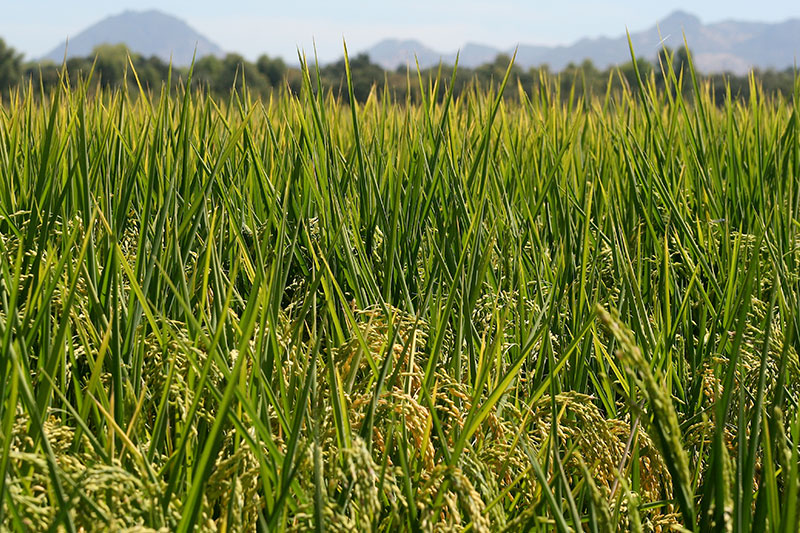
Photo credit: Think Rice U.S. Grown

Click the link to read the article on the High Country News website (Natalia Mesa):

October 11, 2024

Every July, the western sandpiper, a dun-colored, long-beaked bird, leaves the shores of Alaska and migrates south. It may fly as far as the coast of Peru, where it spends several months before making the return trip. Western sandpipers travel along the Pacific Flyway, a strip of land that stretches along the Western coast of the Americas, from the Arctic down to Patagonia. The wetlands of Californiaโ€™s Central Valley offer sandpipers and thousands of other species a crucial place to rest and feed along the way. In September, at the peak of the southward migration season, tens of millions of birds stop there.

But intensive farming and development have destroyed 95% of the Central Valleyโ€™s wetlands, and as the wetlands have disappeared, the number of migrating birds has plummeted. Shorebirds like the western sandpiper, which dwell in seashores and estuaries, are particularly imperiled, declining by more than 33% since 1970.

In 2014, in the middle of a particularly punishing drought in California, a network of conservation organizations called the Migratory Bird Conservation Partnership tried a new strategy to help migrating birds: paying rice farmers to create โ€œpop-upโ€ habitat. The program, which is called BirdReturns and was initially funded by The Nature Conservancy, has since created tens of thousands of acres of temporary wetlands each year.

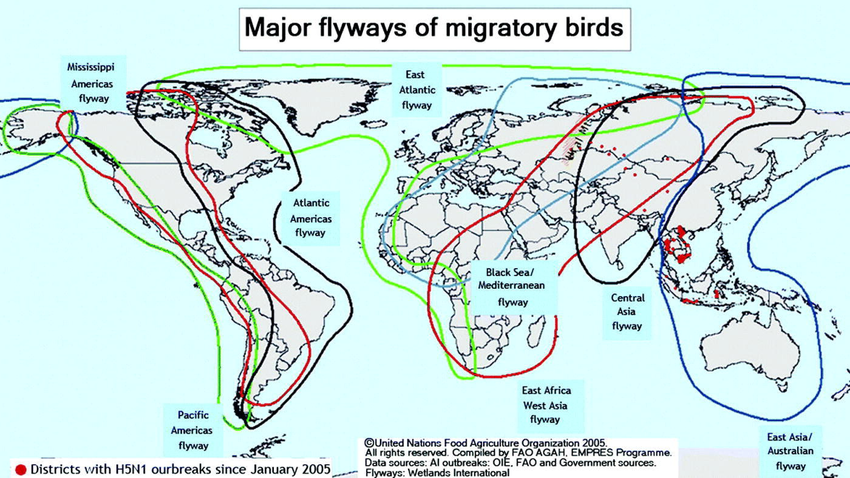
Map showing the global routes of migratory birds. Credit: John Lodewijk van Genderen via Reseachgate.net

Rice farmers in the Central Valley flood their fields when the growing season ends, generally around November, and keep them flooded until February to help the leftover vegetation decompose. They plant their crop after the fields dry out in late spring. The program pays rice farmers in the birdsโ€™ flight path to flood their fields a bit earlier in the fall and leave them flooded later in the spring. This creates habitat when the migratory birds need it the most, as they fly southward in the late summer and early fall and pass through again on their way north in the spring.

Daniel Karp, a researcher at UC Davis who studies conservation in working landscapes and is not involved in BirdReturns, sees the program as a rare conservation win. Most of the time, small farms that grow many different crops, plant hedgerows and pollinator-friendly flowers are the best way to conserve biodiversity in human-dominated landscapes. But although rice farmers grow only one crop, their large fields are an exception. While itโ€™s far from a complete solution, โ€œitโ€™s this weird rare circumstance where you have a large industrial-scale intensive agricultural system that can simultaneously support wildlife,โ€ Karp said.

Map of the San Joaquin River basin in central California, United States, made using public domain USGS National Map data. By Shannon1 – Own work, CC BY-SA 4.0, https://commons.wikimedia.org/w/index.php?curid=63080408

BirdReturns started with just 10,000 acres in the Sacramento Valley. In 2021, it expanded to the San Joaquin Valley Delta. The program now has a network of regional partners who lead their own reverse auction programs, such as the similar Bid4Birds, piloted by the California Ricelands Waterbird Foundation.

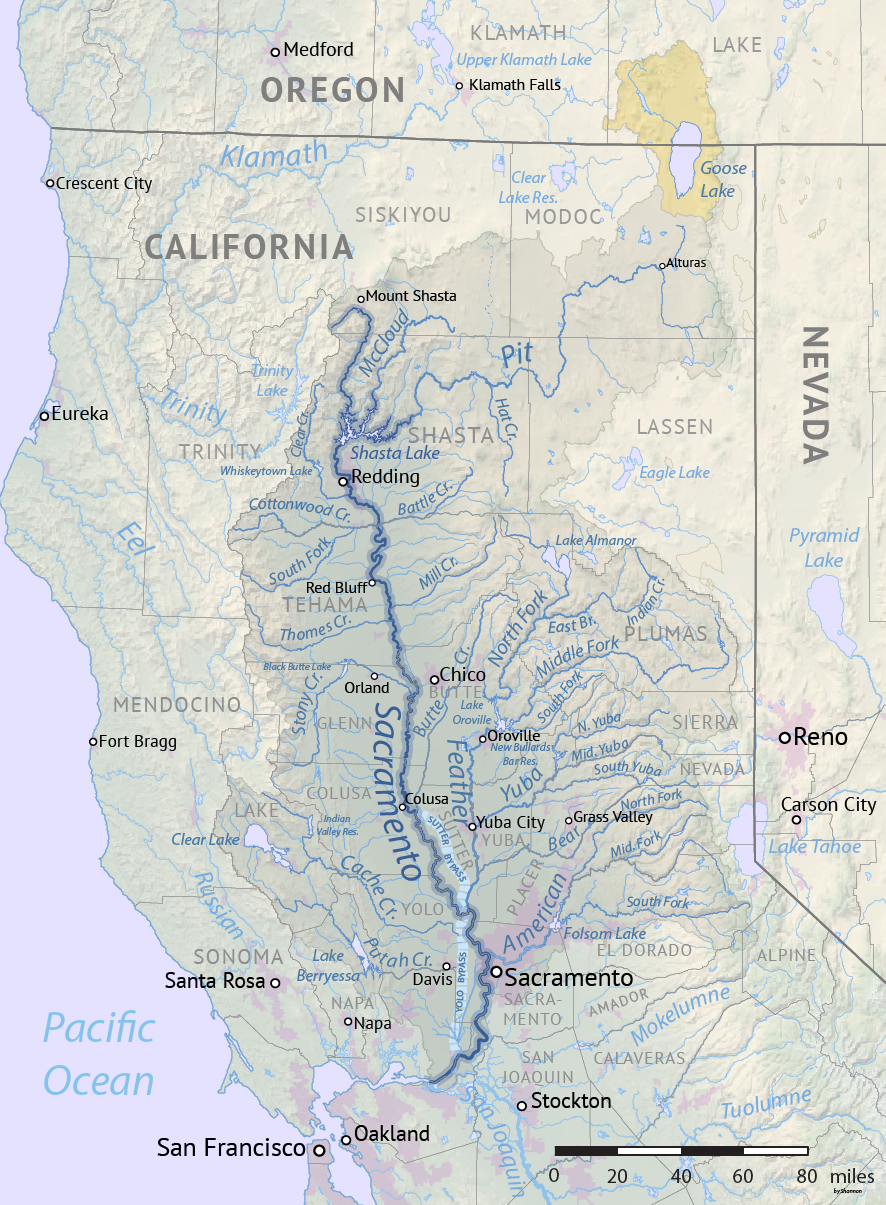
Map of the Sacramento River drainage basin. The historically connected Goose Lake drainage basin is shown in orange. Made using USGS National Map and NASA SRTM data. By Shannon1 – Own work, CC BY-SA 4.0, https://commons.wikimedia.org/w/index.php?curid=79326436

Over the last nine years, BirdReturns has created 120,000 acres of bird habitat. Though itโ€™s a far cry from the 4 million acres of wetlands present before colonial settlement, studies have shown that shorebird density is 2 to 3.5 times greater in pop-up wetlands than in other rice fields. And BirdReturns is fine-tuning its approach based on data, feedback from farmers, and ongoing research: A study published in early September analyzing nearly 9,000 field observations over five years gave scientists more information about the factors that create good shorebird habitat. For example, more shorebirds tend to visit fields where the water is shallow, especially if theyโ€™re flooded consistently, for months at a time as well as year after year.

BirdReturns also has the flexibility to adapt as conditions change from year to year. During droughts, for example, the program prioritizes places that birds have visited in the past. In wetter years, it might scale back. โ€œThe findings of your results are applied right away to on-the-ground actions,โ€ said Greg Golet, senior scientist for The Nature Conservancy, who is involved in the program.

Challenges remain, though. The migration and agriculture cycles are not fully synchronized, making it difficult for rice farmers to flood their land early enough to create habitat for shorebirds, especially the long-distance migrants that might appear as early as July. BirdReturns has recently tackled other strategies, partnering with tomato farmers, who grow crops a bit earlier in the year and thus can flood their fields earlier.

And thereโ€™s still the question of how this practice can continue sustainably, especially as climate change-fueled drought makes water increasingly scarce, Karp said. In drought years, itโ€™s costly to pay farmers to keep their lands flooded, if they have any water to spare at all. Thereโ€™s no simple solution or easy answers, but for now, BirdReturns and similar programs are coming up with โ€œcreative solutions,โ€ Karp said. โ€œWe thought we could rely on protected areas to conserve habitat globally, and we now know thatโ€™s not enough, and we need to complement that with a suite of different conservation strategies,โ€ said Natalia Ocampo-Peรฑuela, a conservation ecologist at University of California, Santa Cruz, who is not involved with BirdReturns. While market-based solutions shouldnโ€™t be the only answer, she said, they are โ€œa piece of the puzzle.โ€

People โ€” and salmon โ€” return to restored #KlamathRiver to celebrate removal of 4 dams — Deb Krol (AZCentral.com)

Click the link to read the article on the AZCentral.com website (Debra Utacia Krol). Here’s an excerpt:

October 12, 2024

The vinyl decals, featuring salmon crying to get beyond the first of the dams, were wrinkled, the banner itself battle-scarred in places. But the message was still clear: “Un-dam the Klamath now!”

That message became fact at the end of September, when the final hunks of concrete were trucked away from the last of theย four dams that had impeded fish migration for nearly a century. The world’s largest dam removal project to date was complete, and about 500 people came to a meadow about 10 miles south of the Klamath on Oct. 5 to celebrate and to look forward to the next phase of restoring an entire basin the size of West Virginia…The Klamath River Basin suffered a near-death experience after being subjected to more than 100 years of mismanagement and injustices against tribal communities. Governments and private industry built dams on ancestral Shasta Nation lands, replumbed the Upper Klamath Basin for agriculture and channelized a key tributary, resulting in massive amounts of phosphorus flowing into the Upper Klamath Lake and eventually, the lower river…

Immediately, he said, the tribe lost 25% of its food supply. In 1984, the tribe was forced to stop fishing altogether when their other two major fish species, theย c’waam and koptu, plummeted in numbers, victim to toxic waters in Upper Klamath Lake and the depleted water supplies as farmers asked for more water to be diverted for crops where the Lower Klamath Lake once stood…The two sucker fish, a cultural touchstone for the Klamaths, were listed as endangered in 1988 and have yet to recover. The tribe is the only one in the basin that holds treaty rights, and has made several “water calls” to keep enough water in Upper Klamath Lake to support the dwindling c’waam and koptu stocks. But that hasn’t proved to be very successful, and [William] Ray said that he is “upset, concerned, angry and frustrated at the prospect of extinction.”
Klamath River Basin. Map credit: American Rivers

A timy critter that has a lot to say about our rivers — @AmericanRivers

West Branch of the Saco River, Bartlett, New Hampshire | Andy Fisk

Click the link to read the article on the American Rivers website (Andrew Fisk):

July 9, 2024

While many are familiar with the fish and wildlife that define our landscapes there are other lesser-known critters that play a role in creating and maintaining a healthy ecosystem. This little guy isnโ€™t flashy with brilliant plumage, a thrilling call, or a remarkable migration story. It is very difficult to see by the naked eye, doesnโ€™t have a dramatic migration story, and isnโ€™t tasty to eat. But you can always know where to find it โ€ฆ in clean clear healthy waters.

So what is this new river friend of ours?

Cymbella cistula photomicrograph. Via: American Rivers

Cymbella cistula shown here is one of the many members of the genera and among the many thousands of varieties of diatoms, or what are commonly called algae. Diatoms are microscopic cells with an outer body shaped in a dramatic and diverse array of wondrous forms. These individual diatoms can exist as individuals or group together in visible colonies (such colonies can be mistaken for a vascular plant, e.g., a plant that has circuitry like blood vessels for transporting water and nutrients through their stems โ€ฆ as a simpler form of life, diatoms have none of this circuitry).

Diatoms generate oxygen through photosynthesis โ€“ the process where sunlight and carbon dioxide are converted to oxygen, energy, and water. They are often referred to as planktonic (from the Greek for โ€œwanderingโ€) because despite some having the ability to swim about, they spend their time moving with the currents. The companion group of critters to the plant-like diatoms, or phytoplankton, are the zooplankton, the first consumer in the ocean that eats phytoplankton, also small or early life stage animals that swim or float about.

These two types of planktonic organisms are critical to freshwater and marine food webs and make up a tremendous amount of the living biomass, or organic matter, in our rivers and streams.

Algae? Phytoplankton? You may be envisioning a lake or stream covered in green, making recreation discouraging or even hazardous with certain types of algae blooming in the heat of summer. Too many nutrients from treated wastewater and lawn or farm chemicals allow many species of diatoms to excessively thrive. Impoundments behind dams are often subject to algae blooms due to the decreased flow of water and higher water temperatures. And while abundant amounts of algae generate oxygen from their photosynthesis, inevitably an excessive amount of algae biomass will crash and decay. And decay then consumes all that oxygen. What was a naturally clear and clean waterbody turns a murky green with little oxygen. And some species of diatoms generate toxins that are harmful to humans and animals, making an impoundment or lake not just unappealing to swim, but hazardous to your health. But what about our new friend Cymbella cistula? Not all diatoms are alike! And many species are quite sensitive to an abundance of nutrients and do not thrive in enriched and warmer waters. Cymbella diatoms are one of the diatoms that can really only flourish in low nutrient (โ€œoligotropicโ€) conditions, waterbodies that run clear and clean. Here is where this tiny organism has an out-sized role in our work to protect and restore our waters.

To chart a course away from polluted and degraded rivers, streams, lakes, and wetlands we need to set a destination. One destination is a waterbody that has little or no impact from humans, or what scientists and regulators call a baseline condition. Because different types of waterbodies โ€“ wetlands, estuaries, lakes, streams, and rivers โ€“ all have different chemical, biological, and physical characteristics no two types of baseline conditions are exactly the same. Pristine rivers and streams in the northeast are generally those that run clear and cold and flow through forests and areas of little human disturbance. While you may know a pristine stream when you see it, in order to make decisions about how to restore an unloved reach of river, scientists and regulators need precise and measurable indicators of what a pristine baseline condition means.

Macro Invertebrates via Little Pend Oreille Wildlife Refuge Water Quality Research

For many years those indicators were chemical measures of water cleanliness โ€“ dissolved oxygen, suspended solids, or temperature. But these indicators only describe a condition at a point in time when the measurement was taken and donโ€™t integrate conditions over longer periods. And they can miss other problems that may be present. So these chemical measures alone are not the best for ensuring we make it to our destination of healthy water. To get the get fullest and most robust picture of the health of a river or stream we need to listen to the critters!

To make a better roadmap (rivermap?) to our destination scientists have for years been exploring what types of fish, insects, and diatoms live in the different types of waterbodies. This work over the last 30 years has created biological definitions of a waterbodyโ€™s health to complement the more simplistic chemical measures. One of those biological definitions is based on the description of the types and amounts of diatoms present different environmental conditions. In many parts of the country including here in New England scientists have now collected enough diatom data across enough waterbody types and conditions to create statistical models that show us what diatoms should be living in what types of water conditions. These data and models allow environmental professionals to design clean-up plans or demonstrate how a high-quality water body can remain in good health. In our work to ensure our rivers can be as clean and healthy as possible we rely on the most robust tools, regulations, and policies that help guide science-based decision making. Biological indicators of river health are one of those important tools. The Cymbella diatoms whose presence in these models provides a scientifically robust measure of what constitutes high-quality water are ones we need to listen and pay attention to. So the next time you are paddling down or wandering along that clear and cold stream give a nod to that other โ€œwandererโ€ helping guide us on our journey to clean and healthy water for all!

CPW introduces Trojan Male brook trout in a historic effort to protect native cutthroat trout in #Colorado

Aquatic Biologist Jon Ewert stocks Trojan Maleย brook trout into Bobtail Creek during a historic stocking event in the headwaters of the Colorado River basin. Photo credit: Colorado Parks & Wildlife

Click the link to read the release on the Colorado Parks & Wildlife website (Rachael Gonzales):

September 27, 2024

 On Tuesday, Sept. 17, in an effort to restore native cutthroat populations in the headwaters of the Williams Fork River, Colorado Parks and Wildlife stocked 480 Trojan male or YY brook trout into Bobtail and Steelman creeks.

โ€œThis is a pretty historic moment for Colorado and native cutthroat trout restoration across the state,โ€ said CPW Aquatic Biologist Jon Ewert. โ€œThis is a combination of both the hard work and dedication of CPW biologists current and retired.โ€ 

โ€œThis is yet another example of the groundbreaking work done by CPW biologists and researchers to preserve native species,โ€ said George Schisler, CPW Aquatics Research Section Chief. โ€œWhile Bobtail and Steelman creeks are the first to be stocked with YY brook trout, they will not be the last. This is just the first of many for Colorado.โ€

In 2010, an alarming number of non-native brook trout were discovered after completing a fish survey in the headwaters of the Williams Fork River. While it is unknown when brook trout invaded these creeks, it was evident the thriving brook trout had nearly decimated the native cutthroat population over time.

Cutthroat trout found within these two creeks are some of the highest-valued native cutthroat populations in the headwaters of the Colorado River basin. Considered a species of special concern in Colorado, this subspecies of trout is genetically pure and naturally reproducing. 

โ€œIn 2011 we found 123 cutthroat trout combined in both creeks. Today, after 13 years of hard work by dedicated biologists we are seeing a little more than 1,400 cutthroats in these creeks,โ€ said Ewert. 

Trojan male brook trout are often called YY because they have two Y chromosomes, unlike wild males with an X and Y chromosome. These trout are stocked into wild brook trout populations and reproduce with the wild fish, producing only male offspring. Without a reproducing population (male and female fish), the brook trout will eventually die out, allowing for native cutthroat trout to be restored.

Colorado Parks and Wildlife will continue to stock both streams with YY brook trout over the next several years to sustain the number of Trojan males in the population, eliminating the production of female brook trout in the creeks. 

To learn more about Trojan male brook trout and cutthroat trout restoration project in the Upper Williams Fork drainage, read our latest Colorado Outdoors Online Magazine article. 

Cutthroat trout historic range via Western Trout

A major #ColoradoRiver water transfer has some asking for more details — Alex Hager (KUNC) #COriver #aridification

The Colorado River flows through the Shoshone diversion structure on Jan. 29, 2024. Northern Water, which supplies cities and farms on the Front Range, is asking for more data about how much water will stay on the Western Slope after the Colorado River District purchases rights to the water that flows through Shoshone. Photo credit: Alex Hager/KUNC

Click the link to read the article on the KUNC website (Alex Hager):

September 11, 2024

This story is part of ongoing coverage of the Colorado River, produced by KUNC and supported by the Walton Family Foundation. KUNC is solely responsible for its editorial coverage.

A Front Range water distributor is pushing back on a planned transfer of rights to water from the Colorado River. It has led to a disagreement between two major water agencies โ€” a minor flare-up of longstanding tensions between Eastern Colorado and Western Colorado, which have anxiously monitored each othersโ€™ water usage for decades.
Northern Water, which serves cities and farms from Fort Collins to Broomfield, is asking for more data about the future of the Shoshone water right. Meanwhile, the Colorado River District, a powerful taxpayer-funded agency founded to keep water flowing to the cities and farms of Western Colorado, says Northern Water may be attempting to stymie its purchase of the water rights.

In early 2024, The Colorado River District announced it would spend nearly $100 million to buy rights to the water that flows through the Shoshone power plant, near Glenwood Springs. Shoshoneโ€™s water right is one of the oldest and biggest in the state, giving it preemptive power over many other rights in Colorado.

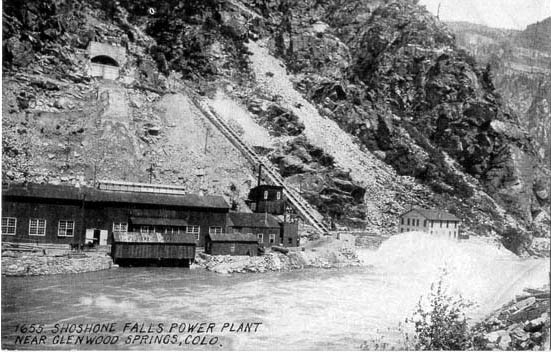
Shoshone Falls hydroelectric generation station via USGenWeb

Even in dry times, when water shortages hit other parts of the state, the Shoshone power plant can send water through its turbines. And when that water exits the turbines and re-enters the Colorado River, it keeps flowing for a variety of users downstream.

Since that announcement, the river district has rallied more than $15 million from Western Colorado cities and counties that could stand to benefit from the water right changing hands. Those governments are dishing out taxpayer money in hopes of helping make sure that water stays flowing to their region, even if demand for water goes up in other parts of the state.

The river district plans to leave Shoshoneโ€™s water flowing through the Colorado River. Itโ€™s an effort to help settle Western Coloradoโ€™s long-held anxieties over competition with the water needs of the Front Range, where fast-growing cities and suburbs around Denver need more water to keep pace with development.

The water right is classified as โ€œnon-consumptive,โ€ meaning every drop that enters the power plant is returned to the river. The river district wants to ensure the water that flows into the hydroelectric plant also flows downstream to farmers, fish and homes. The agency plans to buy rights to Shoshone’s water and lease it back to the power company, Xcel Energy, as long as Xcel wants to keep producing hydropower.

Almost all of the $98.5 million for the river districtโ€™s purchase of Shoshoneโ€™s water will come from public funds. In addition to money from its own coffers and Western Colorado governments, the river district also plans to apply for federal funding to pay for its purchase of Shoshone’s water. It is planning to seek $40 million from the Inflation Reduction Act.

Despite decades-long tensions between water users on the Western Slope and the Front Range, leaders on the East side of the mountains have stayed mostly quiet about the Shoshone transfer.

Bicycling the Colorado National Monument, Grand Valley in the distance via Colorado.com

Northern Waterโ€™s recent statements about Shoshone perhaps mark the most notable public pushback to the pending deal. The agency supplies water to Front Range cities such as Loveland and Greeley, as well as farms along the South Platte River all the way to the Nebraska border.

The agency outlined its concerns in a letter to elected representatives, including Colorado Senators Michael Bennet and John Hickenlooper and congresspeople Joe Neguse, Lauren Boebert, Yadira Caraveo and Greg Lopez.

In short, Northern said it supports the concept of the transfer, but wants an independent study of how much water the Colorado River District plans to send down the river each year.

โ€œWe want to make sure that we’re all going into this with the same data to make sure that everyone’s interests are being addressed,โ€ said Jeff Stahla, Northern Water spokesman.

Northern posits that the Western Slope could pull more water than the amount that has been historically used by Shoshone โ€“ enough to increase strain on upstream reservoirs that also supply the Front Range.

The River District calls that claim a โ€œgross mischaracterizationโ€ of its plans.

“Their points ignore the stated intent of the effort and are counter to the stated values,โ€ said Matthew Aboussie, a spokesman for the River District, โ€œAnd they 100% know that.โ€

The River District published its own letter about the matter. The agencyโ€™s director said Northern Waterโ€™s efforts โ€œwere received as intentional obstacles intended to threaten the viability of the Shoshone Permanency Project,โ€ and said Northernโ€™s calls for more data collection could require a time-intensive study of the project and tie it up in litigation for up to a decade.

โ€œWe are not looking to change the historic flows,โ€ Aboussie said. โ€œSo the intention is to protect the status quo.โ€

The River District is currently compiling data about the history and future of the Shoshone water right and plans to present it in Coloradoโ€™s water court, which is part of the stateโ€™s normal process to approve the transfer or sale of water rights.

Map credit: AGU

St. Vrain and Left Hand Water Conservancy District Launches Fish Salvage Pilot Project to Protect Local Fisheries

Screenshot from the Highland Ditch Company website.

Here’s the release from the St. Vrain and Left Hand Water Conservancy District (Sean Cronin):

September 9, 2024

LONGMONT, COLO โ€“ This fall, the St. Vrain and Left Hand Water Conservancy District (“District”) and the Highland Ditch Company are collaborating on a unique pilot project to save fish in St. Vrain Creek. As ditch diversions are closed off for the fall, fish often become trapped in standing pools behind the headgates, which eventually dry up. The pilot project will rescue these fish and return them to the adjacent creek, protecting local fish populations and aligning with the communityโ€™s values of environmental stewardship.

Healthy fisheries are essential not only for the ecological health of local streams but also for supporting the recreational fishing economyโ€”well worth the half daysโ€™ work it will take to move the fish back into the creek.

โ€œThe District and Highland are piloting this salvage effort, in the hopes that the results may be scaled up across the District, and potentially in other parts of Colorado,โ€ said the Districtโ€™s Watershed Program Manager Jenny McCarty.

Highland Ditch Company, which has been diverting water for over a century, sees this initiative as an example of the symbiotic relationship that can exist between local agriculture and environmental health.

The channelโ€™s water โ€œis used to irrigate 35,000 agriculture acres in this valley. Those farms are part of the fabric of this communityโ€ฆ residents eat food from [these] farms,โ€ said Wade Gonzales, Highlandโ€™s Ditch and Reservoir Superintendent. “We are all connected, and this pilot project will show how we can work together toward common goals.โ€

โ€œOur constituents across the St. Vrain and Left Hand Valley have time and again supported approaches that balance water needs for thriving agriculture and a healthy environmentโ€, said Sean Cronin, the Districtโ€™s Executive Director. โ€œWeโ€™re honored to be a trusted partner to Highland in leading this effort.โ€

Media are invited to the fish salvage effort in late September, 2024. Date to be determined. Please email jenny.mccarty@svlh.gov if you are interested in attending.

About the St. Vrain and Left Hand Water Conservancy District

The St. Vrain and Left Hand Water Conservancy District, created in 1971, is a local government, non -profit agency that serves Longmont and the surrounding land area. The District is dedicated to safeguarding water resources for all and promotes/partners on local water protection and management strategies that align with the five pillars of its Water Plan. Learn more at http://www.svlh.gov.

About the Highland Ditch Company

The Highland Ditch Company, based in Longmont, CO, was established in 1871 and irrigates about 35,000 acres of land along St. Vrain Creek, the most of any within District boundaries. The Highland Ditch Company pursues its mission to manage and deliver water for its shareholders by embracing innovative opportunities. Learn more at http://www.highlandditch.com.

#KlamathRiver flows free after last dams come down, leaving the land to tribes and salmon — AZCentral.com

Fog on the lower Klamath River near Arcata, California. Photo by Steve Gough/ U.S. Fish and Wildlife Service

Click the link to read the article on the AZCentral.com website (Debra Utacia Krol). Here’s an excerpt:

August 30, 2024

“I witnessed the 2002 fish kill on the Klamath River,” said Thompson, who’s now 28 and a member of the Yurok Tribe. “It was devastating seeing thousands of dead bodies the same size as me in the river.”
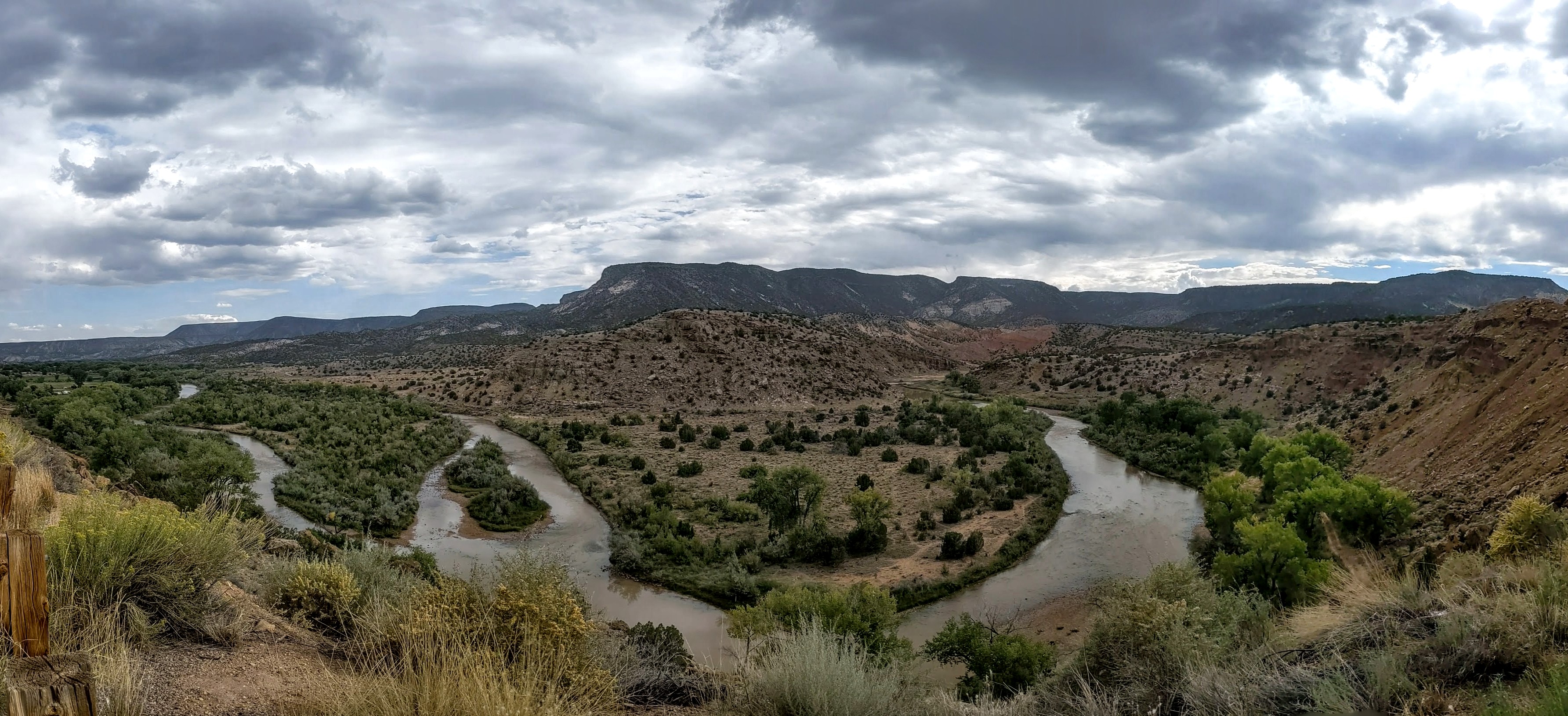
That horrific event spurred Thompson and many other Yurok, Karuk, Hupa and Klamath Tribes people to lead a two-decade campaign to save the Klamath River from death. Their solution: Remove four dams that impeded the free flow of the river and had bred deadly algae that led to the 2002 fish die-off. On Tuesday, the final impediment was removed and the Klamath was again a free-flowing river. The coffer dams, which had diverted water from the last two outdated hydroelectric dams undergoing demolition, were breached, allowing the river to reclaim its ancient course and reopen up to 400 miles of salmon spawning and nursery habitats. River and salmon protectors cheered and cried tears of joy as the coffer dams at Iron Gate and Copco I were broken open and the waters flowed down the river’s ancient channel. It’s the beginning of the end of a more than 20-year battle to remove the dams and restore the river during the nation’s largest-ever dam removal project…

The Klamath River has been hammered by more than 100 years of mismanagement and injustices against tribal communities. Some of those included building dams on ancestral Shasta Nation lands, replumbing the Upper Klamath Basin for agriculture and channelizing a key tributary resulting in massive amounts of phosphorus flowing into the Upper Klamath Lake and eventually, the lower river. Salmon and other fish populations, deprived of hundreds of miles of quiet pools to lay their eggs and for the juvenile fish to survive and thrive, shrank by about 95%, which led to the federal governmentย enacting protections for some salmon populations. And as the salmon’s numbers diminished, so did the spirit of the Native peoples who have called the Klamath home for uncounted centuries. Salmon is at the heart of the Yurok, Hupa, Karuk, Shasta, Klamath, Modoc and Yahooskin Paiute peoples. They measured their lives by the seasons of spring and fall salmon runs. Combined with other nourishing foods like acorn, berries and, along the coast, seaweed, the Klamath’s human inhabitants were only as healthy as the river that flowed through their homelands…

The Federal Energy Regulatory Commission issued the final approval for the removal of the lower four Klamath River dams in November 2023, and removal started shortly afterward. Two other dams upriver from the four that were removed, the Link River Dam and the Keno Dam, have fish ladders installed…The removal of the final coffer dams means that salmon and other migratory fish now have an unimpeded aquatic highway to Upper Klamath Lake, the Sprague and the Williamson Rivers.

National Fish & Wildlife Federation Announces $1.5 Million in #Conservation Grants to Help Restore #ColoradoRiver and #RioGrande Headwaters: Grants will conserve headwaters species and their habitats in the Rio Grande and #GilaRiver watersheds #COriver #aridification

Rio Grande. Photo credit: Big River Collective

August 14, 2024

The National Fish and Wildlife Foundation (NFWF) today announced more than $1.5 million in grants to restore, protect and enhance aquatic and riparian species of conservation concern and their habitats in the headwaters of the Colorado River and Rio Grande watersheds. The grants will leverage over $1.8 million in matching contributions for a total conservation impact of more than $3.3 million.ย 

The grants were awarded through the Southwest Rivers Headwaters Fund, a partnership between NFWF and the U.S. Department of Agricultureโ€™s Natural Resource Conservation Service, U.S. Forest Service, U.S. Fish and Wildlife Service, Walton Family Foundation and the Trinchera Blanca Foundation, an affiliate of The Moore Charitable Foundation, founded by Louis Bacon. 

โ€œCommunities in the Southwest have grappled with challenges to the long-term sustainability of their rivers,โ€ said Jeff Trandahl, executive director and CEO of NFWF. โ€œThese grants demonstrate how investments in stream and meadow restoration in our headwaters can increase the climate resiliency of these critical water resources while supporting the Southwestโ€™s many unique fish and wildlife species.โ€

The projects supported by the six grants announced today will address a key strategy for species and habitat restoration in headwaters streams of the Colorado River and Rio Grande: restoring and enhancing riparian and instream habitat.

โ€œConsistent with the intent of the Inflation Reduction Act, the selected restoration projects within the forests, streams and riparian areas of the National Forests in Arizona, New Mexico and southern Colorado are a significant step to maintain and improve riparian and aquatic ecosystems into the future in the face of changing climates,โ€ said Steve Hattenbach, Deputy Regional Forester, USDA Forest Service Southwestern Region. โ€œStreams and riparian areas are key to ensuring sufficient water to maintain the ecological integrity of watersheds that support life in the beautiful Southwest.โ€

NFWFโ€™s Southwest Rivers Program was launched in 2018 to fund projects that improve stream corridors, riparian systems and associated habitats from headwaters to mainstem rivers in the Southwest. Through the Southwest Rivers Headwaters Fund, the program funds projects that produce measurable outcomes for species of conservation concern in the wetlands and riparian corridors of the headwaters regions of major southwestern rivers. In 2022, the Fund expanded from the Rio Grande watershed to include to include priority headwaters watersheds of the Colorado River Basin in Arizona, New Mexico and Utah. 

A complete list of the 2024 grants made through the Southwest Rivers Headwaters Fund is available here

Cold water shots into the #ColoradoRiver slow a bass invasion in the #GrandCanyon — AZCentral.com #COriver #aridification

The humpback chub is one of four endangered fish species on the Colorado River. Photo credit: Utah Division of Wildlife Resources.

Click the link to read the article on the AZCentral.com website (Brandon Loomis). Here’s an excerpt:

August 25, 2024

A shot of cold water from Glen Canyon Dam appears to have stalled a smallmouth bass invasion of the Grand Canyon and protected rare Colorado River fish there, federal officials say. In early July, two years after firstย finding the predatory bass spawningย below the dam and in threatened humpback chub territory, the U.S. Bureau of Reclamation began releasing cold water from deep in Lake Powell in an effort to chill the river past the temperature at which bass are known to reproduce. So far this summer, numerous netting, snorkeling and electrofishing trips on the river have turned up no newly hatched bass, biologists reported to an advisory committee meeting on Grand Canyonโ€™s South Rim on Thursday.

โ€œThatโ€™s huge,โ€ said Kelly Burke, executive director at Wild Arizona and its Grand Canyon Wildlands Council, which had pushed for flow alterations from the dam to disrupt the bass invasion.

Cooler water was a must for preventing possible biological disaster this summer in particular, she said. โ€œIt couldnโ€™t be better timed. Weโ€™re having an extraordinarily hot summer.โ€

The initial success also means the National Park Service will not dump a fish-killing chemical into spawning grounds a few miles downstream of the dam this yearย as it did last summer.ย Last yearโ€™s effort drew a rebuke from some tribal officials associated with Grand Canyon, who prefer nonlethal controls. Federal officials considered the bass invasion an emergency requiring quick action to prevent a population explosion that could devastate humpback chubs, 90% or more of which live in the Canyon. Cooling the river below 60 degrees Fahrenheit has at least stalled that explosion.

As #LakePowell shrinks, a thriving desert oasis is coming back — KUNC

Researcher Seth Arens prepares to count plants in Glen Canyon on July 16, 2024. His study shows that many plants in areas once submerged by Lake Powell are the kind of native species that lived in the area before the reservoir. Alex Hager/KUNC

Click the link to read the article on the KUNC website (Alex Hager):

August 20, 2024

This story is part of ongoing coverage of the Colorado River, produced by KUNC and supported by the Walton Family Foundation. KUNC is solely responsible for its editorial coverage.

Seth Arens has all the adventurous swagger of Indiana Jones. His long hair is tied up in a bun, tucked neatly under a wide brimmed hat. His skin bears the leathery tan of someone who has spent the whole summer under the desert sun.

But as Arens pushed his way through a taller-than-your-head thicket of unforgivingly dense grasses, he explained why he doesnโ€™t carry a machete, betraying his differences from the whip-cracking tomb raider.

โ€œI guess, as an ecologist, I can’t quite bring myself to just hack down vegetation,โ€ Arens said.

Arens is a scientist with Western Water Assessment and the Cooperative Institute for Research in Environmental Sciences, both environmental research groups headquartered at the University of Colorado Boulder.

He has spent weeks traversing the smooth, twisting red rock narrows of Glen Canyon in search of his own kind of treasure: never-before-collected data about plants.

Glen Canyon is perhaps best known for the reservoir that fills it. Lake Powell, the nationโ€™s second-largest reservoir, has kept much of the canyon underwater since the 1960s and 70s. The 21st Century has changed that. Climate change and steady demand have brought its water levels to record lows, putting once-submerged reaches of the canyon above water for the first time in decades.

Katie Woodward, Seth Arens and Eric Balken stand in a stream-fed pool in Glen Canyon on July 16, 2024. This area was once completely submerged by Lake Powell, but now thrives with native plants. Alex Hager/KUNC

What happens next is still up in the air. Some environmental advocates want to see the reservoir drained so plants, animals, and geologic features can come back. Boaters and other recreators want to maintain the status quo โ€“ keep storing water in Lake Powell and sustain a tourism site that brings in millions of visitors each year.

In the snaking side canyons that were once under Lake Powell, Arens is methodically counting plants at different sites over the course of multiple years. He is creating a record of which species are taking root, and what might be lost if the reservoir were to rise again.

โ€œNature has given us a second chance to reevaluate how we’re going to manage this place,โ€ Arens said.

While the study is still underway, Arens said native species dominate the landscape alongside the areaโ€™s creeks. The same kinds of plants that lived in Glen Canyon before Lake Powell have taken root again โ€” even after their habitats were drowned โ€” filled in with towering piles of sediment deposits, and then shown the light of day once more.

โ€œIt turns out nature is doing a pretty good job by itself,โ€ Arens said, โ€œOf coming back and establishing thriving ecosystems.โ€

โ€˜Old assumptionsโ€™ and new policies

The data produced by this study is going public during a pivotal time for the Colorado River and its major reservoirs.

Decisions made over theย next two yearsย will shape who gets how much water from the shrinking river, which supplies roughly 40 million people. Cities and farms from Wyoming to Mexico are all trying to make sure they get their fair shares, and environmental advocates areย trying to make sureย the regionโ€™s plants and animals arenโ€™t an afterthought.

A killdeer stands in a spring-fed stream in Glen Canyon on July 17, 2024. The native plants alongside the canyon’s streams are host to a variety of birds and other animals such as beavers, toads, lizards and insects. Alex Hager/KUNC

The current guidelines for managing the river expire in 2026. Right now, policymakers are working on a set of replacements. Eric Balken, director of the nonprofit Glen Canyon Institute, wants those new rules to factor in the wellbeing of plants around Lake Powell.

โ€œIf the old assumption was that we can store water in Glen Canyon because there’s nothing there, that assumption is wrong,โ€ he said. โ€œThere is a lot here. There is a serious ecological consequence to putting water in this reservoir, and we cannot ignore that anymore.โ€

Balkenโ€™s group, which advocates for draining Lake Powell and storing its water elsewhere, provided some funding for the plant study being conducted by Seth Arens. Glen Canyon Institute is hoping it will provide data that proves the value of the canyonโ€™s plant ecosystems to policymakers.

Thatโ€™s extra important, Balken said, because federal water managers arenโ€™t doing enough for Glen Canyonโ€™s plants right now.

The Bureau of Reclamation, the federal agency that manages the Westโ€™s reservoirs, outlined its current strategy for river management in an October 2023 document called the โ€œDraft Supplemental Environmental Impact Statement.โ€ Balken called that documentโ€™s assessment of Glen Canyon plants โ€œdemonstrably false.โ€

In short, Reclamation describes an environment dominated by invasive plants that only stand to cause problems.

โ€œWhen I read that,โ€ Balken said, sitting near a patch of native willow plants feet from Lake Powellโ€™s edge. โ€œI just thought, โ€˜Had these people even been to Glen Canyon?โ€™โ€ This place is a vibrant, burgeoning ecosystem.โ€

Reclamationโ€™s report mentions some native species that form โ€œunique ecosystems within the desert,โ€ but appears to conclude that rising reservoir levels โ€“ which are partially the result of the agencyโ€™s own management decisions โ€“ would ultimately be good for plant life around Lake Powell.

Seth Arens pilots a boat across Lake Powell between research sites on July 17, 2024. Some environmental advocates want to see the reservoir drained and its water stored elsewhere, while proponents of Lake Powell hail its value as a recreation area. Alex Hager/KUNC

It highlights the presence of invasive plant species and says โ€œany additional acreage of exposed shoreline around Lake Powell has the potential to be invaded by invasive plant species such as tamarisk and Russian thistle.โ€

Balken and Arens argue the opposite, pointing to early survey findings that include widespread native plant life in areas that have been exposed by declining reservoir levels.

Reclamation declined to be interviewed for this story, but a spokeswoman for the agency wrote in an email to KUNC, โ€œReclamationโ€™s consideration of impacts to vegetation are primarily for resources downstream of Glen Canyon Dam that are affected by dam releases.โ€

The spokeswoman wrote that โ€œmost of the releases, even on the annual time scale, have negligible effects on lake levels and vegetation,โ€ and pointed to inflows, such as annual snowmelt, as having a bigger impact on water levels in the reservoir than Reclamationโ€™s releases of water from Glen Canyon Dam.

Balken suspects that Reclamation lacks data about Glen Canyonโ€™s plants and hopes that the ongoing study will fill in those gaps and help shape management plans going forward.

The National Parks Service, which manages recreation on Lake Powell and gathers some data about the surrounding environment, was not able to provide comment for this story in time for publication.

โ€˜A chance for survivalโ€™ around Lake Powell

While Arensโ€™ study hasnโ€™t produced any hard data yet, he is taking a mental tally of plants every time he trudges through the lush, winding creekbeds that channel spring-fed streams into Lake Powell.

These riverside ecosystems were shaped by their years spent underneath the reservoir, and little signs of that reality are everywhere.

Seth Arens looks at plants growing from crevices in a rock wall in Glen Canyon on July 16, 2024. These “hanging gardens” thrive in shady canyon bends where water seeps from the wall. Alex Hager/KUNC

Standing in the baking desert sun, Arens poked at a digital map on his phone screen while trying to find his next research site, and the map showed that he was standing underwater. Much of the canyon is lined with banks of sediment, sometimes more than a dozen feet tall, that were left behind by the still waters of Lake Powell. Those banks now provide heaps of soil for the roots of native plants.

Now that some of those areas have been left to grow for more than two decades, in some cases, they abound with life.

In one canyon, frogs and toads hop along the clear trickle just downstream of a beaver pond while birds flit in and out of tall, shady cottonwoods. In another, ferns sprout from crevices where water seeps onto a damp rock wall.

Itโ€™s a veritable oasis in the desert โ€“ the kind of cool, spring-fed Eden that populated the heat-induced daydreams of thirsty cowboys traversing the expanses of the Old West.

Katie Woodward, Arensโ€™ research assistant, is finding inspiration in these canyons, too.

โ€œIt’s very obvious that nature can take care of its own and turn a highly disturbed landscape, a landscape that was disturbed because of the follies of man, and change that into something that is diverse and productive,โ€ she said. โ€œI would have never believed how possible that was until I came down here.โ€

The researchers hope their findings about that recovering landscape end up in front of policymakers, whose decisions could shape the future of Glen Canyonโ€™s native ecosystems.

Katie Woodward takes notes on plant species in Glen Canyon on June 16, 2024. She and researcher Seth Arens trek through remote desert canyons to tally the plants within, and have found mostly native vegetation in the canyon’s riparian ecosystems. Alex Hager/KUNC

โ€œAs Glen Canyon resurfaces, there’s an incredible moment for species that are feeling the pressures of both human-induced and naturally driven change on water resources in riparian areas in the west, to have a chance for survival in a future that feels really unknown and kind of scary.โ€

Some of those unknowns might get settled soon, as the next rules for Colorado River management are likely to include new plans for storing water in Lake Powell. State water negotiators have projected optimism that policy meetings will result in a new agreement for water management before the 2026 deadline.

A bend in Glen Canyon of the Colorado River, Grand Canyon, c. 1898. By George Wharton James, 1858โ€”1923 – http://digitallibrary.usc.edu/cdm/ref/collection/p15799coll65/id/17037, Public Domain, https://commons.wikimedia.org/w/index.php?curid=30894893

The #GreatSaltLake isnโ€™t just drying out. Itโ€™s warming the planet — The Washington Post #aridification

Figure 1. A bridge where the Bear River used to flow into Great Salt Lake. Photo: EcoFlight.

Click the link to read the article on The Washington Post website (Joshua Partlow). Here’s an excerpt:

July 25, 2024

The Great Salt Lake released 4.1 million tons of carbon dioxide and other greenhouse gases in 2020, researchers found โ€” more evidence that dried-out lakes are a significant source of emissions.

In aย new studyย in the journal One Earth, the researchers [Melissa Cobo and Soren Brothers] calculated that 4.1 million tons of carbon dioxide and other greenhouse gases were released from the drying bed of theย Great Salt Lakeย in 2020, the year Cobo and others collected the samples. This would amount to about a 7 percent increase in Utahโ€™s human-causedย emissions,ย the authors found. While other researchers have documented carbon emissions from dried-out lakes โ€” including theย Aral Seaย in Central Asia โ€” Brothers said that his study tried to calculate what part of the emissions from this major saline lake could be attributed to humans, as the Great Salt Lake has beenย drawn down for human use, a declineย worsened by climate changeย and theย Westโ€™s megadroughtย of the past two decades.

โ€œThis is the first time weโ€™re saying, โ€˜This is something thatโ€™s on us,โ€™โ€ said Brothers, now a climate change curator with the Royal Ontario Museum…Lakes around the world normally store carbon. Plant and animal remains settle on theย bottom over thousands of years as sediment,ย much of it in low-oxygen layers that degrade slowly. When lakes dry out, oxygen can penetrate deep into the sediment, waking up microorganisms that start to feast on the organic matter, releasing carbon dioxide, Marcรฉ said…

Utahโ€™s Great Salt Lake โ€” the largest saline lake in the Western Hemisphere โ€” has been a buffet for microorganisms in recent years. Lake levels fell to record lows two years ago. It rebounded some after the past two wet winters, but vast stretches of dry lake bed remain, and levels still lie below what state officialsย consider a healthy range.ย There are many dangers posed by its diminished state, including toxic dust, loss of habitat for birds, and impact on brine shrimp and other industries.

Sunset from the western shore of Antelope Island State Park, Great Salt Lake, Utah, United States.. Sunset viewed from White Rock Bay, on the western shore of Antelope Island. Carrington Island is visible in the distance. By Ccmdav – Own work, Public Domain, https://commons.wikimedia.org/w/index.php?curid=2032320

Summit County pledges $1M toward purchase of โ€˜criticalโ€™ water rights for the #ColoradoRiver, local recreation economy — Summit Daily News #COriver #aridification

A view of the popular Pumphouse campground, boat put-in and the upper Colorado River. Photo credit: Brent Gardner-Smith/Aspen Journalism

Click the link to read the article on the Summit Daily website (Ryan Spencer). Here’s an excerpt:

August 14, 2024

Grand, Eagle, Garfield and Mesa counties as well as local governments and water entities in Colorado have also pledged funds towards the $99 million purchase of the Shoshone water rights

The Summit County Commissioners have committed $1 million to support the Colorado River Districtโ€™s effort toย purchase and permanently protect the water rightsย associated with the Shoshone Hydroelectric Power Plant. For decades, the Colorado River District has been in talks with Xcel Energy to buy the rights to water used for Xcelโ€™sย Shoshone Generating Station, a hydroelectric plant in Glenwood Canyon. Last winter, the river districtย reached a historic dealย to purchase the water rights from the utility company forย $99 million. To date, more thanย half of that moneyย has been raised. The vote Tuesday, Aug. 13, by the Summit County Commissioners moves the water district a step closer to closing on water rights important to communities up and down the Colorado River.

Rafters lift their paddles in the air as they make their way through a series of rapids on the Blue River as the Gore Range rises above the scene. Performance Tours Rafting/Courtesy photo

The flows guaranteed by the Shoshone rights provide critical water supplies that drive the recreation economies including rafting, kayaking and fishing in Summit, Grand and Mesa counties, according to the river district. Colorado River District general manager Andy Mueller called the commitment from Summit County, โ€œa powerful statement of solidarity and foresight.โ€

This map shows the 15-mile reach of the Colorado River near Grand Junction, home to four species of endangered fish. Map credit: CWCB

The river district says the flows also are critical to the habitat of four fish listed on the federal Endangered Species Act as well as water security and quality for Western Slope agriculture and drinking water supplies. Since the river district struck a deal to purchase the water rights from Xcel in December, more than 20 Western Slopeย water entitiesย andย local governmentsย have contributed $15.25 million in local funding. That includes the $1 million from Summit County,ย $1 million pledged by Grand County,ย $1 million from Mesa County,ย $2 million from Eagle Countyย andย $3 million from Garfield County. The state government has contributed anย additional $20 million, and the Colorado River Districtโ€™s Community Funding program has also contributed $20 million, bringing the total funds secured to date to $55.25 million, according to the river district. The river district says it is now turning its sights to a federal funding opportunity to secure additional funds toward the $99 million required to purchase the water rights

#ColoradoRiver Connectivity Channel Final Season of Construction – Summer 2024 — Northern #Colorado Water Conservancy District #COriver #aridification

Proposed bypass channel for the Colorado River with Windy Gap Reservoir being taken offline, part of the agreements around Northern Water’s Windy Gap Firming project.

The finishing touches are just around the corner for the historic and broadly supported Colorado River Connectivity Channel (CRCC). After having been talked about for decades, the CRCC, which has aquatically reconnected two segments of the Colorado River around Windy Gap Reservoir for the time since the reservoir was built in the 1980s, is heading into its third and final construction season, with work expected to wrap up this fall. In this new 5-minute video, Northern Water and Colorado Parks and Wildlife officials discuss the ramping back up of construction, goals for the final construction season, and how fish have been successfully using the new channel since water first started flowing though it back in October.

Reclamationโ€™s cool water releases sound fishy to these scientists — @AspenJournalism #GrandCanyon

A non-native smallmouth bass on the Green River, caught with a native bluehead sucker in its mouth. The biggest threat to native endangered fish are non-native predators, especially the smallmouth bass. Credit: USFWS. Credit: USFWS

Click the link to read the Runoff on the Aspen Journalism website (Heather Sackett):

August 2, 2024

โ€˜Weโ€™re reengineering the river in even crazier waysโ€™

In an effort to prevent smallmouth bass โ€” an invasive, voracious predator that feasts on native fish, including the threatened humpback chub โ€” from establishing populations below Glen Canyon Dam, the U.S. Bureau of Reclamation in early July began releasing colder water from Lake Powell via the river outlet works (which are 100 feet lower in a cooler part of the water column) in addition to the hydropower penstocks. Known as the โ€œCool Mix Alternative,โ€ Reclamation chose this option with the goal of keeping water temperatures below the dam under 15.5 degrees Celsius (60 degrees Fahrenheit), which is too cold for smallmouth bass to thrive. 

But a report by a group of scientists at the Center for Colorado River Studies at Utah State University says that factors other than temperature should be taken into consideration when trying to manage the nonnative species. The Western Area Power Administration, which sells the hydropower generated by Glen Canyon Dam, funded the participation of two of the four scientists who authored the report.

The report says the nearest population center of humpback chub is 76 river miles downstream in Grand Canyon water that is too turbid for smallmouth bass to proliferate. 

โ€œWe think the uncertainty in predictions about smallmouth bass establishment near the downstream humpback chub population centers and their impact on chub populations if smallmouth bass do become established is not adequately recognized,โ€ the report reads.

The report urges water managers to not develop reservoir operation plans that are too prescriptive given the uncertainty about hydrology in the coming years. 

โ€œWe think the various management actions being considered to control smallmouth bass recruitment are unlikely to be effective given the modest history of success of similar actions in the last two decades in the Colorado River ecosystem,โ€ the report reads. โ€œWe recognize that our report differs from the dominant paradigm related to smallmouth bass in the Colorado River basin and that even suggesting this alternative paradigm will likely create disagreements among scientists and โ€ฆ stakeholders.โ€

This infographic shows how as Lake Powell water levels decline, warm water containing smallmouth bass gets closer to intakes delivering water through the Glen Canyon Dam to the Grand Canyon downstream. Credit: U.S. Geological Survey

Jack Schmidt, a Colorado River expert, professor and lead author on the report, said that itโ€™s ironic that in order to preserve one of the last remaining native components of the riverโ€™s natural ecosystem (humpback chub), water managers are looking to increasingly unnatural actions on the already highly engineered river. Messing with nature only begets more messing. 

โ€œWeโ€™re making the river more unnatural, and weโ€™re reengineering the river in even crazier ways to try to protect the remaining elements of the native ecosystem,โ€ Schmidt said. โ€œAnd although the intentions of that are incredibly well-meant, over the long run, that may not be possible. โ€ฆ At what point does making the river more unnatural just not make sense anymore?โ€

What is another way to ensure that releases out of Lake Powellโ€™s hydropower penstocks are cold enough to prevent the establishment of smallmouth bass? Keep the reservoir more full. But with the effects of steady demand, drought and climate change, thatโ€™s easier said than done. 

The back of Glen Canyon Dam circa 1964, not long after the reservoir had begun filling up. Here the water level is above dead pool, meaning water can be released via the river outlets, but it is below minimum power pool, so water cannot yet enter the penstocks to generate electricity. Bureau of Reclamation photo. Annotations: Jonathan P. Thompson

Project 2025โ€™s extreme vision for the West: The demolition of public lands, water and wildlife protections are part of conservativesโ€™ plan for a second Trump term — @HighCountryNews

An aerial view of Assignation Ridge in the Thompson Divide area of Colorado. Project 2025 calls to restore mining claims and oil and gas leases in the Thompson Divide withdrawal area. (Courtesy of EcoFlight)

Click the link to read the article on the HIgh Country News website (Michelle Nijhuisย andย Erin X. Wong:

If Donald Trump is re-elected president in November, a coalition of more than 50 right-wing organizations known as Project 2025 will be ready with a plug-and-play plan for him to follow, starting with a database of potential administration appointees carefully vetted by coalition members; an online โ€œPresidential Administration Academyโ€ run by coalition members to school new appointees; and a 920-page policy platform called Mandate for Leadership: The Conservative Promise.

Written by former members of the Trump administration and other conservative leaders, Mandate for Leadership exhorts its readers to โ€œgo to work on Day One to deconstruct the Administrative state.โ€ Among many other measures, it calls for radical reductions in the federal workforce and in federal environmental protections, and for advancing a โ€œTrump-era Energy Dominance Agenda.โ€

The full text of Mandate for Leadership is below, preceded by an agency-by-agency overview of the proposals that could have the greatest impact on Western land, water and wildlife โ€” as well as on Westerners themselves.

DEPARTMENT OF THE INTERIOR (p. 517)

The Project 2025 recommendations for the Department of the Interior were primarily authored by attorney William Perry Pendley, a vociferous opponent of protections for public lands and wildlife. As acting director of the Bureau of Land Management during the Trump administration, he transformed the agency into what one high-level employee described as a โ€œa ghost ship,โ€ in which โ€œsuspicion,โ€ โ€œfearโ€ and โ€œlow moraleโ€ abounded.

Energy Policy

Pendley notes that the energy section was written โ€œin its entiretyโ€ by Kathleen Sgamma of theย Western Energy Alliance, an oil and gas industry group; Dan Kish of theย Institute for Energy Research, a think tank long skeptical of human-caused climate change; and Katie Tubb of The Heritage Foundation. They recommend reviving the โ€œTrump-era Energy Dominance Agendaโ€ by:ย 

  • reinstating a dozen industry-friendly orders issued by the Trump administrationโ€™s secretaries of the Interior (p. 522);
  • expanding oil and gas lease sales onshore and offshore (p. 522);
  • opening the large portions of Alaska, including theย Alaska Coastal Plainย and most of theย National Petroleum Reserve, to oil and gas exploration and development (pp. 523, 524);
  • halting theย ongoing review of the federal coal-leasing programย and working โ€œwith the congressional delegations and governors of Wyoming and Montana to restart the program immediatelyโ€ (p. 523);
  • restoringย mining claims and oil and gas leasesย in theย Thompson Divide of the White River National Forest in Coloradoย and the 10-mile buffer around Chaco Cultural Historic National Park in New Mexico. (p. 523);
  • and expanding theย Willow Project, a ConocoPhillips oil-drilling operation on Alaskaโ€™s North Slope (p. 530).
William Perry Pendley. By Bureau of Land Management

Agency Operations

The projectโ€™s organizers plan to upend federal land-management agency operations by:

Land Conservation

The project aims to undo large landscape protections by:

The Cascade-Siskiyou National Monument was expanded via proclamation from President Obama in 2017, making the new monument approximately 112,000 acres. Bob Wick/Bureau of Land Management

Wildlife 

Pendley expresses particular hostility toward the U.S. Fish and Wildlife Service, whose work he described as โ€œthe product of โ€˜species cartelsโ€™ afflicted with group-think, confirmation bias, and a common desire to preserve the prestige, power, and appropriations of the agency that pays or employs them.โ€ He recommends:

  • delisting the grizzly bearย in the Greater Yellowstone and Northern Continental Divide Ecosystems (p. 534);
  • delisting the gray wolfย in the continental U.S. (p. 534);
  • putting states in charge of managing theย greater sage-grouse;
  • ending the reintroduction of โ€œexperimental populationsโ€ outside a speciesโ€™ historic range (p. 534);
  • abolishing the Biological Resources Division of the U.S. Geological Survey โ€” which will be difficult to do, as it no longer exists as such and is now part of theย National Park Service(p. 534);
  • and reinstating Trump-era limitations on theย Endangered Species Actย and theย Migratory Bird Treaty Actย (p. 524).ย 

DEPARTMENT OF AGRICULTURE (p. 289)

The free-market advocate behind Project 2025โ€™s section on the USDA has long railed against the subsidies and food stamp programs administered by the agency. As a fellow at The Heritage Foundation, Daren Bakst penned a lengthy report, Farms and Free Enterprise, that objects to many aspects of the farm bill, which funds annual food assistance and rural development programs. His vision, documented in the report, is present throughout Project 2025โ€™s proposed agency overhaul.

Agency Organization

Project 2025 seeks to limit regulation in favor of market forces by:

  • reducing annual agency spending, including subsidy rates for crop insurance andย additional programsย that support farmers for lost crops (p. 296);ย 
  • removingย protections for wetlands and erodible landย that farmers must comply with to participate in USDA programs (p. 304);ย 
  • eliminating theย Conservation Reserve Program, which pays farmers to enrich and protect parts of their land from agricultural production (p. 304);ย 
  • removing climate change and equity from the agencyโ€™s mission (p. 290, 293);ย 
  • and working with Congress to undo theย federal labeling law, which requires consumer products to disclose where they were made and what they contain, as well as encouraging voluntary labeling (p. 307).ย 

Forestry

The project will reduce forests on public lands by:

Logging within the Cougar Park timber sale in Kaibab National Forest in 2018. The timber project was part of an initiative intended to treat more than 2.4 million acres of ponderosa pine forest across northern Arizona. Dyan Bone/U.S. Forest Service

ENVIRONMENTAL PROTECTION AGENCY (p. 417) 

Prior to serving as the EPAโ€™s chief of staff during the Trump administration, Mandy Gunasekara was famous for handing Republican Sen. James Inhofe a snowball to disprove the existence of human-caused climate change. At the EPA, she played a key role in the United Statesโ€™ withdrawal from the Paris Agreement and in the dismantling of the Obama-era Clean Power Plan. Gunasekaraโ€™s vision for the EPA is characterized by staff layoffs, office closures and the embrace of public comment over peer-reviewed science. 

Agency Organization

The plan will diminish the agencyโ€™s scope of work by:

  • reducing full-time staff and cutting โ€œlow-valueโ€ programs (p. 422);
  • shuttering offices dedicated toย environmental justice and civil rights,ย enforcement and compliance,ย environmental education,ย childrenโ€™s healthย andย international and tribal affairs, and distributing their functions elsewhere (p. 421);ย 
  • eliminating all research that is not explicitly authorized by Congress (p. 436);
  • restructuring scientific advisory boards and engaging the public in ongoing scrutiny of the agencyโ€™s science โ€” potentially opening the door to a wave of pushback against theย international consensusย on climate change (p. 422, 436-438);
  • eliminating the use of catastrophic climate change scenarios in drafting regulation (p. 436);
  • relocating a restructured American Indian Office to the West (p. 440);
  • partially shifting personnel from headquarters to regional offices (p. 430);
  • and striking the regulations, including a program to reduce methane and VOC emissions, that enable the EPA to work with external groups to help enforce laws (p. 424).

Natural Resources

The project would jeopardize clean air and water by:

  • limiting Californiaโ€™sย effort to reduce air pollutionย from vehicles by ensuring that its standards and those of other states avoid any reference to greenhouse gas emissions or climate change (p.426);
  • supporting the reform of the Endangered Species Act to ensure a full cost-benefit analysis during pesticide approval (p. 434-435);ย 
  • repealing some regulations imposed by the Biden administration to limit hydrofluorocarbons, a particularly potent greenhouse gas (p. 425);
  • and undoing the expansion of theย Good Neighbor Program, which requires states to reduce their nitrogen oxide emissions, beyond power plants to include industrial facilities like iron and steel mills (p. 424).

Full text of Project 2025 via Document Cloud

Pollinator health study leads to #Colorado law protecting pollinators, rare plants — Colorado State University

A selection of Colorado butterfly and bee species in the University of Colorado Museum of Natural History Entomology Collection. A collaborative study found that pollinators provide billions of dollars’ worth of services to Colorado, and they are at risk. Credit: Adrian Carper/CU Museum of Natural History

Click the link to read the release on the Colorado State University website (Jaymie DeLoss):

Pollinators are responsible for everything from the food we eat to the clothes we wear, and Colorado would not be so colorful without their contributions to the stateโ€™s landscape. But studies have shown that even in protected areas of Colorado, insects have declined by more than 60% over the past few decades.  

pollinator study led by Colorado State University Extension has found that native pollinators are worth billions of dollars to Colorado, and they need protection. The study has resulted in a state law that dedicates public funding to studying and conserving invertebrates and rare plants. 

Legislators wasted no time in applying recommendations from the study, which was released in January. The law addresses the No. 1 priority outlined by the study: Protect imperiled native pollinating insects. 

Deryn Davidson, principal investigator of the study and CSU Extension sustainable landscape state specialist, said the study and now the law recognize the importance of pollinators and called them significant steps toward invertebrate protection. 

โ€œThe quick action on this bill is really fantastic because if we do nothing, the decline in not just pollinators but all invertebrates is going to be serious, and weโ€™ll all be affected far more than people realize,โ€ Davidson said. 

Squash bees, like this Peponapis pruinosa, are among the most effective squash and melon pollinators. More than a third of the worldโ€™s crops depend on pollinators. Credit: Adrian Carper

Before the law, signed by Gov. Jared Polis on May 17, invertebrates were not included among wildlife managed by the state. The law authorizes Colorado Parks and Wildlife to make land management decisions based on pollinator conservation and establishes pollinator-related staff positions. 

โ€œThe ability to specifically study pollinators and the plants that depend on them is crucial to our understanding of factors impacting native pollinators and how we can best support them,โ€ said Adrian Carper, an entomologist with the University of Colorado Museum of Natural History and co-lead author of the study with Davidson and Steve Armstead of the Xerces Society for Invertebrate Conservation. Carper led the studyโ€™s science team, and Armstead led its land management team, while Davidson managed the project overall.  

The combined team of experts spent a year synthesizing pollinator data and best management practices for large-scale pollinator conservation to present to the governorโ€™s office at the end of 2023. The 306-page study, commissioned by the Colorado General Assembly in 2022, is the most detailed account of statewide pollinator health ever undertaken. 

โ€œThis bill begins to implement the recommendations of Coloradoโ€™s Native Pollinator Study by enabling our state wildlife professionals to study and conserve all native species, including invertebrates and rare plants that serve as the foundation of healthy, functional ecosystems,โ€ said Sen. Janice Marchman, whoย co-sponsored the billย in the Colorado Senate.ย 

An orange-tipped cactus borer pollinates a curly cup gumweed; both species are native to Colorado. A collaborative study led by Colorado State University Extension is the most detailed account of statewide pollinator health ever undertaken. Credit: Adrian Carper

Protecting pollinators

The study found that pollinators are worth billions of dollars to Colorado agriculture alone. They are also essential for the plants, wildflowers and wildlife that make the Colorado outdoors so desirable for recreation โ€“ a significant economic driver for the state in addition to a quality-of-life enhancer for residents.  

โ€œNative pollinators are crucial to our crops, economy, natural areas, and overall health and wellbeing,โ€ Carper said. โ€œWithout the pollination services they provide, our landscapes would be much less productive, diverse and sustainable.โ€ 


Resources for creating pollinator habitat

Creating Pollinator Habitat fact sheet

Attracting Native Bees to Your Landscape fact sheet


โ€œTheyโ€™re not just creepy-crawly annoyances,โ€ Davidson added. โ€œPollinators are the unsung heroes.โ€ 

Without protection, however, the outlook for Coloradoโ€™s native pollinators is dire. Research in a protected high-altitude meadow near Crested Butte over the past 35 years found that there are about 61.5% fewer insects, due mainly to warmer temperatures and less precipitation. 

Habitat loss, climate change, pesticides, inadequate land-management practices and competition from non-native species are the primary causes of pollinator decline. 

Colorado has 24 species of bumblebees, and nearly one-fifth are under review for federal protection under the Endangered Species Act. Three Colorado butterflies already are listed as endangered. 

โ€œThis bill takes a big step forward in making sure weโ€™re managing and protecting the stateโ€™s wildlife holistically,โ€ said Marchman, who represents Larimer and Boulder counties in the Senate.  

Davidson said that there are simple things people can do in their own yards to help support pollinators, adding that pollinator habitat can boost the curb appeal of your home, too. For more information on how to create pollinator habitat in your own yard, view the video below. 

PlantTalk: Pollinator Habitat

Repeal of the Chevron doctrine will have profound consequences for federal rulemaking — @HighCountryNews

The U.S. Supreme Court overturned one of the most-cited administrative law cases ever, the Chevron doctrine. Ajay Suresh/CC via Flickr

Click the link to read the article on the High Country News website (Nick Bowlin,ย Joaqlin Estus,ย Natalia Mesa,ย Kylie Mohrย andย Erin X. Wong):

July 15, 2024

For decades, courts have deferred to federal agencies when interpreting vague statutes. What constitutes the โ€œtakeโ€ or killing of an animal? What does it mean to maintain a wildlife populationโ€™s viability? What does โ€œmultiple useโ€ mean when it comes to managing Forest Service or Bureau of Land Management lands?

But a recent ruling by the U.S. Supreme Court, Loper Bright Enterprises v. Raimondo, has shifted the authority to make these decisions from the executive branch to the federal judiciary. The 6-3 decision, split along ideological lines and written by Chief Justice John Roberts, did away with whatโ€™s known as the Chevron precedent, which instructed courts to defer to agency expertise regarding ambiguous laws, as long as those readings were reasonable.

The Chevron doctrine was one of the most-cited administrative law cases ever. In striking it down, the Supreme Court made an untold number of statutes vulnerable to legal challenges, while curtailing the ability of federal regulators to interpret and enforce existing laws.

โ€œI think the bottom line is it will undoubtedly be disruptive,โ€ said Martin Nie, a professor of natural resource policy at the University of Montana.

High Country News has compiled a list of some of the issues and topics in our core coverage areas that are likely to be impacted by Chevronโ€™s repeal.

Lands, water and wildlife

Multi-use mandates: Several of the agencies that oversee land, water and natural resources are governed by multiple use mandates. Enacted in the 1960s and 1970s, these instruct agencies like the Bureau of Land Management and the Forest Service to promote a variety of outcomes, including recreation, sustained yield of natural resources and conservation.

โ€œThe statutes governing the Forest Service and the BLM are famously vague and discretionary,โ€ Nie said.

This is especially true of the Federal Land Policy Management Act, which has directed public land regulation since 1976. The law has been flexible enough to accommodate both the Trump administrationโ€™s energy dominance agenda and the Biden administrationโ€™s recent conservation rule. The latter involved a new interpretation of FLPMA, elevating conservation to the same level of importance as energy extraction. Without the deference standard, Bidenโ€™s new rule will likely face legal challenges.

Josh Osher, public policy director at the Western Watersheds Project, thinks itโ€™s now going to be difficult to impossible for the Fish and Wildlife Service to delist the Greater Yellowstone population of grizzly bears. Amaury Laporte/CC via Flickr

Unexpected upsides: For the nonprofit organizations that watchdog the federal governmentโ€™s wildlife and natural resource agencies, the ruling may actually offer some benefits.

โ€œThe agency deference that has been part of the Chevron decision has worked against us in many cases,โ€ said Josh Osher, public policy director at the Western Watersheds Project.

The nonprofit regularly challenges agency rulemaking and any other decisions that its staff believe do not follow the law. With Chevronโ€™s agency deference gone, Osher thinks itโ€™s now going to be difficult to impossible for the Fish and Wildlife Service to delist the Greater Yellowstone or Northern Continental Divide population of grizzly bears.

Nie believes that environmental laws, like the Endangered Species Act, that are relatively prescriptive as written and may potentially be less impacted by Chevronโ€™s absence. The same legal specificity may help uphold decisions pertaining to national wildlife refuges โ€” given that the U.S. Fish and Wildlife Service has a mandate to protect biological integrity, diversity and environmental health โ€” and the Wilderness Act, which specifically prohibits โ€œtrammelingโ€ protected areas.

This optimism is not universal, of course โ€“ especially given the uncertainty inherent in undoing 40 years of legal precedent.

โ€œIt reduces the effectiveness of our federal agencies that have the expertise on staff because it is up to the judges to interpret technical and scientific aspects of implementing the law, rather than the professional scientists within agencies,โ€ wrote Rebecca Turner, chief policy and partnerships officer at American Forests, in an email to HCN.

The Albuquerque Indian Health Center, in New Mexico, run by the Indian Health Service. C Hanchey/CC via Flickr

Tribal law

Bureau of Indian Affairs: Legal experts say that the repeal of the Chevron precedent will have broad implications for Indian Country. 

James Meggesto, an Onondaga citizen who leads the Native American law team at Holland & Knight, said that, on the one hand, the Supreme Courtโ€™s decision levels the playing field for tribes that wish to challenge federal regulations that โ€œnegatively impact Indian Country.โ€ 

โ€œNot every decision of, say, the Bureau of Indian Affairs or the Indian Health Service when they were interpreting statutes necessarily benefited tribal interests,โ€ he said. 

But this cuts both ways. Meggesto mentioned two recent Biden administration rules that could now be vulnerable to lawsuits: a move to ease the process of transferring land into trusts to be held for the benefit of a tribe and a revision of regulations governing gaming compacts. 

โ€This (ruling) is going to encourage anti-tribal interests to potentially challenge those in court,โ€ he said. โ€œAnd so tribes are going to be in a position of wanting to assist the government in defending those positive regulations.โ€ 

Meggesto said the recent ruling doesnโ€™t affect the key tenets of Indian law, as expressed in the Canons of Construction of 1832. Those principles, he said, are โ€œthat treaties are to be construed as the Indians would have understood them, and federal laws, if theyโ€™re ambiguous, should be construed in a manner most favorable to the tribal interest.โ€

The Bonneville Shoreline Trail winds along the hills above Salt Lake City. Michlaovic/Wikimedia Commons

Climate and clean air

Tailpipe emissions: One of President Bidenโ€™s signature climate policies โ€” an Environmental Protection Agency rule that uses the Clean Air Act to limit tailpipe emissions from cars sold in the U.S. โ€” was under threat before Chevronโ€™s repeal. The attorneys general of more than two dozen states, including Idaho, Montana, Utah and Alaska, sued the EPA in April, shortly after it released a final rule that aims to dramatically reduce nationwide carbon emissions by pushing automakers to sell greater proportions of hybrid and electric vehicles.

Existing laws are not explicit regarding whether regulators can take action against mobile sources of greenhouse gases โ€” such as cars โ€” as opposed to stationary sources like an industrial plant, according to Reuters.

The U.S. Court of Appeals for the District of Columbia Circuit will decide whether the rule will stand, without the leeway for agency interpretation that Chevron allowed.

Power plant emissions: Released in April, the EPAโ€™s new carbon rule is ripe for legal challenges in a post-Chevron landscape. The regulation relies on the Clean Air Act, Clean Water Act and Resource Conservation and Recovery Act to limit pollution from power plants, including coal and natural gas plants, effectively pushing them to retire or install carbon capture technology to cut 90% of their greenhouse gas emissions by 2032 โ€” a move hailed by climate advocates. Many states, however, argue that the drastic limits are unreasonable and vastly exceed the EPAโ€™s authority under written law. 

The Crossing Trails Wind Farm between Kit Carson and Seibert, about 150 miles east of Denver, has an installed capacity of 104 megawatts, which goes to Tri-State Generation and Transmission. Photo/Allen Best

Clean energy

IRA tax credits: In 2022, Congress passed the Inflation Reduction Act, a sweeping piece of legislation that included numerous tax incentives to spur the clean energy transition.

While the law itself remains intact, in a future without Chevron, legal experts are concerned that agencies will struggle to implement it. Some lawmakers disagreed, for instance, on whether sourcing electric vehicle components from certain foreign countries should be allowed; others have protested a Treasury Department rule that blocks nuclear plants from receiving funding for clean hydrogen projects.

Without the Chevron precedent, legal challenges to agency rules meant to implement the IRA could significantly stall the nationโ€™s progress toward rapid decarbonization.

Wind turbines and utility lines in central Idaho, amid smoke from wildfires in 2021. Simon Foot/CC via Flickr

Transmission lines: To bring more decentralized solar and wind farms onto the power grid, developers need more transmission lines. The long wait times to get them approved have become a bottleneck, endangering the nationโ€™s climate goals.

Thatโ€™s why, in May, the Federal Energy Regulatory Commission released Order 1920, a regulation that forces transmission operators to be more proactive in their planning process, with the aim of easing connections to the grid. Itโ€™s already received partisan pushback from Republican states and state utility commissions, who say that the rule is too prescriptive and limits their legal role in the planning process.

FERCโ€™s sole Republican Commissioner, Mark Christie, is already arguing that Chevronโ€™s repeal will likely nullify Order 1920.

โ€œThe most important legal lifeline that Order No.1920 needed was pulled away today,โ€ Christie wrote on the day of Chevronโ€™s repeal, โ€œand the final ruleโ€™s chances of surviving court challenges just shrank to slim to none.โ€

Labor Day Parade on Silverton’s Greene Street, once a strong Union town photo via The Denver Public Library.

Labor

The Fair Labor Standards Act, passed in 1938, mandated a national minimum wage, ended child labor and established overtime pay rules. But the law is at times ambiguous regarding which workers benefit from these standards. Historically, the U.S. Department of Labor issues rules clarifying issues like safety regulations, unemployment standards and union-organizing protections.

Without Chevron, decades of these interpretations are now subject to legal scrutiny. A blog post by Littler Mendelson P.C., a well-known law firm that often represents employers in union and labor litigation, predicts that federal labor regulators will issue fewer and more narrow regulations.

A Texas judge has already ruled to block the Department of Laborโ€™s new overtime rule from going into effect. Devon Ombres, an attorney for the Center for American Progress, a progressive think tank, said that โ€œlabor law is so dependent on Chevron deference that virtually any type of progressive regulation that protects workers is going to be challenged under this new paradigm.โ€

The Supreme Courtโ€™s Overruling of Chevron Deference — Audubon

Whooping Crane. Photo: Kenton Gomez/Audubon Photography Awards

Click the link to read the release on the Audubon website (Sam Wojcicki):

July 10, 2024

In June, the Supreme Court of the United States issued a decision in Loper Bright v. Raimondo on the deference courts must give to federal agencies interpreting and implementing through regulations the laws they administerโ€”a doctrine informally known as โ€œChevron deference.โ€ This decision will impact how critically-important environmental laws that Audubon cares about โ€“ such as the Endangered Species Act, National Environmental Policy Act, Clean Water Act, and Clean Air Act โ€“ will be implemented moving forward.

What is Chevron deference? 

Chevron deference was a result of a unanimous 1984 Supreme Court decision in the case of Chevron v. Natural Resources Defense Council. Under Chevron, when an agency adopts regulations implementing a statute, if an agencyโ€™s interpretation of a statute was challenged in court, the court must answer two questions before the challenge can prevail. First, it must assess whether the United States Congress has spoken directly to the question at issue. If Congress had, the agencyโ€™s action must align with the law. However, if Congress had not provided clear guidance on a question, the statute is ambiguous, and the court must assess whether the agencyโ€™s action is based on a reasonable interpretation of the law. If the agency had remained within the bounds of what can be reasonably construed to be Congressโ€™s intent in passing the underlying law, the court must defer to the federal agency. 

What did the Supreme Court decide? 

Under Loper, the Supreme Court held that under the Administrative Procedures Act, courts may not defer to a federal agencyโ€™s interpretation of the law when the statute is ambiguous. The decision held that a court reviewing agency actions must โ€œdecide all relevant questions of law.โ€ Under Loper, judges may be required to determine technical aspects of science or other detailed aspects related to how agencies should implement or enforce laws.  Although the agenciesโ€™ interpretation will be given โ€œthe most respectful consideration,โ€ the agenciesโ€™ interpretation cannot replace the courtsโ€™ judgment. 

What are the possible impacts to conservation policies important to Audubon? 

In practice, Chevron deference allowed Congress to write laws to protect the environment while allowing Executive Branch agencies to implement the intent of the law using their technical expertise in complicated environmental matters. Under the Chevron doctrine, Congress could choose when to utilize the expertise of agency staff and when to weigh in explicitly. For 40 years, the Chevron deference was foundational to the courtsโ€™ upholding regulations protecting the environment.  With the deference, it provided enhanced certainty to agencies implementing broad laws passed by Congress. 

The implications of the decision are likely to present challenges to conservation efforts supported by agency regulations and cause increased litigation and forum shopping. By removing the deference, we may be unable to take full advantage of the scientific expertise and practical experience of federal agencies. The likely increase in litigation also will slow the successful implementation of laws designed to address climate and biodiversity challenges that protect birds and communities. 

To minimize these impacts, Congress should consider providing additional guidance on implementation when passing laws, avoid ambiguity, and enshrine aspects of agency authority where necessary to ensure effective policy implementation. 

On the other hand, environmentalists may find โ€œwinsโ€ when challenging regulations that are incompatible with our goals, such as anti-environmental regulations. In this instance, Congressโ€™s passing detailed laws could ensure that sound environmental policies are advanced regardless of any administrationโ€™s position on these issues.  

What are the next steps?

Policies informed by science and expertise are urgently needed to ensure that birds and people are protected. North America has lost 3 billion birds in the past 50 years, and Audubonโ€™s science shows that two-thirds of North American bird species are at risk of extinction from climate change. 

Audubon will closely monitor how the Supreme Courtโ€™s decision affects important environmental laws in the United States. Our commitment to advancing policy to protect bird habitats and address climate change remains unchanged. We will continue to work in partnership with federal, state, local, and tribal governments to ensure a future where birds and people thrive.ย 

#Colorado Parks & Wildlife, Denver Zoo Conservation Alliance release endangered boreal toad tadpoles into wild near #Creede

CPW’s Daniel Cammack, left, works alongside staff from the Denver Zoo Conservation Alliance to stock boreal toad tadpoles on June 20, 2024. Photo courtesy of Denver Zoo Conservation Alliance.

Click the link to read the release on the Colorado Parks & Wildlife website (John Livingston and Jake Kubiรฉ):

July 16, 2024

Amphibian and Aquatic Species Experts from Both Organizations Releasedย More Than 2,200 Tadpoles in High-Altitude Wetlands

In 2021,ย Denver Zoo Conservation Allianceย (DZCA) andย Colorado Parks and Wildlifeย (CPW) launched aย new initiative aimed at boosting the stateโ€™s population of boreal toads, a species listed as endangered in Colorado and New Mexico. Starting with 95 adult toads from CPWโ€™sย Native Aquatic Species Restoration Facilityย in Alamosa, experts from DZCA spent more than six months preparing them for breeding and nurturing their offspring leading up to their release into the wild.
ย 
On June 20, 2024, teams from DZCA and CPW trekked wetlands near Creede to introduce more than 2,200 boreal toad tadpoles that officials hope could eventually host an established population of rare amphibians. This was the second successful breeding and release, including the reintroduction of more than 600 tadpoles in the Gunnison National Forest in 2022.
ย 
MEDIA:ย Photos and Video of Boreal Toad Tadpole Release on June 20, 2024
ย 
โ€œThis successful breeding and release effort was the result of a tremendous amount of hard work and planning by our Animal Care and Field Conservation teams and our partners at Colorado Parks and Wildlife,โ€ said Brian Aucone, chief conservation officer at Denver Zoo Conservation Alliance. โ€œWeโ€™re committed to continuing this effort with CPW for many years to come and doing our part to make sure this important species remains part of Coloradoโ€™s ecosystem for future generations.โ€
ย 
Once common in montane habitats between 7,000-12,000 feet in the Southern Rocky Mountains, the boreal toad has experienced dramatic population declines over the past two decades. The decline appears to be related to habitat loss and primarily infection by the chytrid fungus, which can infect most of the worldโ€™s 7,000 amphibian species and is linked to major population declines and extinctions globally. Officials estimate there may be as few as 800 wild adult toads left in Colorado.ย 
ย 
โ€œIt was a very special day to join our partners from Denver Zoo to release boreal toad tadpoles that the Zoo produced at their facility,โ€ said Daniel Cammack, Southwest Region Native Aquatic Species Biologist with CPW. โ€œConsistent propagation of boreal toads in captivity has been the major missing link in our conservation efforts. In the past, we relied solely on collecting fertilized eggs from wild populations to grow into tadpoles at the hatchery and stock at translocation sites. Thanks to the Zooโ€™s expertise and hard work, we are able to increase our capacity and get more toads out at more locations. This is a critical partnership that we hope will translate to an increase in populations of this unique amphibian across our state.โ€
ย 
Denver Zoo Conservation Alliance has been conserving endangered and critically endangered amphibian species for more than 18 years. In 2018, DZCA became the first zoo in the Northern Hemisphere toย successfully breed critically endangered Lake Titicaca frogs, and has since provided more than 250 healthy frogs to zoos and aquariums in the U.S. and Europe. In 2021, the organization successfully bred critically endangered Panamanian golden frogs as part of the Association of Zoos and Aquariumโ€™s Species Survival Plan. In 2022, DZCA and CPW released the first brood โ€“ more than 600 tadpoles โ€“ from the joint initiative to support boreal toads in a remote wetland in Gunnison National Forest.
ย 
CPW has devoted significant resources for more than 30 years towardย boreal toad researchย and continues to explore ways to recover the species. Specifically, CPW researchers focus on developing methodologies for reintroducing toads in historically occupied habitats, detecting chytrid fungus in the wild, marking and identifying individual toads and improving breeding success at the Native Aquatic Species Restoration Facility, which plays a critical role in the stateโ€™s efforts to restore populations of boreal toads.
ย 
Officials from DZCA and CPW estimate that it will take many years to bring the species back to a level where it is secure in the Southern Rocky Mountains and expect the collaboration to be a multi-year program. Additionally, as part of the wild release program, DZCA launched aย community science projectย where volunteers monitor the speciesโ€™ high-country habitat to help officials understand the health of current wild populations and determine suitable locations for future reintroduction of toads bred at DZCAโ€™s campus in Denver. For more information, visitย DenverZoo.org.

Boreal Toad Release June 20, 2024. Photo credit: Colorado Parks & Wildlife

Bureau of Reclamation to host Ruedi Reservoir water operations public meeting #FryingPanRiver

Sunrise at Ruedi Reservoir October 20, 2015. Photo via USBR.

From email from Reclamation (Anna Perea):

July 24, 2024

The Bureau of Reclamation has scheduled the annual public meeting to discuss the Ruedi Reservoir Water Operations for the 2024 water year. The meeting will be held on Wednesday August 7, 2024, from 6:00 p.m. – 8:00 p.m. at the following location:

Roaring Fork Conservancy River Center
22800 Two Rivers Road
Basalt, CO 81621

Topics will include: 

  • Reservoir operations update (Reclamation)
  • Colorado River 15-Mile Reach endangered fish update (U.S. Fish and Wildlife)
  • Fryingpan River projects (Roaring Fork Conservancy)
  • Updates on Ruedi water leases (Colorado Water Conservation Board)ย 
  • Overview of East Slope Fryingpan-Arkansas Project (Reclamation)ย ย 
  • Public question and answer sessionย 

For more information, please contact Tim Miller, Hydrologist, Eastern Colorado Area Office, by phone or e-mail: (970) 461-5494, or tmiller@usbr.gov.

Media inquiries or general questions about Reclamation should be directed to Anna Perea, Public Affairs Specialist, at 970-290-1185 or aperea@usbr.gov. If you are deaf, hard of hearing or have a speech disability, please dial 7-1-1 to access telecommunications relay services.

Report: Sacket v. EPA The State of Our Waters One Year Later — ProtectCleanWater.org

Click the link to access the report on the ProtectCleanWater.org website. Here’s an excerpt:

July 2024

Introduction

One year ago, the Supreme Court issued its sweeping decision in the case Sackett v. EPA, which invalidated federal Clean Water Act protections for most streams and wetlands in the United States. Since then, the fight for clean water protections has been at the state level. This report outlines the state of clean water protections one year out from the Sackett decision and why federal protections for our critical waters is vital in the face of worsening climate change and other threats.

In the year since the Supreme Court ruling, two states passed or introduced legislation to create new permitting programs to fill the gap in federal protections and eight states passed or introduced stronger laws and policies to strengthen state protections. Two states passed legislation weakening state-level protections, while efforts to weaken state protections failed in four other states.

The Importance of Wetlands and Streams

Wetlands and streams are the livers and heart of our ecosystems. These critical waters prevent flooding, filter pollution, store carbon, and provide critical habitat for wildlife. According to the Environmental Protection Agency (EPA), โ€Wetlands are among the most productive ecosystems in the world, comparable to rain forests and coral reefs.โ€

Similarly, streams that flow only part of the year play a critical role in maintaining the quality and supply of our drinking water and aid water conservation.

Our lakes and rivers depend on these critical waters, which in turn depend on the Clean Water Act (CWA or the Act) for protections to keep them healthy for fishing and swimming, agriculture and other business uses, and as a source for drinking water. In many cultures, particularly Indigenous cultures, water has a deep religious and spiritual element, and water is seen as life โ€” waters are considered sacred places to cherish and protect. To limit their protection under the CWA could degrade the quality of water in waterways that people and wildlife depend on.

Healthy mountain meadows and wetlands are characteristic of healthy headwater systems and provide a variety of ecosystem services, or benefits that humans, wildlife, rivers and surrounding ecosystems rely on. The complex of wetlands and connected floodplains found in intact headwater systems can slow runoff and attenuate flood flows, creating better downstream conditions, trapping sediment to improve downstream water quality, and allowing groundwater recharge. These systems can also serve as a fire break and refuge during wildfire, can sequester carbon in the floodplain, and provide essential habitat for wildlife. Graphic by Restoration Design Group, courtesy of American Rivers

$48.4M for Collaborative Efforts to Conserve Americaโ€™s Most Imperiled Species: Funding will support projects under the Endangered Species Act and leverage an additional $27.75 million in partner funds — U.S. Fish and Wildlife Service #ActOnClimate

Oregon silverspot butterfly (Argynnis zerene hippolyta). Photo credit: Oregon Department of Fish & Wildlife

Click the link to read the release on the USFWS website (Marylin Kitchell):

The U.S. Fish and Wildlife Service today announced $48.4 million in grants to 19 states and Guam to support land acquisition and conservation planning projects on over 23,000 acres of habitat for 80 listed and at-risk species through the Cooperative Endangered Species Conservation Fund (CESCF). The grants will be matched by more than $27.75 million in partner funds.

โ€œThanks to the Endangered Species Act, this critical funding will help in conserving our nationโ€™s most imperiled wildlife and vital habitat while fostering partnerships between federal, state and local governments, private landowners and communities,โ€ said Service Director Martha Williams. โ€œThese grants support the Biden-Harris administrationโ€™s America the Beautiful initiative goal to conserve, connect and restore 30 percent of the Nationโ€™s lands and waters by protecting biodiversity, slowing extinction rates and facilitating collaborative restoration efforts.โ€

Authorized by Section 6 of the Endangered Species Act and partly funded through the Land and Water Conservation Fund, CESCF grants contribute millions annually to support the implementation of state and territorial programs that conserve and recover federally listed and at-risk species on non-federal lands. This approach to conservation, done in cooperation with states, territories, willing landowners and local partners, furthers species conservation and facilitates compatible economic development.

CESCF land acquisition funding to states is awarded through two nationally competitive grant programs: the Recovery Land Acquisition Grant Program, which provides funds for the acquisition of habitat in support of Service-approved recovery plans, and the Habitat Conservation Plan Land Acquisition Grant Program, which provides funds to acquire habitat for listed and at-risk species to complement conservation strategies of approved HCPs. This yearโ€™s awards, totaling more than $41.4 million, will fund the acquisition and permanent protection for 21 projects over 23,000 acres of habitat across 16 states for the benefit of 40 listed and at-risk species, including the Indiana bat, wood stork, gopher tortoise, Oregon silverspot butterfly and speckled pocketbook mussel.

The Service also approved more than $6.9 million in grant awards to five states and Guam under the Conservation Planning Assistance Grant Program. Funding awarded through this program may be used to support the development, renewal or amendment of voluntary landowner agreements, i.e., HCPs and conservation benefit agreements. Eligible activities include document preparation, public outreach, baseline species surveys, habitat assessments, inventories and environmental compliance. This yearโ€™s awards will support nine conservation planning efforts covering 51 listed, candidate and at-risk species, such as the western snowy plover, Mariana fruit bat, San Joaquin kit fox and Everglade snail kite. 

For a full list of awards and to learn more about the CESCF grant programs, please visit the Serviceโ€™s program page.

The ESA provides a critical safety net for North Americaโ€™s native fish, wildlife and plants. The Service is working to actively engage conservation partners and the public in the search for improved and innovative ways to conserve and recover imperiled species. Learn more online about our endangered species efforts.

Snowy plover (Charadrius nivosus) at Bon Secour National Wildlife Refuge. By U.S. Fish and Wildlife Service Southeast Region – Snowy Plover (Charadrius nivosus)Uploaded by AlbertHerring, Public Domain, https://commons.wikimedia.org/w/index.php?curid=29813304

In #NewMexicoโ€™s Middle #RioGrande, the wheels are coming off — John Fleck (InkStain.net)

Construction crews attempt to repair the El Vado dam along the Rio Grande in New Mexico. The federal government has been unable to find a way to stop seepage behind the steel faceplate dam. U.S. Bureau of Reclamation

Click the link to read the article on the InkStain website (John Fleck):

July 15, 2024

Talking to Jake Bittle for his Grist piece on the trials and tribulations of El Vado Dam, he asked me a question I loved: โ€œWhat does this mean in the larger scheme of things?โ€

My answer:

We seem to be living through a grand convergence of aging water infrastructure failure on New Mexicoโ€™s Middle Rio Grande this year.

Weโ€™ve talked in this space before about El Vado โ€“ built in the 1930s, unusable today. But it is only one example among many right now. If we are frank in recognizing that the main Rio Grande channel is a human artifact, dug in its current place and form in the 1950s, the list right now is long. The Flood Control Acts of 1948 (Public Law 80-858) and 1950 (Public Law 81-516) established the Middle Rio Grande Project and assigned the Bureau of Reclamation the job of performing Rio Grande channel maintenance.

Side channels were excavated by the Bureau of Reclamation along the Rio Grande where it passes through the Rhodesโ€™ property to provide habitat for the endangered silvery minnow. (Dustin Armstrong/U.S. Bureau Of Reclamation)

The channel is infrastructure.

And itโ€™s not just human water use that has optimized around the infrastructure. I was very careful in my comment to Jake โ€“ โ€œentire human and natural communitiesโ€ have optimized around the temporal and spatial flow of a century of altered river systems. When we taught together in the UNM Water Resources Program, my friend and collaborator Benjamin Jones spent significant time on the concept of โ€œcoupled human and natural systemsโ€. This is that.

Hereโ€™s my current list, feel free to add your favorites in the comments.

The Rio Chama viewed from US highway 84 between Abiquiรบ, New Mexico, and Abiquiu Dam. By Dicklyon – Own work, CC BY-SA 4.0, https://commons.wikimedia.org/w/index.php?curid=110189310

RIO CHAMA DOWNSTREAM FROM ABIQUIU

The Army Corps of Engineers has had to curtail releases out of Abiquiu Dam on the Rio Chama because sediment has plugged the river. That means decreased flows downstream. Theyโ€™re working like crazy to dig a pilot channel. It is not yet working.

CORRALES SIPHON

The Corrales Siphon, built (like El Vado) in the 1930s as part of the early Middle Rio Grande Conservancy District works is (like El Vado) broken. The district has installed temporary pumps, but with the reduced flows out of the Chama, thereโ€™s not enough water in the Rio Grande to feed the pumps, which means irrigators in Corrales have no water.

LOWER SAN ACACIA REACH

The Rio Grandeโ€™s Lower San Acacia reach, heavily altered by channel reconstruction and management from the 1950s onward, is โ€“ I believe the technical term is โ€œa fucking messโ€. Itโ€™s increasingly difficult to get water through this reach to users downstream who depend on it. Lots more on this situation here.

LOW FLOW LEAK

The Low Flow Conveyance Channel (Yay 1950s engineering!) sprang a kinda big leak the early 1990s. Itโ€™s still leaking, much to the delight of endangered willow flycatchers โ€“ to the human water users not so much.

Southwestern Willow flycatcher

Protecting Monarchs through forecasting the future — USGS #ActOnClimate

Click the link to read the release on the USGS website:

August 24, 2022

With the iconic monarch butterflyโ€™s recent addition to the endangered species list, identifying areas where populations are growing or holding constant provides hope that the declines may be slowed or reversed. For the eastern monarch butterfly, the Midwest U.S is a critical breeding area, but climate change is furthering local population declines. Using extensive data sets and forecasting models, a research team supported in part by the Midwest CASC worked with scientists, community leaders and natural resource managers to identify breeding grounds in the Midwest and Ontario, Canada that are projected to be the least impacted by climate change. This information can be used to aid resource managers in locating areas their work may be the most impactful under the uncertainty of future climate conditions.  

This work is supported by the Midwest CASC project, โ€œEvaluating the Role of Climate on Midwestern Butterfly Trajectories, Monarch Declines, and the Broader โ€œInsect Apocalypseโ€. 

Navajo Dam operations update July 16, 2024 #SanJuanRiver #ColoradoRiver #COriver #aridification

Aerial image of entrenched meanders of the San Juan River within Goosenecks State Park. Located in San Juan County, southeastern Utah (U.S.). Credits Constructed from county topographic map DRG mosaic for San Juan County from USDA/NRCS – National Cartography & Geospatial Center using Global Mapper 12.0 and Adobe Illustrator. Latitude 33ยฐ 31′ 49.52″ N., Longitude 111ยฐ 37′ 48.02″ W. USDA/FSA, Public domain, via Wikimedia Commons

From email from Reclamation (Susan Novak Behery):

July 15, 2024

Due to falling flows in the critical habitat reach, the Bureau of Reclamation has scheduled an increase in the release from Navajo Dam from 600 cubic feet per second (cfs) to 700 cfs for Wednesday, July 17th, at 4:00 AM.

Releases are made for the authorized purposes of the Navajo Unit, and to attempt to maintain a target base flow through the endangered fish critical habitat reach of the San Juan River (Farmington to Lake Powell).  The San Juan River Basin Recovery Implementation Program recommends a target base flow of between 500 cfs and 1,000 cfs through the critical habitat area.  The target base flow is calculated as the weekly average of gaged flows throughout the critical habitat area from Farmington to Lake Powell.

New Songbird Habitat Study Unlocks Benefits for the Monarch Butterfly — USDA

Monarch butterfly on milkweed. Photo credit: USDA

Click the link to read the article on the USDA website (Jocelyn Benjamin):

June 13, 2024

A new study reveals that managing habitat for songbirds like the golden-winged warbler also benefits insect pollinators like the at-risk monarch butterfly.

Exploring the young forests and shrublands within the eastern deciduous forests of the United States, this study, which was highlighted in a Science to Solutions report by the Indiana University of Pennsylvania, thoroughly unravels the co-benefits that managing for early-successional habitat offers to both the golden-winged warbler and monarch butterfly. Managing for forest-age diversity improves the overall long-term health of forest communities and wildlife habitat. This research will help USDA strengthen conservation solutions for the Monarch butterfly and other pollinators.

Golden-winged Warbler Male and Female (Vermivora chrysoptera). By Louis Agassiz Fuertes. – 300 ppi scan of the National Geographic Magazine, Volume 31 (1917), page 308, panel C., Public Domain, https://commons.wikimedia.org/w/index.php?curid=167346

Common management solutions promoting early-successional communities like shrublands and young forests, are expensive, due to the management tools needed to simulate natural disturbances like wildfire, beaver activity, and severe weather that revert older sites to early-successional young forest conditions. 

To combat these challenges, USDAโ€™s Natural Resources Conservation Service (NRCS) offers cost-effective management tools and technical assistance to private landowners through the Working Lands for Wildlife (WLFW) initiative.

WLFW offers management planning to improve forest stand quality and structure while promoting conservation benefits for specific wildlife species, which may also impact non-focal species. In this case, the golden-winged warbler is a focal species for multiple NRCS working lands programs in the Appalachian Mountains and Great Lakes, and shares common habitat goals with pollinators, including butterflies and native bees.

The report outlines several recent studies that assessed how pollinator species respond to avian-focused early successional habitat management in the Great Lakes and provides evidence that breeding habitat management efforts for the Warbler not only benefit pollinators but also many other non-focal species of conservation concern, including the American Woodcock and Eastern Whip-poor-will.

The monarch butterfly populations have declined significantly over the past few decades due to critical population stressors, including reductions in milkweed and nectar plant availability, driven by the loss and degradation of habitat across its range. 

This drastic decline has sparked concerted efforts to create and enhance monarch habitat. The studies found that abundant blooming plants within forested landscapes, with emergent herbaceous wetlands nearby, combine habitat components for pollinators by containing pollen and nectar at a single site. Given that many disturbance-dependent flowering herbaceous plants like goldenrod colonize recently managed golden-winged warbler sites, coupling insect pollinators with warbler habitat creation benefits multiple species.

NRCS continues to offer this multispecies benefits approach through its working lands initiative, which nets a win-win for songbirds, pollinators, and owners and operators of working forests.

Learn more about NRCS conservation outcomes for the golden-winged warbler by watching โ€œOutcomes from NRCS Golden-Winger Warbler Conservation Effortsโ€ or how NRCS can help you create or enhance habitat for monarch butterflies on your working lands.

More Information:

NRCS will host a free, one-hour Conservation Outcomes Webinar during National Pollinator Week that shares findings on the value of voluntary conservation practices to support pollinators nationwide. Additional details are available on theย Conservation Outcomes Webinar Series webpage.

#Colorado Attorney General Phil Weiser: Supreme Court ruling threatens to create regulatory uncertainty, higher costs and greater harms

Perchlorate Pollution by State

Click the link to read the release on the Colorado Attorney General’s website:

June 28, 2024

Attorney General Phil Weiser released the following statement regarding todayโ€™s U.S. Supreme Court decision overruling 40 years of regulatory law precedent:

โ€œUnder 40 years of precedent known as the Chevron doctrine, the Supreme Court has given reasonable deference to federal agencies to implement statutes passed by Congress, notably, when a statute is unclear. As the court has consistently acknowledged, it is impossible for Congress to legislate every detail needed to carry out and enforce complex laws.

โ€œWith todayโ€™s opinion inย Loper Bright Enterprises v. Raimondo, the Supreme Court appoints itself as the super regulator. The court says that it knows better than highly trained experts when it comes to protections for the air we breathe, the water we drink, public lands, worker safety, food and drug safety, public safety, disaster relief, public benefits, or any other regulation that affects American lives. [ed. emphasis mine] The courtโ€™s decision in this case threatens to create regulatory uncertainty for businesses, government agencies, and everyday Americans. As a result, it promises not only confusion, but also higher costs and greater harms. Rather than clarifying the scope of the Chevron doctrine, the court chose to sow chaos and uncertainty.

โ€œTodayโ€™s decision does not impact state regulations promulgated under Colorado state law. The Department of Law will continue to work with state agency partners to implement and enforce state regulations.โ€

Colorado was part of a coalition of state attorneys generalย that filed a court brief defending the Chevron doctrineย in Loper Bright Enterprises v. Raimondo.

Helping endangered fish on the #ColoradoRiver: @DenverWater partners with group of reservoir operators to improve river’s ecosystem

Click the link to read the article on the News on Tap website (Jay Adamsย and Bailee Campbell):

June 14, 2014

Denver Water partners with Front Range, West Slope, state and federal water managers to improve conditions for four species of endangered fish on the Colorado River. Learn about the Coordinated Reservoir Operations program also known as CROS. Learn more here: https://denverwatertap.org/2019/07/16…

Thanks to above-average snowpack this past winter in the northern and central mountains, a section of the Colorado River saw a burst of water in early-June as a group of reservoir operators teamed up with Mother Nature to improve habitat for endangered fish.

As part of the Coordinated Reservoir Operations program, Denver Water, the Colorado River Water Conservation DistrictColorado Springs UtilitiesNorthern Water and the U.S. Bureau of Reclamation worked together to either release extra amounts of water from their reservoirs or stopped diverting water from rivers and streams for a period of time.

The coordinated effort is timed to match the existing natural springtime rush of water down the river from melting snow in the mountains. The flows are not higher than the amount of water that would normally occur during runoff.

The combined effort created a pulse of water that came together at a 15-mile stretch of the Colorado River near Palisade in Mesa County.

The pulse helped the riverโ€™s ecosystem, which has been affected by water being diverted from the Colorado River and its tributaries over the years.

A burst of water from the Coordinated Reservoir Operations program flows down the Colorado River near Palisade in June 2019. Photo credit: U.S. Fish and Wildlife Service.

What is CROS?

The Coordinated Reservoir Operations, also known as CROS, program began in 1995 when the water managers looked for ideas to improve conditions for four species of endangered fish; the bonytail, the Colorado pikeminnow, the humpback chub and the razorback sucker.

The 2024 effort marked the 13th time since 1995 that reservoir operators have been able to coordinate their operations on the Colorado River. The voluntary operations are coordinated by staff at the Colorado Water Conservation Board.

Before the program started, each reservoir operator had its own schedule for capturing water from the rivers and releasing extra water downstream.

Water releases from the Coordinated Reservoir Operations program are aimed at improving this stretch of the Colorado River near Palisade. Photo credit: Dale Ryden, U.S. Fish and Wildlife Service.

โ€œReservoir operators realized that if all of us worked together, we could do something to help these endangered fish,โ€ said Travis Bray, an environmental scientist from Denver Water. โ€œImproving this stretch of river was critical to the survival of all four species.โ€

Reservoirs that can contribute to the coordinated release of water into the Colorado River include Denver Waterโ€™s Williams Fork Reservoir along with Green Mountain, Homestake, Ruedi, Willow Creek, Wolford Mountain and Windy Gap reservoirs.

โ€œTypically during above average snow seasons, more water comes through our reservoirs than we can store,โ€ said Cindy Brady, water supply engineer at Denver Water. โ€œWhen snow conditions allow, we are able to fill our reservoirs for water supply and send the extra water downstream to help the fish habitat.โ€

The amount of water varies and not all water managers are able to contribute or coordinate flows each year depending on water levels, snowpack and reservoir operating conditions.

Denver Water released water from Williams Fork Dam in Grand County as part of the Coordinated Reservoir Operations program in June 2019. Photo credit: Denver Water.

Benefits to fish habitat

When the reservoir operators coordinate their releases to hit at the same time, the extra water in the river offers improves fish habitat in several ways.

For instance, when thereโ€™s more water in the river, it flows faster.

The rushing water flushes tiny pieces of sediment from the rocks on the bottom of the river, which creates space for the fish to lay their eggs. Without these flushing flows, the sediment builds up over time and leaves no room for the eggs.

There are other benefits as well, according to Don Anderson, a hydrologist with the U.S. Fish and Wildlife Service.

โ€œThe higher water creates calm side channels for young razorback suckers to swim into,โ€ Anderson said. โ€œThe fast-moving water also triggers the Colorado pikeminnows to swim upstream and spawn in the 15-mile stretch.โ€

An additional benefit, according to Anderson, is that the high flow of water scours away young vegetation that encroaches on the river channel. If left unchecked, the vegetation gradually degrades the habitat available for the fish.

Is the program working?

The coordinated release program has played an important role in restoring fish habitat.

The Fish and Wildlife Serviceโ€™s recent assessment of the four endangered fish species prompted the agency to propose reclassifying two of them โ€” the razorback sucker and the humpback chub โ€” from โ€œendangeredโ€ status to a less-dire โ€œthreatenedโ€ designation.

The humpback chub is one of four endangered fish species on the Colorado River that will benefit from the higher flow of water this year that came from the Coordinated Reservoir Operations program. Photo credit: Utah Division of Wildlife Resources.

โ€œThe change in status signals significant progress in the recovery of these fish,โ€ Anderson said. โ€œSince 2014, weโ€™ve measured record numbers of razorback suckers using a fish ladder to bypass a large dam a few miles upstream of Palisade and access additional habitat upstream.โ€

The higher flow of water is spread out over several days to prevent flooding in communities along the river.

This map shows the 15-mile reach of the Colorado River near Grand Junction, home to four species of endangered fish. Map credit: CWCB

Improving the environment

The coordinated releases are part of the Upper Colorado River Endangered Fish Recovery Program established in 1988 to bring the four fish species back from the brink of extinction.

The project marks a change in how reservoirs are managed. In decades past, environmental factors were not given as much consideration as they are now.

โ€œDenver Water participates in many different programs that help the four species of endangered fish,โ€ Bray said. โ€œOur goal is to get as many benefits as possible out of every drop of water and be responsible stewards of the environment.โ€

Coordinated reservoir releases planned to aid fish — The #GrandJunction Daily Sentinel #ColoradoRiver #COriver #aridification

This map shows the 15-mile reach of the Colorado River near Grand Junction, home to four species of endangered fish. Map credit: CWCB

Click the link to read the article on The Grand Junction Daily Sentinel website (Dennis Webb). Here’s an excerpt:

May 30, 2024

Reservoir operators in the Colorado River basin upstream of Grand Junction are looking to coordinate water releases in coming days to help bolster the riverโ€™s peak runoff volumes to aid imperiled fish. The coordinated peak-flow releases would be the first that have occurred since 2020. Annual conditions such as winter snowpack accumulations, current reservoir storage levels and the pace of spring runoff help determine what years coordinated releases occur. The releases are intended to help federally endangered or threatened fish in a 15-mile stretch of the Colorado River between irrigation water diversion points in the Palisade area and the riverโ€™s confluence with the Gunnison River. Those fish include the razorback sucker, Colorado pikeminnow, humpback chub and bonytail. The goal of the releases is to intensify peak spring runoff levels in the river in order to help clean fine sediment out of gravel beds that serve as spawning habitat for the fish. Such flows also can improve habitat for insects and other macroinvertebrates that fish feed on…

The U.S. Fish and Wildlife Service hopes to see peak runoff reach 16,700 cfs during a year like this one under coordinated releases. But during an online meeting of water officials Tuesday as they look to coordinate operations, David Graf, an instream flow coordinator for the Fish and Wildlife Service, said reservoir releases that extend peak flows in the 15,000-15,500 cfs range a little longer also would be beneficial…The Bureau of Reclamation also has been making extra water releases to boost peak flows in the lower Gunnison River in recent days, again in hopes of benefiting imperiled fish. Those flow increases are expected to largely wind down before the Colorado River flows ramp up, meaning there shouldnโ€™t be a threat of flooding downstream of the confluence. Reservoir operators and water users in some years also try to boost flows in the 15-mile reach during particularly low flows later in the summer, and around early April after irrigation diversions have begun but before the river levels increase from spring runoff.

Migratory freshwater fish populations โ€˜down by more than 80% since 1970โ€™ — The Guardian

Spawning Salmon in Becharof Stream within the Becharof Wilderness in southern Alaska, USA. By U.S. Fish and Wildlife Service – US Fish & Wildlife Service – [1], Public Domain, https://commons.wikimedia.org/w/index.php?curid=3525119

Click the link to read the article on The Guardian website (Phoebe Weston). Here’s an excerpt:

May 21, 2024

Migratory fish populations have crashed by more than 80% since 1970, new findings show. Populations are declining in all regions of the world, but it is happening fastest in South America and the Caribbean, where abundance of these species has dropped by 91% over the past 50 years. This region has the worldโ€™s largest freshwater migrations, but dams, mining and humans diverting water are destroying river ecosystems. In Europe, populations of migratory freshwater fishes have fallen by 75%, according to the latest update to the Living Planet Index.

Migratory freshwater fish partially or exclusively rely on freshwater systems โ€“ some are born at sea and migrate back into fresh water, or vice versa. They can in some cases swim the width of entire continents and then return to the stream in which they were born. They form the basis for the diets and livelihoods of millions of people globally. Many rivers, however, are no longer flowing freely due to the construction of dams and other barriers, which block speciesโ€™ migrations. There are an estimated 1.2m barriers across European rivers. Other causes of decline include pollution from urban and industrial wastewater, and runoff from roads and farming. Climate breakdown is also changing habitats and the availability of freshwater. Unsustainable fishing is another threat.

Herman Wanningen, founder of the World Fish Migration Foundation, one of the organisations involved in the study, said: โ€œThe catastrophic decline in migratory fish populations is a deafening wake-up call for the world. We must act now to save these keystone species and their rivers.

โ€œMigratory fish are central to the cultures of many Indigenous peoples, nourish millions of people across the globe, and sustain a vast web of species and ecosystems. We cannot continue to let them slip silently away.โ€

Federal, state officials laud funding for fish passage in La Plata County — The #Durango Herald

Click the link to read the article on The Durango Herald website (Reuben M. Schafir). Here’s an excerpt:

May 12, 2024

Fish native to the Colorado River Basin evolved in a highly connected network of streams, explained CPW Aquatic Biologist Jim White. Fish will swim into smaller streams like Cherry Creek to spawn, before larvae drift back into larger bodies like the La Plata River. That interconnected network has been severed by roads that pass over culverts that were not designed with fish in mind…With $702,000 of federal funding, contractors will remove a standard 60-foot-long steel culvert pipe in Cherry Creek and replace it with a โ€œbox culvert.โ€ The new passage will allow for a more natural stream bed and allow upstream access to about 20 miles of habitat for roundtail chub, bluehead sucker and flannelmouth sucker.

Conservation Works โ€” and Science Just Proved It: But at the same time, it doesnโ€™t take much to do tremendous damage to endangered species — The Revelator

Red wolf (Canis rufus). Photo credit: USFWS

Click the link to read the article on The Revelator website (John R. Platt):

May 13, 2024

Science just proved it: Conservation efforts around the world are working.

According to a study published April 26 in the journal Science, human efforts to help endangered and at-risk species have proven overwhelmingly successful at improving their status.

The researchers โ€” 33 authors from universities and conservation groups โ€” examined 186 studies that measured the effectiveness of conservation efforts over time. The meta-study put the results clearly:

Interestingly, the study found that more recent conservation projects were the most likely to have gone well. Weโ€™ve learned a lot over the past few decades, which means weโ€™re doing better all the time.

Toward that point, the paper found that even conservation efforts thatย donโ€™tย work can provide critical information to help future programs, as two of the study authors wrote forย The Conversation: โ€œFor example, in India, removing an invasive algae simply caused it to spread elsewhere. Conservationists can now try a different strategy that may be more successful.โ€

And hereโ€™s the even bigger takeaway: The benefits arenโ€™t just for the species that are direct targets of conservation efforts. โ€œOne of the most interesting findings was that even when a conservation intervention didnโ€™t work for the species that is was intended, other species unintentionally benefited,โ€ lead author Penny Langhammer, executive vice president of the conservation group Re:wild, told BBC News. That often happens when conservationists mitigate a threat in order to help one species but help other nearby plants or animals in the process.

Of course, we could be doing even better: Even though we know conservation works, thereโ€™s just nowhere nearly enough funding to help every species in need. As the authors wrote inย The Conversation:

The paper itself lists dozens of great conservation examples, but you can find even more in recent news:

  • Critically endangered red wolves (Canis rufus) have enjoyed a much-needed baby boom, withย eight new cubsย born to a pack in North Carolina last month. Red wolves only have one breeding male left in the wild, so these cubs represent the future of the species. (The proud papa came from a conservation breeding center in Washington state after the previous male was killed by a car โ€” further proof that these wolves wouldnโ€™t continue to exist without dedicated humansย looking out for their future.)
  • Devilโ€™s Hole pupfish (Cyprinodon diabolis) are also having a helluva good time and have reached theirย highest spring population level in 25 years. At just 191 tiny fish, theyโ€™re not exactly populous, but this is a huge boost from 2013, when the speciesโ€™ spring population plummeted to a low of just 35. This sets them up for a good breeding season ahead, when their population (which fluctuates according to the time of year) could hit 500 or more.
  • Meanwhile giant ground pangolins (Smutsia gigantea) haveย returned to Kenyaย for the first time in more than half a century. Conservationists put the current population at just 30-80 animals, but itโ€™s a start, and itโ€™s all due to the nonprofit Project Pangolinโ€™s work to remove electric fences and other threats that prevented the return of these heavily poached animals.
  • Similarly, spotted hyenas (Crocuta crocuta) have taken up residence in Gabon for theย first time since 1949. A few individuals had briefly wandered into the country over the past few decades, but none of these important predators had stuck around. Now a new study reveals that some of them have finally decided to call their former country home once again โ€” a call for scientists to understand how they did it so others can follow.
  • Also in Gabon, a new study shows that forests certified by the Forest Stewardship Council in that country and the Republic of Congo now enjoyย greater abundancesย of large mammals such as elephants and gorillas, as well as other critically endangered species.
  • Asian elephants living inย recently protected habitatsย in Cambodia appear to have increased in number and now travel in groups of up to 20 or 30, compared to groups of 3-5 just a few years ago.
  • In the UKย 150 harvest miceย (Micromys minutus) have been reintroduced into a nature reserve near London, the first time theyโ€™ve lived in the area since 1979. Conservationists have protected meadows and created wildlife corridors to make the wooded reserve more hospitable to the rewilded mice.

That just scratches the surface, but it proves a point: Humans pushed most of these species toward extinction, but we can also lift them back, given enough time, effort and funding.

Counterpoint

Of course, not everything goes well for imperiled wildlife.

As Mongabay reports, a single gang of poachers may have killed at least 10% of the entire Javan rhino species (Rhinoceros sondaicus) since 2019. A 2021 camera-trap survey put the Javan rhino population at 34 confirmed individuals, although a government report earlier that year estimated the number at 76. Either count was bad enough, and now this gang is suspected to have killed at least seven of the rhinos, according to government officials, pushing the species ever closer to extinction.

This brutal news hit the environmental media like a lead balloon. Other than Mongabay, no media outlets covered the story in English in the week that followed, according to freelance journalist Jeremy Hance broke the news and later wrote on social media, โ€œHow can we do anything about the mass extinction crisis if the news refuses to cover it?โ€

This story โ€” and the journalistic apathy around it โ€” cuts deep. Iโ€™ve long been vocal in my criticism that environmental journalism doesnโ€™t do enough to cover wildlife issues and the extinction crisis. Climate change โ€” as critical as it is โ€” has sucked much of the air from the room and left little space for covering other topics.

Part of the challenge is that bad news about endangered species and wildlife is often so heart-wrenching. Stories like poachers killing Javan rhinos embody the cruelest aspects of human character and social conditions. Faced with painful facts and few actionable solutions, many readers tune it out and turn the page.

But we canโ€™t turn a blind eye to the multiple crises around the world. The media needs to cover them, and people who care need to read and share them along with the good-news stories โ€” to help inspire further action and fight the overwhelming ennui that can settle on us in the face of destruction.

If the bad news makes you angry, use that anger. And look to the success stories to keep you going and build on whatโ€™s already been done.

Construction wrapping up on Maybell Diversion improvement project — Craig Daily Press #YampaRiver

Maybell Diversion Restoration project. Photo credit: JHL Constructors

Click the link to read the article on the Craig Daily Press website (Ashley Dishman)

May 12, 2024

A major project to update the Maybell Diversion and headgate on the Yampa River is nearing completion as its users prepare for irrigation season. The Nature Conservancy, Maybell Irrigation District and JHL Constructors have worked together on the $6.8 million endeavor, which makes possible the first remote operation of the headgate in over 126 years.

Maybell is home to one of the largest irrigation diversions on the Yampa River.ย It provides water to about 2,000 acres of irrigated hay meadows in Northwest Colorado through a series of lateral ditches that come off the Maybell Diversion located just west of Craig toward Dinosaur National Monument…In the past, the headgate was manually operated, requiring a 3-mile round-trip hike and special tools and equipment to open the gates to the ditch. This often meant water was not used efficiently or at the most opportune times for ranchers. In addition, the Maybell Diversion has previously posed challenges for both fish and recreational boat passage through that part of the river in Juniper Canyon. In the past, fish movement was constrained by low river flows, especially during irrigation season. The Maybell reach has been considered a recreational-use hazard due to landslides, large boulders that block the river and push-up dams that hinder fish and boaters alike.

The newly modernized diversion and headgate will allow for remote operation and improved water delivery control to agricultural lands. It also aims to improve fish passage and recreational boat access. The redesign will connect two sections of floatable river with a constructed riffle at the diversion.

โ€œWe are excited to have this project completed,โ€ said Mike Camblin, president of the Maybell Irrigation District. โ€œWater is a precious resource, and this project allows us to manage it in the way the 21st century demands. Weโ€™re grateful to our partners, The Nature Conservancy, JHL Constructors and others who made this possible.โ€

Yampa River Basin via Wikimedia.

Biden-Harris Administration Delivers $60 Million from Investing in America Agenda for Drought Resilience in the #RioGrande Basin

The Rio Grande looking downstream from Caballo Dam. Photo credit: USBR

Click the link to read the release on the Reclamation website:

May 10, 2024

ALBUQUERQUE, N.M. โ€” Secretary of the Interior Deb Haaland today announced a $60 million investment from President Bidenโ€™s Investing in America agenda for water conservation and drought resilience in the Rio Grande Basin. These resources will ensure greater climate resiliency and water security for communities below Elephant Butte Reservoir and into West Texas. Secretary Haaland made the announcement in Albuquerque following a briefing on the Rio Grande Project with state and local officials, irrigators, and other partners.  

Through cooperative agreements with the New Mexico Interstate Stream Commission and the National Fish and Wildlife Foundation, the Bureau of Reclamation will work with the Elephant Butte Irrigation District and El Paso County Water Improvement District #1, the International Boundary and Water Commission, and local stakeholders to develop supplemental water projects or programs to benefit Reclamationโ€™s Rio Grande Project and endangered species in the basin. The water savings from the proposed projects are anticipated to be in the tens of thousands of acre-feet per year.โ€ฏ 

โ€œThe Biden-Harris administration is committed to making communities more resilient to the impacts of climate change, including the Rio Grande basin and the people, wildlife and economies that rely on it,โ€ said Secretary Deb Haaland. โ€œWe continue to make smart investments through President Bidenโ€™s Investing in America agenda to safeguard water resources, invest in innovative water conservation strategies and increase overall water efficiency throughout the West.โ€ 

Stretching over 1,200 miles, the Rio Grande provides water supplies for agricultural food production as well as renewable drinking water to fast-growing cities and municipalities throughout New Mexico and Texas. The river supports eight federally recognized Tribes, habitat for migrating birds and other species, and a robust and highly profitable tourism and outdoor recreation industry. Despite improved hydrology in recent months, a historic 23-year drought has led to record low water levels throughout the basin. The Biden-Harris administration continues to deliver historic resources to address ongoing drought and strengthen water security across the region now and into the future. 

Todayโ€™s announcement comes from the Inflation Reduction Act, which includes $500 million for water management and conservation efforts in areas outside the Colorado River Basin experiencing similar levels of long-term drought.โ€ฏFunding for other basins will be announced through the summer and fall. The Biden-Harris administration has already invested almost $59 million in the Rio Grande Basin, including more than $30 million for aging infrastructure repairs to improve water supplies and water delivery systems in the Rio Grande and Middle Rio Grande Projects through Bipartisan Infrastructure Law funding. 

โ€œThe Rio Grande, like many rivers in the West, has struggled with the impacts of severe drought for decades,โ€ saidย Reclamation Commissioner Camille Calimlim Touton. โ€œThis funding from President Bidenโ€™s Investing in America agenda gives Reclamation and our partners the ability to explore options for stormwater capture and other activities to ease the impacts of climate change.โ€

Southwestern Willow flycatcher

On the Rio Grande, this funding will help efforts to increase storage at existing sediment dams and new off-channel storage to capture stormwater. This water will be used to recharge the aquifer, reduce irrigation demands and improve and create riparian wildlife habitat for threatened and endangered species like the Yellow-Billed Cuckoo and Southwest Willow Flycatcher. Other projects will improve irrigation infrastructure efficiency and fund forbearance and fallowing programs.ย 

Adult Yellow-billed Cuckoo. Photo: Andy Reago and Chrissy McClarren/Flickr (CC-BY-2.0)

Prolonged drought within the project area and heavy regional reliance on groundwater pumping has caused a reduction in surface water supply, resulting in a decrease in project efficiency and loss of wildlife habitat.โ€ฏ

Implementation of these programs and projects will benefit Rio Grande Project farmers, residents within the counties of Doรฑa Ana and Sierra in New Mexico, and El Paso County in Texas, as well as the Republic of Mexico. These communities are identified as socioeconomically disadvantaged and vulnerable to climate change based on the Climate and Economic Justice Screening Tool.

Rio Grande and Pecos River basins. Map credit: By Kmusser – Own work, Elevation data from SRTM, drainage basin from GTOPO [1], U.S. stream from the National Atlas [2], all other features from Vector Map., CC BY-SA 3.0, https://commons.wikimedia.org/w/index.php?curid=11218868

Reclamation announced $21 million from the Bipartisan Infrastructure Law for endangered species recovery and conservation in the #ColoradoRiver Basin #COriver #aridification

“Biologists weighing, measuring and tagging endanged fish pulled from the decades-old Old Charley water control structure, Ouray National Wildlife Refuge, Utah.” – Reclamation photo by David Speas.

Click the link to read the article on the Bureau of Reclamation website:

May 3, 2024

WASHINGTON โ€“ The Bureau of Reclamation today announced a $21 million investment from President Bidenโ€™s Investing in America agenda for endangered species recovery and conservation in the Colorado River Basin. Project funding from the Bipartisan Infrastructure Law will support the Upper Colorado River Endangered Fish Recovery Program, the San Juan River Basin Recovery Implementation Program and the Lower Colorado River Multi-Species Conservation Program.

โ€œThis funding from the Bipartisan Infrastructure Law will aid us in fulfilling our mission of safeguarding and responsibly managing water resources,โ€ said Commissioner Camille Calimlim Touton. โ€œWith this investment, each of our programs will have the opportunity to advance initiatives aimed at protecting species affected by drought, contributing to environmental sustainability.โ€

The Upper Colorado River Endangered Fish Recovery Program and San Juan River Basin Recovery Implementation Program work to recover endangered and threatened fish in the Upper Colorado River Basin while water development proceeds in accordance with Federal and state laws and interstate compacts. The Lower Colorado River Multi-Species Conservation Program was created to balance the use of the Colorado River water resources in Arizona, California and Nevada with the conservation of native species and their habitats.

The selected projects are:

  • Colorado: $1.2 million for the Upper Colorado River Endangered Fish Recovery Program to design a fish exclusion feature at Lake Catamount, roughly 8.5 miles south of Steamboat Springs. The feature will prevent nonnative Northern pike from escaping downstream to critical habitat for threatened and endangered fish in the Yampa River.
  • Utah and Colorado: $2.6 million for the Upper Colorado River Endangered Fish Recovery Program to address needed repairs that will improve performance and efficiency at the Ouray National Fish Hatcheryโ€™s Grand Valley and Randlett units in Colorado and Utah, respectively, and enhance production of threatened and endangered fish for stocking purposes at Wahweap State Hatchery in Utah.ย Utah:ย $1 million for the Upper Colorado River Endangered Fish Recovery Program to replace the water control structure at Old Charley Wash, a floodplain wetland near the Green River that provides habitat for rearing threatened and endangered fish.
  • New Mexico:ย $5.2 million for the San Juan River Basin Recovery Implementation Program to design and construct a fish passage structure on the San Juan River roughly 17 miles west of Farmington, New Mexico. The structure would allow threatened and endangered fish to migrate upstream beyond an Arizona Public Service Company diversion weir that currently limits fish passage.
  • Arizona, California:ย $10 million for the Lower Colorado River Multi-Species Conservation Program to build rearing ponds for native fishes at the Yuma Meadows Conservation Area.
  • Arizona:ย $1 million for the Glen Canyon Dam Adaptive Management Program to study fish entrainment at Glen Canyon Dam.

This funding builds on a previous $20 million investment announced in 2022 for environmental projects.

Through the Bipartisan Infrastructure Law, Reclamation is investing $8.3 billion over five years for water infrastructure projects, including rural water, water storage, conservation and conveyance, nature-based solutions, dam safety, water purification and reuse, and desalination. Since Bipartisan Infrastructure Law was signed, Reclamation has announced more than $3 billion for more than 440 projects.

Palisade High School Fish Hatchery releases 1,000th razorback sucker into #ColoradoRiver — The #GrandJunction Daily Sentinel #COriver

Students from Palisade High School kissed good-bye to hatchery-raised juvenile razorback suckers before releasing them into the Colorado River last month (May 2023). The fish are listed as endangered under the Endangered Species Act, but populations have recovered enough that U.S. Fish and Wildlife Service has proposed to downlist them to threatened. CREDIT: HEATHER SACKETT/ASPEN JOURNALISM

Click the link to read the article and for the photos on The Grand Junction Daily Sentinel website (Nathan Deal). Here’s an excerpt:

May 4, 2024

The Palisade High School Endangered Fish Hatchery program hosted its fourth annual razorback sucker release Friday at Riverbend Park. Students in the program, partnering with the U.S. Fish and Wildlife Service, released 370 razorback suckers into the Colorado River โ€” a single-year record for the program โ€” to surpass 1,000 fish released in the past four years. Many of the fish released, as always, received smooches before being released into the river, as is PHS Endangered Fish Hatchery tradition.

โ€œOur fish release days are always kind of bittersweet. We definitely grow attached to our fish like our pets, so weโ€™re excited to release them, but at the same time, weโ€™re going to miss seeing them every day,โ€ said Palisade Fish Hatchery Teacher Patrick Steele. โ€œWe know this is what weโ€™ve been working all year for. The whole purpose of this is to help to recover this population of endangered razorback suckers. When you get to this point, itโ€™s exciting.โ€

In blow to green groups, Ninth Circuit upholds federal plan for #ColoradoRiver dam — #Utah News Dispatch #COriver #aridification

A high desert thunderstorm lights up the sky behind Glen Canyon Dam — Photo USBR

by Alanna Mayham, Utah News Dispatch
April 28, 2024

(CN) โ€” Conservationists lost an appeal to the Ninth Circuit on Wednesday as they attempted to force the federal government to reconsider climate change studies in managing the Glen Canyon Dam and Colorado River.

Save the Colorado, Living River and the Center for Biological Diversity initially asked the U.S. Department of the Interior to consider emerging climate science and the severe potential of climate change in updating its management plan in 2016 for the Glen Canyon Dam on Lake Powell, which has a water level 3,564 feet above sea level. Experts say the dam will lose hydropower if the water level drops below 3,490 feet.

During the groupsโ€™ February appeal hearing, Chief U.S. Circuit Judge Mary Murguia and U.S. Circuit Judge Anthony Johnstone, both Joe Biden appointees, questioned whether the Interiorโ€™s absent response violated the National Environmental Policy Act itself and scrutinized the Interiorโ€™s historical water flow modeling.

However, neither of the judgesโ€™ skepticisms outweighed their conclusion that the Interior did not violate environmental law when developing its 20-year plan for managing water releases from the dam or the planโ€™s accompanying environmental analysis.

โ€œAppellants contend that Interior impermissibly elevated hydroelectric power generation in its purpose and need statement. We disagree,โ€ the panel wrote in the unpublished memorandum.

The Bureau of Reclamation and the National Park Service, two sub-agencies of the Interior, eventually developed and considered seven alternative plans to manage water releases from Lake Powell through the Glen Canyon Dam. But the agencies ignored alternative proposals that the conservationists say better account for future climate change.

The conservationists sued in 2019, four months after sending the Interior a letter detailing new research, which still hasnโ€™t been answered. In December 2022, a federal judge sided with the Interior in a summary judgment finding the groups didnโ€™t prove the federal agency hadnโ€™t analyzed the effects of climate change.

U.S. Circuit Judge Michael Hawkins, a Bill Clinton appointee, joined Judges Murguia and Johnstone in denying the groupsโ€™ appeal.

The panel found that the Interior selected a management plan that adequately juggled its obligations under the Grand Canyon Protect Act of 1992 with other relevant regulations, such as the Colorado River Storage Project Act of 1956.

The judges explained how the groupsโ€™ proposals would have either reduced or eliminated hydropower generation at the dam or run afoul of the long-term management planโ€™s limited purpose: to create monthly, daily and hourly water release schedules.

And since the Interiorโ€™s plan controls the timing of water releases from the dam โ€” not the volume of water it must release annually โ€” the panel ruled that the Interior โ€œreasonably focused its climate-change analysis on comparing the performance and effect of each of the seven alternatives under various climate change conditions, rather than providing a full-fledged assessment of water availability in the Colorado River Basin.โ€

By ignoring the groupsโ€™ demand for a supplemental environmental analysis, the panel decided, the Interior made a harmless error.

โ€œBecause there is no indication that the studies contain information โ€˜not already consideredโ€™ or that would โ€˜materially affect the substance of [Interiorโ€™s] decisionโ€™ regarding the timing of water releases from Glen Canyon Dam, no prejudice resulted from Interiorโ€™s failure to respond to appellantsโ€™ letter.โ€

In an email on Wednesday, Center co-founder Robin Silver acknowledged the loss while indicating that the organizationโ€™s fight against federally operated dams is far from over.

Silver wrote, โ€œWe lost. But operations of Glen Canyon Dam still need to be modified, whether itโ€™s by prevention of the movement of exotic fish (mostly bass) through the dam, and the damโ€™s dysfunction owing to the river outlet works falling apart resulting in the increasing need to use the penstocks which will further increase movement of exotic fish thus jeopardizing downstream native fish further.โ€

โ€œStay tuned,โ€ he added, โ€œthere will obviously be more litigation as BuRec continues to ignore River health to provide for subsidized power production.โ€

This article was first published by Courthouse News Service and is republished under their terms of use.

Utah News Dispatch is part of States Newsroom, a nonprofit news network supported by grants and a coalition of donors as a 501c(3) public charity. Utah News Dispatch maintains editorial independence. Contact Editor McKenzie Romero for questions: info@utahnewsdispatch.com. Follow Utah News Dispatch on Facebook and Twitter.

#Wyoming stakeholders nudge feds in opposing directions on sage grouse #conservation plan — @WyoFile

Sunrise Ceremony

The courtship ritual performed by the sage-grouse, the icon of western North Americaโ€™s sagebrush plains, is one of natureโ€™s most dramatic. Males woo hens at display sites, called leks, fanning their tails and inflating their breast sacs. For decades, The Nature Conservancty has worked with ranchers and energy and mining companies to protect the grouseโ€™s stage in the sage. GREATER SAGE-GROUSE ยฉ Charlie Hamilton James

Click the link to read the article on the WyoFile website (Dustin Bleizeffer):

April 26, 2024

Embracing the stateโ€™s decades of collaboration, federal officials have found more agreement than outrage in response to a pending plan to protect the iconic western bird.

As home to about 38% of the planetโ€™s remaining greater sage grouse โ€” far more than any other state or province โ€” and the architect of key conservation measures, Wyoming has a lot to gain or lose from upcoming changes to the complex, multi-agency matrix of rules and regulations governing management of the imperiled bird and its habitat. 

Those stakes were top of mind Wednesday evening for Natrona County rancher Doug Cooper and others who attended a BLM information session on the agencyโ€™s recently released draft management plan for sage grouse habitat

โ€œWhen you say โ€˜conservation,โ€™ it sounds wonderful,โ€ Cooper said. โ€œBut Iโ€™m not sure โ€˜conservationโ€™ is going to mean just that when we get down on the ground.โ€

Similar questions bubbled up for the dozen residents trying to make sense of the latest developments in what has been a whipsaw of approaches between Republican and Democratic administrations. Does the pending plan account for sage grouse predation from ravens and magpies? Is livestock grazing considered a harmful practice that might come under new restrictions in sage grouse habitats? And how might restrictions on federal lands impact grazing and oil and gas development on adjacent private property?

Natrona County rancher Doug Cooper poses a question to Bureau of Land Management officials April 24, 2024 in Casper. (Dustin Bleizeffer/WyoFile)

Not only is the birdโ€™s future at stake, but it serves as an indicator for 350 other species that rely on a sprawling sage-steppe ecosystem that also supports rural economies in Wyoming and throughout much of the West. If the sage grouse is in peril, so are myriad other species and rural economies, according to proponents. The future of the species and its habitat also has major implications for the oil and gas industry, which frequently targets minerals underlying the sage grouseโ€™s habitat in Wyoming. 

The agency is soliciting public comments through June 13 on itsย draft environmental impact statement. After weighing that input, the BLM will issue a final rule for how it will manage sage grouse habitat in 10 western states, including the speciesโ€™ stronghold in Wyoming.

โ€œIt is extremely important to get your guysโ€™ feedback and ideas on how this plan can be improved,โ€ BLM Wyoming Sage Grouse Coordinator Matt Holloran said.

Holloran, a wildlife biologist who has led myriad sage grouse studies, explained that the draft plan includes several aspects of the agencyโ€™s 2015 and 2019 plans while incorporating new scientific data and accounting for mounting pressures on the birdโ€™s habitat from climate change, invasive plant species and wildfire.

The draft plan includes six alternative approaches, ranging from very stringent conservation measures to no change in current management. The BLMโ€™s โ€œpreferredโ€ option is Alternative 5, which mostly aligns with Wyomingโ€™s own evolving management strategies implemented by executive order under recent governors.

Bureau of Land Management Wyoming Sage Grouse Coordinator Matt Holloran (right) visits with a Natrona County resident April 24, 2024 in Casper. (Dustin Bleizeffer/WyoFile)

That alignment with state policy has likely contributed to stakeholders across the spectrum in Wyoming expressing cautious, but caveated, optimism since the BLM published the draft plan in March

Sage grouse conservation in Wyoming

The BLM manages 18 million surface acres and about 43 million acres of subsurface minerals in Wyoming. Although the agency does not manage wildlife, it does manage wildlife habitats, giving it an outsized influence on the stateโ€™s bedrock energy, recreation, wildlife and agriculture industries.

When conservation groups in the early 2000s sounded alarms about declining sage grouse populations, state leaders sprung into action fearing economy-endangering federal action, including a potential listing under the Endangered Species Act. Wyoming has earned accolades since for being the first state to voluntarily take on greater sage grouse protections โ€” both a proactive drive for conservation and in defense of ongoing agriculture and oil and gas development.

In some instances, the stateโ€™s protections go further than the federal governmentโ€™s, including a maximum 5% disturbance threshold for industrial activity in sage grouse โ€œcore areas.โ€ So far, Wyoming is the only western state with a disturbance threshold that also takes wildfire impacts into account.

How the 5% calculation is made, however, is important. Some critics have alleged that some core area boundaries are simply made larger to allow for more disturbance.

The gubernatorial-appointed Sage Grouse Implementation Team is considering adding tens of thousands of acres of protective โ€œcore area,โ€ along with some retractions, to the state map. Proposed changes are outlined here. (Sage Grouse Implementation Team)

So far, the BLM management strategies align with Wyomingโ€™s, which are prescribed in its sage grouse core areas plan and overseen by the Sage-Grouse Implementation Team.

Following Wyomingโ€™s lead, the BLM proposes to maintain livestock grazing within core areas โ€” mostly considered an insignificant impact and, in some cases, beneficial to sage grouse, according to state and federal documents. Although the BLMโ€™s preferred alternative doesnโ€™t include major changes to grazing, it does further define poor grazing practices that would be restricted in sage grouse management areas, according to local BLM officials.

Stakeholder responses

Oil and gas industry officials in Wyoming have tentatively expressed hope for a workable federal approach to conserving sage grouse and its habitat. Notably, the BLMโ€™s preferred alternative does not include new leasing restrictions for oil and gas.

Conservation groups, however, want the BLM to include the use of a special wildlife habitat designation โ€”ย Areas of Critical Environmental Concernย โ€” which would prohibit industrial activities. They point to a 2021ย U.S. Geological Survey studyย that shows sage grouse populations have declined 80% throughout the West since 1965, and that even with recent conservation measures the speciesโ€™ population is still expected to decline.

Responding to a question Wednesday, the BLMโ€™s Holloran said the agency takes the speciesโ€™ cyclical population into account. โ€œWhat you see is those lows keep getting lower and the highs are not as high,โ€ he said.

The Petroleum Association of Wyoming says it will push back against calls to include stringent habitat designations such as Areas of Critical Environmental Concern.

โ€œAlternative 5 is the best option presented, but there is still work to be done,โ€ PAW Vice President Ryan McConnaughey told WyoFile via email. โ€œWe appreciate the BLMโ€™s willingness to take a measured approach and will work through the comment process to share our concerns.โ€

Reached for comment, Gov. Mark Gordonโ€™s office referred to earlier statements regarding the BLMโ€™s draft plan.

โ€œWhile more analysis of this is needed,โ€ Gordon said in March, โ€œthe first pass shows the BLM picked a preferred alternative that will allow for detailed comments that specifically [address] Wyomingโ€™s  concerns, including that the preferred alternative does not propose Areas of Critical Environmental Concern (ACEC) on top of our state identified core areas.โ€

Visit this BLM website for more information regarding the draft plan and how to comment.

Greater sage grouse range map via the USFWS.

U.S. Bureau of Land Management #conservation rule likely to survive challenges, advocates say — @WyoFile

A Sublette Herd pronghorn sizes up an intruder in its habitat within the confines of Jonah Energy’s Normally Pressured Lance gas field in August 2023. (Mike Koshmrl/WyoFile)

Click the link to read the article on the WyoFile website (Angus M. Thuermer Jr.):

April 22, 2024

A federal rule to put conservation on par with extractive industries will not be subject to the Congressional Review Act that could allow it to be easily overturned, a U.S. representative from New Mexico said Monday.

The Bureau of Land Management has drawn criticism from Wyomingโ€™s governor, its D.C. delegation, industrial leaders and agricultural interests after finalizing the Public Lands Rule last week. But a coalition of conservationists defended the BLM in a press call Monday organized by the Conservation Lands Foundation and The Wilderness Society.

The rule will allow the BLM to consider โ€œmitigation restoration leasingโ€ equally with other uses like grazing, mining and oil and gas development.

The rule identifies conservation tools to keep natural landscapes intact and restore them where degraded, a move advocates say marks a shift from what the BLM has considered or ignored when setting frameworks for use of its 18.4 million acres in Wyoming.

Although Republican U.S. Sen. John Barrasso, a staunch advocate for the energy industry, has said he would use theย Congressional Review Actย to block the rule, U.S. Rep. Melanie Stansbury, a Democrat from New Mexico, said thatโ€™s not going to happen.

The review act, successfully employed by former U.S. Rep. Liz Cheney to block another BLM planning effort in 2017, is subject to time limits and deadlines that make its successful use improbable in this instance, Stansbury said. โ€œThis rule being finalized now should protect it from a rollback by Congress,โ€ she said. โ€œIt should be fine in terms of making it ineligible for Congressional Review Act repeal.โ€

Wyoming native Jordan Schreiber, a lobbyist for The Wilderness Society, said she was โ€œvery confidentโ€ about defending the rule. โ€œIโ€™m not losing sleep over it,โ€ she said of congressional discomfort.

A durable measure

To thwart the rule, Barrasso last year introduced a bill that targets the BLM initiative. Nine senators, including U.S. Sen. Cynthia Lummis, another Republican, joined as sponsors. The bill has not advanced.

Industrial users also have challenged the plan, as has Gov. Mark Gordon, who questioned the constitutionality of the BLM action. The Petroleum Association of Wyoming called it โ€œa new, extra-legal, executive branch authority.โ€ That suggests lawsuits will be filed.

BLM supporters said the rule will survive such legal challenges. โ€œWe are confident that the rule will prove durable over time and we intend to strongly defend the rule โ€ฆ in the courts,โ€ said Michael Carroll, BLM campaign director with The Wilderness Society.

The Sand Dunes Wilderness Study Area encompasses 27,000 acres of BLM land in the Red Desert. There, people can hike, bird watch and hunt. (Bob Wick/BLM/FlickrCC)

New Mexicoโ€™s Stansbury also dismissed misinformation. โ€œThis is not a land grab,โ€ she said, blaming Republicans for inaccurate spin.

โ€œThis is not an attempt by the federal government to take away activities on public lands,โ€ including utilizing resources โ€œthat we use in everyday life,โ€ Stansbury said. โ€œThis is really about modernizing the way that we do land management. Itโ€™s about putting conservation and cultural uses on par with extractive uses.โ€

Congress stated that the BLM โ€œshould not emphasize the greatest short-term economic element,โ€ when outlining how to manage its 30% of Wyomingโ€™s land and 245 million acres nationwide, said Chris Winter, a professor at the University of Colorado Law School. The U.S. 10th Circuit Court of Appeals has said that โ€œconservation to protect environmental balanceโ€ is one of the uses the BLM must weigh along with oil and gas development, grazing and so on, Winter said.

Lander resident Bailey Brennan, an attorney and farmer, said her 3-year-old daughter has been with her on three pronghorn hunts on public lands, all possible because of intact migration corridors. With the rule, restoration leases will allow the National Wildlife Federation she works for to help fight cheatgrass and restore riparian areas along those routes.

That type of work will ensure daughter Frances could have the same pronghorn hunting experience โ€œwhen she is a grown-up with her children,โ€ Brennan said.

New #ColoradoRiver proposals put environmental needs front and center in deciding riverโ€™s future — Fresh Water News #COriver #aridification

Colorado River. Photo credit: Abby Burk via Audubon Rockies

Click the link to read the article on the Water Education Colorado website (Shannon Mullane):

April 17, 2024

Environmental groups and water experts say the U.S. Bureau of Reclamation should give nature a say in how it manages the Colorado River for years to come.

In March, seven states, including Colorado, released two competing proposals for how to manage two enormous reservoirs in the Colorado River Basin and make painful decisions about cutting back on water use once current operating rules expire in 2026.

But theyโ€™re not the only ones throwing out ideas: Water experts and environmental advocates have submitted two proposals of their own. They want to make sure endangered fish, Grand Canyon ecosystems, and more arenโ€™t left out of the conversation. ย 

The experts hope their proposals, which highlight changing climate data and environmentally focused reservoir releases, help inform the Bureau of Reclamationโ€™s final report for how the river should be managed after 2026. A draft of that report is expected in December.

โ€œIf you donโ€™t care about the environment, then the whole system crashes,โ€ said John Berggren, a regional policy manager with Western Resource Advocates. โ€œThatโ€™s not to say the environment takes priority over water supply and other issues, but rather they can be integrated.โ€

The current operating rules, established in 2007, focus on how water is stored in Lake Powell on the Utah-Arizona border, released to Lake Mead on the Nevada-Arizona border, and then released to millions of water users in the Lower Basin states of Arizona, California and Nevada.

Together, lakes Powell and Mead make up about 92% of storage capacity, about 58.48 million acre-feet, in the Colorado River Basin. Both are about one-third full.

One acre-foot roughly equals the annual water use of two to three households.

High-stakes negotiations stalled early this year with states at loggerheads over how to share water cuts. The four Upper Basin states โ€” Colorado, New Mexico, Utah and Wyoming โ€” only included cuts to the Lower Basinโ€™s water use, although the states promised to pursue voluntary conservation programs. The three Lower Basin states called on all seven states to make cuts when the amount of available water falls below 38% of the total capacity in seven federal reservoirs.

Several tribal nations submitted their own proposal to advocate for tribal water rights in the federal process.

These proposals have the potential to impact water users across the basin, which provides water to 40 million people, more than 5 million acres of farmland, two states in Mexico, and cities including Los Angeles, Las Vegas, Phoenix and Denver.

One perspective all of the proposals have in common: The status quo operations arenโ€™t going to work in the future.

โ€œWe need to use less water, and thereโ€™s going to be shortages for the Colorado River going forward,โ€ Berggren said. โ€œWe wanted ours to focus more on how to integrate environmental considerations regardless of whoโ€™s taking shortages.โ€

Giving nature a seat at the table

Neither proposal from the basin states places a heavy emphasis on incorporating environmental concerns into how lakes Powell and Mead are managed, and there are plenty of environmental hotspots in the basin.

The Grand Canyon sits below Lake Powell, and its ecosystems and landscape can be helped or hurt by the reservoirโ€™s releases. In 2011, water officials released an 11 million-acre-foot surge of water into the canyon โ€” the right amount of water according to the current rules โ€” that was too big and ended up eroding sandbars where people camp and view the national park. That sand is hard to replace since most of the Colorado Riverโ€™s sediment is trapped in Lake Powell.

The Upper Colorado River Endangered Fish Recovery Program is trying to boost endangered fish populations in the face of growing numbers of predatory, invasive fish. The Salton Sea in California is shrinking, exposing dry shorelines with toxic dust particles to the wind. The once-vibrant ecosystem in the Colorado River Delta, where the river meets the Gulf of California, is now diminished.

With these areas in mind, one environmental proposal advocates for linking environmental priorities to how the reservoirs operate. It also suggests using updated climate data, in addition to reservoir storage, to determine releases from lakes Mead and Powell.

This proposal was put forward by Western Resource Advocates, Audubon, American Rivers, Environmental Defense Fund, The Nature Conservancy, Trout Unlimited and the Theodore Roosevelt Conservation Partnership.

Since 2007 under the current guidelines, when the water in lakes Mead and Powell dropped to pre-decided water levels, officials knew to release a predetermined amount of water.

Another environmental proposalย suggests a more flexible approach: On an annual basis, the secretary of the Interior would decide how much water to release from Lake Powell based on the environmental, recreational, water supply and hydropower goals for that year โ€” rather than using a fixed rule for years to come.

This adaptive-management proposal was submitted by well-recognized Colorado River experts Jack Schmidt, former chief of the federal Grand Canyon Monitoring and Research Center; Eric Kuhn, former Colorado River District general manager and author of โ€œScience be Dammedโ€; and Kuhnโ€™s co-author John Fleck, a journalist-turned academic at the Utton Transboundary Resources Center at the University of New Mexico School of Law.

โ€œWhat I have learned in a 40-year career in the Grand Canyon is that scientific understanding evolves, changes and improves,โ€ said Schmidt, currently the director of the Center for Colorado River Studies at Utah State University. โ€œGoing forward, weโ€™re making a mistake to define hard and fast rules for what the releases from Lake Powell to Lake Mead would be.โ€

Big ideas and key questions

Environment and water experts say they are mainly trying to elevate their concerns and the role of nature in the federal process. When it comes to the nitty-gritty, however, each of the proposals raises some key questions for other Colorado water experts.

The joint environmental proposal, which Berggren helped with, identifies several environmental hotspots, like the Grand Canyon, Salton Sea and endangered fish programs, and proposes incorporating them into how lakes Mead and Powell are managed in the future.

For example, the post-2026 operating rules could include minimum flows from Powell into the Grand Canyon of 4.34 million acre-feet per year to ensure that ecosystems, from the lower canyonโ€™s Sonoran Desert to the North Rimโ€™s coniferous forest, stay healthy.

โ€œYou incorporate environmental considerations, and suddenly you have a more healthy, flowing Colorado River, which allows the basin states to have a more reliable water supply,โ€ Berggren said.

But incorporating so many different environmental concerns in one document was a big โ€œred flagโ€ for Jennifer Gimbel, a senior water policy scholar at theย Colorado Water Centerย and former deputy commissioner for the Bureau of Reclamation.

How officials manage each of these environments is tied to years of work by programs, rulemaking documents, legislation and more. Reservoir releases that aim to help the environment are often wrapped into established rules that govern how each reservoir operates.

โ€œThat is one scary document if weโ€™re looking at how to manage everything on the river,โ€ Gimbel said. โ€œIโ€™m not sure how practical they are with trying to move that forward.โ€

The environmental groupsโ€™ joint proposal also suggested that officials look at both total reservoir storage and updated climate data to guide operations at lakes Mead and Powell.

The climate data would come from a federal three-year climate model that factors in temperature, precipitation, snow and more to guide operations at lakes Mead and Powell. The total reservoir storage would be based on the amount of water stored in seven reservoirs, including federal reservoirs in the Upper Basin such as Flaming Gorge, Blue Mesa and Navajo reservoirs. Thatโ€™s similar to the Lower Basin statesโ€™ proposal.

Considering both factors together would help avoid unreliable forecasting and adjust to changing conditions, according to the proposal. Upper Basin reservoirs would help with calculations but would not be used to move water from one reservoir to another, Berggren emphasized.

But including Upper Basin reservoirs in how lakes Mead and Powell operate is a flashpoint in the Colorado River negotiations.

Officials like Becky Mitchell, Coloradoโ€™s top Colorado River negotiator, have been fighting attempts to include these reservoirs in the operations for Lake Powell and Lake Mead. Flaming Gorge and Blue Mesa, Coloradoโ€™s largest reservoir, had to release water to boost Lake Powellโ€™s historically low water levels in 2021, and then Flaming Gorge released more in 2022.

โ€œThese reservoirs are not intended to protect Lake Mead or provide for additional Lower Basin supply, but are for Upper Basin uses and environmental flows, among other purposes,โ€ Mitchell said in a written statement, adding that her team was still analyzing the proposal. โ€œThey are also essential to the success of the recreational and tourist economies in the region.โ€

Considering both factors together would help avoid unreliable forecasting and adjust to changing conditions, according to the proposal. Upper Basin reservoirs would help with calculations but would not be used to move water from one reservoir to another, Berggren emphasized.

But including Upper Basin reservoirs in how lakes Mead and Powell operate is a flashpoint in the Colorado River negotiations.

Officials like Becky Mitchell, Coloradoโ€™s top Colorado River negotiator, have been fighting attempts to include these reservoirs in the operations for Lake Powell and Lake Mead. Flaming Gorge and Blue Mesa, Coloradoโ€™s largest reservoir, had to release water to boost Lake Powellโ€™s historically low water levels in 2021, and then Flaming Gorge released more in 2022.

โ€œThese reservoirs are not intended to protect Lake Mead or provide for additional Lower Basin supply, but are for Upper Basin uses and environmental flows, among other purposes,โ€ Mitchell said in a written statement, adding that her team was still analyzing the proposal. โ€œThey are also essential to the success of the recreational and tourist economies in the region.โ€

The three water expertsโ€™ proposal says the post-2026 rules should include instructions on how to reduce water use when available water is unusually low. But the rules should not include prescriptive annual releases from Lake Powell.

โ€œBecause the science on which those rules were developed is going to change in the next 20 years, and then youโ€™re going to have to renegotiate the whole damn thing again,โ€ Schmidt said.

Instead, the annual releases from Powell can fluctuate, as long as they comply with water law. For example, instead of releasing too much water from Powell because the rules say so โ€” and harming the Grand Canyonโ€™s landscape in the process โ€” the Secretary of the Interior could have more flexibility to decide how much water to release.

Deciding releases annually, instead of setting up fixed rules, has caused other water officials to balk, according to Schmidt.

โ€œI have already had behind-the-scenes, off-the-record conversations with some state people, and they basically said, โ€˜youโ€™re out of your mind. We need certainty,โ€™โ€ he said.

But if water managers do not create rules that are flexible enough to adapt to changing conditions in the river basin, they will continue to run into problems, Schmidt said.

โ€œHow do you incorporate flexibility in a water supply negotiation that seeks certainty?โ€ he said. โ€œThat is the fundamental problem.โ€

Map credit: AGU