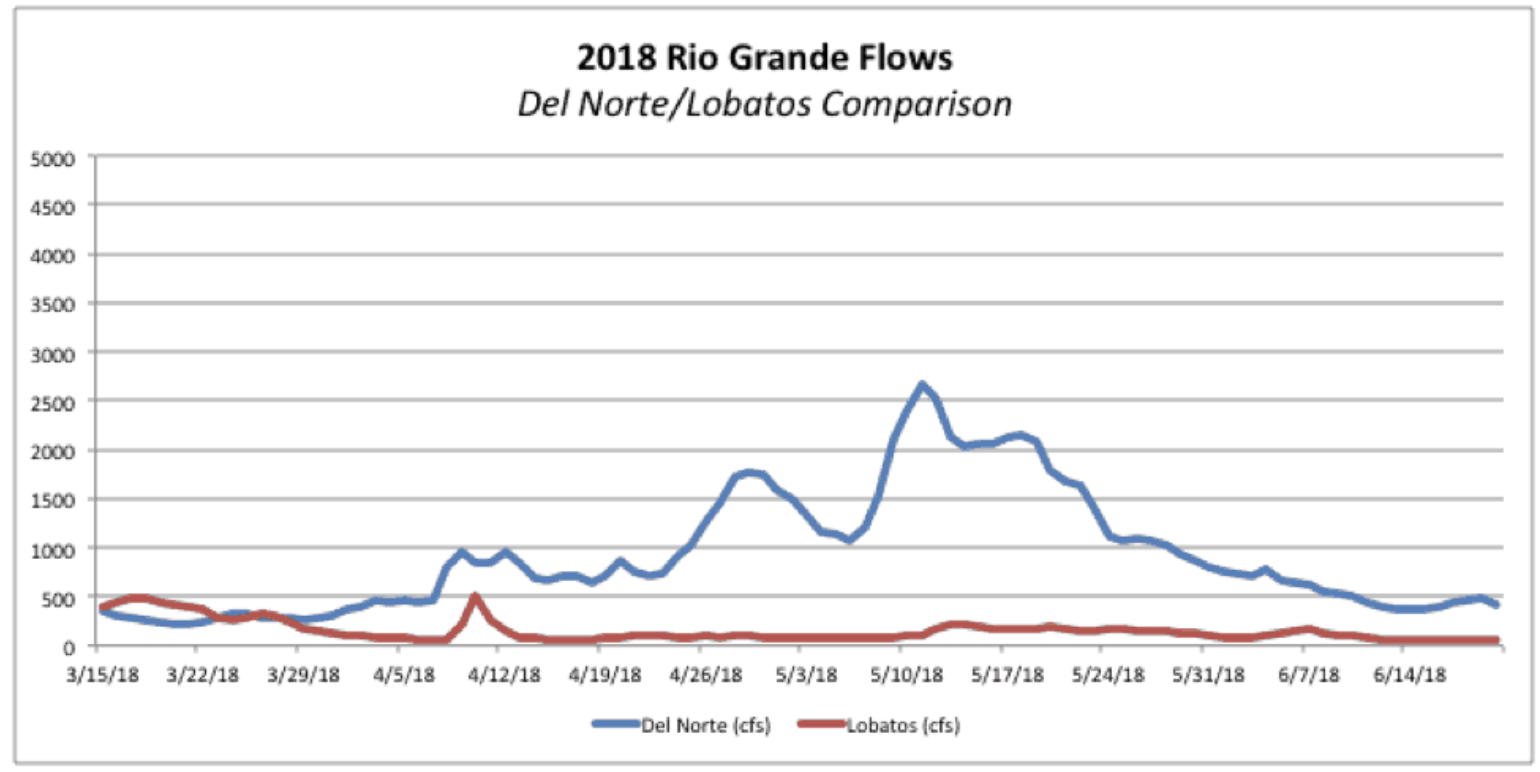
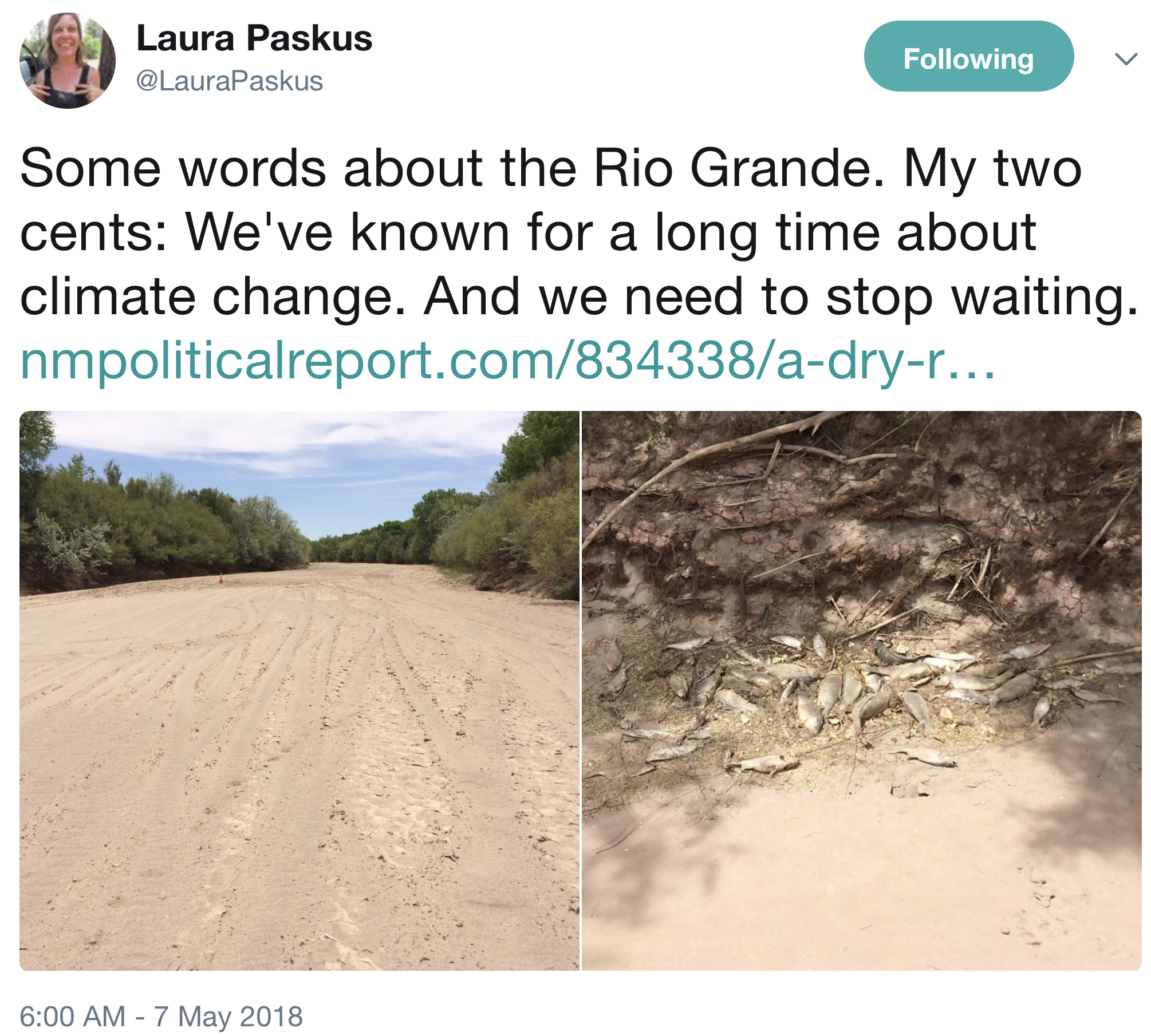
The Colorado River and its woes tend to get all of the attention, but the Southwest’s “other” big river, the Rio Grande, is in even worse shape thanks to a combination of warming temperatures, drought, and overconsumption. That’s become starkly evident in recent years, as the river bed has tended to dry up earlier in the summer and in places where it previously had continued to carry at least some water. Now Brian Richter and his team of researchers have quantified the Rio Grande’s slow demise, and the conclusions they reach are both grim and urgent: Without immediate and substantial cuts in consumption, the river will continue to dry up — as will the farms and, ultimately, the cities that rely on it.
The Rio Grande’s problems are not new. Beginning in the late 1800s, diversions for irrigation in the San Luis Valley — which the river runs through after cascading down from its headwaters in the San Juan Mountains — sometimes left the riverbed “wholly dry,” wrote ichthyologist David Starr Jordan in 1889, “all the water being turned into these ditches. … In some valleys, as in the San Luis, in the dry season there is scarcely a drop of water in the riverbed that has not from one to ten times flowed over some field, while the beds of many considerable streams (Rio la Jara, Rio Alamosa, etc.) are filled with dry clay and dust.”
San Luis Valley farmers gradually began irrigating with pumped groundwater, allowing them to rely less on the ditches (but causing its own problems), and the 1938 Rio Grande Compact forced them to leave more water in the river. While that kept the water flowing through northern and central New Mexico, the Rio Grande’s lower reaches still occasionally dried up.
Then, in the early 2000s, the megadrought — or perhaps permanent aridification — that still plagues the region settled in over the Southwest. [ed. emphasis mine] Snowpack levels in the river’s headwaters shrank, both due to diminishing precipitation and climate change-driven warmer temperatures, which led to runoff and streamflows 17% lower than the 20th century average, according to the new study. And yet, overall consumption has not decreased.
“In recent decades,” the authors write, “river drying has expanded to previously perennial stretches in New Mexico and the Big Bend region. Today, only 15% of the estimated natural flow of the river remains at Anzalduas, Mexico near the river’s delta at the Gulf of Mexico.” Reservoirs, the river’s savings accounts, have been severely drained to the point that they won’t be able to withstand another one or two dry winters. As farmers and other users have increasingly turned to groundwater pumping, aquifers have also been depleted. The situation is clearly unsustainable.
Something’s gotta give on the Rio Grande, and while we may be tempted to target Albuquerque’s sprawl, drying up all of the cities and power plants that rely on the river wouldn’t achieve the necessary cuts.
Source: “Overconsumption gravely threatens water security in the binational Rio Grande-Bravo basin” by Brian Richter et al.
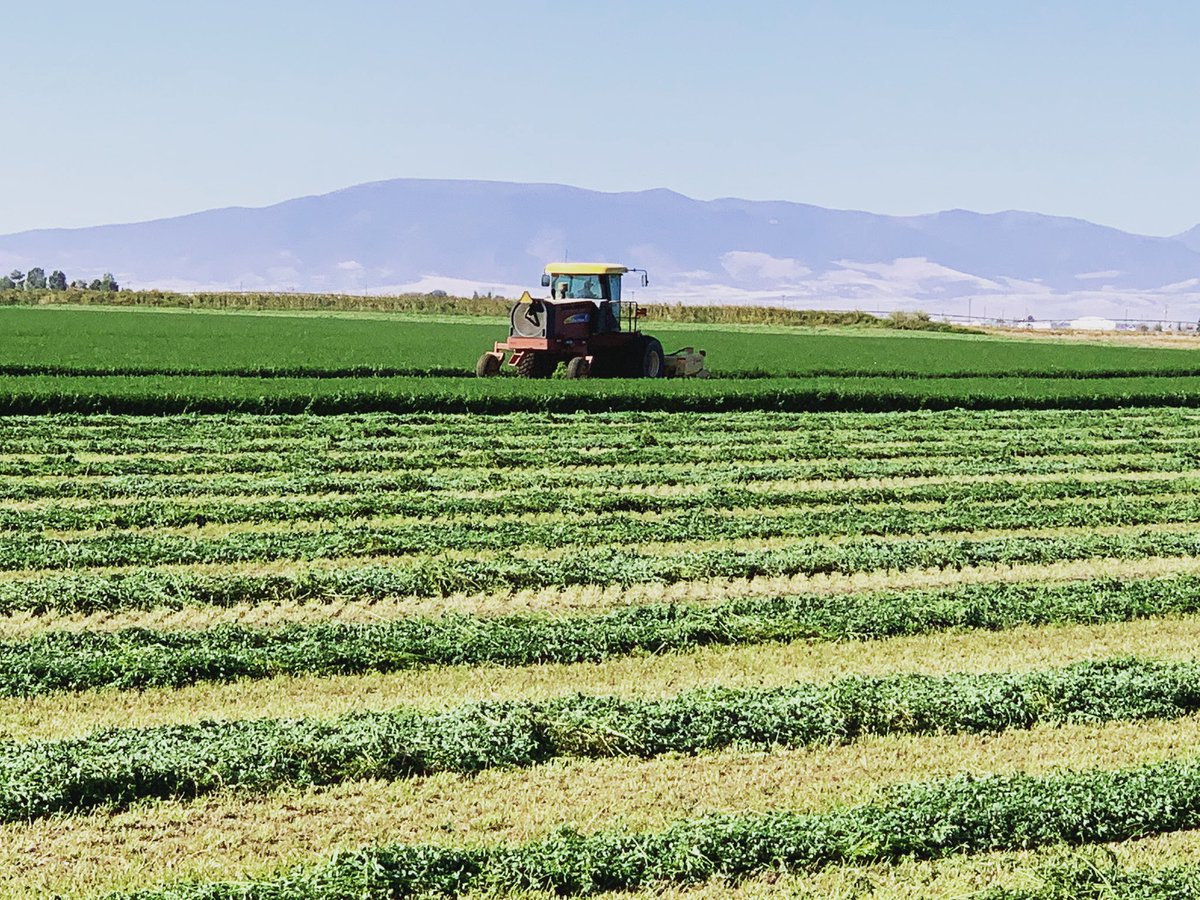
It will come as little surprise to Western water watchers that agriculture is by far the largest water user on the Rio Grande — taking up 87% of direct human consumption — and that alfalfa and other hay crops gulp up the lion’s share, or 52%, of agriculture’s slice of the river pie. This isn’t necessarily because alfalfa and other hays are thirstier than other crops, but because they are so prevalent, covering about 433,000 acres over the entire basin, more than four times as much acreage as cotton.
Source: Overconsumption gravely threatens water security in the binational Rio Grande-Bravo basin
This kind of math means farmers are going to have to bear the brunt of the necessary consumption cuts — either voluntarily or otherwise. In fact, they already have: Between 2000 and 2019, according to the report, Colorado lost 18% of its Rio Grande Basin farmland, New Mexico lost 28%, and the Pecos River sub-basin lost 49% (resulting in a downward trend in agricultural water consumption). Some of this loss was likely incentivized through conservation programs that pay farmers to fallow their fields. But it was also due to financial struggles.
Yet even when farmers are paid a fair price to fallow their fields there can be nasty side effects. Noxious weeds can colonize the soil and spread to neighbors’ farms, it can dry out and mobilize dust that diminishes air quality and the mountain snowpack, and it leaves holes in the cultural fabric of an agriculture-dependent community. If a field’s going to be dried up, it should at least be covered with solar panels.
Another possibility is to switch to crops that use less water. This isn’t easy: Farmers grow alfalfa in the desert because it’s actually quite drought tolerant, doesn’t need to be replanted every year, is less labor-intensive than other crops, is marketable and ships relatively easy, and can grow in all sorts of climates, from the chilly San Luis Valley to the scorching deserts of southern Arizona.
Still, it can be done, as a group of farmers in the San Luis Valley are demonstrating with the Rye Resurgence Project. This effort is not only growing the grain — which uses less water than alfalfa, is good for soil health, and makes good bread and whiskey — but it is also working to create a larger market for it. While it’s only a drop in the bucket, so to speak, this is the sort of effort that, replicated many times across the region, could help balance supply and demand on the river, without putting a bunch of farmers out of business.
Photo credit: The Rye Resurgence Project
***
Oh, and about that other river? You know, the Colorado? Representatives from the seven states failed to come up with a deal on how to manage the river by the Nov. 15 deadline. The feds had mercy on them, giving them until February to sort it all out. I’m not so optimistic, but we’ll see. Personally, I think the only way this will ever work out is if the Colorado River Compact — heck, the entire Law of the River — is scrapped, and the states and the whole process is started from scratch, this time with a much better understanding of exactly how much water is in the river, and with the tribal nations having seats at the table.
⛏️ Mining Monitor ⛏️
There are a bunch of wannabe uranium mining companies out there right now, locating claims and acquiring and selling claims and touting their exploratory drilling results. But there are only a small handful of firms that are actually doing anything resembling mining. One of them is the Canada-based Anfield, which just broke ground on its Velvet-Wood uranium mine in the Lisbon Valley, even without all of the necessary state permits.
Now Anfield says it has applied for a Colorado permit to restart its long-idle JD-8uranium mine. The mine is on one of a cluster of Department of Energy leases overlooking the Paradox Valley from its southern slopes, and was previously owned and operated by Cotter Corporation. The mine has not produced ore since at least 2006. Anfield says it will process the ore at its Shootaring Mill near Ticaboo, Utah, which has yet to get Utah’s green light.
🏠 Random Real Estate Room 🤑
Look! Affordable housing near Moab! Sure, it’s a cave, but it’s only $99,000. Oh, what’s that? $998,000? They’re selling a cave for a million buckaroos? But of course they are. To be fair, it’s not just a cave. It’s several of them, plus a trailer. Crazy stuff.
📸 Parting Shot 🎞️
A work train in the Animas River gorge just below Silverton. Jonathan P. Thompson photo.
Rio Grande and Pecos River basins. Map credit: By Kmusser – Own work, Elevation data from SRTM, drainage basin from GTOPO [1], U.S. stream from the National Atlas [2], all other features from Vector Map., CC BY-SA 3.0, https://commons.wikimedia.org/w/index.php?curid=11218868
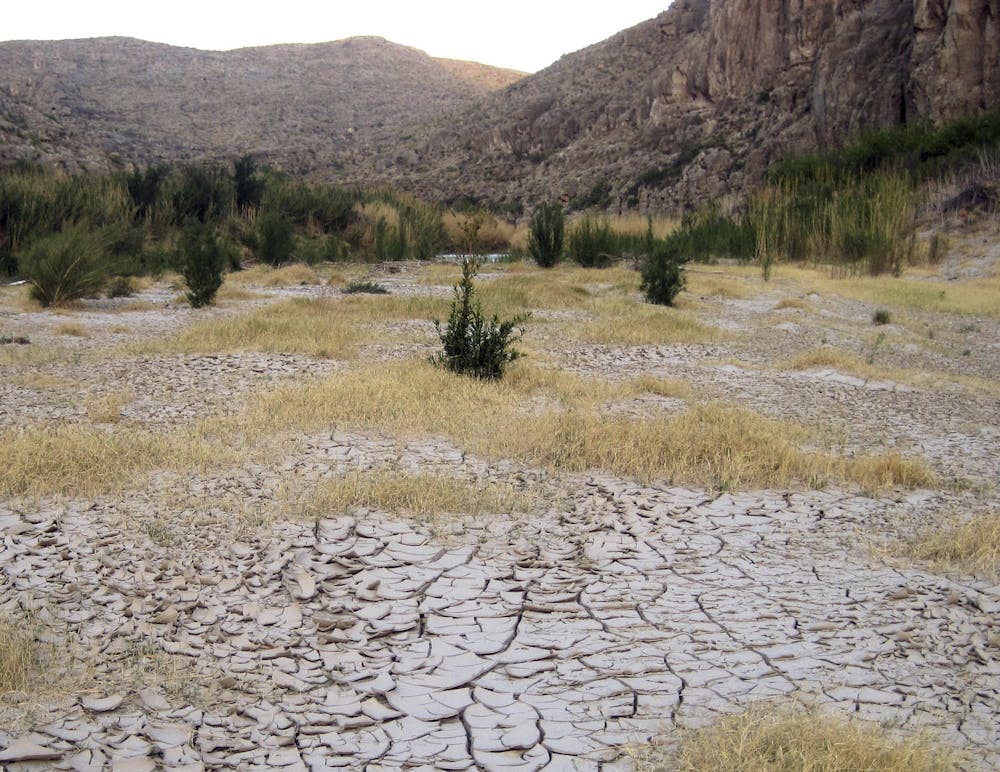
For the second time in the 21st century, this segment of the Rio Grande in Albuquerque went dry, leaving this image of cracked sediment on a blistering afternoon on Aug. 7, 2025. Photo (and copyright)/WWF-us, Diana Cervantes
Click the link to read the article on the Associated Press website (Susan Montoya Bryan). Here’s an excerpt:
November 20, 2025
Research published Thursday says the situation arguably is worse than challenges facing the Colorado River, another vital lifeline for western U.S. states that have yet to chart a course for how best to manage that dwindling resource. Without rapid and large-scale action on both sides of the border, the researchers warn that unsustainable use threatens water security for millions of people who rely on the binational basin. They say more prevalent drying along the Rio Grande and persistent shortages could have catastrophic consequences for farmers, cities and ecosystems…The study done by World Wildlife Fund, Sustainable Waters and a team of university researchers provides a full accounting of the consumptive uses as well as evaporation and other losses within the Rio Grande-Bravo basin. It helps to paint the most complete — and most alarming — picture yet of why the river system is in trouble…The research shows only 48% of the water consumed directly or indirectly within the basin is replenished naturally. The other 52% is unsustainable, meaning reservoirs, aquifers and the river itself will be overdrawn…
Irrigating crops by far is the largest direct use of water in the basin at 87%, according to the study. Meanwhile, losses to evaporation and uptake by vegetation along the river account for more than half of overall consumption in the basin, a factor that can’t be dismissed as reservoir storage shrinks…The irrigation season has become shorter, with canals drying up as early as June in some cases, despite a growing season in the U.S. and Mexico that typically lasts through October. In central New Mexico, farmers got a boost with summer rains. However, farmers along the Texas portion of the Pecos River and in the Rio Conchos basin of Mexico — both tributaries within the basin — did not receive any surface water supplies…The analysis found that between 2000-2019, water shortages contributed to the loss of 18% of farmland in the headwaters in Colorado, 36% along the Rio Grande in New Mexico and 49% in the Pecos River tributary in New Mexico and Texas. With fewer farms, less water went to irrigation in the U.S. However, researchers said irrigation in the Mexican portion of the basin has increased greatly.
Rio Grande and Pecos River basins. Map credit: By Kmusser – Own work, Elevation data from SRTM, drainage basin from GTOPO [1], U.S. stream from the National Atlas [2], all other features from Vector Map., CC BY-SA 3.0, https://commons.wikimedia.org/w/index.php?curid=11218868
San Luis Valley farm. Photo credit: Allen Best/Big Pivots
Click the link to read the article on the Big Pivots website (Allen Best):
November 20, 2025
In November 2023, I stopped by the office of Cleave Simpson, then (and still now, at least for a brief time more), the general manager of the Rio Grande Water Conservancy District.
There, in Alamosa, he shared with me his observation that the Rio Grande during the 21st century has had water declines parallel to those of the Colorado River.
Both rivers originate in Colorado, and neither river has been able to deliver the water assumed by any number of diversion projects. Problems began in the 20th century but have intensified greatly in the 21st century because of drought but also rising temperatures.
The Rio Grande has had 17% reduced flows since 2000. The Colorado River flows have declined 20%.
Of the two rivers, the Rio Grande is longer, at 1,900 miles but carries less water, 9.1 million acre-feet/year. The Colorado flows 1,450 miles and has been carrying an average 15.4 million acre-feet. Neither river has delivered water into oceans with any reliability in decades.
Sandhill cranes and a few mallard ducks roost at sunset on a sandbar of the Rio Grande in Albuquerque during January. Photo(and copyright)/WWF-us, Diana Cervantes. Top: The San Luis Valley near Del Norte. Photo/Brian Richter
Despite these parallels, the Colorado has received far more attention, as is pointed out in a new report by Brian Richter of the World Wildlife Fund and nine others from academic institutions in Arizona, California, and other states.
Why is that? The Colorado provides drinking water for about 40 million people compared to 15 million for the Rio Grande. In irrigated agriculture, it’s a similar story: 22,300 square kilometers in the Colorado River Basin vs. 7,800 square kilometers in the Rio Grande.
“However, the water crisis facing the Rio Grande Basin is arguably more severe and urgent than the Colorado River Basin,” Richter and his colleagues contend. They argue for some rethinking and institutional alignments to help ratchet water use down to sustainable levels.
The study is the first full accounting of how water is consumed across the entire Rio Grande Basin. Mexico calls it the Rio Bravo.
Doesn’t Colorado also have a strong accounting system, as necessary to meet requirements of the 1938 compact among states that share the Rio Grande?
Yes, says Richter. However, he adds a “but.” He reports difficulty in getting estimates of how much water is being consumed by each sector and by each crop. He believes he has succeeded.
“To my knowledge, nobody has laid out the numbers at the level of clarity and accuracy that we were able to accomplish,” he said.
Another major contribution of the paper is the estimation of the degree to which water consumption is unsustainable, he said.
“We estimate that 11% of water consumption in Colorado is unsustainable. Natural replenishment from snowmelt runoff, precipitation, and groundwater recharge supplies only 89% of the water being consumed; the remainder (deficit) is being met by depleting groundwater.”
“The Rio Grande basin is at a tipping point, and everyone needs to be part of the solution,” said Enrique Prunes, a co-author and the World Wildlife Fund Rio Grande manager. “These findings will help us rethink how we manage water to secure a future for everyone.”
For the second time in the 21st century, this segment of the Rio Grande in Albuquerque went dry, leaving this image of cracked sediment on a blistering afternoon on Aug. 7, 2025. Photo(and copyright)/WWF-us, Diana Cervantes
Dry cracked sediment from the Rio Grande on a blistering afternoon on Aug. 7, 2025 in Albuquerque, N.M. For the second time in the 21st century the Rio Grande has gone dry in the Albuquerque stretch. (TC) (EDITOR’S NOTE: T/C, to fact check).
Agriculture uses 99.9% of the water in Colorado’s San Luis Valley and 87% in the basin altogether.
Dramatic declines in reservoir storage illustrate the scope of problem. Altogether, 12% of reservoir storage has been lost in the 21st century. The decline is most severe in New Mexico, where 71% less water was stored at the end of 2024 compared to 2002.
Groundwater depletion has been even more drastic. Roughly 15 times more groundwater has declined compared to surface storage. The two are coupled. As surface water supplies decline, groundwater mining grows.
“In the San Luis Valley of Colorado, diminished river flows and aquifer recharge have led to continued over-pumping, causing aquifers levels to decline,” Richter and his team write. “The Colorado state engineer has threatened to shut off hundreds of groundwater wells if the aquifer supporting irrigated farms cannot be stabilized.”
The San Luis Valley is famous for its potatoes as well as the barley to make Coors beer, but potatoes use just 7% of the water and barley 9%. The vast majority of water in the valley produces feedstocks for livestock: 47% for alfalfa, 27% for other hay, and 6% for pasture lands.
The study finds that groundwater in the San Luis Valley has been depleted at a rate of 89,179 acre-feet/year, equivalent to 11% of the annual average of direct water consumption in the valley.
What can be done? Large cities have done more with less. Albuquerque’s population grew 40% while its water use declined by 17%. However, municipal and commercial water consumption account for only 7% of all direct consumption in the three-state and two-country basin.
Strategies for reducing consumption in irrigated agriculture have been proven but must be rapidly deployed at sufficient scale and financially sustained by governments, companies, and credit institutions to rebalance the basin’s water budgets, state, and binational levels.
At the same time, water shortages have contributed to the loss of 18% of farmland in the river’s headwaters in Colorado, 36% in New Mexico, and 49% in the Pecos River tributary in New Mexico and Texas.
Strategies being embraced to curb groundwater drafting in the closed basin of the San Luis Valley have been controversial. A key case is likely to go before the Colorado Supreme Court. In Mexico, cutbacks have led to violence. One protestor died.
The study points to several strategies that could reshape how water is used in the basins. These include restoring river habitats, adjusting dam operations to better support seasonal flows, improving water-sharing agreements, and helping farmers switch to crops that require less water.
That effort to encourage crop-switching has been underway in the San Luis Valley, but with successes only at the margins.
Rio Grande and Pecos River basins. Map credit: By Kmusser – Own work, Elevation data from SRTM, drainage basin from GTOPO [1], U.S. stream from the National Atlas [2], all other features from Vector Map., CC BY-SA 3.0, https://commons.wikimedia.org/w/index.php?curid=11218868
Chart showing water use trends in US and Mexico. Credit: Overconsumption gravely threatens water security in the binational Rio Grande-Bravo basin. Map via Springer Nature.
major new study on the nearly 1,900-mile long Rio Grande Basin — from the San Luis Valley into the Gulf of Mexico — shows a “severe water crisis emerging” with total reservoir storage in decline at around 4.24 million acre-feet or 26 percent of capacity.
The study brings together detailed water consumption estimates of surface and ground water use throughout the basin and concludes “a likely outcome will be continued loss of farmland due to financial insolvency from lowered crop production and other factors including the aging of farmers and lack of affordable farm labor,” without urgent action.
“Climate scientists have reframed the long-running drought as the onset of long-term aridification and are forecasting additional river flow diminishment of 16-28% in coming decades as the climate continues to warm,” the study notes.
The authors’ analysis shows that during 2000–2019, Colorado lost 18 percent of its farmland in the Upper Rio Grande Basin, New Mexico lost 28 percent along its Rio Grande sub-basins, and the Pecos River sub-basin lost 49 percent.
Further drying puts farmers and cities who rely on the Rio Grande in an “existential water crisis.”
Brian Richter, one of the authors of the study, says San Luis Valley farmers are central to the development and implementation of solutions for the rapidly drying Rio Grande given that “the vast majority of the direct human consumption of water in the SLV takes place on irrigated farms.”
Researchers estimate that the present level of over-consumption of both surface and groundwater in the Valley is approximately 11 percent. “That means that water consumption needs to be reduced by that percentage,” Richter said.
Richter is president of Sustainable Waters and senior freshwater fellow for the World Wildlife Fund. The two organizations teamed with researchers to provide a full accounting of the consumptive uses as well as evaporation and other losses within the Rio Grande Basin.
The Rio Grande stretches nearly from the San Luis Valley through New Mexico, El Paso, Texas, and empties into the Gulf of Mexico. It provides drinking water for more than 4 million in Colorado, New Mexico and Texas, and 11 million people in Mexico, the study notes. More than 1.9 million acres of irrigated farmland is tied to the Rio Grande.
The study, “Overconsumption gravely threatens water security in the binational Rio Grande-Bravo basin,” relies on data from annual runoff volumes, municipal and commercial consumptive use estimates from the U.S. Geological Survey, and reservoir storage levels, among other data sets.
Snowmelt runoff has decreased 17 percent over the past 25 years, according to the report. At the same time, total direct water consumption has been increasing since 2000, largely due to increasing water usage by farmers in Mexico.
When comparing challenges of Colorado River users to the Rio Grande, researchers say the “water crisis facing the RGB is arguably more severe and urgent than the CRB,” given the fact groundwater in the San Luis Valley has been depleted at a rate of 89,000 acre-feet per year; New Mexico has a water debt to Texas; and Mexico has a mounting water debt to the U.S. under a 1944 treaty that is causing political tension between the two countries.
The Upper Rio Grande here at the end of 2025 is benefitting from heavy October rainsthat materialized across the southwest and provided a stopgap to what were some of the worst summer river flows ever recorded on the river.
Management of the Upper Rio Grande Basin will be back in the spotlight come January 2026 when Colorado Water Court Division Three takes up the Fourth Amended Plan of Water Management for Subdistrict 1 of the Rio Grande Water Conservation District. The new strategy calls for a groundwater overpumping fee of $500 per acre-foot any time an irrigator in Subdistrict 1 exceeds the amount of natural surface water tied to the property of their operation. The rule punishes farmers who do not have natural surface water coming into their fields but instead rely solely on groundwater pumping for their crops.
The whole point of the plan for the agricultural-rich area of the San Luis Valley is to let Mother Nature dictate the pattern of how irrigators in Subdistrict 1 restore the unconfined aquifer and build a sustainable model for farming in the future.
Richter credits Colorado and irrigators in the Valley for taking steps to address the Rio Grande. The proposed $500 fee for overpumping in Subdistrict 1, he says, “is going to set off a lot of change in the Valley, because many/most farmers won’t be able to continue producing the same crops they’ve been growing in recent years.”
“Colorado has definitely taken some important steps, and manages its water resources far better than New Mexico or Texas,” Richter says. “But Colorado still has not been able to reduce pumping to anywhere near the needed degree, so it’s no surprise the aquifer continues to decline.”
The study looks at crops grown along the Rio Grande and how agricultural fields account for 87 percent of direct water consumption.“Overall, agricultural consumption is nearly seven times the volume of all other direct uses combined.”
Alfalfa and grass hay – water-intensive crops that dominate the landscape in the Valley and in Northern and the Middle Rio Grande of New Mexico – account for nearly 45 percent of the irrigation water consumed along the Rio Grande Basin. A shift to less-intensive crops, as the Rye Resurgence Project advocates, and a moratorium on new wells in over-drafted areas of basin in New Mexico and Texas, are necessary first steps to addressing the Rio Grande’s challenges, according to researchers of the study.
“Potatoes might be one of the few crops that remain sufficiently profitable to persist in the Valley,” says Richter. “If those transitions to other crops or to permanent farmland retirement lead to reduced water consumption to the level needed (11 percent), there is hope that the (unconfined) aquifer can be rebalanced with natural replenishment. However, it will require a greater level of pumping reductions to enable the aquifer to recover to the level required by the state engineer.”
San Luis Valley center pivot August 14, 2022. Photo credit: Allen Best/Big Pivots
The dangerous high waters on the San Juan River and Upper Rio Grande are beginning to recede following the surge from heavy rains that created historic autumn peak streamflows on the San Luis Valley’s river system.
The high flows also came at the end of irrigation season for Valley farmers and the Colorado Division of Water Resources, which will now account for the extra water in its management of the Rio Grande Compact.
The Rio Grande itself peaked at 7,000 cfs from the bounty of rain that came through the southwest region here in mid-October. The Colorado Division of Water Resources is estimating that the out-of-character weather event added 20,000 to 25,000 acre-feet of water to the Rio Grande system itself and around 10,000 to 15,000 acre-feet that was diverted into the Valley’s canal system, according to staff engineer Pat McDermott.
That measuring of the water and accounting for how it fits into this year’s obligations under the Rio Grande Compact is underway. The irrigation season ends Nov. 1.
McDermott, in a report Tuesday to Rio Grande Basin Roundtable members, said not all of the water will be of beneficial use to the Valley and the Upper Rio Grande Basin. The middle Rio Grande could see about 5,000 acre-feet flow downstream, but with a largely dry riverbed in Albuquerque, benefits from the October storms likely won’t extend as far south as Elephant Butte.
“This is not a significant event in New Mexico,” McDermott said.
For the reservoirs on the western and southern end of the Valley, it has been. Rio Grande Reservoir, Platoro Reservoir and Terrace Reservoir all will increase storage, with the reservoirs all in priority during the irrigation season for the first time since 2019.
Rio Grande Reservoir will have somewhere between 2,000 and 4,000 acre-feet of storage, Platoro Reservoir has increased its storage and Terrace Reservoir has gone up about 2,000 acre-feet, McDermott said.
“This is kind of unusual to have this big a flow event,” McDermott said. “It doesn’t happen.”
McDermott noted the importance and effectiveness of the Valley’s canal ditch riders, who worked to push water into their ditches to help with the surges of streamflow.
The Empire Canal, Monte Vista, the Rio Grande Canal, the Farmers Union, San Luis Valley Canal all opened their ditches to take in water, McDermott said.
“We here have very, very cooperative owners that have opened up their ditches after several months of non-use. We want to thank all those ditch operators for getting out there and taking some of this available flow. It is a wonderful thing.
“This is a really good thing for our basin,” said McDermott. “It’s going to give us an opportunity to get some water back out into the ditches late in the season, which we don’t see very often.”
Much of Valley will now go into its offseason with moist soils. But as McDermott noted, areas like the critical Saguache Creek, Carnero Creek, and the east side of the Valley down south through Trinchera didn’t receive much benefit from the rains.
The next best thing would be a normal to above-normal snow season in the San Juan Mountains and Sangre de Cristo range.
La Niña is still looking weak. But as October has shown, weather can happen.
Rio Grande and Pecos River basins. Map credit: By Kmusser – Own work, Elevation data from SRTM, drainage basin from GTOPO [1], U.S. stream from the National Atlas [2], all other features from Vector Map., CC BY-SA 3.0, https://commons.wikimedia.org/w/index.php?curid=11218868
The Rio Grande flows over 1,800 miles from the mountains of southwestern Colorado to the Gulf of Mexico. A lawsuit filed in 2013 between Texas and New Mexico over Rio Grande water has taken as many twists and turns as the river itself.
A settlement signed this week by New Mexico, the Department of Justice and two irrigation districts, and reviewed by Inside Climate News, lays out agreements for irrigation management on the Rio Grande. It is one part of a larger settlement package that will be presented to a special master in the case, Judge D. Brooks Smith of the U.S. Third Circuit Court of Appeals, for approval next month.
The outcome of the case is expected to have broad implications for cities that rely on the Rio Grande and farmers throughout New Mexico and far west Texas.
The settlement package includes new formulas to calculate how much water each entity is owed; an agreement for New Mexico to reduce groundwater depletion, and changes to the operating manual for the Bureau of Reclamation’s Rio Grande Project.
Under the settlement, New Mexico could transfer water rights from the Elephant Butte Irrigation District (EBID) in Southern New Mexico in order to meet its obligations to Texas. The state agrees in the settlement that it would compensate EBID.
The case began when Texas alleged that groundwater pumping in Southern New Mexico deprives the state of water it is owed under the Rio Grande Compact. Colorado and the United States are also parties to the case. Local irrigation districts, cities and agricultural interest groups have been involved as friends of the court. The case has evolved from a dispute between Texas and New Mexico to encompass conflicts between groundwater and surface water users in the area.
“We are ecstatic to have reached a settlement and look forward to continue delivering water to our farmers and the City of El Paso,” said Jay Ornelas, general manager of the El Paso Water Improvement District No. 1, an irrigation district. “The agreement provides long-term protection to El Paso farmers and the City of El Paso that rely on water from the federal Rio Grande Project.”
A Strained Inter-State Compact
The Rio Grande Compact, signed in 1938, lays out how much water Colorado, New Mexico and Texas can use from the Rio Grande. The compact only addresses surface water in the river. But hydrologists now understand that aquifers and rivers are connected. Wells drilled into adjoining aquifers can reduce the flow of water into the Rio Grande.
At issue in the case is a 100-mile stretch of the river between Elephant Butte Reservoir in Southern New Mexico and the Texas-New Mexico state line. Water is released from the reservoir for both Southern New Mexico and far West Texas, including El Paso.
As agriculture expanded and severe droughts hit the region, farmers drilled more wells into the aquifer. Texas argues these wells in Southern New Mexico are siphoning off water that should flow to Texas.
“In one way it’s a conflict between the state of Texas and the state of New Mexico,” said Burke Griggs, a professor of water law at Washburn University in Topeka, Kansas. “But the conflict that really matters here is the conflict between surface water rights and groundwater pumping.”
Climate change is impacting snowmelt in the river’s headwaters. Extreme heat is increasing evaporation rates from the river where it flows downstream through the desert. The case is closely watched in New Mexico, where scientists predict thatwithin 50 years water supply from rivers and aquifers will decline by 25 percent. The City of El Paso, which relies on Rio Grande water, has diversified its water sources as the river became less reliable.
The Supreme Court rejected a settlement that the states reached in 2022 because the federal government had not consented to its terms. The parties went back to the drawing board. A new settlement was announced on May 15, with the United States on board.
“The United States got what it needed in terms of firm commitments by New Mexico to reduce groundwater depletions,” Griggs said.
In a statement, the El Paso Water Improvement District No. 1 said that the settlement will improve efficiency, conserve scarce water resources and ensure that water is available for the district’s farmers and the City of El Paso. EBID has also signed on to the settlement.
Judge Smith, the special master, has called the parties to appear in court in Philadelphia on September 30 to explain the agreements. The details of the other parts of the settlement package have not been made public. As surface water dwindles across the Southwest, the settlement could bring to an end years of uncertainty surrounding the Rio Grande.
“We’ll know with this settlement, I think with much greater precision, how much water there is to be used, how much water people are going to be able to pump a year or two out,” Nat Chakeres, general counsel for New Mexico’s Office of the State Engineer, told lawmakers in Santa Fe earlier this month.
While Texas v. New Mexico may soon come to a close, water challenges in the desert Southwest are becoming ever more urgent. The settlement comes as Elephant Butte reservoir is at less than four percent capacity, nearly a record low, and the Rio Grande south of Albuquerque has run dry for over a month.
Rio Grande and Pecos River basins. Map credit: By Kmusser – Own work, Elevation data from SRTM, drainage basin from GTOPO [1], U.S. stream from the National Atlas [2], all other features from Vector Map., CC BY-SA 3.0, https://commons.wikimedia.org/w/index.php?curid=11218868
Center pivot in the San Luis Valley. Photo credit: Allen Best/Big Pivots
Click the link to read the article on the Big Pivots website (Allen Best):
July 20, 2025
Center, as its name implies, lies at the center of the San Luis Valley. The valley is among the nation’s two most prominent places for growing potatoes. Among the growers is a fourth-generation family operation, Aspen Produce LLC.
Jake Burris married into the family. In addition to spuds, the family grows barley and alfalfa on 3,500 acres. Some neighboring farmers also grow canola. Burris is president of the board of managers of one of six subdistricts in the San Luis Valley’s Rio Grande Water Conservation District. His subdistrict — called Subdistrict No. 1 — was formed in 2006 in response to a declining water table. What’s known as the unconfined aquifer supports this area, the most agriculturally productive in the San Luis Valley. With just seven inches of annual precipitation, irrigation in the San Luis Valley is everything. And in Subdistrict 1, much of that water comes from 3,617 wells..
Alfalfa grown is quite thirsty, but potatoes get grown on much larger areas of the Rio Grande Water Conservancy District. Photo credit: Allen Best/Big Pivots
Alfalfa is the thirstiest crop, using 24 to 36 inches of water to get three cuttings. The strong sunshine and cooler temperatures found above elevations of 7,000 feet produce a high-quality hay that draws orders from dairies as far as California. Alfalfa is grown on 21,100 acres in the district. Potatoes cover 51,100 acres. Barley is grown on 28,000 acres. Some have replaced barley with rye. Several thousand acres have together been devoted to canola, lettuce, and other crops. A recent census found about 25,000 acres had been fallowed.
The San Luis Valley has two primary aquifers. Lower in the ground, separated by relatively impermeable beds of clay from what lies above, is the confined aquifer. The first well into the confined aquifer was bored in 1887. Because of the pressures underground, it was an artesian well. No pumping was needed to bring water to the surface. Louis Carpenter, a professor at the Colorado Agriculture College (now Colorado State University), estimated the valley had 2,000 artesian wells when he visited in 1891.
The unconfined aquifer lies above the confined aquifer. The unconfined aquifer existed prior to major water development in the valley but water volumes rose greatly when farms began using Rio Grande water in the 1880s. Four ditches deliver Rio Grande water to the farms and hence to the aquifer. Introduction of high-capacity pumps in the 1950s and center-pivot sprinklers in the 1970s accelerated groundwater extraction. In 1972, the state engineer imposed a moratorium on new wells from the confined aquifer, followed in 1981 by a moratorium on new wells in the unconfined aquifer. These moratoria acknowledge that groundwater drafting had to be limited.
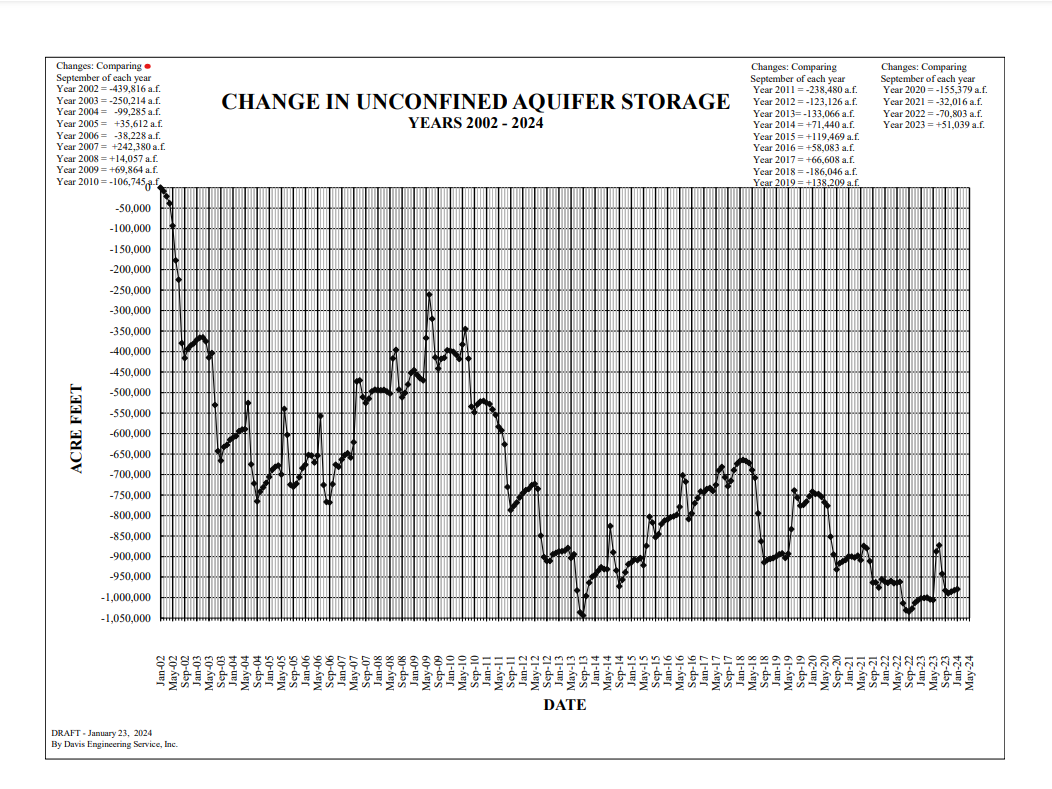
Then came 2002, hot and dry, escalating the challenge. Impact to the unconfined aquifer was drastic with rising temperatures causing growing water demand even as snowpack declined.
The unconfined aquifer “has been dropping overall since about 2002,” says Craig Cotten, the Colorado Division of Water Resources engineer for Division 3, which encompasses the San Luis Valley. “We just have not had a real good series of years as far as the surface water.”
In 2004, state legislators passed a law that sets the San Luis Valley’s aquifers apart from those of the Republican River and Denver Basin groundwater stories. That law, SB04-222, explicitly orders both the confined and unconfined aquifers in the San Luis Valley be managed for sustainability. The Colorado law governing the Denver Basin aquifers requires a “slow sip” but does not imagine sustainability. In the Republican River Basin, no law speaks to sustainability. There, only the interstate compact insists upon limits.
San Luis Valley Groundwater
Here’s another difference. Water from aquifers create the Republican River and its tributaries. In the south-metro area, surface streams cause little recharge to the Denver Basin aquifers. In the San Luis Valley, the Rio Grande as well as some surface streams coming off the San Juans contribute water to both the unconfined and confined aquifers. The hydrogeology is more complex.
This 2004 law also encouraged the formation of groundwater subdistricts within the Rio Grande Water Conservation District. The thinking was that very local groups of farmers could work together to figure out how to keep their portions of the aquifers sustainable. They could also be more effective in this pursuit by working together than doing so individually.
Six subdistricts have been created in the Rio Grande Water Conservation District and one in the Trinchera Water Conservancy District. Subdistrict No. 1 began operations in 2012 after the state approved its operating plan.
All these groundwater districts have the goal of reducing water consumption as necessary to replenish the aquifers or by introducing water into the aquifer from the Rio Grande or other sources.
Agriculture constitutes nearly the entire economy of the San Luis Valley. Photo credit: Allen Best/Big Pivots
Exactly how much restoration of the aquifers is needed? The state law specified a return to volumes that approximate those of 1976 to 2001 in the confined aquifer. But there’s some guesswork about how much water the confined aquifer had then. Detailed records on Subdistrict No. 1 were not kept until 1976.
In August 2024 the unconfined aquifer in Subdistrict 1 was estimated to have averaged almost 1.2 million acre-feet less water during the five preceding years than it had in 1976. The rules approved by the Colorado Supreme Court in 2011 in a document called the Plan for Water Management call for the unconfined aquifer recovery within 200,000 to 400,000 acre-feet of where it was in 1976. That would be deemed sustainable, as ordered by the 2004 law.
To achieve this, the state engineer said that Subdistrict No. 1 would need to recover 170,000 acre-feet each year between now and 2031. Initially, Subdistrict No. 1 aimed to take 40,000 acres out of irrigation per year, or about 80,000 acre-feet of annual groundwater pumping, to allow the unconfined aquifer to recover. That goal is unattainable, say water officials, and hence a rethink is needed. Success has occurred, though. In 2024, for example, roughly 176,000 acre-feet were pumped from the confined and unconfined aquifers in Subdistrict No. 1, the fewest since groundwater metering began in 2009. That’s about a 30% reduction.
More sustained success will be necessary. “You don’t recover that unconfined aquifer through single years of good runoff,” says Ullmann, the state engineer. “There are difficult decisions that have to be made in order to recover and restore the aquifers, but that’s what these subdistricts are trying to do.”
Unlike the Republican River Basin, the unconfined aquifer in the San Luis Valley is fed water diverted from the Rio Grande, seen here at Monte Vista, and into irrigation canals. Photo credit: Allen Best/Big Pivots
This success is at least partly due to efforts to modify irrigation practices and taking land out of production. Amber Pacheco, deputy general manager of the Rio Grande Water Conservation District, explains that it’s difficult to quantify the reductions.
“Some farmers, for example, have simply reduced the number of alfalfa cuttings (and hence the irrigation required), for example. Or they only irrigate when they need to do so. Others have changed the cover crops planted after a potato harvest to reduce the amount of water needed.”
As in the Republican River District, local efforts to take land out of production use the foundation of federal programs, particularly CREP, or Conservation Reserve Enhancement Program. The subdistrict provides 20% of funds and the federal government 80%.
As did the Republican district in 2022, the Rio Grande district got an additional $30 million allocation of federal money funneled through the state. That money allows $3,000 in payment per acre-foot of curtailed groundwater use.
More must be done to recover the aquifer. The current proposal assembled by Burris and other directors of Subdistrict No. 1, their fourth iteration, would require aquifer recharge as a condition of pumping on a one-to-one basis. Water for recharge would come from water secured from the Rio Grande or native flows into the unconfined aquifer. This new plan allows subdistrict members with surface water credits to pump from the aquifer, because they are resupplying it.
The pumping allowed under the plan would be cut drastically. The Rio Grande district does not have authority to shut down wells, but it does have authority to assess fees for over-pumping. That fee stands at $150 per acre-foot. The plan would elevate that to $500. And, if aquifer recovery is not achieved, it would rise to $1,000.
Ultimately, the state engineer has authority to curtail wells that do not provide replacement water pursuant to an approved groundwater management plan or some other augmentation plan.
Some farmers in the subdistrict disagree with this plan. Opponents banded together as the Sustainable Water Augmentation Group, or SWAG, and filed a lawsuit to block implementation of the plan. A five-week trial has been scheduled for early 2026. Nobody expects that court’s decision to be the end of it. Whoever loses might well appeal the decision to the Colorado Supreme Court, a process likely to continue into 2028.
Might the problem of the depleted unconfined aquifer be resolved by diverting more water from the Rio Grande? The river has long been over-appropriated. This year, for example, rights junior to 1880 were being curtailed in May. As with the Republican River, water must be allowed to flow downstream as required by the Rio Grande Compact.
For the unconfined aquifer to recover quickly, Mother Nature would need to quickly step up. “It would take multiple years of above-average flows [in the Rio Grande] to recover to the level that we need,” says Pacheco. In fact, 19 of the last 20 years have been sub-average as compared to 1970 to 2000. This year’s runoff in mid-May was forecast to be 61% of the average from 1890 through 2024.
Part IV: “It’s like the clock is ticking when it comes to sustainability,” said Rod Lenz, chair of the Republican River Water Conservation District, at a recent board meeting. This and other parting thoughts about the three groundwater basins examined in this story. Also, a study is underway to provide a better estimate of the groundwater remaining in Baca County.You can also download the entire story here in a magazine format.
From email from the Salazar Rio Grande del Norte Center (Paul Formisano):
Join Colorado attorneys Bill Paddock and David Robbins as they present “Elephant Butte Reservoir, the Rio Grande Compact, and Water Administration in the San Luis Valley” on Thursday, April 24, 2025, from 3:00 p.m. to 5:00 p.m. in McDaniel Hall 101 at Adams State University.
Paddock and Robbins have worked for many decades protecting water interests in the San Luis Valley and throughout Colorado. Their perspectives will provide timely insights into the 1938 Rio Grande Compact, how it shapes current river management in the San Luis Valley and the broader river basin, and last year’s Supreme Court ruling on Texas v. New Mexico and Colorado.
These events will be held in conjunction with the Rio Grande Compact Commission meeting on Friday, April 25, 2025 starting at 9:00 a.m. at the Rio Grande Water Conservation District office in Alamosa. This annual meeting brings together officials from Colorado, New Mexico, and Texas to discuss river policy and management. The meeting is free and open to the public.
For more information about the April 24th events, please contact Salazar Center director Paul Formisano, Ph.D., at pformisano@adams.edu.
Rio Grande and Pecos River basins. Map credit: By Kmusser – Own work, Elevation data from SRTM, drainage basin from GTOPO [1], U.S. stream from the National Atlas [2], all other features from Vector Map., CC BY-SA 3.0, https://commons.wikimedia.org/w/index.php?curid=11218868
The Rio Grande at Isleta Blvd. and Interstate 25 on Sept. 7, 2023. (Photo by Anna Padilla for Source New Mexico)
Click the link to read the article on the Source NM website (Danielle Prokop):
April 16, 2025
The federal judge overseeing the lawsuit between New Mexico, Texas and Colorado over Rio Grande water has ordered a 10-day trial in Philadelphia starting June 9 at the request of all the parties, who are also pursuing mediation talks to resolve the lawsuit in the meantime.
The case, officially called Original No. 141 Texas v. New Mexico and Colorado, began more than a decade ago, sparked by escalating legal disputes around Rio Grande water below Elephant Butte between Texas and New Mexico.
The U.S. Supreme Court allowed the federal government — which operates a network of dams, and nearly 140 miles of irrigation canals to deliver water to two irrigation districts in the region and Mexico — to enter as a party to the case in 2018.
In the February status hearings, the federal mediator and attorneys for all three parties told United States Court of Appeals for the Third Circuit Chief Judge D. Brooke Smith, who is overseeing the case, that they were still seeking a resolution to the 12-year old case.
Jeffrey Wechsler, the lead attorney representing New Mexico, said setting a trial date would help mediation talks.
“Deadlines help negotiations rather than hinder them,” Wechsler said, according to transcripts of the hearing.
The New Mexico Department of Justice and other parties’ attorneys confirmed to Source NM that mediation talks are ongoing as of April, with another mediation session scheduled for April 22, according to NMDOJ Chief of Staff Lauren Rodriguez. “Meanwhile, the trial—focused on determining liability and establishing a baseline for apportionment under the compact—remains on schedule,” she wrote in a statement, “if an agreement is not reached by then.”
Any potential settlement or recommendation from Smith based on a trial would still need approval from the U.S. Supreme Court, the only court that handles interstate waters disputes.
Last year, U.S. Supreme Court justices struck down a deal proposed by New Mexico, Colorado and Texas to end the litigation in a close 5-4 decision. They sided with objections from the federal government that the states’ deal unfairly excluded the “unique federal interests,” and sent the case back to the negotiation table and potentially trial.
The alliances between the state and federal government in the case have dramatically shifted since 2022 as the nature of the dispute changed. Initially, Texas and the federal government agreed that New Mexico pumping below Elephant Butte threatened Rio Grande water for both Texas irrigation and treaty obligations to Mexico.
However, since Colorado, New Mexico and Texas proposed a deal to measure Texas’ water at the state line and include transfers of water between New Mexico and Texas irrigation districts to balance out shortfalls, the federal government is going to have to build its own case.
“Texas and the United States are no longer aligned,” federal attorney Thomas Snodgrass told Smith in February. He said the federal government was still preparing a case that New Mexico should be held liable for groundwater pumping impacts on the Rio Grande since 1938.
The court already held one part of a two-part trial in October 2021, but the proposed settlement delayed the second part indefinitely.
Weschler told Smith in February that if the case does proceed to trial in June, it will be shorter than the three-months set aside for trial in 2021.
“The case is prepared for trial. In fact, it’s halfway through trial,” Weschler said. “We’ve completed our discovery, we’ve completed disclosures — there’s really not much more to do other than to begin.”
Rio Grande and Pecos River basins. Map credit: By Kmusser – Own work, Elevation data from SRTM, drainage basin from GTOPO [1], U.S. stream from the National Atlas [2], all other features from Vector Map., CC BY-SA 3.0, https://commons.wikimedia.org/w/index.php?curid=11218868
Click the link to read the article on the InkStain website (John Fleck):
April 4, 2025
We are heading into a remarkable year on New Mexico’s Middle Rio Grande. Here are some critical factors:
The preliminary April 1 forecast from the NRCS is for 27 percent of median April – July runoff at Otowi, the key measurement gage for New Mexico’s Middle Rio Grande.
Current reservoir storage above us is basically nothing.
Reclamation’s most recent forecast model runs suggest flow through Albuquerque peaked in February. It usually peaks in May.
We will learn a great deal this year.
What I’m Watching
New Mexico water projects map via Reclamation
City Water
At last night’s meeting of the Albuquerque Bernalillo County Water Utility Authority’s Technical Customer Advisory Committee, water rights manager Diane Agnew said the utility is planning to shut down its river diversions, shifting system operations to groundwater, by the end of April. Albuquerque invested ~half a billion dollars in its river diversion system, in order to make direct use of our San Juan-Chama Project water, to relieve pressure on the aquifer. This will be the fifth year in a row that Rio Grande flows have been so low that we can’t use the new system for a substantial part of the year.
(For the nerds, Diane’s incredibly useful slides from last night’s TCAC meeting are here, the 4/3/2025 agenda packet.)
We have groundwater. My taps will still run, and I’ll be able to water my yard. But we’ll once again be putting stress on the aquifer that we’ve been trying to rest, to set aside as a safety reserve for the future. Is that future already here?
Reclamation operates pumps to move water from the Low Flow Conveyance Channel into the Rio Grande. The LFCC acts as a drain for the lower part of the Middle Rio Grande.
Irrigation
Middle Rio Grande Conservancy District irrigators who depend on ditch water are going to have a tough year, with supplies running short very early. The impacts here are a little weird.
Most of the relatively small number of the non-Indian full-on commercial farmers have supplemental wells. Smaller operators, who farm as a second income, will have to rely on their first income, whatever that is, and hope for some monsoon rains to get more cuttings of hay. Lots of hobby farmers will just run their domestic wells, or buy hay for their horses from out of state.
Native American farming is a more complicated story that I don’t fully understand. State and federal law recognize the fact that they were here first – we really do kinda comply with the doctrine of prior appropriation here. Their priority rights – “prior and paramount” – were enshrined in federal law in the 1928 act of Congress that kicked in federal money through the predecessor of the Bureau of Indian Affairs – crucial money to get construction of the Middle Rio Grande Conservancy District started when no one else – neither the rest of the federal government, nor the bond market – was willing to pony up the money. (Buy our new book Ribbons of Green, as soon as UNM Press publishes it! It includes a deep dive into the critical role of the Pueblos in supporting the formation and early funding of the MRGCD, without which there likely would be no MRGCD.)
Is there a way to set aside some prior and paramount water for Pueblo farmers this year to keep their fields green?
Side channels were excavated by the Bureau of Reclamation along the Rio Grande where it passes through the Rhodes’ property to provide habitat for the endangered silvery minnow. (Dustin Armstrong/U.S. Bureau Of Reclamation)
River Drying
The Rio Grande through Albuquerque will go dry, or nearly so, in a way we haven’t seen since the early 1980s. That means a very tough year for the endangered Rio Grande silvery minnow. We’re testing the boundaries of the definition of “extinction”. (To understand the minnow story, I again commend you to my Utton Center colleague Rin Tara’s terrific look at the minnow past and future.)
Do people care, either about the minnow or the river itself? We’ll find out!
Birds and water at Bosque de Apache New Mexico November 9, 2022. Photo credit: Abby Burk
Bosque
Our riverside woods, a ribbon of cottonwood gallery forest that took root in the mid-20th century between the levees built by the Bureau of Reclamation, will likely stay relatively green. The trees dip their roots into the shallow aquifer. As we’ve seen with the more routine river drying that happens every year to the south, the bosque muddles through.
New Mexico Lakes, Rivers and Water Resources via Geology.com.
My friend Joe’s son and the Orr kids at the top of the Crack in the Wall trail to Coyote Gulch with Stevens Arch in the Background. Photo credit: Joe Ruffert
Kevin Fedarko was the keynote speaker at the symposium and he is as inspirational a speaker as you could ask for. It doesn’t hurt that the landscape that he spoke about is the Grand Canyon. He urged the attendees to, “Take your children out into these landscapes so that they can learn to love them.” He is advocating for the protection of the Grand Canyon in particular but really he is advocating for the protection all public lands.
Kevin Fedarko and Coyote Gulch at the Rio Grande State of the Basin Symposium hosted by the Salazar Rio Grande del Norte Center at Adams State University in Alamosa March 29, 2024.
What an inspirational talk from Kevin. I know what he is saying when he speaks about the time after dinner on the trail where the sunset lights up the canyon in different hues and where, he and Pete McBride, his partner on the Grand Canyon through hike, could hear the Colorado River hundreds of feet below them, continuing its work cutting and molding the rocks, because the silence in that landscape is so complete. He and I share the allure of the Colorado Plateau. Kevin was introduced to it through Collin Flectcher’s book The Man Who Walked Through Time, after he received a dog-eared copy from his father. They lived in Pittsburgh in a landscape that was industrialized but the book enabled Kevin to imagine places that were unspoiled.
My introduction to the Colorado Plateau came from an article in Outside magazine that included a panoramic photo of the Escalante River taken from the ledges above the river. Readers in the know can put 2 and 2 together from the name of this blog — Coyote Gulch — my homage to the canyons tributary to Glen Canyon and Lake Foul.
Stevens Arch viewed from Coyote Gulch. Photo via Joe Ruffert
Kevin’s keynote came at the end of the day on March 29th after a jam-packed schedule.
Early in the day Ken Salazar spoke about the future of the San Luis Valley saying, “Where is the sustainability of the valley going to come from.” Without agriculture this place would wither and die.” He is right, American Rivers and other organizations introduced a paper, The Economic Value of Water Resources in the San Luis Valley which was a response to yet another plan to export water out of the valley to the Front Range. (Currently on hold as Renewable Water Resources does not have a willing buyer. Thank you Colorado water law.)
Claire Sheridan informed attendees that their report sought to quantify all the economic benefits from each drop of water in the valley. “When you buy a bottle of water you know exactly what it costs. But what is the value of having the Sandhill cranes come here every year?”
Sandhill Cranes Dancing. Photo by: Arrow Myers courtesy Monte Vista Crane Festival
Russ Schumacher detailed the current state of the climate (snowpack at 63%) and folks from the Division of Water Resources expounded on the current state of aquifer recovery and obligations under the Rio Grande Compact.
The session about the Colorado Airborne Snow Measurement Program was fascinating. Nathan Coombs talked about the combination of SNOTEL, manual snow courses, Lidar, radar, and machine learning used to articulate a more complete picture of snowpack. “You can’t have enough tools in your toolbox,” he said.
Coombs detailed the difficulty of meeting the obligations under the Rio Grande Compact with insufficient knowledge of snowpack and therefore runoff volumes. Inaccurate information can lead to operational decisions that overestimate those volumes and then require severe curtailments in July and August just when farmers are finishing their crops. “When you make an error the correction is what kills you,” he said.
If you are going to learn about agriculture in the valley it is informative to understand the advances in soil health knowledge and the current state of adoption. That was the theme of the session “Building Healthy Soils”. John Rizza’s enthusiasm for the subject was obvious and had me thinking about what I can do for my city landscape.
Amber Pacheco described how the Rio Grande Basin Roundtable and other organizations reach out to as many folks in the valley as possible. Inclusivity is the engine driving collaboration.
I’m in Alamosa to attend the symposium. There is a great program planned for today chock full of information about Colorado’s “South Slope”. Click the link to view the agenda. Of course snowpack will be a large part of the discussion today, as it is every April 1st in Colorado. Also, I’m looking forward to the session featuring a new study from American Rivers with Heather Dutton and Emily Wolf.
Russ Schumacher will be discussing snowpack and precipitation.
layer cakes over the Sangre de Cristos (which could really use some more snow) #cowx
The United States on Thursday said it denied an urgent request made by Mexico for water to be delivered to Tijuana under a 1944 water-sharing treaty between the two nations, with the United States blaming Mexico for “decimating American agriculture – particularly in the Rio Grande Valley.”
The move highlights the complicated and stressful relationship the two nations have through water-sharing agreements with the Colorado River and Rio Grande Basin, and how the effects of climate change are playing into water disputes.
Mexico made a request for a special delivery of water from the Colorado River to be delivered to Tijuana, the U.S. State Department’s Bureau of Western Hemisphere Affairs said in a post on X. The Treaty of February 3, 1944 calls for Mexico to deliver water from rivers that form the Rio Grande Basin to the United States, which in turn sends Mexico water from the Colorado River.
In recent years as surface and groundwater supplies shrink from warming southern regions, Mexico has fallen behind in its water obligations under the treaty. Last year the Rio Grande Valley Sugar Growers, Texas’s only sugar mill, closed and blamed a lack of water that came through Mexico’s compliance with the 1944 water treaty for halting operations after 51 years.
“Mexico’s continued shortfalls in its water deliveries under the 1944 water-sharing treaty are decimating American agriculture – particularly farmers in the Rio Grande Valley,” the State Department’s Bureau of Western Hemisphere Affairs said in its X post. “As a result, today for the first, the U.S. will deny Mexico’s non-treaty request.”
Mexican President Claudia Sheinbaum told reporters in Mexico, “there’s been less water. That’s part of the problem.”
Water Commission. The little-known agency handles any disputes involving the water compacts and controls the flow of water through the management of water gates.
In November of 2024, the United States and Mexico reached an agreement on how to improve delivery of water under the 1944 water treaty to address Mexico’s problems. It took 18 months of negotiations to reach a deal.
In the case of the Upper Rio Grande Basin, two conflicting conditions can both be true at once. On one hand, the year has brought much more rain than is typical. With more than an inch of rain over the weekend, the San Luis Valley has seen more than 10 inches of total precipitation so far in 2024, or 3 inches above what’s normal, according to the National Weather Service. On the other hand, low snowpack in the San Juans and Sangre de Cristos from a winter ago left Valley farmers with less than a normal water year for irrigation. On May 6, the Rio Grande Basin had half of the typical snowpack, according to the Colorado Climate Center, and we know the unconfined aquifer relied on by so many irrigators remains a major problem. The state currently has a five percent curtailment on groundwater wells in the San Luis Valley. In calculating its downstream water obligations to New Mexico under the Rio Grande Compact, Colorado is anticipating the Rio Grande to finish the irrigation season at 78 percent of what’s normal for flows and 80 percent on the Conejos River, according to Craig Cotten, division engineer for the Colorado Division of Water Resources.
San Luis Valley Groundwater
New conservancy district forms
Winding its way through Colorado Division 3 Water Court is an application from a group of Valley irrigators to form the Southern Colorado Water Conservancy District and Groundwater Management Subdistrict. The initial board of directors would be Art Artaechevarria, William Meyers, and Les Alderete, according to the application submitted to state water court in Alamosa. The formation of a new water conservancy district will allow the group of farmers to manage their own affairs when it comes to meeting Colorado’s rules governing groundwater pumping in the San Luis Valley. Like the Rio Grande Water Conservation District and its subdistrict formations, the new SOCO Water Conservancy District would impose a mill levy tax upon the farms operating within it to pay for its operations and strategy to adhere to the state’s groundwater pumping rules. The Southern Colorado Water Conservancy District has membership among farmers in Saguache, Rio Grande and Alamosa counties. The new water conservancy district will include approximately 250 wells, and in its application it tells the water court that the subdistrict plans to obtain approximately 6,000 acre-feet to augment depletions from wells and estimates it will cost $40 million to obtain the water. There’s a lot more to this developing water story. More in the coming week.
Rio Grande and Pecos River basins. Map credit: By Kmusser – Own work, Elevation data from SRTM, drainage basin from GTOPO [1], U.S. stream from the National Atlas [2], all other features from Vector Map., CC BY-SA 3.0, https://commons.wikimedia.org/w/index.php?curid=11218868
Hearing this week on Rio Grande Compact case
The decade-long Rio Grande Compact case of Texas v. New Mexico and Colorado will have a hearing before retired Chief Judge D. Brooks Smith on Wednesday, Oct. 23, in Denver. Smith, who retired as chief judge of the U.S. Third Circuit Court of Appeals in 2021, was appointed new Special Master in the case by the U.S. Supreme Court in July. The appointment came after the U.S. Supreme Court agreed with the U.S. Department of Interior and denied a consent decree that the states had negotiated which would have settled the case. Smith now takes over the case and is expected to set a course of action during the hearing this week.
A Rio Grande sign at Isleta Blvd. and Interstate 25 on Sept. 7, 2023. The U.S. Supreme Court appointed a new special master to oversee the case, after their June ruling blocking a proposed deal. (Photo by Anna Padilla for Source New Mexico)
Click the link to read the article on the Source NM website (Danielle Prokop):
August 26, 2024
The U.S. Supreme Court appointed a new judge to oversee the Rio Grande water dispute between Texas and New Mexico.
The case will continue on after the high court’s June ruling dismissed a deal between New Mexico, Colorado and Texas, as five justices sided with objections from the federal government to the deal.
Justices appointed Judge D. Brooks Smith, U.S. Court of Appeals for the Third Circuit from Duncansville, Pennsylvania, to replace federal appeals Judge Michael Melloy as the special master in the case in July.
A special master acts as a trial judge, decides on issues in the case and prepares reports to inform the U.S. Supreme Court’s ultimate opinions in the case.
Smith, 72, has a long career in law, first starting in private practice and as a prosecutor. He donned the robes in 1984 as both a Court of Common Pleas judge in Blair County, Pennsylvania, and an administrative law judge.
In 1988, he was appointed by President Ronald Regan and confirmed to a federal position for the U.S. District Court for the Western District of Pennsylvania.
In 2002, the Senate confirmed his appointment by the Bush administration to the federal appeals court, where he’s served since.
This is the third special master for the case, called Original No. 141 Texas v. New Mexico and Colorado.
In a complaint filed in 2013, Texas alleged that pumping in New Mexico below Elephant Butte Reservoir was taking Rio Grande water owed to Texas under a compact from 1939.
That 85-year old document governs the Rio Grande’s use between Colorado, New Mexico and Texas, and also includes provisions for sending water to Mexico under 1906 treaty obligations and acknowledges regional irrigation districts.
In 2018, the U.S. Supreme Court unanimously ruled to allow the federal government to join the case, accepting the arguments that New Mexico’s groundwater pumping threatened federal obligations to deliver water to Mexico and two irrigation districts.
After months of negotiations and a partial trial, Colorado, Texas and New Mexico proposed a deal to end the yearslong litigation. The federal government and regional irrigation districts objected to the deal, saying that it imposed unfair obligations and was negotiated without their agreement.
Melloy recommended the court ignore the federal government’s objections and approve the state’s proposed deal.
In June, the high court released a narrow 5-4 ruling siding with the federal government’s objections and blocking the state’s deal.
It’s unclear what comes next in the case under the new special master, but the parties could return to the negotiation table to hammer out another deal or return to the courtroom.
Rio Grande and Pecos River basins. Map credit: By Kmusser – Own work, Elevation data from SRTM, drainage basin from GTOPO [1], U.S. stream from the National Atlas [2], all other features from Vector Map., CC BY-SA 3.0, https://commons.wikimedia.org/w/index.php?curid=11218868
Subscribe to The Y’all — a weekly dispatch about the people, places and policies defining Texas, produced by Texas Tribune journalists living in communities across the state.
EDINBURG — The Rio Grande is no longer a reliable source of water for South Texas.
That’s the sobering conclusion Rio Grande Valley officials are facing as water levels at the international reservoirs that feed into the river remain dangerously low — and a hurricane that could have quenched the area’s thirst turned away from the region as it neared the Texas coast.
Although a high number of storms are forecast this hurricane season, relief is far from guaranteed and as the drought drags on.
For now, the state’s most southern cities have enough drinking water for residents. However, the region’s agricultural roots created a system that could jeopardize that supply. Cities here are set up to depend on irrigation districts, which supply untreated waters to farmers, to deliver water that will eventually go to residents. This setup has meant that as river water for farmers has been cut off, the supply of municipal water faces an uncertain future.
This risk has prompted a growing interest among water districts, water corporations and public utilities that supply water to residents across the Valley to look elsewhere for their water needs. But for several small, rural communities that make up a large portion of the Valley, investing millions into upgrading their water treatment methods may still be out of reach.
A new water treatment facility for Edinburg will undoubtedly cost millions of dollars but Tom Reyna, assistant city manager, believes the high initial investment will be worth it in the long run.
“We see the future and we’ve got to find different water alternatives, sources,” Reyna said. “You know how they used to say water is gold? Now it’s platinum.”
For Edinburg, one of the fastest growing cities in the Valley, the need for water will only grow as their population does. While the city hasn’t faced a water supply issue yet, the ongoing water shortage in South Texas combined with the growing population has put local officials on alert for the future of their water supply.
The Falcon and Amistad International reservoirs feed water directly into the Rio Grande. And while water levels have been low, cities and public utilities have instituted water restrictions that limit when residents can use sprinkler systems and prohibits the washing of paved areas.
Cities have priority over agriculture when it comes to water in the reservoirs. Currently, the reservoirs have about 750,000 acre feet of which 225,000 acre feet are reserved for cities.
A former channel of the Rio Grande, or resaca, winds through agriculture fields near Los Fresnos, on Wednesday. The Rio Grande Valley is facing a drought, greatly affecting farmers in the region. Credit: Eddie Gaspar/The Texas Tribune
Of those 225,000 acre feet, each city or public utility or water supply corporation can purchase what are known as “water rights” which grants them permission from the state to use that water.
But without water for farming, more and more of the water that they own is being lost just in transporting the water to their facilities and that’s directly due to the loss of water for farmers.
This relationship with the agriculture industry arose because irrigation districts were created here first. Cities came after and because they used less water, they were set up to depend on irrigation districts.
Water meant for residential use rides atop irrigation water to water treatment plants. Without irrigation water, cities start to use water they already own to push the rest of their water from the river to a water treatment facility. It’s referred to as “push water.” Much of that water is lost for this purpose.
When water levels at the reservoirs got dangerously low in in the late 1990s, the average city would only get about 68% of the water it owns because the rest would be used as push water, according to Jim Darling, board member of the Rio Grande Regional Water Authority and chair of the local water planning group, a subset of the Texas Water Development Board.
The board is tasked with managing the state’s water supply.
Darling, a former McAllen mayor, has been trying to get cities to think of ways to increase their water supply.
As cities try to temper water demand by issuing restrictions on water usage, Darling said public utilities need to think about the drought not just from the standpoint of managing demand but also by increasing supply.
Jim Darling, chair of the Rio Grande Regional Water Planning Group and former McAllen mayor, points at rivers and tributaries shown on a map at the South McAllen Water Plant, in McAllen, on Monday. Credit: Eddie Gaspar/The Texas Tribune
Darling has been floating the idea of creating a water bank of push water so that water districts can get by without having to go through the process of obtaining approval from the state for more water.
These discussions have been ongoing with the watermaster from the Texas Commission on Environmental Quality, who ensures compliance with water rights. The talks are still preliminary, but a conversation with the watermaster’s office in early July revealed that three or four of the Valley’s 27 irrigation districts were out of water.
“Something needs to be done,” Darling said.
Edinburg’s proposed water plant is still in the early planning stages, but the goal is to stave off water woes by turning their attention to water sources underground.
Their plan is to dig up water from the underground aquifers as well as reuse wastewater. The two sources of water would be blended and treated through reverse osmosis.
Reserve osmosis consists of pushing water through membranes, large cylinders that filter the water. This is done several times until the water is pure and meets drinking water standards set by the Texas Commission on Environmental Quality.
This method isn’t new.
By implementing this practice, Edinburg is following in the footsteps of the North Alamo Water Supply Corporation, a utility that supplies water to eastern Hidalgo County, Willacy County, and northwestern Cameron County.
Filtered groundwater is desalinated through reverse osmosis at the Southmost Regional Water Authority brackish groundwater treatment facility in Brownsville on Monday. The facility treats water to distribute to its five partners, including the Brownsville Public Utilities Board, its main customer and is seeking funding to expand the facility in order to address the region’s drought and water shortage. Credit: Eddie Gaspar/The Texas Tribune
After the drought in 1998, North Alamo turned to reverse osmosis in the early 2000s.
Their facilities currently treat about 10 million gallons of water per day through reverse osmosis which represents one-third of all the water they treat. The rest is surface water from the river but they aim to switch that split, treating two-thirds through reverse osmosis and have a third of surface water.
“We’ve got that mindset that we have to get away from the river,” said Steven P. Sanchez, general manager of North Alamo. “We have to start going to reverse osmosis.”
Hidalgo County officials are trying to take a more “innovative” approach to the area’s water problems.
In April, county officials touted a proposed regional water supply project, dubbed the Delta Water Reclamation Project, that would capture and treat stormwater to be used as drinking water.
The project, expected to cost $60-70 million, started off as a project to mitigate flooding by drawing water away from a regional drainage system. But now, plans include a water plant that would take daily runoff and treat it through reverse osmosis.
“We are the first drainage district to do something like this and of course that’s an exciting thing for us, to be able to do something that’s so innovative and green,” said Hidalgo County Commissioner David Fuentes who sits on the drainage district board. “But it comes with a lot of obstacles and a lot of unknowns.”
One challenge will be financing the water plant. Drainage districts are limited on the bonds they can issue in exchange for a loan. Obtaining funds from the Texas Water Development Board would also be an uphill battle since a drainage district doesn’t fit the usual metrics that a water supply corporation does.
County leaders made the case for their project before a Texas Senate committee hearing in May on water and agriculture, requesting that legislative leaders direct the water development board to give a higher consideration to projects like theirs or to provide a grant program their project would qualify for.
The county drainage district already completed a pilot test of the project and those results are now under TCEQ for review. They expect TCEQ will give them the green light as well as instructions on how to design the plant and steps they need to take to ensure water quality.
Fuentes said they expect that review to be completed early in the legislative session, which would give them a better idea of what they need to ask legislators for.
If the project becomes a reality, the county would sell to water corporations like North Alamo.
Members of the public listen to Cameron County Judge Eddie Treviño Jr. as he begins to lead a water conservation meeting with various stakeholders across the Rio Grande Valley at the county courthouse on Tuesday in Brownsville. Credit: Eddie Gaspar/The Texas Tribune
In Cameron County, located on the east end of the Valley, the Brownsville Public Utilities Board was also motivated by drought conditions to reduce their dependence on the river. With help from their partners in the Southmost Regional Water Authority, the public utilities board spearheaded the construction of a desalination facility that also employs reverse osmosis.
Despite its growing popularity in the Valley, desalination has its drawbacks. The process has faced pushback from environmentalists over the disposal of the concentrated salts and because the process requires a lot of energy.
Southmost and North Alamo hold permits from TCEQ to discharge the concentrate, or reject water, into the Brownsville Ship Channel and a drainage ditch that flows to the Laguna Madre, respectively.
Representatives for both entities said the salinity of the concentrate is less than the salinity of the bodies of water that are receiving that discharge.
“All the aquatic life that’s there, the plant life and everything that feeds off that water is not being harmed at all,” Sanchez said. “We monitor that.”
Sanchez said other solutions would be drying beds, a process of evaporating the water into sludge, and injecting the water about 20,000 feet back into the ground.
North Alamo has also made improvements to their energy consumption. In May, the water corporation upgraded their 16-year-old water filtering equipment, reducing the amount of energy used to create the pressure to push the water through their filtration system.
Sanchez said reverse osmosis has also been more efficient for North Alamo.
North Alamo Water Supply Corporation General Manager Steven P. Sanchez at the NAWSC water treatment facility in Edinburg, on Tuesday. Credit: Eddie Gaspar/The Texas Tribune
Their surface water treatment plant treats about 2.7 million gallons of water daily while the reverse osmosis plant treats 3 million gallons. It’s also become cheaper in the last few years. Treatment of surface water costs them $1.21 per thousand gallons while reverse osmosis costs $0.65 per thousand gallons, according to Sanchez who said RO would still be cheaper even with depreciation.
This wasn’t always the case, he said, but the high cost of chemicals is driven up the cost in treating surface water. But where surface water treatment is cheaper is in the initial cost to establish it.
Sanchez estimated that the initial capital investment for reverse osmosis treatment capable of treating a million gallons per day would conservatively cost about $6-7 million while a surface treatment facility of the same capacity would cost $3-4 million.
Southmost’s plans to double their plant’s capacity would cost an estimated $213 million.
Reyna, the Edinburg assistant city manager, agreed that the initial investment would be the biggest cost for the city but believes it will end up paying for itself.
Not all cities have that as a viable option, though. That initial cost can be an insurmountable hurdle for smaller, rural communities that leaves them unable to invest in solutions. The state could possibly alleviate some of that cost.
During the last legislative session, lawmakers established the Texas Water Fund with a billion dollar investment that will go to a number of financial assistance programs at the Texas Water Development including one that has never had funding before called the Rural Water Assistance Fund.
This will be additional state funding to help rural communities with technical assistance on how to decide what kind of design and what kind of assistance is best for their community. This will help them navigate the process of applying for funding.
Rigoberto Ortañes looks at a rising pool of water, flooding the excavation site, as a crew works on upgrading pipes and valves at a North Alamo Water Supply Corporation water plant in Donna on Thursday. The utility company supplies water to eastern Hidalgo County, Willacy County, and northwestern Cameron County. Credit: Eddie Gaspar/The Texas Tribune
Plans for how the water development board will allocate funds to these new financial assistance programs will be released in late July.
Sarah Kirkle, the director of policy and legislative affairs at the Texas Water Conservation Association expects the state will provide interest rate reductions for loans that will be used on expensive projects.
However, the $1 billion allocated to the Texas Water Fund will not get very far.
“The needs for implementing this state water plan are something like $80 billion and those are outdated numbers that we’re looking to update in the new water planning cycle,” Kirkle said, adding that the plan doesn’t include the cost of wastewater or flood infrastructure.
She noted that the cost of water infrastructure is about two or three times what it was before the COVID-19 pandemic because of disruptions in the supply chain and additional federal requirements for federally-funded projects.
Many small communities also don’t have the resources to plan for their needs, Kirkle said, so many of them don’t participate in the water planning process, leaving no one to speak up for them.
“We really need to make sure that as we see additional water scarcity around the state, that our communities are engaged in planning for their needs and understand where they might have risks and where their water might not be reliable,” Kirkle said.
Reporting in the Rio Grande Valley is supported in part by the Methodist Healthcare Ministries of South Texas, Inc.
Big news: director and screenwriter Richard Linklater; NPR President and CEO Katherine Maher; U.S. Rep. Pete Aguilar, D-California; and Luci Baines Johnson will take the stage at The Texas Tribune Festival, Sept. 5–7 in downtown Austin. Buy tickets today!
The Texas Tribune is a member-supported, nonpartisan newsroom informing and engaging Texans on state politics and policy. Learn more at texastribune.org.
New Mexico Congresswoman Melanie Stansbury and the Rio Grande Water Conservation District are working together on federal legislation that would call for a limited study of the Rio Grande Basin.
The involvement of the Rio Grande Water Conservation District and its attorneys comes after Stansbury attempted a similar push in 2022 when she introduced the Rio Grande Water Security Act. That effort was ultimately doomed after pushback from Colorado and the Rio Grande Water Conservation District.
Now the Rio Grande Water Conservation District is trying to steer Stansbury to focus on New Mexico’s portion of the Rio Grande only and not draw in Colorado as part of any federal study.
“She is very determined to introduce federal legislation to call for a study of the Rio Grande. I understand that her real impetus is that she does not feel that enough is being done in New Mexico to aggressively and innovatively manage the water resources within New Mexico,” attorney David Robbins said in remarks this week to board members of Rio Grande Water Conservation District.
“On behalf of the district and the Valley and the state we have been pursuing an effort to convince the congresswoman and her staff that Colorado doesn’t need federal agencies studying its water resources,” Robbins said.
David Robbins and J.C. Ulrich (Greg Hobbs) at the 2013 Colorado Water Congress Annual Convention
“Colorado has already studied its water resources. We have a state water plan, we have all of the plans you could ever want in the form of subdistrict replacement plans, plans of water management in our Valley. We have water court processes and decrees that specifically designate what federal authority exists through the water court system and over water in the Valley, and we don’t intend to compromise one thing if it would have any impact on our obligations.”
Stansbury’s office has not responded to calls and emails seeking comment.
Colorado delivers water at the Lobatos Bridge in Conejos County to send downstream into New Mexico to comply with the Rio Grande Compact. New Mexico, in turn, is obligated to deliver water from the Rio Grande to the Texas state line at El Paso.
Stansbury has been successful in securing federal funding to support New Mexico’s efforts along the middle Rio Grande. She was elected to represent New Mexico’s 1st Congressional District through a special election in 2021 to replace Deb Haaland, who was confirmed as U.S. interior secretary under President Biden.
Haaland in May announced $60 million in funding for New Mexico and West Texas to address how climate change is affecting the middle Rio Grande. The money was the first disbursement from the Inflation Reduction Act for a basin other than the Colorado River Basin, a fact not lost on conservationists working on Upper Rio Grande Basin projects in Colorado.
The Theodore Roosevelt Conservation Partnership and Colorado Open Lands have identified $400 million in total funding needed to improve water resilience and security on the Upper Rio Grande. The organizations made a funding request of $50 million to the U.S. Bureau of Reclamation through the Inflation Reduction Act but were never given a response to their request.
Alex Funk, director of water resources with the Theodore Roosevelt Conservation Partnership, said the Rio Grande needs its own dedicated federal funding source so that it’s not pitted against the better-known Colorado River Basin to address drought and less water.
“The Rio Grande, like the Colorado River Basin, has been experiencing long-term drought conditions. It’s seen huge reduction in its water availability. Everything shows that those flows will continue to get lower and lower where we have several compounding water challenges,” said Funk.
Funk and Sally Weir were recent guests on The Valley Pod and discussed the funding needs for the Rio Grande and their pitch for money to the U.S. Bureau of Reclamation. The Bureau of Reclamation had earmarked $4 billion to address drought mitigation in the Colorado River Basin and other watersheds like the Rio Grande facing comparable levels of drought.
Robbins, the attorney for the Rio Grande Water Conservation District, said it’s important that any federal legislation introduced by Stansbury steers clear of involving Colorado and its management of the Rio Grande.
“We don’t intend to compromise one thing if it would have any impact at all on our obligations at Lobatos. That is what we are going to work by. We’re not going to change the timing (of water delivery), we’re not going to change the quantity, we are simply going to say ‘You got what you got, so you don’t need to study it.’
“That’s very important to me that we take that position because one of the things that the states retained (under the Rio Grande Compact) was the right, which has been recognized for more than a century, to manage the water resources within their boundaries. So I think it is foolishness to get ourselves into a situation where federal agencies are meeting and studying and making recommendations about what is actually your collective responsibility and right to manage.
“If that’s what they want to do in New Mexico, fine. We’re going to work hard to try to be sure that Congress doesn’t provide authority to a separate or new federal agency or commission or committee or whatever it is to come into Colorado and make recommendations about what you have all sweated and argued and arm wrestled over for the past 100 years.”‘We have a state plan’: RGWCD works to limit any federal study of Rio Grande.
Rio Grande and Pecos River basins. Map credit: By Kmusser – Own work, Elevation data from SRTM, drainage basin from GTOPO [1], U.S. stream from the National Atlas [2], all other features from Vector Map., CC BY-SA 3.0, https://commons.wikimedia.org/w/index.php?curid=11218868
Central New Mexico’s Rio Grande water users are perched on the edge of a dangerous precipice because of our failure to deliver enough water to Elephant Butte Reservoir, according to a June 28, 2024, letter from the New Mexico Office of the State Engineer to the Middle Rio Grande Conservancy District.
We’re currently 121,500 feet behind in deliveries, up from basically zero six years ago. If our debt rises above 200,000 acre feet, according to the letter:
To be clear, this is separate from the ongoing Texas v. New Mexico litigation on the Lower Rio Grande. This is the scary new Compact threat that Norm Gaume and others have been warning about as the Compact debt creeps inexorably higher.
The full letter is included at the tail end of Monday’s (7/8/2024) MRGCD board packet, and is on the agenda for a possible discussion at that meeting.
The Vinton stretch of the Rio Grande just north of El Paso at Vinton Road and Doniphan Drive on May 23, 2022. The river below Elephant Butte Reservoir in Southern New Mexico through Far West Texas is dry most months of the year, only running during irrigation season. (Photo by Diana Cervantes for Source NM)
Click the link to read the article on the Source NM websilte (Danielle Prokop):
June 21, 2024
The U.S. Supreme Court is allowing the federal government to block the deal Texas and New Mexico proposed to end a decade of litigation over Rio Grande water.
The narrow 5-4 decision made Friday morning raises the question if the states and the federal government will go back to the negotiation table, or fight it out in the courtroom.
The order stated that the 2022 deal hammered out between New Mexico, Colorado and Texas to measure water deliveries at El Paso, and would officially allocate the river in southern New Mexico and far west Texas at a 57-43 split, and end a decades long dispute between the states over the Rio Grande.
The federal government argued that the proposed deal – called a consent decree – unfairly imposed conditions it did not consent to, and that it had the authority to object to the deal, pointing to treaty obligations to deliver water to Mexico, and contracts with two regional irrigation districts.
Justice Michael Melloy, a federal appeals judge overseeing the case as special master, recommended the U.S. Supreme Court approve the deal, over the federal government’s objections.
The crux of the ruling was determining if the federal government could object to the deal, even if it was not a signatory on the Rio Grande Compact, the 85-year old legal agreement dividing the river.
In the majority decision, Justice Ketanji Brown Jackson said the court finds the states’ deal unfairly excluded the “unique federal interests.”
“We cannot now allow Texas and New Mexico to leave the United States up the river without a paddle. Because the consent decree would dispose of the United States’ Compact claims without its consent,” Jackson wrote.
Jackson pointed to the court’s prior recognition that the federal government had valid claims under the 1939 Rio Grande Compact when allowing them to intervene as a party in 2018.
“Our 2018 decision leads inexorably to the same conclusion today: The United States has its own, uniquely federal claims under the Compact. If it did not, one might wonder why we permitted the Federal Government to intervene in the first place,” Jackson wrote.
Justices John Roberts,Brett Kavanaugh, Elena Kagan, and Sonia Sotomayor joined Jackson in the majority.
Justice Neil Gorsuch, in his dissent, wrote the court should have followed the recommendation of the Special Master to approve the deal, but instead, overturned years of water law precedents.
“The Court’s decision is inconsistent with how original jurisdiction cases normally proceed. It defies 100 years of this Court’s water law jurisprudence,” he said.
Justices Sam Alito, Clarence Thomas and Amy Coney Barrett joined Gorsuch in dissent.
State Engineer Mike Hamman, New Mexico’s top water official, who retires at the end of June, said in a statement he was disappointed in the court’s decision.
“We need to keep working to make the aquifers in the Lower Rio Grande region sustainable, and lasting solutions are more likely to come from parties working together than from continued litigation,” he said in a written statement.
Rio Grande water stored in Elephant Butte and Caballo resevoirs is released downstream to southern New Mexico and Texas on June 1, 2022. (Photo by Diana Cervantes by Source NM)
The original lawsuit was brought in 2013 by Texas. In the complaint, Texas alleged New Mexico’s groundwater pumping below Elephant Butte reservoir was taking Rio Grande water owed to Texas under the 1939 compact.
Click the link to read the article on the InkStain website (John Fleck):
February 10, 2024
Folks in Colorado’s San Luis Valley are engaged in a bold experiment in western water management – charging farmers for the water they use. Jerd Smith [Fresh Water News] explains:
The challenge in the valley is that, with climate change inexorably chomping at the Rio Grande, and the groundwater used to replace the river’s dwindling irrigation supplies, there simply isn’t enough water to keep farming all the acreage they’ve got up there.
The valley is operating under the same two constraints that we see up and down the river – less water flowing in, and requirements established in the Rio Grande Compact to pass some of what does come in to folks downstream – Colorado can’t use it all, but must pass some water along to water users in central New Mexico. Those of us in central New Mexico’s “Middle Rio Grande” (the stretch from Cochiti through Albuquerque to Socorro) get to use some, but must pass some of on to farmers in Southern New Mexico. Under the deal now pending before the U.S. Supreme Court, the southern New Mexican’s (the Elephant Butte Irrigation District and Las Cruces area) must then pass some water across the border to people in Texas and Mexico.
PAYING TO REDUCE USE: PRIVATE V. PUBLIC GOODS
In each of those stretches – Colorado, central New Mexico, and southern New Mexico – we face the challenge of reducing use in order to meet downstream obligations.
In New Mexico, our approach to problems like this has been to treat the water as a private good, and pay its users to not use the water. This year, for example, a pipeline of money from the federal government, through the state, to our local water agency, the Middle Rio Grande Conservancy District, is paying irrigators $700 an acre to not irrigate.
The approach in the San Luis Valley is different. There, farmers who want to pump groundwater (recognizing that groundwater and surface water are an interconnected part of a single system, and that as river flow declines farmers have been pumping groundwater to replace it) have to pay for it. If you want to pump more, you have to pay more. And as it gets scarcer, the price needs to go up.
The legal terminology involving the notion of property rights here is tricky, but as a practical matter this suggests two very different approaches. In New Mexico, we are treating the water as the irrigators property, and paying them to forego its use. In Colorado, they’re treating it as public property, and requiring them to pay if they want to use it.
THE COASIAN SOLUTION
Students of the Berrens-Fleck Lab will recognize this as a version of the classic problem of assigning the property right, as laid out by Ronald Coase in his classic 1960 paper The Problem of Social Cost. Overuse of water in a climate change-constrained system is a classic “externality” – a burden pushed off onto others, rather than the people who get to benefit from the use of water. [ed. emphasis mine]
Coase’s answer – “assign the property right!” – has made his paper one of the most-cited papers in the history of papers, and won him a Nobel prize. Coase’s argument is that by assigning the property right, and starting from that point to figure out who pays and how much to solve the problem, we can converge on solutions. You can either make the people being harmed pay to stop the harm, or the people causing the harm pay to stop the harm.
We can, for example, require the factory polluting our river pay the cost of installing pollution control equipment. Or we can make the folks downstream, or the community as a whole, pay. Either way will work. The question of which approach we take is an ethical and political question.
Colorado has chosen (or at least is trying to chose – this’ll end up in court) one approach. New Mexico has chosen another.
CARTOON COASE
This is a cartoon of Coase’s argument. In the paper (which is a terrific read) he’s making a more nuanced argument involving transaction costs. In both the New Mexico and Colorado cases, the cost of setting up the payment system makes actually carrying out the policies we need super hard. But the cartoon helps frame our approach to western water management challenges more broadly.
This image is fake. There also is no Large Container Ships Full of Money Act. I made that up too. It’s really the “Build Inflation Better Act” or something, I can never get that right. Graphic credit: John Fleck/InkStain
The Colorado example – charge more to use water! – is rare. In the Lower Colorado River right now, we’re paying farmers, through their agricultural districts, giant container ships full of money to reduce their use – the New Mexico approach. We’re treating the water as their property, and paying them not to use it. This is an ethical and political (and possible legal?) choice.
But the key difference between the New Mexico/Lower Colorado approach and the classic Coasian cartoon is who’s doing the paying. In both cases, at least for now, we’re using Other People’s Money (OPM), via the recently passed Large Container Ships Full of Money Act (LCSFMA). Those of us in the West have somehow worked a racket where folks in Maine and Georgia and elsewhere are paying to bail us out of our mess. (To be fair, I’m sure we’re bailing them out in some way too.)
The processes by which we have to figure out how to move all this money and water around – to pay people to not use water, or to charge them for the water they use – are a great example of the power of the deeper insights in Coase’s 1960 paper. Working out the ways things don’t match up to Cartoon Coase is where the real value of the intellectual framework is found.
SOURCES AND METHODS
Two huge thanks. First, to Daniel Rothberg, whose Western Water Notes alerted me to the issue. And to Jerd Smith, for supporting and publishing the great water journalism we all need to understand these issues. If you can, I’d encourage you to contribute to one or the other or both, to support the fundamental underlying knowledge base we all need to move forward on climate change and western water issues.
The Rio Grande flows near Albuquerque as the sun rises over the Sandia Mountains. (Photo by Diana Cervantes for Source NM)
Hundreds of growers in Colorado’s San Luis Valley could see their water costs nearly quadruple under a new plan designed to slash agricultural water use in the drought-strapped region and deflect a potential legal crisis on the Rio Grande.
A new rule approved by the area’s largest irrigation district, known as Subdistrict 1, and the Alamosa-based Rio Grande Water Conservation District, sets fees charged to pump water from a severely depleted underground aquifer at $500 an acre-foot, up from $150 an acre-foot. The new program could begin as early as 2026 if the fees survive a court challenge.
“It’s draconian and it hurts,” said Sen. Cleave Simpson, a Republican from Alamosa who is also general manager of the Rio Grande water district.
The region, home to one of the nation’s largest potato economies, has relied for more than 70 years on water from an aquifer that is intimately tied to the Rio Grande. The river begins high in the San Juan mountains above the valley floor.
Both the river and the aquifer are supplied by melting mountain snows, but a relentless multi-year drought has shrunk annual snowpacks so much that neither the river nor the aquifer have been able to recover their once bountiful supplies.
And that’s a problem. Under the Rio Grande Compact of 1938, Colorado is required to deliver enough water downstream to satisfy New Mexico and Texas. If the aquifer falls too low, it will endanger the river’s supplies and push Colorado out of compliance. Such a situation could trigger lawsuits and cost the state tens of millions of dollars in legal fees.
Subdistrict 1 has set state-approved goals to comply with the compact. Within seven years, it must find a way to restore hundreds of thousands of acre-feet of water to the aquifer, a difficult task.
Rio Grande River, CO | Photo By Sinjin Eberle
An acre-foot equals nearly 326,000 gallons of water, or enough to cover an acre of land with water a foot deep.
The specter of an interstate water fight is creating enormous pressure to reorganize the valley’s farming communities in a way that will allow them to use less water, grow fewer potatoes, and still have a healthy economy.
For more than a decade, valley water users have been working to reduce water use and stabilize the aquifer. Many have already started experimenting with ways to grow potatoes with less water by improving soil health, and to find new crops, such as quinoa, that may also prove to be profitable.
But the pumping plans, considered innovative by water experts, haven’t been enough to stop the decline in aquifer levels. The Rio Grande Basin is consistently one of the driest in the state, generating too little water to make up for drought conditions and restore the aquifer after decades of over pumping.
With the new fees, the region will likely have some of the highest agricultural water costs in the state, said Craig Cotten, who oversees the Rio Grande River Basin for Colorado’s Division of Water Resources.
Perhaps not as high as water in the Colorado-Big Thompson Project on the northern Front Range, where cities and developers and some growers pay thousands of dollars to buy an acre-foot of water.
Still it is much higher than San Luis Valley growers and others have paid historically. Fees at one time were just $75 an acre-foot, eventually reaching $150 an acre-foot. The prospect of the fee skyrocketing to $500 is shocking.
“That is high,” said Brett Bovee, president of WestWater Research, a consulting firm specializing in water economics and valuations. Typically such fees across the state have been in the $50 to $100 range, he said.
But Bovee said the water district is taking constructive action while giving growers opportunities to find their own solutions to the water shortage. “It’s putting the decision-making power into the hands of growers and landowners, rather than saying ‘everybody take one-third of your land out of production.’”
Third hay cutting 2021 in Subdistrict 1 area of San Luis Valley. Photo credit: Chris Lopez
Subdistrict 1 is the oldest and largest of a group of irrigation districts in the valley, according to Cotten. Its $500 fee has triggered a lawsuit by some growers, who believe the district is applying the new fees unfairly.
“The responsibility for achieving a sustainable water supply is to be borne proportionately based on (growers’) past, present and future usage,” Brad Grasmick, a water attorney representing San Luis Valley growers in the Sustainable Water Augmentation Group and the Northeast Water Users Association, said, referring to state water laws. “But we believe the responsibility is being disproportionately applied to our wells.”
Those growers are now trying to create their own irrigation district and they are suing to stop the new fee.
“I think that more land retirement and more reduction in well pumping is needed and that is what my group is trying to do,” Grasmick said. “No one wants to see the aquifer diminish and continue to shrink. If everybody can do their part to cut back and make that happen, that is the way forward. My guys just want to see the proportionality adhered to.”
To date, tens of millions of dollars have been raised and spent to retire wells in the San Luis Valley, with Subdistrict 1 raising $70 million in the last decade, according to Simpson. And in 2022 state lawmakers approved another $30 million to retire more wells.
Lawmakers are closely monitoring these efforts to reduce water use while protecting growers.
Sen. Byron Pelton, a Republican from Sterling, said the combined money that is going to the Rio Grande and Republican basins is critical. But the potential for legal battles, he said, is concerning.
“Agriculture is key in our communities,” Pelton said. “But the biggest thing is that we have to stay within our compacts. Sometimes you’re backed into a corner and that is just the way it has to be. I hate it, but we have to stay in compliance.”
How much irrigated land will be lost as wells are retired isn’t clear yet. Simpson said growers who have access to surface supplies in the Rio Grande will still be able to irrigate even without as many wells or as much water, but the land will likely produce less and farms may become less profitable.
And it will take more than sky-high pumping fees to solve the problem, officials said. The Division of Water Resources has also created another water-saving rule in Subdistrict 1 that will force growers to replace one-for-one the water they take out of the aquifer, instead of allowing them to simply pay more to pump more.
Cotten said the hope is that the higher fees combined with the new one-for-one rule will reduce pumping enough to save the aquifer and the ag economy.
Valley growers are already shifting production and changing crops, said James Ehrlich, executive director of the Colorado Potato Administrative Committee in Monte Vista, an agency involved in overseeing and marketing the region’s potato crops.
“There are a lot of creative things going on down here,” Ehrlich said. “But we have to farm less and learn to survive as a community together. And Mother Nature has not helped us out. We’ve stabilized but we can’t gain back what (state and local water officials) want us to gain back. It is just not going to happen.”
More by Jerd SmithJerd Smith is editor of Fresh Water News. She can be reached at 720-398-6474, via email at jerd@wateredco.org or @jerd_smith.
Fund will retire approximately 11,296 acre-feet of water
When Colorado Senate Bill 28 was adopted during the 2022 legislative session, it created the Groundwater Compact Compliance Fund with $30 million earmarked for irrigators in the Upper Rio Grande Basin.
The state money derived from Colorado’s share of federal COVID dollars that came through the American Rescue Plan Act would serve to incentivize local farmers to permanently retire more groundwater wells. Doing so would further reduce groundwater pumping and translate to fewer irrigated acres in the Valley as a whole.
Seven months after opening applications to the fund, the Rio Grande Water Conservation District has enough contracts to spend nearly the entirety of the $30 million. The contracts represent the full retirement of approximately 34 crop circles and partial restrictions on 28 circles, according to an accounting from the Rio Grande Water Conservation District.
When it’s all said and done, the $30 million will have paid for the retirement of approximately 11,296 acre-feet of water. An acre-foot represents around 326,000 gallons, or enough water to cover an acre of land.
Each application submitted to the Groundwater Compact Compliance Fund was reviewed by the Rio Grande Water Conservation District and Colorado Division of Water Resources. So far six applications representing $4,772,204 have been closed and the RGWCD now owns those water rights, according to deputy general manager Amber Pacheco.
The remaining applications have to be approved or rejected by March 31.
The senate bill also directed $30 million to sustainability efforts on the Republican River Basin in the eastern plains. Like the Rio Grande Water Conservation District, the Republican River Water Conservation District has been successful in administering the program, Pacheco said.
“We’ve been pretty successful,” she said at the Jan. 16 board meeting of the Rio Grande Water Conservation District. “It’s pretty shocking that in six months that amount of money was obligated.”
A small amount of funding will likely remain after current applications are all reviewed, Pacheco said.
The RGWCD received a total of 27 applications. Here’s a breakdown of applications by subdistrict. The applications represent 11,296 acre-feet of past annual withdrawals that would be retired.
Applications total approximately $29,000,000
14 applications in Subdistrict 1* – $11,700,000 2 applications in Subdistrict 3* – $1,200,000 1 application in Subdistrict 4 – $500,000 4 applications in Subdistrict 5 – $5,100,000 2 applications in Subdistrict 6 – $1,300,000 4 applications in Subdistrict 7 (Trinchera Subdistrict) – $9,300,000
*SD1 and SD3 both offered some type of incentive on top of the SB28 program.
Rio Grande and Pecos River basins. Map credit: By Kmusser – Own work, Elevation data from SRTM, drainage basin from GTOPO [1], U.S. stream from the National Atlas [2], all other features from Vector Map., CC BY-SA 3.0, https://commons.wikimedia.org/w/index.php?curid=11218868
Elephant Butte Reservoir back in the day nearly full. Photo credit: USBR
Click the link to read the article on the InkStain website (John Fleck):
January 12, 2024
New Mexico once again fell short in 2023 of the requirement set out in the Rio Grande Compact to deliver water to Elephant Butte Reservoir for use in Southern New Mexico, Texas, and Mexico, delivering ~25,000 acre feet less than the Compact requires, according to preliminary estimates presented at Monday’s meeting of the Middle Rio Grande Conservancy District.
These numbers are preliminary. The final, official numbers will be sorted out at this spring’s meeting of the Rio Grande Compact Commission. But if they hold, that would put New Mexico’s cumulative Compact debt at ~125,000 acre feet.
Really bad things don’t start happening until New Mexico’s cumulative Compact debt rises above 200,00 acre feet, but lessbad things are already happening now as a result of the debt. Under Article VI of the Compact:
Translated, that means any runoff we could actually store in upstream reservoirs in 2024 we can’t use, but rather have to hang onto to run down to Elephant Butte after the end of the irrigation season.
RUN-OF-THE RIVER AGAIN FOR MIDDLE VALLEY IRRIGATORS, AND FOR THE FISH
There’s a complex interaction here between physical storage* and rules. But the bottom line is that once again this summer, water users in New Mexico’s Middle Rio Grande Valley, the stretch of the river between Cochiti Pueblo and Elephant Butte Dam, will be entirely dependent on natural runoff available after the farmers in the San Luis Valley of Colorado take their share of the river.
I would predict, as a result, that:
People who irrigate in the Middle Valley should expect a high risk of significant stretches with no ditch water in the summer,
Water available for instream flows for the endangered Rio Grande silvery minnow will once again be extremely tight, with a high likelihood of drying in the Isleta and San Acacia reaches this summer, and
The Albuquerque Bernalillo County Water Utility Authority is likely to shut down river diversions for its drinking water plant at some point in the summer and switch over to groundwater pumping so I can keep taking showers.
* PHYSICAL STORAGE
El Vado Dam, built by the federal government and the Middle Rio Grande Conservancy District in the 1930s to store water during the spring runoff peak for irrigators to use in the late summer is under repair, a project taking way longer than expected. It’s likely that the necessary paperwork to store some water in Abiquiu Reservoir will be in place by runoff season, but the Compact Article VI debt means that water cannot be used for irrigation in 2024.
State Engineer Kevin Rein is retiring at year’s end and agreed to join The Valley Pod podcast for an interview with host Chris Lopez before he departs. We’re calling it an exit interview.
In it, Rein talks about the importance of bringing sustainability to the unconfined aquifer of the Rio Grande Basin, how the economic future of the San Luis Valley and its agricultural industry is at stake without a sustainable aquifer system, the unique nature of the Rio Grande compared to the Colorado River Basin and others, and the urgency of achieving sustainability in the face of prolonged drought and climate change.
“I wish there was enough water for everybody, but we developed agricultural and municipal uses in a state that is largely a desert and it often has an abundance for a couple months out of the year,” Rein said. “I think it’s good for us to at least feel comfortable that we have that structure in place. But the other thing we need to know, as I alluded to, is that that structure is going to cause us to make difficult decisions, especially as we see climate change, the effects of climate change reducing our water supply, and we see our demands grow.”
Here’s an edited version of the conversation. The full Valley Pod episode is here.
ALAMOSA CITIZEN: Thank you again for giving us some of your time as you exit. And again, congratulations on your retirement. Is the stress of the job starting to subside?
KEVIN REIN: No. The stress, if we can call it that, is not subsiding at all. This trepidation that I face with the idea of retirement and ending a job that I really love doing, weighs pretty heavily on me and wanting to get in every last bit of good work I can do. That’s weighing on me. Yes. Yeah, it’s very important for me to try to finish this. We’re doing as much as I can.
Rio Grande and Pecos River basins. Map credit: By Kmusser – Own work, Elevation data from SRTM, drainage basin from GTOPO [1], U.S. stream from the National Atlas [2], all other features from Vector Map., CC BY-SA 3.0, https://commons.wikimedia.org/w/index.php?curid=11218868
AC: We want to start with some local issues with you of the Rio Grande Basin and then stretch more into the role of the state engineer for Colorado, if you don’t mind. First, can you sum up the importance of the upcoming year 2024 and the influence upcoming water court trials will have on the Rio Grande Basin? And we’re thinking specifically of the water trial around Subdistrict 1 Plan of Water Management, the alternative plan for operating in that particular subdistrict with the Sustainable Water Augmentation Group court filing, and then the idea of the U.S. Supreme Court weighing in on a new settlement between Texas, New Mexico and Colorado when it comes to the Rio Grande Compact. 2024 seems like a significant year in water court.
REIN: It’s going to be very significant that affects the people in the Valley to greater or lesser degrees depending on those three items that you just mentioned. And so that is critical. And Chris, I’ll apologize to you and the listeners that I’m going to be very cautious about my comments on these because of the legal implications and the fact that it’s really active litigation in three areas and regarding the lawsuit on the Rio Grande Compact with Texas and New Mexico. And then as you mentioned the United States, I will probably not say much at all about that because the facts are there and I don’t want to step in front of our good legal staff and say something that is not quite true to the case in terms of the legal implications of what’s going on. But when it comes to SWAG and that case and the groundwater management plan containing the plan of water management for Subdistrict 1, those are very important issues. And I will admit that I’m going to be a little guarded in my comments about those two because pardon me, as you know, the SWAG case was dismissed, but they have re-filed and we may see that play out in a similar fashion. And without saying too much about that and the groundwater management plan for the subdistrict, from my perspective as a state engineer, there’s one critical aspect of that for both cases and that is the sustainability of the unconfined aquifer. As we know, that’s a difficult component of groundwater management in the Valley because we have a statutorily required sustainability objective. And that has found its way into the rules and into the groundwater management plan for the subdistrict. And I’ll speak to the existing groundwater management plan that’s in place right now that has a deadline of 2031 to meet the objectives, the sustainability objectives, that that very plan sets out. As we all know, and I’ve been on record through letters and public comments, that it’s going to be very difficult to meet that sustainability objective under that existing plan of water management. And I know that the subdistrict has worked hard toward an alternative in this current plan that I approved and is before the court and the way that plays out is going to be so important to the irrigators in the Valley under the rules under their annual replacement plans. And I look forward to seeing the resolution of that. Obviously I won’t be the state engineer at the time and I’m not certain to what extent I personally will stay involved in that, but it is critical to get resolution on that for the irrigators. And since we are under active litigation, if I can use that term for the groundwater management plan component of the plan of water management, I’ll stop right there, but I will mention that as we know, the SWAG applicants have also attempted to address sustainability, at least in their previous application they did. That was dismissed. And for this upcoming application, I’ll admit that I have not reviewed that in detail yet, but that will be also very important to properly review and respond to sustainability objectives in the upcoming SWAG case.
AC:Why is it important for the water court to be dealing with these particular issues now? Can you address the importance of the court doing its work in 2024 and what’s the best scenario in terms of how the court adjudicates these trials or deals with these cases?
REIN: The importance of the water court’s involvement now is because the issue is important now in 2024. The reason it’s important right now is because we’re currently working under the 2031 deadline, and that seems, it doesn’t just seem it is seven years away, it seems like a lot of time, but as we know, we’re under sustained drought in the valley and obviously the economic future is at stake. We can’t just shut down production. So we need to find that way to address sustainability now. And as I said, we’re under sustained drought. There’s no confidence I think from anyone in saying that that will turn around and end. You have to assume a difficult case scenario. And with that seven years is not a lot of time to make up the perhaps 1 million acre-foot gain that would be necessary to get to the sustainability standard. Therefore it is timely.
AC: Do you think groundwater users as a whole in Division Three are making good or reasonable enough progress in solving our water security challenges and what stands out for you there?
REIN: Yeah, so a broader water groundwater availability use challenges, and I need to break away from this sustainability discussion for a minute and just talk about the efforts of all the water users through seven subdistricts under the rules in the Rio Grande Basin. And as we know, the rules that became final in 2019 and are now completely applicable do hold the water users to a high standard. It’s a standard that we have statewide. It’s a standard that came out of our 1969 water right Determination and Administration Act that we need to administer groundwater in conjunction with surface water in the prior appropriation system. That’s what came upon the water users in the Rio Grande gradually over the last 10 to 15 years, but again, in 2019 and certainly a couple years later, finally hit them. And what they have done is developed very comprehensive, very complex annual replacement plans that allow them to pump and comply with the law. What is compliance with the law? Basically it means replacing depletions to the stream system in time, location and amount to prevent injury to senior surplus water rights, and obviously the stay of compliance with a compact. And let me just say quickly, we have a unique situation in Division Three, the Rio Grande Basin, that instead of replacing depletions, they can enter into forbearance agreements to just compensate financially for that. But that’s what they have done to respond to this groundwater challenge is they have developed these annual replacement plans, they have gotten their sources of replacement water, they operate according to the Rio Grande decision support system to ensure that their depletions are properly recognized at the time, location, and the amount so that they can be replaced. I think it’s very gratifying. I wish I could take more credit, but I think it’s very gratifying that the water users, excuse me of the basin, have responded as they’ve needed to, but responded in such a complete and detailed and verifiable way. And I really can’t say that without also addressing the division of water resources staff in our Alamosa office, Craig Cotton and his highly competent staff, they’ve just put in countless hours to analyze and verify and approve these annual replacement plans. Without those, the wells just simply are not pumping.
AC: I want to ask you one more question about 2024 and the Rio Grande Compact because there’s a lot of people scratching their heads around the federal government’s opposition to the negotiated agreement between Texas, New Mexico and Colorado is also a party, too. And I just wonder if you’ve figured out the federal government’s motivation in that case?
REIN: Chris, that’s a very good question and if you don’t mind, I’d like to just not answer that because of the legal implications and I leave those questions to our attorney general staff.
AC: No, I appreciate that. One of the issues or one of the programs right now is the Groundwater Compact Compliance Fund and the $60 million that was put into that fund through Senate Bill 28. What should be the overall outcome of that $60 million for both the Rio Grande Basin, the Republican River Basin as it’s spent? What’s the expectation and what is the advantage gained by spending that money on those two basins?
REIN:The ultimate outcome for both basins is similar but distinct and the mechanism by which those outcomes are realized is also pretty similar. But let me just start with the end game. The outcome for the Republican River Basin, first of all, is to assist in the retirement of irrigated acres to comply with a 2016 resolution entered into by the states of Kansas, Nebraska, and Colorado. And it’s tempting to get into great detail, but just let me say at a high level that part of compact compliance in the Republican River Basin is operating a compact compliance pipeline to deliver water at the state line to make up for overuse of Colorado’s allocation in the Republican River Basin. That works well except for a detail that not all the water is delivered exactly where it should be. And to deal with that, the three states entered into a resolution that among other things, allows a consideration that Colorado is meeting the compact. If Colorado retires 25,000 acres, this began in 2016, by the year initially 2027 but now 2029, with that background, how to retire 25,000 acres, it’s very difficult because people own land, they have water rights, they want to continue irrigating. So it’s through funding. The funding is difficult, you’re assessing fees, you are asking people to help fund this out of their economic development. Senate Bill 28 for the Republican (River Basin) then brought that $30 million in to help fund the irrigated acres, the reduction of irrigated acres, and it’s just purely economic incentive. People want to do the right thing, but it’s very helpful to have that economic incentive. So thank you for letting me go into some detail, but that is the outcome. The desirable outcome is to stay in compact compliance by tying that 25,000 acres in the south port and it’s working well. We’ve met an intermediate goal for the Rio Grande. It is a similar situation as you know, with great interest toward meeting sustainability obligations in the unconfined aquifer, but in general throughout the basin, reducing groundwater usage. And then to do that, and let me just go back specifically to our sustainability discussion in the unconfined aquifer. Subdistrict 1, reduce those irrigated acres. Their current plant of water management has a goal of reducing 40,000 irrigated acres. Reduce that and then you’re going to reduce groundwater consumption. That helps the water balance so that the aquifer can begin to, and they can meet their sustainability obligation. But we have to say that it’s not limited to Subdistrict 1 or the unconfined if we are reducing groundwater usage throughout the basin. The endgame again is to meet the sustainability obligations and also it makes it easier to comply with a compact if we do that, but reduce the pumping from the aquifers and reduce that groundwater usage.
AC: Does it look to you now that that money, all $60 million, $30 million for each basin will get appropriated at this point? Does it look like the conservation districts have put in place enough of the programs for that money to get spent?
REIN: I believe first of all on the Republican (River Basin) that since they had a structure in place and were already retiring acres in the south, just not at the pace they wanted, that with that structure in place, they are on a good pace to use that funding. For the Rio Grande, they did not have as much of a structure in place and have developed that. But with that development, I believe they have the interest, the applications, I can’t quantify that or go into detail on that, but they certainly will have the interest. And I believe that I would have to really check in with some of the district and subdistrict folks to see what their projection is. But certainly the need is there and the funding is there. So we would hope those come together to see the effective use of all that funding to accomplish the goals.
AC: When you think of the work that’s been done and being done both on the Rio Grande Basin and then Colorado River Basin, what lessons, if any, can be learned from those efforts as we work to bring sustainability to our water resource, our water supply? What are the lessons or what is the work that stands out for you now.
Map credit: AGU
REIN:My role as state engineer, I like to keep my eyes on a few different things just to ensure balance. And we need to look in both the Rio Grande Basin and the Colorado River Basin, first and foremost at the importance of agriculture and how important that is in the Rio Grande Basin. It’s the culture, it’s the economy, it’s a way of life. That’s what sustains that basin. And that’s also true in the Colorado River Basin, but in different ways for the Rio Grande. We just need to balance that attention to the importance of agriculture, to compliance with the law, balance those and balance the importance of agriculture with a compact. And that’s why we have to make these difficult decisions to reduce irrigated acreage because with drought and with demands, the water is just not there. We can’t achieve a water balance. And so that’s how we do that. And I can’t therefore go to the Rio Grande Basin and encourage as much beneficial use as they can possibly accomplish because that would run counter to this effort to comply with the Arps and to achieve sustainability in a slightly different way. I have to deliver a message to the Colorado River Basin that says, yes, our balance is important to the way we regard agriculture and it’s important. And my message to them is, if you have water available and you have a beneficial use and you have the right to water as your water administrator, I’m going to tell you to divert it. I don’t have a basis to tell you to try to conserve, to try to curtail because this is important. I deliver a message of beneficial use on the Colorado River Basin. Now that’s within their water right. And within our system of prior appropriation and in consideration of the fact that in the Colorado River Basin, those tributaries in Colorado and the other three upper basin states, we use less than our allocation under the compact. But there’s no basis to tell people as the state engineer, I want you to conserve. That might be a message from someone else, but not from me. And that’s the message I have to deliver there. But at the same time, we need to be mindful of what other obligations could be put on Colorado in the future. And perhaps you or others who’ve heard me talk about that in the Colorado River Basin right now, we are well in compliance with a compact 75 million acre-feet over every running 10 years. Well in compliance. I spoke to the task force about it just a couple days ago, and we have to be mindful of that number. And if we ever do drop below that number as four upper basin states, the next question is ‘Did we cause it?’ Which really goes to the language of the compact. So it’s very complex and it’s inquiry based. I can’t really project in the near future that we would be out of compliance with a compact. So that’s that different message. But still responsible water usage is the same.
AC: I want to switch to another general topic here, and that’s water for the state of Colorado and the Front Range communities as a whole. In your judgment, have Front Range communities secured enough water for their future or what has to happen for the Front Range to be able to maintain any of its population growth?
REIN: I’m going to give you some quick background as far as our role, and then I’ll be giving you a couple of thoughts on your question. But first of all, it’s good to understand that the role of the Division Water Resources from a statutory standpoint is somewhat limited. And certainly when there’s a development in an unincorporated area, we have a statutory responsibility to provide an opinion to the county, whether the water supply for that developing area is adequate and can be delivered without causing injury. So we do that and that really helps the developments incorporated areas take the steps to ensure that they don’t overextend themselves so that they don’t develop land that has no reliable water supply. When we look at the big municipal and quasi-municipal water providers along the Front Range, it’s a different approach because we don’t have that role or that authority to review their portfolio, review their developments, and ensure that they have enough water. And my observation, even though it’s not a statutory obligation, is that their approach is to develop their water supplies, look closely at their developments, and then they have their role, to things like water and restrictions or other steps. They might take incentives for turf removal, conservation measures, funding conservation measures, or encouraging conservation measures. And that’s how they, and by they I mean greater minds than mine, run municipal water systems. That’s how they keep that balance and ensure that they’re able to provide the water they need to, for their communities in the future.
AC: We’re used to associating you with the enforcement of groundwater rules in the San Luis Valley and Rio Grande Basin. But in reality, that’s just a portion of what the state engineer’s responsible for. Explain the larger role and where the majority of the focus is in the state engineers position.
REIN:The state engineer’s role is just so interesting, and I can’t help but go back about 140 years to 1881 when the position of the state hydraulic engineer was created. And that was created largely to major stream flows so that we could implement these tenets of our prior appropriation system and know the stakes of our 10 newly appointed water commissioners, how to administer water rights that called for the state hydraulic engineer. And over time some of those responsibilities developed to approving bridge design and highway design and reviewing county surveys. But it has both narrowed and expanded in the last 140 years and actually, beginning a hundred or more years ago, to administering these water rights in prior appropriations statewide and supporting our local staff that does that. And of course our dam safety and our water information program. But to answer your question more directly, it is that oversight and support of on-the-ground, bread-and-butter water administration. We have a hundred, 120 water commissioners on the ground that do this work and do it well. What do we need to do to support them? That’s often engineering and technical support. And that comes to a large degree through our involvement in water court, ensuring that we have decrees that are administrable that can be implemented through proper accounting. And then one other facet of that that is very significant, Chris, that I’d like to highlight is what I call or what are known as administrative approvals. And those administrative approvals substitute water supply plans or in the case of the Valley, annual replacement plans, or in the case of the Arkansas, replacement plans. And these are plans that allow water users to use water out of priority, which otherwise would just be disallowed, and recognize their efforts to quantify their impacts to the stream and mitigate those impacts usually through replacement water. This is a significant matter, particularly in the South Platte, the Arkansas and the Rio Grande Basin, and it’s much of what we talked about earlier.It is recognition that groundwater, our formal recognition in 1969, groundwater impacts surface water diversions and we need to account for that in prior appropriation. So since we talked about that in depth before, I will say that much of our staff is actively reviewing the engineering and the administration and the legal aspects of these plans to use groundwater out of priority with replacement to the stream to keep the stream and therefore the other water users whole.
AC: What should the general public know about water as a resource when you think of the years ahead?
REIN: First, I would say that we’re very fortunate in Colorado that we started 150, 160 years ago with a structure in the system called prior appropriation that although it can be very rigid and very harsh, gives us structure and order in what we do so that people have a reasonable ability to project how their water supply may or may not be affected by future conditions and how it might be administered. That structure is so important. I wish there was enough water for everybody, but we developed agricultural and municipal uses in a state that is largely a desert and it often has an abundance for a couple months out of the year. I think it’s good for us to at least feel comfortable that we have that structure in place. But the other thing we need to know, as I alluded to, is that that structure is going to cause us to make difficult decisions, especially as we see climate change, the effects of climate change, reducing our water supply, and we see our demands grow.Those two curves have unfortunately crossed and when they cross, we call it over-appropriation. So we’ve got to implement that. But I think people should also know that Coloradans are smart, they’re creative, they’re solution-oriented. So a lot of these areas where we do see that crossing of those curves, that conflict of the water balance between demand and supply, we’re trying to solve that in ways that address people’s needs. And that may be, or it is so well articulated in our Colorado water plan, but it also is what you see daily on the ground as people maybe seek new initiatives to the general assembly on ways to do things or just creative ways to share water with each other all within the legal structure of our prior appropriation system. Of course. And that’s what I see for the future of Colorado water. We’ve got a difficult balance to achieve, but people are being creative within the system to achieve it.
Water sustains the San Luis Valley’s working farms and ranches and is vital to the environment, economy and livelihoods, but we face many critical issues and uncertainties for our future water supply. (Photo by Rio de la Vista.)
AC: What is the effect of these drought periods and the warming temperatures that we definitely are feeling in the San Luis Valley and across Colorado?
REIN:Let me be very specific and then work my way out to a more geographically diverse answer to that. But let’s go back to the unconfined aquifer again. Why are we struggling? The fact is that with the prolonged at this point, 20-plus year drought, oh, we’ve had a couple of good years, but the trend is, it’s a 20-year drought that reduced inflows into the unconfined aquifer. There are sources that recharge either through import or through natural inflow. These sources recharge the unconfined aquifer and provide water for the wells to pump, plain and simple. When that inflow is reduced, there’s less water to pump. And that’s also made more difficult by the fact that under these drought conditions, higher temperatures, drier climate, then those crops are going to demand more water. So we get hit twice by that climate impact, and that’s just the unconfined aquifer. If we look at the Rio Grande Basin in general and the reduced snowpack and the San Juans and the Sangres, then we’re going to see less water in the rivers available for diversion. And of course, the compact is somewhat complex in the way that flows are indexed within the state and result in the need to deliver a certain amount to the state line. That’s of course more difficult because of the prolonged drought and the climate change. That’s the impact in the Rio Grande statewide, because we are this headwater state, because we rely so heavily on snowpack that occurs in our central mountains and flows out of the state, then that reduced snowpack is a big part of what’s going to impact us and we’ll get less runoff typically. And that reduced runoff also may occur later, earlier in the season, more likely earlier, and that changes the dynamics. But then the crops are going to demand irrigation at different timing. And again, like I said, for the Rio Grande, the crops have a higher demand if we have a hot or drier climate, so we get hit twice. Again, all in all, it’s that reduced supply generally from snow, excuse me, generally from snowpack that’s going to impact our water users. Now you’ve noticed my focus is really on agriculture because as most Coloradoans know around 85 percent of our diversions go toward agriculture. Now consumption is always a different, more complex matter, but at least 85 percent or so of our diversions go toward agriculture. The municipal supplies are being managed, but that’s where we see the big impact, our lion’s share of diversions.
AC: What is the most worrisome aspect you see when it comes to water as a natural resource?
REIN: I would say that the most worrisome aspect is, again, watching your irrigators. Let me say our irrigators in the Valley. I’ve spent enough time and I seem to know those folks and have a high regard for them. So hopefully they’ll let me say our irrigators in the Valley and the impacts it has on them as they try to deal with this reduced water supply. It’s happening in the Republican River Basin, it’s happening on the South Platte, all of our irrigators in their diversions in the Colorado River Basin. And when I say that, I mean all the tributaries from the YM of the white, the Colorado main stem, the Gunison, the San Juan Animas, La Plata, Dolores, all those areas on the west slope that contribute to the Colorado River. Their irrigation diversions are incredibly important to them. They’re necessary. It’s part of the economy on the west slope. So I spent a lot of time thinking about their need for solutions and strategies and initiatives. That’s an answer to your question of what is worrisome to me. But again, I need to go back to what I said earlier, it’s worrisome but then I also watch creative people with creative solutions. So maybe that takes away some of my worry.
AC: Are there improvements that have to happen so Colorado and the Division of Water Resources get a better at reading snowpack levels with what we’re seeing in the changes of the environment? Because you hear different things about the snowpack itself and is it really as strong as it appears?
REIN:I think that Colorado can benefit from more measurement. I won’t say that Colorado has to get better because Colorado does so many things so well, but I’ll be geographically specific and address the Rio Grande Basin. Due to the nature of the compact and the way Craig Cotton has to administer the compact, I know that he is uniquely interested in good snowpack data because he needs literally to forecast amounts of water so that he knows how much will need to be delivered to the state line on a year-to-year, sorry, maybe I should say on a month-to-month basis. And in order for him to do that, he is actively curtailing water rights again, just to ensure that he comes close to hitting that target and that target is so dynamic based on the types of flows that are occurring. So he has that unique interest in being able to see what’s up in the mountains early on and what could occur as runoff around the state in general, we do have an interest in that. It helps our water users, our municipalities, our producers, forecast what they’re going to see and maybe they can make their own economic decisions too. More data is always good, so I won’t deny that, but I’ll fall short of saying Colorado needs to do better.
AC: Fair enough. Again, we really appreciate all the time you’ve given us. Let me ask you, what’s the advice you leave for your successor when dealing with the Rio Grande Basin and Colorado River issues moving forward?
REIN:My advice for my successor in the Rio Grande and the Colorado River Basin probably applies statewide, but you are right on target that those are two very sensitive areas. And my advice is we really need to give our water users the assurance that the structure I described – prior appropriation, water court decrees – are in place and they’re there for a reason. They’re there for us to abide by them, but we also need to keep one eye on solutions that are based on flexibility, technical innovation that you described, new ways of looking at old problems and being very thoughtful and deliberative about those potential solutions. Can we, under our very rigid system, entertain those solutions? And of course, the answer should be yes, but it requires a character that is willing to say, let me look at that. Let me consider, even though I have concerns right now, let me consider whether there are ways that we can make that work and not injure other water users and not step outside of our very important legal tenants that we have to follow.
AC: What’s next for you?
REIN:Oh boy. I am so looking forward to doing more things with my wife, who, of course, she’s my bride all that time and love in my life, and I have kids and a grandson. And so to have so much of my time opened up to do that is important. Will I step away from water? That would be very hard to do. Do I have a specific plan? No, but I do intend to, either as an observer or something beyond a passive participant, I plan to stay mentally engaged in water.
“I can’t downplay the frequency of the ‘bad water years’ and the fact that persistent drought has impacted both surface water users and groundwater users; that impact is felt across the Basin.” – Kevin Rein, director of the Colorado Division of Water Resources. Photo credit: Alamosa CitizenKevin Rein, Colorado state water engineer, explains why Colorado needs stepped-up measuring of water diversions in the North Park and other rivers in Northwest Colorado while Erin Light, Division 6 engineer, looks on during a meeting in Walden on Oct. 22, 2021. Credit: Allen BestThe Colorado Water Conservation Board is hoping the nine basin roundtables adopt their code of conduct. From left, back row: Steve Anderson, Dan Gibbs, Kevin Rein, Jim Yahn, Heather Dutton, Russell George, Curran Trick, Greg Felt; front row: Jessica Brody, Gail Schwartz, Celene Hawkins, Jaclyn Brown, Becky Mitchell.
CREDIT: HEATHER SACKETT/ASPEN JOURNALISMKevin Rein. Photo credit: Aspen Journalism
Rio Grande at Albuquerque, November 2023. Photo credit: John Fleck
Click the link to read the article on the InkStain website (John Fleck):
Finishing the new book has thrown me into a time warp.
We’re about to hand in a manuscript for a book that traces a century and a half of the evolution of Albuquerque’s relationship with the Rio Grande, leading up to now. But the now of the act of writing (November 2023) is different from the now that will exist when the book first emerges in 2025, and the now in which readers experience it in the years that follow.
This conceptual muddle is crucial for the book. We are trying to describe the process of becoming that made Albuquerque what it is. That process of becoming, we argue at some length, cannot be understood without understanding how we as a community came together to act collectively to manage our relationship with the river that flows through our midst.
But – and this is the crucial thing, because it explains why we are writing this book – the process of becoming is never done. We hope to help inform Albuquerque’s discussion of what happens next.
There’s less water. What do we do? We will never stop negotiating our complex relationship as a community with the Rio Grande.
I spent a delightful afternoon yesterday that stretched well into the evening, listening to a series of enormously consequential discussions of these issues at the monthly meeting of the board of directors of the Middle Rio Grande Conservancy District. One of the district’s senior folks recently pointed out how often, during the most difficult of discussions, they look at me sitting in the audience and see me grinning. Those most difficult discussions are the most fascinating to me.
I found myself leaning forward in my chair frequently, shifting my position to see the faces of the board members and staff as they wrestled with this stuff.
I grinned a lot.
Three things from yesterday’s meeting stood out. All three are things that would have merited a significant newspaper story back in my Albuquerque Journal days. This blog post is not that, but if you’re paying attention to Middle Valley water you should keep an eye out for these three incredibly important developing issues.
1) NEW MEXICO’S RIO GRANDE COMPACT DEBT IS LIKELY TO RISE
The Rio Grande Compact, an agreement among Colorado, New Mexico, and Texas to share the waters of the compact’s eponymous river, has a tricky sliding formula determining how much water each state is allowed to consume (through human use as well as riparian evapotranspiration), and how much it must pass to its downstream neighbor. It’s got some wiggle room – states can run a debt, as long as it doesn’t get too large and they catch up in subsequent years. But the changing hydrology of the Middle Valley has made it increasingly difficult for New Mexico to meet its downstream delivery obligations.
New Mexico is currently 93,000 acre feet in debt because of under deliveries in recent years. The hole’s likely to get a lot deeper this year, thanks to a big spring runoff (which increases New Mexico’s required deliveries) and a lousy monsoon (good summer rains can help make up a deficit – this year they did not). If our debt rises above 200,000 acre feet, bad things happen.
El Vado Dam and Reservoir. Photo credit: USBR
2) EL VADO DAM RECONSTRUCTION IS TAKING A LOT LONGER THAN IT WAS SUPPOSED TO TAKE
El Vado Dam was built in the 1930s to store water for Middle Rio Grande Valley irrigators, allowing storage of spring runoff to stretch the growing season threw summer and into fall. But it’s kinda broken. Contractors working for the US Bureau of Reclamation began work a couple of years ago to fix it, with the expectation that it would take a couple of years. It is now widely understood that it may not be done and in operation again until 2027. Or later.
This would be devastating to the portion of irrigators in the Middle Rio Grande Valley that farm for a living. As our book will deeply argue, it’s critical to understand that this represents a minority of irrigated land in the valley. Much of the farming here is non-commercial, “custom and culture” farming, a supplemental income (or even, for the affluent, a delightful money loser) for people whose livelihood doesn’t depend on it. But for either class of irrigators, a lack of late summer and fall water makes things incredibly hard.
El Vado’s problems have not been publicly announced yet, but all the cool kids are talking about them. Expect something more substantive at December’s MRGCD board meeting.
Side channels were excavated by the Bureau of Reclamation along the Rio Grande where it passes through the Rhodes’ property to provide habitat for the endangered silvery minnow. (Dustin Armstrong/U.S. Bureau Of Reclamation)
3) FALLOWING
We could see a substantial expansion of acreage fallowed, with a big chunk of federal money paid to irrigators to forego their water in the next few years. MRGCD has been building the institutional widget to do this for several years, with federal money flowing to irrigators to lay off watering their land for either a partial or full season as part of a federally funded program to generate water to meet Endangered Species Act requirements for our beloved Rio Grande silvery minnow. In 2023, that generated (in accounting terms, be skeptical of the four-digit precision) 3,615 acre feet of water.
For 2024, the MRGCD, working with federal money funneled through the state, will push for a dramatic increase. Price per acre will double, to $400 an acre for a split season (irrigate in spring and fall, but not in summer when demand is highest) and $700 an acre for a full season. It’s a voluntary program, so all depends on how much irrigators want to join in, but I can imagine a lot of people looking at the El Vado shitshow and taking the money.
There was a very confusing board discussion that involved an actual invocation of Roberts Rules of Order by the district’s legal counsel and a vote that I still don’t understand with people who support the program voting “no” and people who oppose it (I think) voting “yes”. If I was still a reporter I would have had to sort all of this out while an editor hovered barking about deadlines, but thankfully it’s just a blog that no one actually reads, written by an old guy in pajamas still working on his morning coffee and breakfast.
The bottom line is the possibility of the compensated fallowing of as much as 8,000 acres next year, ~15-ish percent of all irrigated land. I think. As I said it was a pretty confusing thing, and I’m not done with breakfast.
The Rio Grande Basin spans Colorado, New Mexico and Texas. Credit: Chas Chamberlin
Sunrise March 10, 2023 Alamosa Colorado with the Rio Grande in the foreground. Photo credit: Chris Lopez/Alamosa Citizen
From email from the Alamosa Citizen (Chris Lopez):
Colorado figures it over-delivered on the Rio Grande Compact this year by 10,000 to 15,000 acre-feet and as such extended the irrigation season for some Valley farmers to Nov. 8. The over delivery on Rio Grande Compact water is another reason why the Rio Grande has so little flow this fall and likely won’t pick up without some natural moisture. “It’s probably not going to happen for any time soon because we are actually over-delivered on our compact obligations,” said Craig Cotten, division engineer in the San Luis Valley for the Colorado Division of Water Resources. “We will have delivered a little bit too much to downstream states.” Cotten made the comments during a taping last week of The Outdoor Citizen podcast hosted by Marty Jones. You can hear his full remarks on the over delivery of Rio Grande Compact water inthis episodeof The Outdoor Citizen.
The Rio Grande is one of the longest rivers in North America, running some 1,900 miles (3,060 kilometers) from the Colorado Rockies southeast to the Gulf of Mexico. It provides fresh water for seven U.S. and Mexican states, and forms the border between Texas and Mexico, where it is known as the Río Bravo del Norte.
The river’s English and Spanish names mean, respectively, “large” and “rough.” But viewed from the Zaragoza International Bridge, which connects the cities of El Paso, Texas, and Ciudad Juárez, Mexico, what was once mighty is now a dry riverbed, lined ominously with barbed wire.
The Rio Grande is one of the largest rivers in the southwest U.S. and northern Mexico. Because of drought and overuse, sections of the river frequently run dry. Kmusser/Wikipedia, CC BY-SA
In the U.S., people often think of the Rio Grande mainly as a political border that features in negotiations over immigration, narcotics smuggling and trade. But there’s another crisis on the river that receives far less attention. The river is in decline, suffering from overuse, drought and contentious water rights negotiations.
Urban and rural border communities with poor infrastructure, known in Spanish as colonias, are particularly vulnerable to the water crisis. Farmers and cities in southern Texas and northern Mexico are also affected. As researchers who study hydrology and transboundary water management, we believe managing this important resource requires closer cooperation between the U.S. and Mexico.
A hidden water crisis
For nearly 80 years, the U.S. and Mexico have managed and distributed water from the Colorado River and the Lower Rio Grande – from Fort Quitman, Texas, to the Gulf of Mexico – under the 1944 Water Treaty, signed by presidents Franklin D. Roosevelt and Manuel Avila Camacho. The Colorado River was the central focus of treaty negotiations because officials believed the Colorado basin would have more economic activity and population growth, so it would need more water. In fact, however, the Rio Grande basin has also seen significant growth.
For the Rio Grande, the treaty allocates specific shares of water to the U.S. and Mexico from both the river’s main stem and its tributaries in Texas and Mexico. Delivery of water from six Mexican tributaries has become the source of contention. One-third of this flow is allocated to the U.S., and must total some 76 million cubic feet (2.2 million cubic meters) over each five-year period.
The treaty allows Mexico to roll any accrued deficits at the end of a five-year cycle over to the next cycle. Deficits can only be rolled over once, and they must be made up along with the required deliveries for the following five-year period. https://www.youtube.com/embed/Ym6m2rZeXPw?wmode=transparent&start=0 Farmers as far north as Colorado rely on water from the Rio Grande for irrigation.
These five-year periods, called cycles, are numbered. Cycles 25 (1992-1997) and 26 (1997-2002) were the first time that two consecutive cycles ended in deficit. Like the Colorado River, the Rio Grande has become over-allocated: The 1944 treaty promises users more water than there is in the river. The main causes are persistent drought and increased water demand on both sides of the border.
Much of this demand was generated by the 1992 North American Free Trade Agreement, which eliminated most border tariffs between Canada, the U.S. and Mexico. From 1993 through 2007, agricultural imports and exports between the U.S. and Mexico quadrupled, and there was extensive expansion of maquiladoras – assembly plants along the border. This growth increased water demand.
Ultimately, Mexico delivered more than the required amount for Cycle 27 (2002-2007), plus its incurred deficit from cycles 25 and 26, by transferring water from its reservoirs. This outcome appeased Texas users but left Mexico vulnerable. Since then, Mexico has continued to struggle to meet its treaty responsibilities and has experienced chronic water shortages.
In 2020, a confrontation erupted in the state of Chihuahua between the Mexican National Guard and farmers who believed delivery to Texas of water from the Rio Conchos – one of the six tributaries regulated under the 1944 treaty – threatened their survival. In 2022, people lined up at water distribution sites in the Mexican city of Monterrey, where the population had doubled since 1990. As of 2023, halfway through Cycle 36, Mexico has only delivered some 25% of its targeted amount.
Border politics overshadow water shortages
As climate change makes the Southwest hotter and drier, scientists predict that water shortages on the Rio Grande will intensify. In this context, the 1944 treaty pits humanitarian needs for water in the U.S. against those in Mexico.
It also pits the needs of different sectors against one another. Agriculture is the dominant water consumer in the region, followed by residential use. When there is a drought, however, the treaty prioritizes residential water use over agriculture.
The Rio Grande is affected by nearly the same hydroclimate conditions as the Colorado River, which flows mainly through the southwest U.S. but ends in Mexico. However, drought and water shortages in the Colorado River basin receive much more public attention than the same problems on the Rio Grande. U.S. media outlets cover the Rio Grande almost exclusively when it figures in stories about immigration and river crossings, such as Texas Gov. Greg Abbott’s 2023 decision to install floating barriers in the river at widely used crossing points.
The compact that governs use of Colorado River water has widely recognized flaws: The agreement is 100 years old, allocates more rights to water than the river holds, and completely excludes Native American tribes. However, negotiations over the Colorado between compact states and the U.S. and Mexico are much more focused than decision-making about Rio Grande water, which has to compete with many other bilateral issues.
Dry, cracked mud along the banks of the Rio Grande at Big Bend National Park in Texas, March 25, 2011. In the spring and early summer of 2022, up to 75 miles of the river went dry in the park. AP Photo/Mike Graczyk
Adapting to the future
As we see it, the 1944 water treaty is inadequate to solve the complex social, economic, hydrological and political challenges that exist today in the Rio Grande basin. We believe it needs revision to reflect modern conditions.
This can be done through the minute process, which permits Mexico and the U.S. to adopt legally binding amendments without having to renegotiate the entire agreement. The two countries have already used this process to update the treaty as it pertains to the Colorado River in 2012 and again in 2017.
These steps allowed the U.S. to adjust its deliveries of Colorado River water to Mexico based on water levels in Lake Mead, the Colorado’s largest reservoir, in ways that proportionally distributed drought impacts between the two countries. In the Rio Grande basin, Mexico does not have similar flexibility.
The U.S. also has the ability to proportionally reduce deliveries under a separate 1906 agreement that outlines water delivery from El Paso to Ciudad Juarez. In 2013, for example, Mexico received only 6% of the water it was due under the 1906 Convention.
Enabling Mexico to proportionally reduce Rio Grande deliveries according to drought conditions would distribute drought and climate change impacts more fairly between both countries. As we see it, this kind of cooperation would deliver human, ecological and political benefits in a complex and contentious region.
The federal government will fight the 11th hour settlement that came down last year, and will stretch into 2024 at least.
Whether the water is low or high, the Supreme Court fight over Rio Grande water stretches on.
The latest iteration of the legal fights that span decades, is the Texas claim before the U.S. Supreme Court that New Mexico groundwater pumping below Elephant Butte Reservoir shorts the downstream state its rights to the river’s water.
This would be a violation of the 1938 Rio Grande Compact, which splits the water between Colorado, New Mexico and Texas.
A recent settlement proposal between the three states was accepted by a federal judge overseeing the case as special master in July.
Not everyone is on board.
The federal government officially laid out its objections to the special master’s recommendation that the U.S. Supreme Court adopt a compromise to end the lawsuit over the Rio Grande’s water between Texas and New Mexico.
In a 96-page document, Solicitor General Elizabeth Prelogar and other Department of Justice attorneys lay out three legal arguments arguing why the high court should reject the deal.
First and foremost, they argue, settlement is impossible without the federal government’s consent.
A settlement requires consent from each party, and the agreement adds a “host of obligations,” on the federal operation of the Rio Grande Project, which delivers water in a series of canals and ditches to two regional irrigation districts and to Mexico.
Finally, the federal government argues the settlement violates the compact by moving the location of water deliveries, and fails to recognize a “1938 baseline,” of minimal groundwater pumping.
Creating a balance of water that’s taken from aquifers and water that replenishes aquifers is an important aspect of making sure water will be available when it’s needed.
Image from “Getting down to facts: A Visual Guide to Water in the Pinal Active Management Area,” courtesy of Ashley Hullinger and the University of Arizona Water Resources Research Center
The proposed settlement uses a mathematical model to determine splitting the water, based on drought conditions from 1951 until 1972, when drought and development pushed pumping to increase significantly. Much of the region’s agriculture and its entire residential use is pumped from groundwater.
The federal government argues using the model violates the Compact.
“But the baseline on which the Compact was predicated was the baseline that existed when the Compact was signed — not decades later, after groundwater pumping in New Mexico had greatly increased and drawn water away from the Project,” the federal government wrote.
The region is already expecting the state government to curb pumping – with the New Mexico Office of the State Engineer announcing the need to cut 17,000 acre feet to meet the settlement using the proposed model.
TheElephant Butte Irrigation District and El Paso County Water Improvement District No. 1 supported the federal government’s position in legal briefs of their own.
They agreed that the state compacts have no authority over the operation of the Rio Grande Project.
The Supreme Court has accepted the federal government’s arguments over a special master’s recommendation in this case before. In 2018, justices unanimously admitted the Department of Justice as a party into the case.
Additional responses and replies from the party will be collected into 2024, and there’s no expectation of scheduling a hearing with the Supreme Court until then.
Rio Grande and Pecos River basins. Map credit: By Kmusser – Own work, Elevation data from SRTM, drainage basin from GTOPO [1], U.S. stream from the National Atlas [2], all other features from Vector Map., CC BY-SA 3.0, https://commons.wikimedia.org/w/index.php?curid=11218868
The clerk of the Supreme Court granted an extension for parties to submit arguments against a settlement proposal in the decade-long lawsuit over Rio Grande water.
U.S. 8th Circuit Judge Michael Melloy – overseeing the case as a special master – gave the nod in early July to a plan proposed jointly by attorneys from New Mexico, Texas and Colorado to settle the dispute.
The federal government argued for Melloy to toss the settlement, saying that issues about the administration of the terms would violate their status as a party to the lawsuit and would impose new burdens on federal agencies.
Melloy’s 123-page report recommended the Supreme Court accept the lawsuit over the U.S. Department of Justice’s objections.
In a Sept. 5 letter to the court, Solicitor General Elizabeth Prelogar requested the date for arguments taking exception to the special master’s report to be pushed back to Oct. 6. Then other parties have a chance to reply in December, with one final round of arguments in January.
All parties agreed with the schedule changes according to the letter.
What happens next depends on the high’s court’s opinion of any objections to the special master’s report – which would most likely come after all arguments are filed in early January.
The long history and new settlement
This leg of the dispute started in 2013 when Texas sued New Mexico in the U.S. Supreme Court, in the case officially called Original No. 141 Texas v. New Mexico and Colorado . Texas alleged groundwater pumping from farming and other uses below Elephant Butte Reservoir shorted Texas of its fair share of Rio Grande water.
The river was split by the 1938 Rio Grande Compact signed by Colorado, New Mexico and Texas.
Texas’ lawsuit was an escalation of decades of lawsuits in different layer of court, which intensified as the megadrought’s grasp on New Mexico’s water supplies has intensified in the last 30 years.
In 2019, the U.S. Supreme Court allowed the federal government to join as a party. The federal government’s argument’s mirrored Texas’ claims, saying New Mexico’s pumping threatened a U.S. treaty with Mexico and contracts with irrigation districts in southern New Mexico and far west Texas.
In 2022, after pivoting between settlement talks and heading back to trial, the state’s presented an eleventh-hour settlement proposal, which laid out how the Rio Grande would be split below Elephant Butte Dam. New Mexico would receive 57% of water, and Texas would receive 43% (all excluding Mexico’s share). A new index based off of the drought period from 1951-1978 would factor in groundwater pumping. The agreement lays out penalties if deliveries are above or below the agreed amount.
It also would require establishing the El Paso Gage, just past the Texas-New Mexico state line.
Rio Grande and Pecos River basins. Map credit: By Kmusser – Own work, Elevation data from SRTM, drainage basin from GTOPO [1], U.S. stream from the National Atlas [2], all other features from Vector Map., CC BY-SA 3.0, https://commons.wikimedia.org/w/index.php?curid=11218868
The lower end of the Low Flow Conveyance Channel as it fades away miles above its intended destination of Elephant Butte Reservoir. Source: Google Earth.
A few months ago a reader and Western water expert clued me in on recent developments related to the Low Flow Conveyance Channel. Had she told me this in person I probably would have blushed and fumbled around for an intelligent response before finally resigning and asking:
Say, what?!
Because, well, I had no friggin’ idea what she was talking about.
And yet, I should have known, because the Low Flow Conveyance Channel — or LFCC — is a classic example of how folks in the West try to engineer their way out of the region’s aridity and, ultimately, fail.
The LFCC might be considered the infrastructure love-child from the coupling of the Rio Grande Compact and, well, silt — a lot of it. The compact, signed in 1938, divided the waters of the Rio Grande between Colorado, New Mexico, and Texas. Whereas the Colorado River Compact allocates a set amount of water to each group of states, the Rio Grande Compact uses a more complicated distribution formula based on flows at specific river gages.
Among other things, it requires New Mexico to deliver a certain percentage of the Rio Grande’s flow to Elephant Butte Reservoir, where it is stored for Texas. This is strange, I know, because the reservoir is in New Mexico, not Texas, and not even that close to the latter state. But these water compacts can be like that. New Mexico can accrue up to 200,000 acre feet of water debt to Texas and still be in compact compliance, giving the upstreamers some breathing room during dry years.
The Compact went into effect in 1939, a dry year on the Rio Grande; 1940 was similarly meagre, with a peak streamflow under 3,000 cfs at the Otowi Bridge gage. But the Rio flooded, big time, in 1941 and 1942, peaking above 22,000 cfs at Otowi. That kind of big water tends to pick up big silt — especially from the Rio Puerco, a Rio Grande tributary — and when the river started losing energy at the slackwater above Elephant Butte Reservoir, the sediment fell out of the flow, accumulating on the river bed. If you’ve ever rafted the lower San Juan River, you’ve experienced a similarly silty phenomenon below Slickhorn Canyon.
This shows peak streamflows on the Rio Grande way upstream of the Low Flow Conveyance Channel. But it illustrates how gargantuan the 1941-42 floods that led to the channel’s construction were. USGS.
The silt filled in and plugged the existing river channel, sending the water out across a much wider, shallower plain, and forced the railroad to raise its tracks repeatedly along a section that crosses the river. During ensuing low-water years, the river was so spread out that most of it evaporated or seeped into the silt or was sucked up by encroaching tamarisk before reaching the reservoir. Before long, New Mexico was deep in water-debt to Texas, and in 1951 owed the downstream state 325,000 acre-feet, putting New Mexico out of compliance with the compact.
This is where the engineers come in. In order to get the river to Texas they would divert it around the river bed, kind of like providing fish passage around dams for salmon. And they would do this by building a deep, narrow, 75-mile long ditch from San Acacia to the reservoir that would carry water and silt more efficiently and result in less evaporation. It would be called the Low Flow Conveyance Channel because it would convey the river during low flow. Construction began in 1951 and the LFCC went into operation in 1959.
For the next two decades, the LFCC did what it was supposed to do: Carry up to 2,000 cfs of the river’s flow around the river, itself, and deposit it in Elephant Butte Reservoir, where it was stored for Texas. New Mexico’s substantial water debt slowly shrank, finally disappearing in 1972. Despite the channel’s name, during this time it carried most of the river’s water during high flows and low, thus depriving the riparian zone of its life-giving river and altering the ecosystem.
1983 – Color photo of Glen Canyon Dam spillway failure from cavitation, via OnTheColorado.com
The 1980s were notoriously wet years for most of the Southwest and somewhat perilous times for the infrastructure built to help states comply with water compacts. Glen Canyon Dam, constructed primarily to allow Upper Colorado River Basin states to deliver the obligated amount of water to the Lower Basin, was pushed to the brink by massive snowmelt in 1983 and, to a lesser extent, in 1984.
The Rio Grande ran large during those years, too. Elephant Butte Reservoir filled up completely, inundating the lower reaches of the LFCC. Silt happens, it turns out. When the reservoir levels declined several years later, the last 15 miles of the channel had essentially disappeared under a thick layer of sediment. No longer able to carry water to the reservoir, the LFCC was shut down in 1985 and hasn’t been used to convey the Rio Grande since.
But the first 60 miles or so of the LFCC remains, running alongside the Rio Grande like its more linear twin, separated by an earthen levee built to keep a flooding river from inundating and wrecking the canal. Bizarrely, the river channel is about 10 feet or more above the canal, due to all of that sedimentation over the years, making flooding more likely. And that means more engineering, and maintenance dollars, are required to protect the engineered canal. In a weird Anthropocene-esque twist, the canal now serves an environmental purpose: It catches and conveys irrigation runoff and groundwater to the Bosque del Apache National Wildlife Refuge, keeping the wetlands there wet.
The Rio Grande at the key Otowi Bridge gage is looking pretty darned healthy this year … so far. But the snow’s melting fast.
As Rio Grande flows continue to decline and New Mexico piles up water debts to Texas, the possibility of reopening the LFCC grows. The Middle Rio Grande Conservancy District, which acquired the northern end of the channel from the feds, has talked about using it again to get more river water downstream to Texas (thereby freeing up more Rio Grande water for New Mexico irrigators). And the state engineer’s office asked lawmakers to budget $30 million for the LFCC.
But it would take far more than that to clean out, rehabilitate, and extend the lower section so it could reach the shrinking reservoir. And even then, it could only be used on a limited basis, since diverting the entire flow of the river would run up against endangered species laws and other environmental concerns. Elizabeth Miller wrote a strong piece for NM In Depth about efforts to reopen the channel and environmentalists’ concerns. It’s well worth a read.
For now, however, the Low Flow Conveyance Channel will stand as a reminder that while engineering our way out of a short-term drought may be somewhat effective, it usually doesn’t work in the long-term. To survive ongoing aridification we must dispense with dams and canals and rethink our relationship to this landscape and overhaul the way we use diminishing amounts of water.
Elephant Butte Reservoir back in the day nearly full
Rio Grande overbanking May 3, 2023 finally topped my little bike trail north of Albuquerque’s Central Avenue Bridge. ~4k cubic feet per second. Photo credit: John Fleck/InkStain
Click the link to read the article on the InkStain website (John Fleck):
We have a chance this year to watch a fascinating intersection of climate-change driven changes in the Rio Grande through Albuquerque as filtered through both physical infrastructure and what we call the “institutional hydrograph”.
THE TL;DR
Dust on snow is likely to accelerate Rio Grande headwaters snowmelt, meaning all that stored water comes off earlier. With nowhere to store it (see below, it’s an issue of both rules and physical infrastructure problems), we’ll be operating this year in a run-of-the-river situation on the middle Rio Grande through Albuquerque. Even though there’s still a lot of snow right now, once it comes off we’ll be down to base flow on the Rio Grande. Absent good summer rains, the river could dry through Albuquerque again this year.
We’ve got that going on this year in the Rio Grande headwaters. From this morning’s Downtown Albuquerque News:
THE PHYSICAL PLUMBING: EL VADO DAM
In the “before times” (before the creation of the Middle Rio Grande Conservancy District in the early 20th century, which led to the construction of El Vado Dam) communities in New Mexico’s Middle Rio Grande depended on the run of the river. When the runoff dwindled in the summer, they couldn’t irrigate. (This is part of the reasoning behind our argument in the new book that claims that there once were ~125,000 acres irrigated in the Middle Valley are not credible.) Construction of El Vado allowed communities to do the classic “dams move water in time” thing – store some of the big spring peak and stretch it out through summer.
El Vado Dam and Reservoir. Photo credit: USBR
El Vado is busted, though, unusable while it undergoes repairs. As Dani Prokop reported last month, the repairs are dragging:
That means no storage (other than a little bit in Abiquiu Reservoir for Native American communities) for irrigators, which means that once the snow is melted, the river will dwindle.
THE INSTITUTIONAL PLUMBING: ARTICLE VI
Even if El Vado wasn’t broken, though, we’d sorta be in the same bind thanks to Article VI of the Rio Grande compact, which says….
New Mexico’s compact debt to Texas – the net we’ve underdelivered in recent years – is 93,000 acre feet. So even if El Vado wasn’t broken, any water we were able to store up to 93,000 acre feet would have to stay there. (This is why the Middle Rio Grande Conservancy District has reduced its diversions this year to 80 percent of what the district otherwise be sending down its canals – to get more of that water to Elephant Butte Reservoir, to try to reduce compact debt, so they can usefully store water once El Vado is fixed. This is a whole other blog post, because the discourse around this has been fascinating as I do the “embedded writer” thing at MRGCD for my book research.)
HYDROLOGY IN THE 21ST CENTURY: UNDERSTANDING THE RULES
I was down at the Rio Grande yesterday morning to record an interview about western water stuff with a crew from Italian public television. (The were neat! It was fun!) A bosque walker asked what we were doing and Luca, the TV guy, explained that they were interviewing the professor (pointing to me). The woman asked if I was a hydrologist. No, I replied, I do water policy.
That’s the thing. To understand the flow in the river we were standing next to, you need to understand the physical science – climate, hydrology, and such. But then, crucially, you needs to think about how the actual wet water is filter through the system’s human-built physical plumbing, which then requires understanding who it all is filtered through the rules.
A NOTE ON SOURCES, METHODS, AND BUSINESS MODELS
At this point in a post like this, I often drop in a thanks to my supporters, who make this work possible, including the Utton Center and Inkstain’s contributors. But I’d also point you to the linked information sources above – Downtown Albuquerque News is subscription-supported and one of my favorite local news reads, and Source NM (Dani Prokop’s employer – she’s doing great water stuff, invaluable to the community). Information is a public good, and as my economist friends like to point out, because of the free rider problem, public goods are under-provided.
Map showing new point to deliver Rio Grande water between Texas and New Mexico, at an existing stream gage in East El Paso. (Courtesy of Margaret “Peggy” Barroll in the joint motion)
From the Alamosa Citizen “Monday Briefing” newsletter:
Speaking of the Rio Grande, Texas and New Mexico, and to a degree Colorado, have been arguing since 2013 about water from the Rio Grande that Texas says New Mexico shorts it. Now the case has a proposed settlement. The biggest change the two sides have agreed on is that the gage station in El Paso, not Elephant Butte Reservoir in New Mexico, would be where Texas’ share of the Rio Grande would be measured. The agreement still needs a sign off from the U.S. Supreme Court.
Visitors to Elephant Butte State Park fish despite the diminishing water levels that have exposed wide sand flats all around the lake, on Sept. 23. (Corrie Boudreaux/El Paso Matters)
A settlement draft is on the table to end nearly a decade of litigation over Rio Grande water before the Supreme Court — but not everyone is on board.
On Tuesday, Judge Michael Melloy — who is overseeing the case as the special master — said he would hear arguments on a draft settlement presented by Colorado, New Mexico and Texas, over the objections of the federal government and at least two irrigation districts.
The three states called the draft settlement a “carve-out decree” that resolves all issues of Rio Grande water-sharing between the states, while leaving open discussions of “intrastate” water management in New Mexico. Those discussions would involve disagreements over management of federal irrigation canals and dams, said Jeff Wechsler, the lead attorney for New Mexico.
“The settlement we believe fairly ensures that both Texas and New Mexico receive their fair share of water,” Wechsler said, adding that the state was open to resolving issues with the federal government.
Attorneys for the federal government disagreed that any issues could be “carved out,” and objected to the states’ proposed settlement, the terms of which remain confidential.
“Without the United States agreeing to this settlement, this compact dispute can’t end,” said Fred Liu, assistant to the Department of Justice’s solicitor general.
Texas sued New Mexico in the Supreme Court in 2014, arguing that groundwater pumping in southern New Mexico denied Texas its fair share of river water laid out by the 1938 Rio Grande Compact. In 2018, the high court allowed the federal government to join the case. The federal government has argued that New Mexico’s groundwater pumping threatens a water-sharing treaty with Mexico and arrangements with El Paso County Water Improvement District No. 1 and Elephant Butte Irrigation District.
Attorneys representing the irrigation districts sided with the feds Tuesday in opposing the states’ proposed settlement.
“This is a settlement over the objection of three major participating entities, all who run the (Rio Grande) Project and all who will be responsible for implementing this settlement over our objection, over our rights,” said Samantha Barncastle, who represents Elephant Butte Irrigation District. The Rio Grande Project is the series of federal dams and canals that distributes water and hydroelectric power to communities along the Texas-New Mexico state line.
Barncastle asked Melloy to send all of the parties back to the negotiating table.
Maria O’Brien, the attorney for El Paso County Water Improvement District No. 1, called the draft agreement “not workable.” She charged the states with making offers they could not actually keep.
Melloy on Tuesday called off the Jan. 17 trial date he set last month after the parties failed to reach an agreement after nearly a year of negotiations. He scheduled a Jan. 24 briefing to determine the legal issues surrounding the proposed settlement.
The judge encouraged the parties to continue negotiations in the months ahead of the briefing.
Liu pushed back, saying the federal government’s team did not have the resources to split between negotiating a new settlement, and responding to the states’ draft settlement.
Melloy responded that it was the federal government who had pushed for continuing to negotiate the case in May when the court inquired about scheduling the pending second half of the trial.
“Don’t start down that ‘poor old United States of America. We’re too busy to talk about settlement, and we don’t have the resources and we’re stretched too thin.’ I’m not buying that argument,” Melloy said, clarifying that he was not directing the parties to continue settlement discussions.
“I’m not directing you to do anything, and you can do whatever you want.”
The Rio Grande Basin spans Colorado, New Mexico and Texas. Credit: Chas Chamberlin
Albuquerque, New Mexico — In late June, the mornings start out at 80 degrees but temperatures quickly soar past 100. Everywhere fields are brown and the high desert bakes in glaring sunlight. But there is one long, narrow corridor of green here: the Rio Grande.
Jason Casuga, CEO of the Middle Rio Grande Water Conservancy District, and Anne Marken, water operations manager, have been watching the river’s water gauges around the clock for days, knowing that entire stream segments below Albuquerque may go dry at any time. If rains come over the weekend, everyone will relax, at least for a while.
Side channels were excavated by the Bureau of Reclamation along the Rio Grande where it passes through the Rhodes’ property to provide habitat for the endangered silvery minnow. (Dustin Armstrong/U.S. Bureau Of Reclamation)
If that moisture doesn’t come, Casuga and Marken must move quickly to release to these dry stream segments whatever meager water they can squeeze from their drought-strapped system, giving the U.S. Bureau of Reclamation time to save as many endangered silvery minnow as they can from almost certain death.
“We only have so much time to start the drying operation,” Casuga said, referring to a practice where his district shifts water in its system so that Reclamation can rescue the fish before the stream goes completely dry and leaves them stranded to suffocate.
The Rio Grande Basin spans Colorado, New Mexico and Texas. Credit: Chas Chamberlin
“If we don’t do it, you might see 30 miles of the entire river go dry. It’s stressful. We’ve been doing this controlled hopscotching for weeks now.”
The Middle Rio Grande district, created in 1925, is responsible for delivering waters to farmers as well as helping the state meet its obligations to deliver water to Texas under the 1938 Rio Grande Compact. It coordinates management activity with Reclamation and the U.S. Army Corps of engineers on a river system that includes five major reservoirs and hundreds of miles of canals.
A crippled river
The district’s liquid juggling act is becoming increasingly common, and it is painful for everyone to watch, from the 19 tribes and six pueblos whose homes have lined its banks for thousands of years, to the 6 million people and 200,000 acres of irrigated lands that rely on the river across the three-state river basin.
“The worry is heavy,” said Glenn Tenorio, a tribal member of the Santa Ana Pueblo north of Albuquerque, who also serves as the pueblo’s water resources manager.
The Pueblo of Santa Ana lies just north of Albuquerque on the Rio Grande. Credit: Creative Commons
Under the terms of the 1938 Rio Grande Compact, Colorado, New Mexico and Texas share the river’s flows before it reaches Mexico. They have watched drought cripple the river, with flows dropping by 35% over the last 20 years.
But unlike other Western states, in New Mexico water users share both supplies and shortages, and that’s a lesson other states might benefit from, experts say. In most Western states where the prior appropriation system, known as first-in-time, first-in-right exists, water users with younger, more junior water rights are routinely cut off in times of shortage, creating expensive, conflict-ridden water management scenarios.
Water scarcity grows
Still, in response to growing water scarcity, Texas sued New Mexico in 2013, alleging that groundwater pumping in the southern part of New Mexico was harming its own share of water in the river. After being heard briefly before a special master for the U.S. Supreme Court last year, the three states—Colorado is also named in the case—agreed to pause the lawsuit while they conduct mediation talks.
Want more background on the Rio Grande Compact?
Check out this fact sheet
Whether the talks will succeed isn’t clear yet. In addition to the groundwater dispute, New Mexico owes Texas roughly 125,000 acre-feet of surface water from the river and, under the terms of the compact, cannot store any water in its reservoirs until Texas is repaid.
But there is some hope emerging, as Colorado embarks on a $30 million land fallowing program to reduce its Rio Grande water use and as New Mexico seeks new federal rules that will allow it to store more water and re-operate its federal reservoirs.
Abiquiu Reservoir, in northern New Mexico, is one of several that are being drained by the mega drought. Credit: Mitch Tobin, Water Desk, March 2022
Page Pegram helps oversee Rio Grande river issues for New Mexico’s Office of the State Engineer. Unlike Colorado, New Mexico has never had the resources to quantify its various water users’ share of the river. Until now, the state has survived on healthy snowpacks and summer rains.
Though the drought has lasted more than 20 years, in the last five years, Pegram has seen the system deteriorate significantly.
“We’re seeing a fundamental change in water availability,” she said. “Suddenly, everything is different. Temperatures are higher, evaporation is higher, and soil moisture is lower. It’s new enough that we can’t pinpoint exactly what’s happening and we don’t have time to study the issue. It’s already happened.”
The headwaters of the Rio Grande River in Colorado. Photo: Brent Gardner-Smith/Aspen Journalism
In the beginning
The Rio Grande has its genesis in the lush high mountain tundra above Creede, Colo., flowing down through Monte Vista and Alamosa, making its way along Highway 287, crossing the Colorado state line as it flows toward Santa Fe and Albuquerque, then dropping down to the tiny town of Truth and Consequences before it hits the Texas state line. At that point it travels through El Paso and forms the border between Texas and Mexico until it hits the Gulf of Mexico.
It is in the headwaters region in Creede where the majority of its flows originate. And while the hay meadows outside Creede are lush, and the streams cold and full, water has become so scarce even here that if homeowners want to drill a water well, they have to buy water rights from elsewhere to ensure those farther downstream on the river have adequate supplies.
Creede circa 1920
Zeke Ward has lived in Creede for some 40 years, and has served on citizen advisory boards that oversee the river, water quality, and mine residue cleanup efforts.
He said the headwaters area has largely been protected from the most severe aspects of the mega-drought gripping the Rio Grande Basin and much of the American West because there are few people here and 80% of the land is owned by the U.S. Forest Service.
Still, he says, the river is vital to the region’s small tourist economy. “We don’t have a ski area,” he said. “So we have to make a living in 100 days, and that’s not easy.”
Follow the river below Creede and soon you enter the San Luis Valley, where irrigated agriculture dates back at least to the 1500s and where the combination of drought and overpumping have sapped an expansive, delicate series of aquifers. So much water has been lost that the state has issued warnings that it will begin shutting wells down if the aquifer, which is fed from the Rio Grande and its tributaries, is not restored within 10 years.
Craig Cotten is the top Colorado regulator on the Rio Grande and has overseen state and community efforts to make sure Colorado can deliver enough water to fulfill its legal obligations to New Mexico and Texas.
Craig Cotten, Colorado’s top regulator on the Rio Grande, stands on a ditch that delivers water to New Mexico to help meet Colorado’s obligations under the Rio Grande Compact of 1938. Credit: Jerd Smith, Fresh Water News
To do so, Cotten routinely cuts water supplies to growers, based on where they fall in the valley’s system of water rights. Right now, Colorado is meeting its compact obligations, but the cost to the valley is high and the cost of failure higher still.
“The farmers are struggling with reaching sustainability,” Cotten said. “If they don’t get there, wells will be shut down.”
But Cotten said he is cautiously optimistic that the Rio Grande can be brought back to health as the climate continues to dry out, in part because there are new tools to manage its lower flows more precisely, including sophisticated airborne measuring systems that show with greater accuracy how much snow has fallen in remote areas and how much water that snow contains.
Knowing more precisely how much water is in the system means the state can capture more when flows are higher, and see more accurately when streamflows will drop. Previously, snow-water estimates have varied widely, miscalculating by as much as 70% or more how much water is in a given mountain region.
In addition, this year Colorado lawmakers approved $30 million to begin a program that will pay San Luis Valley farmers to permanently fallow their lands, something that will relieve stress on the aquifer and the Rio Grande and which could stave off a mass well shutdown.
Plenty to learn
Cleave Simpson manages the Rio Grande Water Conservation District in Alamosa and is also a Colorado state senator.
He believes that the work on the upper Rio Grande holds important lessons for the three states sharing its water and others in the American West.
The people of the Rio Grande Basin have been living with whatever the river can produce for years now, and effectively sharing in any shortages. In addition, though the San Luis Valley aquifers are deteriorating, the farmers in the region have taxed themselves and used some $70 million from those tax revenues to fallow land, something that more and more experts agree will need to be done everywhere, including in the crisis-ridden Colorado River Basin.
“You don’t have very far to look to see your future on the Colorado River,” Simpson said. “Just look at the Rio Grande.”
Sunrise March 16, 2022 San Luis Valley with Mount Blanca in the distance. Photo credit: Chris Lopez/Alamosa Citizen
Farmers in the San Luis Valley, including Simpson, are also testing new crops, such as quinoa and industrial hemp, which use less water than potatoes, a longstanding local mainstay.
“I don’t think I can keep doing what our family has been doing for four generations,” Simpson said. “I raise alfalfa because my dad and my grandpa did. But now I am raising 50 acres of industrial hemp for fiber … it certainly uses less water than my alfalfa crop.”
Daily prayers
The work in the San Luis Valley, including the new $30 million paid fallowing program, is a major step toward bringing the Rio Grande Basin back into balance.
And while “fallowing” is a term somewhat new to the water world, it is a management practice some of the oldest users of the river, its tribes, have practiced for millennia.
Tenorio’s family has lived in Santa Ana Pueblo for thousands of years. He said tribal members have learned to balance their needs with whatever the river provides. These days that’s not easy, but he said they focus on the future, to ensure their communities can grow and that their irrigated lands continue to produce the corn, melons, grains, beans and alfalfa that they’ve raised as long as anyone can remember.
“We only can do with what we’re given from Mother Nature,” Tenorio said.
Like other tribes in New Mexico, the Santa Ana Pueblo’s water rights have never been quantified, but because they are so old, they get their water first based on how much is available.
Looking ahead, Tenorio is hopeful that better coordinated use of New Mexico’s few reservoirs, as well as more efficient irrigation systems, will allow everyone to adapt to the drier environment.
“We pray every day for our farmers and everyone who lives on the river,” he said.
Wagon Wheel Gap on the Rio Grande, by Wheeler, D. N. (Dansford Noble), 1841-1909.jpg. Photo credit: Wikipedia
Unlocking manmade infrastructure
Casuga, of the Middle Rio Grande Conservancy District, describes himself as the CEO of bad news. But he said he has some hope that the river can be better managed.
If new rules to operate the federal reservoirs are eventually approved, he says New Mexico could easily meet its water obligations to Texas. An effort is now underway in Washington, D.C., to make that happen.
“This river is highly developed from a human standpoint,” Casuga said. “We as men impact the river so we have to unlock this manmade infrastructure to help it.”
Until then though, the day-to-day reality of operating the river remains complex. In June, when the temperatures were soaring, the rain did come, but it offered only a brief respite for the Rio Grande.
This week, as the searing heat returned, the river began drying out, forcing Casuga and Marken to launch their elaborate hopscotch game again.
Jerd Smith is editor of Fresh Water News. She can be reached at 720-398-6474, via email at jerd@wateredco.org or @jerd_smith.
A powerful sprinkler capable of pumping more than 2,500 gallons of water per minute irrigates a farm field in the San Luis Valley June 6, 2019. Credit: Jerd Smith via Water Education Colorado
Click the link to read the article on the Colorado Public Radio website (Michael Elizabeth Sakas). Here’s an excerpt:
Farmers and ranchers across the San Luis Valley face a deadline: Their underground water source is drying up from a combination of overuse and a decades-long drought driven by climate change. To restore a balance of supply and demand, farmers and ranchers across the valley need to drastically cut how much water they pump out of the ground, according to the Colorado Division of Water Resources. If they don’t, the state has threatened to step in and shut off hundreds of wells, which local water managers say would devastate the valley’s agriculture-driven economy…
Sarah Parmar, the director of conservation with Colorado Open Lands, a nonprofit that works to protect land from development, looks down at the brittle ground and recounts her first visit to this farm last summer.
“The farmer had a mix of peas and oats that he was growing, and they were up to his waist,” Parmar said. “It’s definitely a very productive farm.”
No food grows here now. The farmer has stopped watering these 1,800 acres. Instead, he’s working with Parmar on a deal to leave that water alone to save the area’s shrinking groundwater supply and keep other farms in operation. The farmer plans to sign a contract with Parmar to permanently end the use of his water rights to grow food here, and that rule would apply to any future owner of the property. Parmar calls the agreement a groundwater conservation easement — and said it could be the first of its kind in the country…
Once the agreement is signed, the farmer plans to sell the land to the Rio Grande Water Conservation District, which will work to revegetate the acres with native plants.
The bill creates the groundwater compact compliance and sustainability fund to help finance groundwater use reduction efforts in the Rio Grande River Basin and the Republican River Basin, including buying and retiring irrigation wells and irrigated acreage.
The Colorado Water Conservation Board administers the fund and can make expenditures based on recommendations from the board of directors of the Rio Grande Water Conservation District or the Republican River Water Conservation District. A conservation district’s recommendations must first be approved by the state engineer…
Clearly referencing the water development investment group Renewable Water Resources (RWR), Donovan wanted to know how to explain a group of people wanting to export water from the valley when it is clear water scarcity is already an issue. Robbins, who was testifying at the time, responded that it was something they “were trying to understand themselves” but said that the Rio Grande Water Conservation District is united in their resolve to fight the efforts with all they have.
Referencing the RWR proposal, Donovan then commented that being given money to build a senior citizen center or for law enforcement won’t help much if there are no senior citizens or communities left. She then commented that the General Assembly is receiving the message that the group “needs to look for water somewhere else.”
Click the link to read an article on The Alamosa News (Priscilla Waggoner). Here’s an excerpt:
Senator Cleave Simpson’s bill “Groundwater Compliance Compact Fund” passed the Senate Agriculture and Natural Resources Committee by unanimous vote on [January 25, 2022].
If the bi-partisan, bi-cameral bill ultimately passes both the Senate and the House, SB22-028 will create a groundwater compliance and sustainability fund eligible to receive allocated funding to help both the San Luis Valley and the Republican River Basin in crucial efforts to achieve sustainability in valley aquifers and compact compliance, respectively…
Long before any other basins were addressing sustainability in managing groundwater, growers in the San Luis Valley were looking ahead and taking steps to reduce groundwater usage. In Subdistrict No. 1 alone, more than $70 million has been collected from growers and redistributed to growers in a myriad of ways including, but not limited to, the purchase of water rights and well permits. But the challenge remains.
The language in Simpson’s bill describes the current situation best. “Despite the conservation districts’ and the state’s diligent efforts to implement strategies to reduce groundwater use, including the creation of six groundwater management subdistricts in the Rio Grande River Basin and the use of various federal, state and local funding sources to incentivize the purchase and retirement of irrigated acreage, extensive groundwater use in the Rio Grande and Republican River Basins continues to threaten aquifer sustainability, senior water rights and compact compliance.”
[…]
The Treasury Department has ruled that projects related to water conservation qualify for expenditure of American Rescue Plan Act (ARPA) funding. In collaboration with the Colorado Water Conservation Board and the State Engineer, Senator Simpson developed a plan that would request allocation of $50 to $80 million for the purpose of supporting both the Republican River Basin and the Rio Grande River Basin in purchasing acreage to put out of production – all toward the end of reducing groundwater usage through, among other things, retiring irrigation wells and irrigated aces and ultimate compliance of requirements established either through compacts or state statutes that carry heavy consequences should groundwater usage not be reduced.
However, SB-028 is just the first step in this process. In order for $80 million to be allocated to the Groundwater Compact Compliance Fund, the fund itself must first be created by the legislature. And that is what Senator Simpson’s bill would accomplish.
Assuming SB22-038 passes and the fund is created, the next step will be to write the bill requesting the $80 million dollar allocation to the fund.
WHILE Colorado remains largely an observer in the ongoing federal court case over the Rio Grande Compact, the issues that could increase its involvement have become clearer since Texas filed its initial complaint eight years ago.
Texas originally made no claims against Colorado as its arguments focused on New Mexico’s delivery obligations and the use of groundwater below Elephant Butte Reservoir. Colorado was named a party to the initial complaint simply because it is a signatory to the 1938 compact. But the state’s role in the proceedings could change, depending on whether the case impacts Colorado’s ability to manage Platoro Reservoir, the Upper Rio Grande Basin’s largest post-compact reservoir, and the debits the state is allowed to accrue under the compact. Likewise, court decisions might change how federal water compacts are interpreted, which could also spur greater involvement by Colorado.
In August, Special Master Michael J. Melloy ordered Texas to file a supplemental complaint with the U.S. Supreme Court because it raised issues distinct from the original complaint and had the potential to greatly expand the scope of the lawsuit. That supplemental complaint claimed, among other issues, that New Mexico violated the compact by not keeping a pool of water equal to the delivery debits it is allowed to accrue in reservoir storage.
While Colorado was not named directly in the complaint, Colorado sees that claim as an attack on how the state manages its reservoirs and the 100,000 acre-feet of debits it is allowed to accrue against its downstream delivery obligation. “It is a bigger concern because it directly affects us,” Division Engineer Craig Cotten said earlier this month.
Water users in Colorado’s section of the Rio Grande have also informed Attorney General Phil Weiser that they would seek amicus status to join the case should Texas prevail with its claim. “If Texas were to prevail on its claimed interpretation of Arts. VI-VIII, Platoro Reservoir would be rendered effectively useless to the Conejos District because it would be the only reservoir where Colorado could store debit water,” stated the memorandum signed by the Rio Grande Water Conservation District, the Conejos Water Conservancy District and the Rio Grande Water Users Association.
Platoro Reservoir has a storage capacity of only 53,571 acre-feet, which would put Colorado in the position of losing roughly half of its allowable debits under the compact. Those debits, as the memorandum noted, were intended to recognize that variations in stream flow would impact Colorado’s ability to strictly adhere to the delivery obligations laid out by the compact.
Colorado is also leery of the proceedings giving the Rio Grande Project, which is made up mainly of Elephant Butte and Caballo reservoirs in New Mexico, an authority not called for by the compact. Both the United States, which operates the reservoirs under the Bureau of Reclamation, and New Mexico have argued that the project and its contracts with downstream irrigation districts are silently incorporated into the compact. “They’re really trying to add a lot to the compact,” Cotten said. A brief by Colorado has asked the special master to rule as a matter of law that the Rio Grande Project is not incorporated into the compact and does not impose obligations to the states under the compact. The issue of obligations under those contracts should be addressed outside the compact, Colorado argued.
Virtual testimony in the case began last week, with in-person testimony coming later in Cedar Rapids, Iowa. Both Cotten and Deputy State Engineer Mike Sullivan are expected to testify as fact witnesses, although they may not take the stand until a second phase of the trial in spring.
“It’s a fluid situation,” Cotten said.
Rio Grande and Pecos River basins. Map credit: By Kmusser – Own work, Elevation data from SRTM, drainage basin from GTOPO [1], U.S. stream from the National Atlas [2], all other features from Vector Map., CC BY-SA 3.0, https://commons.wikimedia.org/w/index.php?curid=11218868
Rio Grande and Pecos River basins. Map credit: By Kmusser – Own work, Elevation data from SRTM, drainage basin from GTOPO [1], U.S. stream from the National Atlas [2], all other features from Vector Map., CC BY-SA 3.0, https://commons.wikimedia.org/w/index.php?curid=11218868
Attorneys laid out their arguments Monday during the first day of a virtual trial in a lawsuit over Rio Grande water with Texas and the federal government alleging that New Mexico’s use of groundwater cut into Texas’ share of river water.
The appointed special master, Michael Melloy, a senior judge for the U.S. 8th District Court of Appeals, is hearing arguments in the 8-year-old case and will compile a report for the U.S. Supreme Court.
Melloy determined in late August that the long-awaited three-month trial would be split into two portions, one virtual and one in-person later in Cedar Rapids, Iowa. He cited a health emergency for one of the Texas attorneys and concerns about the increase of COVID-19 cases for splitting the trial.
Virtual testimony from a mix of members of federal agencies, farmers, irrigation managers, hydrologists and city officials from El Paso and Las Cruces will continue over several weeks.
In the 2014 complaint in the case, officially called No. 141 Original: Texas v. New Mexico and Colorado, Texas attorneys allege New Mexico’s groundwater pumping reduced Texas’ Rio Grande portion by tens of thousands of acre feet each year, and owes Texas damages. An acre-foot of water is equal to about 325,851 gallons.
Colorado is named as a defendant only because it is a signatory to the 82-year-old Rio Grande Compact…
The longstanding tug-of-war over the river’s water between the states and the federal government started a decade ago. In a 2011 federal lawsuit, New Mexico alleged the federal government shorted New Mexico its Rio Grande water, and gave too much to Texas. It escalated when Texas filed a new lawsuit against New Mexico in the U.S. Supreme Court three years later.
On Monday, attorney Stuart Somach, who represents Texas, opened with an apology for repeating arguments, saying he’s presented Texas’ case since 2012…
The basis for Texas’ case, Somach said, was that New Mexico’s groundwater pumping south of the Elephant Butte Reservoir depleted the Rio Grande and violated the Rio Grande Compact.
Historically, the Rio Grande was split 57% to New Mexico and 43% to Texas. Somach said that the increased groundwater use from the city of Las Cruces, New Mexico State University and agriculture in New Mexico reduces the total amount of river water available to Texas.
“We don’t quibble with the fact that we get 43% of something,” Somach said. “But what we’re entitled to is 43% of the conditions that existed in 1938, not the conditions that have been created by New Mexico groundwater pumping.”
Somach said over the next few weeks, Texas farmers, the irrigation district and officials from the city of El Paso will testify to the “injury caused directly by New Mexico’s actions.”
James DuBois, an attorney in the Department of Justice, told the court that New Mexico has known that groundwater pumping would impact the amount of water in the Rio Grande…
DuBois said New Mexico’s actions threatened the compact, and the 1906 treaty that guarantees Mexico’s portion of the Rio Grande, up to 60,000 acre-feet…
DuBois said the court would hear from federal officials at the U.S. Bureau of Reclamation, which oversees irrigation projects in the West, about a 2008 operating agreement between the federal government and irrigation districts that updated allocations.
He said to expect testimony from the International Boundary and Water Commission, a binational agency which enforces the water treaty with Mexico, in coming weeks.
The opening arguments for New Mexico were split between the outside counsel and New Mexico Attorney General Hector Balderas.
Balderas said the uncertain climate future and a shrinking river make this case pressing…
Balderas said the state maintains that New Mexico is not receiving its fair share of water. He referenced the federal civil case from 2011, when the then-Attorney General Gary King sued the federal government over the 2008 operating agreement with the irrigation districts. King alleged the agreement gave too much water to Texas and shorted New Mexico. That 2011 case remains unresolved, because when Texas filed the lawsuit in the Supreme Court in 2014, action halted in the lower courts.
“It’s not Texas that is being harmed in this case, it is New Mexico,” Balderas said…
Attorney Jeff Wechsler, representing New Mexico, said the 2008 operating agreement meant that New Mexico is shorted on surface water, making area farmers more reliant on groundwater pumping…
Wechsler said that additional water in Texas is sold by the El Paso irrigation district to Hudspeth County, which is allowed to use Rio Grande project waste water…
Wechsler went on to say that groundwater pumping in the Hueco Bolson by El Paso, a major source of water for the city, has impacted Rio Grande project waters.
Wechsler said that New Mexico farmers, relying on groundwater because of the federal government’s allocation changes since 2008, are paying more in maintenance and in soil changes, which he said amount to millions in damages.
Weschler asked the court to rule that “New Mexico receives 57% of project water” and allow the state to collect damages.
New Mexico water agencies are urging farmers to think twice about planting crops in what could be a tight water year. The state faces a big water debt to downstream users, and a multi-year drought is taking its toll.
The Office of the State Engineer recommends “that farmers along the Rio Chama and in the Middle Valley that don’t absolutely need to farm this year, do not farm,” according to a staff report that Interstate Stream Commission Director Rolf Schmidt-Petersen presented to the Commission earlier this month.
Irrigation supply along the river from Cochiti Dam to Elephant Butte Reservoir is governed by the Middle Rio Grande Conservancy District. The district cut its 2020 irrigation season a month short, because there wasn’t enough water to go around. A shorter season also helped deliver some river water to Elephant Butte as part of New Mexico’s Rio Grande Compact obligations.
In January, the district board voted to delay the start of the 2021 season until April 1, a month later than usual.
This year is on track to be a situation of water shortages and storage restrictions unlike any since the 1950s, said Mike Hamman, the district’s chief engineer and CEO and an Interstate Stream Commissioner. The district also anticipates receiving as little as half the usual allotment of San Juan-Chama water.
“The hydrology really started to shift in the early ’90s,” Hamman said. “We’ve got into this cycle of below-average, average, above-average years, and I’ve noticed that our climatic conditions (limit) the available snowpack. That exacerbates things a little bit more now, where we need to have well-above-average snowpacks to address the poor watershed conditions that may have resulted from a poor summer rain period or fall moisture.”
[…]
Regional farmers are advised to prepare for severe water shortages by exercising “extreme caution” in planting crops this spring and by using any available water only for the most essential uses…
The current Rio Grande Compact water debt of about 100,000 acre-feet, or 32 billion gallons, restricts how much the state can store in reservoirs.
By the end of January, the state will have released about 3,200 acre-feet, or about 1 billion gallons, of “debit water” from El Vado and Nichols Reservoir near Santa Fe to Elephant Butte.
Last year’s monsoon season from May to September was the driest on record for New Mexico.
The Rio Grande could go completely dry this summer all the way from Angostura Dam north of Bernalillo through Albuquerque, especially if this year brings another lackluster monsoon season…
‘Last page in our playbook’
The fail-safe options New Mexico relied on last year to stretch the Rio Grande water supply won’t be available this year. This summer on the river may look like what water managers and environmental groups worked to stave off during last year’s hot, dry summer months.
The Middle Rio Grande didn’t look good in July 2020. The MRCGD had just a few days of water supply left.
No water could have meant no irrigation for farmers, but also limited river habitat for endangered species, scarce drinking water supply for local communities, and meager flows for river recreation.
Then came word from the other Rio Grande Compact states of Colorado and Texas: New Mexico had permission to boost river flows by releasing a total of 12 billion gallons from El Vado Reservoir.
“That was the last page in our playbook, or pretty darn close to it,” Schmidt-Petersen told the Journal.
The release kept the Rio Grande from drying completely in the Albuquerque stretch and helped extend the irrigation season for central New Mexico farmers.
Colorado River water diverted via the San Juan-Chama Project also added to the trickling native Rio Grande flows.
Last summer’s massive release from El Vado was water that had been stored as assurance that the state’s Rio Grande Compact debt would be paid.
That water is gone. New Mexico still has to “pay back” the 12 billion gallons, plus any obligations accrued this year.
State Engineer John D’Antonio said the drought is shaping up to be as severe as the conditions the state experienced in the 1950s.New Mexico Drought Monitor January 26, 2021.
Gov. Michelle Lujan Grisham’s December 2020 emergency drought declaration could provide some financial relief for communities affected by the record-setting dry conditions.
“There could be appropriated up to $750,000 for each eligible and qualified applicant that the governor may designate from the surplus unappropriated money in the general fund, if there is any,” D’Antonio said.
The state Drought Task Force would determine which organizations or local governments receive the money, which under the emergency declaration could be used for water conservation projects, to offset economic losses caused by the drought, or as a match for federal funding.
Dylan Wilson on the banks of the Rio Grande near Las Cruces, N.M. Photo credit: Allen Best
Gloomy forecast
New Mexico will endure another double whammy of limited water supply and growing Rio Grande Compact water debt if snowpack levels don’t improve dramatically by early spring.
Statewide snowmelt runoff forecasts published Jan. 1 showed most of New Mexico at less than 80% of normal levels.
Since then, some snowstorms have brought much-needed moisture to the northern half of the state.
But New Mexico needs several months of above-average snow and rain to dig out of a drought before the hot summer months.
Westwide SNOTEL basin-filled map February 1, 2021 via the NRCS.
Groundwater wells in the lower Rio Grande region of southern New Mexico supply water for municipal and agricultural uses when the river is low.
“That’s not the same in the middle valley for all the farmers there,” Schmidt-Petersen said. “There are limitations on wells that have been in place for long periods of time, so some places can pump and some cannot, and similarly all the way up the Chama.”
A center pivot irrigates a field in the San Luis Valley, where the state is warming farmers that a well shut-down could come much sooner than expected. Credit: Jerd Smith via Water Education Colorado
The race against time continues for farmers in southern Colorado’s San Luis Valley, with the state’s top water regulator warning that a decision on whether hundreds of farm wells will be shut off to help save the Rio Grande River could come much sooner than expected.
July 28, at a virtual symposium on the Rio Grande River, the state warned growers that they were running out of time to correct the situation.
“We’ll see in the next couple of years if we can turn around this trick,” said State Engineer Kevin Rein. “If we’re not turning it around, we need to start having that more difficult conversation.”
The valley is home to the nation’s second-largest potato economy and growers there have been working voluntarily for more than a decade to wean themselves from unsustainable groundwater use and restore flows in the Rio Grande. Thousands of acres of land have been dried up with farmers paying a fee for the water they pump in order to compensate producers who agree to fallow land.
Artesian well Dutton Ranch, Alamosa 1909 via the Crestone Eagle
The San Luis Valley, which receives less precipitation than nearly any other region in Colorado, is supplied by the Rio Grande, but under the river lies a vast aquifer system that is linked to the river. It once had so much water that artesian springs flowed freely on the valley floor.
As modern-day farmers began putting powerful deep wells into the aquifer, aquifer levels declined, and flows in the river declined too as a result, hurting the state’s ability to deliver Rio Grande water downstream to New Mexico and Texas, as it is legally required to do.
Between July 2019 and July 2020 the valley’s unconfined aquifer, which is fed by the Rio Grande River, dropped by 112,600 acre-feet. All told the aquifer has lost around 1 million acre-feet of water since the drought of 2002.
Through a plan written by growers in the valley and approved by the state in 2011, farmers had 20 years, from 2011 to 2031, to restore the aquifer. But multiple droughts in the past 19 years have made clear that the region can’t rely on big snow years to replenish the valley’s water supplies because there are fewer of them, thanks to climate change.
“So what is the future, the short-term future, if we can’t count on climate? And let’s admit we can’t,” Rein said. “If climate’s not cooperating the only thing that can be done is consuming less water.”
A powerful sprinkler capable of pumping more than 2,500 gallons of water per minute irrigates a farm field in the San Luis Valley June 6, 2019. Credit: Jerd Smith via Water Education Colorado
Adding to pressure on the region is a proposal by Denver developers to buy thousands of acres of the valley’s farm land, leaving some of the associated water rights behind to replenish the aquifer, while piping thousands of acre-feet of water northeast to the metro area.
Rein said drastic steps, like drying up more fields and sharply limiting how much growers can pump, are needed. But this could result in bankruptcies and could cripple the valley’s $370 million agriculture economy, which employs the majority of workers in the region. Worse still, though, would be the shutdown of all wells in the region, which is what could occur if farmers aren’t able to make progress toward aquifer sustainability.
While the deadline to restore the aquifer is set for 2031, if it becomes clear before then that growers aren’t able to restore groundwater levels, Rein will be forced to take action early by turning off all wells.
Rein said his decision likely won’t come as early as next year. But, he said, “Do we wait until 2031, the deadline? Probably not.”
The groundwater challenges and associated deadline stem from Colorado’s historic 2002 drought which led to more groundwater pumping than ever before and resulted in a falling water table, decreases in water pressure, and failing wells.
Groundwater declines have been so severe that they’ve affected surface water levels in parts of the valley. In 2004, state lawmakers passed a bill requiring the state to begin regulating the aquifer to make it more sustainable.
Landowners within the Rio Grande Water Conservation District (RGWCD) responded by forming a groundwater management district known as Subdistrict 1—that was just the first of what will soon be seven approved subdistricts.
Subdistrict 1 set goals and developed a plan of water management in late 2011 that spelled out how to reduce groundwater depletions and recharge the aquifer.
In 2012 they began paying a fee for every acre-foot of water used. That revenue helps pay irrigators who elect to participate in voluntary fallowing programs and other efforts to replenish the river and reduce stress on the aquifer.
Colorado Drought Monitor August 7, 2018.
And by 2017, irrigators had restored 350,000 acre-feet of water in the aquifer, halfway to their goal. But drought and disaster struck in 2018. With less surface water available and high temperatures, irrigators pumped heavily to maintain their crops. And by September 2018, farmers had lost about 70 percent of the groundwater gains they had worked so hard to recover.
“2018 was extremely frustrating,” said Cleave Simpson, manager of the RGWCD who is also a fourth-generation grower. ”It really kind of set us back to where we were when we started this in 2012.”
It’s not over yet. Some of that groundwater lost in 2018 has been recovered and this year participation in the fallowing program is higher than ever, with more than 13,000 acres enrolled, according to Amber Pacheco who manages the RGWCD’s subdistrict programs—that’s in addition to the 8,800 acres fallowed through the conservation programs that have been running since 2012.
Simpson and others, faced with another severe drought year, are deeply worried about the success of their conservation efforts, but dire times are also boosting motivation to solve the problem, Simpson said.
“There’s a sense of urgency from the board of managers that we’ve got to keep doing more,” Simpson said. “We’ve got to get back what we lost.”
Caitlin Coleman is the Headwaters magazine editor and communications specialist at Water Education Colorado. She can be reached at caitlin@wateredco.org.
U.S. Commissioner Jayne Harkins of the International Boundary and Water Commission, United States and Mexico, today reiterated that Mexico must take immediate action to deliver Rio Grande water to the United States to comply with the bilateral 1944 Water Treaty. Under the treaty, Rio Grande water is allotted to the United States in quantities calculated based on cycles of five years. The current cycle ends on October 24, 2020. To meet its international obligations, Mexico must deliver an additional 416,829 acre-feet (514.2 million cubic meters [mcm]) to the United States between now and the end of the cycle.
“Mexican government officials have stated there is enough water stored in the Mexican reservoirs to enable Mexico to meet the needs of Chihuahua farmers during this year’s irrigation season while complying with the treaty. They need to increase their water releases to the United States immediately,” said Commissioner Harkins. “Mexico has failed to implement releases promised earlier and continuing to delay increases the risk of Mexico failing to meet its delivery obligation.”
Commissioner Emily Lindley of the Texas Commission on Environmental Quality said, “Mexico has not honored its commitments. Texas farmers, irrigators, municipalities, and industries along the Rio Grande rely on water that should be delivered as laid out in the 1944 Treaty. I echo Commissioner Harkins that it is vital Mexico deliver water immediately to the U.S.”
Mexico has only delivered 1,333,171 acre-feet (1,644 mcm) out of the minimum five- year obligation of 1,750,000 acre-feet (2,159 mcm). The remaining volume yet to be delivered exceeds the 350,000 acre-feet (431.7 mcm) minimum average volume the 1944 Water Treaty requires over an entire year, demonstrating that immediate action is required.
“I want to emphasize that farmers and cities in South Texas rely on this water to get them through the summer,” Commissioner Harkins added.
Under the 1944 Water Treaty, Mexico delivers Rio Grande water to the United States while the United States delivers Colorado River water to Mexico. The United States continues to meet its obligations to deliver Colorado River water and expects Mexico to fulfill its Rio Grande obligations to the United States. The International Boundary and Water Commission is responsible for applying the boundary and water treaties between the United States and Mexico.
Rio Grande and Pecos River basins. Map credit: By Kmusser – Own work, Elevation data from SRTM, drainage basin from GTOPO [1], U.S. stream from the National Atlas [2], all other features from Vector Map., CC BY-SA 3.0, https://commons.wikimedia.org/w/index.php?curid=11218868
A group of county residents is appealing to those concerned about water issues in the county to attend an important water meeting March 12 at 6:30 p.m. at the Road and Bridge Building in Saguache, 305 3rd Street, to sit in on a discussion with commissioners regarding water export plans.
The meeting is styled as “a listening work session,” meaning no public comment or questions will be allowed. The guest speaker is Sean Tonner, who will host a water export proposal presentation…
The water plan, apparently in the works for the past several years, was officially announced during a Rio Grande Water Conservation meeting in Alamosa, the Valley Courier reported Dec. 7, 2018…
Background
While some of those proposing the plan are newly arrived players, the proposal is not. The plan first emerged in the late 1980s with Maurice Strong’s Arizona Land and Cattle Co. and Stockmen’s Water. After reorganizing as AWDI, the new version of the plan was opposed and defeated in the early 1990s by the Rio Grande Water District and Valley citizens.
Originally AWDI, backed by then Baca Ranch owner Gary Boyce — also owner of numerous other water rights — presented a plan to pump 200,000 acre-feet of water annually from the underground aquifer. They claimed there would be no impact on the environment or existing water users. The application was later amended to 60,000 acre-feet annually, (approximately twice the amount consumed yearly by the City of Pueblo).
The new version of the water transport plan was most recently run past Saguache County Commissioners in 2014, prior to the death of Baca Ranch owner Gary Boyce. The entity then proposing the water was Sustainable Water Resources (SWR), now retitled as Renewable Water Resources (RWR). The new company is a mix of the previous organization and new members, a media advisor for the group said Tuesday.
Rio Grande River Basin via the Colorado Geologic Survey
Here’s the release from Wild Earth Guardians (Jen Pelz):
As temperatures in Albuquerque climb to triple digits, the Rio Grande’s flows continue to recede leaving vast islands and sandy channels where the mighty river once roamed. The contrast between conditions this year and last year is stark.
In 2017, the April forecast for the Rio Grande at the Otowi Gauge was 128 percent of average; this year it is 20. The U.S. Drought Monitor’s maps by Brian Fuchs show New Mexico going from only about a quarter of the state in abnormally or moderately dry conditions in June of 2017 to the majority of the state in extreme or exceptional drought this year.
West Drought Monitor September 25, 2018.
These conditions are driving the early low flows in the Basin, but are not the sole cause of the crisis as seems to be the nationwide narrative.
“Climate change is exposing cracks in western water policy and is shining a spotlight on the unsustainable allocation of water from our rivers and streams,” said Jen Pelz, Rio Grande Waterkeeper and Wild Rivers Program Director at WildEarth Guardians. “The emerging disaster on the Rio Grande this year comes from archaic water policies, lack of accountability by the states, and water managers acting like its business as usual despite the dire stream flow conditions.”
Three main flaws in water policy and enforcement are driving the situation this year. First, the Rio Grande Compact—an agreement between Colorado, New Mexico, and Texas that sought in 1938 to equitably allocate the waters of the Rio Grande between the states–is operating in dry years to magnify the climate changed induced flow declines. When flows are above average (128 percent), like in 2017, Colorado’s delivery obligations to downstream states roughly mimic the flows at the index gauge.
However, when flows cease to reach a threshold of about 4,000 cubic feet per second, the delivery obligation of Colorado ceases entirely meaning Colorado water users can take every last drop and be entirely within the terms of the compact.
The Rio Grande Compact, like other western water agreements, is based on data from an unrepresentative wet period in the historical record; therefore, the allocation system is far from equitable.
Second, the State of New Mexico provides no leadership or accountability to ensure water users in the state are only using what they need. The Middle Rio Grande Conservancy District, for example, requested a permit in 1925 to irrigate over 100,000 acres in the Middle Rio Grande valley from Cochiti Dam to Elephant Butte Dam. The District, however, has not (90 years later) ever proven that it has irrigated the acreage contemplated in the permit, nor that it needs the water it has claimed. This is a fundamental requirement under the New Mexico Constitution that is being blatantly disregarded.
Finally, the District—the entity that delivers water to farmers in the Middle Rio Grande—just last week finally limited its diversions to the more senior users. Despite anticipated flows of 20 percent of average, the District provided water to the most junior users—those that do not have any claim to water—from March 1 to June 12 (104 days).
“These institutional agreements and policies not only threaten the health of the river, but also put the most senior users’ ability to irrigate to the end of the season at risk,” added Pelz. “The wild west days are over and climate change is exposing these flawed choices. It’s time to find a new sustainable path forward.”
WildEarth Guardians works to protect and restore the wildlife, wild places, wild rivers, and health of the American West. Our Rio Grande: America’s Great River campaign seeks to provide the Rio Grande with a right to its own water and to reform western water policy for a sustainable future for this icon.
The headwaters of the Rio Grande River in Colorado. Photo: Brent Gardner-Smith/Aspen Journalism
From the New Mexico Political Report (Laura Paskus):
In early April, when the Middle Rio Grande should have been rushing with snowmelt, New Mexico’s largest river dried. It started through Bosque del Apache National Wildlife Refuge, spreading to more than 20 miles by now. The Albuquerque stretch may dry come June or July, which would mean some 120 miles dry altogether this summer.
Already, if you live in Albuquerque, you may have peered over the bridges and seen sandbars and slow water this spring. Even in places like Velarde or Española, historically low flows are trickling through your town, the result of not enough snow in the mountains this winter.
To see this happening in spring is shocking. But we shouldn’t be surprised. We knew this could happen. Just like we knew the climate was changing.
We know, for example, that warming makes an arid climate even drier.
On average, our snowpack is decreasing, moving north and melting earlier. That leads to less water in the rivers when we need it—spring and early summer before monsoons arrive.
And even when there is snow, warmer temperatures transform more of it to water vapor before it can liquefy its way into the watershed. Warming dries out soils and sends more dust into the air. That’s bad news, both for breathing creatures and snowpack, as topsoil-coated snowpack melts faster.
Warming means less water in rivers and reservoirs, and also less water underground.
Groundwater isn’t being recharged through snowmelt and streamflows, and we’re pumping more to compensate for the lack of surface water. New Mexicans survived the drought of the 1950s by pumping groundwater when the rivers slowed and the rains failed to fall. Since then, we’ve kept pumping, depleting aquifers and groundwater supplies.
Warmer, drier conditions also mean bigger, hotter wildfires and a longer wildfire season.
And after the fires, some of our forests can’t regenerate. Where they once thrived, ponderosa pine and mixed conifer forests can’t survive because it’s too warm—not to mention dry. In some places, even hardy junipers are drying out and dying off.
Before the Dome Fire and then Las Conchas, which burned here in the Jemez Mountains seven years ago, this was a dense conifer forest. Today, the climate is too warm for those trees to return.
In some places across this 30,000-acre burn scar, aspens and locust trees are sprouting where firs used to grow. In other places, the ground remains bare. When rains fall here, floods drive torrents of mud, ash and debris downstream.
Climate change means our forests change; our rivers and our grasslands change. It means our cities and small towns, farms and orchards change.
And we’ve known this for a long time.
In 1965, President Lyndon B. Johnson’s science advisers told him humans were “unwittingly conducting a vast geophysical experiment” by burning within a few generations fossil fuels that had accumulated over hundreds of millions of years. The carbon dioxide humans were injecting into the atmosphere would cause changes, they wrote, that would harm human beings.
In 1988, the New York Times reported on its front page that the Earth was warming. NASA scientist James Hansen testified before Congress, urging action to cut carbon emissions.
We knew what was happening.
In 2005, New Mexico released a report on the potential effects of climate change on the state. The 51-page summary report laid out a range of problems and potential solutions, related to everything from water and infrastructure to public health, wildfire and environmental justice.
New Mexicans then elected a governor who ended all state programs under her authority related to climate change.
Ten years later, scientists, economists and hydrologists worked together to understand New Mexico’s drought vulnerabilities. They handed off a report to the legislature that revealed problems with groundwater supplies in the Lower Rio Grande.
Our state Legislature didn’t renew their funding.
For decades, there have been scientific papers, government reports, planning documents, economic studies and international agreements.
We knew what was going to happen.
And yet, here we are.
No matter what you might hear from certain voices, this drying in the Middle Rio Grande is not normal for springtime.
That’s not to say that the river here has never dried in the spring, since records have been kept or before.
But just because something has happened before doesn’t mean it’s normal.
As it continues happening—as a river that supports millions of people in three states and two countries continues to dry—we all need to pay attention.
We also need to understand what biological, chemical and hydrological impacts are occurring, says Clifford Dahm, professor emeritus at the University of New Mexico’s Department of Biology and an expert on intermittent and ephemeral rivers.
“The aquatic creatures that live in the river, as it’s drying and staying dry longer, are going to change,” he said. “There will be a shift towards completely different communities of fish, algae, invertebrates and trees.”
Right now, we don’t know how quickly those shifts will occur, which species will survive, die or recover. But when the water table drops to more than ten feet below the surface, we do know cottonwood trees struggle and then die, Dahm said.
Right now, we know that in the Rio Grande Basin, warming will lead to a four to fourteen percent reduction in flow by the 2030s and an eight to 29 percent reduction by the 2080s.
On the Colorado River—which New Mexico also relies upon—scientists have predicted a 20 to 30 percent decrease in flows by 2050. And a 35 to 55 percent decrease by the end of the century.
Even on the Gila River in southwestern New Mexico, warming will decrease flows by about 5 to ten percent due to decreasing snowmelt runoff.
Map of the Rio Grande watershed, showing the Rio Chama joining the Rio Grande near Santa Fe. Graphic credit WikiMedia.
From the Colorado Attorney General’s office via the Valley Courier:
[On Monday, January 8, 2018], Colorado Attorney General Cynthia H. Coffman’s office presented arguments in the U.S. Supreme Court in Texas v. New Mexico and Colorado, No. 141, Original, to protect the authority and jurisdiction of the Western States to manage water rights within their own borders and across state lines in cooperation with neighboring state officials.
The case reached the U.S. Supreme Court after Texas sued New Mexico over a dispute regarding water in the Rio Grande Basin. Colorado, Texas and New Mexico are all parties to the Rio Grande Compact, an agreement that since 1938 has regulated the interstate apportionment of the waters of the Rio Grande. Texas did not make any claims against Colorado, but because Colorado is a party to the Compact, Colorado was also included in the case.
While Texas’s claims against New Mexico were pending, the U.S. government attempted to independently sue the State of New Mexico under the Rio Grande Compact. The Supreme Court invited the State of Colorado to present arguments on whether the United States has a right to sue a State under an interstate water compact, despite not being a party to it.
“Arguments over water rights have been going on since the beginning of statehood, but the authority to manage this critically important natural resource has always belonged first and foremost to the States,” said Attorney General Coffman. “We cannot allow the federal government to encroach on our rights and interfere with our ability to manage water resources on equal footing with our Sister States.”
Colorado Solicitor General Fred Yarger argued on behalf of the State, explaining that the federal government does not have a right to sue New Mexico under the Rio Grande Compact. The United States is not a party to the Compact, he explained, and the authority, jurisdiction and responsibility to manage the water of the Rio Grande lies with the States. Solicitor General Yarger argued that allowing the federal government to sue under the Compact to which it is not a party would set a very concerning precedent, harming the ability of States to work together to solve water disputes cooperatively, without federal government intrusion.


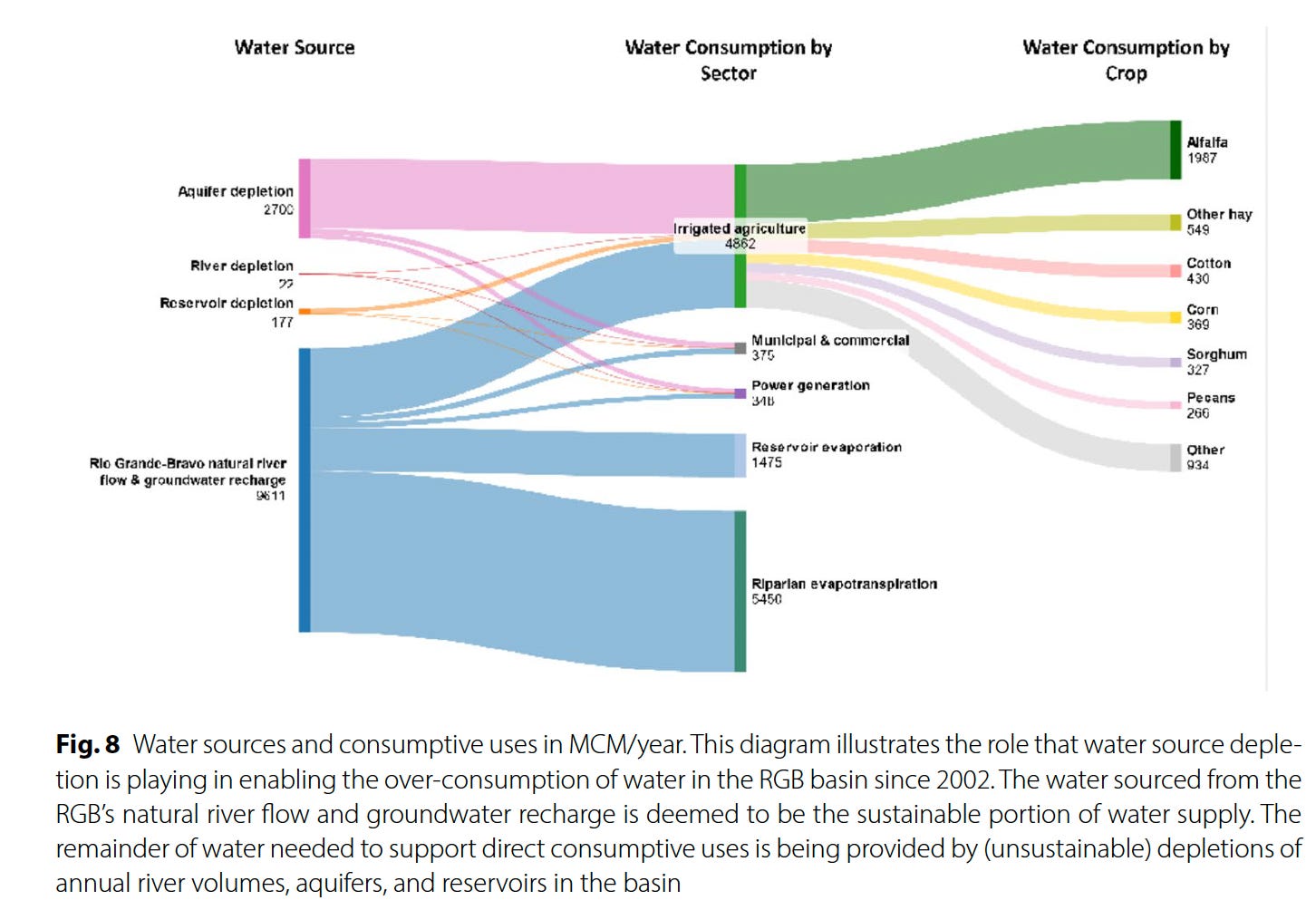
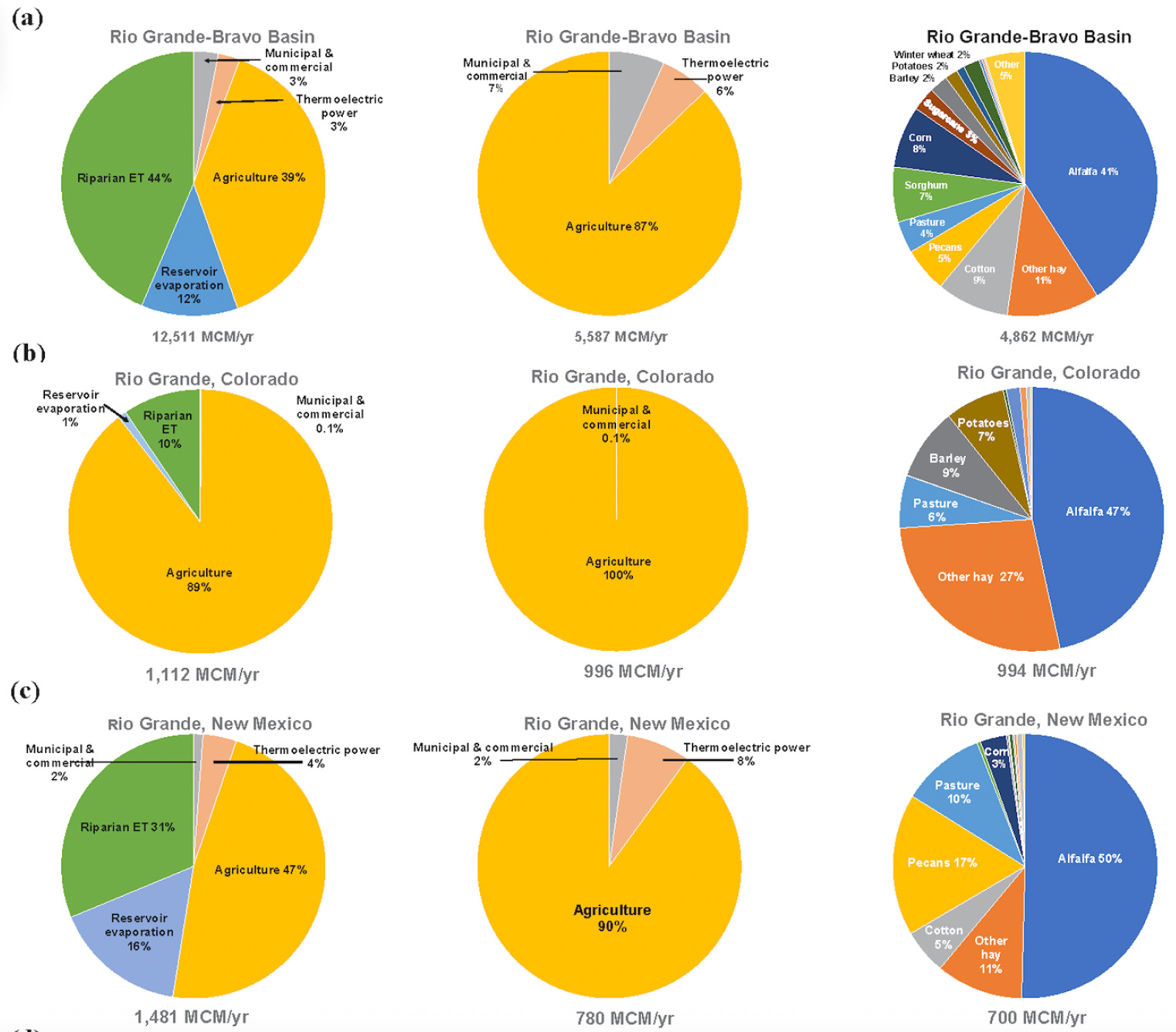
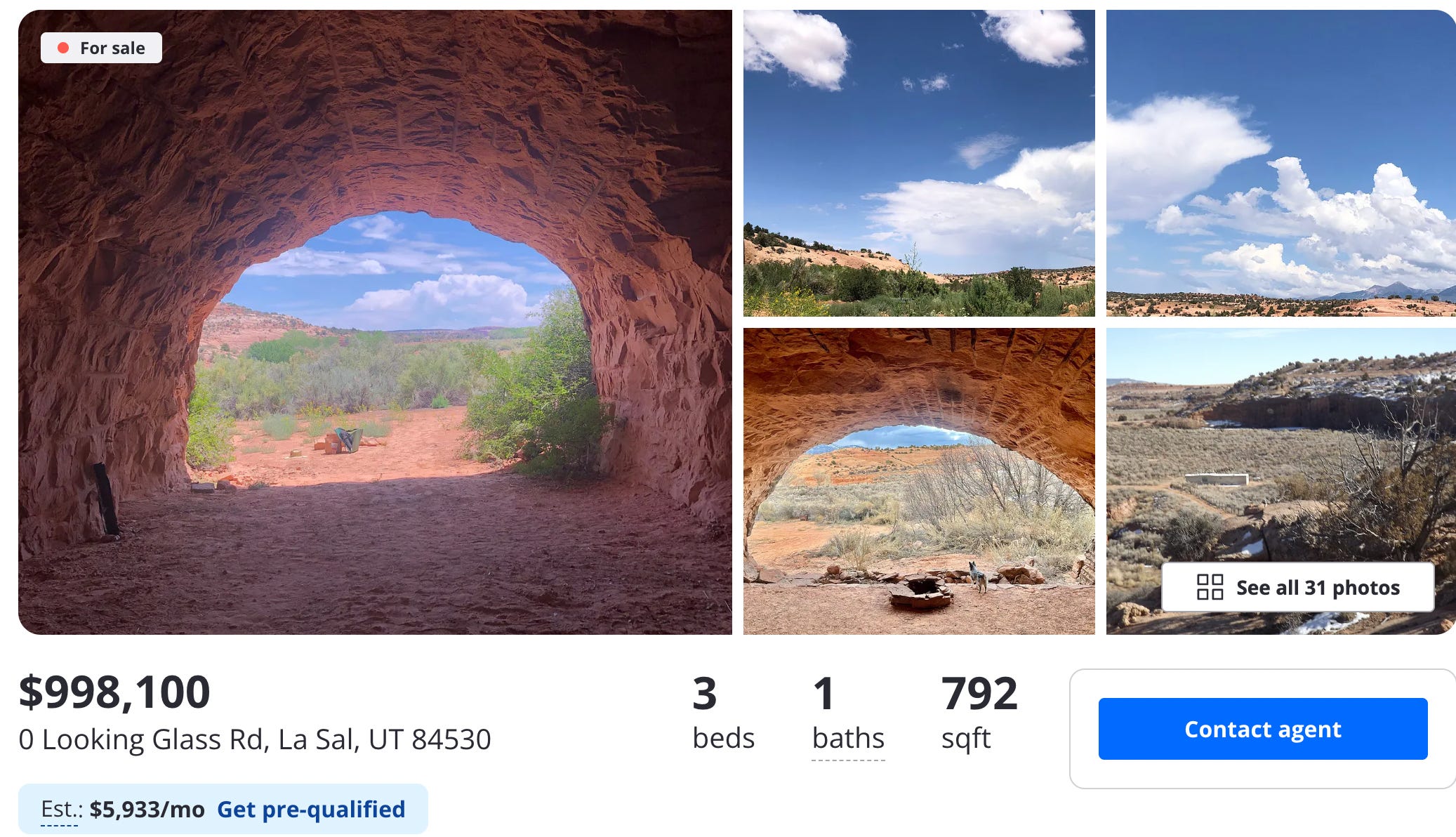


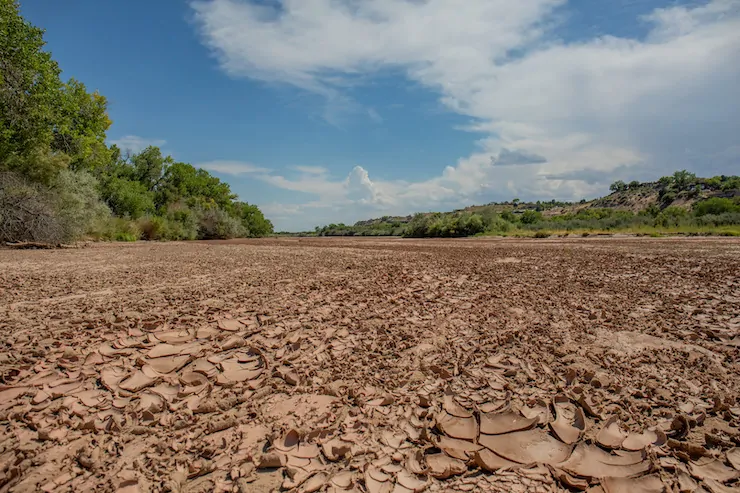
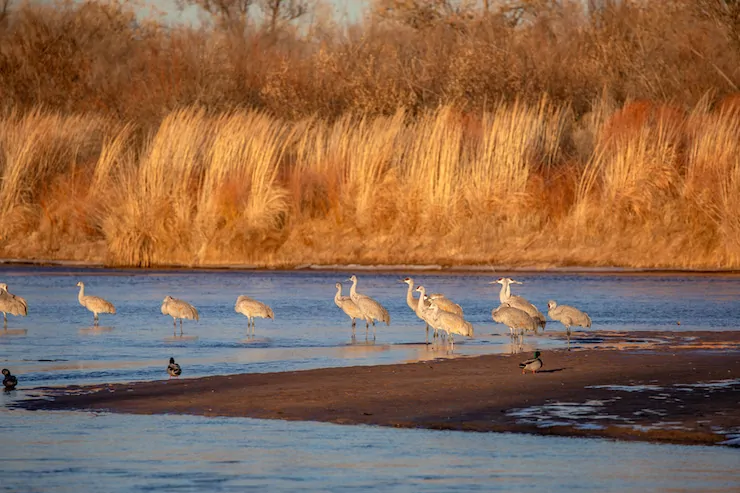

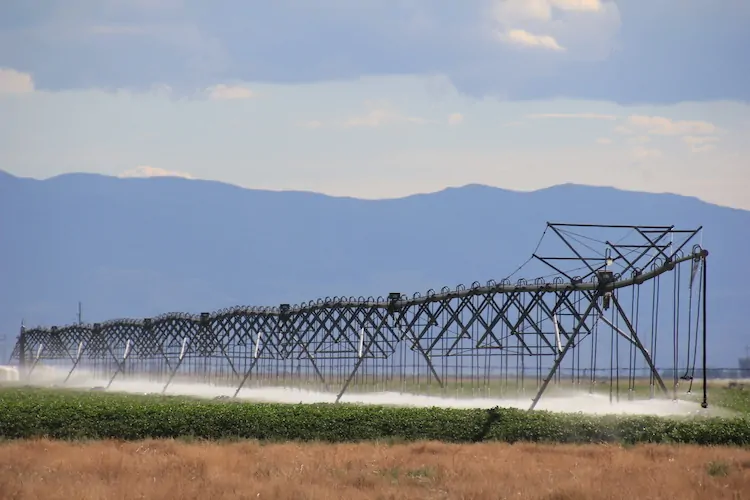

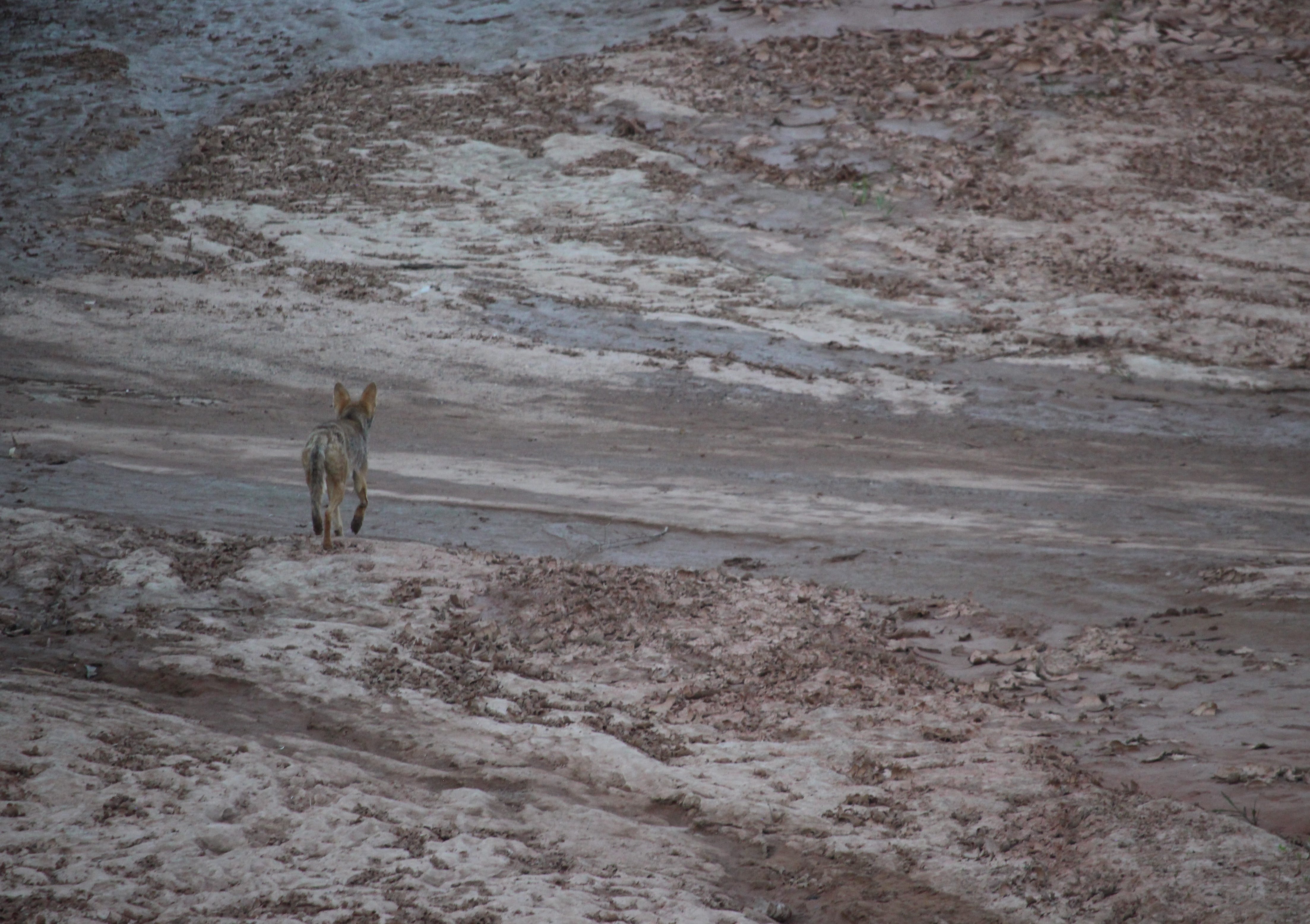


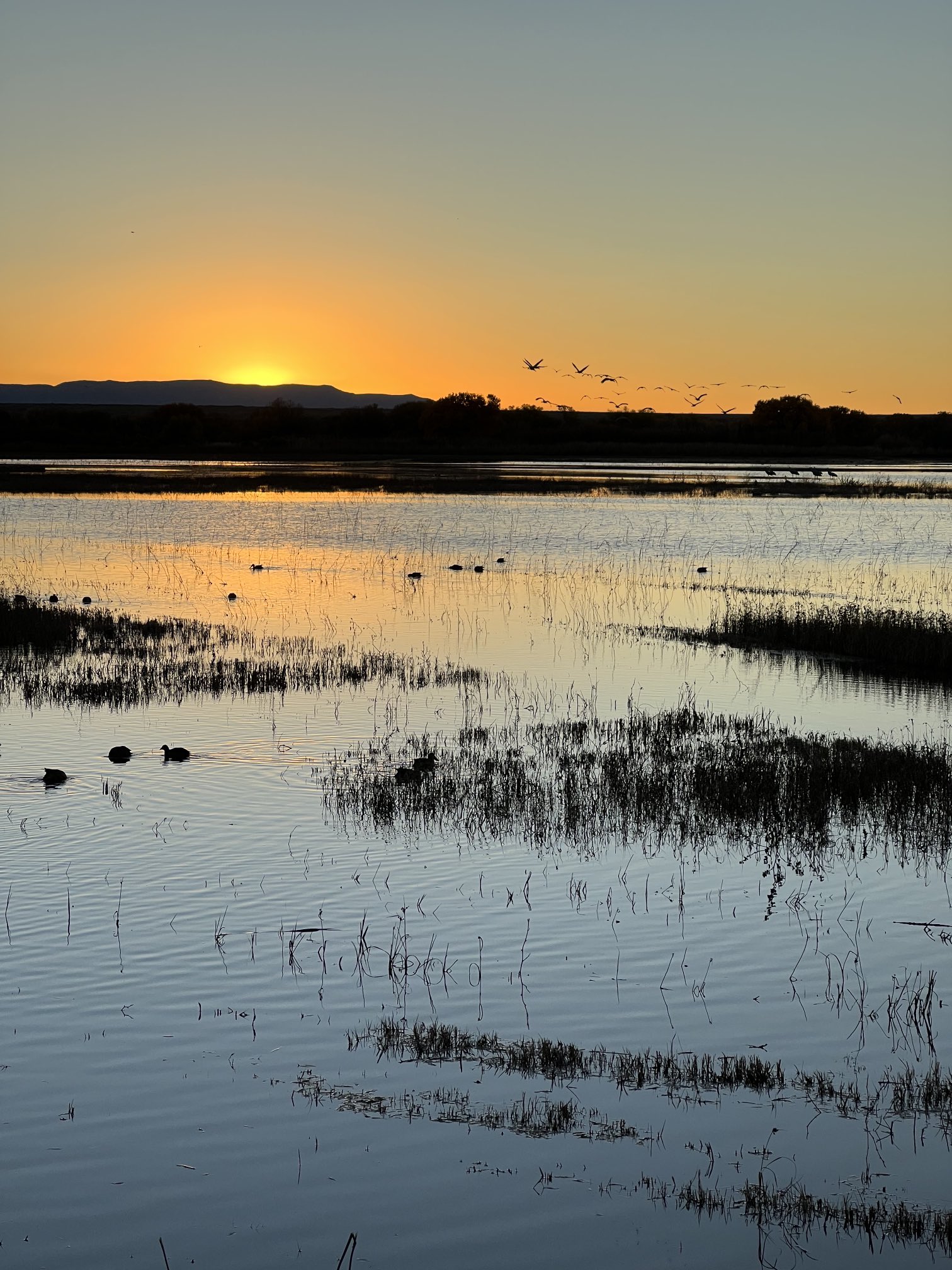
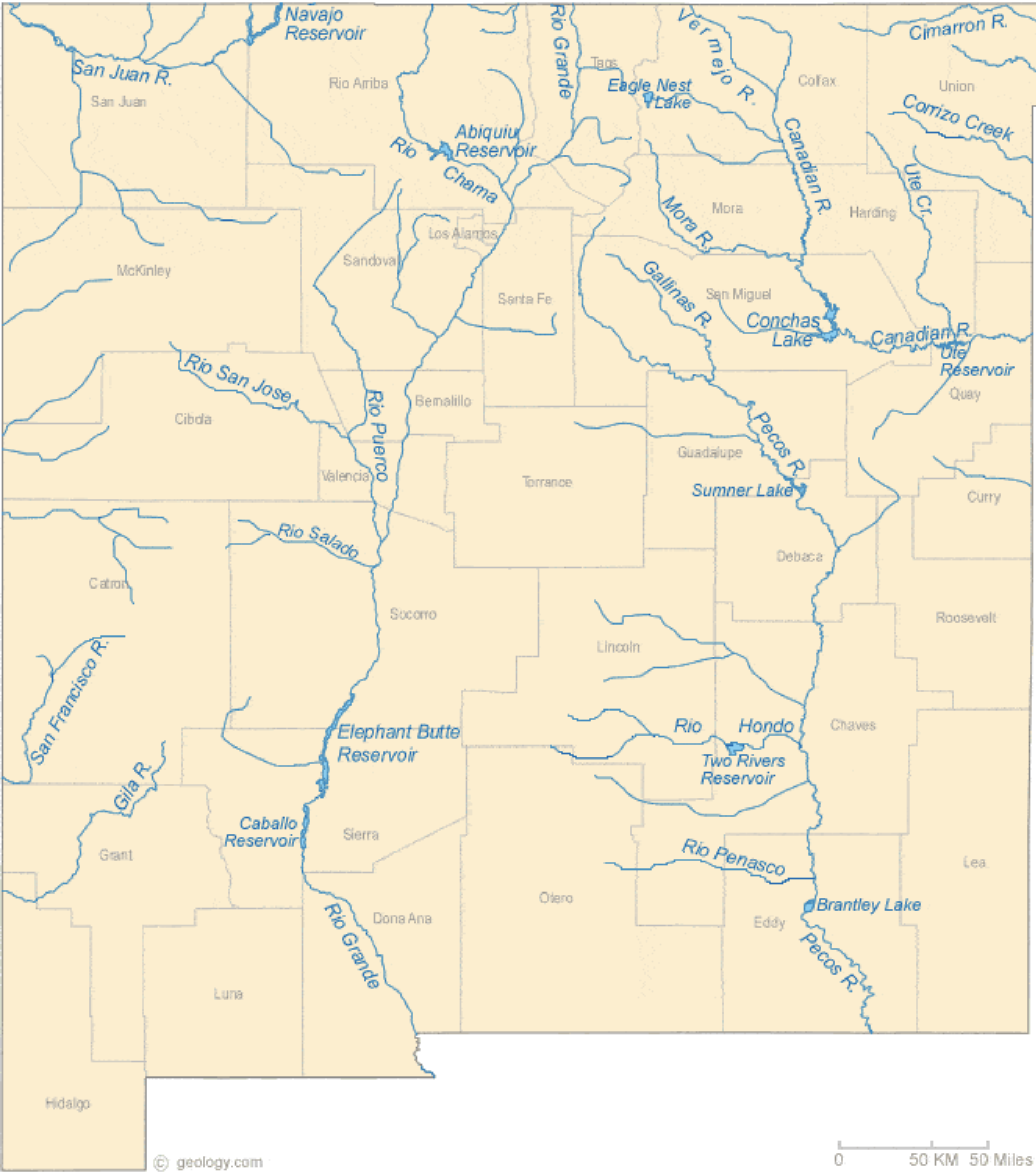
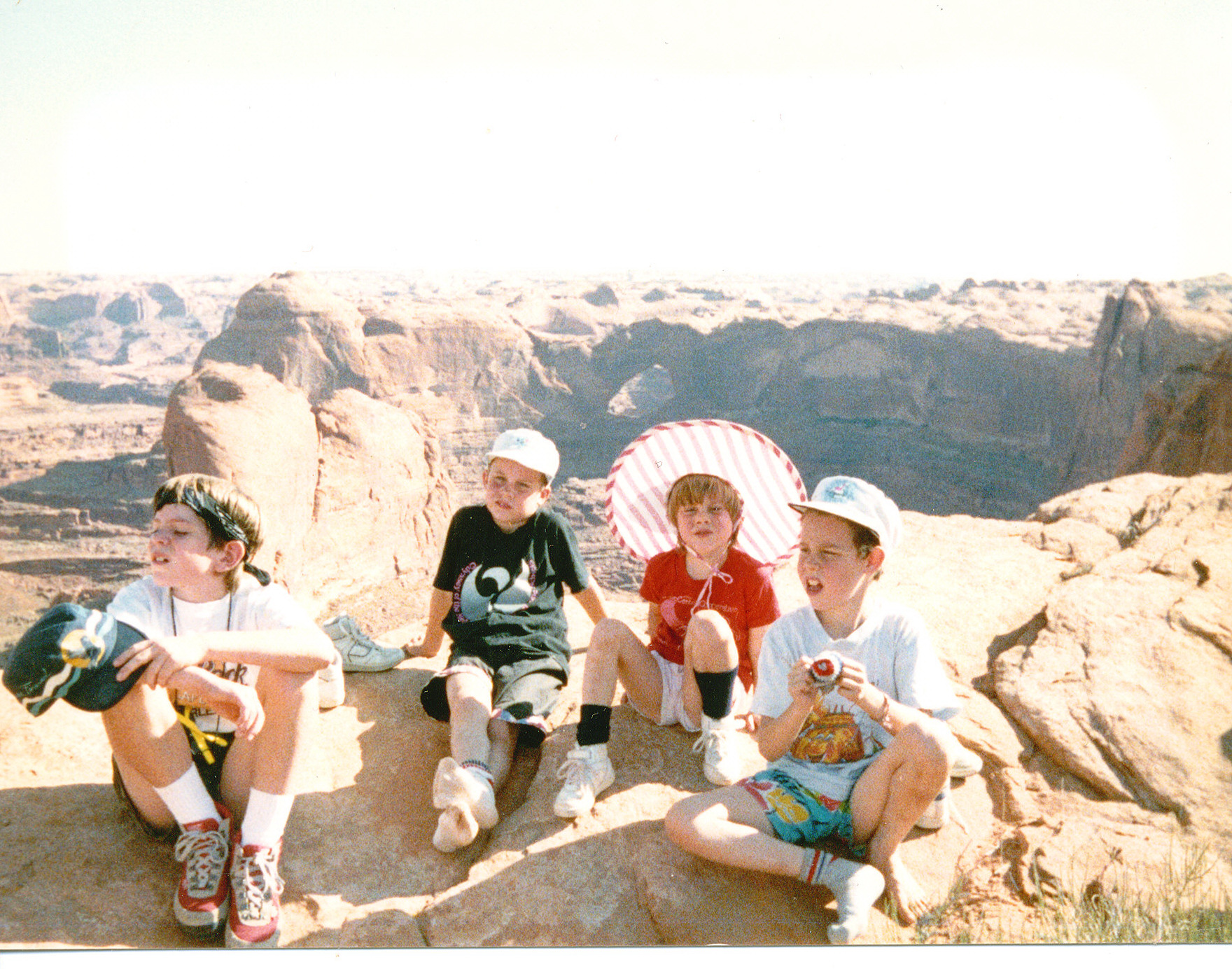


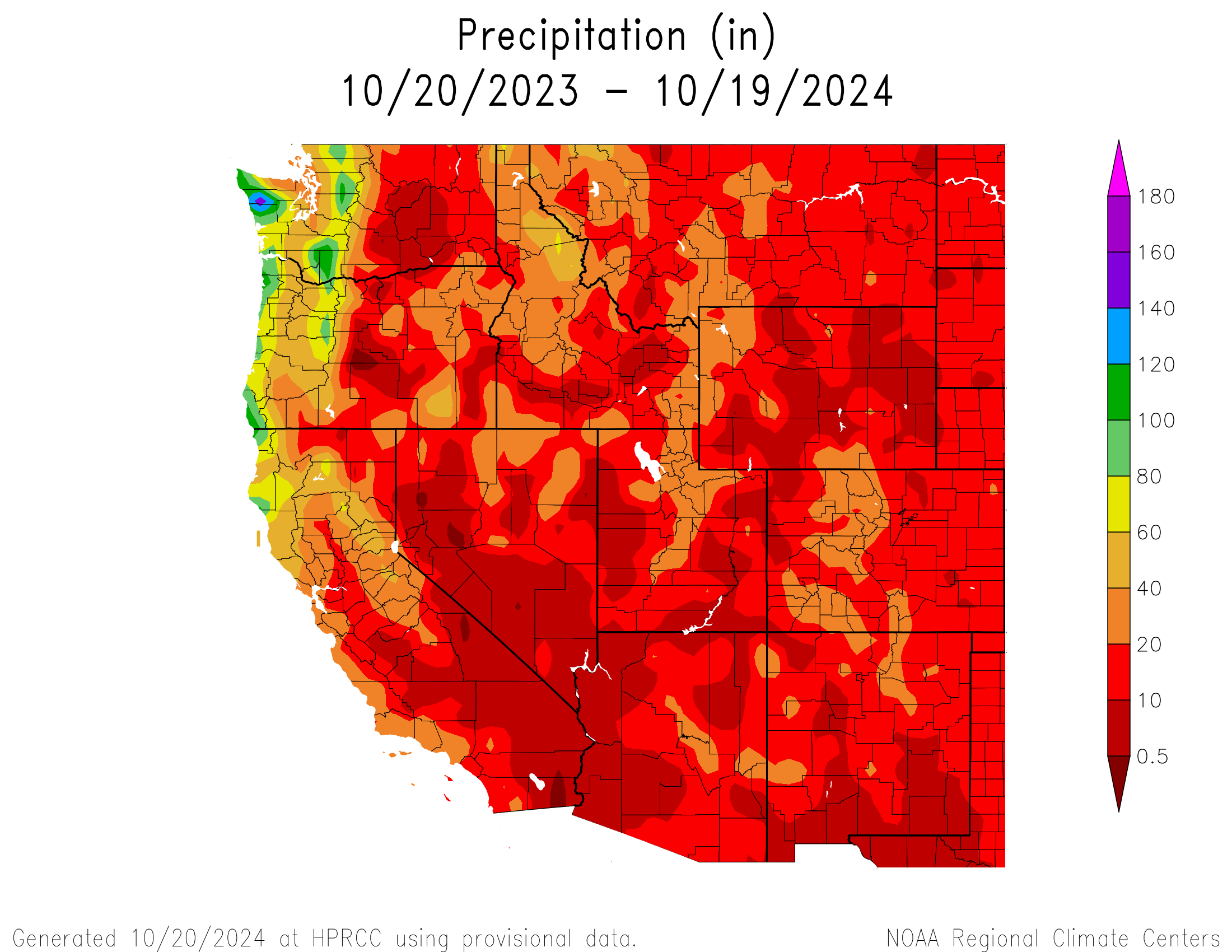
/https://static.texastribune.org/media/files/2858325190c1d789562f2c50d320432b/0717%20RGV%20Water%20-%20Fields%20EG%20%2003.jpg)
/https://static.texastribune.org/media/files/7cfa074c50de95165fe0592f18440fee/0715%20RGV%20Water%20-%20Darling%20EG%2006.jpg)
/https://static.texastribune.org/media/files/ae1fff168fa077164a53e5c72d0fcf0b/0715%20RGV%20Water%20-%20SWRA%20EG%2017.jpg)
/https://static.texastribune.org/media/files/574cb34b24dea723698b5c71fda7766a/0716%20RGV%20Water%20-%20Trevino%20EG%2004.jpg)
/https://static.texastribune.org/media/files/9b717668a41338190969078c76d8983d/Re-edit2%200716%20RGV%20Water%20-%20N%20Alamo%20EG%2011.jpg)
/https://static.texastribune.org/media/files/81b4b861f566647fc17183cd1f705458/0717%20RGV%20Water%20-%20NASWC%20EG%2041.jpg)